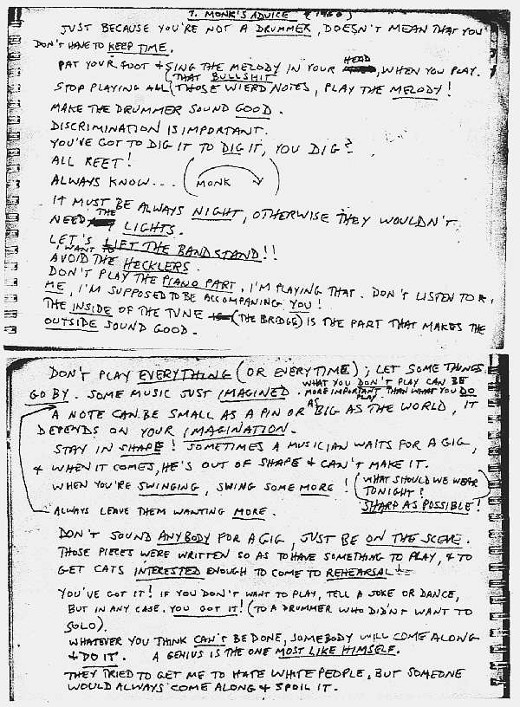
“Don’t play everything (or every time); let some things go by. Some music just imagined. What you don’t play can be more important than what you do.”
Found HERE.
Transcript after the jump. Continue reading
“Don’t play everything (or every time); let some things go by. Some music just imagined. What you don’t play can be more important than what you do.”
Found HERE.
Transcript after the jump. Continue reading
“Face Deep is an experimental, animated (stop motion) film that allows for a free-flow of thought and exploration of self within an otherwise overly produced, technical and character driven practice. This sequentially photographed film looks at animator as lead character, allowing internal personalities/burning stories to emerge on skin surface whilst a sense of play within the medium is explored.
By listening to the songs of local low-fi Cape Town band Tape Hiss and Sparkle on loop, the raw and honest lyrics/sounds from Simon Tamblyn lead the animator deeper into herself to explore her own raw and honest inner spaces. The film allows one orator to evoke new stories in another orator, and for their different methods of story telling (sound/visual) to co-exist together; sometimes it is another person’s truth that helps us explore our own.”
— Meghan Judge, Simon Tamblyn
More of Meghan’s work is HERE.
Live performance, 28 July 2012, Madrid.
Paul Simon and a wonderfully spunky child in improvisational counterpoint on the Muppet Show in 1977. Thank you to Genna Gardini for reminding me about this awkward, amazing moment. Read more on the Muppet Wiki.
Simon later would stress the concept of rhythm itself communicating a deeper message, and his earlier writing also demonstrates his dedication to making a deceptively simple rock and roll song embody a unified, total package in which each part must complement the others. “If you take a song that has some rhythm to it…and I don’t get the rhythm right… then the song doesn’t seem real.” With the right rhythm, though, “the listener gives up his defense. You’re willing to entertain a number of ideas, you’re having that good a time.” Rhythm, he said, “is good for lyrics that express emotion. And in allowing emotion to speak, rhythm connects us in anger or in love, to others.” Again, Simon stresses that the artist must communicate, and the songwriter´s communication must appeal to a sense well beyond that of the five recognized senses, a sense of rhythm innately found in songwriter and audience alike.
Kardeş Türküler perform “Tencere Tava Havası” (“Sound of Pots and Pans”) in the streets of Istanbul this week. Check out the Kardeş Türküler’s website HERE for background on the group, which came into being in 1993 as a concert project by the Boğaziçi University Folklore Club.
And, here’s an explanation of the penguin footage later in the video from a Youtube comment:
“If people don’t know about it, the penguins mock mainstream media that has very close relations to the government. Main news channels have been nearly totally silent about the protests, not wanting to be hated by the government. One main news channel (CNNTurk) preferred to broadcast a penguin documentary while all of these are happening. Similar attitude from others. After being severely mocked by protesters, an apology and more coverage came.”
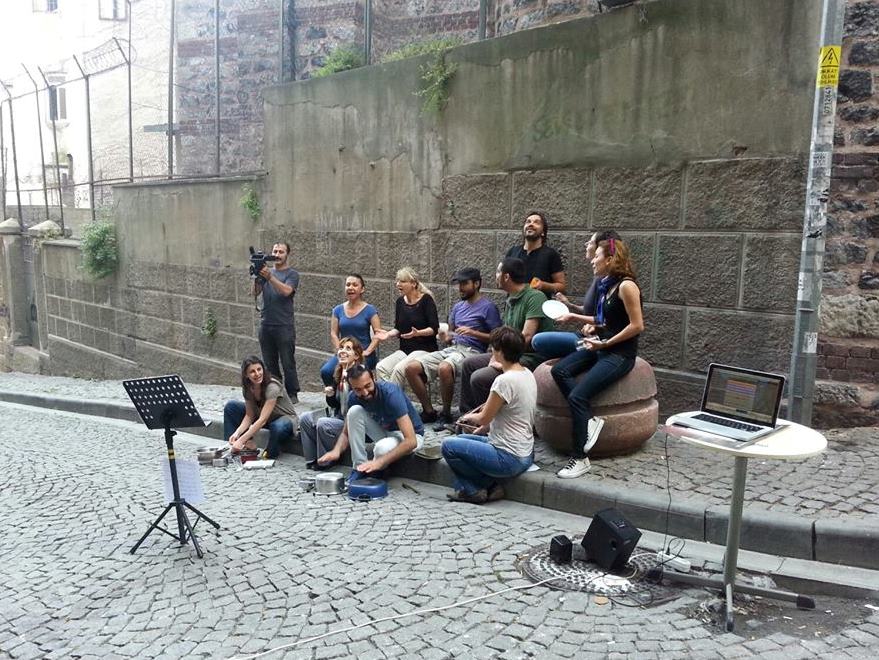
Istanbul group Kardeş Türküler recording the video “Pots & Pans” in response to the Taksim/Gezi Park protests this week.
Happening this weekend in Sao Paulo: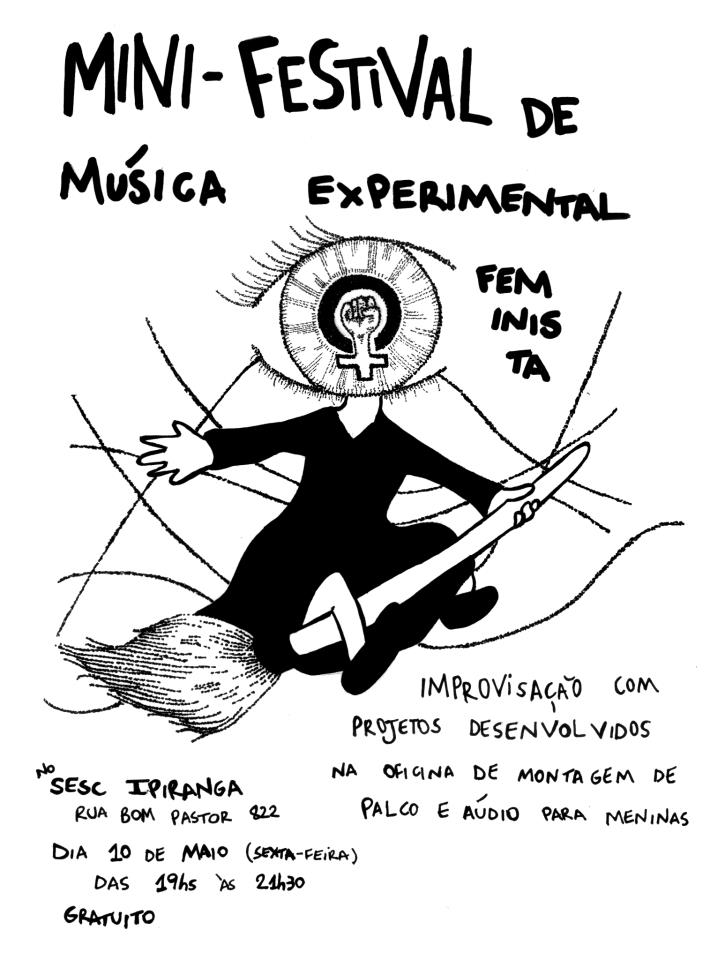
More info on Facebook, HERE.
Norwegian improv duo Vertex (Petter Vågan and Tor Andreas Haugerud) collaborate with Capetonian Josh Ginsburg at The Edge Of Wrong festival in Cape Town, February 2013. The venue was The Mahogany Room. This is an edited portion of a longer performance.
Thundersqueak — the noise trio of Gareth Dawson, Righard Kapp and Mark van Niekerk — performing live at Cape Town’s 4th annual festival of improvised music, ‘On The Edge of Wrong’ 2009. Filmed by Jaco Minnaar.
Righard and Gareth will be playing together tonight at this year’s EDGE OF WRONG.
It’s a festival kindred in spirit to Fleurmach! Don’t miss EDGE OF WRONG. From this Friday, 22 February until 2 March 2013 in Cape Town, explore the thresholds of what music can be…
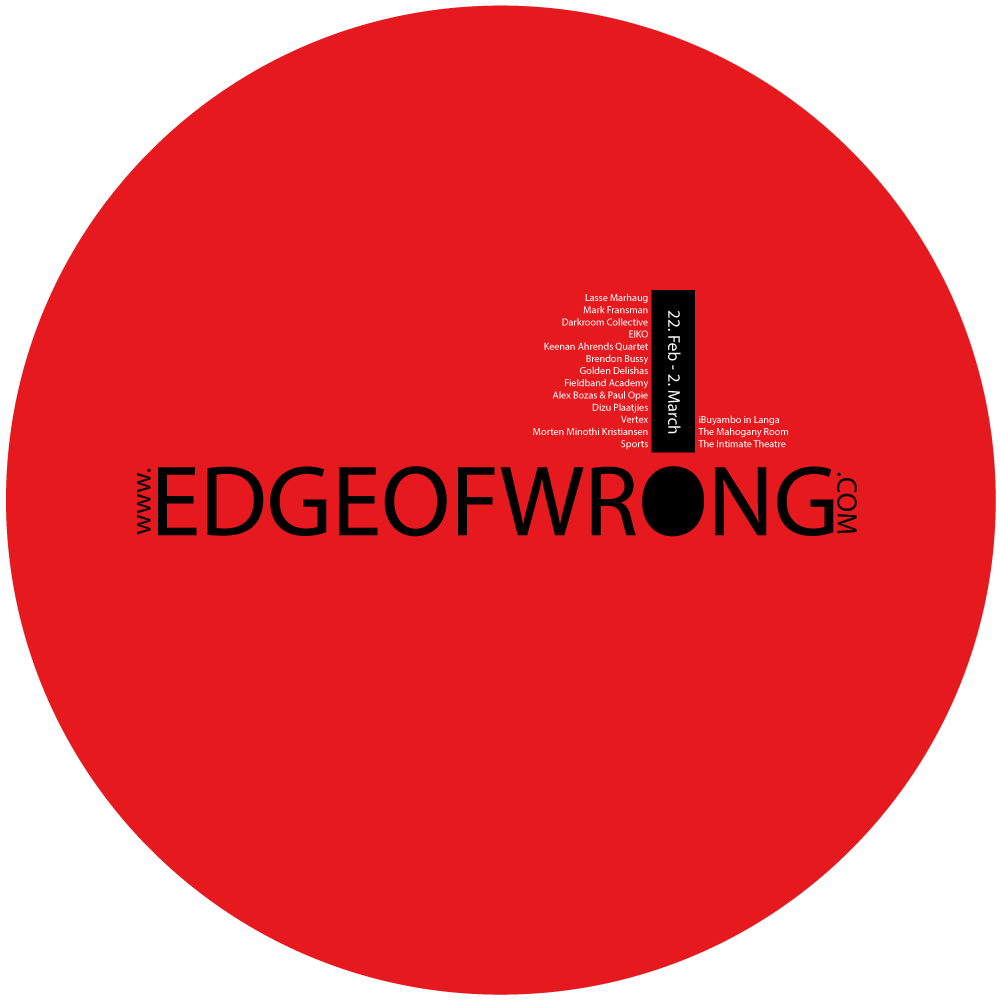
EDGE OF WRONG is premised on the productive opportunities vested in chance, in uncertainty, in the pursuit of the unknown. It welcomes mistakes and challenge, diversity and collaboration.
As such, the festival brings together a community of like-minded musicians and artists from South Africa and Europe to share skills and visions with each other and the SA audience. Artists are invited based on their commitment to experimentation; to find, test and exceed the limits of their creative potential.
Find out more about the performers and line-up of events at the official EDGE OF WRONG site.
“This book, Noise and Capitalism, is a tool for understanding the situation we are living through, the way our practices and our subjectivities are determined by capitalism. It explores contemporary alienation in order to discover whether the practices of improvisation and noise contain or can produce emancipatory moments and how these practices point towards social relations which can extend these moments.
If the conditions in which we produce our music affects our playing then let’s try to feel through them, understand them as much as possible and, then, change these conditions.
If our senses are appropriated by capitalism and put to work in an ‘attention economy’, let’s, then, reappropriate our senses, our capacity to feel, our receptive powers; let’s start the war at the membrane! Alienated language is noise, but noise contains possibilities that may, who knows, be more affective than discursive, more enigmatic than dogmatic.
Noise and improvisation are practices of risk, a ‘going fragile’. Yet these risks imply a social responsibility that could take us beyond ‘phoney freedom’ and into unities of differing.
We find ourselves poised between vicariously florid academic criticism, overspecialised niche markets and basements full of anti-intellectual escapists. There is, after all, ‘a Franco, Churchill, Roosevelt, inside all of us…’ yet this book is written neither by chiefs nor generals.
Here non-appointed practitioners, who are not yet disinterested, autotheorise ways of thinking through the contemporary conditions for making difficult music and opening up to the wilfully perverse satisfactions of the auricular drives.”
Sound interesting? HERE, DOWNLOAD NOISE AND CAPITALISM FREE.
Edited by Mattin Iles and Anthony Iles
Contributions from Ray Brassier, Emma Hedditch, Matthew Hyland, Anthony Iles, Sara Kaaman, Mattin, Nina Power, Edwin Prévost, Bruce Russell, Matthieu Saladin, Howard Slater, Csaba Toth, Ben Watson.
More details from the publishers, Arteleku Audiolab (Kritika series), Donostia-San Sebastián (Gipuzkoa)
Publication date: September 2009
A child in the dark, gripped with fear, comforts himself by singing under his breath. He walks and halts to his song. Lost, he takes shelter, or orients himself with his little song as best he can. The song is like a rough sketch of a calming and stabilizing, calm and stable, center in the heart of chaos. Perhaps the child skips as he sings, hastens or slows his pace. But the song itself is already a skip: it jumps from chaos to the beginnings of order in chaos and is in danger of breaking apart at any moment. There is always sonority in Ariadne’s thread. Or the song of Orpheus. … One launches forth, hazards an improvisation. But to improvise is to join with the World, or meld with it. One ventures from home on the thread of a tune.
~ Deleuze & Guattari, in “1837: Of the Refrain”, from A Thousand Plateaus. Capitalism and Schizophrenia. London: Continuum, 1987. pp. 343-4
An improvisation with microphone, guitar effects pedal and bongos.
 fleurmach