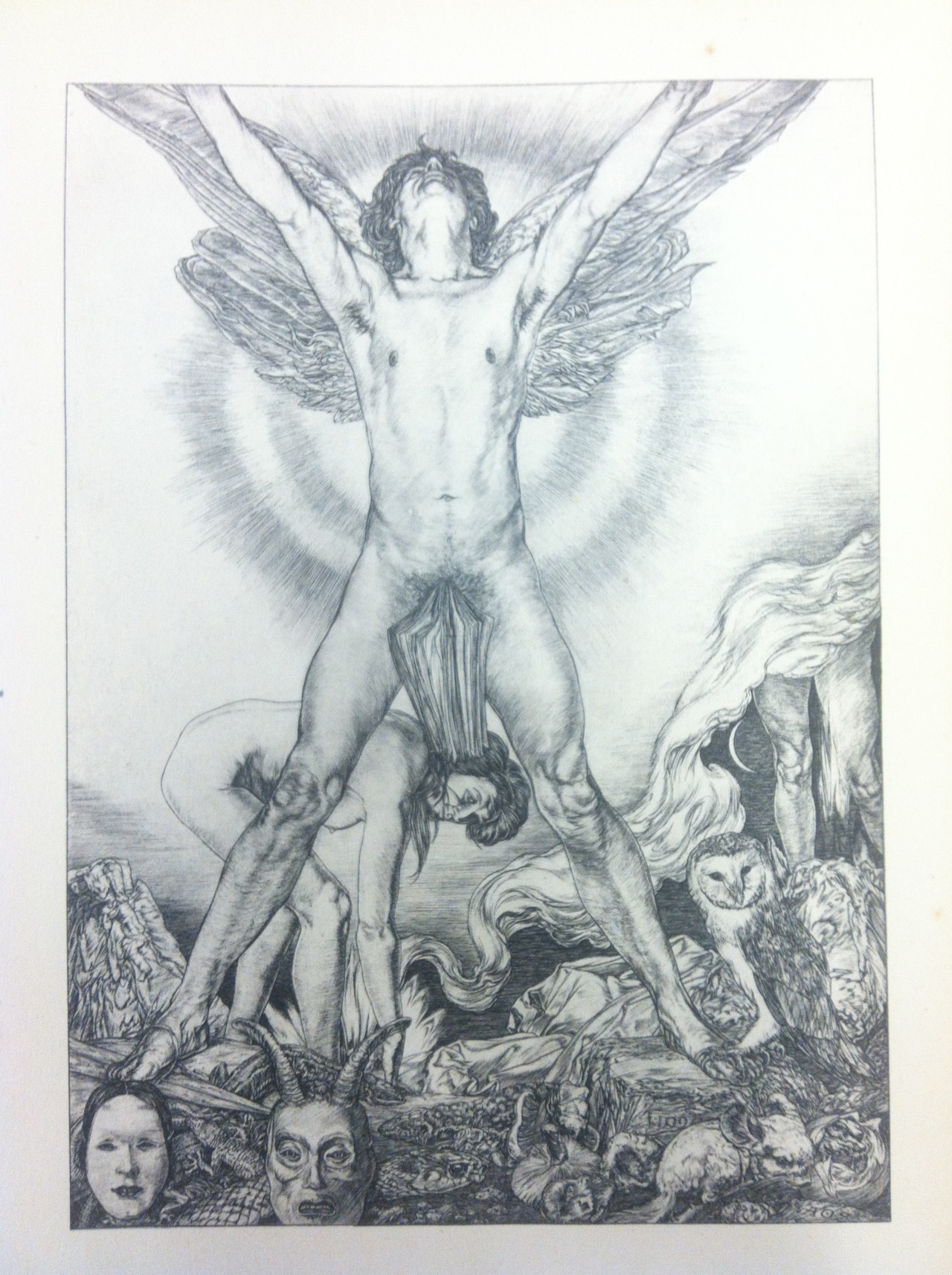
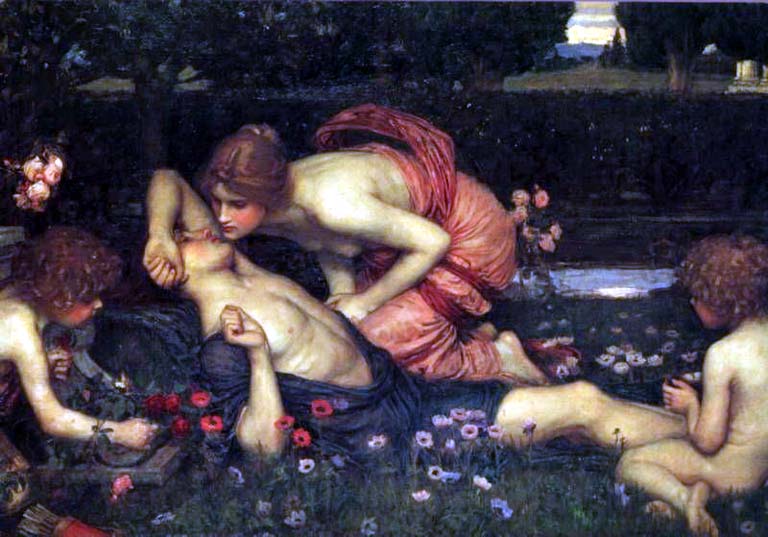
the star and the hammerkop …

“the star knows the time when our heart no longer breathes,
and then it shoots, it falls down as our heart falls down,
and the star’s noise, dying away, takes our heart away”

— ‘The Star and the Hammerkop are Those that Tell Us that One of our People Has Died’

(Bleed, Lloyd; reworked Alan James)
San/Bushman Tradition, ? – 1910

charles baudelaire – le crépuscule du soir (evening twilight)

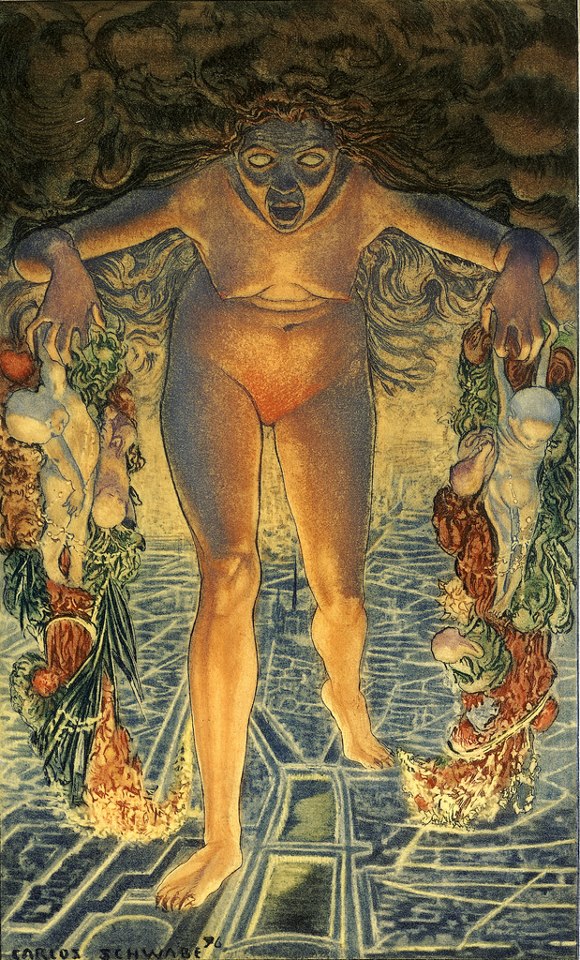
Carlos Schwabe
“Le crépuscule du soir”
from Fleurs du Mal (1900)


This poem is from Baudelaire’s 1861 masterpiece, Les Fleurs du Mal (read the original French, as well as two more, quite divergent, translations HERE):

Evening Twilight

Delightful evening, partner of the crook,
Steals in, wolf-padded, like a complice: look:
Heaven, like a garret, closes to the day,
And Man, impatient, turns a beast of prey.

Sweet evening, loved by those whose arms can tell,
Without a lie, “Today we’ve laboured well:”
Sweet evening, it is she who brings relief
To men with souls devoured by one fierce grief,
Obstinate thinkers drowsy in the head,
And toil-bent workmen groping to their bed.

But insalubrious demons of the airs,
Like business people, wake to their affairs
And, flying, knock, like bats, on walls and shutters.
Now Prostitution lights up in the gutters
Across the glimmering jets the wind torments.
Like a huge ant-hive it unseals its vents.
On every side it weaves its hidden tracks
Like enemies preparing night-attacks.
It squirms within the City’s breast of mire,
A worm that steals the food that men desire.

One hears the kitchens hissing here and there,
Operas squealing, orchestras ablare.
Cheap tables d’hôte, where gaming lights the eyes,
Fill up with whores, and sharpers, their allies:
And thieves, whose office knows no truce nor rest,
Will shortly now start working, too, with zest,
Gently unhinging doors and forcing tills,
To live some days and buy their sweethearts frills.

Collect yourself, my soul, in this grave hour
And shut your ears against the din and stour.
It is the hour when sick men’s pains increase.
Death grips them by the throat, and soon they cease
Their destined task, to find the common pit.
The ward is filled with sighings. Out of it
Not all return the scented soup to taste,
Warm at the hearthside, by some loved-one placed.

But then how few among them can recall
Joys of the hearth, or ever lived at all!

— translated by Roy Campbell, Poems of Baudelaire (New York: Pantheon Books, 1952)

egghead (2004)

I sleep with one eye open, so I can see them coming.
I can’t get away, but at least I can see them coming and steel myself.
Ideas like bunnies fuck me in my bed.

Sometimes they bounce in uninvited, coquettish, and it’s almost fun. They keep me up till morning. I writhe, giggle hysterically, chase them pillow to post. Fluff tickles, a humid sneeze, and I’m knocked up, swelling anaphylactically. On colder nights I’m gang-raped, tied down and stabbed, bloating with high-pressure jets of rabid spores.

However it happens, the thoughts germinate in swarms, another and another and another sprouting.

I’m weepy again. Exhausted.
I don’t want the mutants that grow from these unions. I wish there was a contraceptive. A chastity belt. Anything to stop this brood, to render my imagination infertile. The pills are useless.

I can feel my chemistry changing inexorably as the cells divide. Thalidomide embryos kick with vestigial limbs, opposable pink stubs. Leprous digits dropping off and repropagating like mitotic cacti. Opaque eyes, squamous ear buds, mouths filmed over with milky membrane. Foreheads bulging with gestating thoughts trapped in undifferentiated tissue, crying out restlessly in underwater bubbles before they can even breathe. They’re so ugly!
Fruitless and multiplying.
I have to abort them all.
Distended oxygen thieves.
They mustn’t breathe.
They mustn’t breed.
Halt the assembly line!

I wish I could give these little niggling creations a chance, the benefit of my doubt. Wish I were able to carry them to term, to quietly, patiently allow them to ripen inside me till they could live by themselves. If only human nature could be allowed to take its organicky course… I cry for their inchoateness as I spew them out. It seems such a pity that I’m allergic to them.
Yes, they’re poisoning me.
Yes, I make myself sick.
Yellow serum oozes the truth of what I’m doing. I’m bleeding inside, putrescing slowly.

Maybe I’ve succeeded this time in gouging free? I wonder every time if what I’ve done will make me barren.
But no, the root won’t be cauterised. I still malfunction just fine afterwards. Each time I pick at the raw scab over the umbilical entrance, each time I lance the pus, another swelling surfaces elsewhere, ballooning mercilessly with the filth that I’m never able to excise completely, swimming with stillborn nonsense.

I’m leaking rotten discharge out of every opening. I don’t even try to hide the bulimic blurts any more. Everyone knows. I can’t stay home ALL the time. I’ve become inured to their “Shut up!” “Shut up!”… I like to believe they’d be more sympathetic if only they understood the advanced state of septicaemia I’m living with. Then again, no one likes someone else’s bloody vomit on their shoes I s’pose… They recoil, grimaces masked with grins.

I smile beatifically.

Plop!

Another black clot of afterthought.

Malformed.
Malignant.
It smells disgusting.
And oh, the cramp!

The nausea rises, throbbing.

Heave. Swallow. Metallic post-nasal drip.

Rises again…
I can’t down another millilitre of this bloody mucus, eat one more word.

BLAAAAAAAAAAAAAAAAAHAHAHAHA

Sorry.
I’ll go home now.

Lock the door.

Lie down. Palms up.

Oh it’s quiet.

Teeth chattering.
SHUT UP!

Baby talk.
Stupidness.

Stupor.

Smooth and cool… So serene. So sterile for a few moments.
But the sweet stench is creeping back. I turn on my side, hug my legs up to my chest. And my cheek is wet with the dark patch spreading on my sheets. Squirming with infection, with congealing dread. I scrub and scrub, but the stain is under my nails.
So? I’ll paint them vamp red then.

I click on the hundred-watt bulb, swinging futile against the darkness, awaiting the cuddly incubi’s return. I can hear them breathing behind the curtains.

First published at http://www.africans.co.za, april 22, 2004

moon and flying snow

Beautiful fight scene between Moon (Zhang Ziyi) and Flying Snow (Maggie Cheung) in the yellow forest from the extended version of the movie “Hero”

Hero was first released in China on October 24, 2002. At that time, it was the most expensive project and the highest-grossing motion picture in Chinese film history.

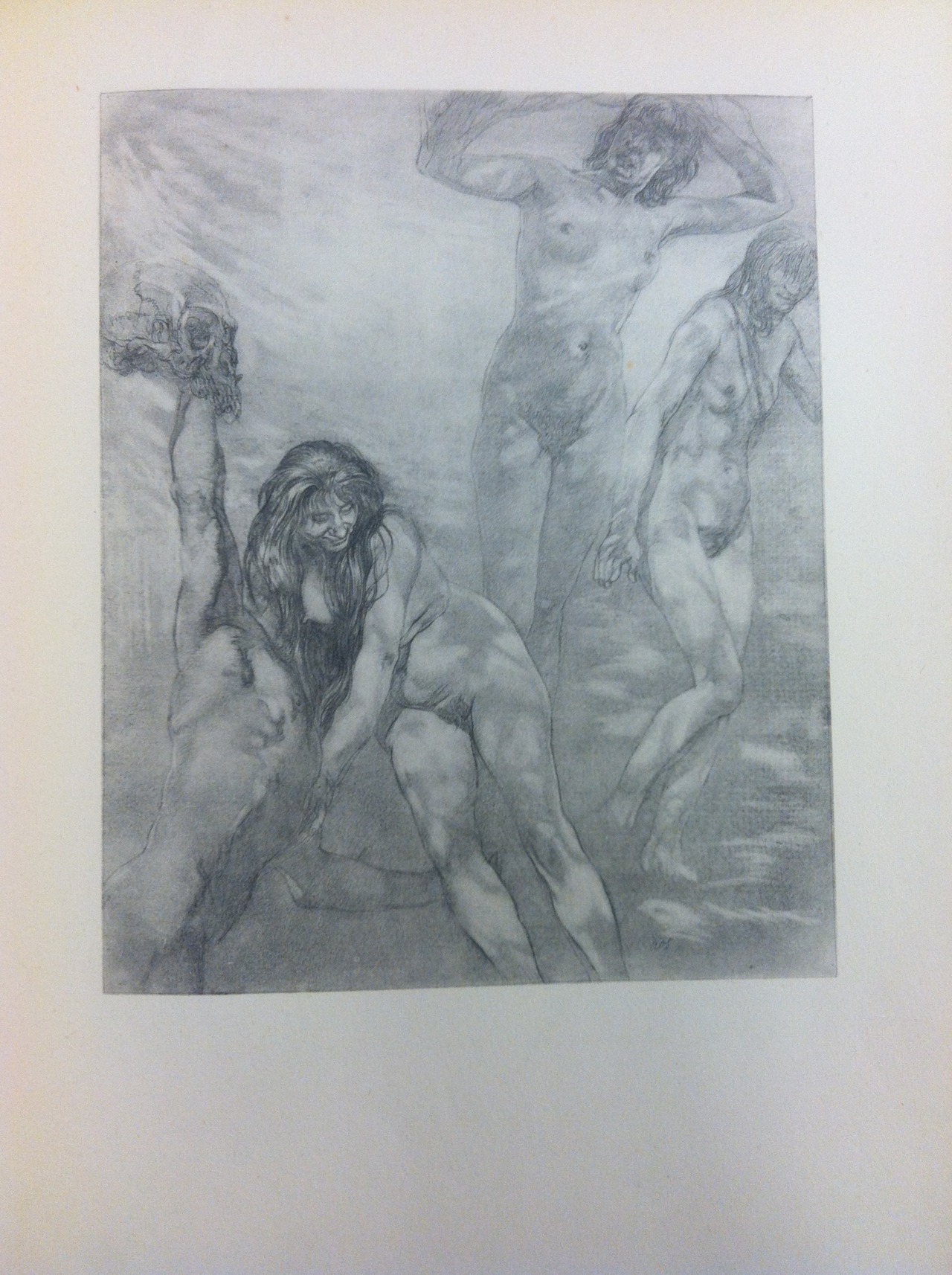
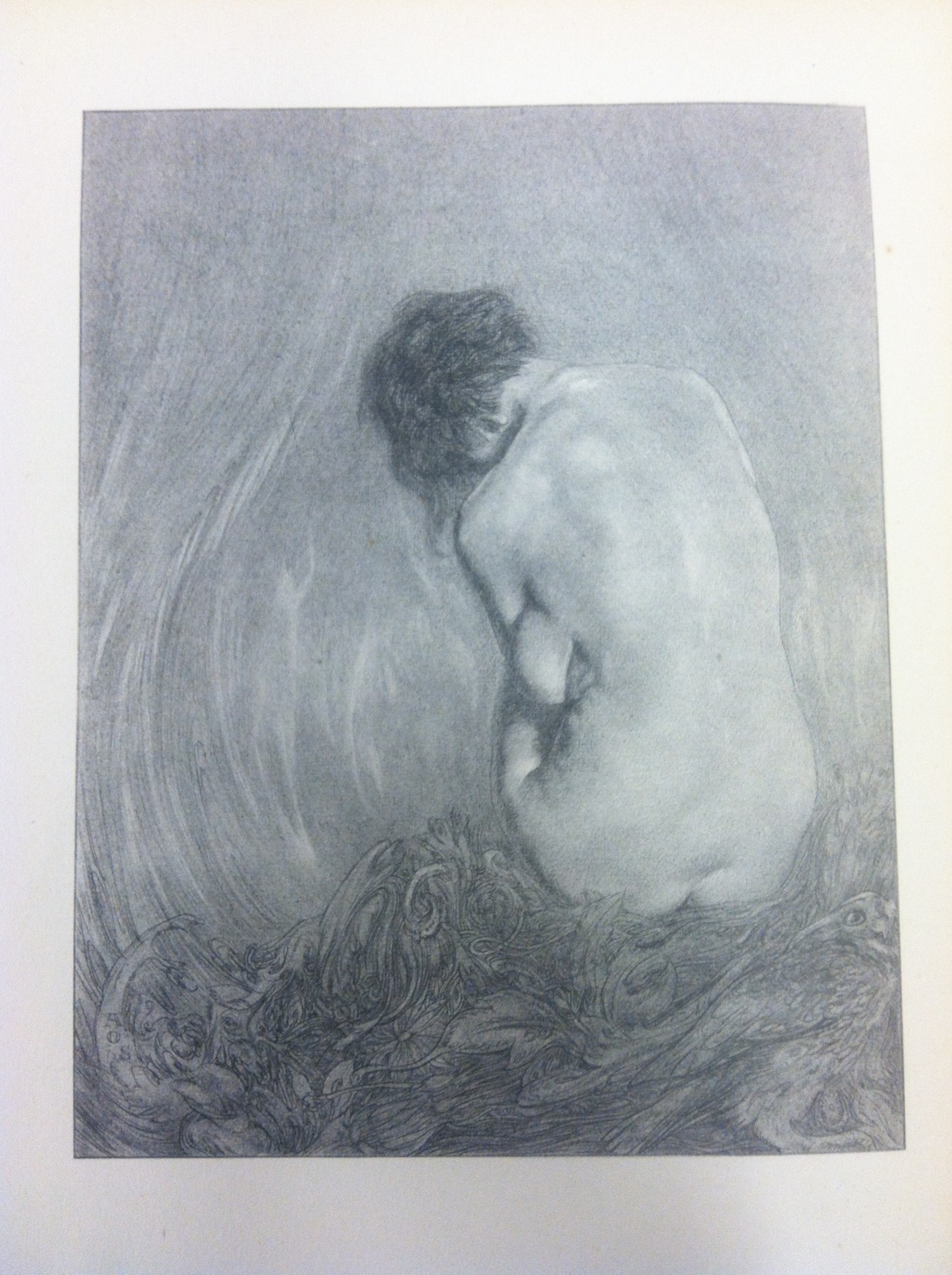
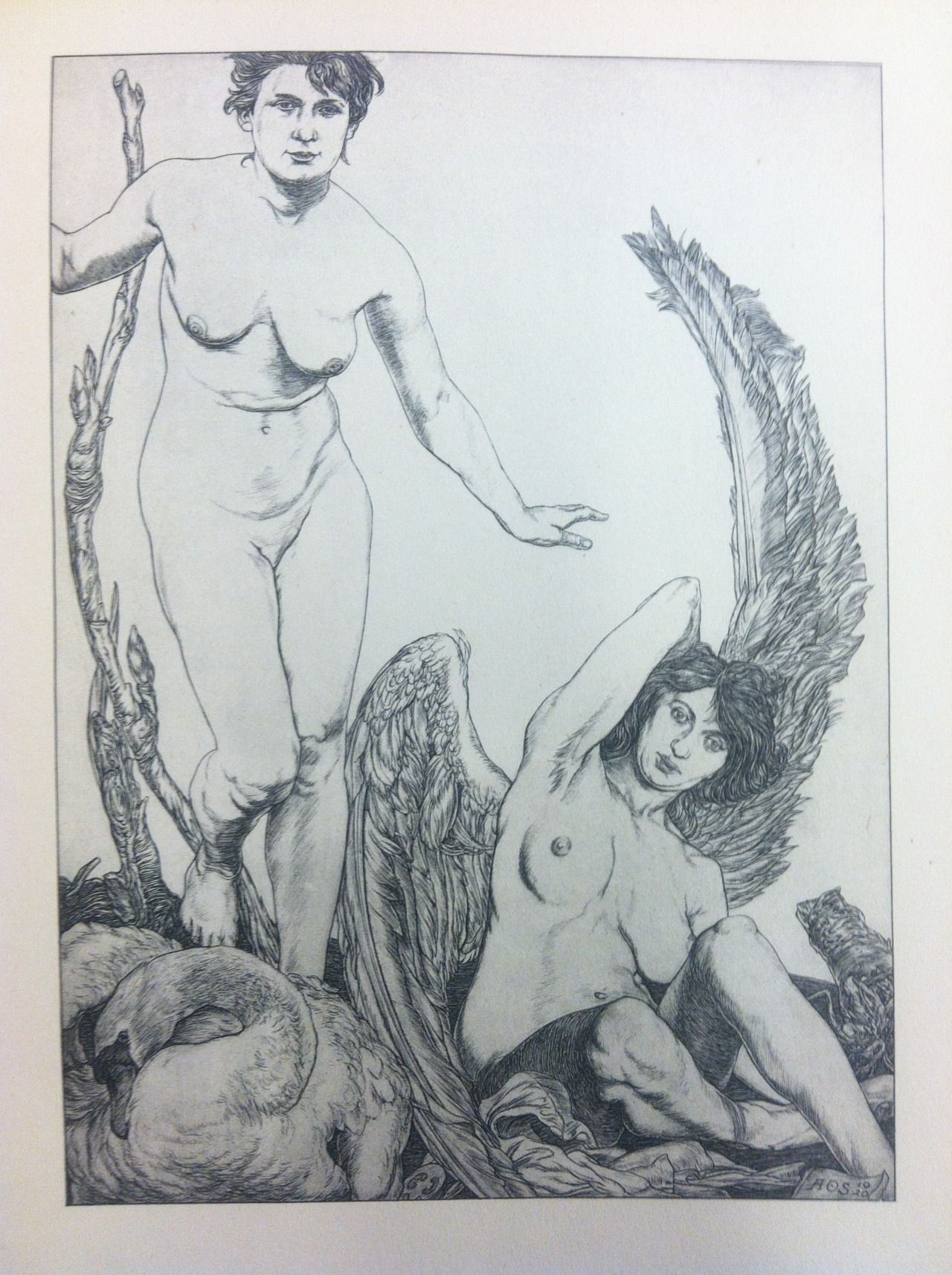
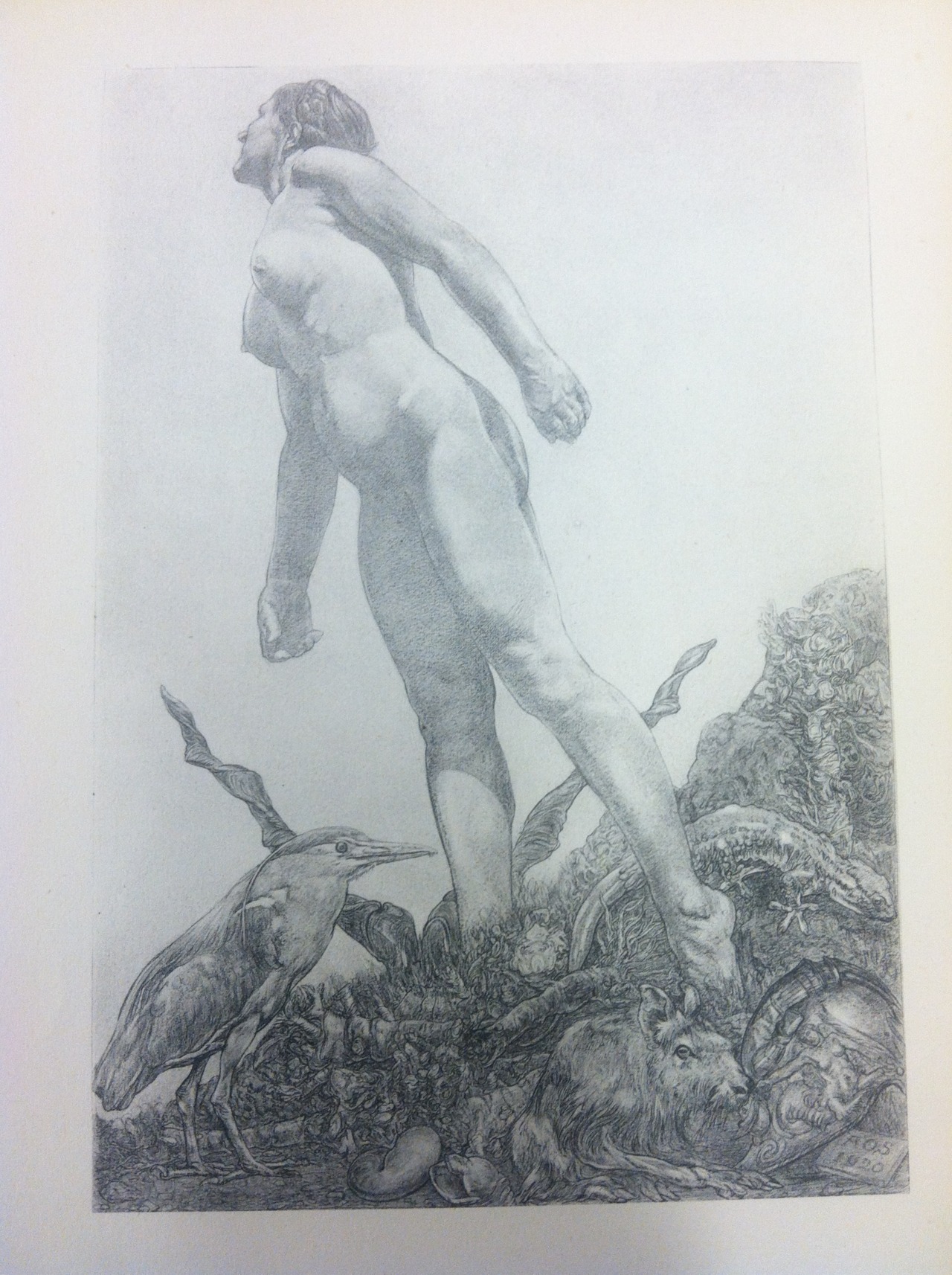
drawings by chaos magician austin osman spare


“London has harboured many curious characters, but few more curious than the artist and visionary Austin Osman Spare (1886–1956). A controversial enfant terrible of the Edwardian art world, the young Spare was hailed as a genius and a new Aubrey Beardsley, while George Bernard Shaw reportedly said, “Spare’s medicine is too strong for the average man”.

But Spare was never made for worldly success and he went underground, falling out of the gallery system to live in poverty and obscurity south of the river. Absorbed in occultism and sorcery, voyaging into inner dimensions and surrounding himself with cats and familiar spirits, he continued to produce extraordinary art while developing a magical philosophy of pleasure, obsession, and the subjective nature of reality.”

I particularly adore his automatic drawings and his drawings of robust, strong women. He was certainly a figure drawing master.

His writings about magic was groundbreaking. Read his Book of Pleasure here.

His writing on automatic drawing here.

kahlil gibran to mary haskell (1908)

October 2, 1908
14 Avenue du Maine
Paris

My dear Mary – I had a long rest in the country with Syrian friends, a rich man with a great heart and a woman with both a beautiful soul and face. They both love poetry and poets. The town in which they live is like a large garden divided into little gardens by narrow paths. From a distance the houses with red roofs look like a handful of corals scattered on a piece of green velvet.

I am painting, or I am learning how to paint. It will take me a long time to paint as I want to, but it is beautiful to feel the growth of one’s own vision of things. There are times when I leave work with the feelings of a child who is put to bed early. Do you not remember, dear Mary, my telling you that I understand people and things through my sense of hearing, and that *sound* comes first to my soul? Now, dear Mary, I am beginning to understand things and people through my eyes. My memory seems to keep the shapes and colours of personalities and objects…

… It is almost midnight. The woman with the sweet voice, in the opposite studio, is no longer singing her sad Russian songs. The silence is profound. Good night, dear Mary. A thousand good nights from
Kahlil

November 8, 1908
Paris

When I am unhappy, dear Mary, I read your letters. When the mist overwhelms the “I” in me, I take two or three letters out of the little box and reread them. They remind me of my true self. They make me overlook all that is not high and beautiful in life. Each and every one of us must have a resting place somewhere. The resting place of my soul is a beautiful grove where my knowledge of you lives.

And now, I am wrestling with colour: The strife is terrible, one of us must triumph! I can almost hear you saying, “And what about drawing, Kahlil?” and Kahlil, with a thirst in his voice says, “Let me, O let me bathe my soul in colours; let me swallow the sunset and drink the rainbow.”

The professors in the academy say, “Do not make the model more beautiful than she is,” and my soul whispers, “O if you could only paint the model as beautiful as she really is.” Now what shall I do, dear Mary? Shall I please the professors or my soul? The dear old men know a great deal, but the soul is much nearer.

It is rather late, and I shall go to bed now, with many thoughts in my heart. Good night, dear Mary. God bless you always.
Kahlil

From Beloved Prophet – the love letters of Kahlil Gibran & Mary Haskell (1972)

sappho

Sappho – Charles-August Mengin
Oil on canvas, 1877

THE MUSES

Hither now, O Muses, leaving the golden
House of God unseen in the azure spaces,
Come and breathe on bosom and brow and kindle
Song like the sunglow;

Come and lift my shaken soul to the sacred
Shadow cast by Helicon’s rustling forests;
Sweep on wings of flame from the middle ether,
Seize and uplift me;

Thrill my heart that throbs with unwonted fervor,
Chasten mouth and throat with immortal kisses,
Till I yield on maddening heights the very
Breath of my body.

~ from The Poems of Sappho: An Interpretative Rendition into English, translated by John Myers O’Hara, 1870-1944.

More about her life and poetry : The Tenth Muse

on diotima

An excerpt from Joshua Billings’ paper entitled Hyperion’s symposium: an erotics of reception.
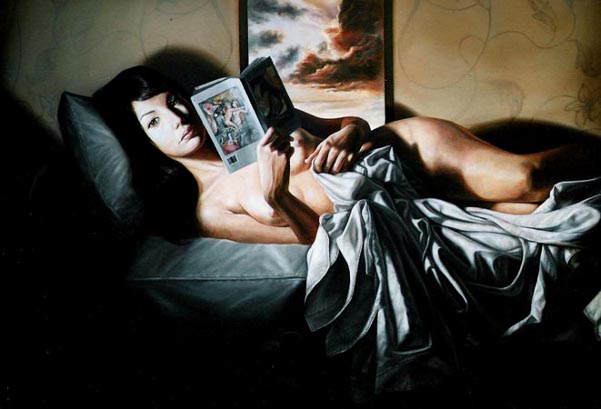
El Crepúsculo de Diotima
Ricardo Celma (1975, Argentina)

Diotima of Mantinea is a present absence in Plato’s Symposium. Her words form the most important of the symposium’s encomia to Eros, but she does not speak them herself. Socrates, her former pupil, relates her lesson in erotics to the assembly. She remains a mysterious figure: her name — ‘honoured by god’ — and her city, cognate with mantis, place her somewhere between human and divinity. Though the main narrative of the Symposium is doubly framed — it records the words of Apollodorus who recounts what he heard from Aristodemus — Diotima is still further removed from the literary present. She exists (if she exists at all) as a liminal, ambiguous being. But this is appropriate to her subject: Eros, a god characterized by perpetual incompleteness.

The Diotima of Friedrich Hölderlin’s Hyperion or the Hermit in Greece (Hyperion oder der Eremit in Griechenland), too, seems poised between being and non-being. As the title character’s beloved, her existence forms the hinge of the entire narrative, yet the pages in which she appears are relatively few and in them, she is most often passive and silent. Most formative for Hyperion, indeed, is her seemingly unmotivated death, reported at second-hand. The form of the novel, a series of retrospective letters from Hyperion, serves to heighten her absence just as the Symposium’s framing places its narrative in a doubly-remembered past. Hölderlin’s Diotima, like Plato’s, exists in eternal mediation, suggesting that Hyperion’s desire cannot be fulfilled, his ideal never realized.

This is the lesson of Diotima in the Symposium. In contrast to the previous speakers, Socrates emphasizes not the positive qualities of Eros, but the poverty that drives the god to seek beauties he does not possess. Socrates reports the speech of Diotima, who disabused him of the notion advocated by his friends. The Eros described by Diotima is liminal, neither beautiful nor ugly, and neither man nor god. He is a daimôn, whose existence is defined by his place between opposing realms. His power is

… interpreting and carrying to gods things from humans, and to humans things from gods: from humans, the entreaties and sacrifices; from gods, orders and exchanges for sacrifices. He is in the middle of both and fills the space between, so that all is bound by him. 

Eros is always relational, a mediation between two elements. This is a consequence of his birth, as the child of Penia and Poros, need and resource. Like his mother, he is unattractive and perpetually impoverished, yet he has the skills of his father that allow him occasionally to attain his desire. This makes him a paradox, poor but able to become rich, immortal but able to die: ‘sometimes he flourishes for a day and lives, whenever he has resources, and sometimes he dies, but is brought back to life again through the nature of his father.’ Eros is not a happy medium of his two parents, but an unstable oscillation between states of euporia and aporia.

Eros’ dialectical nature makes him philosophical, and distinguishes him from his parents. Those who are wise (like Poros) feel no need to philosophize, while those who are ignorant (like Penia) cannot comprehend their need. Eros’s philosophical nature is based on reflection; it results from the recognition of his own ignorance. Philosophy is a state of intellectual poverty that uses resource to gain insight:

Being a philosopher he is between a wise man and an ignorant. The cause of this is his birth: for he is from a wise and resourceful [euporos] father, and an unwise and unresourceful [aporos] mother. 

Socratic philosophy and erotic desire are parallel; both begin in a state of reflective aporia and strive towards euporia. Socrates’s self-conscious ignorance makes him the exemplary erotic seeker. In this respect, it is particularly important that the figure of Diotima is absent in the dialogue: erotic and philosophical fulfilments are deferred, set off in a mysterious past. Furthermore, Socrates (like the speakers who frame the story) is simply repeating an earlier conversation rather than engaging in his usual dialectics. What remains for the symposiasts as for the reader of the Symposium is a mediated presence that relates knowledge without being able to answer for it.

El Crepúsculo de Diotima
Ricardo Celma (1975, Argentina)

The connection of philosophy and desire suggests a productive nature of Eros, a way it escapes the constant oscillation between want and fleeting fulfilment. As we have already learned, Eros is unable to possess what it desires permanently. Instead of possession of the beautiful, Eros seeks to reproduce with the beautiful:

– Eros, Socrates, she said, is not of the beautiful, as you think.

– But what then?

– Of begetting and bringing forth on the beautiful.

– Let it be so, I said.

– It is so absolutely, she said. And why is it of begetting? Because begetting is eternal and undying as far as it is possible for a mortal. From what we have agreed, it is necessary that with good one desire immortality, if indeed eros is of the good being one’s own always. It is necessary from this very account that eros be also of immortality.

The account of Eros’ activity here changes abruptly: Eros finds a way out of lack, to a creative activity. This also necessitates a redefinition of Eros as desire, not for the beautiful or the good, but for an eternal existence. In place of possession, Eros turns to production. This is the crux on which Hölderlin’s reading of the Symposium will focus, as nostalgia for a lost ideal is transformed into the realization of future possibility. This dynamic constitutes what might be termed an ‘erotics of reception’.

Desire, according to Socrates, necessarily turns from the transient present towards an infinite future. In reporting Diotima’s words, Socrates enacts this temporal reorientation, making her absence the basis for philosophical production. He leads his companions, as erotic desire leads the philosopher, on the ascent to higher forms of beauty, and ultimately, to the idea. This is an increasingly contemplative act, in which desire for a beautiful body yields to desire for a beautiful soul, and ultimately, to knowledge of the essence of beauty:

Beginning from these very beauties, for the sake of that highest beauty he ascends eternally, just as if employing the rungs of a ladder, from one to two, and from two to all beautiful bodies; from beautiful bodies he proceeds to beautiful pursuits, from pursuits to beautiful sciences, and from these sciences arrives at that science which is concerned with the beautiful itself and nothing else, so that finally he comes to know what the beautiful is. 

The end of Eros is philosophical fulfilment, conceived as a reflection on immortal beauty. The ascent to the eternal form is parallel to the immortality of giving birth: both begin with a pregnancy of the soul that seeks a beautiful object. From the aporia of mortal bodies, philosophy fashions the euporia of wisdom. The figure of Diotima, an absence that produces knowledge, represents this progress to fulfilment through loss. In the Symposium, as in Hyperion, Diotima’s very pastness makes her the object of an erotic dialectic.
Read Joshua Billings’ whole paper, entitled  Hyperion’s symposium: an erotics of receptionOxford Classical Receptions Journal (2010) 2 (1): 4-24.

friedrich hölderlin – out for a walk

The margins of the forest are beautiful,
as if painted onto the green slopes.
I walk around, and sweet peace
rewards me for the thorns
in my heart, when the mind has grown
dark, for right from the start
art and thinking have cost it pain.
There are lovely pictures in the valley,
for example the gardens and trees,
and the narrow footbridge, and the brook,
hardly visible. How beautifully
the landscape shines, cheerfully distant,
like a splendid picture, where I come
to visit when the weather is mild.
A kindly divinity leads us on at first
with blue, then prepares clouds,
shaped like gray domes, with
searing lightning and rolling thunder,
then comes the loveliness of the fields,
and beauty wells forth from
the source of the primal image.

on friedrich hölderlin’s “hyperion”

Hölderlin’s work, like Celan’s after him, is a practice of creating the universality of music out of the treacherous medium of words. The frisson of this practice is an impossible, and irresistible, place to live and die. Like Orpheus, Hyperion keeps looking back. And like Orpheus, Hölderlin the poet relives the moment of his lost love in a melodious, maddening loop.

~ Elizabeth Bachner, on Hyperion by Friedrich Hölderlin. Read her whole review HERE.

le journal de personne – not even in your dreams!

I am a woman – quite real – to myself
and all that is most virtual to others
accessible to myself
inaccessible to all the others
what is it that separates me from the others?
the veil of Maya, say some
the unbearable lightness of being, say others
illusions and allusions
there you have it, what protects us, the one and the others
what separates us, the ones from the others
to a friend who insisted on seeing me, I said, “not even in your dreams”
she took it badly and eclipsed herself from my mind
i was mistaken, badly mistaken, I should have told her
in dreams, why not, but not in real life
some hidden meaning… some secret meaning… some sacred meaning…
there you have it, what comprises Mystery
my life and I, we will always be out of reach
intimate intimity
Chimène* or Chimera
since ancient times the emphasis was always on the duplicity of all living things
am I a person or a personality?
real or virtual?
existence or excellence?
that I am Nobody makes my character more enigmatic but at the same time more consistent
it is paradoxical, but all who are tempted by infinity will know what I am saying
will push themselves to question Orpheus anew. He descended into hell to save Eurydice. Imagine the pain he put himself through. No, you can’t imagine, because it is unimaginable. And at the moment of returning to the surface, when he was in front and she behind him, the gods forbade him to turn around until they were both together at the other side of the barrier, on the human side, but Orpheus couldn’t restrain himself; he turned around, and lost Eurydice forever

* literary character signifying obsessive passion

(Thanks to Martin Jacklin for help with this translation. Original text HERE.)

3. affectivity

on why we often desire what makes us miserable (to where we often come to regret the good old days of arranged marriages) and on why women don’t say what they think.

13. Within the terrible community, emotional education is based on systematic humiliation, and the pulverization of its members’ self-esteem. No one must be able to believe themselves to be a carrier of that kind of affectivity which would have the right to a place inside the community.The hegemonic type of affectivity inside the terrible community corresponds, paradoxically, to what is seen outside of it as the most backwards form. The tribe, the village, the clan, the gang, the army, the family; these are the human formations universally acknowledged as being the most cruel and the least gratifying, and yet in spite of all they persist within the terrible communities. And in them, women must take on a kind of virility that even males disclaim now in biopolitical democracies, all the while seeing themselves as women whose femininity has lost out to the masculine fantasy dominant at the very heart of the terrible community: the fantasy of plastic “sexy” woman (in the image of the Young-Girl, that carnal envelope) ready for use and consumption by genital sexuality.

14. In the terrible communities, women, because they cannot actually become men, must become like men, while remaining furiously heterosexual and prisoners of the most worn-out stereotypes. If nobody has the right, in the terrible community, to say the truth about human relations, that’s doubly true for women: any woman that undertakes parrhesia within the terrible community will be immediately classed as just some hysteric.

from Tiqqun 2: Theses on the terrible community.

from teqqun 2 – theses on the terrible community (2001)

(POST SCRIPTUM)

Everyone knows the terrible communities, whether because they’ve spent some time in them or because they’re still there. Or simply because they’re still stronger than the others, and so some of us have still partly remained in them – while at the same time being outside of them. The family, the school, work, prison – these are the classical faces of this contemporary form of hell, but they are the least interesting because they belong to a bygone depiction of commodity evolution, and are at present merely surviving on. There are some terrible communities, however, that fight against the existing state of things, and that are simultaneously quite attractive and much better than “this world.” And at the same time their way of approximating truth – and thus joy – distances them more than anything else from freedom.

The question that arises for us, in a final manner, is more of an ethical than a political nature, because the classical forms of politics are at the low water-mark, and their categories are leaving us, like the habits of childhood. The question is whether we prefer the possibility of unknown dangers to the certainty of the present misery. That is, whether we want to go on living and talking in accord (in a dissident manner, of course, but always in accord) with what has been done up to now – and thus with the terrible communities – or whether we want to really put to the test that little part of our desires that culture has still not managed to infest with its cumbersome quagmire and try to start out on a different path – in the name of a totally new kind of happiness.

This text was born as a contribution to that new journey.

Read the whole of this publication, translated from the original French, HERE.

noir désir with manu chao – le vent nous portera (2001)

I’m not scared of the road
We’ll have to see, have to taste
The weakness in our loins
And everything will be ok
The wind will carry us

Your message to Ursa Major
And the trajectory of your course
An instant of valour
Even if it’s for nothing
The wind will take it away
Everything will disappear but
The wind will carry us

The caress and the gunshot
That wound that tears us apart
The palace of the everyday
From yesterday and tomorrow
The wind will carry them

Genetics carried on the back
Chromosomes in the atmosphere
Taxis for the galaxies
And my flying carpet says
The wind will carry it off
Everything will disappear but
The wind will carry us

This perfume of our dead years
That can knock at your door
Infinity of destinies
We put some down but what do we retain?
The wind will take it away

While the tide comes in
And everyone is doing their accounts
I bring to the hollow of my shadow
A few bits of your dust
The wind will carry them
Everything will disappear but
The wind will carry us

gertrude stein – from “the mother of us all”

“Yes, but what is man, what are men, what are they? I do not say that they haven’t kind hearts, if I fall down in a faint, they will rush to pick me up, if my house is on fire, they will rush in to put the fire out and help me, yes they have kind hearts but they are afraid, afraid, they are afraid, they are afraid. They fear women, they fear each other, they fear their neighbor, they fear other countries and then they hearten themselves in their fear by crowding together and following each other, and when they crowd together and follow each other they are brutes, like animals who stampede, and so they have written in the name male into the United States constitution, because they are afraid of black men because they are afraid of women, because they are afraid afraid. Men are afraid.”

“And women.”

“Ah women often have not any sense of danger, after all a hen screams pitifully when she sees an eagle but she is only afraid for her children, men are afraid for themselves, that is the real difference between men and women.”

“But Susan B, why do you not say these things out loud?”

“I say they are afraid, but if I were to tell them so their kindness would turn to hate. Yes the Quakers are right, they are not afraid because they do not fight, they do not fight.”

“But Susan B. you fight and you are not afraid.”

“I fight and I am not afraid, I fight but I am not afraid.”

“And you will win.”

“Win what, win what?”

joan baez – be not too hard

Live 1972 cover of the Donovan song, based on a poem  by Christopher Logue.

Be not too hard for life is short
And nothing is given to man
Be not too hard when he is sold or bought
For he must manage as best he can
Be not too hard when he blindly dies
Fighting for things he does not own
Be not too hard when he tells lies
Or if his heart is sometimes like a stone
Be not too hard for soon he’ll die
Often no wiser than he began
Be not too hard for life is short
And nothing is given to man

le journal de personne – inside woman

(machine translation, with a little editing)

My name is Nobody
Listen carefully to what I say
because I pick my words on the fly
And I never repeat myself
I told you what I call myself; this settles the question of WHO
The WHERE meanwhile could easily be described as the wall of a cell of a post entitled: “Inside woman”
But there is a clear difference between ending up trapped in a narrow cell and ending up trapped in one’s own desire to settle all accounts.
WHAT is easy too: Lately I have designed and begun to implement a mechanism to take over the Internet. The most perfect break in on the planet!
but WHEN? today or maybe tomorrow.
Regarding WHY… besides the obvious motivation of exacting justice, the reason is very simple: Because I decided to.
… Which leaves us with the HOW to resolve:
To be true to myself, I would say: No comment!

Read the text in French.

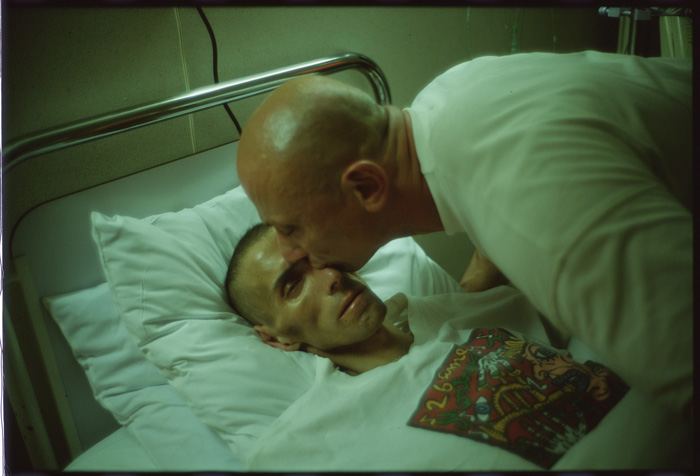
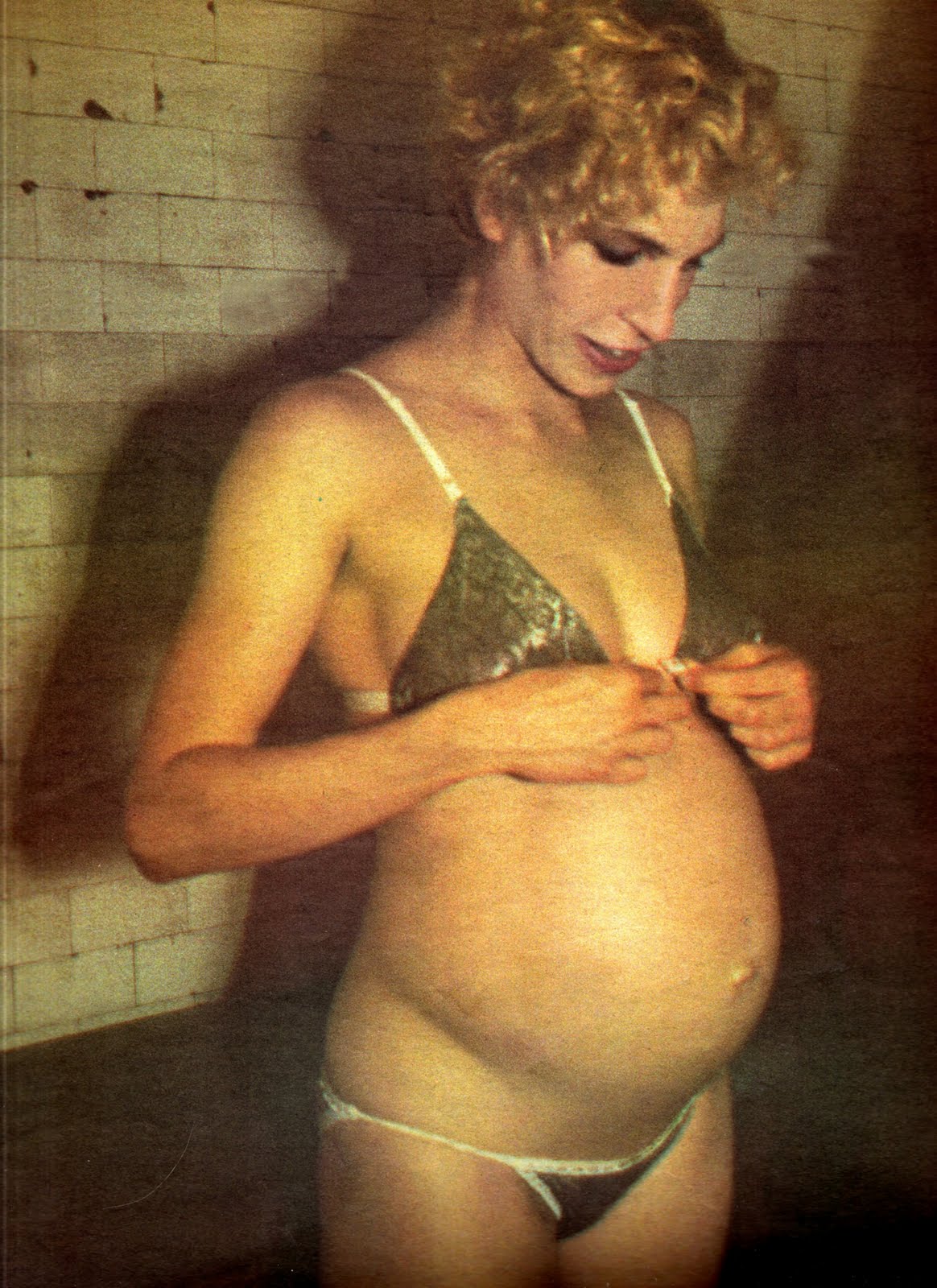
the work of nan goldin

As a teenager in Boston in the 1960s, then in New York starting in the 1970s, Nan Goldin has taken intensely personal, spontaneous, sexual, and transgressive photographs of her family, friends, and lovers. In 1979 she presented her first slideshow in a New York nightclub, and her richly colored, snapshotlike photographs were soon heralded as a groundbreaking contribution to fine art photography. The Ballad of Sexual Dependency—the name she gave her ever-evolving show—eventually grew into a forty-five-minute multimedia presentation of more than 900 photographs, accompanied by a musical soundtrack.

friedrich nietzsche on the beauty of acceptance

I want to learn more and more to see as beautiful what is necessary in things; then I shall be one of those who make things beautiful. Amor fati: let that be my love henceforth! I do not want to wage war against what is ugly. I do not want to accuse; I do not even want to accuse those who accuse. Looking away shall be my only negation. And all in all and on the whole: some day I wish to be only a Yes-sayer.

~ from Die fröhliche Wissenschaft (The Joyful Science)

My formula for greatness in a human being is amor fati: that one wants nothing to be different, not forward, not backward, not in all eternity. Not merely bear what is necessary, still less conceal it—all idealism is mendaciousness in the face of what is necessary—but love it.

~ from Ecce Homo

(translations by Walter Kaufmann)