Sami joik music from the arctic far north of Sweden.
Sami joik music from the arctic far north of Sweden.
 … We set things aside without knowing we are doing so; that is precisely where the danger lies. Or, which is still worse, we set them aside by an act of the will, but by an act of the will that is furtive in relation to ourselves. Afterwards we do not any longer know that we have set anything aside. We do not want to know it, and, by dint of not wanting to know it, we reach the point of not being able to know it.
This faculty of setting things aside opens the door to every sort of crime. Outside those departments where education and training have forged solid links, it provides a key to absolute licence. That is what makes it possible for men to behave in such an incoherent fashion, particularly wherever the social, collective emotions play a part (war, national or class hatreds, patriotism for a party or a church). Whatever is surrounded with the prestige of the social element is set in a different place from other things and is exempt from certain connexions.
We also make use of this key when we give way to the allurements of pleasure.
I use it when, day after day, I put off the fulfillment of some obligation. I separate the obligation and the passage of time.
There is nothing more desirable than to get rid of this key. It should be thrown to the bottom of a well whence it can never again be recovered.
The ring of Gyges who has become invisible—this is precisely the act of setting aside: setting oneself aside from the crime one commits; not establishing the connexion between the two.
The act of throwing away the key, of throwing away the ring of Gyges—this is the effort proper to the will. It is the act by which, in pain and blindness, we make our way out of the cave. Gyges: ‘I have become king, and the other king has been assassinated.’ No connexion whatever between these two things. There we have the ring!
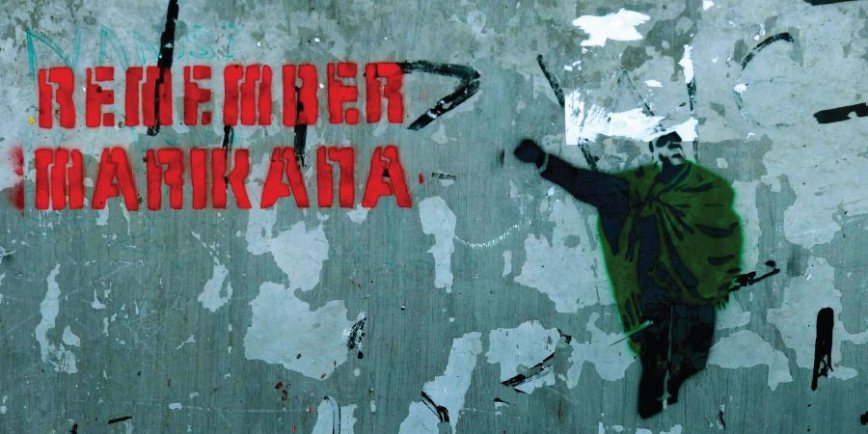
The owner of a factory: ‘I enjoy this and that expensive luxury and my workmen are miserably poor.’ He may be very sincerely sorry for his workmen and yet not form the connexion.
For no connexion is formed if thought does not bring it about. Two and two remain indefinitely as two and two unless thought adds them together to make them into four.
We hate the people who try to make us form the connexions we do not want to form.
Justice consists of establishing between analogous things connexions identical with those between similar terms, even when some of these things concern us personally and are an object of attachment for us.
This virtue is situated at the point of contact of the natural and the supernatural. It belongs to the realm of the will and of clear understanding, hence it is part of the cave (for our clarity is a twilight), but we cannot hold on to it unless we pass into the light.
__
Excerpted from Simone Weil‘s Gravity and Grace. First French edition 1947. Translated by Emma Crawford. English language edition 1963. Routledge and Kegan Paul, London.
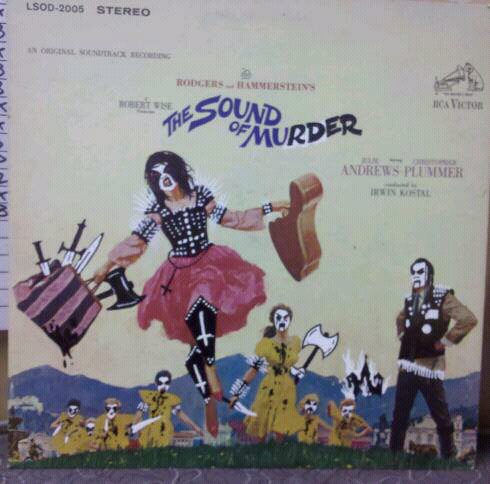
More ridiculous amazingness at bargainbinblasphemy.tumblr.com.

8 August 2016.
This, to be precise.
https://www.instagram.com/p/BI4CesNjKHV/
Debbie Pryor, 8 August 2016.
Off More Rain (Merge Records, 2016).
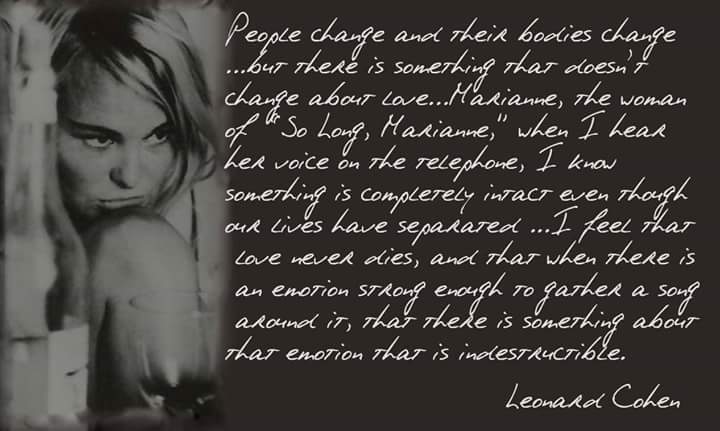
Leonard Cohen’s Marianne died last week. Two days before she left earth, he sent her a beautiful letter.
“Well, Marianne, it’s come to this time when we are really so old and our bodies are falling apart and I think I will follow you very soon. Know that I am so close behind you that if you stretch out your hand, I think you can reach mine.
“And you know that I’ve always loved you for your beauty and your wisdom, but I don’t need to say anything more about that because you know all about that. But now, I just want to wish you a very good journey. Goodbye old friend. Endless love, see you down the road.”
Read more here.
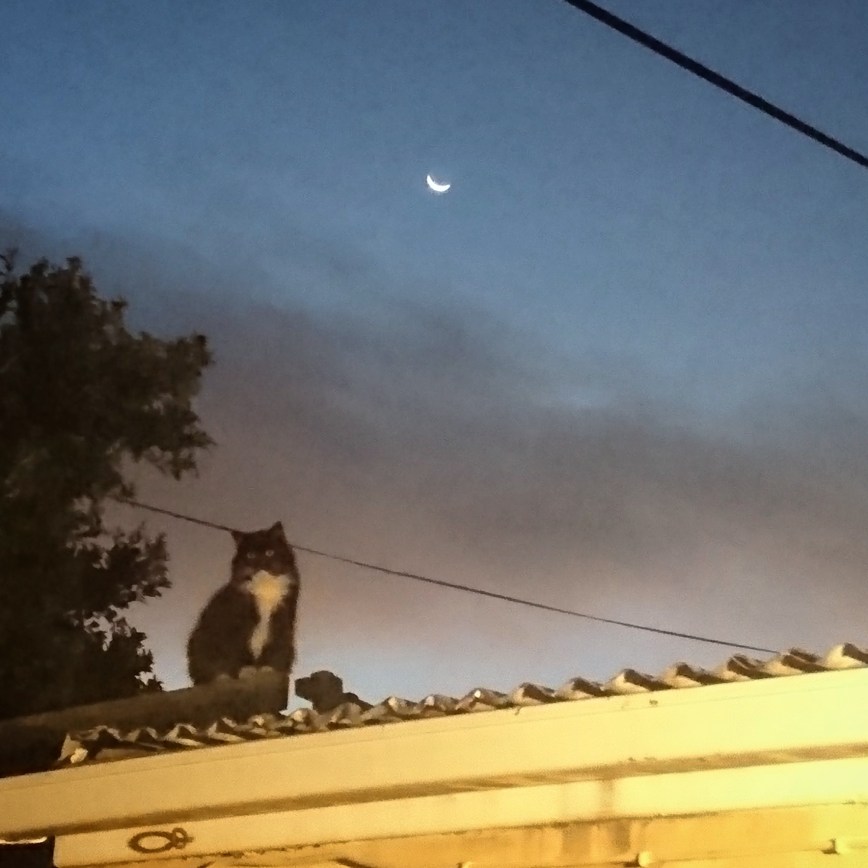
Observatory, Cape Town, Friday 5 August 2016.
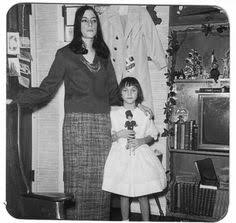
Patti Smith and her sister Kimberly, 1962. (Photo posted on Facebook by Kimberly.)
The wall is high, the black barn,
The babe in my arms in her swaddling clothes
And I know soon that the sky will split
And the planets will shift,
Balls of jade will drop and existence will stop.
Little sister, the sky is falling, I don’t mind, I don’t mind.
Little sister, the fates are calling on you.
Ah, here I stand again in this old ‘lectric whirlwind,
The sea rushes up my knees like flame
And I feel like just some misplaced Joan Of Arc
And the cause is you lookin’ up at me.
Oh baby, I remember when you were born,
It was dawn and the storm settled in my belly
And I rolled in the grass and I spit out the gas
And I lit a match and the void went flash
And the sky split and the planets hit,
Balls of jade dropped and existence stopped, stopped, stop, stop.
Little sister, the sky is falling, I don’t mind, I don’t mind.
Little sister, the fates are calling on you.
I was young ‘n crazy, so crazy I knew I could break through with you,
So with one hand I rocked you and with one heart I reached for you.
Ah, I knew your youth was for the takin’, fire on a mental plane,
So I ran through the fields as the bats with their baby vein faces
Burst from the barn and flames in a violent violet sky,
And I fell on my knees and pressed you against me.
Your soul was like a network of spittle,
Like glass balls movin’ in like cold streams of logic,
And I prayed as the lightning attacked
That something will make it go crack, something will make it go crack,
Something will make it go crack, something will make it go crack.
The palm trees fall into the sea,
It doesn’t matter much to me
As long as you’re safe, Kimberly.
And I can gaze deep
Into your starry eyes, baby, looking deep in your eyes, baby,
Looking deep in your eyes, baby, looking deep in your eyes, baby,
Into your starry eyes, oh.
Oh, in your starry eyes, baby,
Looking deep in your eyes, baby, looking deep in your eyes, baby, oh.
Oh, looking deep in your eyes, baby,
Into your starry eyes, baby, looking deep in your eyes, baby…
—
Simon Reynolds in a fascinating discussion with Patti Smith of her Horses album here.
Time passed hard,
and the task was the hardest thing she’d ever do.
But she forgot,
the moment she saw you.
So it would seem to be true:
when cruel birth debases, we forget.
When cruel death debases,
we believe it erases all the rest
that precedes.
But stand brave, life-liver,
bleeding out your days
in the river of time.
Stand brave:
time moves both ways,
in the nullifying, defeating, negating, repeating
joy of life;
the nullifying, defeating, negating, repeating
joy of life.
The moment of your greatest joy sustains:
not axe nor hammer,
tumor, tremor,
can take it away, and it remains.
It remains.
And it pains me to say, I was wrong.
Love is not a symptom of time.
Time is just a symptom of love
(and the nullifying, defeating, negating, repeating
joy of life;
the nullifying, defeating, negating, repeating
joy of life).
Hardly seen, hardly felt–
deep down where your fight is waiting,
down ’till the light in your eyes is fading:
joy of life.
Where i know that you can yield, when it comes down to it;
bow like the field when the wind combs through it:
joy of life.
And every little gust that chances through
will dance in the dust of me and you,
with joy-of-life.
And in our perfect secret-keeping:
One ear of corn,
in silent, reaping
joy of life.
Joy! Again, around–a pause, a sound–a song:
a way a lone a last a loved a long.
A cave, a grave, a day: arise, ascend.
(Areion, Rharian, go free and graze. Amen.)
A shore, a tide, unmoored–a sight, abroad:
A dawn, unmarked, undone, undarked (a god).
No time. No flock. No chime, no clock. No end.
White star, white ship–Nightjar, transmit: transcend!
White star, white ship–Nightjar, transmit: transcend!
White star, white ship–Nightjar, transmit: transcend!
White star, white ship–Nightjar, transmit: trans
Much has been made, in almost all recent profiles and in earlier reviews, of the optimistically transcendent cyclicality of the “final” gesture on Newsom’s exquisite new album, Divers — her first in five years. But gauging the (potentially inconclusive) philosophical conclusion — one that could also be wholly cynical — of Divers really comes down to how the listener decides to experience its last song, “Time, as a Symptom.”
The album’s ending is not unlike the “Isn’t this where we came in?” conclusion/introduction to Pink Floyd’s The Wall, except even more abrupt, given that Newsom cuts herself off in the middle of a single word. The word in question — “transcending” — wraps around at the start of the album’s first song.
Set your iTunes to loop and it’ll join the album’s hanging final prefix, “trans—” and opening word, “sending.” It’ll likewise connect the similar sylvan soundbites underscoring these two moments (varied birdcalls and the technicolor fog of the album’s cover rendered in sound), joining the first and last tracks in a form of rebirth in a way that, as NPR put it, “lift[s] the spirit aloft.” Listen to it on vinyl and you may hear how “trans” and “sending” attempt, now perhaps futilely, to reach back and forth through your own memory of the opening of the album, to connect. Listen to the song on its own on, say, YouTube, and the end is an almost violent death of a close, cutting off the singer’s last command, “transcend,” as though she’s vocalizing her own — and everyone else’s own — fatal failure to do so. Like most of Newsom’s music, she leaves the meaning of the album’s culmination — and the light or despairing shadow it casts on the rest of it — ambiguous.
Throughout the album, Newsom appears rigorously aware, on both minute and cosmic scales, of the shifting ontological implications of our times, as well as their potential fallacy, and the possibility that some factors of human life — like altering time’s tyranny over it — may never truly change. The current human experience is underscored by new polarities of doom and transcendent life: possibilities of immortality via “the Singularity” versus imminent death via global warming, particle colliders showing us how space-time can be bent versus particle colliders destroying us, the Internet as the birth of a more universalist world versus the Internet as the death of the physical world. Even more than artists who’ve been lauded for eliciting the emotional spectra of humans who’ve melded with machines, Newsom has, with her bounty of antiquated instruments, made an album that unquestionably sounds like today…
…Divers is a monumental album in which monuments are brought up for their proneness to crumble, their inability to remain beyond their — as a line in “Waltz of the 101st Lightborne” goes — “great simulacreage.” But it wonders, with the ultimate inconclusiveness of that last line, if the physical/temporal restraints on the human condition could shift. In “Sapokanikan,” Newsom sings that “the causes we die for are lost in the idling bird call.” And so perhaps it’s best to say that there’s both victory and despair, existing as parallel possibilities, when the album ends with either a death or a transcendence, underscored by birdcalls — the indifferent, (and especially as Jonathan Franzen likes to point out, also fleeting) presences that are left. The question it leaves open — as it simultaneously creates a tragic death and a transcendent bridge — is one that makes Divers one of the affecting reflections of our philosophical, scientific and emotional moment recently made into an album.
Read the rest of this review at Flavorwire.
“Use what talents you possess; the woods would be very silent if no birds sang there except those that sang best.”

This performance though…
I wish right now that I could spew a wry little poem, like those you do
But what’s churning round in me is only a terribly fervent prayer:
Please get home safely through this rain
Please can neither of us die
Before we are friends again
A poem by Louise Westerhout, accompanied by Lliezel Ellick (cello) and Rosemary Lombard (autoharp), performed on 28 July 2016 at the Blah Blah Bar’s Open Mouth night.
Next time we’ll make sure we find a venue where rude men at the bar are not entitled to talk through performances…
A version of the Rezsö Seress classic that we performed on 28 July 2016 as part of a collective which included Louise Westerhout, Lliezel Ellick, Rosemary Lombard, Debra Pryor and Roxanne de Freitas, at Blah Blah Bar’s “Open Mouth” night. We had had just two rehearsals, and I feel like this has the potential to go a lot further… Watch this space!
The most wondrous stuff regularly comes up in my feeds, as if in direct response to my posts, but not – here’s an example. If it’s all coincidence, I’m very lucky.
Check out Thomas Kuntz’s site for more of his incredible automata.


 fleurmach