“Solamente una vez“, written by Agustin Lara, was first recorded by Ana María González & José Mojíca (January 21,1942). An English version of the song was recorded a few years later by Dora Luz, as “You belong to my heart“, which was used in Disney’s The Three Caballeros, but the lyrics are really lost in translation.
Why had I never heard of this?! In 1946 Disney and Dalí conceived this animated story of Chronos, the personification of time who falls in love with a mortal.
Dalí described the film as “a magical display of the problem of life in the labyrinth of time”. Disney called it “a simple story about a young girl in search of true love.”
Read more about the collaboration and realisation of this beautiful little film HERE.
Enrico Caruso sings “Elegie” composed by Jules Massenet.
Mischa Elman, violin
Percy B. Kahn, piano
20.III.1913
Ô doux printemps d’autrefois, vertes saisons,
vous avez fui pour toujours!
Je ne vois plus le ciel bleu;
je n’entends plus les chants joyeux des oiseaux!
En emportant mon bonheur,
ô bien-aimé tu t’en es allé!
Et c’est en vain que revient le printemps!
Oui, sans retour.
Avec toi le gai soleil,
les jours riants sont partis!
Comme en mon coeur tout est sombre et glacé!
Tout est flétri!
Pour toujours!
“Elegy is a form of poetry natural to the reflective mind. It may treat of any subject, but it must treat of no subject for itself; but always and exclusively with reference to the poet. As he will feel regret for the past or desire for the future, so sorrow and love became the principal themes of the elegy. Elegy presents every thing as lost and gone or absent and future.”
– S. T. Coleridge, Specimens of the Table Talk of the late Samuel Taylor Coleridge (1835), vol 2, p. 268
Tychbornes Elegie, written with his owne hand in the Tower before his execution*
My prime of youth is but a frost of cares,
My feast of joy is but a dish of paine,
My Crop of corne is but a field of tares,
And al my good is but vaine hope of gaine.
The day is past, and yet I saw no sunne,
And now I live, and now my life is done.
My tale was heard, and yet it was not told,
My fruite is falne, & yet my leaves are greene:
My youth is spent, and yet I am not old,
I saw the world, and yet I was not seene.
My thred is cut, and yet it is not spunne,
And now I live, and now my life is done.
I sought my death, and found it in my wombe,
I lookt for life, and saw it was a shade:
I trod the earth, and knew it was my Tombe,
And now I die, and now I was but made.
My glasse is full, and now my glasse is runne,
And now I live, and now my life is done.
Great fan-made video from a scrap of studio footage. <3 From the new album Amnesty (I) out on Fiction Records. Samples from several songs on this album.
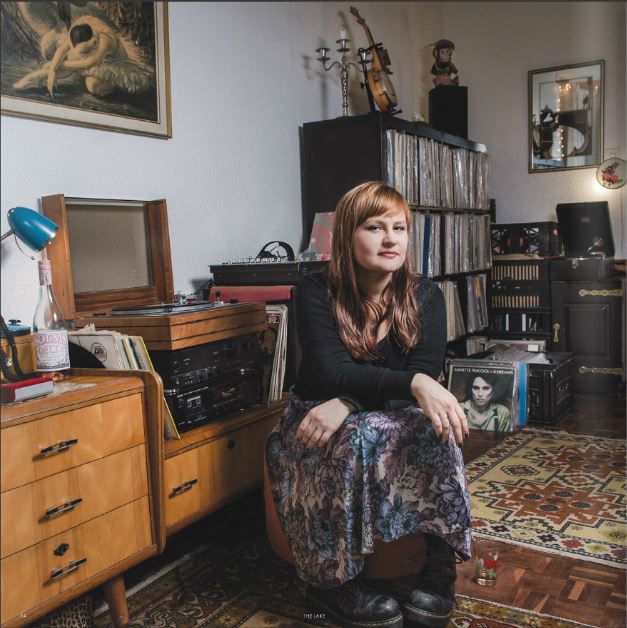
“I’m an insatiable explorer. I’ll find music via any route I can, but vinyl is my favourite medium for its wonderful tactility. I’ve been collecting records since I was about 14. My pocket money didn’t stretch to buying CDs regularly, so I turned to second-hand LPs because I could buy speculatively and get a rush of novelty for R2 or R5 a pop. Every great record holds a slice of adventure – as it spins, thin air is transformed by sound into a tangible place you inhabit. You can take listeners anywhere your imagination and collection will stretch, and I think this can really expand your capacity for empathy.”
Kate Bush – Hounds of Love/The Ninth Wave (EMI, 1985)
Choosing only six records to feature here was an ordeal because the span of what has shaped me is just so wide. I decided to restrict contenders to female artists, who are often under-represented in these kinds of list. I got down to about 20 possibilities but then had to shuffle and pick randomly with my eyes closed. So, for starters, what’s there to say that hasn’t already been said about the brilliance of Kate Bush? This album is a perennial go-to for me on grey, melancholy-drenched days – the second side, beginning with “And Dream of Sheep”, in particular. It’s also something of a litmus test. I’ve realised over the years that if someone new I meet loves this record deeply, it’s almost a given that we’re going to click alchemically.
___
Nina Simone – Little Girl Blue (Bethlehem, 1958)
This was Nina Simone’s first album, recorded when she was just 25. Despite her youth, her mastery of expression is already consummate here. I often listen to music medicinally, and this is one of those records I turn to when I’m really over the world in general. Nina’s voice and piano carry all the bittersweet weight of living. “All you can ever count on are the raindrops…” The notes spill out exquisitely, painting cathedrals where my spirit can shelter, smoky bars where my soul can dance. Any morning I’m struggling to pull myself together, if I drop the needle on “Good Bait”, by the time it’s resolutely swinging, two minutes in, the kettle will be on the boil and I’ll be thinking of what to wear.
___
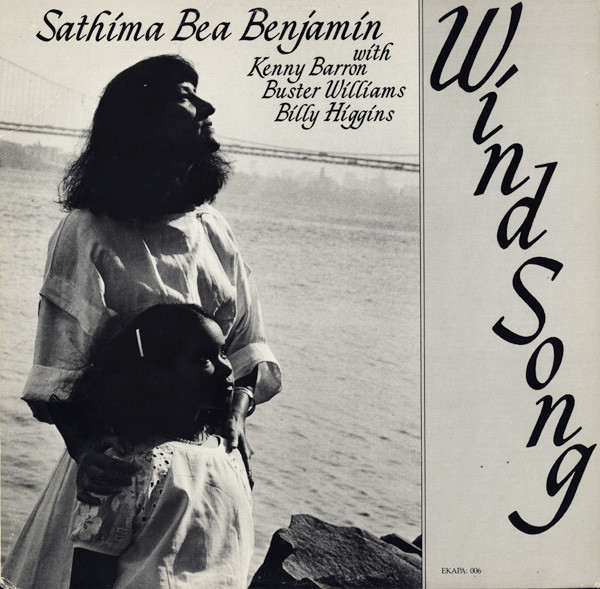
Sathima Bea Benjamin – Windsong (Ekapa, 1985)
Windsong was recorded in New York in June 1985 and released on Ekapa RPM, the label launched by Sathima in 1979 to publish her own music and that of her then-husband Abdullah Ibrahim. A meditation on exile, displacement and yearning, the album opens with a haunting rendition of “Sometimes I Feel like a Motherless Child”, alongside Sathima’s own compositions. Windsong is dedicated to “the resilient, remarkable, and courageous mothers and daughters of the struggle for peace and liberation in my homeland, South Africa, to the heroines both sung and unsung”. My copy is extra precious to me because Sathima signed it for me just a couple of weeks before she passed away in 2013.
___
Forces Favourites – Eleven Songs by South Africans Supporting the End Conscription Campaign (Shifty Records/Rounder Records, 1986)
This compilation was released by legendary South African label Shifty Records in support of the movement for conscientious objectors against compulsory military service in the apartheid army. Jennifer Ferguson’s chillingly honest exploration of white privilege and paranoia, “Suburban Hum”, still feels relevant right now. It’s a highlight on this record for me, along with “Shot Down” by James Phillips’s Cherry-Faced Lurchers and the Kalahari Surfers’ “Don’t Dance”. I’ve owned the South African release for a long time, but last year, while living in a small university town in Sweden for a semester, I also picked up a US pressing with a different cover. While there, I was also privileged to meet Jennifer herself. She happens to live in the very same town, and is doing inspiring creative work with refugees.
___
Julia Holter – Ekstasis (Rvng Intl., 2012)
Los Angeles-based composer Julia Holter makes music which is conceptually dense, yet spacious and eminently listenable – hummable even. I saw her give a phenomenal performance last year in Stockholm. I already had three of her albums on mp3, including Ekstasis, so that night I grabbed this, which the merch guy told me was one of the last copies of the out-of-print 12” 45rpm double vinyl release. By drawing on archetypes from Greek tragedy, this album simultaneously abstracts personal narrative and renders the emotional content conveyed universal. It’s a clever conceit, but one you don’t need to be aware of in order to appreciate the music. An obvious comparison to draw would be with the work of Laurie Anderson (whose ground-breaking 1982 debut, Big Science, was also on my shortlist for this article).
___
The Raincoats – Odyshape (Rough Trade, 1981)
I read somewhere that following the release of their eponymous first album in 1979, the Raincoats were one of the first bands to be called “post-punk”. John Lydon said they were the best band in the world. Kurt Cobain wrote the liner notes for their first album’s 1993 re-release. None of this hype really prepares one for the shambolic assemblage of punk, folk and lo-fi that is the Raincoats’ second album, Odyshape, though. A wildly experimental departure into unmapped territory, the melodies float loosely over an assortment of unusually textured percussive instruments, including kalimba and balafon. This record still sounds extraordinary 35 years on: intimate and vulnerable, uncompromisingly feminine. I can definitely hear its influence on later artists such as Micachu and the Shapes, and Tune-Yards.
Sympoiesis, not autopoiesis, threads the string figure game played by Terran critters. Always many-stranded, SF is spun from science fact, speculative fabulation, science fiction, and, in French, soin de ficelles (care of/for the threads). The sciences of the mid-20th-century “new evolutionary synthesis” shaped approaches to human-induced mass extinctions and reworldings later named the Anthropocene. Rooted in units and relations, especially competitive relations, these sciences have a hard time with three key biological domains: embryology and development, symbiosis and collaborative entanglements, and the vast worlds of microbes. Approaches tuned to “multi-species becoming with” better sustain us in staying with the trouble on Terra. An emerging “new new synthesis” in trans-disciplinary biologies and arts proposes string figures tying together human and nonhuman ecologies, evolution, development, history, technology, and more. Corals, microbes, robotic and fleshly geese, artists, and scientists are the dramatis personae in this talk’s SF game.
For Donna Haraway, we are already assimilated.
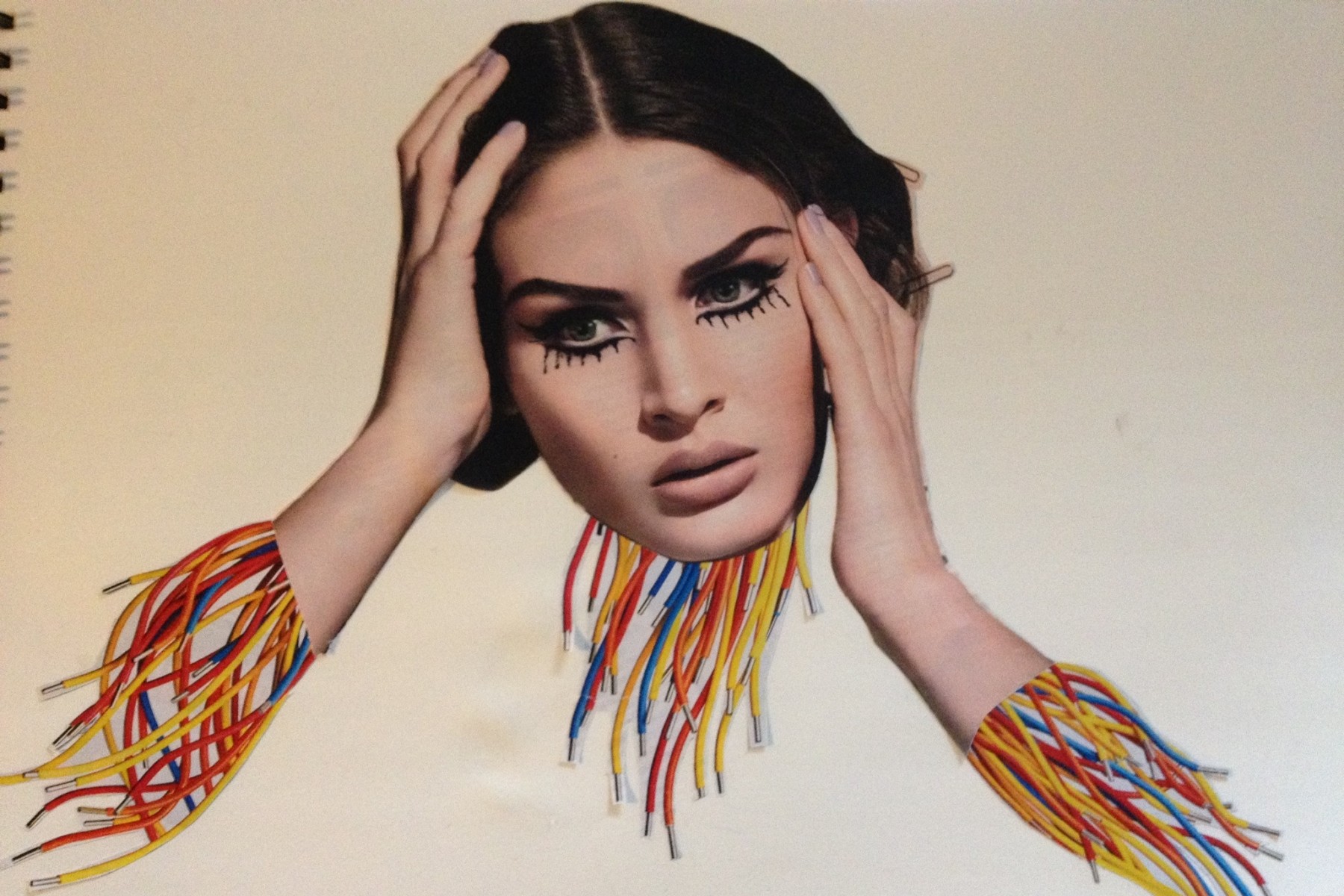
“The monster opens the curtains of Victor Frankenstein’s bed. Schwarzenegger tears back the skin of his forearm to display a gleaming skeleton of chrome and steel. Tetsuo’s skin bubbles as wire and cable burst to the surface. These science fiction fevered dreams stem from our deepest concerns about science, technology, and society. With advances in medicine, robotics, and AI, they’re moving inexorably closer to reality. When technology works on the body, our horror always mingles with intense fascination. But exactly how does technology do this work? And how far has it penetrated the membrane of our skin?”
Go HERE to read the rest of this article about Donna Haraway from way back in 1997.
“Lo único que importa es lo que esta por dentro,” – you’re the only one whose opinions on you matter.
Written by Liliana Margarita Saumet Avila, Eric Frederic, Joe Spargur, Federico Simon Mejia Ochoa, this catchy anthem is from their 2015 album Amanecer .
Mejía: On this one, we recorded a couple of traditional Colombian instruments live – which is something we like to do on all of our albums. It has a gaita [a folkloric wind instrument of indigenous origin] and a tambor alegre [a percussion instrument of African origin used in cumbia music]. It’s a really fun song and the most Colombian one on the album.
Saumet: The lyrics are about respecting people for who they are and not trying to change them. Sometimes as people we tend to judge others too much. So what if people criticize you? That’s the way you are.
“Recorded just before he passed and released posthumously, this is some of Chet’s best work. Arguably it’s his best work. As his life deteriorated from drugs through the years, his work had suffered and he had faded from the music world. It all came together in this concert in Tokyo. Absolutely fantastic musicians backing him up, and Chet had somehow come back into top form for this show. In fact he was better than he used to be… the years, the pain, the experiences, the feeling all came through in a more mature fashion in his voice and trumpet.”



 fleurmach