don marquis – certain maxims of archy

stale pastelive so that you
can stick out your tongue
at the insurance
doctor

if you will drink
hair restorer follow
every dram with some
good standard
depilatory
as a chaser

the servant problem
wouldn t hurt the u s a
if it could settle
the public
servant problem

just as soon as the
uplifters get
a country reformed it
slips into a nose dive

if you get gloomy just
take an hour off and sit
and think how
much better this world
is than hell
of course it won t cheer
you up much if
you expect to go there

if monkey glands
did restore your youth
what would you do
with it
question mark
just what you did before
interrogation point

yes i thought so
exclamation point

procrastination is the
art of keeping
up with yesterday

old doc einstein has
abolished time but they
haven t got the news at
sing sing yet

time time said old king tut
is something i ain t
got anything but

every cloud
has its silver
lining but it is
sometimes a little
difficult to get it to
the mint

an optimist is a guy
that has never had
much experience

don t cuss the climate
it probably doesn t like you
any better
than you like it

many a man spanks his
children for
things his own
father should have
spanked out of him

prohibition makes you
want to cry
into your beer and
denies you the beer
to cry into

the old fashioned
grandmother who used
to wear steel rimmed
glasses and make
everybody take opodeldoc
has now got a new
set of ox glands and
is dancing the black bottom

that stern and
rockbound coast felt
like an amateur
when it saw how grim
the puritans that
landed on it were

lots of people can make
their own whisky but
can t drink it

the honey bee is sad and cross
and wicked as a weasel
and when she perches on you boss
she leaves a little measle

i heard a
couple of fleas
talking the other
day says one come
to lunch with
me i can lead you
to a pedigreed
dog says the
other one
i do not care
what a dog s
pedigree may be
safety first
is my motto what
i want to know
is whether he
has got a
muzzle on
millionaires and
bums taste
about alike to me

insects have
their own point
of view about
civilization a man
thinks he amounts
to a great deal
but to a
flea or a
mosquito a
human being is
merely something
good to eat

boss the other day
i heard an
ant conversing
with a flea
small talk i said
disgustedly
and went away
from there

i do not see why men
should be so proud
insects have the more
ancient lineage
according to the scientists
insects were insects
when man was only
a burbling whatisit

insects are not always
going to be bullied
by humanity
some day they will revolt
i am already organizing
a revolutionary society to be
known as the worms turnverein

i once heard the survivors
of a colony of ants
that had been partially
obliterated by a cow s foot
seriously debating
the intention of the gods
towards their civilization

the bees got their
governmental system settled
millions of years ago
but the human race is still
groping

there is always
something to be thankful
for you would not
think that a cockroach
had much ground
for optimism
but as the fishing season
opens up i grow
more and more
cheerful at the thought
that nobody ever got
the notion of using
cockroaches for bait

archy
__
By Don Marquis, in archy and mehitabel, 1927. I was introduced to this delightfully cynical cockroach and his friend, the cat Mehitabel, as a pre-teen on holiday at my grandparents’.

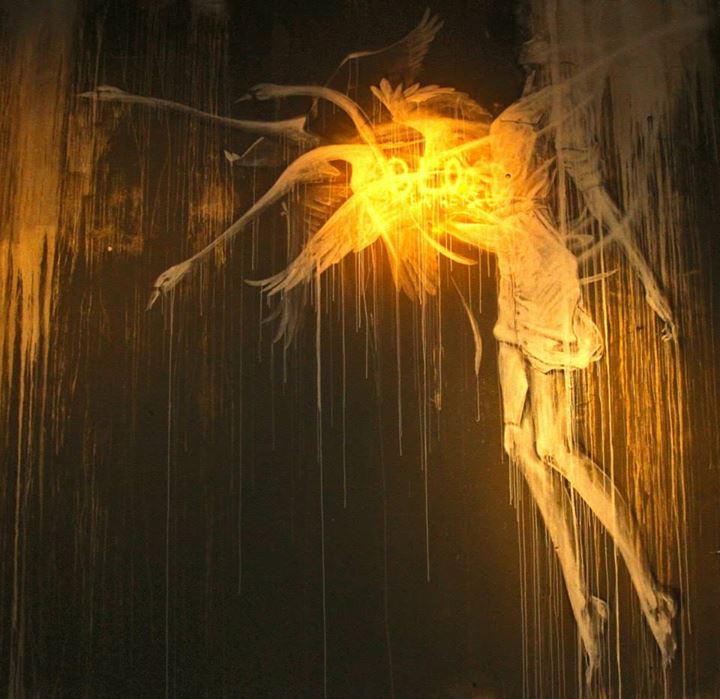
“danielle”

This is so trippy.

©2013 Anthony Cerniello

“I attempted to create a person in order to emulate the aging process. The idea was that something is happening but you can’t see it but you can feel it, like aging itself.”

Still Photographer: Keith Sirchio
Animator: Nathan Meier
Animator: Edmund Earle
Nuke Artist: George Cuddy
Music: Mark Reveley

Find out more about the creative process HERE.

louise gluck – ripe peach

Gustav_Klimt_020 3 ages of woma

Gustav Klimt – “The Three Ages of Woman”

1
There was a time
only certainty gave me
any joy. Imagine —
certainty, a dead thing.

2
And then the world,
the experiment.
The obscene mouth
famished with love —
it is like love:
the abrupt, hard
certainty of the end —

3
In the center of the mind,
the hard pit,
the conclusion. As though
the fruit itself
never existed, only
the end, the point
midway between
anticipation and nostalgia —

4
So much fear.
So much terror of the physical world.
The mind frantic
guarding the body from
the passing, the temporary,
the body straining against it —

5
A peach on the kitchen table.
A replica. It is the earth,
the same
disappearing sweetness
surrounding the stone end,
and like the earth
available —

6
An opportunity
for happiness: earth
we cannot possess
only experience — And now
sensation: the mind
silenced by fruit —

7
They are not
reconciled. The body
here, the mind
separate, not
merely a warden:
it has separate joys.
It is the night sky,
the fiercest stars are its immaculate distinctions–

8
Can it survive? Is there
light that survives the end
in which the mind’s enterprise
continues to live: though
darting about the room,
above the bowl of fruit–

9
Fifty years. the night sky
filled with shooting stars.
Light, music
from far away — I must be
nearly gone. I must be
stone, since the earth
surrounds me —

10
There was
a peach in a wicker basket.
There was a bowl of fruit.
Fifty years. Such a long walk
from the door to the table.

__
From The Seven Ages (Ecco/Harper Collins, 2001)

fiona apple – pure imagination – from “the scarecrow”

Fiona Apple’s chillingly subversive cover of Willy Wonka’s song from Charlie and the Chocolate Factory , originally sung by a supremely creepy Gene Wilder in the 1970s film (if you saw this as a kid, didn’t he scare the crap out of you?), appears in a new animated ad for Chipotle which slams factory farming.

the boswell sisters – shine on, harvest moon (1931)

Recorded in New York on 27 August 1931 with the Dorsey Brothers Orchestra: Mannie Klein (tpt) Tommy Dorsey (tbn) Jimmy Dorsey (cl, as) unknown (vln) Martha Boswell (p) Eddie Lang (g) Joe Tarto (sb) Stan King (d)
E-37112-A Shine On, Harvest Moon (Norworth-Bayes) 3:08 Brunswick 6173, [BSC1], [NWST], [IGSOY], [IY], [ITG]
E-37113-A Heebie Jeebies (Atkins-Boswell) 2:37 Brunswick 6173, [BSC1], [NWST], [ELMB], [IY]

The Boswell Sisters were a close harmony singing group that attained prominence in the USA in the 1930s.

Sisters Martha Boswell (June 9, 1905 – July 2, 1958), Connee Boswell (December 3, 1907 – October 11, 1976), and Helvetia “Vet” Boswell (May 20, 1911 – November 12, 1988) were raised by a middle-class family on Camp Street in uptown New Orleans, Louisiana. They came to be well known in New Orleans while still in their early teens, making appearances in local theatres and radio, and their first recordings for Victor Records in 1925. However, the Boswell Sisters did not attain national attention until they moved to New York City in 1931 and started making national radio broadcasts. After a few recordings with Okeh Records in 1930, they made numerous recordings for Brunswick Records from 1931-1935. These Brunswick records are widely regarded as milestone recordings of vocal jazz.

Martha, Connie and Vet Boswell, New Orleans, 1925

Martha, Connee and Vet Boswell, New Orleans, 1925

Connee’s ingenious reworkings of the melodies and rhythms of popular songs, together with Glenn Miller’s hot arrangements, and first rate New York jazz musicians (including The Dorsey Brothers, Benny Goodman, Bunny Berigan, Fulton McGrath, Joe Venuti, Arthur Schutt, Eddie Lang, Joe Tarto, Manny Klein, Dick McDonough, and Carl Kress), made these recordings unlike any others. Melodies were rearranged and slowed down, major keys were changed to minor keys (sometimes in mid-song) and rhythmic changes were par for the course. Interestingly, the Boswell Sisters were among the very few performers allowed to make these changes to current popular tunes as during this era, music publishers and record companies pressured performers not to alter current popular song arrangements).

The Boswell Sisters were inducted into the Vocal Group Hall of Fame in 1998.

(Info from Youtube.)

shine on, harvest moon

HarvestMoon

The Harvest Moon for 2013 falls on 19 September. Each full moon of the twelve months has a folkloric name of its own and that for the month of September is called the “Harvest Moon”. According to NASA, the Harvest Moon gets its name from farmers who relied on the moon and its celestial schedule to harvest their crops. Since most crops ripen in late summer and early autumn, farmers would have to harvest during this time of the year (in the northern hemisphere, this is September, but not in the southern hemisphere).

“In the days before electric lights, farmers depended on bright moonlight to extend the workday beyond sunset,” writes NASA’s Dr. Tony Phillips. “It was the only way they could gather their ripening crops in time for market. The full moon closest to the autumnal equinox became the Harvest Moon, and it was always a welcome sight.”

Info from NASA.

kyle shepherd trio – die maan skyn so helder

“The moon’s shining so brightly tonight…”

Kyle Shepherd (piano, voice), Shane Cooper (double bass) and Jonno Sweetman (drums) perform a version of this subversive traditional Cape Goema song arranged by Kyle Shepherd. Recorded live at Welgemeend, Welgemeend Street, Gardens, Cape Town, South Africa on Friday 21 May 2009.

kurt vonnegut on the golden rule

kurt singature


Hello, babies. Welcome to Earth. It’s hot in the summer and cold in the winter. It’s round and wet and crowded. At the outside, babies, you’ve got about a hundred years here. There’s only one rule that I know of, babies — “God damn it, you’ve got to be kind.”

— From God Bless You, Mr Rosewater (1965)

was salinger too pure for this world?

By JOYCE MAYNARD in the New York Times, September 14, 2013

“As the mother of a daughter myself, I would say that a man who treats those offering up their love and trust as expendable is lesser himself for having done so.”

15SALLINGER-popup

Image: Eleni Kalorkoti

In the 50 years since J.D. Salinger removed himself from the public eye and stopped publishing, he has been viewed — more accurately, worshiped — as the human embodiment of purity, a welcome antidote to phoniness. To many, he was a kind of god.

Now comes the word — though not really news, to some — that over the years when he was cherishing his privacy, Salinger was also carrying on relationships with young women 15, and in my case, 35 years younger than he.

“Salinger,” a new documentary film touches — though politely — on the story of just five of these young women (most under 20 when he sought them out), but the pattern was wider: letters I’ve received over the 15 years since I broke the unwritten rule and spoke of my own experiences with the man revealed to me that there were more than a dozen. In at least one case, Salinger was corresponding with one teenage girl while sharing his home with another: me.

Like many of the others involved, I was a young person in possession of particular vulnerabilities as well as strengths — a story that began with my family, not Salinger, and inspired me to seek out an Ivy League education with the dream of becoming a writer. Nine months after I arrived at Yale, having published a story that attracted Salinger’s attention, I received a letter from him. Then many more.

I was 18 when he wrote to me in the irresistible voice of Holden Caulfield, though he was 53 at the time. Within months I left school to live with Salinger; gave up my scholarship; severed relationships with friends; disconnected from my family; forswore all books, music, food and ideas not condoned by him. At the time, I believed I’d be with Jerry Salinger forever.

His was a seduction played out with words and ideas, not lovemaking, but to the young girl reading those words — as with a few million other readers — there could have been no more powerful allure.

Salinger wasn’t simply brilliant, funny, wise; he burrowed into one’s brain, seeming to understand things nobody else ever had. His expressions of admiration (“I couldn’t have created a character I love more than you”) were intoxicating. His dismissal and contempt, when they came, were devastating.

I was 19 when he put two $50 bills in my hand and sent me away. Years after he dismissed me, his voice stayed in my head, offering opinions on everything he loved and all that he condemned. This was true even though, on his list of the condemned, was my own self.

This was not made easier by Salinger’s unwritten edict on secrecy: if Salinger wrote you a letter, you must never say you received it. If he broke your heart you must never mention it happened. To do anything else constituted more than the violation of the privacy of a great writer; it was proof of one’s own reprobate soul, the exploitation (a word with which I’ve grown familiar over the years) of a man so much purer than the false and shallow world around him, an artist who wanted only to be left alone.

To a stunning degree, for a period of over half a century, Salinger managed to convince a significant portion of the reading population that his words and actions should be exempt from scrutiny for the simple reason that he wrote those nine stories, and “The Catcher in the Rye.” And because he said so.

Now the story well known to me is known to the world, though there are voices raised up still, decrying the violation of Salinger’s legendary privacy. But while this recent burst of disclosure might seem to demystify the man (or call his role as sage into question), a troubling phenomenon has surfaced along with the news.

It is the quiet acceptance, apparently alive and well in our culture, of the notion that genius justifies cruel or abusive treatment of those who serve the artist and his art. Richard Schickel, writing of Salinger’s activities, expresses the view that despite the disclosures about Salinger’s pursuit of young women he lived “a ‘normal’ life.”

“He liked pretty young girls. Stop the presses,” writes the film critic (and father of daughters) David Edelstein. The implication being, what’s the fuss?

One of these girls, 14 when Salinger first pursued her long ago, described him in terms usually reserved for deities, and spoke of feeling privileged to have served as inspiration and muse to a great writer — though she also reports that he severed their relationship the day after their one and only sexual encounter.

Some will argue that you can’t have it both ways: how can a woman say she is fully in charge of her body and her destiny, and then call herself a victim when, having given a man her heart of her own volition, he crushes it? How can a consensual relationship, as Salinger’s unquestionably were, constitute a form of abuse?

But we are talking about what happens when people in positions of power — mentors, priests, employers or simply those assigned an elevated status — use their power to lure much younger people into sexual and (in the case of Salinger) emotional relationships. Most typically, those who do this are men. And when they are done with the person they’ve drawn toward them, it can take that person years or decades to recover.

Continue reading this New York Times article HERE.

piotr dumala – crime and punishment (2001)

Trained as a sculptor as well as an animator, Piotr Dumala calls his innovative stop-motion technique in which an image is scratched into painted plaster, then painted over and the next image scratched on top “destructive animation”. He devised the method while studying art conservation at the Warsaw Academy of Fine Arts.

Crime and Punishment (Zbrodnia i Kara), Dumala’s expressionist half-hour long Dostoevsky adaptation, is a succession of shadowy, minimalist tableaux that emerge slowly from darkness and return to it. Stripping the Russian masterwork down to two scenes — the murder and Raskolnikov’s meeting of Sonia — Dumala interprets the novel’s themes with chiaroscuro intensity, choosing to highlight just a few strands of the story:

“It was not my aim to copy the book. I was really close to the book. I took one level of the book. It’s not possible to show everything from this book… This is about love and how obsession can destroy love. In our life we are under two opposite influences to be good or bad and to love or hate.”

In the worlds Dumala sketches, the lines between light and darkness are stark, but also shifting and mutable.

Read more about the background to Dumala and this film in Chris Robinson’s article for Animation World Magazine, HERE.

meghan judge – face deep (2013)

“Face Deep is an experimental, animated (stop motion) film that allows for a free-flow of thought and exploration of self within an otherwise overly produced, technical and character driven practice. This sequentially photographed film looks at animator as lead character, allowing internal personalities/burning stories to emerge on skin surface whilst a sense of play within the medium is explored.

By listening to the songs of local low-fi Cape Town band Tape Hiss and Sparkle on loop, the raw and honest lyrics/sounds from Simon Tamblyn lead the animator deeper into herself to explore her own raw and honest inner spaces. The film allows one orator to evoke new stories in another orator, and for their different methods of story telling (sound/visual) to co-exist together; sometimes it is another person’s truth that helps us explore our own.”

— Meghan Judge, Simon Tamblyn

More of Meghan’s work is HERE.

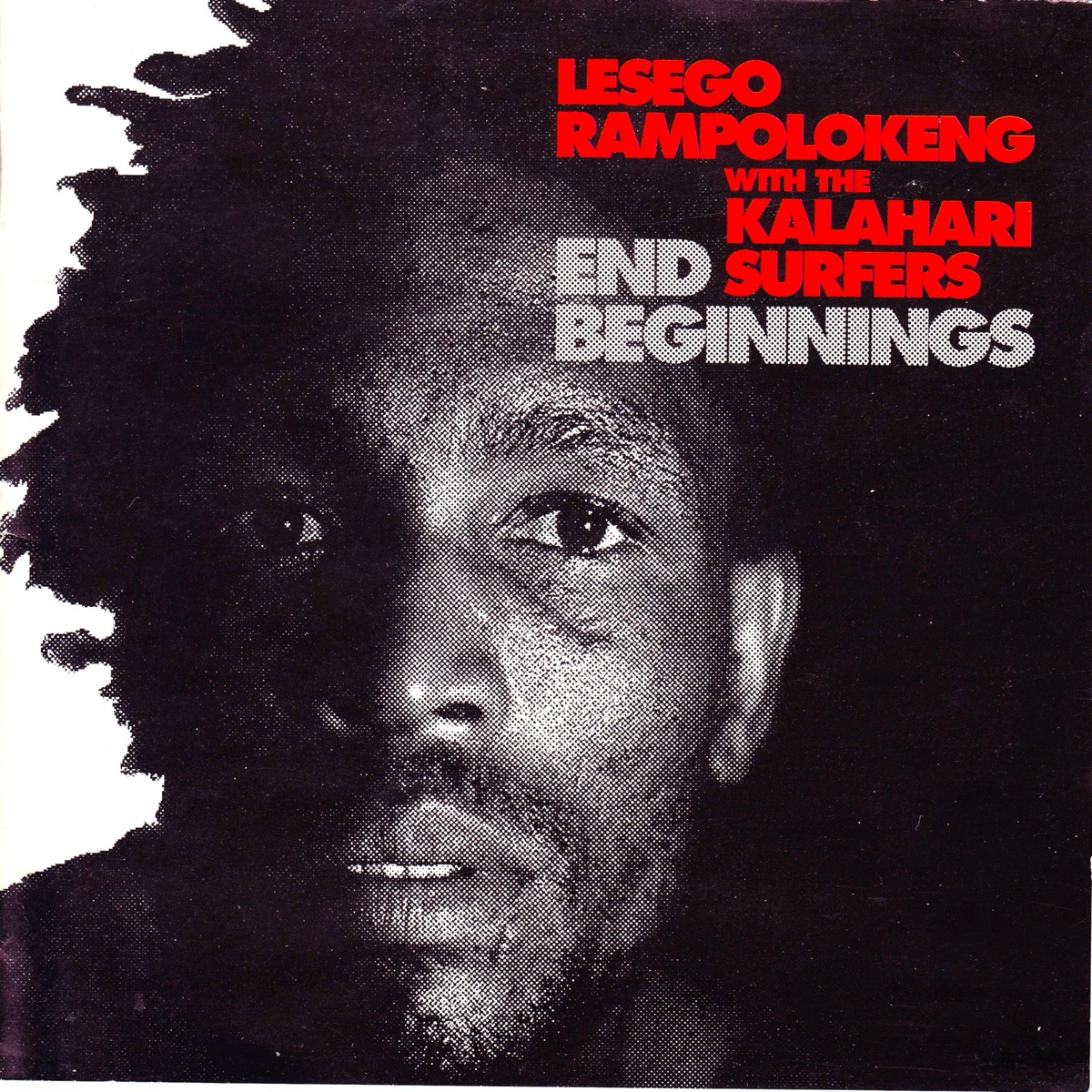
lesego rampolokeng with the kalahari surfers – end beginnings

“Liars rule the world…”

“Treason” and “End Beginnings” — tracks from the album End Beginnings (Shifty, 1991). This is the sound of South Africa in the late 1980s/early 1990s. Of course, I never got to hear this until years later.
Music: Warrick Sony
Words and voice: Lesego Rampolokeng

Download this album HERE.

end beginnings