girl on the bridge (1999)

Vanessa Paradis’ opening monologue (with English subtitles)

Review by Michael Dequina at filmthreat.com, 11/21/00:
“Very few actors, let alone young ones, can pull off what 20-something chanteuse-turned-actress Vanessa Paradis does in the opening minutes of Patrice Leconte’s romantic drama. In a single take broken only by an occasional white-on-black credit card, Paradis’ Adele confides to an unseen interrogator the reasons for her depression. It is never explained exactly to whom she is speaking and in what type of situation, but that is of little consequence—in these scant minutes, the audience instantly is given a vivid portrait of what the character is all about: her youthful recklessness and naïveté, her sexual abandon and her romantic soul. While kudos go to writer Serge Frydman, it is Paradis who brings the scene and Adele to robust life.

“However, in Adele’s eyes, her life isn’t quite so healthy, and as such she becomes the titular girl on the bridge, ready to jump when she meets Gabor (Daniel Auteuil), a knife thrower in need of a new target. Since she clearly has no fear of danger, Adele is a perfect match—though it comes as a surprise to both of them just how well they complement each other, for these two historically down-on-their-luck characters find themselves on an incredible streak of good fortune as they wow crowds throughout Europe. But as with all things, what goes up must come down.

“La Fille sur le Pont is a magical film in all senses. On a literal level, the surreal psychic bond that develops between Adele and Gabor pushes the film into the realm of magical realism, and their knife throwing scenes bear a not-so-subtle, otherworldly erotic charge. But the real magic comes in watching the warm sparks between Paradis and Auteuil and following their eccentric characters’ beautiful, unconventional relationship. Jean-Marie Dreujou’s stunning black-and-white cinematography and Leconte’s smart choices in music (there is no original composed score) add to the film’s whimsical, timeless spell.”

snake in the eagle’s shadow (1978)

End fight scene from Jackie Chan’s 1978 breakthrough. Craziest foley and 70s soundtrack: As well as original music by Chou Fu-liang, the original version of the film features Jean Michel Jarre’s “Oxygène (Part 2)” and Space’s “Magic Fly”. Like many Hong Kong movies of the era, it also includes samples from western movie scores, including A Fistful Of Dollars, You Only Live Twice, The Spy Who Loved Me, and even the Death Star explosion moment from Star Wars.  The English subtitles over (different) English dubbing are great, too.

The full movie is on Youtube, HERE, but if you’re in South Africa, like me, you won’t be able to watch it due to copyright nonsense.

on being fully alive

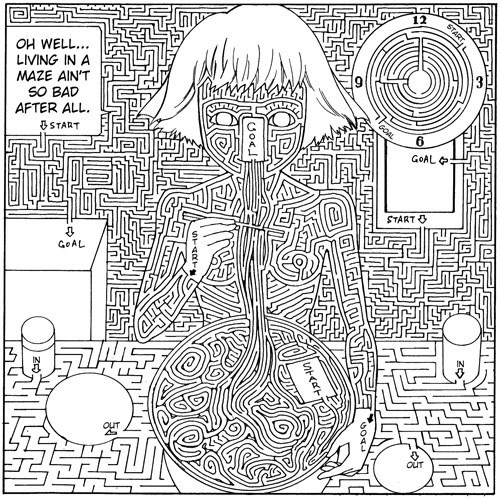
Shintaro Kago - "Living in a Maze"

Shintaro Kago – “Living in a Maze”

We are motivated more by aversion to the unpleasant than by a will toward truth, freedom, or healing. We are constantly attempting to escape our life, to avoid rather than enter our pain, and we wonder why it is so difficult to be fully alive.

― Stephen Levine, from A Year to Live: How to Live This Year as If It Were Your Last

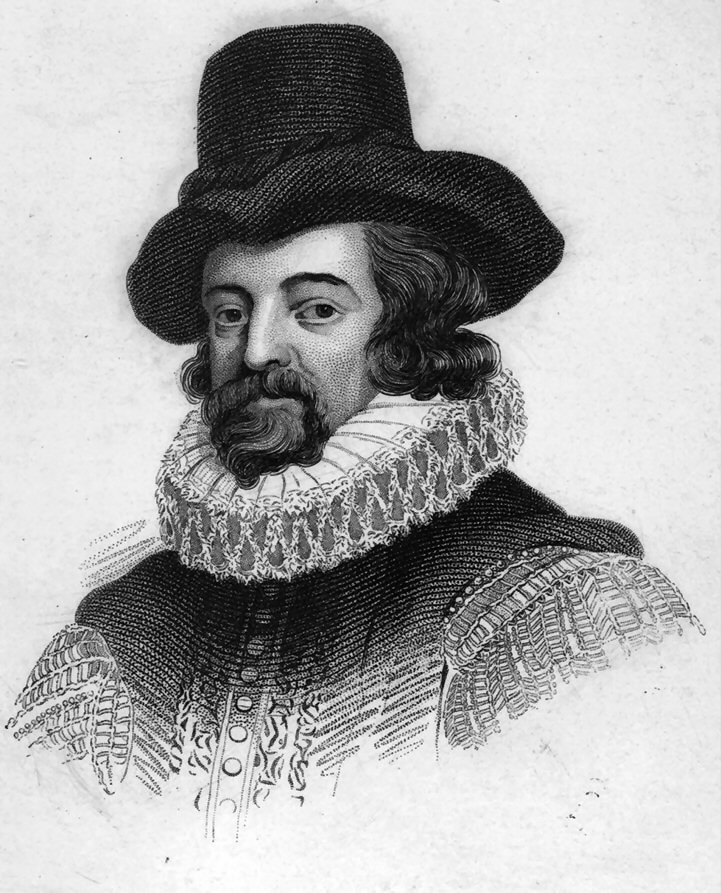
francis bacon on friendship

A principal fruit of friendship is the ease and discharge of the fullness and swellings of the heart, which passions of all kinds do cause and induce. We know diseases of stoppings and suffocations are the most dangerous in the body, and it is not much otherwise in the mind: you may take sarza to open the liver, steel to open the spleen, flowers of sulphur for the lungs, castoreum for the brain; but no receipt openeth the heart but a true friend, to whom you may impart griefs, joys, fears, hopes, suspicions, counsels, and whatsoever lieth upon the heart to oppress it, in a kind of civil shrift or confession.

Francis_Bacon

…[C]ommunicating of a man’s self to his friend works two contrary effects, for it redoubleth joys, and cutteth griefs in halves. For there is no man that imparteth his joys to his friend, but he joyeth the more; and no man that imparteth his griefs to his friend, but he grieveth the less. So that it is in truth of operation upon a man’s mind, of like virtue as the alchemists use to attribute to their stone for man’s body, that it worketh all contrary effects, but still to the good and benefit of nature. But yet without praying in aid of alchemists, there is a manifest image of this in the ordinary course of nature. For in bodies, union strengtheneth and cherisheth any natural action, and on the other side weakeneth and dulleth any violent impression; and even so it is of minds…

…The second fruit of friendship is healthful and sovereign for the understanding, as the first is for the affections. For friendship maketh indeed a fair day in the affections, from storm and tempests; but it maketh daylight in the understanding, out of darkness, and confusion of thoughts. Neither is this to be understood only of faithful counsel, which a man receiveth from his friend; but before you come to that, certain it is that whosoever hath his mind fraught with many thoughts, his wits and understanding do clarify and break up, in the communicating and discoursing with another: he tosseth his thoughts more easily; he marshalleth them more orderly; he seeth how they look when they are turned into words; finally, he waxeth wiser than himself; and that more by an hour’s discourse, than by a day’s meditation…

… How many things are there which a man cannot, with any face or comeliness, say or do himself? A man can scarce allege his own merits with modesty, much less extol them; a man cannot sometimes brook to supplicate or beg; and a number of the like. But all these things are graceful in a friend’s mouth, which are blushing in a man’s own. So again, a man’s person hath many proper relations which he cannot put off. A man cannot speak to his son but as a father; to his wife but as a husband; to his enemy but upon terms: whereas a friend may speak as the case requires, and not as it sorteth with the person. But to enumerate these things were endless. I have given the rule, where a man cannot fitly play his own part; if he have not a friend, he may quit the stage.

Read the whole of this essay by Francis Bacon (the 16th century thinker) HERE.

john stuart mill on happiness

Those only are happy (I thought) who have their minds fixed on some object other than their own happiness; on the happiness of others, on the improvement of mankind, even on some art or pursuit, followed not as a means, but as itself an ideal end. Aiming thus at something else, they find happiness by the way. The enjoyments of life (such was now my theory) are sufficient to make it a pleasant thing, when they are taken en passant, without being made a principal object. Once make them so, and they are immediately felt to be insufficient. They will not bear a scrutinizing examination.

Ask yourself whether you are happy, and you cease to be so. The only chance is to treat, not happiness, but some end external to it, as the purpose of life. Let your self-consciousness, your scrutiny, your self-interrogation, exhaust themselves on that; and if otherwise fortunately circumstanced you will inhale happiness with the air you breathe, without dwelling on it or thinking about it, without either forestalling it in imagination, or putting it to flight by fatal questioning.

 John Stuart Mill, Autobiography (1873)Read the rest of it HERE.

embodied

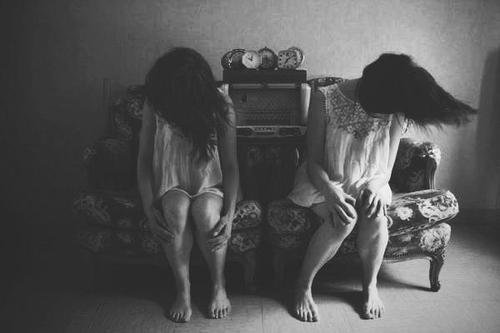
Aëla Labbé - "Sister Sister" series

Aëla Labbé – “Sister Sister” series

Why do you live in your body like you will be given another? As if it were temporary. You starve it, you let anyone touch it, you berate it. Tell it that should be completely different. You tug at your soft flesh, wish it thinner, wish it gone. You fall in love with those who praise the way it sighs under their hands, but who praises the way it holds up your weight, even when you are falling apart?

— Warsan Shire


melody nelson (full film)

… And, while we’re on the lugubrious, seamy baritone tip, it would be remiss not to make a turn past l’original, Monsieur Serge Gainsbourg:

Watch Melody Nelson, a short film directed Jean-Christophe Avery, starring Serge Gainsbourg and Jane Birkin, based on Gainsbourg’s seminal (ahem, heheh) 1971 album. More information HERE.

tindersticks – my oblivion

The edges of our love are in the stars
And on the balcony
She waits for me
Out on the boundary
She smiles

Make this alive
Good days are back
Open your eyes when it falls
Come back to the air

I can’t tell you what you already know
I can’t make you feel what you already feel
I can’t show you what’s in front of you
I can’t heal those scars

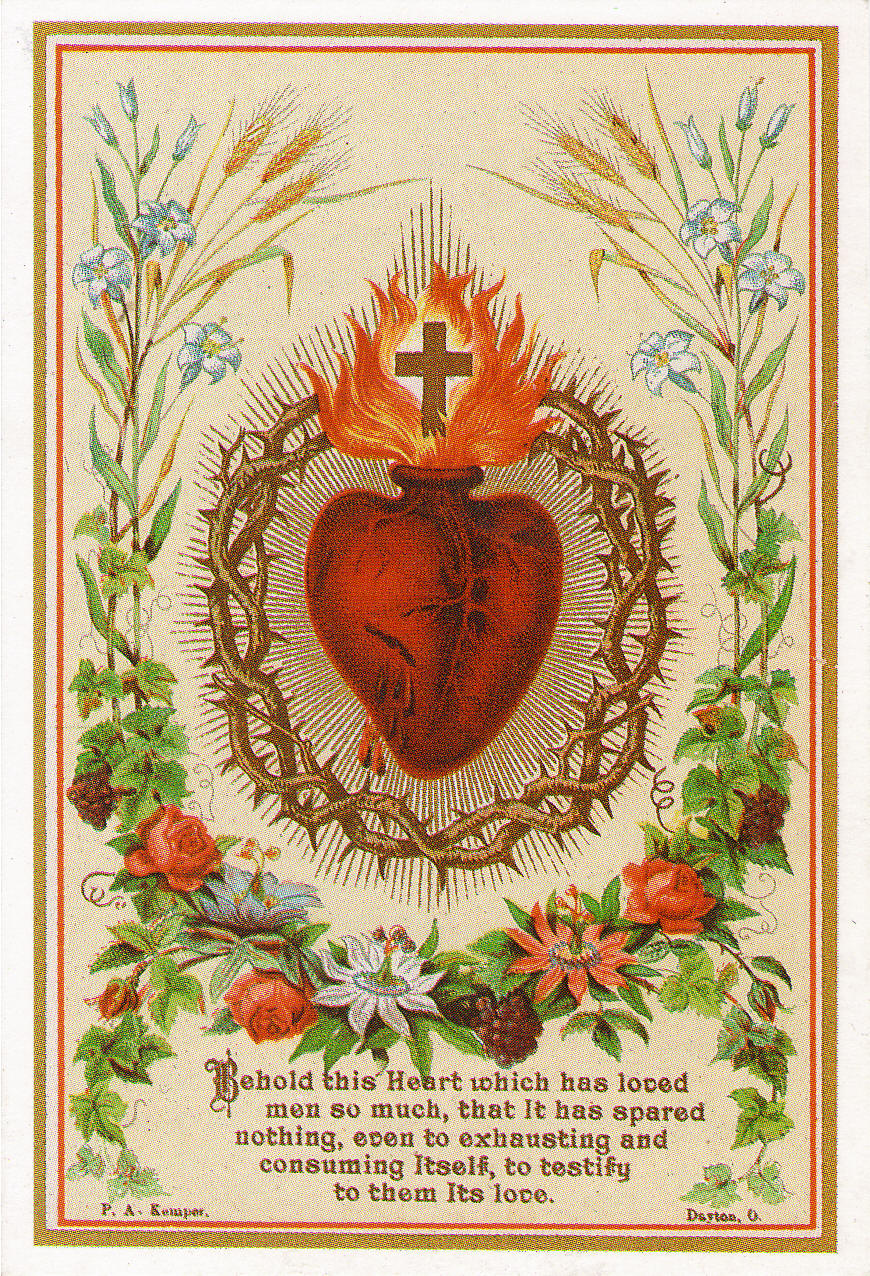
björk – prayer of the heart

John Tavener composed this specifically for Björk. She chants a prayer from the Eastern Orthodox Christian tradition, “Prayer of The Heart”, accompanied by the Brodsky Quartet.

“Prayer of The Heart” is a short, simple prayer that has been widely used, taught and discussed throughout the history of Eastern Orthodox Christianity. It is, for the Orthodox, one of the most profound and mystical prayers, and is often repeated endlessly as part of personal ascetic practice. It is particularly used in the practice of the spiritual life known as hesychasm. Based on Christ’s injunction in the Gospel of Matthew, “when thou prayest, enter into thy closet, and when thou hast shut thy door, pray”, hesychasm in tradition has been the process of retiring inward by ceasing to register the senses, in order to achieve an experiential knowledge of God. The prayer is particularly esteemed by the spiritual fathers of this tradition as a method of opening the heart.

Greek: Κύριε Ἰησοῦ Χριστέ, Υἱὲ τοῦ Θεοῦ, ἐλέησόν με (τὸν ἁμαρτωλόν).
English: Lord Jesus Christ, Son of God, have mercy on me (a sinner).

More info from Wikipedia HERE, and from Orthodox Wiki HERE.

givan lötz – quiet

Like being in church without the creeps:

“I am an artist because I am uncertain. My art-objects are, first and foremost, results of a philosophical inquiry – critical thinking about what it means to be human. The moments of obsession involved in this process of art-making aspire to achieve a mood of catharsis. I have a desire for innovative and dislocating descriptions of life through a willingness to confront it in all its contradiction and complexity.”

Check out more of this Gauteng-based artist’s “Trash-Worship Party-Pooper Snore-Core Buzz-Kill Uneasy-Listening Shoe-Gaze Dream-Brown Drop-Out Dead-Beat Geek-Grind Mind-Melt Kewl-Vybz” on Soundcloud.

stephen levine on growth

“The process of growth is, it seems, the art of falling down. Growth is measured by the gentleness and awareness with which we once again pick ourselves up, the lightness with which we dust ourselves off, the openness with which we continue and take the next unknown step, beyond our edge, beyond our holding, into the remarkable mystery of being.”

— Stephen Levine

laurence binyon – the burning of the leaves

Now is the time for the burning of the leaves,
They go to the fire; the nostrils prick with smoke
Wandering slowly into the weeping mist.
Brittle and blotched, ragged and rotten sheaves!
A flame seizes the smouldering ruin, and bites
On stubborn stalks that crackle as they resist.
The last hollyhock’s fallen tower is dust:
All the spices of June are a bitter reek,
All the extravagant riches spent and mean.
All burns! the reddest rose is a ghost.
Sparks whirl up, to expire in the mist: the wild
Fingers of fire are making corruption clean.
Now is the time for stripping the spirit bare,
Time for the burning of days ended and done,
Idle solace of things that have gone before,
Rootless hope and fruitless desire are there:
Let them go to the fire with never a look behind.
That world that was ours is a world that is ours no more.
They will come again, the leaf and the flower, to arise
From squalor of rottenness into the old splendour,
And magical scents to a wondering memory bring;
The same glory, to shine upon different eyes.
Earth cares for her own ruins, naught for ours.
Nothing is certain, only the certain spring.

Thanks to Karolina O’Donaghue for this poem.