(for scott of the antarctic)
Category Archives: film
poor unfortunate souls
“It won’t cost much… Just your voice.”
From Disney’s The Little Mermaid (1989)
doll clothes
does your dog bite?
Peter Sellers in The Pink Panther Strikes Again (1976)
kuroneko (1968) showing tonight in cape town
Showing tonight at 20h15 at Labia on Orange, in association with the Good Film Society.
In this poetic and atmospheric horror fable, set in a village in war-torn medieval Japan, a malevolent spirit has been ripping out the throats of itinerant samurai. When a military hero is sent to dispatch the unseen force, he finds that he must struggle with his own personal demons as well. From Kaneto Shindo, director of the terror classic Onibaba, Kuroneko (Black Cat) is a spectacularly eerie twilight tale with a shocking feminist angle, evoked through ghostly special effects and mindblowingly awesome visuals.
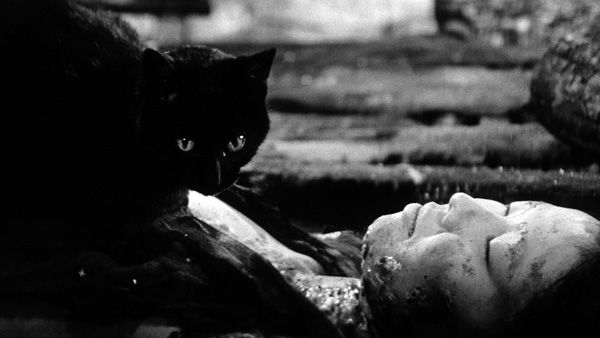
Maitland McDonagh on Kuroneko: The Mark of the Cat
Scratch the surface of a contemporary J-horror classic like Ringu (1998) or any of the Ju-on films (2000–03) and you’ll glimpse Yabu no naka no kuroneko (Black Cat from the Grove), released in the U.S. as simply Kuroneko (1968). Shot in shimmering, widescreen black and white and suffused with an unsettling eroticism, Kaneto Shindo’s elegant nightmare of earthbound violence and otherworldly revenge wasn’t the first film to be rooted in Japanese folk stories about onryo, the vengeful spirits of those who were abused in life, usually women, whose rage is so great it can’t be contained.
The Ghost of Yotsuya (Nobuo Nakagawa, 1959) and Kwaidan (Masaki Kobayashi, 1965) both preceded it, and other classics of Japan’s golden age of filmmaking—notably Kenji Mizoguchi’s Ugetsu (1953)—featured female spirits. And supernatural cats had appeared in Black Cat Mansion (Nakagawa, 1958) and The Ghost Cat of Otama Pond (Yoshihiro Ishikawa, 1960). But Shindo drew those threads together and wove them into Kuroneko’s unprecedentedly unnerving women, whose descendents are now many, and into a terrifically spooky story whose resonance extends beyond the satisfying chill of an exotic campfire tale and whose wrenching psychological anguish transcends specific cultural traditions…
… Western folklore regularly puts cats in general, and black cats in particular, in league with witches and other dark forces, but Japanese folktales are more ambiguous, starting with the fact that, while all felines are suspected of being more than handy mousers and cute house pets, they allow for two kinds of supernatural cats, the manekineko and the bakeneko. Anyone who has eaten in a Japanese restaurant knows what a manekineko looks like: perched somewhere near the cash register, it sits with one paw raised in greeting and the other resting on a coin, benevolently beckoning good fortune to come on in and stay awhile—Hello, Hello Kitty! Thebakeneko, by contrast, is kissing cousin to the shape-shifting fox (kitsune) and the sly, mischievous tanuki (a small, scruffily kawaii canid native to East Asia): none are inherently evil, but all are capable of using their supernatural knack for mimicking other creatures—including human beings—to stir up trouble. That said, the fact that bakeneko often eat the person whose form they’ve taken suggests they’re less amusing and more alarming than their fellow shapeshifters, and the shadow of feline malevolence lurks in Kuroneko’s fog-swirled gloom.
Read more of Maitland McDonagh’s article, which discusses the historical context of this horror masterpiece, HERE.
sofia coppola – from “the virgin suicides” (1999)
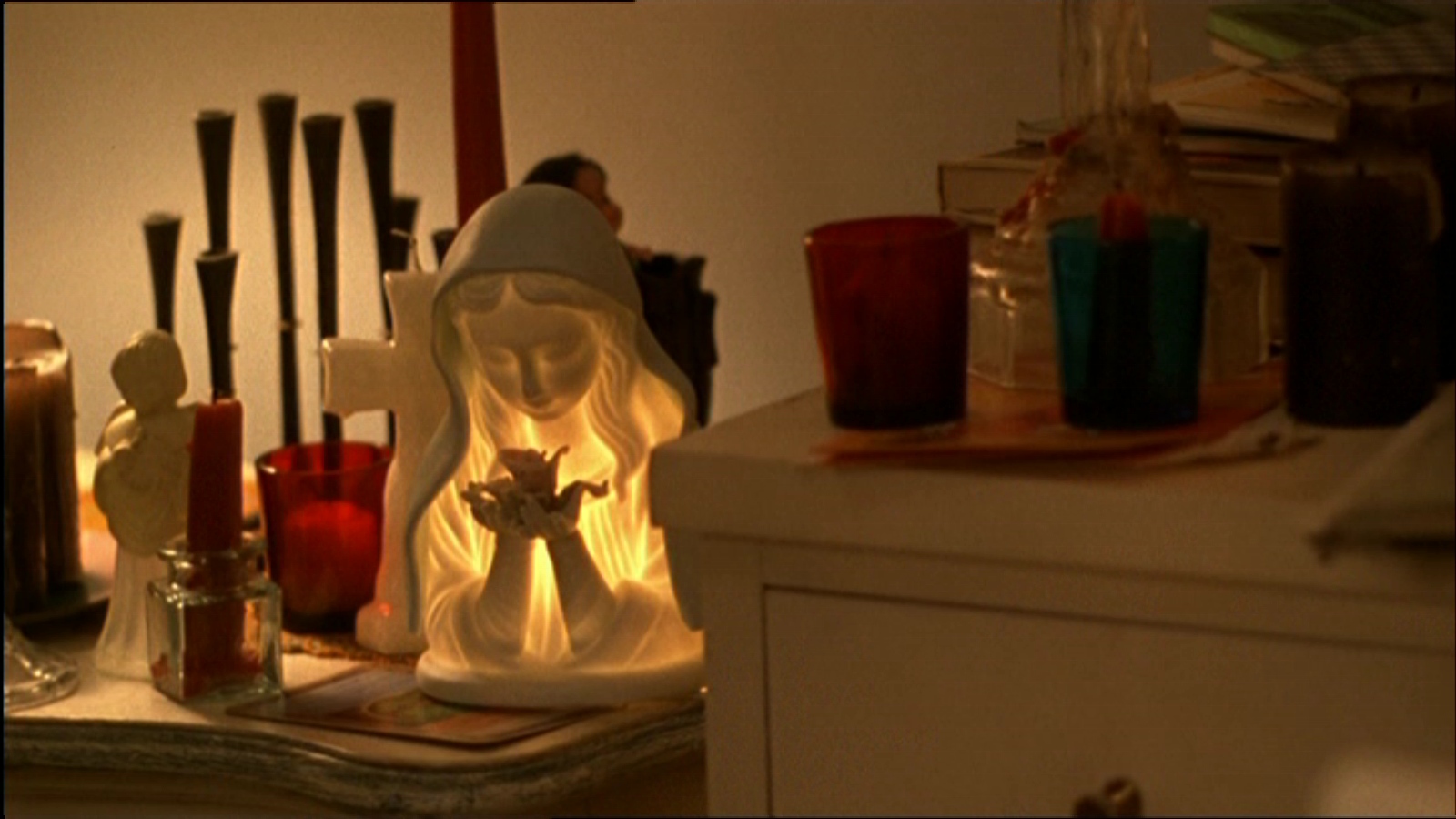 Narrator:
So much has been said about the girls over the years. But we have never found an answer. It didn’t matter in the end how old they had been, or that they were girls… but only that we had loved them, and that they hadn’t heard us calling… still do not hear us, up here in the tree house with our thinning hair and soft bellies, calling them from out of those rooms where they went to be alone for all time… and where we will never find the pieces to put them back together…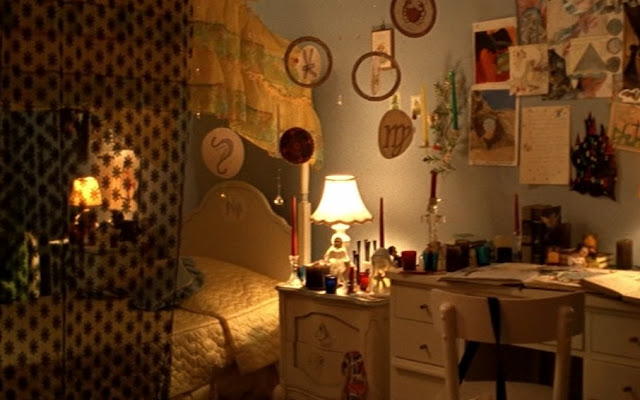
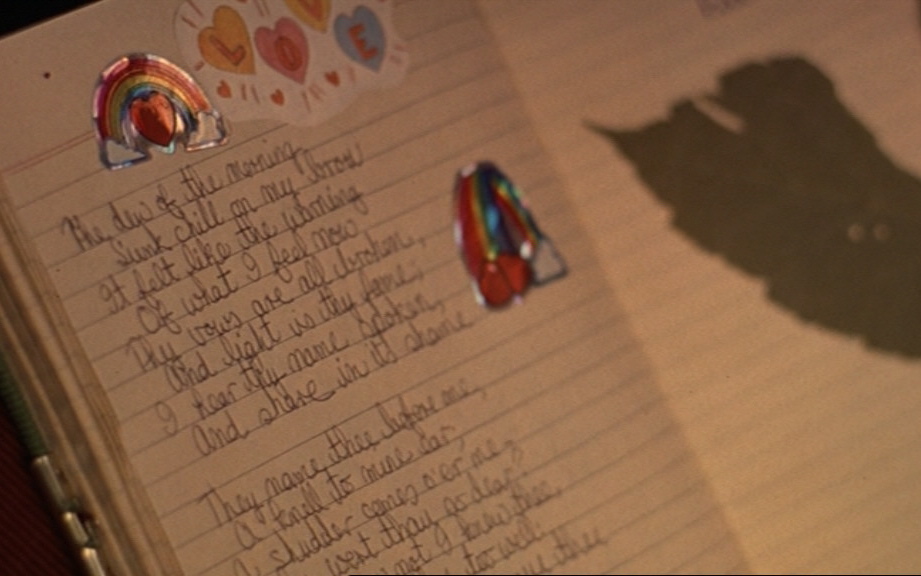
From Cecilia Lisbon’s diary:
Lux lost it over Kevin Haines, the garbage man. She’d wake up at five in the morning
and hang out on the front steps – like it wasn’t completely obvious.
She wrote his name in marker on all her underwear. Mom found them and bleached out the Kevins.
Lux was crying on her bed all day.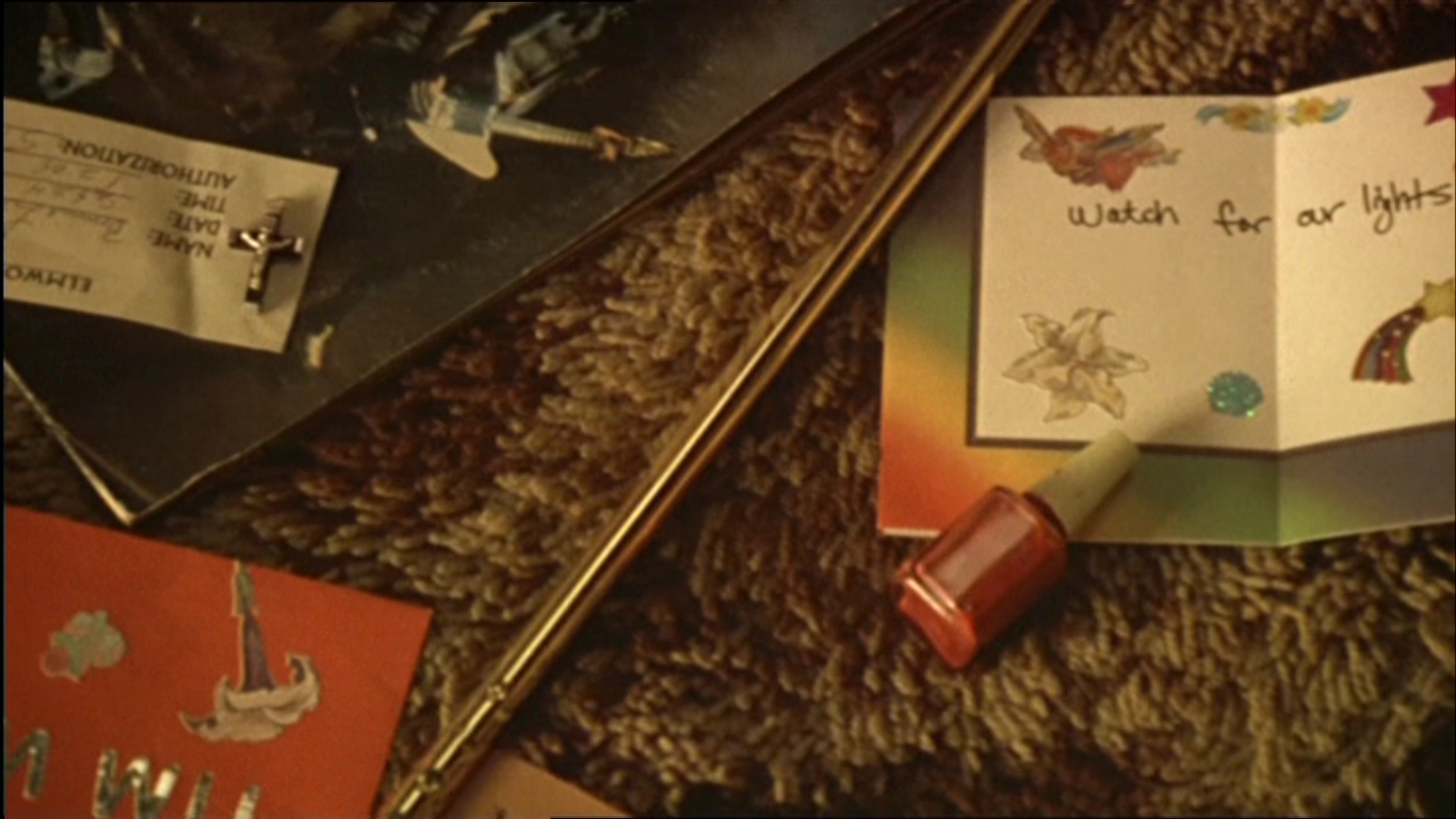
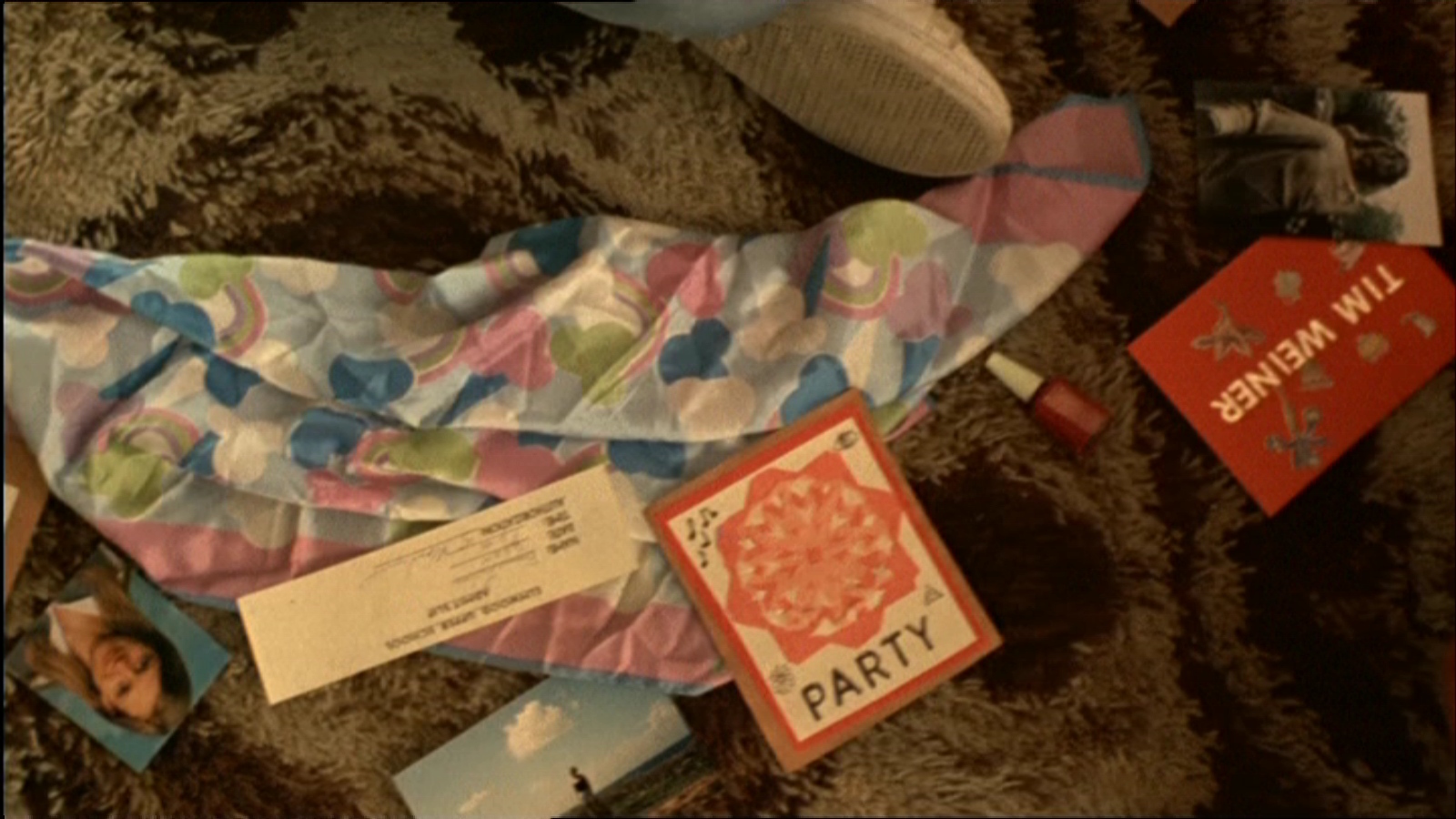
The trees like lungs filling with air.
My sister, the mean one, pulling my hair.
Narrator:
And so we started to learn about their lives, coming to hold collective memories of times we hadn’t experienced.
We felt the imprisonment of being a girl, the way it made your mind dreamy… so you ended up knowing
what colours went together.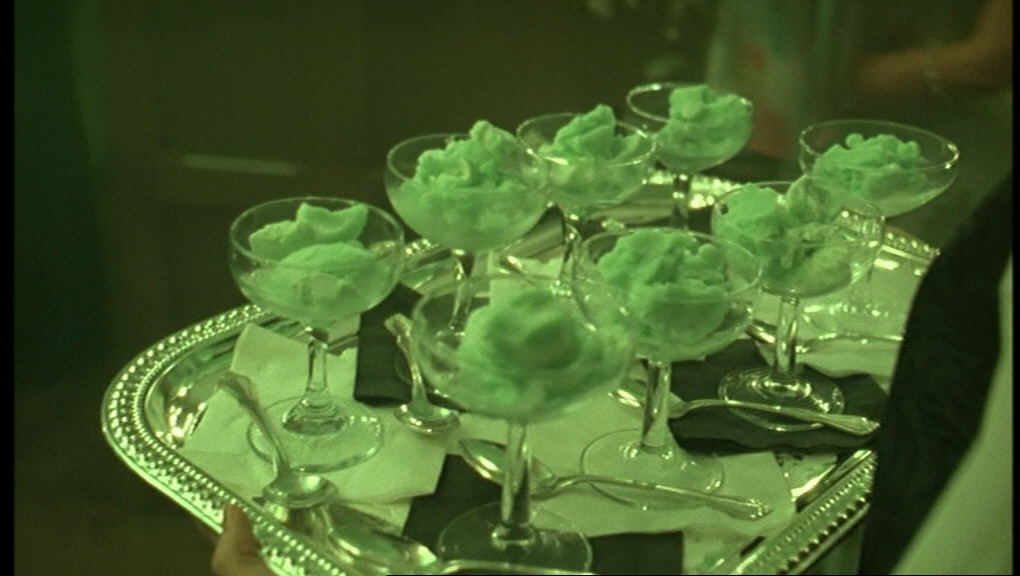

We knew the girls were really women in disguise… that they understood love and even death… and that our job was merely to create the noise that seemed to fascinate them.
We knew that they knew everything about us. And that we couldn’t fathom them at all.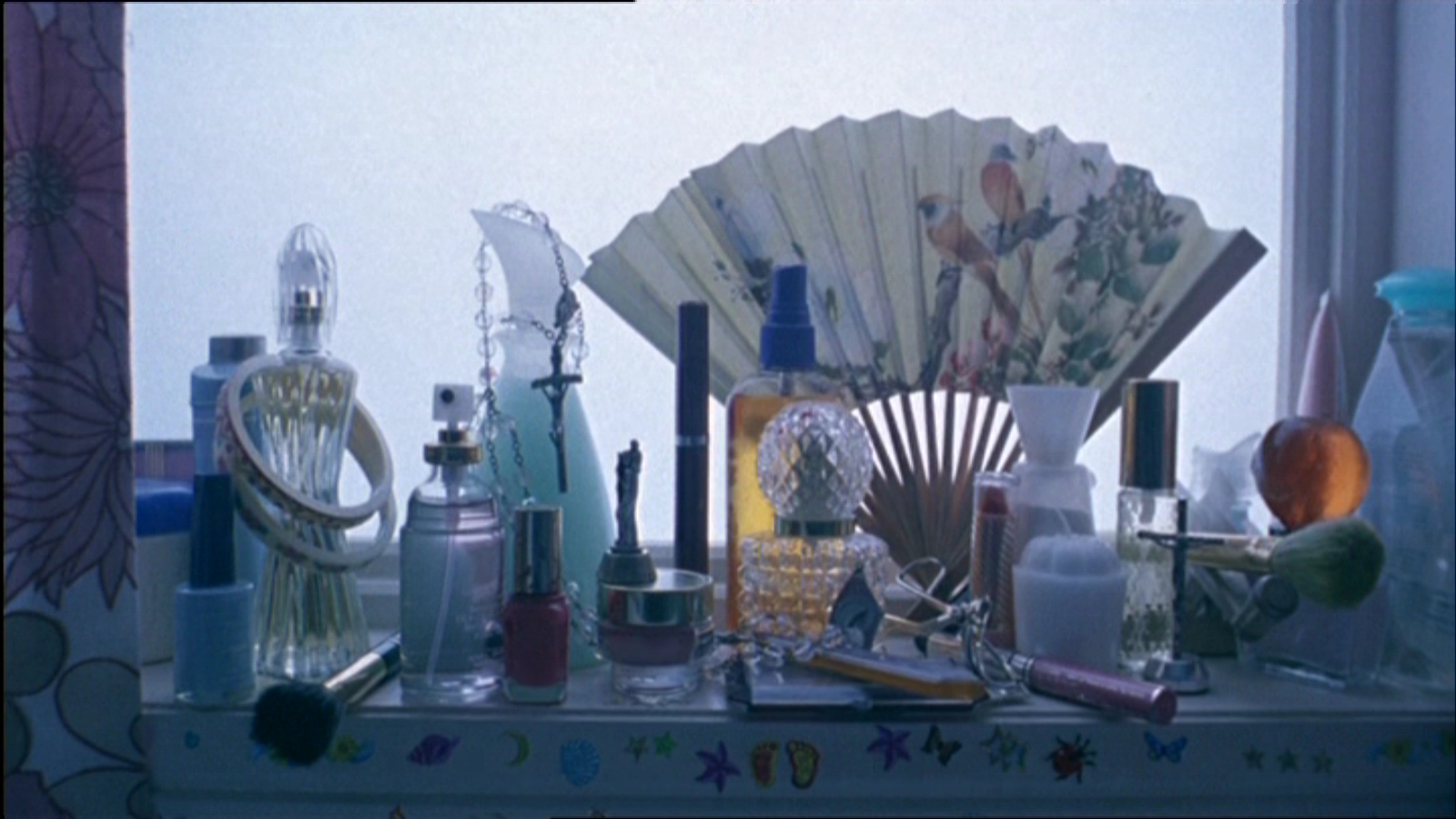
Screenplay based on the novel by Jeffrey Eugenides.
green pink caviar by marilyn minter
jabberwocky
sound bites
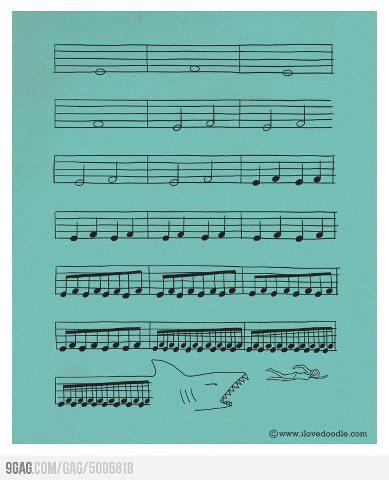 One of 9GAG’s funnier moments.
liz mitchell – sometimes i feel like a motherless child
For Liepollo… Hamba kahle, sana. xx
thoughts on pasolini talking about montage and death
Cinema is identical to life, because each one of us has a virtual and invisible camera which follows us from when we’re born to when we die. In reality, cinema is an infinite film sequence-shot. Each individual film interrupts and rearranges this infinite sequence-shot and thus creates meaning, which is what happens to us when we die. It is only at our moment of death that our life, to that point undecipherable, ambiguous, suspended, acquires a meaning. Montage thus plays the same role in cinema as death does in life.
~ Pier Paolo Pasolini, “Ora tutto è chiaro, voluto, non imposto dal destino”, Cineforum 68 October 1967, p. 609. 
I have been thinking about the similarities between editing and blogging, about how in juxtaposition meaning comes to light, and this comment from Pasolini that I just came across resonated with my thoughts. An online archive of everyday apprehension, a place to pin the things floating amorphous just behind my eyes… It is powerfully transformative to be able to reflect, live, with others, on chains of thoughts, connections, coincidences, concatenations… More powerful for clarity than a diary. Although the public nature of this grappling is uncomfortable for me, it prevents me from dismissing my thoughts as solipsistic delusions, something to which I am prone, especially because sketching them out in a simple A to B trajectory is often impossible, rendering attempts at expression incomprehensible to others in ordinary conversation.
What I like about the montage inherent in blogging, as distinct from other more traditional types of montage, is that the possibilities of hypertext allow me not to foreclose other meanings, not to narrow connections and paths of interpretation down, as is inevitable when making a film, or a music mix, or any object concrete and discrete in itself. The intertextual permeability and wild openness of virtuality is so exciting in this sense… The possibility of creating and reshaping meaning without having to be final or definitive, which necessarily involves the murder of other meanings in the process… This I love, though it makes me dizzy.
suffering… tralala
Jean-Pierre Léaud and Anne Wiazemsky in Pasolini’s Porcile (1969)
kunoichi ninpocho – vajayjay magic #1
From the first volume of the infamous “Female Ninjas Magic Chronicles” series (1991). Oyui shows a band of Iga ninja what’s up her wizard sleeve.
georges delarue – theme de camille
Music by Georges Delarue for Le Mepris (Contempt), directed by Jean-Luc Godard (1963).
cherry bomb – gouttes mécaniques (mechanical teardrops) – 2008
josie field – beating heart (video by juliette jack)
My niece made this. In one day. Knowing absolutely nothing about stop-frame animation.
card on spokes – disguises
New video by Ari Kruger for Shane Cooper’s Card on Spokes project.
moon and flying snow
Beautiful fight scene between Moon (Zhang Ziyi) and Flying Snow (Maggie Cheung) in the yellow forest from the extended version of the movie “Hero”
Hero was first released in China on October 24, 2002. At that time, it was the most expensive project and the highest-grossing motion picture in Chinese film history.
the caretaker – we cannot escape the past
Imagery from Carl Theodor Dreyer’s The Passion of Joan of Arc (1928)
charlotte gainsbourg featuring beck – heaven can wait (director’s cut)
Director: Keith Schofield, 2010
She’s sliding, she’s sliding down to the dregs of the world
She’s fighting, she’s fighting the urge to make sand of pearls
Heaven can wait
And hell’s too far to go
Somewhere between
What you need and what you know
And they’re trying to drive the escalator into the ground
She’s hiding, she’s hiding on a battleship of baggage and bones
There’s thunder, there’s lightning and an avalanche of faces you know
Heaven can wait
And hell’s too far to go
Somewhere between
What you need and what you know
And they’re trying to drive that escalator into the ground
You left your credentials in a greyhound station
With a first aid kit and a flashlight
Going to a desert unknown
Heaven can wait
And hell’s too far to go
Somewhere between
What you need and what you know
And they’re trying to drive that escalator into the ground
into at unyazi 3 – durban, 14 september 18h00
INTO:
“expressing movement or action with the result that someone or something becomes enclosed or surrounded by something else” (Oxford Dictionary of English) is a collaboration between three artists – two sonic, one visual. Randomly morphing field recordings are the inspiration for the sonic duo’s improvisations while the visual artist’s work is manipulated by software which responds to what is played on the two instruments.”









Tomorrow evening my talented visual artist friend, Zara-Moon Arthur, performs at Unyazi 3, the festival of experimental electronica happening in Durban from 12 – 15 September 2012, along with her husband, bassist and field recordist Brydon Bolton, and Frank Mallows on vibraphone as the trio, “into”. Here are a few stills from Moon’s blog – check out this link for more. Look out for into’s performance if you are attending Unyazi 3 – it promises to be mesmerising.
man ray – l’étoile de mer
Based on the poetry of Robert Desnos
Almost all of the scenes in this film are shot either off a mirror like the final shot, or through diffused and textured glass.
Les dents des femmes sont des objets si charmants… (Women’s teeth are such charming objects…)
… qu’ on ne devrait les voir qu’ en rêve ou à l’instant de l’amour. (… that one ought to see them only in a dream or in the instant of love.)
Si belle! Cybèle? (So beautiful! Cybèle?)
Nous sommes à jamais perdus dans le désert de l’éternèbre. (We are forever lost in the desert of eternal darkness.)
Qu’elle est belle (How beautiful she is)
“Après tout” (“After all”)
Si les fleurs étaient en verre (If the flowers were in glass)
Belle, belle comme une fleur de verre (Beautiful, beautiful like a flower of glass)
Belle comme une fleur de chair (Beautiful like a flower of flesh)
Il faut battre les morts quand ils sont froids. (One must beat the dead while they are cold.)
Les murs de la Santé (The walls of the Santé)
Et si tu trouves sur cette terre une femme à l’amour sincère… (And if you find on this earth a woman of sincere love…)
Belle comme une fleur de feu (Beautiful like a flower of fire)
Le soleil, un pied à l’étrier, niche un rossignol dans un voile de crêpe. (The sun, one foot in the stirrup, nestles a nightingale in a veil of crepe.)
Vous ne rêvez pas (You are not dreaming)
Qu’elle était belle (How beautiful she was)
Qu’elle est belle (How beautiful she is)
amália rodrigues – barco negro
Amália Rodrigues sings the fado “Barco Negro” in a scene from Henri Verneuil’s 1955 film LES AMANTS DU TAGE.
Translation of the French conversation in the scene (which paraphrases the Portuguese lyrics of the song being performed by Amália behind it):
Child — Do you like it?
Woman — Very much. I’m sorry I don’t understand Portuguese. It must be beautiful.
Child — It’s the wife of a fisherman who died at sea. She goes down to the beach every night and talks to him as if he were alive. She tells him… She tells him… love things.
Man — [paraphrasing the singer] “I woke up this morning trembling next to you, afraid that I was less beautiful than yesterday. But your eyes told me, ‘No.’
“When you opened the door, the sun was gliding along the sea and your black boat was dancing in the light. Standing on the rocks, I saw you hoist sail and turn towards the open sea, while waving happily.
“The women praying at night along the shore say that you never returned. Madwomen, my love, madwomen! You never left. You’re everywhere around me, as always… In the wind, throwing sand against the windowpanes; in the water, singing on the fire; in the empty chair, staring at me; in the dark of the hearth; in the warmth of the bed; in the crook of my shoulder… You are there always. Always there. Always.”
sherry rich – anemone
“I only play-act for real.”
Brian Jonestown Massacre cover. Video from Peter Tscherkassky found footage.
julia mary grey – hinterland
dracula’s daughter (1936)
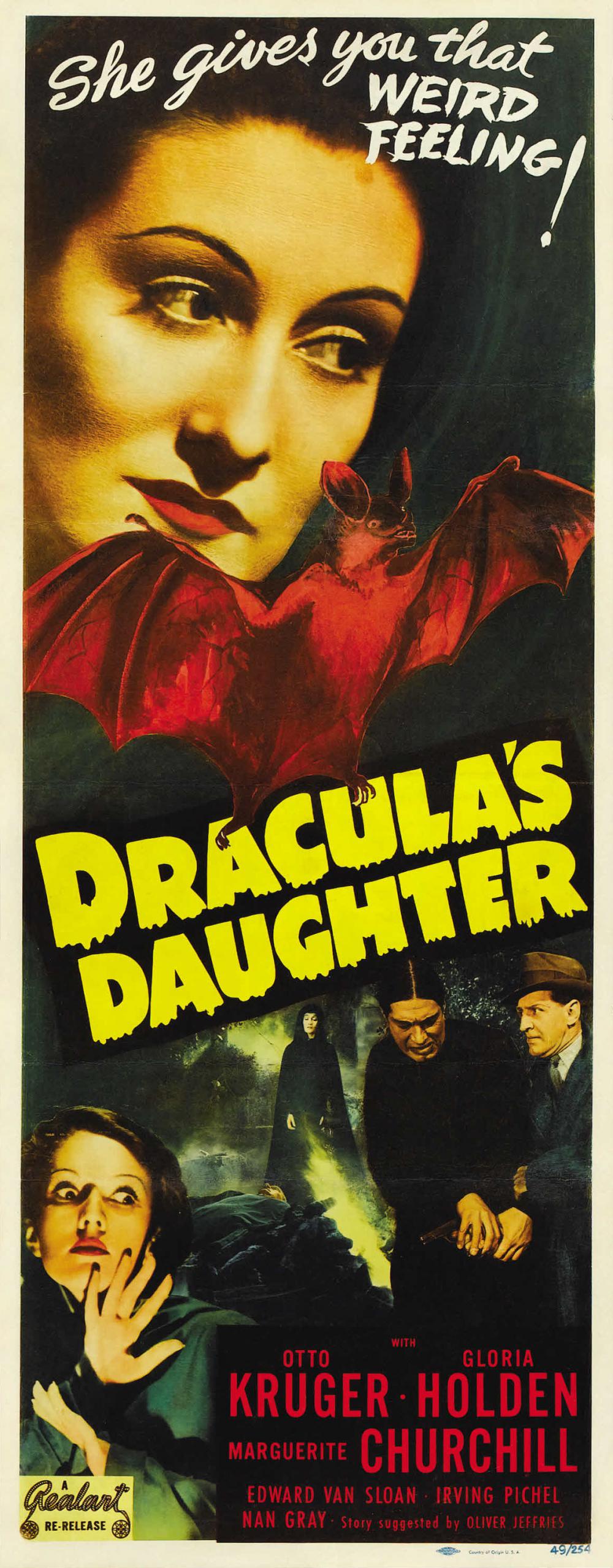
“Why should Cecil B. DeMille have a monopoly on the great box office values of torture and cruelty?” asked John Balderton, the writer of a first draft of this long-delayed sequel to Dracula, the iconic, if somewhat tepid, 1931 version of Bram Stoker’s famous novel. Balderton envisioned a grisly horror film, full of the shrieks and cries of the damned, but his version didn’t make the cut. Instead, this version, based on one of Stoker’s stories, finally hit the screens in 1936, heavy on atmosphere and shocking (for its time) sexuality. Although it is a marked improvement on the original film, it’s still a bit of a snooze, relying too much on forced comedy and not enough on suspense or fright.
The film picks up exactly where the first film left off. Von Helsing (Edward Van Sloan), who was Van Helsing in the first film, has just offed Dracula, and Whitby constables stumble on the scene and arrest him as a murderer. The constable in charge is faced with quite a decision: try Von Helsing for murder and likely hang him, put him in the looney bin because of all his talk about vampires, or believe him. Von Helsing implores him to call on one of his former students, the renowned psychologist Dr. Garth (Otto Kruger), to help clear him.
Meanwhile, before things can get underway, a mysterious woman steals Dracula’s body and destroys it. Gloria Holden is Countess Zaleska, the titular daughter. She thinks that destroying her father’s corpse will free her from her vampiric curse, but it doesn’t work, as is obvious as soon as she returns to London and starts ogling the necks of dapper young men. It doesn’t help that her helper Sandor (Irving Pichel, who co-directed the great action film The Most Dangerous Game) keeps taunting her about how much she needs blood. The film treats vampirism as more of an addiction than an evil curse, and it’s fitting that she keeps an enabler around to sabotage her efforts to get clean.
After meeting Dr. Garth at a party, she decides that his experiments in hypnosis will help her. She attempts to seduce him, but he’s wary, especially as the body count in London starts to rise, as victims with strange puncture wounds on their necks start turning up. In the centerpiece of the film, as Zaleska attempts to do some painting to distract her from her need for blood, she enlists Sandor to bring her a model, Lili (Nan Grey).
Read more here…
sigur ros – glósóli (video by juliette)
My niece is talented!
 fleurmach