I can’t find when this was filmed, but the first version of this composition appeared on Ellington’s 1962 album, Money Jungle, which featured Charles Mingus and Max Roach.
I can’t find when this was filmed, but the first version of this composition appeared on Ellington’s 1962 album, Money Jungle, which featured Charles Mingus and Max Roach.
From Jules et Jim (Directed by François Truffaut, 1962), the song “Le Tourbillon”. The film was directed by François Truffaut and released on January 23, 1962. This song of Cyrus “Boris” Bassiak [aka Serge Rezvani] is interpreted by Catherine [Jeanne Moreau]. Albert on guitar, is none other than songwriter Bassiak / Rezvani. Other roles:
Jules [the short one with blond hair]: Oskar Werner
Jim [the tall one with white shirt]: Henri Serre
According to Wikipedia Rezvani actually wrote this song seven years before, in reference to the couple formed by Jeanne Moreau and his companion at the time, Jean-Louis Richard, who was also Serge’s best friend.
_
Elle avait des bagues à chaque doigt, (She had rings on every finger)
Des tas de bracelets autour des poignets, (A profusion of bracelets on her wrists)
Et puis elle chantait avec une voix (And she was singing with such a voice)
Qui sitôt m’enjôla. (That I was at once under her spell)
Elle avait des yeux, des yeux d’opale (She had eyes, eyes of opal)
Qui fascinaient, qui fascinaient, (That fascinated me)
Y avait l’ovale de son visage pâle, (And there was the oval of her pale face)
De femme fatale qui me fut fatale (bis). (That of a”femme fatale” who was fatal to me)
On s’est connus, on s’est reconnus, (We met, we met again)
On s’est perdus de vue, (We lost sight of each other)
on s’est reperdus de vue, (we again lost sight of each other)
On s’est retrouvés, (We found each other anew)
on s’est réchauffés, (We warmed each other)
Puis on s’est séparés. (And then we separated)
Chacun pour soi est reparti (We each went our own ways)
Dans le tourbillon de la vie; (In Life’s whirlpool of days)
Je l’ai revue un soir aïe aïe aïe! (One night I saw her again)
Ca fait déjà un fameux bail (bis). (It was such a long time again already)
Au son des banjos je l’ai reconnue, (To the sounds of banjos I recognized her)
Ce curieux sourire qui m’avait tant plu, (This mysterious smile that pleased me so much)
Sa voix si fatale, son beau visage pâle (Her voice so fatal, her beautiful pale face)
M’émurent plus que jamais. (Moved me more than ever)
Je me suis saoulé en l’écoutant, (I drank as I listened to her)
L’alcool fait oublier le temps, (Alcohol removes time’s sting)
Je me suis réveillé en sentant (I awoke as I felt)
Des baisers sur mon front brûlant (bis). (Her kisses on my burning brow)
On s’est connus, on s’est reconnus, (We met each other, we again met)
On s’est perdus de vue, on s’est reperdus de vue, (We lost each other, we lost each other anew)
On s’est retrouvés, on s’est séparés, (We found each other again, we separated)
Puis on s’est réchauffés. (And then, we warmed each other)
Chacun pour soi est reparti (We each went our own ways)
Dans le tourbillon de la vie; (In Life’s whirlpool of days)
Je l’ai revue un soir ah la la, (Again I saw her one night)
Elle est retombée dans mes bras (bis). (She fell in my arms anew)
Quand on s’est connus, (When two lovers met)
quand on s’est reconnus, (when they met again)
Pourquoi se perdre de vue, (Why losing sight of each other)
se reperdre de vue, (why losing each other again)
Quand on s’est retrouvés, (When they found each other)
quand on s’est réchauffés, (when they warmed each other)
Pourquoi se séparer? (Why go their separate ways?)
Alors tous deux on est repartis (Thus both of us resumed our ways)
Dans le tourbillon de la vie, (In Life’s whirlpool of days)
On a continué à tourner, (We continued to go round and round)
Tous les deux enlacés (ter). (Both together bound)
__
More Jeanne Moreau on Fleurmach here and here.
And this is a WONDERFUL interview, from 2002!
Yao Lee – Spring is Gone… The deterioration of the film stock here is poetry.
From Wikipedia:
Born Yáo Xiùyún (姚秀雲) and raised in Shanghai, Yao began performing on the radio in 1935 at the age of 13. When she was 14, she recorded her first single with Yan Hua (嚴華) called “New Little Cowherd” (新小放牛, Xin xiao fang niu). After being introduced by singers Zhou Xuan and Yan Hua, she was signed to Pathé Records when she was 16 in 1937, and the first record she released with the label was “Yearning for Sale” (賣相思, Mai Xiang Si).[1]
She married Huang Baoluo (黃保羅) in 1947 and ceased performing on stage to devote time to her family. Following the Communist seizure of power in China in 1949, popular music was considered ideologically suspect and Yao fled to Hong Kong in 1950 to continue her singing career there. In addition to releasing hit records, beginning in 1955 with the film 桃花江 (Peach Blossom River), she often acted as a playback singer for movie superstars. Many of the featured songs would also become popular. She stopped singing in 1967 upon the death of her brother but took an executive position with EMI Music Hong Kong in 1969. In 1970, she returned to performing and travelled to Taiwan to perform there for the first time and sought unsuccessfully to sign Teresa Teng to EMI for the Hong Kong market. She retired officially in 1975 but remained supportive of singers such as Wakin Chau.
From the Wong Kar-wai film In the Mood for Love (Chinese: 花樣年華). The Chinese title, meaning “the time of blossoms” (a metaphor for the fleeting time of youth, beauty and love) derives from this lovely song of the same name by Zhou Xuan from a 1946 film:
Holly Herndon / Akihiko Taniguchi – Artist / Video Director Statements
Holly Herndon: “So much of Chorus was constructed by spying on my own online habits. It felt fitting to invite Akihiko, who I had been spying on online for a long time before my approach, to contribute the visual treatment of the piece.”
Akihiko Taniguchi: “I was interested in exploring the textures of daily necessities and the embodiment / physicality of the computer and Internet. One of the most striking contemporary images is that of the desktop capture, which is seen commonly on YouTube as part of software tutorials. I like the shots of desktops that are poorly organized and ‘lived-in’.
Referencing one of my earlier pieces “study of real-time 3D Internet”, I considered how it corresponds to the personal environment outside of the screen and how particular it is to my identity and my friend’s identities. I asked several friends to photograph their desktop environments and then rendered these images with custom 3D software, shooting video by moving throughout this virtual space. This video is a collection of records of life of friends and their Internet environments.”
Herndon: “I love the idea of depicting the mundane and quotidian in high definition, and how evocative and individual each of these spaces are. Thinking about intimacy and the laptop is familiar territory for me. I’ve also been thinking a lot about privacy, particularly in light of the ongoing revelations regarding the NSA, which add a more sinister sub-narrative to Akihiko’s piece.
The most crucial conversations happening in technology at the moment focus squarely on our work space, our email, our iSight and our smart phone, and how much we can honestly claim those spaces to be ours at all in an era of indiscriminate and imperceptible surveillance.”
___
In this audio-visual talk recorded at Ableton’s Loop summit for music makers in 2016, Holly Herndon describes the role process plays in her creative vision. Drawing on her experience as a recording artist, her studies at Mills College and Stanford University’s Center for Computer Research in Music and Acoustics, Holly discusses the conceptual frameworks surrounding her process-based composition methods. Using audio and video examples from her recent work she reflects on how government surveillance, internet age aesthetics and collaborations with Mat Dryhurst, Metahaven and others inform her mission to capture the ‘sound of now’.
And here’s an interesting interview from 2015.
Mesmerising live rendition of Dick van Dyke’s song from the film Chitty Chitty Bang Bang (1968).
Scene from David Lynch’s Mullholland Drive. ‘“Crying” in Mulholland Drive transcends barriers that would normally alienate an audience: language and aesthetic approach. It exists purely as naked, enthralling performance, demonstrating the entrancing power of emotion in film.’ Read more here.
Screening at AVA Gallery in Cape Town on 25 May 2017.
From “EN TERRAIN TENDRE”, Maud Octallinn’s first album. Download it HERE.
—–
VIDÉO
Réalisation : Vincent Pianina et Bertrand Sallé
MUSIQUE
Texte et musique : Maud Octallinn
Avec l’aide de : Laurent Sériès (percussions et bruitages) Enregistrement, mixage et mastering : Igor Moreno
Starring: Little Simz, Rayne Moses, Jarrel Mathebula, Hlulani Baloyi, Phetulo Mabotja
Director: Jeremy Cole
Producers: Allison Swank, Nkem Egbuchiri
Directors of Photography: Imraan Christian, Fabian Vettiger
Exec. Producer for Age 101: Eddie Smith
Exec. Producer: James Payne
Photography: Imraan Christian
Camera Assistant: Mavric De Beyer
Editor / VFX: Jeremy Cole
Colourist: JP Davidson
Director Of Production: Jess Wright
Production Manager: Emily Morgan
Production Assistant: Bonani Diniso
Manifold is an audiovisual artwork made for the 2017 Edge of Wrong festival.
Lidar scans/concept: Jason Stapleton
Audio: Justin Allart
Editing: Lucy Hazard
Fan-made video.
Fan-made video using an excerpt from Tarkovsky’s Stalker.
With footage from Jean Cocteau’s Orphée (1950).
Visual creation by Romain Assénat & Ana Silva with the support of Atelier Graphoui. Improvisation with inks on glass and a video-feedback device, captured live without any post-production.
Order the album on CD/2xLP/DL here.
www.erasedtapes.com · www.nilsfrahm.com
Fucking wonderful.
‘Midlife Lazarus’ is taken from the forthcoming Little Annie record “TRACE” out on Tin Angel 20.05.16.
Film created by C Querci & A Bandez
Featuring Ryan Driver
Produced & Directed by C Querci (https://cquerci.com)
Dance & Choreography by Andrew Braddock (https://braddock.website)
Camera by Kika von Kluck (https://kikavonkluck.com)
Make-up by Shana Miner-Ladin
Alive… without a body… fed by an unspeakable horror from hell!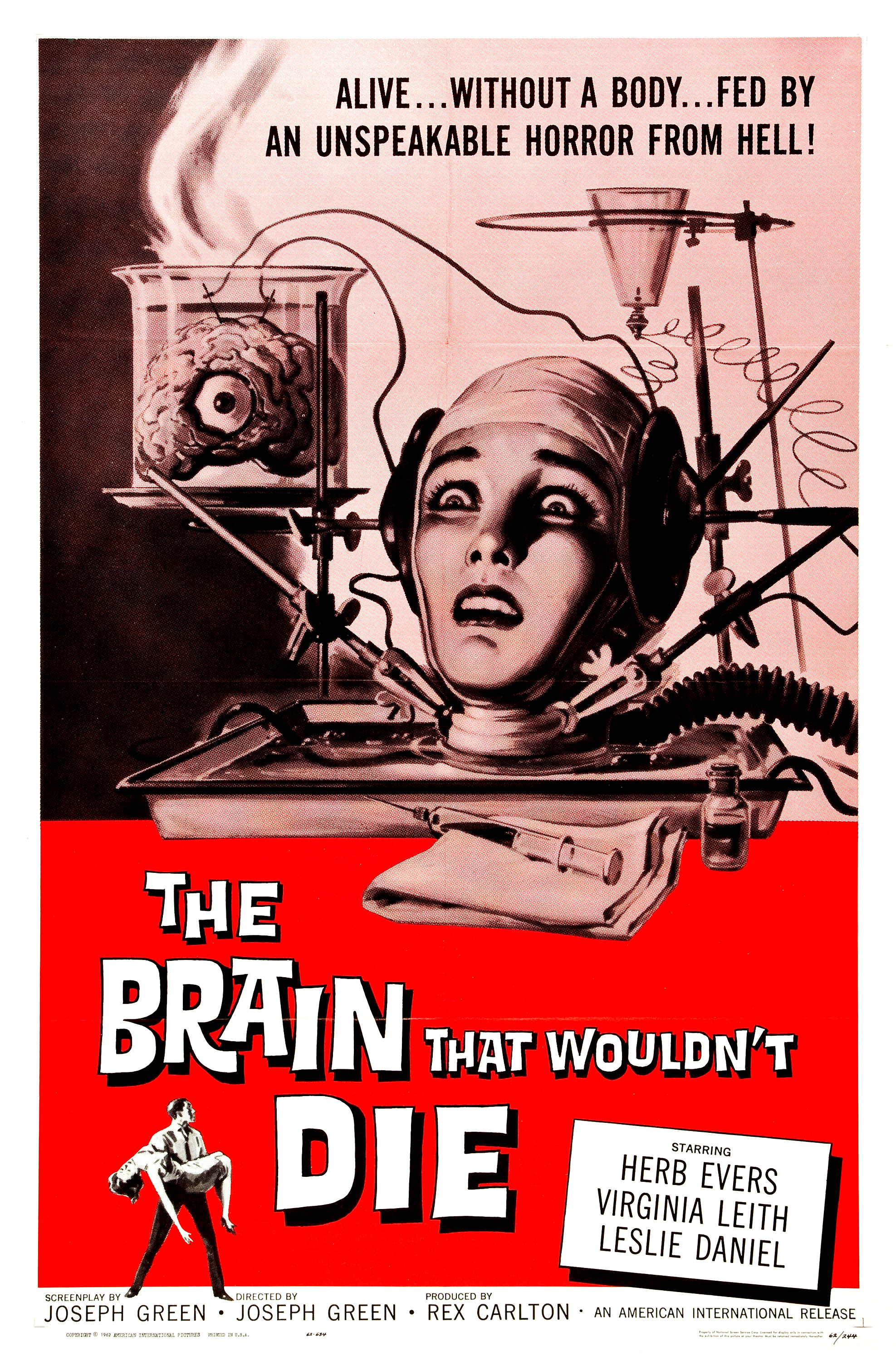
With sniggering apologies to Philip Glass!
Produced by Titmouse Inc.
Directed by Gary Ye
I’d never imagined that Olivia Newton-John’s saccharine cooing could be sarcasm before I saw this video today!
CN: Chronic illness; Multiple Sclerosis; graphic depictions of bodies and illness.
‘Performance Scale’ is a poem about Genna Gardini’s personal experience of being diagnosed with Multiple Sclerosis (MS). It was adapted into a film by three people close to Gardini and personally affected by MS. The film was created as part of Gardini’s 2016 ICA National Fellowship project MS Independent: Diagnosis.
Written by Genna Gardini
Directed by Gary Hartley
Performed by Amy Louise Wilson
Filmed and edited by Francois Knoetze
A Horses’ Heads Production, created with the assistance of the Institute for Creative Arts.
‘Performance Scale’ was nominated by PEN SA for the 2015 New Voices Award. Read an interview with Genna about the poem here.
1:
I spent so many years attacking my body,
finding fault in faint abundance, obsessing over every lack
that it didn’t surprise me when I woke up one morning
to discover that it was finally fighting me back.
2:
This was the year you kept killing all the machines you owned
and that is what we refer to as a “running motif”
(and that is what we refer to as “dramatic irony”).
3:
You’ll come to,
conked out on some strange cistern in a Southern Suburbs mall,
your legs hinging against the plastic billboard of the bathroom door,
angled in the jamb like damp cardboard
folded and forced into a full stop.
4:
This is paper as metaphor and limbs as punctuation.
This is the reverse of writing.
5:
You’ll find your phone lying, lesioned, next to you,
a fissure fresh down its crustacean container
like a phantom crack. Like a mime at a wall,
bucking but flat.
6:
You’re tipped against a nurse
whose prophylactic palm pats nerved and certain on your neck.
You have heard her tell the others that they are good girls.
You are not a good girl
because when she sets you straight on the mat, then the scale,
she only says, “Try not to hurl”, then
“You must make a note of your weight”.
7:
The zinging technology of your mouth
steams against the frosted door of the consultation room.
8:
She is warm and alive as an urn at the Church fete
and you are the Styrofoam cup
leaning at her tap.
9:
“Look at it this way, at least you’ll be skinny!”
is quite a funny thing to say to someone
when you think they could be dying.
10:
You began to let your bob grow unbidden,
split and wrought
because if a part of your physicality still chooses to thrive
who are you cut it short?
10:
You make these kinds of jokes.
11:
You are convinced that the nails and hair of a corpse
inch out past conclusion, intrepid as weeds, eternal as worms,
eyeless and edging in all directions, past even the last right
to scratch into life. This is poetry, I thought,
before I was told that I was wrong.
12:
You retract back into yourself, creating the illusion of growth,
moving like a skirt hitched above the knee, balking as if in shock
pressed against the back of the closest ablution block.
13:
At 27, I became blind in one eye
but didn’t realise, because I only notice my mouth.
I thought perhaps a crack had formed between my head
and the cheese-cloth membrane of my disbelief.
14:
Speaking is uncertain and pinpricked.
It is shrouded. It is grief.
15:
Every bad thing that’d happened to me before
was because a man had decided to teach me a lesson
and this is why, after I found out,
I had to reconsider atheism.
14:
You are turning a manuscript into a
fan with the bridging press of pleats.
You are not Keats.
15:
The good doctor made eye-contact with me for the whole beat
which I know is supposed to convey the meaningfulness of the moment
because of my expensive acting degree.
16:
Raisins injected with water.
17:
Thinned the way paint under the slow drip of turpentine is.
18:
I pick this bed because of its proximity to the TV. I am surrounded by women who are in various states of collapse. One spends each day lamenting the canteen’s slopped and unbroiled chicken ala king, sending voicenotes to her daughters to remember to let the cat in. The others cannot walk. I do not want to know them. I do not want to admit that I am one of them. At first, I shuffle, hesitantly, like it’s a character choice, until I realise I am not performing and the gimmick has stuck, gammy. My legs lurch and twitch beyond me.
19:
I look up and there is nothing.
I look down at my own arm, which the nurse has stuck so repeatedly, finding me false and veinless, that the blood clotted before it gathered, like I was a boring meeting they wanted to leave and this might be the exit.
I look up and she is staring straight at me.
Her face is wide and aimed. I pull out my earphones but she is whispering. I say her name. She is mouthing something and I do not know the words but I know that what she is saying is help me and I cannot even help myself
which is why I am plugged into a wall like a faulty Blackberry on charge
which is why I am connected to wet metal that looks like a clothes horse,
which is why I am making so many Joan Crawford wire hanger jokes.
This means help me.
I thumb the call button. The station, which perpindiculates next to us is unlike, myself, without staff. I use the IV as a cane and I call out but the movement of my voice is as interrupted as my legs, cramped, boned by pain. There is a sound here, it rings out, clean and to the side as a scalpel. Panic is a disinfected metal knife, it slices me from myself, each thought going into the brain instead of the mouth, bounced like an email sent to the incorrect address. The prospect of the seizure is thick and electric in her bones, I can see it. The day before, her family had come to visit. Two of them explained how this latest bout was caused of the evil thoughts she allowed to enter her head. She must lose them. My own – which buzzed, a constant cortex, old and reliable as a Cortina that has been veering for years, cutting breaks and ties with whoever passed me by – stay stuck. I wish I had a demon but I don’t, I have my legs and I run past corn rows of beds to find some assistance
20:
towards the end.
Theatre Arts Admin Collective
Methodist Church Hall, Cnr Milton Road & Wesley Street, Observatory, Cape Town
Doors open 19:30
R50
20:00 – Main Hall – Lliezel Ellick / Roxanne De Freitas / Rosemary Lombard (vocal performance piece)
20:25 – Main Hall – Louise Westerhout /Keenan Chas Ahrends / Nicola van Straaten (word/sound/dance)
20:40 – Minor Hall – Inka Kendzia / Jessica Smith (video and live performance)
BREAK
21:00 – Main Hall – Rhea Dally / Justin Allart (sound/noise performance)
21:20 – Main Hall – Lucy Hazard / Puleng Lange-Stewart / Hannah Walton (video with spoken word performance)
21:35 – Minor Hall – FAITH XVII (video installation)
BREAK
22:00 – Main Hall – Chantelle Gray (performance piece)
22:20 – Main Hall – Debra Pryor / Mark O’ Donovan (performance piece)
Continuous – Meeting Room 1 – Sydelle Willow Smith (photography)
Continuous – Meeting Room 2 – Miranda Moss (installation)
___
THE WINDOW
A window I. A partition. A voyeuristic interface between spaces. A civilizing constraint. Gazing. At the window, through the window, beyond the window. The voyeuristic gaze: preconditioned values, assumptions, desire. The civilizing gaze: conditioning values, assumptions, desire. Gazing. An act of memorializing (it suggests spectatorship, a fetishistic surveying; it suggests participation: in memory, in meaning-making).
A window II. A framing device. Commonly used in art and cinema. To exaggerate part or parts of a figure (forms, tones, shapes, shadows). To recompose an image. To slice up the world into smaller, more wieldy frames. To elicit metaphorical interpretation. (The audience is prompted to step into a world of windows.)
A window III. The window. A composing stratagem. (A perspectival arrangement.) A voyeuristic interface between artist and audience. An invitation to interact with the unknown, the unknowable, the known known. It is not a linear perspective of space, but a cutting up of, slicing into, carving through. (It suggests the existence of another, entirely otherworldly, place.)
__
“A concept is a brick. It can be used to build a courthouse of reason. Or it can be thrown through the window.”
– Gilles Deleuze
Wonderful, as always.
Written and directed by Sara CF de Gouveia, produced by Reinette Du Toit (aka The Oracle), co-produced by Julia Ramsay, starring Siphokazi Khuboni, DOP Felix Seuffert, make-up/hair Tamara Polakow, and more credits on the YouTube link. Music by Shane Cooper.
(Most of the key players in this project were women – more of this please!)
This video is one of the things I treasure most on Youtube – it gives me chills every time. It’s a recording of Liz Mitchell of Boney M performing “Motherless Child” live with the Les Humphries singers in the early 1970s. It’s incredible how Mitchell seems to be singing about her removal from herself via recording, its simulacral persistence beyond her existence in that moment… And the wavering picture also speaks of analog decay, arrested and mummified by its digitisation from analog video and (again lossy) upload to Youtube. And then, of course, the song’s origins in slavery and dispossession. So many degrees of loss, so many layers of noise.
Read about the age-old concept of the homunculus and the homunculus argument related to the theory of vision.
Pain Is…’ (1997) unflinchingly examines the role of pain within society. Attempting “to make an image of pain”, Dwoskin’s film is practical and philosophical.
“Pain Is… combines interviews, archival footage and Dwoskin’s thoughtful voice-over to arrive at a scrupulous anatomy of pain (encompassing disease, dental work and sadomasochism). The interviews range from those who suffer from chronic pain to those who find pleasure in wilfully inflicting pain.” (Dennis Lim, director of Film at Lincoln Centre NYC)
 fleurmach