
Photo: Rosemary Lombard
(cc by-nc-sa)
Photo: Rosemary Lombard
(cc by-nc-sa)

Illustration by Sarah Lazarovic
THINK first. More at http://longliveirony.com.
The Rolling Stones cover, live on Aligre FM, from Session Planet Claire, recorded on March 3, 2000.
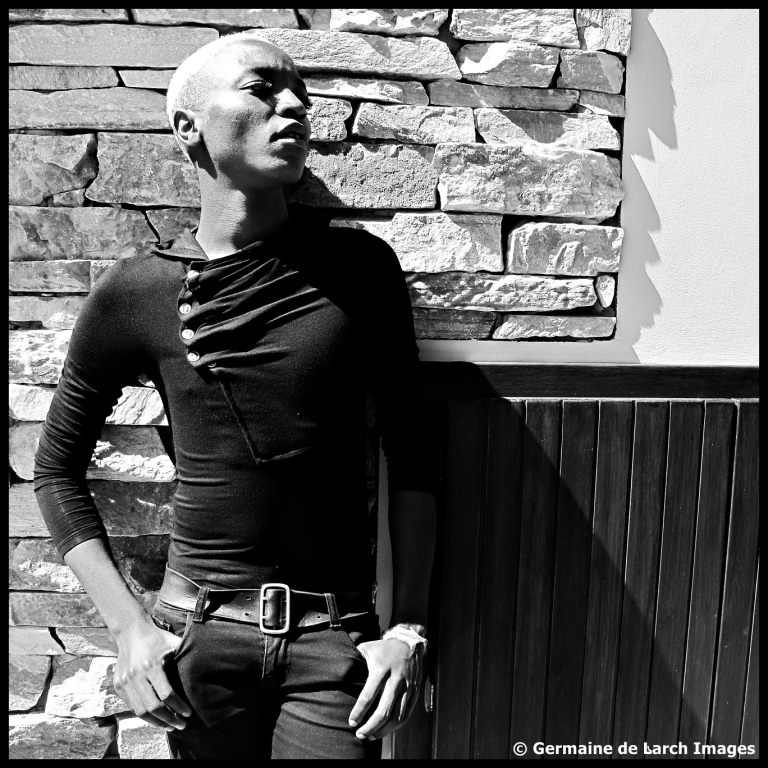
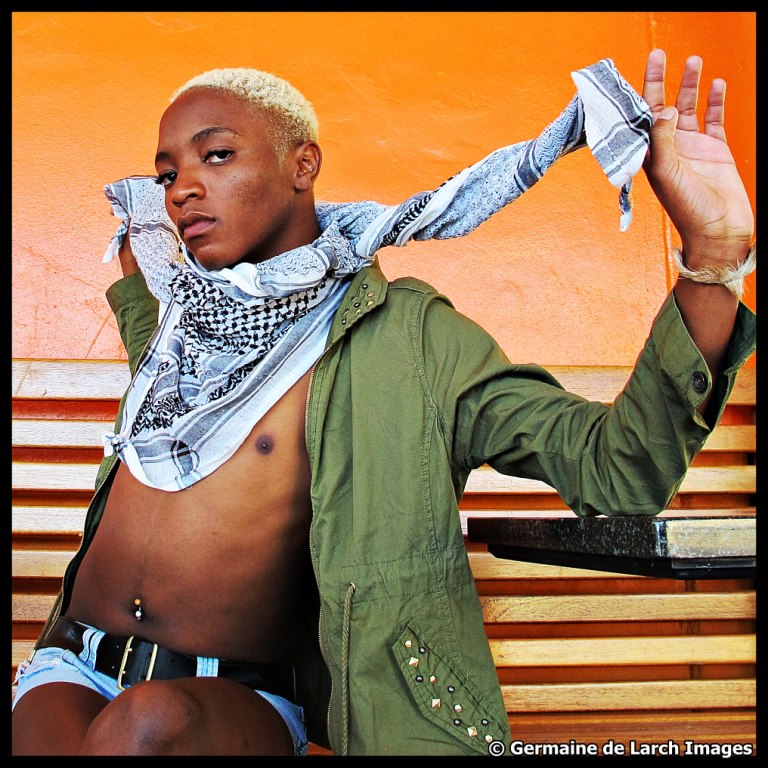
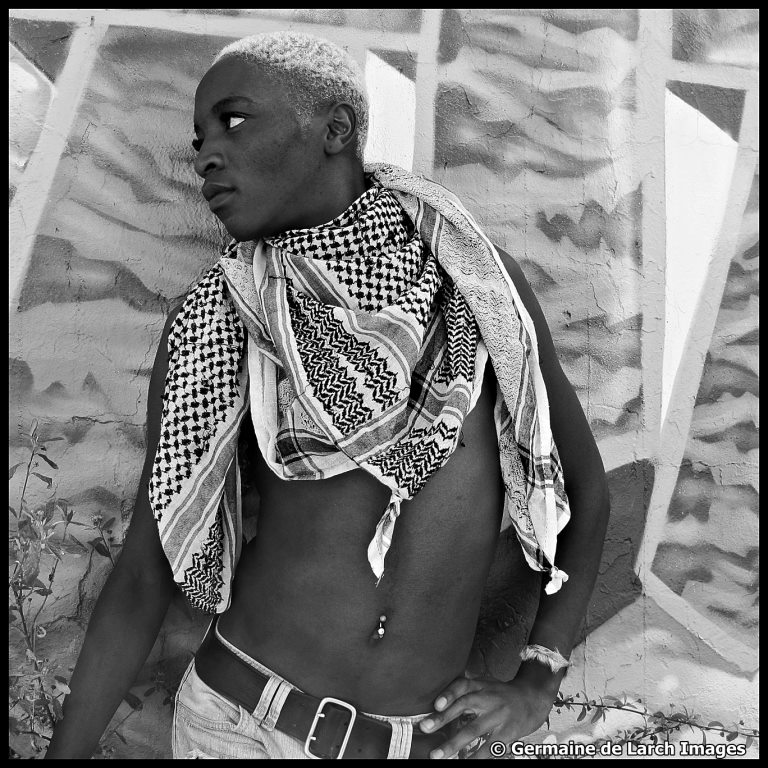
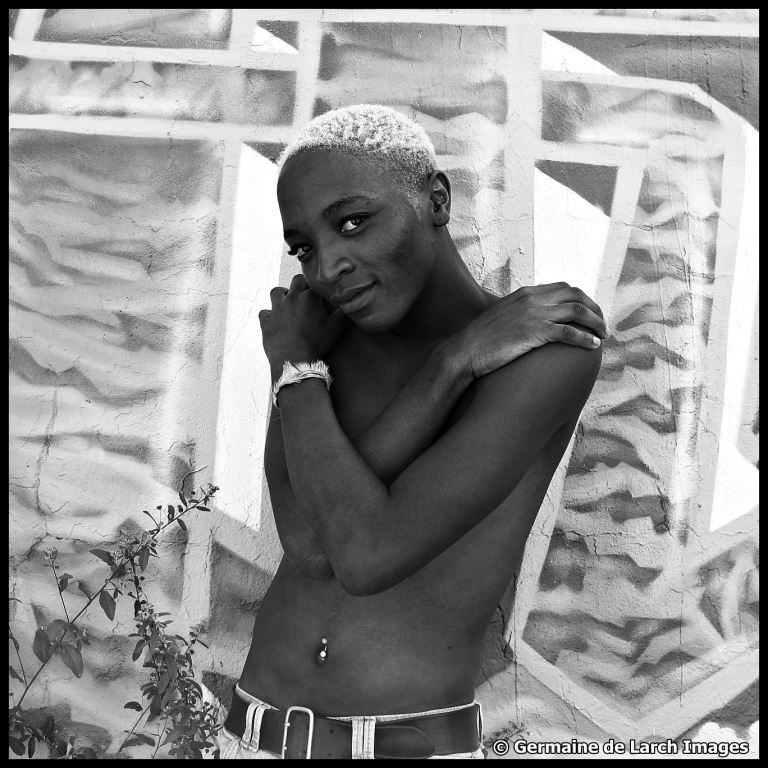
first published on http://www.germainedelarch.tumblr.com
Psychedelic cover of the Holland-Dozier-Holland penned hit, off this US psych band’s record, Come And Have Some Tea With The Tea Company (1968).
This piece by Justine Musk was first published HERE. Thanks to Emma Arogundade for sharing it on Facebook.
Justine Musk – “Well-behaved women seldom make history”: Redefining what it means to be bad
I posed topless for a female photographer who specializes in boudoir. I’m lying on the bed in a man’s velvet smoking jacket, hair blown across my face. I look at the camera. It’s a beautiful portrait (the photographer is very talented) and I’m proud of it. It reminds me slightly of Manet’s Olympia. That painting caused a scandal at the time (1863) — not because the subject was nude — but because of how she stares at the viewer instead of looking away demurely.
It’s that act of shameless eye contact that makes her – according to the moral dictates of the era — truly “bad”.

Édouard Manet – “Olympia” (1863)
I once said to someone, “I don’t know if I’m a good girl with a bad streak, or a bad girl with a good streak.” But I was being ironic. My real point was that, like any other woman (or man), I am both and neither.
In fact, it’s kind of amazing to me that the good girl/bad girl dichotomy still exists. It came up again when movie star Reese Witherspoon accepted an award on television and took her speech as an opportunity to slam other, younger women for being “bad”.
“I understand that it’s cool to be bad, I get it,” she said, in that tone of false camaraderie women sometimes use before they slip in the knife. “But it’s possible to make it in Hollywood without being on a reality show….And when I was coming up, a sex tape was something you hid under your bed…And when you take naked pictures of yourself, you hide your face! Hide your face!” She finished off by declaring that she was going to try to make it “cool” to be a “good girl”.
But imagine this:
Instead of criticizing the same young women for the same things that everybody else is already criticizing them for, she could have slammed reality shows for their misogynist (and monotonous) depiction of women.
She could have criticized the kind of media that turns a girl like Paris Hilton into a celebrity in the first place.
She could have pointed out how advertising – which is so very everywhere that we no longer notice it as we’re breathing it in – co-opts rebellion and sells it back to girls in the “you’ve come a long way, baby” pseudo-liberation supposedly found in a package of cigarettes.
She could have criticized a culture that trains girls to define themselves by their sexual appeal only to punish them for it.
She could have echoed Laurel Ulrich’s famous comment that “well-behaved women seldom make history” and pointed out that ‘bad’ doesn’t have to mean shallow and self-destructive. It can mean cutting against the traditional good-girl dictates of passive and pretty and pleasing and quiet. It can mean speaking up against the status quo, the double standard, the beauty myth. It can mean rejecting the idea that your moral nature depends not on what you do, but on what you don’t do (have sex).
It can mean revolution not rebellion.
She could have said: If you’re going to be ‘bad’, make it MEAN SOMETHING…other than self-sabotage.
Recently I was struck by two different dialogues on Facebook. One was about Charlie Sheen. The other was about Britney Spears. A man posted a status update about going to Sheen’s show, and the thread discussed how smart and funny and talented Sheen is and that despite the controversy and general hubbub, “he’s fine, he’s okay” and “a brilliant marketer” and “totally knows what he’s doing”.
Meanwhile, I’d posted a link to a Britney Spears video on my own Facebook page, partly because I’m fascinated by the way people react to her.
Britney immediately came under fire for being “a poor role model” to young girls everywhere.
No “brilliant marketer” comments for her.
Both Sheen and Spears have a noted history of drug use. Both are sexy and openly sexual. Both are, or have been, at the top of their professions. Both have undergone episodes of bizarre, even tragic behavior that is suggestive of addiction and mental illness.
Yet in the buzz around Charlie Sheen at the height of his notoriety, what I didn’t hear was anything about how he serves as a poor role model for boys.
This is interesting to me, because – unlike Britney, at least to my knowledge – Sheen has a documented history of domestic abuse.
As in: he hits women.
As in: he once shot a woman in the arm.
Let me repeat that: he freaking shot the woman.
But this is no big deal. It gets glossed over. Whenever I brought it up – in person or online – people would lift their virtual shoulders in a virtual shrug and move on.
(Possibly because the women involved were so easily characterized as ‘bad’ girls.
Which in the end comes down to this: slut.
Which means: vile and disposable.)
In comparison to Sheen, Britney did reveal her belly button at a young age. And that, of course, is a threat to civilization as we know it.
Spears is held up as a “poor role model” because we can perceive her as trashy and slutty and “asking for it”. Once you reduce a girl to her sexuality – and god knows that never ever happens in this culture – she becomes less than human, so you no longer have to treat her as a human. Which means the Charlie Sheens of the world – rich, powerful, white – can do with them as they please. If the girls get, you know, a little bit shot — well, it’s their own damn fault. That’s the message that some boys are absorbing from Sheen’s treatment of women and our celebration of him. That attitude, I suspect, will prove more dangerous to girls than any of Britney’s outfits or dance moves or little-girl singing voice.
There’s some irony in the fact that, like Britney, Reese Witherspoon got pregnant at a young age – but unlike Britney, who was married, Reese conceived out of wedlock and had a shotgun wedding.
Also, she said “motherfucker” on stage.
Also, she is still young — and divorced.
Also, she’s an actress (which used to be synonymous with prostitute).
Not so long ago, these things would have pegged her as morally defective. She wouldn’t technically qualify as a “good girl” (which means she’s probably “cooler” than she gives herself credit for).
But what Witherspoon seemed to be getting at in her declaration of herself as a “good girl” has to do with the idea of exposure. Whether it’s a reality TV show or an unfortunate cell phone picture, a good girl does not show herself to the world in this way — or if she does, she “hides her face”.
She guards her shame.
She never makes eye contact.
A “good” girl is not only virginal – and thus qualifies as morally sound, even if, like Jessica Wakefield in the Sweet Valley High novels, she’s kind of a sociopath – but modest and quiet. She covers up. She is seen – without being seen. She talks in a nice voice and smiles a lot. She’s the angel of the house, and stays in the house, which was the historical point of this exercise in the first place.
She’s not loud or opinionated, she doesn’t rock the boat, and she doesn’t draw attention to herself.
All of this is convenient for others. The funny thing about silence is how it tends to favor the dominating person or group. The dominating narrative, the ruling point of view, becomes a sort of truth by default: what we as a culture assume when we’re given no reason to assume otherwise.
It’s the winners who get to write history, after all. The others are silent or silenced.
Which is not my way of saying that appearing on reality TV isn’t a form of evil in its own right, or that a girl should take provocative pictures of herself and post them on the ‘Net. Neither is power so much as a mistaken idea about power (and perhaps too many shots of tequila): when the culture seems to be urging you in one direction (“it’s cool to be ‘bad’”) and you haven’t had time or experience to learn otherwise.
But there does seem to be a link between sexual expression and self-expression, in that a ‘good’ girl is not in full possession of either. Her body doesn’t belong to her: it ‘belongs’ to her father, to her future husband, to the government that decides if she can have an abortion or the religion that decides if she can use birth control.
Her voice doesn’t fully belong to her either: she has to be careful what she says, and how she says it, and who she might offend.
‘Goodness’, then, seems to involve an amputation of the self. You make yourself ‘good’ to be loved and accepted, and in the process sacrifice your authenticity. You give yourself away until you no longer know who you are – assuming you ever did.
I’m not sure what you actually get for this, in the end.
Fitting in, as the wonderful Brene Brown so astutely points out, is not the same as being accepted for who you are – in fact, the one renders the other impossible. Being trained to please and serve leaves you ripe for exploitation; the inability to assert your boundaries makes you easy to abuse in large and small ways.
“Raising a girl to be ‘nice’,” a therapist – a woman in her sixties, married and with daughters — once remarked to me, “is like sending her out into the world with one hand tied behind her back.” She should know. Many of these women turn up in her Beverly Hills office twenty years later: divorced, discarded, aging, with no ability to support themselves and no sense of who they are at core.
So honestly, in the year 2011, these are a girl’s options? She can be ‘bad’ (and disposable) or ‘good’ (and turned in on herself)?
I would like to think that there’s another option.
Not ‘bad’, maybe, but badass.
As in: you get to declare yourself. You get to express your sexuality any way you choose, whether it’s indulging or abstaining, and you’re responsible about it and willing to risk the emotional consequences. When you want or need to speak up — you speak up. You write or blog or paint or dance or study or put on puppet shows or raise your kids or start up your own company or nonprofit or do some combination thereof. You stand for what you believe in. You know what you believe in – and what you don’t. You own your life. You find your tribe. You look out for yourself (ie: you are ‘selfish’). And when you offend people, as anyone with an opinion is bound to do at some point — when people step into your space just to tell you that you suck — you shrug it off and move on, because you know disapproval won’t kill you.
You nurture the fire at your core.
I’m reading the book GAME FRAME, about the rise of social gaming, and came across the idea of “the magic circle”. The circle is the arena in which the game takes place. You step over some kind of threshold and into another world. You participate in a conflict that you recognize as artificial but, for a space of time, accept as reality. You willingly suspend your disbelief.
It struck me that we move in and out of different kinds of magic circles. There are games, yes, but also movies and theater and television and books. There are relationships that become their own world of intimacy. They form a private reality between you and your partner, in which you might ignore your actual experience to buy into an entrancement (“we are soulmates”) or belief system (“he is better and always right, and I am lesser and always wrong”).
And then there’s a magic circle that has to do with language and perception, with how we create our shared reality. The good girl/bad girl labeling strikes me as one of those. Instead of recognizing a woman as a complex and multi-dimensional being, instead of allowing her the flaws, mistakes and happy accidents that come with the trial-and-error process known as the human condition, we stomp her into a cartoon. We accept an artificial conflict (good girl vs bad girl) and make it important. We place her on a pedestal or in the dirt (or on the pedestal so we can knock her off later). We accept this as real instead of a game we can choose not to play.
You could say, instead: We’re all doing the best we can. We all do stupid things from time to time. But we won’t be distracted by this game of blaming and shaming each other. We’ll look to larger forces.
I like this video by Jeffrey Wright, in which he transfers the “willing suspension of disbelief” from the theater to the developing world, from acting to entrepreneurialism and social change.
With the power of your convictions, he says, with the ability to suspend your disbelief and act in the face of uncertainty, you have the chance to reshape reality.
Like Olympia staring out at the viewer — like Manet breaking the rules to paint her — you can reject the game and make a new one.
You can invent a new truth.
Olympia has come down to us through the ages. She refuses to “hide her face”. She is shamelessly comfortable in her own skin. She exudes a badass presence.
Her critics, now, are dust.

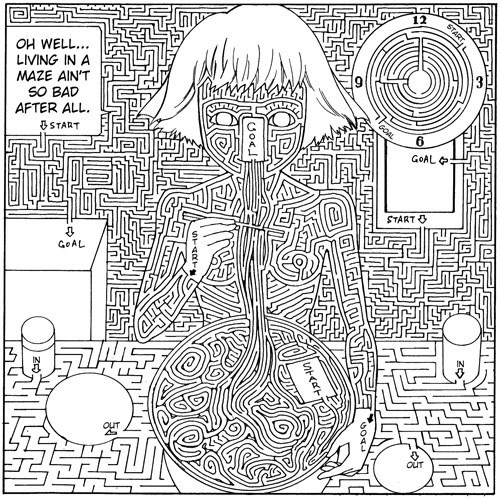
Shintaro Kago – “Living in a Maze”
We are motivated more by aversion to the unpleasant than by a will toward truth, freedom, or healing. We are constantly attempting to escape our life, to avoid rather than enter our pain, and we wonder why it is so difficult to be fully alive.
― Stephen Levine, from A Year to Live: How to Live This Year as If It Were Your Last
… And, while we’re on the lugubrious, seamy baritone tip, it would be remiss not to make a turn past l’original, Monsieur Serge Gainsbourg:
Watch Melody Nelson, a short film directed Jean-Christophe Avery, starring Serge Gainsbourg and Jane Birkin, based on Gainsbourg’s seminal (ahem, heheh) 1971 album. More information HERE.
John Tavener composed this specifically for Björk. She chants a prayer from the Eastern Orthodox Christian tradition, “Prayer of The Heart”, accompanied by the Brodsky Quartet.
“Prayer of The Heart” is a short, simple prayer that has been widely used, taught and discussed throughout the history of Eastern Orthodox Christianity. It is, for the Orthodox, one of the most profound and mystical prayers, and is often repeated endlessly as part of personal ascetic practice. It is particularly used in the practice of the spiritual life known as hesychasm. Based on Christ’s injunction in the Gospel of Matthew, “when thou prayest, enter into thy closet, and when thou hast shut thy door, pray”, hesychasm in tradition has been the process of retiring inward by ceasing to register the senses, in order to achieve an experiential knowledge of God. The prayer is particularly esteemed by the spiritual fathers of this tradition as a method of opening the heart.
Greek: Κύριε Ἰησοῦ Χριστέ, Υἱὲ τοῦ Θεοῦ, ἐλέησόν με (τὸν ἁμαρτωλόν).
English: Lord Jesus Christ, Son of God, have mercy on me (a sinner).
More info from Wikipedia HERE, and from Orthodox Wiki HERE.
“There’s gotta be something more to love than commitment”…
… “Why are you telling me all this?”
goal: a world without gender. mission: possible.
In a world where gender norms are too often rigidly controlled by tradition, religiosity and politicking – iconoclasts are disrupting the norm. Abroad these take the form of parents who’re choosing to bring children up gender-free, while locally an emerging artist and political author questions the legitimacy of limiting local gender constructions. By MANDY DE WAAL.
 I don’t want to be a designer, a marketer, an illustrator, a brander, a social media consultant, a multi-platform guru, an interface wizard, a writer of copy, a technological assistant, an applicator, an aesthetic king, a notable user, a profit-maximizer, a bottom-line analyzer, a meme generator, a hit tracker, a re-poster, a sponsored blogger, a starred commentator, an online retailer, a viral relayer, a handle, a font or a page. I don’t want to be linked in, tuned in, ‘liked’, incorporated, listed or programmed. I don’t want to be a brand, a representative, an ambassador, a bestseller or a chart-topper. I don’t want to be a human resource or part of your human capital.
I don’t want to be an entrepreneur of myself.
Don’t listen to the founders, the employers, the newspapers, the pundits, the editors, the forecasters, the researchers, the branders, the career counsellors, the prime minister, the job market, Michel Foucault or your haughty brother in finance – there’s something else!
I want to be a lover, a teacher, a wanderer, an assembler of words, a sculptor of immaterial, a maker of instruments, a Socratic philosopher and an erratic muse. I want to be a community centre a piece of art, a wonky cursive script and an old-growth tree! I want to be a disrupter, a creator, an apocalyptic visionary, a master of reconfiguration, a hypocritical parent, an illegal download and a choose-your-own-adventure! I want to be a renegade agitator! A licker of ice cream! An organiser of mischief! A released charge! A double jump on the trampoline! A wayward youth! A volunteer! A partner.
I want to be a curator of myself, an anti-preneur, a person.
Unlimited availabilities. No followers required. Only friends.
~ Danielle Leduc
First published HERE (thanks to Emma Arogundade for sharing it on Facebook).
Note from the author:
I actually didn’t write this as an ‘anti-preneurial manifesto’ – it was more of a poetic rant written in frustration from combing through the online job market. I meant it as less of a takedown of capitalism and more of a critique of how we are told to sell ourselves as brands, to self-promote, in order to make it in this world, and as such we allow our job titles to define us to a certain extent. I think all of us are many of the things I listed towards the end, but these things don’t appear as marketable skills in a neoliberal economy with a tight and precarious job market. We are not our resumes, is all.
Totes cray Japanese garage band recorded in 1966 – this is the English version. Essential Monday morning listening!
“Move along, there’s nothing left to see;
Just a body, pouring down the street.”
Remember Sharpeville. Remember Soweto. Remember Marikana.
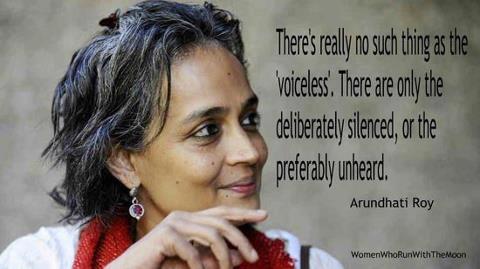
“This is a city of heartless beings; what can I do?”
This provocative song featured in the 1993 film, Khalnayak (Hindi = “Villain”), starring an incandescent Madhuri Dixit and Sanjay Dutt. It was a huge yet controversial hit, largely due to the erotic lyrics.
From What Up, Dog? (Chrysalis/Phonogram, 1988). This video by artist/animator Christoph Simon appeared on MTV’s Liquid Television and in various film festivals, including the Spike and Mike Festival.
From the album At the Down-Turned Jagged Rim of the Sky (Kranky, 2012). Video featuring Claudia Cardinale.
My favourite version of this Weill/Brecht classic, ever.
“Pirate Jenny” (German: “Seeräuberjenny”) is a well-known song from The Threepenny Opera by Kurt Weill, with lyrics by Bertolt Brecht. The English lyrics are by Marc Blitzstein. This cover by Shilpa Ray, Nick Cave and Warren Ellis was published in February 2013 on Sons of Rogues Gallery: Pirate Ballads, Sea Songs and Chanteys, a Hal Willner-produced compilation album of songs performed by a roster of artists which also includes Tom Waits, Shane MacGowan, Iggy Pop, Patti Smith, Macy Grey, Johnny Depp, Frank Zappa and Richard Thompson.
Marina Abramovic and Ulay shared an intense love in the 1970s, performing art out of the van they lived in. When they felt the relationship had run its course (after almost 12 years), they decided to walk the Great Wall of China, each from one end, meeting for one last big hug in the middle and never seeing each other again.

At her 2010 MoMa retrospective, Marina performed ‘The Artist Is Present’ as part of the show, where she shared a minute of silence with each stranger who sat in front of her. Ulay arrived without her knowing and this is what happened:
(Background information from HERE.)
Shot in 1996 and edited in 2000, this is a short documentary about a group of 13-year-old riot grrrls who were socially ostracized at school by their peers and upperclassmen. Everyone in the schoolyard held strong opinions about these so-called “dirty girls,” and meanwhile the “dirty girls” themselves aimed to get their message across by distributing their zine across campus. Directed by Michael Lucid. Music: “Batmobile” by Liz Phair.
The full movie is here:
(or was…)
Archival interview with David Cronenberg from Bombsite (1986)
Bette Gordon (BG) Are your nightmares like your movies? Do you actually see your movie images in your dreams?
David Cronenberg (DC) Rarely. My images come out of the process of making film. I do really think that movies work on the level of dream logic. However realistic or narrative they might like to think they are, they are dreamlike.
BG You, as a director, have an incredible ability to tap into the unconscious.
DC I was once on a talk show with a psychiatrist who worked at the Clark Institute with criminals. He had seen my film, Videodrome and said to me, “I’m almost afraid to be sitting here next to you.” He was totally mystified as to how I could empathize with those states of mind and he obviously, could not. It is mostly intuitive with me. One of the reasons I make a movie is that I’m then in a position where I have to analyze and I enjoy that process.
BG In They Came from Within there was a line of dialogue—”Man thinks too much, he’s lost touch with the body, with instincts. Too much brain and not enough guts.” Do you think the mind is stronger than the body?
DC No. I think the quote is particular to that film. What interests me is the mind/body schism.
BG What do you mean by mind/body schism?
DC I think the mind grows out of the body. I don’t believe in an afterlife. I don’t see the mind or the spirit or the soul continuing after our body dies. The mind and body are completely dependent and interrelated. The mind is somehow organic and physical. It’s only our perception and our culture that keeps them separate.
BG What about the mind creating its own monsters in a sense, that the monster comes from within the mind. Like in Dead Ringers for example, or in Videodrome where it’s the mind that is completely in charge of the body.
DC In as much as the mind is ever in charge of anything. I don’t think it is always in control.
BG Or in Scanners where through mind control, you can . . .
DC Affect the body. But you see, I think everybody does that. I don’t think it’s just Western culture, other cultures even accentuate it more by saying the body’s nothing; it’s only temporary and the mind and the spirit are eternal. I think that’s very destructive. It’s not true. All philosophical, metaphysical and religious forces should be concentrating on trying to form a perception and reality for ourselves that integrates the two. And that would include coming to terms with death as a physical event rather than trying to evade it.
BG So how would you come to terms with death?
DC There’s a Japanese religion that thinks of all of life as a preparation for death, which to the Western mind seems like a very morbid approach to life. But if you think of death as a true end of something, of a process, it makes perfect sense. There we get into the old idea of Western culture being death denying, but I actually think Eastern culture is too. Because they try to trivialize death as being not important.
BG So it falls somewhere between the two as being very important and not important at all.
DC One of the main subjects of all of my films is exactly that. In Dead Ringers you get a body split into two (the twins) with basically, one mind. Just doing that is like an experiment in a lab—which all my movies really are. I set out to see how they work, to illuminate something for myself by doing these experiments.

Videodrome – with James Woods and Debbie Harry
BG There is something about the medical profession in all of your films.
DC Scientists and doctors to me, are at the leading edge of what all human beings do all of the time; which is to change, everything. We’ve never been satisfied with what we’re given. We don’t accept the earth as a given. We change our body chemistry, our physiology, our biology, our biochemistry. We clear the forest, we build our own environment, we climate control it . . . And, the interface between that impulse and the human body often is doctors, biologists, and biochemists.
BG Were you a biochemist?
DC I did go into biochemistry at the University of Toronto. But when I came face to face with what science required, I realized that my temperament was much more suited to some form of art; writing or whatever. I didn’t think of film at the time. I found I would prefer to invent my own science rather than spend two years with rats in a lab getting results.
BG There’s an ambivalence for the medical/science profession in all of your films. You don’t really have villains in the film, nobody’s quite evil . . .
DC That’s right. It is ambivalence. Because I think that they’re heroic even when they’re crazed. I think that being crazed and obsessed is part of being heroic. You don’t get one without the other. Ambition is something else. It’s not ambition in the material sense. My characters are obsessed with discovery and that does excite me and I do identify with that. A good creative scientist is as good as a good creative artist. No question in my mind.
BG What is your notion of the hero? You said your characters are heroic even when they are crazed.
DC Yes, maybe even especially because they’re crazed. I’m obviously drawn to people as main characters who are not embedded so completely in their culture that they can’t see any . . . a visionary’s process . . . people who are jarred into being outside. Continue reading
Amanda Palmer “I Want You, But I Don’t Need You” (Momus cover) – Live at The Music Box at The Henry Fonda Theatre – Los Angeles, CA – December 16, 2008.
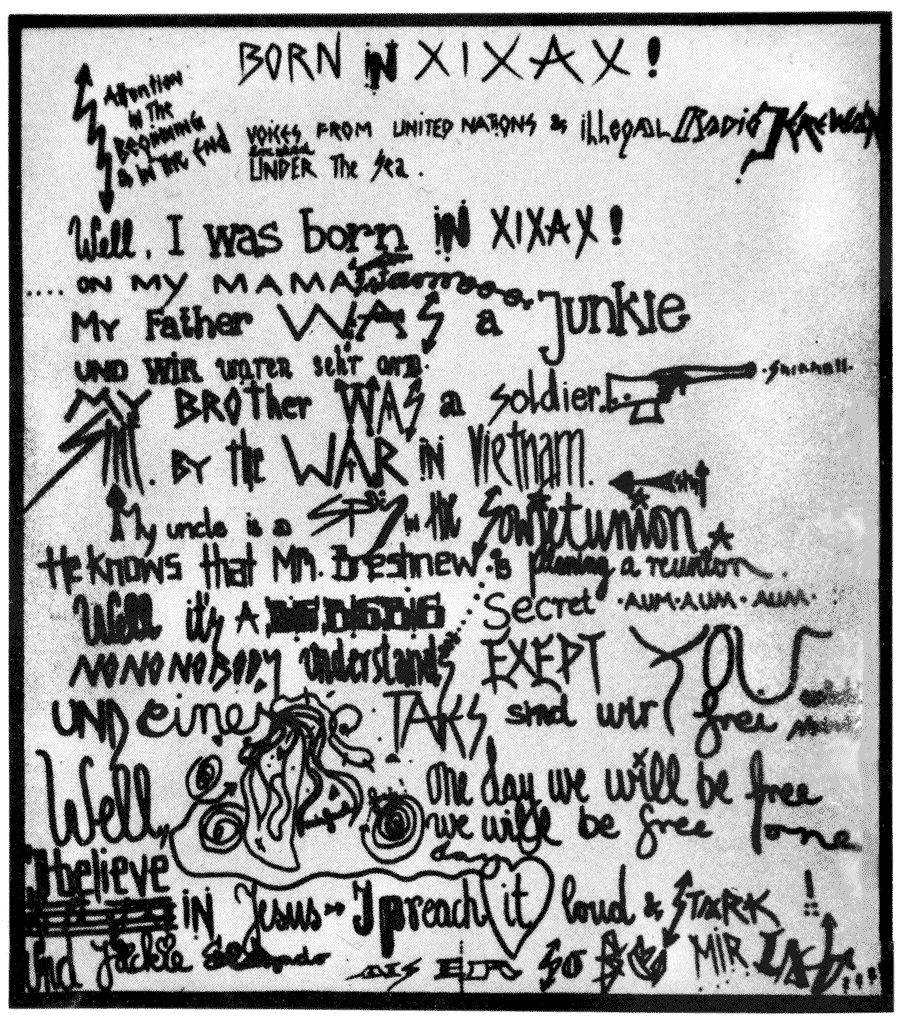
This is again radio Yerevan with… our news (claps)
Oh, I’m sorry, you should turn on the machine
This is radio Yerevan, (laughs)
my name is Hans Ivanovich (laughs) Hagen and this is…
The news (laughs)
Continue reading
From the Weed Forestin’ LP (Homestead Records, 1990), to end the weekend on a less sad note! ;)








 fleurmach
