
Category Archives: freedom
nina hagen – du hast den farbfilm vergessen
Nina Hagen & Automobil (1974). One of her first performances on film. There’s a version with English subtitles HERE.
Raised by her mother, well-known film and TV actress Eva-Maria Hagen and her stepfather, dissident singer-songwriter Wolf Biermann (who was a big influence on her political views and a big nuisance to the GDR), Hagen began singing professionally at a young age. Backed by her group, Automobil, her 1974 single, “Du Hast den Farbfilm Vergessen” (“You forgot the color film”) became a huge hit in the GDR and made Hagen a big star. The seemingly innocent-sounding lyrics (a girlfriend berating her boyfriend for not bringing color film on their vacation) were a subtle dig mocking the sterile, gray, Communist state. The fluffy-sounding ditty became one the most popular songs of 1974 and the double meaning of the comical lyrics was apparently well-understood by both the general population and the Politbüro elites.
In 1976, Wolf Biermann was stripped of his citizenship and refused re-admittance into the GDR after he’d played a TV concert in Cologne. When her mother left to join her husband, Nina claimed to be Biermann’s biological daughter. However, the thing that probably got her visa stamped stat was her threat to the authorities that she would become “the next Wolf Biermann.”
Four days later she was living in the West. I wonder how many people were thrown OUT of East Germany? That’s punk! (from dangerousminds.net)
And here’s a version from 1985 (in full, garish colour):
“imagination has turned into hallucination”
The following are excerpts from Vilém Flusser’s Towards a Philosophy of Photography (London: Reaktion Books, 2000).
The Image
Images are mediations between the world and human beings. Human beings ‘ex-ist’, i.e. the world is not immediately accessible to them and therefore images are needed to make it comprehensible. However, as soon as this happens, images come between the world and human beings. They are supposed to be maps but they turn into screens: Instead of representing the world, they obscure it until human beings’ lives finally become a function of the images they create. Human beings cease to decode the images and instead project them, still encoded, into the world ‘out there’, which meanwhile itself becomes like an image – a context of scenes, of state of things. This reversal of function of the image can be called ‘idolatry’; we can observe the process at work in the present day: The technical images currently all around us are in the process of magically reconstructing our ‘reality’ and turning it into a ‘global image scenario’. Essentially this is a question of ‘amnesia’. Human beings forget they created the images in order to orient themselves in the world. Since they are no longer able to decode them, their lives become a function of their own images: Imagination has turned into hallucination. (pp 9-10)
![22hr38min [photo: Niklas Zimmer]C-type print 120x99,4cm (Ed.3) and 60x49,7cm (Ed.7)](https://fleurmach.com/wp-content/uploads/2012/12/22hr38min-niklas-zimmer.jpg?w=869)
22hr38min [photo: Niklas Zimmer]
C-type print 120×99,4cm (Ed.3) and 60×49,7cm (Ed.7)
The struggle of writing against the image – historical consciousness against magic – runs throughout history. With writing, a new ability was born called ‘conceptual thinking’ which consisted of abstracting lines from surfaces, i.e. producing and decoding them. Conceptual thought is more abstract than imaginative thought as all dimensions are abstract from phenomena – with the exception of straight lines. Thus with the invention of writing, human beings took one step further back from the world. Texts do not signify the world; they signify the images they tear up. Hence, to decode texts means to discover the images signified by them. The intention of texts is to explain images, while that of concepts is to make ideas comprehensible. In this way, texts are a metacode of images.
This raises the question of the relationship between texts and images – a crucial question for history. In the medieval period, there appears to have been a struggle on the part of Christianity, faithful to the text, against idolaters or pagans; in modern times, a struggle on the part of textual science against image-bound ideologies. The struggle is a dialectical one. To the extent that Christianity struggled against paganism, it absorbed images and itself became pagan; to the extent that science struggled against ideologies, it absorbed ideas and itself became ideological. The explanation for this is as follows: Texts admittedly explain images in order to explain them away, but images also illuminate texts in order to make them comprehensible. Conceptual thinking admittedly analyze magical thought in order to clear it out of the way, but magical thought creeps into conceptual thought so as to bestow significance on it. In the course of this dialectical process, conceptual and imaginative thought mutually reinforce one another. In other words, images become more and more conceptual, texts more and more imaginative. Nowadays, the greatest conceptual abstraction is to be found in conceptual images (in computer images, for example); the greatest imagination is to be found in scientific texts. Thus, behind one’s back, the hierarchy of codes is overturned. Texts, originally a metacode of images, can themselves have images as a metacode.
That is not all, however. Writing itself is a mediation – just like images – and is subject to the same internal dialectic. In this way, it is not only externally in conflict with images but is also torn apart by an internal conflict. If it is the intention of writing to mediate between human beings and their images, it can also obscure images instead of representing them and insinuate itself between human beings and their images. If this happens, human beings become unable to decode their texts and reconstruct the images signified in them. If the texts, however, become incomprehensible as images, human beings’ lives become a function of their texts. There arises a state of ‘textolatry’ that is no less hallucinatory than idolatry. Examples of textolatry, of ‘faithfulness to the text’, are Christianity and Marxism. Texts are then projected into the world out there, and the world is experienced, known and evaluated as a function of these texts. A particularly impressive example of the incomprehensible nature of texts it provided nowadays by scientific discourse. Any ideas we may have of the scientific universe (signified by these texts) are unsound: If we do form ideas about scientific discourse, we have decoded it ‘wrongly’: anyone who tries to imagine anything, for example, using the equation of the theory of relativity, has not understood it. But as, in the end, all concepts signify ideas, the scientific, incomprehensible universe is an ’empty’ universe.
Textolatry reached a critical level in the nineteenth century. To be exact, with it history came to an end. History, in the precise meaning of the world, is a progressive transcoding of images into concepts, a progressive elucidation of ideas, a progressive disenchantment (taking the magic out of things), a progressive process of comprehension. If texts become incomprehensible, however, there is nothing left to explain, and history has come to an end. During this crisis of texts, technical images were invented: in order to make texts comprehensible again, to put them under a magic spell – to overcome the crisis of history. (pp 11 – 13)
++++++++++
To summarize: Photographs are received as objects without value that everyone can produce and that everyone can do what they like with. In fact, however, we are manipulated by photographs and programmed to act in a ritual fashion in the service of a feedback mechanism for the benefit of cameras. Photographs suppress our critical awareness in order to make us forget the mindless absurdity of the process of functionality, and it is only thanks to this suppression that functionality is possible at all. Thus photographs form a magic circle around us in the shape of the photographic universe. What we need is to break this circle. (pg 64)
++++++++++
Why a Philosophy of Photography is Necessary
With one exception: so-called experimental photographers – those photographers in the sense of the word intended here. They are conscious that image, apparatus, program and information are the basic problems that they have to come to terms with. They are in fact consciously attempting to create unpredictable information, i.e. to release themselves from the camera, and to place within the image something that is not in its program. They know they are playing against the camera. Yet even they are not conscious of the consequence of their practice: They are not aware that they are attempting to address the question of freedom in the context of apparatus in general. (pg 81)
A philosophy of photography is necessary for raising photographic practice to the level of consciousness, and this is again because this practice gives rise to a model of freedom in the post-industrial context in general. A philosophy of photography must reveal the fact that there is no place for human freedom within the area of automated, programmed and programming apparatuses, in order finally to show a way in which it is nevertheless possible to open up a space for freedom. The task of a philosophy of photography is to reflect upon this possibility of freedom – and thus its significance – in a world dominated by apparatuses; to reflect upon the ways in which, despite everything, it is possible for human beings to give significance to their lives in face of the chance necessity of death. Such a philosophy is necessary because it is the only form of revolution left open to us. (pp 81-82)
Read more excerpts from Flusser’s text HERE.
bill hicks – revelations (1993)
Bill Hicks performing live at the Dominion Theatre in London. This is the entire show.
waspish
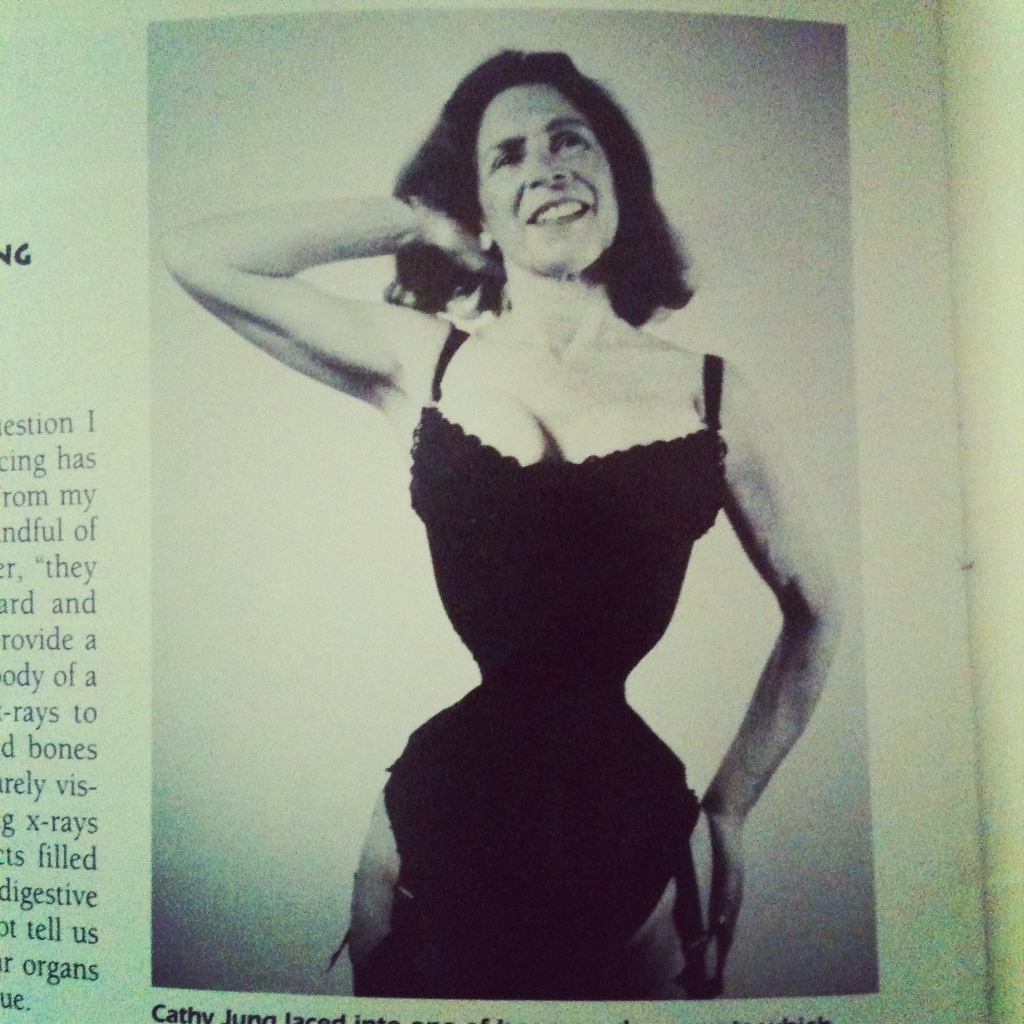
the breeders – wicked little town
Beautiful cover version from Wig In A Box – Songs From And Inspired By Hedwig And The Angry Inch (2003).
baloji with konono n°1 – karibu ya bintou (english subtitles)
From the album Kinshasa Succursale (Crammed Discs, 2011)
Video shot in the streets of Kinshasa.
Electric thumb piano (likembé) played by Konono N°1, the legendary Congolese band whose junkyard sonics and trademark “Congotronics” sound has had a major influence on the electronic and indie rock scenes.
Directors: Spike and Jones
DOP: Nicolas Karakatsanis
Producer: Annemie Decorte (Dr. Film)
Styling: Ann Lauwerys
Mask: Katrien Matthys
More info:
http://www.baloji.com
http://www.crammed.be
great southern land

tricky & martina topley bird – suffocated love
“I think ahead of you… I think instead of you.”
Performed live, the disjointed conglomerate of sighing, stuttering samples becomes a sunny little menace on Later… with Jools Holland, 1996.
why the caged bird sings
“[A] caged bird stands on the grave of dreams
his shadow shouts on a nightmare scream
his wings are clipped and his feet are tied
so he opens his throat to sing…”
From I know why the caged bird sings – Maya Angelou
thanksgiving prayer
William S. Burroughs performing A Thanksgiving Prayer. (C) 1990 The Island Def Jam Music Group
le journal de personne – falestine
Abîme… Abîme!
Tu as commis le pire des crimes
En faisant de Dieu
L’instrument de ta morsure.
Mon père s’est marié à deux reprises
Une fois à l’Est et une deuxième fois à l’Ouest… de Jérusalem…
Je suis palestinienne
Et ma demi- sœur est israélienne
On ne se parle plus…
Je parle arabe, elle parle hébreu
Mais on ne se comprend plus…
On fait semblant de ne plus se comprendre!
From HERE.
tiqqun – la congiura sacra – san francisco bay blues
Tiqqun – La Congiura Sacra – Operation Acephale 2 – San Francisco Bay Blues
no smoking
smashing pumpkins – starla (remastered)
Originally from the 1994 b-side compilation Pisces Iscariot; this is the remastered track from 2011. Massive.
certified fun – print one out for yourself!
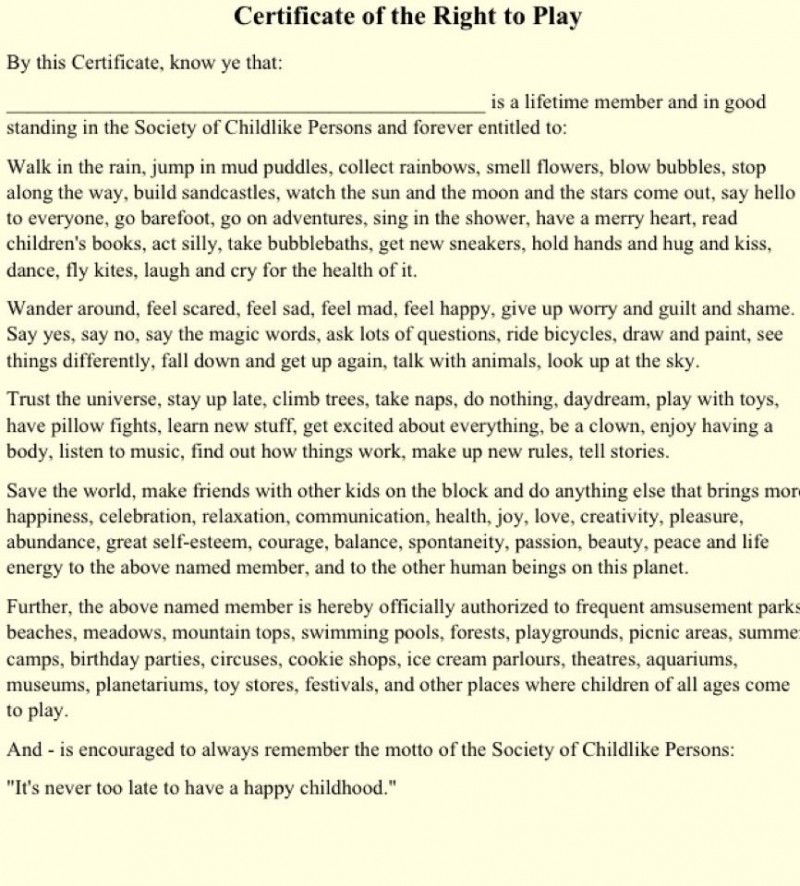
the evil which may come
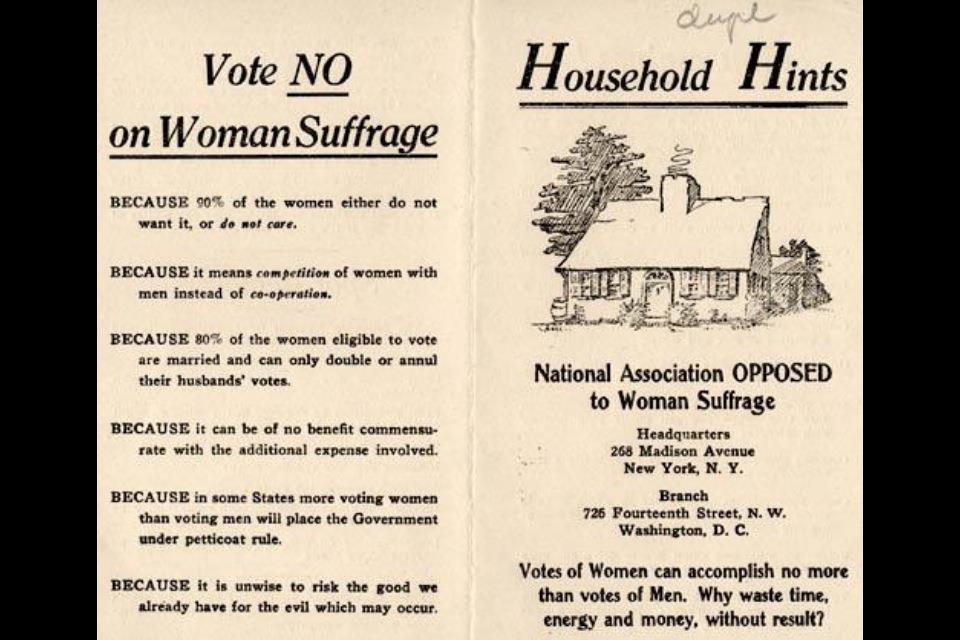
unsuitable girls

“As a girl she was legal prey, especially if she was dressed in a worn black leather jacket and had pierced eyebrows, tattoos, and zero social status.”
– Stieg Larsson, The Girl with the Dragon Tattoo (Quercus, 2008)
*
“What is hidden in snow comes forth in the thaw.”
– Swedish proverb
*
roll up, roll up! supersonic magic carpet!
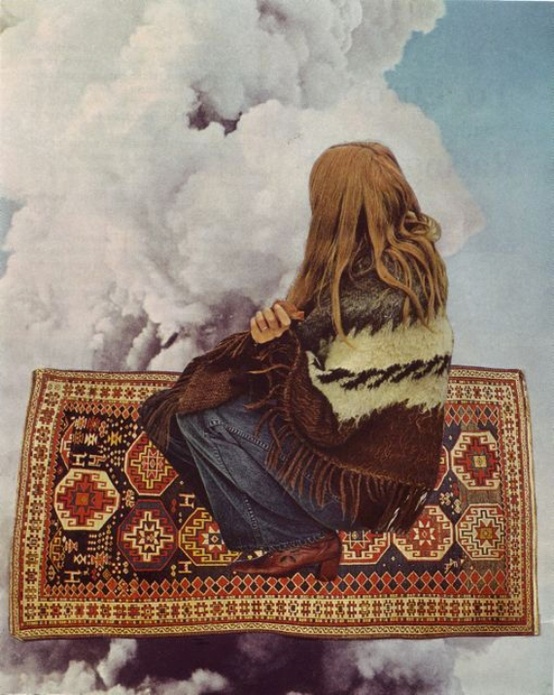 I’ll be in Turkey and Ireland for a month from today, so Fleurmach posts from me may be random and/or rare… Catch you on the flipside (with a high knot-per-square-inch count. ;)
guardian of the threshold, 2003,by sigmar polke

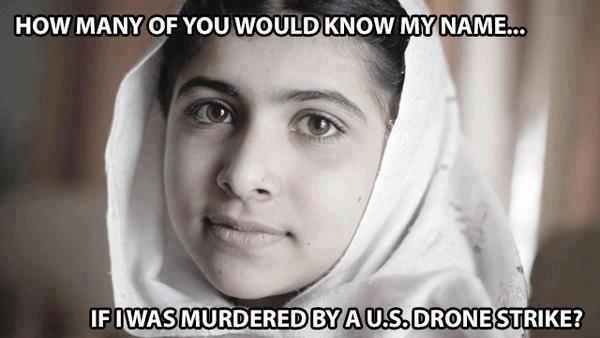
malala yusufzai
tori amos – silent all these years
Recorded in 1991, at the very beginning of her solo career. From the DVD Live At Montreux.
audre lorde on speaking out
If I didn’t define myself for myself, I would be crunched into other people’s fantasies for me and eaten alive.
___
I was going to die, sooner or later, whether or not I had even spoken myself. My silences had not protected me. Your silences will not protect you… What are the words you do not yet have? What are the tyrannies you swallow day by day and attempt to make your own, until you will sicken and die of them, still in silence? We have been socialized to respect fear more than our own need for language.
I began to ask each time: “What’s the worst that could happen to me if I tell this truth?” Unlike women in other countries, our breaking silence is unlikely to have us jailed, “disappeared” or run off the road at night. Our speaking out will irritate some people, get us called bitchy or hypersensitive and disrupt some dinner parties. And then our speaking out will permit other women to speak, until laws are changed and lives are saved and the world is altered forever.
Next time, ask: What’s the worst that will happen? Then push yourself a little further than you dare. Once you start to speak, people will yell at you. They will interrupt you, put you down and suggest it’s personal. And the world won’t end.
And the speaking will get easier and easier. And you will find you have fallen in love with your own vision, which you may never have realized you had. And you will lose some friends and lovers, and realize you don’t miss them. And new ones will find you and cherish you. And you will still flirt and paint your nails, dress up and party, because, as I think Emma Goldman said, “If I can’t dance, I don’t want to be part of your revolution.” And at last you’ll know with surpassing certainty that only one thing is more frightening than speaking your truth. And that is not speaking.
― Audre Lorde, from Sister Outsider: Essays and Speeches (1984/2007, The Crossing Press).
sade – slave song
“I pray to the Almighty:
Let me not to him do
As he has unto me.
Teach my beloved children
Who have been enslaved
To reach for the light continually.”
From Lovers Rock (Epic, 2000).
step back
more of the same old, same old…
Johannesburg – The media coverage of the upgrades to President Jacob Zuma’s Nkandla home required government to “dust off” apartheid-era legislation, media law expert Dario Milo said on Friday.
“The Public Works Minister’s (Thulas Nxesi) response to the (Zuma/Nkandla) expose was twofold,” Milo said at Wits University in Johannesburg.
“(These were) to call for the City Press, which first broke the story, to be investigated for the crime of unlawfully processing a ‘top secret’ document, and to refuse to answer questions about the Nkandla funding because it had been declared a ‘national key point’.”
He said both these propositions required Nxesi to use apartheid-era security legislation such as the Protection of Information Act of 1982 and the National Key Points Act of 1980.
“This is hardly the type of legislation I would want to be relying on if I were in the minister’s position.”
The use of these laws was a current threat to media freedom and was being used to stifle transparency and accountability, he said.
Read more of this article HERE.
tautologies

A bit like ‘military intelligence’: the bigger the lie, the more likely people are to believe it …
this is my body, deal with it.
“WARNING: The following picture might be considered obscene because subject is not thin. And we all know that only skinny people can show their stomachs and celebrate themselves. Well I’m not going to stand for that. This is my body. Not yours. MINE. Meaning the choices I make about it are none of your fucking business. Meaning my size IS NONE OF YOUR FUCKING BUSINESS.
If my big belly and fat arms and stretch marks and thick thighs offend you, then that’s okay. I’m not going to hide my body and my being to benefit your delicate sensitivities.
This picture is for the strange man at my nanny’s church who told me my belly was too big when I was five.
This picture is for my horseback riding trainer telling me I was too fat when I was nine.
This picture is for the girl from summer camp who told me I’d be really pretty if I just lost a few pounds
This picture is for all the fucking stupid advertising agents who are selling us cream to get rid of our stretch marks, a perfectly normal thing most people have (I got mine during puberty)
This picture is for the boy at the party who told me I looked like a beached whale.
This picture is for Emily from middle school, who bullied me incessantly, made mocking videos about me, sent me nasty emails, and called me “lard”. She made me feel like I didn’t deserve to exist. Just because I happened to be bigger than her. I was 12. And she continued to bully me via social media into high school.
MOST OF ALL, this picture is for me. For the girl who hated her body so much she took extreme measures to try to change it. Who cried for hours over the fact she would never be thin. Who was teased and tormented and hurt just for being who she was.
I’m so over that.
THIS IS MY BODY, DEAL WITH IT.”

Self-portrait by Stella
reblogged from thebodyloveblog.tumblr.com.
north korean children play stupendously creepy music
I found this North Korean children’s ensemble performance disturbing yet also fascinating… Maybe it’s due to my Western bias towards self-determination, but the regimented – no, automated – nature of this; the youngness of the children; their forced smiles, really upset me to watch. Everything is rote, down to the last tilt of the head. It also makes me wonder how much “childhood” they have – how heavy this weighs on their tiny shoulders… Or do they even feel it as oppressive at all? Maybe if you grow up where play (of the spontaneous sort) is not on the cultural menu, you never yearn for it, never feel alienation or exploitation?
Thanks Justin Allart for passing this on.
 fleurmach