further materials toward a theory of the man-child

Virginia Woolf pointed out in A Room of One’s Own that, for most of history, if a piece of writing was signed “Anonymous,” its author was usually a woman. Recently, however, we have noticed that more and more unsigned publications coming from the left are written in what sounds like a male voice. From the boy bandit aesthetics of the anarchist magazine Rolling Thunder to the Guy Fawkes masks and Internet vigilantism of the hacker collective Anonymous, the protagonist of contemporary radical politics styles himself as a him.

In some cases, anonymity itself, which was supposed to express solidarity, abets sexism. Take Tiqqun. Founded in the late 1990s and dissolved after the 9/11 attacks, the French journal of radical philosophy attracted media attention when one of its founders, Julien Coupat, was arrested in November 2008 in connection with plans to sabotage the TGV train lines.

Semiotext(e) published translations of Tiqqun’s Introduction to Civil War and This is Not a Program between 2009 and 2011, and the anarchist press Little Black Cart books distributed Tiqqun 1 and Theory of Bloom in 2011 and 2012. Though their cops-and-robbers bombast sometimes raised our eyebrows, we read these with interest. Then, late last year, Semiotext(e) put out its next Tiqqun ­installment. Enclosed in a bright pink cover, and bookended with what looked like low-grade xerox collages of glossy magazine ads and soft porn, Preliminary Materials for a Theory of the Young-Girl confirmed all that we had begun to suspect.

Theory of the Young-Girl opens with a 10-page excursus sketching the “total war” that contemporary capitalism wages against anyone who dares oppose it. Echoing the work of Michel Foucault and Gilles Deleuze, Tiqqun argues that capitalism compels individuals to internalize its imperatives to live (and thus consume) in certain ways. Because the entire conflict is invisible, Tiqqun professes that “rethinking the offensive for our side is a matter of making the battlefield manifest,” revealing the processes by which contemporary society compels us to commodify even our intimate lives. Where can they best expose the front lines where capitalism is waging its invisible war? The “Young-Girl,” a figure Tiqqun invents to play both the exemplary subject of and the agent reproducing this system.

Tiqqun claims it has lady members and seems eager to reassure us that it does not hate us. “Listen,” Tiqqun writes. “The Young-Girl is obviously not a gendered concept … The Young-Girl is simply the model citizen as redefined by consumer society.” When early 20th century capitalism realized that, to reproduce itself, it would have to colonize social life, it particularly targeted the spheres of  “youth” and “femininity”: the young, because they needed and wanted things, and did not yet work; women, because they governed social reproduction, i.e., had and raised kids.

The majority of what follows consists of a Situationist-ish collage that, in a series of vacillating typefaces and font sizes, presents the Young-Girl as a scapegoat as much as a victim.

Image by Shintaro Kago

Image by Shintaro Kago

 Deep down inside, the Young-Girl has the personality of a tampon: she exemplifies all of the appropriate indifference, all of the necessary coldness demanded by the conditions of metropolitan life.

In love more than anywhere else, the Young-Girl behaves like an accountant. 

There isn’t room for two in the body of a Young-Girl.

It appears that all the concreteness of the world has taken refuge in the ass of the Young-Girl.

There are beings that give you the desire to die slowly before their eyes, but the Young-Girl only excites the desire to vanquish her, to take advantage of her. 

Like the nice guy from your grad-school program who tries to cover up his hurt feelings by concocting a general theory that explains why he never got a text after his one-night stand, the book portrays the Young-Girl as vain, frivolous, and acquisitive. She serves the traditional female role of reproducing the population and social order, but here, the social order is corrupt. Therefore, Tiqqun suggests, their intervention requires an ironic performance of misogyny. The question remains: Why is misogyny their only option? And why are so many ­thoughtful people ready to accept that a layer of irony suffices to turns hateful language into the basis of a sound critique?

We believe that Tiqqun has mistaken its object. The real enigma of our age is not the Young-Girl, who, we submit, has been punished enough already for how commodity culture exploits her. It is, rather, her boyish critic. Forms of crypto- and not-so-crypto misogyny have proved startlingly persistent not just within the radical left but also in the bourgeois-left spheres of cultural production: the publishing world, the museum, and the humanities departments of liberal-arts universities. We propose that a particular type is responsible for perpetuating such bad behavior. Call him the Man-Child.

***

It is not that we cannot talk Tiqqun talk. Look:

The Man-Child has two moods: indecision, and entitlement to this indecisiveness.

The Man-Child tells a racist joke. It is not funny. It is the fact that the Man-Child said something racist that is. 

The Man-Child wants you to know that you should not take him too seriously, except when you should. At any given moment, he wants to you to take him only as seriously as he wants to be taken. When he offends you, he was kidding. When he means it, he means it. What he says goes.

The Man-Child thinks the meaning of his statement inheres in his intentions, not in the effects of his language. He knows that speech-act theory is passé.

The Man-Child’s irony may be a part of a generational aversion to political risk: he would not call out a sexist or racist joke, for fear of sounding too earnest. Ironically, the Man-Child lives up to a stereotype about the men from the rom-coms he holds in contempt: he has a fear of commitment.

The Man-Child won’t break up with you, but will simply stop calling. He doesn’t want to seem like an asshole. 

He tells you he would break up with his girlfriend, but they share a lease. 

The Man-Child breaks up with you even though the two of you are not in a relationship. He cites his fear of settling down. You don’t want marriage, at least not with him, but he never thought to ask you.

The Man-Child can’t even commit to saying no.

Why are you crying? The Man-Child is just trying to be reasonable. This is his calm voice. 

The Man-Child isn’t a player. Many a Man-Child lacks throw-down. He puts on a movie and never makes a move. 

Is Hamlet the original Man-Child? No: the Romantics made him one.

Just as not all men are Man-Children, ­neither are all Man-Children men. 

Lena Dunham may be living proof that the Man-Child is now equal opportunity. That is, the character she plays on Girls is. A real man-child would never get it together to get an HBO show. As we watch Hannah Horvath pull a splinter out of her ass, we wonder: Is this second-wave feminism? Or fourth? It is no accident that Judd Apatow wrote the scene. The mesh tank Dunham wears over bare tits is isomorphic with the dick joke.

The hipster and the douchebag may be subspecies of the genus Man-Child.

If the Man-Child could use his ironic sexism to build a new world, would you want to live in it? Would anyone?

***

We could go on like this. Others have. Since Theory of the Young-Girl appeared in France in the late 1990s, the Man-Child has wandered far afield from the barricades, turning up more and more often in the mainstream liberal press. When Hanna Rosin published her widely discussed Atlantic essay and subsequent book, The End of Men, proposing that “modern, postindustrial society is just better suited to women,” she inaugurated a genre. A spate of articles lamented how the “mancession” was discouraging even nice boys from fulfilling the roles traditionally expected of them—holding a job, taking girls on dinner dates, eventually choosing one to marry, outearn, beget kids with, etc.

“The End of Courtship,” which the New York Times ran in January, is exemplary. “It is not uncommon to walk into the hottest new West Village bistro on a Saturday night and find five smartly dressed young women dining together—the nearest man the waiter,” its author concludes. “Income equality, or superiority, for women muddles the old, male-dominated dating structure.” Meanwhile, an online panic-mongering industry thrives by offering more or less reactionary advice to female page-viewers about how to turn whatever romantic temp work comes their way into a long-term contract.

Mancession Lit portrays the Man-Child as pitiful, contrasting him with women who are well-adjusted and adult. But it rarely acknowledges the real question that this odd couple raises. Namely, are women better suited to the new economy because they are easier to exploit?

In the mid-1970s, Italian Marxist feminists attempted to integrate an account of “immaterial labor” into their critique of capitalist society. They argued that when a shop attendant smiles for a customer, or a teacher worries too much about her students, or a parent does housework, they perform real labor. No accident that their examples came from spheres traditionally occupied by women. Antonio Negri and Michael Hardt later used the phrase “affective labor” to describe the emotional exertion that white-collar jobs increasingly require. Employers in economically dominant countries now primarily demand “education, attitude, character, and ‘prosocial’ behavior.” When job listings ask for “a worker with a good attitude,” what they want, say Hardt and Negri, is a smile.

In the culture sector, economic precarity constantly reminds employees of their expendability and, therefore, the importance of their investing affect in their workplace. To gain even an unpaid internship or a barely paid entry-level position in journalism, publishing, museums, or higher education, dedication is a must. Many jobs that used to be meal tickets for starving artists are now considered covetable and require “love.” A college freshman recently told us: “I have a passion for marketing.” A journalist friend recounts how, when she was still in college, a magazine editor approached her at a party with the line: “Yo, you should be my intern.” We imagine her smiling, as if to flatter his delusion that there were any print-media jobs still worth sleeping your way into; in any case, she did get a gig there.

Women’s long history of performing work without its even being acknowledged as work, much less compensated fairly, may account for their relative success in today’s white-collar economy. This is, at least, the story of the heroine that the new Mancession Lit has created. Call her the Grown Woman. A perpetual-motion machine of uncomplaining labor, shuttling between her job and household tasks, the Grown Woman could not be more different from either fat-year brats like Carrie Bradshaw, or Judd Apatow’s lady Man-Children. The Grown Woman holds down her job and pays for her own dinner. The Grown Woman feels like a bad mom when she sees the crafts and organic snacks that other moms are posting on Pinterest. She wonders whether feminism lied to her, but knows she will inherit the earth. Could this be because she is better than the Man-Child at performing what current economic conditions demand? She is certainly more practiced. Who among us hasn’t faked it, if only to make him stop asking?

***

Tiqqun knows and says what the Lifestyle section does or cannot: Today the economy is feminizing everyone. That is, it puts more and more people of both genders in the traditionally female position of undertaking work that traditionally ­patriarchal institutions have pretended is a kind of personal service outside capital so that they do not have to pay for it. When affective relationships become part of work, we overinvest our economic life with erotic value. Hence, “passion for marketing.” Hence, “Like” after “Like” button letting you volunteer your time to help Facebook sell your information to advertisers with ever greater precision.

In the postindustrial era, work and leisure grow increasingly indistinguishable: We are all shop girls now. From this “feminization of the world,” Tiqqun writes, “one can only expect the cunning promotion of all manner of servitudes.” At times, Tiqqun speaks of this exploitation sympathetically. More often, however, they blame the Young-Girl for opening the floodgates by complying with her own exploitation, thus making it easier for control capitalism to make her attitude compulsory for everyone.

Though its anxieties are of the moment, Tiqqun lifts its language from a long intellectual tradition that uses “woman” as shorthand. You can trace this line to Goethe’s Faust and the “eternal feminine” or Friedrich Schiller’s “Veiled Statue at Sais,” where “a youth, impelled by a burning thirst for knowledge,” pokes around Egypt looking for a busty sculpture of Isis that he calls “Truth.” Nietzsche continues using “woman” as a metaphor for the metaphysical essence that philosophers looked for beneath the surface of mere existence. But he borrows the language of his predecessors only to show how their quest failed—proposing, for instance, in Human, All Too Human that “women, however you may search them, prove to have no content but are purely masks.” Nietzsche’s point is that the woman called Truth was always already a cocktease: Nothing except existence exists.

Tiqqun offers an edgy update to such misogynist metaphors deployed for the purposes of demystification. At times, it speaks longingly of women who have not been utterly corrupted by capitalism. But when it learns what it knew all along—there is no outside; all human relationships have become reified—its disappointment at finding no one authentic to grow old with intensifies its vitriol. “It wasn’t until the Young-Girl appeared that one could concretely experience what it means to ‘fuck,’ that is, to fuck someone without fucking anyone in particular. Because to fuck a being that is really so abstract, so utterly interchangeable, is to fuck in the absolute.” Tiqqun’s language may be obscene, but its point is nothing new. The failure to see women as “anyone in particular,” or as subjects endowed with their own ends, has allowed men to fuck women over for centuries.

Read the rest of this incisive article HERE.

luce irigaray – women on the market

Chapter Eight from This Sex Which Is Not One, 1985. This text was originally published as “Le marche des femmes,” in Sessualita e politica, (Milan: Feltrinelli, 1978).

hands on experience

The society we know, our own culture, is based upon the exchange of women. Without the exchange of women, we are told, we would fall back into the anarchy (?) of the natural world, the randomness (?) of the animal kingdom. The passage into the social order, into the symbolic order, into order as such, is assured by the fact that men, or groups of men, circulate women among themselves, according to a rule known as the incest taboo.

Whatever familial form this prohibition may take in a given state of society, its signification has a much broader impact. It assures the foundation of the economic, social, and cultural order that has been ours for centuries.

Why exchange women? Because they are “scarce [commodities] . . . essential to the life of the group,” the anthropologist tells us.1 Why this characteristic of scarcity, given the biological equilibrium between male and female births? Because the “deep polygamous tendency, which exists among all men, always makes the number of available women seem insufficient. Let us add that even if there were as many women as men, these women would not be equally desirable … and that, by definition. . ., the most desirable women must form a minority. “2

Are men all equally desirable? Do women have no tendency toward polygamy? The good anthropologist does not raise such questions. A fortiori: why are men not objects of exchange among women? It is because women’s bodies – through their use, consumption, and circulation – provide for the condition making social life and culture possible, although they remain an unknown “infrastructure” of the elaboration of that social life and culture. The exploitation of the matter that has been sexualized female is so integral a part of our sociocultural horizon that there is no way to interpret it except within this horizon.

In still other words: all the systems of exchange that organize patriarchal societies and all the modalities of productive work that are recognized, valued, and rewarded in these societies are men’s business. The production of women, signs, and commodities is always referred back to men (when a man buys a girl, he “pays” the father or the brother, not the mother … ), and they always pass from one man to another, from one group of men to another. The work force is thus always assumed to be masculine, and “products” are objects to be used, objects of transaction among men alone.

Which means that the possibility of our social life, of our culture, depends upon a ho(m)mo-sexual monopoly? The law that orders our society is the exclusive valorization of men’s needs/desires, of exchanges among men. What the anthropologist calls the passage from nature to culture thus amounts to the institution of the reign of hom(m)o-sexuality. Not in an “immediate” practice, but in its “social” mediation. From this point on, patriarchal societies might be interpreted as societies functioning in the mode of “semblance.” The value of symbolic and imaginary productions is superimposed upon, and even substituted for, the value of relations of material, natural, and corporal (re)production.

sensualist gif

From “The Sensualist”, Kōshoku Ichidai Otoko’s animated interpretation of the 17th century novel by Ihara Seikaku

In this new matrix of History, in which man begets man as his own likeness, wives, daughters, and sisters have value only in that they serve as the possibility of, and potential benefit in, relations among men. The use of and traffic in women subtend and uphold the reign of masculine hom(m)o-sexuality, even while they maintain that hom(m)o-sexuality in speculations, mirror games, identifications, and more or less rivalrous appropriations, which defer its real practice. Reigning everywhere, although prohibited in practice, hom(m)o-sexuality is played out through the bodies of women, matter, or sign, and heterosexuality has been up to now just an alibi for the smooth workings of man’s relations with himself, of relations among men.

Whose “sociocultural endogamy” excludes the participation of that other, so foreign to the social order: woman. Exogamy doubtless requires that one leave one’s family, tribe, or clan, in order to make alliances. All the same, it does not tolerate marriage with populations that are too far away, too far removed from the prevailing cultural rules. A sociocultural endogamy would thus forbid commerce with women. Men make commerce of them, but they do not enter into any exchanges with them. Is this perhaps all the more true because exogamy is an economic issue, perhaps even subtends economy as such? The exchange of women as goods accompanies and stimulates exchanges of other “wealth” among groups of men. The economy in both the narrow and the broad sense-that is in place in our societies thus requires that women lend themselves to alienation in consumption, and to exchanges in which they do not participate, and that men be exempt from being used and circulated like commodities.

*

Marx’s analysis of commodities as the elementary form of capitalist wealth can thus be understood as an interpretation of the status of woman in so-called partriarchal societies. The organization of such societies, and the operation of the symbolic system on which this organization is based-a symbolic system whose instrument and representative is the proper name: the name of the father, the name of God-contain in a nuclear form the developments that Marx defines as characteristic of a capitalist regime: the submission of “nature” to a “labor” on the part of men who thus constitute “nature” as use value and exchange value; the division of labor among private producer-owners who exchange their women-commodities among themselves, but also among producers and exploiters or exploitees of the social order; the standardization of women according to proper names that determine their equivalences; a tendency to accumulate wealth, that is, a tendency for the representatives of the most “proper” names-the leaders-to capitalize more women than the others; a progression of the social work of the symbolic toward greater and greater abstraction; and so forth.

To be sure, the means of production have evolved, new techniques have been developed, but it does seem that as soon as the father-man was assured of his reproductive power and had marked his products with his name, that is, from the very origin of private property and the patriarchal family, social exploitation occurred. In other words, all the social regimes of “History” are based upon the exploitation of one “class” of producers, namely, women. Whose reproductive use value (reproductive of children and of the labor force) and whose constitution as exchange value underwrite the symbolic order as such, without any compensation in kind going to them for that “work.” For such compensation would imply a double system of exchange, that is, a shattering of the monopolization of the proper name (and of what it signifies as appropriative power) by father-men.

Thus the social body would be redistributed into producer-subjects no longer functioning as commodities because they provided the standard of value for commodities, and into commodity objects that ensured the circulation of exchange without participating in it as subjects.

*

Let us now reconsider a few points (3) in Marx’s analysis of value that seem to describe the social status of women.

Wealth amounts to a subordination of the use of things to their accumulation. Then would the way women are used matter less than their number? The possession of a woman is certainly indispensable to man for the reproductive use value that she represents; but what he desires is to have them all. To “accumulate” them, to be able to count off his conquests, seductions, possessions, both sequentially and cumulatively, as measure or standard(s).

All but one? For if the series could be closed, value might well lie, as Marx says, in the relation among them rather than in the relation to a standard that remains external to them – whether gold or phallus.

The use made of women is thus of less value than their appropriation one by one. And their “usefulness” is not what counts the most. Woman’s price is not determined by the “properties” of her body-although her body constitutes the material support of that price.

But when women are exchanged, woman’s body must be treated as an abstraction. The exchange operation cannot take place in terms of some intrinsic, immanent value of the commodity.

It can only come about when two objects-two women are in a relation of equality with a third term that is neither the one nor the other. It is thus not as “women” that they are exchanged, but as women reduced to some common feature-their current price in gold, or phalluses-and of which they would represent a plus or minus quantity. Not a plus or a minus of feminine qualities, obviously. Since these qualities are abandoned in the long run to the needs of the consumer, woman has value on the market by virtue of one single quality: that of being a product of man’s “labor.”

On this basis, each one looks exactly like every other. They all have the same phantom-like reality. Metamorphosed in identical sublimations, samples of the same indistinguishable work, all these objects now manifest just one thing, namely, that in their production a force of human labor has been expended, that labor has accumulated in them. In their role as crystals of that common social substance, they are deemed to have value.

Liu Jianhua - ceramic

Liu Jianhua – ceramic

As commodities, women are thus two things at once: utilitarian objects and bearers of value. “They manifest themselves therefore as commodities, or have the form of commodities, only in so far as they have two forms, a physical or natural form, and a value form” (p. 55).

But “the reality of the value of commodities differs in respect from Dame Quickly, that we don’t know ‘where to have it”’ (ibid.). Woman, object of exchange, differs from woman, use value, in that one doesn’t know how to take (hold of) her, for since “the value of commodities is the very opposite of the coarse materiality of their substance, not an atom of matter enters into its composition. Turn and examine a single commodity, by itself, as we will. Yet in so far as it remains an object of value, it seems impossible to grasp it” (ibid.). The value of a woman always escapes: black continent, hole in the symbolic, breach in discourse . . . It is only in the operation of exchange among women that something of this-something enigmatic, to be sure-can be felt. Woman thus has value only in that she can be exchanged. In the passage from one to the other, something else finally exists beside the possible utility of the “coarseness” of her body. But this value is not found, is not recaptured, in her. It is only her measurement against a third term that remains external to her, and that makes it possible to compare her with another woman, that permits her to have a relation to another commodity in terms of an equivalence that remains foreign to both.

Women-as-commodities are thus subject to a schism that divides them into the categories of usefulness and exchange value; into matter-body and an envelope that is precious but impenetrable, ungraspable, and not susceptible to appropriation by women themselves; into private use and social use.

In order to have a relative value, a commodity has to be confronted with another commodity that serves as its equivalent.

Its value is never found to lie within itself And the fact that it is worth more or less is not its own doing but comes from that to which it may be equivalent. Its value is transcendent to itself, super-natural, ek-static.

In other words, for the commodity, there is no mirror that copies it so that it may be at once itself and its “own” reflection. One commodity cannot be mirrored in another, as man is mirrored in his fellow man. For when we are dealing with commodities the self-same, mirrored, is not “its” own likeness, contains nothing of its properties, its qualities, its “skin and hair.” The likeness here is only a measure expressing the fabricated character of the commodity, its trans-formation by man’s (social, symbolic) “labor.” The mirror that envelops and paralyzes the commodity specularizes, speculates (on) man’s “labor.” Commodities, women, are a mirror of value of and for man. In order to serve as such, they give up their bodies to men as the supporting material of specularization, of speculation. They yield to him their natural and social value as a locus of imprints, marks, and mirage of his activity.

Commodities among themselves are thus not equal, nor alike, nor different. They only become so when they are compared by and for man. And the prosopopoeia of the relation of commodities among themselves is a projection through which producers exchangers make them reenact before their eyes their operations of specula(riza)tion. Forgetting that in order to reflect (oneself), to speculate (oneself), it is necessary to be a “subject,” and that matter can serve as a support for speculation but cannot itself speculate in any way.

Thus, starting with the simplest relation of equivalence between commodities, starting with the possible exchange of women, the entire enigma of the money form-of the phallic function-is implied. That is, the appropriation-disappropriation by man, for man, of nature and its productive forces, insofar as a certain mirror now divides and travesties both nature and labor. Man endows the commodities he produces with a narcissism that blurs the seriousness of utility, of use.

Desire, as soon as there is exchange, “perverts” need. But that perversion will be attributed to commodities and to their alleged relations. Whereas they can have no relationships except from the perspective of speculating third parties.

The economy of exchange-of desire-is man’s business. For two reasons: the exchange takes place between masculine subjects, and it requires a plus-value added to the body of the commodity, a supplement which gives it a valuable form. That supplement will be found, Marx writes, in another commodity, whose use value becomes, from that point on, a standard of value.

But that surplus-value enjoyed by one of the commodities might vary: ‘Just as many a man strutting about in a gorgeous uniform counts for more than when in mufti” (p. 60). Or just as “A, for instance, cannot be ‘your majesty’ to B, unless at the same time majesty in B’s eyes assume the bodily form of A, and, what is more, with every new father of the people, changes its features, hair, and many other things besides” (ibid.).

Commodities – “things” produced – would thus have the respect due the uniform, majesty, paternal authority. And even God. “The fact that it is value, is made manifest by its equality with the coat, just as the sheep’s nature of a Christian is shown in his resemblance to the Lamb of God” (ibid.).

Commodities thus share in the cult of the father, and never stop striving to resemble, to copy, the one who is his representative. It is from that resemblance, from that imitation of what represents paternal authority, that commodities draw their value – for men. But it is upon commodities that the producers-exchangers bring to bear this power play. “We see, then, all that our analysis of the value of commodities has already told us, is told us by the linen itself, so soon as it comes into communication with another commodity, the coat. Only it betrays its thoughts in that language with which alone it is familiar, the language of commodities. In order to tell us that its own value is created by labour in its abstract character of human labour, it says that the coat, in so far as it is worth as much as the linen, and therefore is value, consists of the same labour as the linen. In order to inform us that its sublime reality as value is not the same as its buckram body, it says that value has the appearance of a coat, and consequently that so far as the linen is value, it and the coat are as like as two peas. We may here remark, that the language of commodities has, besides Hebrew, many other more or less correct dialects. The German ‘werthsein,’ to be worth, for instance, expresses in a less striking manner than the Romance verbs ‘valere,’ ‘valer,’ ‘valoir,’ that the equating of commodity B to commodity A, is commodity A’s own mode of expressing its value. Paris vaut bien une messe” (pp. 60-61).

So commodities speak. To be sure, mostly dialects and patois, languages hard for “subjects” to understand. The important thing is that they be preoccupied with their respective values, that their remarks confirm the exchangers’ plans for them. Continue reading

daddy (1973)

NB: not for the strait-laced! An experimental Freudian drama by Niki de Saint Phalle and Peter Whitehead. Grotesque, garish, ghastly… with an incredible piano-driven soundtrack that riffs on Cole Porter’s “My Heart Belongs To Daddy”. If you’re needing an antidote to all the commercial, anodyne Father’s Day bull, this should do the trick. niki daddy

l’age d’or (1930)

Sadly, this is a far more profound symbolic critique of Roman Catholic oppression than anything FEMEN is ever likely to pull off (notwithstanding their tops)!
l'age d'or - bunuelL’Age d’or or The Golden Age (1930), directed by Luis Buñuel, a French surrealist comedy, and one of the first films with synchronous sound ever made in France, was about the insanities of modern life, the hypocrisy of the sexual mores of bourgeois society and the value system of the Roman Catholic Church. Salvador Dalí and Buñuel wrote the screenplay together.

The BBC called it “an exhilarating, irrational masterpiece of censor-baiting chutzpah.”

Read more about the political project of surrealism HERE. Watch the film (in the original French) HERE – turn on the Youtube captions for English subtitles.

Regarding the response of the establishment to the film, from Wikipedia:

Upon receiving a cinematic exhibition permit from the Board of Censors, L’Âge d’or had its premiere presentation at Studio 28, Paris, on 29 November 1930. Later, on 3 December 1930, the great popular success of the film provoked attacks by the right-wing Ligue des Patriotes (League of Patriots), whose angry viewers took umbrage at the story told by Buñuel and Dalí. The reactionary French Patriots interrupted the screening by throwing ink at the cinema screen and assaulting viewers who opposed them; they then went to the lobby and destroyed art works by Dalí, Joan Miró, Man Ray, Yves Tanguy, and others. On 10 December 1930, the Prefect of Police of Paris, Jean Chiappe, arranged to have the film banned from further public exhibition after the Board of Censors re-reviewed the film.

A contemporary right-wing Spanish newspaper published a condemnation of the film and of Buñuel and Dalí, which described the content of the film as “…the most repulsive corruption of our age … the new poison which Judaism, Masonry, and rabid, revolutionary sectarianism want to use in order to corrupt the people”. In response, the de Noailles family withdrew L’Âge d’or from commercial distribution and public exhibition for more than forty years; nonetheless, three years later, in 1933, the film was privately exhibited at the Museum of Modern Art, in New York City. Forty-nine years later, from 1-15 November 1979, the film had its legal U.S. premiere at the Roxie Cinema in San Francisco.

The film critic Robert Short said that the scalp-decorated crucifix and the scenes of socially repressive violence, wherein the love-struck protagonist is manhandled by two men, indicate that the social and psychological repression of the libido and of romantic passion and emotion, by the sexual mores of bourgeois society and by the value system of the Roman Catholic Church, breed violence in the relations among people, and violence by men against women. The opening sequence of the film alludes to that interpretation, by Dalí and Buñuel, with an excerpt from a natural science film about the scorpion, which is a predatory arthropod whose tail is composed of five prismatic articulations that culminate in a stinger with which it injects venom to the prey. Film critic Ado Kyrou said that the five vignettes in the tale of L’Âge d’Or correspond to the five sections of the tail of the scorpion.

russell brand on margaret thatcher

Thatcher sign‘The blunt, pathetic reality today is that a little old lady has died, who in the winter of her life had to water roses alone under police supervision. If you behave like there’s no such thing as society, in the end there isn’t. Her death must be sad for the handful of people she was nice to and the rich people who got richer under her stewardship. It isn’t sad for anyone else.’

‘Barack Obama, interestingly, said in his statement that she had “broken the glass ceiling for other women”. Only in the sense that all the women beneath her were blinded by falling shards. She is an icon of individualism, not of feminism.’

Russell Brand has an intelligent, evocative way with reflection. I remember the piece he wrote when Amy Winehouse died — the fine-grained, personal memories, the honesty. THIS BIT OF WRITING, on a very different sort of figure in his life, has that same quality.

justine musk – redefining what it means to be bad

This piece by Justine Musk was first published HERE. Thanks to Emma Arogundade for sharing it on Facebook.

Justine Musk – “Well-behaved women seldom make history”: Redefining what it means to be bad

I posed topless for a female photographer who specializes in boudoir. I’m lying on the bed in a man’s velvet smoking jacket, hair blown across my face. I look at the camera. It’s a beautiful portrait (the photographer is very talented) and I’m proud of it. It reminds me slightly of Manet’s Olympia. That painting caused a scandal at the time (1863) — not because the subject was nude — but because of how she stares at the viewer instead of looking away demurely.

It’s that act of shameless eye contact that makes her – according to the moral dictates of the era — truly “bad”.

Édouard Manet - "Olympia" (1863)

Édouard Manet – “Olympia” (1863)

I once said to someone, “I don’t know if I’m a good girl with a bad streak, or a bad girl with a good streak.” But I was being ironic. My real point was that, like any other woman (or man), I am both and neither.

In fact, it’s kind of amazing to me that the good girl/bad girl dichotomy still exists. It came up again when movie star Reese Witherspoon accepted an award on television and took her speech as an opportunity to slam other, younger women for being “bad”.

“I understand that it’s cool to be bad, I get it,” she said, in that tone of false camaraderie women sometimes use before they slip in the knife. “But it’s possible to make it in Hollywood without being on a reality show….And when I was coming up, a sex tape was something you hid under your bed…And when you take naked pictures of yourself, you hide your face! Hide your face!” She finished off by declaring that she was going to try to make it “cool” to be a “good girl”.

But imagine this:

Instead of criticizing the same young women for the same things that everybody else is already criticizing them for, she could have slammed reality shows for their misogynist (and monotonous) depiction of women.

She could have criticized the kind of media that turns a girl like Paris Hilton into a celebrity in the first place.

She could have pointed out how advertising – which is so very everywhere that we no longer notice it as we’re breathing it in – co-opts rebellion and sells it back to girls in the “you’ve come a long way, baby” pseudo-liberation supposedly found in a package of cigarettes.

She could have criticized a culture that trains girls to define themselves by their sexual appeal only to punish them for it.

She could have echoed Laurel Ulrich’s famous comment that “well-behaved women seldom make history” and pointed out that ‘bad’ doesn’t have to mean shallow and self-destructive. It can mean cutting against the traditional good-girl dictates of passive and pretty and pleasing and quiet. It can mean speaking up against the status quo, the double standard, the beauty myth. It can mean rejecting the idea that your moral nature depends not on what you do, but on what you don’t do (have sex).

It can mean revolution not rebellion.

She could have said: If you’re going to be ‘bad’, make it MEAN SOMETHING…other than self-sabotage.

Recently I was struck by two different dialogues on Facebook. One was about Charlie Sheen. The other was about Britney Spears. A man posted a status update about going to Sheen’s show, and the thread discussed how smart and funny and talented Sheen is and that despite the controversy and general hubbub, “he’s fine, he’s okay” and “a brilliant marketer” and “totally knows what he’s doing”.

Meanwhile, I’d posted a link to a Britney Spears video on my own Facebook page, partly because I’m fascinated by the way people react to her.

Britney immediately came under fire for being “a poor role model” to young girls everywhere.

No “brilliant marketer” comments for her.

Both Sheen and Spears have a noted history of drug use. Both are sexy and openly sexual. Both are, or have been, at the top of their professions. Both have undergone episodes of bizarre, even tragic behavior that is suggestive of addiction and mental illness.

Yet in the buzz around Charlie Sheen at the height of his notoriety, what I didn’t hear was anything about how he serves as a poor role model for boys.

This is interesting to me, because – unlike Britney, at least to my knowledge – Sheen has a documented history of domestic abuse.
As in: he hits women.
As in: he once shot a woman in the arm.
Let me repeat that: he freaking shot the woman.

But this is no big deal. It gets glossed over. Whenever I brought it up – in person or online – people would lift their virtual shoulders in a virtual shrug and move on.

(Possibly because the women involved were so easily characterized as ‘bad’ girls.
Which in the end comes down to this: slut.
Which means: vile and disposable.)

In comparison to Sheen, Britney did reveal her belly button at a young age. And that, of course, is a threat to civilization as we know it.

Spears is held up as a “poor role model” because we can perceive her as trashy and slutty and “asking for it”. Once you reduce a girl to her sexuality – and god knows that never ever happens in this culture – she becomes less than human, so you no longer have to treat her as a human. Which means the Charlie Sheens of the world – rich, powerful, white – can do with them as they please. If the girls get, you know, a little bit shot — well, it’s their own damn fault. That’s the message that some boys are absorbing from Sheen’s treatment of women and our celebration of him. That attitude, I suspect, will prove more dangerous to girls than any of Britney’s outfits or dance moves or little-girl singing voice.

There’s some irony in the fact that, like Britney, Reese Witherspoon got pregnant at a young age – but unlike Britney, who was married, Reese conceived out of wedlock and had a shotgun wedding.

Also, she said “motherfucker” on stage.
Also, she is still young — and divorced.
Also, she’s an actress (which used to be synonymous with prostitute).

Not so long ago, these things would have pegged her as morally defective. She wouldn’t technically qualify as a “good girl” (which means she’s probably “cooler” than she gives herself credit for).

But what Witherspoon seemed to be getting at in her declaration of herself as a “good girl” has to do with the idea of exposure. Whether it’s a reality TV show or an unfortunate cell phone picture, a good girl does not show herself to the world in this way — or if she does, she “hides her face”.

She guards her shame.

She never makes eye contact.

A “good” girl is not only virginal – and thus qualifies as morally sound, even if, like Jessica Wakefield in the Sweet Valley High novels, she’s kind of a sociopath – but modest and quiet. She covers up. She is seen – without being seen. She talks in a nice voice and smiles a lot. She’s the angel of the house, and stays in the house, which was the historical point of this exercise in the first place.

She’s not loud or opinionated, she doesn’t rock the boat, and she doesn’t draw attention to herself.

All of this is convenient for others. The funny thing about silence is how it tends to favor the dominating person or group. The dominating narrative, the ruling point of view, becomes a sort of truth by default: what we as a culture assume when we’re given no reason to assume otherwise.

It’s the winners who get to write history, after all. The others are silent or silenced.

Which is not my way of saying that appearing on reality TV isn’t a form of evil in its own right, or that a girl should take provocative pictures of herself and post them on the ‘Net. Neither is power so much as a mistaken idea about power (and perhaps too many shots of tequila): when the culture seems to be urging you in one direction (“it’s cool to be ‘bad’”) and you haven’t had time or experience to learn otherwise.

But there does seem to be a link between sexual expression and self-expression, in that a ‘good’ girl is not in full possession of either. Her body doesn’t belong to her: it ‘belongs’ to her father, to her future husband, to the government that decides if she can have an abortion or the religion that decides if she can use birth control.

Her voice doesn’t fully belong to her either: she has to be careful what she says, and how she says it, and who she might offend.

‘Goodness’, then, seems to involve an amputation of the self. You make yourself ‘good’ to be loved and accepted, and in the process sacrifice your authenticity. You give yourself away until you no longer know who you are – assuming you ever did.

I’m not sure what you actually get for this, in the end.

Fitting in, as the wonderful Brene Brown so astutely points out, is not the same as being accepted for who you are – in fact, the one renders the other impossible. Being trained to please and serve leaves you ripe for exploitation; the inability to assert your boundaries makes you easy to abuse in large and small ways.

“Raising a girl to be ‘nice’,” a therapist – a woman in her sixties, married and with daughters — once remarked to me, “is like sending her out into the world with one hand tied behind her back.” She should know. Many of these women turn up in her Beverly Hills office twenty years later: divorced, discarded, aging, with no ability to support themselves and no sense of who they are at core.

So honestly, in the year 2011, these are a girl’s options? She can be ‘bad’ (and disposable) or ‘good’ (and turned in on herself)?

I would like to think that there’s another option.

Not ‘bad’, maybe, but badass.

As in: you get to declare yourself. You get to express your sexuality any way you choose, whether it’s indulging or abstaining, and you’re responsible about it and willing to risk the emotional consequences. When you want or need to speak up — you speak up. You write or blog or paint or dance or study or put on puppet shows or raise your kids or start up your own company or nonprofit or do some combination thereof. You stand for what you believe in. You know what you believe in – and what you don’t. You own your life. You find your tribe. You look out for yourself (ie: you are ‘selfish’). And when you offend people, as anyone with an opinion is bound to do at some point — when people step into your space just to tell you that you suck — you shrug it off and move on, because you know disapproval won’t kill you.

You nurture the fire at your core.

I’m reading the book GAME FRAME, about the rise of social gaming, and came across the idea of “the magic circle”. The circle is the arena in which the game takes place. You step over some kind of threshold and into another world. You participate in a conflict that you recognize as artificial but, for a space of time, accept as reality. You willingly suspend your disbelief.

It struck me that we move in and out of different kinds of magic circles. There are games, yes, but also movies and theater and television and books. There are relationships that become their own world of intimacy. They form a private reality between you and your partner, in which you might ignore your actual experience to buy into an entrancement (“we are soulmates”) or belief system (“he is better and always right, and I am lesser and always wrong”).

And then there’s a magic circle that has to do with language and perception, with how we create our shared reality. The good girl/bad girl labeling strikes me as one of those. Instead of recognizing a woman as a complex and multi-dimensional being, instead of allowing her the flaws, mistakes and happy accidents that come with the trial-and-error process known as the human condition, we stomp her into a cartoon. We accept an artificial conflict (good girl vs bad girl) and make it important. We place her on a pedestal or in the dirt (or on the pedestal so we can knock her off later). We accept this as real instead of a game we can choose not to play.

You could say, instead: We’re all doing the best we can. We all do stupid things from time to time. But we won’t be distracted by this game of blaming and shaming each other. We’ll look to larger forces.

I like this video by Jeffrey Wright, in which he transfers the “willing suspension of disbelief” from the theater to the developing world, from acting to entrepreneurialism and social change.

With the power of your convictions, he says, with the ability to suspend your disbelief and act in the face of uncertainty, you have the chance to reshape reality.

Like Olympia staring out at the viewer — like Manet breaking the rules to paint her — you can reject the game and make a new one.

You can invent a new truth.

Olympia has come down to us through the ages. She refuses to “hide her face”. She is shamelessly comfortable in her own skin. She exudes a badass presence.

Her critics, now, are dust.

embodied

Aëla Labbé - "Sister Sister" series

Aëla Labbé – “Sister Sister” series

Why do you live in your body like you will be given another? As if it were temporary. You starve it, you let anyone touch it, you berate it. Tell it that should be completely different. You tug at your soft flesh, wish it thinner, wish it gone. You fall in love with those who praise the way it sighs under their hands, but who praises the way it holds up your weight, even when you are falling apart?

— Warsan Shire


goal: a world without gender. mission: possible.

goal: a world without gender. mission: possible.

In a world where gender norms are too often rigidly controlled by tradition, religiosity and politicking – iconoclasts are disrupting the norm. Abroad these take the form of parents who’re choosing to bring children up gender-free, while locally an emerging artist and political author questions the legitimacy of limiting local gender constructions. By MANDY DE WAAL.

free screening tonight: the ballad of genesis and lady jaye

Screening today at 20h00 at Bolo’bolo, the new anarchist infoshop and vegan café at 76 Lower Main Road, Observatory, Cape Town.

An intimate, affecting portrait of the life and work of ground-breaking performance artist and music pioneer Genesis Breyer P-Orridge (Throbbing Gristle, Psychic TV) and his other half and collaborator, Lady Jaye, centred around the daring sexual transformations the pair underwent for their “Pandrogyne” project. Watch the trailer HERE.


ballad of genesis

Here’s a full synopsis:

Genesis P-Orridge has been one of the most innovative and influential figures in music and fine art for the last 30 years. A link between the pre- and post-punk eras, he is the founder of the legendary groups COUM Transmissions (1969-1976), Throbbing Gristle (1975-1981), and Psychic TV (1981 to present), all of which merged performance art with rock music. Celebrated by critics and art historians as a progenitor of “industrial music”, his innovations have transformed the character of rock and electronic music while his prodigious efforts to expand the boundaries of live performance have radically altered the way people experience sound in a concert setting.

But that’s just the preamble to the story. Defying artistic boundaries, Genesis has re-defined his art as a challenge to the limits of biology. In 2000, Genesis began a series of surgeries in order to more closely resemble his love, Lady Jaye (née Jacqueline Breyer), who remained his other half and artistic partner for nearly 15 years. It was the ultimate act of devotion, and Genesis’s most risky, ambitious, and subversive performance to date: he became a she in a triumphant act of artistic self-expression. Genesis called this project “Creating the Pandrogyne”. Influenced, like so much of Genesis  work, by Brion Gysin and William Burroughs  Cut Ups , it was an attempt to deconstruct two individual identities through the creation of an indivisible third.

This is a love story, and a portrait of two lives that illustrate the transformative powers of both love and art. Marie Losier brings to us the most intimate details of Genesis’s extraordinary, uncanny world. In warm and intimate images captured handheld, Losier crafts a labyrinthine mise-en-scene of interviews, home movies, and performance footage. The Ballad of Genesis and Lady Jaye documents a truly new brand of Romantic consciousness, one in defiance of the daily dehumanization of the body by the pervasive presence of advertising and pornography, conveying beauty, dignity and devotion from a perspective never before seen on film.

alka yagnik and ila arun – choli ke peeche kya hai (english subtitles)

“This is a city of heartless beings; what can I do?”

This provocative song featured in the 1993 film, Khalnayak (Hindi = “Villain”), starring an incandescent Madhuri Dixit and Sanjay Dutt. It was a huge yet controversial hit, largely due to the erotic lyrics.

dirty girls

Shot in 1996 and edited in 2000, this is a short documentary about a group of 13-year-old riot grrrls who were socially ostracized at school by their peers and upperclassmen. Everyone in the schoolyard held strong opinions about these so-called “dirty girls,” and meanwhile the “dirty girls” themselves aimed to get their message across by distributing their zine across campus. Directed by Michael Lucid. Music: “Batmobile” by Liz Phair.

woman, object, corpse: killing women through media

Linda Stupart wrote this about Reeva Steenkamp, and also the YOU DECIDE billboard and corpses and objects and women.

Linda Stupart's avatarAfrica is a Country (Old Site)

Since Valentine’s Day everyone has been talking about the murder of Reeva Steenkamp, although rarely in those terms. We know that her boyfriend, Oscar Pistorius, shot her four times and killed her while she was behind a locked door in their bathroom in a gated estate. We know that he has a history of domestic violence, a penchant for shooting things. We know absolutely everything about his extensive sporting achievements. The main thing, however, that we know about Steenkamp is that she was a model, and that she was really hot. 

View original post 1,866 more words

anaïs nin on lou andreas-salomé and other remarkably rebellious women

Nin talks fondly about some of her favourite rebellious women, including psychoanalyst Lou Andreas-Salomé (who could hold her own with Rilke, Freud and Nietzsche) and Caresse Crosby, the infamous libertine, anti-war crusader and publisher, about being an artist and exploring psychological worlds, beyond judgement.

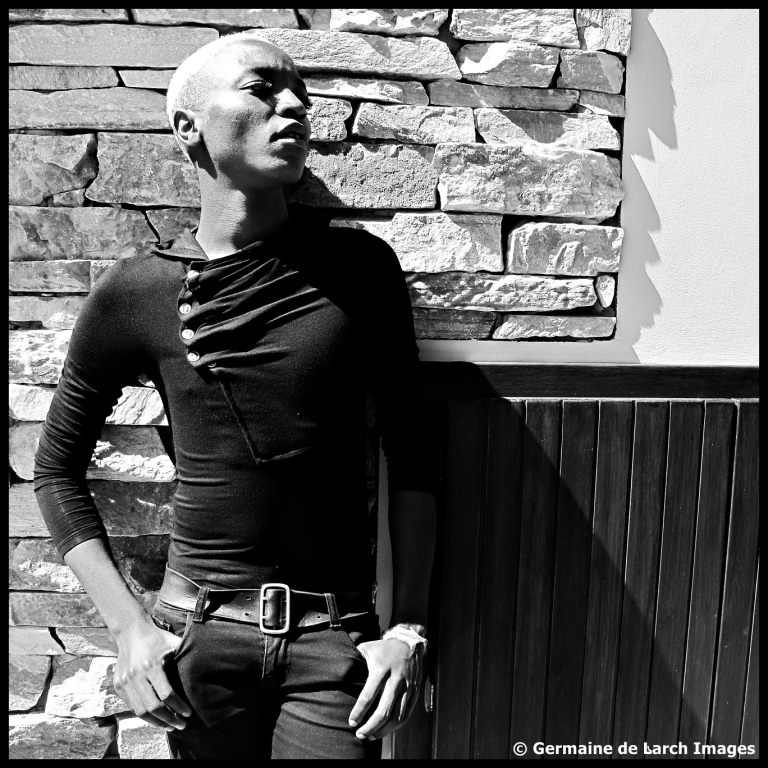
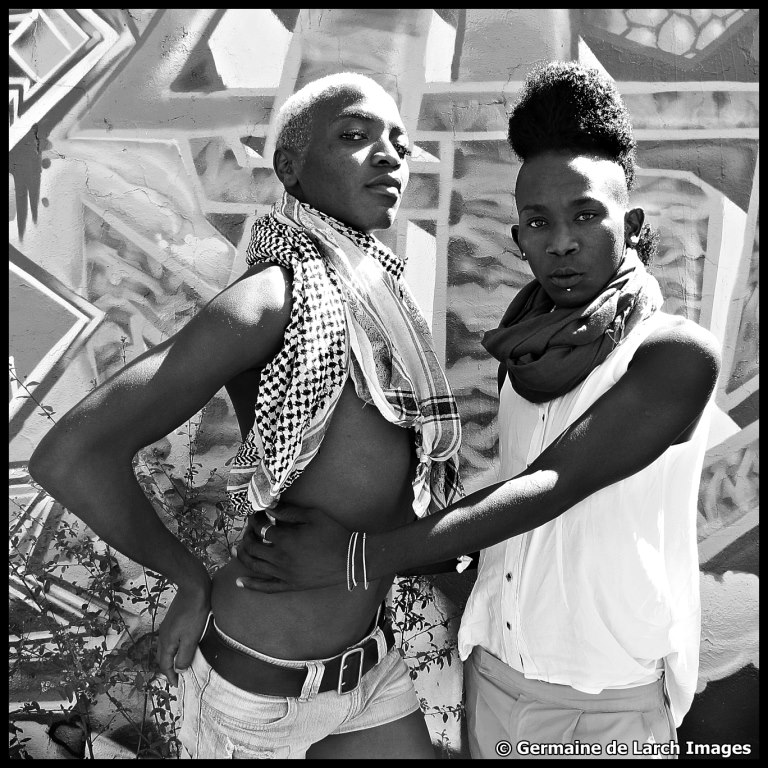
what about mind enlargement? #genderfreesa #dicktatorfreejozi #takingbackourcity

what about mind enlargement? #genderfreesa #dicktatorfreejozi #takingbackourcity

I don’t just live my life, I create my life. And after almost a year of creating images reflecting my vision of the city and its inhabitants, I no longer just want to reflect the city, but create it. Just as I need to be an activist in my own life and my own identity to fully be alive, as an artist, I need to be an artivist, actively participating in the creation of the city I want to live in. Joburg is not just a city, it is my city; it is my home. And as an artivist it is not just a place I want to live in, but a place I actively want to participate in creating.The idea for #takingbackourcity was born out of my return to Joburg from my first real visit to Cape Town. My return to Jozi from CT shocked me with the everyday messages and symbols we Joburgers take for granted; the messages and symbols that shape the collective unconscious of our city and our people. The ‘Penis Enlargement’ posters that adorn every robot, electrical box and street pole were the most glaring example. I asked myself: what does this say about Joburg? what does this say about Joburgers?
We are a city obsessed with the power of the phallus; a presidency obsessed with the symbol and virility and representation of the phallus; a people whose penis size reflects its masculinity, whose masculinity reflects its identity. The effect of this overtly embodied and gendered mantra on our collective unconscious plays itself out in our lives daily.

Continue reading

the boswell sisters – shout sister, shout (1931)

Recorded in New York, April 23, 1931

House Orchestra: Mannie Klein or Jack Purvis (tpt) Tommy Dorsey (tbn) Jimmy Dorsey (cl, as) Joe Venuti (vln) Arthur Schutt (p) Eddie Lang (g) Joe Tarto (sb) Chauncey Morehouse (d, vib) Victor Young (cond)

Boswell_sisters_01

E-36655-A Shout, Sister, Shout (Williams-Hill-Brynan) 3:13 Brunswick 6109, Brunswick 6847, Brunswick 6783, [BSC1], [NWST], [IY], [ELMB], [ITG], [TOOMA]

Composed by J. Tim Brymn, Alexander Hill and Clarence Williams

The Boswell Sisters were a close harmony singing group, consisting of sisters Martha Boswell (June 9, 1905 – July 2, 1958), Connee Boswell (original name Connie) (December 3, 1907 – October 11, 1976), and Helvetia “Vet” Boswell (May 20, 1911 – November 12, 1988), noted for intricate harmonies and rhythmic experimentation.

heavens to betsy – my red self/my secret (demo tape, 1992)

Heavens to Betsy was an American indie-punk band formed in Olympia, Washington in 1991. They were part of the DIY riot grrrl movement in the punk rock underground in the early 1990s, and were the first band of Sleater-Kinney vocalist/guitarist Corine Tucker. These two demos are intimate and powerful.