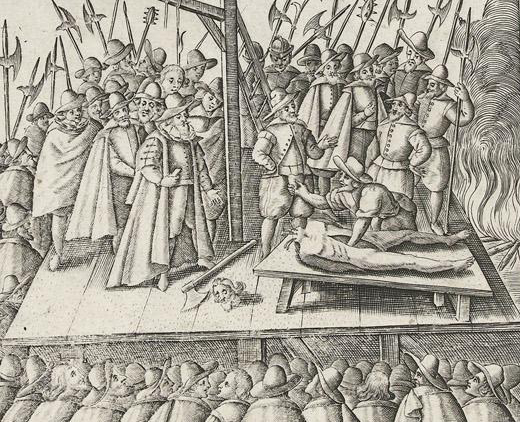
tichborne’s elegie (1586)

Tychbornes Elegie, written with his owne hand in the Tower before his execution*

hollaendischer-druck_gunpowder-plot_1605_blogMy prime of youth is but a frost of cares,
My feast of joy is but a dish of paine,
My Crop of corne is but a field of tares,
And al my good is but vaine hope of gaine.
The day is past, and yet I saw no sunne,
And now I live, and now my life is done.

My tale was heard, and yet it was not told,
My fruite is falne, & yet my leaves are greene:
My youth is spent, and yet I am not old,
I saw the world, and yet I was not seene.
My thred is cut, and yet it is not spunne,
And now I live, and now my life is done.

I sought my death, and found it in my wombe,
I lookt for life, and saw it was a shade:
I trod the earth, and knew it was my Tombe,
And now I die, and now I was but made.
My glasse is full, and now my glasse is runne,
And now I live, and now my life is done.

__
*Chidiock Tichborne was one of fourteen convicted in 1586 in the plot to kill Queen Elizabeth 1 of England.

donna haraway – anthropocene, capitalocene, cthulucene: staying with the trouble (5 september 2014)

Sympoiesis, not autopoiesis, threads the string figure game played by Terran critters. Always many-stranded, SF is spun from science fact, speculative fabulation, science fiction, and, in French, soin de ficelles (care of/for the threads). The sciences of the mid-20th-century “new evolutionary synthesis” shaped approaches to human-induced mass extinctions and reworldings later named the Anthropocene. Rooted in units and relations, especially competitive relations, these sciences have a hard time with three key biological domains: embryology and development, symbiosis and collaborative entanglements, and the vast worlds of microbes. Approaches tuned to “multi-species becoming with” better sustain us in staying with the trouble on Terra. An emerging “new new synthesis” in trans-disciplinary biologies and arts proposes string figures tying together human and nonhuman ecologies, evolution, development, history, technology, and more. Corals, microbes, robotic and fleshly geese, artists, and scientists are the dramatis personae in this talk’s SF game.

wired

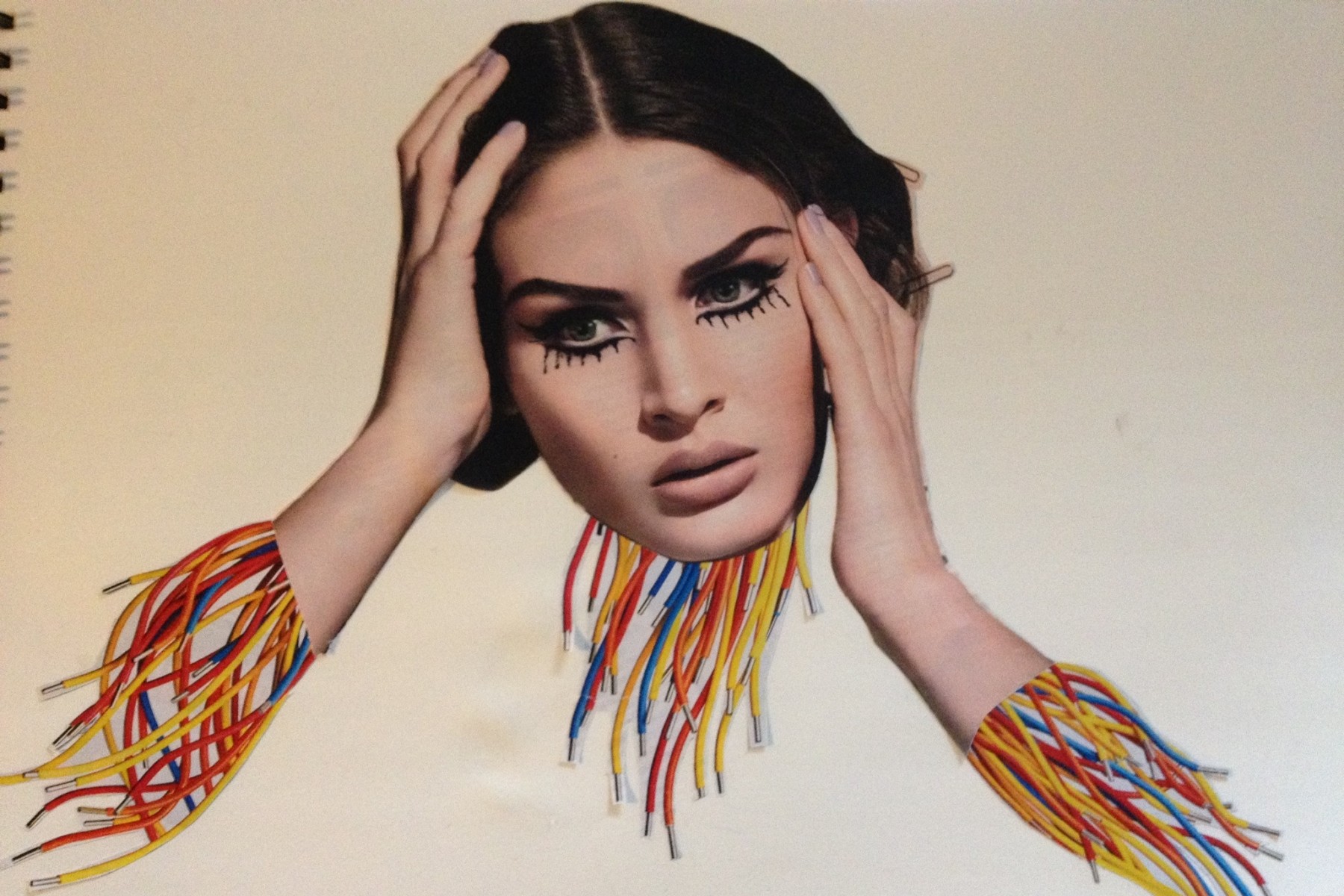
For Donna Haraway, we are already assimilated.

“The monster opens the curtains of Victor Frankenstein’s bed. Schwarzenegger tears back the skin of his forearm to display a gleaming skeleton of chrome and steel. Tetsuo’s skin bubbles as wire and cable burst to the surface. These science fiction fevered dreams stem from our deepest concerns about science, technology, and society. With advances in medicine, robotics, and AI, they’re moving inexorably closer to reality. When technology works on the body, our horror always mingles with intense fascination. But exactly how does technology do this work? And how far has it penetrated the membrane of our skin?”

Go HERE to read the rest of this article about Donna Haraway from way back in 1997.

“bared life” – looking at stereographs of south african miners produced in the early 1900s (rosemary lombard, 2014)

This is a research paper I wrote in 2014 for “The Public Life of the Image”, an MPhil course offered through the Centre for African Studies at the University of Cape Town.


“[T]he striking mine workers at Marikana have become spectacularised. It is a stark reminder that the mine worker, a modern subject of capitalism, in these parts of the world is also the product of a colonial encounter.”

— Suren Pillay (2014)

“We need to understand how photography works within everyday life in advanced industrial societies: the problem is one of materialist cultural history rather than art history.”

— Allan Sekula (2003)

__

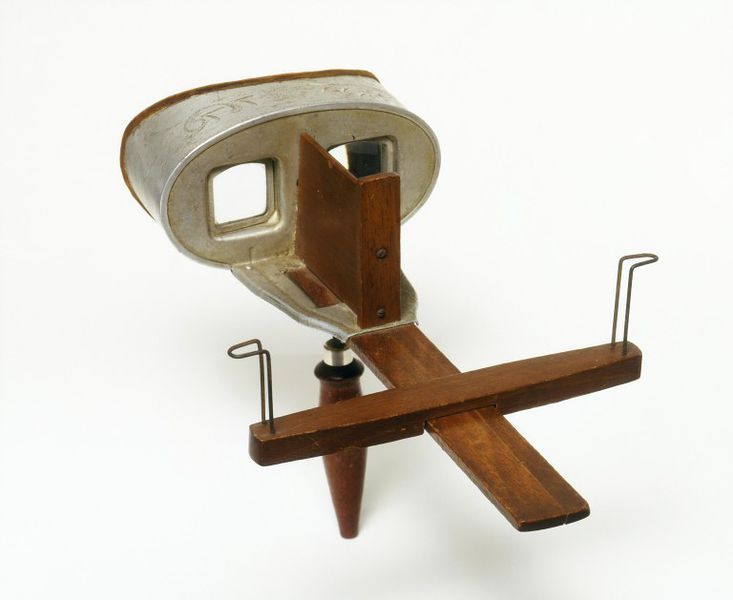
I pick up the odd wood and metal contraption. This is a stereoscope, I am told. It feels old, in the sense that there is a certain worn patina about it, and a non-utilitarian elegance to the turned wood and decoration, though not as if it were an expensive piece – just as if it came from an era where there was time for embellishment. It feels cheaply put together, mass-produced and flimsy as opposed to delicate, the engraving detail of the tinny sheet metal rather rough, the fit of the one piece as it glides through the other somewhat rickety in my hands.

stereoscope 02

stereoscope 01

From two elevations, a stereoscope almost identical to the one I used. Various kinds were devised in the 19th century. The particular hand-held variety, of oak, tin, glass and velvet depicted here dates back to 1901, Based on a design by the inventor Oliver Wendell Holmes, it is perhaps the most readily available and simplest model.

I reach for the pile of faded stereographs; flipping through them slowly. There are 24, picked up in an antique shop in an arcade off Cape Town’s Long Street together with the viewing device. A stereograph is composed of two photographs of the same subject taken from slightly different angles. When placed in the stereoscope’s wire holder, and viewed through the eyeholes, an illusion of perspective and depth is achieved as the two images appear to combine through a trick of parallax.

Susan Sontag remarks that “[p]hotographs, which cannot themselves explain anything, are inexhaustible invitations to deduction, speculation, and fantasy”2. And Allan Sekula calls the photograph an “incomplete utterance, a message that depends on some external matrix of conditions and presuppositions for its readability. That is, the meaning of any photographic message is necessarily context determined”3. In what follows, while unable to offer definitive conclusions, I will look more closely at 2 out of these 24 pictures and, through a contextual discussion, attempt to unpack a few aspects of the complex relationships of photography with its subjects and also with public circulation.

Each thick, oblong card with its rounded, scuffed edges discoloured by age has two seemingly identical images on it, side by side, and is embossed with the name of what I guess must have been the photographer or printing studio’s name in gold down the margin: “RAYMOND NEILSON, BOX 145, JOHANNESBURG”. The images depict miners underground. Some are very faded, to the extent that the figures in them appear featureless and ghostly. There is virtually no annotation on most of the photos. On just a few of them, spidery white handwriting on the photo itself, as if scratched into the negative before it was printed, announces the name of the machinery or activity in the picture and the name of the mine: “Crown Mines”.

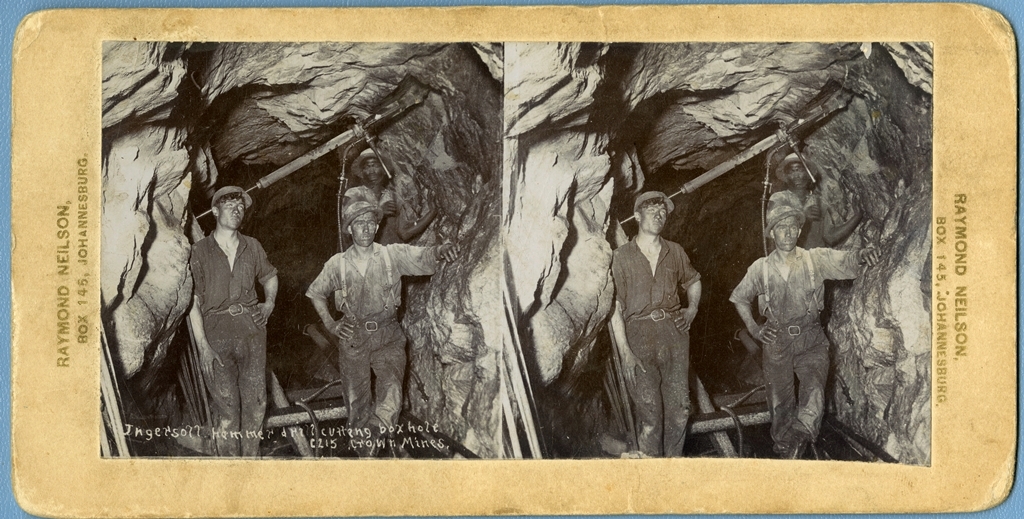
I pick up the first card, slot it into the stereoscope, and peer through the device. On the left of the two images, the writing announces: “Ingersoll hammer drill cutting box hole. C215. Crown Mines.”

Photo 1: Stereographic image of miners in Crown Mines around the turn of the twentieth century.

Photo 1: Stereographic image of miners in Crown Mines around the turn of the twentieth century.

I slide the holder backwards and forwards along the wooden shaft to focus. I’m seeing two images, nothing remarkable, until suddenly, at a precise point on the axis, the images coalesce into one, three-dimensional. The experience is that of a gestalt switch, the optical illusion uncanny. I blink hard. It’s still there. It feels magical, as if the figures in the photos are stepping right out of the card towards me. Their eyes stare into mine through over a century of time, gleaming white out of dirty, sweaty faces.

Startlingly tangible, here stand two young white men in a mine shaft, scarcely out of their teens, leaning against rock, each with a hand on a hip and a jauntily cocked hat. They are very young… yet very old too, I immediately think: definitely dead now; and perhaps dead soon after the picture was taken, living at risk, killed in a rock fall or in World War One. A pang of indefinable emotion hits. I am amazed at how powerfully this image has flooded my imagination. Even with the difficult viewing process, the effect is astonishing.

I am reminded of Susan Sontag’s contention that all photographs are memento mori: “To take a photograph is to participate in another person’s (or thing’s) mortality, vulnerability, mutability. Precisely by slicing out this moment and freezing it, all photographs testify to time’s relentless melt”5.

I also notice that the trick of parallax (and concurrently, the evocativeness) works most pronouncedly on the figures in the foreground, probably due to the camera angle and vanishing points of the perspective. Behind the two white youngsters, almost fading into the darkness, is a black man, holding up a drill over all of their heads that seems to penetrate the tunnel of rock in which they are suspended.

He appears to have moved during the shot as his face is blurred. This could also be due to the low light in the shaft. Though he is looking straight at me, I can’t connect with him like I do with the figures in front. He is very much in the background, a presence without substance. The way the photo was set up and taken has placed him in that position, and this viewpoint is indelible, no matter how hard I try to look past it.

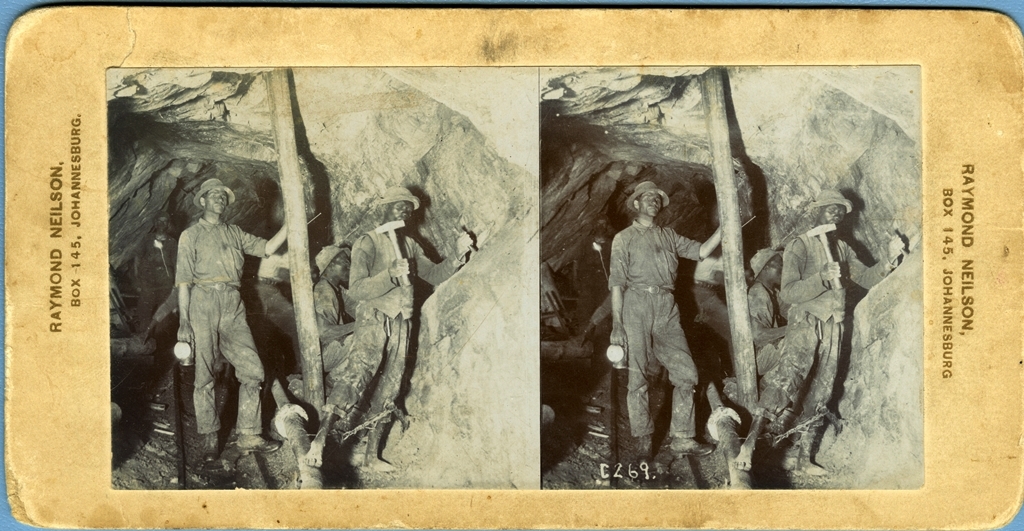
Photo 2: Stereographic image of Johannesburg miners around the turn of the twentieth century.

Photo 2: Stereographic image of Johannesburg miners around the turn of the twentieth century.

There is no writing on this one except for what seems to be a reference number: “C269”. The figure in the foreground is a black man, miming work with a mallet and chisel against the rock face, though clearly standing very still for the shot, as he is perfectly in focus, his sceptical gaze on us, a sharp shadow thrown on the rock behind him. This is no ordinary lamp light: it seems clear that these pictures have been professionally illumined by the photographer, perhaps using magnesium flares, because these shots definitely predate flash photography.

To the man with the chisel’s left stands a white man, face dark with dirt. He is holding a lamp in one hand, and his other grasps a support pile which bisects the shaft and also the photo. Tight-jawed, he stares beyond us, his eyes preoccupied, glazed over. Behind the two men in the foreground, there are more men – parts of two, perhaps three workers can be seen, one a black man crouched down at the rock face behind the man with the chisel.

What strikes me most trenchantly about this picture — the punctum, after Barthes7 — is the man with the chisel’s bare feet. He is at work in an extremely hazardous environment without shoes. Looking at all the photographs, every white worker is wearing boots, but there are several pictures where it is visible that many of the black workers are barefoot.

This is shocking visual evidence of an exploitative industry which does not take its workers’ safety seriously: these men are placed at incredible risk without the provision of adequate protective attire: none have hard protection for their heads, and black workers are without shoes. Men not deemed worthy of protection are, by inference, expendable. From these photos, one surmises that black lives are more dispensable than white.

I am really curious to find out more about these pictures. Perhaps the visual evidence here is echoed in literature? Perhaps they can tell us things the literature does not?

Who were these people posing? There is nothing on the back of the photos. No captions, no dates. Who was the photographer? For what purpose were these pictures being taken? The lack of answers to these most mundane of questions lends the photos an uncanny, almost spectral quality.

Continue reading

first sounds – humanity’s first recordings of its own voice (1857- )

Edouard-Leon Scott de Martinville was the first person to record his voice and send it into the future. David Giovannoni recounts how First Sounds discovered and played back these recordings 150 years later. This is a fascinating documentary! Goosebump-inducing.

albert ayler – spirits (1964)

Please play this over the last few bars of the Bargeld below. (That’s how I would play it for you if I were playing it for you.)

https://www.youtube.com/watch?v=-_l-D7Ly9b4

The third track from Ayler’s Spiritual Unity (1964).

The critic Ekkehard Jost wrote that “Ayler’s negation of fixed pitches finds a counterpart in Peacock’s and Murray’s negation of the beat. In no group of this time is so little heard of a steady beat […] The absolute rhythmic freedom frequently leads to action on three independent rhythmic planes.” Maintaining these qualities required deep group interaction, Ayler himself said of the record, “We weren’t playing, we were listening to each other”*.
__
*from: Wilmer, Valerie (1977). As Serious As Your Life: The Story of the New Jazz. London: Quartet. p. 105.

gloomy sunday (live at the blah blah bar)

A version of the Rezsö Seress classic that we performed on 28 July 2016 as part of a collective which included Louise Westerhout, Lliezel Ellick, Rosemary Lombard, Debra Pryor and Roxanne de Freitas, at Blah Blah Bar’s “Open Mouth” night. We had had just two rehearsals, and I feel like this has the potential to go a lot further… Watch this space!

alexis pauline gumbs – pulse (for the 50 and beyond)

A poem for those who died, shot in Pulse nightclub in Orlando this weekend past.

i was going to see you
i was going to dance
in the same place with you someday
i was going to pretend not to notice
how you and your friends smiled
when you saw me and my partner
trying to cumbia to bachata
but i was going to feel more free anyway
because you were smiling
and we were together
and you had your stomach out
and you felt beautiful in your sweat

i was going to smile when i walked by
i was going to hug you the first time
a friend of a friend introduced us
i was going to compliment your shoes
instead of writing you a love poem
i was going to smile every time i saw you
and struggle to remember your name

we were going to sing together
we were going to belt out Selena
i was going to mispronounce everything
except for amor
and ay ay ay
i was going to covet your confidence and your bracelet
i was going to be grateful for the sight of you
i was going scream YES!!! at nothing in particular
at everything especially
meaning you
meaning you beyond who i knew you to be

i was going to see you in hallways
and be too shy to say hello
you were going to come to the workshop
you were going to sign up for the workshop and not come
you were going to translate the webinar
even though my politics seemed out there

we were going to sign up for creating change the same day
and be reluctant about it for completely different reasons
we were going to watch the keynotes
and laugh at completely different times

i was going to hold your hand in a big activity
about the intimacy of strangers
about the strangeness of needing prayer
we were going to get the same automated voice message
when we complained that it was not what it should have been

we were going to be standing in the same line
for various overpriced drinks
during a shift change
i was going to breathe loudly so you would notice me
you were going to compliment my hair

it isn’t fair
because we were going to work
to beyonce and rihanna
and the rihanna’s and beyonce’s to come
and the beyonce’s and rihanna’s after that

we were going to not drink enough water
and stay out later than our immune systems could handle
we were going to sit in traffic in each others blindspots
listening to top 40 songs that trigger queer memories
just outside the scope of marketing predictions

we were going to get old and i was going to wonder
about the hint of a tattoo i could see under your sleeve
i was going to blink and just miss
the fought-for laughter lines around your liner-loved eyes

i was going to go out for my birthday
but i didn’t
and you did

we were going to be elders
just because we were still around
and i was going to listen to you on a panel
we didn’t feel qualified for
and hear you talk about your guilt
for still being alive
when so many of your friends were taken
by suicide
by AIDS
by racist police
and jealous ex-lovers
and poverty
and no access to healthcare
and how you had a stable job
you suffered at until the weekend
how you avoided the drama
and only went to the club at pride
and so here you were with no one to dance with anymore

i was going to see you and forget you
and only remember you in my hips
and how my smile came easier than clenching my teeth eventually
and how i finally learned whatever it is i still haven’t learned yet
i was going to hear you laugh and not know why
and not care

our ancestors fought for a future
and we were both going to be there
until we weren’t

and i don’t know if it would hurt more
to lose you later after knowing you
i don’t know if it would hurt more
to know you died on your own day
by your own hands
or any of the other systems
that stalk you and me and ours forever

i only know the pain that i am having
and that you are not here to share it
you are not here to bear it
you were going to pass me a candle at the next vigil

but now i am pulse

and now you
are flame.

julia holter – goddess eyes i (2012)

This track comes from her brilliant 2012 album, Ekstasis, which you can listen to HERE. Video directed by Jose Wolff.

“The first thing that came to mind was an image that gradually deteriorates with visual noise, echoing the sonic noise present in the song. We go from lightness to darkness, away from a structured, fabricated place and into raw territory.” – Jose Wolff – August 2012

flower power

Something wonderful I came across HERE this week while trying to find Rock Rose essential oil online. 

echo

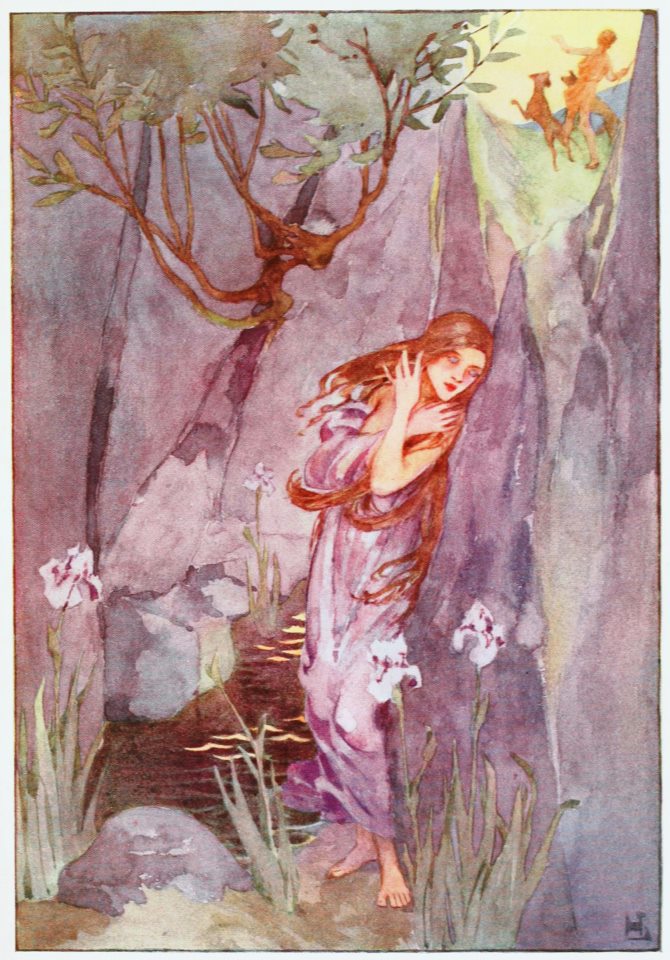
Echo and Narcissus. Helen Stratton, 1915.

The daffodil has been adopted by both the American Cancer Society, and the Madame Curie Society, for whom it symbolizes simultaneously hope and disease. The Greeks today call N. tazetta Dakrakia, “Little Tear Drops,” as this flower’s association with grief and the dead is both exceedingly ancient, and modern.

The legend of Echo’s fertility daemon Narcissus, who pined to death desiring his own reflection, is parallelled by similar flower boys such as Adonis “the scentless rose” (i.e., a windflower or anemone) who was the slain beloved of both Aphrodite and Persephone; and Hyacinthus, the slain catamite of Zeus and Apollo; and the hidden son of Aphrodite, Hermaphroditus, cavern-raised in secret by naiads of Cybele’s Mount Ida. He came to the Fountain of Queen Salmacis, to whom boxwood and clinging ivy was sacred, and he became one with Salmacis after drinking of her mystic waters, achieving a unity which Narcissus appears likewise but unsuccessfully to have sought.

Like these others, Narcissus is fundamentally impotent or sexless, though erotically appealing to goddesses or nymphs and even to the more masculine gods. We are reminded that Cybele’s boy companion Attis, born of an almond tree was, like Narcissus, sexually incapable – indeed was literally unmanned. Such sexless lads seem to originate in a very early level of myth when the Mother Goddess, being Absolute, had no actual consort, at a time when the male principle was at most a companion, son, or a priest who had unsexed himself.

Most such fertility daemons are straightforward “dying and reborn” grain-divinities, including even Jesus whose worshippers co-opted the daffodil as well as the lily as symbols of death and Easter resurrection. But Narcissus appears additionally to be partly related to a large number of female nymphs transformed directly into flowers, trees, or reeds to escape unwanted sexual encounters. Because there is something essentially female in his myth, he somewhat bridges the Attis or Galli type of mythology of self-castration, to the Daphne type of myth of nymphs escaping either lust or an unwanted marriage or the pursuit by unwanted rape by a god.

He loved his own reflection (which he mistook for female), then turned into the flower bearing his name, ignoring the erotic desires of Echo all the while. But in an alternative version, he had an incestuous affair with his twin sister, who subsequently died, and his obsession for his own reflection was due to his own resemblance to his beloved.

Echo herself had been cursed never to be able to seduce Narcissus directly, but only to repeat his words. She was, in essence, his reflection, so his sentiment that his reflection was female, or that it was his twin sister, was correct. But Echo herself is a dwindled form of a once very mighty Goddess of great antiquity, Akko, mother of all language, whose Voice was that which called forth creation at the beginning of time, and who bears a close association with the Cretan Crocus-goddess Kar.

We know that Echo’s worship was significant within the secretive rites of Demeter. One day was put aside to honor Echo during the Demeter Festival of Eleusis. The precise nature of worship at the Echo shrine was forbidden to be written down, and is today unknown. Her worship was also part of the cult of the Argive Hera; and while in Latin versions of her myth Echo angered Juno (Hera) by covering for Jove’s sundry sexual liaisons, within the Argive cult Echo was Hera’s beloved handmaiden. Echo’s central myth within this cult binds her to the erotic nature-divinity, Pan, to whom she was reluctantly betrothed, and by whom she bore a daughter, Jynx or Yunx, who cast a spell that caused Zeus to fall in love with Io, for which reason Hera turned Jynx into a wryneck bird.

Or Echo gave birth to Peitho, Goddess of Soft Speech or of Seductive Persuasion. Peitho was handmaiden to Aphrodite, and became the bride of Hermes. Peitho had her own cult in Athens, said to have been introduced to the city by none other than Theseus. She is given several genealogies and isn’t invariably a daughter of Echo, but the notion that she was Echo’s daughter was sensible in that both were associated with speaking.

Dionyssiaca calls Echo the Goddess Who Never Fails to Speak. Though in later tales this meant she was an annoying chatterbox, there is ample evidence that any negative connotation was imposed by rival cults, and that Echo was in her own right a powerful divinity. Her cult was always of a secretive kind associated with lustiness and death, and never spoken of outside the confines of secret initiations. She was depicted as an angel-like being with enormous wings hiding her mouth behind a veil, signifying secret wisdom; just such an image of Echo is shown at the top of this page, and she is clearly distinct from any sort of nymph.

As a Virgin Goddess, she rejected not only Pan, but also Poseidon who sent a flood up the mountains in pursuit of Echo. She even refused to attend the wedding of Dionysios because of her dislike of the marriage bed. It is an interesting aside that a surname for Dionysios, Antheus (“Flowery”), was an alternate name for Narcissus. Echo’s disdain for marriage would have been quite normal for huntress-goddesses or nymphs of Artemis, yet Echo may have taken her disdain for all things connubial to extremes, and insulted Dionysios when she refused to participate in the violent drunken dance of the maenadic Oreiades or Hill-nymphs at Dionysios’ wedding.

In none of her myths is Echo given a genealogy, very likely because she was part and parcel with the First Cause in that it was her Voice that called forth creation. But some have speculated she was a renegade Oreiad of Boeotia, and that she left her sister-band of the pines and oaks of the mountain forests to live alone in a deep cavern of an alpine cliff, in order to not be seen and courted by any man or god.

If she were indeed an Oreiad this would make her a sister of the Dactyls and Satyrs, perhaps even a sister of Pan. The Oreiades were sometimes likened “the female Dactyls” and were wedded to their brothers, the Dactyloi. The children of the Dactyls and Oreiades were the Curetes or Corybontes, who were priests of Cybele and defenders of infant Zeus, and were male equivalents to the raging maenads who danced madly and noisily about the hillsides.

The mother of the Oreiades and Dactyloi was the Titaness of radiant heat, Anchiale, sister of Prometheus. Their father was the Titan of hands Hekateros. The sons and daughters of Anchiale and Hekateros invented iron metallurgy and brought the Bronze Age to a close. These sons and daughters were also great artists of anything involving use of the hands, and as light-bearers were bringers of wisdom out of darkness. Though it was said that Echo was educated in the arts by the Muses, it may once have been that Echo instructed the Muses!

These Oreiades were of the same generation of divinity as the Olympians, although since these children of Anchilale secretly nurtured the infant Zeus in a mountain cavern in Crete, really they are older than the Olympians. Anchiale herself dwelt originally on Mount Ida in Crete, and later on the Phrygian Mt. Ida, which association identifies her most strongly as a byform of Cybele Idaea, greatest of the Great Goddesses, the mother of Zeus.

But it’s important to remember that Echo’s recurring association with the Oreiades never explicitly makes her one of them, and this may well be due to her having been known to be herself a Titaness of the first generation of divinity. Rather than being the Nymph of Mt. Helicon, she was an aspect of the All-Mother herself.

When Pan was spurned by Echo, he visited madness upon local goatherders and sent them raging up the mountain sides until they found Echo, ripping her to pieces and scattering her bones. The behavior of the goatherders was commonly assumed to be an activity of Dionysios’s maenads, and Echo’s fate both duplicates that of Dionysios in his infancy (when he was cut up then restored, sans penis, by Gaea) but also punishes Echo for refusing to dance the mad dance with the maeanadic Oreiades at Dionysios’s wedding.

Gaea gathered up the far-flung bones of Echo and buried her part by part in sundry cliff-faces, where not just her voice can still be heard, but where her spirit inspires poetic gift for any voice beautiful enough to sing inspired lyrics or comprehend the mystic meanings.

By all this we see that Echo had a large presence apart from the best-remembered tale of her downfall for loving Narcissus. But most revealing of her original nature is an ancient Greek assumption that she was Persephone’s personal messenger (as Hermes was the personal messenger of Zeus), and flew upon her dark wings between the living world and Thanatos bringing perfect knowledge to and from the underworld.

In this we find again the real nature of Echo, whose lips are veiled, for the secret knowledge cajoled from her is incorruptible. It was an oral tradition forbidden to be written, but she repeated it verbatim from Persephone the Maiden aspect of Hekate. This Echo is, then, the same as the Jewish Bat Kol, “Daughter Voice,” who brings news from God and repeats it verbatim in her soft womanly voice directly into the hearts and spirits of humanity. In times of need Bat Kol can be heard to speak from out of a fiery light. Echo is also encountered in Vedic religion as the Goddess Devaduti, the Divine Messenger, feminine power of communication without whom even the greatest of gods is mute.

This association of Echo with Persephone, or Black Aphrodite, feeds back to the mythology of the narcissus flower, which was sacred to Persephone. Persephone had been picking daffodils on the very day she was kidnapped into the underworld. These flowers did not formerly bow their heads, but do so now, for shame of their role in the kidnapping. A beautiful meadow of these flowers grew near the River Styx, bringing sunlight to that dark land; and during her captivity, Persephone often walked amidst these flowers.

From the lingering bits of a largely forgotten mythology, it seems probable that Echo worship regarded Her as the “spark” that dwells within each of us, that which Narcissus mistook for his twin sister, a beautiful maiden, or his soul. All the Greek words for Spirit or Soul are feminine words, and so in Greek myth the soul is often personified as a nymph or goddess, Psyche as lover of Eros being most famed of these. Not coincidentally, in Semitic and Sanskrit languages too, the words for Soul are invariably female names. The last great flourishing of Soul worship in western religion was classical gnosticism. Among Gnostics, a central idea was that Sophia (the Mother-goddess Wisdom) spun out from herself, without need of a consort, the whole of the life-force of the world, diminishing herself to become infused into the material world, the energizing power of all life. Such belief remains current in India among saktists or Kali worshippers.

So the diminished Echo is still really that earlier Creatrix trying to call out to humanity, to Narcissus, striving to correct the Error of Sophia and liberate us from the world of Matter by calling us back into the pre-created universe of light and unity. But because she is fused to us, we can never quite perceive Her as anything but a reflection of ourselves, an echo of our own voices, and we are undone by our own vanity and remain snared in the material realm.
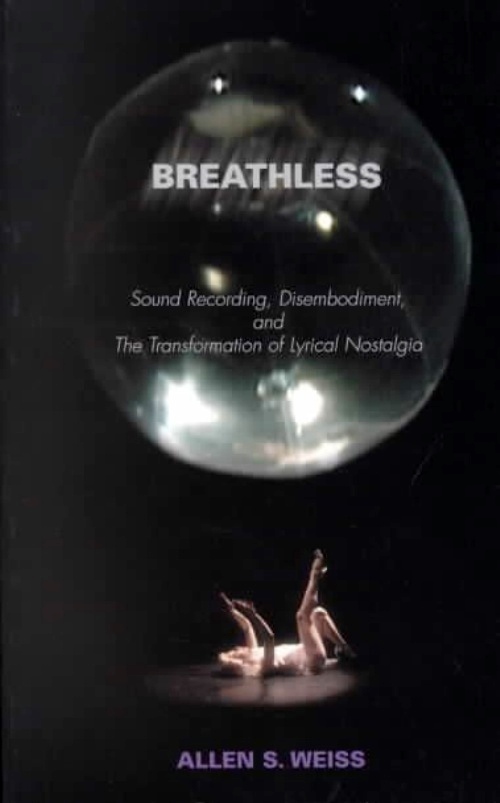
breathless: sound recording, disembodiment, and the transformation of lyrical nostalgia – allen s. weiss

How sound recording’s uncanny confluence of human and machine would transform our expectations of mourning and melancholia, transfiguring our intimate relation to death.

Currently sitting with this book in my reading queue… i.e. trying to wait until I have read the stuff I need to prioritise before diving into it, but having peeped the PDF I’m struggling to!

Breathless explores early sound recording and the literature that both foreshadowed its invention and was contemporaneous with its early years, revealing the broad influence of this new technology at the very origins of Modernism. Through close readings of works by Edgar Allan Poe, Stéphane Mallarmé, Charles Cros, Paul Valéry, Villiers de L’Isle-Adam, Jules Verne, and Antonin Artaud, Allen S. Weiss shows how sound recording’s uncanny confluence of human and machine would transform our expectations of mourning and melancholia, transfiguring our intimate relation to death. Interdisciplinary, the book bridges poetry and literature, theology and metaphysics. As Breathless shows, the symbolic and practical roles of poetry and technology were transformed as new forms of nostalgia and eroticism arose.

breathless

“By suggesting that sound recording changes the very notion of textuality at a key inflection point in Modernism, Weiss literally turns the field of cultural studies on its ear.” (Gregory Whitehead, co-editor of Wireless Imagination: Sound, Radio and the Avant-Garde)

“The extremely important, cogent analysis adds immeasurably to our knowledge of cultural production in the critical years between early modern lyric and our own post-modern, post-lyric age.” (Lawrence R. Schehr, Professor of French, University of Illinois)

the atemporality of “ruin porn”: the carcass & the ghost by sarah wanenchak

Max Liboiron's avatarDiscard Studies

*This post originally appeared on Cyborgology.

Photo by Matthew Christopher. www.abandonedamerica.usPhoto by Matthew Christopher.

Objects have lives. They are witness to things.
–This American Life, “The House on Loon Lake”

Atlantic Cities’ feature on the psychology of “ruin porn” is worth a look–in part because it’s interesting in itself, in part because it features some wonderful images, and in part because it has a great deal to do with both a piece I posted previously on Michael Chrisman’s photograph of a year and with the essay that piece referenced, Nathan Jurgenson’s take on the phenomenon of faux-vintage photography.

All of these pieces are, to a greater or lesser extent, oriented around a singular idea: atemporality – that the intermeshing and interweaving of the physical and digital causes us not only to experience both of those categories differently, but to perceive time itself differently; that for most of us, time is no longer a…

View original post 3,142 more words

eliane radigue – transamorem-transmortem (1973)

ARP Synthesizer. Composed in 1973. Released on Important Records in 2011.

“Before the greatest achievement.
Before the greatest detachment.
At the limit of the frontier space of the unconscious – tuned waves – “consonant things vibrate together”.
Where does the change happen? In the inner field of perception or the exterior reality of moving things in the course of becoming.
And time is no longer an obstacle, but the means by which the possible is achieved.”

– Eliane Radigue – June 20, 1973

Continue reading

doppelgänger

This is a post from a few years ago. Julia Clark reminded me of it today.

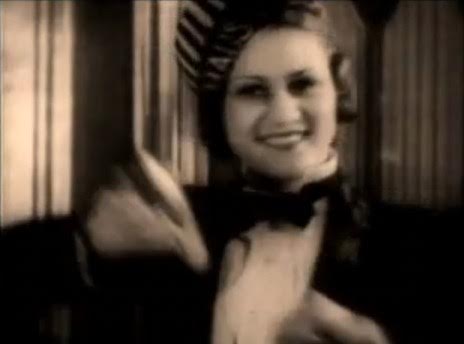
doppelganger 1

A still from here, at 0:27:

it is so startling to see yourself somewhere you are not
so slippy
in my sleep
i am this dancing girl
in the weimar nightclub
and i buzz with black holes
between the nets of swinging cliches
dietrich’s smile
kurt weill refrains
bauhaus lines
they’re all unravelled, sucked away
and i’m left with only questions
to clothe her dancing bones

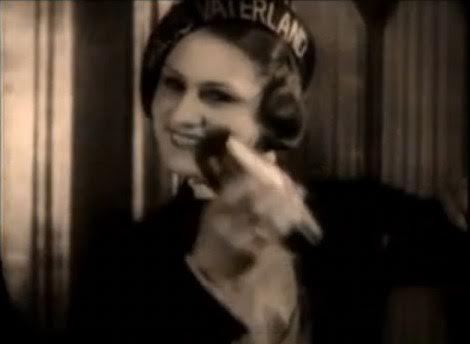
doppeganger 2

so who was she?
and what was her name?
what was her favourite food?
colour?
how did she move?
was she a good dancer?
where did she work?
was she in love?
was she lonely?
did she have a brother in the army? a lover?
as she donned that “vaterland” hat, did her chest swell with pride
or was it just the dress code?
where was she in 5 years’ time?
did she have any children? grandchildren? where are they now?
do they also look like me?
more and more questions
and all from just a 1-and-a-half second cutaway to anonymous archive in
a lousy louise brooks documentary
i feel dizzy
eisenstein was right
montage is dangerous.