ntozake shange – dark phrases

dark phrases of womanhood
of never havin been a girl
half-notes scattered
without rhythm/no tune
distraught laughter fallin
over a black girl’s shoulder
it’s funny/it’s hysterical
the melody-less-ness of her dance
don’t tell nobody don’t tell a soul
she’s dancin on beer cans & shingles

this must be the spook house
another song with no singers
lyrics/no voices
& interrupted solos
unseen performances

are we ghouls?
children of horror?
the joke?

don’t tell nobody don’t tell a soul
are we animals? have we gone crazy?

i can’t hear anythin
but maddening screams
& the soft strains of death
& you promised me
you promised me…
somebody/anybody
sing a black girl’s song
bring her out
to know herself
to know you
but sing her rhythms
carin/struggle/hard times
sing her song of life
she’s been dead so long
closed in silence so long
she doesn’t know the sound
of her own voice
her infinite beauty
she’s half-notes scattered
without rhythm/no tune
sing her sighs
sing the song of her possibilities
sing a righteous gospel
let her be born
let her be born
& handled warmly.

— from For Colored Girls Who Have Considered Suicide When the Rainbow is Enuf.  Macmillan Publishing, 1977. Shange was born Paulette L. Williams in Trenton, New Jersey. She later changed her name to isiXhosa/isiZulu – read more HERE.

maria callas – mad scene from lucia di lammermoor (donizetti)

“The character of Lucia has become an icon in opera and beyond, an archetype of the constrained woman asserting herself in society. She reappears as a touchstone for such diverse later characters as Flaubert’s adulterous Madame Bovary and the repressed Englishwomen in the novels of E.M. Forster. The insanity that overtakes and destroys Lucia, depicted in opera’s most celebrated mad scene, has especially captured the public imagination. Donizetti’s handling of this fragile woman’s state of mind remains seductively beautiful, thoroughly compelling, and deeply disturbing. Madness as explored in this opera is not merely something that happens as a plot function: it is at once a personal tragedy, a political statement, and a healing ritual.” (Commentary from HERE)

Maria Callas performs “Il dolce suono mi colpì di sua voce”, the “Mad Scene” from the opera Lucia di Lammermoor by Gaetano Donizetti, recorded live in Florence in February 1953. Tullio Serafin conducted Callas, Giuseppe di Stefano, Tito Gobbi, Raffaele Arie, Valliano Natali, Maria Canali, Maggio Musical Fiorentino Orchestra & Maggio Musicale Fiorentino Chorus.

The discussion in the comments underneath the video is quite entertaining, especially if read in light of the Anne Carson essay I posted earlier. Continue reading

anne carson – the gender of sound

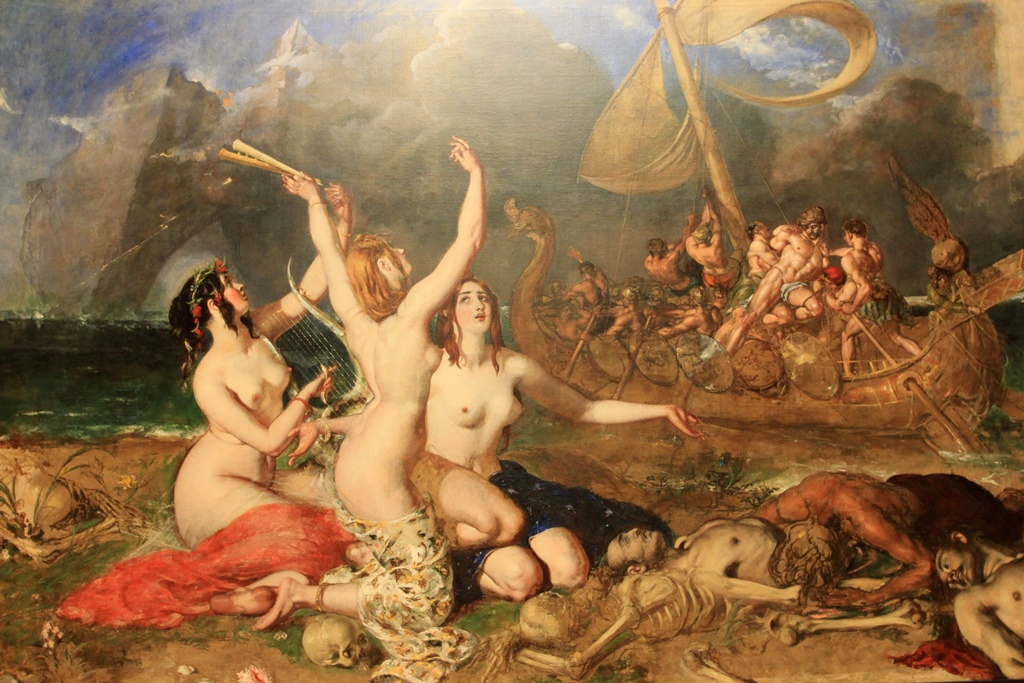
William Etty - "The Siren and Ulysses", 1837.

William Etty – “The Siren and Ulysses”, 1837.

Madness and witchery as well as bestiality are conditions commonly associated with the use of the female voice in public, in ancient as well as modern contexts. Consider how many female celebrities of classical mythology, literature and cult make themselves objectionable by the way they use their voice.

For example, there is the heart-chilling groan of the Gorgon, whose name is derived from a Sanskrit word, *garg meaning “a guttural animal howl that issues as a great wind from the back of the throat through a hugely distended mouth”. There are the Furies whose high-pitched and horrendous voices are compared by Aiskhylos to howling dogs or sounds of people being tortured in hell (Eumenides). There is the deadly voice of the Sirens and the dangerous ventriloquism of Helen (Odyssey) and the incredible babbling of Kassandra (Aiskhylos, Agamemnon) and the fearsome hullabaloo of Artemis as she charges through the woods (Homeric Hymn to Aphrodite). There is the seductive discourse of Aphrodite which is so concrete an aspect of her power that she can wear it on her belt as a physical object or lend it to other women (Iliad). There is the old woman of Eleusinian legend Iambe who shrieks obscenities and throws her skirt up over her head to expose her genitalia. There is the haunting garrulity of the nymph Echo (daughter of Iambe in Athenian legend) who is described by Sophokles as “the girl with no door on her mouth” (Philoktetes).

Putting a door on the female mouth has been an important project of patriarchal culture from antiquity to the present day. Its chief tactic is an ideological association of female sound with monstrosity, disorder and death.

— From “The Gender of Sound”, in Glass, Irony and God. New Directions, 1995: pp 120-121

The brilliant Anne Carson presents a history of the gendered voice, from Sophocles to Gertrude Stein. She outlines what is at stake in our assumptions around sound, questioning whether the concept of ‘self-control’ is a barrier to acknowledging other forms of human order, feeding into wider debates on social order, both past and present.

Read the whole essay HERE.

it’s your fault!

Published on 19 Sep 2013.

Are women responsible for protecting themselves from rape? Indian comedy group All India Bakchod’s sarcastic It’s Your Fault video shows Bollywood actresses Kalki Koechlin and VJ Juhi Pandey blaming themselves for what they wear, working late into the night, and not fighting back. HERE is an explanation of the rationale for the video.

lydia lunch – stares to nowhere

From her second solo album, 13.13, released on Ruby Records (a subsidiary of Slash Records) in 1982.

The plastic crumbles and the walls fall in
The sidewalk’s melting, I begin to spin
You know where I’m going and
You know where I’ve been
My mind’s exploding like it’s never been
The sidewalk’s melting, I begin to spin
I can’t look down, I might fall in

sinéad o’connor’s letter to miley cyrus

“If you have an innocent heart you can’t recognise those who do not.”

Miley Cyrus recently claimed that her controversial video for Wrecking Ball was inspired by Sinéad O’Connor’s Nothing Compares 2 U. Hounded by journalists for her opinion, O’Connor felt compelled to respond, posting a strongly worded yet compassionate public letter warning Cyrus against allowing herself to be exploited. This is the full text, published on www.sineadoconnor.com.

miley1

Dear Miley,

I wasn’t going to write this letter, but today i’ve been dodging phone calls from various newspapers who wished me to remark upon your having said in Rolling Stone your Wrecking Ball video was designed to be similar to the one for Nothing Compares … So this is what I need to say … And it is said in the spirit of motherliness and with love.

I am extremely concerned for you that those around you have led you to believe, or encouraged you in your own belief, that it is in any way ‘cool’ to be naked and licking sledgehammers in your videos. It is in fact the case that you will obscure your talent by allowing yourself to be pimped, whether its the music business or yourself doing the pimping.

Nothing but harm will come in the long run, from allowing yourself to be exploited, and it is absolutely NOT in ANY way an empowerment of yourself or any other young women, for you to send across the message that you are to be valued (even by you) more for your sexual appeal than your obvious talent. I am happy to hear I am somewhat of a role model for you and I hope that because of that you will pay close attention to what I am telling you.

The music business doesn’t give a shit about you, or any of us. They will prostitute you for all you are worth, and cleverly make you think its what YOU wanted … and when you end up in rehab as a result of being prostituted, ‘they’ will be sunning themselves on their yachts in Antigua, which they bought by selling your body and you will find yourself very alone.

None of the men ogling you give a shit about you either, do not be fooled. Many’s the woman mistook lust for love. If they want you sexually that doesn’t mean they give a fuck about you. All the more true when you unwittingly give the impression you don’t give much of a fuck about yourself. And when you employ people who give the impression they don’t give much of a fuck about you either. No one who cares about you could support your being pimped … and that includes you yourself.

Yes, I’m suggesting you don’t care for yourself. That has to change. You ought be protected as a precious young lady by anyone in your employ and anyone around you, including you. This is a dangerous world. We don’t encourage our daughters to walk around naked in it because it makes them prey for animals and less than animals, a distressing majority of whom work in the music industry and it’s associated media.

You are worth more than your body or your sexual appeal. The world of showbiz doesn’t see things that way, they like things to be seen the other way, whether they are magazines who want you on their cover, or whatever … Don’t be under any illusions … ALL of them want you because they’re making money off your youth and your beauty … which they could not do except for the fact your youth makes you blind to the evils of show business. If you have an innocent heart you can’t recognise those who do not.

I repeat, you have enough talent that you don’t need to let the music business make a prostitute of you. You shouldn’t let them make a fool of you either. Don’t think for a moment that any of them give a flying fuck about you. They’re there for the money… we’re there for the music. It has always been that way and it will always be that way. The sooner a young lady gets to know that, the sooner she can be REALLY in control.

You also said in Rolling Stone that your look is based on mine. The look I chose, I chose on purpose at a time when my record company were encouraging me to do what you have done. I felt I would rather be judged on my talent and not my looks. I am happy that I made that choice, not least because I do not find myself on the proverbial rag heap now that I am almost 47 yrs of age … which unfortunately many female artists who have based their image around their sexuality, end up on when they reach middle age.

Real empowerment of yourself as a woman would be to in future refuse to exploit your body or your sexuality in order for men to make money from you. I needn’t even ask the question … I’ve been in the business long enough to know that men are making more money than you are from you getting naked. Its really not at all cool. And its sending dangerous signals to other young women. Please in future say no when you are asked to prostitute yourself. Your body is for you and your boyfriend. It isn’t for every spunk-spewing dirtbag on the net, or every greedy record company executive to buy his mistresses diamonds with.

As for the shedding of the Hannah Montana image … whoever is telling you getting naked is the way to do that does absolutely NOT respect your talent, or you as a young lady. Your records are good enough for you not to need any shedding of Hannah Montana. She’s waaaaaaay gone by now … Not because you got naked but because you make great records.

Whether we like it or not, us females in the industry are role models and as such we have to be extremely careful what messages we send to other women. The message you keep sending is that its somehow cool to be prostituted … its so not cool Miley … its dangerous. Women are to be valued for so much more than their sexuality. We aren’t merely objects of desire. I would be encouraging you to send healthier messages to your peers … that they and you are worth more than what is currently going on in your career. Kindly fire any motherfucker who hasn’t expressed alarm, because they don’t care about you.

why i am so furious right now

By way of explaining some of the rage that is and will undoubtedly continue to be bubbling out on Fleurmach in the next while: someone very precious to me was ————————————————————————————————————————————————————————————————————————- CENSORED ON DEMAND FOR LEGAL REASONS —————————————————————————————————. And THAT is what makes me the angriest of all. It sends a clear message to her that keeping the peace is more important than honouring her truth. And it is emphatically NOT so.

bikini kill – feels blind

All the doves that fly past my eyes,
Have a stickiness to their wings,
In the doorway of my demise I stand,
Encased in the whisper you taught me.

HOW DOES IT FEEL? IT FEELS BLIND.
HOW DOES IT FEEL? WELL, IT FEELS FUCKING BLIND.
WHAT HAVE YOU TAUGHT ME? NOTHING.
LOOK WHAT YOU HAVE TAUGHT ME,
YOUR WORLD HAS TAUGHT ME NOTHING.

If you were blind and there was no braille,
There are no boundaries on what I can feel,
If you could see but weren’t taught
That what you saw wasn’t real.

HOW DOES THAT FEEL? IT FEELS BLIND.
HOW DOES THAT FEEL? IT FEELS FUCKIN BLIND.
WHAT HAVE YOU TAUGHT ME? NOTHING.
LOOK AT WHAT YOUR WORLD TEACHES ME, NOTHING.

As a woman I was taught to always be hungry.
Yeah women are well acquainted with thirst.
Yeah, we could eat just about anything.
We’d might even eat your hate up like love.

I EAT YOUR HATE LIKE LOVE, I EAT YOUR HATE LIKE LOVE,
I EAT YOUR HATE LIKE LOVE, I EAT YOUR HATE LIKE LOVE
HOW DOES THAT FEEL? IT FEELS BLIND.

kyle shepherd trio – die maan skyn so helder

“The moon’s shining so brightly tonight…”

Kyle Shepherd (piano, voice), Shane Cooper (double bass) and Jonno Sweetman (drums) perform a version of this subversive traditional Cape Goema song arranged by Kyle Shepherd. Recorded live at Welgemeend, Welgemeend Street, Gardens, Cape Town, South Africa on Friday 21 May 2009.

was salinger too pure for this world?

By JOYCE MAYNARD in the New York Times, September 14, 2013

“As the mother of a daughter myself, I would say that a man who treats those offering up their love and trust as expendable is lesser himself for having done so.”

15SALLINGER-popup

Image: Eleni Kalorkoti

In the 50 years since J.D. Salinger removed himself from the public eye and stopped publishing, he has been viewed — more accurately, worshiped — as the human embodiment of purity, a welcome antidote to phoniness. To many, he was a kind of god.

Now comes the word — though not really news, to some — that over the years when he was cherishing his privacy, Salinger was also carrying on relationships with young women 15, and in my case, 35 years younger than he.

“Salinger,” a new documentary film touches — though politely — on the story of just five of these young women (most under 20 when he sought them out), but the pattern was wider: letters I’ve received over the 15 years since I broke the unwritten rule and spoke of my own experiences with the man revealed to me that there were more than a dozen. In at least one case, Salinger was corresponding with one teenage girl while sharing his home with another: me.

Like many of the others involved, I was a young person in possession of particular vulnerabilities as well as strengths — a story that began with my family, not Salinger, and inspired me to seek out an Ivy League education with the dream of becoming a writer. Nine months after I arrived at Yale, having published a story that attracted Salinger’s attention, I received a letter from him. Then many more.

I was 18 when he wrote to me in the irresistible voice of Holden Caulfield, though he was 53 at the time. Within months I left school to live with Salinger; gave up my scholarship; severed relationships with friends; disconnected from my family; forswore all books, music, food and ideas not condoned by him. At the time, I believed I’d be with Jerry Salinger forever.

His was a seduction played out with words and ideas, not lovemaking, but to the young girl reading those words — as with a few million other readers — there could have been no more powerful allure.

Salinger wasn’t simply brilliant, funny, wise; he burrowed into one’s brain, seeming to understand things nobody else ever had. His expressions of admiration (“I couldn’t have created a character I love more than you”) were intoxicating. His dismissal and contempt, when they came, were devastating.

I was 19 when he put two $50 bills in my hand and sent me away. Years after he dismissed me, his voice stayed in my head, offering opinions on everything he loved and all that he condemned. This was true even though, on his list of the condemned, was my own self.

This was not made easier by Salinger’s unwritten edict on secrecy: if Salinger wrote you a letter, you must never say you received it. If he broke your heart you must never mention it happened. To do anything else constituted more than the violation of the privacy of a great writer; it was proof of one’s own reprobate soul, the exploitation (a word with which I’ve grown familiar over the years) of a man so much purer than the false and shallow world around him, an artist who wanted only to be left alone.

To a stunning degree, for a period of over half a century, Salinger managed to convince a significant portion of the reading population that his words and actions should be exempt from scrutiny for the simple reason that he wrote those nine stories, and “The Catcher in the Rye.” And because he said so.

Now the story well known to me is known to the world, though there are voices raised up still, decrying the violation of Salinger’s legendary privacy. But while this recent burst of disclosure might seem to demystify the man (or call his role as sage into question), a troubling phenomenon has surfaced along with the news.

It is the quiet acceptance, apparently alive and well in our culture, of the notion that genius justifies cruel or abusive treatment of those who serve the artist and his art. Richard Schickel, writing of Salinger’s activities, expresses the view that despite the disclosures about Salinger’s pursuit of young women he lived “a ‘normal’ life.”

“He liked pretty young girls. Stop the presses,” writes the film critic (and father of daughters) David Edelstein. The implication being, what’s the fuss?

One of these girls, 14 when Salinger first pursued her long ago, described him in terms usually reserved for deities, and spoke of feeling privileged to have served as inspiration and muse to a great writer — though she also reports that he severed their relationship the day after their one and only sexual encounter.

Some will argue that you can’t have it both ways: how can a woman say she is fully in charge of her body and her destiny, and then call herself a victim when, having given a man her heart of her own volition, he crushes it? How can a consensual relationship, as Salinger’s unquestionably were, constitute a form of abuse?

But we are talking about what happens when people in positions of power — mentors, priests, employers or simply those assigned an elevated status — use their power to lure much younger people into sexual and (in the case of Salinger) emotional relationships. Most typically, those who do this are men. And when they are done with the person they’ve drawn toward them, it can take that person years or decades to recover.

Continue reading this New York Times article HERE.

piotr dumala – crime and punishment (2001)

Trained as a sculptor as well as an animator, Piotr Dumala calls his innovative stop-motion technique in which an image is scratched into painted plaster, then painted over and the next image scratched on top “destructive animation”. He devised the method while studying art conservation at the Warsaw Academy of Fine Arts.

Crime and Punishment (Zbrodnia i Kara), Dumala’s expressionist half-hour long Dostoevsky adaptation, is a succession of shadowy, minimalist tableaux that emerge slowly from darkness and return to it. Stripping the Russian masterwork down to two scenes — the murder and Raskolnikov’s meeting of Sonia — Dumala interprets the novel’s themes with chiaroscuro intensity, choosing to highlight just a few strands of the story:

“It was not my aim to copy the book. I was really close to the book. I took one level of the book. It’s not possible to show everything from this book… This is about love and how obsession can destroy love. In our life we are under two opposite influences to be good or bad and to love or hate.”

In the worlds Dumala sketches, the lines between light and darkness are stark, but also shifting and mutable.

Read more about the background to Dumala and this film in Chris Robinson’s article for Animation World Magazine, HERE.

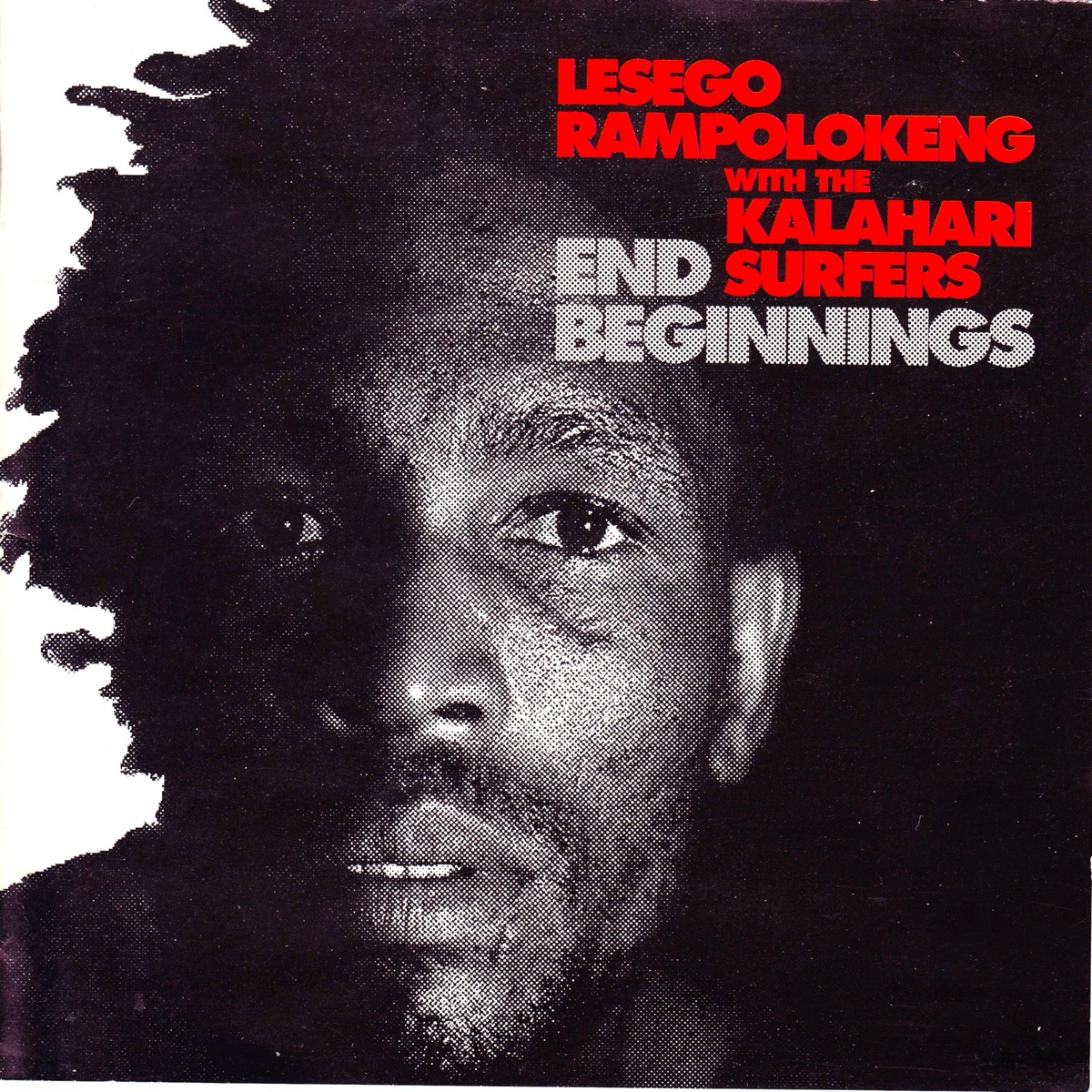
lesego rampolokeng with the kalahari surfers – end beginnings

“Liars rule the world…”

“Treason” and “End Beginnings” — tracks from the album End Beginnings (Shifty, 1991). This is the sound of South Africa in the late 1980s/early 1990s. Of course, I never got to hear this until years later.
Music: Warrick Sony
Words and voice: Lesego Rampolokeng

Download this album HERE.

end beginnings

tricky – hell is round the corner (1995)

From one of the most arresting albums of the twentieth century, Maxinquaye (Island Records, 1995). I bought this CD in my final year of high school, and spent hours and hours in its company over the next few years, lying prone, alone, on the floor, curtains drawn, drowning. The album’s fractured claustrophobia felt so exactly right for the time, particularly in South Africa… its heart of darkness festering quietly while the rainbow nationalist rhetoric raged outside.

“It was the most bizarre record I’ve ever worked on,” says Mark Saunders about Maxinquaye, the 1995 Tricky album that, with the exception of the previously released singles ‘Aftermath’ and ‘Ponderosa’, he co-produced with the artist, in addition to taking care of the engineering, programming and mixing. “It was a complete un-learning experience and it was also a total re-learning experience. Think of how to make a record, then forget everything you’ve learned and start completely backwards and upside down. I could write a book about Tricky. He’s such a great character.”

Read more about the highly unorthodox way in which Maxinquaye was made, HERE.

hélène cixous – the laugh of the medusa (1976)

Hello, reader :)

It’s Fleurmach’s first birthday! To celebrate, here is a ground-shifting text, a manifesto of sorts, from Hélène Cixous back in 1976 (the year punk broke). If you haven’t ever read Cixous (and even if you have, once upon a time), do yourself a favour and plough through this, SERIOUSLY. I tried to excerpt chunks from it (and may still), but decided that it’s really important and enriching to read the piece in its entirety.

Thank you all for your ongoing support and contributions to the Fleurmach community.

Much love,
Cherry Bomb

laugh of the medusa

I shall speak about women’s writing: about what it will do. Woman must write her self: must write about women and bring women to writing, from which they have been driven away as violently as from their bodies – for the same reasons, by the same law, with the same fatal goal.

Woman must put herself into the text – as into the world and into history – by her own movement.

The future must no longer be determined by the past. I do not deny that the effects of the past are still with us. But I refuse to strengthen them by repeating them, to confer upon them an irremovability the equivalent of destiny, to confuse the biological and the cultural. Anticipation is imperative.

Since these reflections are taking shape in an area just on the point of being discovered, they necessarily bear the mark of our time-a time during which the new breaks away from the old, and, more precisely, the (feminine) new from the old (la nouvelle de l’ancien). Thus, as there are no grounds for establishing a discourse, but rather an arid millennial ground to break, what I say has at least two sides and two aims: to break up, to destroy; and to foresee the unforeseeable, to project.

I write this as a woman, toward women. When I say “woman”, I’m speaking of woman in her inevitable struggle against conventional man; and of a universal woman subject who must bring women to their senses and to their meaning in history. But first it must be said that in spite of the enormity of the repression that has kept them in the “dark” – that dark which people have been trying to make them accept as their attribute – there is, at this time, no general woman, no one typical woman. What they have in common I will say. But what strikes me is the infinite richness of their individual constitutions: you can’t talk about a female sexuality, uniform, homogeneous, classifiable into codes – any more than you can talk about one unconscious resembling another.

Women’s imaginary is inexhaustible, like music, painting, writing: their stream of phantasms is incredible.

I have been amazed more than once by a description a woman gave me of a world all her own which she had been secretly haunting since early childhood. A world of searching, the elaboration of a knowledge, on the basis of a systematic experimentation with the bodily functions, a passionate and precise interrogation of her erotogeneity. This practice, extraordinarily rich and inventive, in particular as concerns masturbation, is prolonged or accompanied by a production of forms, a veritable aesthetic activity, each stage of rapture inscribing a resonant vision, a composition, something beautiful. Beauty will no longer be forbidden.

I wished that that woman would write and proclaim this unique empire so that other women, other unacknowledged sovereigns, might exclaim: I, too, overflow; my desires have invented new desires, my body knows unheard-of songs. Time and again I, too, have felt so full of luminous torrents that I could burst – burst with forms much more beautiful than those which are put up in frames and sold for a stinking fortune. And I, too, said nothing, showed nothing; I didn’t open my mouth, I didn’t repaint my half of the world. I was ashamed. I was afraid, and I swallowed my shame and my fear. I said to myself: You are mad! What’s the meaning of these waves, these floods, these outbursts?

Where is the ebullient, infinite woman who, immersed as she was in her naïveté, kept in the dark about herself, led into self-disdain by the great arm of parental-conjugal phallocentrism, hasn’t been ashamed of her strength? Who, surprised and horrified by the fantastic tumult of her drives (for she was made to believe that a well-adjusted normal woman has a … divine composure), hasn’t accused herself of being a monster?

Who, feeling a funny desire stirring inside her (to sing, to write, to dare to speak, in short, to bring out something new), hasn’t thought she was sick? Well, her shameful sickness is that she resists death, that she makes trouble.

And why don’t you write? Write! Writing is for you, you are for you; your body is yours, take it. I know why you haven’t written. (And why I didn’t write before the age of twenty-seven.) Because writing is at once too high, too great for you, it’s reserved for the great – that is, for “great men”; and it’s “silly.” Besides, you’ve written a little, but in secret. And it wasn’t good, because it was in secret, and because you punished yourself for writing, because you didn’t go all the way; or because you wrote, irresistibly, as when we would masturbate in secret, not to go further, but to attenuate the tension a bit, just enough to take the edge off. And then as soon as we come, we go and make ourselves feel guilty – so as to be forgiven; or to forget, to bury it until the next time.

Write, let no one hold you back, let nothing stop you: not man; not the imbecilic capitalist machinery, in which publishing houses are the crafty, obsequious relayers of imperatives handed down by an economy that works against us and off our backs; and not yourself.

Continue reading

cnn caught staging news segments on syria with actors

From this report/video, and several others like it from different sources, it appears that journalist Anderson Cooper and CNN have been caught staging fake news about Syria to justify military intervention.

The following was published on Intellihub.com on August 30, 2013:

“The primary “witness” that the mainstream media has been using as a source in Syria has been caught staging fake news segments.  Recent video evidence proves that “Syria Danny”, the supposed activist who has been begging for military intervention on CNN, is really just a paid actor and a liar.

“While Assad is definitely a tyrant like any head of state, a US invasion of the country is a worst case scenario for the people living there. By pointing out that the mainstream media is orchestrating their entire coverage of this incident, we are not denying that there is a tremendous amount of death and violence in Syria right now.  However, we are showing that the mainstream media version of events is scripted and staged propaganda.”

The following video shows so-called activist/citizen journalist Danny Abdul-Dayem apparently contradicting himself while off air, and even asking crew members to “get the gunfire sounds ready” for his video conference with Anderson Cooper on CNN.

“Syria Danny” has also appeared on many other news programmes [Here’s an example of him on Al Jazeera last year – note the highly emotive and graphic nature of his commentary/the footage].

This is also not the first time that mainstream media reports have been exposed as propaganda, especially during times of war. Some of the most hyped news images of our time have actually been elaborate public relations stunts, designed as psychological warfare operations.

The article continues with further examples:

“No one in America can forget the image of Saddam Hussein’s statue being toppled and covered with an American flag, yet few people realize that this was a hoax, a staged psychological operation coordinated between the military and the media.  In July of 2004 journalist Jon Elmer exposed an internal army study of the war showing that the statue scenario was indeed a set up.”

Elmer wrote: “the infamous toppling of the statue of Saddam Hussein in Firdos Square in central Baghdad on April 9, 2003 was stage-managed by American troops and not a spontaneous reaction by Iraqis. According to the study, a Marine colonel first decided to topple the statue, and an Army psychological operations unit turned the event into a propaganda moment… The Marines brought in cheering Iraqi children in order to make the scene appear authentic, the study said.  Allegations that the event was staged were made in April of last year, mostly by opponents of the war, but were ignored or ridiculed by the US government and most visible media outlets.”

That Psy-ops were involved in making these momentous images was independently corroborated by the LA Times and then NPR in 2008.

Read more about other allegedly staged newscasts HERE  – I only say “allegedly” as I haven’t done enough research on this myself yet not to (the main problem being that I don’t speak Arabic and need proof that the translations are accurate); what I have seen so far is chillingly convincing, however.