From The Fantastic Expedition of Dillard and Clark (1968).
From The Fantastic Expedition of Dillard and Clark (1968).
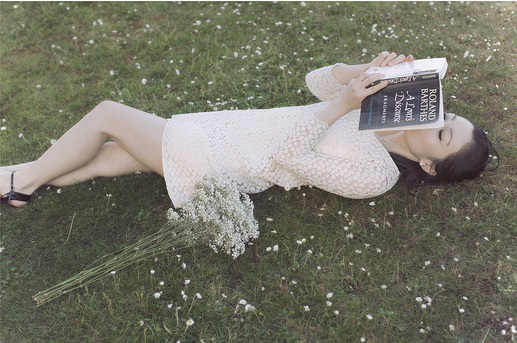 You should date an illiterate girl.
Date a girl who doesn’t read. Find her in the weary squalor of a Midwestern bar. Find her in the smoke, drunken sweat, and varicolored light of an upscale nightclub. Wherever you find her, find her smiling. Make sure that it lingers when the people that are talking to her look away. Engage her with unsentimental trivialities. Use pick-up lines and laugh inwardly. Take her outside when the night overstays its welcome. Ignore the palpable weight of fatigue. Kiss her in the rain under the weak glow of a streetlamp because you’ve seen it in a film. Remark at its lack of significance. Take her to your apartment. Dispatch with making love. Fuck her.
Let the anxious contract you’ve unwittingly written evolve slowly and uncomfortably into a relationship. Find shared interests and common ground like sushi and folk music. Build an impenetrable bastion upon that ground. Make it sacred. Retreat into it every time the air gets stale or the evenings too long. Talk about nothing of significance. Do little thinking. Let the months pass unnoticed. Ask her to move in. Let her decorate. Get into fights about inconsequential things like how the fucking shower curtain needs to be closed so that it doesn’t fucking collect mold. Let a year pass unnoticed. Begin to notice.
Figure that you should probably get married because you will have wasted a lot of time otherwise. Take her to dinner on the forty-fifth floor at a restaurant far beyond your means. Make sure there is a beautiful view of the city. Sheepishly ask a waiter to bring her a glass of champagne with a modest ring in it. When she notices, propose to her with all of the enthusiasm and sincerity you can muster. Do not be overly concerned if you feel your heart leap through a pane of sheet glass. For that matter, do not be overly concerned if you cannot feel it at all. If there is applause, let it stagnate. If she cries, smile as if you’ve never been happier. If she doesn’t, smile all the same.
Let the years pass unnoticed. Get a career, not a job. Buy a house. Have two striking children. Try to raise them well. Fail frequently. Lapse into a bored indifference. Lapse into an indifferent sadness. Have a mid-life crisis. Grow old. Wonder at your lack of achievement. Feel sometimes contented, but mostly vacant and ethereal. Feel, during walks, as if you might never return or as if you might blow away on the wind. Contract a terminal illness. Die, but only after you observe that the girl who didn’t read never made your heart oscillate with any significant passion, that no one will write the story of your lives, and that she will die, too, with only a mild and tempered regret that nothing ever came of her capacity to love.
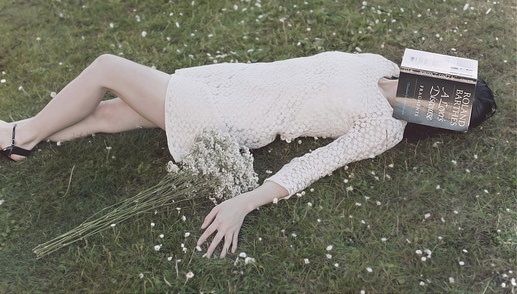
Do those things, damnit, because nothing sucks worse than a girl who reads. Do it, I say, because a life in purgatory is better than a life in hell. Do it, because a girl who reads possesses a vocabulary that can describe that amorphous discontent of a life unfulfilled—a vocabulary that parses the innate beauty of the world and makes it an accessible necessity instead of an alien wonder. A girl who reads lays claim to a vocabulary that distinguishes between the specious and soulless rhetoric of someone who cannot love her, and the inarticulate desperation of someone who loves her too much. A vocabulary, goddamnit, that makes my vacuous sophistry a cheap trick.
Do it, because a girl who reads understands syntax. Literature has taught her that moments of tenderness come in sporadic but knowable intervals. A girl who reads knows that life is not planar; she knows, and rightly demands, that the ebb comes along with the flow of disappointment. A girl who has read up on her syntax senses the irregular pauses—the hesitation of breath—endemic to a lie. A girl who reads perceives the difference between a parenthetical moment of anger and the entrenched habits of someone whose bitter cynicism will run on, run on well past any point of reason, or purpose, run on far after she has packed a suitcase and said a reluctant goodbye and she has decided that I am an ellipsis and not a period and run on and run on. Syntax that knows the rhythm and cadence of a life well lived.
Date a girl who doesn’t read because the girl who reads knows the importance of plot. She can trace out the demarcations of a prologue and the sharp ridges of a climax. She feels them in her skin. The girl who reads will be patient with an intermission and expedite a denouement. But of all things, the girl who reads knows most the ineluctable significance of an end. She is comfortable with them. She has bid farewell to a thousand heroes with only a twinge of sadness.
Don’t date a girl who reads because girls who read are storytellers. You with the Joyce, you with the Nabokov, you with the Woolf. You there in the library, on the platform of the metro, you in the corner of the café, you in the window of your room. You, who make my life so goddamned difficult. The girl who reads has spun out the account of her life and it is bursting with meaning. She insists that her narratives are rich, her supporting cast colorful, and her typeface bold. You, the girl who reads, make me want to be everything that I am not. But I am weak and I will fail you, because you have dreamed, properly, of someone who is better than I am. You will not accept the life of which I spoke at the beginning of this piece. You will accept nothing less than passion, and perfection, and a life worthy of being told. So out with you, girl who reads. Take the next southbound train and take your Hemingway with you. Or, perhaps, stay and save my life.*
*NOTE: Instead of the brave note on which the last sentence of the above version shared with me by Mavis Vermaak ends, the original text I googled when looking to credit the author correctly has as its ending the following two sentences:
“I hate you. I really, really, really hate you.”
Your love
swells and pounds me
I know nothing (now that I know you)
My face goes blank
My eyes go open gates
and the world can go (in them)
it can make us wealthy
and take away
so
I hold nothing (now that I hold you)
There’s no place to use our money where we live
The generous world suggests we live generously
so we lay
under low wide branches
of the oldest tree on the dune
or in the hay
where we will stay for so long without moving
that the careful birds finally relax
and make black nests in your black hair
and find ants walking around my unmoving feet
and we will only notice this play of the world
(that long moss is growing on us)
(that that wind has rewritten us)
(the give and take not stopping ever)
for only a moment
and then, having briefly noticed,
let the world roll on
through open gates
In a generous way
I give long walks to the dogs
I put commas and periods in song
I give closed eye to the day
I give peace to the long decay
(we do not need to fear dying)
— Written by Phil Elvrum, from the 2005 Mount Eerie album, “No Flashlight”: Songs of the Fulfilled Night
From The Black Book Of Capitalism (2008)
(which samples THIS)
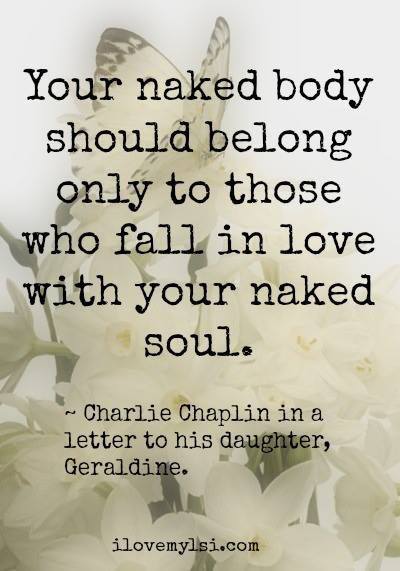
Thanks to Narike Lintvelt for sharing this.
Richard Neill to Bodyform (a maxipad manufacturer), 8 October at 21:30 via Mobile
—————————————-—————————————-—–
Hi , as a man I must ask why you have lied to us for all these years . As a child I watched your advertisements with interest as to how at this wonderful time of the month that the female gets to enjoy so many things ,I felt a little jealous. I mean bike riding , rollercoasters, dancing, parachuting, why couldn’t I get to enjoy this time of joy and ‘blue water’ and wings !! Dam my penis!! Then I got a girlfriend, was so happy and couldn’t wait for this joyous adventurous time of the month to happen …..you lied !! There was no joy , no extreme sports , no blue water spilling over wings and no rocking soundtrack oh no no no. Instead I had to fight against every male urge I had to resist screaming wooaaahhhhh bodddyyyyyyfooorrrmmm bodyformed for youuuuuuu as my lady changed from the loving, gentle, normal skin coloured lady to the little girl from the exorcist with added venom and extra 360 degree head spin. Thanks for setting me up for a fall bodyform , you crafty bugger.
Bodyform’s response, via Youtube:
J.J. Cale passed away around 20h00 on Friday 26 July, 2013 at Scripps Hospital in La Jolla, California, after a heart attack.
This beautiful album was released on 30 April 1974.
Beautiful cover of Gene Clark’s 1969 song, off Krauss and Plant’s 2007 collaboration, Raising Sand .
Broadcast’s Black Session – recorded live at La Maison de la Radio in Paris on May 4th, 2000 – features the original lineup that toured in support of their album, The Noise Made By People. It includes all the electronic segues and dissonance between tunes, along with stellar renditions of early singles, album cuts and B-sides. You can download the whole recording HERE.
The approach of a man’s life out of the past is history, and the approach of time out of the future is mystery. Their meeting is the present, and it is consciousness, the only time life is alive. The endless wonder of this meeting is what causes the mind, in its inward liberty of a frozen morning, to turn back and question and remember. The world is full of places. Why is it that I am here?
— Wendell Berry, from The Long-Legged House
Travel well, Chiwoniso. x
Newly released official video directed by Paul Thomas Anderson, featuring Fiona and her sister, Maude Maggart.
Let us not think that because we are less brutal, less violent, less inhuman than our opponents we will carry the day. Brutality, violence, and inhumanity have an immense prestige that schoolbooks hide from children, that grown men do not admit, but that everyone bows before. For the opposite virtues to have as much prestige, they must be actively and constantly put into practice. Anyone who is merely incapable of being as brutal, as violent, and as inhuman as someone else, but who does not practice the opposite virtues, is inferior to that person in both inner strength and prestige, and he will not hold out in a confrontation.
From Electric Ladyland (Reprise Records, 1968).
What do you get if you mix equal parts cutting edge continental philosophy, voodoo, psychedelics, underground dance music, cybernetics and multimedia experimentation? The notorious Orphan Drift!
Happening this Thursday, 25 July, from 20h00, Bolo’bolo Anarchist Info Shop and Vegan Cafe are delighted to announce an evening of Orphan Drift, featuring several short films from founding member Mer Roberts as well as a talk by UWC cyberculture theorist Delphi Carstens, followed by an almost certainly lively open discussion.
 Here’s a taste of what you can expect on Thursday evening:
BACKGROUND
In the mid-90s, the legendary Cyber Culture Research Unit at the prestigious Warwick University was formed: their university-funded activities included producing collaged texts of Deleuze and Guattari, William Burroughs and binary code, theorising the occult underpinnings of markets, composing abrasive electronic music and, ostensibly, consuming inhuman doses of psychedelics as often as possible, much of this via the ORPHAN DRIFT collaborative artist project. A few years later, the CCRU was no more; founding member Nick Land – a genius philosopher and agent provocateur – had achieved full meltdown / deterritorialization and Sadie Plant, author of the well-known Writing On Drugs, had disappeared from sight.
The legacy of the CCRU is very much alive today though, a subterranean influence for the very latest movements in philosophy.
ABOUT ORPHAN DRIFT
Mer co-created the collaborative artist and hive mind 0rphan Drift in London in 1994. Although it was predominantly made up of visual artists, it also involved sound designers, concept engineers and media activists.
As an artistic entity, 0rphan Drift is known for immersive and visually complex works which use the sample and the remix extensively, treating information as matter and the image as a unit of contagion. The art produced is science fictional and immersive. It complicates the distinctions between material and immaterial phenomena and dimensions, both in content and media. Much of its work explored mimetic patterns of desire, production and consumption- particularly in relation to the rapid technological changes happening at the time- drawing heavily on cyberpunk fiction, polyrhythmic electronica and the underpinnings of African religious systems. This was the social context in which its shifting layers of frightening, disturbing, abject, schizophrenic, beautiful, deconstructive, poetic and fragmented frequencies were able to take affect.
0rphan Drift is cross-contextual and made extensive contributions from 1994 – 2004 in the social arenas around contemporary art, underground music and cyber-feminism/post-structural philosophy. 0D has participated internationally in over a decade of exhibitions, screenings and performance, exhibiting extensively in the UK, Europe, Canada and the States, including at the Cabinet Gallery and Tate Modern in London; writing the Scifi-theory text ‘Cyberpositive’, and featuring in DJ Spooky’s ‘Sound Unbound’ in the ‘Renegade Academics’ chapter. It contributed cybervisuals to the set of Stephen Speilberg’s ‘AI’ and ‘Minority Report’ features and Leftfield and NIN world tours, worked frequently with Kode 9 and participated in 10 years of international Video art and AV Electronica art events in Norway, Germany, Canada, UK, South Africa and USA.
We now collaborate between Cape Town and San Francisco and continue to make science fictional work which is guided by a neo-futurist sensibility and clearly a progression from our earlier work. Our new video work ‘Wilderness of Elsewheres, Colony 1’, which maps contemporary global concerns with survival, insecurity and the unknown, has been shown in Santiago and San Francisco and we subsequently produced a series of Post Apocalyptic postcards for Shadowshop; Stephanie Syjuco’s parasitic shop at SFMOMA. Recently we made video for Delphi Carsten’s Capetown Tedx Talk, ‘Hyperstition’, and were commissioned make ‘You Its Eyes 94-13’ for screening at CTM13, Berlin.
WHAT WE’LL BE SCREENING / HOSTING THIS THURSDAY EVENING
1: You Its Eyes. 1994-2013, 30 minute video remixing 0D’s earlier work
0D employs different frequencies and overlapping rhythmic patterns to activate submerged regions of the brain and create intimacy and proximity through video-sonic signal. The goal of 0D, writes Simon Reynolds (1996), is “the liberation of texture from its environment, of energy-flux from contoured form with the goal to recreate the intensity of being lost”. 0D describes the individual ‘self’ haunted by a sensory cross-talk of signals from realms beyond the physical. Voices from imagined futures haunt the contemporary technological landscape. Feedback from the machines evolves into an unfamiliarity of speed and complexity, coding the textual body and imagination as tools for change. The invisible, fantastical, and anarchic called upon here are what Deleuze and Guattari define as the essence of virtuality. These intensities carry the sorcerous forces that technology and science unleash as they delve further into the quantum, the chaotic and the abstract.
“Surrounding the human self and its island of experience lies a raging sea of intensities” (D&G). All journeys into this space involve a succession of becomings autistic, mimetic, contagious and machinic.
2: Hyperstition – A talk by Delphi Carstens
Delphi is a lecturer at UWC, as well as half of the duo which makes up Groovy Troopers Productions – creators of temporary autonomous zones in the form of art & trance festivals. Delphi is currently completing a doctorate thesis, and will present on: “hyperstition” — a neologism coined by Nick Land that combines the words ‘superstition’ and ‘hype’ to describe how fictions become fact and how our narratives (stories) shape our world. It also describes, particularly, the narrative of capitalism, which is driven by hype and speculation and, which more importantly, turns fictions into facts. One very important fiction that Delphi will be discussing is the fiction of the apocalypse. Focusing on the current secular meaning of apocalypse as well as how popular culture views our current global crisis and the importance of imagining ourselves differently. Hyperstition also describes the nexus where myth or magic and science meet. Delphi explores the world of hyperstition to describe the manner by which hype and speculation become facts in contemporary society. The future is looking uncertain and how we imagine this future may be more important than we realise. This talk will be both an intellectual and a felt experience.
3: A Wilderness Of Elsewheres. 2009, 10 minutes
A two-screen installation in which dark abstract video spaces flow into bright photographic landscapes (the raw desolate tundras of southern Africa), populated and de-populated by animated collages of architecture and fashion, cut and scanned from contemporary print publications. A deliberate rhythmic awkwardness creates an alien time frame. The screens share a soundscape, made from a wide variety of samples including glaciers melting and rocket launches, composed into a sonic ‘event’. The work is imbued with post-apocalyptic sensibility, urges to the neo-romantic and the science fictional blending of first and third world materiality. At once immersive and deconstructive, the work is collision, co-habitation, evolutionary fever-dream.
Join us in mapping the outer edges — and do come earlyish if you want to sit down while doing so ;) !
 Written by Sarah Dawson
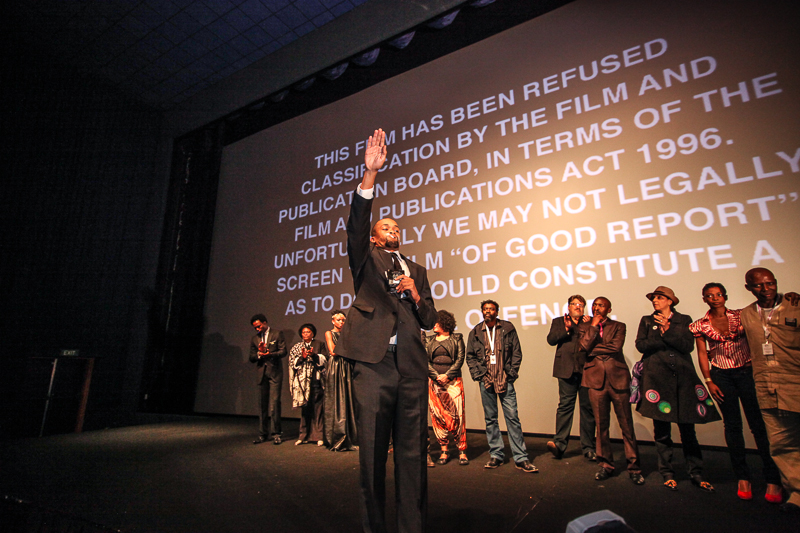
On July 18, the Film and Publication Board’s refusal to classify the would-be opening film of the Durban International Film Festival, Jahmil XT Qubeka’s Of Good Report, became the flint that sparked the latest South African aesthetic controversy.
Unclassified films are illegal to screen, which means that this is a functional ban on the production. The ruling was imposed on the basis of having interpreted the representation of a sexual encounter of a Grade 9 pupil, Nolitha, (played by the 23-year old actress Petronella Tshuma) as being child pornography.
Tongues have been wagging in creative circles and the media, and given that the film is divorced from any overt perspective on political matters (as in the case ofThe Spear), it is clear that this matter relates to some quite primal conflict over the interpretation of a particular image.
In this case, the battle over meaning is taking place in the awkward, sexually liminal space of the moment of the young female character’s transition from archetypal “virgin” to archetypal “whore”, and what she, the figure of the girl, means.
It probably wouldn’t be completely unfair to assume that the film is objectionable to the classification board because of this very liminality, and the way in which the morality embedded in the process clearly regards anything that isn’t exclusively either “virgin” or “whore” as a kind of abomination.
This act of censorship is fundamentally based on a conflict of representation – meaning it’s as much an aesthetic one as it is an ideological one. This means that we need to be asking not the obvious and common question of whether we should or shouldn’t be allowed to depict female children in an erotic light, but rather what actually is a female child, and what is an erotic light?
South African film and South African audiences remain equally conservative. The idea that representations of people, places, things and events can have a lot of different meanings and aren’t consistently, singularly defined is, surprisingly, not taken for granted by the typical South African viewer, practitioner or institution of film.
We aren’t yet comfortable with the multifarious nature of representation, and expend a lot of hot air trying to settle on the one, all-encompassing, so-called “South African voice”, which it turns out, we’re really struggling to locate.
It’s a self-evidently flawed project, because its ridiculous to think that such a thing could ever actually exist in a finite sense.
Read the rest of this article HERE.
“There is no man so good, who, were he to submit all his thoughts and actions to the laws, would not deserve hanging ten times in his life.”
— Michel de Montaigne, essayist (1533-1592)
For anyone who’s been following what’s been happening since blind busker Lunga Nono was publicly assaulted and arrested by Cape Town police recently… Also watch Nono’s own account of events HERE.

This started out as an admonishment of Cape Town residents for our tardy outrage and showboat sense of civic responsibility. We turned up in huge numbers, I was going to say, when city law-enforcement officers publicly assaulted and arrested Lunga Gooodman Nono, but where were we when the laws and regulations he supposedly fell foul of were made? Public participation in law-making, after all, forms one of the key pillars of our constitutional democracy. It’s on us if unjust laws make it into the statute books.
View original post 893 more words
Cover of The Kinks’ song, from Pain Teens’ 1990 album, Born in Blood (on the Trance Syndicate label).
A 1960 hit for Dinah Washington, written by Clyde Otis.

 fleurmach