naomi klein on the climate crisis

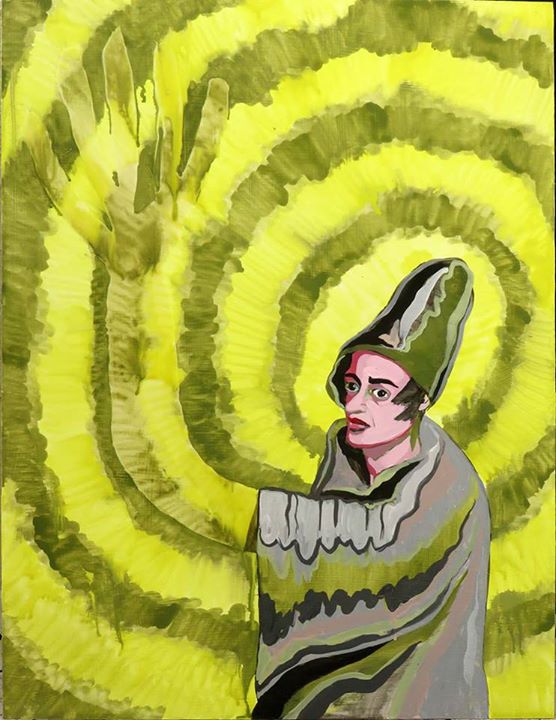
Carbon DioxideWe have not done the things that are necessary to lower emissions because those things fundamentally conflict with deregulated capitalism, the reigning ideology for the entire period we have been struggling to find a way out of this crisis. We are stuck because the actions that would give us the best chance of averting catastrophe – and would benefit the vast majority – are extremely threatening to an elite minority that has a stranglehold over our economy, our political process, and most of our major media outlets.

— Naomi Klein, 8 March 2015. Read the rest of this article HERE.

marx and engels on the global reach of capitalism

The bourgeoisie cannot exist without constantly revolutionising the instruments of production, and thereby the relations of production, and with them the whole relations of society. Conservation of the old modes of production in unaltered form, was, on the contrary, the first condition of existence for all earlier industrial classes. Constant revolutionising of production, uninterrupted disturbance of all social conditions, everlasting uncertainty and agitation distinguish the bourgeois epoch from all earlier ones. All fixed, fast-frozen relations, with their train of ancient and venerable prejudices and opinions, are swept away, all new-formed ones become antiquated before they can ossify. All that is solid melts into air, all that is holy is profaned, and man is at last compelled to face with sober senses his real conditions of life, and his relations with his kind.

The need of a constantly expanding market for its products chases the bourgeoisie over the entire surface of the globe. It must nestle everywhere, settle everywhere, establish connexions everywhere.

The bourgeoisie has through its exploitation of the world market given a cosmopolitan character to production and consumption in every country. To the great chagrin of Reactionists, it has drawn from under the feet of industry the national ground on which it stood. All old-established national industries have been destroyed or are daily being destroyed. They are dislodged by new industries, whose introduction becomes a life and death question for all civilised nations, by industries that no longer work up indigenous raw material, but raw material drawn from the remotest zones; industries whose products are consumed, not only at home, but in every quarter of the globe. In place of the old wants, satisfied by the production of the country, we find new wants, requiring for their satisfaction the products of distant lands and climes. In place of the old local and national seclusion and self-sufficiency, we have intercourse in every direction, universal inter-dependence of nations. And as in material, so also in intellectual production. The intellectual creations of individual nations become common property. National one-sidedness and narrow-mindedness become more and more impossible, and from the numerous national and local literatures, there arises a world literature.

man-steve-cutts-02

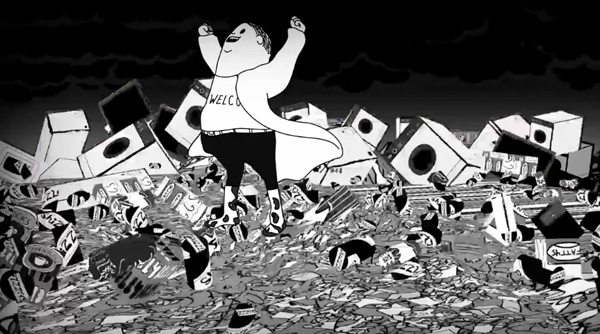
Still from “Man”, by Steve Cutts (watch it!)

The bourgeoisie, by the rapid improvement of all instruments of production, by the immensely facilitated means of communication, draws all, even the most barbarian, nations into civilisation. The cheap prices of commodities are the heavy artillery with which it batters down all Chinese walls, with which it forces the barbarians’ intensely obstinate hatred of foreigners to capitulate. It compels all nations, on pain of extinction, to adopt the bourgeois mode of production; it compels them to introduce what it calls civilisation into their midst, i.e., to become bourgeois themselves. In one word, it creates a world after its own image.

Marx & Engels: Library: 1848: Manifesto of the Communist Party: Chapter 1

miners shot down

This chillingly insightful documentary on the Marikana massacre should be required viewing for every South African. It’s two years tomorrow since that terrible, indelible day. The film is available to watch in full on Youtube for a few days only. Don’t miss this opportunity. EDIT: 18/8: The film is no longer available on Youtube. Please visit its website to find out about future screenings.

http://youtu.be/fPfz4MGIWtY

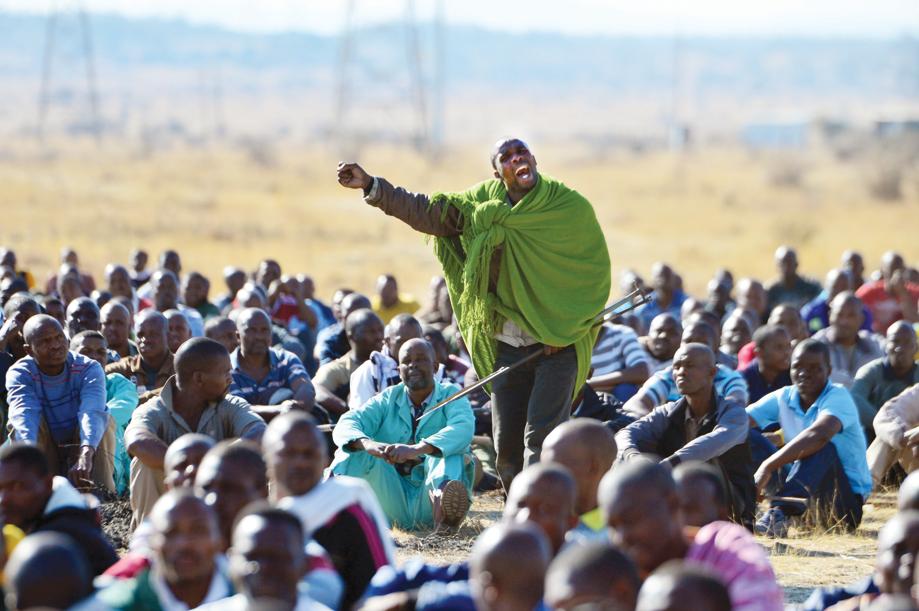
In August 2012, mineworkers at one of South Africa’s biggest platinum mines began a wildcat strike for better wages.

Six days later, on 16 August 2012, the police used live ammunition to suppress the strike, killing 34 and injuring many more.

Using the point of view of the Marikana miners, “Miners Shot Down” follows the strike from day one, showing the courageous but isolated fight waged by a group of low-paid workers against the combined forces of the mining company Lonmin, the ANC government and their allies in the National Union of Mineworkers.

What emerges is collusion at the top, spiralling violence, police brutality and the country’s first post-apartheid massacre. If you still have any doubts that this was a premeditated massacre by Lonmin, the government and the police, this documentary will change your mind with a lot of previously unseen footage. Nobody will have an excuse after watching this to continue to blame the miners.

South Africa will never be the same again.

marikana1


insight into patriarchy…

… gained from storyboarding an endless stream of jock lager ads:

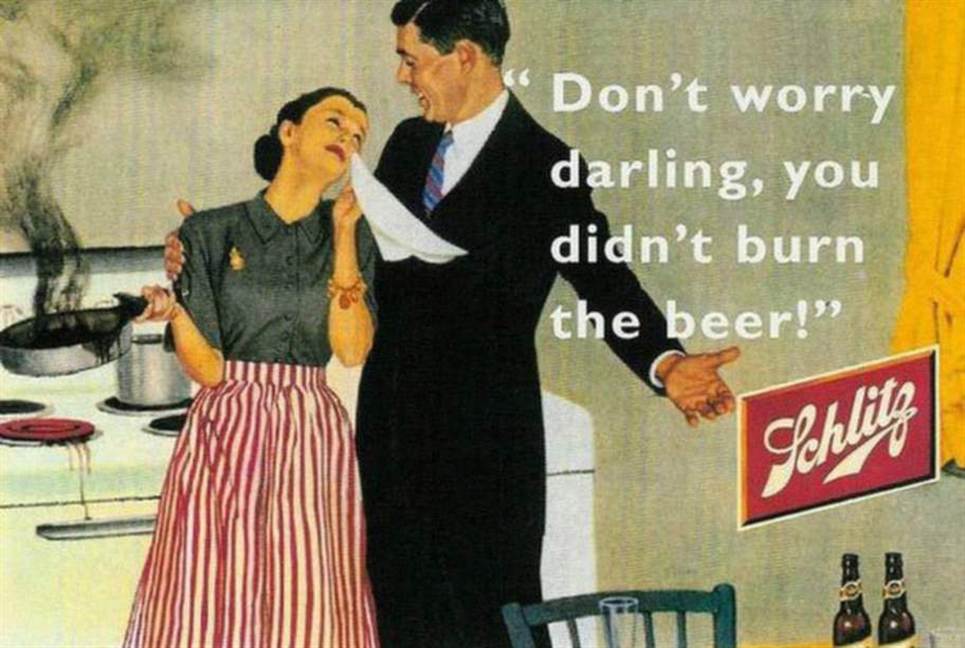
Where men are a caricature of manliness, their sexuality depends on them always being The Ones Who Know, who are worldly and can sum up reality in short, pithy bro-repartee (bropartee). To achieve this, they need to simplify reality into easy-to-read contrasts, with rules in big type, so they don’t have to suffer the shrivelling-dick humiliation of being faced with complexity.

beer

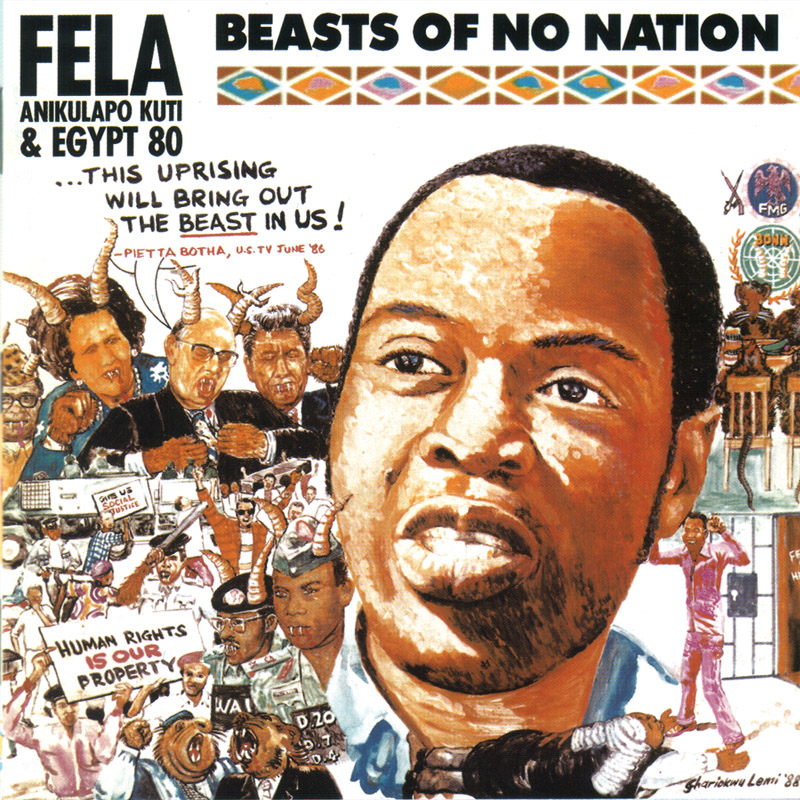
fela kuti & egypt 80 – beasts of no nation

This post goes out to FIFA president Sepp Blatter and all the people aligning themselves with various national football teams in the bizarre competitive spectacle that is the FIFA World Cup.

Happening this time round in Brazil, FIFA bleeds yet another host country’s economy dry, with the willing help of its own government – systematic violence, neo-colonial parasitism. Last time it was South Africa’s turn, and the effects are still being felt here.

BeastsOfNoNation

“miners shot down” showing tonight in cape town

EVERYONE IN SOUTH AFRICA NEEDS TO SEE THIS FILM.

miners marikana

In August 2013, mineworkers in one of South Africa’s biggest platinum mines began a wildcat strike for better wages. Six days later the police used live ammunition to brutally suppress the strike, killing 34 and injuring many more. Using the point of view of the Marikana miners, Miners Shot Down follows the strike from day one, showing the courageous but isolated fight waged by a group of low-paid workers against the combined forces of the mining company Lonmin, the government and their allies in the National Union of Mineworkers. What emerges is a collusion at the top, spiraling violence and the country’s first post-apartheid massacre. South Africa will never be the same again.

Read more about this documentary HERE.

why monsanto is evil (it’s not science-fiction)

agent orange

HERE is an article discussing some of the non-“woo” (pseudo-scientific hippie freak-out) reasons why companies like Monsanto pushing genetically modified products are doing evil: the corporate imperatives and corruption surrounding the development of GMOs, how their use disempowers farmers (especially small farmers in non-first world contexts, although this article only talks about the USA) and what we can do about this deception being perpetrated against the world.

Apart from being economically unsustainable, there are also other compelling health-related reasons why GMOs are a bad idea, which don’t involve a non-specific, irrational fear of genetic mutations being dangerous to consume per se. For example, the seeds are engineered to be resistant to pesticides so that crops can be sprayed and only the weeds growing among the GM plants die. Studies have shown that GM food (or the meat of animals that ate GM food) can be contaminated by traces of the pesticides used during the plants’ growth, pesticides that are teratogenic (causing birth defects) and carcinogenic (causing cancer)  to humans. These modifications also lead to resistance in plants and insect pests – “superweeds” and “superbugs” that make sustainable farming more difficult.

If you are South African, please GO HERE to sign a petition as part of the formal public participation process against an application by multinational agricultural company Dow AgroSciences, a wholly owned subsidiary of the Dow Chemical Company, to import GM cottonseed products to South Africa, for use as food, animal feed and in processing. 

reflections on mandela’s legacy

mandela in the mirror

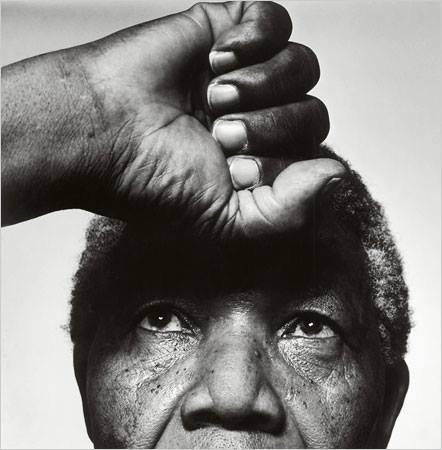
Photo: Adrian Steirn, 2011

Some links and excerpts from commentary that I have found to be worth reading today (I’ll add to this whenever I come across anything interesting – if anyone reading this has suggestions, please pass them on too):

From “The Contradictions of Mandela” –  Zakes Mda in the New York Times opinion pages:

The claim is that the settlement reached between the A.N.C. and the white apartheid government was a fraud perpetrated on the black people, who have yet to get back the land stolen by whites during colonialism. Mandela’s government, critics say, focused on the cosmetics of reconciliation, while nothing materially changed in the lives of a majority of South Africans.

This movement, though not representative of the majority of black South Africans who still adore Mandela and his A.N.C., is gaining momentum, especially on university campuses.

I understand the frustrations of those young South Africans and I share their disillusionment. I, however, do not share their perspective on Mandela. I saw in him a skillful politician whose policy of reconciliation saved the country from a blood bath and ushered it into a period of democracy, human rights and tolerance. I admired him for his compassion and generosity, values that are not usually associated with politicians. I also admired him for his integrity and loyalty.

But I fear that, for Mandela, loyalty went too far. The corruption that we see today did not just suddenly erupt after his term in office; it took root during his time. He was loyal to his comrades to a fault, and was therefore blind to some of their misdeeds.

Read the rest of what Mda has to say HERE.

From “Mandela’s Socialist Failure” – Slavoj Zizek in the New York Times opinion pages

In South Africa, the miserable life of the poor majority broadly remains the same as under apartheid, and the rise of political and civil rights is counterbalanced by the growing insecurity, violence, and crime. The main change is that the old white ruling class is joined by the new black elite. Secondly, people remember the old African National Congress which promised not only the end of apartheid, but also more social justice, even a kind of socialism. This much more radical ANC past is gradually obliterated from our memory. No wonder that anger is growing among poor, black South Africans.

South Africa in this respect is just one version of the recurrent story of the contemporary left. A leader or party is elected with universal enthusiasm, promising a “new world” — but, then, sooner or later, they stumble upon the key dilemma: does one dare to touch the capitalist mechanisms, or does one decide to “play the game”? If one disturbs these mechanisms, one is very swiftly “punished” by market perturbations, economic chaos, and the rest. This is why it is all too simple to criticize Mandela for abandoning the socialist perspective after the end of apartheid: did he really have a choice? Was the move towards socialism a real option?

It is easy to ridicule Ayn Rand, but there is a grain of truth in the famous “hymn to money” from her novel Atlas Shrugged: “Until and unless you discover that money is the root of all good, you ask for your own destruction. When money ceases to become the means by which men deal with one another, then men become the tools of other men. Blood, whips and guns or dollars. Take your choice – there is no other.” Did Marx not say something similar in his well-known formula of how, in the universe of commodities, “relations between people assume the guise of relations among things”?

In the market economy, relations between people can appear as relations of mutually recognized freedom and equality: domination is no longer directly enacted and visible as such. What is problematic is Rand’s underlying premise: that the only choice is between direct and indirect relations of domination and exploitation, with any alternative dismissed as utopian. However, one should nonetheless bear in mind the moment of truth in Rand’s otherwise ridiculously ideological claim: the great lesson of state socialism was effectively that a direct abolishment of private property and market-regulated exchange, lacking concrete forms of social regulation of the process of production, necessarily resuscitates direct relations of servitude and domination. If we merely abolish market (inclusive of market exploitation) without replacing it with a proper form of the Communist organization of production and exchange, domination returns with a vengeance, and with it direct exploitation.

The general rule is that, when a revolt begins against an oppressive half-democratic regime, as was the case in the Middle East in 2011, it is easy to mobilize large crowds with slogans which one cannot but characterize as crowd pleasers – for democracy, against corruption, for instance. But then we gradually approach more difficult choices: when our revolt succeeds in its direct goal, we come to realize that what really bothered us (our un-freedom, humiliation, social corruption, lack of prospect of a decent life) goes on in a new guise. The ruling ideology mobilizes here its entire arsenal to prevent us from reaching this radical conclusion. They start to tell us that democratic freedom brings its own responsibility, that it comes at a price, that we are not yet mature if we expect too much from democracy. In this way, they blame us for our failure: in a free society, so we are told, we are all capitalist investing in our lives, deciding to put more into our education than into having fun if we want to succeed…

… If we want to remain faithful to Mandela’s legacy, we should forget about celebratory crocodile tears and focus on the unfulfilled promises his leadership gave rise to. We can safely surmise that, on account of his doubtless moral and political greatness, he was at the end of his life also a bitter, old man, well aware how his very political triumph and his elevation into a universal hero was the mask of a bitter defeat. His universal glory is also a sign that he really didn’t disturb the global order of power.

Read Zizek’s full post HERE.

From “Nelson Mandela: The Crossing” –  Richard Pithouse at SACSIS

[W]e need to be very clear that we did not undo many of the injustices that honed Mandela’s anger in the 1950s…

…But as Mandela returns from myth and into history we should not, amidst the humanizing details of his life as it was actually lived, or the morass into which the ANC has sunk, forget the principles for which he stood. We should not forget the bright strength of the Idea of Nelson Mandela.

Mandela was a revolutionary who was prepared to fight and to risk prison or death for his ideals – rational and humane ideals. In this age where empty posturing on Facebook or reciting banal clichés at NGO workshops is counted as militancy, where rhetoric often floats free of any serious attempts to organise or risk real confrontation, where the human is seldom the measure of the political, we would do well to recall Mandela as a man who brought principle and action together with resolute commitment.

Mandela was also a man whose ethical choices transcended rather than mirrored those of his oppressors. Amidst the on-going debasement of our political discourse into ever more crude posturing we would do well to remember that no radicalism can be counted as adequate to its situation if it allows that situation to constrain its vision and distort its conception of the ethical.

Read the full article by Pithouse HERE.

still so far to go, south africa

mandela fist

Yesterday, on the day those in control would later turn Nelson Rolihlahla Mandela’s life support system off, allowing him his final, politically expedient release after months held captive in a purportedly vegetative state, I was driving with my niece Juliette in KwaZulu-Natal, behind a white woman in a bakkie. The passenger seat of the vehicle was empty. In the open back, bumping around in the drizzling rain, sat a black woman in a blue maid’s uniform trimmed, profound irony, with ribbon in the rainbow hued design of the “new” South African flag.

Utterly disgusted, Juliette and I wanted to yell out something as we drove past, something to say that we saw, we recognised, we hated the thoughtless inhumanity of the woman in the driver’s seat, and that we saw, we recognised, we hated that this was a microcosm of the sickness persisting in the world all around us every day… but something in the grim, faraway expression on the face of the woman in the back made us realise that anything we said, however well-intentioned, would only compound her humiliation. Even the clouds were spitting on her.

South Africa still has so far to go before there can be any exaltation about transformation here. Sadly, far too little in the material circumstances of the majority of South Africans has changed since 1994, and for this reason the triumphant official narrative we are bombarded with today, as the media orchestrate the nation’s performance of grief for Mandela’s passing, rings hollow. Despite the man’s humility and admission of his own fallibility, South Africans have fashioned of him a myth, a brand, a magical fetish that distracts from the truth that we are ALL responsible for changing the way we live in this country, this world… and that we will need to do more, much more, before we can talk about freedom from oppression.

My friend Andre Goodrich posted a similar anecdote on Facebook this morning, and I would like to share what he wrote and echo his exhortation:

“From my office window, I can see a young white foreman, a child really, sit watching black men at work. I see this when I look up from marking first year exam essays on the political economy of race and class in South Africa. Alongside the stack of exam papers is a sheet of paper a garden worker used to explain to me how he sees the word ‘location’ as related to the Tswana word for cattle kraal. Between these, the excitement I felt in the 90s for the massive change promised by Mandela’s release from prison feels false and jaded.

I am saddened by Mandela’s death, but I am angered by his leaving such a sense of transformation amid such an absence of it. I encourage you to be angry too, and to hold us all to a better standard than what we have settled for.”

Lala ngoxolo, Madiba. A luta continua.

sinéad o’connor’s letter to miley cyrus

“If you have an innocent heart you can’t recognise those who do not.”

Miley Cyrus recently claimed that her controversial video for Wrecking Ball was inspired by Sinéad O’Connor’s Nothing Compares 2 U. Hounded by journalists for her opinion, O’Connor felt compelled to respond, posting a strongly worded yet compassionate public letter warning Cyrus against allowing herself to be exploited. This is the full text, published on www.sineadoconnor.com.

miley1

Dear Miley,

I wasn’t going to write this letter, but today i’ve been dodging phone calls from various newspapers who wished me to remark upon your having said in Rolling Stone your Wrecking Ball video was designed to be similar to the one for Nothing Compares … So this is what I need to say … And it is said in the spirit of motherliness and with love.

I am extremely concerned for you that those around you have led you to believe, or encouraged you in your own belief, that it is in any way ‘cool’ to be naked and licking sledgehammers in your videos. It is in fact the case that you will obscure your talent by allowing yourself to be pimped, whether its the music business or yourself doing the pimping.

Nothing but harm will come in the long run, from allowing yourself to be exploited, and it is absolutely NOT in ANY way an empowerment of yourself or any other young women, for you to send across the message that you are to be valued (even by you) more for your sexual appeal than your obvious talent. I am happy to hear I am somewhat of a role model for you and I hope that because of that you will pay close attention to what I am telling you.

The music business doesn’t give a shit about you, or any of us. They will prostitute you for all you are worth, and cleverly make you think its what YOU wanted … and when you end up in rehab as a result of being prostituted, ‘they’ will be sunning themselves on their yachts in Antigua, which they bought by selling your body and you will find yourself very alone.

None of the men ogling you give a shit about you either, do not be fooled. Many’s the woman mistook lust for love. If they want you sexually that doesn’t mean they give a fuck about you. All the more true when you unwittingly give the impression you don’t give much of a fuck about yourself. And when you employ people who give the impression they don’t give much of a fuck about you either. No one who cares about you could support your being pimped … and that includes you yourself.

Yes, I’m suggesting you don’t care for yourself. That has to change. You ought be protected as a precious young lady by anyone in your employ and anyone around you, including you. This is a dangerous world. We don’t encourage our daughters to walk around naked in it because it makes them prey for animals and less than animals, a distressing majority of whom work in the music industry and it’s associated media.

You are worth more than your body or your sexual appeal. The world of showbiz doesn’t see things that way, they like things to be seen the other way, whether they are magazines who want you on their cover, or whatever … Don’t be under any illusions … ALL of them want you because they’re making money off your youth and your beauty … which they could not do except for the fact your youth makes you blind to the evils of show business. If you have an innocent heart you can’t recognise those who do not.

I repeat, you have enough talent that you don’t need to let the music business make a prostitute of you. You shouldn’t let them make a fool of you either. Don’t think for a moment that any of them give a flying fuck about you. They’re there for the money… we’re there for the music. It has always been that way and it will always be that way. The sooner a young lady gets to know that, the sooner she can be REALLY in control.

You also said in Rolling Stone that your look is based on mine. The look I chose, I chose on purpose at a time when my record company were encouraging me to do what you have done. I felt I would rather be judged on my talent and not my looks. I am happy that I made that choice, not least because I do not find myself on the proverbial rag heap now that I am almost 47 yrs of age … which unfortunately many female artists who have based their image around their sexuality, end up on when they reach middle age.

Real empowerment of yourself as a woman would be to in future refuse to exploit your body or your sexuality in order for men to make money from you. I needn’t even ask the question … I’ve been in the business long enough to know that men are making more money than you are from you getting naked. Its really not at all cool. And its sending dangerous signals to other young women. Please in future say no when you are asked to prostitute yourself. Your body is for you and your boyfriend. It isn’t for every spunk-spewing dirtbag on the net, or every greedy record company executive to buy his mistresses diamonds with.

As for the shedding of the Hannah Montana image … whoever is telling you getting naked is the way to do that does absolutely NOT respect your talent, or you as a young lady. Your records are good enough for you not to need any shedding of Hannah Montana. She’s waaaaaaay gone by now … Not because you got naked but because you make great records.

Whether we like it or not, us females in the industry are role models and as such we have to be extremely careful what messages we send to other women. The message you keep sending is that its somehow cool to be prostituted … its so not cool Miley … its dangerous. Women are to be valued for so much more than their sexuality. We aren’t merely objects of desire. I would be encouraging you to send healthier messages to your peers … that they and you are worth more than what is currently going on in your career. Kindly fire any motherfucker who hasn’t expressed alarm, because they don’t care about you.

liberals at dusk (2005)

(Posted this first on Papanihil, a now-defunct blog I used to contribute to – on 29 June 2005)

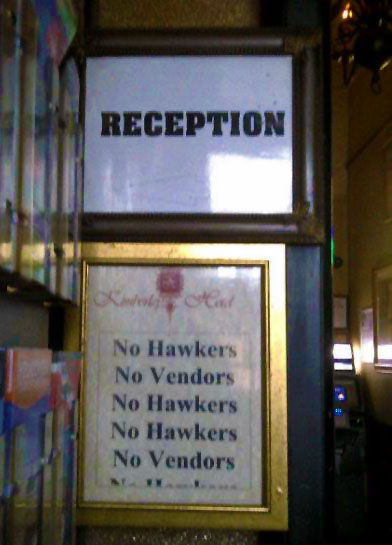
Kimberley Hotel Reception, 24 August 2013. Photo: Rosemary Lombard

Kimberley Hotel Reception, 24 August 2013.
Photo: Rosemary Lombard (with a Kakberry)

“Oh C’MONNN!” The driver in front of me hesitates as the light turns orange. Rearing to a halt, I yank up the handbrake and a woman’s waddling over, a wad of Big Issues clamped under one armpit, a limp bundle slipping sleeping from its swaddling under the other. My window’s half-open.

In one deft movement she hikes up low-slung child with elbow, thrusts out magazine with hand. I shake my head, smiling blankly; she jerks hers toward the May issue lying on my back seat, barely visible in the failing light.

“Hey M’am, that one’s too much old now!”

“Sorry, at the moment I really don’t have any money, Sisi – see, I’m working as a volunteer. I’m not being paid this month.” It’s so bloody cold with the window down.

“Ohh, okay,” she shrugs, arching an eyebrow (what incredible co-ords), “I understand… You working for free.” Her words puff out, grey and laconic, a dragon’s exhausted fumes. She smiles. “Hawu. But you too stupid.”

I grin back, stupidly. “You’re right, hey.” The light’s about to change. “Okay, byebye now. Next month, I hope…”

She steps back, the car bucking forward as I take my sheepish foot off the clutch just a little too quickly. At least I had a valid excuse.

further materials toward a theory of the man-child

Virginia Woolf pointed out in A Room of One’s Own that, for most of history, if a piece of writing was signed “Anonymous,” its author was usually a woman. Recently, however, we have noticed that more and more unsigned publications coming from the left are written in what sounds like a male voice. From the boy bandit aesthetics of the anarchist magazine Rolling Thunder to the Guy Fawkes masks and Internet vigilantism of the hacker collective Anonymous, the protagonist of contemporary radical politics styles himself as a him.

In some cases, anonymity itself, which was supposed to express solidarity, abets sexism. Take Tiqqun. Founded in the late 1990s and dissolved after the 9/11 attacks, the French journal of radical philosophy attracted media attention when one of its founders, Julien Coupat, was arrested in November 2008 in connection with plans to sabotage the TGV train lines.

Semiotext(e) published translations of Tiqqun’s Introduction to Civil War and This is Not a Program between 2009 and 2011, and the anarchist press Little Black Cart books distributed Tiqqun 1 and Theory of Bloom in 2011 and 2012. Though their cops-and-robbers bombast sometimes raised our eyebrows, we read these with interest. Then, late last year, Semiotext(e) put out its next Tiqqun ­installment. Enclosed in a bright pink cover, and bookended with what looked like low-grade xerox collages of glossy magazine ads and soft porn, Preliminary Materials for a Theory of the Young-Girl confirmed all that we had begun to suspect.

Theory of the Young-Girl opens with a 10-page excursus sketching the “total war” that contemporary capitalism wages against anyone who dares oppose it. Echoing the work of Michel Foucault and Gilles Deleuze, Tiqqun argues that capitalism compels individuals to internalize its imperatives to live (and thus consume) in certain ways. Because the entire conflict is invisible, Tiqqun professes that “rethinking the offensive for our side is a matter of making the battlefield manifest,” revealing the processes by which contemporary society compels us to commodify even our intimate lives. Where can they best expose the front lines where capitalism is waging its invisible war? The “Young-Girl,” a figure Tiqqun invents to play both the exemplary subject of and the agent reproducing this system.

Tiqqun claims it has lady members and seems eager to reassure us that it does not hate us. “Listen,” Tiqqun writes. “The Young-Girl is obviously not a gendered concept … The Young-Girl is simply the model citizen as redefined by consumer society.” When early 20th century capitalism realized that, to reproduce itself, it would have to colonize social life, it particularly targeted the spheres of  “youth” and “femininity”: the young, because they needed and wanted things, and did not yet work; women, because they governed social reproduction, i.e., had and raised kids.

The majority of what follows consists of a Situationist-ish collage that, in a series of vacillating typefaces and font sizes, presents the Young-Girl as a scapegoat as much as a victim.

Image by Shintaro Kago

Image by Shintaro Kago

 Deep down inside, the Young-Girl has the personality of a tampon: she exemplifies all of the appropriate indifference, all of the necessary coldness demanded by the conditions of metropolitan life.

In love more than anywhere else, the Young-Girl behaves like an accountant. 

There isn’t room for two in the body of a Young-Girl.

It appears that all the concreteness of the world has taken refuge in the ass of the Young-Girl.

There are beings that give you the desire to die slowly before their eyes, but the Young-Girl only excites the desire to vanquish her, to take advantage of her. 

Like the nice guy from your grad-school program who tries to cover up his hurt feelings by concocting a general theory that explains why he never got a text after his one-night stand, the book portrays the Young-Girl as vain, frivolous, and acquisitive. She serves the traditional female role of reproducing the population and social order, but here, the social order is corrupt. Therefore, Tiqqun suggests, their intervention requires an ironic performance of misogyny. The question remains: Why is misogyny their only option? And why are so many ­thoughtful people ready to accept that a layer of irony suffices to turns hateful language into the basis of a sound critique?

We believe that Tiqqun has mistaken its object. The real enigma of our age is not the Young-Girl, who, we submit, has been punished enough already for how commodity culture exploits her. It is, rather, her boyish critic. Forms of crypto- and not-so-crypto misogyny have proved startlingly persistent not just within the radical left but also in the bourgeois-left spheres of cultural production: the publishing world, the museum, and the humanities departments of liberal-arts universities. We propose that a particular type is responsible for perpetuating such bad behavior. Call him the Man-Child.

***

It is not that we cannot talk Tiqqun talk. Look:

The Man-Child has two moods: indecision, and entitlement to this indecisiveness.

The Man-Child tells a racist joke. It is not funny. It is the fact that the Man-Child said something racist that is. 

The Man-Child wants you to know that you should not take him too seriously, except when you should. At any given moment, he wants to you to take him only as seriously as he wants to be taken. When he offends you, he was kidding. When he means it, he means it. What he says goes.

The Man-Child thinks the meaning of his statement inheres in his intentions, not in the effects of his language. He knows that speech-act theory is passé.

The Man-Child’s irony may be a part of a generational aversion to political risk: he would not call out a sexist or racist joke, for fear of sounding too earnest. Ironically, the Man-Child lives up to a stereotype about the men from the rom-coms he holds in contempt: he has a fear of commitment.

The Man-Child won’t break up with you, but will simply stop calling. He doesn’t want to seem like an asshole. 

He tells you he would break up with his girlfriend, but they share a lease. 

The Man-Child breaks up with you even though the two of you are not in a relationship. He cites his fear of settling down. You don’t want marriage, at least not with him, but he never thought to ask you.

The Man-Child can’t even commit to saying no.

Why are you crying? The Man-Child is just trying to be reasonable. This is his calm voice. 

The Man-Child isn’t a player. Many a Man-Child lacks throw-down. He puts on a movie and never makes a move. 

Is Hamlet the original Man-Child? No: the Romantics made him one.

Just as not all men are Man-Children, ­neither are all Man-Children men. 

Lena Dunham may be living proof that the Man-Child is now equal opportunity. That is, the character she plays on Girls is. A real man-child would never get it together to get an HBO show. As we watch Hannah Horvath pull a splinter out of her ass, we wonder: Is this second-wave feminism? Or fourth? It is no accident that Judd Apatow wrote the scene. The mesh tank Dunham wears over bare tits is isomorphic with the dick joke.

The hipster and the douchebag may be subspecies of the genus Man-Child.

If the Man-Child could use his ironic sexism to build a new world, would you want to live in it? Would anyone?

***

We could go on like this. Others have. Since Theory of the Young-Girl appeared in France in the late 1990s, the Man-Child has wandered far afield from the barricades, turning up more and more often in the mainstream liberal press. When Hanna Rosin published her widely discussed Atlantic essay and subsequent book, The End of Men, proposing that “modern, postindustrial society is just better suited to women,” she inaugurated a genre. A spate of articles lamented how the “mancession” was discouraging even nice boys from fulfilling the roles traditionally expected of them—holding a job, taking girls on dinner dates, eventually choosing one to marry, outearn, beget kids with, etc.

“The End of Courtship,” which the New York Times ran in January, is exemplary. “It is not uncommon to walk into the hottest new West Village bistro on a Saturday night and find five smartly dressed young women dining together—the nearest man the waiter,” its author concludes. “Income equality, or superiority, for women muddles the old, male-dominated dating structure.” Meanwhile, an online panic-mongering industry thrives by offering more or less reactionary advice to female page-viewers about how to turn whatever romantic temp work comes their way into a long-term contract.

Mancession Lit portrays the Man-Child as pitiful, contrasting him with women who are well-adjusted and adult. But it rarely acknowledges the real question that this odd couple raises. Namely, are women better suited to the new economy because they are easier to exploit?

In the mid-1970s, Italian Marxist feminists attempted to integrate an account of “immaterial labor” into their critique of capitalist society. They argued that when a shop attendant smiles for a customer, or a teacher worries too much about her students, or a parent does housework, they perform real labor. No accident that their examples came from spheres traditionally occupied by women. Antonio Negri and Michael Hardt later used the phrase “affective labor” to describe the emotional exertion that white-collar jobs increasingly require. Employers in economically dominant countries now primarily demand “education, attitude, character, and ‘prosocial’ behavior.” When job listings ask for “a worker with a good attitude,” what they want, say Hardt and Negri, is a smile.

In the culture sector, economic precarity constantly reminds employees of their expendability and, therefore, the importance of their investing affect in their workplace. To gain even an unpaid internship or a barely paid entry-level position in journalism, publishing, museums, or higher education, dedication is a must. Many jobs that used to be meal tickets for starving artists are now considered covetable and require “love.” A college freshman recently told us: “I have a passion for marketing.” A journalist friend recounts how, when she was still in college, a magazine editor approached her at a party with the line: “Yo, you should be my intern.” We imagine her smiling, as if to flatter his delusion that there were any print-media jobs still worth sleeping your way into; in any case, she did get a gig there.

Women’s long history of performing work without its even being acknowledged as work, much less compensated fairly, may account for their relative success in today’s white-collar economy. This is, at least, the story of the heroine that the new Mancession Lit has created. Call her the Grown Woman. A perpetual-motion machine of uncomplaining labor, shuttling between her job and household tasks, the Grown Woman could not be more different from either fat-year brats like Carrie Bradshaw, or Judd Apatow’s lady Man-Children. The Grown Woman holds down her job and pays for her own dinner. The Grown Woman feels like a bad mom when she sees the crafts and organic snacks that other moms are posting on Pinterest. She wonders whether feminism lied to her, but knows she will inherit the earth. Could this be because she is better than the Man-Child at performing what current economic conditions demand? She is certainly more practiced. Who among us hasn’t faked it, if only to make him stop asking?

***

Tiqqun knows and says what the Lifestyle section does or cannot: Today the economy is feminizing everyone. That is, it puts more and more people of both genders in the traditionally female position of undertaking work that traditionally ­patriarchal institutions have pretended is a kind of personal service outside capital so that they do not have to pay for it. When affective relationships become part of work, we overinvest our economic life with erotic value. Hence, “passion for marketing.” Hence, “Like” after “Like” button letting you volunteer your time to help Facebook sell your information to advertisers with ever greater precision.

In the postindustrial era, work and leisure grow increasingly indistinguishable: We are all shop girls now. From this “feminization of the world,” Tiqqun writes, “one can only expect the cunning promotion of all manner of servitudes.” At times, Tiqqun speaks of this exploitation sympathetically. More often, however, they blame the Young-Girl for opening the floodgates by complying with her own exploitation, thus making it easier for control capitalism to make her attitude compulsory for everyone.

Though its anxieties are of the moment, Tiqqun lifts its language from a long intellectual tradition that uses “woman” as shorthand. You can trace this line to Goethe’s Faust and the “eternal feminine” or Friedrich Schiller’s “Veiled Statue at Sais,” where “a youth, impelled by a burning thirst for knowledge,” pokes around Egypt looking for a busty sculpture of Isis that he calls “Truth.” Nietzsche continues using “woman” as a metaphor for the metaphysical essence that philosophers looked for beneath the surface of mere existence. But he borrows the language of his predecessors only to show how their quest failed—proposing, for instance, in Human, All Too Human that “women, however you may search them, prove to have no content but are purely masks.” Nietzsche’s point is that the woman called Truth was always already a cocktease: Nothing except existence exists.

Tiqqun offers an edgy update to such misogynist metaphors deployed for the purposes of demystification. At times, it speaks longingly of women who have not been utterly corrupted by capitalism. But when it learns what it knew all along—there is no outside; all human relationships have become reified—its disappointment at finding no one authentic to grow old with intensifies its vitriol. “It wasn’t until the Young-Girl appeared that one could concretely experience what it means to ‘fuck,’ that is, to fuck someone without fucking anyone in particular. Because to fuck a being that is really so abstract, so utterly interchangeable, is to fuck in the absolute.” Tiqqun’s language may be obscene, but its point is nothing new. The failure to see women as “anyone in particular,” or as subjects endowed with their own ends, has allowed men to fuck women over for centuries.

Read the rest of this incisive article HERE.

cherry bomb – gouttes mécaniques (mechanical teardrops) – 2008

“We’re all Frankie…”

A détournement: Fernand Léger – ‘Ballet Mécanique‘ (1924) versus Ordo Ecclesiae Mortis – ‘Frankie Teardrop‘ (cover of original by Martin Rev & Alan Vega’s Suicide in 1977).

Read more about détournement HERE. Watch the original  Ballet Mécanique HERE.

3. affectivity

on why we often desire what makes us miserable (to where we often come to regret the good old days of arranged marriages) and on why women don’t say what they think.

13. Within the terrible community, emotional education is based on systematic humiliation, and the pulverization of its members’ self-esteem. No one must be able to believe themselves to be a carrier of that kind of affectivity which would have the right to a place inside the community.The hegemonic type of affectivity inside the terrible community corresponds, paradoxically, to what is seen outside of it as the most backwards form. The tribe, the village, the clan, the gang, the army, the family; these are the human formations universally acknowledged as being the most cruel and the least gratifying, and yet in spite of all they persist within the terrible communities. And in them, women must take on a kind of virility that even males disclaim now in biopolitical democracies, all the while seeing themselves as women whose femininity has lost out to the masculine fantasy dominant at the very heart of the terrible community: the fantasy of plastic “sexy” woman (in the image of the Young-Girl, that carnal envelope) ready for use and consumption by genital sexuality.

14. In the terrible communities, women, because they cannot actually become men, must become like men, while remaining furiously heterosexual and prisoners of the most worn-out stereotypes. If nobody has the right, in the terrible community, to say the truth about human relations, that’s doubly true for women: any woman that undertakes parrhesia within the terrible community will be immediately classed as just some hysteric.

from Tiqqun 2: Theses on the terrible community.