Category Archives: embodiment
maya deren – ritual in transfigured time (1946)
Originally a silent film, this soundtrack was added by Nikos Kokolakis in 2015 – turn the sound off if you prefer.
About her fourth complete film, Ritual in Transfigured Time (1946), Maya Deren writes: “A ritual is an action that seeks the realisation of its purpose through the exercise of form… In this sense ritual is art; and even historically, all art derives from ritual. In ritual, the form is the meaning. More specifically, the quality of movement is not merely a decorative factor; it is the meaning itself of the movement. In this sense, this film is dance […] It’s an inversion towards life, the passage from sterile winter into fertile spring; mortality into immortality; the child-son into the man-father; or, as in this film, the widow into the bride”.
– Maya Deren: Chamber Films, program notes for a presentation, 1960
opening tomorrow: lerato shadi – noka ya bokamoso
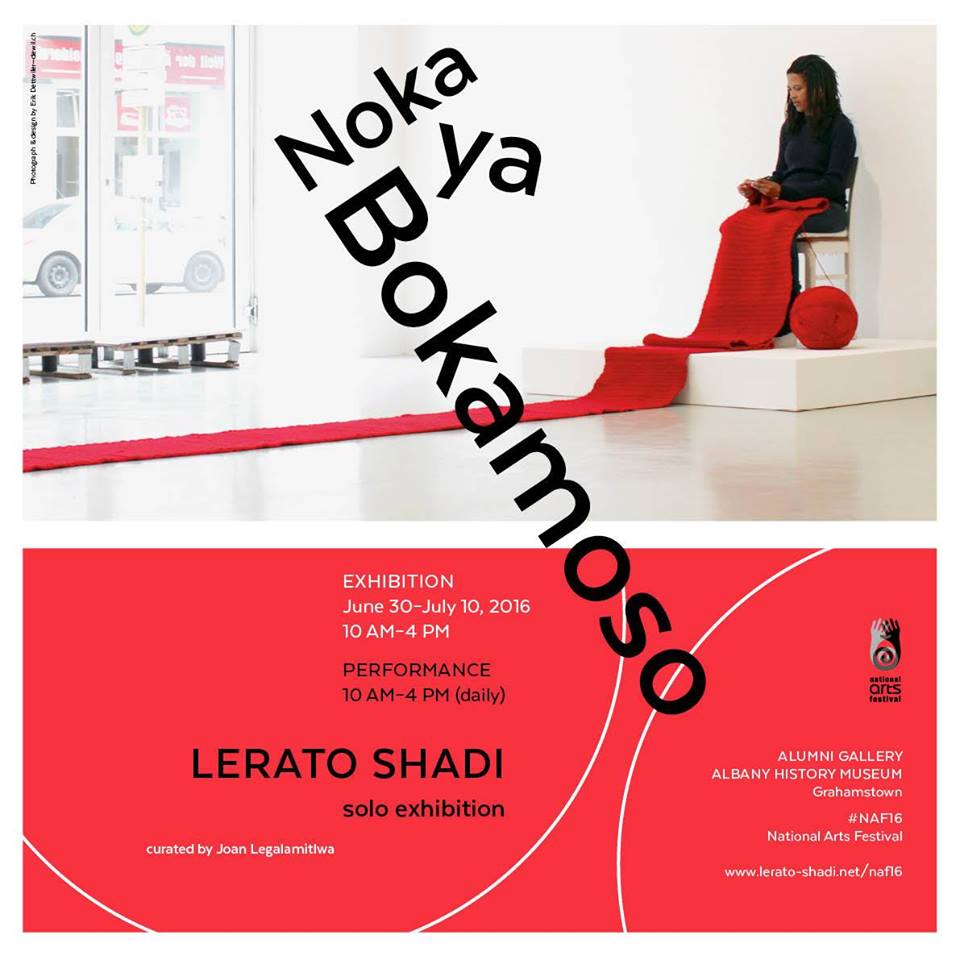
NOKA YA BOKAMOSO: A SOLO EXHIBITION BY LERATO SHADI
2016 National Arts Festival – Grahamstown
Alumni Gallery, Albany History Museum
30 June – 10 July
Lerato Shadi invites you to her latest solo exhibition and debut National Arts Festival appearance, Noka Ya Bokamoso. This exhibition by the Mahikeng born, Berlin based video and performance artist is one of the six visual art showcases chosen for the main programme.
The exhibition features four of Shadi’s latest works; two performative installations Makhubu and Mosako Wa Nako as well as two video works Sugar & Salt and Untitled.
Curator, Joan Legalamitlwa says,
“The works on the show were purposefully selected as they weave together history as told by and through the Black female body, in its truest and sincerest form, as it should be. Noka Ya Bokamoso is about the Black subject being in control of its own narrative and also about encouraging the visitors to do some introspection when it comes to matters of identity and representation.”
Makhubu is a work performed in the days preceding the festival, executed in absence of an audience. This performance involves Shadi arduously writing in concentric circles with a red pencil, then erasing the writing, leaving traces of the text on the wall and red remnants of the rubber eraser on the floor. This work looks at the historical erasure of the Black subject within the context of Grahamstown’s problematic history as well as historic erasure in the national narrative and how that has impacted on the kinds of stories that we currently tell. The absence of an audience becomes a corporeal metaphor, emphasising the ways in which South Africans, continue to construct a sense of nationhood unaware of significant violent acts that have shaped them.
For Mosako Wa Nako, Shadi will be seated one end of the gallery space for an uninterrupted six hours a day, over the eleven days of the Festival, crocheting what looks like be a red woollen carpet. Sugar & Salt, a video work featuring Shadi and her mother consuming a mineral in the form of salt and a carbohydrate in the form of sugar, makes references to the complexities and intricacies of mother-daughter relationships.
Untitled, Shadi’s latest video work, having its world premiere at the National Arts Festival, will be shot on location in her home village of Lotlhakane, in June 2016. The work consists of a two channel video work conceptualised in three parts: the first deals with the utmost extremes of individual resistance; the second deals with how Shadi experiences the impact of colonial language; the final part is an allegory of resistance.
Shadi’s work explores problematic assumptions projected onto the Black female body and how performance, video and installation create a space for artists to engage with those preconceived notions, making the body both visible and invisible. Using time, repetitive actions as well as stillness, she questions, ‘How does one create oneself?’ rather than allowing others or history to shape one’s person.
The key aim of Noka Ya Bokamoso is to re-center Shadi’s works to its primary audience – the South African audience. Shadi has practiced and exhibited in New York, Bern, Dakar, Moscow and Scotland and now seeks to utilise her work to foster and encourage dialogue around questions of historical knowledge production and its inclusion and exclusion of certain subjects. Her ultimate goal is that she, along with her audiences, will be encouraged not only to consume, but consciously engage in the processes of unearthing subsumed histories and producing critical knowledge.
Lerato Shadi lives and works in Berlin. She completed a BFA in Fine Art from the University of Johannesburg. She was included in The Generational: ‘Younger Than Jesus’ artists directory published by the New Museum, New York. In 2010 she was awarded a Pro Helvetia residency in Bern. In the same year she had her solo exhibition Mosako Wa Seipone at Goethe on Main in Johannesburg. From 2010 to 2012 she was a member of the Bag Factory artist studios in Johannesburg. In 2012 her work was featured at the Dak’art Biennale in Dakar, Senegal and in the III Moscow International Biennale. She is a fellow of Sommerakademie 2013 (Zentrum Paul Klee) and completed in the same year a residency program by invitation of INIVA at Hospitalfield (supported by ROSL). In 2014 she was awarded with the mart stam studio grant. She is currently completing her MFA at the Kunsthochschule Berlin Weissensee.
Noka Ya Bokamoso is made possible through the generous support of the National Arts Festival.
julia holter – our sorrows (2012)
Directed by Naomi Yang of Galaxie 500 and Damon & Naomi, this video feels haunted by Maya Deren.
grimm versus gira (2008 – 2016)
I share this in solidarity with Larkin Grimm, and my niece Juliette, and every other woman who has been exploited or violated through unequal power relationships during artistic collaboration. Speak your truth. Don’t shut up. Make them squirm. Let them burn.
—
Yesterday, singer/songwriter Larkin Grimm claimed that Swans frontman Michael Gira raped her in spring 2008, when she was recording her album Parplar for Gira’s Young God label. In a Facebook post yesterday, she said she confronted Gira and he then dropped her from his label. Gira called Grimm’s accusations “a slanderous lie” on his personal Facebook page. In an official statement through his publicist, Gira has acknowledged the spring 2008 night in question, but calls the incident “an awkward mistake.” Read his full statement below. Update (2/27, 9:40 a.m.): Grimm sent us a statement in response to Gira’s comments, which she calls “an admission of guilt.” Read it below.
Michael Gira:
Eight years ago, while I was still married to my first wife, Larkin Grimm and I headed towards a consensual romantic moment that fortunately was not consummated. As she wrote in her recent social media postings about that night, I said to her, “this doesn’t feel right,” and abruptly but completely our only intimate encounter ended. It was an awkward mistake.
Larkin may regret, as I certainly do, that the ill-advised tryst went even that far, but now, as then, I hold her in high esteem for her music and her courage as an artist.
I long ago apologized to my wife and family and told them the truth about this incident. My hope is that Larkin finds peace with the demons that have been darkening her soul since long before she and I ever met.
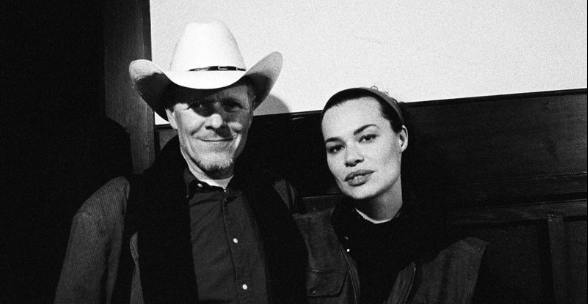
Larkin Grimm:
This is a perfect example of why we need to have education about consent. In a gentlemanly move he admits the act happened but cannot conceive of himself as a rapist. Thank you Michael Gira for your honesty. This is your truth as you remember it. Unfortunately, this was still rape. I said no to you many times before that day, begged you not to interfere with me sexually, even made it a part of a verbal agreement we had when I signed a contract with you. I asked you to promise that you would never have sex with me. You assured me that I could trust you. That is about as clear a NO as I could ever cry. I asked for this because I had had other experiences in my music career and I KNEW.
That night I was far too intoxicated to give you consent for any sexual act. The psychological effects of this betrayal were devastating. Even worse, when I finally confronted you about what you had done, you terminated my relationship with Young God Records, damaging my career and leading people to believe there was something wrong with me or my music.
In the end, this is about business. Art is my career. I have worked long and hard for this career, making incredible sacrifices along the way to continue to make music. The fact that a man in power can throw a woman’s life and work away like they are garbage, simply because she won’t sleep with him, is an immoral injustice that happens to many, many women in music. I won’t stand for it and neither should you.
The “Demons darkening my soul” are the men like you who interfere with my ability to do my work as a musician. This is a job I am good at. All I want is to be left in peace while I am working.
From Pitchfork.
larkin grimm interview (2014)
larkin grimm – blonde and golden johns (live, 2009)
“Days go by like butterflies…”
“Blonde and Golden Johns” performed by Larkin Grimm at the Sidewalk Cafe in NYC.
wilhelm reich on the plague-ridden vs. the living (1945)
Society moulds human character and in turn human character reproduces social ideology en masse. Thus, in reproducing the negation of life inherent in social ideology, people reproduce their own suppression.
Those who are truly alive are kindly and unsuspecting in their human relationships and consequently endangered under present conditions. They assume that others think and act generously, kindly, and helpfully, in accordance with the laws of life. This natural attitude, fundamental to healthy children as well as to primitive man, inevitably represents a great danger in the struggle for a rational way of life as long as the emotional plague subsists, because the plague-ridden impute their own manner of thinking and acting to their fellow men.
A kindly man believes that all men are kindly, while one infected with the plague believes that all men lie and cheat and are hungry for power. In such a situation the living are at an obvious disadvantage. When they give to the plague-ridden, they are sucked dry, then ridiculed or betrayed.
Read the whole of Reich’s essay, “The Emotional Plague” HERE, and an “orgonomic” analysis of mass murders and their relationship to repression HERE (an interesting take in the light of the Orlando nightclub shooting this past weekend, although I completely disagree with the conclusions drawn by the author about what the USA should do about it! I think, frankly, that the USA has an enormous log in its own eye where repression is concerned.)

Diagram by Wilhelm Reich depicting his theory of the antithetical functional unity between instinct and defense, and illustrating specific impulses.
[EDIT, 14 June 2016]: From Facebook this morning:

helen mirren in age of consent (1969)
helen mirren dealing with a totally sexist interviewer (1975)
He is vile. She handles him with brilliant wit and poise.
james – born of frustration (1992)
1992 was also the year I got glandular fever (Epstein-Barr virus), which was to lead to three years spent mostly in bed, ill with chronic fatigue syndrome/M.E., physically broken and depressed as fuck, while everyone else my age got on with having teenage fun. The radio literally saved my life.
charity hamilton – troubled bodies: metaxu, suffering and the encounter with the divine

Charity Hamilton
The body is the canvas on which the female experience is painted and through which female identity is often understood. The female body is a slate on which a patriarchal story has been written, scarred onto the flesh.
For Simone Weil metaxu was simultaneously that which separated and connected, so for instance the wall between two prison cells cuts off the prisoners but was also the means by which they communicated by knocking on that wall. Could the body be that metaxu all at once separating us and connecting us to the Divine? The nature of metaxu is that it offers a route not just for the individual soul but for the souls of others to travel…
—
It’s all well and good to dust off a dead French Jewish Catholic not-quite-feminist-philosopher called Simone Weil and say ‘thanks, your theory of metaxu is great’, but what I want to know within the bones of my so-called soul is how this notion of metaxu can draw me into God, how can it liberate my sisters and how can it usher in the kingdom of the mother of all creation?
Human beings are created in the image of God and formed from the dust of the earth, and thus the body has an echoing significance throughout Christian history. The body is the perceived seat of what some describe as the fall, the locus of the incarnation, the home of crucifixion, the vessel of redemption, salvation and resurrection. The body is not an external meaningless diversion from the spiritual path; rather it is an incredibly important recurring theme both biblically and in Christian tradition and history. Bray and Colebrook state that,
The body is a negotiation with images, but it is also a negotiation with pleasures, pains, other bodies, space, visibility, and medical practice; no single event in this field can act as a general ground for determining the status of the body (Bray and Colebrook, 1998).
Yet more than all of this, the body is the place in which we dwell, it is all we have. As Elizabeth Moltmann Wendell says ‘I am my body’ (Moltmann-Wendell, 1994). For each of our sisters the body is the canvas on which the female experience is painted and through which female identity is often understood. It is on the stage of our female bodies that some of the most fixed church doctrines have been written and enacted. The female body is a slate on which a patriarchal story has been written, scarred onto the flesh. These bodies of ours are patriarchal constructs which must be liberated and re-adopted into the Christian story without the limitations of perceived notions or definitions of ‘gender’.
Isherwood and Stuart assert that ‘From the moment we are asked to believe that Eve was a rib removed from the side of Adam we understand that theology is based in the body and we are at a disadvantage!’ (Isherwood and Stuart, 1998: 15). The historical dichotomy between the Eve and the Mary constructions has led to a definitive inequality for women, both in terms of physical wellbeing and in terms of spiritual and psychological wellbeing. The choices for a woman to be the sin-formed, temptress Eve or the virginal pure vessel Mary are seen historically in the precarious place of women in the church and in society.
Elizabeth Stuart writes that ‘Women were regarded as being ensnared in their bodiliness to a far greater degree than men and they too had to be tamed and subdued for their own good and the good of the men they might tempt into sin’ (Stuart, 1996: 23). It is hardly surprising therefore that twentieth and twenty-first century feminist, womanist, mujerista and black theologians have worked hard to undo and re-express a theology of the body which offers a more authentic narrative of the relationship between the Divine and the physical which both liberates the female body and liberates God from the patriarchal box the Church has created around her.
…The female body can only be liberated from that patriarchal overwriting by writing its own narrative, much of which will be based upon experiences of being troubled. The true nature of the female body can only be revealed by a concerted effort to ‘re-own’ this body as our own not as we have been taught to understand it. This in turn means that the systems, doctrines and ‘ways of being’ which exist within the Church and society must be challenged and re-imagined from the perspective of the un-vocalized and troubled female narrative. In the sense that the female body has not really been ours, has not been an authentically female body and yet has the potential to be unlocked as such, it therefore makes for the perfect condition for metaxu, it is that thing which separates in its forms of oppression and connects in its potential liberation. It is at once a place where great evil has been wrought and a place of divine goodness. Weil writes of love that,
Creation is an act of love and it is perpetual. At each moment our existence is God’s love for us. But God can only love himself. His love for us is love for himself through us. Thus, he who gives us our being loves in us the acceptance of not being. Our existence is made up only of his waiting for our acceptance not to exist. He is perpetually begging from us that existence which he gives. He gives it to us in order to beg it from us (Weil, 2002: 28).
According to Weil, our very existence is from God and returns to God. I would argue that to be able to return this ‘not being’ to God, the body has to take some form of action, or have some form of action performed upon it to open a space in which our not being or not existing can be offered to God. It is this removal of our self which I argue can be interpreted as a removal of the socially created self to leave only the God part of ourselves, the authentic self that is God. The body is metaxu in that it is imperfect and yet perfect. The body is human and therefore unreal and socially recreated, yet the body is also created by God and God dwells within it. The female body is both imprisoned and is liberated. Its imprisonment is the very thing that enables it to unravel the layers of patriarchal construction to locate the God part and its imprisonment is the thing which allows for an authentic narrative to be written. The female body has to separate us from the Divine in order to connect us to the Divine.
Read the whole of this interesting paper by Charity Hamilton HERE.
simone weil – meaning of the universe*
 We are a part which has to imitate the whole.
The a¯tman. Let the soul of a man take the whole universe for its body. Let its relation to the whole universe be like that of a collector to his collection, or of one of the soldiers who died crying out ‘Long live the Emperor!’ to Napoleon. The soul transports itself outside the actual body into something else. Let it therefore transport itself into the whole universe.
We should identify ourselves with the universe itself. Everything that is less than the universe is subject to suffering.
Even though I die, the universe continues. That does not console me if I am anything other than the universe. If, however, the universe is, as it were, another body to my soul, my death ceases to have any more importance for me than that of a stranger. The same is true of my sufferings.
Let the whole universe be for me, in relation to my body, what the stick of a blind man is in relation to his hand. His sensibility is really no longer in his hand but at the end of the stick. An apprenticeship is necessary.
To limit one’s love to the pure object is the same thing as to extend it to the whole universe.
To change the relationship between ourselves and the world in the same way as, through apprenticeship, the workman changes the relationship between himself and the tool. Getting hurt: this is the trade entering into the body. May all suffering make the universe enter into the body.
Habit, skill: a transference of the consciousness into an object other than the body itself.
May this object be the universe, the seasons, the sun, the stars. The relationship between the body and the tool changes during apprenticeship. We have to change the relationship between our body and the world.
We do not become detached, we change our attachment. We must attach ourselves to the all.
We have to feel the universe through each sensation. What does it matter then whether it be pleasure or pain? If our hand is shaken by a beloved friend when we meet again after a long separation, what does it matter that he squeezes it hard and hurts us?
There is a degree of pain on reaching which we lose the world. But afterwards peace comes. And if the paroxysm returns, so does the peace which follows it. If we realize this, that very degree of pain turns into an expectation of peace, and as a result does not break our contact with the world.
Two tendencies with opposite extremes: to destroy the self for the sake of the universe, or to destroy the universe for the sake of the self. He who has not been able to become nothing runs the risk of reaching a moment when everything other than himself ceases to exist.
External necessity or an inner need as imperative as that of breathing. ‘Let us become the central breath.’ Even if a pain in our chest makes respiration extremely painful, we still breathe, we cannot help it.
We have to associate the rhythm of the life of the body with that of the world, to feel this association constantly and to feel also the perpetual exchange of matter by which the human being bathes in the world.
Things which nothing can take from a human being as long as he lives: in the way of movement over which his will has a hold, respiration; in the way of perception, space (even in a dungeon, even with our eyes blinded and our ear-drums pierced, as long as we live we are aware of space).
We have to attach to these things the thoughts which we desire that no circumstances should be able to deprive us of.
To love our neighbour as ourselves does not mean that we should love all people equally, for I do not have an equal love for all the modes of existence of myself. Nor does it mean that we should never make them suffer, for I do not refuse to make myself suffer. But we should have with each person the relationship of one conception of the universe to another conception of the universe, and not to a part of the universe.
Not to accept an event in the world is to wish that the world did not exist. That is within my power—for myself. If I wish it I obtain it. I am then an excrescence produced by the world.
Wishes in folklore: what makes wishes dangerous is the fact that they are granted. To wish that the world did not exist is to wish that I, just as I am, may be everything.
Would that the entire universe, from this pebble at my feet to the most distant stars, existed for me at every moment as much as Agnès did for Arnolphe or his money-box did for Harpagon. If I choose, the world can belong to me like the treasure does to the miser. But it is a treasure that does not increase.
This irreducible ‘I’ which is the irreducible basis of my suffering—I have to make this ‘I’ universal.
What does it matter that there should never be joy in me since there is perfect joy perpetually in God! And the same is true with regard to beauty, intelligence and all things.
To desire one’s salvation is wrong, not because it is selfish (it is not in man’s power to be selfish), but because it is an orientation of the soul towards a merely particular and contingent possibility instead of towards a completeness of being, instead of towards the good which exists unconditionally.
All that I wish for exists, or has existed, or will exist somewhere. For I am incapable of complete invention. In that case how should I not be satisfied?
Br . . . I could not prevent myself from imagining him living, imagining his house as a possible place for me to listen to his delightful conversation. Thus the consciousness of the fact of his death made a frightful desert. Cold with metallic coldness. What did it matter to me that there were other people to love? The love that I directed towards him, together with the outlines shaping in my mind of exchanges of ideas which could take place with no one else, were without an object. Now I no longer imagine him as alive and his death has ceased to be intolerable for me. The memory of him is sweet to me. But there are others whom I did not know then and whose death would affect me in the same way.
D . . . is not dead, but the friendship that I bore him is dead, and a like sorrow goes with it. He is no more than a shadow.
But I cannot imagine the same transformation for X . . ., Y . . ., Z . . ., who, nevertheless, so short a time ago did not exist in my consciousness.
Just as parents find it impossible to realize that three years ago their child was non-existent, I find it impossible to realize that I have not always known the beings I love.
I think I must love wrongly: otherwise things would not seem like this to me. My love would not be attached to a few beings. It would be extended to everything which is worthy of love.
‘Be ye perfect even as your Father who is in heaven. . . .’ Love in the same way as the sun gives light. Love has to be brought back to ourselves in order that it may be shed on all things. God alone loves all things and he only loves himself.
To love in God is far more difficult than we think.
I can taint the whole universe with my wretchedness without feeling it or collecting it together within myself.
We have to endure the discordance between imagination and fact. It is better to say ‘I am suffering’ than ‘this landscape is ugly’.
We must not want to change our own weight in the balance of the world—the golden balance of Zeus.
The whole cow gives milk although the milk is only drawn from the udder. In the same way the world is the producer of saintliness.
__
* The identification of the soul with the universe has no connexion here with pantheism. One can only fully accept the blind necessity which rules the universe by holding closely through love to the God who transcends the universe. Cf. above: ‘This world, in so far as it is quite empty of God, is God himself.’ [Editor’s note.]
__
Excerpted from Simone Weil‘s Gravity and Grace. First French edition 1947. Translated by Emma Crawford. English language edition 1963. Routledge and Kegan Paul, London.
grimes – big small (2011)
A mini-documentary about Claire Boucher (Grimes) made by Tim Kelly in 2011.
grimes – be a body (侘寂) (2012)
Grimes performing “Be a Body” at Good Records in Dallas, TX. Shot with a Sony HX9v, with audio from a Zoom H1.

michel foucault – the utopian body (1966)
The body is the zero point of the world. There, where paths and spaces come to meet, the body is nowhere. It is at the heart of the world, this small utopian kernel from which I dream, I speak, I proceed, I imagine, I perceive things in their place, and I negate them also by the indefinite power of the utopias I imagine. My body is like the City of the Sun. It has no place, but it is from it that all possible places, real or utopian, emerge and radiate.
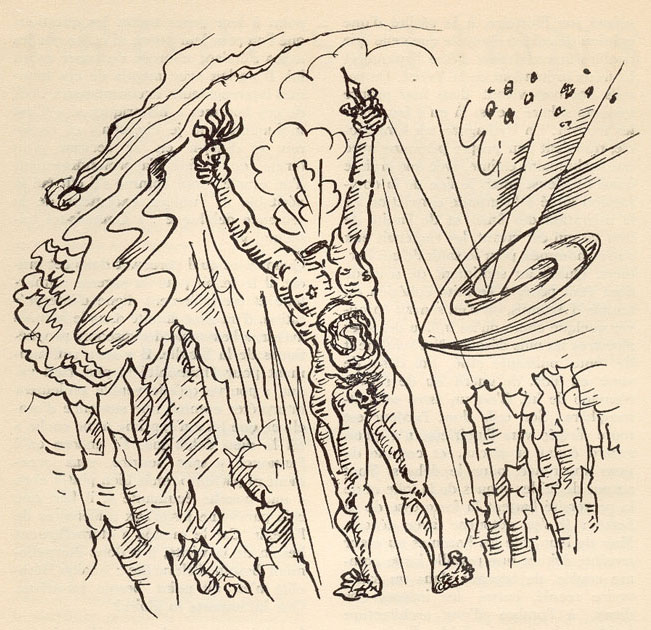
Illustration by Andre Masson, 1936.
Excerpts from the translation by Lucia Allais of a radio lecture Foucault delivered in 1966. Published in Sensorium, MIT Press, 2006, 229-34:
…
My body: it is the place without recourse to which I am condemned. And actually I think that it is against this body (as if to erase it) that all these utopias have come into being. The prestige of utopia–to what does utopia owe its beauty, its marvel? Utopia is a place outside all places, but it is a place where I will have a body without body, a body that will be beautiful, limpid, transparent, luminous, speedy, colossal in its power, infinite in its duration. Untethered, invisible, protected–always transfigured. It may very well be that the first utopia, the one most deeply rooted in the hearts of men, is precisely the utopia of an incorporeal body.
…
No, really, there is no need for magic, for enchantment. There’s no need for a soul, nor a death, for me to be both transparent and opaque, visible and invisible, life and thing. For me to be a utopia, it is enough that I be a body. All those utopias by which I evaded my body–well they had, quite simply, their model and their first application, they had their place of origin, in my body itself, I really was wrong, before, to say that utopias are turned against the body and destined to erase it. They were born from the body itself, and perhaps afterwards they turned against it.
…
My body, in fact, is always elsewhere. It is tied to all the elsewheres of the world. And to tell the truth, it is elsewhere than in the world, because it is around it that things are arranged. It is in relation to it–and in relation to it as if in relation to a sovereign–that there is a below, an above, a right, a left, a forward and a backward, a near and a far. The body is the zero point of the world. There, where paths and spaces come to meet, the body is nowhere. It is at the heart of the world, this small utopian kernel from which I dream, I speak, I proceed, I imagine, I perceive things in their place, and I negate them also by the indefinite power of the utopias I imagine. My body is like the City of the Sun. It has no place, but it is from it that all possible places, real or utopian, emerge and radiate.
…
Maybe it should also be said that to make love is to feel one’s body close in on oneself. It is finally to exist outside of any utopia, with all of one’s density, between the hands of the other. Under the other’s fingers running over you, all the invisible parts of your body begin to exist. Against the lips of the other, yours become sensitive. In front of his half-closed eyes, your face acquires a certitude. There is a gaze, finally, to see your closed eyelids. Love also, like the mirror and like death–it appeases the utopia of your body, it hushes it, it calms it, it encloses it as if in a box, it shuts and seals it. This is why love is so closely related to the illusion of the mirror and the menace of death. And if, despite these two perilous figures that surround it, we love so much to make love, it is because, in love, the body is here.
ed bean, you are missed!
I can’t quite believe it’s five years today since my beloved grandpa passed on.
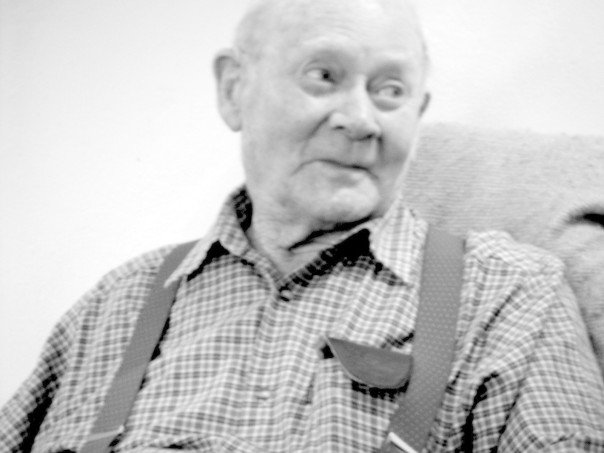
Ed Bean, Melville, December 2006.
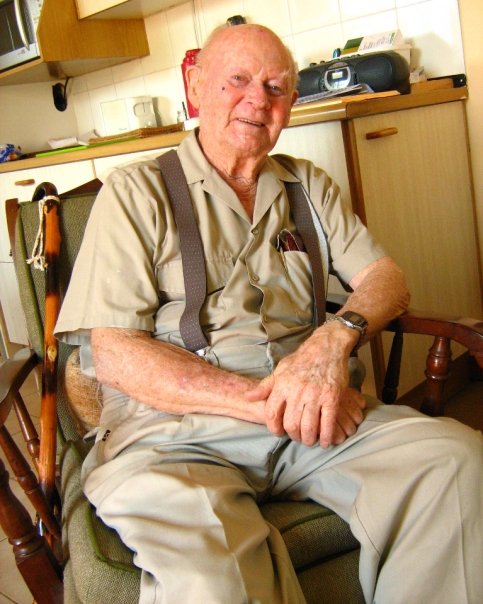
Gramps, behaving himself, 2007.
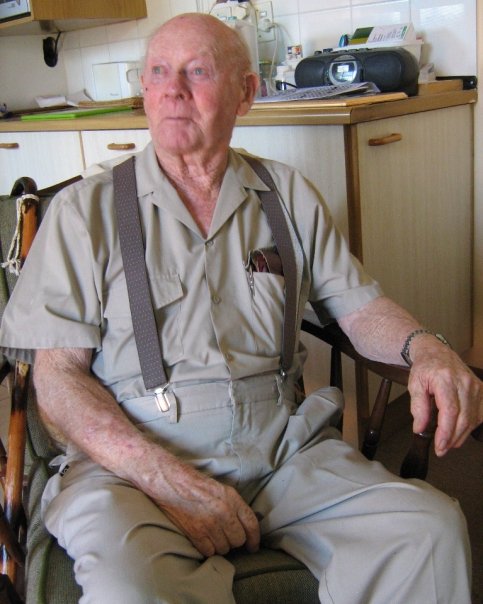
Gramps, posing. 2007.
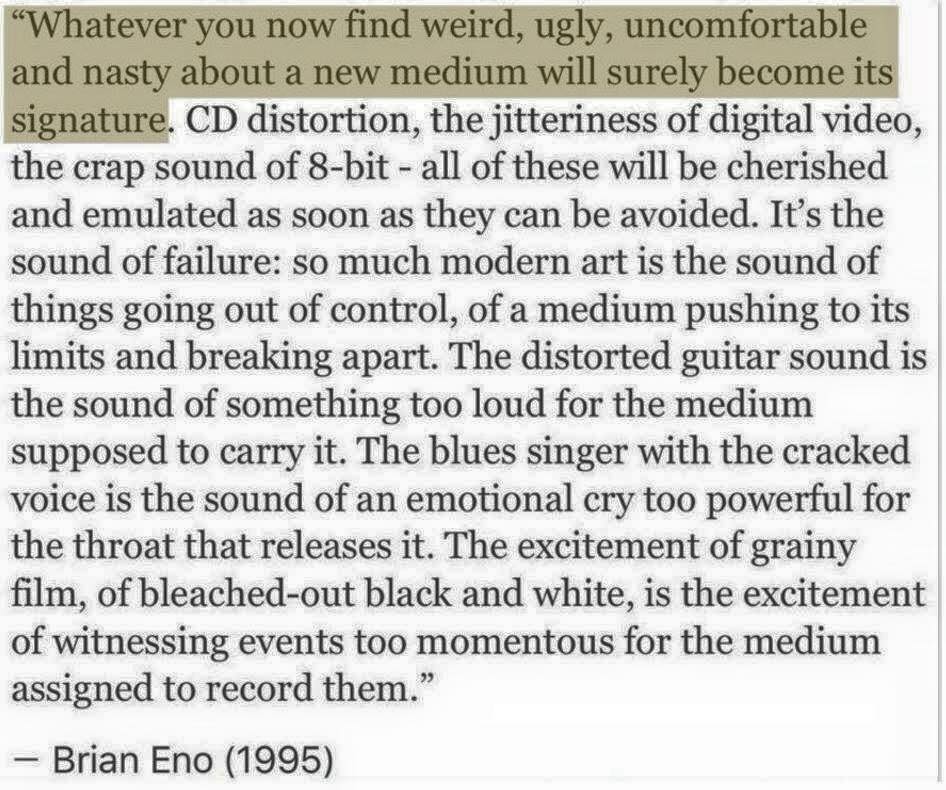
eno on medium-specific materiality (1995)
fire in my belly (1987)
Fire in My Belly (1987): David Wojnarowicz
Music: Diamanda Galas
Made by David Wojnarowicz for Rosa von Praunheim’s Silence = Death (1990).
A positive diagnosis for HIV in 1987 didn’t leave you with many options. The pharmaceuticals that have extended life spans for many of those now infected were not then available. Hostility and fear were rampant. It was reasonable to assume not only that you had received a death sentence, but that there was no hope on the horizon for those who, inevitably, would follow in your footsteps: an anguished decision to be tested, an excruciating wait for the results, a terrifying trip to the testing centre, and a life-shattering conversation with a grim-faced nurse or social worker.
Some turned to holistic medicine and yoga. Others to activism. Many just returned to their apartments, curled up in the corner, and waited to die.
But some, like David Wojnarowicz, who died in 1992 at the age of 37, used art to keep a grip on the world. He was the quintessential East Village figure, a bit of a loner, a bit crazy, ferociously brilliant and anarchic. He was a self-educated dropout who made art on garbage can lids, who painted inside the West Side piers where men met for anonymous sex, who pressed friends into lookout duty while he covered the walls of New York with graffiti. In 1987, his former lover and best friend, Peter Hujar, died of complications from AIDS, and Wojnarowicz learned that he, too, was infected with HIV.
Wojnarowicz, whose video A Fire in My Belly was removed from an exhibition of gay portraiture at the Smithsonian’s National Portrait Gallery last week after protests from a right-wing Catholic group and members of Congress, was an artist well before AIDS shattered his existence. But AIDS sharpened his anger, condensed his imagery and fueled his writing, which became at least as important as his visual work in the years before he died. In the video that has now been censored from the prominent and critically lauded exhibition Hide/Seek: Difference and Desire in American Portraiture, Wojnarowicz perfectly captured a raw Gothic, rage-filled sensibility that defined a style of outsider art that was moving into the mainstream in the late 1980s.
It may feel excessive now, but like other classic examples of excessive art – Allen Ginsberg’s 1955 poem, Howl, Krzyzstof Penderecki’s 1960 symphonic work, Threnody for the Victims of Hiroshima, or Pier Paolo Pasolini’s 1975 film, Salo – it is an invaluable emotional snapshot. Not simply a cry of anguish or protest, Wojnarowicz’s work captures the contradiction, speed and phantasmagoria of a time when it was reasonable to assume that all the political and social progress gay people had achieved in the 1960s and ’70s was being revoked – against the surreal, Reagan-era backdrop of Morning in America, and a feel-good surge of American nostalgia and triumphalism.
Read more of this 2010 article by Philip Kennicott, from the Washington Post, HERE.
leonard cohen – joan of arc (1971)
“Myself I long for love and light
But must it come so cruel, and oh so bright?”
From Songs of Love and Hate (Columbia,1971).
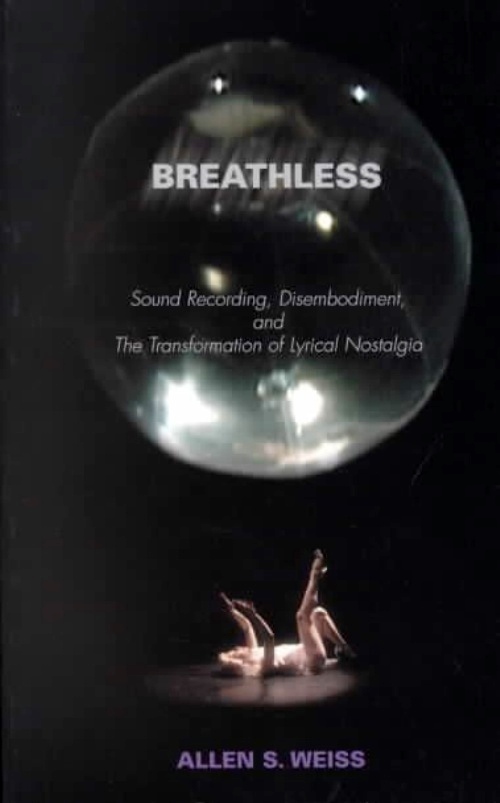
breathless: sound recording, disembodiment, and the transformation of lyrical nostalgia – allen s. weiss
How sound recording’s uncanny confluence of human and machine would transform our expectations of mourning and melancholia, transfiguring our intimate relation to death.
Currently sitting with this book in my reading queue… i.e. trying to wait until I have read the stuff I need to prioritise before diving into it, but having peeped the PDF I’m struggling to!
Breathless explores early sound recording and the literature that both foreshadowed its invention and was contemporaneous with its early years, revealing the broad influence of this new technology at the very origins of Modernism. Through close readings of works by Edgar Allan Poe, Stéphane Mallarmé, Charles Cros, Paul Valéry, Villiers de L’Isle-Adam, Jules Verne, and Antonin Artaud, Allen S. Weiss shows how sound recording’s uncanny confluence of human and machine would transform our expectations of mourning and melancholia, transfiguring our intimate relation to death. Interdisciplinary, the book bridges poetry and literature, theology and metaphysics. As Breathless shows, the symbolic and practical roles of poetry and technology were transformed as new forms of nostalgia and eroticism arose.
“By suggesting that sound recording changes the very notion of textuality at a key inflection point in Modernism, Weiss literally turns the field of cultural studies on its ear.” (Gregory Whitehead, co-editor of Wireless Imagination: Sound, Radio and the Avant-Garde)
“The extremely important, cogent analysis adds immeasurably to our knowledge of cultural production in the critical years between early modern lyric and our own post-modern, post-lyric age.” (Lawrence R. Schehr, Professor of French, University of Illinois)
ica 3rd space symposium at uct
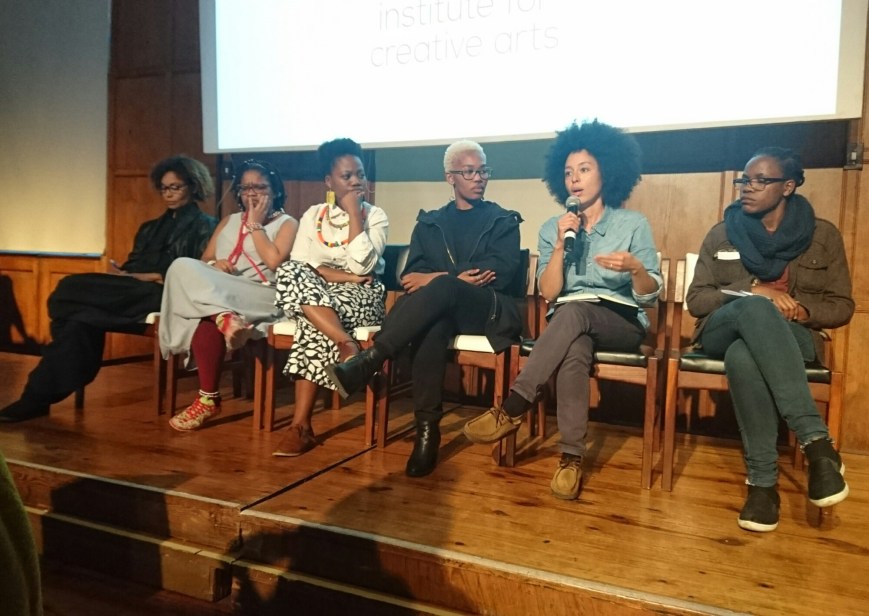
L-R: jackï job, Dee Moholo, Koleka Putuma, Khanyi Mbongwa (Vasiki), Ilze Wolff, Lois Anguria
The most decolonised academic space I have yet had the joy of experiencing. The conference continues today. If you’re in Cape Town, come. It’s free!
HERE is the programme. 🌸
“lost” – david wagoner

Djurgården, November 2015
Stand still. The trees ahead and the bushes beside you
Are not lost. Wherever you are is called Here,
And you must treat it as a powerful stranger,
Must ask it permission to know it and be known.
The forest breathes. Listen. It answers,
I have made this place around you.
If you leave it, you may come back again, saying Here.
No two trees are the same to Raven.
No two branches are the same to Wren.
If what a tree or a bush does is lost on you,
You are surely lost. Stand still. The forest knows
Where you are. You must let it find you.
son lux – easy (2013)
reconciliation’s waste: heritage and waste in post-apartheid south africa
Analysis by Duane Jethro, one of my colleagues at the Archive and Public Culture Research Initiative.

By Duane Jethro
Svetlana Boym argues that ruins “make us think of the past that could have been and the future that never took place”. She turns the idea about the link between the past and the future around, and suggests we can use ruined or wasted things for clues about society in the present. In this piece I want to think about what certain ways of talking about waste and ruins in South Africa can tell us about pasts that never came to be and futures that never took place.
To do so means briefly thinking about heritage and reconciliation. Heritage, or the singling out of certain histories and people for commemoration, is connected to the idea of reconciliation, because in South Africa, it was meant to do the work of bringing South Africans together as a nation. Through new museums, statues and memorials, heritage would help overcome the long…
View original post 837 more words
me last night
simone weil – chance
The beings I love are creatures. They were born by chance. My meeting with them was also by chance. They will die. What they think, do and say is limited and is a mixture of good and evil.
I have to know this with all my soul and not love them the less.
I have to imitate God who infinitely loves finite things in that they are finite things.
We want everything which has a value to be eternal. Now everything which has a value is the product of a meeting, lasts throughout this meeting and ceases when those things which met are separated. That is the central idea of Buddhism (the thought of Heraclitus). It leads straight to God.
Meditation on chance which led to the meeting of my father and mother is even more salutary than meditation on death.
Is there a single thing in me of which the origin is not to be found in that meeting? Only God. And yet again, my thought of God had its origin in that meeting.
Stars and blossoming fruit-trees: utter permanence and extreme fragility give an equal sense of eternity.
The theories about progress and the ‘genius which always pierces through’, arise from the fact that it is intolerable to suppose that what is most precious in the world should be given over to chance. It is because it is intolerable that it ought to be contemplated.
Creation is this very thing.
The only good which is not subject to chance is that which is outside the world.
The vulnerability of precious things is beautiful because vulnerability is a mark of existence.
The destruction of Troy. The fall of the petals from fruit trees in blossom. To know that what is most precious is not rooted in existence—that is beautiful. Why? It projects the soul beyond time.
The woman who wishes for a child white as snow and red as blood gets it, but she dies and the child is given over to a stepmother.
__
Excerpted from Simone Weil‘s Gravity and Grace. First French edition 1947. Translated by Emma Crawford. English language edition 1963. Routledge and Kegan Paul, London.
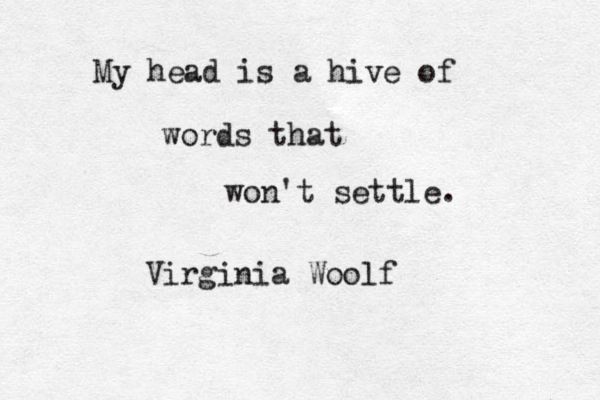
buzzing

 fleurmach