jarvis cocker – sheffield sex city (lyrics)

Cape Town-20130107-01799a w

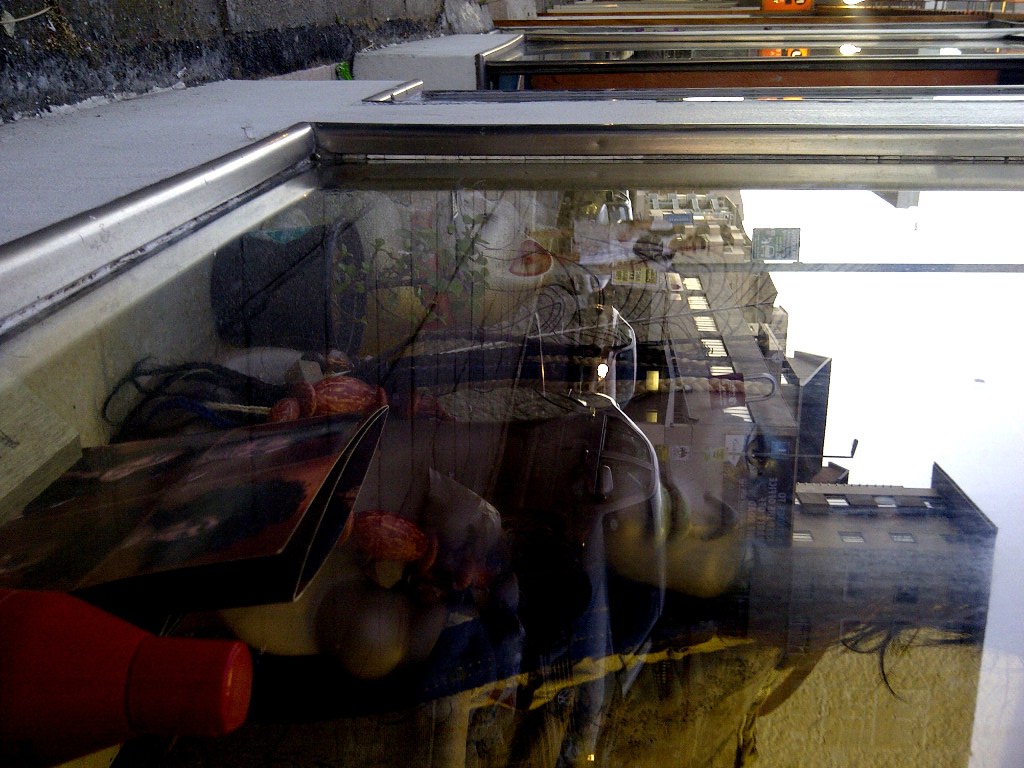
Sea Point Main Road, 7 January 2013. Photograph: Rosemary Lombard

the city is a woman, bigger than any other…

…the sun rose from behind the gasometers at six-thirty a.m.
crept through the gap in your curtains
and caressed your bare feet poking from beneath the floral sheets.
i watched it flaking bits of varnish from your nails
trying to work its way up under the sheets.
even the sun’s on heat today;
the whole city getting stiff in the building heat.

now i’m trying hard to meet her but the fares went up at seven
she is somewhere in the city, somewhere watching television
watching people being stupid, doing things she can’t believe in
love won’t last ’til next installment
ten o’ clock on tuesday evening
the world is going on outside, the night is gaping open wide
the wardrobe and the chest of drawers are telling her to go outdoors
he should have been here by this time, he said that he’d be here by nine
that guy is such a prick sometimes, i don’t know why you bother, really.

oh babe oh i’m sorry
but i had to make love to every crack in the pavement and the shop doorways
and the puddles of rain that reflected your face in my eyes.
the day didn’t go too well.
too many chocolates and cigarettes.
i kept thinking of you and almost walking into lamp-posts.
why’s it so hot?
the air coming up to boil; rubbing up against walls and lamp-posts trying to get rid of it.
old women clack their tongues in the shade of crumbling concrete bus shelters.
dogs doing it in central reservations and causing multiple pile-ups in the centre of town.
i didn’t want to come here in the first place
but i’ve been sentenced to three years in the housing benefit waiting room.
i must have lost your number in the all-night garage
and now i’m wandering up and down your street, calling your name, in the rain
whilst my shoes turn to sodden cardboard.
where are you? (where are you?)

i’m still trying hard to meet you, but it doesn’t look like happening
‘cos the city’s out to get me if i won’t sleep with her this evening
though her buildings are impressive and her cul-de-sacs amazing
she’s had too many lovers and i know you’re out there waiting
and now she’s getting into bed; he’s had his chance now it’s too late
the carpet’s screaming for her soul, the darkness wants to eat her whole
tonight must be the night it ends
tomorrow she will call her friends and go out on her own somewhere
who needs this shit anyway?
and listen, i wandered the streets the whole night crying, trying to pick up your scent
writing messages on walls and the puddles of rain reflected your face in my eyes.
we finally made it on a hill-top at four a.m.
the whole city is your jewellery-box; a million twinkling yellow street lights.
reach out and take what you want; you can have it all.
gee it’s so hot tonight!
i didn’t think we were gonna make it.
it was so bad during the day, but now i’m snug
and warm under an eiderdown sky.
all the things we saw:
everyone on park hill came in unison at four-thirteen a.m.
and the whole block fell down.
the tobacconist caught fire, and everyone in the street died of lung cancer.

treading through an untrimmed memory

Tran Nguyen - Treading Through An Untrimmed Memory

Tran Nguyen – Treading Through An Untrimmed Memory

Tran Nguyen is a Georgia-based artist. Born in Vietnam and raised in the States, she received a BFA from Savannah College of Art and Design in 2009. She is fascinated with creating visuals that can be used as a psycho-therapeutic support vehicle, treading the mind’s surreal dreamscape. Her paintings are created with a delicate quality using color pencil and thin glazes of acrylic on paper. Tran’s oeuvre has been exhibited with galleries in New York, Los Angeles, Miami, London, and Barcelona. “ I find interest in illustrating the universal emotions we come across in everyday living — emotions that are tucked away, deep inside our psyches.”

Her blog is HERE.

tindersticks – city sickness (1993)

“Our first film. This Way Up had money to make a video, we wanted to make something more like a film. We were told about Jarvis and Steve from Pulp, who were making films with Martin Wallace. We made it during the summer of ’93. Dickon’s not in it because he was in Mexico as part of his studies. It was good fun and hard work, driving around in our Ford Cortina, Jarvis squashed on the passenger seat floor. Sidonie, Stuart’s daughter, is the baby. It was the start of a long and joyful relationship with Martin Wallace, who’s become a wonderful friend.”

anne michaels – phantom limbs (excerpt)

So much of the city
is our bodies. Places in us
old light still slants through to.
Places that no longer exist but are full of feeling,
like phantom limbs.

Even the city carries ruins in its heart.
Longs to be touched in places
only it remembers…

(from The Weight of Oranges / Miner’s Pond. McClelland & Stewart, 1997. p.86)

clara rockmore – pastorale (anis fuleihan)

From Clara Rockmore’s Lost Theremin Album (1975)

Anis Fuleihan (April 2, 1900 – October 11, 1970) was a Cypriot-born American composer, conductor and pianist. Fuleihan’s music generally avoided serial structures, and was heavily influenced by Middle Eastern folk music. One of his works is a concerto for theremin, premiered by the New York Philharmonic under Leopold Stokowski in 1945; the soloist was Clara Rockmore.

Images: Alphonse Mucha

marie menken – arabesque for kenneth anger (1961)

“There is no why for my making films. I just liked the twitters of the machine, and since it was an extension of painting for me, I tried it and loved it. In painting I never liked the staid and static, always looked for what would change the source of light and stance, using glitters, glass beads, luminous paint, so the camera was a natural for me to try—but how expensive!” – Marie Menken

16mm, color, sound, 4 min
Original score by Teiji Ito. “A new sound version of this classic. It is a beautiful experience to see her fabulous shooting. The cutting is just as fabulous and is something for all to study; the new score by Teiji Ito is ‘out of this world’ with its many-leveled instrumentation. Marie says ‘These animated observations of tiles and Moorish architecture were made as a thank-you to Kenneth for helping to shoot on another film in Spain.’ Shot in the Alhambra in one day.” – Gryphon Film Group

kodoma

A tiny Kodoma (tree spirit) from Miyazaki’s “Princess Mononoke” (1997)

Princess Mononoke is a period drama set in the late Muromachi period of Japan but with numerous fantastical elements. The story concentrates on involvement of the outsider Ashitaka in the struggle between the supernatural guardians of a forest and the humans of the Iron Town who consume its resources. There can be no clear victory, and the hope is that relationship between humans and nature can be cyclical.

“Mononoke” (物の怪) is not a name, but a general term in the Japanese language for a spirit or monster. The film was first released in Japan on July 12, 1997, and in the United States on October 29, 1999.

on the proliferation of magical stories


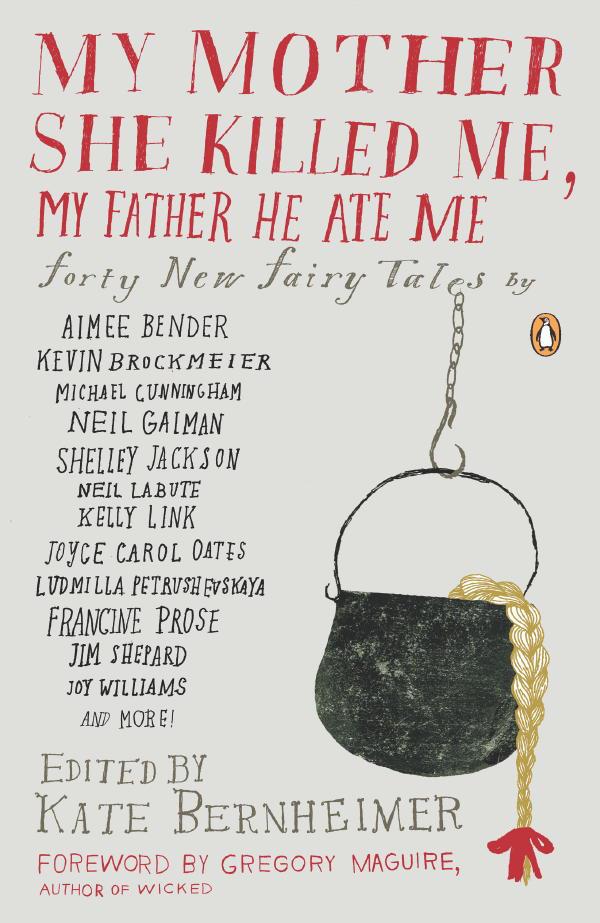
“I have a sense that a proliferation of magical stories, especially fairy tales, is correlated to a growing awareness of human separation from the wild and natural world. In fairy tales, the human and animal worlds are equal and mutually dependent. The violence, suffering and beauty are shared. Those drawn to fairy tales, perhaps, wish for a world that might live “forever after”. My work as a preservationist of fairy tales is entwined with all kinds of extinction.”

– Kate Bernheimer in the Introduction to My Mother She Killed Me, My Father He Ate Me: Forty New Fairy Tales (Penguin, 2010)

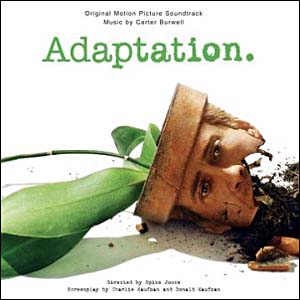
remixed from “adaptation” (2002)

JOHN LAROCHE:
You know why I like plants?

SUSAN ORLEAN:
Nuh uh.

JOHN LAROCHE:
Because they’re so mutable. Adaptation is a profound process. Means you figure out how to thrive in the world.

SUSAN ORLEAN:
[pause] Yeah but it’s easier for plants. I mean they have no memory. They just move on to whatever’s next. With a person though, adapting’s almost shameful. It’s like running away.
___

CHARLIE KAUFMAN: [voice-over]
I am pathetic, I am a loser…

ROBERT MCKEE:
So what is the substance of writing?

CHARLIE KAUFMAN: [voice-over]
I have failed, I am panicked. I’ve sold out, I am worthless, I… What the fuck am I doing here? What the fuck am I doing here? Fuck. It is my weakness, my ultimate lack of conviction that brings me here… And here I am because my jump into the abysmal well – isn’t that just a risk one takes when attempting something new? I should leave here right now. I’ll start over. I need to face this project head on and…

ROBERT MCKEE:
…and God help you if you use voice-over in your work, my friends. God help you. That’s flaccid, sloppy writing. Any idiot can write a voice-over narration to explain the thoughts of a character.
___

SUSAN ORLEAN:
There are too many ideas and things and people. Too many directions to go. I was starting to believe the reason it matters to care passionately about something, is that it whittles the world down to a more manageable size.
___

SUSAN ORLEAN:
Do you ever get lonely sometimes, Johnny?

JOHN LAROCHE:
Well, I was a weird kid. Nobody liked me. But I had this idea. If I waited long enough, someone would come around and just, you know… understand me. Like my mom, except someone else. She’d look at me and quietly say: “Yes.” Just like that. And I wouldn’t be alone anymore.
___

CHARLIE KAUFMAN:
There are no rules, Donald. And anyone who says there are is just, you know…

DONALD KAUFMAN:
Not rules, principles. McKee writes that a rule says you *must* do it this way. A principle says, this *works* and has through all remembered time.
___

JOHN LAROCHE:
Point is, what’s so wonderful is that every one of these flowers has a specific relationship with the insect that pollinates it. There’s a certain orchid looks exactly like a certain insect so the insect is drawn to this flower, its double, its soul mate, and wants nothing more than to make love to it. And after the insect flies off, spots another soul-mate flower and makes love to it, thus pollinating it. And neither the flower nor the insect will ever understand the significance of their lovemaking. I mean, how could they know that because of their little dance the world lives? But it does. By simply doing what they’re designed to do, something large and magnificent happens. In this sense they show us how to live – how the only barometer you have is your heart. How, when you spot your flower, you can’t let anything get in your way.
___

SUSAN ORLEAN:
What I came to understand is that change is not a choice. Not for a species of plant, and not for me.
___

CHARLIE KAUFMAN:
I have to go right home. I know how to finish the script now. It ends with Kaufman driving home after his lunch with Amelia, thinking he knows how to finish the script. Shit, that’s voice-over. McKee would not approve. How else can I show his thoughts? I don’t know. Oh, who cares what McKee says? It feels right. Conclusive. I wonder who’s gonna play me. Someone not too fat. I liked that Gerard Depardieu, but can he not do the accent? Anyway, it’s done. And that’s something. So: “Kaufman drives off from his encounter with Amelia, filled for the first time with hope.” I like this. This is good.

Read more about the background to the screenplay

frank

My mother has a brave and brilliant eco-activist friend, Frank, who has been fighting to save the estuary of the Black River and squatting in an abandoned building in Paarden Eiland, despite being over 80 years old. The other day, the City Council came to deliver an eviction order, and when they got there, Frank was dead. He’d overdosed on heart pills. Well done, Frank, for choosing how to live and how to die. You’re an inspiration.

but a fleeting touch

But a Fleeting Touch
Jessica Tremp

Melbourne photographer Jessica Tremp captures life in a haunted woodland.

“When I was little I used to dream about being a dancer or that I could fly,” Tremp explains. “And that I would learn to speak the language of the animals in the forest or that of the most dramatic actor. With the click of a finger I’ve found a way to make these things come true.”

the romance of winds

There is a whirlwind in southern Morocco, the aajej, against which the fellahin defend themselves with knives. There is the africo, which has at times reached into the city of Rome. The alm, a fall wind out of Yugoslavia. The arifi, also christened aref or rifi, which scorches with numerous tongues. These are permanent winds that live in the present tense.

There are other, less constant winds that change direction, that can knock down horse and rider and realign themselves anticlockwise. The bist roz leaps into Afghanistan for 170 days, burying villages. There is the hot, dry ghibli from Tunis, which rolls and rolls and produces a nervous condition. The haboob — a Sudan dust storm that dresses in bright yellow walls a thousand metres high and is followed by rain. The harmattan, which blows and eventually drowns itself into the Atlantic. Imbat, a sea breeze in North Africa. Some winds that just sigh towards the sky. Night dust storms that come with the cold. The khamsin, a dust in Egypt from March to May, named after the Arabic word for ‘fifty,’ blooming for fifty days–the ninth plague of Egypt. The datoo out of Gibraltar, which carries fragrance.

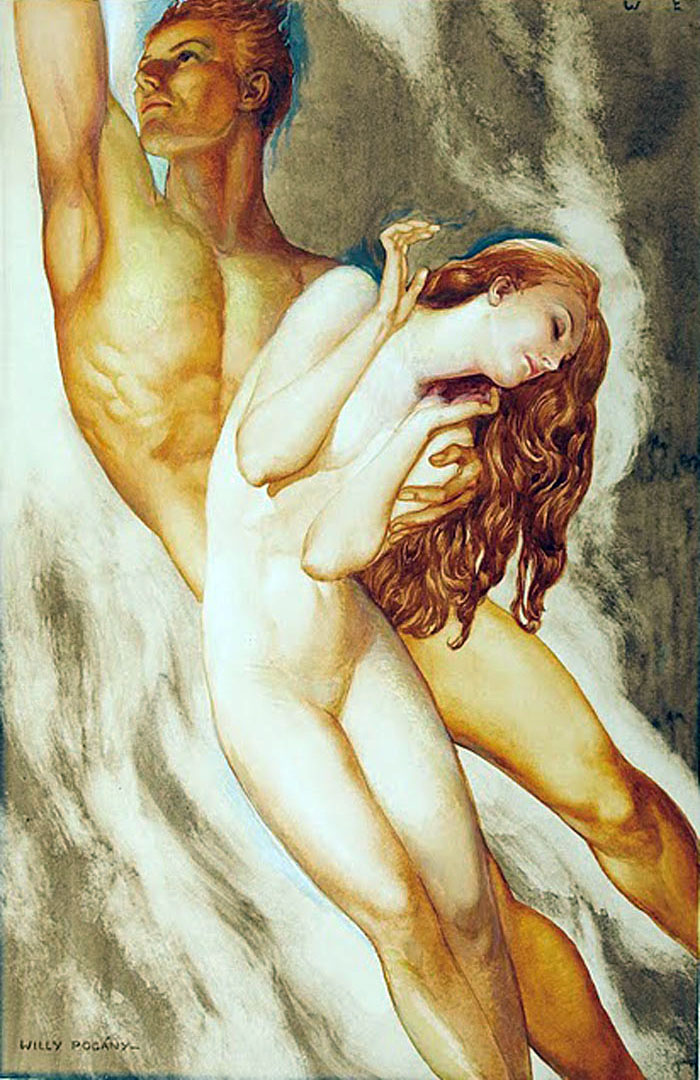
Illustration by Willy Pogany (Hungary, 1882-1955)

There is also the ——, the secret wind of the desert, whose name was erased by a king after his son died within it. And the nafhat — a blast out of Arabia. The mezzar-ifoullousen — a violent and cold southwesterly known to Berbers as ‘that which plucks the fowls.’ The beshabar, a black and dry northeasterly out of the Caucasus, ‘black wind.’ The samiel from Turkey, ‘poison and wind,’ used often in battle. As well as the other ‘poison winds,’ the simoom, of North Africa, and the solano, whose dust plucks off rare petals, causing giddiness.

Other, private winds.

Travelling along the ground like a flood. Blasting off paint, throwing down telephone poles, transporting stones and statue heads. The harmattan blows across the Sahara filled with red dust, dust as fire, as flour, entering and coagulating in the locks of rifles. Mariners called this red wind the ‘sea of darkness.’ Red sand fogs out of the Sahara were deposited as far north as Cornwall and Devon, producing showers of mud so great this was also mistaken for blood. ‘Blood rains were widely reported in Portugal and Spain in 1901.’

There are always millions of tons of dust in the air, just as there are millions of cubes of air in the earth and more living flesh in the soil (worms, beetles, underground creatures) than there is grazing and existing on it. Herodotus records the death of various armies engulfed in the simoom who were never seen again. One nation was ‘so enraged by this evil wind that they declared war on it and marched out in full battle array, only to be rapidly and completely interred.

— Michael Ondaatje, from The English Patient.

elena filatova – the serpent’s wall

Elena Filatova has created this intriguing site about the defensive walls around Kiev in the Ukraine. They were built before the Mongol invasion in the 12th Century and a huge resistance was mounted in WWII against the Germans there. It’s a fascinating read, despite her not-so-good English.

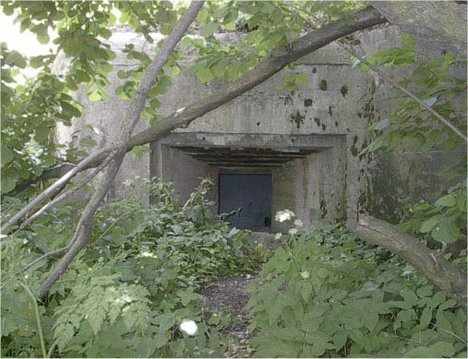
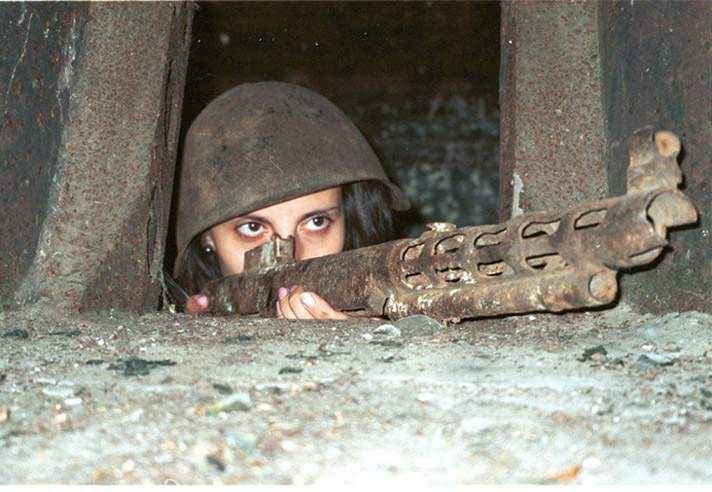
Elena and a bunch of friends spend loads of time digging for relics around Kiev. They take bikes and metal detectors and beers and camp out and play guitar at night, after digging until they drop in the daylight. They’re addicted to the thrill of unearthing old arrowheads and earrings and coins that go back thousands of years, or machine guns or helmets or grenades from massive, half-flooded concrete bunkers from the Second World War.

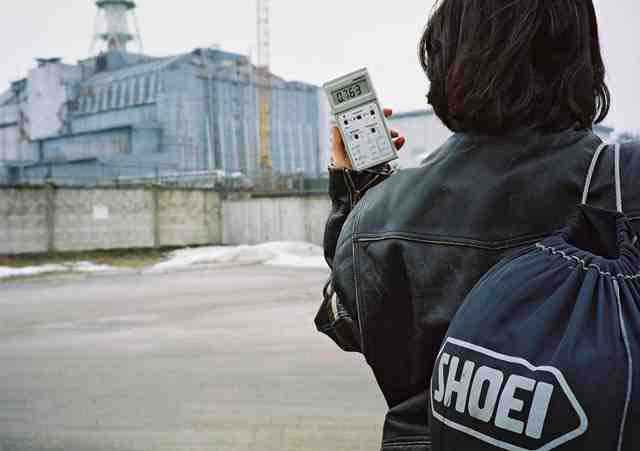
Elena, whose father was a nuclear physicist, also (apparently) rode through the Chernobyl ‘dead’ site on a fuckoff big motorbike, documenting the destruction that was left behind, including how the ‘liquidators’ were sent in to seal the site and how many died later as a result of massive exposure to radiation. It’s all on kidofspeed.com. There has been a lot of speculation on the Net that Elena didn’t actually ride through the Chernobyl zone on a bike. Some writers on sites like Wikipedia suspect her story is a hoax. But even if she did go as part of a tour, in a car, her photos are nevertheless real, and so are the stories they tell, for instance, of people who refused to leave, who have mostly since died… “I would rather die at home from radiation, than die in an unfamiliar place of home-sickness,” as one old man put it… Stories of an area of the earth that will be polluted for the next 48 000 years…

Elena has also documented experiences of Russian prisoners – you can find these on Echoes of Trapped Voices – with titles like “Shoveling diamonds up the arse of one’s own destiny”. If you do enough trawling on the Net, you’ll find she’s written about a host of topics, from the nuclear disaster in Japan to the London bombings. She is sure one fascinating, free, unusual hell of a woman.

wild life narrator

The natural born cheater is a deadly animal. Research suggests that a cheater can comfortably live up to nine lives simultaneously. That’s why it moves in for the kill so fast. There is very little at stake. Its young must fend for themselves from an early age. Just look at it go! The finesse, the merciless focus, the fondness for black eyeliner. But the cheater has little stamina. It tires quickly of the chase, seeking new quarry rather than putting in effort beyond a certain point… Success! Yet what a bloody mess afterwards as it lies licking its chops… Replete… for tonight.

madrugada

What makes you sing so sweetly in the dark, White-eyes, hours before dawn? I want to know. Is it your sureness of the imminent arrival of the light? Or is it to wake the sun, in case it’s forgotten its appointment with the day? I want to know, because right now things are cold and dark here, and your song is puncturing the silence with a conviction I do not share.

one morning by jamie heckert, 2006

One morning, not that long ago, I answered the door in my dressing gown
to the sight of a man from the energy company. He came to ask me why I had
chosen to switch suppliers. As I explained that I preferred one with a better
environmental policy, I slowly realised that not only did this guy have gorgeous
eyes, he was watching me closely. I went on to say, performing a bit for this
beautiful man, “Of course all corporations and really capitalism in general is bad
for the environment”. He agreed, his eyes glowing with excitement. But, what
could he do? He had a mortgage to pay. I’m not quite sure why, maybe I was
scared of the intensity of my attraction, but suddenly I found myself channeling
some broken record of anarchist propaganda and said, “We need resistance on
the inside, too.” That was it. His beautiful eyes looked away and the connection
was lost.
I feel grief remembering that morning; I would have liked to have listened
with empathy to both his desire for change and for security, to maintained that
beautiful sense of connection. Instead, I tried to recruit him. When I replay the
incident in my mind, it has a different ending. I ask him, “What would you like
to do?”

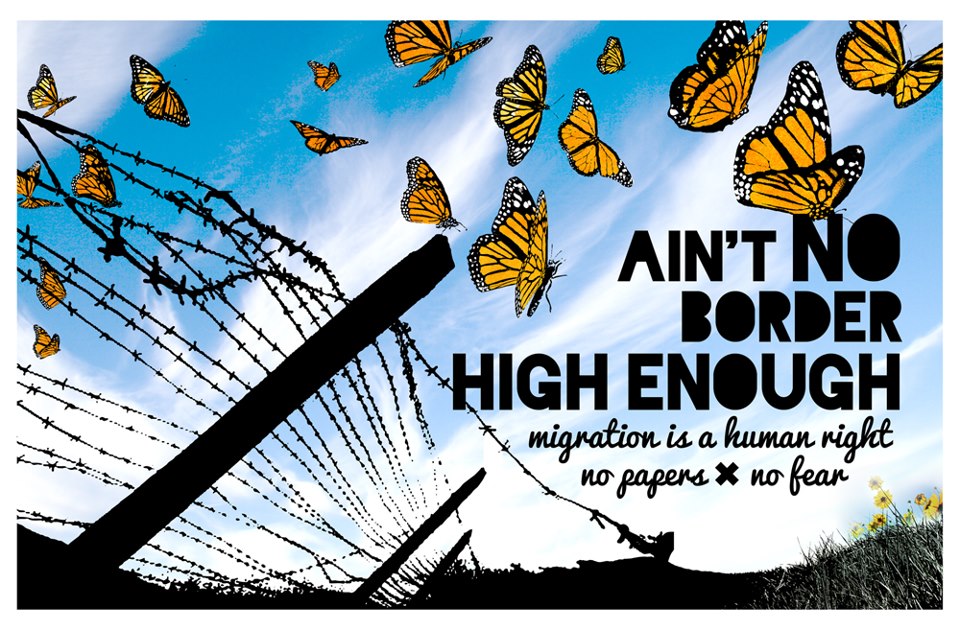
global anti-fracking day is tomorrow, 22 september – get involved!

Andreas Spath, for News 24:

“On the same day that the South African government decided to lift the moratorium on fracking, the European Union’s environment directorate released a comprehensive 300-page report that identified the controversial method for mining natural gas in underground units of shale rock as a “high risk” to human health and the environment because of its potential to contaminate and deplete water resources, cause a loss of biodiversity, degrade air and land quality and trigger earthquakes.”

Earlier this month, the South African Cabinet endorsed the lifting of a moratorium on prospecting for shale gas, imposed in February last year in line with a report by government’s multi-disciplinary task team, which recommends only “normal” geological exploration, excluding fracking, be allowed, until the extent of the gas reserves are established.

Read this article from SACSIS if you don’t know the history of the fracking debate in South Africa, and this article from Science News if you need more scientific information on how fracking (shale gas extraction) affects the environment and people in its vicinity – which in South Africa’s case, would be the delicate, already arid Karoo.

Send a message to our government on Global Anti-Fracking day, September 22nd 2012, by joining other South Africans who are opposed to fracking, when they CALL FOR A PERMANENT BAN ON FRACKING in South Africa.

In Cape Town, we will meet in front of the gates of Parliament, corner of Plein Street and Roeland Street at 10h30. Bring your anti-fracking banners and posters! The event is open to everyone and supported by several organisations, including Earthlife Africa, SAFCEI, Southern Cape Land Committee, Environmental Monitoring Group, Coalition for Environmental Justice, Treasure the Karoo Action Group and others.

The speakers at the protest will be Muna Lakhani (ELA), Barry Wuganale (Ogoni Solidarity Forum), Thembeka Majali (Million Climate Jobs), Bishop Geoff Davies (SAFCEI), Mpumelelo Mhlalisi (CEJ), Priscilla de Wet (First Indigenous Women’s Movement) and Jonathan Deal (TKAG). Don’t miss it!

In solidarity with our protest, the SCLC are encouraging local Karoo communities (farm workers and dwellers and small-scale farmers in the Chris Hani, Cacadu and Central Karoo District Municipalities) to wear the Black Thursday Land Campaign T-shirts on the day. They will be distributing anti-fracking brochures and raise debate in the areas where they live.

In Prins Albert the trees will be wrapped in black fabric, with black wreaths on shop windows. Please contact Lisa Smith for more information and to see how you can get involved: lisass@intekom.co.za.

In Joburg, Earthlife Africa JHB will host a discussion on ‘Fracking and the implications for water in South Africa’ at the Greenhouse Project 14:00 – 16:00. Contact Judith@earthlife.co.za for more information.

Find the Global Frackdown activist toolkit HERE.


tiqqun – notes on the local (2001)

Everything which today constitutes an acceptable landscape for us is the result of bloody violences and conflicts of rare brutality.
One can thus summarize that the demokratic government wants to make us forget. Forget that the suburbs have devoured the countryside, that the factory has devoured the suburbs, that the metropolis—tentacled, deafening and without repose—has devoured everything.
This observation doesn’t imply regret, this observation implies: seize everything. In the past, in the present.
The controlled territory where our life passes, between the supermarket and the digital lock on the lobby door, between the traffic signals and the pedestrian pathways, forms us. We are moreover inhabited by the space in which we live. Especially when everything, or nearly everything, from now on, functions there like a subliminal message. We don’t do certain things at certain places because we do not do those things.
Street furniture for example has almost no utility—how often, to our surprise, do we wonder who exactly could fill the benches of a neo-square without succumbing to more violent despair?—it has precisely one meaning and one function, and these are dissuasive. Their mission/charter “You are only home when at home, or where you pay, or where you are monitored.”

The world is becoming global, but it is shrinking.
The physical landscape we traverse each day with great speed (by car, using public transportation, on foot, in a rush) has effectively an unreal character because while there, no one lives as anything at all, nor could anyone possibly live as anything there. It’s a type of micro-desert where one is like an exile, between one private property and another, between one obligation and another.
The virtual landscape seems much more welcoming to us. The liquid crstal screen of the computer, internet navigation, the tele-visual or the play-station universes—these are infinitely more familiar to us than the streets of our neighborhood, populated at night by the moonlight of the streetlamps and the metal gates of closed stores.
It is not the global which opposes the local, it is the virtual.

The global is so little opposed to the local that actually the global creates it. The global only designates a certain distribution of differences from an homogenizing norm. Folklore is the product of cosmopolitanism. If we didn’t know that the local was local, it would be for us a little globality. The local is revealed as the global makes itself possible, and necessary. Go to work, do your shopping, travel far from home: this is what constitutes the local, which otherwise would more modestly be the place where we live.

All the same, we live strictly speaking nowhere. Our existence is simply divided into layers of schedules and topologies, in slices of tailored life.

But this isn’t all. They presently would like to make us live in the virtual, definitively deported. There, the life they wish for us would recompose into a curious unity of non-time and non-place. The virtual, says one Internet publicity, is ” the place where you do all that you cannot do in reality.” But when “everything is permitted,” it is the mechanism of the transfer from the power to act which is under surveillance. In other words” the virtual is the place where possibilities never become real, but remain indefinitely in the virtual state. Here, prevention has won over intervention: if everything is possible in the virtual it’s because the mechanism ensures that everything remains unchanged in our real life

Already, we tele-work and tele-consume. In tele-life, we will no longer be afflicted by the feelings of suffering from avoiding the possibilities which still dwell in public spaces, at each glance crossed and so soon abandoned. The unease, the embarrassing immersion among our contemporaries, for the better part unknown, in the streets or elsewhere, will be abolished. The local, expelled from the global, will itself be projected into the virtual in order to make us believe definitively that only the global exists. Draping this uniformity of multi-ethnicity and multi-culturalism will be necessary, to ensure the pill is swallowed.

As we wait for the tele-life, we post the hypothesis that our bodies in space have a political meaning and that the dominant ones maneuver permanently to hide this fact.
Shouting a slogan at home is not the same as shouting it in the stairwell or in the street. Doing it alone is not the same as doing it wit many others, and so on.

Space is political and space is alive, because space is populated, populated with our bodies which transform it by the simple fact that it contains them. And this is why it is monitored, and this is why it is closed.
Whoever imagines it as a void soon to fill up with objects, bodies, and things has a false idea of space. On the contrary, this idea of space is obtained by mentally removing from a tangible space of all the objects, of all the bodies, of all the things which dwell in it. The powers that be have now materialized this idea in their plazas, their highways, their architecture. But its threatened without pause by its birth defect. Should something take place inside the space it controls, should—thanks to some event—one end of the this space become a place, making an unexpected crease, this is what the Global Order wants to prevent. And against this, it has invented “the local,” in the sense of continuous adjustment of all input, capture, and management devices.

That is why I say that the local is political; because it is the place of present confrontation.

From Tiqqun 2.

friedrich hölderlin – out for a walk

The margins of the forest are beautiful,
as if painted onto the green slopes.
I walk around, and sweet peace
rewards me for the thorns
in my heart, when the mind has grown
dark, for right from the start
art and thinking have cost it pain.
There are lovely pictures in the valley,
for example the gardens and trees,
and the narrow footbridge, and the brook,
hardly visible. How beautifully
the landscape shines, cheerfully distant,
like a splendid picture, where I come
to visit when the weather is mild.
A kindly divinity leads us on at first
with blue, then prepares clouds,
shaped like gray domes, with
searing lightning and rolling thunder,
then comes the loveliness of the fields,
and beauty wells forth from
the source of the primal image.

the clock struck

My earliest childhood memory is of my second birthday.

It’s a sunny winter afternoon. The dry grass smells stubbly and brown. The pelargoniums smell interesting too. I know what they are called because Nana always shouts at me when I pick the glowing red flowers. The slasto paving is warm and there are stripy lizards that scuttle away.

Mommy has made me a Hickory Dickory Dock cake, and set it on the outside table (which is white moulded asbestos/concrete in the shape of a faux slice through a tree trunk…I remember this well because it was around for several years). Standing next to the table, I am only able to see the side of the cake. Pink and white marshmallows encircle it, magically turned into mice with little cardboard ears and liquorice bootlace tails, and when I am picked up to blow out the candles, the clock’s face on top of the cake is made from liquorice too, and glacé cherries. The liquorice doesn’t taste very nice. I like the cherries.

Yes please, thank you very much, Nana. I say it after her because if I don’t she won’t give me what I want. Don’t put your feet on the table. No. That’s very naughty. If you do it again Nana will smack you. The threat makes me dissolve into tears. The frustration! I’m learning about manners. Manners are annoying.

I feel very big. I have a brand new baby sister, a month and a bit old. She is in a navy blue vinyl pram nearby. If I pull myself up on the side of it, I can juuust see over into her tiny, swaddled world.

Pelargoniums. Photo by Rosemary Lombard