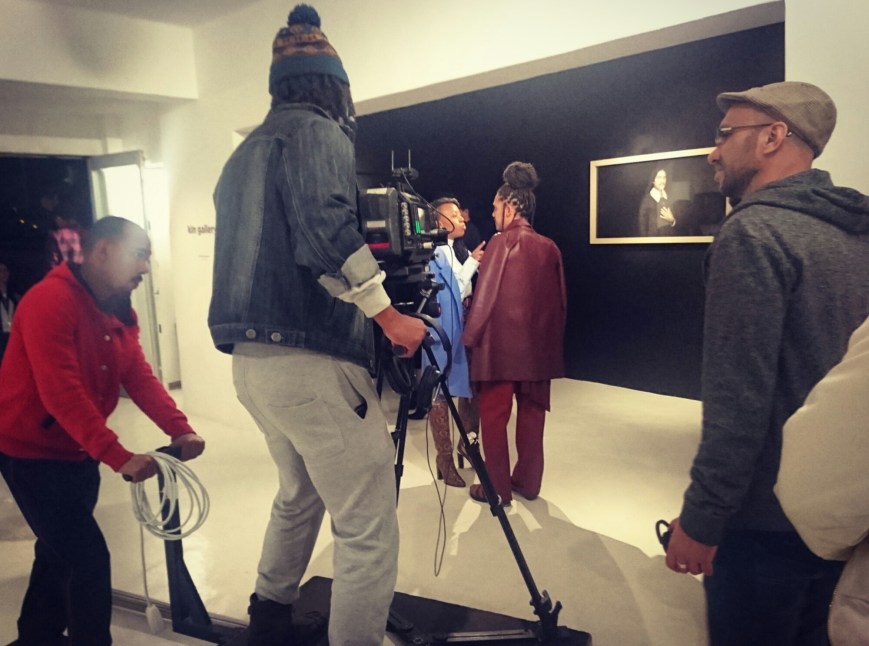
On set at Muti Films tonight.
On set at Muti Films tonight.
Produced By: Monkey Frog Media
Music By: The Real Tuesday Weld
Published by: Six Degrees Records & Crammed Disks
Alex De Campi’s stop motion fairytale epic for “Tear Us Apart” from the album The Last Werewolf .
Jacques Derrida appearing as himself in Ken McMullen’s Ghost Dance, interviewed by Pascale Ogier in 1983. He’s talking about #PokémonGo from 3:40 ;).
Akira Rabelais, one of my best Myspace discoveries – remember that strange place? I love this video, too, which was not available back then – one simply couldn’t stream hour-long films online. Get the album Eisoptrophobia (which is a term for the fear of one’s own image in reflection) HERE.
Two Solutions for One Problem (Persian: دو راه حل برای يک مسئله , Dow Rahehal Baraye yek Massaleh) is an Iranian short film from 1975, directed by Abbas Kiarostami, who died yesterday.
During breaktime, Dara and Nader have an altercation about a torn exercise book that the former has given back to the latter. There are two possible outcomes, which the film shows one after the other.
A short film about Michiel Kruger, who despite being blind, has set and broken various sports records the last 56 years. At the age of 70 he still holds 2 world records and runs a piano tuning business in Bloemfontein.
Director – Elmi Badenhorst
Camera and Edit – Jaco Bouwer
Music Composition – Braam Du Toit
Script and concept – Annelize Frost and Elmi Badenhorst
Ruan Scott – Subtitles
Originally a silent film, this soundtrack was added by Nikos Kokolakis in 2015 – turn the sound off if you prefer.
About her fourth complete film, Ritual in Transfigured Time (1946), Maya Deren writes: “A ritual is an action that seeks the realisation of its purpose through the exercise of form… In this sense ritual is art; and even historically, all art derives from ritual. In ritual, the form is the meaning. More specifically, the quality of movement is not merely a decorative factor; it is the meaning itself of the movement. In this sense, this film is dance […] It’s an inversion towards life, the passage from sterile winter into fertile spring; mortality into immortality; the child-son into the man-father; or, as in this film, the widow into the bride”.
– Maya Deren: Chamber Films, program notes for a presentation, 1960
Directed by Naomi Yang of Galaxie 500 and Damon & Naomi, this video feels haunted by Maya Deren.
Fine long-form video for this song, that I meant to post as part of my little early ’90s radio pop tape time capsule the other day. I love going to Youtube to look for a song I only ever knew as audio back in the day and discovering that it has a great music video that never made it to South African television.
A scene from the movie Herostratus (1967), directed by experimental filmmaker Don Levy.
The plot of Herostratus is deceptively simple: A young poet, Max (Michael Gothard), is sick of being poor, unemployed and feeling inadequate and unnoticed and trapped by society. After a few setbacks early in the film, particularly when it comes to paying the rent to a landlady he can no longer avoid, Max decides to commit suicide by jumping off a tall building. But Max decides to make a point of his death instead, and enlists the help of Farson (Peter Stephens), a successful public relations ad man, who helps him turn his suicide, conceived as a sacrificial act of protest against modern society, into a media circus.
Farson does not actually believe Max will go through with the suicide, and decides to let Max spend time at his studio, and its there that Max falls in love with Farson’s assistant Clio (Gabriella Licudi), with whom he shares his first sexual experience. Farson encourages their coupling, believing it’ll end in tears and the young man’s mental torment will be something he can further exploit, but then everyone finds out just how bad of a poet Max really is, and they encourage him to kill himself, for real, and Max realizes that his reactionary gesture is being seen by everyone as simply a cry for attention.
Depressed by this last futile attempt to make himself understood, Max goes up to to the roof but his suicidal jump is stopped by a man who happens to be working on the roof that day — but during their struggle, the worker falls to his death, and Max escapes into the woods.
Herostratus, it should be noted, is titled for the Greek poet who sought to immortalize his own name by setting fire to the Temple of Artemis in Ephesus, in the fourth century B.C. His name was later stricken from all records until it was discovered that Alexander the Great was born the night Herostratus committed his fatal act.
This was Don Levy’s first feature film after having attending on a scholarship at Cambridge University, where he began a PhD study in Theoretical Chemical Physics. At some point Levy withdrew from his science courses and began focusing on creative endeavors, including painting and playing jazz and filmmaking. He moved over to the London-based Slade School of Fine Art, where he made a series of short science documentaries, including his most successful film, 1962’s Time Is, which explored the theories and conception of time.
James Quinn, then director of the British Film Institute, had worked with Levy onTime Is, helping him secure a grant to finish the film. He then helped the director obtain the funds — from the BFI Experimental Film Fund — to make another short film, but Levy soon found his ambitions were exceeding the budget as it expanded into a feature-length production, with additional funding coming from the BBC. That film was Herostratus, and it took five years to complete, but it was largely met with indifference, and was not the spectacular success that Levy (and Quinn) had hoped for. After a handful of initial screenings, including its premiere at London’s Institute of Contemporary Artst, in April 1968, Herostratus was shelved and virtually forgotten.
Levy’s artistic filmmaking style — juxtaposing images of postwar urban decay and burlesque stripteases with carcasses hanging in an abattoir — met largely with indifference from the public and from most film critics, even though later critics have pointed out that he did have some influence on his contemporaries, including Richard Lester and Stanley Kubrick, especially on the latter’s 1971 film Clockwork Orange.
The few surviving prints of Herostratus show it to be a flawed yet highly perceptive dissection of 1960s idealism, seduced by the Mephistophelian deception of market forces and the empty promise of mass media celebrity.
Helen Mirren’s singular contribution (about 54 minutes into the film) as “Advert Woman” provides one of the few dark moments of humor in an otherwise very dark film. In the scene, she is wearing rubber gloves for the filming of a commercial which is supposed to be a statement about consumerism, but we know what the real product is: the camera lingers lasciviously (as it will so often in her later career) over her cleavage. Once she’s delivered her lines, Gothard scoops her up and carries her off set. The scene is barely more than three minutes long.
He is vile. She handles him with brilliant wit and poise.
Grimes performing “Be a Body” at Good Records in Dallas, TX. Shot with a Sony HX9v, with audio from a Zoom H1.
This track comes from her brilliant 2012 album, Ekstasis, which you can listen to HERE. Video directed by Jose Wolff.
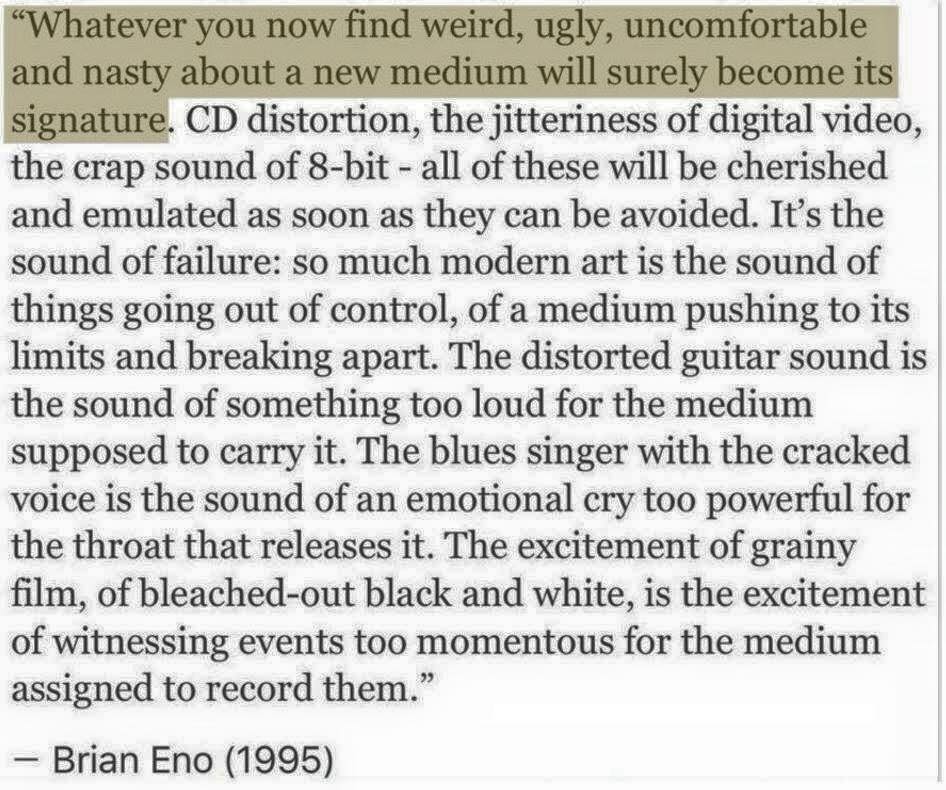
“The first thing that came to mind was an image that gradually deteriorates with visual noise, echoing the sonic noise present in the song. We go from lightness to darkness, away from a structured, fabricated place and into raw territory.” – Jose Wolff – August 2012
Fire in My Belly (1987): David Wojnarowicz
Music: Diamanda Galas
Made by David Wojnarowicz for Rosa von Praunheim’s Silence = Death (1990).
A positive diagnosis for HIV in 1987 didn’t leave you with many options. The pharmaceuticals that have extended life spans for many of those now infected were not then available. Hostility and fear were rampant. It was reasonable to assume not only that you had received a death sentence, but that there was no hope on the horizon for those who, inevitably, would follow in your footsteps: an anguished decision to be tested, an excruciating wait for the results, a terrifying trip to the testing centre, and a life-shattering conversation with a grim-faced nurse or social worker.
Some turned to holistic medicine and yoga. Others to activism. Many just returned to their apartments, curled up in the corner, and waited to die.
But some, like David Wojnarowicz, who died in 1992 at the age of 37, used art to keep a grip on the world. He was the quintessential East Village figure, a bit of a loner, a bit crazy, ferociously brilliant and anarchic. He was a self-educated dropout who made art on garbage can lids, who painted inside the West Side piers where men met for anonymous sex, who pressed friends into lookout duty while he covered the walls of New York with graffiti. In 1987, his former lover and best friend, Peter Hujar, died of complications from AIDS, and Wojnarowicz learned that he, too, was infected with HIV.
Wojnarowicz, whose video A Fire in My Belly was removed from an exhibition of gay portraiture at the Smithsonian’s National Portrait Gallery last week after protests from a right-wing Catholic group and members of Congress, was an artist well before AIDS shattered his existence. But AIDS sharpened his anger, condensed his imagery and fueled his writing, which became at least as important as his visual work in the years before he died. In the video that has now been censored from the prominent and critically lauded exhibition Hide/Seek: Difference and Desire in American Portraiture, Wojnarowicz perfectly captured a raw Gothic, rage-filled sensibility that defined a style of outsider art that was moving into the mainstream in the late 1980s.
It may feel excessive now, but like other classic examples of excessive art – Allen Ginsberg’s 1955 poem, Howl, Krzyzstof Penderecki’s 1960 symphonic work, Threnody for the Victims of Hiroshima, or Pier Paolo Pasolini’s 1975 film, Salo – it is an invaluable emotional snapshot. Not simply a cry of anguish or protest, Wojnarowicz’s work captures the contradiction, speed and phantasmagoria of a time when it was reasonable to assume that all the political and social progress gay people had achieved in the 1960s and ’70s was being revoked – against the surreal, Reagan-era backdrop of Morning in America, and a feel-good surge of American nostalgia and triumphalism.
Read more of this 2010 article by Philip Kennicott, from the Washington Post, HERE.
Published on 4 May 2016
Having followed the #RUReferenceList and #RUInterdict, Activate has put together a feature-length documentary about the silencing of students and staff within the space that is currently known as Rhodes University.
DISRUPT stands to continue the conversation surrounding this mistreatment of survivors and the ways in which the university management and police have failed us. It is a direct response to the use of legalese – in the form of an interdict against involved parties – to try and force the university back into “business as usual”.
Featuring interviews with members of the student and staff body, footage from the two weeks of protest and the resulting use of police force on students and workers, DISRUPT serves as both a chronological documenting of the events of the last three weeks; but also uses the window of the #RUReferenceList protests to shine a light on the institutional issue that is rape culture.
This is a post from a few years ago. Julia Clark reminded me of it today.
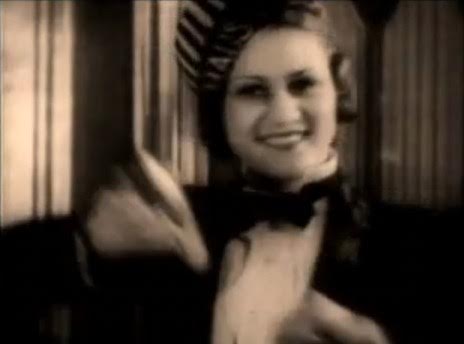
A still from here, at 0:27:
it is so startling to see yourself somewhere you are not
so slippy
in my sleep
i am this dancing girl
in the weimar nightclub
and i buzz with black holes
between the nets of swinging cliches
dietrich’s smile
kurt weill refrains
bauhaus lines
they’re all unravelled, sucked away
and i’m left with only questions
to clothe her dancing bones
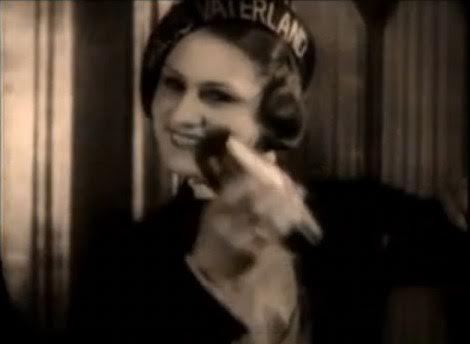
so who was she?
and what was her name?
what was her favourite food?
colour?
how did she move?
was she a good dancer?
where did she work?
was she in love?
was she lonely?
did she have a brother in the army? a lover?
as she donned that “vaterland” hat, did her chest swell with pride
or was it just the dress code?
where was she in 5 years’ time?
did she have any children? grandchildren? where are they now?
do they also look like me?
more and more questions
and all from just a 1-and-a-half second cutaway to anonymous archive in
a lousy louise brooks documentary
i feel dizzy
eisenstein was right
montage is dangerous.
Film: La Rose de Fer (Rose of Iron, 1973) – Director: Jean Rollin – with Françoise Pascal
Music: “La Fête Triste” by Trisomie 21 (from the album Passions Divisées, released on Stechak,1984)
Remix by David from Lille
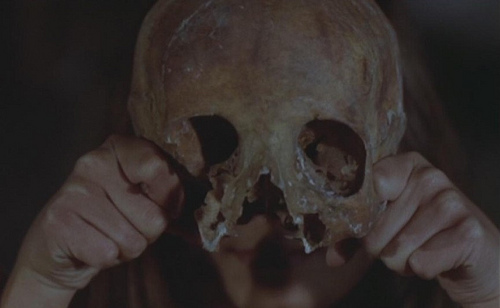
Directed by Jean Rollin
Starring Marie-Pierre Castel, Mireille Dargent, Philippe Gasté, Dominique, Louise Dhour
Music by Pierre Raph
Watch the full film HERE (French, with Spanish subtitles, but there’s very little dialogue).
Scene from Georges Lautner’s film Le Pacha, featuring Serge Gainsbourg performing “Requiem Pour un Con“.
Compelling stuff.
Jean Cocteau began his career as a poet, publishing his first collection, Aladdin’s Lamp, at the age of 19. By 1963, at the age of 73, he had lived one of the richest artistic lives imaginable, transforming every genre he touched. Deciding to leave one last artefact to posterity, Cocteau sat down and recorded the film above, a message to the year 2000, intending it as a time capsule only to be opened in that year (though it was discovered, and viewed a few years earlier). Biographer James S. Williams describes the documentary testament as “Cocteau’s final gift to his fellow human beings.”
Portraying himself as “a living anachronism” in a “phantom-like state,” Cocteau, seated before his own artwork, quotes St. Augustine, makes parables of events in his life, and addresses, primarily, the youth of the future. The uses and misuses of technology comprise a central theme of his discourse: “I certainly hope that you have not become robots,” Cocteau says, “but on the contrary that you have become very humanized: that’s my hope.” The people of his time, he claims, “remain apprentice robots.”
Among Cocteau’s concerns is the dominance of an “architectural Esperanto, which remains our time’s great mistake.” By this phrase he means that “the same house is being built everywhere and no attention is paid to climate, atmospherical conditions or landscape.” Whether we take this as a literal statement or a metaphor for social engineering, or both, Cocteau sees the condition as one in which these monotonous repeating houses are “prisons which lock you up or barracks which fence you in.” The modern condition, as he frames it, is one “straddling contradictions” between humanity and machinery. Nonetheless, he is impressed with scientific advancement, a realm of “men who do extraordinary things.”
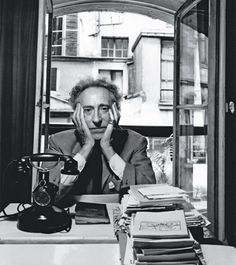 And yet, “the real man of genius,” for Cocteau, is the poet, and he hopes for us that the genius of poetry “hasn’t become something like a shameful and contagious sickness against which you wish to be immunized.” He has very much more of interest to communicate, about his own time, and his hopes for ours. Cocteau recorded this transmission from the past in August of 1963. On October 11 of that same year, he died of a heart attack, supposedly shocked to death by news of his friend Edith Piaf’s death that same day in the same manner.
His final film, and final communication to a public yet to be born, accords with one of the great themes of his life’s work—“the tug of war between the old and the new and the paradoxical disparities that surface because of that tension.” Should we attend to his messages to our time, we may find that he anticipated many of our 21st century dilemmas between technology and humanity, and between history and myth. It’s interesting to imagine how we might describe our own age to a later generation, and, like Cocteau, what we might hope for them.
Via Open Culture.
2006年8月4日発売の二階堂和美 (Kazumi Nikaido)『二階堂和美のアルバム』(PCD-26016)からLovers RockのPVです
2006年8月4日発売の二階堂和美 (Kazumi Nikaido)『二階堂和美のアルバム』(PCD-26016)から今日を問う Part2のPVです。
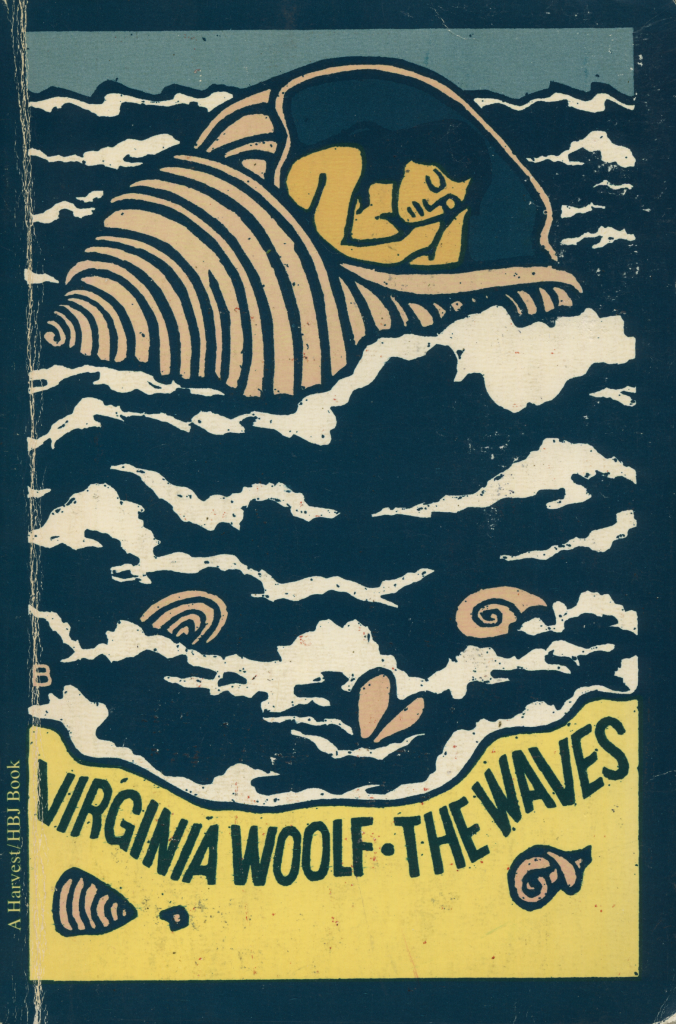 The roar of the traffic, the passage of undifferentiated faces, this way and that way, drugs me into dreams; rubs the features from faces. People might walk through me.
And what is this moment of time, this particular day in which I have found myself caught? The growl of traffic might be any uproar – forest trees or the roar of wild beasts. Time has whizzed back an inch or two on its reel; our short progress has been cancelled.
I think also that our bodies are in truth naked. We are only lightly covered with buttoned cloth; and beneath these pavements are shells, bones and silence.
— Virginia Woolf, from The Waves (1931).
Al Bowlly sings “The Very Thought of You” (1934). Jazz singer Al Bowlly sings his popular hit “The Very Thought of You” in the Pathe Studios, taken from Lew Stone’s famous ‘Monseigneur Band’. Bowlly was South African (although born in Mozambique) yet he became a great star in both the UK and America during the 1930s.
 fleurmach