Brand new video published on Friday.
Brand new video published on Friday.
Hans Richter’s 1927 short Dadaist masterpiece: Ghosts Before Breakfast, re-scored.
“This film initially had a soundtrack which was lost when the original print was destroyed by the Nazis as ‘degenerate art’.
This music – with Jacques Van Rhijn on clarinet, Don Brosnan on bass, Jed Woodhouse on drums, Clive Painter on guitar – was recorded at Clive’s prior to the sessions for our re-score of Richter’s full length magnum opus: Dreams That Money Can Buy for the British Film Institute in 2005.
(Turn off the sound if you want to hear it as Richter didn’t really intend it.)”
This coming Tuesday, find out more about the extraordinary archive of photographs and live recordings made by Ian Bruce Huntley in the 1960s and early 1970s. In 2013 I was involved in putting this archive of recordings online, which you can explore HERE.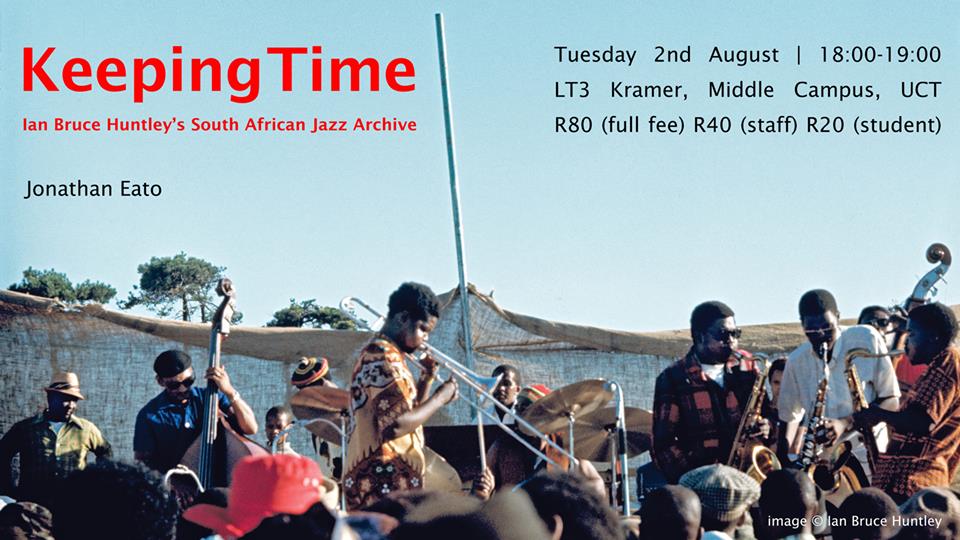
Keeping Time: Ian Bruce Huntley’s South African jazz archive
by Jonathan Eato
Ian Bruce Huntley is not a name that you’ll find readily in the burgeoning annals of South African jazz. Unless, that is, you talk to the dwindling generation of jazz musicians who were working in South Africa in the mid-1960s. Tete Mbambisa remembers Huntley as the man who ‘recorded our gold’, and this Huntley did through a series of remarkable photographic images and live audio recordings. Having privately preserved these records for over forty years, throughout the state repression of grand-apartheid and into the democratic era, they have recently been made available for the first time.
This talk will consider how, in the face of increasing political oppression, Huntley’s archive documented a community of vernacular intellectuals exploring and developing ideas in counterpoint to much commercially available South African jazz post-‘Pondo Blues’.
For more info:
email: ems@uct.ac.za
tel: 021 650 2888
Facebook event HERE.
Lost in the Stars is a musical with score by Kurt Weill, based on the novel Cry, the Beloved Country (1948) by Alan Paton. The musical premiered on Broadway in 1949; it was the composer’s last work for the stage before he died the following year.
EDIT: The live performance I originally posted was removed from YouTube. Here is another version.
Off The Last Werewolf, (2011, Six Degrees Records / Crammed Discs).
Soundtrack/companion album to the novel The Last Werewolf by Glen Duncan.
Alex De Campi’s stop motion fairytale epic for “Tear Us Apart” from the album The Last Werewolf .
From her 1969 album of interpretations of Baudelaire’s poetry, Flowers of Evil.
Melancholy AF. Perfect.
Performing here this Thursday.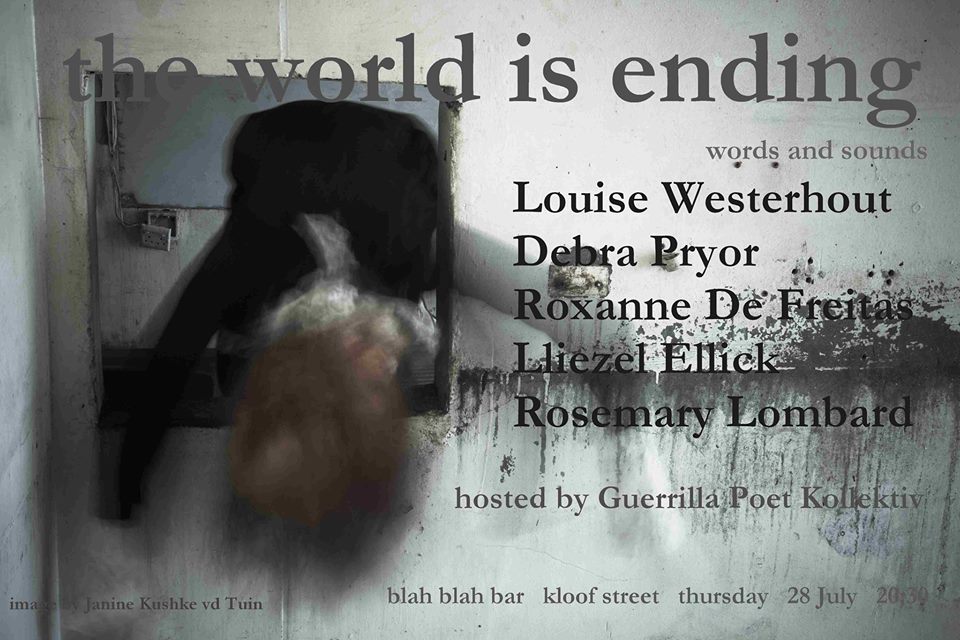
Find them on Facebook.
A dreaded sunny day
So I meet you at the cemetry gates
Keats and Yeats are on your side
A dreaded sunny day
So I meet you at the cemetry gates
Keats and Yeats are on your side
While Wilde is on mine
So we go inside and we gravely read the stones
All those people, all those lives
Where are they now?
With loves, and hates
And passions just like mine
They were born
And then they lived
And then they died
It seems so unfair
I want to cry
You say: “‘Ere thrice the sun done salutation to the dawn”
And you claim these words as your own
But I’ve read well, and I’ve heard them said
A hundred times (maybe less, maybe more)
If you must write prose/poems
The words you use should be your own
Don’t plagiarise or take “on loan”
‘Cause there’s always someone, somewhere
With a big nose, who knows
And who trips you up and laughs
When you fall
Who’ll trip you up and laugh
When you fall
You say: “‘Ere long done do does did”
Words which could only be your own
And then produce the text
From whence t’was ripped
(Some dizzy whore, 1804)
A dreaded sunny day
So let’s go where we’re happy
And I’ll meet you at the cemetry gates
Oh, Keats and Yeats are on your side
A dreaded sunny day
So let’s go where we’re wanted
And I’ll meet you at the cemetry gates
Keats and Yeats are on your side
But you lose
‘Cause weird lover Wilde is on mine
From Kismet Acoustic (Phantom Sound & Vision, 2008).
❤
A new film:
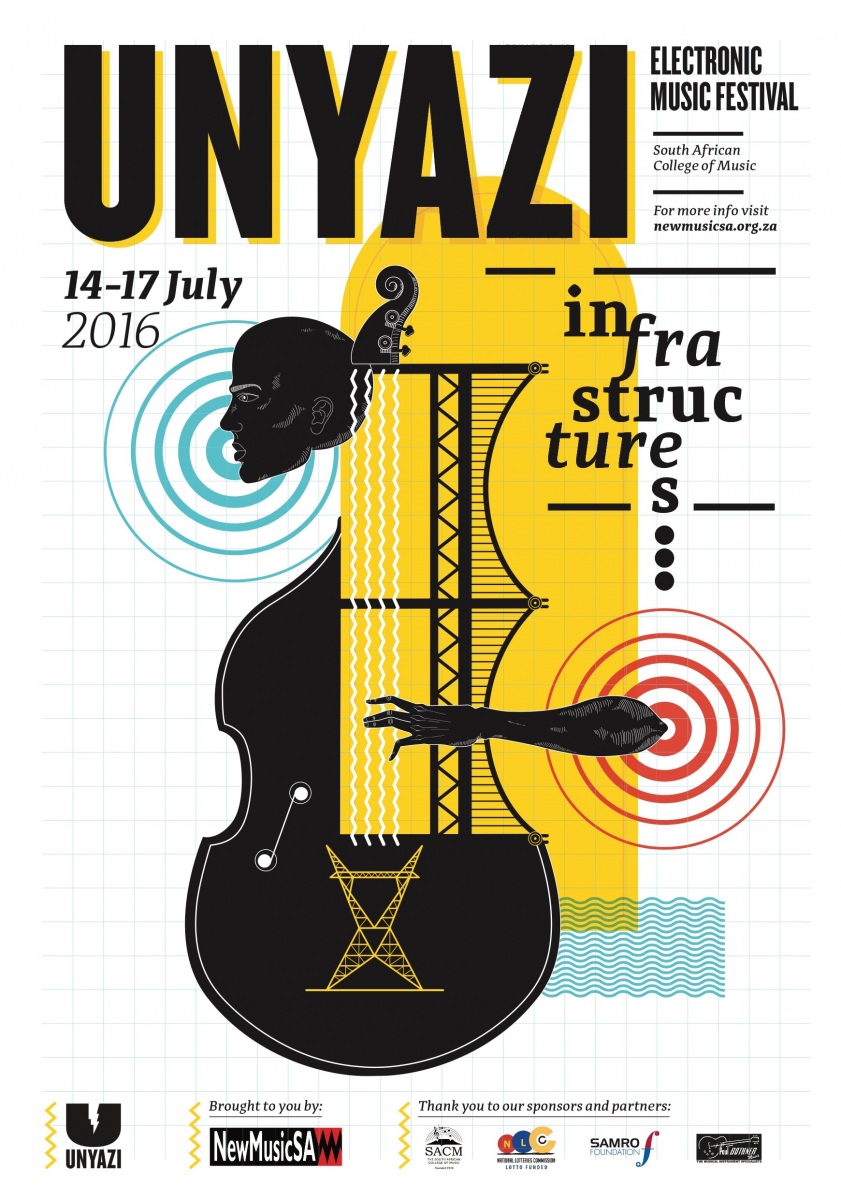
From 14-17 July, NewMusicSA presents the 2016 Unyazi Electronic Music Festival at the South African College of Music, University of Cape Town. This year’s festival is themed around the idea of ‘infrastructures’ as the various mechanisms of access and mobility we find in the cities around us, and the various ways we use, subvert, and transform these. These mechanisms range from roads and highways to water works and the electricity grid. The theme also speaks to the growing infrastructures of electronic music in South Africa like studios, albums, networks, and archives. In the end, electronic music is realised through movement and mobility of signals across wires, consoles, mixers, pick-ups, mics, and speakers, each a form of infrastructure.
The festival will present four evening concerts, two lunch time concerts, and three workshops. The programme brings together a diverse cast of composers and performers presenting everything from acousmatic music to mixed-media works to live ensembles mic’d-up and manipulated in weird and wonderful ways. Check out the full programme HERE.
Tickets are priced at R30 for students and pensioners, R50 for anyone else (per concert). Tickets available at the door.
 The Coming Insurrection, a notorious 2007 ultra-left polemical tract written by a collective of French anti-state communists writing under the group-moniker The Invisible Committee, posits a conception of insurrection as the creation of new collective ontologies through acts of radical social rupture. Eschewing the orthodox Marxist line that revolution is something temporally removed from the present, towards which pro-revolutionaries must organize and work, The Invisible Committee’s use of insurrection claims it as an antagonistic challenge to late-capitalism firmly grounded in its own immediacy. Communism is therefore made immediate, and it is willed into being by insurrectionary acts of social rupture.
While much has been written on the debt that The Invisible Committee owes to French strains of ultra-left anti-state communism, Michel Foucault, Gilles Deleuze, Giorgio Agamben, Situationism, and the Italian Autonomia movement of the 1970s, their implicit nod to the sociopolitical themes of music has been largely ignored. By subtly claiming that insurrection spreads by resonance and that such proliferation “takes the shape of a music,” The Invisible Committee allows for the interpretation of its “coming insurrection” as an inherently musical act. Using a historical reading of the shift from tonality to atonality in Western art music, as exemplified by Arnold Schoenberg, Alden Wood’s interpretation of The Coming Insurrection aims at imbuing its explicitly political premises with a more thorough exploration of its implicit musical qualities.
Published in Interdisciplinary Humanities Vol. 30 pp. 57-65, 2013.
You wish your farts were this melodic…
🍒🍒🍒
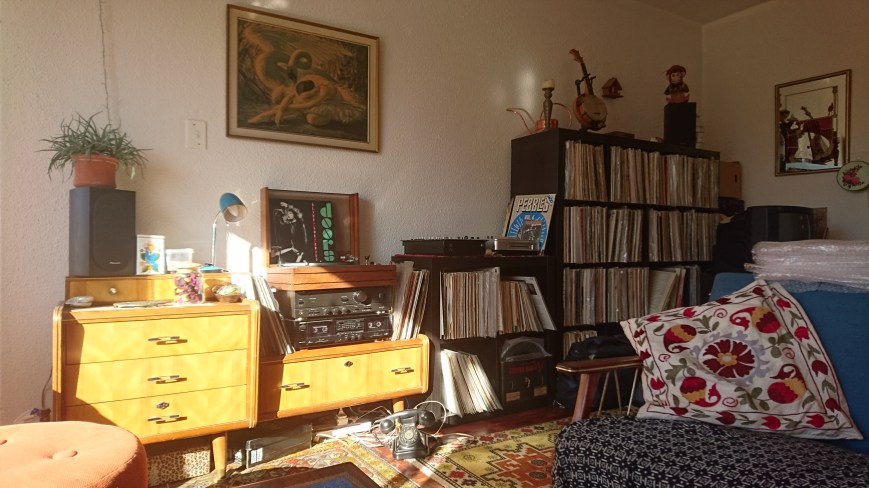
I can recommend this as a great album for dancing around a winter-sun-drenched flat at the end of the world, doing housework.
A compilation of live recordings made in Los Angeles, New York, Detroit, Boston, and Copenhagen, between 1968 and 1970.
“I’ll tell you this…
No eternal reward will forgive us now
For wasting the dawn.
And one morning you awoke in the strange sun,
And opening your door…”
Akira Rabelais, one of my best Myspace discoveries – remember that strange place? I love this video, too, which was not available back then – one simply couldn’t stream hour-long films online. Get the album Eisoptrophobia (which is a term for the fear of one’s own image in reflection) HERE.
“Atmosphere”, produced by Martin Hannett, was originally released in March 1980 on record label Sordide Sentimental as “Licht und Blindheit” (“Light and Blindness”), a France-only limited edition single featuring the track “Dead Souls” as the B-side. Following Ian Curtis’s death two months later, it was re-released as a 12″ single by record label Factory with “She’s Lost Control” as the B-side.
Scientist sourced his material for this album from artists Michael Prophet, Wailing Souls, Johnny Osbourne and Wayne Jarrett. Here are Scientist’s mixes and their original equivalents:
| Scientist | Originals |
|---|---|
| 1. “Voodoo Curse” | “Oh What a Feeling” – Wailing Souls (Fire House Rock, 1981) |
| 2. “Dance of the Vampires” | “You Are a No Good” – Michael Prophet (Righteous Are The Conqueror, 1980) |
| 3. “Blood On His Lips” | “Love in My Heart” – Wayne Jarrett (Chip In, 1981) |
| 4. “Cry of the Werewolf” | “Hold On To What You Got” – Michael Prophet (Gunman, 1981) |
| 5. “The Mummy’s Shroud” | “Fire House Rock” – Wailing Souls (Fire House Rock, 1981) |
| 6. “The Corpse Rises” | “Bandits Taking Over” – Wailing Souls (Fire House Rock, 1981) |
| 7. “Night of the Living Dead” | “Youthman” – Michael Prophet (Gunman, 1981) |
| 8. “Your Teeth In My Neck” | “Love and Unity” – Michael Prophet (Gunman, 1981) |
| 9. “Plague of Zombies” | “He Can Surely Turn The Tide” – Johnny Osbourne (Fally Lover, 1981) |
| 10. “Ghost of Frankenstein” | “Sweet Loving” – Michael Prophet (Gunman, 1981) |
Dylan described his reaction to hearing Hendrix’s version of his song: “It overwhelmed me, really. He had such talent, he could find things inside a song and vigorously develop them. He found things that other people wouldn’t think of finding in there. He probably improved upon it by the spaces he was using. I took license with the song from his version, actually, and continue to do it to this day.”
— “Interview with Dylan: 09/29/95”. Fort Lauderdale Sun Sentinel.
All compositions by Alice Coltrane. Tracks 1–4 recorded at the Coltrane home studio, Dix Hills, New York, on November 8, 1970; track 5 recorded live at The Village Gate, New York City, on July 4, 1970.
A live recording.
From Wikipedia :
In 1976,[1] at age 16[2] and as a member of theMelbourne punk rock band Young Charlatans, Howard wrote “Shivers”.[1] Discussing the song’s origins, Howard said that “Shivers” was “intended as an ironic comment on the way that I felt that people I knew were making hysterical things out of what were essentially high school crushes”. He further explained that the emotional responses of people he knew who were in relationships seemed “incredibly insincere and blown out of proportion” and inspired the cynical lyrics of the song.[3]
Howard composed “Shivers” on an Ibanez Gibson Firebird copy,[4] an electric guitar on which he performed on the first known recording of the song. Recorded as part of a series of demos for the Young Charlatans in 1978, it featured Howard on vocals and guitar, Ollie Olsen on guitar, Janine Hall on bass and Jeff Wegener on drums.[5]
During sessions for Door, Door at Richmond Recorders in Melbourne in January 1979, the Boys Next Door recorded “Shivers”. Engineer Tony Cohen suggested that Howard perform the vocals for the track, arguing that his voice was best fitted for his own songs. However, the band’s regular vocalist, Nick Cave, insisted on singing on the recording.[6] Howard said later that as a result of Cave’s vocals, “Shivers” was “interpreted completely differently and now the song, to most peoples’ minds, is something completely different from what I intended it to be”.[7] In hindsight, Cave noted that Howard’s vocals should have been recorded, as Cave was “never able to do that song justice”.[8]
Yuki, “The Snow”, was composed by Koto Minezaki, and is considered one of the most difficult yet also iconic pieces of Jiuta, a traditional Japanese genre performed here by Shufu Abe. In many songs or theatrical pieces in which cold, dark weather is mentioned, the melody of Yuki’s instrumental interlude is employed as a leitmotif.
The character is reflecting on her string of failed love affairs. She decides to retreat from society and become a nun. As she walks towards the monastery, soft snow begins to fall.
INSTRUMENTS:
REIKIN (Steel-Stringed Koto/Lute)
SHAKUHACHI (Bamboo Flute)
HOTEKI (Japanese Flute)
Translation of the words (from HERE):
When I brush away
The flowers, and the snow-
How clear my sleeves become!
Truly it was an affair
Of long, long ago.
The man I waited for
May still be waiting for me.
The cry of the mandarin duck
Calling for his mate
From his freezing nest
Makes me feel sorrowful.
The temple bell at midnight
Wakes me
From my lonely reverie.
It makes me sad to hear
That distant temple bell.
When the patter of hail
Reaches my pillow,
I seem to hear, somehow,
His knocking on my door again.
And less and less am I able
To dam up my tears.
Freezing now
Into icicles.
I no longer care about
This hard, bitter life.
I’m only sorry that
I still can’t think of
My former lover as sinful.
Ah, the discarded sorrows!
The forsaken world of sorrow!
Incredible Nick Drake cover.
 fleurmach