i’m heavy

I been to war,
It don’t get more hardcore
If you knew what I’ve seen
If you been where I been
I been hit by a car
And it threw me fuckin far
I pranged on Houghton Drive
And walked out still alive

I’m heavy
So don’t push your luck
And don’t give me kak
Cos I’m heavy, man
I’m heavy

I stood by the bed
Of my dad till he dead
I told him my life story
Didn’t spare him no the gory
I smoked heroin and crack
And managed to come back
I mainlined ketamine
And saw worlds I shouldn’t seen

I’m heavy
So don’t push your luck
And don’t give me kak
Cos I’m heavy, man
I’m heavy

I been stabbed I been burned
Tied up and spurned
Bitten and gored
Winded and floored
I was there when my boys they came into this world
On the other side of earth circumstance has them hurled
I known love known loss known many good connection
No way I can just pray for instant soul redemption

I’m heavy
So don’t push your luck
And don’t give me kak
Cos I’m heavy, man
I’m heavy

ntozake shange – dark phrases

dark phrases of womanhood
of never havin been a girl
half-notes scattered
without rhythm/no tune
distraught laughter fallin
over a black girl’s shoulder
it’s funny/it’s hysterical
the melody-less-ness of her dance
don’t tell nobody don’t tell a soul
she’s dancin on beer cans & shingles

this must be the spook house
another song with no singers
lyrics/no voices
& interrupted solos
unseen performances

are we ghouls?
children of horror?
the joke?

don’t tell nobody don’t tell a soul
are we animals? have we gone crazy?

i can’t hear anythin
but maddening screams
& the soft strains of death
& you promised me
you promised me…
somebody/anybody
sing a black girl’s song
bring her out
to know herself
to know you
but sing her rhythms
carin/struggle/hard times
sing her song of life
she’s been dead so long
closed in silence so long
she doesn’t know the sound
of her own voice
her infinite beauty
she’s half-notes scattered
without rhythm/no tune
sing her sighs
sing the song of her possibilities
sing a righteous gospel
let her be born
let her be born
& handled warmly.

— from For Colored Girls Who Have Considered Suicide When the Rainbow is Enuf.  Macmillan Publishing, 1977. Shange was born Paulette L. Williams in Trenton, New Jersey. She later changed her name to isiXhosa/isiZulu – read more HERE.

anne carson – the gender of sound

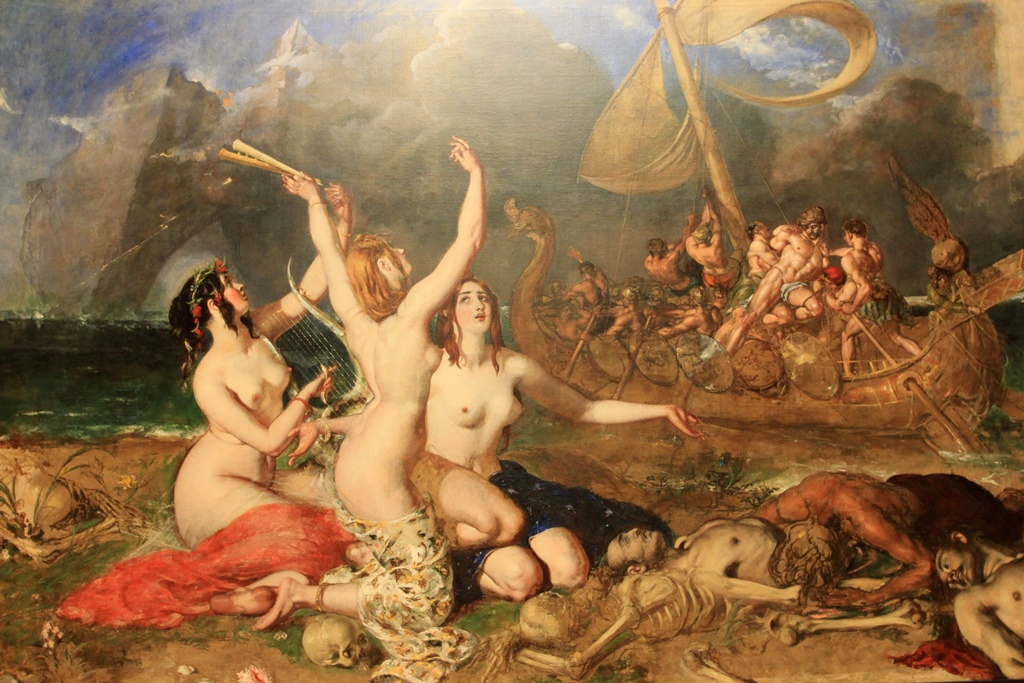
William Etty - "The Siren and Ulysses", 1837.

William Etty – “The Siren and Ulysses”, 1837.

Madness and witchery as well as bestiality are conditions commonly associated with the use of the female voice in public, in ancient as well as modern contexts. Consider how many female celebrities of classical mythology, literature and cult make themselves objectionable by the way they use their voice.

For example, there is the heart-chilling groan of the Gorgon, whose name is derived from a Sanskrit word, *garg meaning “a guttural animal howl that issues as a great wind from the back of the throat through a hugely distended mouth”. There are the Furies whose high-pitched and horrendous voices are compared by Aiskhylos to howling dogs or sounds of people being tortured in hell (Eumenides). There is the deadly voice of the Sirens and the dangerous ventriloquism of Helen (Odyssey) and the incredible babbling of Kassandra (Aiskhylos, Agamemnon) and the fearsome hullabaloo of Artemis as she charges through the woods (Homeric Hymn to Aphrodite). There is the seductive discourse of Aphrodite which is so concrete an aspect of her power that she can wear it on her belt as a physical object or lend it to other women (Iliad). There is the old woman of Eleusinian legend Iambe who shrieks obscenities and throws her skirt up over her head to expose her genitalia. There is the haunting garrulity of the nymph Echo (daughter of Iambe in Athenian legend) who is described by Sophokles as “the girl with no door on her mouth” (Philoktetes).

Putting a door on the female mouth has been an important project of patriarchal culture from antiquity to the present day. Its chief tactic is an ideological association of female sound with monstrosity, disorder and death.

— From “The Gender of Sound”, in Glass, Irony and God. New Directions, 1995: pp 120-121

The brilliant Anne Carson presents a history of the gendered voice, from Sophocles to Gertrude Stein. She outlines what is at stake in our assumptions around sound, questioning whether the concept of ‘self-control’ is a barrier to acknowledging other forms of human order, feeding into wider debates on social order, both past and present.

Read the whole essay HERE.

louise gluck – time

There was too much, always, then too little.
Childhood: sickness.
By the side of the bed I had a little bell —
at the other end of the bell, my mother.

Sickness, gray rain. the dogs slept through it. They slept on the bed,
at the end of it, and it seemed to me they understood
about childhood: best to remain unconscious.

The rain made gray slats on the windows.
I sat with my book, the little bell beside me.
Without hearing a voice, I apprenticed myself to a voice.
Without seeing any sign of the spirit, I determined
to live in the spirit.

The rain faded in and out.
Month after month, in the space of a day.
Things became dreams; dreams became things.

Then I was well; the bell went back to the cupboard.
The rain ended. The dogs stood at the door,
panting to go outside.

I was well, then I was an adult.
And time went on — it was like the rain,
so much, so much, as though it was a weight that couldn’t be moved.

I was a child, half sleeping.
I was sick; I was protected.
And I lived in the world of the spirit,
the world of gray rain,
the lost, the remembered.

Then suddenly the sun was shining.
And time went on, even when there was almost none left.
And the perceived became the remembered,
the remembered, the perceived.

__
From The Seven Ages (Ecco/Harper Collins, 2001)

don marquis – certain maxims of archy

stale pastelive so that you
can stick out your tongue
at the insurance
doctor

if you will drink
hair restorer follow
every dram with some
good standard
depilatory
as a chaser

the servant problem
wouldn t hurt the u s a
if it could settle
the public
servant problem

just as soon as the
uplifters get
a country reformed it
slips into a nose dive

if you get gloomy just
take an hour off and sit
and think how
much better this world
is than hell
of course it won t cheer
you up much if
you expect to go there

if monkey glands
did restore your youth
what would you do
with it
question mark
just what you did before
interrogation point

yes i thought so
exclamation point

procrastination is the
art of keeping
up with yesterday

old doc einstein has
abolished time but they
haven t got the news at
sing sing yet

time time said old king tut
is something i ain t
got anything but

every cloud
has its silver
lining but it is
sometimes a little
difficult to get it to
the mint

an optimist is a guy
that has never had
much experience

don t cuss the climate
it probably doesn t like you
any better
than you like it

many a man spanks his
children for
things his own
father should have
spanked out of him

prohibition makes you
want to cry
into your beer and
denies you the beer
to cry into

the old fashioned
grandmother who used
to wear steel rimmed
glasses and make
everybody take opodeldoc
has now got a new
set of ox glands and
is dancing the black bottom

that stern and
rockbound coast felt
like an amateur
when it saw how grim
the puritans that
landed on it were

lots of people can make
their own whisky but
can t drink it

the honey bee is sad and cross
and wicked as a weasel
and when she perches on you boss
she leaves a little measle

i heard a
couple of fleas
talking the other
day says one come
to lunch with
me i can lead you
to a pedigreed
dog says the
other one
i do not care
what a dog s
pedigree may be
safety first
is my motto what
i want to know
is whether he
has got a
muzzle on
millionaires and
bums taste
about alike to me

insects have
their own point
of view about
civilization a man
thinks he amounts
to a great deal
but to a
flea or a
mosquito a
human being is
merely something
good to eat

boss the other day
i heard an
ant conversing
with a flea
small talk i said
disgustedly
and went away
from there

i do not see why men
should be so proud
insects have the more
ancient lineage
according to the scientists
insects were insects
when man was only
a burbling whatisit

insects are not always
going to be bullied
by humanity
some day they will revolt
i am already organizing
a revolutionary society to be
known as the worms turnverein

i once heard the survivors
of a colony of ants
that had been partially
obliterated by a cow s foot
seriously debating
the intention of the gods
towards their civilization

the bees got their
governmental system settled
millions of years ago
but the human race is still
groping

there is always
something to be thankful
for you would not
think that a cockroach
had much ground
for optimism
but as the fishing season
opens up i grow
more and more
cheerful at the thought
that nobody ever got
the notion of using
cockroaches for bait

archy
__
By Don Marquis, in archy and mehitabel, 1927. I was introduced to this delightfully cynical cockroach and his friend, the cat Mehitabel, as a pre-teen on holiday at my grandparents’.

louise gluck – ripe peach

Gustav_Klimt_020 3 ages of woma

Gustav Klimt – “The Three Ages of Woman”

1
There was a time
only certainty gave me
any joy. Imagine —
certainty, a dead thing.

2
And then the world,
the experiment.
The obscene mouth
famished with love —
it is like love:
the abrupt, hard
certainty of the end —

3
In the center of the mind,
the hard pit,
the conclusion. As though
the fruit itself
never existed, only
the end, the point
midway between
anticipation and nostalgia —

4
So much fear.
So much terror of the physical world.
The mind frantic
guarding the body from
the passing, the temporary,
the body straining against it —

5
A peach on the kitchen table.
A replica. It is the earth,
the same
disappearing sweetness
surrounding the stone end,
and like the earth
available —

6
An opportunity
for happiness: earth
we cannot possess
only experience — And now
sensation: the mind
silenced by fruit —

7
They are not
reconciled. The body
here, the mind
separate, not
merely a warden:
it has separate joys.
It is the night sky,
the fiercest stars are its immaculate distinctions–

8
Can it survive? Is there
light that survives the end
in which the mind’s enterprise
continues to live: though
darting about the room,
above the bowl of fruit–

9
Fifty years. the night sky
filled with shooting stars.
Light, music
from far away — I must be
nearly gone. I must be
stone, since the earth
surrounds me —

10
There was
a peach in a wicker basket.
There was a bowl of fruit.
Fifty years. Such a long walk
from the door to the table.

__
From The Seven Ages (Ecco/Harper Collins, 2001)

kyle shepherd trio – die maan skyn so helder

“The moon’s shining so brightly tonight…”

Kyle Shepherd (piano, voice), Shane Cooper (double bass) and Jonno Sweetman (drums) perform a version of this subversive traditional Cape Goema song arranged by Kyle Shepherd. Recorded live at Welgemeend, Welgemeend Street, Gardens, Cape Town, South Africa on Friday 21 May 2009.

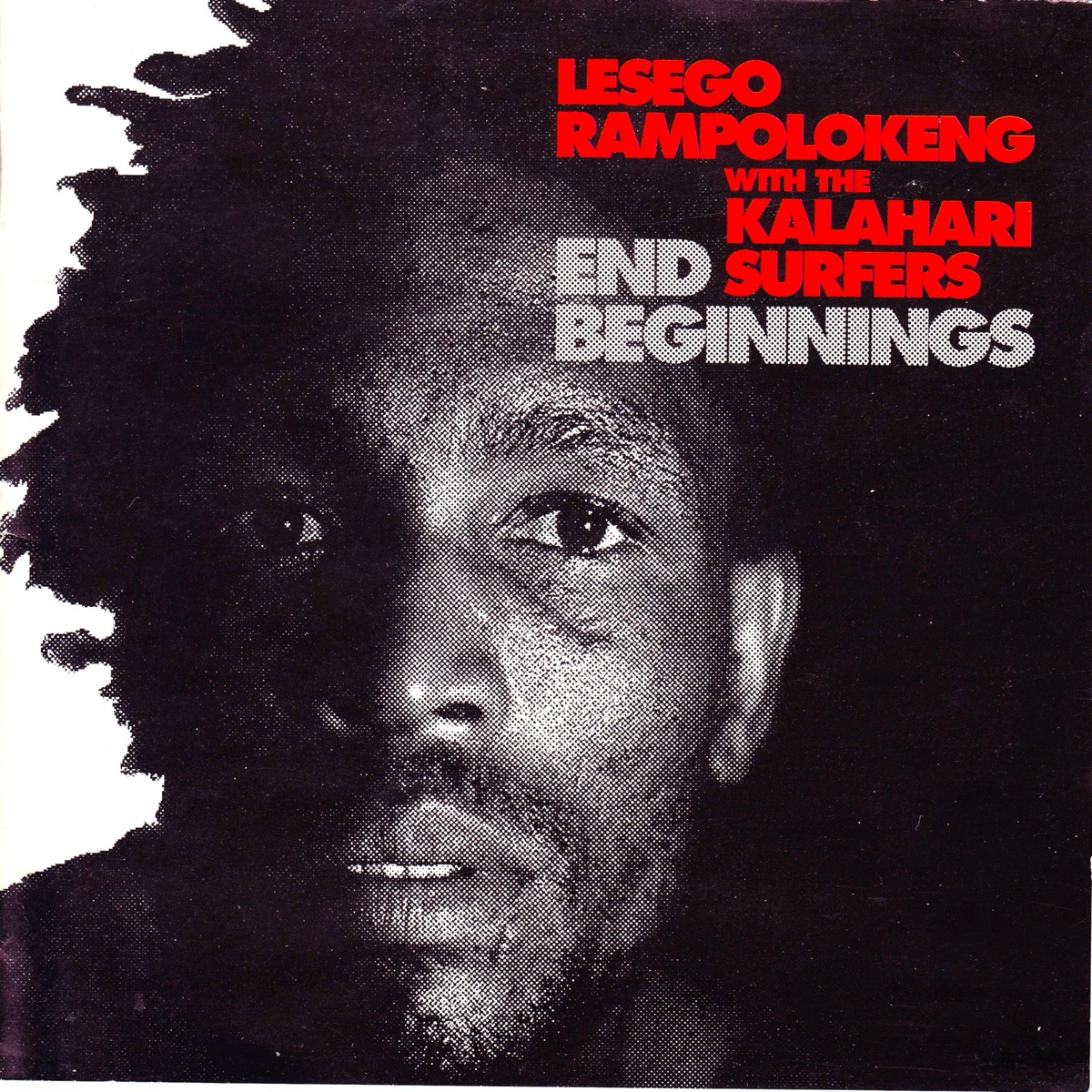
lesego rampolokeng with the kalahari surfers – end beginnings

“Liars rule the world…”

“Treason” and “End Beginnings” — tracks from the album End Beginnings (Shifty, 1991). This is the sound of South Africa in the late 1980s/early 1990s. Of course, I never got to hear this until years later.
Music: Warrick Sony
Words and voice: Lesego Rampolokeng

Download this album HERE.

end beginnings

louise glück – the seven ages

In my first dream, the world appeared
the salt, the bitter, the forbidden, the sweet
In my second I descended

I was human, I couldn’t just see a thing
beast that I am

I had to touch, to contain it

I hid in the groves,
I worked in the fields until the fields were bare —

time
that will never come again —
the dry wheat bound, caskets
of figs and olives

I even loved a few times in my disgusting human way

and like every one I called that accomplishment
erotic freedom,
absurd as it seems

The wheat gathered and stored, the last
fruit dried: time

that is hoarded, that is never used,
does it also end?

In my first dream the world appeared
the sweet, the forbidden
but there was no garden, only
raw elements

I was human:
I had to beg to descend
the salt, the bitter, the demanding, the preemptive

And like everyone, I took, I was taken
I dreamed

I was betrayed:

Earth was given to me in a dream
In a dream I possessed it

t.s. eliot – little gidding (1942)

little-giddingI

Midwinter spring is its own season
Sempiternal though sodden towards sundown,
Suspended in time, between pole and tropic.
When the short day is brightest, with frost and fire,
The brief sun flames the ice, on pond and ditches,
In windless cold that is the heart’s heat,
Reflecting in a watery mirror
A glare that is blindness in the early afternoon.
And glow more intense than blaze of branch, or brazier,
Stirs the dumb spirit: no wind, but pentecostal fire
In the dark time of the year. Between melting and freezing
The soul’s sap quivers. There is no earth smell
Or smell of living thing. This is the spring time
But not in time’s covenant. Now the hedgerow
Is blanched for an hour with transitory blossom
Of snow, a bloom more sudden
Than that of summer, neither budding nor fading,
Not in the scheme of generation.
Where is the summer, the unimaginable
Zero summer?

If you came this way,
Taking the route you would be likely to take
From the place you would be likely to come from,
If you came this way in may time, you would find the hedges
White again, in May, with voluptuary sweetness.
It would be the same at the end of the journey,
If you came at night like a broken king,
If you came by day not knowing what you came for,
It would be the same, when you leave the rough road
And turn behind the pig-sty to the dull facade
And the tombstone. And what you thought you came for
Is only a shell, a husk of meaning
From which the purpose breaks only when it is fulfilled
If at all. Either you had no purpose
Or the purpose is beyond the end you figured
And is altered in fulfilment. There are other places
Which also are the world’s end, some at the sea jaws,
Or over a dark lake, in a desert or a city—
But this is the nearest, in place and time,
Now and in England.

If you came this way,
Taking any route, starting from anywhere,
At any time or at any season,
It would always be the same: you would have to put off
Sense and notion. You are not here to verify,
Instruct yourself, or inform curiosity
Or carry report. You are here to kneel
Where prayer has been valid. And prayer is more
Than an order of words, the conscious occupation
Of the praying mind, or the sound of the voice praying.
And what the dead had no speech for, when living,
They can tell you, being dead: the communication
Of the dead is tongued with fire beyond the language of the living.
Here, the intersection of the timeless moment
Is England and nowhere. Never and always.

II

Ash on an old man’s sleeve
Is all the ash the burnt roses leave.
Dust in the air suspended
Marks the place where a story ended.
Dust inbreathed was a house-
The walls, the wainscot and the mouse,
The death of hope and despair,
This is the death of air.

There are flood and drouth
Over the eyes and in the mouth,
Dead water and dead sand
Contending for the upper hand.
The parched eviscerate soil
Gapes at the vanity of toil,
Laughs without mirth.
This is the death of earth.

Water and fire succeed
The town, the pasture and the weed.
Water and fire deride
The sacrifice that we denied.
Water and fire shall rot
The marred foundations we forgot,
Of sanctuary and choir.
This is the death of water and fire.

In the uncertain hour before the morning
Near the ending of interminable night
At the recurrent end of the unending
After the dark dove with the flickering tongue
Had passed below the horizon of his homing
While the dead leaves still rattled on like tin
Over the asphalt where no other sound was
Between three districts whence the smoke arose
I met one walking, loitering and hurried
As if blown towards me like the metal leaves
Before the urban dawn wind unresisting.
And as I fixed upon the down-turned face
That pointed scrutiny with which we challenge
The first-met stranger in the waning dusk
I caught the sudden look of some dead master
Whom I had known, forgotten, half recalled
Both one and many; in the brown baked features
The eyes of a familiar compound ghost
Both intimate and unidentifiable.
So I assumed a double part, and cried
And heard another’s voice cry: “What! are you here?”
Although we were not. I was still the same,
Knowing myself yet being someone other—
And he a face still forming; yet the words sufficed
To compel the recognition they preceded.
And so, compliant to the common wind,
Too strange to each other for misunderstanding,
In concord at this intersection time
Of meeting nowhere, no before and after,
We trod the pavement in a dead patrol.
I said: “The wonder that I feel is easy,
Yet ease is cause of wonder. Therefore speak:
I may not comprehend, may not remember.”
And he: “I am not eager to rehearse
My thoughts and theory which you have forgotten.
These things have served their purpose: let them be.
So with your own, and pray they be forgiven
By others, as I pray you to forgive
Both bad and good. Last season’s fruit is eaten
And the fullfed beast shall kick the empty pail.
For last year’s words belong to last year’s language
And next year’s words await another voice.
But, as the passage now presents no hindrance
To the spirit unappeased and peregrine
Between two worlds become much like each other,
So I find words I never thought to speak
In streets I never thought I should revisit
When I left my body on a distant shore.
Since our concern was speech, and speech impelled us
To purify the dialect of the tribe
And urge the mind to aftersight and foresight,
Let me disclose the gifts reserved for age
To set a crown upon your lifetime’s effort.
First, the cold fricton of expiring sense
Without enchantment, offering no promise
But bitter tastelessness of shadow fruit
As body and soul begin to fall asunder.
Second, the conscious impotence of rage
At human folly, and the laceration
Of laughter at what ceases to amuse.
And last, the rending pain of re-enactment
Of all that you have done, and been; the shame
Of things ill done and done to others’ harm
Which once you took for exercise of virtue.
Then fools’ approval stings, and honour stains.
From wrong to wrong the exasperated spirit
Proceeds, unless restored by that refining fire
Where you must move in measure, like a dancer.”
The day was breaking. In the disfigured street
He left me, with a kind of valediction,
And faded on the blowing of the horn.

III

There are three conditions which often look alike
Yet differ completely, flourish in the same hedgerow:
Attachment to self and to things and to persons, detachment
From self and from things and from persons; and, growing between them, indifference
Which resembles the others as death resembles life,
Being between two lives – unflowering, between
The live and the dead nettle. This is the use of memory:
For liberation – not less of love but expanding
Of love beyond desire, and so liberation
From the future as well as the past. Thus, love of a country
Begins as an attachment to our own field of action
And comes to find that action of little importance
Though never indifferent. History may be servitude,
History may be freedom. See, now they vanish,
The faces and places, with the self which, as it could, loved them,
To become renewed, transfigured, in another pattern.
Sin is Behovely, but
All shall be well, and
All manner of thing shall be well.
If I think, again, of this place,
And of people, not wholly commendable,
Of not immediate kin or kindness,
But of some peculiar genius,
All touched by a common genius,
United in the strife which divided them;
If I think of a king at nightfall,
Of three men, and more, on the scaffold
And a few who died forgotten
In other places, here and abroad,
And of one who died blind and quiet,
Why should we celebrate
These dead men more than the dying?
It is not to ring the bell backward
Nor is it an incantation
To summon the spectre of a Rose.
We cannot revive old factions
We cannot restore old policies
Or follow an antique drum.
These men, and those who opposed them
And those whom they opposed
Accept the constitution of silence
And are folded in a single party.
Whatever we inherit from the fortunate
We have taken from the defeated
What they had to leave us – a symbol:
A symbol perfected in death.
And all shall be well and
All manner of thing shall be well
By the purification of the motive
In the ground of our beseeching.

IV

The dove descending breaks the air
With flame of incandescent terror
Of which the tongues declare
The one dischage from sin and error.
The only hope, or else despair
Lies in the choice of pyre of pyre-
To be redeemed from fire by fire.

Who then devised the torment? Love.
Love is the unfamiliar Name
Behind the hands that wove
The intolerable shirt of flame
Which human power cannot remove.
We only live, only suspire
Consumed by either fire or fire.

V

What we call the beginning is often the end
And to make and end is to make a beginning.
The end is where we start from. And every phrase
And sentence that is right (where every word is at home,
Taking its place to support the others,
The word neither diffident nor ostentatious,
An easy commerce of the old and the new,
The common word exact without vulgarity,
The formal word precise but not pedantic,
The complete consort dancing together)
Every phrase and every sentence is an end and a beginning,
Every poem an epitaph. And any action
Is a step to the block, to the fire, down the sea’s throat
Or to an illegible stone: and that is where we start.
We die with the dying:
See, they depart, and we go with them.
We are born with the dead:
See, they return, and bring us with them.
The moment of the rose and the moment of the yew-tree
Are of equal duration. A people without history
Is not redeemed from time, for history is a pattern
Of timeless moments. So, while the light fails
On a winter’s afternoon, in a secluded chapel
History is now and England.

With the drawing of this Love and the voice of this Calling

We shall not cease from exploration
And the end of all our exploring
Will be to arrive where we started
And know the place for the first time.
Through the unknown, unremembered gate
When the last of earth left to discover
Is that which was the beginning;
At the source of the longest river
The voice of the hidden waterfall
And the children in the apple-tree
Not known, because not looked for
But heard, half-heard, in the stillness
Between two waves of the sea.
Quick now, here, now, always—
A condition of complete simplicity
(Costing not less than everything)
And all shall be well and
All manner of thing shall be well
When the tongues of flames are in-folded
Into the crowned knot of fire
And the fire and the rose are one.

Context from Wikipedia:

“Little Gidding” is the fourth and final poem of T. S. Eliot‘s Four Quartets, a series of poems that discuss time, perspective, humanity, and salvation. It was first published in September 1942 after being delayed for over a year because of the air-raids on Great Britain during World War II and Eliot’s declining health. The title refers to a small Anglican community in Huntingdonshire, established by Nicholas Ferrar in the 17th century and scattered during the English Civil War.

The poem uses the combined image of fire and Pentecostal fire to emphasize the need for purification and purgation. According to the poet, humanity’s flawed understanding of life and turning away from God leads to a cycle of warfare, but this can be overcome by recognizing the lessons of the past. Within the poem, the narrator meets a ghost that is a combination of various poets and literary figures. Little Gidding focuses on the unity of past, present, and future, and claims that understanding this unity is necessary for salvation.

“i will never forget how to dance”

I have been working for the last while as researcher and production manager on a weekly SABC-commissioned TV documentary series, I Am Woman – Leap of Faith. Here’s one of the episodes, directed by Jane Kennedy:

In January 1996 Shelley Barry was 23 and on her way to a job interview in Cape Town when she was caught in the crossfire of taxi violence caused by rival taxi groups battling for ownership of the same routes.

She was sitting next to the taxi driver in the front of his minibus when an assassin pulled up alongside the moving vehicle and opened fire. The driver was shot seven times and was killed instantly. The taxi crashed, injuring many of its passengers.

Shelley was hit by one of the assassin’s bullets and was instantly paralysed. Her life hung in the balance and it was assumed she would not survive. The friend she was travelling with was seriously injured but has recovered, despite the bullet still lodged in her chest. Shelley has been in a wheelchair ever since. Today she is 42.

How does one create a life for oneself after something like this? How does one find work and meaning once again? Importantly, what happened to Shelley Barry’s dream, held close since childhood, of becoming a filmmaker?

Join this remarkable woman, teacher, activist and filmmaker as she describes her life before and after the shooting: The life of a young girl who told her childhood friends that one day her films would be on the big screen and has achieved that, despite a bullet getting in her way and forcing her into a wheelchair for over twenty years… The life of an activist who worked in the Presidency and has made a significant difference to the lives of the disabled in South Africa… The deeply spiritual journey of a sensitive, funny and bolshy woman who, despite her circumstances, is determined to continue making her mark on the world.

Shelley Barry graciously lets us into her world, describing the many Leaps of Faith she has taken so far and continues to take each and every day.

Catch the broadcast of this programme on SABC 3, Sundays at 09h30,  or watch archived episodes on the I AM WOMAN – LEAP OF FAITH WEBSITE.

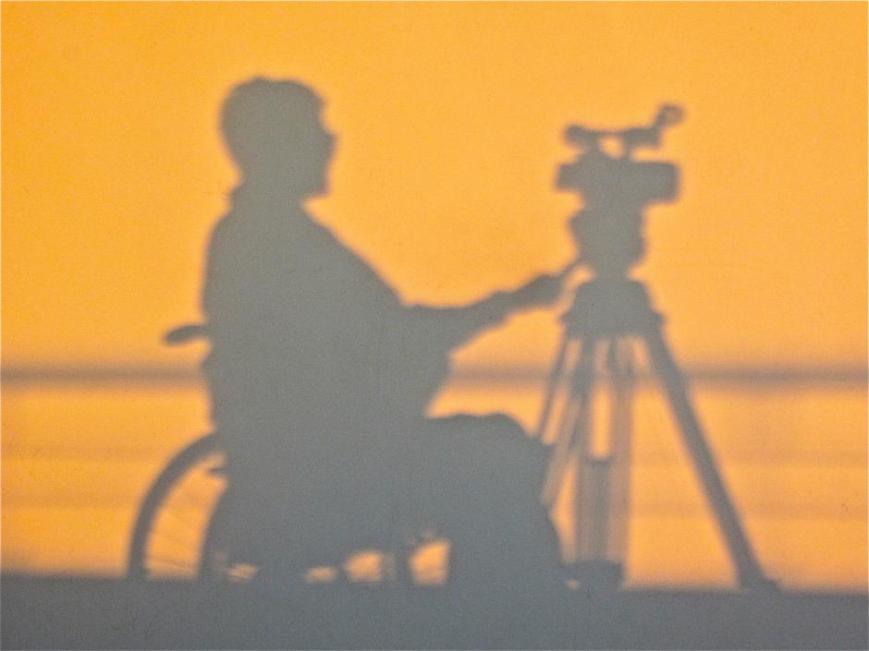
shelley sunset

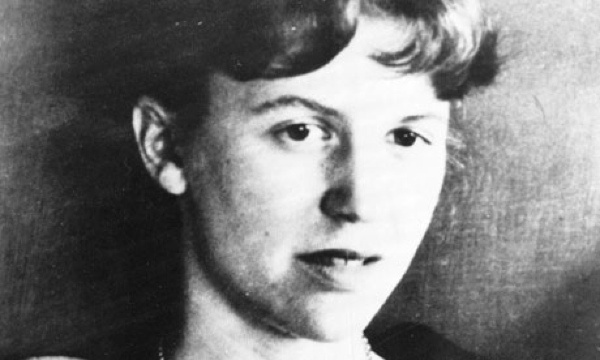
sylvia plath on being born a woman

Sylvia-Plath-008“Being born a woman is an awful tragedy… Yes, my consuming desire to mingle with road crews, sailors and soldiers, bar room regulars – to be a part of a scene, anonymous, listening, recording – all is spoiled by the fact that I am a girl, a female always in danger of assault and battery. My consuming interest in men and their lives is often misconstrued as a desire to seduce them, or as an invitation to intimacy. Yet, God, I want to talk to everybody I can as deeply as I can. I want to be able to sleep in an open field, to travel west, to walk freely at night…”

— Sylvia Plath

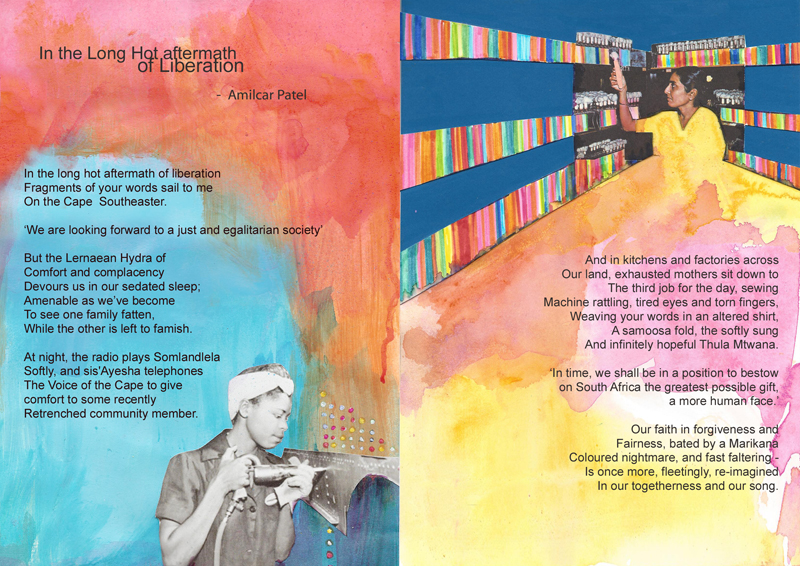
amilcar patel – in the long hot aftermath of liberation

long hot aftermathThis is a page taken from FLEURZINE, a zine curated and illustrated by Julia Mary Grey. You can go and download this beautiful work of art for free on her site, HERE.

The name was inspired by Fleurmach, and six pieces of writing from this blog appear in the publication!

mount eerie – i hold nothing

Your love
swells and pounds me

I know nothing (now that I know you)
My face goes blank
My eyes go open gates
and the world can go (in them)
it can make us wealthy
and take away
so
I hold nothing (now that I hold you)

There’s no place to use our money where we live
The generous world suggests we live generously
so we lay
under low wide branches
of the oldest tree on the dune
or in the hay
where we will stay for so long without moving
that the careful birds finally relax
and make black nests in your black hair
and find ants walking around my unmoving feet
and we will only notice this play of the world
(that long moss is growing on us)
(that that wind has rewritten us)
(the give and take not stopping ever)
for only a moment
and then, having briefly noticed,
let the world roll on
through open gates

In a generous way
I give long walks to the dogs
I put commas and periods in song
I give closed eye to the day
I give peace to the long decay
(we do not need to fear dying)

— Written by Phil Elvrum, from the 2005 Mount Eerie album, “No Flashlight”: Songs of the Fulfilled Night

broadcast – lights out (black session)

Broadcast’s Black Session – recorded live at La Maison de la Radio in Paris on May 4th, 2000 – features the original lineup that toured in support of their album, The Noise Made By People. It includes all the electronic segues and dissonance between tunes, along with stellar renditions of early singles, album cuts and B-sides. You can download the whole recording HERE.

colonizing in reverse – louise bennett-coverley

“Wat a joyful news, Miss Mattie
I feel like me heart gwine burs
Jamaica people colonizin
Englan in reverse.
By de hundred, by de tousan
From country and from town,
By de ship-load, by de plane-load
Jamaica is Englan boun.
Dem a pour out a Jamaica
Everybody future plan
Is fe get a big-time job
An settle in de mother lan.
What a islan! What a people!
Man an woman, old an young
Jus a pack dem bag an baggage
An tun history upside dung!
Some people doan like travel
But fe show dem loyalty
Dem all a open up cheap-fare-
To-Englan agency.
An week by week dem shippin off
Dem countryman like fire,
Fe immigrate an populate
De seat a de Empire.
Oonoo see how life is funny,
Oonoo see de tunabout?
Jamaica live fe box bread
Out a English people mout’.
For wen dem ketch a Englan,
An start play dem different role,
Some will settle down to work
An some will settle fe de dole.
Jane say de dole is not too bad
Because dey payin she
Two pounds a week fe seek a job
Dat suit her dignity.
Me say Jane will never fine work
At de rate how she dah look,
For all day she stay pon Aunt Fan couch
An read love-story book.
Wat a devilment a Englan!
Dem face war an brave de worse,
But me wonderin how dem gwine stan
Colonizin in reverse.”

where the echoes stop

Julie Loen - Title Unknown

Julie Loen – Title Unknown

Erwin Raphael McManus – Where the Echoes Stop

I want to stand where the echoes stop.
Far past where sound has abandoned thought.
Where silence reigns over redundancy.
Where once well said is more than enough.

I want to stand where the echoes stop.
Where words must be born to be heard.
Where speech is a gift and not a curse.
Where there is more of the unique and less of the mundane.

I want to stand where the echoes stop.
Where meaning is rescued from noise…
Where conviction replaces thoughtless repetition…
Where what everyone is saying surrenders to what needs to be said.

I want to stand where the echoes stop.
Where the shouting of the masses falls silent to the whisper of the one…
Where the voice of the majority submits to the voice of reason…
Where “they” do not exist; but “we” do.

I want to stand where the echoes stop.
Where substance overthrows the superficial…
Where courage conquers compliance and conformity…
Where words do not travel farther than the person who speaks them.

I want to stand where the echoes stop.
Where I only say what I believe.
Where I only repeat what changes me.
Where empty words finally rest in peace.

“Be still and know that I am God…” — Psalm 46:10a

william shakespeare – sigh no more, ladies

Happy 449th birthday, Willy!
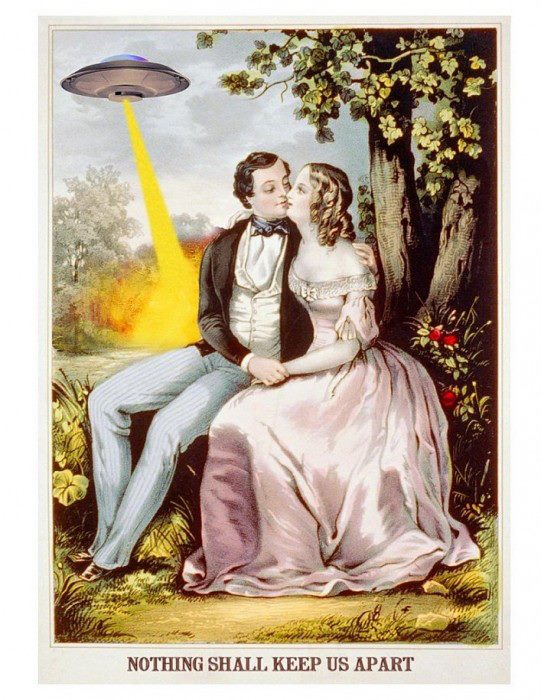
nothing shall keep us apart

Sigh no more, ladies, sigh no more;
Men were deceivers ever;
One foot in sea and one on shore,
To one thing constant never;
Then sigh not so,
But let them go,
And be you blithe and bonny;
Converting all your sounds of woe
Into “Hey nonny, nonny.”

Sing no more ditties, sing no mo,
Of dumps so dull and heavy;
The fraud of men was ever so,
Since summer first was leavy.
Then sigh not so,
But let them go,
And be you blithe and bonny,
Converting all your sounds of woe
Into “Hey, nonny, nonny.”

(From Much Ado about Nothing)