Category Archives: poetry
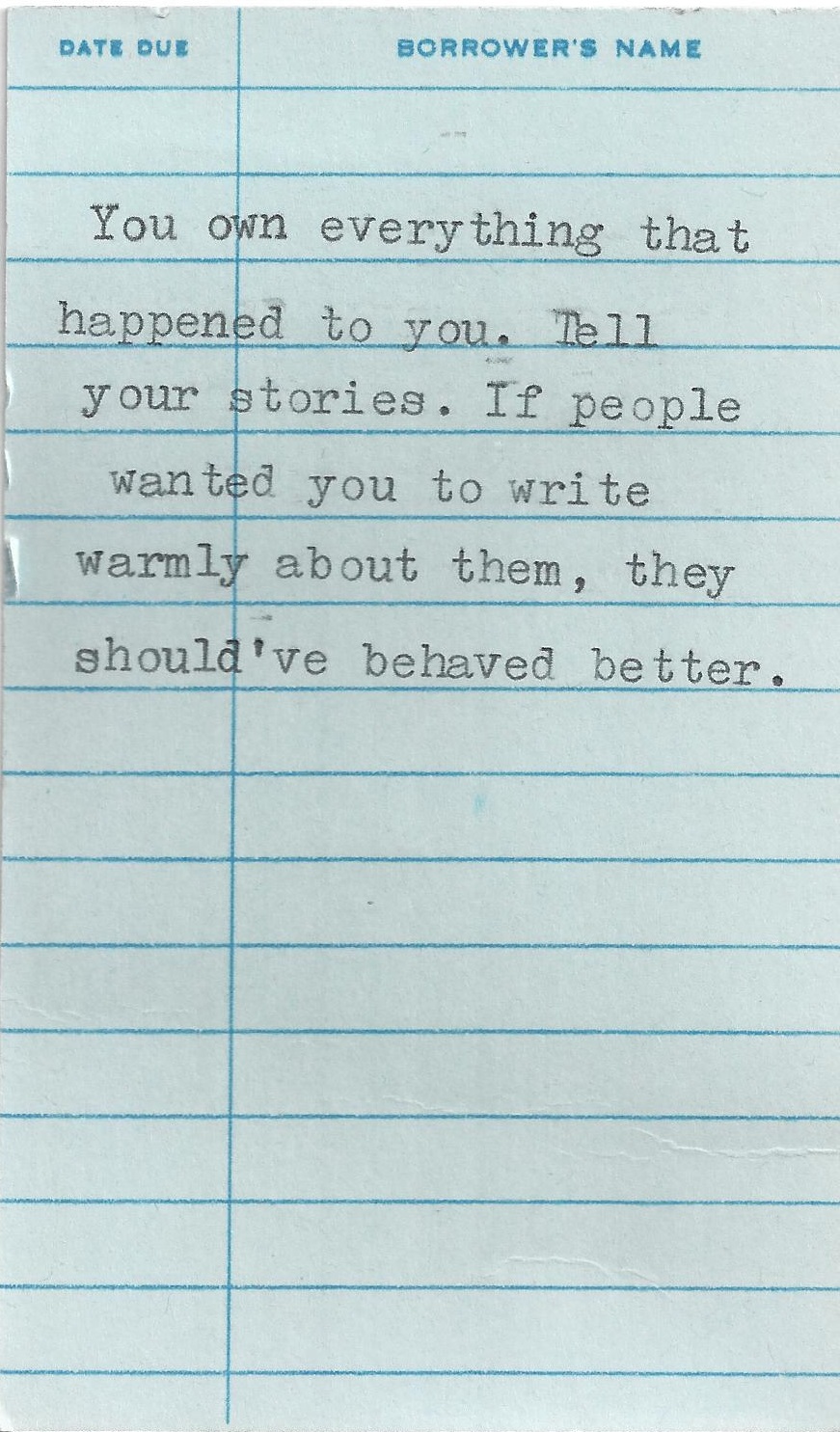
yrsa daley-ward – up home
Shot on Location in London & Cut by Isaac Ssebandeke of I am Freshcold. 2012. More of Yrsa’s work can be found on Soundcloud and on Tumblr.
Thanks to Clair Cantrell for sharing this with me.
eaten up by nothing

embodied
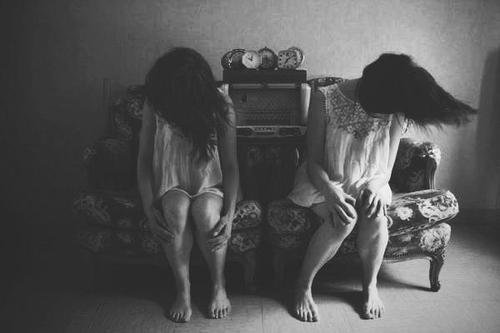
Aëla Labbé – “Sister Sister” series
Why do you live in your body like you will be given another? As if it were temporary. You starve it, you let anyone touch it, you berate it. Tell it that should be completely different. You tug at your soft flesh, wish it thinner, wish it gone. You fall in love with those who praise the way it sighs under their hands, but who praises the way it holds up your weight, even when you are falling apart?
— Warsan Shire
rilke on a rich life
 “If your daily life seems poor, do not blame it; blame yourself that you are not poet enough to call forth its riches; for the Creator, there is no poverty.”
~ Rainer Maria Rilke
something fishy
goldfish forget, this is what they do.
silverfish eat books;
they cannot help themselves.
i love silverfish.
laurence binyon – the burning of the leaves
Now is the time for the burning of the leaves,
They go to the fire; the nostrils prick with smoke
Wandering slowly into the weeping mist.
Brittle and blotched, ragged and rotten sheaves!
A flame seizes the smouldering ruin, and bites
On stubborn stalks that crackle as they resist.
The last hollyhock’s fallen tower is dust:
All the spices of June are a bitter reek,
All the extravagant riches spent and mean.
All burns! the reddest rose is a ghost.
Sparks whirl up, to expire in the mist: the wild
Fingers of fire are making corruption clean.
Now is the time for stripping the spirit bare,
Time for the burning of days ended and done,
Idle solace of things that have gone before,
Rootless hope and fruitless desire are there:
Let them go to the fire with never a look behind.
That world that was ours is a world that is ours no more.
They will come again, the leaf and the flower, to arise
From squalor of rottenness into the old splendour,
And magical scents to a wondering memory bring;
The same glory, to shine upon different eyes.
Earth cares for her own ruins, naught for ours.
Nothing is certain, only the certain spring.
Thanks to Karolina O’Donaghue for this poem.
t.s. eliot – the cocktail party
 It will do you no harm to find yourself ridiculous.
Resign yourself to be the fool you are.
You will find that you survive humiliation
And that’s an experience of incalculable value.
That is the worst moment, when you feel you have lost
The desires for all that was most desirable,
Before you are contented with what you can desire;
Before you know what is left to be desired;
And you go on wishing that you could desire
What desire has left behind. But you cannot understand.
How could you understand what it is to feel old?
We die to each other daily.
What we know of other people
Is only our memory of the moments
During which we knew them. And they have changed since then.
To pretend that they and we are the same
Is a useful and convenient social convention
Which must sometimes be broken. We must also remember
That at every meeting we are meeting a stranger.
There was a door
And I could not open it. I could not touch the handle.
Why could I not walk out of my prison?
What is hell? Hell is oneself.
Hell is alone, the other figures in it
Merely projections. There is nothing to escape from
And nothing to escape to. One is always alone.
Half the harm that is done in this world
Is due to people who want to feel important.
They don’t mean to do harm — but the harm does not interest them.
Or they do not see it, or they justify it
Because they are absorbed in the endless struggle
To think well of themselves.
There are several symptoms
Which must occur together, and to a marked degree,
To qualify a patient for my sanitorium:
And one of them is an honest mind. That is one of the causes of their suffering.
To men of a certain type
The suspicion that they are incapable of loving
Is as disturbing to their self-esteem
As, in cruder men, the fear of impotence.
I must tell you
That I should really like to think there’s something wrong with me —
Because, if there isn’t, then there’s something wrong
With the world itself — and that’s much more frightening!
That would be terrible.
So, I’d rather believe there’s something wrong with me, that could be put right.
Everyone’s alone — or so it seems to me.
They make noises, and think they are talking to each other;
They make faces, and think they understand each other.
And I’m sure they don’t. Is that a delusion?
Can we only love
Something created in our own imaginations?
Are we all in fact unloving and unloveable?
Then one is alone, and if one is alone
Then lover and beloved are equally unreal
And the dreamer is no more real than his dreams.
I shall be left with the inconsolable memory
Of the treasure I went into the forest to find
And never found, and which was not there
And is perhaps not anywhere? But if not anywhere
Why do I feel guilty at not having found it?
Disillusion can become itself an illusion
If we rest in it.
Two people who know they do not understand each other,
Breeding children whom they do not understand
And who will never understand them.
There is another way, if you have the courage.
The first I could describe in familiar terms
Because you have seen it, as we all have seen it,
Illustrated, more or less, in lives of those about us.
The second is unknown, and so requires faith —
The kind of faith that issues from despair.
The destination cannot be described;
You will know very little until you get there;
You will journey blind. But the way leads towards possession
Of what you have sought for in the wrong place.
We must always take risks. That is our destiny.
If we all were judged according to the consequences
Of all our words and deeds, beyond the intention
And beyond our limited understanding
Of ourselves and others, we should all be condemned.
Only by acceptance of the past will you alter its meaning.
All cases are unique, and very similar to others.
Every moment is a fresh beginning.
__
Excerpted from T.S. Eliot’s 1949 play, The Cocktail Party
julian redpath – shipwrecks
Keep an ear out for this talented songwriter based in Johannesburg. I saw him tonight at Carnival Court in Long Street, Cape Town and was deeply moved by some of his writing… The tune I loved most is not on Soundcloud, but this one is pretty fine too.
“scrape”: it’s brilliant – go and see it!
This play is on for two more nights at the Intimate Theatre on UCT’s Hiddingh Campus. I went last night. It is an absolute tour de force – insightful, brutal, awkward, compassionate, hilarious. If you are in Cape Town, GO, GO, GO!
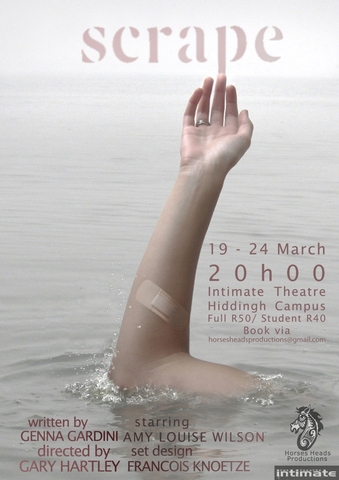
Scrape is the story of an everyday woman suffering from an unusual condition.
After falling and scraping herself, Beth discovers that not only does skin heal, it can sometimes do so with a vengeance.
This one-person show, performed by Amy Louise Wilson, is presented by writer Genna Gardini and director Gary Hartley. It features sound design by musician and performance artist SIYA IS YOUR ANARCHIST and set design by 2011 ABSA L’Atelier and Sasol New Signatures finalist Francois Knoetze.
Scrape is presented by the new theatre company Horses’ Heads Productions. The production will preview at the Intimate Theatre from 19 – 24 March 2013 and go on to feature as part of The Cape Town Edge programme at this year’s National Arts Festival. Scrape will then return to the Mother City for a run at The Alexander Bar in August 2013.
Scrape, 19 – 24 March 2013, 20:00
The Intimate Theatre on UCT’s Hiddingh Campus
R50 general/ R40 students
To book tickets, contact 0827765490 or horsesheadsproductions@gmail.com
Director:
Gary Hartley is a theatre-maker, performer and television producer based in Cape Town. In 2007 he graduated from Rhodes University with a distinction in Drama. His production, WinterSweet, made in collaboration with The Runaway Buni Collective and writer Genna Gardini, won a Standard Bank Ovation Encore prize at the 2012 National Arts Festival. He currently works as a writer and producer at Greenwall Productions and has produced for shows such as The Showbiz Report, The Close Up and Screentime with Nicky Greenwall.
Playwright:
Genna Gardini is a writer based in Cape Town. Her play WinterSweet was produced in collaboration with Gary Hartley and The Runaway Buni Collective for the 2012 National Arts Festival and won a Standard Bank Encore Ovation Award. She has curated The Readings Upstairs, a monthly series of play readings held upstairs at the Alexander Bar, since 2012. Her work as a poet has been published widely both locally and internationally. Gardini has presented papers at the 2012 AFTA Annual International Conference and GIPCA Directors and Directing: Playwrights Symposium. She also works as a freelance arts writer for various publications, including the Cape Times and Art South Africa magazine. She is currently completing her MA Theatre-making (Playwriting) at UCT.
Performer:
Amy Louise Wilson is an actress living in Cape Town. She has studied Acting and Contemporary Performance at Rhodes University; Processes of Performance and Shakespeare Studies at the University of Leeds and Theatre and Performance at the University of Cape Town. Recent performances include The Petticoat Chronicle (dir. Lynne Maree), Voiced (under Clare Stopford) and 2012’s Standard Bank Encore Ovation Award winning Wintersweet (dir. Robert Haxton). She will be presenting her paper ‘Performance, Persona and Identity in the work of Die Antwoord’ at the New Directions in South African Theatre Today: Circulation, Evolutions, Adaptations symposium in France later this year.
Set Designer:
Francois Knoetze is an artist based in Cape Town. Having recently completed his Honours in Fine Art at Rhodes University, he is currently pursuing his MFA at Michaelis. His work is multidisciplinary, incorporating performance, assemblage sculpture and film. In 2011 he was a finalist in both the Absa L’Atelier and Sasol New Signatures competitions. Last year he was named one of Art South Africa magazine’s Bright Young Things. He has been involved in numerous theatre productions as set designer and puppet-maker, including works by the UBOM! Eastern Cape Theatre Company.
Sound designer:
Writer, journalist, musician and filmmaker SIYA IS YOUR ANARCHIST has written for publications like the Sunday World, The Event and The Callsheet. He has performed at the National Arts Festival and written several plays. He has also worked for TV shows such as Rhythm City (E-TV), Font (SABC 3), Breaking New Ground (SABC 2). He directed an SABC2 documentary on Aids activist Zackie Achmat called His Husband in 2011 and has exhibited multi-media installations for Goodman Gallery Cape Town and GIPCA Live Art Festival. He now works for Entertainment Africa as a features writer and is combining writing, music, art and media for the release of his upcoming musical EP.
For more information, see:
Scrape Facebook event
Horses’ Heads Productions Facebook page:
Horses’ Heads Twitter
erica jong – becoming a nun

“La Sucette” – Cherry Bomb, 2007
Digital photograph manipulated with Microsoft Photo Editor
On cold days
it is easy to be reasonable,
to button the mouth against kisses,
dust the breasts
with talcum powder
& forget
the red pulp meat
of the heart.
On those days
it beats
like a digital clock–
not a beat at all
but a steady whirring
chilly as green neon,
luminous as numerals in the dark,
cool as electricity.
& I think:
I can live without it all–
love with its blood pump,
sex with its messy hungers,
men with their peacock strutting,
their silly sexual baggage,
their wet tongues in my ear
& their words like little sugar suckers
with sour centers.
On such days
I am zipped in my body suit,
I am wearing seven league red suede boots,
I am marching over the cobblestones
as if they were the heads of men,
& I am happy
as a seven-year-old virgin
holding Daddy’s hand.
Don’t touch.
Don’t try to tempt me with your ripe persimmons.
Don’t threaten me with your volcano.
The sky is clearer when I’m not in heat,
& the poems
are colder.
Poem © Erica Mann Jong
“La Sucette” by Rosemary Lombard is licensed under a Creative Commons Attribution-NonCommercial-NoDerivs 3.0 Unported License.
anne carson – the glass essay
An incredible poem… Thank you to Kate Highman for turning me on to Anne Carson.
I
I can hear little clicks inside my dream.
Night drips its silver tap
down the back.
At 4 A.M. I wake. Thinking
of the man who
left in September.
His name was Law.
My face in the bathroom mirror
has white streaks down it.
I rinse the face and return to bed.
Tomorrow I am going to visit my mother.
SHE
She lives on a moor in the north.
She lives alone.
Spring opens like a blade there.
I travel all day on trains and bring a lot of books—
some for my mother, some for me
including The Collected Works Of Emily Brontë.
This is my favourite author.
Also my main fear, which I mean to confront.
Whenever I visit my mother
I feel I am turning into Emily Brontë,
my lonely life around me like a moor,
my ungainly body stumping over the mud flats with a look of transformation
that dies when I come in the kitchen door.
What meat is it, Emily, we need?
anna akhmatova – fragment, 1959
And entering towns the guns had missed,
towns out of storybooks,
we saw the constellation of the Snake
but we were afraid to look at each other.
The earth smelled like an orphanage — potatoes,
disinfectant, shoes — I thought
Time walked next to us, years, centuries.
And someone shook a tambourine, someone we couldn’t see.
There were noises and tiny bluish-yellow lights.
What did they mean, those fireflies
signaling to us in the dark?
I even thought those noises were the lights.
And we walked on together. I was with you, you were with me.
It was like that dream I had: the corpse of an old man
shone in the dark, a baby clung to his chest, both wrapped in a cocoon.
I could see the awful, delicate, wax-like hands of the baby
dabbling at the man’s chin. The moon slid out,
suddenly. We met, we said goodbye.
If you remember that night, as I do,
wherever you are now, whatever fate
steers your life, know what I know: the time
we had was sacred like a great king’s dream
turned by his people into a myth they use
to keep themselves from believing life’s a dream.
Whatever I looked at was alive, everything had a voice,
but I never found out were you a friend, an enemy,
was it winter, summer? Smoke, singing, midnight heat.
I wrote thousands of lines. Not one told me.
leonard cohen – recitation
pablo neruda – too many names
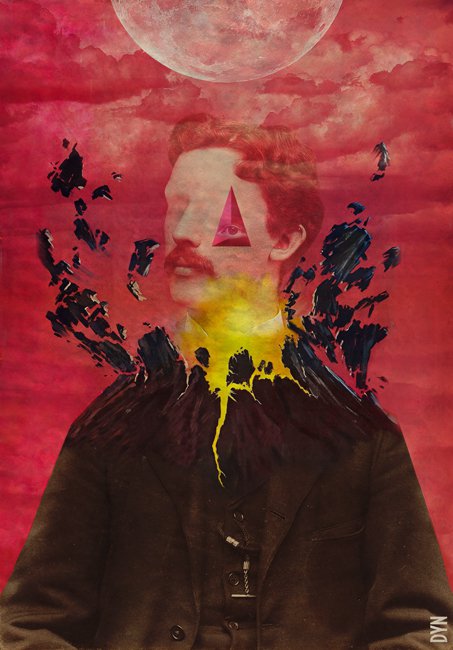
Albane Simon – ‘Eruption’
Mondays are meshed with Tuesdays
and the week with the whole year.
Time cannot be cut
with your weary scissors,
and all the names of the day
are washed out by the waters of night.
No one can claim the name of Pedro,
nobody is Rosa or Maria,
all of us are dust or sand,
all of us are rain under rain.
They have spoken to me of Venezuelas,
of Chiles and of Paraguays;
I have no idea what they are saying.
I know only the skin of the earth
and I know it is without a name.
When I lived amongst the roots
they pleased me more than flowers did,
and when I spoke to a stone
it rang like a bell.
It is so long, the spring
which goes on all winter.
Time lost its shoes.
A year lasts four centuries.
When I sleep every night,
what am I called or not called?
And when I wake, who am I
if I was not I while I slept?
This means to say that scarcely
have we landed into life
than we come as if new-born;
let us not fill our mouths
with so many faltering names,
with so many sad formalities,
with so many pompous letters,
with so much of yours and mine,
with so much signing of papers.
I have a mind to confuse things,
unite them, bring them to birth,
mix them up, undress them,
until the light of the world
has the oneness of the ocean,
a generous, vast wholeness,
a crackling, living fragrance.
jaime sabines – the lovers
The lovers say nothing.
Love is the finest of the silences,
the one that trembles most and is hardest to bear.
The lovers are looking for something.
The lovers are the ones who abandon,
the ones who change, who forget.
Their hearts tell them that they will never find.
They don’t find, they’re looking.
The lovers wander around like crazy people
because they’re alone, alone,
surrendering, giving themselves to each moment,
crying because they don’t save love.
They worry about love. The lovers
live for the day, it’s the best they can do, it’s all they know.
They’re going away all the time,
all the time, going somewhere else.
They hope,
not for anything in particular, they just hope.
They know that whatever it is they will not find it.
Love is the perpetual deferment,
always the next step, the other, the other.
The lovers are the insatiable ones,
the ones who must always, fortunately, be alone.
The lovers are the serpent in the story.
They have snakes instead of arms.
The veins in their necks swell
like snakes too, suffocating them.
The lovers can’t sleep
because if they do the worms eat them.
They open their eyes in the dark
and terror falls into them.
They find scorpions under the sheet
and their bed floats as though on a lake.
The lovers are crazy, only crazy
with no God and no devil.
The lovers come out of their caves
trembling, starving,
chasing phantoms.
They laugh at those who know all about it,
who love forever, truly,
at those who believe in love as an inexhaustible lamp.
The lovers play at picking up water,
tattooing smoke, at staying where they are.
They play the long sad game of love.
None of them will give up.
The lovers are ashamed to reach any agreement.
Empty, but empty from one rib to another,
death ferments them behind the eyes,
and on they go, they weep toward morning
in the trains, and the roosters wake into sorrow.
Sometimes a scent of newborn earth reaches them,
of women sleeping with a hand on their sex, contented,
of gentle streams, and kitchens.
The lovers start singing between their lips
a song that is not learned.
And they go on crying, crying
for beautiful life.
Translated by W.S. Merwin
be my valentine

“Persephone” – Image copyright Joshua Hoffine, 2013.
More of Joshua Hoffine’s horror photography can be found HERE.
The Garden of Proserpine by Algernon Charles Swinburne, written in 1866
Here, where the world is quiet,
Here, where all trouble seems
Dead winds’ and spent waves’ riot
In doubtful dreams of dreams;
I watch the green field growing
For reaping folk and sowing,
For harvest-time and mowing,
A sleepy world of streams.
I am tired of tears and laughter,
And men that laugh and weep
Of what may come hereafter
For men that sow to reap:
I am weary of days and hours,
Blown buds of barren flowers,
Desires and dreams and powers
And everything but sleep.
Here life has death for neighbour,
And far from eye or ear
Wan waves and wet winds labour,
Weak ships and spirits steer;
They drive adrift, and whither
They wot not who make thither;
But no such winds blow hither,
And no such things grow here.
No growth of moor or coppice,
No heather-flower or vine,
But bloomless buds of poppies,
Green grapes of Proserpine,
Pale beds of blowing rushes
Where no leaf blooms or blushes,
Save this whereout she crushes
For dead men deadly wine.
Pale, without name or number,
In fruitless fields of corn,
They bow themselves and slumber
All night till light is born;
And like a soul belated,
In hell and heaven unmated,
By cloud and mist abated
Comes out of darkness morn.
Though one were strong as seven,
He too with death shall dwell,
Nor wake with wings in heaven,
Nor weep for pains in hell;
Though one were fair as roses,
His beauty clouds and closes;
And well though love reposes,
In the end it is not well.
Pale, beyond porch and portal,
Crowned with calm leaves she stands
Who gathers all things mortal
With cold immortal hands;
Her languid lips are sweeter
Than love’s who fears to greet her
To men that mix and meet her
From many times and lands.
She waits for each and other,
She waits for all men born;
Forgets the earth her mother,
The life of fruits and corn;
And spring and seed and swallow
Take wing for her and follow
Where summer song rings hollow
And flowers are put to scorn.
There go the loves that wither,
The old loves with wearier wings;
And all dead years draw thither,
And all disastrous things;
Dead dreams of days forsaken,
Blind buds that snows have shaken,
Wild leaves that winds have taken,
Red strays of ruined springs.
We are not sure of sorrow,
And joy was never sure;
To-day will die to-morrow;
Time stoops to no man’s lure;
And love, grown faint and fretful,
With lips but half regretful
Sighs, and with eyes forgetful
Weeps that no loves endure.
From too much love of living,
From hope and fear set free,
We thank with brief thanksgiving
Whatever gods may be
That no life lives for ever;
That dead men rise up never;
That even the weariest river
Winds somewhere safe to sea.
Then star nor sun shall waken,
Nor any change of light:
Nor sound of waters shaken,
Nor any sound or sight:
Nor wintry leaves nor vernal,
Nor days nor things diurnal;
Only the sleep eternal
In an eternal night.
edge – sylvia plath
Sylvia Plath died on this day in 1963.
The woman is perfected
Her dead
Body wears the smile of accomplishment,
The illusion of a Greek necessity
Flows in the scrolls of her toga,
Her bare
Feet seem to be saying:
We have come so far, it is over.
Each dead child coiled, a white serpent,
One at each little
Pitcher of milk, now empty
She has folded
Them back into her body as petals
Of a rose close when the garden
Stiffens and odors bleed
From the sweet, deep throats of the night flower.
The moon has nothing to be sad about,
Staring from her hood of bone.
She is used to this sort of thing.
Her blacks crackle and drag.
wat die reën bring – neil sandilands
 Download “Wat Die Reën Bring” by Neil Sandilands, with music by Riku Lätti, recorded by Riku Lätti at Koptoe, Magaliesberg. It is one of the tracks I found most beautiful from the collection of recordings Lätti has been gradually accumulating, which he has entitled “Die Wasgoedlyn” (The Washing Line). The whole album can be downloaded from HERE.
Some background from Riku Lätti:
“It started off a long time ago when I began my own recording studio “Radio Lava” and every now and then I recorded my friends (who happened to be good musicians) in all kinds of odd locations and precarious states of sobriety. Most of these artists have pristine studio albums which I kind of think of as “the front of the house” (facade). Nice and fancy, polished spotless. Die Wasgoedlyn are those other recordings of all of these artists as they really are at home. Unpolished, stubbled, raw with their underwear on “die wasgoedlyn” blowing in the wind now for all to hear.
“Anywhere I find somebody is keen to play music of quality, I will be interested in capturing it, bottling it and setting it free so that music doesn’t have to be stuck in an inhumane, sorry, un-humanly state of untouchable perfection. I want to hear the breath before the beat starts, the bird in the background, the train leaving the station, the clanging of the friends’ glasses as they celebrate being there when they spot their favourite artist playing a tune he really meant and felt like playing. We are not putting our best foot forward, we are just “human beings being”, if I may quote Loit Sôls, Goema poet who is also featured on “Die Wasgoedlyn”.
Check out the beautiful (Afrikaans) lyrics to Neil Sandiland’s track after the jump. Oh, and thanks to Toast Coetzer of Bush Radio’s Unhappy Hour Show for stelling my in kennis.
but, soft!
no pillow
could swallow
my scream
if it started
the room you made
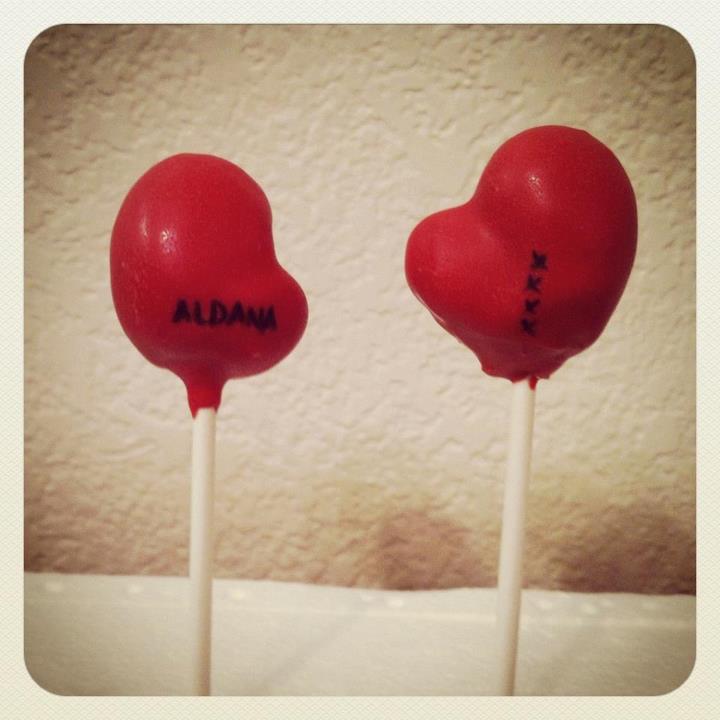
how daring,
that you would make a room
so wide,
place my seat in it
and ask that i make up my mind
whether i leave or stay.
the cheek,
to make a room
so wonder-filled
and ask that i be tenant
live on month to month
courtesies
and occasionally flirt
with the idea of making it
a home for this…
bless you always,
for conjuring mirages,
walls too short to hold
all that kicks within me.
may you never
meet your equal
in this treachery.
genna gardini – the archivist
The past clicks us into focus.
There’s a slid-hinge to the edit.
In this photo, your father frames you
like a fish he wants to remember—
slipped and tin, temporarily pliable,
propped on his knee.
Let’s take your brother, here,
blue-faced and stuffed, full of berries out the
bottom of the backyard, off the bramble
of his foot, rolling from the cabinet’s
carpet like a gum to its tongue,
small and sand-favoured;
his cheek still a linen chest of flesh
before he turned himself down
for girls who developed with their legs poised
stern as oars. They were his wife. Their skirts
unassailable septums, bone-walled. And their
factory-lit health, a tythe
I find myself paying,
and saying, “What’s honest is what lines it,
is the advertorial milk blanket of your insides,”
while my friends ask, “Is this how shit always is?”
and listen, and wonder, what fresh therapist
will chug the construction belt of their counsel,
tap court shoes square and cocked, to knock
the Morse code of medication, and send us
nearing ourselves, for three months, or about.
So, I smoke the scalpel of memory, instead,
and scour love in its clot, as time consults
like a ruler. And each inch knows this
is the telling. This is the business of my life:
to talk that bread out of its dripping
with the small, sauced animal of my knife.
Posted here with kind permission from the author.
kay ryan – tenderness and rot
Tenderness and rot
share a border.
And rot is an
aggressive neighbor
whose iridescence
keeps creeping over.
No lessons
can be drawn
from this however.
One is not
two countries.
One is not meat
corrupting.
It is important
to stay sweet
and loving.
—
This poem originally appeared in the January 2002 issue of Poetry magazine
maya deren/alexander hammid – meshes of the afternoon
Meshes of the Afternoon (1943) is a short experimental film directed by wife and husband team, Maya Deren and Alexander Hammid. The film’s narrative is circular, and repeats a number of psychologically symbolic images, including a flower on a long driveway, a key falling, a door unlocked, a knife in a loaf of bread, a mysterious Grim Reaper-like cloaked figure with a mirror for a face, a phone off the hook and an ocean. Through creative editing, distinct camera angles, and slow motion, this surrealist film depicts a world in which it is more and more difficult to catch reality.
“This film is concerned with the interior experiences of an individual. It does not record an event which could be witnessed by other persons. Rather, it reproduces the way in which the subconscious of an individual will develop, interpret and elaborate an apparently simple and casual incident into a critical emotional experience.”
— Maya Deren on Meshes of the Afternoon, from DVD release Maya Deren: Experimental Films 1943–58.
The film was originally silent – the soundtrack, by Deren’s third husband, Teiji Ito, was only added in 1959.
tale of tales (skazka skazok)
Astoundingly beautiful animation masterpiece by Yuri Norstein (USSR,1979, 28 min).
From Wikipedia:
Tale of Tales, like Tarkovsky’s Mirror, attempts to structure itself like a human memory. Memories are not recalled in neat chronological order; instead, they are recalled by the association of one thing with another, which means that any attempt to put memory on film cannot be told like a conventional narrative. The film is thus made up of a series of related sequences whose scenes are interspersed between each other. One of the primary themes involves war, with particular emphasis on the enormous losses the Soviet Union suffered on the Eastern Front during World War II. Several recurring characters and their interactions make up a large part of the film, such as the poet, the little girl and the bull, the little boy and the crows, the dancers and the soldiers, and especially the little grey wolf (Russian: се́ренький волчо́к, syeryenkiy volchok). Another symbol connecting nearly all of these different themes are green apples (which may symbolise life, hope, or potential).
Yuriy Norshteyn wrote in Iskusstvo Kino magazine that the film is “about simple concepts that give you the strength to live.”
jarvis cocker – sheffield sex city (lyrics)
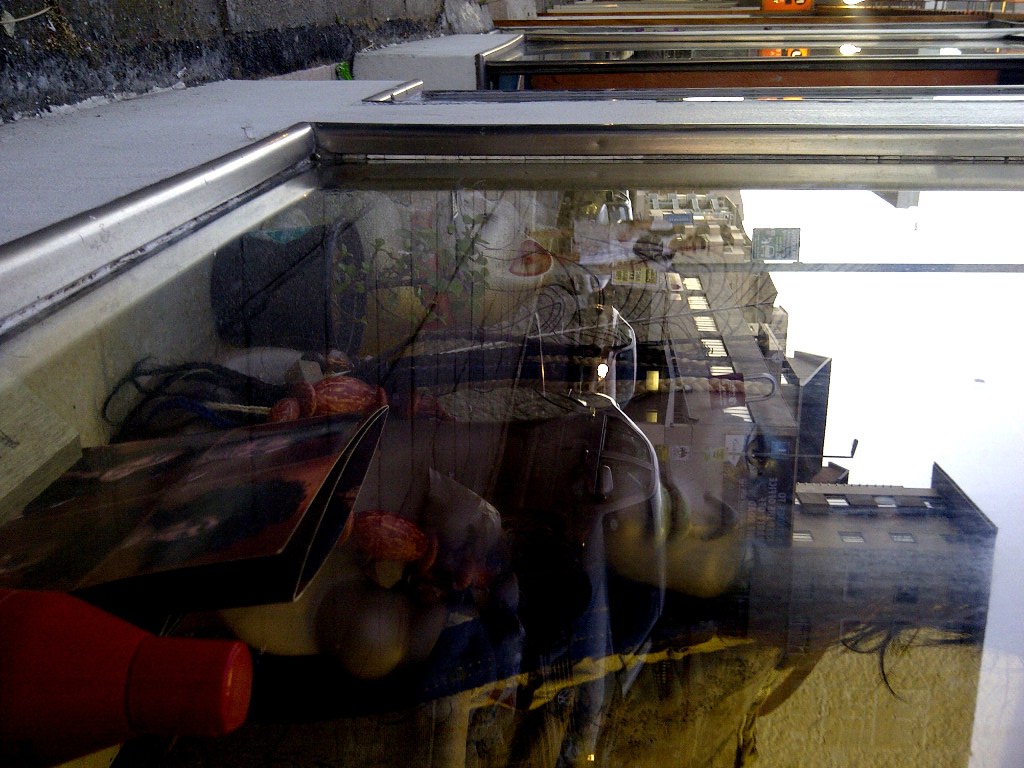
Sea Point Main Road, 7 January 2013. Photograph: Rosemary Lombard
the city is a woman, bigger than any other…
…the sun rose from behind the gasometers at six-thirty a.m.
crept through the gap in your curtains
and caressed your bare feet poking from beneath the floral sheets.
i watched it flaking bits of varnish from your nails
trying to work its way up under the sheets.
even the sun’s on heat today;
the whole city getting stiff in the building heat.
now i’m trying hard to meet her but the fares went up at seven
she is somewhere in the city, somewhere watching television
watching people being stupid, doing things she can’t believe in
love won’t last ’til next installment
ten o’ clock on tuesday evening
the world is going on outside, the night is gaping open wide
the wardrobe and the chest of drawers are telling her to go outdoors
he should have been here by this time, he said that he’d be here by nine
that guy is such a prick sometimes, i don’t know why you bother, really.
oh babe oh i’m sorry
but i had to make love to every crack in the pavement and the shop doorways
and the puddles of rain that reflected your face in my eyes.
the day didn’t go too well.
too many chocolates and cigarettes.
i kept thinking of you and almost walking into lamp-posts.
why’s it so hot?
the air coming up to boil; rubbing up against walls and lamp-posts trying to get rid of it.
old women clack their tongues in the shade of crumbling concrete bus shelters.
dogs doing it in central reservations and causing multiple pile-ups in the centre of town.
i didn’t want to come here in the first place
but i’ve been sentenced to three years in the housing benefit waiting room.
i must have lost your number in the all-night garage
and now i’m wandering up and down your street, calling your name, in the rain
whilst my shoes turn to sodden cardboard.
where are you? (where are you?)
where are you? (where are you?)
i’m still trying hard to meet you, but it doesn’t look like happening
‘cos the city’s out to get me if i won’t sleep with her this evening
though her buildings are impressive and her cul-de-sacs amazing
she’s had too many lovers and i know you’re out there waiting
and now she’s getting into bed; he’s had his chance now it’s too late
the carpet’s screaming for her soul, the darkness wants to eat her whole
tonight must be the night it ends
tomorrow she will call her friends and go out on her own somewhere
who needs this shit anyway?
and listen, i wandered the streets the whole night crying, trying to pick up your scent
writing messages on walls and the puddles of rain reflected your face in my eyes.
we finally made it on a hill-top at four a.m.
the whole city is your jewellery-box; a million twinkling yellow street lights.
reach out and take what you want; you can have it all.
gee it’s so hot tonight!
i didn’t think we were gonna make it.
it was so bad during the day, but now i’m snug
and warm under an eiderdown sky.
all the things we saw:
everyone on park hill came in unison at four-thirteen a.m.
and the whole block fell down.
the tobacconist caught fire, and everyone in the street died of lung cancer.
jorge luis borges – límites (english subtitles)
“De estas calles que ahondan el poniente,
una habrá (no sé cuál) que he recorrido
ya por última vez, indiferente
y sin adivinarlo, sometido
a Quién prefija omnipotentes normas
y una secreta y rígida medida
a las sombras, los sueños y las formas
que destejen y tejen esta vida.”
anne michaels – phantom limbs (excerpt)
So much of the city
is our bodies. Places in us
old light still slants through to.
Places that no longer exist but are full of feeling,
like phantom limbs.
Even the city carries ruins in its heart.
Longs to be touched in places
only it remembers…
(from The Weight of Oranges / Miner’s Pond. McClelland & Stewart, 1997. p.86)
jayne cortez – i am new york city
jayne cortez – there it is
And if we don’t fight
if we don’t resist
if we don’t organise and unify and
get the power to control our own lives
then we will wear
the exaggerated look of captivity
the stylised look of submission
the bizarre look of suicide
the dehumanised look of fear
and the decomposed look of repression
forever and ever and ever
And there it is
 fleurmach
