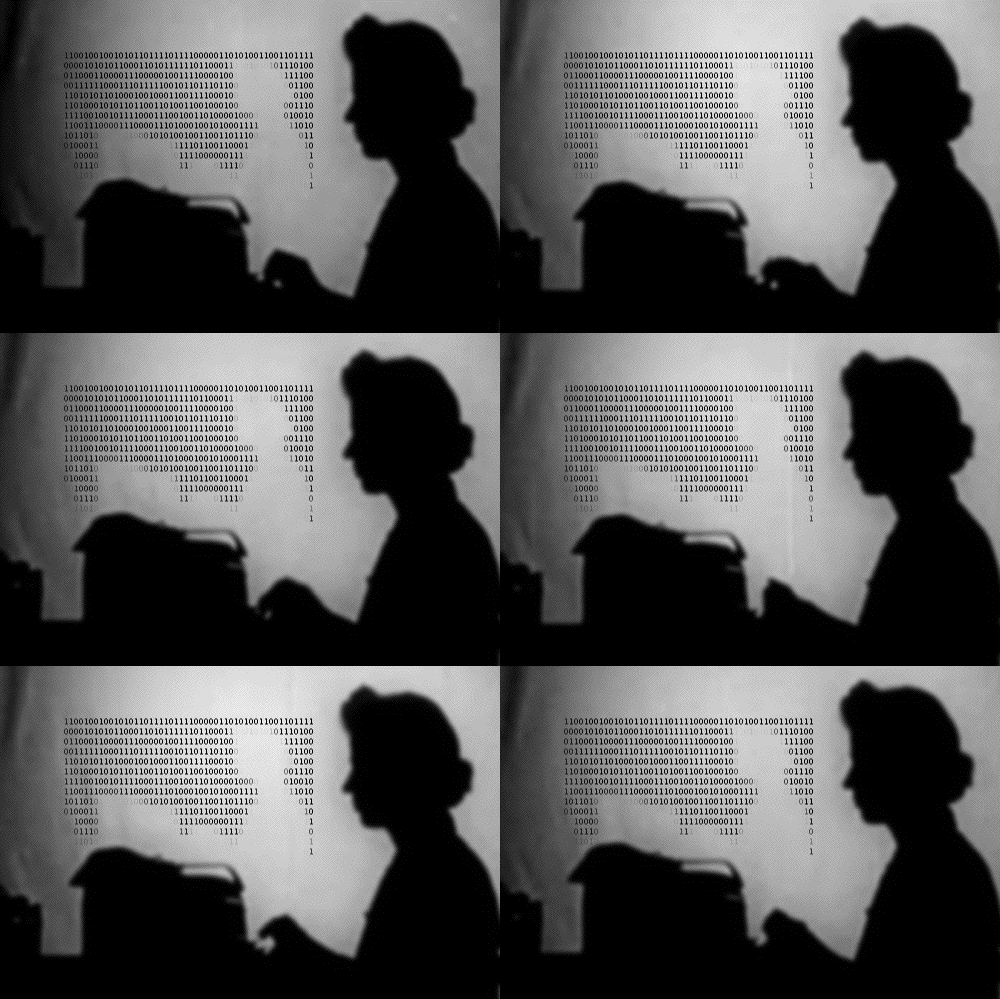
Zero One – Bill Domonkos, 2012.
Bill Domonkos is a filmmaker, GIF maker and stereoscopist. His work has been shown internationally in cinemas, film festivals, galleries and museums.
Zero One – Bill Domonkos, 2012.
Bill Domonkos is a filmmaker, GIF maker and stereoscopist. His work has been shown internationally in cinemas, film festivals, galleries and museums.
“(1) A major corporation is like a construction set. It can be used to put together the whole world. (2) Because of the growing division of labour, many people no longer recognize the role they play in producing mass destruction. (3) That which is manufactured in the end is the product of the workers, students, and engineers.”
“When we show you pictures of napalm victims, you’ll shut your eyes. You’ll close your eyes to the pictures. Then you’ll close them to the memory. And then you’ll close your eyes to the facts.” These words are spoken at the beginning of an agitprop film that can be viewed as a unique and remarkable development. Farocki refrains from making any sort of emotional appeal. His point of departure is the following: “When napalm is burning, it is too late to extinguish it. You have to fight napalm where it is produced: in the factories.”
Harun Farocki, rest in peace.
Shampoo, drones and 3D printed guns…
when you release a weather balloon
off the back of the ship
with the small box of the radiosonde
dangling precariously below its
oversized white grape of a shape
on a simple string
which unfurls as you let it go
to become ten metres, or longer
so the radiosonde can feel
the atmosphere around it
in its full, naked glory
it is eleven o’clock, or midnight
somewhere in the world
it might as well be here
where we are in our pajamas
and the balloon is about this size
and filled with helium
and seconds after you’ve let it go
it is sucked up into the wild
black sky, and the noisy, battling sea
seems to urge it on with an out of
control applause from below
and it is gone, so suddenly, so for surely,
and you’re left standing there, disappointed
blinking into the inky cold, with your head hanging
back onto your neck and your mouth open
in your sticky gumboots
and the salty diesel smell in your beard
and it only gets exciting again when
you hunch over a computer screen inside
with the meteorologists to look – like
alchemists – at the boiling pot of
leaping numbers as the weather balloon
and its transmitting radiosonde races through
the layers of emptiness, a thousand metres, two thousand metres
and sends lurches and spurts of data back to
where we’re bobbing in the Atlantic
as it shoots upwards
with squiggles and digits and facts
through what seems like nothing
but is in actual fact the invisible sinews that
keep the clouds tied to the mountains, moss to the trunk
the raindrops to the snakes, fish to pebbles
goats’ hooves to cliff faces, tomato green to finger tips
the sea to the murmuring, cracking movement of the continents
and the spongy, lung-like coral fans to the conversation
filtering plankton and pain and matter of fact
in the queue at the ATM about the weather and tax
and death and babies and the future
and five thousand metres, seven thousand, nine thousand
to where commercial airliners fly in straight lines
through clouds and stars and shavings of moon
which cannot be seen because the shutters are down
and the movies are being shown
and by now the weather balloon has grown in size
due to the air pressure to the size of this room
and the radiosonde is reaching the edge of
its usefulness to our understanding and prediction
of weather systems and unfurling cold fronts
winds and even the sprinkling of godsmall protons
and atomic nuclei which have been travelling towards us
from very far away – from the herb gardens of supernovas –
to confirm what we’ve been suspecting
for a while already: we are born fragile, and dogs are
our eternal friends.
—
 For more of Toast’s wonder-filled words, check out the gig happening this Thursday night in Cape Town at Joule City, entitled “Albatross: a journey through spoken and unspoken word”. You can buy tickets on QUICKET or at the door.
According to the blurb for the event on Facebook:
This collaboration combines movement with poetry to create a unique audio – visual performance. For this show, the band will consist of Toast Coetzer, Righard Kapp, Jon Savage and Jane Breetzke (the latter two also collaborators in Toast’s other band, Simply Dead). Darkroom Contemporary will accompany the band with an exploration of the music through movement.
Cape Town artist Katherine Bull will create/ draw during the performance and her artwork will be projected for the audience to see.
The material performed in the Albatross show will take the shape of a 45-minute journey. Toast went on a sea voyage to Tristan da Cunha in 2013 and the show will trace themes he wrote about while on the journey and on the island, which is the most isolated permanently populated island in the world (it’s almost 3 000 km from Cape Town).
Hence the ocean, sea voyages, sea birds (and principally the albatross and its marathon gliding exploits to feeding grounds, and then back to a speck in the ocean where a mate awaits on a nest), oceanography, metereology and geography will become the background for love, long-distance relationships, people’s adversity against the odds and other human frailties to be explored against.

HERE is an article discussing some of the non-“woo” (pseudo-scientific hippie freak-out) reasons why companies like Monsanto pushing genetically modified products are doing evil: the corporate imperatives and corruption surrounding the development of GMOs, how their use disempowers farmers (especially small farmers in non-first world contexts, although this article only talks about the USA) and what we can do about this deception being perpetrated against the world.
Apart from being economically unsustainable, there are also other compelling health-related reasons why GMOs are a bad idea, which don’t involve a non-specific, irrational fear of genetic mutations being dangerous to consume per se. For example, the seeds are engineered to be resistant to pesticides so that crops can be sprayed and only the weeds growing among the GM plants die. Studies have shown that GM food (or the meat of animals that ate GM food) can be contaminated by traces of the pesticides used during the plants’ growth, pesticides that are teratogenic (causing birth defects) and carcinogenic (causing cancer) to humans. These modifications also lead to resistance in plants and insect pests – “superweeds” and “superbugs” that make sustainable farming more difficult.
If you are South African, please GO HERE to sign a petition as part of the formal public participation process against an application by multinational agricultural company Dow AgroSciences, a wholly owned subsidiary of the Dow Chemical Company, to import GM cottonseed products to South Africa, for use as food, animal feed and in processing.
“I thought: I want to make a kind of music that had the long Now and the big Here in it, and for me that meant this idea of expanding the music out to the horizons. In terms of space, you were not aware of the edges of the music. I wanted to make a music where you just wouldn’t know what was music and what wasn’t… a music that included rather than excluded; a music that didn’t have a beginning and an end… This is the sense of making the Now longer.”
A 1989 documentary on Brian Eno’s work in ambient sound.
MINDBLOWING.
The Known Universe takes viewers from the Himalayas through our atmosphere and the inky black of space to the afterglow of the Big Bang. Every star, planet, and quasar seen in the film is possible because of the world’s most complete four-dimensional map of the universe, the Digital Universe Atlas that is maintained and updated by astrophysicists at the American Museum of Natural History. The film, created by the Museum, was part of an exhibition, Visions of the Cosmos: From the Milky Ocean to an Evolving Universe, at the Rubin Museum of Art in Manhattan through May 2010.
Data: Digital Universe, American Museum of Natural History
Visualization Software: Uniview by SCISS
Director: Carter Emmart
Curator: Ben R. Oppenheimer
Producer: Michael Hoffman
Executive Producer: Ro Kinzler
Co-Executive Producer: Martin Brauen
Manager, Digital Universe Atlas: Brian Abbott
Music: Suke Cerulo
somewhere in 2008 i sent friends and family a short account of a visit to hillbrows’ HIV testing site. to cut it short it was a nightmare, surreal. the counsellor sat me down, asked my age, the number of sexual partners blah blah. he then broke down HIV for me, this is what it is, blah. to tie a bow on it, dude then asked where my family was and if i had any younger siblings who would take care of me when i get too sick to do so. he hadn’t even drawn blood then. what followed was a small confrontation, he shut me up by stating, ‘i wouldn’t be so cocky before my ‘positive’ comes back.’
i took the test and walked down to the johannesburg art gallery. kay hassan eased my anger, his fathers’ music room reminded me of home, the people there who would have to take care of me if the clairvoyant counsellor had had a clearer crystal ball. i’d seen other counsellors before mr doom and gloom, they had been informative and quick to ease my nerves. he was a bad apple, i filed a complaint.
today i tried my local clinic on for size. with ‘kick start’ clinics closed i’ve struggled to find a testing site that’s free and near and last year i missed my december first test. woodstock community health centre sits just on the other side of mountain road. when electricians arrived too early for my husband to open for them, i ran home to open up and leave them with a short ‘to do’ before zipping back up the road to join the freebie queue. after my folder was called i waited a short 45 minutes (govt health care people, catch up) before i was asked to see a counsellor. as i stepped in another gentleman was called.
‘no, we’re not together,’ i offered.
‘yes, that’s fine. just both of you come in.’
‘oh, ok’
i’m in this weird room with a counsellor, a dude i met on the bench outside and i’m about to disclose my sexual history. i’m about to know how many people mr bench has been with. this is all too heady. i sit and giggle awkwardly. i’m thinking of my one night stands, i realize i don’t know as much about any of them as i’m about to find out about this stranger. i giggle some more then ask, ‘but how?’ at which i burst out laughing. the counsellor raises an eye brow, i cross and uncross my legs then clench my butt cheeks, got to stop laffing.
‘how old are you?’
the counsellor is barking at mr bench, who looks at me and i shrug my shoulders. a quiet knock introduces mr bench’s friend, his translator. the man is french. there’s four of us in the room and the translator is hot and about to find out i’m pretty easy and live around the corner. i need a smart phone. for ten minutes i sit listening as questions bounce from the counsellor to the translator and then finally to mr bench. it’s amusing, it’s someone else’s nightmare.
‘have you ever had anal sex?’
‘i’m sorry, i’m going to have to wait outside.’
my shoulders are shaking, my chest is tight. i am clenching an unclenching my fists. i’m biting at my lower lip and i want to punch the daylights out of our counsellor. my knees buckle a bit as i sit at the bench outside the office. i didn’t get mr bench’s name but i know a few things about him that should remain in the safety of ‘doctor patient privilege.’ i sat through it, i laughed about it. yes, i shouldn’t have been put in that position but it’s one thing to need a translator to buy milk and bread and quite another to have a second person know your status before you do. mr bench is just one dude, a home affairs glitch. shame. i’m just a sweet little asshole, who should have used better judgement. when they leave i can’t look either one in the eye, i’m ashamed and can’t wait to half die.
my turn comes and i ask the counsellor why they asked us both to come in.
‘it’s a faster turn around.’
if they prick us, do we not bleed?
Humanity also needs dreamers, for whom the disinterested development of an enterprise is so captivating that it becomes impossible for them to devote their care to their own material profit. Without doubt, these dreamers do not deserve wealth, because they do not desire it. Even so, a well-organized society should assure to such workers the efficient means of accomplishing their task, in a life freed from material care and freely consecrated to research.
— Marie Curie, scientist, Nobel laureate (1867-1934)
Fiona Apple’s chillingly subversive cover of Willy Wonka’s song from Charlie and the Chocolate Factory , originally sung by a supremely creepy Gene Wilder in the 1970s film (if you saw this as a kid, didn’t he scare the crap out of you?), appears in a new animated ad for Chipotle which slams factory farming.
This is Rosalia Chalia (1863-1948) singing “I Dreamt That I Dwelt in Marble Halls” from the opera The Bohemian Girl, composed by MW Balfe in 1843, recorded on wax cylinder in 1901…
… And here’s the incomparable re-recording engineer and archivist Ward Marston talking about this forgotten Cuban soprano, and the physical realities of trying to rescue recordings of her from obscurity — fascinating:
What do you get if you mix equal parts cutting edge continental philosophy, voodoo, psychedelics, underground dance music, cybernetics and multimedia experimentation? The notorious Orphan Drift!
Happening this Thursday, 25 July, from 20h00, Bolo’bolo Anarchist Info Shop and Vegan Cafe are delighted to announce an evening of Orphan Drift, featuring several short films from founding member Mer Roberts as well as a talk by UWC cyberculture theorist Delphi Carstens, followed by an almost certainly lively open discussion.
 Here’s a taste of what you can expect on Thursday evening:
BACKGROUND
In the mid-90s, the legendary Cyber Culture Research Unit at the prestigious Warwick University was formed: their university-funded activities included producing collaged texts of Deleuze and Guattari, William Burroughs and binary code, theorising the occult underpinnings of markets, composing abrasive electronic music and, ostensibly, consuming inhuman doses of psychedelics as often as possible, much of this via the ORPHAN DRIFT collaborative artist project. A few years later, the CCRU was no more; founding member Nick Land – a genius philosopher and agent provocateur – had achieved full meltdown / deterritorialization and Sadie Plant, author of the well-known Writing On Drugs, had disappeared from sight.
The legacy of the CCRU is very much alive today though, a subterranean influence for the very latest movements in philosophy.
ABOUT ORPHAN DRIFT
Mer co-created the collaborative artist and hive mind 0rphan Drift in London in 1994. Although it was predominantly made up of visual artists, it also involved sound designers, concept engineers and media activists.
As an artistic entity, 0rphan Drift is known for immersive and visually complex works which use the sample and the remix extensively, treating information as matter and the image as a unit of contagion. The art produced is science fictional and immersive. It complicates the distinctions between material and immaterial phenomena and dimensions, both in content and media. Much of its work explored mimetic patterns of desire, production and consumption- particularly in relation to the rapid technological changes happening at the time- drawing heavily on cyberpunk fiction, polyrhythmic electronica and the underpinnings of African religious systems. This was the social context in which its shifting layers of frightening, disturbing, abject, schizophrenic, beautiful, deconstructive, poetic and fragmented frequencies were able to take affect.
0rphan Drift is cross-contextual and made extensive contributions from 1994 – 2004 in the social arenas around contemporary art, underground music and cyber-feminism/post-structural philosophy. 0D has participated internationally in over a decade of exhibitions, screenings and performance, exhibiting extensively in the UK, Europe, Canada and the States, including at the Cabinet Gallery and Tate Modern in London; writing the Scifi-theory text ‘Cyberpositive’, and featuring in DJ Spooky’s ‘Sound Unbound’ in the ‘Renegade Academics’ chapter. It contributed cybervisuals to the set of Stephen Speilberg’s ‘AI’ and ‘Minority Report’ features and Leftfield and NIN world tours, worked frequently with Kode 9 and participated in 10 years of international Video art and AV Electronica art events in Norway, Germany, Canada, UK, South Africa and USA.
We now collaborate between Cape Town and San Francisco and continue to make science fictional work which is guided by a neo-futurist sensibility and clearly a progression from our earlier work. Our new video work ‘Wilderness of Elsewheres, Colony 1’, which maps contemporary global concerns with survival, insecurity and the unknown, has been shown in Santiago and San Francisco and we subsequently produced a series of Post Apocalyptic postcards for Shadowshop; Stephanie Syjuco’s parasitic shop at SFMOMA. Recently we made video for Delphi Carsten’s Capetown Tedx Talk, ‘Hyperstition’, and were commissioned make ‘You Its Eyes 94-13’ for screening at CTM13, Berlin.
WHAT WE’LL BE SCREENING / HOSTING THIS THURSDAY EVENING
1: You Its Eyes. 1994-2013, 30 minute video remixing 0D’s earlier work
0D employs different frequencies and overlapping rhythmic patterns to activate submerged regions of the brain and create intimacy and proximity through video-sonic signal. The goal of 0D, writes Simon Reynolds (1996), is “the liberation of texture from its environment, of energy-flux from contoured form with the goal to recreate the intensity of being lost”. 0D describes the individual ‘self’ haunted by a sensory cross-talk of signals from realms beyond the physical. Voices from imagined futures haunt the contemporary technological landscape. Feedback from the machines evolves into an unfamiliarity of speed and complexity, coding the textual body and imagination as tools for change. The invisible, fantastical, and anarchic called upon here are what Deleuze and Guattari define as the essence of virtuality. These intensities carry the sorcerous forces that technology and science unleash as they delve further into the quantum, the chaotic and the abstract.
“Surrounding the human self and its island of experience lies a raging sea of intensities” (D&G). All journeys into this space involve a succession of becomings autistic, mimetic, contagious and machinic.
2: Hyperstition – A talk by Delphi Carstens
Delphi is a lecturer at UWC, as well as half of the duo which makes up Groovy Troopers Productions – creators of temporary autonomous zones in the form of art & trance festivals. Delphi is currently completing a doctorate thesis, and will present on: “hyperstition” — a neologism coined by Nick Land that combines the words ‘superstition’ and ‘hype’ to describe how fictions become fact and how our narratives (stories) shape our world. It also describes, particularly, the narrative of capitalism, which is driven by hype and speculation and, which more importantly, turns fictions into facts. One very important fiction that Delphi will be discussing is the fiction of the apocalypse. Focusing on the current secular meaning of apocalypse as well as how popular culture views our current global crisis and the importance of imagining ourselves differently. Hyperstition also describes the nexus where myth or magic and science meet. Delphi explores the world of hyperstition to describe the manner by which hype and speculation become facts in contemporary society. The future is looking uncertain and how we imagine this future may be more important than we realise. This talk will be both an intellectual and a felt experience.
3: A Wilderness Of Elsewheres. 2009, 10 minutes
A two-screen installation in which dark abstract video spaces flow into bright photographic landscapes (the raw desolate tundras of southern Africa), populated and de-populated by animated collages of architecture and fashion, cut and scanned from contemporary print publications. A deliberate rhythmic awkwardness creates an alien time frame. The screens share a soundscape, made from a wide variety of samples including glaciers melting and rocket launches, composed into a sonic ‘event’. The work is imbued with post-apocalyptic sensibility, urges to the neo-romantic and the science fictional blending of first and third world materiality. At once immersive and deconstructive, the work is collision, co-habitation, evolutionary fever-dream.
Join us in mapping the outer edges — and do come earlyish if you want to sit down while doing so ;) !
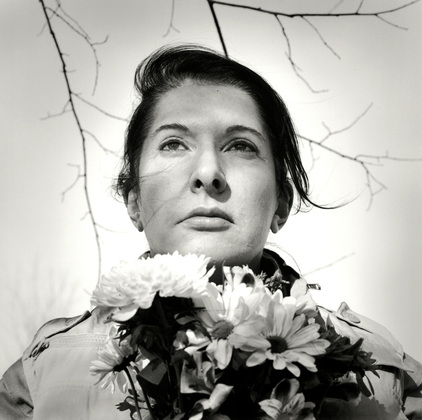
A pioneer of performance art, Marina Abramović has been using her own body as the subject, object, and medium of her work since the early 1970s. In 2011, the Museum of Modern Art (MOMA) in New York put on her retrospective, The Artist is Present. Yesterday, 14 July 2013, again at MOMA, she spoke about how to create a productive union between the arts, science, technology, spirituality and education in the future. GO HERE TO WATCH.
I watched two incredible films tonight, Schizophonia and The Third Man, courtesy of Anette Hoffmann and the Archive & Public Culture Platform at UCT, with the kind permission of musician, composer and performance artist, Erik Bünger, who made the films.
In each film, Bünger both analyses and plays with the uncanny, magical potency of sound as recorded medium. Everything he does is underpinned by formidable quantities of research, a fondness for outrageously rhizomatic linkages and a wicked sense of humour. Definitely my new art crush of the month! ;)
Here’s a video of Bünger giving a lecture/performance which utilises much of the material presented in the standalone film, Schizophonia. This was recorded at MEDEA, Malmo University, in March 2011, as part of the K3 courses “Music in the Digital Media Landscape” and “Illustrating with Music”.
I really WISH I could find more of The Third Man to share here – it was tremendously entertaining, and, even off on its most questionable, occult-paranoid tangents, bizarrely pertinent to so much of the stuff about performance, recording and playback of music that I’ve been posting and thinking about in the past few years; even down to an hilarious discussion of the “entraining” (his word) power of The Sound Of Music (my post this afternoon prefigured this too, eerily!).
Anyway, you can watch the lecture:
And here’s a bio:
The Swedish artist, composer, musician and writer Erik Bünger (1976) works with re-contextualising existing media in performances, installations and web projects. In ‘Gospels’, sections of Hollywood interviews are removed from their original contexts, interacting to form a new, seemingly coherent whole. Yet these pre-existing works frequently conflict; Bünger explores the disjunction between replaying and experiencing in his ‘Lecture on Schizophonia’. This simultaneously analytical and performative work highlights the relationship between sound and perceived reality, using popular references and familiar footage including Barak Obama and Woody Allen. Similar tensions are exposed in ‘God Moves on the Water’, in which two songs about the sinking of the Titanic are combined to form a third narrative. In ‘The Third Man’, the negative power of music is explored. Displacing and recombining familiar material, Bünger challenges the separation between authentic and simulated experiences.
Bünger may have followed a traditional education in composition at the Stockholm Royal College of Music, but he is hardly a run-of-the-mill composer. His works have increasingly come to approach contemporary conceptual art, but his combination of sound and visual is also linked to literary storytelling. In his performances, installations and web projects, different timelines are superposed, past worlds and present understandings. The most important thing about Bünger’s work is not the art or literature context but the transformation that takes place in the specific works. What may seem trivial and inconsequential suddenly becomes the stuff of dreams. He is attracted to moments when recorded sound and image bridge a space between absolutes, between death and life and between gods and humankind. –
This info comes from http://expo.argosarts.org/

Francis Barraud – “Dog Looking At and Listening to a Phonograph”(1898)
Hyperobjects are objects that are massively distributed in time and space: Plutonium (half-life of 24 100 years), global warming (7% of effects still occurring 100 000 years later), the BP oil slick. This massive distribution does various things to our perception of them, and to our ideas about what constitutes an “environment” and the significance of being human—among others.
Oil made me develop the metaphor that hyperobjects are viscous. Viscosity here means that the more you know about a hyperobject, the more entangled with it you realize you already are.
Hyperobjects thus push the reset button on what phenomenology (Levinas, Graham Harman) calls sincerity. Sincerity means that in the words of Buckaroo Banzai, “Wherever you go, there you are.” When I’m typing this, I’m totally absorbed in the typing. When I’m experiencing irony, there I am, feeling ironic. Sincerity eats irony! In Lacanian, “there is no metalanguage.”
This is a very curious phenomenon, one that confirms my suspicion that we have entered an ecological era. A few moments ago we were delighting in our ironic free play. Now it seems we’re stuck to the mirror, like Neo in that scene in The Matrix.
We are caught in object-ive existence whether we like it or not.
–– Timothy Morton, from his fascinating blog, ECOLOGY WITHOUT NATURE
________________________
A baby vomits curdled milk. She learns to distinguish between the vomit and the not-vomit, and comes to know the not-vomit as self. Every subject is formed at the expense of some viscous, slightly poisoned substance, possibly teeming with bacteria, rank with stomach acid. The parent scoops up the mucky milk in a tissue and flushes the wadded package down the toilet.
Now we know where it goes.
For some time we may have thought that the U-bend in the toilet was a convenient curvature of ontological space that took whatever we flush down it into a totally different dimension called Away, leaving things clean over here. Now we know better: instead of the mythical land Away, we know the waste goes to the Pacific Ocean or the wastewater treatment facility.
Knowledge of the hyperobject Earth, and of the hyperobject biosphere, presents us with viscous surfaces from which nothing can be forcibly peeled. There is no Away on this surface, no here and no there. In effect, the entire Earth is a wadded tissue of vomited milk.
— Timothy Morton, from “Hyperobjects” (University of Minnesota Press, 2013)
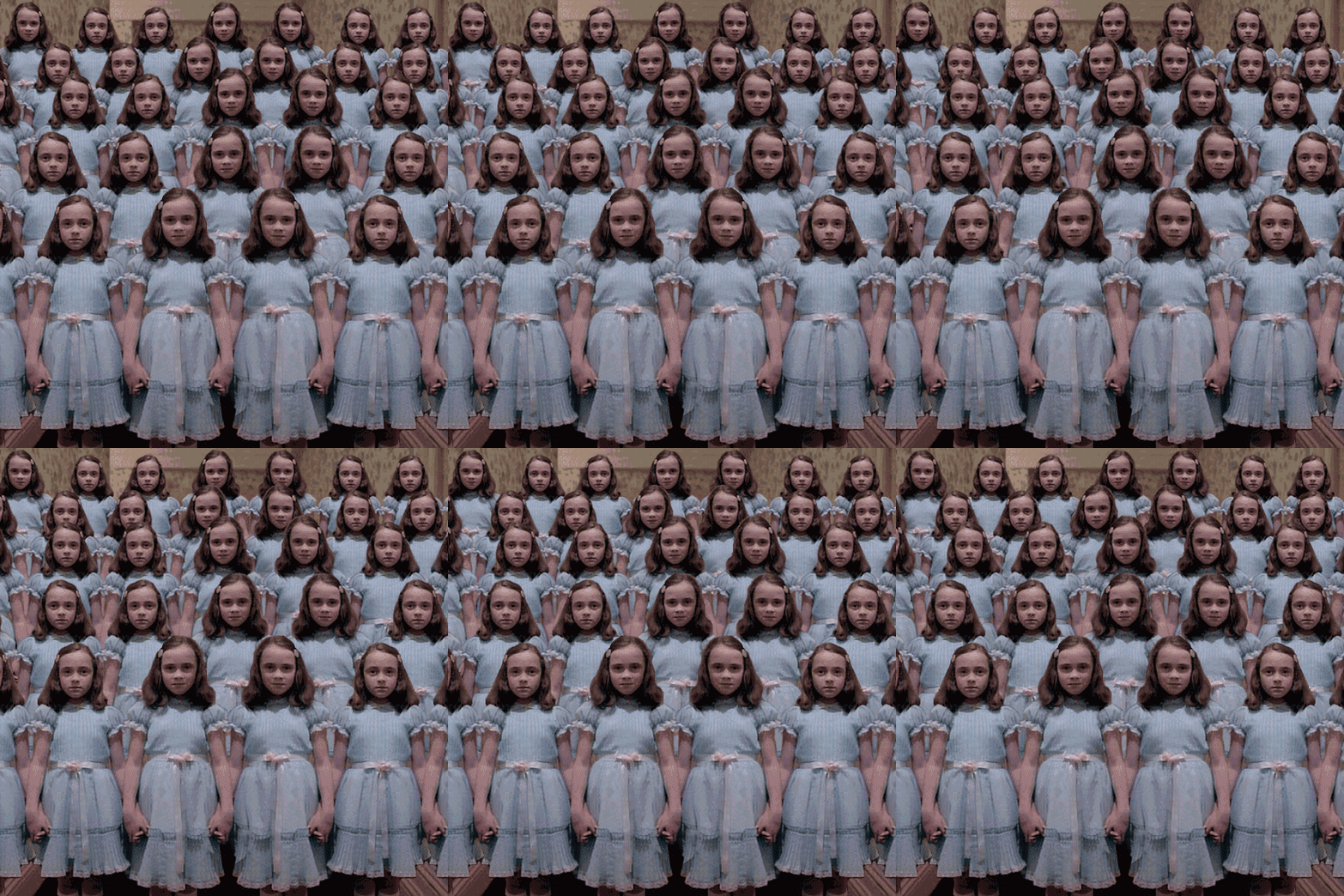
Is she spinning clockwise or anti-clockwise? Watch her for a while and she will change direction.

Published on 12 May 2013:
A revised version of David Bowie’s Space Oddity, recorded with an acoustic guitar by Canadian astronaut Commander Chris Hadfield on board the International Space Station. Out of this world.
A principal fruit of friendship is the ease and discharge of the fullness and swellings of the heart, which passions of all kinds do cause and induce. We know diseases of stoppings and suffocations are the most dangerous in the body, and it is not much otherwise in the mind: you may take sarza to open the liver, steel to open the spleen, flowers of sulphur for the lungs, castoreum for the brain; but no receipt openeth the heart but a true friend, to whom you may impart griefs, joys, fears, hopes, suspicions, counsels, and whatsoever lieth upon the heart to oppress it, in a kind of civil shrift or confession.
…[C]ommunicating of a man’s self to his friend works two contrary effects, for it redoubleth joys, and cutteth griefs in halves. For there is no man that imparteth his joys to his friend, but he joyeth the more; and no man that imparteth his griefs to his friend, but he grieveth the less. So that it is in truth of operation upon a man’s mind, of like virtue as the alchemists use to attribute to their stone for man’s body, that it worketh all contrary effects, but still to the good and benefit of nature. But yet without praying in aid of alchemists, there is a manifest image of this in the ordinary course of nature. For in bodies, union strengtheneth and cherisheth any natural action, and on the other side weakeneth and dulleth any violent impression; and even so it is of minds…
…The second fruit of friendship is healthful and sovereign for the understanding, as the first is for the affections. For friendship maketh indeed a fair day in the affections, from storm and tempests; but it maketh daylight in the understanding, out of darkness, and confusion of thoughts. Neither is this to be understood only of faithful counsel, which a man receiveth from his friend; but before you come to that, certain it is that whosoever hath his mind fraught with many thoughts, his wits and understanding do clarify and break up, in the communicating and discoursing with another: he tosseth his thoughts more easily; he marshalleth them more orderly; he seeth how they look when they are turned into words; finally, he waxeth wiser than himself; and that more by an hour’s discourse, than by a day’s meditation…
… How many things are there which a man cannot, with any face or comeliness, say or do himself? A man can scarce allege his own merits with modesty, much less extol them; a man cannot sometimes brook to supplicate or beg; and a number of the like. But all these things are graceful in a friend’s mouth, which are blushing in a man’s own. So again, a man’s person hath many proper relations which he cannot put off. A man cannot speak to his son but as a father; to his wife but as a husband; to his enemy but upon terms: whereas a friend may speak as the case requires, and not as it sorteth with the person. But to enumerate these things were endless. I have given the rule, where a man cannot fitly play his own part; if he have not a friend, he may quit the stage.
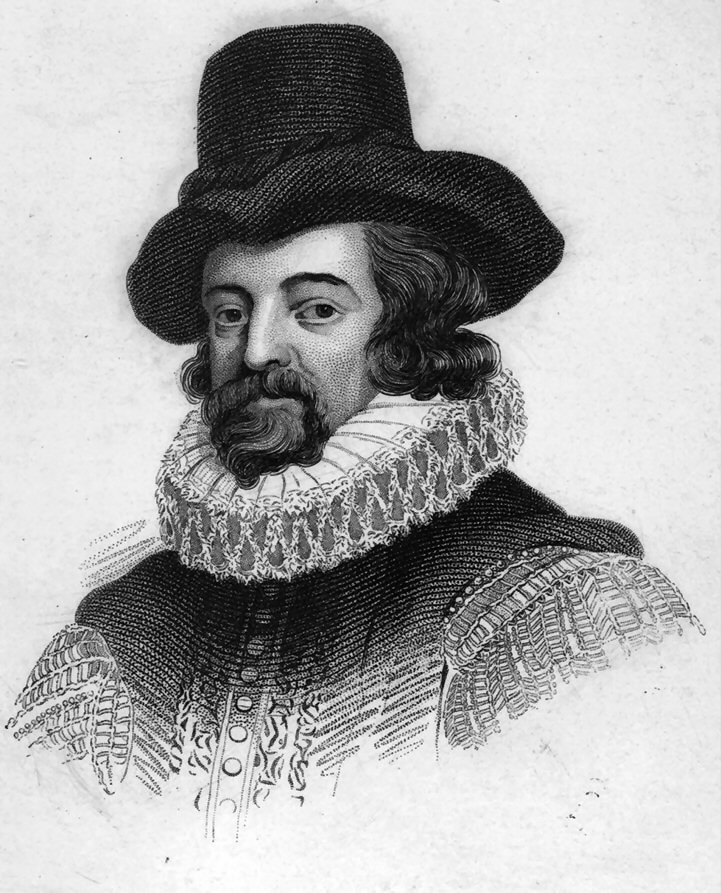
Read the whole of this essay by Francis Bacon (the 16th century thinker) HERE.
The full movie is here:
(or was…)
Archival interview with David Cronenberg from Bombsite (1986)
Bette Gordon (BG) Are your nightmares like your movies? Do you actually see your movie images in your dreams?
David Cronenberg (DC) Rarely. My images come out of the process of making film. I do really think that movies work on the level of dream logic. However realistic or narrative they might like to think they are, they are dreamlike.
BG You, as a director, have an incredible ability to tap into the unconscious.
DC I was once on a talk show with a psychiatrist who worked at the Clark Institute with criminals. He had seen my film, Videodrome and said to me, “I’m almost afraid to be sitting here next to you.” He was totally mystified as to how I could empathize with those states of mind and he obviously, could not. It is mostly intuitive with me. One of the reasons I make a movie is that I’m then in a position where I have to analyze and I enjoy that process.
BG In They Came from Within there was a line of dialogue—”Man thinks too much, he’s lost touch with the body, with instincts. Too much brain and not enough guts.” Do you think the mind is stronger than the body?
DC No. I think the quote is particular to that film. What interests me is the mind/body schism.
BG What do you mean by mind/body schism?
DC I think the mind grows out of the body. I don’t believe in an afterlife. I don’t see the mind or the spirit or the soul continuing after our body dies. The mind and body are completely dependent and interrelated. The mind is somehow organic and physical. It’s only our perception and our culture that keeps them separate.
BG What about the mind creating its own monsters in a sense, that the monster comes from within the mind. Like in Dead Ringers for example, or in Videodrome where it’s the mind that is completely in charge of the body.
DC In as much as the mind is ever in charge of anything. I don’t think it is always in control.
BG Or in Scanners where through mind control, you can . . .
DC Affect the body. But you see, I think everybody does that. I don’t think it’s just Western culture, other cultures even accentuate it more by saying the body’s nothing; it’s only temporary and the mind and the spirit are eternal. I think that’s very destructive. It’s not true. All philosophical, metaphysical and religious forces should be concentrating on trying to form a perception and reality for ourselves that integrates the two. And that would include coming to terms with death as a physical event rather than trying to evade it.
BG So how would you come to terms with death?
DC There’s a Japanese religion that thinks of all of life as a preparation for death, which to the Western mind seems like a very morbid approach to life. But if you think of death as a true end of something, of a process, it makes perfect sense. There we get into the old idea of Western culture being death denying, but I actually think Eastern culture is too. Because they try to trivialize death as being not important.
BG So it falls somewhere between the two as being very important and not important at all.
DC One of the main subjects of all of my films is exactly that. In Dead Ringers you get a body split into two (the twins) with basically, one mind. Just doing that is like an experiment in a lab—which all my movies really are. I set out to see how they work, to illuminate something for myself by doing these experiments.

Videodrome – with James Woods and Debbie Harry
BG There is something about the medical profession in all of your films.
DC Scientists and doctors to me, are at the leading edge of what all human beings do all of the time; which is to change, everything. We’ve never been satisfied with what we’re given. We don’t accept the earth as a given. We change our body chemistry, our physiology, our biology, our biochemistry. We clear the forest, we build our own environment, we climate control it . . . And, the interface between that impulse and the human body often is doctors, biologists, and biochemists.
BG Were you a biochemist?
DC I did go into biochemistry at the University of Toronto. But when I came face to face with what science required, I realized that my temperament was much more suited to some form of art; writing or whatever. I didn’t think of film at the time. I found I would prefer to invent my own science rather than spend two years with rats in a lab getting results.
BG There’s an ambivalence for the medical/science profession in all of your films. You don’t really have villains in the film, nobody’s quite evil . . .
DC That’s right. It is ambivalence. Because I think that they’re heroic even when they’re crazed. I think that being crazed and obsessed is part of being heroic. You don’t get one without the other. Ambition is something else. It’s not ambition in the material sense. My characters are obsessed with discovery and that does excite me and I do identify with that. A good creative scientist is as good as a good creative artist. No question in my mind.
BG What is your notion of the hero? You said your characters are heroic even when they are crazed.
DC Yes, maybe even especially because they’re crazed. I’m obviously drawn to people as main characters who are not embedded so completely in their culture that they can’t see any . . . a visionary’s process . . . people who are jarred into being outside. Continue reading
Victoria and Rosemary at Speedway 105, 2010. Photo by Mandy Robinson
From Clara Rockmore’s Lost Theremin Album (1975)
Anis Fuleihan (April 2, 1900 – October 11, 1970) was a Cypriot-born American composer, conductor and pianist. Fuleihan’s music generally avoided serial structures, and was heavily influenced by Middle Eastern folk music. One of his works is a concerto for theremin, premiered by the New York Philharmonic under Leopold Stokowski in 1945; the soloist was Clara Rockmore.
Images: Alphonse Mucha
The following are excerpts from Vilém Flusser’s Towards a Philosophy of Photography (London: Reaktion Books, 2000).
The Image
Images are mediations between the world and human beings. Human beings ‘ex-ist’, i.e. the world is not immediately accessible to them and therefore images are needed to make it comprehensible. However, as soon as this happens, images come between the world and human beings. They are supposed to be maps but they turn into screens: Instead of representing the world, they obscure it until human beings’ lives finally become a function of the images they create. Human beings cease to decode the images and instead project them, still encoded, into the world ‘out there’, which meanwhile itself becomes like an image – a context of scenes, of state of things. This reversal of function of the image can be called ‘idolatry’; we can observe the process at work in the present day: The technical images currently all around us are in the process of magically reconstructing our ‘reality’ and turning it into a ‘global image scenario’. Essentially this is a question of ‘amnesia’. Human beings forget they created the images in order to orient themselves in the world. Since they are no longer able to decode them, their lives become a function of their own images: Imagination has turned into hallucination. (pp 9-10)
![22hr38min [photo: Niklas Zimmer]C-type print 120x99,4cm (Ed.3) and 60x49,7cm (Ed.7)](https://fleurmach.com/wp-content/uploads/2012/12/22hr38min-niklas-zimmer.jpg?w=869)
22hr38min [photo: Niklas Zimmer]
C-type print 120×99,4cm (Ed.3) and 60×49,7cm (Ed.7)
The struggle of writing against the image – historical consciousness against magic – runs throughout history. With writing, a new ability was born called ‘conceptual thinking’ which consisted of abstracting lines from surfaces, i.e. producing and decoding them. Conceptual thought is more abstract than imaginative thought as all dimensions are abstract from phenomena – with the exception of straight lines. Thus with the invention of writing, human beings took one step further back from the world. Texts do not signify the world; they signify the images they tear up. Hence, to decode texts means to discover the images signified by them. The intention of texts is to explain images, while that of concepts is to make ideas comprehensible. In this way, texts are a metacode of images.
This raises the question of the relationship between texts and images – a crucial question for history. In the medieval period, there appears to have been a struggle on the part of Christianity, faithful to the text, against idolaters or pagans; in modern times, a struggle on the part of textual science against image-bound ideologies. The struggle is a dialectical one. To the extent that Christianity struggled against paganism, it absorbed images and itself became pagan; to the extent that science struggled against ideologies, it absorbed ideas and itself became ideological. The explanation for this is as follows: Texts admittedly explain images in order to explain them away, but images also illuminate texts in order to make them comprehensible. Conceptual thinking admittedly analyze magical thought in order to clear it out of the way, but magical thought creeps into conceptual thought so as to bestow significance on it. In the course of this dialectical process, conceptual and imaginative thought mutually reinforce one another. In other words, images become more and more conceptual, texts more and more imaginative. Nowadays, the greatest conceptual abstraction is to be found in conceptual images (in computer images, for example); the greatest imagination is to be found in scientific texts. Thus, behind one’s back, the hierarchy of codes is overturned. Texts, originally a metacode of images, can themselves have images as a metacode.
That is not all, however. Writing itself is a mediation – just like images – and is subject to the same internal dialectic. In this way, it is not only externally in conflict with images but is also torn apart by an internal conflict. If it is the intention of writing to mediate between human beings and their images, it can also obscure images instead of representing them and insinuate itself between human beings and their images. If this happens, human beings become unable to decode their texts and reconstruct the images signified in them. If the texts, however, become incomprehensible as images, human beings’ lives become a function of their texts. There arises a state of ‘textolatry’ that is no less hallucinatory than idolatry. Examples of textolatry, of ‘faithfulness to the text’, are Christianity and Marxism. Texts are then projected into the world out there, and the world is experienced, known and evaluated as a function of these texts. A particularly impressive example of the incomprehensible nature of texts it provided nowadays by scientific discourse. Any ideas we may have of the scientific universe (signified by these texts) are unsound: If we do form ideas about scientific discourse, we have decoded it ‘wrongly’: anyone who tries to imagine anything, for example, using the equation of the theory of relativity, has not understood it. But as, in the end, all concepts signify ideas, the scientific, incomprehensible universe is an ’empty’ universe.
Textolatry reached a critical level in the nineteenth century. To be exact, with it history came to an end. History, in the precise meaning of the world, is a progressive transcoding of images into concepts, a progressive elucidation of ideas, a progressive disenchantment (taking the magic out of things), a progressive process of comprehension. If texts become incomprehensible, however, there is nothing left to explain, and history has come to an end. During this crisis of texts, technical images were invented: in order to make texts comprehensible again, to put them under a magic spell – to overcome the crisis of history. (pp 11 – 13)
++++++++++
To summarize: Photographs are received as objects without value that everyone can produce and that everyone can do what they like with. In fact, however, we are manipulated by photographs and programmed to act in a ritual fashion in the service of a feedback mechanism for the benefit of cameras. Photographs suppress our critical awareness in order to make us forget the mindless absurdity of the process of functionality, and it is only thanks to this suppression that functionality is possible at all. Thus photographs form a magic circle around us in the shape of the photographic universe. What we need is to break this circle. (pg 64)
++++++++++
Why a Philosophy of Photography is Necessary
With one exception: so-called experimental photographers – those photographers in the sense of the word intended here. They are conscious that image, apparatus, program and information are the basic problems that they have to come to terms with. They are in fact consciously attempting to create unpredictable information, i.e. to release themselves from the camera, and to place within the image something that is not in its program. They know they are playing against the camera. Yet even they are not conscious of the consequence of their practice: They are not aware that they are attempting to address the question of freedom in the context of apparatus in general. (pg 81)
A philosophy of photography is necessary for raising photographic practice to the level of consciousness, and this is again because this practice gives rise to a model of freedom in the post-industrial context in general. A philosophy of photography must reveal the fact that there is no place for human freedom within the area of automated, programmed and programming apparatuses, in order finally to show a way in which it is nevertheless possible to open up a space for freedom. The task of a philosophy of photography is to reflect upon this possibility of freedom – and thus its significance – in a world dominated by apparatuses; to reflect upon the ways in which, despite everything, it is possible for human beings to give significance to their lives in face of the chance necessity of death. Such a philosophy is necessary because it is the only form of revolution left open to us. (pp 81-82)
Read more excerpts from Flusser’s text HERE.


More illustrations from the book HERE.
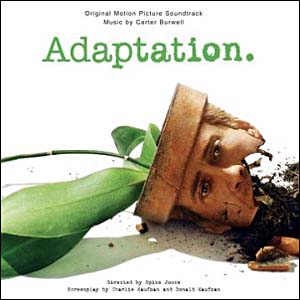 JOHN LAROCHE:
You know why I like plants?
SUSAN ORLEAN:
Nuh uh.
JOHN LAROCHE:
Because they’re so mutable. Adaptation is a profound process. Means you figure out how to thrive in the world.
SUSAN ORLEAN:
[pause] Yeah but it’s easier for plants. I mean they have no memory. They just move on to whatever’s next. With a person though, adapting’s almost shameful. It’s like running away.
___
CHARLIE KAUFMAN: [voice-over]
I am pathetic, I am a loser…
ROBERT MCKEE:
So what is the substance of writing?
CHARLIE KAUFMAN: [voice-over]
I have failed, I am panicked. I’ve sold out, I am worthless, I… What the fuck am I doing here? What the fuck am I doing here? Fuck. It is my weakness, my ultimate lack of conviction that brings me here… And here I am because my jump into the abysmal well – isn’t that just a risk one takes when attempting something new? I should leave here right now. I’ll start over. I need to face this project head on and…
ROBERT MCKEE:
…and God help you if you use voice-over in your work, my friends. God help you. That’s flaccid, sloppy writing. Any idiot can write a voice-over narration to explain the thoughts of a character.
___
SUSAN ORLEAN:
There are too many ideas and things and people. Too many directions to go. I was starting to believe the reason it matters to care passionately about something, is that it whittles the world down to a more manageable size.
___
SUSAN ORLEAN:
Do you ever get lonely sometimes, Johnny?
JOHN LAROCHE:
Well, I was a weird kid. Nobody liked me. But I had this idea. If I waited long enough, someone would come around and just, you know… understand me. Like my mom, except someone else. She’d look at me and quietly say: “Yes.” Just like that. And I wouldn’t be alone anymore.
___
CHARLIE KAUFMAN:
There are no rules, Donald. And anyone who says there are is just, you know…
DONALD KAUFMAN:
Not rules, principles. McKee writes that a rule says you *must* do it this way. A principle says, this *works* and has through all remembered time.
___
JOHN LAROCHE:
Point is, what’s so wonderful is that every one of these flowers has a specific relationship with the insect that pollinates it. There’s a certain orchid looks exactly like a certain insect so the insect is drawn to this flower, its double, its soul mate, and wants nothing more than to make love to it. And after the insect flies off, spots another soul-mate flower and makes love to it, thus pollinating it. And neither the flower nor the insect will ever understand the significance of their lovemaking. I mean, how could they know that because of their little dance the world lives? But it does. By simply doing what they’re designed to do, something large and magnificent happens. In this sense they show us how to live – how the only barometer you have is your heart. How, when you spot your flower, you can’t let anything get in your way.
___
SUSAN ORLEAN:
What I came to understand is that change is not a choice. Not for a species of plant, and not for me.
___
CHARLIE KAUFMAN:
I have to go right home. I know how to finish the script now. It ends with Kaufman driving home after his lunch with Amelia, thinking he knows how to finish the script. Shit, that’s voice-over. McKee would not approve. How else can I show his thoughts? I don’t know. Oh, who cares what McKee says? It feels right. Conclusive. I wonder who’s gonna play me. Someone not too fat. I liked that Gerard Depardieu, but can he not do the accent? Anyway, it’s done. And that’s something. So: “Kaufman drives off from his encounter with Amelia, filled for the first time with hope.” I like this. This is good.
By Michelle Roberts – Health reporter, BBC News
Creativity is akin to insanity, say scientists who have been studying how the mind works. Brain scans reveal striking similarities in the thought pathways of highly creative people and those with schizophrenia.
Both groups lack important receptors used to filter and direct thought. It could be this uninhibited processing that allows creative people to “think outside the box”, say experts from Sweden’s Karolinska Institute. In some people, it leads to mental illness. But rather than a clear division, experts suspect a continuum, with some people having psychotic traits but few negative symptoms.
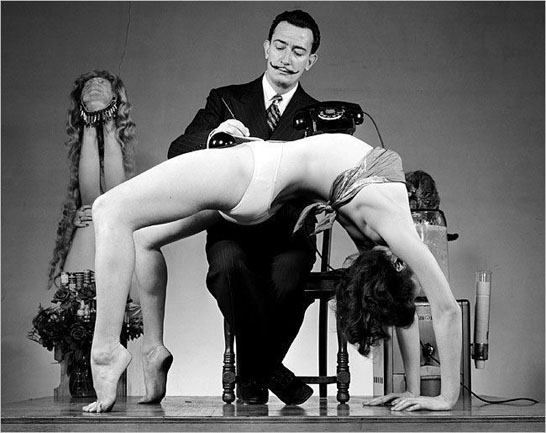
Salvador Dali – “Desk”
Art and suffering
Some of the world’s leading artists, writers and theorists have also had mental illnesses – the Dutch painter Vincent van Gogh and American mathematician John Nash (portrayed by Russell Crowe in the film A Beautiful Mind) to name just two.
Creativity is known to be associated with an increased risk of depression, schizophrenia and bipolar disorder. Similarly, people who have mental illness in their family have a higher chance of being creative.
The thalamus channels thoughts
Associate Professor Fredrik Ullen believes his findings could help explain why. He looked at the brain’s dopamine (D2) receptor genes which experts believe govern divergent thought. He found highly creative people who did well on tests of divergent thought had a lower than expected density of D2 receptors in the thalamus – as do people with schizophrenia. The thalamus serves as a relay centre, filtering information before it reaches areas of the cortex, which is responsible, amongst other things, for cognition and reasoning.
AUGUST 19, 1930
TAGORE: I was discussing with Dr. Mendel today the new mathematical discoveries which tell us that in the realm of infinitesimal atoms chance has its play; the drama of existence is not absolutely predestined in character.
EINSTEIN: The facts that make science tend toward this view do not say good-bye to causality.
TAGORE: Maybe not, yet it appears that the idea of causality is not in the elements, but that some other force builds up with them an organized universe.
EINSTEIN: One tries to understand in the higher plane how the order is. The order is there, where the big elements combine and guide existence, but in the minute elements this order is not perceptible.

TAGORE: Thus duality is in the depths of existence, the contradiction of free impulse and the directive will which works upon it and evolves an orderly scheme of things.
EINSTEIN: Modern physics would not say they are contradictory. Clouds look as one from a distance, but if you see them nearby, they show themselves as disorderly drops of water.
TAGORE: I find a parallel in human psychology. Our passions and desires are unruly, but our character subdues these elements into a harmonious whole. Does something similar to this happen in the physical world? Are the elements rebellious, dynamic with individual impulse? And is there a principle in the physical world which dominates them and puts them into an orderly organization?
EINSTEIN: Even the elements are not without statistical order; elements of radium will always maintain their specific order, now and ever onward, just as they have done all along. There is, then, a statistical order in the elements.
TAGORE: Otherwise, the drama of existence would be too desultory. It is the constant harmony of chance and determination which makes it eternally new and living.
EINSTEIN: I believe that whatever we do or live for has its causality; it is good, however, that we cannot see through to it.
Continue reading

“On the same day that the South African government decided to lift the moratorium on fracking, the European Union’s environment directorate released a comprehensive 300-page report that identified the controversial method for mining natural gas in underground units of shale rock as a “high risk” to human health and the environment because of its potential to contaminate and deplete water resources, cause a loss of biodiversity, degrade air and land quality and trigger earthquakes.”
Earlier this month, the South African Cabinet endorsed the lifting of a moratorium on prospecting for shale gas, imposed in February last year in line with a report by government’s multi-disciplinary task team, which recommends only “normal” geological exploration, excluding fracking, be allowed, until the extent of the gas reserves are established.
Read this article from SACSIS if you don’t know the history of the fracking debate in South Africa, and this article from Science News if you need more scientific information on how fracking (shale gas extraction) affects the environment and people in its vicinity – which in South Africa’s case, would be the delicate, already arid Karoo.
Send a message to our government on Global Anti-Fracking day, September 22nd 2012, by joining other South Africans who are opposed to fracking, when they CALL FOR A PERMANENT BAN ON FRACKING in South Africa.
In Cape Town, we will meet in front of the gates of Parliament, corner of Plein Street and Roeland Street at 10h30. Bring your anti-fracking banners and posters! The event is open to everyone and supported by several organisations, including Earthlife Africa, SAFCEI, Southern Cape Land Committee, Environmental Monitoring Group, Coalition for Environmental Justice, Treasure the Karoo Action Group and others.
The speakers at the protest will be Muna Lakhani (ELA), Barry Wuganale (Ogoni Solidarity Forum), Thembeka Majali (Million Climate Jobs), Bishop Geoff Davies (SAFCEI), Mpumelelo Mhlalisi (CEJ), Priscilla de Wet (First Indigenous Women’s Movement) and Jonathan Deal (TKAG). Don’t miss it!
In solidarity with our protest, the SCLC are encouraging local Karoo communities (farm workers and dwellers and small-scale farmers in the Chris Hani, Cacadu and Central Karoo District Municipalities) to wear the Black Thursday Land Campaign T-shirts on the day. They will be distributing anti-fracking brochures and raise debate in the areas where they live.
In Prins Albert the trees will be wrapped in black fabric, with black wreaths on shop windows. Please contact Lisa Smith for more information and to see how you can get involved: lisass@intekom.co.za.
In Joburg, Earthlife Africa JHB will host a discussion on ‘Fracking and the implications for water in South Africa’ at the Greenhouse Project 14:00 – 16:00. Contact Judith@earthlife.co.za for more information.
Find the Global Frackdown activist toolkit HERE.
 fleurmach