“danielle”

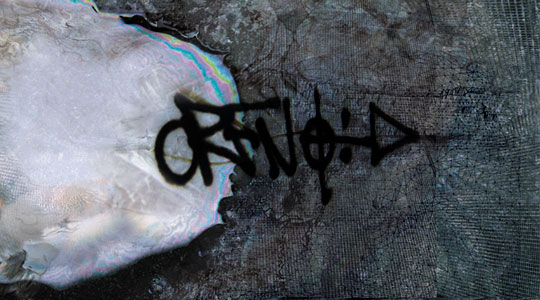
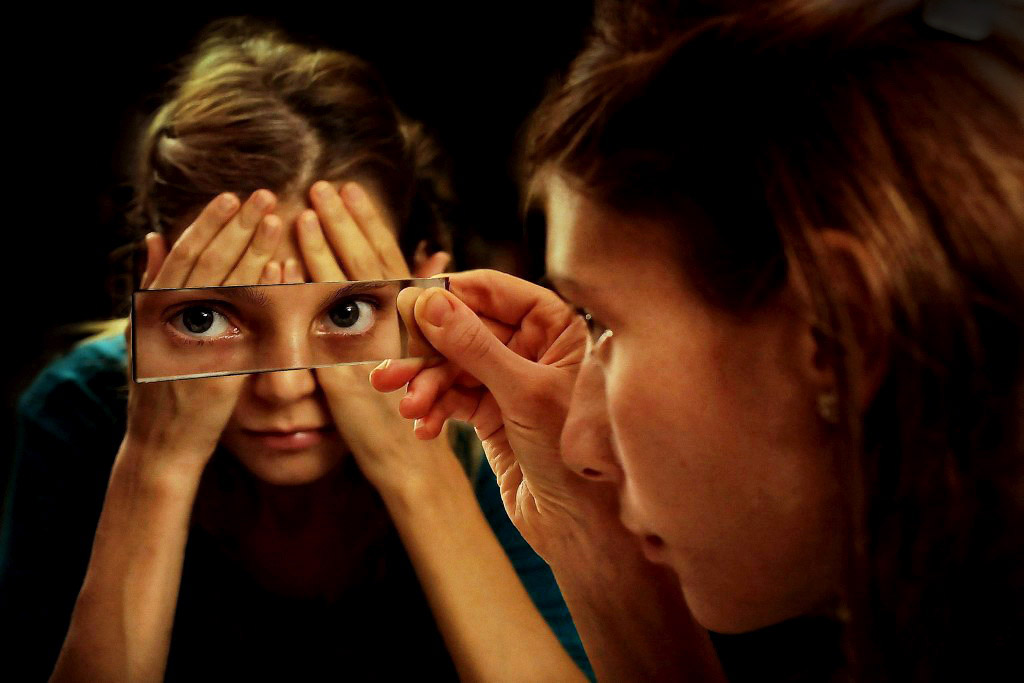
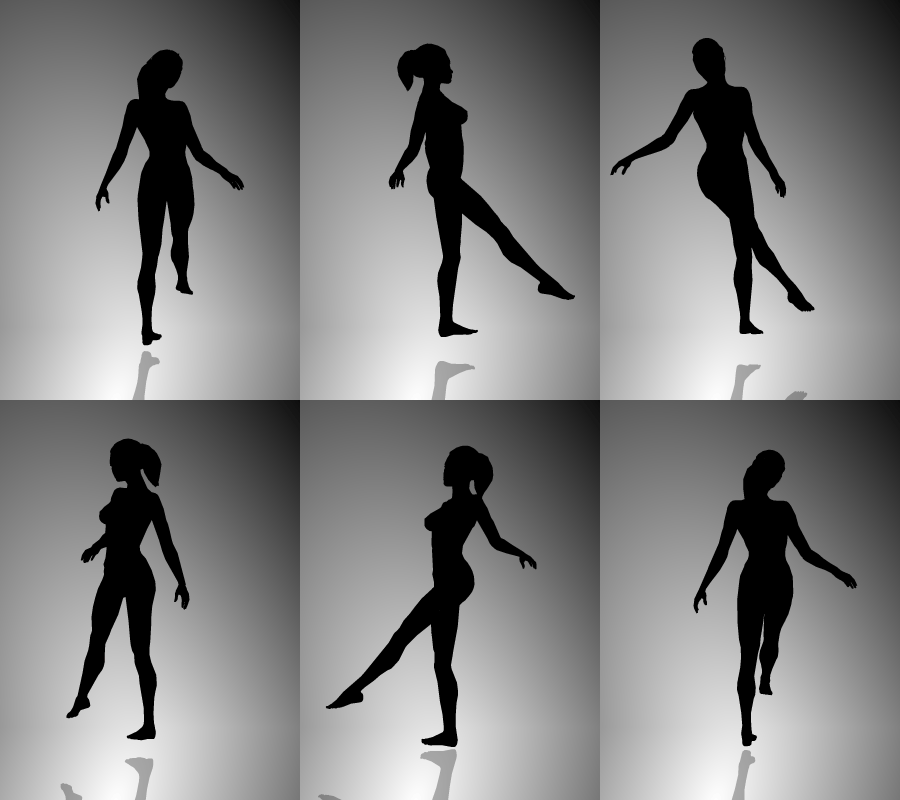
This is so trippy.

©2013 Anthony Cerniello

“I attempted to create a person in order to emulate the aging process. The idea was that something is happening but you can’t see it but you can feel it, like aging itself.”

Still Photographer: Keith Sirchio
Animator: Nathan Meier
Animator: Edmund Earle
Nuke Artist: George Cuddy
Music: Mark Reveley

Find out more about the creative process HERE.

fiona apple – pure imagination – from “the scarecrow”

Fiona Apple’s chillingly subversive cover of Willy Wonka’s song from Charlie and the Chocolate Factory , originally sung by a supremely creepy Gene Wilder in the 1970s film (if you saw this as a kid, didn’t he scare the crap out of you?), appears in a new animated ad for Chipotle which slams factory farming.

the fabulous bloar of margaret atwood

year of flood
Toby stares at them, fascinated: she’s never seen a liobam in the flesh, only pictures. Am I imagining things? she wonders. No, the liobams are actual. They must be zoo animals freed by one of the more fanatical sects in those last desperate days.

They don’t look dangerous, although they are. The lion-sheep splice was commissioned by the Lion Isaiahists in order to force the advent of the Peaceable Kingdom. They’d reasoned that the only way to fulfil the lion/lamb friendship prophecy without the first eating the second would be to meld the two of them together. But the result hadn’t been strictly vegetarian.

Still, the liobams seem gentle enough, with their curly golden hair and twirling tails. They’re nibbling flower heads, they don’t look up; yet she has the sense that they’re perfectly aware of her. Then the male opens its mouth, displaying its long, sharp canines, and calls. It’s an odd combination of baa and roar: a bloar, thinks Toby.

— from Margaret Atwood’s The Year of the Flood (Doubleday, 2009)

t.s. eliot – little gidding (1942)

little-giddingI

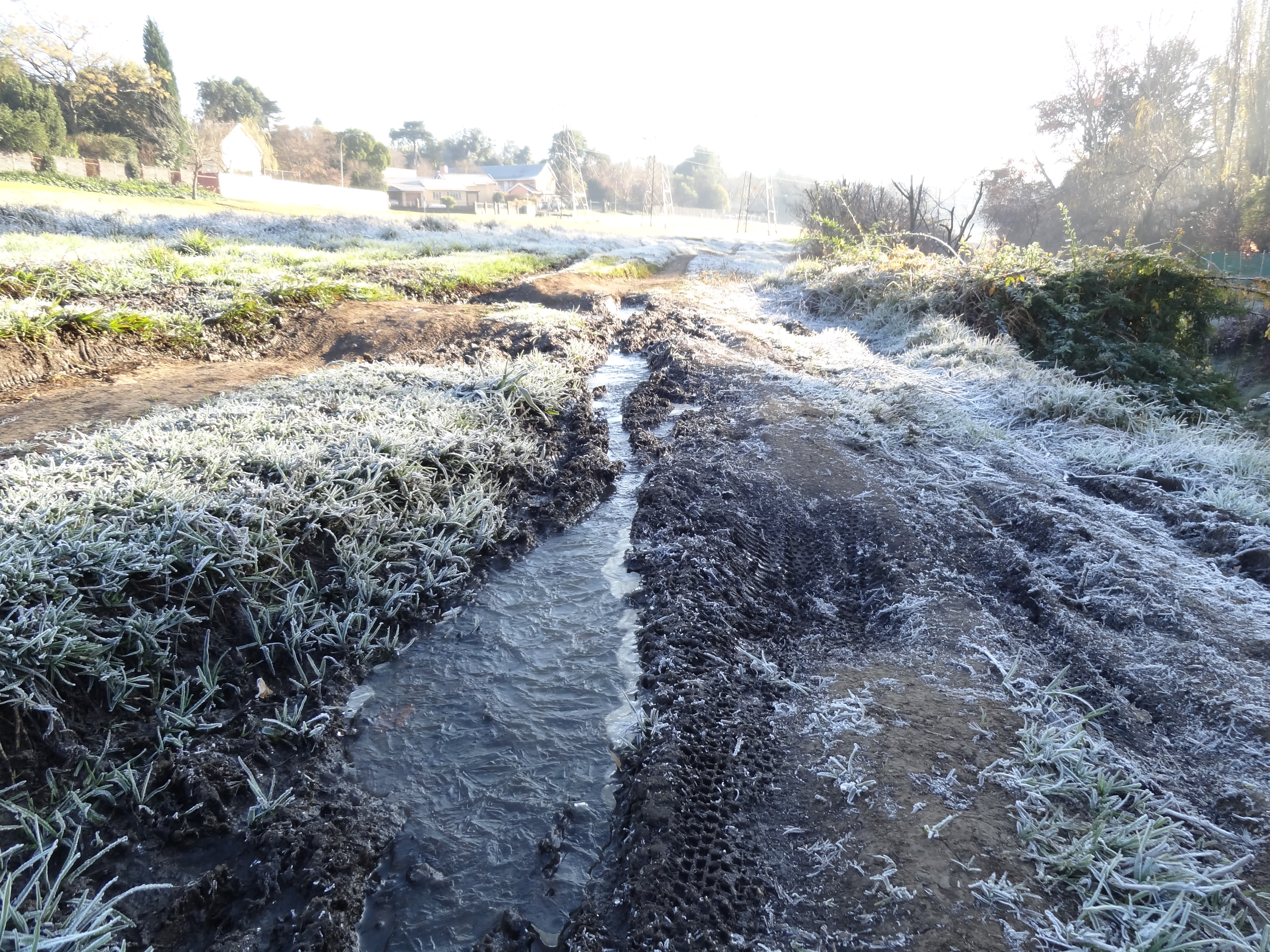
Midwinter spring is its own season
Sempiternal though sodden towards sundown,
Suspended in time, between pole and tropic.
When the short day is brightest, with frost and fire,
The brief sun flames the ice, on pond and ditches,
In windless cold that is the heart’s heat,
Reflecting in a watery mirror
A glare that is blindness in the early afternoon.
And glow more intense than blaze of branch, or brazier,
Stirs the dumb spirit: no wind, but pentecostal fire
In the dark time of the year. Between melting and freezing
The soul’s sap quivers. There is no earth smell
Or smell of living thing. This is the spring time
But not in time’s covenant. Now the hedgerow
Is blanched for an hour with transitory blossom
Of snow, a bloom more sudden
Than that of summer, neither budding nor fading,
Not in the scheme of generation.
Where is the summer, the unimaginable
Zero summer?

If you came this way,
Taking the route you would be likely to take
From the place you would be likely to come from,
If you came this way in may time, you would find the hedges
White again, in May, with voluptuary sweetness.
It would be the same at the end of the journey,
If you came at night like a broken king,
If you came by day not knowing what you came for,
It would be the same, when you leave the rough road
And turn behind the pig-sty to the dull facade
And the tombstone. And what you thought you came for
Is only a shell, a husk of meaning
From which the purpose breaks only when it is fulfilled
If at all. Either you had no purpose
Or the purpose is beyond the end you figured
And is altered in fulfilment. There are other places
Which also are the world’s end, some at the sea jaws,
Or over a dark lake, in a desert or a city—
But this is the nearest, in place and time,
Now and in England.

If you came this way,
Taking any route, starting from anywhere,
At any time or at any season,
It would always be the same: you would have to put off
Sense and notion. You are not here to verify,
Instruct yourself, or inform curiosity
Or carry report. You are here to kneel
Where prayer has been valid. And prayer is more
Than an order of words, the conscious occupation
Of the praying mind, or the sound of the voice praying.
And what the dead had no speech for, when living,
They can tell you, being dead: the communication
Of the dead is tongued with fire beyond the language of the living.
Here, the intersection of the timeless moment
Is England and nowhere. Never and always.

II

Ash on an old man’s sleeve
Is all the ash the burnt roses leave.
Dust in the air suspended
Marks the place where a story ended.
Dust inbreathed was a house-
The walls, the wainscot and the mouse,
The death of hope and despair,
This is the death of air.

There are flood and drouth
Over the eyes and in the mouth,
Dead water and dead sand
Contending for the upper hand.
The parched eviscerate soil
Gapes at the vanity of toil,
Laughs without mirth.
This is the death of earth.

Water and fire succeed
The town, the pasture and the weed.
Water and fire deride
The sacrifice that we denied.
Water and fire shall rot
The marred foundations we forgot,
Of sanctuary and choir.
This is the death of water and fire.

In the uncertain hour before the morning
Near the ending of interminable night
At the recurrent end of the unending
After the dark dove with the flickering tongue
Had passed below the horizon of his homing
While the dead leaves still rattled on like tin
Over the asphalt where no other sound was
Between three districts whence the smoke arose
I met one walking, loitering and hurried
As if blown towards me like the metal leaves
Before the urban dawn wind unresisting.
And as I fixed upon the down-turned face
That pointed scrutiny with which we challenge
The first-met stranger in the waning dusk
I caught the sudden look of some dead master
Whom I had known, forgotten, half recalled
Both one and many; in the brown baked features
The eyes of a familiar compound ghost
Both intimate and unidentifiable.
So I assumed a double part, and cried
And heard another’s voice cry: “What! are you here?”
Although we were not. I was still the same,
Knowing myself yet being someone other—
And he a face still forming; yet the words sufficed
To compel the recognition they preceded.
And so, compliant to the common wind,
Too strange to each other for misunderstanding,
In concord at this intersection time
Of meeting nowhere, no before and after,
We trod the pavement in a dead patrol.
I said: “The wonder that I feel is easy,
Yet ease is cause of wonder. Therefore speak:
I may not comprehend, may not remember.”
And he: “I am not eager to rehearse
My thoughts and theory which you have forgotten.
These things have served their purpose: let them be.
So with your own, and pray they be forgiven
By others, as I pray you to forgive
Both bad and good. Last season’s fruit is eaten
And the fullfed beast shall kick the empty pail.
For last year’s words belong to last year’s language
And next year’s words await another voice.
But, as the passage now presents no hindrance
To the spirit unappeased and peregrine
Between two worlds become much like each other,
So I find words I never thought to speak
In streets I never thought I should revisit
When I left my body on a distant shore.
Since our concern was speech, and speech impelled us
To purify the dialect of the tribe
And urge the mind to aftersight and foresight,
Let me disclose the gifts reserved for age
To set a crown upon your lifetime’s effort.
First, the cold fricton of expiring sense
Without enchantment, offering no promise
But bitter tastelessness of shadow fruit
As body and soul begin to fall asunder.
Second, the conscious impotence of rage
At human folly, and the laceration
Of laughter at what ceases to amuse.
And last, the rending pain of re-enactment
Of all that you have done, and been; the shame
Of things ill done and done to others’ harm
Which once you took for exercise of virtue.
Then fools’ approval stings, and honour stains.
From wrong to wrong the exasperated spirit
Proceeds, unless restored by that refining fire
Where you must move in measure, like a dancer.”
The day was breaking. In the disfigured street
He left me, with a kind of valediction,
And faded on the blowing of the horn.

III

There are three conditions which often look alike
Yet differ completely, flourish in the same hedgerow:
Attachment to self and to things and to persons, detachment
From self and from things and from persons; and, growing between them, indifference
Which resembles the others as death resembles life,
Being between two lives – unflowering, between
The live and the dead nettle. This is the use of memory:
For liberation – not less of love but expanding
Of love beyond desire, and so liberation
From the future as well as the past. Thus, love of a country
Begins as an attachment to our own field of action
And comes to find that action of little importance
Though never indifferent. History may be servitude,
History may be freedom. See, now they vanish,
The faces and places, with the self which, as it could, loved them,
To become renewed, transfigured, in another pattern.
Sin is Behovely, but
All shall be well, and
All manner of thing shall be well.
If I think, again, of this place,
And of people, not wholly commendable,
Of not immediate kin or kindness,
But of some peculiar genius,
All touched by a common genius,
United in the strife which divided them;
If I think of a king at nightfall,
Of three men, and more, on the scaffold
And a few who died forgotten
In other places, here and abroad,
And of one who died blind and quiet,
Why should we celebrate
These dead men more than the dying?
It is not to ring the bell backward
Nor is it an incantation
To summon the spectre of a Rose.
We cannot revive old factions
We cannot restore old policies
Or follow an antique drum.
These men, and those who opposed them
And those whom they opposed
Accept the constitution of silence
And are folded in a single party.
Whatever we inherit from the fortunate
We have taken from the defeated
What they had to leave us – a symbol:
A symbol perfected in death.
And all shall be well and
All manner of thing shall be well
By the purification of the motive
In the ground of our beseeching.

IV

The dove descending breaks the air
With flame of incandescent terror
Of which the tongues declare
The one dischage from sin and error.
The only hope, or else despair
Lies in the choice of pyre of pyre-
To be redeemed from fire by fire.

Who then devised the torment? Love.
Love is the unfamiliar Name
Behind the hands that wove
The intolerable shirt of flame
Which human power cannot remove.
We only live, only suspire
Consumed by either fire or fire.

V

What we call the beginning is often the end
And to make and end is to make a beginning.
The end is where we start from. And every phrase
And sentence that is right (where every word is at home,
Taking its place to support the others,
The word neither diffident nor ostentatious,
An easy commerce of the old and the new,
The common word exact without vulgarity,
The formal word precise but not pedantic,
The complete consort dancing together)
Every phrase and every sentence is an end and a beginning,
Every poem an epitaph. And any action
Is a step to the block, to the fire, down the sea’s throat
Or to an illegible stone: and that is where we start.
We die with the dying:
See, they depart, and we go with them.
We are born with the dead:
See, they return, and bring us with them.
The moment of the rose and the moment of the yew-tree
Are of equal duration. A people without history
Is not redeemed from time, for history is a pattern
Of timeless moments. So, while the light fails
On a winter’s afternoon, in a secluded chapel
History is now and England.

With the drawing of this Love and the voice of this Calling

We shall not cease from exploration
And the end of all our exploring
Will be to arrive where we started
And know the place for the first time.
Through the unknown, unremembered gate
When the last of earth left to discover
Is that which was the beginning;
At the source of the longest river
The voice of the hidden waterfall
And the children in the apple-tree
Not known, because not looked for
But heard, half-heard, in the stillness
Between two waves of the sea.
Quick now, here, now, always—
A condition of complete simplicity
(Costing not less than everything)
And all shall be well and
All manner of thing shall be well
When the tongues of flames are in-folded
Into the crowned knot of fire
And the fire and the rose are one.

Context from Wikipedia:

“Little Gidding” is the fourth and final poem of T. S. Eliot‘s Four Quartets, a series of poems that discuss time, perspective, humanity, and salvation. It was first published in September 1942 after being delayed for over a year because of the air-raids on Great Britain during World War II and Eliot’s declining health. The title refers to a small Anglican community in Huntingdonshire, established by Nicholas Ferrar in the 17th century and scattered during the English Civil War.

The poem uses the combined image of fire and Pentecostal fire to emphasize the need for purification and purgation. According to the poet, humanity’s flawed understanding of life and turning away from God leads to a cycle of warfare, but this can be overcome by recognizing the lessons of the past. Within the poem, the narrator meets a ghost that is a combination of various poets and literary figures. Little Gidding focuses on the unity of past, present, and future, and claims that understanding this unity is necessary for salvation.
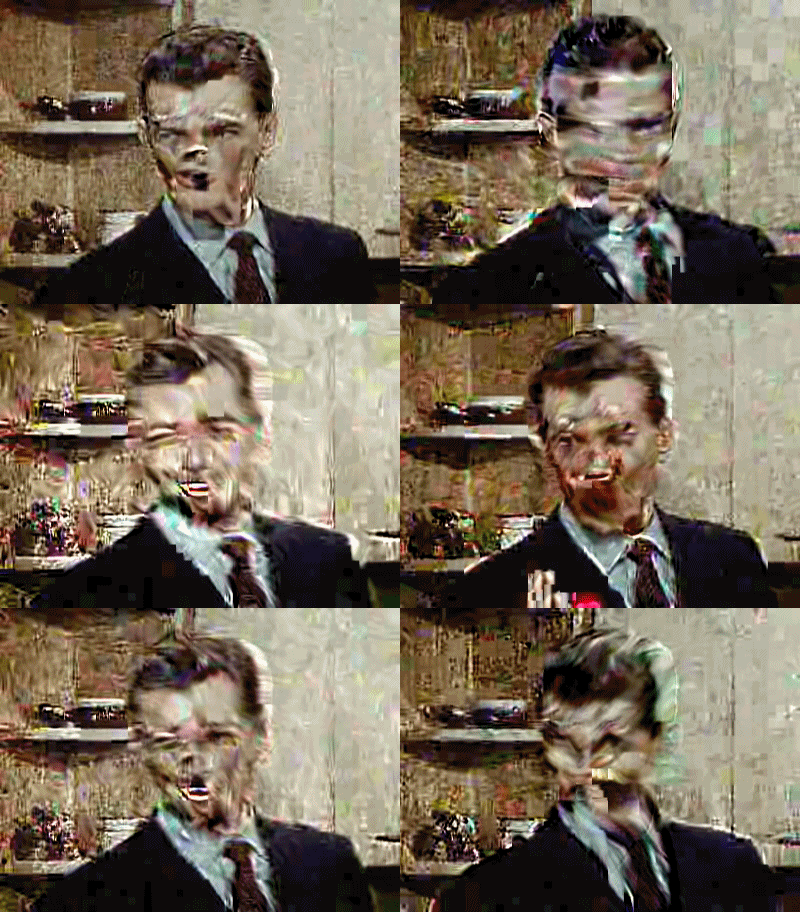
i’m sorry i have to post this

TRIGGER WARNINGS: rape; lethal violence; murder.

I have just dreamed again of being Anene Booysen at the moment of her rape and immediately after it, my pooled blood congealing as my insides lie unseamed in the dust outside me, hacked apart from me, the jagged outside slammed inside me, in my last flickers of awareness the spasms of their hate ripping through me, thudding waves of blows, my head a heavy, dull explosion… the swirling, pulsing aftershocks of pain… going cold, knowing I can never be back together again, that I am smeared asunder into the ground like a fly or a cockroach or an ant, irreversibly crushed. It’s that final. I am no longer me, just a slowly drying patch of gore, beyond being gathered up and revived, soothed, cradled, stitched, kissed better, healed. No one can fix this, not my ma, not the hospital, not God. There is no “if” or “but”. I am aware that this is how I have ended.

I have no words strong enough to express the horror of this experience every time it happens to me, this dream. Yet I need to try to write it out of me in the hope that I never dream it again. Shhh, I tell myself, shivering uncontrollably, curled rigid and foetal, it was only a dream.

But it isn’t. This really happened. Really happens. Continues to happen. And that is what is most horrifying of all.

orphan drift this thursday at bolo’bolo

What do you get if you mix equal parts cutting edge continental philosophy, voodoo, psychedelics, underground dance music, cybernetics and multimedia experimentation? The notorious Orphan Drift!

Happening this Thursday, 25 July, from 20h00, Bolo’bolo Anarchist Info Shop and Vegan Cafe are delighted to announce an evening of Orphan Drift, featuring several short films from founding member Mer Roberts as well as a talk by UWC cyberculture theorist Delphi Carstens, followed by an almost certainly lively open discussion.

Orphan_Drift_540x300Here’s a taste of what you can expect on Thursday evening:

BACKGROUND
In the mid-90s, the legendary Cyber Culture Research Unit at the prestigious Warwick University was formed: their university-funded activities included producing collaged texts of Deleuze and Guattari, William Burroughs and binary code, theorising the occult underpinnings of markets, composing abrasive electronic music and, ostensibly, consuming inhuman doses of psychedelics as often as possible, much of this via the ORPHAN DRIFT collaborative artist project. A few years later, the CCRU was no more; founding member Nick Land – a genius philosopher and agent provocateur – had achieved full meltdown / deterritorialization and Sadie Plant, author of the well-known Writing On Drugs, had disappeared from sight.

The legacy of the CCRU is very much alive today though, a subterranean influence for the very latest movements in philosophy.

ABOUT ORPHAN DRIFT
Mer co-created the collaborative artist and hive mind 0rphan Drift in London in 1994. Although it was predominantly made up of visual artists, it also involved sound designers, concept engineers and media activists.

As an artistic entity, 0rphan Drift is known for immersive and visually complex works which use the sample and the remix extensively, treating information as matter and the image as a unit of contagion. The art produced is science fictional and immersive. It complicates the distinctions between material and immaterial phenomena and dimensions, both in content and media. Much of its work explored mimetic patterns of desire, production and consumption- particularly in relation to the rapid technological changes happening at the time- drawing heavily on cyberpunk fiction, polyrhythmic electronica and the underpinnings of African religious systems. This was the social context in which its shifting layers of frightening, disturbing, abject, schizophrenic, beautiful, deconstructive, poetic and fragmented frequencies were able to take affect.

0rphan Drift is cross-contextual and made extensive contributions from 1994 – 2004 in the social arenas around contemporary art, underground music and cyber-feminism/post-structural philosophy. 0D has participated internationally in over a decade of exhibitions, screenings and performance, exhibiting extensively in the UK, Europe, Canada and the States, including at the Cabinet Gallery and Tate Modern in London; writing the Scifi-theory text ‘Cyberpositive’, and featuring in DJ Spooky’s ‘Sound Unbound’ in the ‘Renegade Academics’ chapter. It contributed cybervisuals to the set of Stephen Speilberg’s ‘AI’ and ‘Minority Report’ features and Leftfield and NIN world tours, worked frequently with Kode 9 and participated in 10 years of international Video art and AV Electronica art events in Norway, Germany, Canada, UK, South Africa and USA.

We now collaborate between Cape Town and San Francisco and continue to make science fictional work which is guided by a neo-futurist sensibility and clearly a progression from our earlier work. Our new video work ‘Wilderness of Elsewheres, Colony 1’, which maps contemporary global concerns with survival, insecurity and the unknown, has been shown in Santiago and San Francisco and we subsequently produced a series of Post Apocalyptic postcards for Shadowshop; Stephanie Syjuco’s parasitic shop at SFMOMA. Recently we made video for Delphi Carsten’s Capetown Tedx Talk, ‘Hyperstition’, and were commissioned make ‘You Its Eyes 94-13’ for screening at CTM13, Berlin.

WHAT WE’LL BE SCREENING / HOSTING THIS THURSDAY EVENING

1: You Its Eyes. 1994-2013, 30 minute video remixing 0D’s earlier work
0D employs different frequencies and overlapping rhythmic patterns to activate submerged regions of the brain and create intimacy and proximity through video-sonic signal. The goal of 0D, writes Simon Reynolds (1996), is “the liberation of texture from its environment, of energy-flux from contoured form with the goal to recreate the intensity of being lost”. 0D describes the individual ‘self’ haunted by a sensory cross-talk of signals from realms beyond the physical. Voices from imagined futures haunt the contemporary technological landscape. Feedback from the machines evolves into an unfamiliarity of speed and complexity, coding the textual body and imagination as tools for change. The invisible, fantastical, and anarchic called upon here are what Deleuze and Guattari define as the essence of virtuality. These intensities carry the sorcerous forces that technology and science unleash as they delve further into the quantum, the chaotic and the abstract.

“Surrounding the human self and its island of experience lies a raging sea of intensities” (D&G). All journeys into this space involve a succession of becomings autistic, mimetic, contagious and machinic.

2: Hyperstition – A talk by Delphi Carstens
Delphi is a lecturer at UWC, as well as half of the duo which makes up Groovy Troopers Productions – creators of temporary autonomous zones in the form of art & trance festivals. Delphi is currently completing a doctorate thesis, and will present on: “hyperstition” — a neologism coined by Nick Land that combines the words ‘superstition’ and ‘hype’ to describe how fictions become fact and how our narratives (stories) shape our world. It also describes, particularly, the narrative of capitalism, which is driven by hype and speculation and, which more importantly, turns fictions into facts. One very important fiction that Delphi will be discussing is the fiction of the apocalypse. Focusing on the current secular meaning of apocalypse as well as how popular culture views our current global crisis and the importance of imagining ourselves differently. Hyperstition also describes the nexus where myth or magic and science meet. Delphi explores the world of hyperstition to describe the manner by which hype and speculation become facts in contemporary society. The future is looking uncertain and how we imagine this future may be more important than we realise. This talk will be both an intellectual and a felt experience.

3: A Wilderness Of Elsewheres. 2009, 10 minutes
A two-screen installation in which dark abstract video spaces flow into bright photographic landscapes (the raw desolate tundras of southern Africa), populated and de-populated by animated collages of architecture and fashion, cut and scanned from contemporary print publications. A deliberate rhythmic awkwardness creates an alien time frame. The screens share a soundscape, made from a wide variety of samples including glaciers melting and rocket launches, composed into a sonic ‘event’. The work is imbued with post-apocalyptic sensibility, urges to the neo-romantic and the science fictional blending of first and third world materiality. At once immersive and deconstructive, the work is collision, co-habitation, evolutionary fever-dream.

Join us in mapping the outer edges — and do come earlyish if you want to sit down while doing so ;) !

erik bünger’s schizophonia

I watched two incredible films tonightSchizophonia and The Third Man, courtesy of Anette Hoffmann and the Archive & Public Culture Platform at UCT, with the kind permission of musician, composer and performance artist, Erik Bünger, who made the films.

In each film, Bünger both analyses and plays with the uncanny, magical potency of sound as recorded medium. Everything he does is underpinned by formidable quantities of research, a fondness for outrageously rhizomatic linkages and a wicked sense of humour. Definitely my new art crush of the month! ;)

Here’s a video of Bünger giving a lecture/performance which utilises much of the material presented in the standalone film, Schizophonia. This was recorded at MEDEA, Malmo University, in March 2011, as part of the K3 courses “Music in the Digital Media Landscape” and “Illustrating with Music”.

I really WISH I could find more of The Third Man to share here –  it was tremendously entertaining, and, even off on its most questionable, occult-paranoid tangents, bizarrely pertinent to so much of the stuff about performance, recording and playback of music that I’ve been posting and thinking about in the past few years; even down to an hilarious discussion of the “entraining” (his word) power of The Sound Of Music (my post this afternoon prefigured this too, eerily!).

Anyway, you can watch the lecture:

And here’s a bio:

The Swedish artist, composer, musician and writer Erik Bünger (1976) works with re-contextualising existing media in performances, installations and web projects. In ‘Gospels’, sections of Hollywood interviews are removed from their original contexts, interacting to form a new, seemingly coherent whole. Yet these pre-existing works frequently conflict; Bünger explores the disjunction between replaying and experiencing in his ‘Lecture on Schizophonia’. This simultaneously analytical and performative work highlights the relationship between sound and perceived reality, using popular references and familiar footage including Barak Obama and Woody Allen. Similar tensions are exposed in ‘God Moves on the Water’, in which two songs about the sinking of the Titanic are combined to form a third narrative. In ‘The Third Man’, the negative power of music is explored. Displacing and recombining familiar material, Bünger challenges the separation between authentic and simulated experiences.

Bünger may have followed a traditional education in composition at the Stockholm Royal College of Music, but he is hardly a run-of-the-mill composer. His works have increasingly come to approach contemporary conceptual art, but his combination of sound and visual is also linked to literary storytelling. In his performances, installations and web projects, different timelines are superposed, past worlds and present understandings. The most important thing about Bünger’s work is not the art or literature context but the transformation that takes place in the specific works. What may seem trivial and inconsequential suddenly becomes the stuff of dreams. He is attracted to moments when recorded sound and image bridge a space between absolutes, between death and life and between gods and humankind. –

This info comes from http://expo.argosarts.org/

hmv

Francis Barraud – “Dog Looking At and Listening to a Phonograph”(1898)

“like me, you must suffer in rhythm”

The truth is that I can’t put down my pen: I think I’m going to have the Nausea and I feel as though I’m delaying it while writing. So I write whatever comes into my mind. Madeleine, who wants to please me, calls to me from the distance, holding up a record:

“Your record, Monsieur Antoine, the one you like, do you want to hear it for the last time?”

“Please.”

I said that out of politeness, but I don’t feel too well disposed to listen to jazz. Still, I’m going to pay attention because, as Madeleine says, I’m hearing it for the last time: it is very old, even too old for the provinces; I will look for it in vain in Paris. Madeleine goes and sets it on the gramophone, it is going to spin; in the grooves, the steel needle is going to start jumping and grinding and when the grooves will have spiralled it into the centre of the disc it will be finished and the hoarse voice singing “Some of these days” will be silent forever.

It begins. To think that there are idiots who get consolation from the fine arts. Like my Aunt Bigeois:
“Chopin’s Preludes were such a help to me when your poor uncle died.” And the concert halls overflow with humiliated, outraged people who close their eyes and try to turn their pale faces into receiving antennas. They imagine that the sounds flow into them, sweet, nourishing, and that their sufferings become music, like Werther; they think that beauty is compassionate to them. Mugs. I’d like them to tell me whether they find this music compassionate. A while ago I was certainly far from swimming in beatitudes. On the surface I was counting my money, mechanically. Underneath stagnated all those unpleasant thoughts which took the form of unformulated questions, mute astonishments and which leave me neither day nor night. Thoughts of Anny, of my wasted life. And then, still further down, Nausea, timid as dawn. But there was no music then, I was morose and calm.

All the things around me were made of the same material as I, a sort of messy suffering. The world was so ugly, outside of me, these dirty glasses on the table were so ugly, and the brown stains on the mirror and Madeleine’s apron and the friendly look of the gross lover of the patronne, the very existence of the world so ugly that I felt comfortable, at home.

Now there is this song on the saxophone. And I am ashamed. A glorious little suffering has just been born, an exemplary suffering. Four notes on the saxophone. They come and go, they seem to say: You must be like us, suffer in rhythm. All right! Naturally, I’d like to suffer that way, in rhythm, without complacence, without self-pity, with an arid purity. But is it my fault if the beer at the bottom of my glass is warm, if there are brown stains on the mirror, if I am not wanted, if the sincerest of my sufferings drags and weighs, with too much flesh and the skin too wide at the same time, like a sea elephant, with bulging eyes, damp and touching and yet so ugly? No, they certainly can’t tell me it’s compassionate—this little jewelled pain which spins around above the record and dazzles me. Not even ironic: it spins gaily, completely self-absorbed; like a scythe it has cut through the drab intimacy of the world and now it spins and all of us, Madeleine, the thick-set man, the patronne, myself, the tables, benches, the stained mirror, the glasses, all of us abandon ourselves to existence, because we were among ourselves, only among ourselves, it has taken us unawares, in the disorder, the day to day drift: I am ashamed for myself and for what exists in front of it.

It does not exist. It is even an annoyance; if I were to get up and rip this record from the table which holds it, if I were to break it in two, I wouldn’t reach it. It is beyond—always beyond something, a voice, a violin note. Through layers and layers of existence, it veils itself, thin and firm, and when you want to seize it, you find only existants, you butt against existants devoid of sense. It is behind them: I don’t even hear it, I hear sounds, vibrations in the air which unveil it. It does not exist because it has nothing superfluous: it is all the rest which in relation to it is superfluous. It is.

And I, too, wanted to be. That is all I wanted; this is the last word. At the bottom of all these attempts which seemed without bonds, I find the same desire again: to drive existence out of me, to rid the passing moments of their fat, to twist them, dry them, purify myself, harden myself, to give back at last the sharp, precise sound of a saxophone note. That could even make an apologue: there was a poor man who got in the wrong world. He existed, like other people, in a world of public parks, bistros, commercial cities and he wanted to persuade himself that he was living somewhere else, behind the canvas of paintings, with the doges of Tintoretto, with Gozzoli’s Florentines, behind the pages of books, with Fabrizio del Dongo and Julien Sorel, behind the phonograph records, with the long dry laments of jazz. And then, after making a complete fool of himself, he understood, he opened his eyes, he saw that it was a misdeal: he was in a bistro, just in front of a glass of warm beer. He stayed overwhelmed on the bench; he thought: I am a fool. And at that very moment, on the other side of existence, in this other world which you can see in the distance, but without ever approaching it, a little melody began to sing and dance: “You must be like me; you must suffer in rhythm.”

The voice sings:

Some of these days
You’ll miss me, honey

Someone must have scratched the record at that spot because it makes an odd noise. And there is something that clutches the heart: the melody is absolutely untouched by this tiny coughing of the needle on the record. It is so far—so far behind. I understand that too: the disc is scratched and is wearing out, perhaps the singer is dead; I’m going to leave, I’m going to take my train. But behind the existence which falls from one present to the other, without a past, without a future, behind these sounds which decompose from day to day, peel off and slip towards death, the melody stays the same, young and firm, like a pitiless witness.

The voice is silent. The disc scrapes a little, then stops. Delivered from a troublesome dream, the cafe ruminates, chews the cud over the pleasure of existing. The patronne’s face is flushed, she slaps the fat white cheeks of her new friend, but without succeeding in colouring them. Cheeks of a corpse. I stagnate, fall half-asleep. In fifteen minutes I will be on the train, but I don’t think about it. I think about a clean-shaven American with thick black eyebrows, suffocating with the heat, on the twenty-first floor of a New York skyscraper. The sky burns above New York, the blue of the sky is inflamed, enormous yellow flames come and lick the roofs; the Brooklyn children are going to put on bathing drawers and play under the water of a fire-hose. The dark room on the twenty-first floor cooks under a high pressure. The American with the black eyebrows sighs, gasps and the sweat rolls down his cheeks. He is sitting, in shirtsleeves, in front of his piano; he has a taste of smoke in his mouth and, vaguely, a ghost of a tune in his head. “Some of these days.” Continue reading

spinning with a turkish drop spindle

Bizarrely, there just happens to be a news report about South African security and miners on in the background of this British instructional video, which I came across looking for footage of Sufi mevlevi (dervishes) directly after I posted the piece below (cf. connection of spinning, drilling, finding gold and freedom). I really find it so bizarre how often the messy layers of random stuff I find while looking for other things fit what I want to find more appositely than what I was looking for. What I am talking about goes way beyond confirmation bias… It’s uncanny… and partly what this blog is about is documenting these “curiouser and curiouser” moments that blossom outside of the frame.

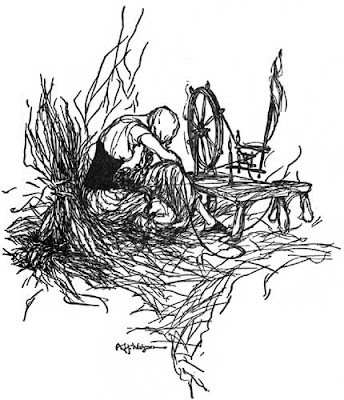
Rumpelstiltskin Illustration: A H Watson

Rumpelstiltskin
Illustration: A H Watson

I’ll bet what I am writing is not making much Sense and I should probably try to sleep. It’s 3 a.m. and the aftermath of this waking dream is only going to add up to fog at work tomorrow.

Rumpelstiltskin Illustration: John Gruelle

Rumpelstiltskin
Illustration: John Gruelle

rené clair & erik satie – relâche/entr’acte

Relâche,  ballet instantanéiste en deux actes: un entr’acte cinématographique, et “la queque de chien” is a 1924 ballet by Francis Picabia with music composed by Erik Satie. The title was thought to be a Dadaist practical joke, as relâche is the French word used on posters to indicate that a show is cancelled, or the theatre is closed (and the first performance was indeed cancelled, due to the illness of Jean Börlin, the principal dancer, choreographer, and artistic director of the Ballets Suédois).

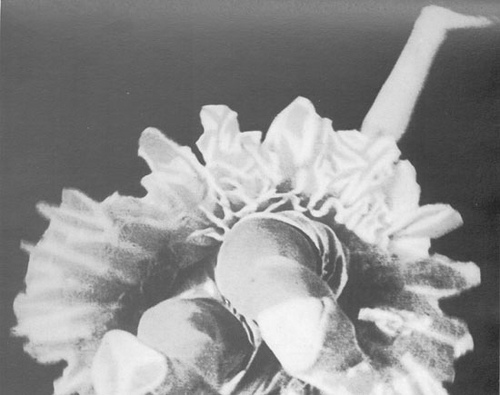
Still from "Entr'acte"

Still from “Entr’acte”

Picabia commissioned filmmaker René Clair to create a cinematic entr’acte to be shown during the ballet’s intermission. The film, simply titled Entr’acte, consists of a scene shown before the ballet and a longer piece between the acts. The score was also composed by Satie.

Entr’acte premiered as an entr’acte for the Ballets Suédois production Relâche at the Théâtre des Champs-Élysées in Paris in 1924. The Dadaists collaborating on the project invented a new mode of production: instantanéisme. Watching the 20 minute film involves seeing people running in slow motion, things happening in reverse, looking at a ballet dancer from underneath, watching an egg over a fountain of water get shot and instantly become a bird, and watching people disappear. The cast included cameo appearances by Francis Picabia, Erik Satie, Man Ray, and Marcel Duchamp. The conductor of the orchestra at the premiere was Roger Désormière. The edition of the soundtrack featured here was conducted in 1967 by Henri Sauguet.

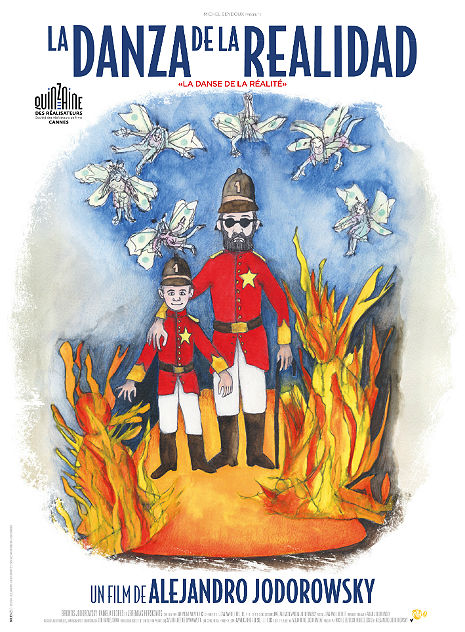
alejandro jodorowsky’s new film

jodorowsky dansaWatch the trailer:

The Guardian review from Cannes 2013 has this to say:

The extinct volcano of underground cinema has burst into life once again — with a bizarre, chaotic and startling film; there are some longueurs and gimmicks, but The Dance of Reality is an unexpectedly touching and personal work. At the age of 84, and over 20 years since his last movie, Alejandro Jodorowsky has returned to his hometown of Tocopilla in the Chilean desert to create a kind of magic-realist memoir of his father, Jaime Jodorowsky, a fierce Communist whose anger at the world — at his son — was redoubled by the anti-Semitism the family faced.

Of course, the entire story is swathed in surreal mythology, dream logic and instant day-glo legend, resembling Fellini, Tod Browning, Emir Kusturica, and many more. You can’t be sure how to extract conventional autobiography from this. Despite the title, there is more “dance” than “reality” — and that is the point. Or part of the point. For the first time, Jodorowsky is coming close to telling us how personal evasiveness has governed his film-making style; his flights of fancy are flights of pain, flights from childhood and flights from reality. And now he is using his transformative style to come to terms with and change the past and to confer on his father some of the heroism that he never attained in real life.

Read more of this review HERE.

nevermind the bollocks, here’s deleuze and guattari

[E]ffective differences pass between the lines, even though they are all immanent to one another, all entangled in one another. This is why the question of schizoanalysis or pragmatics, micropolitics itself, never consists in interpreting, but merely in asking what are your lines, individual or group, and what are the dangers on each.

JR at Desperadoes', Observatory, Cape Town, 15  May 2013. Photo: Rosemary Lombard

JR around the pole at Desperado’s Saloon, Observatory, Cape Town, 15 May 2013. Photo: Rosemary Lombard

What are your rigid segments, your binary and overcoding machines? For even these are not given to you ready-made; we are not simply divided up by binary machines of class, sex, or age: there are others which we constantly shift, invent without realising it. And what are the dangers if we blow up these segments too quickly? Wouldn’t this kill the organism itself, the organism which possesses its own binary machines, even in its nerves and its brain?

What are your supple lines, what are your fluxes and thresholds? Which is your set of relative deterritorialis­ations and correlative reterritorialisations? And the distribution of black holes: which are the black holes of each one of us, where a beast lurks or a microfascism thrives?

— Deleuze and Guattari: Toward Freedom. Read more HERE.
Sent from my BlackBerry® wireless device

where the echoes stop

Julie Loen - Title Unknown

Julie Loen – Title Unknown

Erwin Raphael McManus – Where the Echoes Stop

I want to stand where the echoes stop.
Far past where sound has abandoned thought.
Where silence reigns over redundancy.
Where once well said is more than enough.

I want to stand where the echoes stop.
Where words must be born to be heard.
Where speech is a gift and not a curse.
Where there is more of the unique and less of the mundane.

I want to stand where the echoes stop.
Where meaning is rescued from noise…
Where conviction replaces thoughtless repetition…
Where what everyone is saying surrenders to what needs to be said.

I want to stand where the echoes stop.
Where the shouting of the masses falls silent to the whisper of the one…
Where the voice of the majority submits to the voice of reason…
Where “they” do not exist; but “we” do.

I want to stand where the echoes stop.
Where substance overthrows the superficial…
Where courage conquers compliance and conformity…
Where words do not travel farther than the person who speaks them.

I want to stand where the echoes stop.
Where I only say what I believe.
Where I only repeat what changes me.
Where empty words finally rest in peace.

“Be still and know that I am God…” — Psalm 46:10a