on colonial legacies and the violence of liberal whiteness at uct – april 2015

Here’s a thought piece I wrote for an MPhil African Studies class back in April, in the thick of the Rhodes Must Fall resistance. I want to put it here to archive it.

Problematising the Study Of Africa Assignment: 

On Colonial Legacies at the University of Cape Town


“Remember that you are an Englishman, and have consequently won first prize in the lottery of life.” — Cecil John Rhodes[1]

“[N]o matter what a white man does, the colour of his skin—his passport to privilege—will always put him miles ahead of the black man. Thus in the ultimate analysis no white person can escape being part of the oppressor camp.” —  Bantu Stephen Biko[2]

“For the black man there is only one destiny, and it is white.” — Frantz Fanon[3]

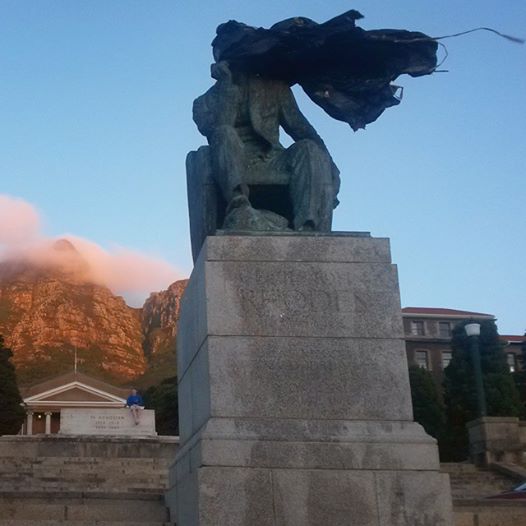
Rhodes statue, head covered in garbage bags. University of Cape Town, 17 March 2015. Photo: Rosemary Lombard

Rhodes statue, head covered in garbage bags. University of Cape Town, 17 March 2015. Photo: Rosemary Lombard

As a child, I remember reading about the railway Cecil John Rhodes envisioned from Cape Town to Cairo, and never imagining it in any light other than as a benevolent feat of engineering that would link people to others, bringing access to resources and the rest of the modern world for those cut off from Western civilisation, literally bringing light to the darkest parts of the continent.

I revised my romantic understanding of Rhodes’ expansionist desires as I became aware of the rampantly exploitative nature of these ambitions, and colonial mechanisms of dominion and exploitation more generally, but it was not until the recent events at UCT surrounding a statue of the man on campus that I realised the true psychological extent and durability of this oppressive colonial legacy, and the way its violence has been rendered almost invisible to those of us on the privileged side of what Walter Mignolo terms the “colonial difference” or divide[4].

The call for transformation is not new: it stretches back more than two decades. The present moment is notable in that students, staff and workers have organised powerfully in concert. A bucket of human excrement thrown on a statue of Rhodes that occupied a central position on UCT’s upper campus escalated tensions around institutional racism that have flared regularly since even before the formal end of the Apartheid era 21 years ago.  Black students formed a movement that became known as “Rhodes Must Fall” (RMF) after the social media hashtag they used to mobilise. The students occupied an administrative building for several weeks, in which they held intensive teach-ins and discussions around decolonisation in solidarity with the Students’ Representative Council (SRC), other students, academic staff and workers. University management eventually capitulated to the removal of the statue on 9 April 2015, after a month-long struggle in which RMF demanded to be engaged on their own terms, rather than allowing university management to dictate the terms or to dismiss the protest as had been the case on many previous occasions.

Richard Pithouse describes the mobilisation thus:

The students in Cape Town have, very rapidly, punched a gaping hole into the continuum of English liberal hegemony over the university, and a set of linked sites of a certain kind of elite power, and, thereby, a mode of white supremacy and coloniality that has not been subject to sufficient critique and opposition. It is an extraordinary political achievement that will, no doubt, inscribe itself into the history of the South African academy, and the wider society.[5]

At this historically significant moment, it is on white liberal hegemony and institutional transformation at UCT that I reflect: how has hegemonic whiteness been constructed at UCT, and how does the university continue to function as a colonial space, despite speaking about transformation?

I have made several false starts on this assignment (one of which has been losing an entire day’s work on it due to a computer glitch). Initially my idea was to write an open letter to university management, particularly the deputy Vice-Chancellor with the portfolio for transformation, Crain Soudien, whose public behaviour over the past weeks – both in his capacity as a member of university management[6] and in his written statements in the press – has seemed at odds with his historically professed radical stance against uninterrogated hegemony, and his advocacy of deep transformation as chair of the country-wide Ministerial inquiry into institutional racism just a few years ago[7]. Soudien, and other prominent black members of the corporate, academic establishment such as Jonathan Jansen, are interpellated[8] representatives of their institutions’ ideology, and any hint of activism they once displayed has evaporated.

However, I decided that I could not, in good conscience, from my position as an historical beneficiary of the untransformed system, write such a letter. So, dropping the academic apparatus as prompted by this assignment, I feel I have only enough authority to write from a personal, situated angle in attempt to contextualise the recent Rhodes Must Fall chain of events at UCT, with particular reference to the institution’s persisting coloniality. I cannot assume anything other than my own subject position, as a white, cisgender, heterosexual female, who comes from relative privilege. To do so would be disingenuous, as I have learned a trenchant lesson through listening to what students have been saying these past weeks: despite my best intentions and all the empathy I can muster, I cannot have knowledge of what it is to experience institutional racism.

As a “white” person, I have ancestrally been on the powerful side of the racial divide put in place with the advent of Western colonial activity, and I continue to be identified with that subject position. “Whiteness” is the term used to describe the position of privilege this subjectivity puts me and others like me in.

If there is one thing the Rhodes Must Fall moment has driven home to me, it’s that from my subject position I am unqualified to make authoritative pronouncements regarding the experiences or motives of anyone except myself, regardless of racial identity: it’s obvious that I can’t speak to “black” experience, but the most common “white” responses to RMF have largely made me feel alienated, too.

Two decades of rainbow nation narrative have led to the unreflexive “I don’t see colour” rhetoric becoming the status quo among liberal-thinking white South Africans, as well as black people assimilated to corporate institutional capitalist ideology. This is pernicious in that it obscures the very real, material persistence of different life experiences and oppression based on inherited structural inequalities, stemming from racial discrimination.

Coloniality, the set of dispositions, values and forms of practice set in place in the colonial world, outlives the moment of formal political decolonisation, and carries through beyond it in lasting ways. The white Western self speaks from the site of the universal, as a bearer of modernity and civilisation, situated dynamically inside of linear time and at home in a global, cosmopolitan world. All forms of knowledge produced by the Western self, in other words, are deemed to have universal, rational, historical currency.

In contrast, those selves and forms of knowledge encountered by the Western self that are deemed to be other than the Western self are deemed to be “local”, labelled “indigenous”. An indigenous self or indigenous knowledge is constituted as static, standing outside of history and linear time, and inside of tradition, which becomes the opposed category to modernity. Western, colonial knowledge is framed in binaries, in relation to Western supremacy: the privileged poles of these dyads are whiteness, maleness, heterosexuality, and so forth.

Manichean power relationships instituted on the basis of the colonial apparatus did not end with apartheid in 1994. They persist throughout social interactions, their oppressive dynamics all but invisible to those on the privileged side of such relationships, such as white people and males, due to the hegemonic nature of this framing.

A common criticism I saw levelled at black protesters by white commenters was that things changed with the coming of the democratic dispensation in 1994, and that they should stop “holding on to the past” or “playing the race card” with a “victim mentality”, that they should “move on”. But being cognisant of how the legacy of chronologically past events persists into the present is not the same as “holding on to” the past. Only those who are not experiencing the continuation of structural oppression every day can advocate ignoring or disregarding it, and “moving swiftly on”.

Western knowledge systems condition us not to admit any other perspective to the realm of validity. It thus takes concerted effort from white people to listen and not dismiss other points of view if they are to “click” and be able to acknowledge that the hegemonic “white” point of view is not the only, natural point of view. Recognition of the persisting inequality and oppression of black people generates a sense of discomfort and cognitive dissonance. I have realised through conversations with white people I know, as well as the comments I’ve read on social media, that most are unwilling (or perhaps intellectually unable?) to make this effort. Most who identify as liberal (“colour-blind”, non-racist) do not want to accept that they continue to benefit from this system at the expense of others, and display great defensiveness when confronted with the persistence of structural racism, and white complicity therewith.

The comments I have seen by white people who consider themselves liberal and “non-racial” (strenuously disavowing racism) against protesters have been telling – describing them as “uncivilised”, “uneducated”, “unreasonable”, “backward”, “barbarians”, “savages”, “childish”, “monkeys”: these epithets bear the distinctive, unreflexive tang of colonial binaries, binaries set up in implied counterpoint to the opposite values ostensibly possessed by the hallowed university. These colonial tropes have pervaded media, misrepresenting Rhodes Must Fall as an unthinking, destructive mob, when the reality is that the movement created, in a deliberate and considered way, an autonomous space which has surfaced deep pain, but also fostered constructive discussion and reimaginative work.[9]

Acts of physical protest occur when speech has failed, or is perceived to be inadequate. The act of flinging sewage at the statue of Rhodes went beyond talking, because talking was no longer believed to be a viable option for engaging. For dialogue to happen, there needs to be a willingness to listen communicated clearly. UCT, and whiteness more generally, has historically demonstrated itself to be dismissive, unprepared to engage black students’ and staff’s grievances about structural oppression. UCT even went so far as to criminalise protesters.

Steven Friedman remarks:

It is no accident that the protests are happening on the campuses of English-speaking “liberal” universities, which have long claimed to be victims of racism: it is precisely at those institutions that race is kept alive by denying it. Under apartheid, many English-speaking whites insisted that apartheid was created by Afrikaners alone. The “liberal” English-language universities joined in — they proclaimed their right to teach whatever and whomever they pleased, declaring that discrimination was imposed on them by the state. This smugness ignored the extent to which white English speakers in the professions and business profited from the denial of opportunities to others — and the degree to which they believed that blacks could win acceptance only if they adopted the values of whites. The universities ignored the reality that, when they were allowed to do as they pleased, they limited black student numbers and taught courses that assumed that every South African was white… This shows how deep-rooted the attitudes that underpinned apartheid are — and it points a finger at a form of liberalism that has washed its hands of racism while continuing to practise it…

When democracy arrived, the legal barriers tumbled; deep-rooted beliefs that whites are superior did not. The “liberal” universities now had the right to teach who and what they pleased: they used it to keep alive the racial pecking order in a “colour blind” guise… Whites remain largely in charge — but, because they are “liberal”, they always have a good “nonracial” reason for why this should be so.[10]

Hegemonic white power is not always subtle.  UCT management has an historical track record of overt institutional racism too. There are several junctures at which these issues have crystallised blatantly, and I will mention two:

In 1968, the accomplished black anthropologist, Archie Mafeje, was made an offer of employment by UCT, but this offer was rescinded under pressure from the Apartheid government, sparking protests. In 1991, the university again offered Mafeje a position. Although he had by that time, 23 years after the first offer, attained the rank of professor, it offered him only a senior lecturer post, still treating him as a junior academic. UCT apologised to Mafeje for this indignity after his death, naming a room in the Bremner building in his honour. It was no coincidence that this room was made the headquarters of Rhodes Must Fall when they occupied that building, renaming it “Azania House” in symbolic redress.

The so-called “Mamdani Affair” unfolded at UCT in 1996 when eminent Ugandan scholar Mahmood Mamdani, who at that point held the AC Jordan Chair in the Centre for African Studies, challenged the university to place African scholarship at the centre of the curriculum. He compiled a curriculum centred on African scholarship which was met with resistance from the all-white advisory committee, apparently because it did not reflect thinkers well-known enough to the committee – that is, it did not reproduce the established western canon of writing about Africa closely enough.  Via a manipulation of administrative processes, the curriculum Mamdani planned was rejected and replaced by one produced by the committee. He was suspended and left UCT soon afterwards for the United States. Nomalanga Mkhize charges that the affair “exposed the ignorance of many prominent, predominantly white South African scholars who, because of their racially privileged positions, had risen up the ranks without having to engage three decades of rigorous post-independence African scholarship.”[11]

Black students and academics are angry. Twenty years since the formal end of apartheid, they are still treated as second-class citizens on campus. Only a fraction of teaching staff are black[12], and the syllabus overwhelmingly represents the perspectives of white thinkers. Black thinkers continue to be marginalised. The disciplines are still, overwhelmingly, epistemologically “white”. Francis Nyamnjoh, writing in 2012, describes the insidious outcome of this:

In Africa, the colonial conquest of Africans – body, mind and soul – has led to real or attempted epistemicide – the decimation or near complete killing and replacement of endogenous epistemologies with the epistemological paradigm of the conqueror. The result has been education through schools and other formal institutions of learning in Africa largely as a process of making infinite concessions to the outside – mainly the western world. Such education has tended to emphasize mimicry over creativity, and the idea that little worth learning about, even by Africans, can come from Africa. It champions static dichotomies and boundedness of cultural worlds and knowledge systems. It privileges teleology and analogy over creative negotiation by Africans of the multiple encounters, influences and perspectives evident throughout their continent. It thus impoverishes the complex realities of those it attracts or represses as students.[13]

A statement by UCT’s Student Representative Council, made at a meeting the day the statue was removed, echoes the points made above:

[T]he black folk’s problem is still chiefly the potency of whiteness. In the new democratic dispensation, we have only been concerned with the ‘rainbow nation’ rhetoric and singing kumbaya while our economy still reflects the same socio-economic disparities of the apartheid era. Democracy has granted a few blacks seats at the master’s table; the rest are still fighting over breadcrumbs falling off the table. And it is these few and mostly politically connected ‘privileged’ blacks who assist their white masters in maintaining the status quo.

Whites have not even begun to see blacks as equals and as being capable of thinking for themselves. They continually want to have a say in how we break the shackles of oppression administered and maintained by them. They cry foul as soon as blacks start organising and speaking for themselves. Deep down they understand that they stand to lose their privileges. The white liberal has continued to play a rather peculiar role in the oppression of the black masses, his racist and conservative ways continue to be shielded in his subtle and ‘angelic’ approach. It is the white liberal who is at the forefront of spreading the gospel of integration and a peaceful society. White liberals point towards white conservatives as the problem, and they have convinced themselves that they have arrived at enlightenment pertaining to the sins committed by their forefathers. Yet subconsciously they share the same set of values and desire to protect their privileges.

The ideology and culture of formerly ‘whites only’ spaces has still not changed. What has taken place is that blacks can now access those spaces of learning and living in order to immerse themselves in a western culture. Thus, for the blacks to enjoy the benefits of accessing those places they have to integrate into whiteness. Our integration is nothing but black people assimilating to what is still regarded as righteous, ordained, intelligent, beautiful and angelic whiteness.[14]

Richard Pithouse comments, with hope:

Liberalism has always been fundamentally tied up with the poisonous fantasy of its barbarian other. In 1859 John Stuart Mill, the great philosopher of English liberalism, declared, in his famous essay On Liberty, that “Despotism is a legitimate mode of dealing with barbarians”. The essential logic of actually existing liberalism – freedom for some, despotism for others – was never merely, as they say, academic. In 1887 Rhodes, speaking in parliament in Cape Town echoed these sentiments when he declared that: “we must adopt a system of despotism in our relations with the barbarians of South Africa”.

Yet in 2015, in a society still fundamentally shaped by the historical weight of this idea of freedom for some and despotism for others, a text book for first year politics students, written and prescribed in South African universities, a text book in which not a single African person is presented as a thinker worthy of study, declares that “Most discussions of freedom begin with John Stuart Mill’s On Liberty”.

This sort of academic consensus, which seemed entrenched a few weeks ago, no longer seems to have much of a future. The students have made an intervention of real weight and consequence.

In addressing the necessity of curricular transformation, Harry Garuba writes about the need for a “contrapuntal pedagogy that brings the knowledge of the marginalised to bear on our teaching… The Cecil John Rhodes statue at the centre of the upper campus of UCT may have been physically removed, but what we now need to move is the hegemonic gaze of the Rhodes that is lodged in our ways of thinking… our professional practices as teachers, academics, scholars and students. We need to take a critical look at our everyday routines… In short, we need to remove the Rhodes that lives in our disciplines and the curricula that underpin them.”[15]

Stories about the past do not only tell us where we come from. They also tell us where we belong and where we should be headed: they influence how we understand our present and imagine our future. Statues and memorials intentionally inscribe in space particular stories, effectively fixing in stone a version of the past chosen by those in power.

The spatial symbolic order at UCT is hard evidence of the university’s lack of transformation.  The university, stretched across the lower slopes of Devil’s Peak, is a carefully curated memorial landscape that concretises colonial ideologies of power and knowledge: a site of prospect, and temple of rarefied knowledge on the hill. Moving through this space as individuals, we are forced to conduct a conversation with these imperial ideas: they exert their influence on us tangibly, directing our attention. Little has been changed about symbolism on the campus in the past twenty years, save for the additive naming of a few buildings and spaces after black icons: Steve Biko Student’s Union,  Cissy Gool Plaza, Madiba Circle.

Dependent on one’s subject position, the power exerted by such spatial and ideological configurations feels more or less oppressive. As white people, we may not give much thought to whether we feel at home or belong in the landscape. Black people, on the contrary, constantly confronted by representations of white triumph at the expense of black lives, feel alienated and suffocated. SRC Chair Ramabina Mohapa said at the 16 March meeting convened by UCT management on Heritage Signage and Symbolism, before walking out with most of the student body present, that black students “can no longer breathe”.[16]

As already discussed, colonial dispositions are not easily apprehended or altered, because they remain hegemonic in wider society, rendering them invisible to those who fall on the privileged side of the colonial divide between those privileged and those not privileged.

However, moments in which the symbolic order is ruptured, like the toppling of the Rhodes statue, provide rare opportunities where the usually obscured hegemony becomes plainly apparent. It is at catalytic moments such as these that spacetime is malleable: contrapuntal conversations become possible, competing epistemologies thinkable; candid self-examination and interventions, too. Perhaps substantive transformation happens more effectively in sudden shifts than gradually.

I would like to close with a trio of comments that I gleaned from my Facebook feed on 10 April 2015, the day after Rhodes’ statue was removed.

We stop mistaking Rhodes for a good white person and we stop believing in white supremacy because everywhere you look you see white people’s statues – it’s almost as though there was no one here when they arrived and they just happened to discover the gold (which, coincidentally, was discovered by a black man). When the statues are gone, we can start asking the important questions like why are there 110 white male South African professors and not a single black female South African professor at UCT – South Africa’s most prestigious university. And questions like why is the curriculum at these universities so Eurocentric in its outlook with scant reflection on Africa and her rich history and her bright future. Without these statues and the prestige and honour bestowed on the founding fathers of white supremacy, the leaders of these institutions will have no choice but to answer those questions truthfully and reflect on those answers. Further, removing these reminders of the fallacy of white supremacy leaves space for black excellence to flourish without having to use the white gaze and its tools of measurement to validate itself.

– Fumbatha May

Watched Rhodes fall last night. I’ve never experienced such an atmosphere of happiness and liberation at UCT – particularly when the students refused to let the old bastard go gracefully but crowned him with a bucket of paint as he rode off into the sunset of empire. For the past few weeks, the students have been teaching the university its most important lesson in decades, and will continue to do so for a long time to come. At last, being at UCT is beginning to feel like being at a real university.

– Carlo Germeshuys

Driving home from work passed the plinth where Rhodes stood. It has a tag sprayed on the neat wood box that is covering the base: ‘C.J. WAS HERE ~>’ There is a black girl in a blue dress leaning up on it, smiling broadly as she chats to a white guy in green shorts who is sitting on the edge of it, swinging his legs as he rummages for something in his bookbag beside him. I swear there is a lighter feeling seeing that figure gone! An invitation to a new conversation.

– Debbie Pryor

These comments convey the general mood on campus well: there is a sense of hope and determination that the symbolic fall of Rhodes’ statue will be followed by deep institutional transformation, sentiments I share.

__

REFERENCES

Africa Network Expert Panel.  2014. Why are there so few black professors in South Africa? The Guardian Africa, 6 October 2014. http://www.theguardian.com/world/2014/oct/06/south-africa-race-black-professors

Althusser, L. 1971. “Ideology and Ideological State Apparatuses (Notes towards an Investigation)”. Lenin and Philosophy and Other Essays. Verso.

Biko, S. 1988. I Write What I Like. London: Heinemann.

Friedman, S. 2015. “The racial denialism of South African liberals”. Rand Daily Mail. 1 April 2015. http://www.rdm.co.za/politics/2015/04/01/the-racial-denialism-of-south-african-liberals

Garuba, H. 2015. “What is an African curriculum?” Mail and Guardian, 17 April 2015 00:00. http://mg.co.za/article/2015-04-17-what-is-an-african-curriculum

Goodrich, A. 2015. “Statue controversies in South Africa – reimagine/recontextualise/replace” April 15, 2015. http://www.syntheticzero.net/2015/04/15/statue-controversies-in-south-africa-reimaginerecontextualisereplace/

Majavu, M. 2015. “Uct and Rhodes: Removing Statues, Dismantling Colonial Legacies”. Equal Times, 30 March 2015. http://www.equaltimes.org/uct-and-rhodes-removing-statues?lang=en#.VTUs9tyUd8E

Mangcu, X. 2015. Danger of ‘rationalist conceit’ in Cape Times, March 25 2015 at 01:52pm. http://www.iol.co.za/capetimes/danger-of-rationalist-conceit-1.1836933

Mangcu, X. 2015. “Assault on idea of academic freedom”. Cape Times,April 14 2015 at 01:44pm. http://www.iol.co.za/capetimes/assault-on-idea-of-academic-freedom-1.1844918.

Mignolo, W. 2002. “The Geopolitics of Knowledge and the Colonial Difference”. The South Atlantic Quarterly 101.1 (2002) 57-96. Duke University Press.

Mkhize, N. 2015. “Anger over Rhodes vindicates Mamdani”. Business Day, 7 April 2015. http://www.bdlive.co.za/opinion/columnists/2015/04/07/anger-over-rhodes-vindicates-mamdani

Moodie, A. 2010.”The Soudien Report: Deny racism at your peril”25 April 2010. University World News, Issue No:121. http://www.universityworldnews.com/article.php?story=20100424200305969

Mudimbe, V. 1988. The Invention of Africa: Gnosis, Philosophy and the Order of Knowledge. London: James Curry.

Muller, S. 2014. “Transformation is not UCT’s priority”. Mail and Guardian 21 November 2014. http://mg.co.za/article/2014-11-21-transformation-is-not-ucts-priority

Nyamnjoh, F. 2012. “’Potted Plants in Greenhouses’: A Critical Reflection on the Resilience of Colonial Education in Africa”. Journal of Asian and African Studies. February 15, 2012. doi: 10.1177/0021909611417240.

O’Connell, S & Himmelman, N. 2011.  “Lessons in continued oppression: UCT’s conception of post-apartheid freedom sets the bar too low”. https://concernedcasstudents.wordpress.com/2011/05/15/lessons-in-continued-oppression-ucts-conception-of-post-apartheid-freedom-sets-the-bar-too-low/

Pithouse, R. 2015. “South Africa in the Twilight of Liberalism”. Kafila, 19 April 2015. http://kafila.org/2015/04/19/south-africa-in-the-twilight-of-liberalism-richard-pithouse/

Soudien et al. 2008. Report of the Ministerial Committee on Transformation and Social Cohesion and the Elimination of Discrimination in Public Higher Education Institutions. 30 November 2008

Soudien, C. 2015 “UCT stands devoted to debate”. Cape Times, April 14 2015 at 12:43pm. http://www.iol.co.za/capetimes/uct-stands-devoted-to-debate-1.1844882

Wolpe, H. 1995. “The debate on university transformation in South Africa: The case of the University of the Western Cape.”  Comparative Education, 31(2): 275 – 292.

___

[1] Attributed in “The lottery of life”, The Independent, 5 May 2001.

[2] From I Write What I Like: Selected Writings by Steve Biko, 1969 – 1972. Heinemann, 1987.

[3] Introduction to Black Skin, White Masks. Translated by Charles Lam Markmann. New York: Grove Press, 1967.

[4] Mignolo, 2002.

[5] Pithouse, 2015.

[6] See, for example, Soudien’s handling of a walkout by the SRC and Rhodes Must Fall during a meeting at UCT on “Heritage, Signage and Symbolism”, 16 March 2015: https://www.youtube.com/watch?v=4NgpJ00M5Ho

[7] Compare Soudien et al 2008; Alison Moodie’s 2010 interview with Soudien, entitled “The Soudien Report: Deny racism at your peril” and the defensive tone of Soudien 2015.

[8] Althusser, 1971. Interpellation is the process by which the ideology of an institution constitutes individual subjects’ identities through the process of the institution and its discourses ‘hailing’ them in social interactions.

[9] I would like to state as an aside that I do not believe it is the place of beneficiaries of structural racism to offer opinions on how transformation would be best effected. I believe white people should make space to listen and take cues from those who are still being squashed by the non-transformation of the society we inhabit as to what to do. Those who encounter the problem have far more authority in this matter. This is difficult for some white people to grasp due to an ingrained sense of entitlement, and the way whiteness and white knowledge regimes still have hegemonic authority. Several have accused me of promoting self-censorship. It is very far from that. As a white person, to make space for black voices at this moment in the way I am advocating is not to disengage from the debate. It is an active decision to be quiet, to listen and reflect, an action based on a recognition that unless we with white voices behave differently, the status quo of the balance of representation being skewed in the favour of white voices will not change materially.

[10] Friedman, 2015.

[11] Mkhize, 2015.

[12] The number of white professors at UCT stands at about 87 per cent, whereas black professors make up only 4 per cent of the professorial complement (Majavu, 2015).

[13] Nyamnjoh, 2012: 129-130.

[14] UCT SRC statement delivered by Ramabina Mahapa on 9 April 2015. http://www.uct.ac.za/dailynews/?id=9096

[15] Garuba, 2015.

[16] A video of the proceedings can be found at https://www.youtube.com/watch?v=4NgpJ00M5Ho.

this is for zuma, ramaphosa and all the other rotten, murderous, lying scumbags in high places

When I try to write anything about Zuma and our government, police force and judiciary, and the foreign companies who have them in their thrall, only the foulest swear words I know will come out.

So, I’ll quote Frantz Fanon: “Zombies, believe me, are more terrifying than colonists.”

lucy valerie graham – boland bluebeard

fallen-rose-petalsThey were unruffled,
The artist and his mistress, when I arrived in a battered kombi
To save the wife.

But she had already disappeared.

Only pink water in a bucket and a bloodstain
That smelled of detergent and would not wash out
On the floor near the fridge.

It is happening to me now.
As I try to hide behind the rose bushes,
He says: “Did you really think you could escape?”

aimé césaire – from “discourse on colonialism”

cesaire… [W]e must resign ourselves to the inevitable… that the bourgeoisie is condemned to become every day more snarling, more openly ferocious, more shameless, more summarily barbarous; that it is an implacable law that every decadent class finds itself turned into a receptacle into which flow all the dirty waters of history; that it is a universal law that before it disappears, every class must first disgrace itself completely, on all fronts, and that it is with their heads buried in the dunghill that dying societies utter their swan songs.

— Aimé Césaire, from Discourse on Colonialism (1955), translated by Joan Pinkham (1972). Read more HERE (do, it’s engaging and chillingly prescient).

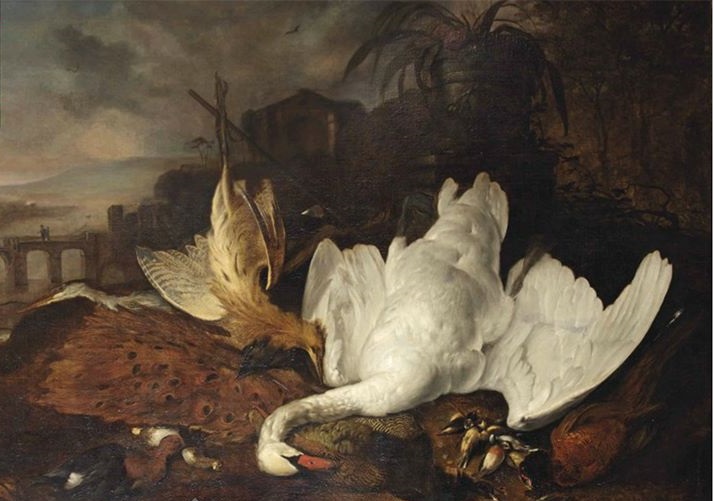
still life with white hyperbole

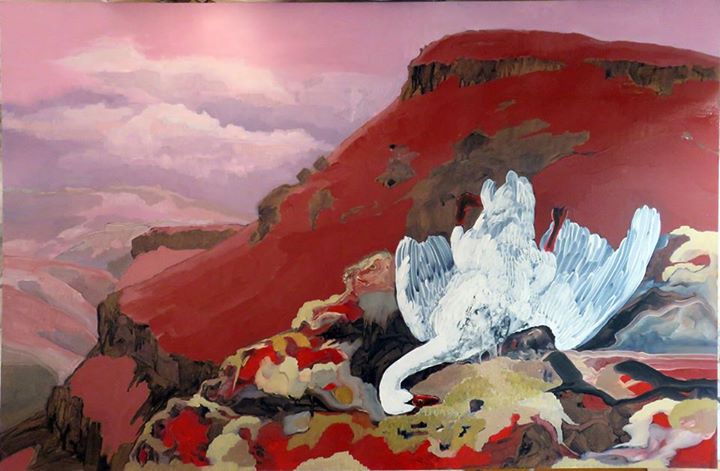
Lizza Littlewort - "Still Life with White Hyperbole". 2015.

Lizza Littlewort – “Still Life with White Hyperbole”. 2015.

This is an adaptation from a still life by someone I’m actually descended from, whose son (or grandson, not sure) came out here as a PA to Simon van der Stel and apparently was the most corrupt, heinous motherfucker you could imagine. It’s very hard to get a straight answer from anyone in my family, but one distant uncle who I chatted to on the phone told me that because he could prove his direct descent he was allowed into the basement of the Rijks Museum where they kept all the family info. He said this guy was so corrupt that he was, individually, the reason for the first slave rebellion at the Cape. So it’s like an actual time warp of history. Except of course when I research when the slave rebellions were, none of the dates tie up. But of course there must be so many of these hideous occurrences which we no longer even know about.

Here’s the painting, by Jacob Jacobsz. De Wet (Jacob de Wet II):

jacobz

Jacob de Wet II (Haarlem 1640/2-1697 Amsterdam).  An Italianate river landscape with a swan, a Eurasian bittern, a peacock, a pheasant and other birds before a stone vase on a pedestal. Oil on canvas, 153.6 x 217.5 cm.


goo goo g’joob

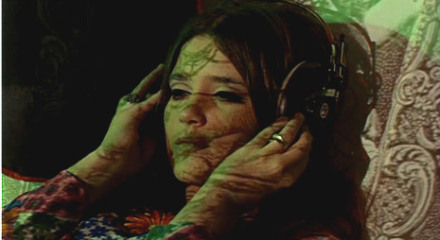
The Beatles’ song, I am the Walrus, slowed down 800% and set to the 1969 film Vertige by Jean Beaudin.

“Sympathetic but subtly critical, Vertige presents itself as a psychological portrait of the escape and/or contestation tactics of the decade’s youth: while war, violence, famine and poverty continue to devastate the planet, these youngsters seek refuge in the hedonistic haven of sexual liberation, lysergic research and communal fictions.”

Watch the film at ubu.com. And HERE is an etymological investigation into the phrase “goo goo g’joob”.

jean-beaudin-vertige-1969

ameera conrad – on exhaustion over a lack of understanding

ameeraI am tired
God Almighty, I am tired
of being told that we need to move on,
that we need to forget,
that we need to put the past behind us,
that Apartheid is over.

They don’t understand.
We never will.
Our bodies are monuments of centuries of torture,
trauma
terror
these exist in us
we live it every day.
We built this country
slaves
whips at our backs –
The Man holding the whip did not build –
we built.

Apartheid is not over.
No magic TRC wand can bippity-boppity-boo! it away.
Our glass carriage is still a pumpkin,
rotting,
pulled by rats.
A polite revolution over tea and crumpets, good Sir,
‘twas the order of the day.

When could we mourn?
When could we cry?
When could we scream
for our loved ones lost
our chances trampled on?

Please Mastah Baas Meneer,
Asseblief,
Gee my ‘n kans om te huil
vir my ma
en my pa
en my susters
en broers
gee my ‘n kans om te huil.

Let me stand up for myself
and for those who stood before me.
Let me march for myself
and for those who marched before me.
Let me call out AMANDLA
and raise my fist
and let me cry
after hundreds of years
let me cry.

— Ameera Conrad
4th Year
B.A. Theatre and Performance at UCT

Please visit Ameera’s blog, HERE.

UCT black academics: when they arrived!

A substantive account of what students are doing right now at UCT. Fiercely awesome.

briankamanzi's avatarbriankamanzi

Foreword

Forgive me at this moment, it is difficult to not be romantic in my description of what I feel is History in the making. This story is dedicated to my friends and comrades who are making waves at the University of Cape Town on behalf of many students, on behalf of me, on behalf of our children to change the institutional climate from the restrictions it has been gripped with through it’s inception. This latest wave of energy takes its rightful place as one, among many, of the acts of resistance against the systemic forces that resist change and substantive “transformation” as voices take on a new interpretation of the never ending struggle for liberation.

Forgive me in my limitedness, as I am physically unable to recount to you all that happened but I hope you appreciate my account of what I remember.. along with the moments that, most…

View original post 1,412 more words

statement from students occupying uct’s bremner building aka azania house

BREMNER OCCUPATION STATEMENT

We, the Rhodes Must Fall movement, are occupying the Bremner building with the intention to 1) disrupt the normal processes of management and 2) force management to accept our demands. We have chosen to occupy the Bremner building, and the Archie Mafeje room specifically, because of its strategic and historical significance – it is the place where management carries out its activities, and these are precisely the activities we seek to subvert. In addition, the building is a historical site of protest – in 1968 UCT students opposed the university’s decision to rescind the professorship of one of the continent’s leading anthropologists, Archie Mafeje. We have chosen the Archie Mafeje boardroom to recognise his struggle against the very institutional racism we are fighting against.

We have claimed and transformed this space to begin the decolonisation of the university. We are implementing a programme of rigorous political education under the guidance of a group of black lecturers from UCT and other South African universities that interrogates and problematizes the neo-colonial narratives pertaining to Africa. This education forces us to reject these narratives and their normative nature because they re-inforce our displacement both geographically and existentially.

We have begun to question the entire neo-colonial situation, whether South Africa belongs to all those who live in it and whether it is us the people that are occupying this building or whether we are realising the fact that this building and its land always belonged to the people. This education has extended far beyond the falling of the statue and has reached the language of struggle. How do we organise, how do we mobilise and most importantly how do we get what we want. How do we resolve the tensions between Pan-Africanism and intersectionality, moreover how does that implicate our own movement. Management has told us that they are allowing us to stay in Bremner. This building that sits on the land of black people, this building that was constructed on the sweat and blood of black people. If UCT is not afraid at this point all we have to say is NANG’UMFAZI OMNYAMA MAX PRICE!

We are here because we are calling into question the legitimacy of the supposedly democratic process Dr Max Price has put in place to address the removal of the Rhodes statue.

It is infuriating that management is attempting to open up a process of debate through their plan of action. Alumni have been emailed and asked for input, and notice boards have been put up near the statue to allow for comment from the broader student body. This is unacceptable to the black (by this we mean all oppressed people of colour) students, workers and staff belonging to this movement. It is absurd that anyone besides those who experience the statue as a violent presence should have any say in whether the statue should stay or not. White students in particular cannot be consulted in such a process because they can never truly empathise with the profound violence exerted on the psyche of black students. Management is making clear through this process that they are not interested in alleviating black pain unless the move to do so is validated by white voices. Opening up the discussion to an alumni that is overwhelmingly white and male will only prejudice black people, and black women particularly, in the decision-making process. To refuse to explicitly acknowledge these skewed demographics is unacceptable. Our pain and anger is at the centre of why the statue is being questioned, so this pain and anger must be responded to in a way that only we can define.

Further, the ‘Have Your Say’ notice boards have only made UCT’s black community more vulnerable – UCT has crafted a space that allows students to be blatantly racist with impunity, at the expense of a safe space for black people. This shows that UCT either does not know the violence black people face here, or they truly have no interest in our protection. Finally, it is revealing that while black protestors are threatened with and are facing investigations, the racist backlash from white students has been met with silence by the university.

That the presence of Rhodes is seen as debatable shows that management does not understand the extent of the terrible violence inflicted against black people historically and presently. The push for dialogue around the statue reflects the disturbing normalisation of colonisation and white supremacy at UCT.

In his letter “From the VC’s Desk: Rhodes statue protests and transformation”, Dr Price states that there has never been such university-wide discussion on this issue. He does so without interrogating why this is the case. It is the fault of UCT management that discussion has been suppressed for so long. Black students have clearly not had any channels through which to express their pain within the university, and no genuine steps have been taken by UCT to provide such. It is telling that a student had to go to the lengths that Chumani did in order to garner the university’s attention on issues of black pain. The fact that management has clearly disregarded the experiences of black students, staff and workers for the last 21 years on this campus calls into question their legitimacy in dealing with the issue of removing the statue.

The illegitimate nature of this process is also illustrated by our walk-out last Monday in protest of the disingenuous Heritage, Signage and Symbolism seminar. After the walk-out, the remaining members of the seminar stopped the discussion to respect student protestors and our decision that any conversation on the statue can only happen on our terms. The fact that the Vice-Chancellor mentioned this seminar in his letter without contextualising it reveals that he is committed to upholding a process that is clearly to the detriment of black students.

We take issue with Dr Price’s reasoning that “it is a council decision”. Again, the only view relevant to the decision is that of black students, workers and staff, and we refuse to accept the trivialisation of this fact in the form of management prioritising white stakeholders. We are also fully aware that UCT senior management has taken unilateral decisions before with no delay – we refer here to the decisions taken on the admissions policy which was pushed through by senior management.

We stress that this movement is not simply about the removal of a statue, and removing the statue is only the first step towards the radical decolonisation of this university. The removal of the statue is the first condition of our campaign – from which point we will allow management to engage with us. We demand that Management accepts that there is no decision to make: this movement has decided that the statue must fall. We demand that Dr Price organises an emergency meeting of council this week Friday the 27th of March to discuss the processes involved in removing the statue from this campus. We will remain in Bremner building until we receive confirmation of this.

olive schreiner on cecil john rhodes

“We fight Rhodes because he means so much of oppression, injustice, and moral degradation to South Africa; – but if he passed away tomorrow there still remains the terrible fact that something in our society has formed the matrix which has fed, nourished, and built up such a man!”

— In a letter to John X. Merriman on 3 April 1897, published at Olive Schreiner Letters online.

Rhodes statue, head covered in garbage bags. University of Cape Town, 17 March 2015. Photo: Rosemary Lombard

Statue of Cecil John Rhodes, head covered in garbage bags. University of Cape Town, 17 March 2015. Photo: Rosemary Lombard

Some more provocative white writing about the legacy of Rhodes can be found HERE.

foucault on sadism’s relationship to western rationality (1961)

Sadism is not a name finally given to a practice as old as Eros; it is a massive cultural fact which appeared precisely at the end of the eighteenth century, and which constitutes one of the greatest conversions of Western imagination: unreason transformed into delirium of the heart, madness of desire, the insane dialogue of love and death in the limitless presumption of appetite.

Sadism appears at the very moment that unreason, confined for over a century and reduced to silence, reappears, no longer as an image of the world, no longer as a figura, but as language and desire. And it is no accident that sadism, as an individual phenomenon bearing the name of a man, was born of confinement and, within confinement, that Sade’s entire oeuvre is dominated by the images of the Fortress, the Cell, the Cellar, the Convent, the inaccessible Island which thus form, as it were, the natural habitat of unreason.

It is no accident, either, that all the fantastic literature of madness and horror, which is contemporary with Sade’s oeuvre, takes place, preferentially, in the strongholds of confinement.

— Michel Foucault, from Madness and Civilisation

mary reid kelley – you make me iliad

Filmed in 2011 at Mary Reid Kelley’s home and studio in Saratoga Springs, New York, the video artist and painter discusses her video work “You Make Me Iliad” (2010). In researching the lives and experiences of women who lived during the first World War, Reid Kelley was struck by how few first-hand accounts she was able to uncover. Mary Reid Kelley explains her attempts to reconstitute an experience that would have otherwise been lost to history by creating an imagined narrative involving a prostitute, a soldier, and a medical officer.

In black-and-white videos and drawings filled with punning wordplay and political strife, Mary Reid Kelley presents her take on the clash between utopian ideologies and the realities of women’s lives in the struggle for liberation. Performing scripted narratives in rhyming verse— featuring characters such as nurses, soldiers, prostitutes, and saltimbanques—Reid Kelley playfully jumbles historical periods to trace the ways in which present concerns are rooted in the past.

Watch an excerpt from another of Reid Kelley’s works, Sadie the Saddest Sadist on Reid Kelley’s website.

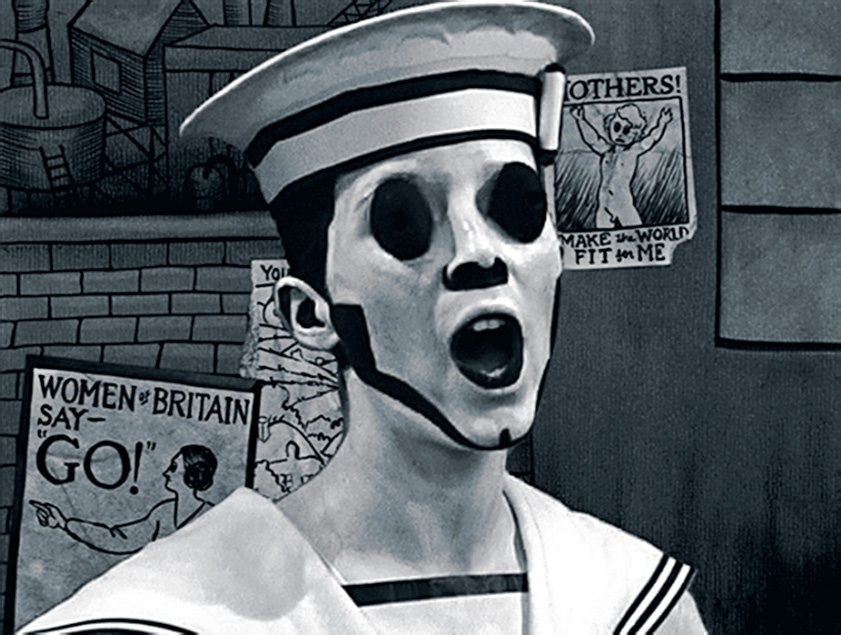
mary-reid-kelley_101146821464.jpg_x_1600x1200Sadie, the Saddest Sadist (7 minutes, 23 seconds), 2009, is set in Great Britain in 1915, according to a free booklet that includes the video’s lyrics. The title character, a munitions worker, wants to learn a trade “so [she] could be a traitor.” She meets Jack, a sailor (played by Reid Kelley in drag), and with “passions inflamed,” she requests rousing war stories. His sung reply: “Calm down sweetheart / Britannia rules the waves.” In pledging herself to him, she offers her “surplus devotion,” and after their off-camera tryst, she sings, “The stains on my sheets / will come out with some lemon / I know that you care / by these Marx on my Lenin.” Live action alternates with stop-motion animation in which dancing refrigerator magnet-style letters spell out the dialogue or toy with it, as when “surplus devotion” is anagrammatized into “spurs devolution.”…

… Reid Kelley’s interest seems to be primarily in historical material, expressed in details such as the patriotic flyers that hang on the walls behind Sadie and Jack when they meet, which urge citizens to conserve food and to fight for king and country. Her fine ear for popular verse makes Reid Kelley’s work rich fun for those who are, as Jack describes himself, “verbally inclined.”

Source: http://www.artinamericamagazine.com/reviews/mary-reid-kelley/

ethel waters – his eye is on the sparrow

Pause to watch, listen and reflect.

Have you ever experienced the weird magic of coming across something obliquely on Youtube, on your way somewhere else, and it speaks so powerfully, so uncannily, to all the things happening right now around you that all the hairs on your body stand on end? This is one of those times. The scene comes from a 1952 film called The Member of the Weddingbased on the book/play by Carson McCullers, starring Ethel Waters, Julie Harris and Brandon De Wilde. I came across it because my housemate Khanyi and I were singing this old hymn, hamming it up Lauryn-Hill-in-Sister-Act-2 style. I wanted to check out some of the older versions… and this clip revealed itself to me, complete with contextual preamble.

Just to tether this to a little of my own current context (I unfortunately don’t have time to write much right now), here is something written by one of my MPhil classmates about the student protests demanding the removal of the statue of Cecil John Rhodes that are currently happening at UCT, and here is the official SRC statement on the matter.

member-of-the-wedding-julie-harris-ethel-waters-brandon-de-wilde-1952

marx and engels on the global reach of capitalism

The bourgeoisie cannot exist without constantly revolutionising the instruments of production, and thereby the relations of production, and with them the whole relations of society. Conservation of the old modes of production in unaltered form, was, on the contrary, the first condition of existence for all earlier industrial classes. Constant revolutionising of production, uninterrupted disturbance of all social conditions, everlasting uncertainty and agitation distinguish the bourgeois epoch from all earlier ones. All fixed, fast-frozen relations, with their train of ancient and venerable prejudices and opinions, are swept away, all new-formed ones become antiquated before they can ossify. All that is solid melts into air, all that is holy is profaned, and man is at last compelled to face with sober senses his real conditions of life, and his relations with his kind.

The need of a constantly expanding market for its products chases the bourgeoisie over the entire surface of the globe. It must nestle everywhere, settle everywhere, establish connexions everywhere.

The bourgeoisie has through its exploitation of the world market given a cosmopolitan character to production and consumption in every country. To the great chagrin of Reactionists, it has drawn from under the feet of industry the national ground on which it stood. All old-established national industries have been destroyed or are daily being destroyed. They are dislodged by new industries, whose introduction becomes a life and death question for all civilised nations, by industries that no longer work up indigenous raw material, but raw material drawn from the remotest zones; industries whose products are consumed, not only at home, but in every quarter of the globe. In place of the old wants, satisfied by the production of the country, we find new wants, requiring for their satisfaction the products of distant lands and climes. In place of the old local and national seclusion and self-sufficiency, we have intercourse in every direction, universal inter-dependence of nations. And as in material, so also in intellectual production. The intellectual creations of individual nations become common property. National one-sidedness and narrow-mindedness become more and more impossible, and from the numerous national and local literatures, there arises a world literature.

man-steve-cutts-02

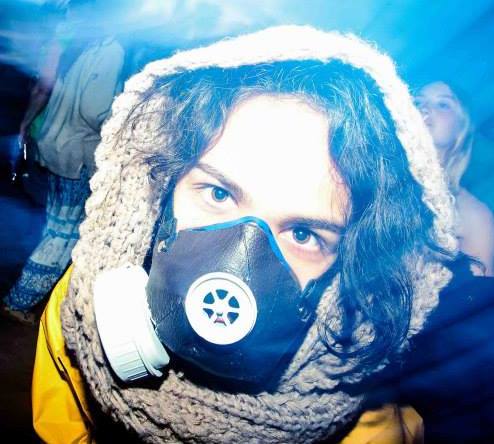
Still from “Man”, by Steve Cutts (watch it!)

The bourgeoisie, by the rapid improvement of all instruments of production, by the immensely facilitated means of communication, draws all, even the most barbarian, nations into civilisation. The cheap prices of commodities are the heavy artillery with which it batters down all Chinese walls, with which it forces the barbarians’ intensely obstinate hatred of foreigners to capitulate. It compels all nations, on pain of extinction, to adopt the bourgeois mode of production; it compels them to introduce what it calls civilisation into their midst, i.e., to become bourgeois themselves. In one word, it creates a world after its own image.

Marx & Engels: Library: 1848: Manifesto of the Communist Party: Chapter 1

lamenting the friend zone, or: the “nice guy” approach to perpetrating sexist bullshit

“If you don’t care enough about someone to enjoy their company and respect their decisions when sex is off the table, then that person is right not to sleep with you, because enjoying someone’s company and respecting their decisions is pretty much how sex gets on the table to start with.”

fozmeadows's avatarFoz Meadows

Everyone’s heard of friendzoning – even if they don’t know the word, they sure as hell know the concept. It’s what happens time and again to unfortunate Nice Guys who, despite being nothing but sugar and spice to the girls they love, are nonetheless denied the sexual relationships they so obviously deserve and are instead treated like platonic equals – a terrible, unfair fate spawned by the dark side of feminism.

And if you thought even part of that statement was correct, Imma stop you right there.

To borrow the succinct, nail-head-hitting phraseology of one hexjackal*:

Friendzoning is bullshit because girls are not machines that you put Kindness Coins into until sex falls out.

Dear Hypothetical Interlocutor whose hackles just bristled with the unfairness of that statement; who thinks that girls can be in the Friend Zone, too, and that therefore this point is both invalid and reverse-sexist into…

View original post 1,505 more words

on a “deaf safari” with felix laband

Watch Felix Laband’s brilliant set at the 2015 Cape Town Electronic Music Festival on 8 February (click the hyperlink – the darn embed function doesn’t seem to work properly on WordPress).

Felix opens this particular “Deaf Safari” with a dodgy old recording (that I think I actually gave him!), of Marais and Miranda entertaining a frightfully colonial white 1950s audience with their “knowledge” of “Hottentot” and “Zooloo” linguistics. With a subversive stammer, it segues into an hour-long journey of cut-up sounds and visuals.

Laband displays fluent familiarity with and yet alienation from spectacular capitalist consumer tropes. The oversaturated bricolage of radio preachers, politicians, porn, pulp cinema, big game and exoticised cultural representations is absurd and defaced: eyeless, toothless, festering with skulls. Sound and visuals work in counterpoint: horny assemblages dripping blood and infection; a snatch of Cat Power’s languid “Satisfaction”. His work foregrounds our mindless addiction to and manipulation by these fragments bouncing off the walls onto one another, their banality dismembered, dislocated, demented, discordant, decaying.

A voice in Queen’s English: “I was wondering what it is that you don’t want to remember so badly… To put it another way, what are you trying to forget?”

The response, implied in the guitar run sampled from Nico’s “These Days”: “Please don’t confront me with my failures… I had not forgotten them.”

Felix forces us to examine ourselves honestly. This I love most deeply about what he does: he will not allow us to forget, nor feign ignorance. There are naive melodies, but there is no innocence, no deafness nor blindness. We are taken through his cabinet of jabbering apparitions, racist, patriarchal horror haunting every suburban corner, lullabies, toyi-toyi chants… The valley of the shadow of death… We are not tourists. This is our own back yard. We stare the nightmares down, bopping in slo-mo. The voices persist, demand acknowledgement until they dissolve. It’s a kind of exorcism.

And beyond that, always, despite all the schizophrenic folly and sadness, hope and jubilation live on in the unfinished refrains of blues ghosts captured long ago on wax… Vera Hall, Stack O’Lee, prisoners and murderers alike now free… and there is space to breathe, place to be here now, without judgement… we are bathed in grace and exquisite melody.  This is strong muti for South Africans’ sickness.

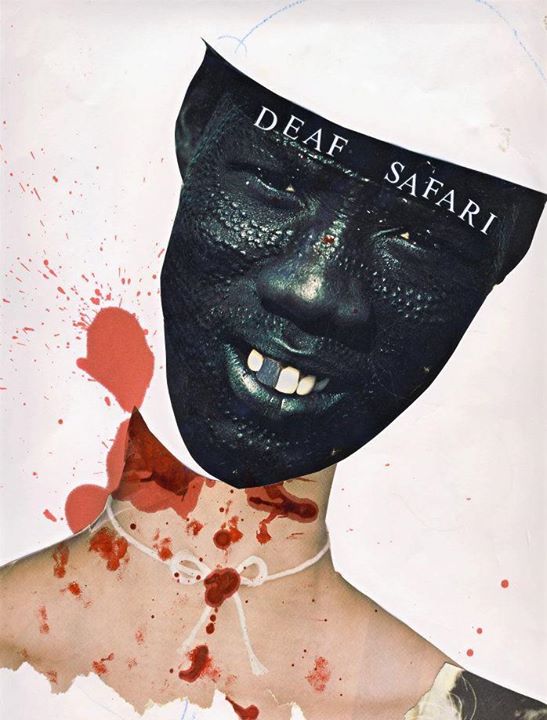
deaf safari

Collage: Felix Laband

I can’t wait for his new album, and I highly recommend that you see him live if you get the chance: he’s on form like never before and it’s a profound trip.

P.S. Read Sean O’Toole’s great interview piece for Mahala on Felix’s return (his new album, Deaf Safari, is set for release next month, after an almost decade-long gestation).

arundhati roy on living well

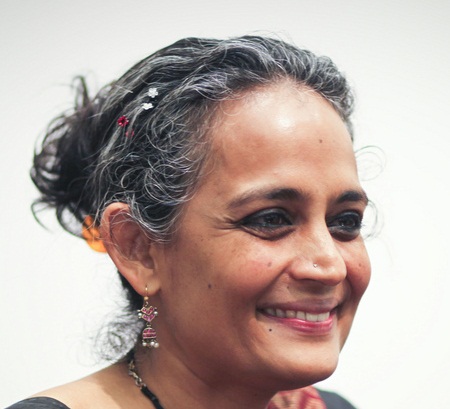
Arundhati_Roy

Photo: Jean-Baptiste Labrune, 2010

“The only dream worth having is to dream that you will live while you are alive, and die only when you are dead. To love, to be loved. To never forget your own insignificance. To never get used to the unspeakable violence and vulgar disparity of the life around you. To seek joy in the saddest places. To pursue beauty to its lair. To never simplify what is complicated or complicate what is simple. To respect strength, never power. Above all to watch. To try and understand. To never look away. And never, never to forget.”

― Arundhati Roy

shut up and bleed

Teenage Jesus and the Jerks/ Beirut Slump – Shut Up and Bleed (Atavistic, 2008)

Review of this compilation by Jordan N. Mamone from Dusted:

Forget what you may already know about Lydia Lunch. Ignore her vitriolic spoken-word performances; her bellicosely feminist writing; her vampy S&M fashion sense; her associations with renegade alpha males Nick Cave and Jim “Foetus” Thirlwell; her orgasmic moans on Sonic Youth’s “Death Valley ’69”; her erotically grizzly romps in the campy-creepy films of Richard Kern; her futile sparring with idiot comedian Joe Rogan. Purge from your mind her queen-size intellect and ego. Erase the subsequent mass-market co-opting of her prescient obsessions: serial murderers, Southern Gothic literature, rape, insanity, proto-Riot Grrl solidarity, buckets of black eyeliner (hardly shocking stuff today, but terra incognita when Lunch was loudly and proudly milking them in the ’70s, ’80s and ’90s).

From a purely musical perspective, it’s the woman’s first two bands, the violently minimalist Teenage Jesus and the Jerks, and the monstrously damaged Beirut Slump, that are her most important accomplishments. And to appreciate them properly, it’s necessary to sever them from their creator’s reputation and to listen to them on their own terms. As a handy compendium of both groups’ slim discographies plus previously unreleased live goods, the excellently titled Shut Up and Bleed allows you to do just that.

Rewind to 1976: An alienated 16-year-old girl named Lydia Koch runs away to Manhattan from Rochester, N.Y. Months later, she stumbles upon a quartet called Mars, whose cataclysm of amateurish dissonance, art-world conceptualism, and primitive rock physicality borrows punk’s urgent thrust while negating the whole equation. Journalists will label this style “no wave.” Smitten, the youngster swoons over the rumpus, which she then personalizes to suit her particular strain of jailbait hostility. Christened Lydia Lunch, she steers Teenage Jesus through 10-minute sets comprised of minute-long songs that pivot around her screeching, electric slide guitar and deviant percussionist Bradley Field’s stiff, staccato thuds on a single snare and cymbal. Their rudimentary, machine-gun approach is undeniably provocative. Who could resist a lascivious high-school vixen yelping about boredom and torture, flanked by a pair of addled weirdos-turned-trained monkeys? In 1978, superstar producer Brian Eno gives Teenage Jesus a coveted slot on the landmark, scene-baptizing No New York LP.

Three decades elapse: Thurston Moore and Byron Coley are nicely summarizing downtown’s sordid past in their luxurious No Wave photography book, which might as well be a love letter to Ms. Lunch. In June 2008, the Jerks herald the tome’s publication and play their sole gig since 1979. The context of this one-shot semi-reunion is quite bizarre: a fleeting, self-destructive epoch re-examined as revered fodder for galleries and coffee-table editions. But onstage at the Knitting Factory, the trio – with its former bassist Jim Sclavunos on drums, and Moore filling in on bass – sounds invigoratingly strident, brusque and, dare it be said, entertaining. Lunch, who’s pushing 50, sticks her tongue out, curses the audience, and barks the lyrics to “Baby Doll” and “Orphans” in a hoarse, jaded snarl that has deepened considerably from perpetual wear and tear. Looser and less aloof than they were in their prime (check the clip from Lydia’s career-spanning Video Hysterie: 1978-2006 DVD on Atavistic), the Jerks still decimate the majority of noise-crud that currently pollutes the local club circuit. This means you, No Fun Fest.

teenage jesus

And so it’s no surprise that the material collected on Shut Up and Bleed stands as tall as Yao Ming in platform shoes. Time has eroded much of the initial inaccessibility of barbed stomps such as “Crown of Thorns,” leaving behind a deliciously nihilistic, psycho-cheerleader cha-cha. Lunch is a criminally underrated instrumentalist: Heed the drill-bit whinnies that scar “Red Alert” and the ascending, jet-engine whoosh of “Freud in Flop.” Substantially improving on the 1995 Teenage Jesus retrospective Everything, the new CD affixes decent, if scruffy, archival bonuses (but omits a killer take of “Race Mixing”) and wisely restores many, if not all the tunes to their original aural luster. (Thirlwell had frustratingly “reprocessed” the Jerks’ master tapes in the 1980s, adding gobs of strength-sapping reverb.)

Interspersed throughout the track listing are the complete recorded works of Beirut Slump, an obscure quintet that lurked in the shadows during Teenage Jesus’s final phases. For this unruly combo, Lunch steps aside to concentrate on her trebly, nightmare-surf strumming and assigns the vocals to Bobby “Berkowitz” Swope, a migrant from Florida’s Eckerd College who sings like a nauseous, homosexual Frankenstein menacing you with an ice pick. Vivienne Dick’s B-movie organ disfigures the Doors into a bad-acid freak show; Sclavunos and bassist Liz Swope’s sluggish tempos anticipate the cruel plod of early Swans. Whereas the Jerks’ momentous blurts now come across as abusively catchy, Slump’s frazzled “Staircase” and utterly revulsed “See Pretty” continue to pry open some ghastly portal to hell. A wealth of perverse pleasure awaits anyone brazen enough to peer in and gawk.

Teenage Jesus And The Jerks:
Lydia Lunch, guitar, vocals
Gordon Stevenson, bass
Bradley Field, drums
Kawashima Akiyoshi “Reck”, bass (Tracks 4, 5, 15, 26, 28)

Beirut Slump:
Bobby ‘Berkowitz’ Swope, violin, vocals
Lydia Lunch, guitar, vocals
Vivienne Dick, organ
Liz Swope, bass
Jim Sclavunos, drums

so, happy in cape town?

ORIGINAL  (threw up in my mouth a little):

DETOURNEMENT (all that is basically changed is the soundtrack):

We want to thank you for flying with us
We know you coulda stayed home, just cried and cussed
May all your guns go off if it’s time to bust
May all they tanks have time to rust
They got the armies turning bullets into gold
They got the hookers turning tricks in the cold
And every time the police kicks in the door
An angel gas brake dips in the O
And even if a d-boy flips him a O
It ain’t enough to buy shit anymore
Sleep in the doorway, piss on the floor
Look in the sky, wait for missiles to show
It’s finna blow cause
They got the TV, we got the truth
They own the judges and we got the proof
We got hella people, they got helicopters
They got the bombs and we got the, we got the

Don’t talk about it
It won’t show
Be about it
It’s ’bout to blow

I just spit the dope lines, I don’t snort ’em
Tell the boss to call police to escort him
You don’t write all them lies, you just quote ’em
Get offline, plug in to this modem
No, you can’t out-vote ’em
The rules is still golden
Only jewels we holding is if we guarding our scrotum
If you press your ear to the turf that is stolen
You can hear the sound of limitations exploding
Please sir, may we have another portion?
We’re children of the beast that dodged the abortion
Neck placed firm ‘tween the floor and the Florsheim
We’ll shut your shit down, don’t call it extortion
Caution — we’re coming for your head
So call the Feds and get files to shred
Every textbook read said bring you the bread
But guess what we got you instead?

Let’s keep it banging like a shotgun
We in a war before we fought one
Now if you’re tired of working so they can play
A common enemy, we got one
Now keep it banging like a shotgun
We in a war before we fought one
Now if you’re tired of working from day to day
A common enemy, we got one