From the album Poppycock, set to Dream of a Rarebit Fiend, a 1906 Edison reel.
From the album Poppycock, set to Dream of a Rarebit Fiend, a 1906 Edison reel.
A-side of a 12″ produced by Ted Milton and Steve Beresford, and released on Embryo Records.
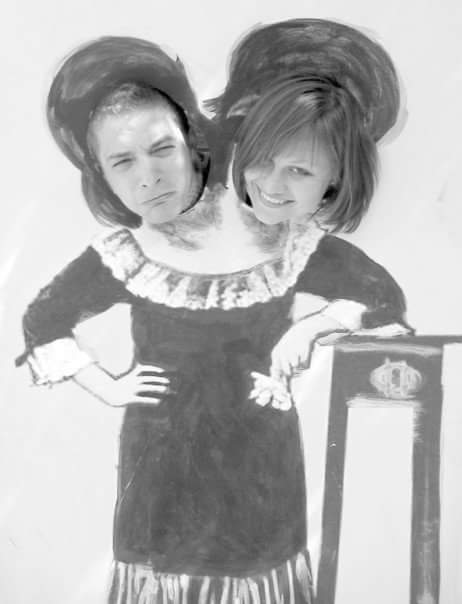
Righard Kapp and Rosemary Lombard at Matjiesfontein Show ‘n’ Tell, September 2007
The fury of Nina Simone, recorded live at the Montreal International Jazz Festival on 2 July 1992.
I’m sure I’ve posted this on Fleurmach before, but here it is again, because it’s just so great. A version of the Weill/Brecht composition, “Seeräuberjenny” from Threepenny Opera, released on the excellent compilation Sons of Rogues’ Gallery: Pirate Ballads, Sea Songs and Shanties.
Off Last Year’s Savage. I love this video, which, according to Shilpa Ray, is a commentary on the conservative reproductive rights lobby, inspired by the Todd Akin controversy.
Here comes that ticker tape parade
Bless all my lucky stars
Cause I’ve saved the day
There goes my ego exploding
In mushroom clouds all over
My third world body
Well this air’s better
And I’m wetter
And taste just like ice cream
Don’t ever wake me up, bitch
Don’t ever wake me up
From where the gifts are pouring
The fans adoring
All the trophies that I win
I am the King
I am the King
Pretty soon I’m gonna have to let it go
Pretty soon I’m gonna have to let it go
In my fifteen hours of sleep
There’s no more suffering me
Maybe some suffering for you
This is my regime
And it’s perpetual pageantry
There’s no existence of my mistakes
No humility
Well my dick’s bigger
My breasts are thicker
Whatever power means
Don’t ever wake me up, bitch
Don’t ever wake me up
From where I’m well fed
I’m well bred
Shitting 24ct bricks
I am the King
I am the King
And pretty soon I’m gonna have to let it go
And pretty soon I’m gonna have to let it go
Pretty soon I’m gonna have to let it go
In my 15 hours of sleep
Here comes that ticker tape parade
And there goes my ego exploding
Here comes that ticker tape parade
There goes my ego exploding
Here comes that ticker tape parade
There goes my ego exploding
Such a very special recording.
20-year-old Billie Holiday sings in a first session with the Teddy Wilson Orchestra on July 2 1935 in New York. Next to Teddy on piano, the All Star Band consists of Benny Goodman on clarinet, Roy Eldridge on trumpet, Ben Webster on tenor sax, John Truehart on guitar, John Kirby on bass and Cozy Cole on drums. Jazz promoter John Hammond heard Billie for the first time in New York’s Monette club in 1933 and wrote in Melody Maker: “Billie, although only 18, she weighs over 200 lbs*, is incredibly beautiful, and sings as well as anybody I ever heard”. Hammond told Benny Goodman, and the two went to this Monette club. Both were impressed, and it was the start of Billie’s career.
*sexist bullshit much?
Released today, from his forthcoming new album of the same name, out on 21 October 2016. <3
From Miles Davis’s original album for the Louis Malle film Ascenseur Pour L’Echafaud. Recorded at Poste Parisien, Paris, France on December 4-5, 1957. Miles Davis (trumpet); Barney Wilen (tenor saxophone); Rene Urtreger (piano); Pierre Michelot (bass); Kenny Clarke (drums).
Miles Davis – Ascenseur pour l’échafaud – Lift to the Gallows (Full Album HERE.)
In my generation, most of the poets I admire are interested in length. By which I mean that they want to write long lines. long stanzas, long poems, poems which cover an extended sequence of events. To all this I feel an instant objection, whose sources I’m not confident I know. Some of the sources may lie in character, in my tendency to reject all ideas I didn’t think of first, which habit creates a highly charged adversarial relationship with the new. What is positive in this process is that it creates an obligation to articulate an argument.
What I share with my friends is ambition; what I dispute is its definition. I do not think that more information always makes a richer poem. I am attracted to ellipsis, to the unsaid, to suggestion, to eloquent, deliberate silence. The unsaid, for me, exerts great power: often I wish an entire poem could be made in this vocabulary. It is analogous to the unseen; for example, to the power of ruins, to works of art either damaged or incomplete. Such works inevitably allude to larger contexts; they haunt because they are not whole, though wholeness is implied: another time, a world in which they were whole, or were to have been whole, is implied. There is no moment in which their first home is felt to be the museum. A few years ago, I saw a show of Holbein drawings; most astonishing were those still in progress. Parts were entirely finished. And parts were sketched, a fluent line indicating arm or hand or hair, but the forms were not filled in. Holbein had made notes to himself: this sleeve blue, hair, auburn. Though the terms were other–not the color in the world, but the color in paint or chalk.
What these unfinished drawings generated was a vivid sense of Holbein at work, at the sitting; to see them was to have a sense of being back in time, back in the middle of something. Certain works of art become artifacts. By works of art, I mean works in any medium. And certain works of art do not.
It seems to me that what is wanted, in art, is to harness the power of the unfinished. All earthly experience is partial. Not simply because it is subjective, but because that which we do not know, of the universe, of mortality, is so much more vast than that which we do know. What is unfinished or has been destroyed participates in these mysteries. The problem is to make a whole that does not forfeit this power.
The argument for completion, for thoroughness, for exhaustive detail, is that it makes an art more potent because more exact–a closer recreation of the real. But the cult of exhaustive detail, of data, needs scrutiny. News stories are detailed. But they don’t seem, at least to me, at all real. Their thoroughness is a reprimand to imagination. And yet they don’t say this is what it was to be here.
I belong, so it appears, to a generation suspicious of the lyric, of brevity, of the deception of stopped time. And impatient with beauty, which is felt to be an inducement to stupor. Certainly there is stupor everywhere; it is an obvious byproduct of anxiety. But narrative poetry, or poetry packed with information, is not the single escape from the perceived constrictions of the lyric. A number of quite different writers practice in various ways another method.
A koeksuster twist.

From the 1984 album Living In The Suburbs, this little hit is perhaps the best-known example of Niki Daly’s work – off-kilter pop leaking white South African neurosis.
Flip side of “Just an old love of mine” (1947).
The makeup tutorial to end all makeup tutorials.

Juliette, Naomh and River. Waterfall, KwaZulu-Natal, 18 September 2016.
“Solamente una vez“, written by Agustin Lara, was first recorded by Ana María González & José Mojíca (January 21,1942). An English version of the song was recorded a few years later by Dora Luz, as “You belong to my heart“, which was used in Disney’s The Three Caballeros, but the lyrics are really lost in translation.
Why had I never heard of this?! In 1946 Disney and Dalí conceived this animated story of Chronos, the personification of time who falls in love with a mortal.
Dalí described the film as “a magical display of the problem of life in the labyrinth of time”. Disney called it “a simple story about a young girl in search of true love.”
Read more about the collaboration and realisation of this beautiful little film HERE.
The song is performed by Dora Luz.
Nina Hagen’s mother singing the hell out of this Hauptmann/Brecht/Weill song from the musical Happy End.
Here’s a (totally different) version by Nina, too:
Enrico Caruso sings “Elegie” composed by Jules Massenet.
Mischa Elman, violin
Percy B. Kahn, piano
20.III.1913
Ô doux printemps d’autrefois, vertes saisons,
vous avez fui pour toujours!
Je ne vois plus le ciel bleu;
je n’entends plus les chants joyeux des oiseaux!
En emportant mon bonheur,
ô bien-aimé tu t’en es allé!
Et c’est en vain que revient le printemps!
Oui, sans retour.
Avec toi le gai soleil,
les jours riants sont partis!
Comme en mon coeur tout est sombre et glacé!
Tout est flétri!
Pour toujours!
“Elegy is a form of poetry natural to the reflective mind. It may treat of any subject, but it must treat of no subject for itself; but always and exclusively with reference to the poet. As he will feel regret for the past or desire for the future, so sorrow and love became the principal themes of the elegy. Elegy presents every thing as lost and gone or absent and future.”
– S. T. Coleridge, Specimens of the Table Talk of the late Samuel Taylor Coleridge (1835), vol 2, p. 268
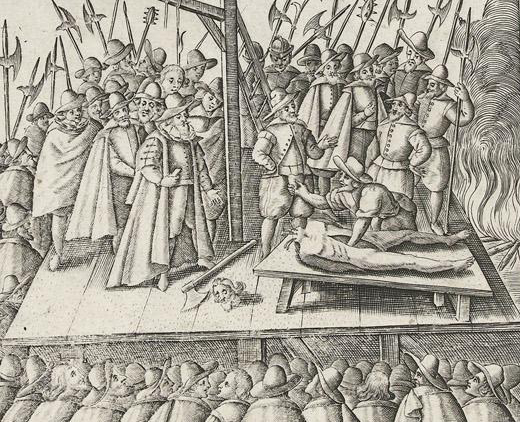
Tychbornes Elegie, written with his owne hand in the Tower before his execution*
 My prime of youth is but a frost of cares,
My feast of joy is but a dish of paine,
My Crop of corne is but a field of tares,
And al my good is but vaine hope of gaine.
The day is past, and yet I saw no sunne,
And now I live, and now my life is done.
My tale was heard, and yet it was not told,
My fruite is falne, & yet my leaves are greene:
My youth is spent, and yet I am not old,
I saw the world, and yet I was not seene.
My thred is cut, and yet it is not spunne,
And now I live, and now my life is done.
I sought my death, and found it in my wombe,
I lookt for life, and saw it was a shade:
I trod the earth, and knew it was my Tombe,
And now I die, and now I was but made.
My glasse is full, and now my glasse is runne,
And now I live, and now my life is done.
__
*Chidiock Tichborne was one of fourteen convicted in 1586 in the plot to kill Queen Elizabeth 1 of England.
Doctor and Miss Heisenberg play “Elegy in F minor for violin and piano, Op.30”, composed by Henri Vieuxtemps (1820 – 1881).
Released yesterday. Exquisite.
 fleurmach