Pascal Comelade live in concert at Teatre Bartrina de Reus, circa 2007. I hope I one day get to experience one of this man’s performances.
Pascal Comelade live in concert at Teatre Bartrina de Reus, circa 2007. I hope I one day get to experience one of this man’s performances.
Just beautiful.
Samurai Over Serbia is the second full-length album by Fishtank Ensemble. It was independently released by the band in 2007. Traditional eastern European, gypsy jazz, klezmer and original tunes are arranged to fit the ensemble’s unconventional, imaginative sound.
Marijata was a Ghanaian group of three members, Addison ‘Electric’ Kofi on guitar, Bob Fischian on the organ and Nat Osmanu also on guitar.
TRACK LISTING:
1. I Walk Alone
2. We Live In Peace
3. No Condition Is Permanent
4. Break Through
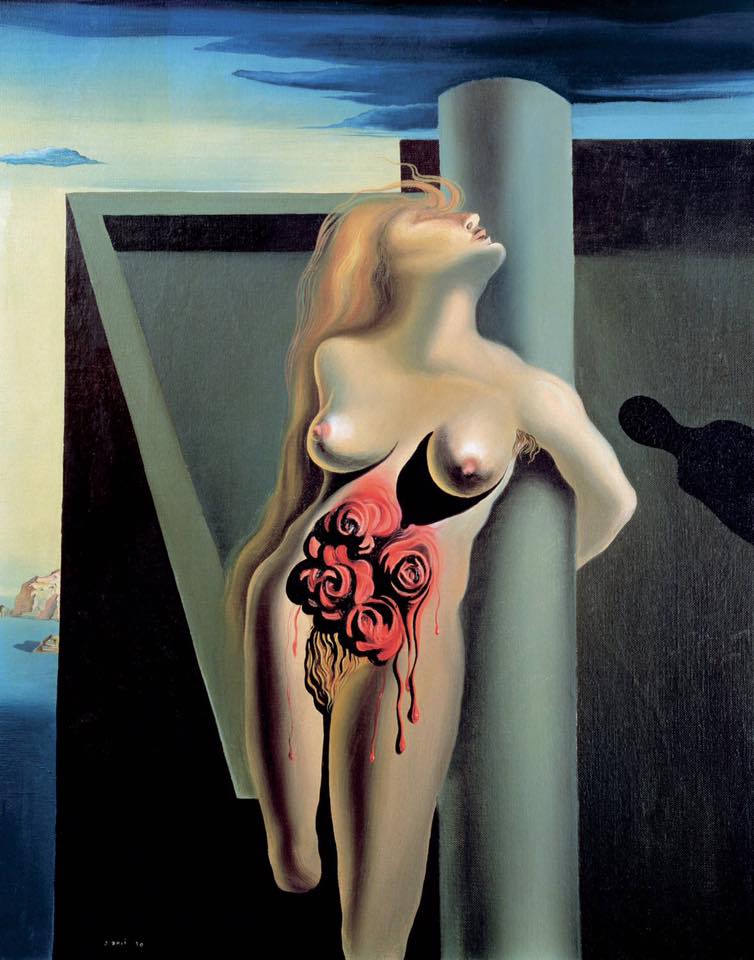
Salvador Dalí – The Bleeding Roses. Oil on canvas. 1930.
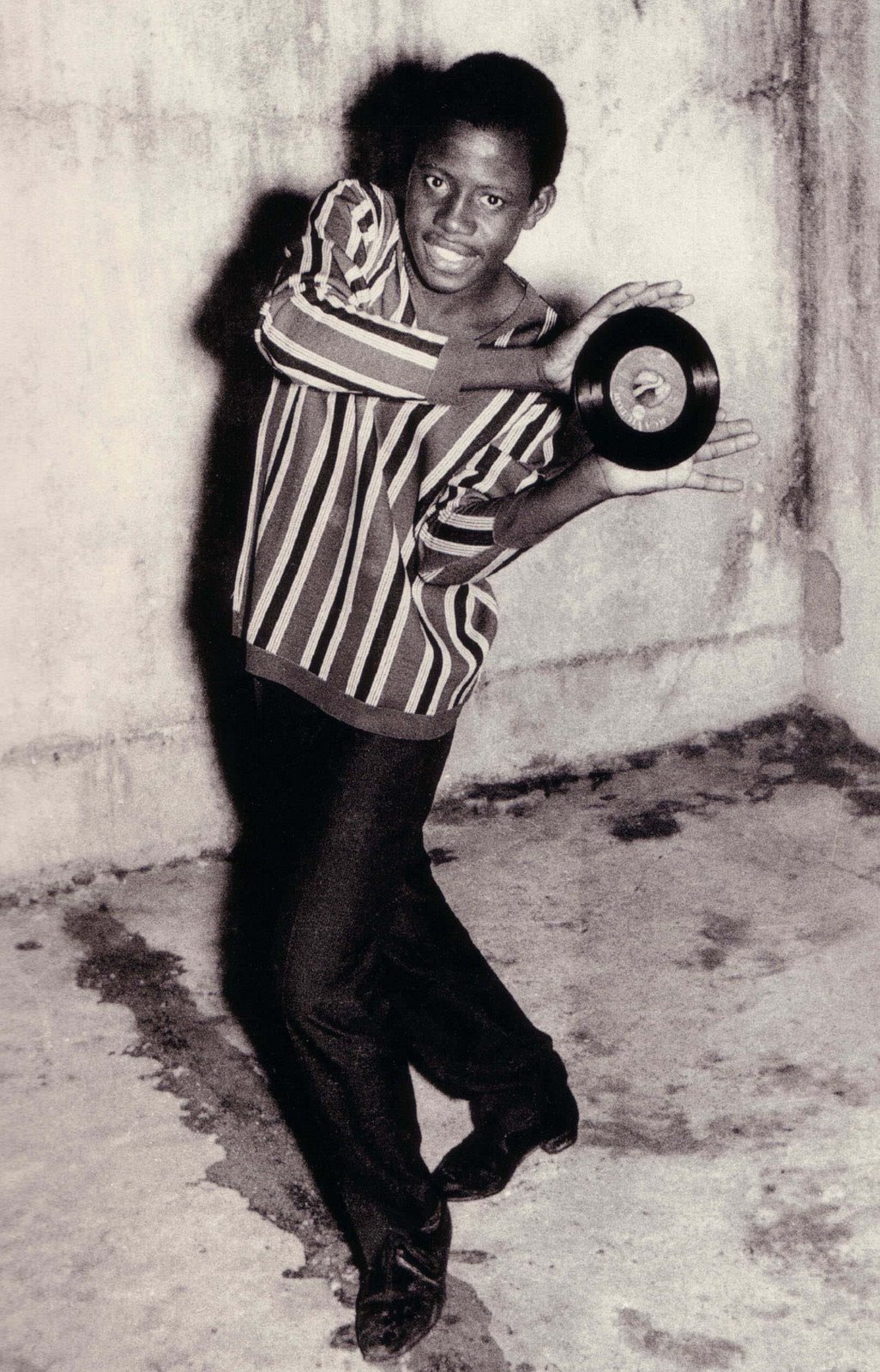
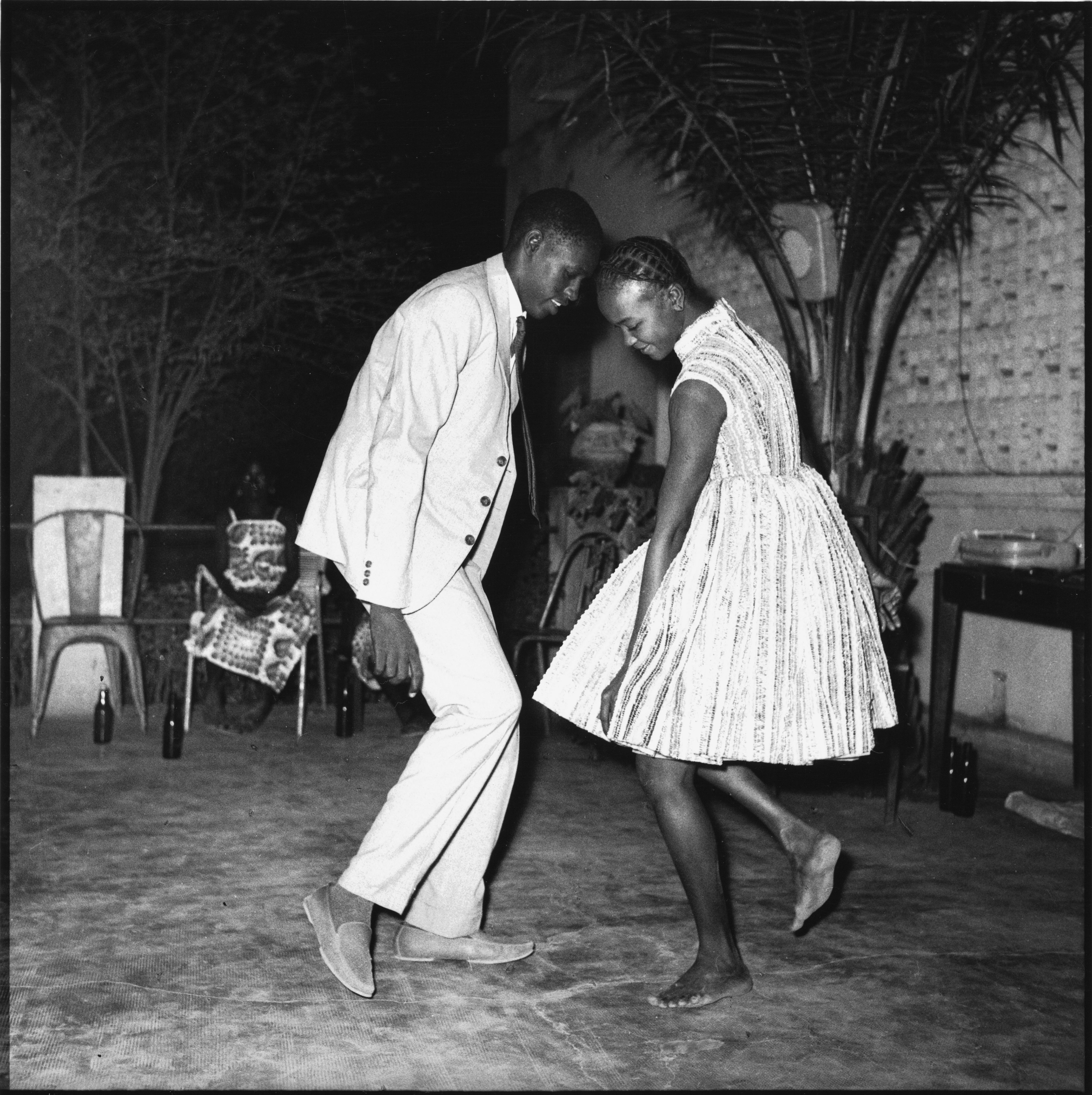
The first track of the classic album, Pirate’s Choice, recorded in Senegal in 1982. Malick Sidibé’s iconic photography graces the album artwork.
The band was Senegalese Afro-Cuban, Son, Wolof and Pachanga. Organized in 1970, as a multi-ethnic, multi-national club band, Orchestra Baobab adapted the then current craze for Cuban Music (growing out of the Congolese Soukous style) in West Africa to Wolof Griot culture and the Mandinga musical traditions of the Casamance.
If you’re in Johannesburg tonight, take yourself to the Edge!
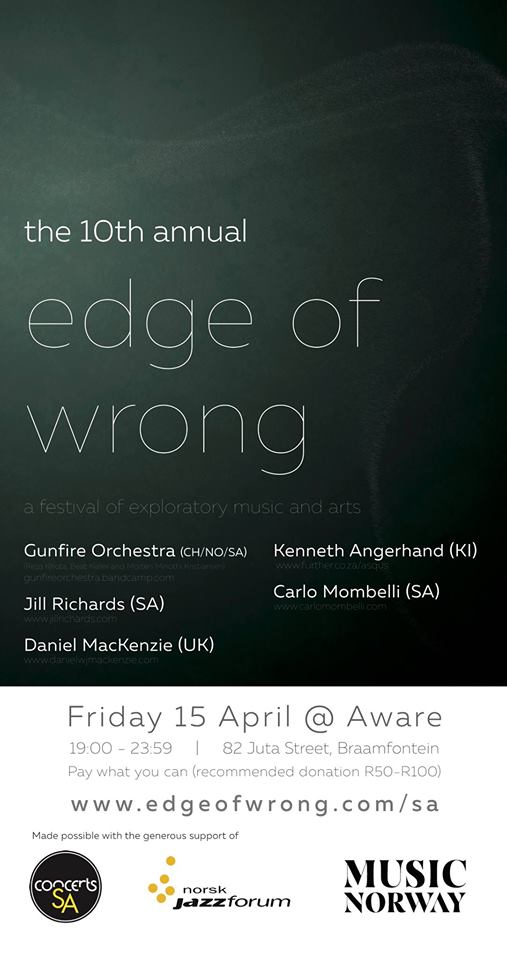
Read more about the festival and artists performing tonight HERE.

A profound read.
“In Ursula K. Leguin’s book Gifts, an entire culture lives by the rule of what they call ‘gifts’ – powers to do harm – possessed by certain of its members. Some families possess gifts of Unmaking, where they can turn a farmer’s field into a blackened waste or a puppy into a sack of dissolved flesh. Some possess the ability to create a wasting illness, or blindness, or the gift of calling animals to the hunt.
“By the book’s end, the child at its centre has struggled, against all signs in his culture, to realize something profound and fundamental. The gift they call Unmaking is actually a gift of Making, turned backwards upon itself and rendered unthinkingly into a weapon. The gift of calling animals is turned into a way to hunt them, when it is meant to let humans understand animals and live in balance with them. The wasting disease is the backwards use of a gift of healing illness and old age. He finally asks his sister and closest confidant: what if we are using our gifts backwards? To harm instead of to help? What if they were meant to be used the other way around?”
 Dating Tips for the Feminist Man
The opposite of masculine rape culture is masculine nurturance culture: men* increasing their capacity to nurture, and becoming whole.
The Ghomeshi trial is back in the news, and it brings violent sexual assault back into people’s minds and daily conversations. Of course violence is wrong, even when the court system for handling it is a disaster. That part seems evident. Triggering, but evident.
But there is a bigger picture here. I am struggling to see the full shape emerging in the pencil rubbing, when only parts are visible at a time.
A meme going around says ‘Rape is about violence, not sex. If someone were to hit you with a spade, you wouldn’t call it gardening.’ And this is true. But it is just the surface of the truth. The depths say something more, something about violence.
Violence is nurturance turned backwards.
These things are connected, they must be connected. Violence and nurturance are two sides of the same coin. I…
View original post 5,803 more words
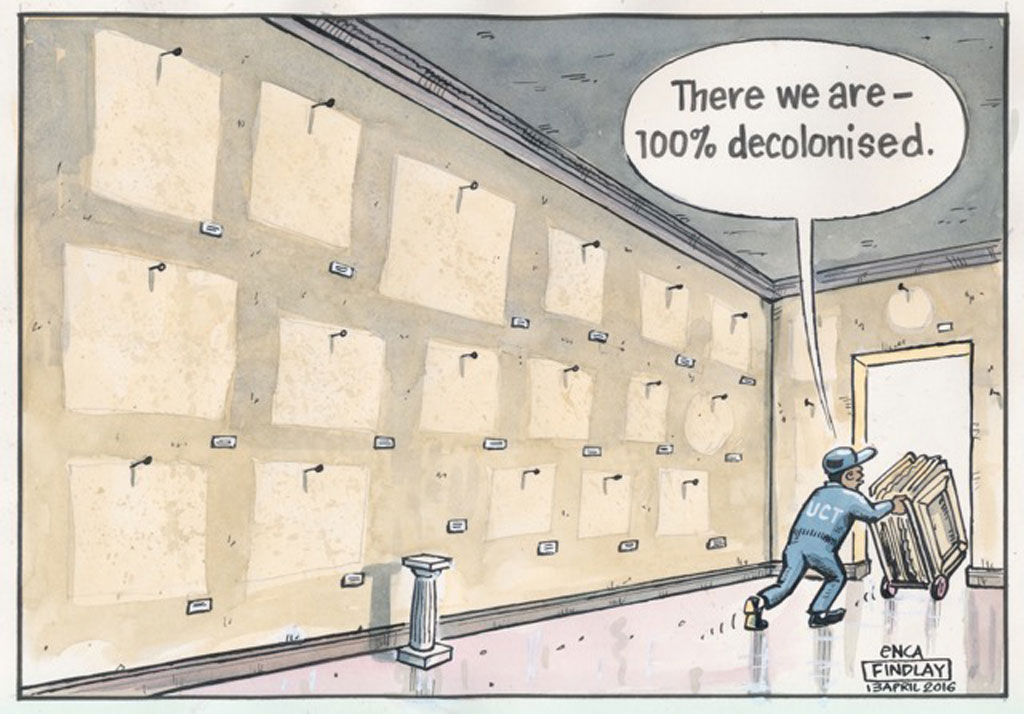
From HERE.

 Creation: good broken up into pieces and scattered throughout evil.
Evil is limitless but it is not infinite. Only the infinite limits the limitless.
Monotony of evil: never anything new, everything about it is equivalent. Never anything real, everything about it is imaginary. It is because of this monotony that quantity plays so great a part. A host of women (Don Juan) or of men (Célimène), etc. One is condemned to false infinity. That is hell itself.
Evil is licence and that is why it is monotonous: everything has to be drawn from ourselves. But it is not given to man to create, so it is a bad attempt to imitate God.
Not to recognize and accept this impossibility of creating is the source of many an error. We are obliged to imitate the act of creation, and there are two possible imitations—the one real and the other apparent—preserving and destroying.
There is no trace of ‘I’ in the act of preserving. There is in that of destroying. The ‘I’ leaves its mark on the world as it destroys.
Literature and morality. Imaginary evil is romantic and varied; real evil is gloomy, monotonous, barren, boring. Imaginary good is boring; real good is always new, marvellous, intoxicating. Therefore ‘imaginative literature’ is either boring or immoral (or a mixture of both). It only escapes from this alternative if in some way it passes over to the side of reality through the power of art—and only genius can do that.
A certain inferior kind of virtue is good’s degraded image, of which we have to repent, and of which it is more difficult to repent than it is of evil—The Pharisee and the Publican.
Good as the opposite of evil is, in a sense, equivalent to it, as is the way with all opposites.
It is not good which evil violates, for good is inviolate: only a degraded good can be violated.
That which is the direct opposite of an evil never belongs to the order of higher good. It is often scarcely any higher than evil! Examples: theft and the bourgeois respect for property, adultery and the ‘respectable woman’; the savings-bank and waste; lying and ‘sincerity’.
Good is essentially other than evil. Evil is multifarious and fragmentary, good is one, evil is apparent, good is mysterious; evil consists in action, good in non-action, in activity which does not act, etc.—Good considered on the level of evil and measured against it as one opposite against another is good of the penal code order. Above there is a good which, in a sense, bears more resemblance to evil than to this low form of good. This fact opens the way to a great deal of demagogy and many tedious paradoxes.
Good which is defined in the way in which one defines evil should be rejected. Evil does reject it. But the way it rejects it is evil.
Is there a union of incompatible vices in beings given over to evil? I do not think so. Vices are subject to gravity and that is why there is no depth or transcendence in evil.
We experience good only by doing it.
We experience evil only by refusing to allow ourselves to do it, or, if we do it, by repenting of it. When we do evil we do not know it, because evil flies from the light.
Does evil, as we conceive it to be when we do not do it, exist? Does not the evil that we do seem to be something simple and natural which compels us? Is not evil analogous to illusion? When we are the victims of an illusion we do not feel it to be an illusion but a reality. It is the same perhaps with evil. Evil when we are in its power is not felt as evil but as a necessity, or even a duty.
As soon as we do evil, the evil appears as a sort of duty. Most people have a sense of duty about doing certain things that are bad and others that are good. The same man feels it to be a duty to sell for the highest price he can and not to steal etc. Good for such people is on the level of evil, it is a good without light.
The sensitivity of the innocent victim who suffers is like felt crime. True crime cannot be felt. The innocent victim who suffers knows the truth about his executioner, the executioner does not know it. The evil which the innocent victim feels in himself is in his executioner, but he is not sensible of the fact. The innocent victim can only know the evil in the form of suffering. That which is not felt by the criminal is his own crime. That which is not felt by the innocent victim is his own innocence. It is the innocent victim who can feel hell.
The sin which we have in us emerges from us and spreads outside ourselves setting up a contagion of sin. Thus, when we are in a temper, those around us grow angry. Or again, from superior to inferior: anger produces fear. But at the contact of a perfectly pure being there is a transmutation and the sin becomes suffering. Such is the function of the just servant of Isaiah, of the Lamb of God. Such is redemptive suffering. All the criminal violence of the Roman Empire ran up against Christ and in him it became pure suffering. Evil beings, on the other hand, transform simple suffering (sickness for example) into sin.
It follows, perhaps, that redemptive suffering has to have a social origin. It has to be injustice, violence on the part of human beings.
The false God changes suffering into violence. The true God changes violence into suffering.
Expiatory suffering is the shock in return for the evil we have done. Redemptive suffering is the shadow of the pure good we desire.
A hurtful act is the transference to others of the degradation which we bear in ourselves. That is why we are inclined to commit such acts as a way of deliverance.
All crime is a transference of the evil in him who acts to him who undergoes the result of the action. This is true of unlawful love as well as murder.
The apparatus of penal justice has been so contaminated with evil, after all the centuries during which it has, without any compensatory purification, been in contact with evil-doers, that a condemnation is very often a transference of evil from the penal apparatus itself to the condemned man; and that is possible even when he is guilty and the punishment is not out of proportion. Hardened criminals are the only people to whom the penal apparatus can do no harm. It does terrible harm to the innocent.
When there is a transference of evil, the evil is not diminished but increased in him from whom it proceeds. This is a phenomenon of multiplication. The same is true when the evil is transferred to things.
Where, then, are we to put the evil?
We have to transfer it from the impure part to the pure part of ourselves, thus changing it into pure suffering. The crime which is latent in us we must inflict on ourselves.
In this way, however, it would not take us long to sully our own point of inward purity if we did not renew it by contact with an unchangeable purity placed beyond all possible attack.
Patience consists in not transforming suffering into crime. That in itself is enough to transform crime into suffering.
To transfer evil to what is exterior is to distort the relationship between things. That which is exact and fixed, number, proportion, harmony, withstands this distortion. Whatever my state, whether vigorous or exhausted, in three miles there are three milestones. That is why number hurts when we are suffering: it interferes with the operation of transference. To fix my attention on what is too rigid to be distorted by my interior modifications is to prepare to make possible within myself the apparition of something changeless and an access to the eternal.
We must accept the evil done to us as a remedy for that which we have done. It is not the suffering we inflict on ourselves but that which comes to us from outside which is the true remedy. Moreover, it has to be unjust. When we have sinned by injustice it is not enough to suffer what is just, we have to suffer injustice.
Purity is absolutely invulnerable as purity, in the sense that no violence can make it less pure. It is, however, highly vulnerable in the sense that every attack of evil makes it suffer, that every sin which touches it turns in it to suffering.
If someone does me an injury I must desire that this injury shall not degrade me. I must desire this out of love for him who inflicts it, in order that he may not really have done evil.
The saints (those who are nearly saints) are more exposed than others to the devil because the real knowledge they have of their wretchedness makes the light almost intolerable.
The sin against the Spirit consists of knowing a thing to be good and hating it because it is good. We experience the equivalent of it in the form of resistance every time we set our faces in the direction of good. For every contact with good leads to a knowledge of the distance between good and evil and the commencement of a painful effort of assimilation. It is something which hurts and we are afraid. This fear is perhaps the sign of the reality of the contact. The corresponding sin cannot come about unless a lack of hope makes the consciousness of the distance intolerable and changes the pain into hatred. Hope is a remedy in this respect, but a better remedy is indifference to ourselves and happiness because the good is good although we are far from it and may even suppose that we are destined to remain separated from it for ever.
Once an atom of pure good has entered the soul the most criminal weakness is infinitely less dangerous than the very slightest treason, even though this should be confined to a purely inward movement of thought lasting no more than an instant but to which we have given our consent. That is a participation in hell. So long as the soul has not tasted of pure goodness it is separated from hell as it is from paradise.
It is only possible to choose hell through an attachment to salvation. He who does not desire the joy of God but is satisfied to know that there really is joy in God, falls but does not commit treason.
When we love God through evil as such, it is really God whom we love.
We have to love God through evil as such: to love God through the evil we hate, while hating this evil: to love God as the author of the evil which we are actually hating.
Evil is to love, what mystery is to the intelligence. As mystery compels the virtue of faith to be supernatural, so does evil the virtue of charity. Moreover, to try to find compensation or justification for evil is just as harmful for charity as to try to expose the content of the mysteries on the plane of human intelligence.
Speech of Ivan in the Karamazovs: ‘Even though this immense factory were to produce the most extraordinary marvels and were to cost only a single tear from a single child, I refuse.’
I am in complete agreement with this sentiment. No reason whatever which anyone could produce to compensate for a child’s tear would make me consent to that tear. Absolutely none which the mind can conceive. There is just one, however, but it is intelligible only to supernatural love: ‘God willed it’. And for that reason I would consent to a world which was nothing but evil as readily as to a child’s tear.
The death agony is the supreme dark night which is necessary even for the perfect if they are to attain to absolute purity, and for that reason it is better that it should be bitter.
The unreality which takes the goodness from good; this is what constitutes evil. Evil is always the destruction of tangible things in which there is the real presence of good. Evil is carried out by those who have no knowledge of this real presence. In that sense it is true that no one is wicked voluntarily. The relations between forces give to absence the power to destroy presence.
We cannot contemplate without terror the extent of the evil which man can do and endure. How could we believe it possible to find a compensation for this evil, since because of it God suffered crucifixion?
Good and evil. Reality. That which gives more reality to beings and things is good, that which takes it from them is evil. The Romans did evil by robbing the Greek towns of their statues, because the towns, the temples and the life of the Greeks had less reality without the statues, and because the statues could not have as much reality in Rome as in Greece.
The desperate, humble supplication of the Greeks to be allowed to keep some of their statues—a desperate attempt to make their own notion of value pass into the minds of others. Understood this, there is nothing base in their behaviour. But it was almost bound to be ineffectual. There is a duty to understand and weigh the system of other people’s values with our own, on the same balance—to forge the balance.
To allow the imagination to dwell on what is evil implies a certain cowardice; we hope to enjoy, to know and to grow through what is unreal.
Even to dwell in imagination on certain things as possible (quite a different thing from clearly conceiving the possibility of them, which is essential to virtue) is to commit ourselves to them already. Curiosity is the cause of it. We have to forbid ourselves certain things (not the conception of them but the dwelling on them): we must not think about them. We believe that thought does not commit us in any way, but it alone commits us, and licence of thought includes all licence. Not to think about a thing—supreme faculty. Purity—negative virtue. If we have allowed our imagination to dwell on an evil thing, if we meet other men who make it objective through their words and actions and thus remove the social barrier, we are already nearly lost. And what is easier? There is no sharp division. When we see the ditch we are already over it. With good it is quite otherwise; the ditch is visible when it has still to be crossed, at the moment of the wrench and the rending. One does not fall into good. The word baseness (lowness) expresses this property of evil.
Even when it is an accomplished fact evil keeps the character of unreality; this perhaps explains the simplicity of criminals; everything is simple in dreams. This simplicity corresponds to that of the highest virtue.
Evil has to be purified—or life is not possible. God alone can do that. This is the idea of the Gita. It is also the idea of Moses, of Mahomet, of Hitlerism… But Jehovah, Allah, Hitler are earthly Gods. The purification they bring about is imaginary.
That which is essentially different from evil is virtue accompanied by a dear perception of the possibility of evil and of evil appearing as something good. The presence of illusions which we have abandoned but which are still present in the mind is perhaps the criterion of truth.
We cannot have a horror of doing harm to others unless we have reached a point where others can no longer do harm to us (then we love others, to the furthest limit, like our past selves).
The contemplation of human misery wrenches us in the direction of God, and it is only in others whom we love as ourselves that we can contemplate it. We can neither contemplate it in ourselves as such nor in others as such.
The extreme affliction which overtakes human beings does not create human misery, it merely reveals it. Sin and the glamour of force. Because the soul in its entirety has not been able to know and accept human misery, we think that there is a difference between human beings, and in this way we fall short of justice, either by making a difference between ourselves and others or by making a selection among others.
This is because we do not know that human misery is a constant and irreducible quantity which is as great as it can be in each man, and that greatness comes from the one and only God, so that there is identity between one man and another in this respect.
We are surprised that affliction does not have an ennobling effect. This is because when we think of the afflicted person it is the affliction we have in mind. Whereas he himself does not think of his affliction: he has his soul filled with no matter what paltry comfort he may have set his heart on.
How could there be no evil in the world? The world has to be foreign to our desires. If this were so without it containing evil, our desires would then be entirely bad. That must not happen.
There is every degree of distance between the creature and God. A distance where the love of God is impossible. Matter, plants, animals. Here, evil is so complete that it destroys itself: there is no longer any evil: mirror of divine innocence. We are at the point where love is just possible. It is a great privilege, since the love which unites is in proportion to the distance.
God has created a world which is not the best possible, but which contains the whole range of good and evil. We are at the point where it is as bad as possible; for beyond is the stage where evil becomes innocence.
__
Excerpted from Simone Weil‘s Gravity and Grace. First French edition 1947. Translated by Emma Crawford. English language edition 1963. Routledge and Kegan Paul, London.
As part of the Edge of Wrong organising team, I’d like to invite you to join us for our tenth annual music festival, happening in Cape Town on the 22nd and 23rd of April (with a mini edition in Johannesburg on 15th April) and featuring an array of international and local artists presenting a wide range of experimental, uncompromising and dangerous music.
In celebration of our first ten years of existence, during which time we have hosted more than 30 cutting-edge events, we’ve compiled an extra-eclectic line-up of South African and Norwegian musicians, including Daniel MacKenzie, Gunfire Orchestra (Reza Khota, Beat Keller and Morten Minothi Kristiansen), Arnfinn Killingtveit, Kenneth Angerhand and Amantha, Ad undas, Mark Fransman, Darren English, Brendon Bussy, Justin Allart and Hezron Chetty.
Expect everything from feedback guitar and malfunctioning drum machines to improv violin, dance-controlled piano and walls of screeching noise from hand-built instruments.
▀▀▀▀▀▀▀▀▀▀▀▀▀▀▀▀▀▀▀▀▀▀▀▀▀▀
__VENUES, LINE-UPS, COST, ETC.:
*** FRIDAY 22nd ***
Atlantic House
1 Perth Rd, Maitland, CT
http://www.atlantichouse.co/
Doors open at 7pm, music starts at 8pm
Pay what you can – recommended contribution R50-R100
PERFORMING:
∞ Brendon Bussy (SA)
∞ Daniel W J Mackenzie (UK)
∞ Ad undas (NO)
∞ Kenneth Angerhand with Amantha23 (KI)
∞ Arnfinn Killingtveit (NO)
*** SATURDAY 23rd ***
Moholo Live House
42 Ncumo Rd, Harare Square, Harare, Khayelitsha, CT
Doors open at 7pm, music starts at 8pm
Pay what you can – recommended contribution R50-R100
https://www.facebook.com/MoholoLiveHouse
PERFORMING:
∞ Gunfire Orchestra (NO/SA)
∞ HORNS NOISE (NO/SA)
∞ Swamps up Nostrils (NO/SA)
∞ Hezron Chetty (SA)
*** SUNDAY 24th ***
Music Hacker Lab – details to be confirmed!
GENERAL INFO: Right of admission reserved. Drinks will be available for purchase at the venues. Cellphones to be switched off during performances.
—
Performing in Johannesburg on the 15th are:
* Gunfire Orchestra (Reza Khota, Beat Keller and Morten Minothi Kristiansen) (https://gunfireorchestra.bandcamp.com/) (NO/SA)
* Kenneth Angerhand (www.further.co.za/asqus) (KI)
* Jill Richards (www.jillrichards.com) (SA)
* Carlo Mombelli (www.carlomombelli.com) (SA)
* Daniel MacKenzie (www.danielwjmackenzie.com) (UK)
Read more HERE.
Some days I put on makeup like war paint.
Today it’s camouflage.

 Press release from Wits Fees Must Fall:
FOR IMMEDIATE RELEASE: FEMINIST AND QUEER DISRUPTION OF WITS SHUTDOWN, 04 APRIL:
Today, 04 April 2016, a group of students attempted to shut down Wits University in the name of Wits Fees Must Fall. These students were comprised of some members of the Wits student body and other popular faces from the #Fallist movements throughout the country. Leaders of this movement have been quoted in media confirming the shutdown as an act in solidarity with suspended, intimidated and deregistered from Wits as of today, 04 April 2016 as well as the continued struggle against outsourcing of workers on university campuses.
Through reliable sources and substantive evidence, we know that the plan to shut down the Wits campus was discussed at a private symposium this past weekend, convened under the banner of Fess Must Fall, the invite to which was not extended to the broader Fees Must Fall movement on different campuses as well as the explicit exclusion of feminist and queer persons. The feminist and queer bodies that have continued to challenge the problematic and archaic investment in the institutions of patriarchal masculinities by student leaders who have continued to erase and silence their narratives and participation in the struggle for free decolonised education and outsourcing.
As a collective, the democratic process of convening and mandating members to attend Fees Must Fall related events has always been one that is consultative and open. The collective mandates representatives at each turn as the movement maintains a flat democratic structure. Therefore, the symposium of the past weekend, facilitated through external funders that seek to infiltrate the movement, and the employ of what we suspect to be non Wits students and members of the public, is one we do not recognise and refuse to be held hostage by its political dictates and ambitions.
We have maintained our integrity as an intersectional; student led non partisan movement that is fighting for free decolonised education and the insourcing of workers.
As a movement, we fully support the disruption of systems of power that have continued to exclude black students from accessing the higher education space as well as the outsourcing and dehumanisation of black workers on campuses. However, we will never tolerate a situation in which these disruptions are allowed to happen at the expense of queer and feminist bodies wherein their bodies are only utilised for the purposes of protecting heterosexual black men on the firing line.
Since the inception of the #Fallist movements, the student’s movements have been plagued by incidences and complaints of latent and rampant misogyny, sexism, patriarchy, homophobia and transmisogyny and this must come to an end. The disruption of the shut down this morning was a step towards disrupting this problematic trend where feminist and queer bodies are only good to be used for protecting heterosexual black men.
The revolution for a decolonised South Africa where free decolonised quality education is a reality for every Black child is one that feminist and queer bodies have maintained will be intersectional or it will not be a revolution at all. However, this afternoon, feminist and queer bodies were assaulted, strangled, kicked and beaten by these black men in the service of the black revolutionary project. Black feminist and queer bodies continue to put their bodies on the line and continue to be disregarded and erased by heterosexual black men.
This practise by heterosexual black men to sacrifice feminist and queer bodies in this revolution will not be tolerated any longer. The exclusion, abuse, assault and endangering of Black Feminist, Queer, Trans and Disabled bodies by heterosexual black men will no longer be tolerated.
All identities of Blackness will be included in this revolution or it will be bullshit!
To all Feminist, Queer, Trans and marginalised bodies, we are convening at the Revolutionary benches (Green benches in front of Umthombo Building) from 10:30 on 05 April 2016.
#NotMyFMF #FuckyourErasure #AllofUsorNoneofUs
Falun, Sweden, October 2015
Love of my life, you
Are lost and I am
Young again.
A few years pass.
The air fills
With girlish music;
In the front yard
The apple tree is
Studded with blossoms…
How lush the world is,
How full of things that don’t belong to me-
I watch the blossoms shatter,
No longer pink,
But old, old, a yellowish white-
The petals seem
To float on the bright grass,
Fluttering slightly.
What a nothing you were,
To be changed so quickly
Into an image, an odor-
You are everywhere, source
Of wisdom and anguish.


Gosh this is so incredible. It flickers with the cold flame of a lost Leonard Cohen song. From Burn Your Fire For No Witness (Jagjaguwar, 2014).
This is a post from a few years ago. Julia Clark reminded me of it today.

A still from here, at 0:27:
it is so startling to see yourself somewhere you are not
so slippy
in my sleep
i am this dancing girl
in the weimar nightclub
and i buzz with black holes
between the nets of swinging cliches
dietrich’s smile
kurt weill refrains
bauhaus lines
they’re all unravelled, sucked away
and i’m left with only questions
to clothe her dancing bones

so who was she?
and what was her name?
what was her favourite food?
colour?
how did she move?
was she a good dancer?
where did she work?
was she in love?
was she lonely?
did she have a brother in the army? a lover?
as she donned that “vaterland” hat, did her chest swell with pride
or was it just the dress code?
where was she in 5 years’ time?
did she have any children? grandchildren? where are they now?
do they also look like me?
more and more questions
and all from just a 1-and-a-half second cutaway to anonymous archive in
a lousy louise brooks documentary
i feel dizzy
eisenstein was right
montage is dangerous.
 The sun shines on the just and on the unjust… God makes himself necessity. There are two aspects of necessity: it is exercised, it is endured: the sun and the cross.
We have to consent to be subject to necessity and to act only by handling it.
Subordination: economy of energy. Thanks to this, an act of heroism can be performed without there being any need for the person who commands or the one who obeys to be a hero.
We have to attain to receiving orders from God.
In which cases does the struggle against temptation exhaust the energy attached to goodness and in which cases does it make it rise higher in the scale of qualities of energy?
This must depend on the respective importance of the parts played by the will and the attention.
We have to deserve, by the strength of our love, to suffer constraint.
Obedience is the supreme virtue. We have to love necessity. Necessity is what is lowest in relation to the individual (constraint, force, a ‘hard fate’); universal necessity brings deliverance from this.
There are cases where a thing is necessary from the mere fact that it is possible. Thus to eat when we are hungry, to give a wounded man, dying of thirst, something to drink when there is water quite near. Neither a ruffian nor a saint would refrain from doing so.
By analogy, we have to discern the cases in which, although it does not appear so clearly at first sight, the possibility implies a necessity, we must act in these cases and not in the others.
The pomegranate seed. We do not pledge ourselves to love God, we give our consent to the engagement which has been formed within us in spite of ourselves.
We should do only those righteous actions which we cannot stop ourselves from doing, which we are unable not to do, but, through well directed attention, we should always keep on increasing the number of those which we are unable not to do.
We should not take one step, even in the direction of what is good, beyond that to which we are irresistibly impelled by God, and this applies to action, word and thought. But we should be willing to go anywhere under his impulsion, even to the farthest limit (the cross)… To be willing to go as far as possible is to pray to be impelled, but without knowing whither.
If my eternal salvation were on this table in the form of an object and if I only had to stretch out my hand to grasp it, I would not stretch out my hand without having received orders to do so.
Detachment from the fruits of action. To escape from inevitability of this kind. How? To act not for an object but from necessity. I cannot do otherwise. It is not an action but a sort of passivity. Inactive action.
The slave is in a sense a model (the lowest… the highest… always this same law). So also is matter.
To transfer the source of our actions outside ourselves. To be impelled. The purest of motives (or the basest: the law is always the same) appear as something exterior.
Every act should be considered from the point of view not of its object but of its impulsion. The question is not ‘What is the aim?’ It is ‘What is the origin?’
‘I was naked, and ye clothed me.’ This gift is simply an indication of the state of those who acted in this way. They were in a state which made it impossible for them not to feed the hungry and to clothe the naked; they did not in any way do it for Christ, they could not help doing it because the compassion of Christ was in them. It was the same with Saint Nicholas who, when going across the Russian Steppes with Saint Cassian to meet God, could not help being late for the appointed time of meeting because he had to help a poor peasant to move his cart which had stuck in the mud. Good which is done in this way, almost in spite of ourselves, almost shamefacedly and apologetically, is pure. All absolutely pure goodness completely eludes the will. Goodness is transcendent. God is Goodness.
‘I was hungered, and ye gave me meat.’ When was that, Lord? They did not know. We must not know when we do such acts.
We must not help our neighbour for Christ but in Christ. May the self disappear in such a way that Christ can help our neighbour through the medium of our soul and body. May we be the slave whom his master sends to bear help to someone in misfortune. The help comes from the master, but it is intended for the sufferer. Christ did not suffer for his Father. He suffered for men by the Father’s will.
We cannot say of the slave who goes off bearing help that he is doing it for his master. He is doing nothing. Even though in order to reach the sufferer he had to walk barefoot over nails, he would suffer but he would not be doing anything. For he is a slave.
‘We are unprofitable servants’: that means we have done nothing.
In general the expression ‘for God’ is a bad one. God ought not to be put in the dative.
We should not go to our neighbour for the sake of God, but we should be impelled towards our neighbour by God, as the arrow is driven towards its target by the archer.
To be only an intermediary between the uncultivated ground and the ploughed field, between the data of a problem and the solution, between the blank page and the poem, between the starving beggar and the beggar who has been fed.
With all things, it is always what comes to us from outside, freely and by surprise as a gift from heaven, without our having sought it, that brings us pure joy. In the same way real good can only come from outside ourselves, never from our own effort. We cannot under any circumstances manufacture something which is better than ourselves. Thus effort truly stretched towards goodness cannot reach its goal; it is after long, fruitless effort which ends in despair, when we no longer expect anything, that, from outside ourselves, the gift comes as a marvellous surprise. The effort has destroyed a part of the false sense of fullness within us. The divine emptiness, fuller than fullness, has come to inhabit us.
The will of God. How to know it? If we make a quietness within ourselves, if we silence all desires and opinions and if with love, without formulating any words, we bind our whole soul to think ‘Thy will be done’, the thing which after that we feel sure we should do (even though in certain respects we may be mistaken) is the will of God. For if we ask him for bread he will not give us a stone.
Convergency as a criterion. An action or attitude for which reason affords several distinct and convergent motives, but which we feel transcends all imaginable motives.
In prayer we must not have in view any particular thing, unless by supernatural inspiration, for God is the universal being. To be sure, he descends into the realm of particular things. He has descended, he descends in the act of creation; as also in the Incarnation, the Eucharist, Inspiration, etc. But the movement comes from above, never from below; it is a movement on God’s part, not on ours. We cannot bring about such intercommunion except when God decrees it. Our role is to be ever turned towards the universal.
There perhaps we have the solution to Berger’s difficulty about the impossibility of a union between the relative and the absolute. It cannot be achieved by a movement rising from below, but it is possible by a descending movement from on high.
We can never know that God commands a certain thing. Intention directed towards obedience to God saves us, whatever we do, if we place God infinitely above us, and damns us, whatever we do, if we call our own heart God. In the first case we never think what we have done, what we are doing or what we are going to do can be good.
The use of temptations. It depends on the relative strength of the soul and of time. To go on for a long time contemplating the possibility of doing evil without doing it effects a kind of transubstantiation. If we resist with merely finite energy, this energy is exhausted after a certain time, and when it is exhausted we give in. If we remain motionless and attentive it is the temptation which is exhausted—and we acquire the energy raised to a higher degree.
If, in the same way—that is to say motionless and attentive— we contemplate the possibility of doing good, a transubstantiation of energy is brought about in this case also, and thanks to it we accomplish the good we have been considering.
The transubstantiation of the energy consists in the fact that, where what is good is concerned, a moment comes when we cannot help doing it.
This, moreover, provides a criterion of good and evil.
Every creature which attains perfect obedience constitutes a special, unique, irreplaceable form of the presence, knowledge and operation of God in the world.
Necessity. We have to see things in their right relationship and ourselves, including the purposes we bear within us, as one of the terms of that relationship. Action follows naturally from this.
Obedience. There are two kinds. We can obey the force of gravity or we can obey the relationship of things. In the first case we do what we are driven to by the imagination which fills up empty spaces. We can affix a variety of labels to it, often with a show of truth, including righteousness and God. If we suspend the filling up activity of the imagination and fix our attention on the relationship of things, a necessity becomes apparent which we cannot help obeying. Until then we have not any notion of necessity and we have no sense of obedience.
After that we cannot be proud of what we do, even though we may accomplish marvels.
The words of the Breton ship’s boy to the journalist who asked him how he had been able to act as he did: ‘There was nothing else for it’—the purest heroism—more frequent among the poor than elsewhere.
Obedience is the only pure motive, the only one which does not in the slightest degree seek a reward for the action, but leaves all care of reward to the Father who is in secret and who sees in secret.
The obedience must, however, be obedience to necessity and not to force (terrible void in the case of slaves).
However much we give of ourselves to others or to a great cause, whatever suffering we endure, if it is out of pure obedience to a clear conception of the relationship of things and to necessity, we make up our minds to it without effort although we accomplish it with effort. We cannot do otherwise, and there is no reversal, no void to be filled, no thought of reward, no spite, no loss of dignity.
Action is the pointer of the balance. We must not touch the pointer but the weight.
Exactly the same rule applies to opinions.
If we fail to observe it there is either confusion or suffering.
The Foolish Virgins—The meaning of this story is that at the moment when we become conscious that we have to make a choice, the choice is already made for good or ill. This is much truer than the allegory about Hercules between virtue and vice.
When the inward nature of man, cut off from all carnal influences and deprived of all supernatural light, performs actions which are in conformity with those which supernatural light would impose if it were present, there is utter purity. That is the central point of the Passion.
In contemplation, the right relationship with God is love, in action it is slavery. This distinction must be kept. We must act as becomes a slave while contemplating with love…
__
Excerpted from Simone Weil‘s Gravity and Grace. First French edition 1947. Translated by Emma Crawford. English language edition 1963. Routledge and Kegan Paul, London.

Lefifi Tladi in conversation this afternoon at UCT.
Film: La Rose de Fer (Rose of Iron, 1973) – Director: Jean Rollin – with Françoise Pascal
Music: “La Fête Triste” by Trisomie 21 (from the album Passions Divisées, released on Stechak,1984)
Remix by David from Lille
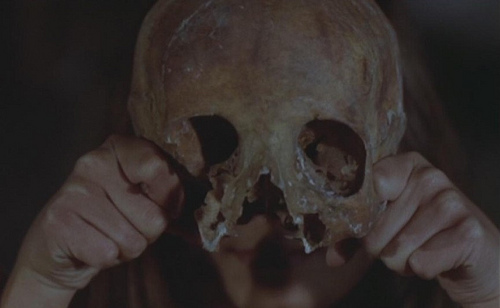
Directed by Jean Rollin
Starring Marie-Pierre Castel, Mireille Dargent, Philippe Gasté, Dominique, Louise Dhour
Music by Pierre Raph
Watch the full film HERE (French, with Spanish subtitles, but there’s very little dialogue).
Scene from Georges Lautner’s film Le Pacha, featuring Serge Gainsbourg performing “Requiem Pour un Con“.

Solo drives are the best way to be alone on days when everyone else is with family.
Love is a sign of our wretchedness. God can only love himself. We can only love something else.
God’s love for us is not the reason for which we should love him. God’s love for us is the reason for us to love ourselves. How could we love ourselves without this motive?
It is impossible for man to love himself except in this roundabout way.
If my eyes are blindfolded and if my hands are chained to a stick, this stick separates me from things but I can explore them by means of it. It is only the stick which I feel, it is only the wall which I perceive. It is the same with creatures and the faculty of love. Supernatural love touches only creatures and goes only to God. It is only creatures which it loves (what else have we to love?), but it loves them as intermediaries. For this reason it loves all creatures equally, itself included. To love a stranger as oneself implies the reverse: to love oneself as a stranger.
Love of God is pure when joy and suffering inspire an equal degree of gratitude.
Love on the part of someone who is happy is the wish to share the suffering of the beloved who is unhappy.
Love on the part of someone who is unhappy is to be filled with joy by the mere knowledge that his beloved is happy without sharing in this happiness or even wishing to do so.
In Plato’s eyes, carnal love is a degraded image of true love. Chaste human love (conjugal fidelity) is a less degraded image of it. Only in the stupidity of the present day could the idea of sublimation arise.
The Love of Phaedrus. He neither exercises force nor submits to it. That constitutes the only purity. Contact with the sword causes the same defilement whether it be through the handle or the point. For him who loves, its metallic coldness will not destroy love, but will give the impression of being abandoned by God. Supernatural love has no contact with force, but at the same time it does not protect the soul against the coldness of force, the coldness of steel. Only an earthly attachment, if it has in it enough energy, can afford protection from the coldness of steel. Armour, like the sword, is made of metal. Murder freezes the soul of the man who loves only with a pure love, whether he be the author or the victim, so likewise does everything which, without going so far as actual death, constitutes violence. If we want to have a love which will protect the soul from wounds, we must love something other than God.
Love tends to go ever further and further, but there is a limit. When the limit is passed love turns to hate. To avoid this change love has to become different.
Among human beings, only the existence of those we love is fully recognised.
Belief in the existence of other human beings as such is love.
The mind is not forced to believe in the existence of anything (subjectivism, absolute idealism, solipsism, scepticism: c.f. the Upanishads, the Taoists and Plato, who, all of them, adopt this philosophical attitude by way of purification). That is why the only organ of contact with existence is acceptance, love. That is why beauty and reality are identical. That is why joy and the sense of reality are identical.
This need to be the creator of what we love is a need to imitate God. But the divinity towards which it tends is false, unless we have recourse to the model seen from the other, the heavenly side…
Pure love of creatures is not love in God, but love which has passed through God as through fire. Love which detaches itself completely from creatures to ascend to God and comes down again associated with the creative love of God.
Thus the two opposites which rend human love are united: to love the beloved being just as he is, and to want to recreate him.
Imaginary love of creatures. We are attached by a cord to all the objects of attachment, and a cord can always be cut. We are also attached by a cord to the imaginary God, the God for whom love is also an attachment. But to the real God we are not attached and that is why there is no cord which can be cut. He enters into us. He alone can enter into us. All other things remain outside and our knowledge of them is confined to the tensions of varying degree and direction which affect the cord when there is a change of position on their part or on ours.
Love needs reality. What is more terrible than the discovery that through a bodily appearance we have been loving an imaginary being. It is much more terrible than death, for death does not prevent the beloved from having lived.
That is the punishment for having fed love on imagination.
It is an act of cowardice to seek from (or to wish to give) the people we love any other consolation than that which works of art give us. These help us through the mere fact that they exist. To love and to be loved only serves mutually to render this existence more concrete, more constantly present to the mind. But it should be present as the source of our thoughts, not as their object. If there are grounds for wishing to be understood, it is not for ourselves but for the other, in order that we may exist for him.
Everything which is vile or second-rate in us revolts against purity and needs, in order to save its own life, to soil this purity. To soil is to modify, it is to touch. The beautiful is that which we cannot wish to change. To assume power over is to soil. To possess is to soil.
To love purely is to consent to distance, it is to adore the distance between ourselves and that which we love.
The imagination is always united with a desire, that is to say a value. Only desire without an object is empty of imagination. There is the real presence of God in everything which imagination does not veil. The beautiful takes our desire captive and empties it of its object, giving it an object which is present and thus forbidding it to fly off towards the future.
Such is the price of chaste love. Every desire for enjoyment belongs to the future and the world of illusion, whereas if we desire only that a being should exist, he exists: what more is there to desire? The beloved being is then naked and real, not veiled by an imaginary future. The miser never looks at his treasure without imagining it n times larger. It is necessary to be dead in order to see things in their nakedness.
Thus in love there is chastity or the lack of chastity according to whether the desire is or is not directed towards the future.
In this sense, and on condition that it is not turned towards a pseudo-immortality conceived on the model of the future, the love we devote to the dead is perfectly pure. For it is the desire for a life which is finished, which can no longer give anything new. We desire that the dead man should have existed, and he has existed.
Wherever the spirit ceases to be a principle it also ceases to be an end. Hence the close connexion between collective ‘thought’ under all its forms and the loss of the sense of and respect for souls. The soul is the human being considered as having a value in itself. To love the soul of a woman is not to think of her a serving one’s own pleasure, etc. Love no longer knows how to contemplate, it wants to possess (disappearance of Platonic love).*
It is a fault to wish to be understood before we have made ourselves clear to ourselves. It is to seek pleasures in friendship and pleasures which are not deserved. It is something which corrupts even more than love. You would sell your soul for friendship.
Learn to thrust friendship aside, or rather the dream of friendship. To desire friendship is a great fault. Friendship should be a gratuitous joy like those afforded by art or life. We must refuse it so that we may be worthy to receive it; it is of the order of grace (‘Depart from me, O Lord. . . .’). It is one of those things which are added unto us. Every dream of friendship deserves to be shattered. It is not by chance that you have never been loved. . . . To wish to escape from solitude is cowardice. Friendship is not to be sought, not to be dreamed, not to be desired; it is to be exercised (it is a virtue). We must have done with all this impure and turbid border of sentiment. Schluss!
Or rather (for we must not prune too severely within ourselves), everything in friendship which does not pass into real exchanges should pass into considered thoughts. It serves no useful purpose to do without the inspiring virtue of friendship. What should be severely forbidden is to dream of its sentimental joys. That is corruption. Moreover it is as stupid as to dream about music or painting. Friendship cannot be separated from reality any more than the beautiful. It is a miracle, like the beautiful. And the miracle consists simply in the fact that it exists. At the age of twenty-five, it is high time to have done with adolescence once and for all…
Do not allow yourself to be imprisoned by any affection. Keep your solitude. The day, if it ever comes, when you are given true affection there will be no opposition between interior solitude and friendship, quite the reverse. It is even by this infallible sign that you will recognise it. Other affections have to be severely disciplined.
The same words (e.g. a man says to his wife: ‘I love you’) can be commonplace or extraordinary according to the manner in which they are spoken. And this manner depends on the depth of the region in a man’s being from which they proceed without the will being able to do anything. And by a marvellous agreement they reach the same region in him who hears them. Thus the hearer can discern, if he has any power of discernment, what is the value of the words.
Benefaction is permissible precisely because it constitutes a humiliation still greater than pain, a still more intimate and undeniable proof of dependence. And gratitude is prescribed for the same reason, since therein lies the use to be made of the received benefit. The dependence, however, must be on fate and not on any particular human being. That is why the benefactor is under an obligation to keep himself entirely out of the benefaction. Moreover the gratitude must not in any degree constitute an attachment, for that is the gratitude proper to dogs.
Gratitude is first of all the business of him who helps, if the help is pure. It is only by virtue of reciprocity that it is due from him who is helped.
In order to feel true gratitude (the case of friendship being set aside), I have to think that it is not out of pity, sympathy or caprice that I am being treated well, it is not as a favour or privilege, nor as a natural result of temperament, but from a desire to do what justice demands. Accordingly he who treats me thus wishes that all who are in my situation may be treated in the same way by all who are in his own.
__
*Here ‘Platonic’ love has nothing to do with what today goes by the same name. It does not proceed from the imagination but from the soul. It is purely spiritual contemplation. Cf. later, in the chapter on Beauty. [Editor’s note.]
__
Excerpted from Simone Weil‘s Gravity and Grace. First French edition 1947. Translated by Emma Crawford. English language edition 1963. Routledge and Kegan Paul, London.

 fleurmach