written on waking with a spinning head

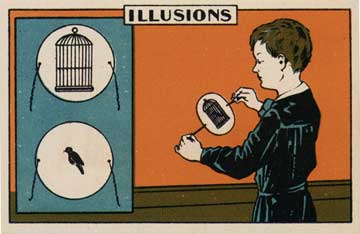
birdcage thaumatrope

[7 may 2012]

i am a dervish
a thaumaturge
i spin very fast
bore downwards
pour stuff out of the top of me churned rich like butter as i whirl
why do i spin so?
see
the thing about spinning
is that it is an oscillation between opposites that generates the movement
it’s how motors work
it’s how hard drives work
it’s how atoms work
the spin is ambi-valence made physical
attracted/repulsed/attracted/repulsed
so i am always moving fast yet can seem to be going nowhere
in my indecision, in the swinging tension between irreconcilable polar opposites
i can actually drill down deeper
because i am always spinning, seeing both sides almost, but not quite,
simultaneously
it’s impossible to see both sides simultaneously
but the quicker you are at seeing multiple perspectives
eddying off on fractal tangents
the faster you spin
(and the dizzier it can make you and others)
how do you solve a problem like maria?

i am not moving linearly
not climbing a ladder
it does not mean i am unproductive
it does not mean i am trapped
the hum is just my motor running at a higher frequency than the
general populace
a powerful magnet
drawing stuff in constantly
flipping it over and over
360 degrees of perspective, 365 days a year
a thaumatrope

it’s a funny thing
i can actually spin, physically, round and round for ages and not get dizzy
i think this is how i manage to get through life, mentally
i am mostly able to tune out the vertigo
i have learned
others can’t
they can’t take how fast i am going all the time
the spinning keeps me upright
in perpetual motion but never able to choose only one definite course
drawing straws
in perfect tension
twirling thread
spinning gold
activates
sigils
semiotics
polarity
magnetism
solenoids
speakers
the speed of sound
affects aerodynamics
flow
determinism and chaos
it’s all connected
all ways
in the dance of particles


gilles deleuze, regarding the dreamer’s dream

Gilles Deleuze
Cinema 2: The Time Image
 Chapter III. From Recollection to Dreams: Third Commentary on Bergson
3b: From the Optical and Sound Image to the Dream-Image
[regarding the dreamer’s dream:]
The virtual image which becomes actual does not do so directly, but becomes actual in a different image, which itself plays the role of virtual image being actualized in a third, and so on to infinity: The dream is not a metaphor but a series of anamorphoses which sketch out a very large circuit. [….] When the sleeper is given over to the actual luminous sensation of a green surface broken by white patches, the dreamer who lives in the sleeper may evoke the image of a meadow dotted with flowers, but this image is only actualized by already becoming the image of a billiard table furnished with balls, which in turn does not become actual without becoming something else. These are not metaphors, but a becoming which can by right continue to infinity.
entr'acte
In René Clair’s Entr’acte, the dancer’s tutu seen from beneath ‘spreads out like a flower’, and the flower ‘opens and closes its corolla, enlarges its petals, and lengthens its stamens’, to turn back into the opening legs of a dancer; the city lights become a ‘pile of lighted cigarettes’ in the hair of a man playing chess, cigarettes which in turn become the columns of a Greek temple, then a silo, whilst the chessboard becomes transparent to give a view of the Place de la Concorde.’
Gilles Deleuze, in Cinema 2, 1989: 54c-55, quoting Jean Mitry.

rené clair & erik satie – relâche/entr’acte

Relâche,  ballet instantanéiste en deux actes: un entr’acte cinématographique, et “la queque de chien” is a 1924 ballet by Francis Picabia with music composed by Erik Satie. The title was thought to be a Dadaist practical joke, as relâche is the French word used on posters to indicate that a show is cancelled, or the theatre is closed (and the first performance was indeed cancelled, due to the illness of Jean Börlin, the principal dancer, choreographer, and artistic director of the Ballets Suédois).

Still from "Entr'acte"

Still from “Entr’acte”

Picabia commissioned filmmaker René Clair to create a cinematic entr’acte to be shown during the ballet’s intermission. The film, simply titled Entr’acte, consists of a scene shown before the ballet and a longer piece between the acts. The score was also composed by Satie.

Entr’acte premiered as an entr’acte for the Ballets Suédois production Relâche at the Théâtre des Champs-Élysées in Paris in 1924. The Dadaists collaborating on the project invented a new mode of production: instantanéisme. Watching the 20 minute film involves seeing people running in slow motion, things happening in reverse, looking at a ballet dancer from underneath, watching an egg over a fountain of water get shot and instantly become a bird, and watching people disappear. The cast included cameo appearances by Francis Picabia, Erik Satie, Man Ray, and Marcel Duchamp. The conductor of the orchestra at the premiere was Roger Désormière. The edition of the soundtrack featured here was conducted in 1967 by Henri Sauguet.

alejandro jodorowsky’s new film

jodorowsky dansaWatch the trailer:

The Guardian review from Cannes 2013 has this to say:

The extinct volcano of underground cinema has burst into life once again — with a bizarre, chaotic and startling film; there are some longueurs and gimmicks, but The Dance of Reality is an unexpectedly touching and personal work. At the age of 84, and over 20 years since his last movie, Alejandro Jodorowsky has returned to his hometown of Tocopilla in the Chilean desert to create a kind of magic-realist memoir of his father, Jaime Jodorowsky, a fierce Communist whose anger at the world — at his son — was redoubled by the anti-Semitism the family faced.

Of course, the entire story is swathed in surreal mythology, dream logic and instant day-glo legend, resembling Fellini, Tod Browning, Emir Kusturica, and many more. You can’t be sure how to extract conventional autobiography from this. Despite the title, there is more “dance” than “reality” — and that is the point. Or part of the point. For the first time, Jodorowsky is coming close to telling us how personal evasiveness has governed his film-making style; his flights of fancy are flights of pain, flights from childhood and flights from reality. And now he is using his transformative style to come to terms with and change the past and to confer on his father some of the heroism that he never attained in real life.

Read more of this review HERE.

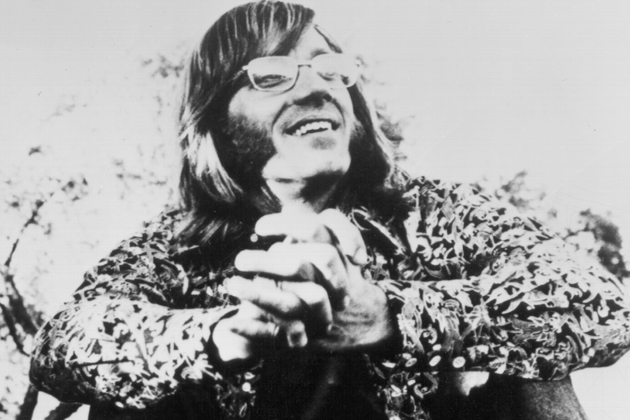
goodbye, ray manzarek

The Doors, live in Copenhagen,1968. Ray, I was always even more in love with you than I was with Jim…  That organ of yours is what really hypnotised me (that’s what she said).

doors-Michael-Ochs-Archives

From Michael Ochs’ archive

As my friend Carlo Germeshuys just put it, “Goodbye, Ray Manzarek – without your swirly lounge keyboard old Jimbo wouldn’t have gotten far with his whole bozo Dionysus act.” Oh wait, Carlo says he was referencing a diss by Lester Bangs. Well, whatever. “Bozo Dionysus” = best description of Jim Morrison ever.

HERE‘s an obituary from Rolling Stone.

nevermind the bollocks, here’s deleuze and guattari

[E]ffective differences pass between the lines, even though they are all immanent to one another, all entangled in one another. This is why the question of schizoanalysis or pragmatics, micropolitics itself, never consists in interpreting, but merely in asking what are your lines, individual or group, and what are the dangers on each.

JR at Desperadoes', Observatory, Cape Town, 15  May 2013. Photo: Rosemary Lombard

JR around the pole at Desperado’s Saloon, Observatory, Cape Town, 15 May 2013. Photo: Rosemary Lombard

What are your rigid segments, your binary and overcoding machines? For even these are not given to you ready-made; we are not simply divided up by binary machines of class, sex, or age: there are others which we constantly shift, invent without realising it. And what are the dangers if we blow up these segments too quickly? Wouldn’t this kill the organism itself, the organism which possesses its own binary machines, even in its nerves and its brain?

What are your supple lines, what are your fluxes and thresholds? Which is your set of relative deterritorialis­ations and correlative reterritorialisations? And the distribution of black holes: which are the black holes of each one of us, where a beast lurks or a microfascism thrives?

— Deleuze and Guattari: Toward Freedom. Read more HERE.
Sent from my BlackBerry® wireless device

chelsea wolfe – halfsleeper

All the parts of me that lived inside
Are drowning in the sea of waking life
They don’t know their colours don’t belong on the outside
They don’t know their colours don’t belong

Til they’re spread across the open road
Til they’re spread across the asphalt on the open road
Til they’re streaming in the wind like cassette tape or jellyfish
Long dark veins and records playing memories

All the things we yell don’t mean a thing
When we’re spinning out of darkened meadow wind
When we’re flying like we’re Mary’s angels through the shattered glass
When we find that tall dark shadow waiting there with outstretched hands
He has given me a dress of red and you a skin of gray
We’ll be twisting here for hours ’til the light will bring us day

And we’re spread across the open road
And we’re spread across the asphalt on the open road
And we’re streaming in the wind like cassette tape or jellyfish
Long dark veins and records playing memories

spectrum – undo the taboo

The opening track of Highs, Lows and Heavenly Blows, released in 1994 on Silvertone Records.

Spectrum was the most high-profile and straightforward of the projects undertaken by Pete “Sonic Boom” Kember after the demise of the trance-rock avatars Spacemen 3. As his work as a member of the Experimental Audio Research coterie allowed Kember the opportunity to explore ambient textures and tonal constructs, Spectrum satisfied the singer/guitarist’s more conventional pop leanings, while never losing sight of the hypnotic otherworldliness which became his music’s trademark and legacy.

(Info from Allmusic.com)


where the echoes stop

Julie Loen - Title Unknown

Julie Loen – Title Unknown

Erwin Raphael McManus – Where the Echoes Stop

I want to stand where the echoes stop.
Far past where sound has abandoned thought.
Where silence reigns over redundancy.
Where once well said is more than enough.

I want to stand where the echoes stop.
Where words must be born to be heard.
Where speech is a gift and not a curse.
Where there is more of the unique and less of the mundane.

I want to stand where the echoes stop.
Where meaning is rescued from noise…
Where conviction replaces thoughtless repetition…
Where what everyone is saying surrenders to what needs to be said.

I want to stand where the echoes stop.
Where the shouting of the masses falls silent to the whisper of the one…
Where the voice of the majority submits to the voice of reason…
Where “they” do not exist; but “we” do.

I want to stand where the echoes stop.
Where substance overthrows the superficial…
Where courage conquers compliance and conformity…
Where words do not travel farther than the person who speaks them.

I want to stand where the echoes stop.
Where I only say what I believe.
Where I only repeat what changes me.
Where empty words finally rest in peace.

“Be still and know that I am God…” — Psalm 46:10a

whispers in the deep

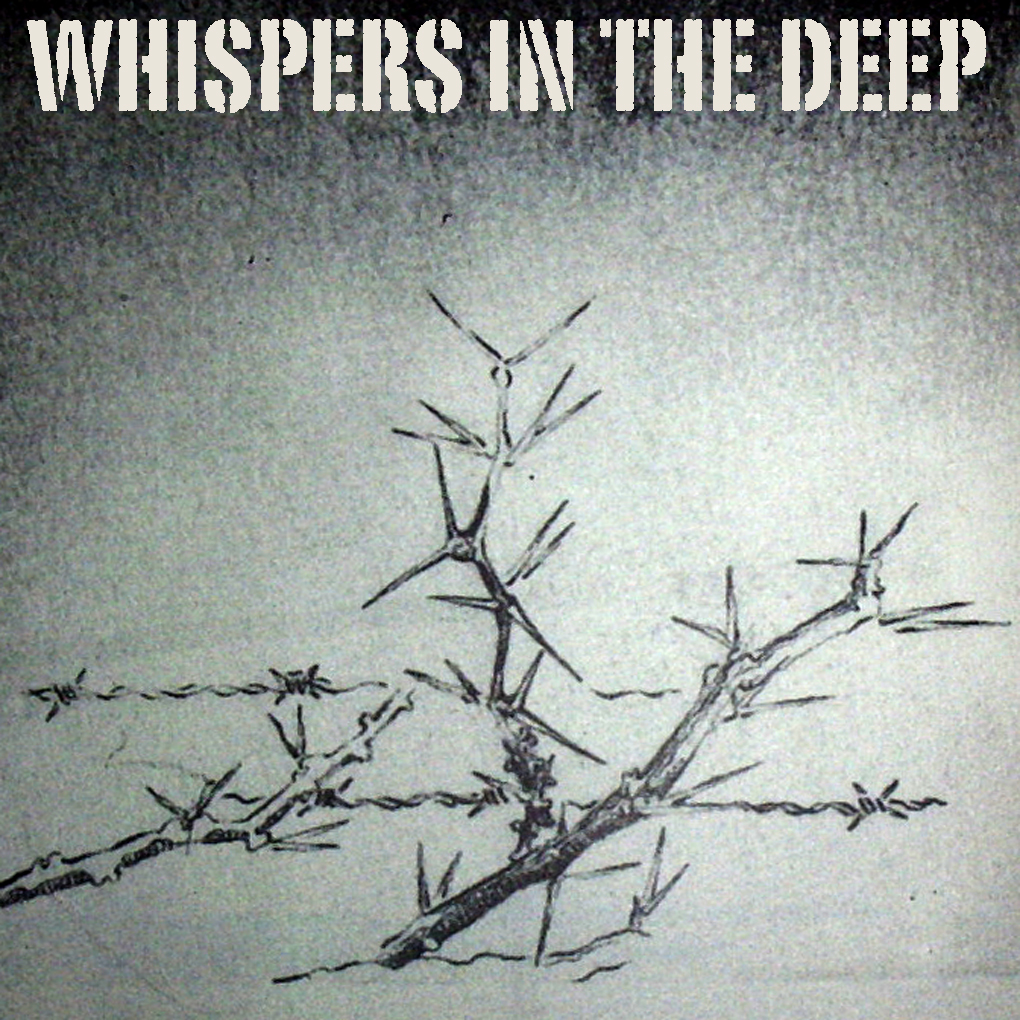
Matt Temple, of the excellent African music blog Electric Jive, has just uploaded another fascinating compilation of rare and historical sounds. This time the focus is on music and censorship in South Africa, and tracks span the period from 1960 to 1994. Accompanying the download link is an essay by Peter M Stewart, written in 2003, when this compilation was originally made, which provides some context for listening.

whispers in the deep

“Given the recent Secrecy Bill passed by the South African Parliament it’s worth reflecting on music that caught the attention of the censors during the previous dark period of Apartheid… this is a compilation I put together for private distribution in August 2003, almost 10 years ago. It fits the Bill!

Whispers in the Deep collects a number of anthems, agit-pop songs, and propaganda pieces. Many of the tracks were intended as direct responses to the South African social order as it was prior to 1994. The other tracks might as well have been. Nevermind the revolution, nothing was televised in South Africa prior to 1976.

Whispers in the Deep also documents some of the ways in which access to popular music was restricted in South Africa – the obstacles that prevented persons resident in South Africa from listening to songs, hearing them broadcast, or seeing them performed. It explores the cultural boycott, censorship by the state in South Africa, and various manifestations of the ‘climate of censorship’.”

Read more and download it HERE.

twin shadow – tether beat

Loving this track at the moment:

Twin Shadow, AKA George Lewis Junior, is doing something interesting while touring: he’s collecting narratives from people online and weaving them into his itinerary. Check out his call for stories:

“Welcome to the Twin Shadow True Story tour, As some of you may know, My father and I have written stories for every stop on the tour, True Stories from our own lives and the people around us. I’m always trying to keep the tours that we do special, I think that, while we live our lives in unison, digitally, and without lines and boundaries on the internet (which I think is amazing), we are still very much from different places. The Line that divides Florida from Georgia is still a hard line. I feel it when I talk to someone from my side of that divide. So I’m asking fans to write stories about where they are from or where they currently call home. Tell us about a place in your town that holds one of your stories. This isn’t a tweet, really tell me in as many words as you want about the time you stole money from the cash register at your old coffee shop, about the time you had your first kiss out the back of the cinema. Tell me everything about those places, and when we come to your town or city we will try to visit these places, and take some photos there. Once I get all the submissions, I’d like to pick the best ones, publish them on my tumblr and read the stories on my soundcloud Podcast called FORGET RADIO.

I love our short form world, but this is a call to talk a bit more about the details that make your lives unique from mine. So often we (bands) roll through your towns with a stop at a grocery store, a gas station, and if you are Twin Shadow your local arcade and go cart racing complex. We wanna know about the rivers you visit, the book stores you love, the bars you drink at, the fields you’ve slept in. This is my wish, let it be known, let it be done.

G

Submit your stories HERE.”

karl marx on how the division of labour is boring

Manufacturing assembly line in China

Manufacturing assembly line in China

For as soon as the distribution of labour comes into being, each man has a particular exclusive sphere of activity, which is forced upon him and from which he cannot escape. He is a hunter, a fisherman, a shepherd, or a critical critic and must remain so if he does not wish to lose his means of livelihood; while in communist society, where nobody has one exclusive sphere of activity but each can become accomplished in any branch he wishes, society regulates the general production and thus makes it possible for me to do one thing today and another tomorrow, to hunt in the morning, to fish in the afternoon, rear cattle in the evening, criticize after dinner, just as I have in mind, without ever becoming hunter, fisherman, shepherd or critic.

— From The German Ideology (1845).

søren kierkegaard on boredom

Idleness, then, is so far from being the root of all evil that it is rather the true good. Boredom is the root of evil; it is that which must be held off.

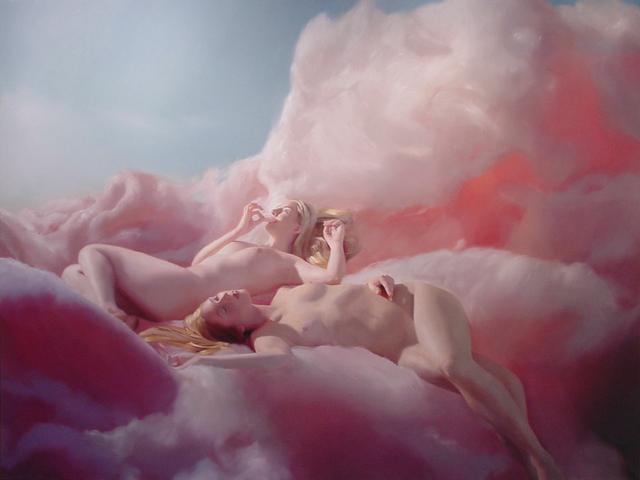
Will Cotton: "Cotton Candy Clouds". Oil on Linen, 2004

Will Cotton: “Cotton Candy Clouds”.
Oil on Linen, 2004

Since boredom advances and boredom is the root of all evil, no wonder, then, that the world goes backwards, that evil spreads. This can be traced back to the very beginning of the world. The gods were bored; therefore they created human beings. Adam was bored because he was alone; therefore Eve was created. Since that moment, boredom entered the world and grew in quantity in exact proportion to the growth of population. Adam was bored alone; then Adam and Eve were bored en famille. After that, the population of the world increased and the nations were bored en masse. To amuse themselves, they hit upon the notion of building a tower so high that it would reach the sky. This notion is just as boring as the tower was high and is a terrible demonstration of how boredom had gained the upper hand. Then they were dispersed around the world, just as people now travel abroad, but they continued to be bored. And what consequences this boredom had: humankind stood tall and fell far, first through Eve, then from the Babylonian tower.

— From Either/Or (1843).

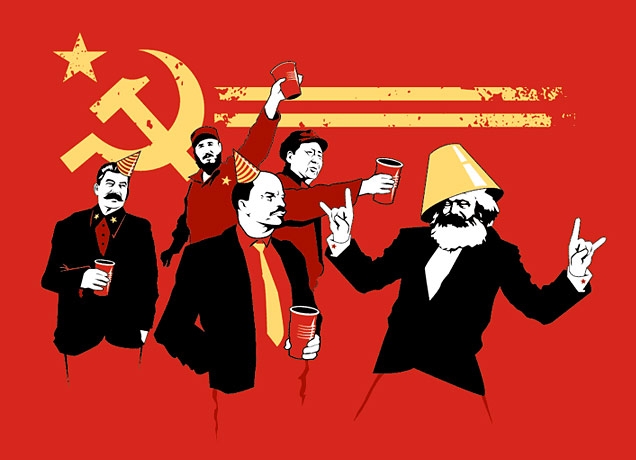
happy 195th birthday, karl marx

From www.threadless.com

“The Communist Party” – A t-shirt design from http://www.threadless.com

“The fact is that labour is external to the worker, that is, it does not belong to his intrinsic nature. In his work, therefore, he does not affirm himself but denies himself, does not feel content but unhappy, does not develop freely his physical and mental energy but mortifies his body and his mind. The worker therefore only feels himself outside his work, and in his work feels outside himself.”

(From Estranged Labour, 1844)

“Capital is dead labour, that, vampire-like, only lives by sucking living labour, and lives the more, the more labour it sucks. The time during which the labourer works is the time during which the capitalist consumes the labour-power he has purchased of him. If the laborer consumes his disposable time for himself, he robs the capitalist.”

(From Capital, 1867)

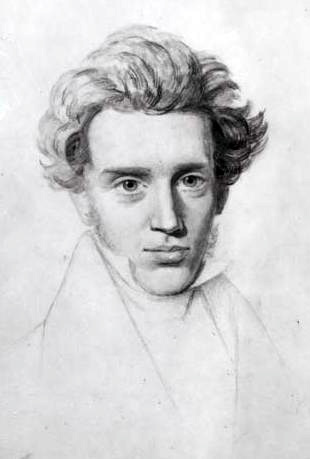
happy 200th birthday, søren kierkegaard

Sketch of Søren Kierkegaard. Based on a sketch by Niels Christian Kierkegaard (1806-1882)

Sketch of Søren Kierkegaard. Based on a sketch by Niels Christian Kierkegaard (1806-1882)

Hegel was the great system-maker. What others viewed as his grand achievement Kierkegaard viewed as his unforgivable crime, the attempt to rationally systematise the whole of existence. The whole of existence cannot be systematised, Kierkegaard insisted, because existence is not yet whole; it is incomplete and in a state of constant development. Hegel attempted to introduce mobility into logic, which, said Kierkegaard, is itself an error in logic. The greatest of Hegel’s errors, however, was his claim that he had established the objective theory of knowledge. Kierkegaard countered with the argument that subjectivity is truth. As he put it, “The objective uncertainty maintained in the most passionate spirit of dedication is truth, the highest truth for one existing.” … Kierkegaard, it remains to be said, is not a systematic theologian. We know what he thought of systems and system makers, of which Hegel was the prime example. There is hardly a page in his writings that does not prompt from the systematically minded reader a protest against disconnections and apparent contradictions. Like Flannery O’Connor, he shouted to the hard of hearing and drew startling pictures for the almost blind.

— Richard John Neuhaus, in Kierkegaard for Grownups (2004)