Recorded in 1991, at the very beginning of her solo career. From the DVD Live At Montreux.
Recorded in 1991, at the very beginning of her solo career. From the DVD Live At Montreux.
If I didn’t define myself for myself, I would be crunched into other people’s fantasies for me and eaten alive.
___
I was going to die, sooner or later, whether or not I had even spoken myself. My silences had not protected me. Your silences will not protect you… What are the words you do not yet have? What are the tyrannies you swallow day by day and attempt to make your own, until you will sicken and die of them, still in silence? We have been socialized to respect fear more than our own need for language.
I began to ask each time: “What’s the worst that could happen to me if I tell this truth?” Unlike women in other countries, our breaking silence is unlikely to have us jailed, “disappeared” or run off the road at night. Our speaking out will irritate some people, get us called bitchy or hypersensitive and disrupt some dinner parties. And then our speaking out will permit other women to speak, until laws are changed and lives are saved and the world is altered forever.
Next time, ask: What’s the worst that will happen? Then push yourself a little further than you dare. Once you start to speak, people will yell at you. They will interrupt you, put you down and suggest it’s personal. And the world won’t end.
And the speaking will get easier and easier. And you will find you have fallen in love with your own vision, which you may never have realized you had. And you will lose some friends and lovers, and realize you don’t miss them. And new ones will find you and cherish you. And you will still flirt and paint your nails, dress up and party, because, as I think Emma Goldman said, “If I can’t dance, I don’t want to be part of your revolution.” And at last you’ll know with surpassing certainty that only one thing is more frightening than speaking your truth. And that is not speaking.
― Audre Lorde, from Sister Outsider: Essays and Speeches (1984/2007, The Crossing Press).
“32 Flavors”, off Not a Pretty Girl (1995).
“I pray to the Almighty:
Let me not to him do
As he has unto me.
Teach my beloved children
Who have been enslaved
To reach for the light continually.”
From Lovers Rock (Epic, 2000).
I have just been unreliably and earnestly informed that Lady Gaga’s fragrance, Fame, will impregnate the wearer with demons.
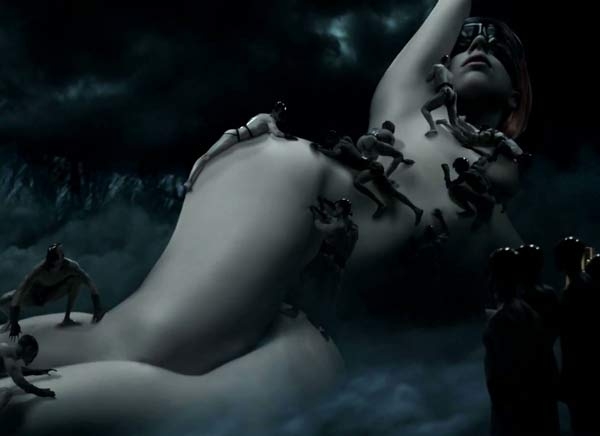
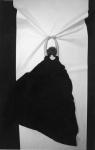
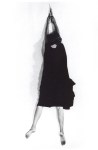
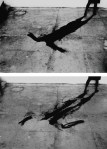
I was recently introduced to the work of Portuguese artist Helena Almeida. It´s difficult to find text that complements it. The simplicity and consistency of her photos, I think, is what makes it so powerful.











The Flaming Lips with Edward Sharpe and the Magnetic Zeros – “Do You Realize?” – performed at the Hollywood Cemetery in Los Angeles, California, 2011.
People from the future are going to look back and smile at all the little neo-hippies with their camera phones beaming their moment out into virtual eternity… Must have been beautiful to be in that jam, though.
Richard Kern with Lung Leg, 1985.
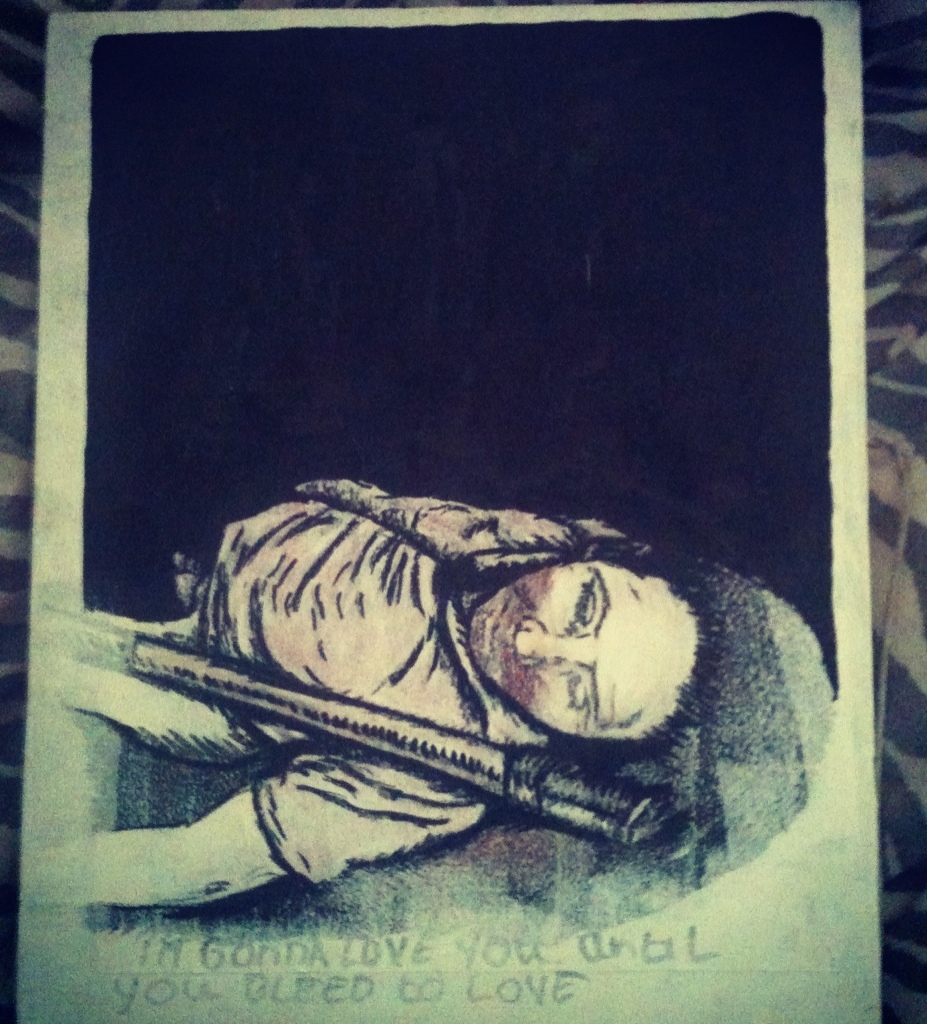
Just found this, whilst looking for my bass-amp. Strange, forgot that i made this painting
You always read about it:
the plumber with the twelve children
who wins the Irish Sweepstakes.
From toilets to riches.
That story.
Or the nursemaid,
some luscious sweet from Denmark
who captures the oldest son’s heart.
from diapers to Dior.
That story.
Or a milkman who serves the wealthy,
eggs, cream, butter, yogurt, milk,
the white truck like an ambulance
who goes into real estate
and makes a pile.
From homogenized to martinis at lunch.
Or the charwoman
who is on the bus when it cracks up
and collects enough from the insurance.
From mops to Bonwit Teller.
That story.
Once
the wife of a rich man was on her deathbed
and she said to her daughter Cinderella:
Be devout. Be good. Then I will smile
down from heaven in the seam of a cloud.
The man took another wife who had
two daughters, pretty enough
but with hearts like blackjacks.
Cinderella was their maid.
She slept on the sooty hearth each night
and walked around looking like Al Jolson.
Her father brought presents home from town,
jewels and gowns for the other women
but the twig of a tree for Cinderella.
She planted that twig on her mother’s grave
and it grew to a tree where a white dove sat.
Whenever she wished for anything the dove
would drop it like an egg upon the ground.
The bird is important, my dears, so heed him.
Next came the ball, as you all know.
It was a marriage market.
The prince was looking for a wife.
All but Cinderella were preparing
and gussying up for the event.
Cinderella begged to go too.
Her stepmother threw a dish of lentils
into the cinders and said: Pick them
up in an hour and you shall go.
The white dove brought all his friends;
all the warm wings of the fatherland came,
and picked up the lentils in a jiffy.
No, Cinderella, said the stepmother,
you have no clothes and cannot dance.
That’s the way with stepmothers.
Cinderella went to the tree at the grave
and cried forth like a gospel singer:
Mama! Mama! My turtledove,
send me to the prince’s ball!
The bird dropped down a golden dress
and delicate little slippers.
Rather a large package for a simple bird.
So she went. Which is no surprise.
Her stepmother and sisters didn’t
recognize her without her cinder face
and the prince took her hand on the spot
and danced with no other the whole day.
As nightfall came she thought she’d better
get home. The prince walked her home
and she disappeared into the pigeon house
and although the prince took an axe and broke
it open she was gone. Back to her cinders.
These events repeated themselves for three days.
However on the third day the prince
covered the palace steps with cobbler’s wax
and Cinderella’s gold shoe stuck upon it.
Now he would find whom the shoe fit
and find his strange dancing girl for keeps.
He went to their house and the two sisters
were delighted because they had lovely feet.
The eldest went into a room to try the slipper on
but her big toe got in the way so she simply
sliced it off and put on the slipper.
The prince rode away with her until the white dove
told him to look at the blood pouring forth.
That is the way with amputations.
They just don’t heal up like a wish.
The other sister cut off her heel
but the blood told as blood will.
The prince was getting tired.
He began to feel like a shoe salesman.
But he gave it one last try.
This time Cinderella fit into the shoe
like a love letter into its envelope.
At the wedding ceremony
the two sisters came to curry favor
and the white dove pecked their eyes out.
Two hollow spots were left
like soup spoons.
Cinderella and the prince
lived, they say, happily ever after,
like two dolls in a museum case
never bothered by diapers or dust,
never arguing over the timing of an egg,
never telling the same story twice,
never getting a middle-aged spread,
their darling smiles pasted on for eternity.
Regular Bobbsey Twins.
That story.
Jeremy DeVito, 2011
“The world of the fairy tale has been traditionally read as one in which anything may happen, in which all things work toward and will eventually culminate in, the ‘perfect’ fairy tale ending of ‘happily ever after.’ However, the last half-century (with the rise of literary theory in general and feminist theory in particular) has produced a degree of cynicism towards this traditional reading. Fairy tale ideology has been challenged on the grounds that it is classist, racist, and, most blatantly, sexist. Hence, such tales have found new storytellers and have been adapted in such a way as to subvert the problematic ideals of tradition and, in most cases, replace them with what is seen as a fresher, more inclusive set of values. In 1972 Anne Sexton published Transformations, a collection of poetic retellings of seventeen widely recognizable fairy tales from the Brothers Grimm, which, in the eyes of such critics as Carol Leventen, “belongs to [this] significant body of revisionist / feminist work” (137). Although these retellings doreflect a new (and distinctly female) voice, however, Sexton’s critique contains complexities that go beyond a feminist objection to patriarchal concepts of perfection and happiness. Rather, Sexton’s tales suggest that the real problem with the fairy tale is to be found in its very striving towards the non-problematic; in short, Sexton’s poems are not so much feminist re-writings as they are poststructuralist re-readings. Their aim is not to adapt the traditional in providing or implying a new (feminist) central philosophy, but rather, to strip the tales of any centre whatsoever… ”
Read the rest of DeVito´s text here

“Carter’s fairy-tale heroines reclaim the night. She rewrites the conventional script formed over centuries of acclimatizing girls—and their lovers—to a status quo of captivity and repression, and issues a manifesto for alternative ways of loving, thinking and feeling.”
“Storytelling for Angela Carter was an island full of noises and sweet airs, and like Caliban, who heard a thousand twangling instruments hum about his ears, she was tuned to an ethereal universe packed with sensations, to which she was alive with every organ. Acoustics are not the only means, however, that she draws on to convey the lucid dreams she creates in her fiction. Her imagination is spatial, an architect’s axonometric vision, as she moves us through palaces and castles, forests and tundras, dungeons and attics, tracking with us down pathways towards her various sealed depositories of secrets, those bloody chambers.”
Read Marina Warner’s article at the Paris Review Daily.
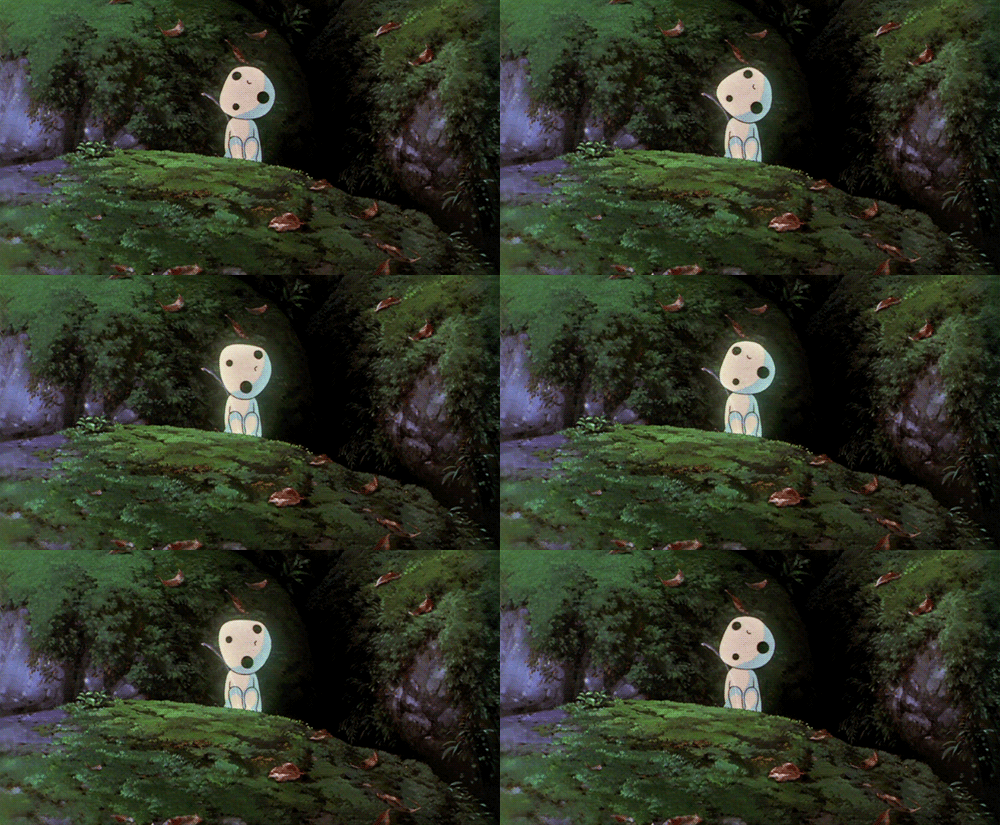
A tiny Kodoma (tree spirit) from Miyazaki’s “Princess Mononoke” (1997)
Princess Mononoke is a period drama set in the late Muromachi period of Japan but with numerous fantastical elements. The story concentrates on involvement of the outsider Ashitaka in the struggle between the supernatural guardians of a forest and the humans of the Iron Town who consume its resources. There can be no clear victory, and the hope is that relationship between humans and nature can be cyclical.
“Mononoke” (物の怪) is not a name, but a general term in the Japanese language for a spirit or monster. The film was first released in Japan on July 12, 1997, and in the United States on October 29, 1999.
“I have a sense that a proliferation of magical stories, especially fairy tales, is correlated to a growing awareness of human separation from the wild and natural world. In fairy tales, the human and animal worlds are equal and mutually dependent. The violence, suffering and beauty are shared. Those drawn to fairy tales, perhaps, wish for a world that might live “forever after”. My work as a preservationist of fairy tales is entwined with all kinds of extinction.”
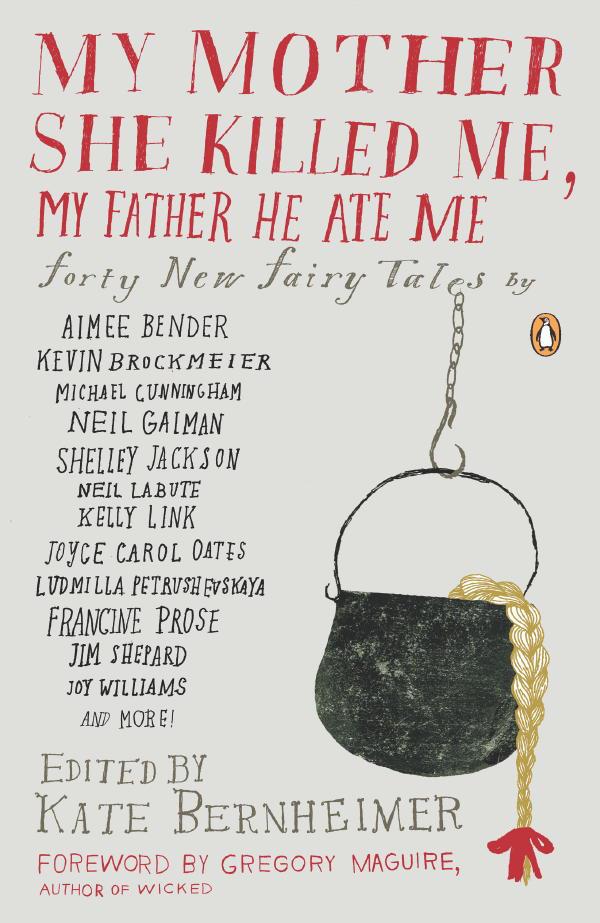
– Kate Bernheimer in the Introduction to My Mother She Killed Me, My Father He Ate Me: Forty New Fairy Tales (Penguin, 2010)
And I wonder
when I sing along with you
If everything could ever feel this real forever
If anything could ever be this good again
The only thing I’ll ever ask of you
You’ve got to promise not to stop when I say when
She sang
Dylan and Lauren (or Sandalwood, as they are calling themselves) perform their favourite track “Everlong”(originally by Foo Fighters) in the OxJam tent at Electric Picnic festival, Ireland, 2010.
Lauren (11) spotted the “Open Mic” sign outside the OxJam tent, grabbed her brother and barrelled over …within barely a minute I heard them announce “next up a brother and sister combo…” and I barely had time to get in with the camera, thankfully it took Dylan a minute to retune the borrowed guitar to drop-D.
Images from the film Hana-Bi (Takeshi Kitano, 1997)
Music from Maxence Cyrin – a piano cover of Arcade Fire’s “No Cars Go” (2010).
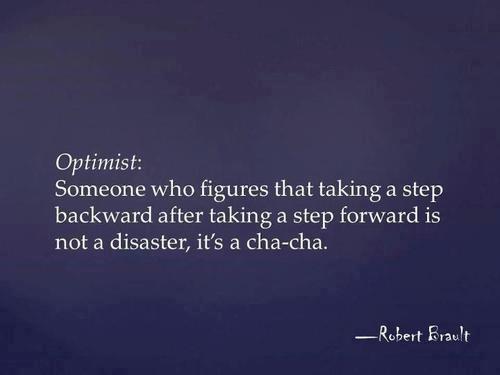
Song: Roy Orbison – Candy Colored Clown
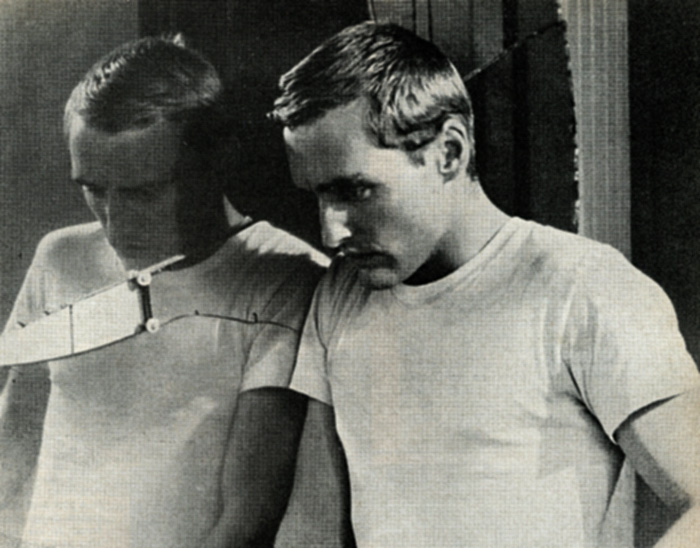
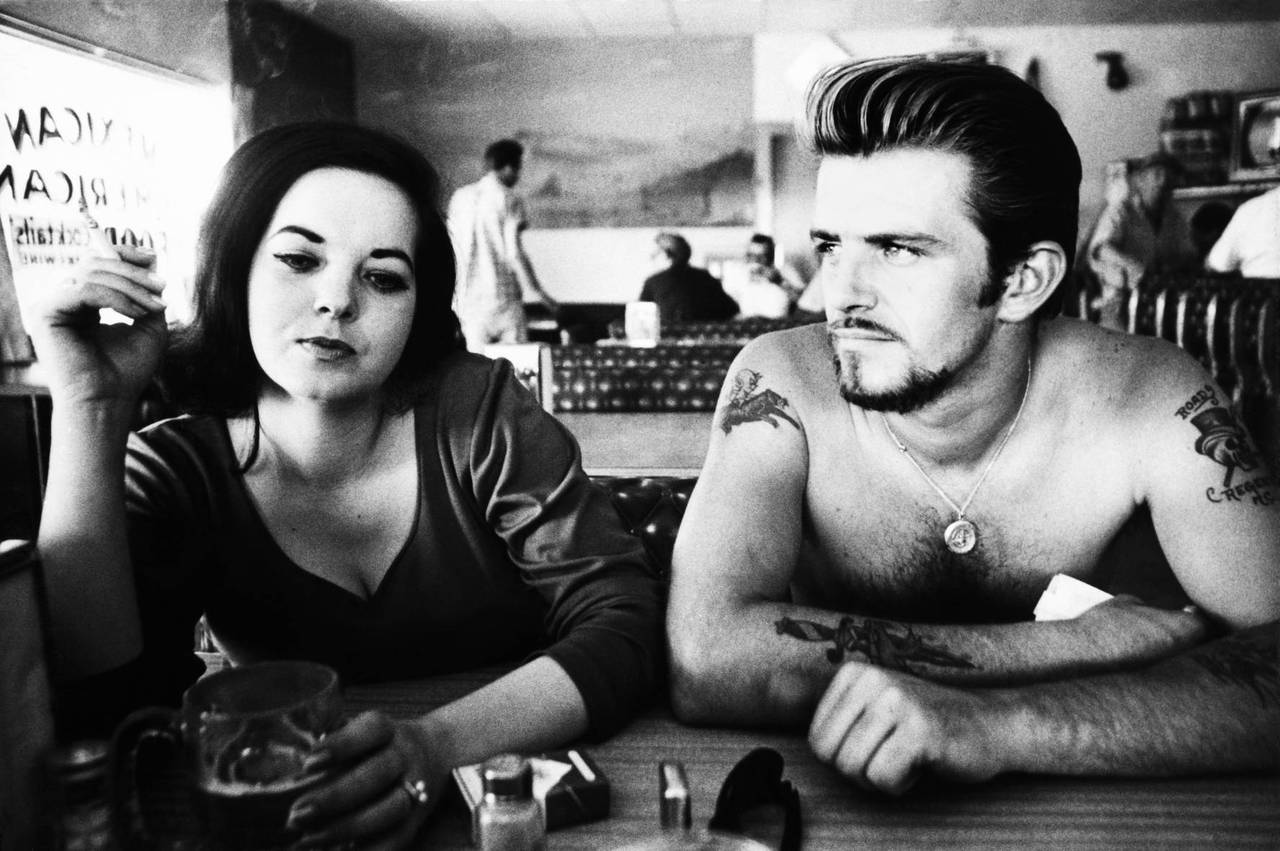
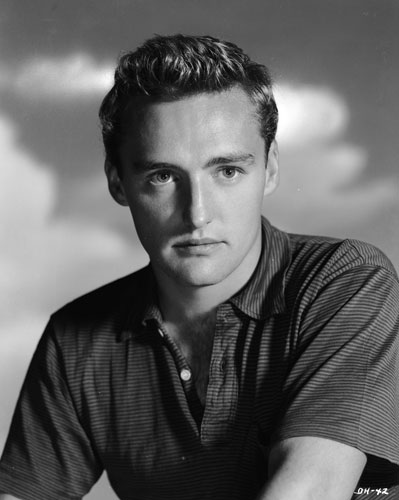
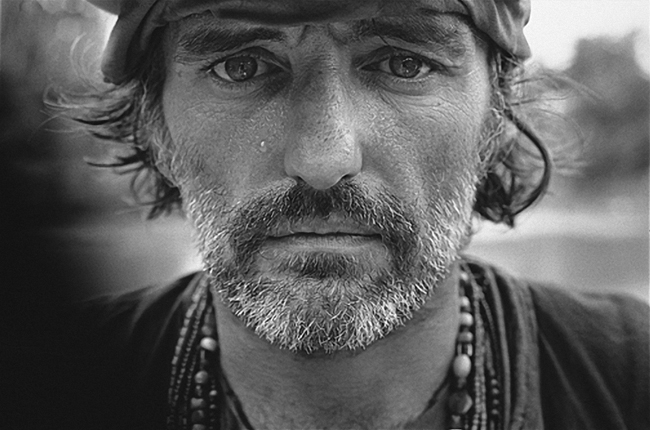
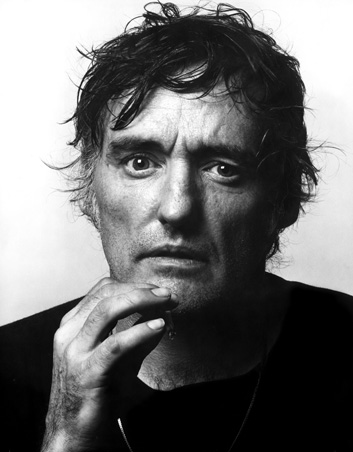
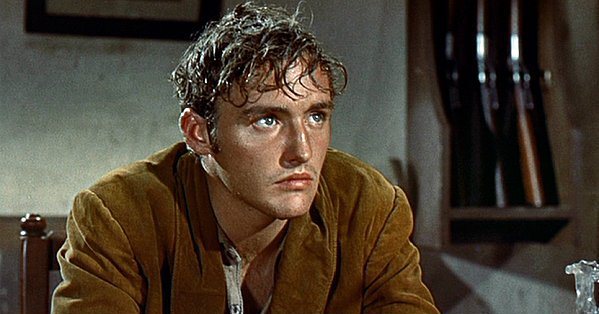
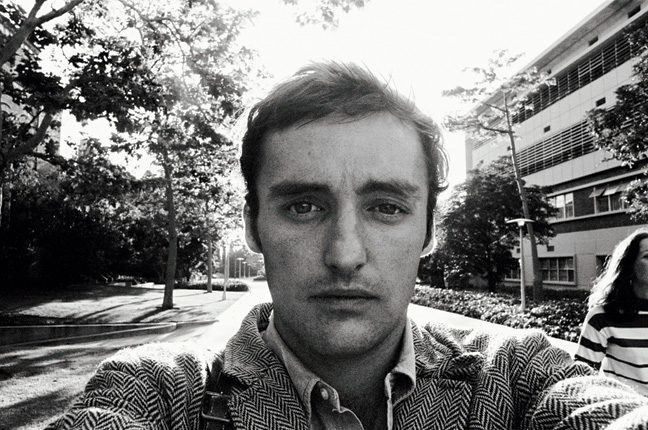
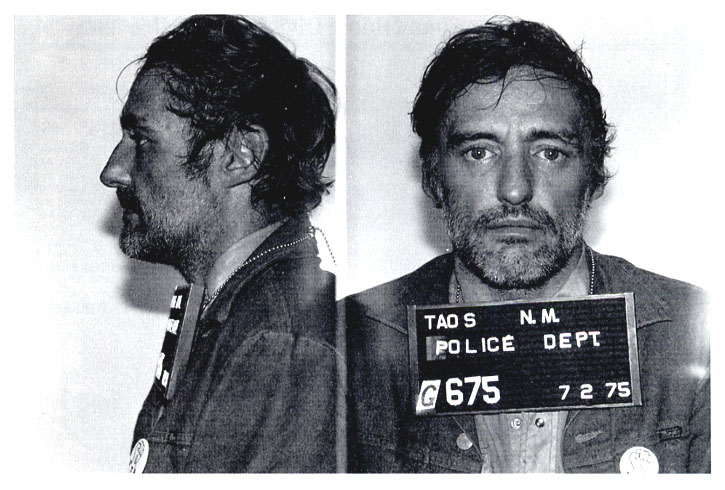
Here I was, planning a nice, lengthy post about Marjorie Cameron and her art. What an amazing woman/artist/actress/occultist/ collaborator. While searching all kinds of wonderful material I came across Curtis Harrington’s 1961 psychological thriller “Night tide” where Cameron plays the Water Witch alongside Dennis Hopper (great stuff, great jazz.) Thing is, I got totally distracted by images of Dennis Hopper. <3

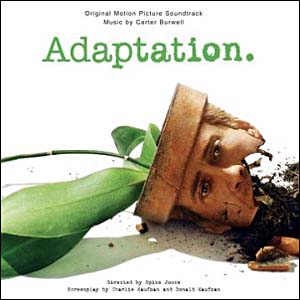 JOHN LAROCHE:
You know why I like plants?
SUSAN ORLEAN:
Nuh uh.
JOHN LAROCHE:
Because they’re so mutable. Adaptation is a profound process. Means you figure out how to thrive in the world.
SUSAN ORLEAN:
[pause] Yeah but it’s easier for plants. I mean they have no memory. They just move on to whatever’s next. With a person though, adapting’s almost shameful. It’s like running away.
___
CHARLIE KAUFMAN: [voice-over]
I am pathetic, I am a loser…
ROBERT MCKEE:
So what is the substance of writing?
CHARLIE KAUFMAN: [voice-over]
I have failed, I am panicked. I’ve sold out, I am worthless, I… What the fuck am I doing here? What the fuck am I doing here? Fuck. It is my weakness, my ultimate lack of conviction that brings me here… And here I am because my jump into the abysmal well – isn’t that just a risk one takes when attempting something new? I should leave here right now. I’ll start over. I need to face this project head on and…
ROBERT MCKEE:
…and God help you if you use voice-over in your work, my friends. God help you. That’s flaccid, sloppy writing. Any idiot can write a voice-over narration to explain the thoughts of a character.
___
SUSAN ORLEAN:
There are too many ideas and things and people. Too many directions to go. I was starting to believe the reason it matters to care passionately about something, is that it whittles the world down to a more manageable size.
___
SUSAN ORLEAN:
Do you ever get lonely sometimes, Johnny?
JOHN LAROCHE:
Well, I was a weird kid. Nobody liked me. But I had this idea. If I waited long enough, someone would come around and just, you know… understand me. Like my mom, except someone else. She’d look at me and quietly say: “Yes.” Just like that. And I wouldn’t be alone anymore.
___
CHARLIE KAUFMAN:
There are no rules, Donald. And anyone who says there are is just, you know…
DONALD KAUFMAN:
Not rules, principles. McKee writes that a rule says you *must* do it this way. A principle says, this *works* and has through all remembered time.
___
JOHN LAROCHE:
Point is, what’s so wonderful is that every one of these flowers has a specific relationship with the insect that pollinates it. There’s a certain orchid looks exactly like a certain insect so the insect is drawn to this flower, its double, its soul mate, and wants nothing more than to make love to it. And after the insect flies off, spots another soul-mate flower and makes love to it, thus pollinating it. And neither the flower nor the insect will ever understand the significance of their lovemaking. I mean, how could they know that because of their little dance the world lives? But it does. By simply doing what they’re designed to do, something large and magnificent happens. In this sense they show us how to live – how the only barometer you have is your heart. How, when you spot your flower, you can’t let anything get in your way.
___
SUSAN ORLEAN:
What I came to understand is that change is not a choice. Not for a species of plant, and not for me.
___
CHARLIE KAUFMAN:
I have to go right home. I know how to finish the script now. It ends with Kaufman driving home after his lunch with Amelia, thinking he knows how to finish the script. Shit, that’s voice-over. McKee would not approve. How else can I show his thoughts? I don’t know. Oh, who cares what McKee says? It feels right. Conclusive. I wonder who’s gonna play me. Someone not too fat. I liked that Gerard Depardieu, but can he not do the accent? Anyway, it’s done. And that’s something. So: “Kaufman drives off from his encounter with Amelia, filled for the first time with hope.” I like this. This is good.

still, beyond the pane
in the steamy darkness
she’d die to be touched
From The Sun, Moon, and Herbs (1971)
From Chocolate and Cheese (1994), Flying Nun Records.
Johannesburg – The media coverage of the upgrades to President Jacob Zuma’s Nkandla home required government to “dust off” apartheid-era legislation, media law expert Dario Milo said on Friday.
“The Public Works Minister’s (Thulas Nxesi) response to the (Zuma/Nkandla) expose was twofold,” Milo said at Wits University in Johannesburg.
“(These were) to call for the City Press, which first broke the story, to be investigated for the crime of unlawfully processing a ‘top secret’ document, and to refuse to answer questions about the Nkandla funding because it had been declared a ‘national key point’.”
He said both these propositions required Nxesi to use apartheid-era security legislation such as the Protection of Information Act of 1982 and the National Key Points Act of 1980.
“This is hardly the type of legislation I would want to be relying on if I were in the minister’s position.”
The use of these laws was a current threat to media freedom and was being used to stifle transparency and accountability, he said.
Read more of this article HERE.

A bit like ‘military intelligence’: the bigger the lie, the more likely people are to believe it …
Why is it that people we entrust running our countries to – and therefore, in effect, collectively, the world – don’t need to have a degree? A doctor needs to study for seven gruelling years before he or she is allowed to examine and treat your body, but politicians can somehow take a country to glory or ruin based on being elected on sheer charisma.
Would you let someone operate on you because they have a great smile? No? Strange that we let people run a country who, in South Africa for instance, never even attended high school.
Why not establish a special college , call it Polit School, where those who excel at school – the top academics, head boys and girls, etc – go to, and are groomed for, in order to learn how to run a country? Or, if someone who has already left school wants to run a municipality, province or country, that person could apply to study at this institution.
The most important quality must be integrity; the college must be based on a code similar to that of the knights of the middle ages. The strong are there to protect the weak, chivalry and honour top the list. Any blemish of character relating to dishonesty, cruelty or self-enhancement at the expense of others would disqualify candidates immediately. Thorough background checks are mandatory.
The rigorous selection system and exams run by the college board would ensure these professionals adhere to and adopt a code of ethics every bit as strict as those who study to enter the legal or medical field.
One of the most important subjects at this college would have to be history, since learning from past mistakes is something politicians appear to have little aptitude for. Hopefully this prize team of carefully selected individuals could take the human race past its present, circular set of stumbling blocks, and we can stop banging our heads against the same walls so repetitively.
Come election time, citizens would only be allowed to select Polit School candidates to run their country, cabinet, parliament etc from this pool of highly ethical, trained professionals. Of course, once they qualify, they have to enter the field at the lowest rung – in communities and villages and townships – before making their way to the top.
And they would be subject to screening at every step. And those who do the screening and selections – same goes for the candidates – are simply not allowed to be connected to big business in any way whatsoever. The connection between corporates and politicians has to be severed. It’s a serious business running a country. Let’s turn it into a science.
Leadership is also somewhat of an art. Some of us are just not cut out for it, no matter how hard we would work at Polit School. One would rather rule with love than fear. You have huge responsibilities placed on your shoulders, and you chose them; you as leader have been entrusted with taking care of millions of people, not only in your own country, but those bordering it. Today the human race is a global phenomenon ,so whatsoever actions you chose to implement at home will have ripples abroad.
We are no longer isolated entities and our very survival is at stake because – shame to admit it really, as we do regards ourselves as intelligent creatures – we still don’t know how to get on with each other. So the election of the world’s leadership is critical right now.
We need to do away with greedy leaders who comprise the 1% and start sharing resources because there are enough actually, if shared and managed wisely. Leaders need to lead by example. Their behaviour must be impeccable. If there is any slander against them it must be investigated and cleared immediately. People cannot doubt their leaders, just as small children cannot doubt their parents.
What has changed is leaders can’t bullshit the masses as easily as they used to. In the bad old days you could start a border incident with a few well-placed gold coins, a ship gets sunk or a village torched and bingo, you have your excuse to invade the neighbours because “they started it” and we were “acting in defence”.
After that came control of the media – Goebbels realised its power, so did the apartheid regime, and the mainstream media is massively controlled by the US police state even today. But cracks like Wikileaks are appearing and the forces of opposition – Anonymous etc – grow stronger by the day. We can’t be fooled as easily as we once could.
Our leaders need to unite us all to address the real challenges of the day – the destruction of the environment, water scarcity, food shortages, housing, education, meaningful employment and relation to each other – rather than bullshit like wars and squabbling over resources and territories we all need to now share, or we will perish in large swathes.
If there are disagreements, the one thing the ancient tribes resorted to that I kind of dig is at times a champion from each tribe would be put forward to solve the unsolvable disagreement. Sometimes it was the chief himself … maybe there were even herselfs who fought for the tribe’s honour. Imagine today’s leaders doing something like that? We need brave leaders who can walk the talk, not cower behind their police or armies. They have to be at the frontline.
The old order changeth and the new one emerges. A system of leadership which was based on monarchy which became the lapdog of corporates and was always based on lies and fear and plunder is falling. The only world superpower since WWII is becoming replaced by a number of growing, other superpowers. The monetary system as we know it is in danger of complete global collapse. Its a 2012 scenario and its already started.
What replaces it is the question. If the centre collapses, is it filled by complete chaos, anarchy in its worst form? Things are polarising fast, and those with the most possessions have the most to lose. So, whose side are you on, becomes the question … and who will step forward with the guts to lead a new world, with a new style of leadership, is the big question.
“Still, American television is full of smiles and more and more perfect-looking teeth. Do these people want us to trust them? No. Do they want us to think they’re good people? No again. The truth is they don’t want anything from us. They just want to show us their teeth, their smiles, and admiration is all they want in return. Admiration. They want us to look at them, that’s all. Their perfect teeth, their perfect bodies, their perfect manners, as if they were constantly breaking away from the sun and they were little pieces of fire, little pieces of blazing hell, here on this planet simply to be worshipped.”
― Roberto Bolaño, 2666
 Miss America 1930, Margaret Ekdahl
 Marilyn Monroe
 Betty Page
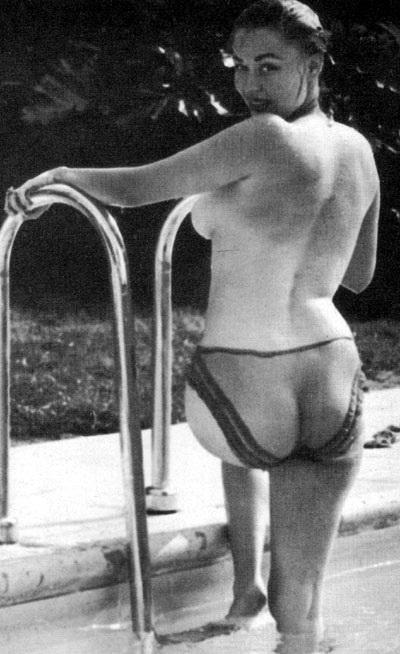 Donalda Jordan
 Candice Huffine 2010

Marquita Pring
 Fluvia Lacerda
 fleurmach
