From one of my favourite albums of the last decade, Transfiguration of Vincent, released in 2003 (in fact, that’s more than a decade ago now, wow!). The title alludes to John Fahey’s 1965 album,The Transfiguration of Blind Joe Death, and also refers to the life and death of Vincent O’Brien, a close friend of Ward’s. Here’s a moving and informative interview with Ward from around the time of the album’s release.
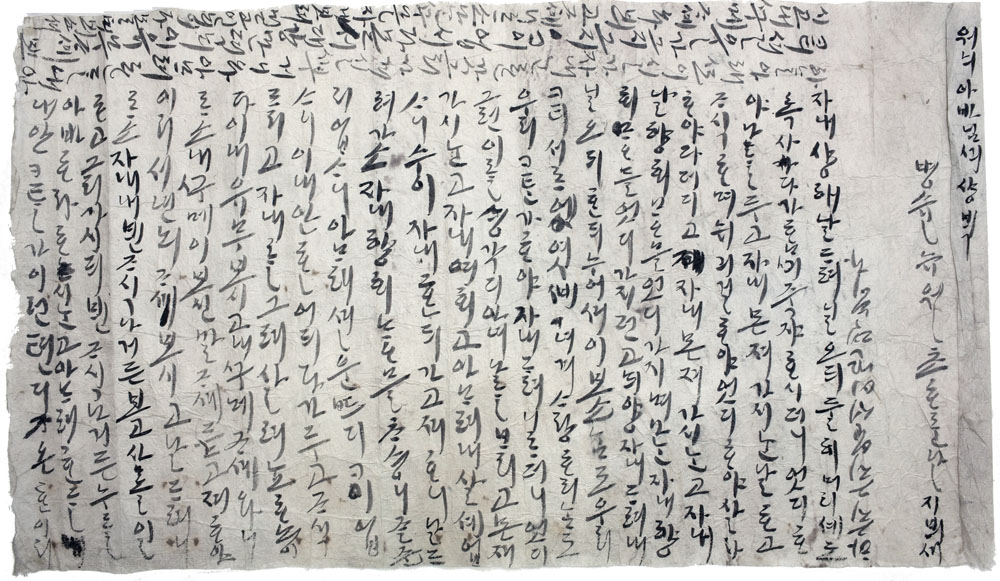
Excavating an ancient tomb in South Korea, archaeologists found the 4-centuries-old mummy of Eung-Tae Lee, who had died at the age of 30. Lying on his chest was this letter, written by his pregnant widow and addressed to the father of their unborn child:
Source: Letters of Note
Transcript
To Won’s Father
June 1, 1586
You always said, “Dear, let’s live together until our hair turns grey and die on the same day.” How could you pass away without me? Who should I and our little boy listen to and how should we live? How could you go ahead of me?
How did you bring your heart to me and how did I bring my heart to you? Whenever we lay down together you always told me, “Dear, do other people cherish and love each other like we do? Are they really like us?” How could you leave all that behind and go ahead of me?
I just cannot live without you. I just want to go to you. Please take me to where you are. My feelings toward you I cannot forget in this world and my sorrow knows no limit. Where would I put my heart in now and how can I live with the child missing you?
Please look at this letter and tell me in detail in my dreams. Because I want to listen to your saying in detail in my dreams I write this letter and put it in. Look closely and talk to me.
When I give birth to the child in me, who should it call father? Can anyone fathom how I feel? There is no tragedy like this under the sky.
You are just in another place, and not in such a deep grief as I am. There is no limit and end to my sorrows that I write roughly. Please look closely at this letter and come to me in my dreams and show yourself in detail and tell me. I believe I can see you in my dreams. Come to me secretly and show yourself. There is no limit to what I want to say and I stop here.
This version of the traditional song originally penned by J H McNaughton during the American Civil War was recorded by Jolie Holland for her Escondida album in 2004:
Here is the first known recorded version, by Buell Kazee, in 1928:
Today marks 95 years since the end of World War 1.
Rare 8mm footage of Japanese ’70s psychedelic rock group Flower Travellin’ Band (フラワー・トラベリン・バンド) playing their last show in April 1973 at Maruyama Park in Kyoto, Japan.
“There is no up or down
Your truth is the only master
Death is made by the living
Pain is only intense to you
The sun shines every day
Freedom, freedom…”
So, so sad to hear Lou is gone. I have no words to begin to describe how influential his work has been to me since I first heard the Velvet Underground at 14.
David Foster Wallace was arguably one of the most brilliant American writers of his generation. In this excerpt from a speech he gave, first published on the Guardian website a week after his death in 2008, he reflects on the difficulties of daily life and ‘making it to 30, or maybe 50, without wanting to shoot yourself in the head’. Read it below the jump or listen to the audio recording here:
There are these two young fish swimming along, and they happen to meet an older fish swimming the other way, who nods at them and says, “Morning, boys, how’s the water?” And the two young fish swim on for a bit, and then eventually one of them looks over at the other and goes, “What the hell is water?”
If you’re worried that I plan to present myself here as the wise old fish explaining what water is, please don’t be. I am not the wise old fish. The immediate point of the fish story is that the most obvious, ubiquitous, important realities are often the ones that are the hardest to see and talk about. Stated as an English sentence, of course, this is just a banal platitude – but the fact is that, in the day-to-day trenches of adult existence, banal platitudes can have life-or-death importance. That may sound like hyperbole, or abstract nonsense. So let’s get concrete …
A huge percentage of the stuff that I tend to be automatically certain of is, it turns out, totally wrong and deluded. Here’s one example of the utter wrongness of something I tend to be automatically sure of: everything in my own immediate experience supports my deep belief that I am the absolute centre of the universe, the realest, most vivid and important person in existence. We rarely talk about this sort of natural, basic self-centredness, because it’s so socially repulsive, but it’s pretty much the same for all of us, deep down. It is our default setting, hard-wired into our boards at birth. Think about it: there is no experience you’ve had that you were not at the absolute centre of. The world as you experience it is right there in front of you, or behind you, to the left or right of you, on your TV, or your monitor, or whatever. Other people’s thoughts and feelings have to be communicated to you somehow, but your own are so immediate, urgent, real – you get the idea. But please don’t worry that I’m getting ready to preach to you about compassion or other-directedness or the so-called “virtues”. This is not a matter of virtue – it’s a matter of my choosing to do the work of somehow altering or getting free of my natural, hard-wired default setting, which is to be deeply and literally self-centred, and to see and interpret everything through this lens of self.
By way of example, let’s say it’s an average day, and you get up in the morning, go to your challenging job, and you work hard for nine or ten hours, and at the end of the day you’re tired, and you’re stressed out, and all you want is to go home and have a good supper and maybe unwind for a couple of hours and then hit the rack early because you have to get up the next day and do it all again. But then you remember there’s no food at home – you haven’t had time to shop this week, because of your challenging job – and so now, after work, you have to get in your car and drive to the supermarket. It’s the end of the workday, and the traffic’s very bad, so getting to the store takes way longer than it should, and when you finally get there the supermarket is very crowded, because of course it’s the time of day when all the other people with jobs also try to squeeze in some grocery shopping, and the store’s hideously, fluorescently lit, and infused with soul-killing Muzak or corporate pop, and it’s pretty much the last place you want to be, but you can’t just get in and quickly out: you have to wander all over the huge, overlit store’s crowded aisles to find the stuff you want, and you have to manoeuvre your junky cart through all these other tired, hurried people with carts, and of course there are also the glacially slow old people and the spacey people and the kids who all block the aisle and you have to grit your teeth and try to be polite as you ask them to let you by, and eventually, finally, you get all your supper supplies, except now it turns out there aren’t enough checkout lanes open even though it’s the end-of-the-day rush, so the checkout line is incredibly long, which is stupid and infuriating, but you can’t take your fury out on the frantic lady working the register.
Anyway, you finally get to the checkout line’s front, and pay for your food, and wait to get your cheque or card authenticated by a machine, and then get told to “Have a nice day” in a voice that is the absolute voice of death, and then you have to take your creepy flimsy plastic bags of groceries in your cart through the crowded, bumpy, littery parking lot, and try to load the bags in your car in such a way that everything doesn’t fall out of the bags and roll around in the trunk on the way home, and then you have to drive all the way home through slow, heavy, SUV-intensive rush-hour traffic, etc, etc.
The point is that petty, frustrating crap like this is exactly where the work of choosing comes in. Because the traffic jams and crowded aisles and long checkout lines give me time to think, and if I don’t make a conscious decision about how to think and what to pay attention to, I’m going to be pissed and miserable every time I have to food-shop, because my natural default setting is the certainty that situations like this are really all about me, about my hungriness and my fatigue and my desire to just get home, and it’s going to seem, for all the world, like everybody else is just in my way, and who are all these people in my way? And look at how repulsive most of them are and how stupid and cow-like and dead-eyed and nonhuman they seem here in the checkout line, or at how annoying and rude it is that people are talking loudly on cell phones in the middle of the line, and look at how deeply unfair this is: I’ve worked really hard all day and I’m starved and tired and I can’t even get home to eat and unwind because of all these stupid goddamn people.
Or if I’m in a more socially conscious form of my default setting, I can spend time in the end-of-the-day traffic jam being angry and disgusted at all the huge, stupid, lane-blocking SUVs and Hummers and V12 pickup trucks burning their wasteful, selfish, 40-gallon tanks of gas, and I can dwell on the fact that the patriotic or religious bumper stickers always seem to be on the biggest, most disgustingly selfish vehicles driven by the ugliest, most inconsiderate and aggressive drivers, who are usually talking on cell phones as they cut people off in order to get just 20 stupid feet ahead in a traffic jam, and I can think about how our children’s children will despise us for wasting all the future’s fuel and probably screwing up the climate, and how spoiled and stupid and disgusting we all are, and how it all just sucks …
If I choose to think this way, fine, lots of us do – except that thinking this way tends to be so easy and automatic it doesn’t have to be a choice. Thinking this way is my natural default setting. It’s the automatic, unconscious way that I experience the boring, frustrating, crowded parts of adult life when I’m operating on the automatic, unconscious belief that I am the centre of the world and that my immediate needs and feelings are what should determine the world’s priorities. The thing is that there are obviously different ways to think about these kinds of situations. In this traffic, all these vehicles stuck and idling in my way: it’s not impossible that some of these people in SUVs have been in horrible car accidents in the past and now find driving so traumatic that their therapist has all but ordered them to get a huge, heavy SUV so they can feel safe enough to drive; or that the Hummer that just cut me off is maybe being driven by a father whose little child is hurt or sick in the seat next to him, and he’s trying to rush to the hospital, and he’s in a much bigger, more legitimate hurry than I am – it is actually I who am in his way.
Again, please don’t think that I’m giving you moral advice, or that I’m saying you’re “supposed to” think this way, or that anyone expects you to just automatically do it, because it’s hard, it takes will and mental effort, and if you’re like me, some days you won’t be able to do it, or you just flat-out won’t want to. But most days, if you’re aware enough to give yourself a choice, you can choose to look differently at this fat, dead-eyed, over-made-up lady who just screamed at her little child in the checkout line – maybe she’s not usually like this; maybe she’s been up three straight nights holding the hand of her husband who’s dying of bone cancer, or maybe this very lady is the low-wage clerk at the Motor Vehicles Dept who just yesterday helped your spouse resolve a nightmarish red-tape problem through some small act of bureaucratic kindness. Of course, none of this is likely, but it’s also not impossible – it just depends on what you want to consider. If you’re automatically sure that you know what reality is and who and what is really important – if you want to operate on your default setting – then you, like me, will not consider possibilities that aren’t pointless and annoying. But if you’ve really learned how to think, how to pay attention, then you will know you have other options. It will be within your power to experience a crowded, loud, slow, consumer-hell-type situation as not only meaningful but sacred, on fire with the same force that lit the stars – compassion, love, the sub-surface unity of all things. Not that that mystical stuff’s necessarily true: the only thing that’s capital-T True is that you get to decide how you’re going to try to see it. You get to consciously decide what has meaning and what doesn’t. You get to decide what to worship.
Because here’s something else that’s true. In the day-to-day trenches of adult life, there is no such thing as atheism. There is no such thing as not worshipping. Everybody worships. The only choice we get is what to worship. And an outstanding reason for choosing some sort of god or spiritual-type thing to worship – be it JC or Allah, be it Yahweh or the Wiccan mother-goddess or the Four Noble Truths or some infrangible set of ethical principles – is that pretty much anything else you worship will eat you alive. If you worship money and things – if they are where you tap real meaning in life – then you will never have enough. Never feel you have enough. It’s the truth. Worship your own body and beauty and sexual allure and you will always feel ugly, and when time and age start showing, you will die a million deaths before they finally plant you. On one level, we all know this stuff already – it’s been codified as myths, proverbs, clichés, bromides, epigrams, parables: the skeleton of every great story. The trick is keeping the truth up front in daily consciousness. Worship power – you will feel weak and afraid, and you will need ever more power over others to keep the fear at bay. Worship your intellect, being seen as smart – you will end up feeling stupid, a fraud, always on the verge of being found out.
The insidious thing about these forms of worship is not that they’re evil or sinful; it is that they are unconscious. They are default settings. They’re the kind of worship you just gradually slip into, day after day, getting more and more selective about what you see and how you measure value without ever being fully aware that that’s what you’re doing. And the world will not discourage you from operating on your default settings, because the world of men and money and power hums along quite nicely on the fuel of fear and contempt and frustration and craving and the worship of self. Our own present culture has harnessed these forces in ways that have yielded extraordinary wealth and comfort and personal freedom. The freedom to be lords of our own tiny skull-sized kingdoms, alone at the centre of all creation. This kind of freedom has much to recommend it. But there are all different kinds of freedom, and the kind that is most precious you will not hear much talked about in the great outside world of winning and achieving and displaying. The really important kind of freedom involves attention, and awareness, and discipline, and effort, and being able truly to care about other people and to sacrifice for them, over and over, in myriad petty little unsexy ways, every day. That is real freedom. The alternative is unconsciousness, the default setting, the “rat race” – the constant gnawing sense of having had and lost some infinite thing.
I know that this stuff probably doesn’t sound fun and breezy or grandly inspirational. What it is, so far as I can see, is the truth with a whole lot of rhetorical bullshit pared away. Obviously, you can think of it whatever you wish. But please don’t dismiss it as some finger-wagging Dr Laura sermon. None of this is about morality, or religion, or dogma, or big fancy questions of life after death. The capital-T Truth is about life before death. It is about making it to 30, or maybe 50, without wanting to shoot yourself in the head. It is about simple awareness – awareness of what is so real and essential, so hidden in plain sight all around us, that we have to keep reminding ourselves, over and over: “This is water, this is water.”
· Adapted from the commencement speech the author gave to a graduating class at Kenyon College, Ohio. First published on the Guardian website.
Carlo Gesualdo Principe di Venosa (1566?-1613): Tenebrae
Tristis est anima mea – Feria V, In coena Domini
In I Nocturno – Responsorium 1 (for Maudy Thursday)
Performed by The King’s Singers (2004)
Tristis est anima mea usque ad mortem:
sustinete hic, et vigilate mecum: nunc videbitis
turbam, quae circumdabit me: Vos fugam
capietis, et ego vadam immolari pro vobis.
Ecce appropinquat hora, et filius hominis
tradetur in manus peccatorum.
———
My soul is sorrowful even unto death: stay here
and watch with me: now shall ye see the crowd
that shall surround me: ye shall take flight, and
I shall go to be offered up for you.
Behold the time draweth nigh, and the son of
man shall be delivered into the hands of sinners.
“Dark Was the Night, Cold Was the Ground” is a gospel-blues song written and performed by Blind Willie Johnson, probably recorded in 1927. The song is primarily an instrumental, featuring Johnson’s self-taught bottleneck slide guitar and picking style accompanied by humming and moaning.
For more about this haunting record, check out the fascinating Wikipedia page.
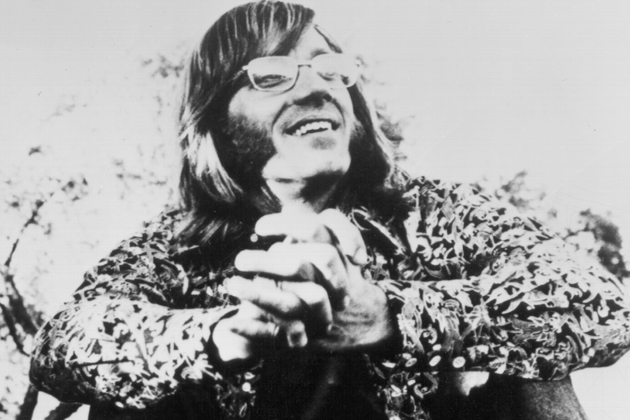
The Doors, live in Copenhagen,1968. Ray, I was always even more in love with you than I was with Jim… That organ of yours is what really hypnotised me (that’s what she said).
From Michael Ochs’ archive
As my friend Carlo Germeshuys just put it, “Goodbye, Ray Manzarek – without your swirly lounge keyboard old Jimbo wouldn’t have gotten far with his whole bozo Dionysus act.” Oh wait, Carlo says he was referencing a diss by Lester Bangs. Well, whatever. “Bozo Dionysus” = best description of Jim Morrison ever.
Song from Soap&Skin‘s debut album, Lovetune for Vacuum (2009, Play It Again Sam Records).
Video produced and directed by Benjamin and Stefan Ramirez Pérez.
Photography by Anja Plaschg, Benjamin Ramírez Pérez and Stefan Ramírez Pérez.
Complete Notes on the Dissection of Cadavers is an Edo-period Japanese anatomical atlas by Kawaguchi Shinnin (1736-1811) with woodcut illustrations by Aoki Shukuya (d. 1802), published in Kyoto in 1772.
“Well, God is in His heaven
And we all want what’s His
But power and greed and corruptible seed
Seem to be all that there is
I’m gazing out the window
Of the St. James Hotel
And I know no one can sing the blues
Like Blind Willie McTell.”
Note on the author: Olivier Chow is a former senior protection officer of the International Committee of the Red Cross (ICRC) and has led investigations on war crimes in Afghanistan, Cambodia, the Democratic Republic of the Congo and Macedonia. He is currently finishing a PhD in critical theory at the School of Oriental and African Studies (SOAS), London University, working on the theory and visual mediation of cruelty. His main interests concern French theory and in particular the work of Georges Bataille, fetishism, violence, popular culture and tribal arts. He has also worked for UNESCO, Sotheby’s and a private collection of surrealist art. The following article was first published HERE.
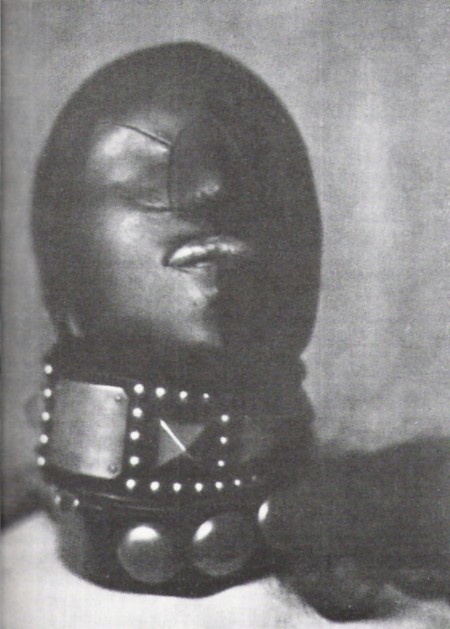
Jacques-André Boiffard, Untitled, Article “Le Caput Mortuum ou la Femme de l’Alchimiste”, Documents, 1930, No 8
In this paper we shall explore desire from the perspective of transgression and, to be precise, desire generated by the transgressive space born from the oscillation between attraction and repulsion, or what the French surrealist Georges Bataille named ‘inter-repulsion’. We shall argue that the ultimate object of inter-repulsion is death itself and, as such, inter-repulsion brings forth not only the subject and its discontents but also the social with its taboos and prohibitions. Inter-repulsion will be discussed in relation to the visual culture of Documents, a dissident and short-lived surrealist journal (1929-1930) that has recently come back to life at the Hayward in the exhibition “Undercover Surrealism.” [1] One of the pièces maîtresses in the main hall of the exhibition is a photograph by Jean-Jacques Boiffard, the most prominent photographer of the journal: a photograph of a magnified big toe around which our discussion will centre. This photograph has become an emblem for a surrealism that has done away with the ‘marvellous’ – which it literally shat on – and that has shamelessly promoted the ‘low’ (bassesse ) and the ordure: the surrealism of Georges Bataille which opposed the impossible of the real to Breton’s possible of the imagination. The big toes had a task – for Bataille, words and images always had to do something: to bring forth through the sensations of visceral reactions and gut feelings what had remained hidden and repressed. The object of repression staged in Documents was a desire rooted in death. Thus we shall argue that inter-repulsion creates a pornography of death since it shows us our darkest and most obscene object of desire. Our discussion will be divided into two sections: first we shall explore the big toe as ‘idol’, second as ‘ordure’.
Documents was initially intended as a scientific review, albeit one with a unique and innovative twist. It brought together high and popular art (beaux arts and variétés), archaeology and ethnographic art. Documents’ ambiguous mission statement already contained the seeds of its undoing: “the most provoking as yet unclassified works of art and certain unusual productions, neglected until now, will be the object of studies as rigorous and scientific as those of archaeologists.” As early as issue four, the provocative, disturbing and frankly monstrous became the focus of the journal and it quickly became a war machine against surrealism: “Documents made clear what surrealism was not; what, under the aegis of Breton, it could not be.” [2] It would be “the abscess burst each month from surrealism.” [3]Documents elaborated a common theoretical front against positivism and idealism reducing all images and objects (dead animals, big toes, abattoirs, ancient coins, high and ‘primitive art’) to document status. It promoted a fragmenting, magnifying and anti-aesthetic gaze on the world, privileging the monstrous and corporeal. Facts from ethnography, faits divers andvariétés , religion and culture, were artificially ‘planted’ in order to anchor images and discourse in a reality that was both familiar and yet complete fantasy and fabrication. This mock reality was largely one of distortion and pastiche; a distortion that was also applied to constituted forms (mainly the human body and its architecture). Here the positivism of factual documentation, like the body itself, was perversely subverted: reality was deformed and this was placed in the service of sensations such as vertigo and disgust. The ‘facts’ that were revealed were closer to what Francis Bacon understood as facts: a brutal revelation of a hidden truth about the human condition. These were inseparable from the brutal sensations they imposed on the viewer. These visceral facts, or ‘visual instincts’, fashioned a new and powerful reality where differences between a subject and object were brutally collapsed. This is the sensational reality that the big toes managed to bring about, or in the words of Bataille: “a return to reality…means that one is seduced in a base manner, without transpositions and to the point of screaming, opening his eyes wide: opening them wide, then, before a big toe.”[4] Inter-repulsion inaugurates a brutal return to sensation – not pleasant sensations, rather as we shall demonstrate, sensations of death.
Jacques-André Boiffard’s ‘Big Toes’ were published in Documents number 6, 1929, with a text by Bataille titled ‘Le Gros Orteil’. The two male big toes that appeared here are actually part of a series. Altogether there are three (two male and one female), a sort of “friendly trinity”. [5]The chiaroscuro isolates the toe from the body, providing it with a fetishistic and almost godly aura. Whereas most of the other photographs published in the journal were usually juxtaposed together in a sort of montage that reminded the viewer of the random and haphazard juxtapositions of a newspaper, the big toes stand alone in the magazine, occupying a full page. The visual brutality of the big toes and the mocking tone of the text that accompany the image, are typical of Documents: the provocative and almost ethnographic enterprise on the big toes was not dissimilar to the exploration of eccentric artistic productions, exotic cultures, sacrificial rituals and dismissed historical periods that defined Documents’ anthropological realm.
In his “Gros Orteil”, Bataille describes how feet, for some individuals, are sexually charged. Here Bataille cites the example of the Count of Villamediana who burnt a house in order to carry the queen and stroke her feet or foreign cultures like China where the feet of women are both deformed and venerated. As a fetish, feet and toes are abstracted from the body and turned into independent wholes charged with desire: idols. We shall name these idolised fragments of the body, ‘part-objects’ – a term that designs parts of the body, real or fantasised (penis, breast, food, faeces, toes, et cetera) invested with desire. The destiny of part-objects or ‘érotique combinatoire‘ [6] to use Roland Barthes’ expression, was one of Bataille’s favourite anthropological and symbolic explorations. Part-objects are celebrated in Bataille’s pornographic novels from Histoire de l’Oeil to Madame Edwarda . In Bataille’s Histoire de l’Oeil, the eye is set within a symbolic matrix and a system of correspondences. Histoire de l’Oeil, as Roland Barthes noted, is really the history of an object, its migration and metamorphosis into its symbolic equivalents. Every metamorphosis is like a new station within the migration of the object/organ. The part-object is recited throughout the novel (eye, sun, egg, and their respective seminal liquids), revealing the humid substance of a round phallicism. In Madame Edwarda, Madame Edwarda asks the narrator if he wants to sees her ‘vilaines guenilles’. She exposes her ‘old rags’, a source of anxious fascination. From within these revolting guenilles emanates a dirty gaze that stares at the narrator like a Medusean ‘pieuvre répugnante’ . When the narrator asks her why she does this, she tells him: “Tu vois…je suis DIEU”. [7] In Madame Edwarda, God is a genital revelation. Madame Edwarda’s ‘gazing beast’ is god-like: totemic and sovereign. The big toe photographed by Boiffard is also staged like a genital, repugnant and sovereign creature.
Binet’s seminal essay on fetishism, Le Fétichisme dans l’Amour (1887) was well known to Bataille. It dedicated a few pages to the account of various forms of fetishism related to inanimate objects or fractions of the body, real or symbolic such as hand, feet, hair, eye, voice and smell. Binet combines his theory of fetishism as a sexual perversion with the aesthetics of fetishism. According to Binet, fetishism tends to detach and isolate the part-object from the person to which it belongs. The fetishist tends to transform this part-object into an independent whole. The part-object is thus an abstraction according to Binet. This tendency towards abstraction is also supplemented by a tendency towards generalisation: the cult of the fetishist is not oriented towards a part-object belonging to one specific person. On the contrary, the part-object stands for a sort of genre or ‘monotheism’ to use Binet’s expression that is not attached to one individual specifically but to one abstracted fragment. Finally, Binet observes that there is a tendency towards exaggeration: the volume or the importance of the part-object is enhanced.
Jacques-André Boiffard, Big Toe, feminine subject, twenty-four years old , Documents, No6, 1929
Jacques-André Boiffard, Big Toe, masculine subject, thirty years old , Documents, No6, 1929
Jacques-André Boiffard, Big Toe, masculine subject, thirty years old , Documents, No6, 1929
The fetishistic photographic process confers the big toe with a new status as part-object ready to be mapped out by desire and sexualised. The big toe’s sexual persona is here evidently exposed as obscene. Boiffard has mimicked the fetishist gaze observed by Binet. The toes are isolated from their bodies, fragmented, enlarged, staged and dramatised. The magnified, blown-up toes seem impossibly real: ugly, hairy, genital-like. We are literally put face to face with their excessive and nauseous reality. The photographs are cropped, the angle imposes a violent deformation on the toe – they are upside down, brought down if such an operation were possible. It is a portrait that transgresses and subverts the very idea of what a portrait should be: the highest and most noble part of the body has been thrown away and transformed into a grotesque, absurd and scandalous ‘other face’.
The framing of the toe is an act of violence set against the human figure. Bataille’s text refers to material and visual operations of abuse and violence such as “deformation”, “infection”, “tortures”, “pain”, “brutal”. Those forces that deform the human figure are violent forces that Bataille equates with forces of entropy and decomposition, such as those that attack the corpse. The deformation or “alteration” of the human figure was an essential strategy in Bataillean aesthetics: “the word alteration provides the double advantage of expressing a partial decomposition similar to that of corpses and at the same time the expression of the passage to a perfectly heterogeneous state that the protestant professor Otto named the ‘wholly other’, that is the sacred.” [8]
In his classic study of the Holy, the German theologian, philosopher and historian of religions Rudolf Otto (1869-1937), situates the sacred in relation to an a priori emotional structure, the numinosum . In the experience of the numinous, the subject experiences a feeling of intimate dependence towards a higher and independent force. The experience of the “wholly other” [9]: is what Otto describes as “creature-consciousness”. This “creature-feeling” is “the emotion of a creature, abased and overwhelmed by its own nothingness in contrast to that which is supreme above all creatures.” [10] This experience is fundamentally ambivalent, a mélange of attraction and repulsion: this mysterium tremendum is an uncanny experience of awfulness, an awfulness that lies beyond the realm of knowledge, producing a feeling of peculiar dread, a “terror fraught with inward shuddering.” [11] The big toes reek of these creepy “creature feelings”.
Boiffard has also captured the fetish’s destiny as fixation. William Pietz, one of the leading commentators on fetishism, defines the fetish in the following terms: “The fetish is always a meaningful fixation of a singular event; it is above all a ‘historical’ object, the enduring material form and force of an unrepeatable event.” [12] This unrepeatable and traumatic event could be rooted in early childhood beliefs and complexes. Freud and psychoanalysis argue fetishism is linked to the experience of shock that comes about once the absence of a maternal penis is revealed. The fetish becomes a substitute for the penis and a disavowal of that lack. The captions for this big toe could be: “it is not really gone as long as I’m here”. The body as site of revelation of the phallus was a common surrealist visual strategy. One of its most famous expressions is Man Ray’s anatomies (1930). The idea behind that specific visual operation was to de-territorialise bodies, rendering them polymorphously perverse and ‘genital’ by liberating desire from the conventional and limiting mappings of the erogenous zones.
Jacques-André Boiffard, Untitled , Article “Le Caput Mortuum ou la Femme
de l’Alchimiste », Documents, 1930, No8
We are now going to discuss another famous image of Documents by Boiffard where the body turns into phallus: his untitled image that features a mask by W.B. Seabrook. Michel Leiris in his “Le Caput Mortuum ou la Femme de la l’Alchimiste” published in Documents in 1931, discusses the photograph portraying a woman wearing a mask. The image brings forth both fetishistic memories of desire (sado-masochistic fantasies) and mystic possibilities of religious revelation (could that mask be the face of God, Leiris wonders). For Leiris, a mask can thus open up to desire and the sacred: the mask opens towards what is both foreign and intimate within us. What the mask manages in true fetishistic form is to abstract and concentrate body parts – making them more as well as less real, that is, schematic. Boiffard’s woman becomes more mysterious but also more threatening as her features are disguised by her second leather skin. The woman becomes an abstraction, a generality, a thing or essence (“ chose-en-soi ”). Her severity is tinged with suffering, appealing to our sadism as Leiris argues: “in addition to suffering under the leather skin, being subjected and mortified (which satisfies our will to power and our fundamental cruelty), her head – sign of her intelligence and individuality – is insulted and negated.” [13]Her mouth is reduced to a wound and her body transgressed: the body is naked and the face is masked, an obscene and forced inversion that associates violence to desire. The figure of the woman is profoundly ambiguous and can be seen as either a perpetrator (“ bourreau ”) or a beheaded queen (“reine décapitée ”).
We have now witnessed the uncanny connection between desire and death. This connection is also active in the photographs of big toes. Boiffard restitution of the lost phallus has only been possible through the castrating use of picture cropping that has separated the toe from the foot. The sight of these big toes is not very comforting: on the contrary they signify pain, mutilation and danger. The big toe is a monument to castration: the nail suggests endless cuttings, a ‘thousand cuts’. Continue reading →
“If, cruel, it does not invite us to die in ravishment, art at least has the virtue of putting a moment of our happiness on a plane equal to death.” – The cruel practice of art
Beautiful, brand new video for South African vocalist/rapper/musician/Afro-futurist Spoek Mathambo‘s song, “Stuck Together”, taken from the acclaimed Father Creeper album, released earlier this year on Sub Pop. Directed by French film-makers Elias Belkeddar and Ugo Mangin.
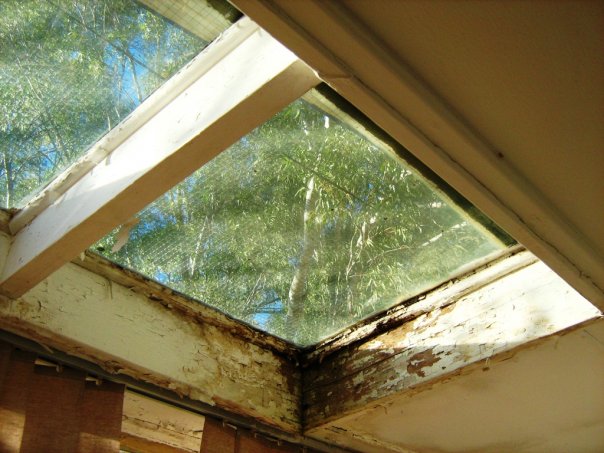
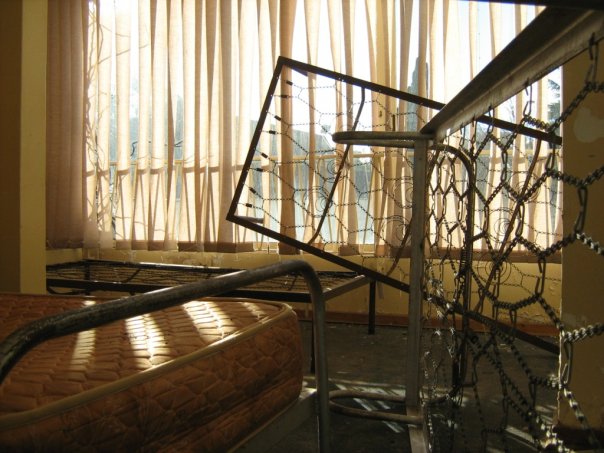
The photographs in this post are of an abandoned hot springs resort/health spa, taken by me in July 2009. The resort is situated in Aliwal North, a tiny town on the border of South Africa’s Free State and Eastern Cape provinces. During Victorian times, and continuing into the dark era of Apartheid, this settlement on the Orange River was a popular holiday destination (whose amenities would have been available to whites only). I was stuck here for several days following a car accident, so I went exploring. I was told by a local that the resort had fallen into disrepair only recently, in the past decade, due to mismanagement of the allocated maintenance funds. I wondered to what extent this might reflect a rejection of the resort’s oppressive past by its post-1994 custodians.
I share the fascination with documenting ruins and decay that is the subject of the following excerpt from the excellent blog, Archaeology and Material Culture:
An astounding number of web pages document abandoned materiality, encompassing a broad range of architectural spaces including asylums, bowling alleys,industrial sites, Cold War sites, and roadside motels as well as smaller things like pianosand even scale models of abandonment. This ruination lust is not simply the province of a small handful of visual artists, hipsters colonizing Detroit, or recalcitrant trespassers; instead, it invokes something that reaches far deeper socially, has international dimensions, extends well into the past, and reflects a deep-seated fascination with—if not apprehension of—abandonment. The question is what explains our apparently sudden collective fascination with abandonment, ruination, and decay. The answers are exceptionally complex and highly individual, but there seem to be some recurrent metaphors in these discourses.
For “urban explorers” (a term that might loosely include artists, photographers, archaeologists, and curious folks alike), such journeys seek out “abandoned, unseen, and off-limits” spaces that imagine ruination in a wide range of artistic, emotional, scholarly, and political forms. Many of these urban explorers and artists see themselves as visual historians, documenting the architectural and community heritage reflected in abandoned spaces. For instance, Jonathan Haeber’s urban exploration blog Bearings explains that “I’m just an eye. I’m just a camera. … An urban explorer is just a documentarian. … We only appreciate the creations that are overlooked. … It is what remains that is the democratic equivalent of a revolution.” Continue reading →
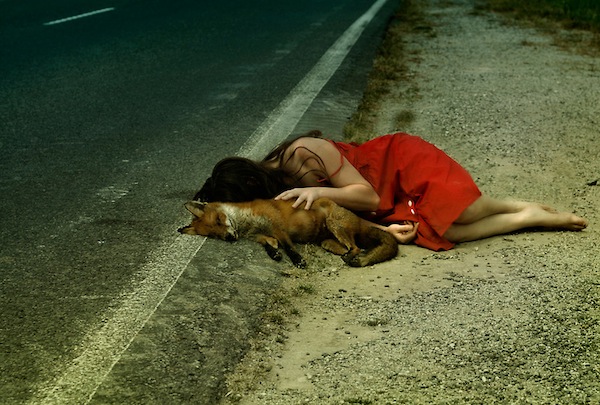
Melbourne photographer Jessica Tremp captures life in a haunted woodland.
“When I was little I used to dream about being a dancer or that I could fly,” Tremp explains. “And that I would learn to speak the language of the animals in the forest or that of the most dramatic actor. With the click of a finger I’ve found a way to make these things come true.”
After years of indulging in martyrdom, I got to thinking, there must be reasons behind all this nonsensical adoration of worthless flesh, complete with limp cock.
Fucking a deadbeat? this is probably why…
1. They stay out of the sun so their skin is all soft
2. They don’t bath as much as other boys so we get to smell the real them and can pretend we are fucking mineworkers.
3. They cant always get it up, posing a challenge and a chance to giggle about them with your girlfriends.
4. When a nihilist is sweet to you, it feels like a blade of sunshine has pierced an angry sky, as it hardly ever happens.
Not as glamorous as one would think…
5. They are incredibly needy, and co-dependent tarts everywhere rejoice in the glory of this.
6. They don’t talk much, letting you rat a tat about all sorts of arb crap, which fuels their negativity.
7. Nihilists take loads of drugs and have massive come downs, making us feel less guilty about our own consumption and general bullshit.
8. They have decent music collections and there is no chance of catching them with oakley’s on their heads.
9. Say one measly nice thing to them, and they will use it as a weapon against you, exciting.
10. A nihilist will never believe you when you say you love them, giving you an opportunity to change your mind whenever you fancy without getting in to trouble.
11. They cant really talk properly, preferring to screech and wail and shout a lot, but write beautiful, tragic love letters that we keep forever and are the envy of our friends.
12. The constant negativity makes us feel that in contrast, we are bursting with positivism and are living fabulous, tanned lives.
13. They have such a low self image, there is very little chance of them upstaging us.
14. Their general incorrigible and juvenile vibe prevents other sluts from moving in until they get to know them, and by that time you have them by their weak ineffectual balls and they cant live without you.
15. ..They will never stand in front of the mirror going “christ, i am gorgeous”
16. They admire your bitching and complaining and actually get a rise out of it, rare and satisfying.
17. We can take out our frustrations on them using inappropriate verbal abuse and kick and scratch them as much as we want.
18. Their suicidal bollocks turns us on, as there is nothing like a kicked pathetic dog to bring out the old maternal instincts.
19. And, in the end, girls really enjoy being treated badly.
The first two tracks from A River Ain’t Too Much To Love (Domino Records, 2005):
Palimpsest
Winter weather is not my soul
But the biding for spring…
Say Valley Maker
With the grace of a corpse
In a riptide
I let go
And I slide slide slide
Downriver
With an empty case by my side
An empty case
That’s my crime
And I sing
To keep from cursing
Yes I sing
To keep from cursing
River Oh
River End
River Oh
River End
River Go
River Bend
Take me through the sweet valley
Where your heart blooms
Take me through the sweet valley
Where your heart is covered in dew
And when the river dries
Will you bury me in wood?
Where the river dries
Will you bury me in stone?
Oh I never really realized
Death is what it meant
To make it on my own
Because there is no love
Where there is no obstacle
And there is no love
Where there is no bramble
There is no love
On the hacked away plateau
And there is no love
In the unerring
And there is no love
On the one true path
Oh I cantered out here
Now I’m galloping back
So bury me in wood
And I will splinter
Bury me in stone
And I will quake
Bury me in water
And I will geyser
Bury me in fire
And I’m gonna phoenix
I’m gonna phoenix
Cinema is identical to life, because each one of us has a virtual and invisible camera which follows us from when we’re born to when we die. In reality, cinema is an infinite film sequence-shot. Each individual film interrupts and rearranges this infinite sequence-shot and thus creates meaning, which is what happens to us when we die. It is only at our moment of death that our life, to that point undecipherable, ambiguous, suspended, acquires a meaning. Montage thus plays the same role in cinema as death does in life.
~ Pier Paolo Pasolini, “Ora tutto è chiaro, voluto, non imposto dal destino”, Cineforum 68 October 1967, p. 609.
I have been thinking about the similarities between editing and blogging, about how in juxtaposition meaning comes to light, and this comment from Pasolini that I just came across resonated with my thoughts. An online archive of everyday apprehension, a place to pin the things floating amorphous just behind my eyes… It is powerfully transformative to be able to reflect, live, with others, on chains of thoughts, connections, coincidences, concatenations… More powerful for clarity than a diary. Although the public nature of this grappling is uncomfortable for me, it prevents me from dismissing my thoughts as solipsistic delusions, something to which I am prone, especially because sketching them out in a simple A to B trajectory is often impossible, rendering attempts at expression incomprehensible to others in ordinary conversation.
What I like about the montage inherent in blogging, as distinct from other more traditional types of montage, is that the possibilities of hypertext allow me not to foreclose other meanings, not to narrow connections and paths of interpretation down, as is inevitable when making a film, or a music mix, or any object concrete and discrete in itself. The intertextual permeability and wild openness of virtuality is so exciting in this sense… The possibility of creating and reshaping meaning without having to be final or definitive, which necessarily involves the murder of other meanings in the process… This I love, though it makes me dizzy.


 Jacques-André Boiffard, Big Toe, feminine subject, twenty-four years old , Documents, No6, 1929
 Jacques-André Boiffard, Big Toe, masculine subject, thirty years old , Documents, No6, 1929
 Jacques-André Boiffard, Big Toe, masculine subject, thirty years old , Documents, No6, 1929
 Jacques-André Boiffard, Untitled , Article “Le Caput Mortuum ou la Femme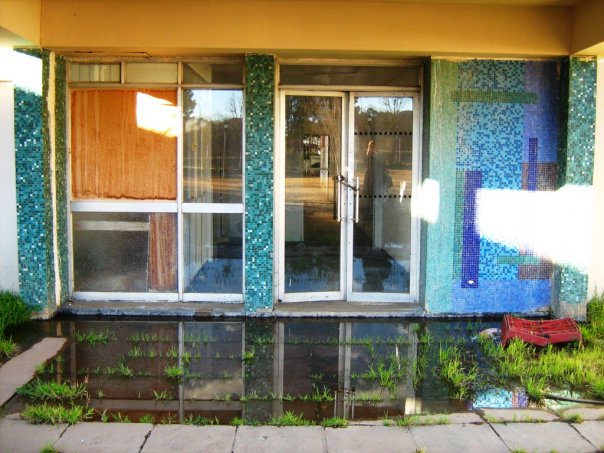



 fleurmach