Tag Archives: sex
love on friday

Main Road, Observatory, 28 June 2013. Photo: Rosemary Lombard
luce irigaray – women on the market
Chapter Eight from This Sex Which Is Not One, 1985. This text was originally published as “Le marche des femmes,” in Sessualita e politica, (Milan: Feltrinelli, 1978).

The society we know, our own culture, is based upon the exchange of women. Without the exchange of women, we are told, we would fall back into the anarchy (?) of the natural world, the randomness (?) of the animal kingdom. The passage into the social order, into the symbolic order, into order as such, is assured by the fact that men, or groups of men, circulate women among themselves, according to a rule known as the incest taboo.
Whatever familial form this prohibition may take in a given state of society, its signification has a much broader impact. It assures the foundation of the economic, social, and cultural order that has been ours for centuries.
Why exchange women? Because they are “scarce [commodities] . . . essential to the life of the group,” the anthropologist tells us.1 Why this characteristic of scarcity, given the biological equilibrium between male and female births? Because the “deep polygamous tendency, which exists among all men, always makes the number of available women seem insufficient. Let us add that even if there were as many women as men, these women would not be equally desirable … and that, by definition. . ., the most desirable women must form a minority. “2
Are men all equally desirable? Do women have no tendency toward polygamy? The good anthropologist does not raise such questions. A fortiori: why are men not objects of exchange among women? It is because women’s bodies – through their use, consumption, and circulation – provide for the condition making social life and culture possible, although they remain an unknown “infrastructure” of the elaboration of that social life and culture. The exploitation of the matter that has been sexualized female is so integral a part of our sociocultural horizon that there is no way to interpret it except within this horizon.
In still other words: all the systems of exchange that organize patriarchal societies and all the modalities of productive work that are recognized, valued, and rewarded in these societies are men’s business. The production of women, signs, and commodities is always referred back to men (when a man buys a girl, he “pays” the father or the brother, not the mother … ), and they always pass from one man to another, from one group of men to another. The work force is thus always assumed to be masculine, and “products” are objects to be used, objects of transaction among men alone.
Which means that the possibility of our social life, of our culture, depends upon a ho(m)mo-sexual monopoly? The law that orders our society is the exclusive valorization of men’s needs/desires, of exchanges among men. What the anthropologist calls the passage from nature to culture thus amounts to the institution of the reign of hom(m)o-sexuality. Not in an “immediate” practice, but in its “social” mediation. From this point on, patriarchal societies might be interpreted as societies functioning in the mode of “semblance.” The value of symbolic and imaginary productions is superimposed upon, and even substituted for, the value of relations of material, natural, and corporal (re)production.

From “The Sensualist”, Kōshoku Ichidai Otoko’s animated interpretation of the 17th century novel by Ihara Seikaku
In this new matrix of History, in which man begets man as his own likeness, wives, daughters, and sisters have value only in that they serve as the possibility of, and potential benefit in, relations among men. The use of and traffic in women subtend and uphold the reign of masculine hom(m)o-sexuality, even while they maintain that hom(m)o-sexuality in speculations, mirror games, identifications, and more or less rivalrous appropriations, which defer its real practice. Reigning everywhere, although prohibited in practice, hom(m)o-sexuality is played out through the bodies of women, matter, or sign, and heterosexuality has been up to now just an alibi for the smooth workings of man’s relations with himself, of relations among men.
Whose “sociocultural endogamy” excludes the participation of that other, so foreign to the social order: woman. Exogamy doubtless requires that one leave one’s family, tribe, or clan, in order to make alliances. All the same, it does not tolerate marriage with populations that are too far away, too far removed from the prevailing cultural rules. A sociocultural endogamy would thus forbid commerce with women. Men make commerce of them, but they do not enter into any exchanges with them. Is this perhaps all the more true because exogamy is an economic issue, perhaps even subtends economy as such? The exchange of women as goods accompanies and stimulates exchanges of other “wealth” among groups of men. The economy in both the narrow and the broad sense-that is in place in our societies thus requires that women lend themselves to alienation in consumption, and to exchanges in which they do not participate, and that men be exempt from being used and circulated like commodities.
*
Marx’s analysis of commodities as the elementary form of capitalist wealth can thus be understood as an interpretation of the status of woman in so-called partriarchal societies. The organization of such societies, and the operation of the symbolic system on which this organization is based-a symbolic system whose instrument and representative is the proper name: the name of the father, the name of God-contain in a nuclear form the developments that Marx defines as characteristic of a capitalist regime: the submission of “nature” to a “labor” on the part of men who thus constitute “nature” as use value and exchange value; the division of labor among private producer-owners who exchange their women-commodities among themselves, but also among producers and exploiters or exploitees of the social order; the standardization of women according to proper names that determine their equivalences; a tendency to accumulate wealth, that is, a tendency for the representatives of the most “proper” names-the leaders-to capitalize more women than the others; a progression of the social work of the symbolic toward greater and greater abstraction; and so forth.
To be sure, the means of production have evolved, new techniques have been developed, but it does seem that as soon as the father-man was assured of his reproductive power and had marked his products with his name, that is, from the very origin of private property and the patriarchal family, social exploitation occurred. In other words, all the social regimes of “History” are based upon the exploitation of one “class” of producers, namely, women. Whose reproductive use value (reproductive of children and of the labor force) and whose constitution as exchange value underwrite the symbolic order as such, without any compensation in kind going to them for that “work.” For such compensation would imply a double system of exchange, that is, a shattering of the monopolization of the proper name (and of what it signifies as appropriative power) by father-men.
Thus the social body would be redistributed into producer-subjects no longer functioning as commodities because they provided the standard of value for commodities, and into commodity objects that ensured the circulation of exchange without participating in it as subjects.
*
Let us now reconsider a few points (3) in Marx’s analysis of value that seem to describe the social status of women.
Wealth amounts to a subordination of the use of things to their accumulation. Then would the way women are used matter less than their number? The possession of a woman is certainly indispensable to man for the reproductive use value that she represents; but what he desires is to have them all. To “accumulate” them, to be able to count off his conquests, seductions, possessions, both sequentially and cumulatively, as measure or standard(s).
All but one? For if the series could be closed, value might well lie, as Marx says, in the relation among them rather than in the relation to a standard that remains external to them – whether gold or phallus.
The use made of women is thus of less value than their appropriation one by one. And their “usefulness” is not what counts the most. Woman’s price is not determined by the “properties” of her body-although her body constitutes the material support of that price.
But when women are exchanged, woman’s body must be treated as an abstraction. The exchange operation cannot take place in terms of some intrinsic, immanent value of the commodity.
It can only come about when two objects-two women are in a relation of equality with a third term that is neither the one nor the other. It is thus not as “women” that they are exchanged, but as women reduced to some common feature-their current price in gold, or phalluses-and of which they would represent a plus or minus quantity. Not a plus or a minus of feminine qualities, obviously. Since these qualities are abandoned in the long run to the needs of the consumer, woman has value on the market by virtue of one single quality: that of being a product of man’s “labor.”
On this basis, each one looks exactly like every other. They all have the same phantom-like reality. Metamorphosed in identical sublimations, samples of the same indistinguishable work, all these objects now manifest just one thing, namely, that in their production a force of human labor has been expended, that labor has accumulated in them. In their role as crystals of that common social substance, they are deemed to have value.

Liu Jianhua – ceramic
As commodities, women are thus two things at once: utilitarian objects and bearers of value. “They manifest themselves therefore as commodities, or have the form of commodities, only in so far as they have two forms, a physical or natural form, and a value form” (p. 55).
But “the reality of the value of commodities differs in respect from Dame Quickly, that we don’t know ‘where to have it”’ (ibid.). Woman, object of exchange, differs from woman, use value, in that one doesn’t know how to take (hold of) her, for since “the value of commodities is the very opposite of the coarse materiality of their substance, not an atom of matter enters into its composition. Turn and examine a single commodity, by itself, as we will. Yet in so far as it remains an object of value, it seems impossible to grasp it” (ibid.). The value of a woman always escapes: black continent, hole in the symbolic, breach in discourse . . . It is only in the operation of exchange among women that something of this-something enigmatic, to be sure-can be felt. Woman thus has value only in that she can be exchanged. In the passage from one to the other, something else finally exists beside the possible utility of the “coarseness” of her body. But this value is not found, is not recaptured, in her. It is only her measurement against a third term that remains external to her, and that makes it possible to compare her with another woman, that permits her to have a relation to another commodity in terms of an equivalence that remains foreign to both.
Women-as-commodities are thus subject to a schism that divides them into the categories of usefulness and exchange value; into matter-body and an envelope that is precious but impenetrable, ungraspable, and not susceptible to appropriation by women themselves; into private use and social use.
In order to have a relative value, a commodity has to be confronted with another commodity that serves as its equivalent.
Its value is never found to lie within itself And the fact that it is worth more or less is not its own doing but comes from that to which it may be equivalent. Its value is transcendent to itself, super-natural, ek-static.
In other words, for the commodity, there is no mirror that copies it so that it may be at once itself and its “own” reflection. One commodity cannot be mirrored in another, as man is mirrored in his fellow man. For when we are dealing with commodities the self-same, mirrored, is not “its” own likeness, contains nothing of its properties, its qualities, its “skin and hair.” The likeness here is only a measure expressing the fabricated character of the commodity, its trans-formation by man’s (social, symbolic) “labor.” The mirror that envelops and paralyzes the commodity specularizes, speculates (on) man’s “labor.” Commodities, women, are a mirror of value of and for man. In order to serve as such, they give up their bodies to men as the supporting material of specularization, of speculation. They yield to him their natural and social value as a locus of imprints, marks, and mirage of his activity.
Commodities among themselves are thus not equal, nor alike, nor different. They only become so when they are compared by and for man. And the prosopopoeia of the relation of commodities among themselves is a projection through which producers exchangers make them reenact before their eyes their operations of specula(riza)tion. Forgetting that in order to reflect (oneself), to speculate (oneself), it is necessary to be a “subject,” and that matter can serve as a support for speculation but cannot itself speculate in any way.
Thus, starting with the simplest relation of equivalence between commodities, starting with the possible exchange of women, the entire enigma of the money form-of the phallic function-is implied. That is, the appropriation-disappropriation by man, for man, of nature and its productive forces, insofar as a certain mirror now divides and travesties both nature and labor. Man endows the commodities he produces with a narcissism that blurs the seriousness of utility, of use.
Desire, as soon as there is exchange, “perverts” need. But that perversion will be attributed to commodities and to their alleged relations. Whereas they can have no relationships except from the perspective of speculating third parties.
The economy of exchange-of desire-is man’s business. For two reasons: the exchange takes place between masculine subjects, and it requires a plus-value added to the body of the commodity, a supplement which gives it a valuable form. That supplement will be found, Marx writes, in another commodity, whose use value becomes, from that point on, a standard of value.
But that surplus-value enjoyed by one of the commodities might vary: ‘Just as many a man strutting about in a gorgeous uniform counts for more than when in mufti” (p. 60). Or just as “A, for instance, cannot be ‘your majesty’ to B, unless at the same time majesty in B’s eyes assume the bodily form of A, and, what is more, with every new father of the people, changes its features, hair, and many other things besides” (ibid.).
Commodities – “things” produced – would thus have the respect due the uniform, majesty, paternal authority. And even God. “The fact that it is value, is made manifest by its equality with the coat, just as the sheep’s nature of a Christian is shown in his resemblance to the Lamb of God” (ibid.).
Commodities thus share in the cult of the father, and never stop striving to resemble, to copy, the one who is his representative. It is from that resemblance, from that imitation of what represents paternal authority, that commodities draw their value – for men. But it is upon commodities that the producers-exchangers bring to bear this power play. “We see, then, all that our analysis of the value of commodities has already told us, is told us by the linen itself, so soon as it comes into communication with another commodity, the coat. Only it betrays its thoughts in that language with which alone it is familiar, the language of commodities. In order to tell us that its own value is created by labour in its abstract character of human labour, it says that the coat, in so far as it is worth as much as the linen, and therefore is value, consists of the same labour as the linen. In order to inform us that its sublime reality as value is not the same as its buckram body, it says that value has the appearance of a coat, and consequently that so far as the linen is value, it and the coat are as like as two peas. We may here remark, that the language of commodities has, besides Hebrew, many other more or less correct dialects. The German ‘werthsein,’ to be worth, for instance, expresses in a less striking manner than the Romance verbs ‘valere,’ ‘valer,’ ‘valoir,’ that the equating of commodity B to commodity A, is commodity A’s own mode of expressing its value. Paris vaut bien une messe” (pp. 60-61).
So commodities speak. To be sure, mostly dialects and patois, languages hard for “subjects” to understand. The important thing is that they be preoccupied with their respective values, that their remarks confirm the exchangers’ plans for them. Continue reading
daddy (1973)
NB: not for the strait-laced! An experimental Freudian drama by Niki de Saint Phalle and Peter Whitehead. Grotesque, garish, ghastly… with an incredible piano-driven soundtrack that riffs on Cole Porter’s “My Heart Belongs To Daddy”. If you’re needing an antidote to all the commercial, anodyne Father’s Day bull, this should do the trick. 
l’age d’or (1930)
Sadly, this is a far more profound symbolic critique of Roman Catholic oppression than anything FEMEN is ever likely to pull off (notwithstanding their tops)!
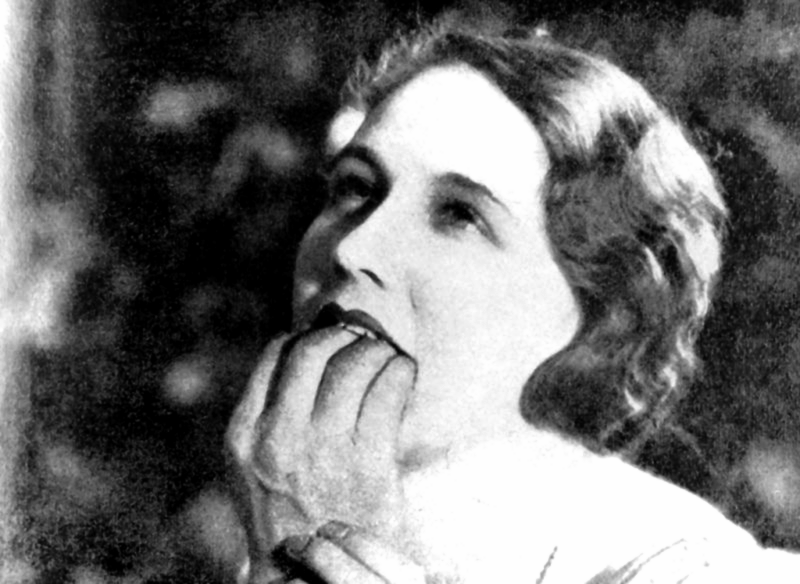 L’Age d’or or The Golden Age (1930), directed by Luis Buñuel, a French surrealist comedy, and one of the first films with synchronous sound ever made in France, was about the insanities of modern life, the hypocrisy of the sexual mores of bourgeois society and the value system of the Roman Catholic Church. Salvador Dalí and Buñuel wrote the screenplay together.
The BBC called it “an exhilarating, irrational masterpiece of censor-baiting chutzpah.”
Read more about the political project of surrealism HERE. Watch the film (in the original French) HERE – turn on the Youtube captions for English subtitles.
Regarding the response of the establishment to the film, from Wikipedia:
Upon receiving a cinematic exhibition permit from the Board of Censors, L’Âge d’or had its premiere presentation at Studio 28, Paris, on 29 November 1930. Later, on 3 December 1930, the great popular success of the film provoked attacks by the right-wing Ligue des Patriotes (League of Patriots), whose angry viewers took umbrage at the story told by Buñuel and Dalí. The reactionary French Patriots interrupted the screening by throwing ink at the cinema screen and assaulting viewers who opposed them; they then went to the lobby and destroyed art works by Dalí, Joan Miró, Man Ray, Yves Tanguy, and others. On 10 December 1930, the Prefect of Police of Paris, Jean Chiappe, arranged to have the film banned from further public exhibition after the Board of Censors re-reviewed the film.
A contemporary right-wing Spanish newspaper published a condemnation of the film and of Buñuel and Dalí, which described the content of the film as “…the most repulsive corruption of our age … the new poison which Judaism, Masonry, and rabid, revolutionary sectarianism want to use in order to corrupt the people”. In response, the de Noailles family withdrew L’Âge d’or from commercial distribution and public exhibition for more than forty years; nonetheless, three years later, in 1933, the film was privately exhibited at the Museum of Modern Art, in New York City. Forty-nine years later, from 1-15 November 1979, the film had its legal U.S. premiere at the Roxie Cinema in San Francisco.
The film critic Robert Short said that the scalp-decorated crucifix and the scenes of socially repressive violence, wherein the love-struck protagonist is manhandled by two men, indicate that the social and psychological repression of the libido and of romantic passion and emotion, by the sexual mores of bourgeois society and by the value system of the Roman Catholic Church, breed violence in the relations among people, and violence by men against women. The opening sequence of the film alludes to that interpretation, by Dalí and Buñuel, with an excerpt from a natural science film about the scorpion, which is a predatory arthropod whose tail is composed of five prismatic articulations that culminate in a stinger with which it injects venom to the prey. Film critic Ado Kyrou said that the five vignettes in the tale of L’Âge d’Or correspond to the five sections of the tail of the scorpion.
rebecca west on sadomasochism (1933)
 “I loathe the way the two cancers of sadism and masochism eat into the sexual life of humanity, so that the one lifts the lash and the other offers blood to the blow, and both are drunken with the beastly pleasure of misery and do not proceed with love’s business of building a shelter from the cruelty of the universe.”
— Rebecca West, Letter to a Grandfather (1933), pg 34.
Read more about the formidable Dame West HERE.
girl on the bridge (1999)
Vanessa Paradis’ opening monologue (with English subtitles)
Review by Michael Dequina at filmthreat.com, 11/21/00:
“Very few actors, let alone young ones, can pull off what 20-something chanteuse-turned-actress Vanessa Paradis does in the opening minutes of Patrice Leconte’s romantic drama. In a single take broken only by an occasional white-on-black credit card, Paradis’ Adele confides to an unseen interrogator the reasons for her depression. It is never explained exactly to whom she is speaking and in what type of situation, but that is of little consequence—in these scant minutes, the audience instantly is given a vivid portrait of what the character is all about: her youthful recklessness and naïveté, her sexual abandon and her romantic soul. While kudos go to writer Serge Frydman, it is Paradis who brings the scene and Adele to robust life.
“However, in Adele’s eyes, her life isn’t quite so healthy, and as such she becomes the titular girl on the bridge, ready to jump when she meets Gabor (Daniel Auteuil), a knife thrower in need of a new target. Since she clearly has no fear of danger, Adele is a perfect match—though it comes as a surprise to both of them just how well they complement each other, for these two historically down-on-their-luck characters find themselves on an incredible streak of good fortune as they wow crowds throughout Europe. But as with all things, what goes up must come down.
“La Fille sur le Pont is a magical film in all senses. On a literal level, the surreal psychic bond that develops between Adele and Gabor pushes the film into the realm of magical realism, and their knife throwing scenes bear a not-so-subtle, otherworldly erotic charge. But the real magic comes in watching the warm sparks between Paradis and Auteuil and following their eccentric characters’ beautiful, unconventional relationship. Jean-Marie Dreujou’s stunning black-and-white cinematography and Leconte’s smart choices in music (there is no original composed score) add to the film’s whimsical, timeless spell.”
melody nelson (full film)
… And, while we’re on the lugubrious, seamy baritone tip, it would be remiss not to make a turn past l’original, Monsieur Serge Gainsbourg:
Watch Melody Nelson, a short film directed Jean-Christophe Avery, starring Serge Gainsbourg and Jane Birkin, based on Gainsbourg’s seminal (ahem, heheh) 1971 album. More information HERE.
alka yagnik and ila arun – choli ke peeche kya hai (english subtitles)
“This is a city of heartless beings; what can I do?”
This provocative song featured in the 1993 film, Khalnayak (Hindi = “Villain”), starring an incandescent Madhuri Dixit and Sanjay Dutt. It was a huge yet controversial hit, largely due to the erotic lyrics.
erica jong – becoming a nun

“La Sucette” – Cherry Bomb, 2007
Digital photograph manipulated with Microsoft Photo Editor
On cold days
it is easy to be reasonable,
to button the mouth against kisses,
dust the breasts
with talcum powder
& forget
the red pulp meat
of the heart.
On those days
it beats
like a digital clock–
not a beat at all
but a steady whirring
chilly as green neon,
luminous as numerals in the dark,
cool as electricity.
& I think:
I can live without it all–
love with its blood pump,
sex with its messy hungers,
men with their peacock strutting,
their silly sexual baggage,
their wet tongues in my ear
& their words like little sugar suckers
with sour centers.
On such days
I am zipped in my body suit,
I am wearing seven league red suede boots,
I am marching over the cobblestones
as if they were the heads of men,
& I am happy
as a seven-year-old virgin
holding Daddy’s hand.
Don’t touch.
Don’t try to tempt me with your ripe persimmons.
Don’t threaten me with your volcano.
The sky is clearer when I’m not in heat,
& the poems
are colder.
Poem © Erica Mann Jong
“La Sucette” by Rosemary Lombard is licensed under a Creative Commons Attribution-NonCommercial-NoDerivs 3.0 Unported License.
sebadoh – broken
From The Freed Weed (Homestead Records, 1990).
beth hart – am i the one? (live at paradiso)
xiu xiu – fabulous muscles (2004)
From the album of the same title – released in 2004.
glenda kemp and “oupa”


 Glenda Kemp’s blog is HERE. Also check out this fascinating interview that Genevieve Louw did with her in 2008.
lipstiffie
Facebook status update, this evening:
Storyboarding is strangely interesting when it gives a view into how different nation-states construct and respond to sales stereotypes. I’m doing a lipstick ad for actual French people from Paris right now, and it is noticeably stripped of that subtext one inevitably finds in American or South African ads that says, “Don’t worry, she’s not dangerous and what she really wants is to be your submissive little wifey.” This ad would freeze the testicles off a Sarf-Effriken jock, even though all it’s about is glamour.
It’s odd, because it is all about women achieving an aesthetic perfection so intense they are geisha-like objects of contemplation, yet the glamour is also tangibly an end in itself which doesn’t necessarily include men. It’s not like we don’t already know this, but it brought to my attention that South African culture which considers itself sophisticated is not only colonial but downright rural. Sexuality is confined to breeding, like farmyard-style.
Comments:
Lynne: Sounds like fun for a change! X are you gonna buy the lipstick? X
Lizza: Being briefed for a storyboard doesn’t necessarily go as far as anyone telling me what the product is! This time I needed to be told what it looked like, but I didn’t get the brand. Probably a load of bollocks. For all I know this could be the French version of Sarie magazine – I really wouldn’t be able to spot the difference.
audre lorde on the erotic
The erotic is a resource within each of us that lies in a deeply female and spiritual plane, firmly rooted in the power of our unexpressed or unrecognised feeling…
Of course, women so empowered are dangerous. So we are taught to separate the erotic from most vital areas of our lives other than sex…
The principal horror of any system which defines the good in terms of profit rather than in terms of human need, or which defines human need to exclusion of the psychic and emotional components of that need — the principal horror of such a system is that it robs our work of its erotic value, its erotic power and life appeal and fulfilment. Such a system reduces work to a travesty of necessities, a duty by which we earn bread or oblivion for ourselves and those we love. But this is tantamount to blinding a painter and then telling her to improve her work, and to enjoy the act of painting. It is not only next to impossible, it is also profoundly cruel.
. . . [O]nce we begin to feel deeply all the aspects of our lives, we begin to demand from ourselves and from our life-pursuits that they feel in accordance with that joy which we know ourselves to be capable of. Our erotic knowledge empowers us, becomes a lens through which we scrutinize all aspects of our existence, forcing us to evaluate those aspects honestly in terms of their relative meaning within our lives…
During World War II, we bought sealed plastic packets of white, uncolored margarine, with a tiny, intense pellet of yellow coloring perched like a topaz just inside the clear skin of the bag. We would leave the margarine out for a while to soften, and then we would pinch the little pellet to break it inside the bag, releasing the rich yellowness into the soft pale mass of margarine. Then, taking it carefully between our fingers, we would knead it gently back and forth, over and over, until the color had spread throughout the whole pound bag of margarine, thoroughly coloring it.
I find the erotic such a kernel within myself. When released from its intense and constrained pellet, it flows through and colors my life with a kind of energy that heightens and sensitizes and strengthens all my experience.
Lorde, Audre. “Uses of the Erotic: The Erotic as Power.” Sister Outsider: Essays and Speeches. Freedom, CA: Crossing Press, 1984. 53-59.
jarvis cocker – sheffield sex city (lyrics)
Sea Point Main Road, 7 January 2013. Photograph: Rosemary Lombard
the city is a woman, bigger than any other…
…the sun rose from behind the gasometers at six-thirty a.m.
crept through the gap in your curtains
and caressed your bare feet poking from beneath the floral sheets.
i watched it flaking bits of varnish from your nails
trying to work its way up under the sheets.
even the sun’s on heat today;
the whole city getting stiff in the building heat.
now i’m trying hard to meet her but the fares went up at seven
she is somewhere in the city, somewhere watching television
watching people being stupid, doing things she can’t believe in
love won’t last ’til next installment
ten o’ clock on tuesday evening
the world is going on outside, the night is gaping open wide
the wardrobe and the chest of drawers are telling her to go outdoors
he should have been here by this time, he said that he’d be here by nine
that guy is such a prick sometimes, i don’t know why you bother, really.
oh babe oh i’m sorry
but i had to make love to every crack in the pavement and the shop doorways
and the puddles of rain that reflected your face in my eyes.
the day didn’t go too well.
too many chocolates and cigarettes.
i kept thinking of you and almost walking into lamp-posts.
why’s it so hot?
the air coming up to boil; rubbing up against walls and lamp-posts trying to get rid of it.
old women clack their tongues in the shade of crumbling concrete bus shelters.
dogs doing it in central reservations and causing multiple pile-ups in the centre of town.
i didn’t want to come here in the first place
but i’ve been sentenced to three years in the housing benefit waiting room.
i must have lost your number in the all-night garage
and now i’m wandering up and down your street, calling your name, in the rain
whilst my shoes turn to sodden cardboard.
where are you? (where are you?)
where are you? (where are you?)
i’m still trying hard to meet you, but it doesn’t look like happening
‘cos the city’s out to get me if i won’t sleep with her this evening
though her buildings are impressive and her cul-de-sacs amazing
she’s had too many lovers and i know you’re out there waiting
and now she’s getting into bed; he’s had his chance now it’s too late
the carpet’s screaming for her soul, the darkness wants to eat her whole
tonight must be the night it ends
tomorrow she will call her friends and go out on her own somewhere
who needs this shit anyway?
and listen, i wandered the streets the whole night crying, trying to pick up your scent
writing messages on walls and the puddles of rain reflected your face in my eyes.
we finally made it on a hill-top at four a.m.
the whole city is your jewellery-box; a million twinkling yellow street lights.
reach out and take what you want; you can have it all.
gee it’s so hot tonight!
i didn’t think we were gonna make it.
it was so bad during the day, but now i’m snug
and warm under an eiderdown sky.
all the things we saw:
everyone on park hill came in unison at four-thirteen a.m.
and the whole block fell down.
the tobacconist caught fire, and everyone in the street died of lung cancer.
for the birds
i really don’t get it,
never have.
hard rock/metal in general, i mean.
too much sweaty hair thrashing around,
too many notes overcrowding each bar,
too many gratuitous tempo changes,
the voice (always male) too yowly or growly,
the lyrics, ridiculous.
i can dig the more spacey prog stuff from the ’70s, king crimson for example, or the o.t.t. weirdness of frank zappa, but the testosserterrain of deep purple/motorhead/budgie etc etc… i just don’t get it.
it reminds me of all the wankers i tried to sing or play guitar with at school.
i could never find anyone who wanted to do anything interesting.
all they did was spank away over and over for hours and hours at the same led zeppelin or sabbath or metallica riffs,
show off their paradiddle-diddle-diddle drumming,
their kakky renditions of les claypool slap bass,
drink black label quarts, smoke dagga, crow about forcing themselves on girls.

here’s a memory from when i was about 15 or 16… i’m at a house party in kloof, drunk and very bored, after one such disappointing “jam”. the drummer, julian (still remember his stinking name), with long fluffy hair and a straggly beard and juicy zits who’s maybe a bit older than the rest of us, starts kissing me and i’m kinda flattered but not feeling anything at all. so i crawl off a bit later when he’s getting another beer to go sleep in someone’s bedroom plastered with creepy iron maiden posters.
he comes to find me and i wake to his entire weight bearing down on me, smothered in salty, smoky hair and he’s forcing his hands into my panties and shoving his filthy callused stompie fingers in my virginity and his penis is grinding into my thigh and i can’t move or breathe. i’m choking. i bite at his furry beer tongue and he swears at me and slaps me, calls me a cocktease, and then he’s gone. mercifully. i need to vomit and wash myself but i daren’t go to the bathroom. i’m scared that he’ll come back. i’m lying there groggy and rigid with the reek of him on me, his plaque in my mouth, with that eddie creature leering down at me from the moonlit posters, with the drone of mosquitoes and the signature riffs of the morning birds over and over for hours and hours – bulbul, white-eye, hadeda, bulbul, white-eye, hadeda, bulbul, hadeda… somewhere a cock is crowing and finally i can get out of there.
coda: my younger sister got seduced by the whole scene and ended up pregnant at 16 by one of these fret-tapping frauds that she’d called her boyfriend for about 2 years. a few months after the baby came, he slunk off with the chick he’d been cheating on her with.
so yeah. i don’t enjoy hard rock/metal’s machismo-drenched doodling.
i find it the aural equivalent of being fucked badly.
there’s not a smidgen of feminine awareness in its puffed-up rooster strut.
september 15, 2008
soap&skin – thanatos
Song from Soap&Skin‘s debut album, Lovetune for Vacuum (2009, Play It Again Sam Records).
Video produced and directed by Benjamin and Stefan Ramirez Pérez.
Photography by Anja Plaschg, Benjamin Ramírez Pérez and Stefan Ramírez Pérez.
rosemary for remembrance

Jaroslava Schallerová in a still from “Valerie a Týden Divu” (Valerie & Her Week of Wonders). Director: Jaromil Jires, 1970
WATCH IT. It’s utterly beautiful.
in the death car (we’re alive)
Song by Iggy Pop and Goran Bregovic, from the wonderful soundtrack to Emir Kusturica’s tragicomic, surreal film, Arizona Dream (1993).
garfunkel and oates – 29/31 (2012)
Garfunkel and Oates are an American comedy/musical duo from Los Angeles, California, consisting of actress-songwriters Kate Micucci and Riki Lindhome. The band name is derived from “two famous rock-and-roll second bananas”, Art Garfunkel and John Oates. In this song, Kate and Riki play the same woman, two years apart, at 29 and 31 respectively.
the stooges – loose
From Fun House (Elektra Records, 1970). So hot.
and the wind cried mary
Forty years after his passing Jimi Hendricks lives. Jimi was a dirty uncle, one who crooned “Foxy Lady” to a girl 6 years old in a house filled with adults slurring expletives of the extra terrestrial kind.
I had no idea what he meant or who he was talking to. As plain as the lyrics are, the censorious nature of the song, at least for a six year old, were lost to me. What made the song special, what earned Hendrix a place in my heart like no other musician was the way he whispers ‘foxy’ at the beginning of the song and expression itself.
What got me going was imagining that he couldn’t go to sleep without his piece close by, that he wanted it like he wanted that ‘foxy lady’. I was and am still convinced that when he sung that song it was dedicated to an elusive riff, that itched at the tip of his fingers refusing to connect heart string to guitar string.
With that conclusion I had cured a palate for a music crediting Fishbone, TV on the Radio and other punk/rockers of the charcoal kind. Jimi was a dirty uncle, who synthed me to sleep, set me jumping on furniture and earned me much punishment- you don’t just hop around on rent-to-own property.
RIP Jimi.
First posted at Pan African Space Station.
the birthday party – junkyard (live)
Birthday Party appearance on Gotterdammerung, German TV.
ACHTUNG: Watching this video could make you pregnant (all that thrusting and grinding).
the void

blue velvet (1986)
Song: Roy Orbison – Candy Colored Clown
orchid

still, beyond the pane
in the steamy darkness
she’d die to be touched
ween – voodoo lady
From Chocolate and Cheese (1994), Flying Nun Records.
strange magic
An art show by Petra Collins of The Ardorous and Tavi Gevinson of Rookie Magazine, held at Space 15 Twenty in Hollywood, CA to celebrate the conclusion of The Rookie Road Trip across the United States.
Music: “Think of You” by Bleached, recorded live during their performance at the closing night party “Rookie Prom Night”.
 fleurmach
