
Author Archives: cherry bomb
the notebook: it’s ok to live life offline
Excerpted from a thoughtful piece by Kayli Stollak, over at Hello Giggles.

Painting by Francine van Hove
Online we tell a golden version of our lives filled with accomplishments, strictly (and often unbelievably) fun times, and a never-ending well of wit. The glorified digital narrative that we construct of our lives worries me like a 1950’s housewife watching Elvis wiggle his hips on TV. Our modern-day record keeping seems wildly inaccurate to the truth of our inner lives. What is happening in our too-much-information-nation? But more importantly, what is happening with us? Behind all the selfies and sandwich shots, who are we?
In order to correct the imbalance of truth, I propose we start writing it down. We share so much of ourselves with the web, but do we take enough time accounting for our private lives in realm that is removed from the world of likes, comments and followers? The idea of keeping a journal is nothing new, but we’re living in a time where we could benefit from taking a personal inventory of who we are, lest we deceive our future selves through our revisionist digital autobiographies.
While our faces are buried in our phones, we risk missing the smaller details in life. If we don’t remember the bad, how can we possibly enjoy the good to the highest degree? With time, I’m concerned we’ll look back at our Facebook timelines and mistake the façade that we presented of ourselves as fact for who we actually were.
As a writer who spends a large (and probably unhealthy) amount of time writing about herself, I often hear the condemnation of navel gazing. Sure, it is narcissistic to think your life is exciting enough to put to paper, but is it really more self-centered than a side-angled pouty pose of you enjoying your fun-filled Saturday night in the club, posted to Instagram with hopes of garnering likes from your followers, confirming that, yes, you are hot? I would venture to say that the former is self-reflective and productive, while the latter is vapidity and belly-button eagle eye-ing at its worst.
I’m not recommending you go all “dear diary” and start documenting your daily rhythms by laboriously chronicling what you ate for breakfast, the jerk who cut you off on the freeway, or what your plans are for the weekend—if that works for you, do it, but there’s no need to pen a three volume memoir. What I’m championing is the process of jotting down your feelings, thoughts, conversations, inspirations, events that meant something to you now that you might benefit from reflecting on in the future. This is a dose of honesty for you today, in five months, in ten years, at 97. To look back on after your next break up, when you’re contemplating marriage, on your graduation, before a big interview, or simply on a rainy day.
Your notebook should be far from the manicured image you pimp out on Instagram, Facebook, OKCupid, etc. In Joan Didion’s 1966 essay “On Keeping a Notebook”, written before our over-stimulated minds were flooded with technology and its never-ending distractions, she explained, “We are not talking here about the kind of notebook that is patently for public consumption, a structural conceit for binding together a series of graceful pensées, we are talking about something private, about bits of the mind’s string too short to use, an indiscriminate and erratic assemblage with meaning only for its maker.”
For me, a piece of ‘mind string’ is the harmonica chords to ‘Piano Man’ scribbled in my notebook from 2008. A stranger might assume a bizarre Billy Joel fixation, but when I revisit them in my journal, the mess of notes and the triggered sound insist on memories of a motorcycle trip through Spain and feelings of maddening love. All you need is sentence, a word, a thought, and suddenly you remember who you actually were.
If I skip forward in my notebook to 2009 I stumble upon a string of doubts, the point where this love began to unravel. The same way the smell of sunscreen can instantly bring back memories of summer, a list labeled “Pros and Cons” reminds me of the creeping anxiety I felt for planning my future. My Facebook timeline, however, tells a different tale of a giddy girl with bangs who enjoys raves, beaches, and doing the limbo.
Didion advocated for the importance of preserving a part of yourself that in time you can return to. She wrote, “It all comes back. Perhaps it is difficult to see the value in having one’s self back in that kind of mood, but I do see it; I think we are well advised to keep on nodding terms with the people we used to be, whether we find them attractive company or not… We forget all too soon the things we thought we could never forget. We forget the loves and the betrayals alike, forget what we whispered and what screamed, forget who we were.”
Notebooks are fantastic tools for keeping in touch with our former selves that go far beyond the sculpted image we present on the web. I love delving back into my journals from middle school to the present, not because I’m a fan of the person I see there, but rather because I understand the benefit of knowing her.
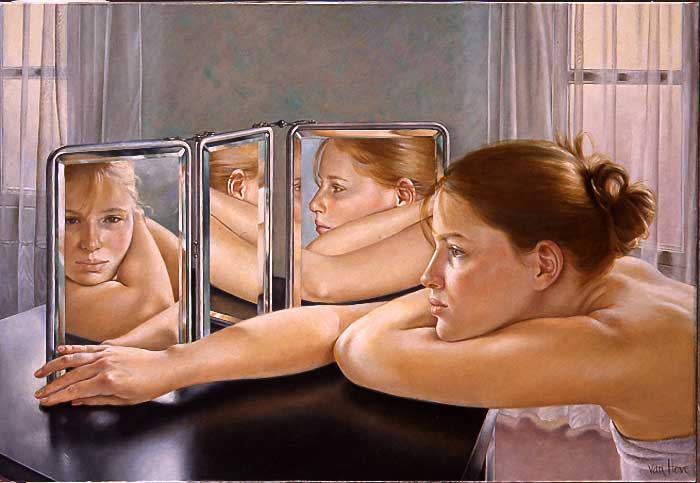
Painting by Francine van Hove
I want to yell at my thirteen year-old self to please take off that padded bra andstop being in such a rush to grow up. I want to hold my fourteen year-old self and explain to her that you are the company you keep and the sooner she starts loving herself the better. I want to bitch slap my sixteen year-old self, she was one angsty girl. I want to tell my seventeen year-old self not to mistake lust for love and to please stop talking to that boy in the band that told you he learned how to play “Brown-Eyed Girl” for you when, in fact, your eyes are green. I want to stay up all night talking to my twenty year-old self, feeding off her energy and drinking up her thirst for spontaneity. I want to see the world through her eyes, she reminds me to believe in magic. I want to whisper in the ear of my twenty-three year-old self, and tell her that soon enough she will see that it really was a means to an end. I want to tell my twenty-five year old self to trust her gut and not settle, I want to remind her what love looks like and tell her that this is not it. But I can’t tell her any of that. All I can do is learn from her mistakes, be reminded of what to hold meaning to, take note of her intuition, celebrate the coincidences, and enjoy all the beautiful moments and connections made.
Although I already know how most of the stories end, it’s important to track the progress I’ve made, reminding me who I am and who I was. To draw my own attention to the larger patterns my tendencies and predilections make when I can see them from a bird’s eye view. A notebook can serve as a wake up call on what I may be rightly or wrongly romanticizing and what I may be purposefully forgetting. Notebooks give us a shot at staying honest and in touch with ourselves, something I think we should strive to be in this digital age.
Read the full article HERE. Thanks to Stella for sharing it.
burial – come down to us
Beautiful video by Alexander Petrov set to this anthem, off Burial’s brand new EP, Rival Dealer, out now on Hyperdub. I looked Petrov up because his animation style reminded me of some of the work of another Russian master, Yuri Norstein – and, indeed, he was one of Norstein’s protégés at the Advanced School for Screenwriters and Directors in Moscow.
UPDATE 17/12/13: Looks like the person who put this lovely video together has been forced to take it down for copyright reasons. That’s just wrong. It was truly an inspired combination, and I don’t know how it would have hurt the sales of either the song or the animation. Anyway. You can stream the track without the video HERE.

Still from the Alexander Petrov footage that was paired with the song.
A rare, candid message from the usually silent and mysterious William Bevan, a.k.a. Burial, on Rival Dealer (via Mary Anne Hobbs’ BBC radio show):
I put my heart into the new EP; I hope someone likes it. I wanted the tunes to be anti-bullying tunes that could maybe help someone to believe in themselves, to not be afraid, and to not give up, and to know that someone out there cares and is looking out for them. So it’s like an angel’s spell to protect them against the unkind people, the dark times, and the self-doubt.
mort garson – i’ve been over the rainbow
The perfect song for South Africa today. From the album The Wozard Of Iz, released on A&M in 1968.
“Shit on your whole mortifying, imaginary, and symbolic theatre!”
― Gilles Deleuze/Felix Guattari – Anti-Oedipus: Capitalism and Schizophrenia
soko – how are you?
From the album I Thought I Was An Alien (2012). Stéphanie Sokolinski comes from Bordeaux, France.
kitty – R.R.E.A.M.
From D.A.I.S.Y. Rage, an EP self-released by this 19-year-old from Florida, also known as Kathryn Beckwith, on 31 January this year. Get it HERE.
dollar brand duo – ntsikana’s bell
From the LP Good News From Africa (ENJA 2048, 1973).
Abdullah Ibrahim (Dollar Brand): piano, vocal, flute
Johnny Dyani: bass, vocal, bells
reflections on mandela’s legacy

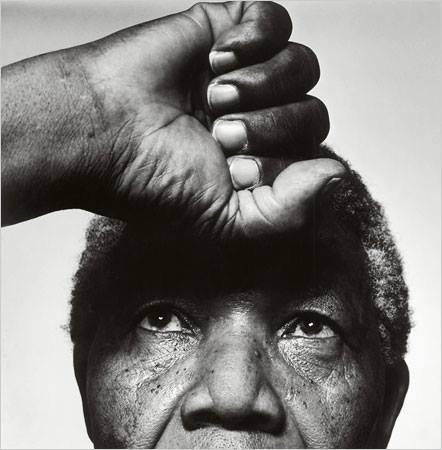
Photo: Adrian Steirn, 2011
Some links and excerpts from commentary that I have found to be worth reading today (I’ll add to this whenever I come across anything interesting – if anyone reading this has suggestions, please pass them on too):
From “The Contradictions of Mandela” – Zakes Mda in the New York Times opinion pages:
The claim is that the settlement reached between the A.N.C. and the white apartheid government was a fraud perpetrated on the black people, who have yet to get back the land stolen by whites during colonialism. Mandela’s government, critics say, focused on the cosmetics of reconciliation, while nothing materially changed in the lives of a majority of South Africans.
This movement, though not representative of the majority of black South Africans who still adore Mandela and his A.N.C., is gaining momentum, especially on university campuses.
I understand the frustrations of those young South Africans and I share their disillusionment. I, however, do not share their perspective on Mandela. I saw in him a skillful politician whose policy of reconciliation saved the country from a blood bath and ushered it into a period of democracy, human rights and tolerance. I admired him for his compassion and generosity, values that are not usually associated with politicians. I also admired him for his integrity and loyalty.
But I fear that, for Mandela, loyalty went too far. The corruption that we see today did not just suddenly erupt after his term in office; it took root during his time. He was loyal to his comrades to a fault, and was therefore blind to some of their misdeeds.
Read the rest of what Mda has to say HERE.
—
From “Mandela’s Socialist Failure” – Slavoj Zizek in the New York Times opinion pages
In South Africa, the miserable life of the poor majority broadly remains the same as under apartheid, and the rise of political and civil rights is counterbalanced by the growing insecurity, violence, and crime. The main change is that the old white ruling class is joined by the new black elite. Secondly, people remember the old African National Congress which promised not only the end of apartheid, but also more social justice, even a kind of socialism. This much more radical ANC past is gradually obliterated from our memory. No wonder that anger is growing among poor, black South Africans.
South Africa in this respect is just one version of the recurrent story of the contemporary left. A leader or party is elected with universal enthusiasm, promising a “new world” — but, then, sooner or later, they stumble upon the key dilemma: does one dare to touch the capitalist mechanisms, or does one decide to “play the game”? If one disturbs these mechanisms, one is very swiftly “punished” by market perturbations, economic chaos, and the rest. This is why it is all too simple to criticize Mandela for abandoning the socialist perspective after the end of apartheid: did he really have a choice? Was the move towards socialism a real option?
It is easy to ridicule Ayn Rand, but there is a grain of truth in the famous “hymn to money” from her novel Atlas Shrugged: “Until and unless you discover that money is the root of all good, you ask for your own destruction. When money ceases to become the means by which men deal with one another, then men become the tools of other men. Blood, whips and guns or dollars. Take your choice – there is no other.” Did Marx not say something similar in his well-known formula of how, in the universe of commodities, “relations between people assume the guise of relations among things”?
In the market economy, relations between people can appear as relations of mutually recognized freedom and equality: domination is no longer directly enacted and visible as such. What is problematic is Rand’s underlying premise: that the only choice is between direct and indirect relations of domination and exploitation, with any alternative dismissed as utopian. However, one should nonetheless bear in mind the moment of truth in Rand’s otherwise ridiculously ideological claim: the great lesson of state socialism was effectively that a direct abolishment of private property and market-regulated exchange, lacking concrete forms of social regulation of the process of production, necessarily resuscitates direct relations of servitude and domination. If we merely abolish market (inclusive of market exploitation) without replacing it with a proper form of the Communist organization of production and exchange, domination returns with a vengeance, and with it direct exploitation.
The general rule is that, when a revolt begins against an oppressive half-democratic regime, as was the case in the Middle East in 2011, it is easy to mobilize large crowds with slogans which one cannot but characterize as crowd pleasers – for democracy, against corruption, for instance. But then we gradually approach more difficult choices: when our revolt succeeds in its direct goal, we come to realize that what really bothered us (our un-freedom, humiliation, social corruption, lack of prospect of a decent life) goes on in a new guise. The ruling ideology mobilizes here its entire arsenal to prevent us from reaching this radical conclusion. They start to tell us that democratic freedom brings its own responsibility, that it comes at a price, that we are not yet mature if we expect too much from democracy. In this way, they blame us for our failure: in a free society, so we are told, we are all capitalist investing in our lives, deciding to put more into our education than into having fun if we want to succeed…
… If we want to remain faithful to Mandela’s legacy, we should forget about celebratory crocodile tears and focus on the unfulfilled promises his leadership gave rise to. We can safely surmise that, on account of his doubtless moral and political greatness, he was at the end of his life also a bitter, old man, well aware how his very political triumph and his elevation into a universal hero was the mask of a bitter defeat. His universal glory is also a sign that he really didn’t disturb the global order of power.
Read Zizek’s full post HERE.
—
From “Nelson Mandela: The Crossing” – Richard Pithouse at SACSIS
[W]e need to be very clear that we did not undo many of the injustices that honed Mandela’s anger in the 1950s…
…But as Mandela returns from myth and into history we should not, amidst the humanizing details of his life as it was actually lived, or the morass into which the ANC has sunk, forget the principles for which he stood. We should not forget the bright strength of the Idea of Nelson Mandela.
Mandela was a revolutionary who was prepared to fight and to risk prison or death for his ideals – rational and humane ideals. In this age where empty posturing on Facebook or reciting banal clichés at NGO workshops is counted as militancy, where rhetoric often floats free of any serious attempts to organise or risk real confrontation, where the human is seldom the measure of the political, we would do well to recall Mandela as a man who brought principle and action together with resolute commitment.
Mandela was also a man whose ethical choices transcended rather than mirrored those of his oppressors. Amidst the on-going debasement of our political discourse into ever more crude posturing we would do well to remember that no radicalism can be counted as adequate to its situation if it allows that situation to constrain its vision and distort its conception of the ethical.
Read the full article by Pithouse HERE.
mandela will never, ever be your minstrel
“… [P]erhaps the greatest tragedy of Mandela’s life isn’t that he spent almost thirty years jailed by well-heeled racists who tried to shatter millions of spirits through breaking his soul, but that there weren’t or aren’t nearly enough people like him.Because that’s South Africa now, a country long ago plunged headfirst so deep into the sewage of racial hatred that, for all Mandela’s efforts, it is still retching by the side of the swamp. Just imagine if Cape Town were London. Imagine seeing two million white people living in shacks and mud huts along the M25 as you make your way into the city, where most of the biggest houses and biggest jobs are occupied by a small, affluent to wealthy group of black people. There are no words for the resentment that would still simmer there.Nelson Mandela was not a god, floating elegantly above us and saving us. He was utterly, thoroughly human, and he did all he did in spite of people like you. There is no need to name you because you know who you are, we know who you are, and you know we know that too. You didn’t break him in life, and you won’t shape him in death. You will try, wherever you are, and you will fail.”
Read the rest of the words at OKWONGA.COM.
still so far to go, south africa
Yesterday, on the day those in control would later turn Nelson Rolihlahla Mandela’s life support system off, allowing him his final, politically expedient release after months held captive in a purportedly vegetative state, I was driving with my niece Juliette in KwaZulu-Natal, behind a white woman in a bakkie. The passenger seat of the vehicle was empty. In the open back, bumping around in the drizzling rain, sat a black woman in a blue maid’s uniform trimmed, profound irony, with ribbon in the rainbow hued design of the “new” South African flag.
Utterly disgusted, Juliette and I wanted to yell out something as we drove past, something to say that we saw, we recognised, we hated the thoughtless inhumanity of the woman in the driver’s seat, and that we saw, we recognised, we hated that this was a microcosm of the sickness persisting in the world all around us every day… but something in the grim, faraway expression on the face of the woman in the back made us realise that anything we said, however well-intentioned, would only compound her humiliation. Even the clouds were spitting on her.
South Africa still has so far to go before there can be any exaltation about transformation here. Sadly, far too little in the material circumstances of the majority of South Africans has changed since 1994, and for this reason the triumphant official narrative we are bombarded with today, as the media orchestrate the nation’s performance of grief for Mandela’s passing, rings hollow. Despite the man’s humility and admission of his own fallibility, South Africans have fashioned of him a myth, a brand, a magical fetish that distracts from the truth that we are ALL responsible for changing the way we live in this country, this world… and that we will need to do more, much more, before we can talk about freedom from oppression.
My friend Andre Goodrich posted a similar anecdote on Facebook this morning, and I would like to share what he wrote and echo his exhortation:
“From my office window, I can see a young white foreman, a child really, sit watching black men at work. I see this when I look up from marking first year exam essays on the political economy of race and class in South Africa. Alongside the stack of exam papers is a sheet of paper a garden worker used to explain to me how he sees the word ‘location’ as related to the Tswana word for cattle kraal. Between these, the excitement I felt in the 90s for the massive change promised by Mandela’s release from prison feels false and jaded.
I am saddened by Mandela’s death, but I am angered by his leaving such a sense of transformation amid such an absence of it. I encourage you to be angry too, and to hold us all to a better standard than what we have settled for.”
Lala ngoxolo, Madiba. A luta continua.
nakhane toure – the things you said (demo)
A Depeche Mode cover by this rising star based in Johannesburg. You can stream his brand new debut album HERE.
stir it up, little darling (for thuli madonsela)
“Society is like a stew. If you don’t stir it up every once in a while then a layer of scum floats to the top.”
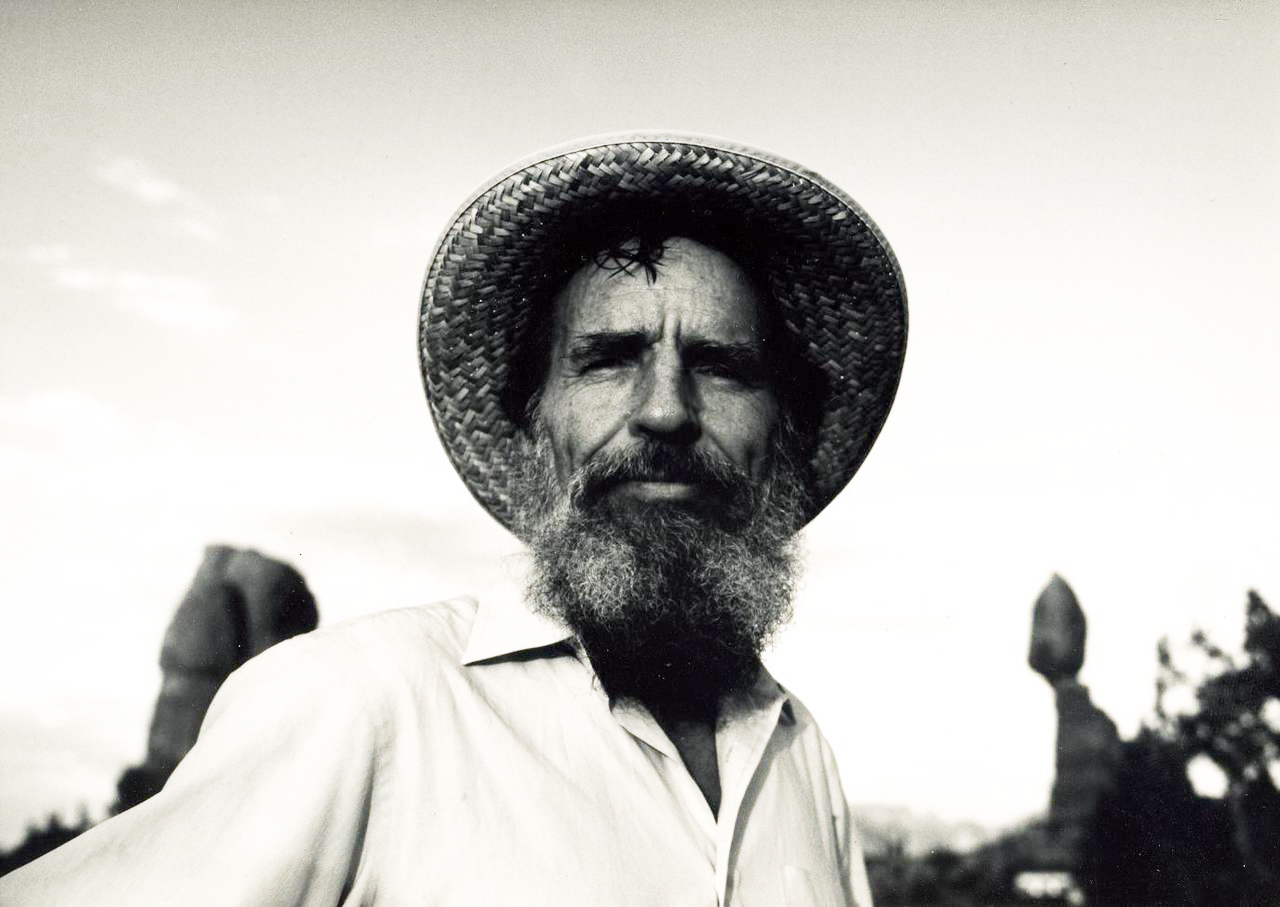
“My loyalties will not be bound by national borders, or confined in time by one nation’s history, or limited in the spiritual dimension by one language and culture. I pledge my allegiance to the damned human race, and my everlasting love to the green hills of Earth, and my intimations of glory to the singing stars, to the very end of space and time.”
— From Confessions of a Barbarian: Selections from the Journals of Edward Abbey, 1951-1989 (Boston: Little, Brown 1994).
french connection
At last I’ve got around to posting something on Mixcloud again. Here’s a crazy pot-pourri of tunes with a French connection, compiled from selections for a set I played on the Wrong Rock Show back in August 2011.
Listen to Francophonics by Cherry Bomb on Mixcloud.
bergson on having a built-in bullshit detector
“Fortunately, some are born with spiritual immune systems that sooner or later give rejection to the illusory worldview grafted upon them from birth through social conditioning. They begin sensing that something is amiss, and start looking for answers. Inner knowledge and anomalous outer experiences show them a side of reality others are oblivious to, and so begins their journey of awakening. Each step of the journey is made by following the heart instead of following the crowd and by choosing knowledge over the veils of ignorance.”
for y’all celebrating thanksgiving
Uncanny scene from the film Beetlejuice (1989), in which a frightfully posh dinner is ruptured when the table is re-possessed by the voices of exploited plantation labourers, specifically via Harry Belafonte’s “Day-O”. One of Tim Burton’s most politically subversive moments.
angel olsen – the sky opened up
From her last album Half Way Home, this live performance was recorded at Paradox/Incubate, on 10 September 2012.
Angel said of Half Way Home, “I think no matter how stable I am I will always be searching, I guess that’s what this album is about. The endless searching, the fruitless waiting, the idea of a home that is inside yourself.”
Her new album, Burn Your Fire For No Witness, is due for release in February 2014.
john lennon on keeping it real

tom waits – a little rain (live)
“A Little Rain” (from the 1992 album Bone Machine), performed live in Austin on 20 March1999.
tori amos – if 6 was 9
A Jimi Hendrix cover, released on the limited edition UK CD single of “Cornflake Girl” in 1994. To date it is one of the few Amos recordings that has not been re-released in a collection or boxed set, or made available digitally — which is a shame, because it’s one of my favourite things she’s done.
a blanket for juliette
My sister Heather started crocheting this beautiful blanket at the age of 16 while pregnant with Juliette, spending hours of time in difficult reflection as her friends carried on being carefree teenagers. Heather has finally finished the blanket and handed it to Juliette, now 16 herself, who has also been going through an incredibly hard and painful time lately. Today Heather posted a couple of photographs on Facebook with the following caption:
“Labour of love for my big girl-child. Every stitch was done with you in mind. Tears and love and prayers are woven into the threads, my precious gift from God.”
My heart is swollen.

nouvelle vague – fade to grey
Floating, atmospheric cover of Visage’s ’80s hit, from Bande Apart, the second album released by the Nouvelle Vague collective.
the match girl’s song of hope
It’s true
The heart beats lighter in a vacuum
I dreamed someday I’d burn, burn, burn
A flaming Me fanned by a You
That blue glow gutters, fades to grey
Ashen time ticks faintly on
Sex, a lonely bomb in my bag
Forgotten on the platform
My pulse racing
The last plane out of here
Please don’t leave yet
Gran, please hold on
I’m coming now
I’m coming
I’ll be there too,
Take it on with you
I’m coming now
I’m coming through
Cos one thing I’ve learned being burned is that
Love’s not about how we feel
It’s about how we deal with situations
When shit gets real
It’s way beyond desire
Real love works to heal
It doesn’t steal a kiss, delirious
Then turn, turn, turn, as you’re on fire,
To another
Hid behind the curtain (how, Lover?)
Sweep out the cinders (blown away)
and go (already far away)
It’s true
Real love spans worlds
Real love spans galaxies
Real love is greater than all that ties us to Earth from birth to death
But please don’t leave yet, Papa
Please hold on
I’m coming now
I’m coming
I’ll be there with you
Take it on too
I’m coming now
I’m coming
I’m coming now
I’m coming through
I’m close to you
With every heartbeat
Closer
on dreams and the reality of sadness
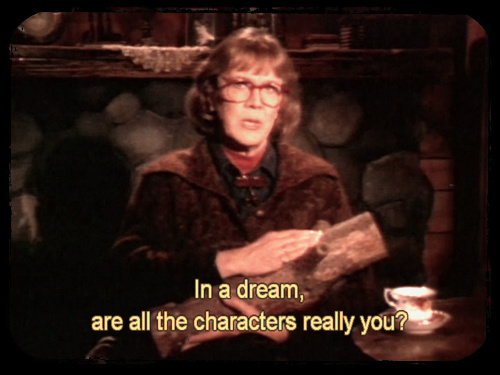
Sometime ideas, like men, jump up and say ‘hello’. They introduce themselves, these ideas, with words. Are they words? These ideas speak so strangely. All that we see in this world is based on someone’s ideas. Some ideas are destructive, some are constructive. Some ideas can arrive in the form of a dream. I can say it again: some ideas arrive in the form of a dream…
… There is a sadness in this world, for we are ignorant of many things. Yes, we are ignorant of many beautiful things — things like the truth. So sadness, in our ignorance, is very real. The tears are real. What is this thing called a tear? There are even tiny ducts — tear ducts — to produce these tears should the sadness occur. Then the day when the sadness comes — then we ask: “Will this sadness which makes me cry — will this sadness that makes me cry my heart out — will it ever end?” The answer, of course, is yes. One day the sadness will end.
— David Lynch’s Log Lady, in Twin Peaks
how could you go ahead of me? (1586)
Excavating an ancient tomb in South Korea, archaeologists found the 4-centuries-old mummy of Eung-Tae Lee, who had died at the age of 30. Lying on his chest was this letter, written by his pregnant widow and addressed to the father of their unborn child:
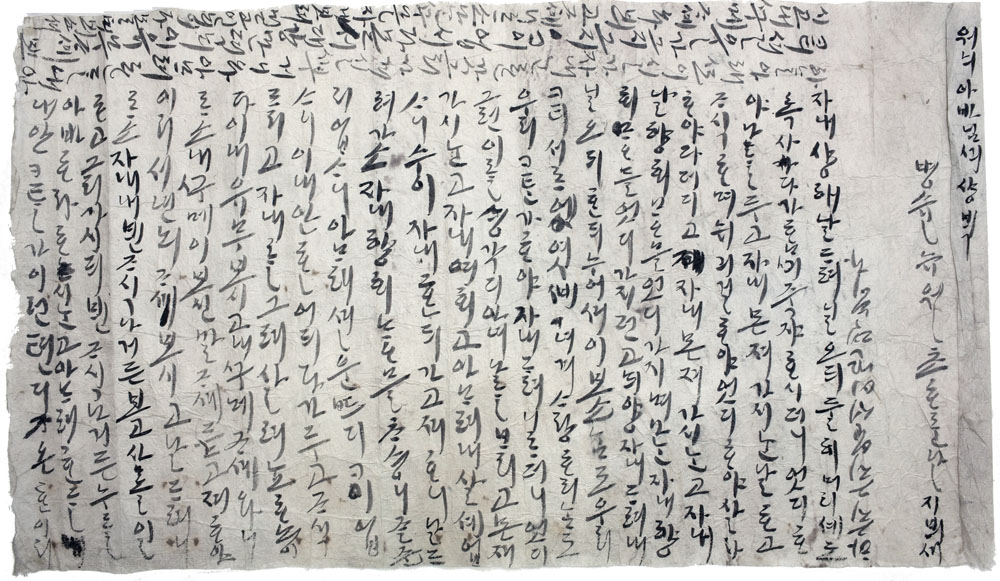
Source: Letters of Note
Transcript
To Won’s Father
June 1, 1586You always said, “Dear, let’s live together until our hair turns grey and die on the same day.” How could you pass away without me? Who should I and our little boy listen to and how should we live? How could you go ahead of me?
How did you bring your heart to me and how did I bring my heart to you? Whenever we lay down together you always told me, “Dear, do other people cherish and love each other like we do? Are they really like us?” How could you leave all that behind and go ahead of me?
I just cannot live without you. I just want to go to you. Please take me to where you are. My feelings toward you I cannot forget in this world and my sorrow knows no limit. Where would I put my heart in now and how can I live with the child missing you?
Please look at this letter and tell me in detail in my dreams. Because I want to listen to your saying in detail in my dreams I write this letter and put it in. Look closely and talk to me.
When I give birth to the child in me, who should it call father? Can anyone fathom how I feel? There is no tragedy like this under the sky.
You are just in another place, and not in such a deep grief as I am. There is no limit and end to my sorrows that I write roughly. Please look closely at this letter and come to me in my dreams and show yourself in detail and tell me. I believe I can see you in my dreams. Come to me secretly and show yourself. There is no limit to what I want to say and I stop here.
Source: Letters of Note
on marching to a different tune
“They are really always saying the same thing. They don’t change; everybody else changes. They are accused of the most incompatible crimes, of egoism and a mania for power, indifference to the fate of their cause, fanaticism, triviality, lack of humour, buffoonery and irreverence. But they sound a certain note. Hence the great practical power of persistent radicals. To all appearance, nobody follows them, yet everyone believes them. They hold a tuning-fork and sound A, and everybody knows it really is A, though the time-honoured pitch is G flat.”
Isn’t this a good description of the effect of Pussy Riot performances? In spite of all accusations, you sound a certain note. It may appear that people do not follow you, but secretly, they believe you, they know you are telling the truth, or, even more, you are standing for truth.
— Slavoj Žižek, quoting political essayist John Jay Chapman (who was writing in 1900) in a recent letter to imprisoned Pussy Riot member, Nadezhda Tolokonnikova. Read more from their correspondence HERE.
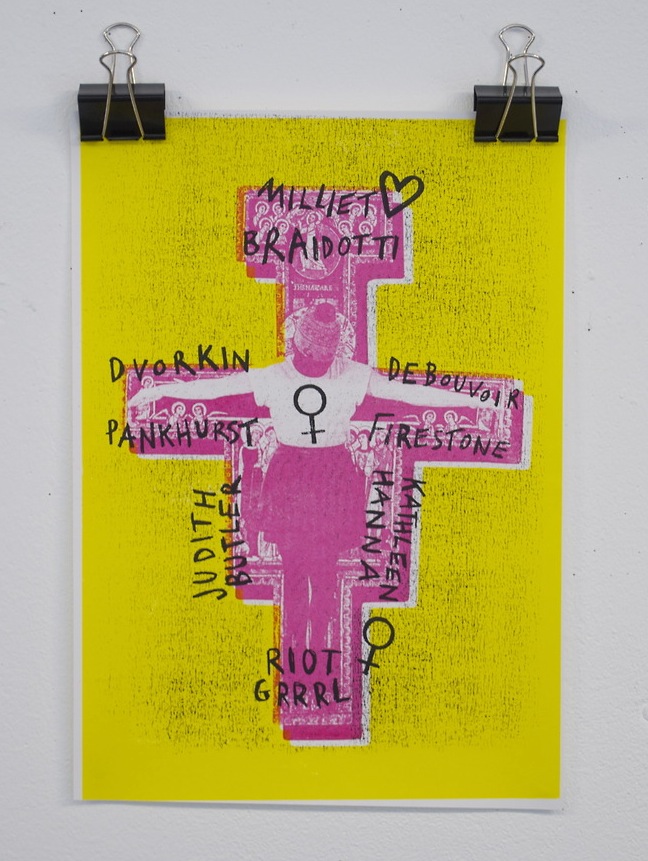
Eve Warren – “A Punk Prayer”. Find out more about this work HERE.
agnes obel – dorian
Agnes Obel performs the new single “Dorian” from her 2013 album Aventine, live at Heimathafen Neukölln, Berlin. Order the album HERE.
cranes – loved (full album)
Dedicated Records,1994.
Bass, Vocals – Alison Shaw
Drums, Piano, Guitar – Jim Shaw
Guitar – Mark Francombe, Matt Cope
Producer – Cranes
on self-protection
 When I was a girl, my life was music that was always getting louder.
Everything moved me.
A dog following a stranger. That made me feel so much.
A calendar that showed the wrong month. I could have cried over it.
I did.
Where the smoke from the chimney ended.
How an overturned bottle rested at the edge of a table.
I spent my life learning to feel less.
Every day I felt less.
Is that growing old? Or is it something worse?
You cannot protect yourself from sadness without protecting yourself from happiness.
— Jonathan Safran Foer, from Everything is Illuminated
Thanks to Lex for sharing this.
epic rap battles of history
Well, that escalated quickly. Ridiculously big egos, all up in each other’s faces! I’m hooked.
pixies – there goes my gun
From Doolittle (4AD, 1989).
 fleurmach