the notebook: it’s ok to live life offline

Excerpted from a thoughtful piece by Kayli Stollak, over at Hello Giggles.

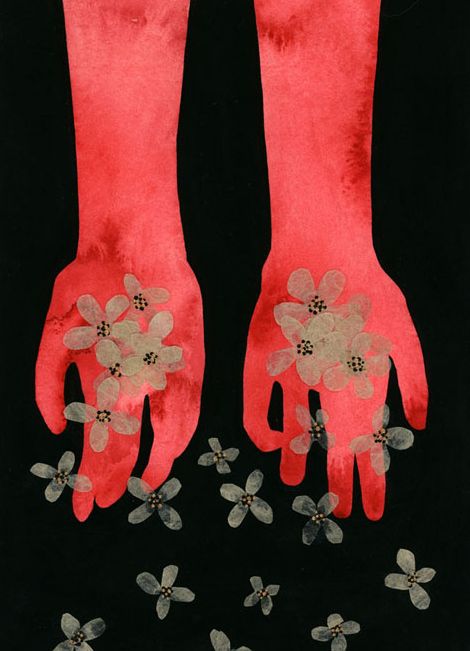
Painting by Francine van Hove

Painting by Francine van Hove

Online we tell a golden version of our lives filled with accomplishments, strictly (and often unbelievably) fun times, and a never-ending well of wit. The glorified digital narrative that we construct of our lives worries me like a 1950’s housewife watching Elvis wiggle his hips on TV. Our modern-day record keeping seems wildly inaccurate to the truth of our inner lives. What is happening in our too-much-information-nation? But more importantly, what is happening with us? Behind all the selfies and sandwich shots, who are we?

In order to correct the imbalance of truth, I propose we start writing it down. We share so much of ourselves with the web, but do we take enough time accounting for our private lives in realm that is removed from the world of likes, comments and followers? The idea of keeping a journal is nothing new, but we’re living in a time where we could benefit from taking a personal inventory of who we are, lest we deceive our future selves through our revisionist digital autobiographies.

While our faces are buried in our phones, we risk missing the smaller details in life. If we don’t remember the bad, how can we possibly enjoy the good to the highest degree? With time, I’m concerned we’ll look back at our Facebook timelines and mistake the façade that we presented of ourselves as fact for who we actually were.

As a writer who spends a large (and probably unhealthy) amount of time writing about herself, I often hear the condemnation of navel gazing. Sure, it is narcissistic to think your life is exciting enough to put to paper, but is it really more self-centered than a side-angled pouty pose of you enjoying your fun-filled Saturday night in the club, posted to Instagram with hopes of garnering likes from your followers, confirming that, yes, you are hot? I would venture to say that the former is self-reflective and productive, while the latter is vapidity and belly-button eagle eye-ing at its worst.

I’m not recommending you go all “dear diary” and start documenting your daily rhythms by laboriously chronicling what you ate for breakfast, the jerk who cut you off on the freeway, or what your plans are for the weekend—if that works for you, do it, but there’s no need to pen a three volume memoir. What I’m championing is the process of jotting down your feelings, thoughts, conversations, inspirations, events that meant something to you now that you might benefit from reflecting on in the future. This is a dose of honesty for you today, in five months, in ten years, at 97. To look back on after your next break up, when you’re contemplating marriage, on your graduation, before a big interview, or simply on a rainy day.

Your notebook should be far from the manicured image you pimp out on Instagram, Facebook, OKCupid, etc. In Joan Didion’s 1966 essay “On Keeping a Notebook”, written before our over-stimulated minds were flooded with technology and its never-ending distractions, she explained, “We are not talking here about the kind of notebook that is patently for public consumption, a structural conceit for binding together a series of graceful pensées, we are talking about something private, about bits of the mind’s string too short to use, an indiscriminate and erratic assemblage with meaning only for its maker.”

For me, a piece of ‘mind string’ is the harmonica chords to ‘Piano Man’ scribbled in my notebook from 2008. A stranger might assume a bizarre Billy Joel fixation, but when I revisit them in my journal, the mess of notes and the triggered sound insist on memories of a motorcycle trip through Spain and feelings of maddening love. All you need is sentence, a word, a thought, and suddenly you remember who you actually were.

If I skip forward in my notebook to 2009 I stumble upon a string of doubts, the point where this love began to unravel. The same way the smell of sunscreen can instantly bring back memories of summer,  a list labeled “Pros and Cons” reminds me of the creeping anxiety I felt for planning my future. My Facebook timeline, however, tells a different tale of a giddy girl with bangs who enjoys raves, beaches, and doing the limbo.

Didion advocated for the importance of preserving a part of yourself that in time you can return to. She wrote, “It all comes back. Perhaps it is difficult to see the value in having one’s self back in that kind of mood, but I do see it; I think we are well advised to keep on nodding terms with the people we used to be, whether we find them attractive company or not… We forget all too soon the things we thought we could never forget. We forget the loves and the betrayals alike, forget what we whispered and what screamed, forget who we were.”

Notebooks are fantastic tools for keeping in touch with our former selves that go far beyond the sculpted image we present on the web. I love delving back into my journals from middle school to the present, not because I’m a fan of the person I see there, but rather because I understand the benefit of knowing her.
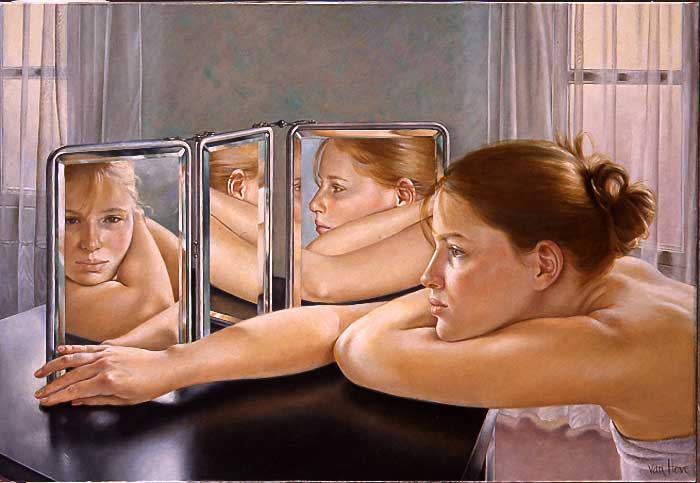
francine van hove 02

Painting by Francine van Hove

I want to yell at my thirteen year-old self to please take off that padded bra andstop being in such a rush to grow up. I want to hold my fourteen year-old self and explain to her that you are the company you keep and the sooner she starts loving herself the better. I want to bitch slap my sixteen year-old self, she was one angsty girl. I want to tell my seventeen year-old self not to mistake lust for love and to please stop talking to that boy in the band that told you he learned how to play “Brown-Eyed Girl” for you when, in fact, your eyes are green. I want to stay up all night talking to my twenty year-old self, feeding off her energy and drinking up her thirst for spontaneity. I want to see the world through her eyes, she reminds me to believe in magic. I want to whisper in the ear of my twenty-three year-old self, and tell her that soon enough she will see that it really was a means to an end. I want to tell my twenty-five year old self to trust her gut and not settle, I want to remind her what love looks like and tell her that this is not it. But I can’t tell her any of that. All I can do is learn from her mistakes, be reminded of what to hold meaning to, take note of her intuition, celebrate the coincidences, and enjoy all the beautiful moments and connections made.

Although I already know how most of the stories end, it’s important to track the progress I’ve made, reminding me who I am and who I was. To draw my own attention to the larger patterns my tendencies and predilections make when I can see them from a bird’s eye view. A notebook can serve as a wake up call on what I may be rightly or wrongly romanticizing and what I may be purposefully forgetting. Notebooks give us a shot at staying honest and in touch with ourselves, something I think we should strive to be in this digital age.

Read the full article HERE. Thanks to Stella for sharing it.
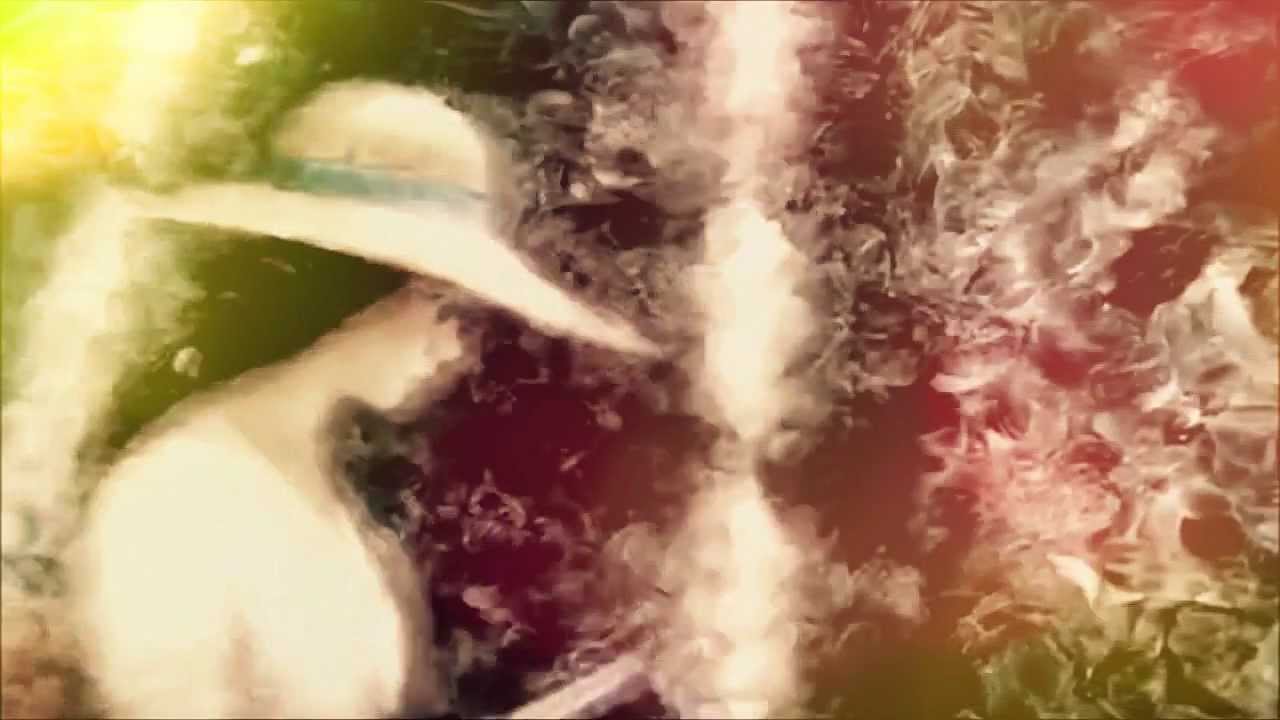
burial – come down to us

Beautiful video by Alexander Petrov set to this anthem, off Burial’s brand new EP, Rival Dealer, out now on Hyperdub. I looked Petrov up because his animation style reminded me of some of the work of another Russian master, Yuri Norstein – and, indeed, he was one of Norstein’s protégés at the Advanced School for Screenwriters and Directors in Moscow.

UPDATE 17/12/13: Looks like the person who put this lovely video together has been forced to take it down for copyright reasons. That’s just wrong. It was truly an inspired combination, and I don’t know how it would have hurt the sales of either the song or the animation. Anyway. You can stream the track without the video HERE.

Still from the Alexander Petrov footage that was paired with the song.

Still from the Alexander Petrov footage that was paired with the song.

A rare, candid message from the usually silent and mysterious William Bevan, a.k.a. Burial, on Rival Dealer (via Mary Anne Hobbs’ BBC radio show):

I put my heart into the new EP; I hope someone likes it. I wanted the tunes to be anti-bullying tunes that could maybe help someone to believe in themselves, to not be afraid, and to not give up, and to know that someone out there cares and is looking out for them. So it’s like an angel’s spell to protect them against the unkind people, the dark times, and the self-doubt.

mort garson – i’ve been over the rainbow

The perfect song for South Africa today. From the album The Wozard Of Iz, released on A&M in 1968.

“Shit on your whole mortifying, imaginary, and symbolic theatre!”
― Gilles Deleuze/Felix Guattari – Anti-Oedipus: Capitalism and Schizophrenia

the match girl’s song of hope

It’s true
The heart beats lighter in a vacuum
I dreamed someday I’d burn, burn, burn
A flaming Me fanned by a You
That blue glow gutters, fades to grey
Ashen time ticks faintly on

Sex, a lonely bomb in my bag
Forgotten on the platform
My pulse racing
The last plane out of here

Please don’t leave yet
Gran, please hold on
I’m coming now
I’m coming
I’ll be there too,
Take it on with you
I’m coming now
I’m coming through

Cos one thing I’ve learned being burned is that
Love’s not about how we feel
It’s about how we deal with situations
When shit gets real
It’s way beyond desire
Real love works to heal
It doesn’t steal a kiss, delirious
Then turn, turn, turn, as you’re on fire,
To another
Hid behind the curtain (how, Lover?)
Sweep out the cinders (blown away)
and go (already far away)

It’s true
Real love spans worlds
Real love spans galaxies
Real love is greater than all that ties us to Earth from birth to death

But please don’t leave yet, Papa
Please hold on
I’m coming now
I’m coming
I’ll be there with you
Take it on too
I’m coming now
I’m coming
I’m coming now
I’m coming through
I’m close to you
With every heartbeat
Closer

on dreams and the reality of sadness

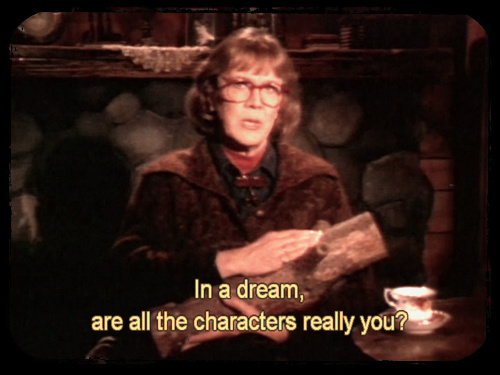
Log-lady-quote-3

Sometime ideas, like men, jump up and say ‘hello’. They introduce themselves, these ideas, with words. Are they words? These ideas speak so strangely. All that we see in this world is based on someone’s ideas. Some ideas are destructive, some are constructive. Some ideas can arrive in the form of a dream. I can say it again: some ideas arrive in the form of a dream…

… There is a sadness in this world, for we are ignorant of many things. Yes, we are ignorant of many beautiful things — things like the truth. So sadness, in our ignorance, is very real. The tears are real. What is this thing called a tear? There are even tiny ducts — tear ducts — to produce these tears should the sadness occur. Then the day when the sadness comes — then we ask: “Will this sadness which makes me cry — will this sadness that makes me cry my heart out — will it ever end?” The answer, of course, is yes. One day the sadness will end.

— David Lynch’s Log Lady, in Twin Peaks

how could you go ahead of me? (1586)

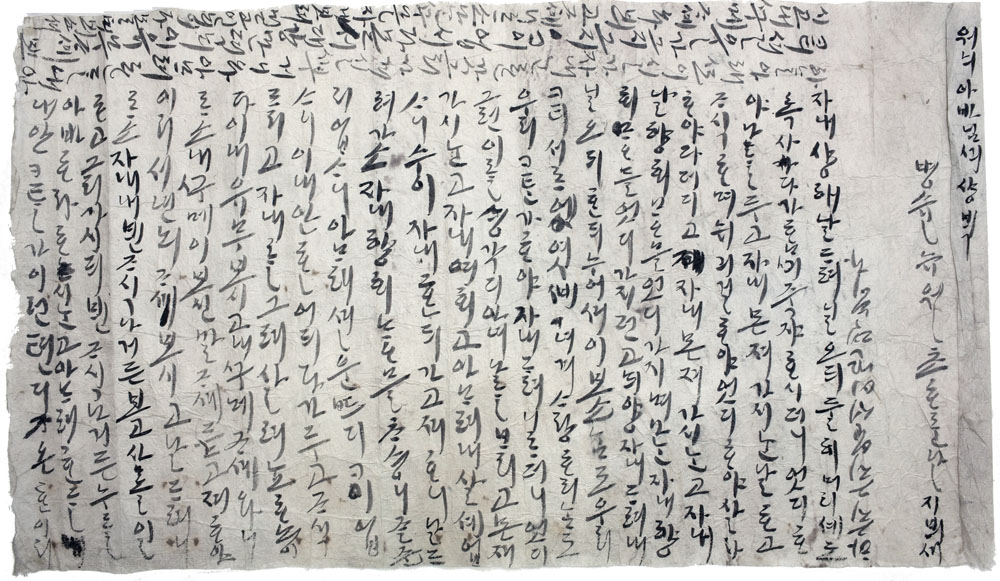
Excavating an ancient tomb in South Korea, archaeologists found the 4-centuries-old mummy of Eung-Tae Lee, who had died at the age of 30. Lying on his chest was this letter, written by his pregnant widow and addressed to the father of their unborn child:

mummy letter

Source: Letters of Note

Transcript

To Won’s Father
June 1, 1586

You always said, “Dear, let’s live together until our hair turns grey and die on the same day.” How could you pass away without me? Who should I and our little boy listen to and how should we live? How could you go ahead of me?

How did you bring your heart to me and how did I bring my heart to you? Whenever we lay down together you always told me, “Dear, do other people cherish and love each other like we do? Are they really like us?” How could you leave all that behind and go ahead of me?

I just cannot live without you. I just want to go to you. Please take me to where you are. My feelings toward you I cannot forget in this world and my sorrow knows no limit. Where would I put my heart in now and how can I live with the child missing you?

Please look at this letter and tell me in detail in my dreams. Because I want to listen to your saying in detail in my dreams I write this letter and put it in. Look closely and talk to me.

When I give birth to the child in me, who should it call father? Can anyone fathom how I feel? There is no tragedy like this under the sky.

You are just in another place, and not in such a deep grief as I am. There is no limit and end to my sorrows that I write roughly. Please look closely at this letter and come to me in my dreams and show yourself in detail and tell me. I believe I can see you in my dreams. Come to me secretly and show yourself. There is no limit to what I want to say and I stop here.

Source: Letters of Note

sonic youth – daydream nation (full album)

1988. Enigma Records. Essential.

00:00 Teen Age Riot
06:58 Silver Rocket
10:46 The Sprawl
18:29 ‘Cross the Breeze
25:29 Eric’s Trip
29:18 Total Trash
36:52 Hey Joni
41:14 Providence
43:56 Candle
48:55 Rain King
53:35 Kissability
56:44 Trilogy: a)The Wonder b)Hyperstation c)Eliminator Jr.

on the romance of records

[Juliette Gréco]

Juliette Gréco

“Is it wrong, wanting to be at home with your record collection? It’s not like collecting records is like collecting stamps, or beermats, or antique thimbles. There’s a whole world in here, a nicer, dirtier, more violent, more peaceful, more colourful, sleazier, more dangerous, more loving world than the world I live in; there is history, and geography, and poetry, and countless other things I should have studied at school, including music.”

― Nick Hornby, High Fidelity

marie curie on supporting researchers

Humanity also needs dreamers, for whom the disinterested development of an enterprise is so captivating that it becomes impossible for them to devote their care to their own material profit. Without doubt, these dreamers do not deserve wealth, because they do not desire it. Even so, a well-organized society should assure to such workers the efficient means of accomplishing their task, in a life freed from material care and freely consecrated to research.

— Marie Curie, scientist, Nobel laureate (1867-1934)

the verve – already there

Off the John Leckie-produced masterpiece of ’90s psychedelia, A Storm in Heaven (Hut/Vernon Yard, 1993). Visual material from Andrei Tarkovsky’s incredible film, Solaris (1972). 

I was so in love with this album for so many years, yet I have hardly listened to it in the past decade…  It’s hard to figure out why.  I don’t think it’s because I tired of it. Listening again now to the full album, I get the very same goosebumps as always. Most likely the reason I haven’t listened to it is because I have it on CD, and I haven’t really listened to CDs in a long time (though I am pretty sure I have it ripped to mp3 somewhere?). Heck, I don’t even own a CD player anymore, except for my old Walkman and the DVD drive in my Windows laptop. More broadly, it’s interesting to think about how different the mix of listening formats is now compared to when this came out, and how the format of a recording affects its consumption… But I think that may be an essay for another day when I’m feeling less spacey!

Hello it’s me, it’s me
I want to touch you
It’s me throwing stones from the stars
On your mixed up world

Been circling round for twenty years
And in that time I’ve seen all the fires and all the liars
I’ve been calling home for twenty years
And in that time I heard the screams rebound to me
While you were making history

LISTEN TO A STORM IN HEAVEN, and dream galaxies…

marie laforêt – la voix du silence

A cover of Simon and Garfunkel’s “The Sound of Silence” on Laforêt’s Album 3 (Disques Festival, 1967). The video contains footage from the film, The Graduate (1967)in which this and other Simon and Garfunkel songs feature prominently during pivotal montage scenes.

louise gluck – time

There was too much, always, then too little.
Childhood: sickness.
By the side of the bed I had a little bell —
at the other end of the bell, my mother.

Sickness, gray rain. the dogs slept through it. They slept on the bed,
at the end of it, and it seemed to me they understood
about childhood: best to remain unconscious.

The rain made gray slats on the windows.
I sat with my book, the little bell beside me.
Without hearing a voice, I apprenticed myself to a voice.
Without seeing any sign of the spirit, I determined
to live in the spirit.

The rain faded in and out.
Month after month, in the space of a day.
Things became dreams; dreams became things.

Then I was well; the bell went back to the cupboard.
The rain ended. The dogs stood at the door,
panting to go outside.

I was well, then I was an adult.
And time went on — it was like the rain,
so much, so much, as though it was a weight that couldn’t be moved.

I was a child, half sleeping.
I was sick; I was protected.
And I lived in the world of the spirit,
the world of gray rain,
the lost, the remembered.

Then suddenly the sun was shining.
And time went on, even when there was almost none left.
And the perceived became the remembered,
the remembered, the perceived.

__
From The Seven Ages (Ecco/Harper Collins, 2001)

shine on, harvest moon

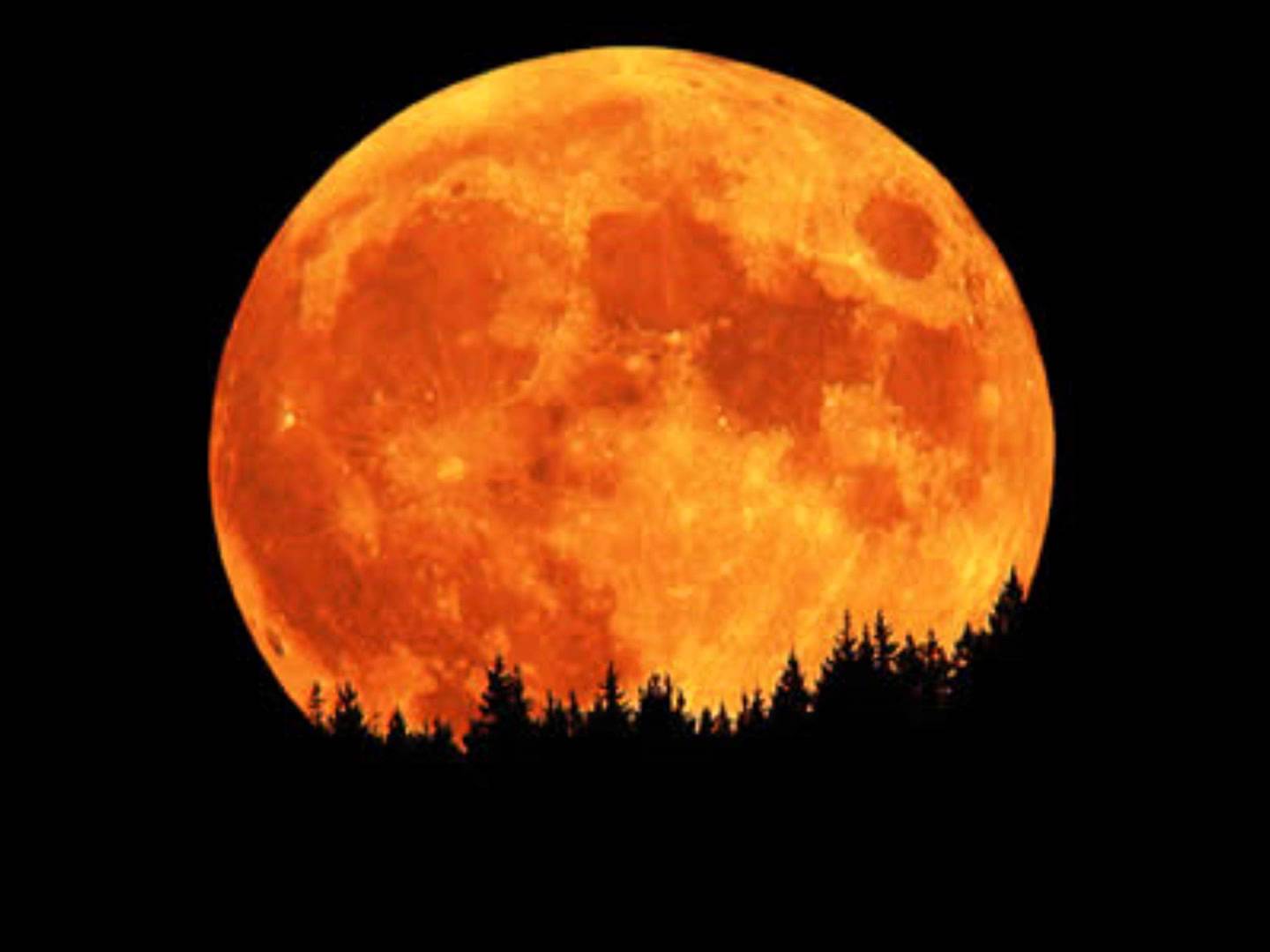
HarvestMoon

The Harvest Moon for 2013 falls on 19 September. Each full moon of the twelve months has a folkloric name of its own and that for the month of September is called the “Harvest Moon”. According to NASA, the Harvest Moon gets its name from farmers who relied on the moon and its celestial schedule to harvest their crops. Since most crops ripen in late summer and early autumn, farmers would have to harvest during this time of the year (in the northern hemisphere, this is September, but not in the southern hemisphere).

“In the days before electric lights, farmers depended on bright moonlight to extend the workday beyond sunset,” writes NASA’s Dr. Tony Phillips. “It was the only way they could gather their ripening crops in time for market. The full moon closest to the autumnal equinox became the Harvest Moon, and it was always a welcome sight.”

Info from NASA.

kyle shepherd trio – die maan skyn so helder

“The moon’s shining so brightly tonight…”

Kyle Shepherd (piano, voice), Shane Cooper (double bass) and Jonno Sweetman (drums) perform a version of this subversive traditional Cape Goema song arranged by Kyle Shepherd. Recorded live at Welgemeend, Welgemeend Street, Gardens, Cape Town, South Africa on Friday 21 May 2009.

piotr dumala – crime and punishment (2001)

Trained as a sculptor as well as an animator, Piotr Dumala calls his innovative stop-motion technique in which an image is scratched into painted plaster, then painted over and the next image scratched on top “destructive animation”. He devised the method while studying art conservation at the Warsaw Academy of Fine Arts.

Crime and Punishment (Zbrodnia i Kara), Dumala’s expressionist half-hour long Dostoevsky adaptation, is a succession of shadowy, minimalist tableaux that emerge slowly from darkness and return to it. Stripping the Russian masterwork down to two scenes — the murder and Raskolnikov’s meeting of Sonia — Dumala interprets the novel’s themes with chiaroscuro intensity, choosing to highlight just a few strands of the story:

“It was not my aim to copy the book. I was really close to the book. I took one level of the book. It’s not possible to show everything from this book… This is about love and how obsession can destroy love. In our life we are under two opposite influences to be good or bad and to love or hate.”

In the worlds Dumala sketches, the lines between light and darkness are stark, but also shifting and mutable.

Read more about the background to Dumala and this film in Chris Robinson’s article for Animation World Magazine, HERE.