

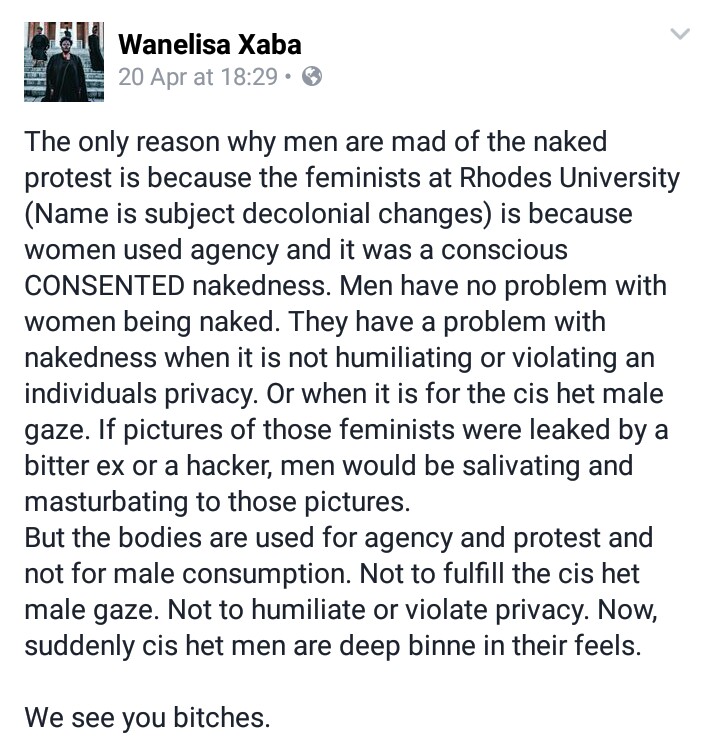
This has made me so furious that I need to share it.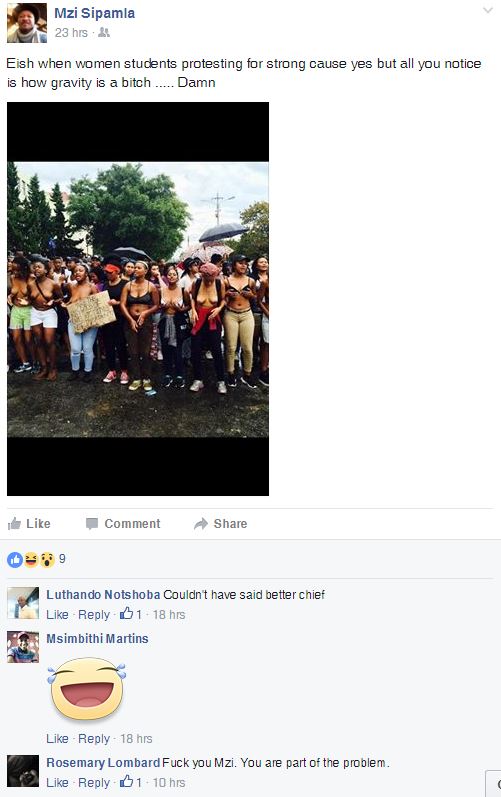
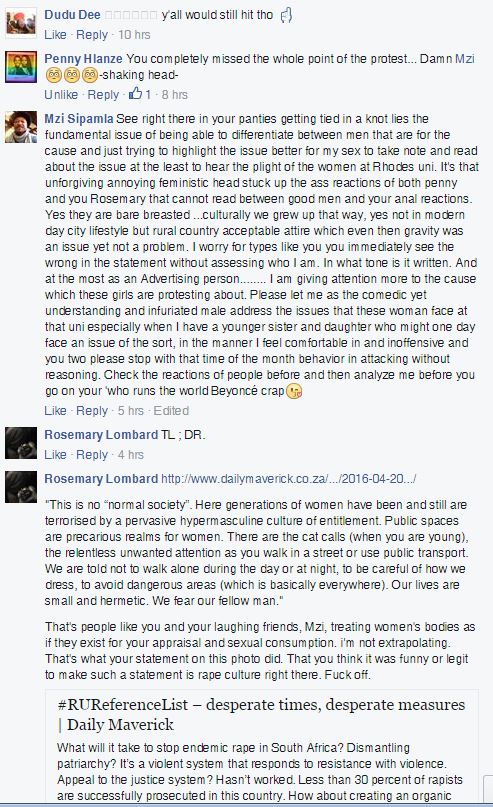
(That article linked to is HERE.)
 “In South Africa we have no business criticizing the young with homilies about propriety and dignity, decency and politesse. There can be no equality for young women in higher education if the spaces they are supposed to study in are organized around enabling their violation by omission, silence and inaction.
The shame does not reside with the survivors, despite the insults and abuse flung at them, despite the rubber bullets fired at them, despite being wrestled to the ground for daring to object to the normalization of and silence on their violence, and the inaction of organizations and institutions.”
– Angelo Fick, 20 April 2016. Read the full piece HERE.
 Whoever takes up the sword shall perish by the sword. And whoever does not take up the sword (or lets it go) shall perish on the cross.
Christ healing the sick, raising the dead, etc.—that is the humble, human, almost low part of his mission. The supernatural part is the sweat of blood, the unsatisfied longing for human consolation, the supplication that he might be spared, the sense of being abandoned by God.
The abandonment at the supreme moment of the crucifixion, what an abyss of love on both sides!
‘My God, my God, why has thou forsaken me?’
There we have the real proof that Christianity is something divine.
To be just it is necessary to be naked and dead—without imagination. That is why the model of justice has to be naked and dead. The cross alone is not open to imaginary imitation.
In order that the imitation of God should not be a mere matter of words, it is necessary that there should be a just man to imitate, but in order that we should be carried beyond the will it is necessary that we should not be able to choose to imitate him. One cannot choose the cross.
One might choose no matter what degree of asceticism or heroism, but not the cross, that is to say penal suffering.
Those who can only conceive of the crucifixion under the aspect of an offering do away with the salutary mystery and the salutary bitterness of it. To wish for martyrdom is far too little. The cross is infinitely more than martyrdom.
It is the most purely bitter suffering—penal suffering. This is the guarantee of its authenticity.
The cross. The tree of sin was a real tree, the tree of life was a wooden beam. Something which does not give fruit, but only vertical movement. ‘The Son of Man must be lifted up and he will draw all men unto himself.’ We can kill the vital energy in ourselves while keeping only the vertical movement. Leaves and fruit are a waste of energy if our only wish is to rise.
Adam and Eve sought for divinity in vital energy—a tree, fruit. But it is prepared for us on dead wood, geometrically squared, where a corpse is hanging. We must look for the secret of our kinship with God in our mortality.
God wears himself out through the infinite thickness of time and space in order to reach the soul and to captivate it. If it allows a pure and utter consent (though brief as a lightning flash) to be torn from it, then God conquers that soul. And when it has become entirely his he abandons it. He leaves it completely alone and it has in its turn, but gropingly, to cross the infinite thickness of time and space in search of him whom it loves. It is thus that the soul, starting from the opposite end, makes the same journey that God made towards it. And that is the cross.
God is crucified from the fact that finite beings, subject to necessity, to space and to time, think. I have to know that as a thinking, finite being I am God crucified. I have to be like God, but like God crucified. Like God almighty in so far as he is bound by necessity.
Prometheus—the god crucified for having loved men too much. Hippolytus, the man punished for having been too pure and too much loved by the gods. It is the coming together of the human and the divine which calls forth punishment.
We are what is furthest from God, situated at the extreme limit from which it is not absolutely impossible to come back to him. In our being, God is torn. We are the crucifixion of God. The love of God for us is a passion. How could that which is good love that which is evil without suffering? And that which is evil suffers too in loving that which is good. The mutual love of God and man is suffering.
In order that we should realize the distance between ourselves and God it was necessary that God should be a crucified slave. For we do not realize distance except in the downward direction. It is much easier to imagine ourselves in the place of God the Creator than in the place of Christ crucified.
The dimensions of Christ’s charity are the same as the distance between God and the creature.
The function of mediation in itself implies a tearing asunder. That is why we cannot conceive of the descent of God towards men or the ascent of man towards God without a tearing asunder.
We have to cross the infinite thickness of time and space—and God has to do it first, because he comes to us first. Of the links between God and man, love is the greatest. It is as great as the distance to be crossed.
So that the love may be as great as possible, the distance is as great as possible. That is why evil can extend to the extreme limit beyond which the very possibility of good disappears. Evil is permitted to touch this limit. It sometimes seems as though it overpassed it.
This, in a sense, is exactly the opposite of what Leibniz thought. It is certainly more compatible with God’s greatness, for if he had made the best of all possible worlds, it would mean that he could not do very much.
God crosses through the thickness of the world to come to us.
The Passion is the existence of perfect justice without any admixture of appearance. Justice is essentially non-active. It must either be transcendent or suffering.
The Passion is purely supernatural justice, absolutely stripped of all sensible help, even of the love of God in so far as it can be felt.
Redemptive suffering is that which strips suffering naked and brings it in its purity right into existence. That saves existence.
As God is present through the consecration of the Eucharist in what the senses perceive as a morsel of bread, so he is present in extreme evil through redemptive suffering through the cross.
From human misery to God. But not as a compensation or consolation. As a correlation.
There are people for whom everything is salutary which brings God nearer to them. For me it is everything which keeps him at a distance. Between me and him there is the thickness of the universe—and that of the cross is added to it.
Suffering is at the same time quite external with regard to innocence and quite essential to it.
Blood on snow. Innocence and evil. Evil itself must be pure. It can only be pure in the form of the suffering of someone innocent. An innocent being who suffers sheds the light of salvation upon evil. Such a one is the visible image of the innocent God. That is why a God who loves man and a man who loves God have to suffer.
Happy innocence. That also is something precious. But it is a precarious and fragile happiness, a happiness which depends on chance. The blossom of apple trees. Happiness is not bound up with innocence.
To be innocent is to bear the weight of the entire universe. It is to throw away the counterweight.
In emptying ourselves we expose ourselves to all the pressure of the surrounding universe.
God gives himself to men either as powerful or as perfect—it is for them to choose.
__
Excerpted from Simone Weil‘s Gravity and Grace. First French edition 1947. Translated by Emma Crawford. English language edition 1963. Routledge and Kegan Paul, London.

From Invocation Of The Aural Slave Gods (Blossoming Noise, 2005).
If you’re in Johannesburg tonight, take yourself to the Edge!
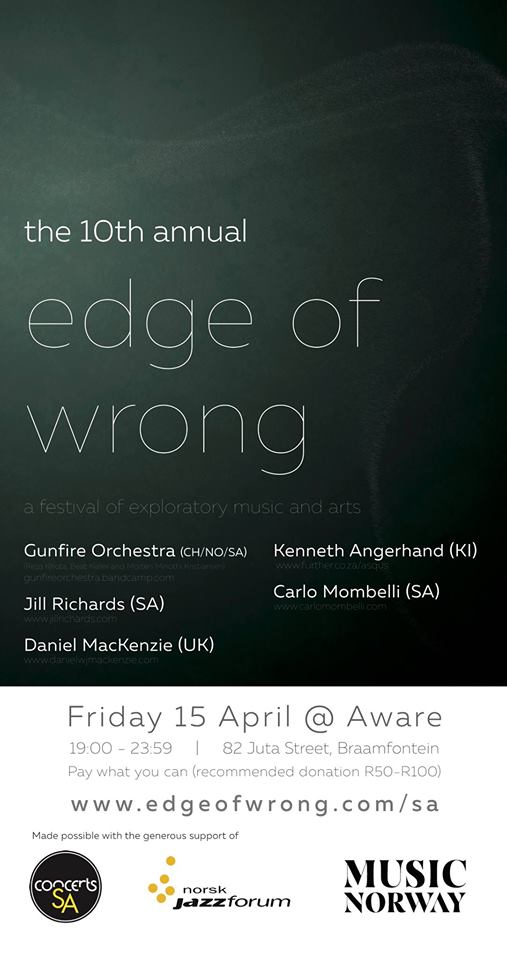
Read more about the festival and artists performing tonight HERE.

A profound read.
“In Ursula K. Leguin’s book Gifts, an entire culture lives by the rule of what they call ‘gifts’ – powers to do harm – possessed by certain of its members. Some families possess gifts of Unmaking, where they can turn a farmer’s field into a blackened waste or a puppy into a sack of dissolved flesh. Some possess the ability to create a wasting illness, or blindness, or the gift of calling animals to the hunt.
“By the book’s end, the child at its centre has struggled, against all signs in his culture, to realize something profound and fundamental. The gift they call Unmaking is actually a gift of Making, turned backwards upon itself and rendered unthinkingly into a weapon. The gift of calling animals is turned into a way to hunt them, when it is meant to let humans understand animals and live in balance with them. The wasting disease is the backwards use of a gift of healing illness and old age. He finally asks his sister and closest confidant: what if we are using our gifts backwards? To harm instead of to help? What if they were meant to be used the other way around?”
 Dating Tips for the Feminist Man
The opposite of masculine rape culture is masculine nurturance culture: men* increasing their capacity to nurture, and becoming whole.
The Ghomeshi trial is back in the news, and it brings violent sexual assault back into people’s minds and daily conversations. Of course violence is wrong, even when the court system for handling it is a disaster. That part seems evident. Triggering, but evident.
But there is a bigger picture here. I am struggling to see the full shape emerging in the pencil rubbing, when only parts are visible at a time.
A meme going around says ‘Rape is about violence, not sex. If someone were to hit you with a spade, you wouldn’t call it gardening.’ And this is true. But it is just the surface of the truth. The depths say something more, something about violence.
Violence is nurturance turned backwards.
These things are connected, they must be connected. Violence and nurturance are two sides of the same coin. I…
View original post 5,803 more words
As part of the Edge of Wrong organising team, I’d like to invite you to join us for our tenth annual music festival, happening in Cape Town on the 22nd and 23rd of April (with a mini edition in Johannesburg on 15th April) and featuring an array of international and local artists presenting a wide range of experimental, uncompromising and dangerous music.
In celebration of our first ten years of existence, during which time we have hosted more than 30 cutting-edge events, we’ve compiled an extra-eclectic line-up of South African and Norwegian musicians, including Daniel MacKenzie, Gunfire Orchestra (Reza Khota, Beat Keller and Morten Minothi Kristiansen), Arnfinn Killingtveit, Kenneth Angerhand and Amantha, Ad undas, Mark Fransman, Darren English, Brendon Bussy, Justin Allart and Hezron Chetty.
Expect everything from feedback guitar and malfunctioning drum machines to improv violin, dance-controlled piano and walls of screeching noise from hand-built instruments.
▀▀▀▀▀▀▀▀▀▀▀▀▀▀▀▀▀▀▀▀▀▀▀▀▀▀
__VENUES, LINE-UPS, COST, ETC.:
*** FRIDAY 22nd ***
Atlantic House
1 Perth Rd, Maitland, CT
http://www.atlantichouse.co/
Doors open at 7pm, music starts at 8pm
Pay what you can – recommended contribution R50-R100
PERFORMING:
∞ Brendon Bussy (SA)
∞ Daniel W J Mackenzie (UK)
∞ Ad undas (NO)
∞ Kenneth Angerhand with Amantha23 (KI)
∞ Arnfinn Killingtveit (NO)
*** SATURDAY 23rd ***
Moholo Live House
42 Ncumo Rd, Harare Square, Harare, Khayelitsha, CT
Doors open at 7pm, music starts at 8pm
Pay what you can – recommended contribution R50-R100
https://www.facebook.com/MoholoLiveHouse
PERFORMING:
∞ Gunfire Orchestra (NO/SA)
∞ HORNS NOISE (NO/SA)
∞ Swamps up Nostrils (NO/SA)
∞ Hezron Chetty (SA)
*** SUNDAY 24th ***
Music Hacker Lab – details to be confirmed!
GENERAL INFO: Right of admission reserved. Drinks will be available for purchase at the venues. Cellphones to be switched off during performances.
—
Performing in Johannesburg on the 15th are:
* Gunfire Orchestra (Reza Khota, Beat Keller and Morten Minothi Kristiansen) (https://gunfireorchestra.bandcamp.com/) (NO/SA)
* Kenneth Angerhand (www.further.co.za/asqus) (KI)
* Jill Richards (www.jillrichards.com) (SA)
* Carlo Mombelli (www.carlomombelli.com) (SA)
* Daniel MacKenzie (www.danielwjmackenzie.com) (UK)
Some days I put on makeup like war paint.
Today it’s camouflage.
This is a post from a few years ago. Julia Clark reminded me of it today.
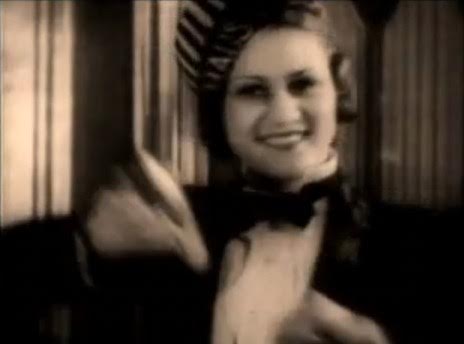
A still from here, at 0:27:
it is so startling to see yourself somewhere you are not
so slippy
in my sleep
i am this dancing girl
in the weimar nightclub
and i buzz with black holes
between the nets of swinging cliches
dietrich’s smile
kurt weill refrains
bauhaus lines
they’re all unravelled, sucked away
and i’m left with only questions
to clothe her dancing bones
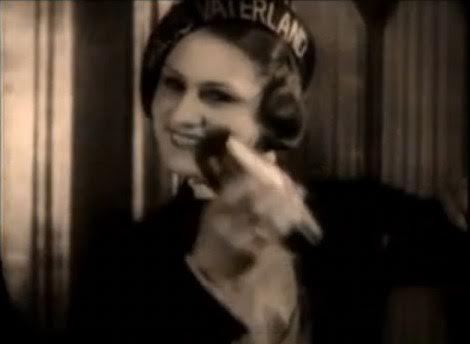
so who was she?
and what was her name?
what was her favourite food?
colour?
how did she move?
was she a good dancer?
where did she work?
was she in love?
was she lonely?
did she have a brother in the army? a lover?
as she donned that “vaterland” hat, did her chest swell with pride
or was it just the dress code?
where was she in 5 years’ time?
did she have any children? grandchildren? where are they now?
do they also look like me?
more and more questions
and all from just a 1-and-a-half second cutaway to anonymous archive in
a lousy louise brooks documentary
i feel dizzy
eisenstein was right
montage is dangerous.
 We are drawn towards a thing because we believe it is good. We end by being chained to it because it has become necessary.
Things of the senses are real if they are considered as perceptible things, but unreal if considered as goods.
Appearance has the completeness of reality, but only as appearance. As anything other than appearance it is error.
Illusions about the things of this world do not concern their existence but their value. The image of the cave refers to values. We only possess shadowy imitations of good. It is also in relation to good that we are chained down like captives (attachment). We accept the false values which appear to us and when we think we are acting we are in reality motionless, for we are still confined in the same system of values.
Actions effectively carried out and yet imaginary. A man attempts suicide, recovers and is no more detached afterwards than he was before. His suicide was imaginary. Suicide is probably never anything else, and that is why it is forbidden.
Strictly speaking time does not exist (except within the limit of the present), yet we have to submit to it. Such is our condition. We are subject to that which does not exist. Whether it is a question of passively borne duration—physical pain, waiting, regret, remorse, fear—or of organized time—order, method, necessity—in both cases that to which we are subject does not exist. But our submission exists. We are really bound by unreal chains. Time which is unreal casts over all things including ourselves a veil of unreality.
The miser’s treasure is the shadow of an imitation of what is good. It is doubly unreal. For, to start with, a means to an end (such as money) is, in itself, something other than a good. But diverted from its function as a means and set up as an end, it is still further from being a good.
It is with regard to the assessment of values that our sense- perceptions are unreal, since things are unreal for us as values. But to attribute a false value to an object also takes reality from the perception of this object, because it submerges perception in imagination.
Thus perfect detachment alone enables us to see things in their naked reality, outside the fog of deceptive values. That is why ulcers and the dung-heap were necessary before Job could receive the revelation of the world’s beauty. For there is no detachment where there is no pain. And there is no pain endured without hatred or lying unless detachment is present also.
The soul which has poked its head out of heaven devours the being. The soul which has remained inside devours opinion.
Necessity is essentially a stranger to the imaginary.
What is real in perception and distinguishes it from dreams is not the sensations, but the necessity enshrined in these sensations.
‘Why these things and not others?’ ‘Because that is how it is.’ In the spiritual life illusion and truth are distinguished in the same way.
What is real in perception and distinguishes it from dreams is not sensations but necessity.
There is a distinction between those who remain inside the cave, shutting their eyes and imagining the journey, and those who really take it. In the spiritual realm also we have real and imaginary, and there also it is necessity which makes the difference—not simply suffering, because there are imaginary sufferings. As for inner feelings, nothing is more deceptive.
How can we distinguish the imaginary from the real in the spiritual realm?
We must prefer real hell to an imaginary paradise.
That which distinguishes higher states from lower ones is the coexistence in the higher states of several superposed planes.
Humility has as its object to eliminate that which is imaginary in spiritual progress. There is no harm in thinking ourselves far less advanced than we are: the effect of the light is in no way decreased thereby for its source is not in opinion. There is great harm in thinking ourselves more advanced, because then opinion has an effect.
A test of what is real is that it is hard and rough. Joys are found in it, not pleasure. What is pleasant belongs to dreams.
We must try to love without imagining—to love the appearance in its nakedness without interpretation. What we love then is truly God.
After having experienced the absolute good, we find the illusory and partial aspects of goods once more, but in a hierarchical order, so that we only allow ourselves to seek one such aspect within a limit where it does not interfere with the care due to another. This order is transcendent in relation to the aspects of goods which it connects together and it is a reflection of the absolute good.
Already discursive reason (the understanding of relationships) helps to break down idolatries by considering good and evil things as limited, merging, overlapping.
We must recognize the point at which good passes into evil: in so far as, to the extent that, having regard to, etc.
We must get further than the rule of three.
There is always a relationship to time to be taken into account. We must get rid of the illusion of possessing time. We must become incarnate.
Man has to perform an act of incarnation, for he is disembodied (désincarné) by his imagination. What comes to us from Satan is our imagination.
Cure for imaginary love. To give God the strict minimum in us, what it is absolutely impossible for us to refuse him—and desire that one day, and as soon as possible, this strict minimum may become all.
Transposition: we believe we are rising because while keeping the same base inclinations (for instance; the desire to triumph over others) we have given them a noble object.
We should, on the contrary, rise by attaching noble inclinations to lowly objects.
All the passions produce prodigies. A gambler is capable of watching and fasting almost like a saint, he has his premonitions, etc.
There is great danger in loving God as the gambler loves his game.
We must be careful about the level on which we place the infinite. If we place it on the level which is only suitable for the finite it will matter very little what name we give it.
The lower parts of my nature should love God, but not too much, for then it would not be God.
May their love be like hunger and thirst. Only the highest has the right to be satisfied.
Fear of God in Saint John of the Cross. Is this not the fear of thinking about God when we are unworthy; of sullying him by thinking about him wrongly? Through such fear the lower parts of our nature draw away from God.
The flesh is dangerous in so far as it refuses to love God, but also in so far as without fitting modesty it pushes itself forward to love him.
Why is the determination to fight against a prejudice a sure sign that one is full of it? Such a determination necessarily arises from an obsession. It constitutes an utterly sterile effort to get rid of it. In such a case the light of attention is the only thing which is effective, and it is not compatible with a polemical intention.
All the Freudian system is impregnated with the prejudice which it makes it its mission to fight—the prejudice that everything sexual is vile.
There is an essential difference between the mysticism which turns towards God the faculty of love and desire of which sexual energy constitutes the physiological foundation, and the false imitation of mysticism which, without changing the natural orientation of this faculty, gives it an imaginary object upon which it stamps the name of God as a label. To discriminate between these two operations, of which the second is still lower than debauchery, is difficult, but it is possible.
God and the supernatural are hidden and formless in the universe. It is well that they should be hidden and nameless in the soul. Otherwise there would be a risk of having something imaginary under the name of God (those who fed and clothed Christ did not know that it was Christ). This is the meaning of the ancient mysteries. Christianity (Catholic and Protestant) speaks too much about holy things.
Morality and literature. Imagination and fiction go to make up more than three-quarters of our real life. Rare indeed are the true contacts with good and evil.
A science which does not bring us nearer to God is worthless.
But if it brings us to him in the wrong way, that is to say if it brings us to an imaginary God, it is worse…
It is bad to think that I am the author of the operations which nature mechanically performs in me: it is still worse to think that the Holy Spirit is the author of them. That is still farther from the truth.
Different types of correlation and passage from one opposite to another:
Through total devotion to something great (including God), giving free licence to our lower nature.
Through contemplation of the infinite distance between the self and what is great, making of the self an instrument of greatness.
By what criterion can they be distinguished?
I think the only criterion is that bad correlation removes the limits from that which is rightly limited.
If we except the highest forms of sanctity and genius, that which gives the impression of being true in man is almost bound to be false, and that which is true is almost bound to give the impression of being false.
Work is needed to express what is true: also to receive what is true. We can express and receive what is false, or at least what is superficial, without any work.
When truth appears at least as true as falsehood it is a triumph of sanctity or of genius. Thus Saint Francis made his audience cry just like a cheap theatrical preacher would have done.
Duration, whether of centuries in the case of civilizations or of years and decades for individuals, has the Darwinian function of eliminating the unfit. That which is fitted for all things is eternal. In this alone lies the value of what we call experience. But falsehood is an armour by means of which man often enables what is unfit in him to survive events which, were it not for such armour, would destroy it (thus pride manages to survive humiliations), and this armour is as it were secreted by what is unfit in order to ward off the danger (in humiliation, pride makes thicker the inner falsehood which covers it). There is as it were a phagocytosis in the soul: everything which is threatened by time secretes falsehood in order not to die, and in proportion to the danger it is in of dying. That is why there is not any love of truth without an unconditional acceptance of death. The cross of Christ is the only gateway to knowledge.
I should look upon every sin I have committed as a favour of God. It is a favour that the essential imperfection which is hidden in my depths should have been to some extent made clear to me on a certain day, at a certain time, in certain circumstances. I wish and implore that my imperfection may be wholly revealed to me in so far as human thought is capable of grasping it. Not in order that it may be cured but, even if it should not be cured, in order that I may know the truth.
Everything that is worthless shuns the light. Here on earth we can hide ourselves beneath the flesh. At death we can do this no longer. We are given up naked to the light. That means hell, purgatory or paradise as the case may be.
That which makes us hold back from the effort which would bring us nearer to what is good is the repugnance of the flesh, but it is not the flesh’s repugnance in the face of effort. It is the flesh’s repugnance in the face of what is good, because for a bad cause, if there were a strong enough incentive, the flesh would consent to anything, knowing it could do so without dying. Death itself, endured for a bad cause, is not really death for the carnal part of the soul. What is mortal for the carnal part of the soul is to see God face to face.
That is why we fly from the inner void since God might steal into it.
It is not the pursuit of pleasure and the aversion for effort which causes sin, but fear of God. We know that we cannot see him face to face without dying and we do not want to die. We know that sin preserves us very effectively from seeing him face to face: pleasure and pain merely provide us with the slight indispensable impetus towards sin, and above all the pretext or alibi which is still more indispensable. In the same way as pretexts are necessary for unjust wars, a promise of some false good is necessary for sin, because we cannot endure the thought that we are going in the direction of evil. It is not the flesh which keeps us away from God; the flesh is the veil we place before us to shield us from him.
This is perhaps not the case until after a certain point has been reached. The image of the cave seems to suggest as much. At first it is movement which hurts. When we reach the opening it is the light. It not only blinds but wounds us. Our eyes turn away from it.
May it not be true that from that moment onwards mortal sins are the only kind we can any longer commit?
To use the flesh to hide ourselves from the light—is not that a mortal sin? A horrible idea.
Leprosy is preferable.
I need God to take me by force, because, if death, doing away with the shield of the flesh, were to put me face to face with him, I should run away.
__
Excerpted from Simone Weil‘s Gravity and Grace. First French edition 1947. Translated by Emma Crawford. English language edition 1963. Routledge and Kegan Paul, London.
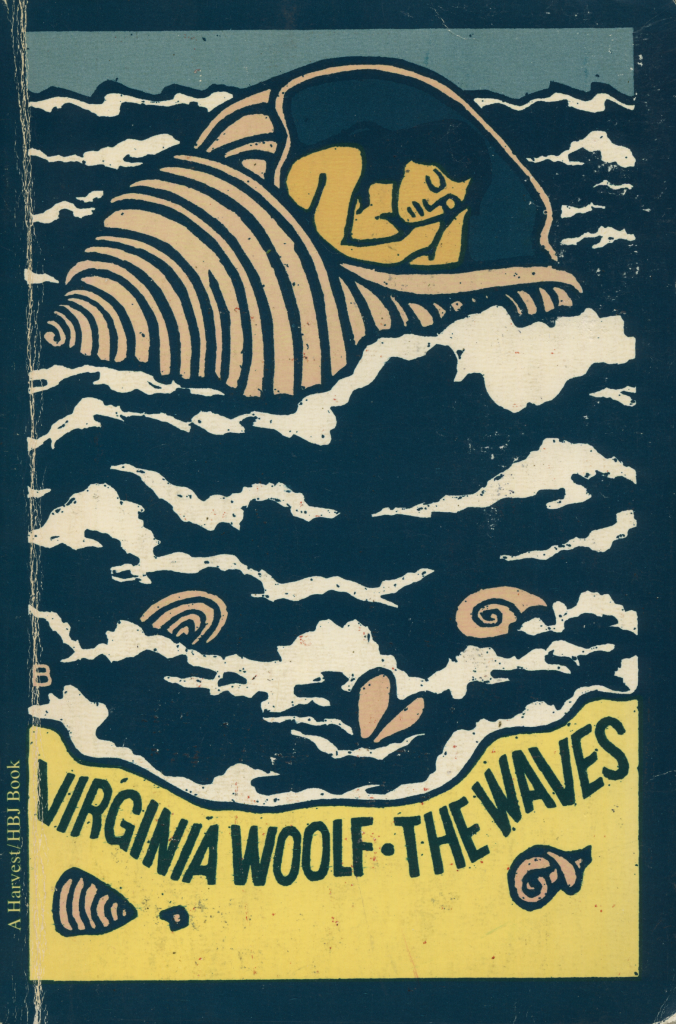 The roar of the traffic, the passage of undifferentiated faces, this way and that way, drugs me into dreams; rubs the features from faces. People might walk through me.
And what is this moment of time, this particular day in which I have found myself caught? The growl of traffic might be any uproar – forest trees or the roar of wild beasts. Time has whizzed back an inch or two on its reel; our short progress has been cancelled.
I think also that our bodies are in truth naked. We are only lightly covered with buttoned cloth; and beneath these pavements are shells, bones and silence.
— Virginia Woolf, from The Waves (1931).
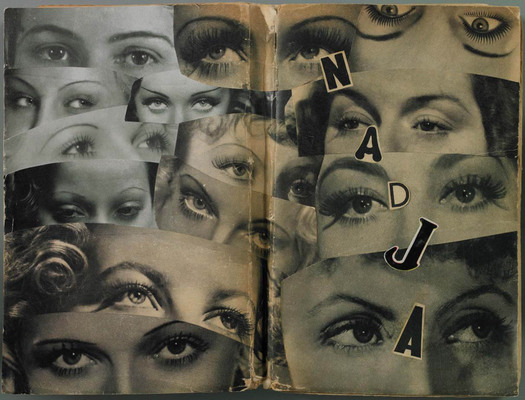
Cover of the 1928 Gallimard edition of Nadja, collaged over by Marcel Mariën, 1938.
The narrator, named André, ruminates on a number of Surrealist principles, before ultimately commencing (around a third of the way through the novel) on a narrative account, generally linear, of his brief ten day affair with the titular character Nadja. She is so named “because in Russian it’s the beginning of the word hope, and because it’s only the beginning,” but her name might also evoke the Spanish “Nadie,” which means “No one.” The narrator becomes obsessed with this woman with whom he, upon a chance encounter while walking through the street, strikes up conversation immediately. He becomes reliant on daily rendezvous, occasionally culminating in romance (a kiss here and there).
His true fascination with Nadja, however, is her vision of the world, which is often provoked through a discussion of the work of a number of Surrealist artists, including himself. While her understanding of existence subverts the rigidly authoritarian quotidian, it is later discovered that she is mad and belongs in a sanitarium. After Nadja reveals too many details of her past life, she in a sense becomes demystified, and the narrator realises that he cannot continue their relationship.
In the remaining quarter of the text, André distances himself from her corporeal form and descends into a meandering rumination on her absence, so much so that one wonders if her absence offers him greater inspiration than does her presence. It is, after all, the reification and materialisation of Nadja as an ordinary person that André ultimately despises and cannot tolerate to the point of inducing tears.
There is something about the closeness once felt between the narrator and Nadja that indicated a depth beyond the limits of conscious rationality, waking logic, and sane operations of the everyday. There is something essentially “mysterious, improbable, unique, bewildering” about her; this reinforces the notion that their propinquity serves only to remind André of Nadja’s impenetrability.
Her eventual recession into absence is the fundamental concern of this text, an absence that permits Nadja to live freely in André’s conscious and unconscious, seemingly unbridled, maintaining her paradoxical role as both present and absent. With Nadja’s past fixed within his own memory and consciousness, the narrator is awakened to the impenetrability of reality and perceives a particularly ghostly residue peeking from under its thin veil. Thus, he might better put into practice his theory of Surrealism, predicated on the dreaminess of the experience of reality within reality itself.
Read the book here: Andre Breton – Nadja.
Tendayi Sithole: “Decoloniality and Rhodes Must Fall: On Wynterian Meditations of the Fallen Flesh” – happening at the University of Cape Town’s Institute for Humanities in Africa (Huma) tomorrow at lunch time.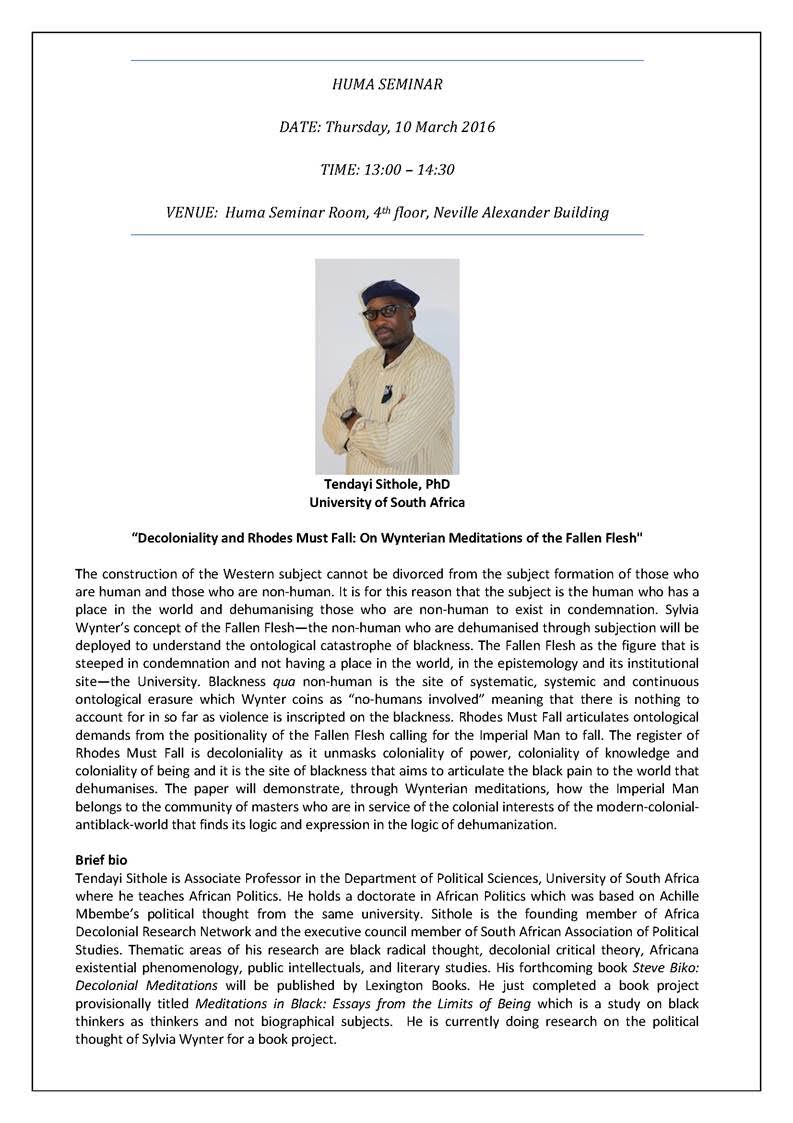
Will I ever find my real voice?
Lilith Performance Studio, June 5, 2010
Melati Suryodarmo (b. in 1969 in Surakarta, Indonesia, lives and works in Braunschweig, Germany) performs EXERGIE – Butter dance, an older piece but shown for the first time at Lilith.
20 blocks of butter in a square on the black dance carpet. Suryodarmo enters the space, dressed in a black tight dress and red high heels. She steps on the pieces of butter. She starts to dance to the sound of Indonesian shamanistic drums. She dances and falls, hitting the floor hard, rising, and continuously being on the verge of standing, slipping and falling in the butter. After twenty minutes Suryodarmo rises one last time, covered in butter, and leaves the space.
http://www.melatisuryodarmo.com/
Copyright of the performance: Melati Suryodarmo
Documentation done by Lilith Performance Studio.
Copyright of the documentation belongs to Melati Suryodarmo and Lilith Performance Studio, Malmo, Sweden.
This is an incredibly powerful performance.
Performances took place 24 – 30 April 2015, presented by Autograph ABP at Rivington Place, London. Presented in two parts, seven evening performances in the gallery followed by a seven-week exhibition, ‘Whip it Good’ retraces the footsteps of colonialism and maps the contemporary reverberations of the triangular slave trade via a series of performances that will result in a body of new ‘action’ paintings.
During each performance, the artist radically transforms the whip – a potent sign and signifier of violence against the enslaved body – into a contemporary painting tool, evoking within both the spectators and the participants the physical and visceral brutality of the transatlantic slave trade. Deep black charcoal is rubbed into the whip, directed at a large-scale white canvas, and – following the artist’s initial ritual – offered to members of the audience to complete the painting.
However, the themes that emerge from Whip It Good trace beyond those of slavery: Ehlers’ actions powerfully disrupt historical relationships between agency and control in the contemporary. The ensuing ‘whipped’ canvases become transformative bearers of the historical legacy of imperial violence, and through a controversial artistic act re-awaken critical debates surrounding gender, race and power within artistic production. What the process generates for the artist, is an intensely focused space in which to make new work as part of a cathartic collaborative process.
Read Chandra Frank’s review of the performance, which also took place in Gallery Momo in South Africa, HERE.
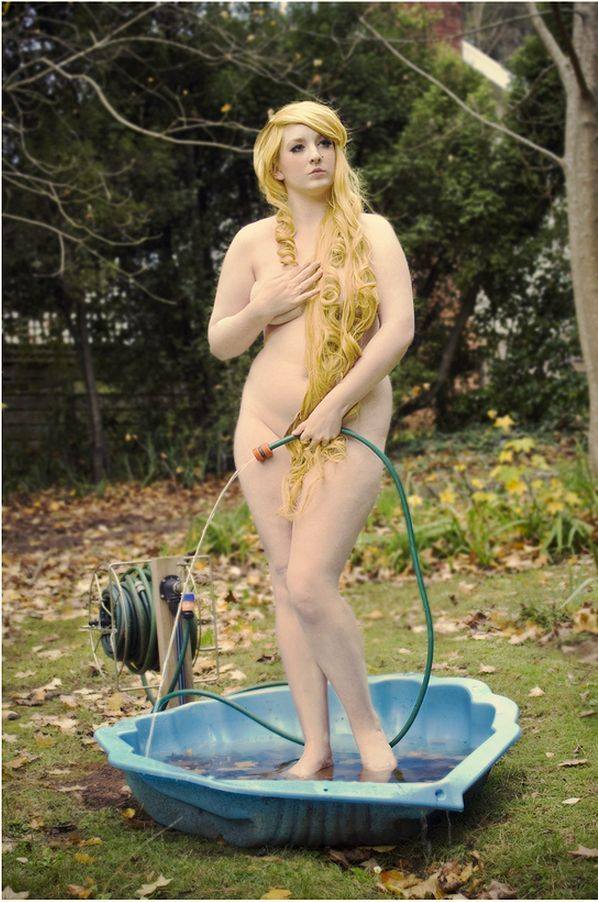
“The laws of macro- and microcosm are alike. Travel in the interior is as a voyage in outer space: we must in each case burst past the circumference of our surface – our here-space and now-time – and, cut loose from the anchorage of an absolute, fixed center, enter worlds where the relationship of parts is the sole gravity. When the sun sets, the stars become apparent; when our eyes close out the light to sleep, there rises in the night-eye the constellation by which sleep-walkers plot their incalculable accuracies. By day we move according to desire and decision; by night Noctambulo advances without moving, led by the twins Gemini (as the eyes are twins or as the I of night is twin to that of day). It is by the dark geometry of such celestial navigation that the day‘s erratic negotiations are corrected and reconciled into the total orbits of our lives.
The film is in the negative. The blackness of night erases all horizon and, released from the leveling pressure of this plane, the movements both of the dancers and of the camera become as four-dimensional and directional as those of birds in air or fish in water.”
– Maya Deren: Chamber Films, program notes for a presentation, 1960
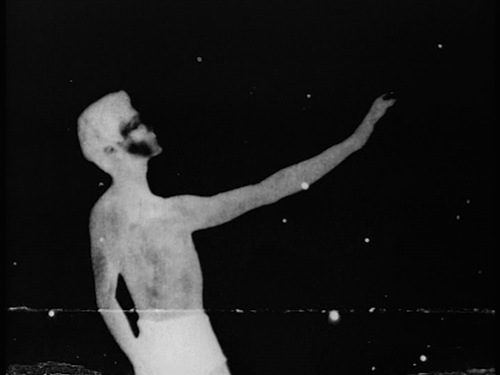
#Title: The Very Eye of Night
#Director: Maya Deren
#Year of Production: 1958
#Duration: 00:15:00
#Choregraphy: Antony Tudor, Metropolitan Opera Ballet School
#Dancers / Actors: Philp Salem, Rosemary Williams, Richard Englund, Richard Sandifer, Don Freisinger, Patricia Ferrier, Barbara Levin, Bud Bready, Genaro Gomez
#Camera: Maya Deren
#Editing: Maya Deren
#Foley Assistance: Harrison Starr
#Sound: Louis and Bebe Barron
#Music: Teiji Ito
When you already can’t sleep and then this comes up in your feed…
From the brand new album out on Warp, Garden of Delete. Go HERE for more cathartic lofi analog-digital apocalypse. Cronenberg would love it.
Her name is NICOLE PARIS. Stupendous.
“And finally I saw it: the connection between love and death, and that the purpose of death is the release of love.”
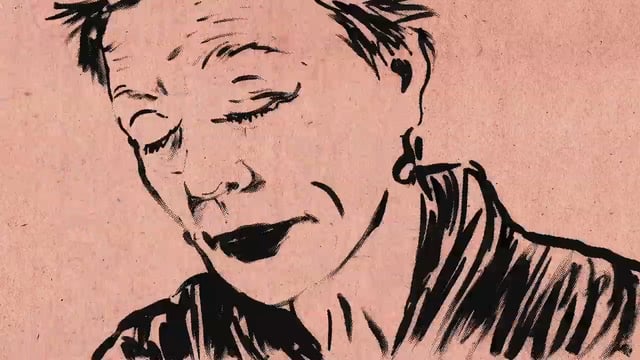 Here is a review, and here is the trailer for Laurie Anderson’s new film, Heart of a Dog, which premiered in September. I really hope I get to see it somewhere on a big screen.
And Robert Christgau had this to say about the soundtrack:
The soundtrack to a film I missed is also Anderson’a simplest and finest album, accruing power and complexity as you relisten and relisten again: 75 minutes of sparsely but gorgeously and aptly orchestrated tales about a) her beloved rat terrier Lolabelle and b) the experience of death. There are few detours—even her old fascination with the surveillance state packs conceptual weight. Often she’s wry, but never is she satiric; occasionally she varies spoken word with singsong, but never is her voice distorted. She’s just telling us stories about life and death and what comes in the middle when you do them right, which is love.
There’s a lot of Buddhism, a lot of mom, a whole lot of Lolabelle, and no Lou Reed at all beyond a few casual “we”s. Only he’s there in all this love and death talk—you can feel him. And then suddenly the finale is all Lou, singing a rough, wise, abstruse song about the meaning of love that first appeared on his last great album, Ecstasy—a song that was dubious there yet is perfect here. One side of the CD insert is portraits of Lolabelle. But on the other side there’s a note: “dedicated to the magnificent spirit/of my husband, Lou Reed/1942-2013.” I know I should see the movie. But I bet it’d be an anticlimax. A PLUS
EDIT 6/11/15. And here’s a beautiful interview with Anderson about the film:
Hélène Cixous’ essay “Castration or Decapitation?” discusses the binary construction of sexuality and society, and how the feminine is defined by the negative: a woman is not a man because she lacks a penis. This “lack” keeps the female subject to definition by the male, as it is seen that because she is the “negative” pole to the man’s “positive”, the woman is concomitantly un-informed, and that therefore it is the position of the man to inform the woman. This imposed silence is what decapitates the feminine metaphorically, precluding her from speaking anything of meaning.
The following is an excerpt from this brilliant essay, translated by Annette Kuhn and published in Signs, Vol. 7, No. 1 (Autumn, 1981), pp. 41-55 (University of Chicago Press) – read the full essay HERE.
* * * * *

… It’s hard to imagine a more perfect example of a particular relationship between two economies: a masculine economy and a feminine economy, in which the masculine is governed by a rule that keeps time with two beats, three beats, four beats, with pipe and drum, exactly as it should be. An order that works by inculcation, by education. It’s always a question of education: an education that consists of trying to make a soldier of the feminine by force, the force history keeps reserved for woman, the “capital” force that is effectively decapitation. Women have no choice other than to be decapitated. The moral is that if they don’t actually lose their heads by the sword, they only keep them on condition that they lose them – lose them, that is, to complete silence, turned into automatons.
It’s a question of submitting feminine disorder, its laughter, its inability to take the drumbeats seriously, to the threat of decapitation. If man operates under the threat of castration, if masculinity is culturally ordered by the castration complex, it might be said that the backlash, the return, on women of this castration anxiety is its displacement as decapitation, execution, of woman, as loss of her head.
We are led to pose the woman question to history in quite elementary forms like, “Where is she? Is there any such thing as woman?” At worst, many women wonder whether they even exist. They feel they don’t exist and wonder if there has ever been a place for them. I am speaking of woman’s place,from woman’s place, if she takes (a) place.
In La Jeune Née I made use of a story that seemed to me particularly expressive of woman’s place: the story of Sleeping Beauty. Woman, if you look for her, has a strong chance of always being found in one position: in bed. In bed and asleep-“laid (out).” She is always to be found on or in a bed: Sleeping Beauty is lifted from her bed by a man because, as we all know, women don’t wake up by themselves: man has to intervene, you understand. She is lifted up by the man who will lay her in her next bed so that she may be confined to bed ever after, just as the fairy tales say.

From Disney’s “Sleeping Beauty”
And so her trajectory is from bed to bed: one bed to another, where she can dream all the more. There are some extraordinary analyses by Kierkegaard on women’s “existence”- or that part of it set aside for her by culture-in which he says he sees her as sleeper. She sleeps, he says, and first love dreams her and then she dreams of love. From dream to dream, and always in second position. In some stories, though, she can be found standing up, but not for long.
Take Little Red Riding Hood as an example: it will not, I imagine, be lost on you that the “red riding hood” in question is a little clitoris. Little Red Riding Hood basically gets up to some mischief: she’s the little female sex that tries to play a bit and sets out with her little pot of butter and her little jar of honey. What is interesting is that it’s her mother who gives them to her and sends her on an excursion that’s tempting precisely because it’s forbidden: Little Red Riding Hood leaves one house, mommy’s house, not to go out into the big wide world but to go from one house to another by the shortest route possible: to make haste, in other words, from the mother to the other.
The other in this case is grandmother, whom we might imagine as taking the place of the “Great Mother,” because there are great men but no great women: there are Grand-Mothers instead. And grandmothers are always wicked: she is the bad mother who always shuts the daughter in whenever the daughter might by chance want to live or take pleasure. So she’ll always be carrying her little pot of butter and her little jar of honey to grandmother, who is there as jealousy … the jealousy of the woman who can’t let her daughter go.
But in spite of all this Little Red Riding Hood makes her little detour, does what women should never do, travels through her own forest. She allows herself the forbidden … and pays dearly for it: she goes back to bed, in grandmother’s stomach. The Wolf is grandmother, and all women recognize the Big Bad Wolf! We know that always lying in wait for us somewhere in some big bed is a Big Bad Wolf.
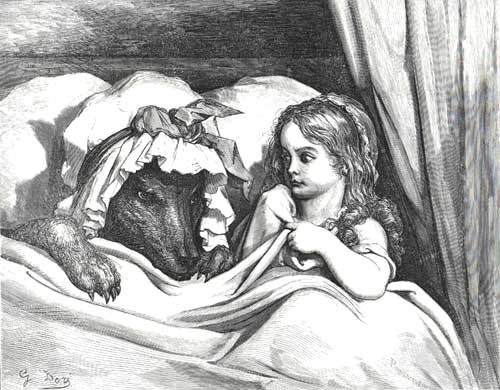
Gustave Dore – The Disguised Wolf in Bed
The Big Bad Wolf represents, with his big teeth, his big eyes, and his grandmother’s looks, that great Superego that threatens all the little female red riding hoods who try to go out and explore their forest without the psychoanalyst’s permission. So, between two houses, between two beds, she is laid, ever caught in her chain of metaphors, metaphors that organize culture . . . ever her moon to the masculine sun, nature to culture, concavity to masculine convexity, matter to form, immobility/inertia to the march of progress, terrain trod by the masculine footstep, vessel… While man is obviously the active, the upright, the productive… and besides, that’s how it happens in History.
This opposition to woman cuts endlessly across all the oppositions that order culture. It’s the classic opposition, dualist and hierarchical. Man/Woman automatically means great/small, superior/inferior… means high or low, means Nature/History, means transformation/inertia. In fact, every theory of culture, every theory of society, the whole conglomeration of symbolic systems-everything, that is, that’s spoken, everything that’s organized as discourse, art, religion, the family, language, everything that seizes us, everything that acts on us – it is all ordered around hierarchical oppositions that come back to the man/ woman opposition, an opposition that can only be sustained by means of a difference posed by cultural discourse as “natural,” the difference between activity and passivity. It always works this way, and the opposition is founded in the couple [binary]. A couple posed in opposition, in tension, in conflict… a couple engaged in a kind of war in which death is always at work – and I keep emphasizing the importance of the opposition as couple, because all this isn’t just about one word; rather everything turns on the Word: everything is the Word and only the Word. To be aware of the couple, that it’s the couple that makes it all work, is also to point to the fact that it’s on the couple that we have to work if we are to deconstruct and transform culture. The couple as terrain, as space of cultural struggle, but also as terrain, as space demanding, insisting on, a complete transformation in the relation of one to the other. And so work still has to be done on the couple … on the question, for example, of what a completely different couple relationship would be like, what a love that was more than merely a cover for, a veil of, war would be like.
I said it turns on the Word: we must take culture at its word, as it takes us into its Word, into its tongue. You’ll understand why I think that no political reflection can dispense with reflection on language, with work on language. For as soon as we exist, we are born into language and language speaks (to) us, dictates its law, a law of death: it lays down its familial model, lays down its conjugal model, and even at the moment of uttering a sentence, admitting a notion of “being,” a question of being, an ontology, we are already seized by a certain kind of masculine desire, the desire that mobilizes philosophical discourse. As soon as the question “What is it?” is posed, from the moment a question is put, as soon as a reply is sought, we are already caught up in masculine interrogation. I say “masculine interrogation”: as we say so-and-so was interrogated by the police. And this interrogation precisely involves the work of signification: “What is it? Where is it?” A work of meaning, “This means that,” the predicative distribution that always at the same time orders the constitution of meaning. And while meaning is being constituted, it only gets constituted in a movement in which one of the terms of the couple is destroyed in favor of the other.
“Look for the lady,” as they say in the stories… “Cherchez la femme”– we always know that means: you’ll find her in bed. Another question that’s posed in History, rather a strange question, a typical male question, is: “What do women want?” The Freudian question, of course. In his work on desire, Freud asks somewhere, or rather doesn’t ask, leaves hanging in the air, the question “What do women want?” Let’s talk a bit about this desire and about why/how the question “What do women want?” gets put, how it’s both posed and left hanging in the air by philosophical discourse, by analytic discourse (analytic discourse being only one province of philosophical discourse), and how it is posed, let us say, by the Big Bad Wolf and the Grand-Mother.
“What does she want?” Little Red Riding Hood knew quite well what she wanted, but Freud’s question is not what it seems: it’s a rhetorical question. To pose the question “What do women want?” is to pose it already as answer, as from a man who isn’t expecting any answer, because the answer is “She wants nothing.” … “What does she want? … Nothing!” Nothing because she is passive. The only thing man can do is offer the question “What could she want, she who wants nothing?” Or in other words: “Without me, what could she want?”
Old Lacan takes up the slogan “What does she want?” when he says, “A woman cannot speak of her pleasure.” Most interesting! It’s all there, a woman cannot, is unable, hasn’t the power. Not to mention “speaking”: it’s exactly this that she’s forever deprived of. Unable to speak of pleasure = no pleasure, no desire: power, desire, speaking, pleasure, none of these is for woman. And as a quick reminder of how this works in theoretical discourse, one question: you are aware, of course, that for Freud/Lacan, woman is said to be “outside the Symbolic”: outside the Symbolic, that is outside language, the place of the Law, excluded from any possible relationship with culture and the cultural order. And she is outside the Symbolic because she lacks any relation to the phallus, because she does not enjoy what orders masculinity – the castration complex.
Woman does not have the advantage of the castration complex – it’s reserved solely for the little boy. The phallus, in Lacanian parlance also called the “transcendental signifier,” transcendental precisely as primary organizer of the structure of subjectivity, is what, for psychoanalysis, inscribes its effects, its effects of castration and resistance to castration and hence the very organization of language, as unconscious relations, and so it is the phallus that is said to constitute the a priori condition of all symbolic functioning. This has important implications as far as the body is concerned: the body is not sexed, does not recognize itself as, say, female or male without having gone through the castration complex.
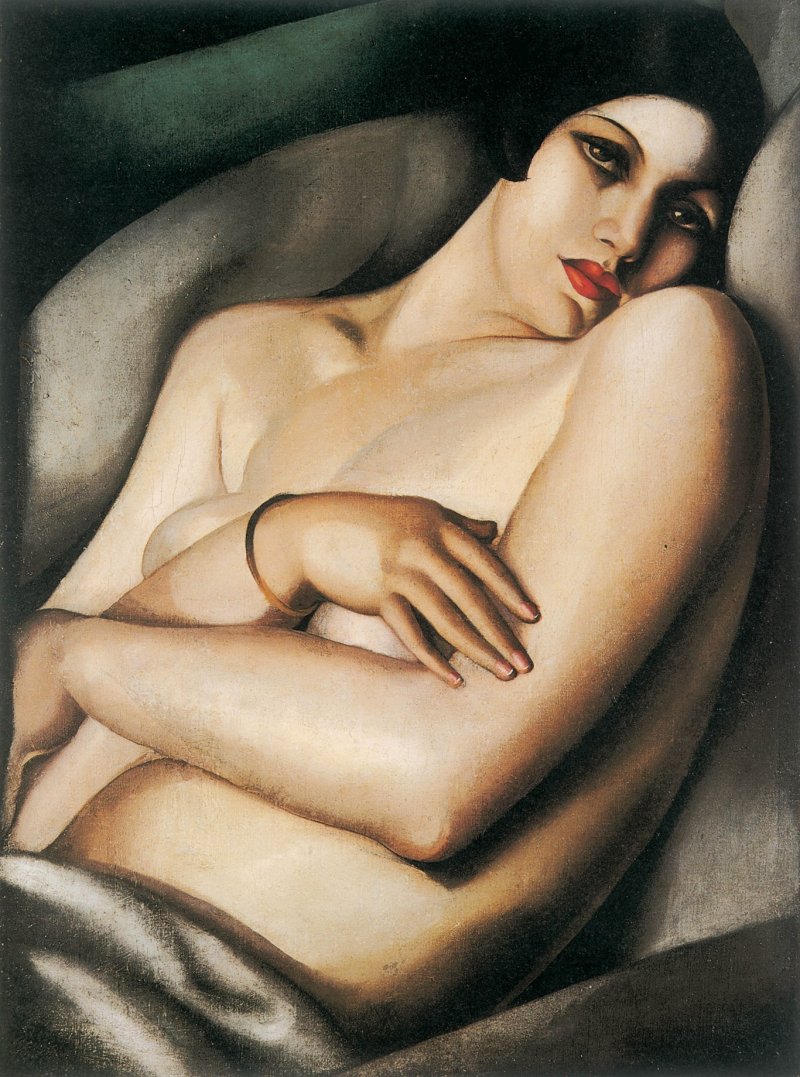
Tamara de Lempicka – “Rafaela sur fond vert” (1927)
What psychoanalysis points to as defining woman is that she lacks lack. She lacks lack? Curious to put it in so contradictory, so extremely paradoxical, a manner: she lacks lack. To say she lacks lack is also, after all, to say she doesn’t miss lack … since she doesn’t miss the lack of lack. Yes, they say, but the point is “she lacks The Lack,” The Lack, lack of the Phallus. And so, supposedly, she misses the great lack, so that without man she would be indefinite, indefinable, nonsexed, unable to recognize herself: outside the Symbolic. But fortunately there is man: he who comes … Prince Charming. And it’s man who teaches woman (because man is always the Master as well), who teaches her to be aware of lack, to be aware of absence, aware of death. It’s man who will finally order woman, “set her to rights,” by teaching her that without man she could “misrecognize.” He will teach her the Law of the Father. Something of the order of: “Without me, without me-the Absolute-Father (the father is always that much more absolute the more he is improbable, dubious)-without me you wouldn’t exist, I’ll show you.” Without him she’d remain in a state of distressing and distressed undifferentiation, unbordered, unorganized, “unpoliced” by the phallus… incoherent, chaotic, and embedded in the Imaginary in her ignorance of the Law of the Signifier. Without him she would in all probability not be contained by the threat of death, might even, perhaps, believe herself eternal, immortal. Without him she would be deprived of sexuality. And it might be said that man works very actively to produce “his woman.” Take for example Marguerite Duras’ Le Ravissement de Lol V. Stein, and you will witness the moment when man can finally say “his” woman, “my” woman. It is that moment when he has taught her to be aware of Death. So man makes, he makes (up) his woman, not without being himself seized up and drawn into the dialectical movement that this sort of thing sets in play. We might say that the Absolute Woman, in culture, the woman who really represents femininity most effectively… who is closest to femininity as prey to masculinity, is actually the hysteric…. he makes her image for her!
The hysteric is a divine spirit that is always at the edge, the turning point, of making. She is one who does not make herself… she does not make herself but she does make the other. It is said that the hysteric “makes-believe” the father, plays the father, “makes-believe” the master. Plays, makes up, makes-believe: she makes-believe she is a woman, unmakes-believe too … plays at desire, plays the father… turns herself into him, unmakes him at the same time. Anyway, without the hysteric, there’s no father… without the hysteric, no master, no analyst, no analysis! She’s the unorganizable feminine construct, whose power of producing the other is a power that never returns to her. She is really a wellspring nourishing the other for eternity, yet not drawing back from the other … not recognizing herself in the images the other may or may not give her. She is given images that don’t belong to her, and she forces herself, as we’ve all done, to resemble them.
And so in the face of this person who lacks lack, who does not miss lack of lack, we have the construct that is infinitely easier to analyze, to put in place-manhood, flaunting its metaphors like banners through history. You know those metaphors: they are most effective. It’s always clearly a question of war, of battle. If there is no battle, it’s replaced by the stake of battle: strategy. Man is strategy, is reckoning . . . “how to win” with the least possible loss, at the lowest possible cost. Throughout literature masculine figures all say the same thing: “I’m reckoning” what to do to win. Take Don Juan and you have the whole masculine economy getting together to “give women just what it takes to keep them in bed” then swiftly taking back the investment, then reinvesting, etc., so that nothing ever gets given, everything gets taken back, while in the process the greatest possible dividend of pleasure is taken. Consumption without payment, of course.
“The weight of me broke the rocking chair; now I can’t get to sleep.”
From the album Nikki Nack, out now on 4AD.

 no one leaves home unless
home is the mouth of a shark
you only run for the border
when you see the whole city running as well
your neighbours running faster than you
breath bloody in their throats
the boy you went to school with
who kissed you dizzy behind the old tin factory
is holding a gun bigger than his body
you only leave home
when home won’t let you stay.
no one leaves home unless home chases you
fire under feet
hot blood in your belly
it’s not something you ever thought of doing
until the blade burnt threats into
your neck
and even then you carried the anthem under
your breath
only tearing up your passport in an airport toilets
sobbing as each mouthful of paper
made it clear that you wouldn’t be going back.
you have to understand,
that no one puts their children in a boat
unless the water is safer than the land
no one burns their palms
under trains
beneath carriages
no one spends days and nights in the stomach of a truck
feeding on newspaper unless the miles travelled
means something more than journey.
no one crawls under fences
no one wants to be beaten
pitied
no one chooses refugee camps
or strip searches where your
body is left aching
or prison,
because prison is safer
than a city of fire
and one prison guard
in the night
is better than a truckload
of men who look like your father
no one could take it
no one could stomach it
no one skin would be tough enough
the
go home blacks
refugees
dirty immigrants
asylum seekers
sucking our country dry
niggers with their hands out
they smell strange
savage
messed up their country and now they want
to mess ours up
how do the words
the dirty looks
roll off your backs
maybe because the blow is softer
than a limb torn off
or the words are more tender
than fourteen men between
your legs
or the insults are easier
to swallow
than rubble
than bone
than your child body
in pieces.
i want to go home,
but home is the mouth of a shark
home is the barrel of the gun
and no one would leave home
unless home chased you to the shore
unless home told you
to quicken your legs
leave your clothes behind
crawl through the desert
wade through the oceans
drown
save
be hunger
beg
forget pride
your survival is more important
no one leaves home until home is a sweaty voice in your ear
saying-
leave,
run away from me now
i dont know what i’ve become
but i know that anywhere
is safer than here
—
Warsan Shire is a Kenyan-born Somali poet, writer and educator based in London. Born in 1988, Warsan has read her work extensively all over Britain and internationally – including recent readings in South Africa, Italy, Germany, Canada, North America and Kenya – and her début book, TEACHING MY MOTHER HOW TO GIVE BIRTH (flipped eye), was published in 2011. Her poems have been published in Wasafiri, Magma and Poetry Review and in the anthology The Salt Book of Younger Poets (Salt, 2011). She is the current poetry editor at SPOOK magazine. In 2012 she represented Somalia at the Poetry Parnassus, the festival of the world poets at the Southbank, London. Warsan is also the unanimous winner of the 2013 Inaugural Brunel University African Poetry Prize.
Watch Roger Young’s award-winning portrait of white South African male entitlement:
Practically unconscious from a night of drinking, Sebastian is deposited by taxi outside his security complex. Too late he realises that he doesn’t have his keys, wallet or cellphone.
Failing to convince a security guard to just let him in, he sets off into the night to find the taxi driver responsible. Sebastian attempts to bully his way home through a mounting series of micro-aggressions against women and service staff, verging increasingly on violence, unaware of the redemption that lies just outside his grasp.
“A portrait of a young man who, while seemingly popular, has no real relationships, no community, and yet no sense of humility.” – Dylan Valley / Africa Is A Country
“A slick, fierce sociopolitical critique” – Grethe Koen / City Press
Winner: Best South African Short
– DIFF 2014
Official Selection:
– Lights, Camera, Africa (Nigeria)
– AFRIFF (Nigeria)
– Zimbabwe International Film Festival
– Shnit Cape Town (South Africa)
– Lusaka International Film and Music Festival (Zambia)
– Verona Festival Africano (Italy)
– Cap Spartel Film Festival (Morocco)
– XPONorth Film Festival (Scotland)
– Picture Farm Film Festival (USA)
– IMSFF (South Africa)
– Indie Karoo Film Festival (South Africa)
 fleurmach