Rhodes Must Fall issue a powerful new statement:
Category Archives: embodiment
imbokodo – the widows of marikana
the sound – i can’t escape myself
Off their brilliant 1980 debut album, Jeopardy, reissued in 2002 by Renascent Records.
a nightmare
Just dreamed I was working at a mattress abattoir/factory in some long ago time and place. The mattresses were somehow living organisms. I had to use a guillotine and also sometimes a huge cleaver, if the guillotine didn’t slice all the way through, and chop them cleanly and very systematically, blood pooling on the rushes underfoot. Every blow I dealt nauseated me to tears. There was a foreman forcing me to speed up all the time. There was nothing else to the dream but this enforced, repetitive violence, and all I could do to try to make it better was to do the awful hacking with more precision.
But what does it mean?
Myself, I think it has to do with being inescapably forced to inhabit the violent, corporate machine of colonialism… I’m working on knowledge production about Africa by missionaries and scientists, through looking at archival objects, which are objects but also subjects, violently wrenched from their contexts. The mattress here symbolises something… maybe related to peace of mind, restfulness, not being awake or aware… I don’t know. Whatever it is, it is being violently ruptured. I think this could be about being forced to make one’s bed to lie in, as a researcher and writer inserted into the chain of murderous history, unable to escape perpetuating it even as I try to undo it, still half asleep.
winter housemate in the land of onesies
Khanyi this morning. Not a Tretchikoff.
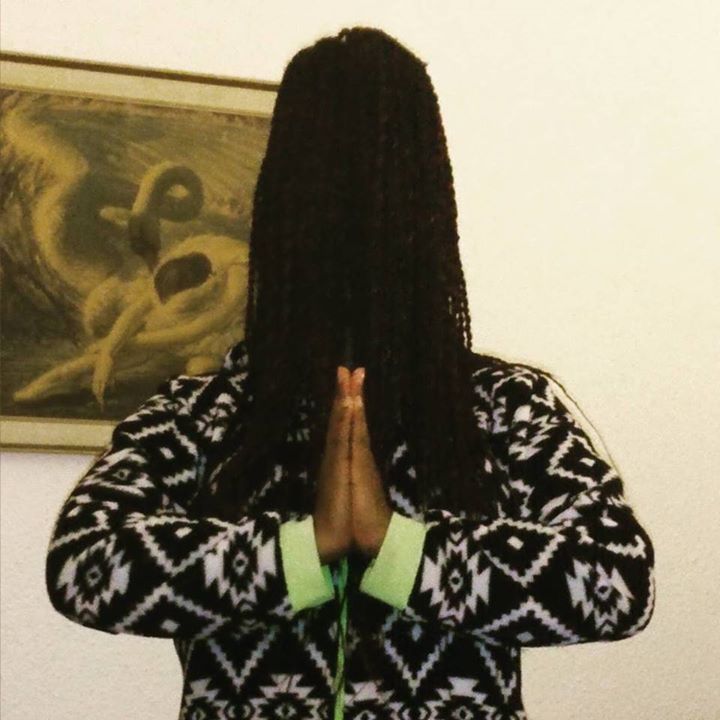
Photo: Rosemary Lombard. Cape Town, 22 July 2015.
this is the most epic thing i have seen for a long time
No words.
on colonial legacies and the violence of liberal whiteness at uct – april 2015
Here’s a thought piece I wrote for an MPhil African Studies class back in April, in the thick of the Rhodes Must Fall resistance. I want to put it here to archive it.
Problematising the Study Of Africa Assignment:
On Colonial Legacies at the University of Cape Town
—
“Remember that you are an Englishman, and have consequently won first prize in the lottery of life.” — Cecil John Rhodes[1]
“[N]o matter what a white man does, the colour of his skin—his passport to privilege—will always put him miles ahead of the black man. Thus in the ultimate analysis no white person can escape being part of the oppressor camp.” — Bantu Stephen Biko[2]
“For the black man there is only one destiny, and it is white.” — Frantz Fanon[3]
—
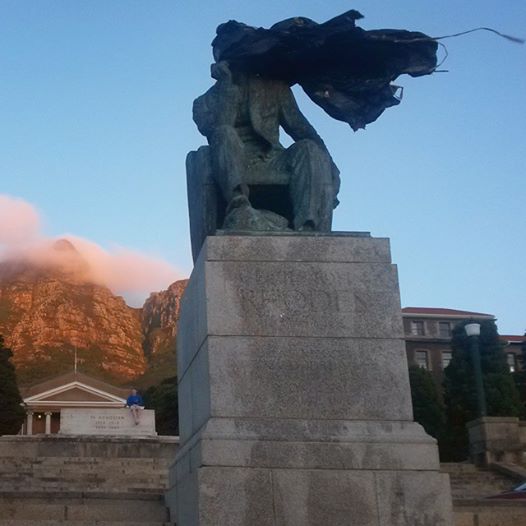
Rhodes statue, head covered in garbage bags. University of Cape Town, 17 March 2015. Photo: Rosemary Lombard
As a child, I remember reading about the railway Cecil John Rhodes envisioned from Cape Town to Cairo, and never imagining it in any light other than as a benevolent feat of engineering that would link people to others, bringing access to resources and the rest of the modern world for those cut off from Western civilisation, literally bringing light to the darkest parts of the continent.
I revised my romantic understanding of Rhodes’ expansionist desires as I became aware of the rampantly exploitative nature of these ambitions, and colonial mechanisms of dominion and exploitation more generally, but it was not until the recent events at UCT surrounding a statue of the man on campus that I realised the true psychological extent and durability of this oppressive colonial legacy, and the way its violence has been rendered almost invisible to those of us on the privileged side of what Walter Mignolo terms the “colonial difference” or divide[4].
The call for transformation is not new: it stretches back more than two decades. The present moment is notable in that students, staff and workers have organised powerfully in concert. A bucket of human excrement thrown on a statue of Rhodes that occupied a central position on UCT’s upper campus escalated tensions around institutional racism that have flared regularly since even before the formal end of the Apartheid era 21 years ago. Black students formed a movement that became known as “Rhodes Must Fall” (RMF) after the social media hashtag they used to mobilise. The students occupied an administrative building for several weeks, in which they held intensive teach-ins and discussions around decolonisation in solidarity with the Students’ Representative Council (SRC), other students, academic staff and workers. University management eventually capitulated to the removal of the statue on 9 April 2015, after a month-long struggle in which RMF demanded to be engaged on their own terms, rather than allowing university management to dictate the terms or to dismiss the protest as had been the case on many previous occasions.
Richard Pithouse describes the mobilisation thus:
The students in Cape Town have, very rapidly, punched a gaping hole into the continuum of English liberal hegemony over the university, and a set of linked sites of a certain kind of elite power, and, thereby, a mode of white supremacy and coloniality that has not been subject to sufficient critique and opposition. It is an extraordinary political achievement that will, no doubt, inscribe itself into the history of the South African academy, and the wider society.[5]
At this historically significant moment, it is on white liberal hegemony and institutional transformation at UCT that I reflect: how has hegemonic whiteness been constructed at UCT, and how does the university continue to function as a colonial space, despite speaking about transformation?
—
I have made several false starts on this assignment (one of which has been losing an entire day’s work on it due to a computer glitch). Initially my idea was to write an open letter to university management, particularly the deputy Vice-Chancellor with the portfolio for transformation, Crain Soudien, whose public behaviour over the past weeks – both in his capacity as a member of university management[6] and in his written statements in the press – has seemed at odds with his historically professed radical stance against uninterrogated hegemony, and his advocacy of deep transformation as chair of the country-wide Ministerial inquiry into institutional racism just a few years ago[7]. Soudien, and other prominent black members of the corporate, academic establishment such as Jonathan Jansen, are interpellated[8] representatives of their institutions’ ideology, and any hint of activism they once displayed has evaporated.
However, I decided that I could not, in good conscience, from my position as an historical beneficiary of the untransformed system, write such a letter. So, dropping the academic apparatus as prompted by this assignment, I feel I have only enough authority to write from a personal, situated angle in attempt to contextualise the recent Rhodes Must Fall chain of events at UCT, with particular reference to the institution’s persisting coloniality. I cannot assume anything other than my own subject position, as a white, cisgender, heterosexual female, who comes from relative privilege. To do so would be disingenuous, as I have learned a trenchant lesson through listening to what students have been saying these past weeks: despite my best intentions and all the empathy I can muster, I cannot have knowledge of what it is to experience institutional racism.
As a “white” person, I have ancestrally been on the powerful side of the racial divide put in place with the advent of Western colonial activity, and I continue to be identified with that subject position. “Whiteness” is the term used to describe the position of privilege this subjectivity puts me and others like me in.
If there is one thing the Rhodes Must Fall moment has driven home to me, it’s that from my subject position I am unqualified to make authoritative pronouncements regarding the experiences or motives of anyone except myself, regardless of racial identity: it’s obvious that I can’t speak to “black” experience, but the most common “white” responses to RMF have largely made me feel alienated, too.
Two decades of rainbow nation narrative have led to the unreflexive “I don’t see colour” rhetoric becoming the status quo among liberal-thinking white South Africans, as well as black people assimilated to corporate institutional capitalist ideology. This is pernicious in that it obscures the very real, material persistence of different life experiences and oppression based on inherited structural inequalities, stemming from racial discrimination.
Coloniality, the set of dispositions, values and forms of practice set in place in the colonial world, outlives the moment of formal political decolonisation, and carries through beyond it in lasting ways. The white Western self speaks from the site of the universal, as a bearer of modernity and civilisation, situated dynamically inside of linear time and at home in a global, cosmopolitan world. All forms of knowledge produced by the Western self, in other words, are deemed to have universal, rational, historical currency.
In contrast, those selves and forms of knowledge encountered by the Western self that are deemed to be other than the Western self are deemed to be “local”, labelled “indigenous”. An indigenous self or indigenous knowledge is constituted as static, standing outside of history and linear time, and inside of tradition, which becomes the opposed category to modernity. Western, colonial knowledge is framed in binaries, in relation to Western supremacy: the privileged poles of these dyads are whiteness, maleness, heterosexuality, and so forth.
Manichean power relationships instituted on the basis of the colonial apparatus did not end with apartheid in 1994. They persist throughout social interactions, their oppressive dynamics all but invisible to those on the privileged side of such relationships, such as white people and males, due to the hegemonic nature of this framing.
A common criticism I saw levelled at black protesters by white commenters was that things changed with the coming of the democratic dispensation in 1994, and that they should stop “holding on to the past” or “playing the race card” with a “victim mentality”, that they should “move on”. But being cognisant of how the legacy of chronologically past events persists into the present is not the same as “holding on to” the past. Only those who are not experiencing the continuation of structural oppression every day can advocate ignoring or disregarding it, and “moving swiftly on”.
Western knowledge systems condition us not to admit any other perspective to the realm of validity. It thus takes concerted effort from white people to listen and not dismiss other points of view if they are to “click” and be able to acknowledge that the hegemonic “white” point of view is not the only, natural point of view. Recognition of the persisting inequality and oppression of black people generates a sense of discomfort and cognitive dissonance. I have realised through conversations with white people I know, as well as the comments I’ve read on social media, that most are unwilling (or perhaps intellectually unable?) to make this effort. Most who identify as liberal (“colour-blind”, non-racist) do not want to accept that they continue to benefit from this system at the expense of others, and display great defensiveness when confronted with the persistence of structural racism, and white complicity therewith.
The comments I have seen by white people who consider themselves liberal and “non-racial” (strenuously disavowing racism) against protesters have been telling – describing them as “uncivilised”, “uneducated”, “unreasonable”, “backward”, “barbarians”, “savages”, “childish”, “monkeys”: these epithets bear the distinctive, unreflexive tang of colonial binaries, binaries set up in implied counterpoint to the opposite values ostensibly possessed by the hallowed university. These colonial tropes have pervaded media, misrepresenting Rhodes Must Fall as an unthinking, destructive mob, when the reality is that the movement created, in a deliberate and considered way, an autonomous space which has surfaced deep pain, but also fostered constructive discussion and reimaginative work.[9]
Acts of physical protest occur when speech has failed, or is perceived to be inadequate. The act of flinging sewage at the statue of Rhodes went beyond talking, because talking was no longer believed to be a viable option for engaging. For dialogue to happen, there needs to be a willingness to listen communicated clearly. UCT, and whiteness more generally, has historically demonstrated itself to be dismissive, unprepared to engage black students’ and staff’s grievances about structural oppression. UCT even went so far as to criminalise protesters.
Steven Friedman remarks:
It is no accident that the protests are happening on the campuses of English-speaking “liberal” universities, which have long claimed to be victims of racism: it is precisely at those institutions that race is kept alive by denying it. Under apartheid, many English-speaking whites insisted that apartheid was created by Afrikaners alone. The “liberal” English-language universities joined in — they proclaimed their right to teach whatever and whomever they pleased, declaring that discrimination was imposed on them by the state. This smugness ignored the extent to which white English speakers in the professions and business profited from the denial of opportunities to others — and the degree to which they believed that blacks could win acceptance only if they adopted the values of whites. The universities ignored the reality that, when they were allowed to do as they pleased, they limited black student numbers and taught courses that assumed that every South African was white… This shows how deep-rooted the attitudes that underpinned apartheid are — and it points a finger at a form of liberalism that has washed its hands of racism while continuing to practise it…
When democracy arrived, the legal barriers tumbled; deep-rooted beliefs that whites are superior did not. The “liberal” universities now had the right to teach who and what they pleased: they used it to keep alive the racial pecking order in a “colour blind” guise… Whites remain largely in charge — but, because they are “liberal”, they always have a good “nonracial” reason for why this should be so.[10]
Hegemonic white power is not always subtle. UCT management has an historical track record of overt institutional racism too. There are several junctures at which these issues have crystallised blatantly, and I will mention two:
In 1968, the accomplished black anthropologist, Archie Mafeje, was made an offer of employment by UCT, but this offer was rescinded under pressure from the Apartheid government, sparking protests. In 1991, the university again offered Mafeje a position. Although he had by that time, 23 years after the first offer, attained the rank of professor, it offered him only a senior lecturer post, still treating him as a junior academic. UCT apologised to Mafeje for this indignity after his death, naming a room in the Bremner building in his honour. It was no coincidence that this room was made the headquarters of Rhodes Must Fall when they occupied that building, renaming it “Azania House” in symbolic redress.
The so-called “Mamdani Affair” unfolded at UCT in 1996 when eminent Ugandan scholar Mahmood Mamdani, who at that point held the AC Jordan Chair in the Centre for African Studies, challenged the university to place African scholarship at the centre of the curriculum. He compiled a curriculum centred on African scholarship which was met with resistance from the all-white advisory committee, apparently because it did not reflect thinkers well-known enough to the committee – that is, it did not reproduce the established western canon of writing about Africa closely enough. Via a manipulation of administrative processes, the curriculum Mamdani planned was rejected and replaced by one produced by the committee. He was suspended and left UCT soon afterwards for the United States. Nomalanga Mkhize charges that the affair “exposed the ignorance of many prominent, predominantly white South African scholars who, because of their racially privileged positions, had risen up the ranks without having to engage three decades of rigorous post-independence African scholarship.”[11]
Black students and academics are angry. Twenty years since the formal end of apartheid, they are still treated as second-class citizens on campus. Only a fraction of teaching staff are black[12], and the syllabus overwhelmingly represents the perspectives of white thinkers. Black thinkers continue to be marginalised. The disciplines are still, overwhelmingly, epistemologically “white”. Francis Nyamnjoh, writing in 2012, describes the insidious outcome of this:
In Africa, the colonial conquest of Africans – body, mind and soul – has led to real or attempted epistemicide – the decimation or near complete killing and replacement of endogenous epistemologies with the epistemological paradigm of the conqueror. The result has been education through schools and other formal institutions of learning in Africa largely as a process of making infinite concessions to the outside – mainly the western world. Such education has tended to emphasize mimicry over creativity, and the idea that little worth learning about, even by Africans, can come from Africa. It champions static dichotomies and boundedness of cultural worlds and knowledge systems. It privileges teleology and analogy over creative negotiation by Africans of the multiple encounters, influences and perspectives evident throughout their continent. It thus impoverishes the complex realities of those it attracts or represses as students.[13]
A statement by UCT’s Student Representative Council, made at a meeting the day the statue was removed, echoes the points made above:
[T]he black folk’s problem is still chiefly the potency of whiteness. In the new democratic dispensation, we have only been concerned with the ‘rainbow nation’ rhetoric and singing kumbaya while our economy still reflects the same socio-economic disparities of the apartheid era. Democracy has granted a few blacks seats at the master’s table; the rest are still fighting over breadcrumbs falling off the table. And it is these few and mostly politically connected ‘privileged’ blacks who assist their white masters in maintaining the status quo.
Whites have not even begun to see blacks as equals and as being capable of thinking for themselves. They continually want to have a say in how we break the shackles of oppression administered and maintained by them. They cry foul as soon as blacks start organising and speaking for themselves. Deep down they understand that they stand to lose their privileges. The white liberal has continued to play a rather peculiar role in the oppression of the black masses, his racist and conservative ways continue to be shielded in his subtle and ‘angelic’ approach. It is the white liberal who is at the forefront of spreading the gospel of integration and a peaceful society. White liberals point towards white conservatives as the problem, and they have convinced themselves that they have arrived at enlightenment pertaining to the sins committed by their forefathers. Yet subconsciously they share the same set of values and desire to protect their privileges.
The ideology and culture of formerly ‘whites only’ spaces has still not changed. What has taken place is that blacks can now access those spaces of learning and living in order to immerse themselves in a western culture. Thus, for the blacks to enjoy the benefits of accessing those places they have to integrate into whiteness. Our integration is nothing but black people assimilating to what is still regarded as righteous, ordained, intelligent, beautiful and angelic whiteness.[14]
Richard Pithouse comments, with hope:
Liberalism has always been fundamentally tied up with the poisonous fantasy of its barbarian other. In 1859 John Stuart Mill, the great philosopher of English liberalism, declared, in his famous essay On Liberty, that “Despotism is a legitimate mode of dealing with barbarians”. The essential logic of actually existing liberalism – freedom for some, despotism for others – was never merely, as they say, academic. In 1887 Rhodes, speaking in parliament in Cape Town echoed these sentiments when he declared that: “we must adopt a system of despotism in our relations with the barbarians of South Africa”.
Yet in 2015, in a society still fundamentally shaped by the historical weight of this idea of freedom for some and despotism for others, a text book for first year politics students, written and prescribed in South African universities, a text book in which not a single African person is presented as a thinker worthy of study, declares that “Most discussions of freedom begin with John Stuart Mill’s On Liberty”.
This sort of academic consensus, which seemed entrenched a few weeks ago, no longer seems to have much of a future. The students have made an intervention of real weight and consequence.
In addressing the necessity of curricular transformation, Harry Garuba writes about the need for a “contrapuntal pedagogy that brings the knowledge of the marginalised to bear on our teaching… The Cecil John Rhodes statue at the centre of the upper campus of UCT may have been physically removed, but what we now need to move is the hegemonic gaze of the Rhodes that is lodged in our ways of thinking… our professional practices as teachers, academics, scholars and students. We need to take a critical look at our everyday routines… In short, we need to remove the Rhodes that lives in our disciplines and the curricula that underpin them.”[15]
—
Stories about the past do not only tell us where we come from. They also tell us where we belong and where we should be headed: they influence how we understand our present and imagine our future. Statues and memorials intentionally inscribe in space particular stories, effectively fixing in stone a version of the past chosen by those in power.
The spatial symbolic order at UCT is hard evidence of the university’s lack of transformation. The university, stretched across the lower slopes of Devil’s Peak, is a carefully curated memorial landscape that concretises colonial ideologies of power and knowledge: a site of prospect, and temple of rarefied knowledge on the hill. Moving through this space as individuals, we are forced to conduct a conversation with these imperial ideas: they exert their influence on us tangibly, directing our attention. Little has been changed about symbolism on the campus in the past twenty years, save for the additive naming of a few buildings and spaces after black icons: Steve Biko Student’s Union, Cissy Gool Plaza, Madiba Circle.
Dependent on one’s subject position, the power exerted by such spatial and ideological configurations feels more or less oppressive. As white people, we may not give much thought to whether we feel at home or belong in the landscape. Black people, on the contrary, constantly confronted by representations of white triumph at the expense of black lives, feel alienated and suffocated. SRC Chair Ramabina Mohapa said at the 16 March meeting convened by UCT management on Heritage Signage and Symbolism, before walking out with most of the student body present, that black students “can no longer breathe”.[16]
As already discussed, colonial dispositions are not easily apprehended or altered, because they remain hegemonic in wider society, rendering them invisible to those who fall on the privileged side of the colonial divide between those privileged and those not privileged.
However, moments in which the symbolic order is ruptured, like the toppling of the Rhodes statue, provide rare opportunities where the usually obscured hegemony becomes plainly apparent. It is at catalytic moments such as these that spacetime is malleable: contrapuntal conversations become possible, competing epistemologies thinkable; candid self-examination and interventions, too. Perhaps substantive transformation happens more effectively in sudden shifts than gradually.
I would like to close with a trio of comments that I gleaned from my Facebook feed on 10 April 2015, the day after Rhodes’ statue was removed.
We stop mistaking Rhodes for a good white person and we stop believing in white supremacy because everywhere you look you see white people’s statues – it’s almost as though there was no one here when they arrived and they just happened to discover the gold (which, coincidentally, was discovered by a black man). When the statues are gone, we can start asking the important questions like why are there 110 white male South African professors and not a single black female South African professor at UCT – South Africa’s most prestigious university. And questions like why is the curriculum at these universities so Eurocentric in its outlook with scant reflection on Africa and her rich history and her bright future. Without these statues and the prestige and honour bestowed on the founding fathers of white supremacy, the leaders of these institutions will have no choice but to answer those questions truthfully and reflect on those answers. Further, removing these reminders of the fallacy of white supremacy leaves space for black excellence to flourish without having to use the white gaze and its tools of measurement to validate itself.
– Fumbatha May
Watched Rhodes fall last night. I’ve never experienced such an atmosphere of happiness and liberation at UCT – particularly when the students refused to let the old bastard go gracefully but crowned him with a bucket of paint as he rode off into the sunset of empire. For the past few weeks, the students have been teaching the university its most important lesson in decades, and will continue to do so for a long time to come. At last, being at UCT is beginning to feel like being at a real university.
– Carlo Germeshuys
Driving home from work passed the plinth where Rhodes stood. It has a tag sprayed on the neat wood box that is covering the base: ‘C.J. WAS HERE ~>’ There is a black girl in a blue dress leaning up on it, smiling broadly as she chats to a white guy in green shorts who is sitting on the edge of it, swinging his legs as he rummages for something in his bookbag beside him. I swear there is a lighter feeling seeing that figure gone! An invitation to a new conversation.
– Debbie Pryor
These comments convey the general mood on campus well: there is a sense of hope and determination that the symbolic fall of Rhodes’ statue will be followed by deep institutional transformation, sentiments I share.
__
REFERENCES
Africa Network Expert Panel. 2014. Why are there so few black professors in South Africa? The Guardian Africa, 6 October 2014. http://www.theguardian.com/world/2014/oct/06/south-africa-race-black-professors
Althusser, L. 1971. “Ideology and Ideological State Apparatuses (Notes towards an Investigation)”. Lenin and Philosophy and Other Essays. Verso.
Biko, S. 1988. I Write What I Like. London: Heinemann.
Friedman, S. 2015. “The racial denialism of South African liberals”. Rand Daily Mail. 1 April 2015. http://www.rdm.co.za/politics/2015/04/01/the-racial-denialism-of-south-african-liberals
Garuba, H. 2015. “What is an African curriculum?” Mail and Guardian, 17 April 2015 00:00. http://mg.co.za/article/2015-04-17-what-is-an-african-curriculum
Goodrich, A. 2015. “Statue controversies in South Africa – reimagine/recontextualise/replace” April 15, 2015. http://www.syntheticzero.net/2015/04/15/statue-controversies-in-south-africa-reimaginerecontextualisereplace/
Majavu, M. 2015. “Uct and Rhodes: Removing Statues, Dismantling Colonial Legacies”. Equal Times, 30 March 2015. http://www.equaltimes.org/uct-and-rhodes-removing-statues?lang=en#.VTUs9tyUd8E
Mangcu, X. 2015. Danger of ‘rationalist conceit’ in Cape Times, March 25 2015 at 01:52pm. http://www.iol.co.za/capetimes/danger-of-rationalist-conceit-1.1836933
Mangcu, X. 2015. “Assault on idea of academic freedom”. Cape Times,April 14 2015 at 01:44pm. http://www.iol.co.za/capetimes/assault-on-idea-of-academic-freedom-1.1844918.
Mignolo, W. 2002. “The Geopolitics of Knowledge and the Colonial Difference”. The South Atlantic Quarterly 101.1 (2002) 57-96. Duke University Press.
Mkhize, N. 2015. “Anger over Rhodes vindicates Mamdani”. Business Day, 7 April 2015. http://www.bdlive.co.za/opinion/columnists/2015/04/07/anger-over-rhodes-vindicates-mamdani
Moodie, A. 2010.”The Soudien Report: Deny racism at your peril”25 April 2010. University World News, Issue No:121. http://www.universityworldnews.com/article.php?story=20100424200305969
Mudimbe, V. 1988. The Invention of Africa: Gnosis, Philosophy and the Order of Knowledge. London: James Curry.
Muller, S. 2014. “Transformation is not UCT’s priority”. Mail and Guardian 21 November 2014. http://mg.co.za/article/2014-11-21-transformation-is-not-ucts-priority
Nyamnjoh, F. 2012. “’Potted Plants in Greenhouses’: A Critical Reflection on the Resilience of Colonial Education in Africa”. Journal of Asian and African Studies. February 15, 2012. doi: 10.1177/0021909611417240.
O’Connell, S & Himmelman, N. 2011. “Lessons in continued oppression: UCT’s conception of post-apartheid freedom sets the bar too low”. https://concernedcasstudents.wordpress.com/2011/05/15/lessons-in-continued-oppression-ucts-conception-of-post-apartheid-freedom-sets-the-bar-too-low/
Pithouse, R. 2015. “South Africa in the Twilight of Liberalism”. Kafila, 19 April 2015. http://kafila.org/2015/04/19/south-africa-in-the-twilight-of-liberalism-richard-pithouse/
Soudien et al. 2008. Report of the Ministerial Committee on Transformation and Social Cohesion and the Elimination of Discrimination in Public Higher Education Institutions. 30 November 2008
Soudien, C. 2015 “UCT stands devoted to debate”. Cape Times, April 14 2015 at 12:43pm. http://www.iol.co.za/capetimes/uct-stands-devoted-to-debate-1.1844882
Wolpe, H. 1995. “The debate on university transformation in South Africa: The case of the University of the Western Cape.” Comparative Education, 31(2): 275 – 292.
___
[1] Attributed in “The lottery of life”, The Independent, 5 May 2001.
[2] From I Write What I Like: Selected Writings by Steve Biko, 1969 – 1972. Heinemann, 1987.
[3] Introduction to Black Skin, White Masks. Translated by Charles Lam Markmann. New York: Grove Press, 1967.
[4] Mignolo, 2002.
[5] Pithouse, 2015.
[6] See, for example, Soudien’s handling of a walkout by the SRC and Rhodes Must Fall during a meeting at UCT on “Heritage, Signage and Symbolism”, 16 March 2015: https://www.youtube.com/watch?v=4NgpJ00M5Ho
[7] Compare Soudien et al 2008; Alison Moodie’s 2010 interview with Soudien, entitled “The Soudien Report: Deny racism at your peril” and the defensive tone of Soudien 2015.
[8] Althusser, 1971. Interpellation is the process by which the ideology of an institution constitutes individual subjects’ identities through the process of the institution and its discourses ‘hailing’ them in social interactions.
[9] I would like to state as an aside that I do not believe it is the place of beneficiaries of structural racism to offer opinions on how transformation would be best effected. I believe white people should make space to listen and take cues from those who are still being squashed by the non-transformation of the society we inhabit as to what to do. Those who encounter the problem have far more authority in this matter. This is difficult for some white people to grasp due to an ingrained sense of entitlement, and the way whiteness and white knowledge regimes still have hegemonic authority. Several have accused me of promoting self-censorship. It is very far from that. As a white person, to make space for black voices at this moment in the way I am advocating is not to disengage from the debate. It is an active decision to be quiet, to listen and reflect, an action based on a recognition that unless we with white voices behave differently, the status quo of the balance of representation being skewed in the favour of white voices will not change materially.
[10] Friedman, 2015.
[11] Mkhize, 2015.
[12] The number of white professors at UCT stands at about 87 per cent, whereas black professors make up only 4 per cent of the professorial complement (Majavu, 2015).
[13] Nyamnjoh, 2012: 129-130.
[14] UCT SRC statement delivered by Ramabina Mahapa on 9 April 2015. http://www.uct.ac.za/dailynews/?id=9096
[15] Garuba, 2015.
[16] A video of the proceedings can be found at https://www.youtube.com/watch?v=4NgpJ00M5Ho.
ana teresa barboza vs. alysha speer
Life is painful and messed up. It gets complicated at the worst of times, and sometimes you have no idea where to go or what to do. Lots of times people just let themselves get lost, dropping into a wide open, huge abyss. But that’s why we have to keep trying. We have to push through all that hurts us, work past all our memories that are haunting us. Sometimes the things that hurt us are the things that make us strongest. A life without experience, in my opinion, is no life at all. And that’s why I tell everyone that, even when it hurts, never stop yourself from living.
― Alysha Speer

Check out more of Peruvian artist Ana Teresa Barboza’s fascinating embroidery work previously featured on Fleurmach, or on her own blog, HERE.
insights from the rachel dolezal debacle
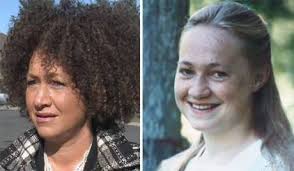 For me, the most surprising part of the Rachel Dolezal debacle is how many people, both black and white, see faking black identity as selflessly forsaking one’s privilege.
On the contrary, in places of privilege that are inaccessible to most black people, particularly in contemporary humanities departments steeped in postcolonial critique, blackness has credibility that whites crave. Being able to claim that one has “been there” and experienced marginality trumps white voices who can only speak from second hand information. I’ve met American students at UCT who are as white as I am (and decidedly more privileged), but use the one drop of black or hispanic blood in their veins to reap the special bursaries, grants, opportunities and legitimacy reserved for black voices in humanities departments desperate to prove they are transforming.
Likewise, in South Africa, I can’t even count the number of white friends who lay claim to being African, to move themselves out of the uncomfortable status of hated, oppressive “settler” always on the wrong side of history. That’s not even counting those who confer on themselves “ancient African knowledge” as sangomas, or emphasise that they see themselves not as “white” but as “human” and they don’t “see colour.”
While being black is a cause of suffering for black people, cherrypicked “blackness” is a decided advantage for whites. We’d love nothing more than to deny the past ever happened, and claim that the system isn’t rigged to our advantage but that we deserve this. And we ogle at the rewards we could gain if we could lay our mitts on the credibility, cachet and funding our whiteness disqualifies us from. We’ve all dreamed of being able to have our cake and eat it, like Rachel Dolezal did. That she caved in to this temptation doesn’t make her a hero of non-racism.
the kate bush story – bbc documentary (2014)
Including wonderful commentary from Tricky, Peter Gabriel, David Gilmour, John Lydon, Tori Amos, Natasha Khan, St Vincent, Neil Gaiman, Brett Anderson, and some fascinating archive.
current mood

mladen dolar – his master’s voice
The following essay is excerpted from Mladen Dolar’s book, A Voice and Nothing More (which I’m reading for my dissertation).
The voice did not figure as a major [western] philosophical topic until the 1960s, when Derrida and Lacan separately proposed it as a central theoretical concern. Dolar goes beyond Derrida’s idea of “phonocentrism” and revives and develops Lacan’s claim that the voice is one of the paramount embodiments of the psychoanalytic object (objet a). Dolar proposes that, apart from the two commonly understood uses of the voice as a vehicle of meaning and as a source of aesthetic admiration, there is a third level of understanding: the voice as an object that can be seen as the lever of thought. He investigates the object voice on a number of different levels–the linguistics of the voice, the metaphysics of the voice, the ethics of the voice (with the voice of conscience), the paradoxical relation between the voice and the body, the politics of the voice–and he scrutinizes the uses of the voice in Freud and Kafka. (There’s a great review by Christine Boyko-Head HERE.)
—
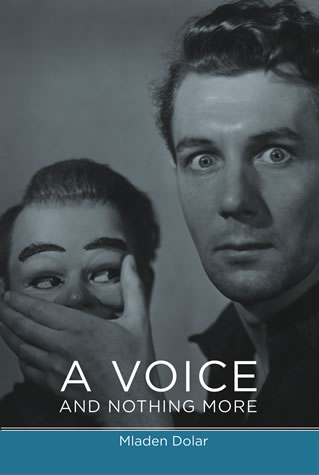 Plutarch tells the story of a man who plucked a nightingale and finding but little to eat exclaimed: “You are just a voice and nothing more.”
There is a story that goes like this: In the middle of a war, in the middle of a battle, there is a company of Italian soldiers in the trenches. And there is an Italian commander who issues the command “Soldiers, attack!” But nothing happens, nobody moves. So the commander gets angry and shouts even louder “Soldiers, attack!” At which point there is a response, a voice rising from the trenches saying Che bella voce!
This story can serve as a good entry into the problem of the voice. On the first level this is a story of a failed interpellation. The soldiers fail to recognize themselves in the appeal, the call of the other, the call of duty, and they don’t act accordingly. Surely the fact that they are Italian soldiers plays a great role in it, they do act according to their image of not the most courageous soldiers in the world, as legend has it, and the story is most certainly not a model of political correctness, it indulges in tacit chauvinism and national stereotypes. So the command fails, the addressees don’t recognize themselves in the meaning being conveyed, they concentrate instead on the medium, which is the voice. The attention paid to the voice hinders the interpellation and the transmission of a symbolic mandate, the transmission of a mission.
But on a second level another interpellation works in the place of the failed one: if the soldiers don’t recognize themselves in their mission as the soldiers in the middle of a battle, they do recognize themselves as addressees of another message, they constitute a community as a response to the call, the community of people who can appreciate the aesthetics of a beautiful voice. Who can appreciate it when it is hardly the moment, and especially when it is hardly the moment to do so? So if in one respect they act as stereotypical Italian soldiers, they also act as stereotypical Italians in this other respect, namely as opera lovers. They constitute themselves as the community of “the friends of the Italian opera” (to take the immortal line from Some Like It Hot), living up to their reputation of connoisseurs, people of refined taste who have amply trained their ears with bel canto, so they can tell a beautiful voice when they hear one, even among the canon fire.
The soldiers have done the right thing, from our biased present perspective, at least in an incipient way, when they have concentrated on the voice instead of on the message, although, to be sure, for the wrong reasons. They are seized by a sudden aesthetic interest precisely when they would have had to attack, they concentrate on the voice because they have grasped the meaning all too well. But quite apart from their feigned artistic inclination they have also bungled the voice the moment they isolated it, they immediately turned it into an object of aesthetic pleasure, an object of veneration and worship, the bearer of a meaning beyond the ordinary meanings. The aesthetic concentration on the voice loses the voice precisely by turning it into a fetish-object.
I will try to argue that there is a third level: an object voice which doesn’t go up in smoke in conveyance of meaning and which doesn’t solidify either in an object of fetish reverence, but an object which functions as a blind spot in the call and a disturbance of aesthetic appreciation. One shows fidelity to the first by running to the attack, one shows fidelity to the second by running to the opera. But fidelity to the third is far more difficult to achieve. I will try to pursue it on three different levels: linguistics, ethics and politics. Continue reading
passportface
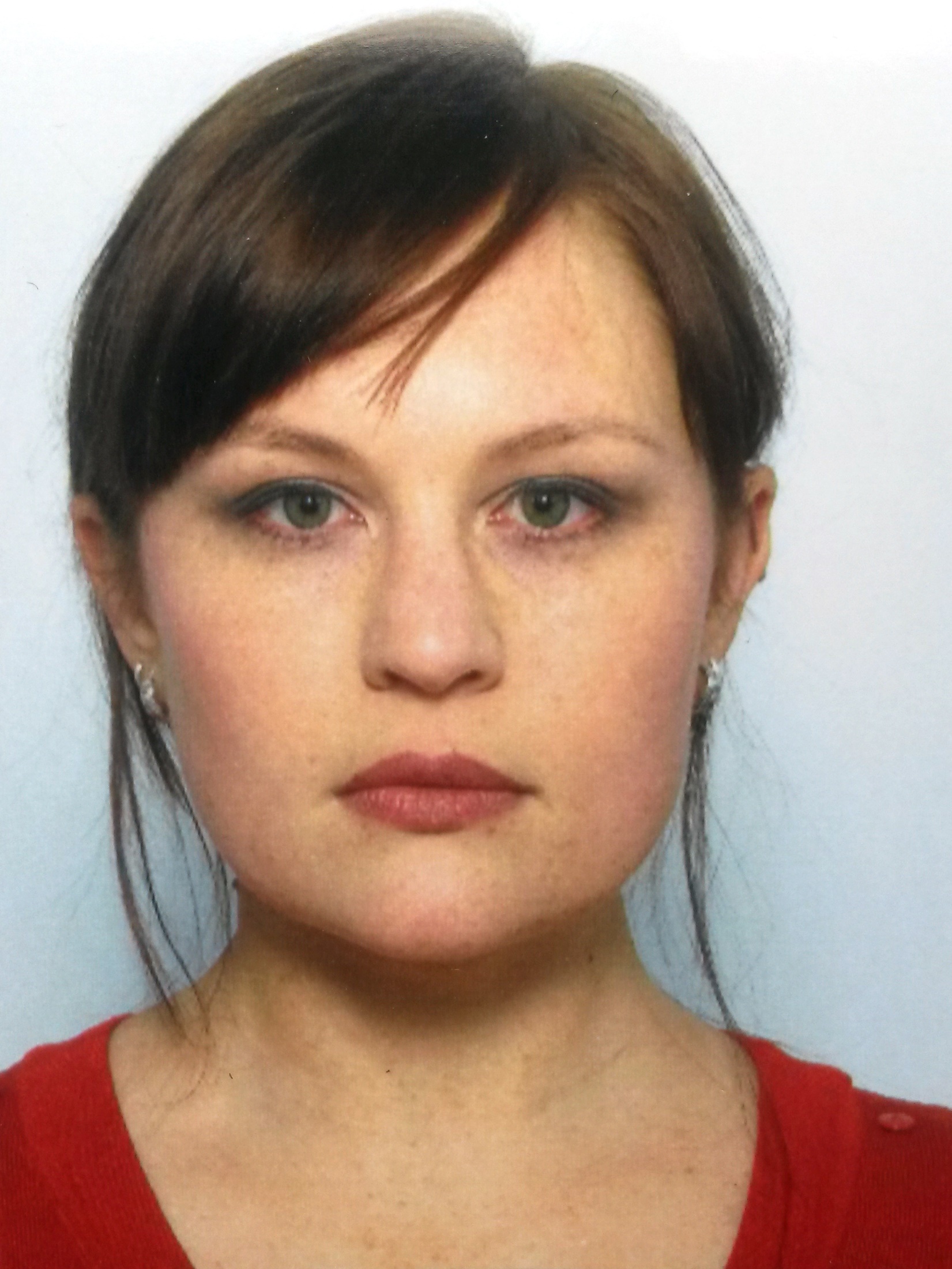
Let me in to your country; I promise I’m harmless.
dixon d white – a redneck can dream
Hard-hittin’ straight talk. Brilliant.
“What is worse than the actual racist is all the white folks that set in silence ignoring, denying and dismissing racism, not caring about racism is at the very core of the problem.”
knobbly

Masturbation: self-love or self-hate?
ethel waters – his eye is on the sparrow
Pause to watch, listen and reflect.
Have you ever experienced the weird magic of coming across something obliquely on Youtube, on your way somewhere else, and it speaks so powerfully, so uncannily, to all the things happening right now around you that all the hairs on your body stand on end? This is one of those times. The scene comes from a 1952 film called The Member of the Wedding, based on the book/play by Carson McCullers, starring Ethel Waters, Julie Harris and Brandon De Wilde. I came across it because my housemate Khanyi and I were singing this old hymn, hamming it up Lauryn-Hill-in-Sister-Act-2 style. I wanted to check out some of the older versions… and this clip revealed itself to me, complete with contextual preamble.
Just to tether this to a little of my own current context (I unfortunately don’t have time to write much right now), here is something written by one of my MPhil classmates about the student protests demanding the removal of the statue of Cecil John Rhodes that are currently happening at UCT, and here is the official SRC statement on the matter.

the weaker sex (1933)
Miss May Whitley kicks ass with panache and palpable glee in this British Pathé clip from 1933, entitled The Weaker Sex! (Sayest Thou!) Who said “weaker sex?” The intertitle reads: ‘Slow motion demonstrates exactly how 7-stone-odd, scientifically applied, can defeat 14 stone.’
zero one
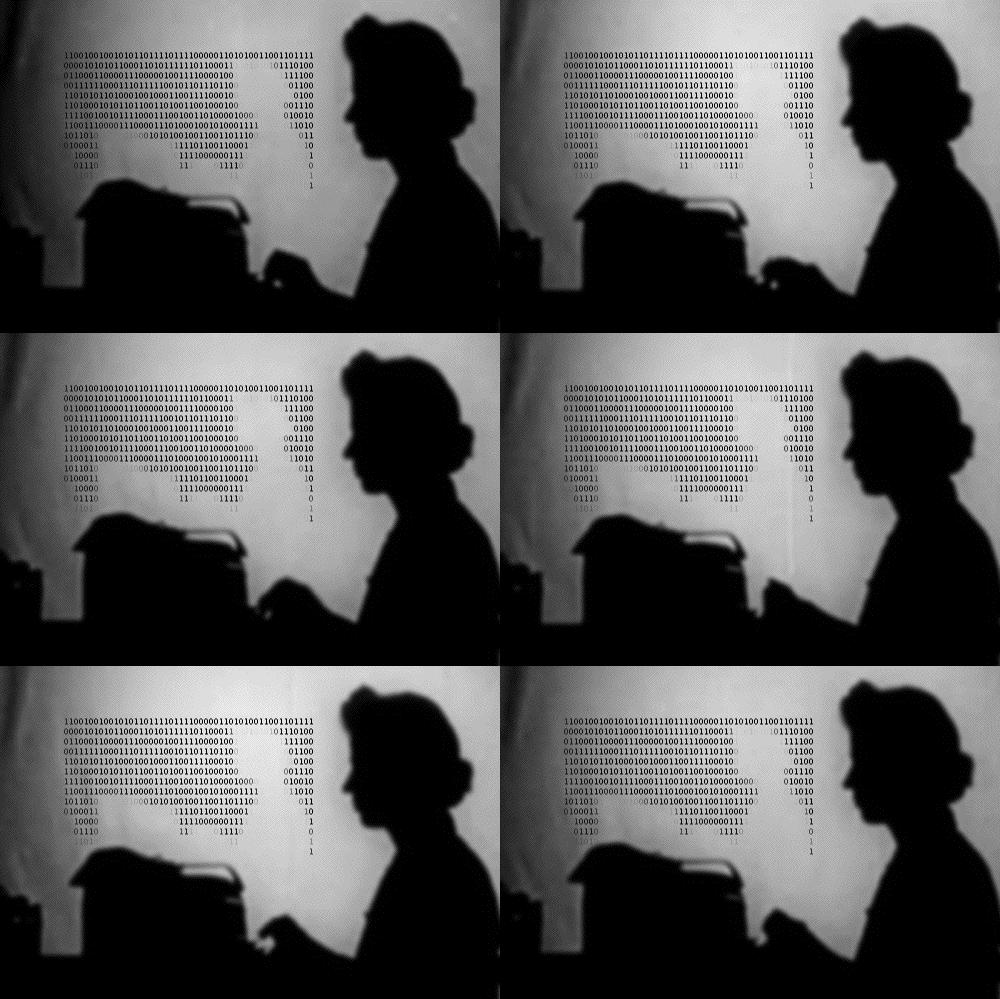
Zero One – Bill Domonkos, 2012.
Bill Domonkos is a filmmaker, GIF maker and stereoscopist. His work has been shown internationally in cinemas, film festivals, galleries and museums.
i will always love you
“Dust yourself off and try again, you can dust it off and try again, try again…”
a year since phillip seymour hoffman’s death: addiction & #againststigma
It’s been a year, on the 5th February, that Phillip Seymour Hoffman and a friend of mine succumbed to addiction. A reminder of the continuous fight #againststigma
Here is the piece I wrote a year ago, more pertinent with each passing day:
https://germainedelarch.wordpress.com/2014/02/05/philip-seymour-hoffmans-addiction-and-death-and-our-culture-of-stigma-and-hypocrisy
And here is the call to action to join the fight #againststigma. Please join me.
https://germainedelarch.wordpress.com/2014/02/10/taking-the-anonymous-out-of-addiction-mental-illness-photographic-project-in-recovery-the-face-of-addictionmental-illness/
anne sexton – a story for rose on the midnight flight to boston
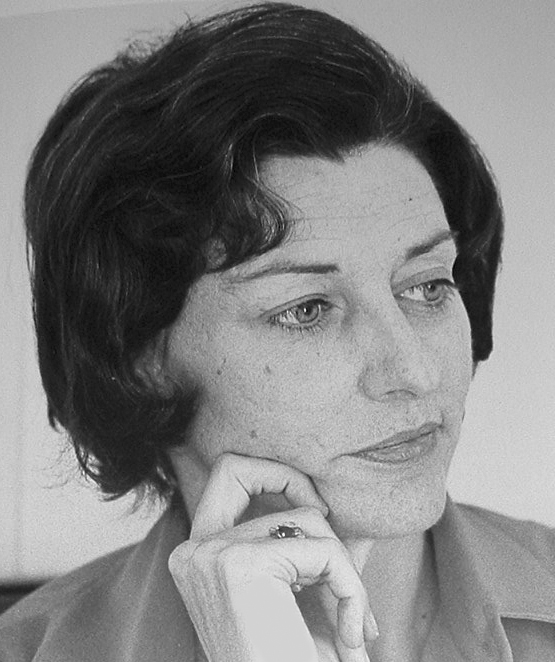 Until tonight they were separate specialties, different stories, the best of their own worst.
Riding my warm cabin home, I remember Betsy’s laughter; she laughed as you did, Rose, at the first story. Someday, I promised her, I’ll be someone going somewhere, and we plotted it in the humdrum school for proper girls. The next April the plane bucked me like a horse, my elevators turned and fear blew down my throat, that last profane gauge of a stomach coming up. And then returned to land, as unlovely as any seasick sailor, sincerely eighteen; my first story, my funny failure.
Maybe, Rose, there is always another story, better unsaid, grim or flat or predatory.
Half a mile down the lights of the in-between cities turn up their eyes at me. And I remember Betsy’s story, the April night of the civilian air crash and her sudden name misspelled in the evening paper, the interior of shock and the paper gone in the trash ten years now. She used the return ticket I gave her.
This was the rude kill of her; two planes cracking in mid-air over Washington, like blind birds. And the picking up afterwards, the morticians tracking bodies in the Potomac and piecing them like boards to make a leg or a face. There is only her miniature photograph left, too long now for fear to remember. Special tonight because I made her into a story that I grew to know and savor. A reason to worry, Rose, when you fix an old death like that, and outliving the impact, to find you’ve pretended.
We bank over Boston. I am safe. I put on my hat. I am almost someone going home. The story has ended.
sharon van etten – magic chords
From the album Tramp, released February 7, 2012 on Jagjaguwar.
Video Director, Photographer and Editor: Rick Alverson
born again
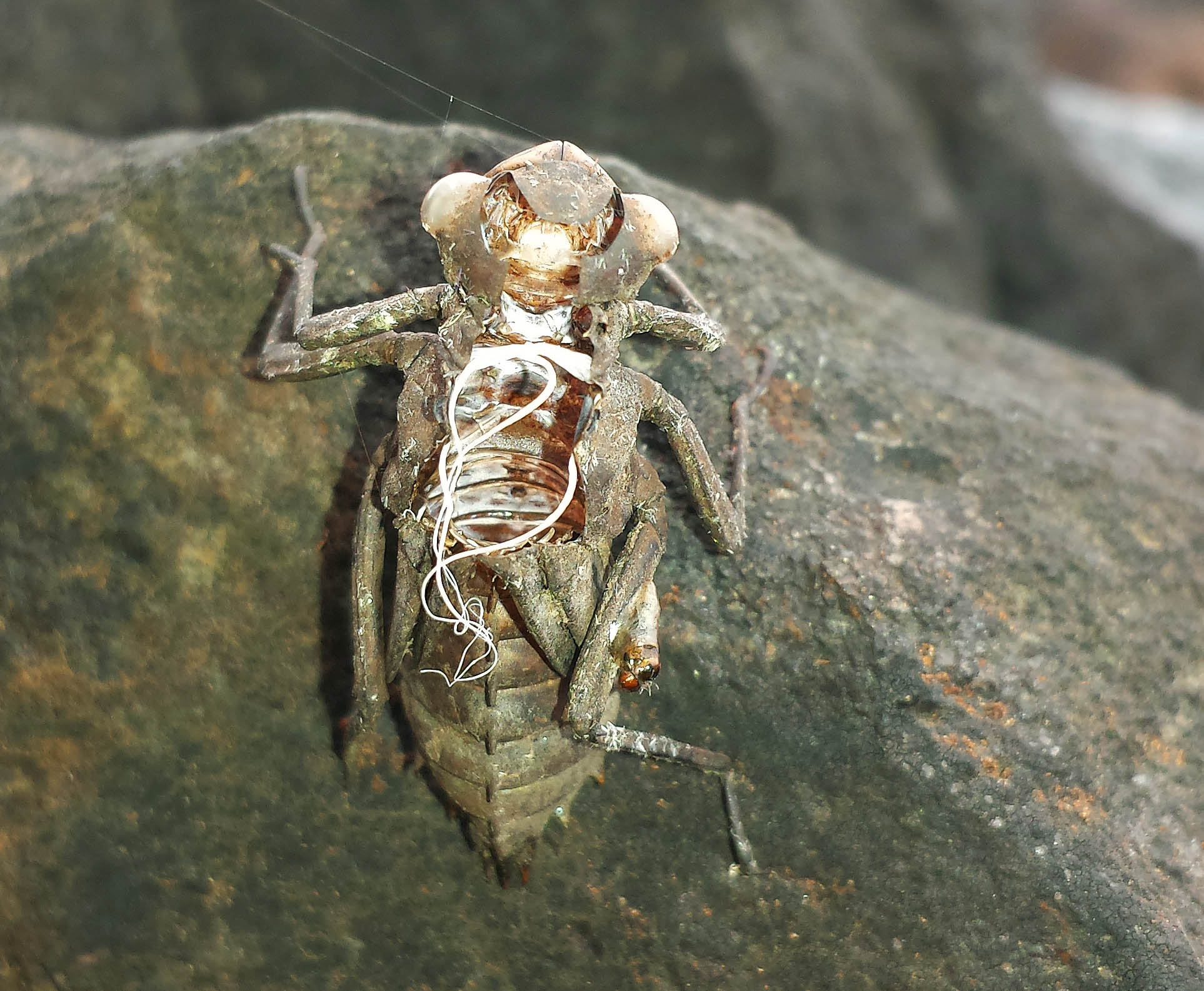
the goatman
What is male sexuality, and will it always fuck you in the eye? Confronted by an eager male who intrudes into your space, the turn-on is the confidence, the turn-off is the arrogance. It’s great that the male is being forthright, but is he like this with just you, or every sexual object in his vicinity? If he fucks you, is he fucking you or his fantasy? My wife replied when I said I connect with her during sex, no, you connect with yourself ..
lucy in the sky with diamonds – the flaming lips, miley cyrus and moby
Aaah– aaah… That head-shattering chorus! (NSFW.)
“Blonde SuperFreak Steals the Magic Brain” meets “Lucy In The Sky With Diamonds” — read the story behind the video HERE.
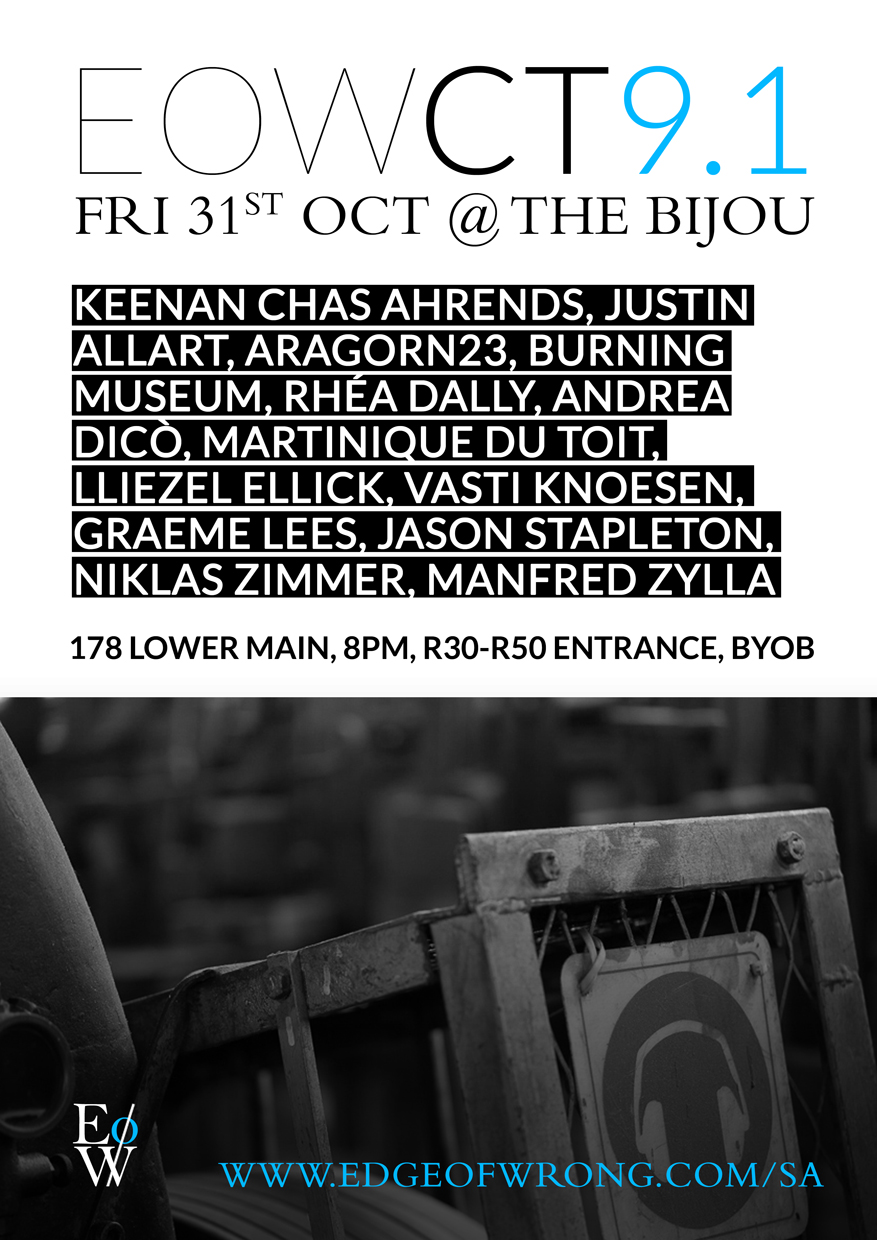
come with us to the edge of wrong tomorrow
I’m part of the South African curatorial/organising team for this series of collaborative multi-medium performances. If you’re in Cape Town, check EOW 9.1 out tomorrow night.
It will involve an insane mash-up of guitarists, violinists, opera singers, noise musicians, circuitbenders, chiptunists, avant-percussionists, pianists, body modification, visuals generated from cellular automata, experimental improv dance, provocative video art and the livecoded sound of the Ebola genome…
More information HERE.
anna-maria hefele – polyphonic overtone singing
amy leibrand

“My name is Amy Leibrand. I reside deep in the suburbs of Columbus, Ohio. I am a science writer. This is just a fancy way of saying I take data and summarize it.”
Read more of this interview and see more of her work and some of her compositing techniques HERE.
Amy’s own website is also well worth checking out, HERE. This is excerpted from her artist’s statement:
“My work shifts between visceral, uncomfortable, intimate self-portraits and surreal travel narratives; by nature, I am a wanderer, both in body and in mind. Colossal legs that dwarf a desert, forest, mountain landscape reveal the discomfort I feel in my surroundings, and the endless search for satisfaction, perhaps even a nod to escape. Turning the camera on myself, self-portraits illustrate the endless conflict between internal and external dialogue: pretty versus ugly, fearless versus cowardly, and so on. Using subtle odd, dreamlike, humoristic and disturbing elements, my intent is to objectify not only my own emotions, but those of the viewer. I want the viewer to become part of my work, as their reaction has as much to do with the art as the artwork itself.”

yapoos – 肉屋のように (like a butcher)
The wonderful Jun Togawa, Japan’s Bjork-before-there-was-Bjork (although comparisons can be reductive, she’s cut from similar revolutionary woman cloth), with her band Yapoos, off their 1987 album, ヤプーズ計画 (Yapoos Plan). And this video is incredible.
eart mudder

#BedtimeStory:
“every mouth you’ve ever kissed
was just practice
all the bodies you’ve ever undressed
and ploughed in to
were preparing you for me.
i don’t mind tasting them in the
memory of your mouth
they were a long hall way
a door half open
a single suit case still on the conveyor belt
was it a long journey?
did it take you long to find me?
you’re here now,
welcome home.”
―Warsan Shire
 fleurmach