rest in peace, pete seeger

Legendary American folk artist Pete Seeger has died at the age of 94. Here’s the New York Times’ eulogy, and one from the Huffington Post.

“Turn, Turn, Turn” is based on verses paraphrased from Ecclesiastes 3 in the Bible, widely believed to have been written by King Solomon around 1000 BCE. Pete Seeger put music to the words in 1959, recording his own version in 1962.

Miss Zingel, our sweet, slightly hippy music teacher at primary school during the last throes of 1980s apartheid, introduced us to this much-covered song, as well as to another of my favourites by Seeger/Malvina Reynolds, “Little Boxes”, which was released on CBS in 1963:

ecclesiastes 1

Everything Is Meaningless

The words of the Teacher, a son of David, king in Jerusalem:

“Meaningless! Meaningless!”
says the Teacher.
“Utterly meaningless!
Everything is meaningless.”
What do people gain from all their labors
at which they toil under the sun?
Generations come and generations go,
but the earth remains forever.
The sun rises and the sun sets,
and hurries back to where it rises.
The wind blows to the south
and turns to the north;
round and round it goes,
ever returning on its course.
All streams flow into the sea,
yet the sea is never full.
To the place the streams come from,
there they return again.
All things are wearisome,
more than one can say.
The eye never has enough of seeing,
nor the ear its fill of hearing.
What has been will be again,
what has been done will be done again;
there is nothing new under the sun.
Is there anything of which one can say,
“Look! This is something new”?
It was here already, long ago;
it was here before our time.
No one remembers the former generations,
and even those yet to come
will not be remembered
by those who follow them.

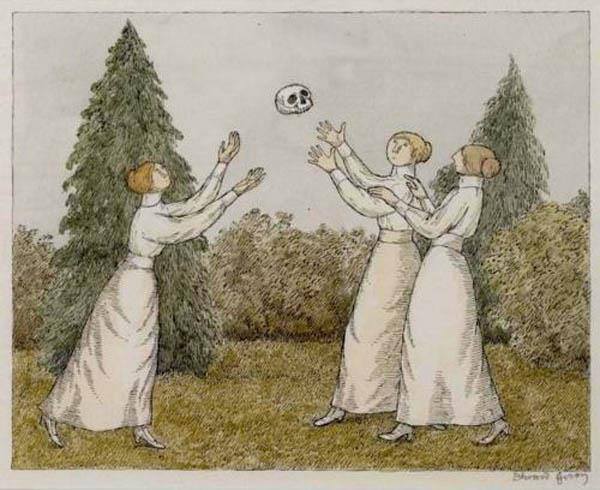
Edward Gorey - A Dull Afternoon

Edward Gorey – A Dull Afternoon

Wisdom Is Meaningless

I, the Teacher, was king over Israel in Jerusalem. I applied my mind to study and to explore by wisdom all that is done under the heavens. What a heavy burden God has laid on mankind!  I have seen all the things that are done under the sun; all of them are meaningless, a chasing after the wind.

What is crooked cannot be straightened;
what is lacking cannot be counted.
I said to myself, “Look, I have increased in wisdom more than anyone who has ruled over Jerusalem before me; I have experienced much of wisdom and knowledge.” Then I applied myself to the understanding of wisdom, and also of madness and folly, but I learned that this, too, is a chasing after the wind.

For with much wisdom comes much sorrow;
the more knowledge, the more grief.

— Ecclesiastes 1, The Holy Bible (New International Version)
joy zipper – transformation fantasy

A darkly light-hearted chill tune I’ve loved for years now, off Joy Zipper’s eponymous 1999 album, recorded at home on an 8-track.

Play your cards son
This is what you were given
Not some movie from the drive-in
It’s surprising how stupid we forget the real things we forget

I’ll insist
Although there is no meaning
No seriousness
And like a child’s game
Our life is impermanent
Our death is inevitable

(I laughed so hard)

There is nothing
There’s nowhere to go
Our life is impermanent
Our death is inevitable
Like a child’s game
I’ll insist anyway

Play your cards son
This is what you were given
Not some movie from the drive-in
It’s surprising how stupid we forget the real things we forget

happy birthday, simone de beauvoir

When she does not find love, she may find poetry. Because she does not act, she observes, she feels, she records; a colour, a smile awakens profound echoes within her; her destiny is outside her, scattered in cities already built, on the faces of men already marked by life, she makes contact, she relishes with passion and yet in a manner more detached, more free, than that of a young man.

WALKABOUT tumblr_mb7ukzuYA71qe0eclo1_r4_500

Jenny Agutter in “Walkabout” (Nicolas Roeg, 1971)

Being poorly integrated in the universe of humanity and hardly able to adapt herself therein, she, like the child, is able to see it objectively; instead of being interested solely in her grasp on things, she looks for their significance; she catches their special outlines, their unexpected metamorphoses. She rarely feels a bold creativeness, and usually she lacks the technique of self-expression; but in her conversation, her letters, her literary essays, her sketches, she manifests an original sensitivity.

The young girl throws herself into things with ardour, because she is not yet deprived of her transcendence; and the fact that she accomplishes nothing, that she is nothing, will make her impulses only the more passionate. Empty and unlimited, she seeks from within her nothingness to attain All.

― Simone de Beauvoir,  from The Second Sex (first published in French as Le Deuxième Sexe in 1949)
If you’re interested in reading this hugely influential text, you can find it online HERE.

words, words, words: on toxicity and abuse in online activism

“At its best, activism is not merely opposition to what is, it is also constructive of what will be. Ours is not a utopia of negatives– a world without this, without that, and so forth– but also a world of affirmatives and possibilities. This swirling gyre of rage and ressentiment is a terrible artefact of oppression, and one we ought not consign ourselves to. It is not a wormhole to liberation, however much we may wish it to be.”

Katherine Alejandra Cross's avatarCross With You

To all new readers: I’ve written a follow up to this article.

Not long ago my partner and I were seated in her car discussing the arbitrary nature of certain holidays and I opined, perhaps halfheartedly, that New Year’s was a worthwhile holiday simply for it being a useful vantage point for reflection, however arbitrary. It provides an overlook whence one can see a year of one’s life and world. A recent tranche of writing by severalprominentmembersof the trans and queer feminist gaming community has renewed my faith in that idea– with the overleaf of the year we suddenly find a great deal of penetrating insight into activist discourse and the risks incurred by our silence about certain excesses that have come to define us too often.

The wages of rage in our communities, and the often aimless, unchecked anger striking both within and without have…

View original post 3,749 more words

out of order

“A minute of silence in images for all the absent images, censored images, prostituted images, machinated images, delinquent images, buggered images, images beaten up by all the governments, televisions and westernized cinemas that rhyme information and repression with trash and culture.”

— Jean-Luc Godard – Le Gai Savoir (The Joy of Learning), 1969

“We can’t really understand. Of course. They’re speaking out of order.”

Continue reading

stir it up, little darling (for thuli madonsela)

“Society is like a stew. If you don’t stir it up every once in a while then a layer of scum floats to the top.”

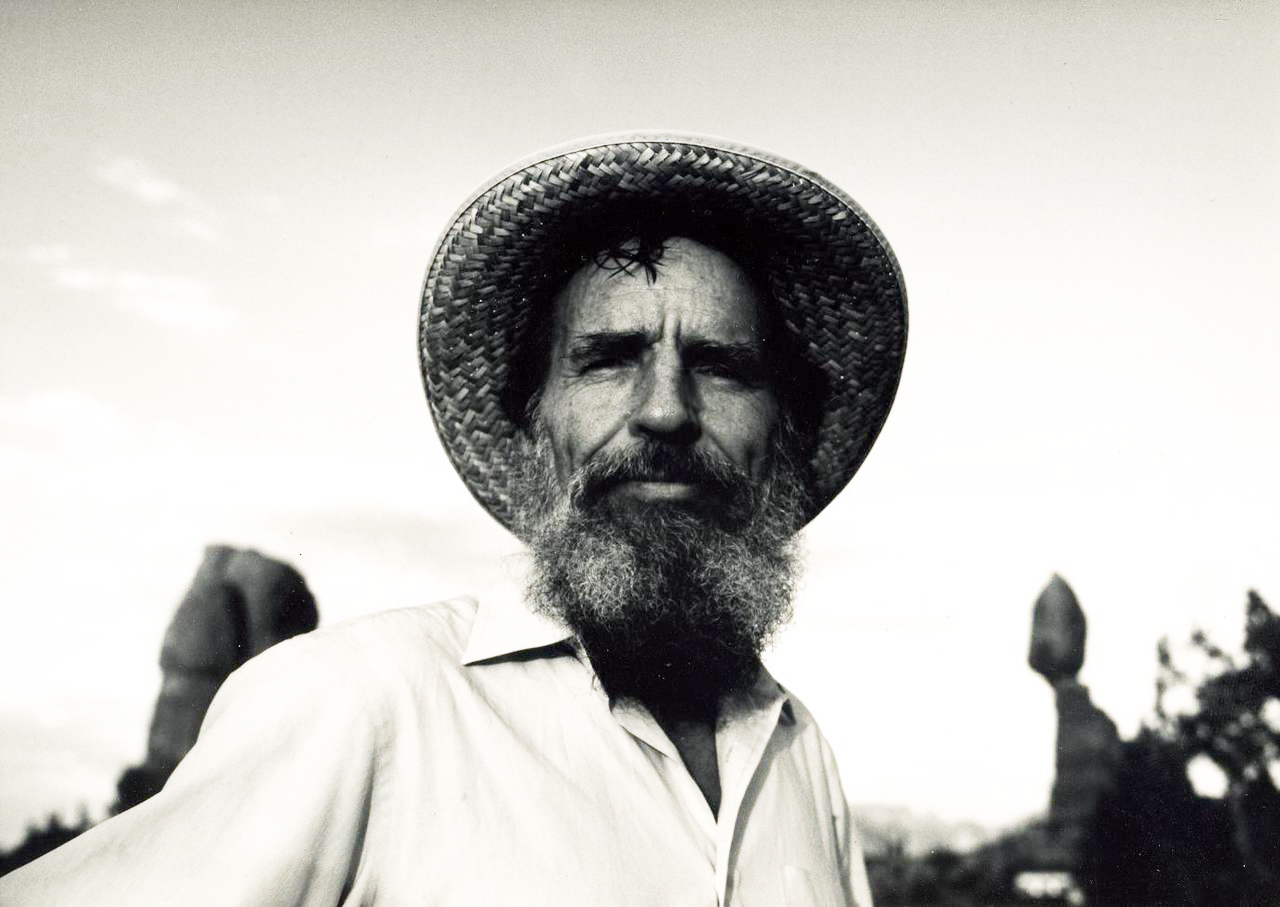
“My loyalties will not be bound by national borders, or confined in time by one nation’s history, or limited in the spiritual dimension by one language and culture. I pledge my allegiance to the damned human race, and my everlasting love to the green hills of Earth, and my intimations of glory to the singing stars, to the very end of space and time.”

— From Confessions of a Barbarian: Selections from the Journals of Edward Abbey, 1951-1989 (Boston: Little, Brown 1994).

edward-abbey

bergson on having a built-in bullshit detector

“Fortunately, some are born with spiritual immune systems that sooner or later give rejection to the illusory worldview grafted upon them from birth through social conditioning. They begin sensing that something is amiss, and start looking for answers. Inner knowledge and anomalous outer experiences show them a side of reality others are oblivious to, and so begins their journey of awakening. Each step of the journey is made by following the heart instead of following the crowd and by choosing knowledge over the veils of ignorance.”

― Henri Bergson

on dreams and the reality of sadness

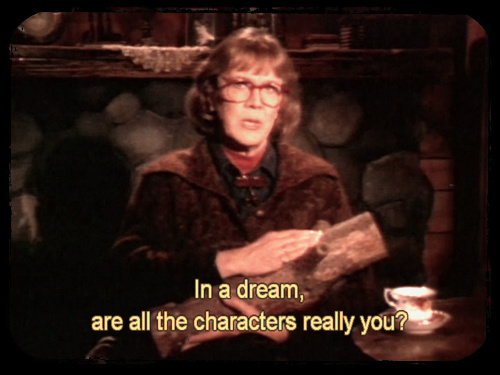
Log-lady-quote-3

Sometime ideas, like men, jump up and say ‘hello’. They introduce themselves, these ideas, with words. Are they words? These ideas speak so strangely. All that we see in this world is based on someone’s ideas. Some ideas are destructive, some are constructive. Some ideas can arrive in the form of a dream. I can say it again: some ideas arrive in the form of a dream…

… There is a sadness in this world, for we are ignorant of many things. Yes, we are ignorant of many beautiful things — things like the truth. So sadness, in our ignorance, is very real. The tears are real. What is this thing called a tear? There are even tiny ducts — tear ducts — to produce these tears should the sadness occur. Then the day when the sadness comes — then we ask: “Will this sadness which makes me cry — will this sadness that makes me cry my heart out — will it ever end?” The answer, of course, is yes. One day the sadness will end.

— David Lynch’s Log Lady, in Twin Peaks

on marching to a different tune

“They are really always saying the same thing. They don’t change; everybody else changes. They are accused of the most incompatible crimes, of egoism and a mania for power, indifference to the fate of their cause, fanaticism, triviality, lack of humour, buffoonery and irreverence. But they sound a certain note. Hence the great practical power of persistent radicals. To all appearance, nobody follows them, yet everyone believes them. They hold a tuning-fork and sound A, and everybody knows it really is A, though the time-honoured pitch is G flat.”

Isn’t this a good description of the effect of Pussy Riot performances? In spite of all accusations, you sound a certain note. It may appear that people do not follow you, but secretly, they believe you, they know you are telling the truth, or, even more, you are standing for truth.

— Slavoj Žižek, quoting political essayist John Jay Chapman (who was writing in 1900) in a recent letter to imprisoned Pussy Riot member, Nadezhda Tolokonnikova. Read more from their correspondence HERE.

Eve Warren - A Punk Prayer. Find out more HERE

Eve Warren – “A Punk Prayer”. Find out more about this work HERE.

on self-protection

dunceWhen I was a girl, my life was music that was always getting louder.
Everything moved me.
A dog following a stranger. That made me feel so much.
A calendar that showed the wrong month. I could have cried over it.
I did.
Where the smoke from the chimney ended.
How an overturned bottle rested at the edge of a table.
I spent my life learning to feel less.
Every day I felt less.
Is that growing old? Or is it something worse?
You cannot protect yourself from sadness without protecting yourself from happiness.

— Jonathan Safran Foer, from Everything is Illuminated

Thanks to Lex for sharing this.

marcel proust on attaining wisdom

swanning
There is no man… however wise, who has not at some period of his youth said things, or lived in a way the consciousness of which is so unpleasant to him in later life that he would gladly, if he could, expunge it from his memory. And yet he ought not entirely to regret it, because he cannot be certain that he has indeed become a wise man—so far as it is possible for any of us to be wise—unless he has passed through all the fatuous or unwholesome incarnations by which that ultimate stage must be preceded.

I know that there are young fellows, the sons and grandsons of famous men, whose masters have instilled into them nobility of mind and moral refinement in their schooldays. They have, perhaps, when they look back upon their past lives, nothing to retract; they can, if they choose, publish a signed account of everything they have ever said or done; but they are poor creatures, feeble descendants of doctrinaires, and their wisdom is negative and sterile.

We are not provided with wisdom, we must discover it for ourselves, after a journey through the wilderness which no one else can take for us, an effort which no one can spare us, for our wisdom is the point of view from which we come at last to regard the world. The lives that you admire, the attitudes that seem noble to you, are not the result of training at home, by a father, or by masters at school, they have sprung from beginnings of a very different order, by reaction from the influence of everything evil or commonplace that prevailed around them. They represent a struggle and a victory.

— Marcel Proust, from Within a Budding Grove

flower travellin’ band – satori part II

Edit: new link: http://www.dailymotion.com/video/x22yzbj_flower-travellin-band-1971-satori-full-album_music

Rare 8mm footage of Japanese ’70s psychedelic rock group Flower Travellin’ Band (フラワー・トラベリン・バンド) playing their last show in April 1973 at Maruyama Park in Kyoto, Japan.

“There is no up or down
Your truth is the only master
Death is made by the living
Pain is only intense to you
The sun shines every day
Freedom, freedom…”


anne carson – the gender of sound

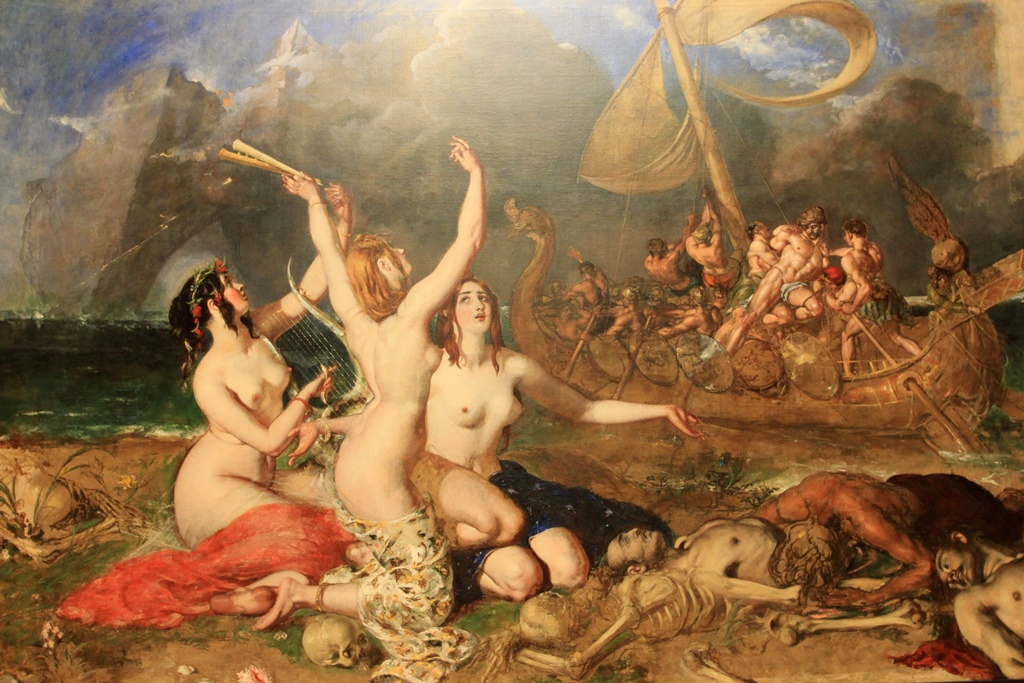
William Etty - "The Siren and Ulysses", 1837.

William Etty – “The Siren and Ulysses”, 1837.

Madness and witchery as well as bestiality are conditions commonly associated with the use of the female voice in public, in ancient as well as modern contexts. Consider how many female celebrities of classical mythology, literature and cult make themselves objectionable by the way they use their voice.

For example, there is the heart-chilling groan of the Gorgon, whose name is derived from a Sanskrit word, *garg meaning “a guttural animal howl that issues as a great wind from the back of the throat through a hugely distended mouth”. There are the Furies whose high-pitched and horrendous voices are compared by Aiskhylos to howling dogs or sounds of people being tortured in hell (Eumenides). There is the deadly voice of the Sirens and the dangerous ventriloquism of Helen (Odyssey) and the incredible babbling of Kassandra (Aiskhylos, Agamemnon) and the fearsome hullabaloo of Artemis as she charges through the woods (Homeric Hymn to Aphrodite). There is the seductive discourse of Aphrodite which is so concrete an aspect of her power that she can wear it on her belt as a physical object or lend it to other women (Iliad). There is the old woman of Eleusinian legend Iambe who shrieks obscenities and throws her skirt up over her head to expose her genitalia. There is the haunting garrulity of the nymph Echo (daughter of Iambe in Athenian legend) who is described by Sophokles as “the girl with no door on her mouth” (Philoktetes).

Putting a door on the female mouth has been an important project of patriarchal culture from antiquity to the present day. Its chief tactic is an ideological association of female sound with monstrosity, disorder and death.

— From “The Gender of Sound”, in Glass, Irony and God. New Directions, 1995: pp 120-121

The brilliant Anne Carson presents a history of the gendered voice, from Sophocles to Gertrude Stein. She outlines what is at stake in our assumptions around sound, questioning whether the concept of ‘self-control’ is a barrier to acknowledging other forms of human order, feeding into wider debates on social order, both past and present.

Read the whole essay HERE.

marie curie on supporting researchers

Humanity also needs dreamers, for whom the disinterested development of an enterprise is so captivating that it becomes impossible for them to devote their care to their own material profit. Without doubt, these dreamers do not deserve wealth, because they do not desire it. Even so, a well-organized society should assure to such workers the efficient means of accomplishing their task, in a life freed from material care and freely consecrated to research.

— Marie Curie, scientist, Nobel laureate (1867-1934)

one reason curiosity is good for you

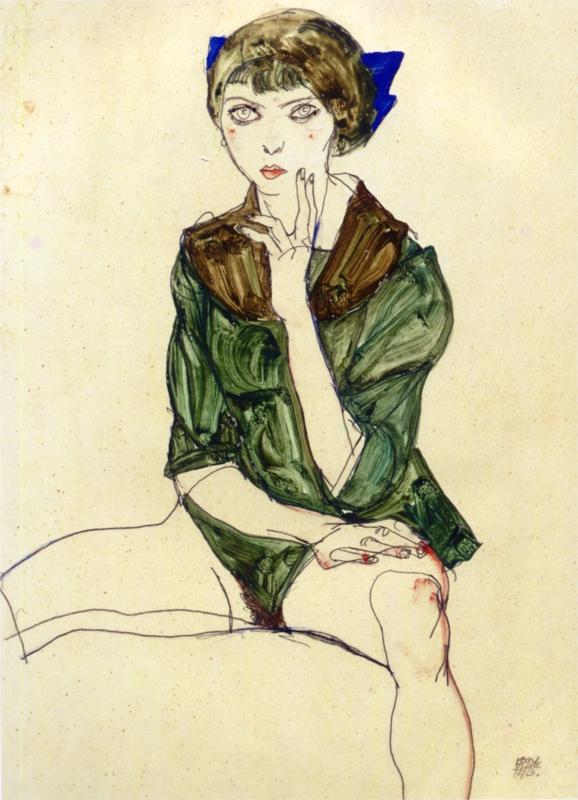
Egon Schiele - Sitting Woman in a Green Blouse. 1913

Egon Schiele – Sitting Woman in a Green Blouse. 1913

Truly happy people seem to have an intuitive grasp of the fact that sustained happiness is not just about doing things that you like. It also requires growth and adventuring beyond the boundaries of your comfort zone. Happy people, are, simply put, curious. In a 2007 study, Todd Kashdan and Colorado State psychologist Michael Steger found that when participants monitored their own daily activities, as well as how they felt, over the course of 21 days, those who frequently felt curious on a given day also experienced the most satisfaction with their life—and engaged in the highest number of happiness-inducing activities, such as expressing gratitude to a colleague or volunteering to help others.

Yet curiosity—that pulsing, eager state of not knowing—is fundamentally an anxious state. When, for instance, psychologist Paul Silvia showed research participants a variety of paintings, calming images by Claude Monet and Claude Lorrain evoked happy feelings, whereas the mysterious, unsettling works by Egon Schiele and Francisco Goya evoked curiosity.

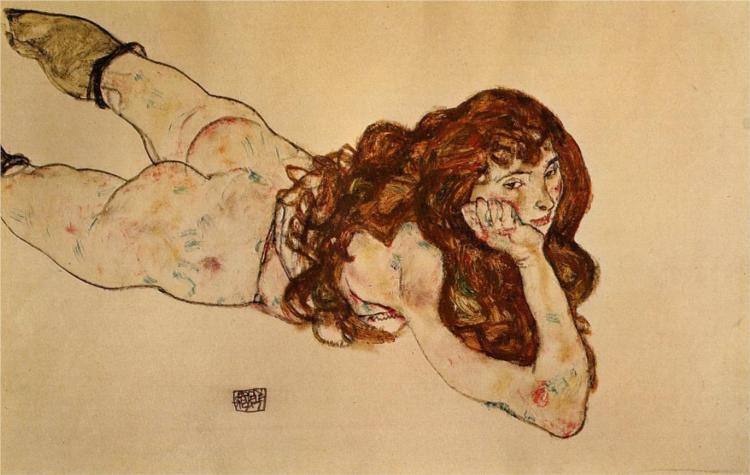
Egon Schiele, 1917

Egon Schiele, 1917

Curiosity, it seems, is largely about exploration—often at the price of momentary happiness. Curious people generally accept the notion that while being uncomfortable and vulnerable is not an easy path, it is the most direct route to becoming stronger and wiser. In fact, a closer look at the study by Kashdan and Steger suggests that curious people invest in activities that cause them discomfort as a springboard to higher psychological peaks.

Of course, there are plenty of instances in life where the best way to increase your satisfaction is to simply do what you know feels good, whether it’s putting your favourite song on the jukebox or making plans to see your best friend. But from time to time, it’s worth seeking out an experience that is novel, complicated, uncertain, or even upsetting—whether that means finally taking the leap and doing karaoke for the first time or hosting a screening of your college friend’s art-house film. The happiest people opt for both so that they can benefit, at various times, from each.

Read the whole article on Psychology Today, HERE.

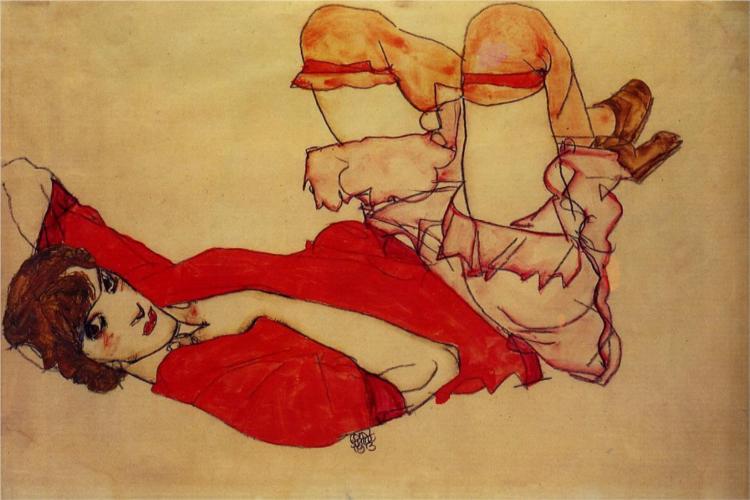
Egon Schiele - Wally with a Red Shirt. c. 1913

Egon Schiele – Wally with a Red Shirt. c. 1913

kurt vonnegut on the golden rule

kurt singature


Hello, babies. Welcome to Earth. It’s hot in the summer and cold in the winter. It’s round and wet and crowded. At the outside, babies, you’ve got about a hundred years here. There’s only one rule that I know of, babies — “God damn it, you’ve got to be kind.”

— From God Bless You, Mr Rosewater (1965)

piotr dumala – crime and punishment (2001)

Trained as a sculptor as well as an animator, Piotr Dumala calls his innovative stop-motion technique in which an image is scratched into painted plaster, then painted over and the next image scratched on top “destructive animation”. He devised the method while studying art conservation at the Warsaw Academy of Fine Arts.

Crime and Punishment (Zbrodnia i Kara), Dumala’s expressionist half-hour long Dostoevsky adaptation, is a succession of shadowy, minimalist tableaux that emerge slowly from darkness and return to it. Stripping the Russian masterwork down to two scenes — the murder and Raskolnikov’s meeting of Sonia — Dumala interprets the novel’s themes with chiaroscuro intensity, choosing to highlight just a few strands of the story:

“It was not my aim to copy the book. I was really close to the book. I took one level of the book. It’s not possible to show everything from this book… This is about love and how obsession can destroy love. In our life we are under two opposite influences to be good or bad and to love or hate.”

In the worlds Dumala sketches, the lines between light and darkness are stark, but also shifting and mutable.

Read more about the background to Dumala and this film in Chris Robinson’s article for Animation World Magazine, HERE.