arundhati roy on living well

Arundhati_Roy

Photo: Jean-Baptiste Labrune, 2010

“The only dream worth having is to dream that you will live while you are alive, and die only when you are dead. To love, to be loved. To never forget your own insignificance. To never get used to the unspeakable violence and vulgar disparity of the life around you. To seek joy in the saddest places. To pursue beauty to its lair. To never simplify what is complicated or complicate what is simple. To respect strength, never power. Above all to watch. To try and understand. To never look away. And never, never to forget.”

― Arundhati Roy

on cutting the crap

(Amen!)

UPDATE, 3 SEPTEMBER: I have just checked and the following quote is actually from the author José Micard Teixeira, but has been widely misattributed to Meryl Streep (apologies — I picked it up on Facebook). However, these words do resonate with Ms Streep’s uncompromising attitude to life, which is why the erroneous attribution has stuck, I guess. I love the sentiment, and am happy to pass this on, whoever said it!

meryl“I no longer have patience for certain things, not because I’ve become arrogant, but simply because I’ve reached a point in my life where I do not want to waste more time with what displeases me or hurts me. I have no patience for cynicism, excessive criticism and demands of any nature. I lost the will to please those who do not like me, to love those who do not love me and to smile at those who do not want to smile at me.

“I no longer spend a single minute on those who lie or want to manipulate. I decided not to coexist anymore with pretense, hypocrisy, dishonesty and cheap praise. I do not tolerate selective erudition nor academic arrogance. I do not adjust either to popular gossiping. I hate conflict and comparisons. I believe in a world of opposites and that’s why I avoid people with rigid and inflexible personalities. In friendship I dislike the lack of loyalty and betrayal. I do not get along with those who do not know how to give a compliment or a word of encouragement. Exaggerations bore me and I have difficulty accepting those who do not like animals. And on top of everything I have no patience for anyone who does not deserve my patience.”

on self knowledge

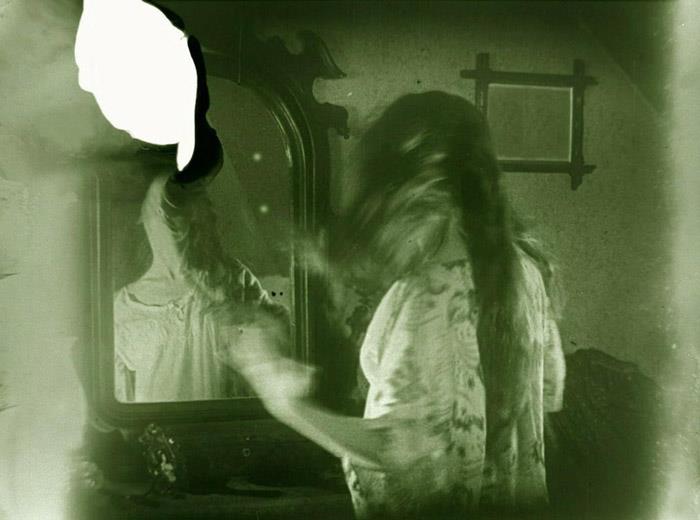
Image: Eric Rondpierre

Image: Eric Rondpierre

Self knowledge is not fully possible for human beings. We do not reside in a body, a mind or a world where it is achievable or, from the point of being interesting, even desirable. Half of what lies in the heart and mind is potentiality, resides in the darkness of the unspoken and unarticulated and has not yet come into being: this hidden unspoken half of a person will supplant and subvert any present understandings we have about ourselves. Human beings are always, and always will be, a frontier between what is known and what is not known. The act of turning any part of the unknown into the known is simply an invitation for an equal measure of the unknown to flow in and reestablish that frontier: to reassert the far horizon of an individual life; to make us what we are – that is – a moving edge between what we know about ourselves and what we are about to become. What we are actually about to become or are afraid of becoming always trumps and rules over what we think we are already…

— David Whyte, 2014. Excerpted from “Self Knowledge”, from the upcoming book of essays CONSOLATIONS: The Solace, Nourishment and Underlying Meaning in Everyday Words.

lumumba’s ghosts: immaterial matters and matters immaterial…

peerenThe Archive & Public Culture Research Initiative (where I work) has invited Esther Peeren, author of The Spectral Metaphor: Living Ghosts and the Agency of Invisibility (Palgrave, 2014), for a week of intense discussion, academic exchange and engagement around the theme of the ghost/spectre both as archival metaphor and as conceptual figure in post-colonial and cultural studies.

Peeren is Associate Professor of Media Studies at the University of Amsterdam, Vice-Director of the Amsterdam Centre for Globalisation Studies (ACGS) and senior researcher at the Amsterdam School for Cultural Analysis (ASCA). Her current research projects explore global spectralities and rural globalization.

On Tuesday, 26 August, she will deliver a lunchtime lecture, Lumumba’s Ghosts: Immaterial Matters and Matters Immaterial in Sven Augustijnen’s Spectres, in the Jon Berndt Thought Space (A17, Arts Block, Upper Campus, University of Cape Town). In her analysis of Belgian artist Sven Augustijnen’s 2011 multi-media exhibition, Spectres (which focuses on the mystery of the 1961 assassination of Patrice Lumumba, the first democratically elected Prime Minister of the independent Republic of the Congo), Peeren argues that a focus on immaterialities-as-spectralities prompts the viewer to take seriously that which is not immediately apprehensible, or deemed inconsequential. At the same time, it transforms our understanding of matter itself, since immateriality is inevitably implied in materiality, both metaphorically (materialities may be considered immaterial, insignificant) and literally (over time, materialities may transform, decay or even disappear).

Appealing to Jacques Derrida’s concept of spectrality, her analysis shows how Augustijnen’s work, especially the feature-length film included in the exhibition, moves the materiality of the immaterial and the immateriality of the material centre stage, and lays out the consequences of this double imbrication for individual and collective understandings of history, memory and the archive.

If you’d like to attend pn 26 August, RSVP to APC-admin@uct.ac.za.

on the painfulness of compassion

“Compassion hurts. When you feel connected to everything, you also feel responsible for everything. And you cannot turn away. Your destiny is bound with the destinies of others. You must either learn to carry the Universe or be crushed by it. You must grow strong enough to love the world, yet empty enough to sit down at the same table with its worst horrors.”

― Andrew Boyd, in Daily Afflictions: The Agony of Being Connected to Everything in the Universe (W W Norton & Company, 2002).

nina paley – this land is mine

Animator Nina Paley, she of the wonderful public domain film Sita Sings the Blues (WATCH IT, please, if you haven’t yet!), also made another short cartoon a while back*, this one caricaturing the ongoing conflict in the Middle East.

So, who’s killing who? Nina has provided a handy guide to the various historical groups HERE.

*Please do note that this was made in 2012, before the most recent turn of events.

on the vulgarity of “identity”

I feel with some passion that what we truly are is private, and almost infinitely complex, and ambiguous, and both external and internal, and double- or triple- or multiply natured, and largely mysterious even to ourselves; and furthermore that what we are is only part of us, because identity, unlike “identity”, must include what we do.

And I think that to find oneself and every aspect of this complexity reduced in the public mind to one property that apparently subsumes all the rest (“gay”, “black”, “Muslim”, whatever) is to be the victim of a piece of extraordinary intellectual vulgarity. Literally vulgar: from vulgus. It’s crowd-thought.

— Philip Pullman

ayn rand, rand paul and paul ryan walk into a bar

lizza ayn paul rand

Lizza Littlewort, 2014. Watercolour on 100% cotton paper.

This picture was made in appreciation of that really great joke that went around recently: Ayn Rand, Rand Paul and Paul Ryan walk into a bar. The barman serves them tainted alcohol because there are no regulations. They die.

stories we tell

Go and see this at the Encounters Documentary Festival, on right now in Cape Town and Jo’burg: the brilliant Sarah Polley‘s genre-defying examination of the workings of memory and narrative related to her own family’s secrets. It’s a gentle yet unflinching interrogation of how truth is shaped by the stories we tell ourselves when making sense of the things that happen in our lives. Humorous, poignant, profound… highly recommended.

laurie anderson – the dream before (for walter benjamin)

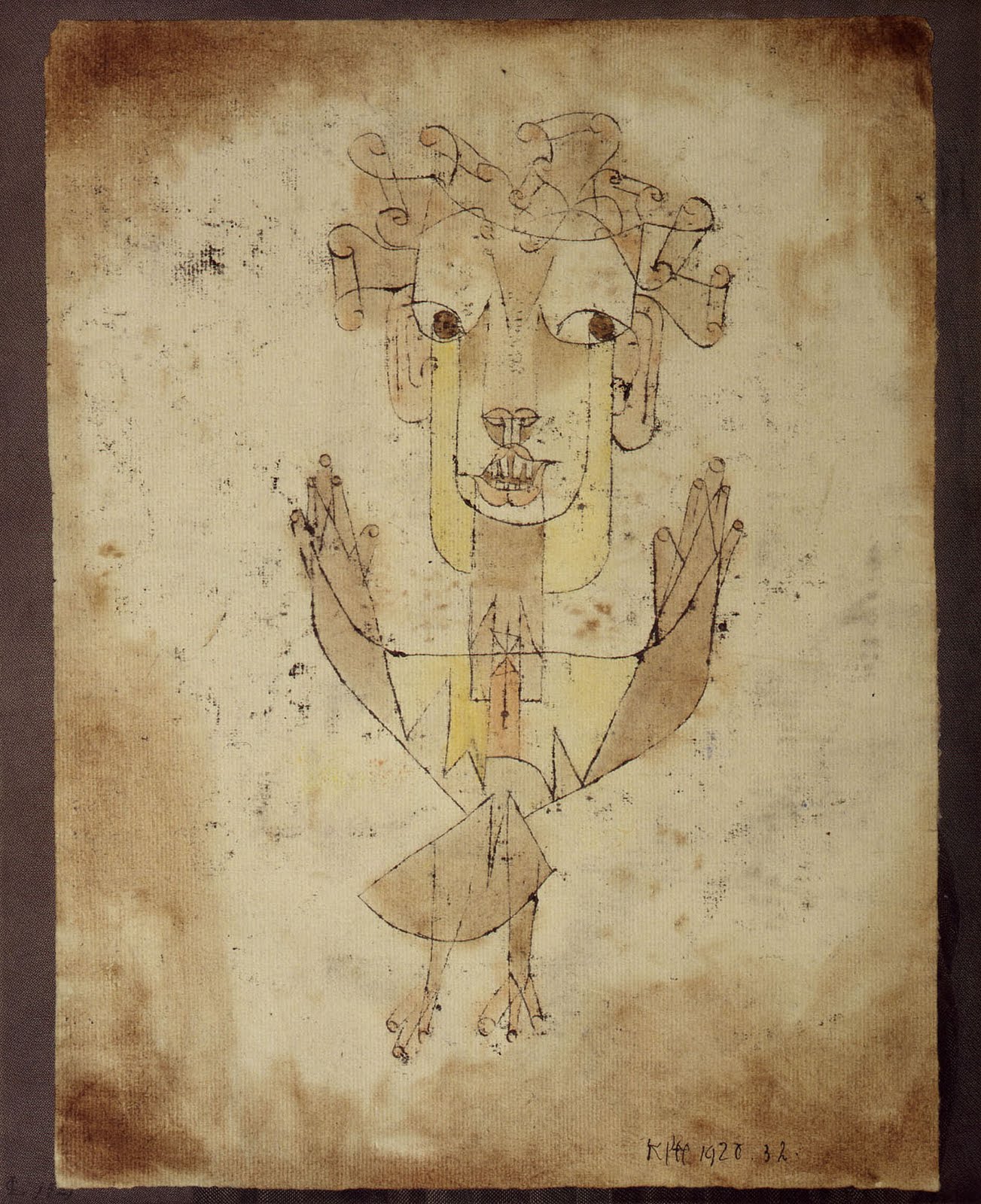
” A Paul Klee painting named Angelus Novus shows an angel looking as though he is about to move away from something he is fixedly contemplating. His eyes are staring, his mouth is open, his wings are spread. This is how one pictures the angel of history. His face is turned toward the past. Where we perceive a chain of events, he sees one single catastrophe which keeps piling wreckage upon wreckage and hurls it in front of his feet. The angel would like to stay, awaken the dead, and make whole what has been smashed. But a storm is blowing from Paradise; his wings are caught in it with such violence that the angel can no longer close them. The storm irresistibly propels him into the future to which his back is turned, while the pile of debris before him grows skyward. This storm is what we call progress.” 

— Walter Benjamin, 1940

paul-klee-angelus-novus

Paul Klee – Angelus Novus (1920)

joan didion, interviewed by linda kuehl in 1977

Here are some excerpts from an interview with Joan Didion that appeared in The Paris Review No. 74, Fall-Winter 1978. She talks about the performative violence of writing, and of the sometimes paralysing self-consciousness that attends it.

Reading her responses, I identified so personally that at points it felt like she could have been writing my own thoughts, down to the constrictions of that harsh Protestant ethic. But I’m not as strong as Joan. The nausea tends to silence me… except when it’s overwhelming: then, I vomit it out, sometimes all over unsuspecting passersby!

I especially liked what she says about how growing up in a dangerous landscape can affect one’s engagement with the world. I have often wondered whether I would be at all like I am if I hadn’t grown up in the turmoil of ’80s and ’90s South Africa. It wasn’t just about the weather, here.
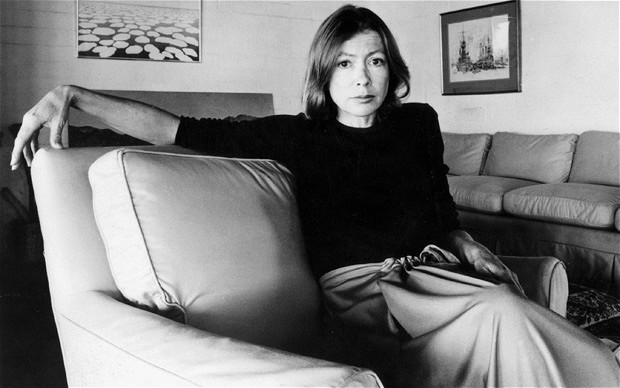
Joan Didion, 1977. Photo: REX FEATURES

Joan Didion, 1977. Photo: REX FEATURES

INTERVIEWER

You have said that writing is a hostile act; I have always wanted to ask you why.

JOAN DIDION

It’s hostile in that you’re trying to make somebody see something the way you see it, trying to impose your idea, your picture. It’s hostile to try to wrench around someone else’s mind that way. Quite often you want to tell somebody your dream, your nightmare. Well, nobody wants to hear about someone else’s dream, good or bad; nobody wants to walk around with it. The writer is always tricking the reader into listening to the dream.

INTERVIEWER

Are you conscious of the reader as you write? Do you write listening to the reader listening to you?

DIDION

Obviously I listen to a reader, but the only reader I hear is me. I am always writing to myself. So very possibly I’m committing an aggressive and hostile act toward myself.

INTERVIEWER

So when you ask, as you do in many nonfiction pieces, “Do you get the point?” you are really asking if you yourself get the point.

DIDION

Yes. Once in a while, when I first started to write pieces, I would try to write to a reader other than myself. I always failed. I would freeze up.

INTERVIEWER

You say you treasure privacy, that “being left alone and leaving others alone is regarded by members of my family as the highest form of human endeavor.” How does this mesh with writing personal essays, particularly the first column you did for Life where you felt it imperative to inform the reader that you were at the Royal Hawaiian Hotel in lieu of getting a divorce?

DIDION

I don’t know. I could say that I was writing to myself, and of course I was, but it’s a little more complicated than that. I mean the fact that eleven million people were going to see that page didn’t exactly escape my attention. There’s a lot of mystery to me about writing and performing and showing off in general. I know a singer who throws up every time she has to go onstage. But she still goes on.

INTERVIEWER

Did any writer influence you more than others?

DIDION

I always say Hemingway, because he taught me how sentences worked. When I was fifteen or sixteen I would type out his stories to learn how the sentences worked. I taught myself to type at the same time. A few years ago when I was teaching a course at Berkeley I reread A Farewell to Arms and fell right back into those sentences. I mean they’re perfect sentences. Very direct sentences, smooth rivers, clear water over granite, no sinkholes.

INTERVIEWER

You’ve called Henry James an influence.

DIDION

He wrote perfect sentences, too, but very indirect, very complicated. Sentences with sinkholes. You could drown in them. I wouldn’t dare to write one. I’m not even sure I’d dare to read James again. I loved those novels so much that I was paralyzed by them for a long time. All those possibilities. All that perfectly reconciled style. It made me afraid to put words down.

INTERVIEWER

I wonder if some of your nonfiction pieces aren’t shaped as a single Jamesian sentence.

DIDION

That would be the ideal, wouldn’t it. An entire piece—eight, ten, twenty pages—strung on a single sentence. Actually, the sentences in my nonfiction are far more complicated than the sentences in my fiction. More clauses. More semicolons. I don’t seem to hear that many clauses when I’m writing a novel.

INTERVIEWER

You have said that once you have your first sentence you’ve got your piece. That’s what Hemingway said. All he needed was his first sentence and he had his short story.

DIDION

What’s so hard about that first sentence is that you’re stuck with it. Everything else is going to flow out of that sentence. And by the time you’ve laid down the first two sentences, your options are all gone.

INTERVIEWER

The first is the gesture, the second is the commitment.

DIDION

Yes, and the last sentence in a piece is another adventure. It should open the piece up. It should make you go back and start reading from page one. That’s how it should be, but it doesn’t always work. I think of writing anything at all as a kind of high-wire act. The minute you start putting words on paper you’re eliminating possibilities. Unless you’re Henry James.

INTERVIEWER

I wonder if your ethic—what you call your “harsh Protestant ethic”—doesn’t close things up for you, doesn’t hinder your struggle to keep all the possibilities open.

DIDION

I suppose that’s part of the dynamic. I start a book and I want to make it perfect, want it to turn every color, want it to be the world. Ten pages in, I’ve already blown it, limited it, made it less, marred it. That’s very discouraging. I hate the book at that point. After a while I arrive at an accommodation: Well, it’s not the ideal, it’s not the perfect object I wanted to make, but maybe—if I go ahead and finish it anyway—I can get it right next time. Maybe I can have another chance.

INTERVIEWER

Have any women writers been strong influences?

DIDION

I think only in the sense of being models for a life, not for a style. I think that the Brontës probably encouraged my own delusions of theatricality. Something about George Eliot attracted me a great deal. I think I was not temperamentally attuned to either Jane Austen or Virginia Woolf.

INTERVIEWER

What are the disadvantages, if any, of being a woman writer?

DIDION

When I was starting to write—in the late fifties, early sixties—there was a kind of social tradition in which male novelists could operate. Hard drinkers, bad livers. Wives, wars, big fish, Africa, Paris, no second acts. A man who wrote novels had a role in the world, and he could play that role and do whatever he wanted behind it. A woman who wrote novels had no particular role. Women who wrote novels were quite often perceived as invalids. Carson McCullers, Jane Bowles. Flannery O’Connor, of course. Novels by women tended to be described, even by their publishers, as sensitive. I’m not sure this is so true anymore, but it certainly was at the time, and I didn’t much like it. I dealt with it the same way I deal with everything. I just tended my own garden, didn’t pay much attention, behaved—I suppose—deviously. I mean I didn’t actually let too many people know what I was doing.

INTERVIEWER

Advantages?

DIDION

The advantages would probably be precisely the same as the disadvantages. A certain amount of resistance is good for anybody. It keeps you awake.

INTERVIEWER

What misapprehensions, illusions and so forth have you had to struggle against in your life? In a commencement address you once said there were many.

DIDION

All kinds. I was one of those children who tended to perceive the world in terms of things read about it. I began with a literary idea of experience, and I still don’t know where all the lies are. For example, it may not be true that people who try to fly always burst into flames and fall. That may not be true at all. In fact people do fly, and land safely. But I don’t really believe that. I still see Icarus. I don’t seem to have a set of physical facts at my disposal, don’t seem to understand how things really work. I just have an idea of how they work, which is always trouble. As Henry James told us.

INTERVIEWER

You seem to live your life on the edge, or, at least, on the literary idea of the edge.

DIDION

Again, it’s a literary idea, and it derives from what engaged me imaginatively as a child. I can recall disapproving of the golden mean, always thinking there was more to be learned from the dark journey. The dark journey engaged me more. I once had in mind a very light novel, all surface, all conversations and memories and recollections of some people in Honolulu who were getting along fine, one or two misapprehensions about the past notwithstanding. Well, I’m working on that book now, but it’s not running that way at all. Not at all.

INTERVIEWER

It always turns into danger and apocalypse.

DIDION

Well, I grew up in a dangerous landscape. I think people are more affected than they know by landscapes and weather. Sacramento was a very extreme place. It was very flat, flatter than most people can imagine, and I still favor flat horizons. The weather in Sacramento was as extreme as the landscape. There were two rivers, and these rivers would flood in the winter and run dry in the summer. Winter was cold rain and tulle fog. Summer was 100 degrees, 105 degrees, 110 degrees. Those extremes affect the way you deal with the world. It so happens that if you’re a writer the extremes show up. They don’t if you sell insurance.

Reading the complete interview here: Joan Didion, The Art of Fiction No. 71.

ken jacobs on the archive

“I wish more stuff was available in its raw state, as primary source material for anyone to consider, and to leave for others in just that way, the evidence uncontaminated by compulsive proprietary misapplied artistry, “editing”, the purposeful “pointing things out” that cuts a road straight and narrow through the cine-jungle; we barrel through thinking we’re going somewhere and miss it all. Better to just be pointed to the territory, to put in time exploring, roughing it, on our own. For the straight scoop we need the whole scoop, or no less than the clues entire and without rearrangement. O, for a Museum of Found Footage, or cable channel, library, a shit-museum of telling discards accessible to all talented viewers/auditors. A wilderness haven salvaged from Entertainment.”

— The impossible idealism of Ken Jacobs (check out his films on UBUWEB). This is a quote from the hand-illustrated programme of his 1989 retrospective, Films that Tell Time – see a PDF HERE.

light from a dead star

“All these dead suns, these posthumous rays which take millions of light-years to reach us, asteroids, fragments of dead worlds, shattered and exploded, old moons, flawed and cankered, crusts, sores, blotches, cold lupus, devouring leprosy, sanies, and that last drop of pearl-like light, the purest of all, sweating at the highest point of the firmament and about to fall… is not a tear nor a dewdrop, but a drop of pus. The universe is in the process of decomposing and, like a cemetery, it swarms with becoming and smells good. The stars are unguent-bearing and throb feverishly; each ray carries seeds sown in the brain of man, and they are the seeds of destruction. Grey matter contains sunspots that eat into the whole circumference of the brain. It is an index of disintegration. Thought is a pestilence.”

— Blaise Cendrars, from Sky, the 1992 English translation of Le Lotissement du Ciel (1949).

Illustration: Fernand Léger, 1919

Illustration: Fernand Léger, 1919

Sky, the last of Cendrar’s four autobiographical volumes, is a collage of prose poetry, travel writing, reportage, detective story, and personal memoir.

“He recounts his adventures in Russia during the revolution of 1905, in the trenches of World War I (where he lost his right arm), in Brazil in the 1920s, and behind the lines during World War II. The two wars run throughout as a unifying thread. As the title announces, this is a memoir of the sky – of Cendrars’s love of birds, levitation, and aviation. The opening of the book finds Cendrars, the great adventurer and traveler, sailing back from Brazil to Paris with 250 multi-colored birds, hoping to bring at least one of them alive to a child he loves.

The second part moves back and forth between the author’s recollections of life as a war correspondent in 1940 and an encyclopedic discourse on levitation he wrote in search of a patron saint of aviation (perhaps as compensation for the death of his young son, Remy, who was a pilot during the war). With unmatched exuberance, Cendrars writes on poetry, myths, existentialism, his life in Paris between the wars with the painter Delaunay and the Dadaists, and his exotic adventuresin Brazil. His anecdotes of Russia, where he was a jeweller’s assistant, are compelling and funny. His fiercely imaginative stories, such as one about a Brazilian coffee plantation owner who, obsessed with his love for Sarah Bernhardt, retreats into the wilderness, are magical.”

(I found this review HERE.)

la fin du monde

Illustration: Fernand Léger

stepan razin’s dream (Казачья Притча)

Oy, to ne vecher” (Ой, то не вечер) is the incipit of a Russian folk song, also known as “The Cossack’s Parable” (Казачья Притча) or as “Stepan Razin’s Dream” (Сон Степана Разина). It was first published by composer Alexandra Zheleznova-Armfelt (1870–1933) in her collection Songs of the Ural Cossacks after her fieldwork in the Ural District during 1896–1897.

The original lyrics were in seven verses, with verse six making explicit that the dreamer is 17th century cossack rebel Stepan Razin. Razin has a dream, and his captain (esaul) interprets it as an omen of their defeat.

The song has been performed in several variants, sometimes expanded to up to eleven verses, but in the most common variant as sung by modern interpreters, it is reduced to four verses, removing the mention of Razin, and reducing the three omens in the dream to a single one.These lyrics may be translated thus:

Ah, it is not yet evening but I have taken a little nap, and a dream came to me. In the dream that came to me, it was as if my raven-black horse was playing about, dancing about, frisky beneath me.  Ah, and evil winds came flying out of the east, and they ripped the black cap from that wild head of mine.

And the esaul* was a clever one, he was able to interpret my dream: “Ah, it will surely come off”, he said, “that wild head of yours”.

Source of information: Wikipedia.

*Esaul: a post and rank in prerevolutionary Russia in the cossack hosts after 1576.

chris marker - staring back

Photo: Chris Marker, “Staring Back”

on melancholia

“Melancholy, being a kind of vacatio, separation of soul from body, bestowed the gift of clairvoyance and premonition. In the classifications of the Middle Ages, melancholy was included among the seven forms of vacatio, along with sleep, fainting, and solitude. The state of vacatio is characterized by a labile link between soul and body which makes the soul more independent with regard to the sensible world and allows it to neglect its physical matrix in order, in some way, better to attend to its own business.”

— Ioan P. Couliano, from Eros and Magic in the Renaissance

inflamed

ExitDeer015

Exit-deer: “He left himself with frightening pace”

“Almost every day I can feel myself suffering mainly in the head, I can explain the pain to myself but knowing it comes from an inflammation of my imagination doesn’t prevent it being reality itself. What’s more I’d be crazy not to go crazy. We don’t know what an illness is. On awful hurts we plaster little old words, as if we could think hell with a paper bandage.”

― Hélène Cixous, Hyperdream

hannah arendt on the relationship between violence and power (1969)

To switch for a moment to conceptual language: Power is indeed of the essence of all government, but violence is not. Violence is by nature instrumental; like all means, it always stands in need of guidance and justification through the end it pursues. And what needs justification by something else cannot be the essence of anything. The end of war – end taken in its twofold meaning – is peace or victory; but to the question “And what is the end of peace?” there is no answer. Peace is an absolute, even though in recorded history periods of warfare have nearly always outlasted periods of peace. Power is in the same category; it is, as they say, “an end in itself.” (This, of course, is not to deny that governments pursue policies and employ their power to achieve prescribed goals. But the power structure itself precedes and outlasts all aims, so that power, far from being the means to an end, is actually the very condition enabling a group of people to think and act in terms of the means-end category.)

And since government is essentially organized and institutionalized power, the current question “What is the end of government?” does not make much sense either. The answer will be either question-begging – to enable men to live together – or dangerously utopian – to promote happiness or to realize a classless society or some other nonpolitical ideal, which if tried out in earnest cannot but end in some kind of tyranny.

Power needs no justification, being inherent in the very existence of political communities; what it does need is legitimacy. The common treatment of these two words as synonyms is no less misleading and confusing than the current equation of obedience and support. Power springs up whenever people get together and act in concert, but it derives its legitimacy from the initial getting together rather than from any action that then may follow. Legitimacy, when challenged, bases itself on an appeal to the past, while justification relates to an end that lies in the future.
assholesViolence can be justifiable, but it never will be legitimate. Its justification loses in plausibility the farther its intended end recedes into the future. No one questions the use of violence in self-defense, because the danger is not only clear but also present, and the end justifying the means is immediate.

Power and violence, though they are distinct phenomena, usually appear together. Wherever they are combined, power, we have found, is the primary and predominant factor. The situation, however, is entirely different when we deal with them in their pure states – as, for instance, with foreign invasion and occupation. We saw that the current equation of violence with power rests on government’s being understood as domination of man over man by means of violence. If a foreign conqueror is confronted by an impotent government and by a nation unused to the exercise of political power, it is easy for him to achieve such domination. In all other cases the difficulties are great indeed, and the occupying invader will try immediately to establish Quisling governments, that is, to find a native power base to support his dominion. The head-on clash between Russian tanks and the entirely nonviolent resistance of the Czechoslovak people is a textbook case of a confrontation between violence and power in their pure states. But while domination in such an instance is difficult to achieve, it is not impossible.

Violence, we must remember, does not depend on numbers or opinions, but on implements, and the implements of violence, as I mentioned before, like all other tools, increase and multiply human strength. Those who oppose violence with mere power will soon find that they are confronted not by men but by men’s artifacts, whose inhumanity and destructive effectiveness increase in proportion to the distance separating the opponents. Violence can always destroy power; out of the barrel of a gun grows the most effective command, resulting in the most instant and perfect obedience. What never can grow out of it is power.

brian eno: imaginary landscapes (1989)

“I thought: I want to make a kind of music that had the long Now and the big Here in it, and for me that meant this idea of expanding the music out to the horizons. In terms of space, you were not aware of the edges of the music. I wanted to make a music where you just wouldn’t know what was music and what wasn’t… a music that included rather than excluded; a music that didn’t have a beginning and an end… This is the sense of making the Now longer.”

A 1989 documentary on Brian Eno’s work in ambient sound.


two simones on banality and evil

“Imaginary evil is romantic and varied; real evil is gloomy, monotonous, barren, boring. Imaginary good is boring; real good is always new, marvellous, intoxicating.”
— Simone Weil

“In particular those who are condemned to stagnation are often pronounced happy on the pretext that happiness consists in being at rest. This notion we reject, for our perspective is that of existentialist ethics. Every subject plays his part as such specifically through exploits or projects that serve as a mode of transcendence; he achieves liberty only through a continual reaching out towards other liberties. There is no justification for present existence other than its expansion into an indefinitely open future. Every time transcendence falls back into immanence, stagnation, there is a degradation of existence into the ‘en-sois’ – the brutish life of subjection to given conditions – and of liberty into constraint and contingence. This downfall represents a moral fault if the subject consents to it; if it is inflicted upon him, it spells frustration and oppression. In both cases it is an absolute evil. Every individual concerned to justify his existence feels that his existence involves an undefined need to transcend himself, to engage in freely chosen projects.”
— Simone de Beauvoir

not chicken

(not chicken)