

Gosh this is so incredible. It flickers with the cold flame of a lost Leonard Cohen song. From Burn Your Fire For No Witness (Jagjaguwar, 2014).
This is a post from a few years ago. Julia Clark reminded me of it today.
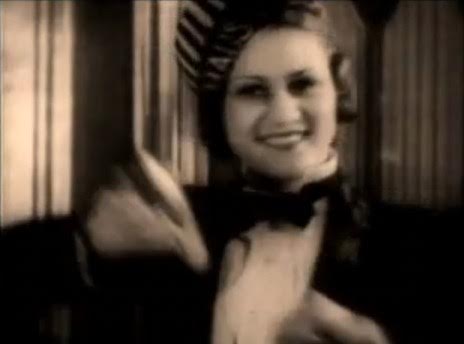
A still from here, at 0:27:
it is so startling to see yourself somewhere you are not
so slippy
in my sleep
i am this dancing girl
in the weimar nightclub
and i buzz with black holes
between the nets of swinging cliches
dietrich’s smile
kurt weill refrains
bauhaus lines
they’re all unravelled, sucked away
and i’m left with only questions
to clothe her dancing bones
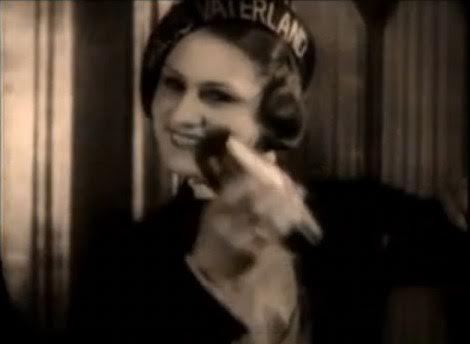
so who was she?
and what was her name?
what was her favourite food?
colour?
how did she move?
was she a good dancer?
where did she work?
was she in love?
was she lonely?
did she have a brother in the army? a lover?
as she donned that “vaterland” hat, did her chest swell with pride
or was it just the dress code?
where was she in 5 years’ time?
did she have any children? grandchildren? where are they now?
do they also look like me?
more and more questions
and all from just a 1-and-a-half second cutaway to anonymous archive in
a lousy louise brooks documentary
i feel dizzy
eisenstein was right
montage is dangerous.
 The sun shines on the just and on the unjust… God makes himself necessity. There are two aspects of necessity: it is exercised, it is endured: the sun and the cross.
We have to consent to be subject to necessity and to act only by handling it.
Subordination: economy of energy. Thanks to this, an act of heroism can be performed without there being any need for the person who commands or the one who obeys to be a hero.
We have to attain to receiving orders from God.
In which cases does the struggle against temptation exhaust the energy attached to goodness and in which cases does it make it rise higher in the scale of qualities of energy?
This must depend on the respective importance of the parts played by the will and the attention.
We have to deserve, by the strength of our love, to suffer constraint.
Obedience is the supreme virtue. We have to love necessity. Necessity is what is lowest in relation to the individual (constraint, force, a ‘hard fate’); universal necessity brings deliverance from this.
There are cases where a thing is necessary from the mere fact that it is possible. Thus to eat when we are hungry, to give a wounded man, dying of thirst, something to drink when there is water quite near. Neither a ruffian nor a saint would refrain from doing so.
By analogy, we have to discern the cases in which, although it does not appear so clearly at first sight, the possibility implies a necessity, we must act in these cases and not in the others.
The pomegranate seed. We do not pledge ourselves to love God, we give our consent to the engagement which has been formed within us in spite of ourselves.
We should do only those righteous actions which we cannot stop ourselves from doing, which we are unable not to do, but, through well directed attention, we should always keep on increasing the number of those which we are unable not to do.
We should not take one step, even in the direction of what is good, beyond that to which we are irresistibly impelled by God, and this applies to action, word and thought. But we should be willing to go anywhere under his impulsion, even to the farthest limit (the cross)… To be willing to go as far as possible is to pray to be impelled, but without knowing whither.
If my eternal salvation were on this table in the form of an object and if I only had to stretch out my hand to grasp it, I would not stretch out my hand without having received orders to do so.
Detachment from the fruits of action. To escape from inevitability of this kind. How? To act not for an object but from necessity. I cannot do otherwise. It is not an action but a sort of passivity. Inactive action.
The slave is in a sense a model (the lowest… the highest… always this same law). So also is matter.
To transfer the source of our actions outside ourselves. To be impelled. The purest of motives (or the basest: the law is always the same) appear as something exterior.
Every act should be considered from the point of view not of its object but of its impulsion. The question is not ‘What is the aim?’ It is ‘What is the origin?’
‘I was naked, and ye clothed me.’ This gift is simply an indication of the state of those who acted in this way. They were in a state which made it impossible for them not to feed the hungry and to clothe the naked; they did not in any way do it for Christ, they could not help doing it because the compassion of Christ was in them. It was the same with Saint Nicholas who, when going across the Russian Steppes with Saint Cassian to meet God, could not help being late for the appointed time of meeting because he had to help a poor peasant to move his cart which had stuck in the mud. Good which is done in this way, almost in spite of ourselves, almost shamefacedly and apologetically, is pure. All absolutely pure goodness completely eludes the will. Goodness is transcendent. God is Goodness.
‘I was hungered, and ye gave me meat.’ When was that, Lord? They did not know. We must not know when we do such acts.
We must not help our neighbour for Christ but in Christ. May the self disappear in such a way that Christ can help our neighbour through the medium of our soul and body. May we be the slave whom his master sends to bear help to someone in misfortune. The help comes from the master, but it is intended for the sufferer. Christ did not suffer for his Father. He suffered for men by the Father’s will.
We cannot say of the slave who goes off bearing help that he is doing it for his master. He is doing nothing. Even though in order to reach the sufferer he had to walk barefoot over nails, he would suffer but he would not be doing anything. For he is a slave.
‘We are unprofitable servants’: that means we have done nothing.
In general the expression ‘for God’ is a bad one. God ought not to be put in the dative.
We should not go to our neighbour for the sake of God, but we should be impelled towards our neighbour by God, as the arrow is driven towards its target by the archer.
To be only an intermediary between the uncultivated ground and the ploughed field, between the data of a problem and the solution, between the blank page and the poem, between the starving beggar and the beggar who has been fed.
With all things, it is always what comes to us from outside, freely and by surprise as a gift from heaven, without our having sought it, that brings us pure joy. In the same way real good can only come from outside ourselves, never from our own effort. We cannot under any circumstances manufacture something which is better than ourselves. Thus effort truly stretched towards goodness cannot reach its goal; it is after long, fruitless effort which ends in despair, when we no longer expect anything, that, from outside ourselves, the gift comes as a marvellous surprise. The effort has destroyed a part of the false sense of fullness within us. The divine emptiness, fuller than fullness, has come to inhabit us.
The will of God. How to know it? If we make a quietness within ourselves, if we silence all desires and opinions and if with love, without formulating any words, we bind our whole soul to think ‘Thy will be done’, the thing which after that we feel sure we should do (even though in certain respects we may be mistaken) is the will of God. For if we ask him for bread he will not give us a stone.
Convergency as a criterion. An action or attitude for which reason affords several distinct and convergent motives, but which we feel transcends all imaginable motives.
In prayer we must not have in view any particular thing, unless by supernatural inspiration, for God is the universal being. To be sure, he descends into the realm of particular things. He has descended, he descends in the act of creation; as also in the Incarnation, the Eucharist, Inspiration, etc. But the movement comes from above, never from below; it is a movement on God’s part, not on ours. We cannot bring about such intercommunion except when God decrees it. Our role is to be ever turned towards the universal.
There perhaps we have the solution to Berger’s difficulty about the impossibility of a union between the relative and the absolute. It cannot be achieved by a movement rising from below, but it is possible by a descending movement from on high.
We can never know that God commands a certain thing. Intention directed towards obedience to God saves us, whatever we do, if we place God infinitely above us, and damns us, whatever we do, if we call our own heart God. In the first case we never think what we have done, what we are doing or what we are going to do can be good.
The use of temptations. It depends on the relative strength of the soul and of time. To go on for a long time contemplating the possibility of doing evil without doing it effects a kind of transubstantiation. If we resist with merely finite energy, this energy is exhausted after a certain time, and when it is exhausted we give in. If we remain motionless and attentive it is the temptation which is exhausted—and we acquire the energy raised to a higher degree.
If, in the same way—that is to say motionless and attentive— we contemplate the possibility of doing good, a transubstantiation of energy is brought about in this case also, and thanks to it we accomplish the good we have been considering.
The transubstantiation of the energy consists in the fact that, where what is good is concerned, a moment comes when we cannot help doing it.
This, moreover, provides a criterion of good and evil.
Every creature which attains perfect obedience constitutes a special, unique, irreplaceable form of the presence, knowledge and operation of God in the world.
Necessity. We have to see things in their right relationship and ourselves, including the purposes we bear within us, as one of the terms of that relationship. Action follows naturally from this.
Obedience. There are two kinds. We can obey the force of gravity or we can obey the relationship of things. In the first case we do what we are driven to by the imagination which fills up empty spaces. We can affix a variety of labels to it, often with a show of truth, including righteousness and God. If we suspend the filling up activity of the imagination and fix our attention on the relationship of things, a necessity becomes apparent which we cannot help obeying. Until then we have not any notion of necessity and we have no sense of obedience.
After that we cannot be proud of what we do, even though we may accomplish marvels.
The words of the Breton ship’s boy to the journalist who asked him how he had been able to act as he did: ‘There was nothing else for it’—the purest heroism—more frequent among the poor than elsewhere.
Obedience is the only pure motive, the only one which does not in the slightest degree seek a reward for the action, but leaves all care of reward to the Father who is in secret and who sees in secret.
The obedience must, however, be obedience to necessity and not to force (terrible void in the case of slaves).
However much we give of ourselves to others or to a great cause, whatever suffering we endure, if it is out of pure obedience to a clear conception of the relationship of things and to necessity, we make up our minds to it without effort although we accomplish it with effort. We cannot do otherwise, and there is no reversal, no void to be filled, no thought of reward, no spite, no loss of dignity.
Action is the pointer of the balance. We must not touch the pointer but the weight.
Exactly the same rule applies to opinions.
If we fail to observe it there is either confusion or suffering.
The Foolish Virgins—The meaning of this story is that at the moment when we become conscious that we have to make a choice, the choice is already made for good or ill. This is much truer than the allegory about Hercules between virtue and vice.
When the inward nature of man, cut off from all carnal influences and deprived of all supernatural light, performs actions which are in conformity with those which supernatural light would impose if it were present, there is utter purity. That is the central point of the Passion.
In contemplation, the right relationship with God is love, in action it is slavery. This distinction must be kept. We must act as becomes a slave while contemplating with love…
__
Excerpted from Simone Weil‘s Gravity and Grace. First French edition 1947. Translated by Emma Crawford. English language edition 1963. Routledge and Kegan Paul, London.
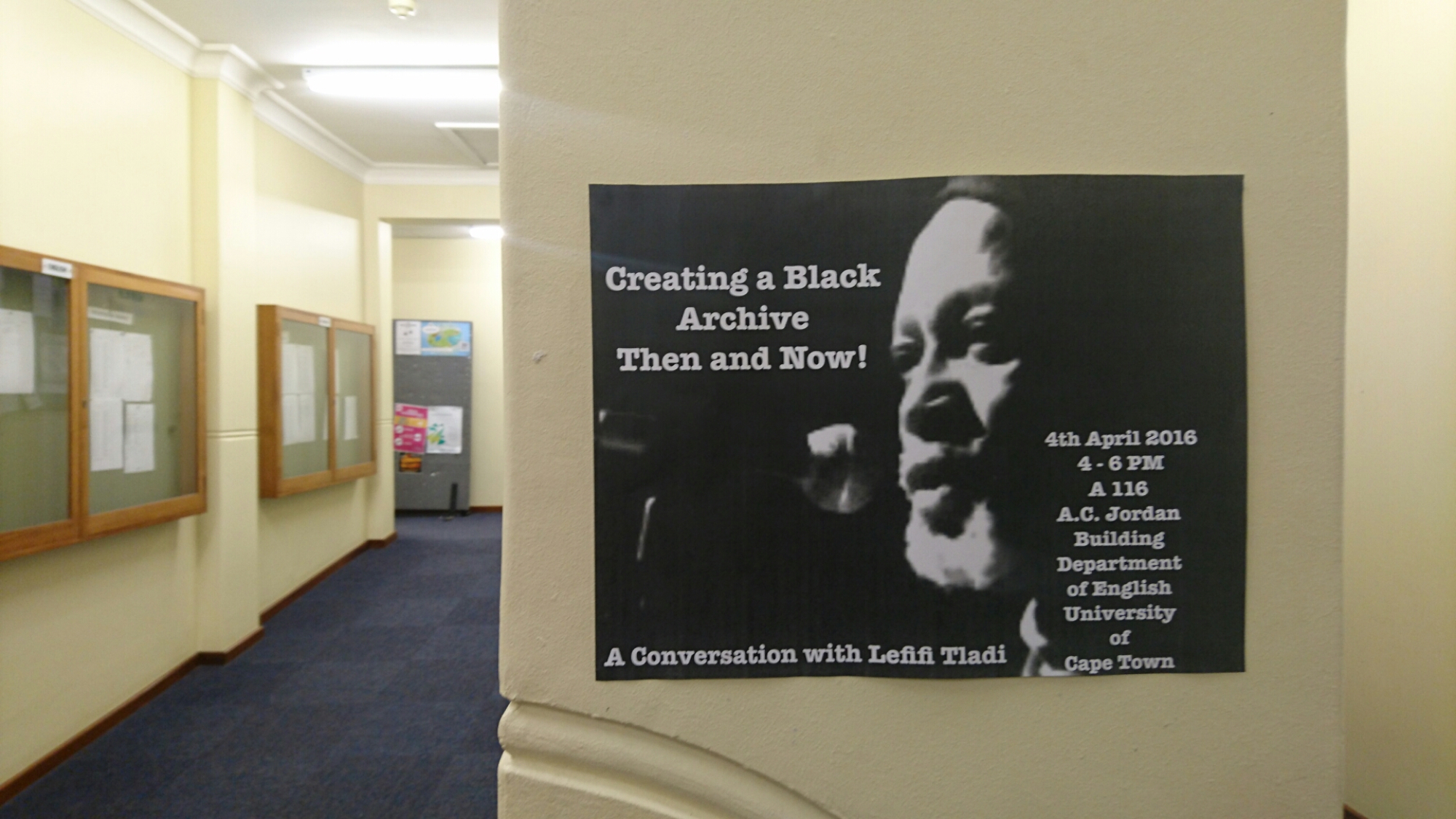
Lefifi Tladi in conversation this afternoon at UCT.
Film: La Rose de Fer (Rose of Iron, 1973) – Director: Jean Rollin – with Françoise Pascal
Music: “La Fête Triste” by Trisomie 21 (from the album Passions Divisées, released on Stechak,1984)
Remix by David from Lille
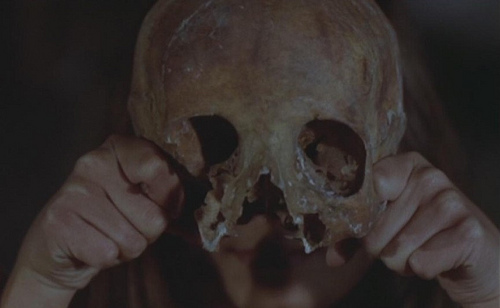
Directed by Jean Rollin
Starring Marie-Pierre Castel, Mireille Dargent, Philippe Gasté, Dominique, Louise Dhour
Music by Pierre Raph
Watch the full film HERE (French, with Spanish subtitles, but there’s very little dialogue).
Scene from Georges Lautner’s film Le Pacha, featuring Serge Gainsbourg performing “Requiem Pour un Con“.
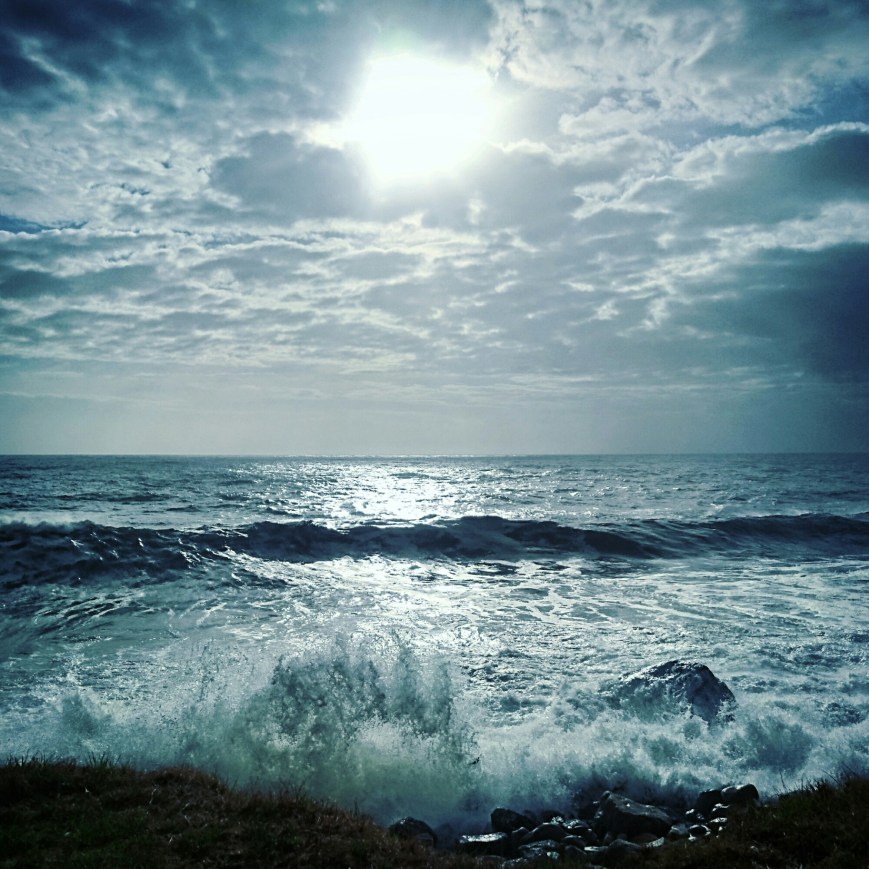
Solo drives are the best way to be alone on days when everyone else is with family.
Love is a sign of our wretchedness. God can only love himself. We can only love something else.
God’s love for us is not the reason for which we should love him. God’s love for us is the reason for us to love ourselves. How could we love ourselves without this motive?
It is impossible for man to love himself except in this roundabout way.
If my eyes are blindfolded and if my hands are chained to a stick, this stick separates me from things but I can explore them by means of it. It is only the stick which I feel, it is only the wall which I perceive. It is the same with creatures and the faculty of love. Supernatural love touches only creatures and goes only to God. It is only creatures which it loves (what else have we to love?), but it loves them as intermediaries. For this reason it loves all creatures equally, itself included. To love a stranger as oneself implies the reverse: to love oneself as a stranger.
Love of God is pure when joy and suffering inspire an equal degree of gratitude.
Love on the part of someone who is happy is the wish to share the suffering of the beloved who is unhappy.
Love on the part of someone who is unhappy is to be filled with joy by the mere knowledge that his beloved is happy without sharing in this happiness or even wishing to do so.
In Plato’s eyes, carnal love is a degraded image of true love. Chaste human love (conjugal fidelity) is a less degraded image of it. Only in the stupidity of the present day could the idea of sublimation arise.
The Love of Phaedrus. He neither exercises force nor submits to it. That constitutes the only purity. Contact with the sword causes the same defilement whether it be through the handle or the point. For him who loves, its metallic coldness will not destroy love, but will give the impression of being abandoned by God. Supernatural love has no contact with force, but at the same time it does not protect the soul against the coldness of force, the coldness of steel. Only an earthly attachment, if it has in it enough energy, can afford protection from the coldness of steel. Armour, like the sword, is made of metal. Murder freezes the soul of the man who loves only with a pure love, whether he be the author or the victim, so likewise does everything which, without going so far as actual death, constitutes violence. If we want to have a love which will protect the soul from wounds, we must love something other than God.
Love tends to go ever further and further, but there is a limit. When the limit is passed love turns to hate. To avoid this change love has to become different.
Among human beings, only the existence of those we love is fully recognised.
Belief in the existence of other human beings as such is love.
The mind is not forced to believe in the existence of anything (subjectivism, absolute idealism, solipsism, scepticism: c.f. the Upanishads, the Taoists and Plato, who, all of them, adopt this philosophical attitude by way of purification). That is why the only organ of contact with existence is acceptance, love. That is why beauty and reality are identical. That is why joy and the sense of reality are identical.
This need to be the creator of what we love is a need to imitate God. But the divinity towards which it tends is false, unless we have recourse to the model seen from the other, the heavenly side…
Pure love of creatures is not love in God, but love which has passed through God as through fire. Love which detaches itself completely from creatures to ascend to God and comes down again associated with the creative love of God.
Thus the two opposites which rend human love are united: to love the beloved being just as he is, and to want to recreate him.
Imaginary love of creatures. We are attached by a cord to all the objects of attachment, and a cord can always be cut. We are also attached by a cord to the imaginary God, the God for whom love is also an attachment. But to the real God we are not attached and that is why there is no cord which can be cut. He enters into us. He alone can enter into us. All other things remain outside and our knowledge of them is confined to the tensions of varying degree and direction which affect the cord when there is a change of position on their part or on ours.
Love needs reality. What is more terrible than the discovery that through a bodily appearance we have been loving an imaginary being. It is much more terrible than death, for death does not prevent the beloved from having lived.
That is the punishment for having fed love on imagination.
It is an act of cowardice to seek from (or to wish to give) the people we love any other consolation than that which works of art give us. These help us through the mere fact that they exist. To love and to be loved only serves mutually to render this existence more concrete, more constantly present to the mind. But it should be present as the source of our thoughts, not as their object. If there are grounds for wishing to be understood, it is not for ourselves but for the other, in order that we may exist for him.
Everything which is vile or second-rate in us revolts against purity and needs, in order to save its own life, to soil this purity. To soil is to modify, it is to touch. The beautiful is that which we cannot wish to change. To assume power over is to soil. To possess is to soil.
To love purely is to consent to distance, it is to adore the distance between ourselves and that which we love.
The imagination is always united with a desire, that is to say a value. Only desire without an object is empty of imagination. There is the real presence of God in everything which imagination does not veil. The beautiful takes our desire captive and empties it of its object, giving it an object which is present and thus forbidding it to fly off towards the future.
Such is the price of chaste love. Every desire for enjoyment belongs to the future and the world of illusion, whereas if we desire only that a being should exist, he exists: what more is there to desire? The beloved being is then naked and real, not veiled by an imaginary future. The miser never looks at his treasure without imagining it n times larger. It is necessary to be dead in order to see things in their nakedness.
Thus in love there is chastity or the lack of chastity according to whether the desire is or is not directed towards the future.
In this sense, and on condition that it is not turned towards a pseudo-immortality conceived on the model of the future, the love we devote to the dead is perfectly pure. For it is the desire for a life which is finished, which can no longer give anything new. We desire that the dead man should have existed, and he has existed.
Wherever the spirit ceases to be a principle it also ceases to be an end. Hence the close connexion between collective ‘thought’ under all its forms and the loss of the sense of and respect for souls. The soul is the human being considered as having a value in itself. To love the soul of a woman is not to think of her a serving one’s own pleasure, etc. Love no longer knows how to contemplate, it wants to possess (disappearance of Platonic love).*
It is a fault to wish to be understood before we have made ourselves clear to ourselves. It is to seek pleasures in friendship and pleasures which are not deserved. It is something which corrupts even more than love. You would sell your soul for friendship.
Learn to thrust friendship aside, or rather the dream of friendship. To desire friendship is a great fault. Friendship should be a gratuitous joy like those afforded by art or life. We must refuse it so that we may be worthy to receive it; it is of the order of grace (‘Depart from me, O Lord. . . .’). It is one of those things which are added unto us. Every dream of friendship deserves to be shattered. It is not by chance that you have never been loved. . . . To wish to escape from solitude is cowardice. Friendship is not to be sought, not to be dreamed, not to be desired; it is to be exercised (it is a virtue). We must have done with all this impure and turbid border of sentiment. Schluss!
Or rather (for we must not prune too severely within ourselves), everything in friendship which does not pass into real exchanges should pass into considered thoughts. It serves no useful purpose to do without the inspiring virtue of friendship. What should be severely forbidden is to dream of its sentimental joys. That is corruption. Moreover it is as stupid as to dream about music or painting. Friendship cannot be separated from reality any more than the beautiful. It is a miracle, like the beautiful. And the miracle consists simply in the fact that it exists. At the age of twenty-five, it is high time to have done with adolescence once and for all…
Do not allow yourself to be imprisoned by any affection. Keep your solitude. The day, if it ever comes, when you are given true affection there will be no opposition between interior solitude and friendship, quite the reverse. It is even by this infallible sign that you will recognise it. Other affections have to be severely disciplined.
The same words (e.g. a man says to his wife: ‘I love you’) can be commonplace or extraordinary according to the manner in which they are spoken. And this manner depends on the depth of the region in a man’s being from which they proceed without the will being able to do anything. And by a marvellous agreement they reach the same region in him who hears them. Thus the hearer can discern, if he has any power of discernment, what is the value of the words.
Benefaction is permissible precisely because it constitutes a humiliation still greater than pain, a still more intimate and undeniable proof of dependence. And gratitude is prescribed for the same reason, since therein lies the use to be made of the received benefit. The dependence, however, must be on fate and not on any particular human being. That is why the benefactor is under an obligation to keep himself entirely out of the benefaction. Moreover the gratitude must not in any degree constitute an attachment, for that is the gratitude proper to dogs.
Gratitude is first of all the business of him who helps, if the help is pure. It is only by virtue of reciprocity that it is due from him who is helped.
In order to feel true gratitude (the case of friendship being set aside), I have to think that it is not out of pity, sympathy or caprice that I am being treated well, it is not as a favour or privilege, nor as a natural result of temperament, but from a desire to do what justice demands. Accordingly he who treats me thus wishes that all who are in my situation may be treated in the same way by all who are in his own.
__
*Here ‘Platonic’ love has nothing to do with what today goes by the same name. It does not proceed from the imagination but from the soul. It is purely spiritual contemplation. Cf. later, in the chapter on Beauty. [Editor’s note.]
__
Excerpted from Simone Weil‘s Gravity and Grace. First French edition 1947. Translated by Emma Crawford. English language edition 1963. Routledge and Kegan Paul, London.

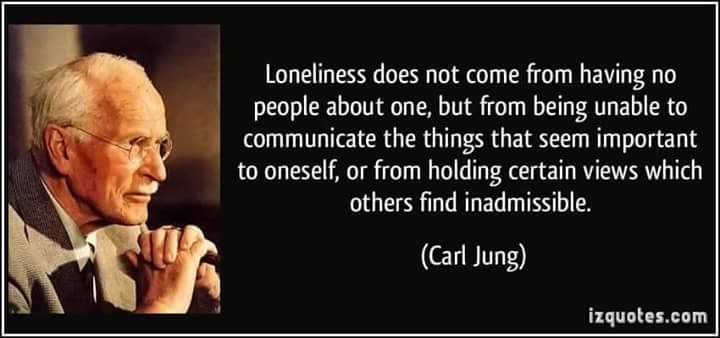
Album: Cable Hogue Soundtrack (1992)
Been listening to this band a lot lately. They originally began in 1962 as a musical theatre troupe, however the formation of the band was not until 1967 at Kyoto University. The band’s style is typified by simple, repetitious instrumental passages, shrieking, cacophonous guitar feedback, extensive improvisation reminiscent of free jazz, and folk arrangement. Their discography is made up mostly of live bootlegs, soundboard archives and even a few rare aborted studio recording attempts as they have never officially released any of their own material. [SOURCE]
Album: Caress & Violence (1987)
About their faux-French name:
“Les rallizes dénudés” is their international name, in Japan they’re known as “Hadaka no rariizu”… Hadaka no translates to nu or dénudé; rariizu is a foreign word (or combination of sounds?) that was transliterated to the French-sounding “rallizes” when they got their international, French-sounding name.So… From a mysterious foreign word to a Japanese approximation, then to a French approximation of the Japanese. May well have been Larrys… Might have been another word… Could be something else entirely, that has meaning only for them… In any case, better not look for a French meaning in it!
“The Naked/Stripped/Bare Larries/Rallies” would be the English approximation.
A brand new version of this song, made famous by Lee Hazlewood and the Grateful Dead. It was written by folk singer Bonnie Dobson.
From Wikipedia:
“Morning Dew“, also known as “(Walk Me Out in the) Morning Dew“, is a post-apocalyptic folk rock song written by Canadian folk singer Bonnie Dobson and made famous by the Grateful Dead.
The song is a dialogue between the last man and woman left alive following an apocalyptic catastrophe: Dobson has stated that the initial inspiration for “Morning Dew” was the film On the Beach which is focused on the survivors of virtual global annihilation by nuclear holocaust. The actual writing of the song occurred in 1961 while Dobson was staying with a friend in Los Angeles: Dobson would recall how the guests at her friend’s apartment were speculating about a nuclear war’s aftermath and “after everyone went to bed, I sat up and suddenly I just started writing this song [although] I had never written [a song] in my life”.[1] Dobson premiered “Morning Dew” in her set at the inaugural Mariposa Folk Festival that year with the song’s first recorded version being on Dobson’s At Folk City live album in 1962. Dobson would not record a studio version of the song until 1969, that being for her Bonnie Dobson album.
“Morning Dew” was not published until 1964 when Jac Holzman of Elektra Records contacted Dobson with an offer to sign her as a songwriter as Elektra artist Fred Neil had heard “Morning Dew” and wished to record it. The first studio recording of “Morning Dew” appeared on the 1964 album Tear Down The Walls by Fred Neil and Vince Martin. It was this version which introduced the song to Tim Rose who in 1966 recorded “Morning Dew” for his self-titled debut album after soliciting permission to revise the song with a resultant co-writing credit. Dobson agreed without having any intended revision specified and was subsequently much discomforted to learn that the changes were minimal. As of the February 1967 release of the Tim Rose single version of “Morning Dew” the standard songwriting credit for the song has been Bonnie Dobson and Tim Rose: Dobson, who in 1998 averred she’d never met Rose (d. 2002), has consistently questioned Rose’s right to a credit.
“Morning Dew” became a signature song of the Grateful Dead whose frontman Jerry Garcia was introduced to the Fred Neil recording by roadie Laird Grant in 1966.
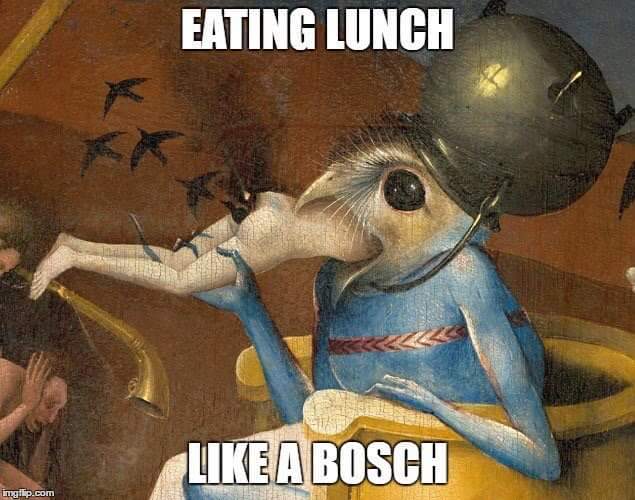
Compelling stuff.
Jean Cocteau began his career as a poet, publishing his first collection, Aladdin’s Lamp, at the age of 19. By 1963, at the age of 73, he had lived one of the richest artistic lives imaginable, transforming every genre he touched. Deciding to leave one last artefact to posterity, Cocteau sat down and recorded the film above, a message to the year 2000, intending it as a time capsule only to be opened in that year (though it was discovered, and viewed a few years earlier). Biographer James S. Williams describes the documentary testament as “Cocteau’s final gift to his fellow human beings.”
Portraying himself as “a living anachronism” in a “phantom-like state,” Cocteau, seated before his own artwork, quotes St. Augustine, makes parables of events in his life, and addresses, primarily, the youth of the future. The uses and misuses of technology comprise a central theme of his discourse: “I certainly hope that you have not become robots,” Cocteau says, “but on the contrary that you have become very humanized: that’s my hope.” The people of his time, he claims, “remain apprentice robots.”
Among Cocteau’s concerns is the dominance of an “architectural Esperanto, which remains our time’s great mistake.” By this phrase he means that “the same house is being built everywhere and no attention is paid to climate, atmospherical conditions or landscape.” Whether we take this as a literal statement or a metaphor for social engineering, or both, Cocteau sees the condition as one in which these monotonous repeating houses are “prisons which lock you up or barracks which fence you in.” The modern condition, as he frames it, is one “straddling contradictions” between humanity and machinery. Nonetheless, he is impressed with scientific advancement, a realm of “men who do extraordinary things.”
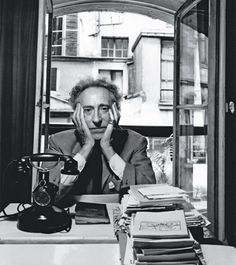 And yet, “the real man of genius,” for Cocteau, is the poet, and he hopes for us that the genius of poetry “hasn’t become something like a shameful and contagious sickness against which you wish to be immunized.” He has very much more of interest to communicate, about his own time, and his hopes for ours. Cocteau recorded this transmission from the past in August of 1963. On October 11 of that same year, he died of a heart attack, supposedly shocked to death by news of his friend Edith Piaf’s death that same day in the same manner.
His final film, and final communication to a public yet to be born, accords with one of the great themes of his life’s work—“the tug of war between the old and the new and the paradoxical disparities that surface because of that tension.” Should we attend to his messages to our time, we may find that he anticipated many of our 21st century dilemmas between technology and humanity, and between history and myth. It’s interesting to imagine how we might describe our own age to a later generation, and, like Cocteau, what we might hope for them.
Via Open Culture.
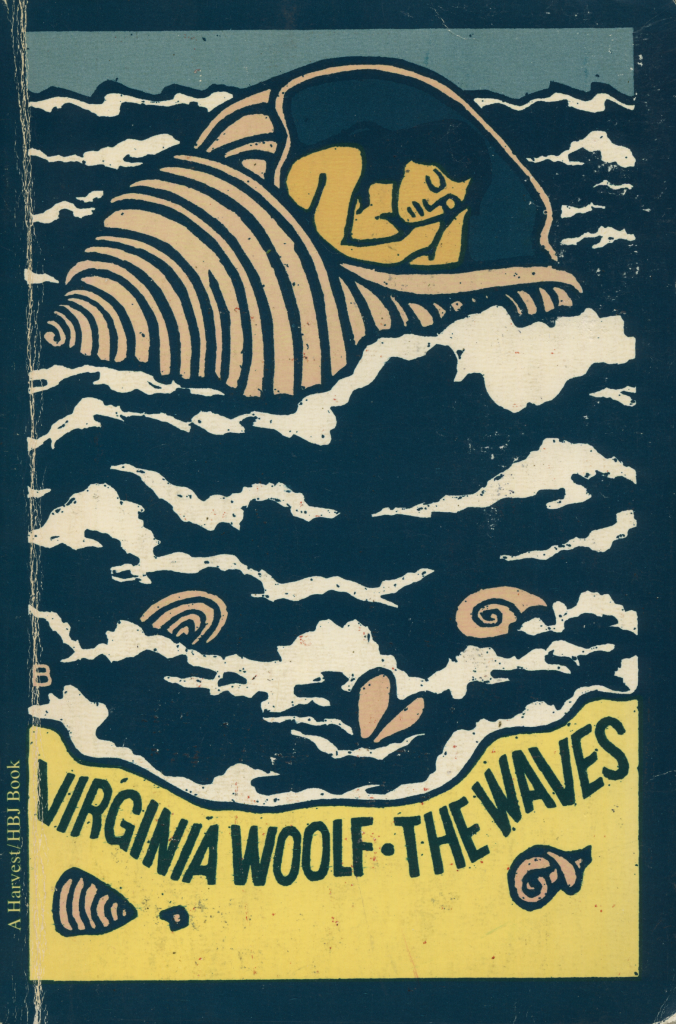 “Am I too fast, too facile? I do not know. I do not know myself sometimes, or how to measure and name and count out the grains that make me what I am.”
— Virginia Woolf, from The Waves (1931).
<3 <3 <3 !!! “Hymne a l’amour” as you’ve NEVER heard it.
2006年8月4日発売の二階堂和美 (Kazumi Nikaido)『二階堂和美のアルバム』(PCD-26016)からLovers RockのPVです
2006年8月4日発売の二階堂和美 (Kazumi Nikaido)『二階堂和美のアルバム』(PCD-26016)から今日を問う Part2のPVです。
Magical, timeless. It takes the stupid, yakking crowd a while to catch on.
Friday, August 5th, 2011, El Rio, San Francisco.
We are drawn towards a thing because we believe it is good. We end by being chained to it because it has become necessary.
Things of the senses are real if they are considered as perceptible things, but unreal if considered as goods.
Appearance has the completeness of reality, but only as appearance. As anything other than appearance it is error.
Illusions about the things of this world do not concern their existence but their value. The image of the cave refers to values. We only possess shadowy imitations of good. It is also in relation to good that we are chained down like captives (attachment). We accept the false values which appear to us and when we think we are acting we are in reality motionless, for we are still confined in the same system of values.
Actions effectively carried out and yet imaginary. A man attempts suicide, recovers and is no more detached afterwards than he was before. His suicide was imaginary. Suicide is probably never anything else, and that is why it is forbidden.
Strictly speaking time does not exist (except within the limit of the present), yet we have to submit to it. Such is our condition. We are subject to that which does not exist. Whether it is a question of passively borne duration—physical pain, waiting, regret, remorse, fear—or of organized time—order, method, necessity—in both cases that to which we are subject does not exist. But our submission exists. We are really bound by unreal chains. Time which is unreal casts over all things including ourselves a veil of unreality.
The miser’s treasure is the shadow of an imitation of what is good. It is doubly unreal. For, to start with, a means to an end (such as money) is, in itself, something other than a good. But diverted from its function as a means and set up as an end, it is still further from being a good.
It is with regard to the assessment of values that our sense- perceptions are unreal, since things are unreal for us as values. But to attribute a false value to an object also takes reality from the perception of this object, because it submerges perception in imagination.
Thus perfect detachment alone enables us to see things in their naked reality, outside the fog of deceptive values. That is why ulcers and the dung-heap were necessary before Job could receive the revelation of the world’s beauty. For there is no detachment where there is no pain. And there is no pain endured without hatred or lying unless detachment is present also.
The soul which has poked its head out of heaven devours the being. The soul which has remained inside devours opinion.
Necessity is essentially a stranger to the imaginary.
What is real in perception and distinguishes it from dreams is not the sensations, but the necessity enshrined in these sensations.
‘Why these things and not others?’ ‘Because that is how it is.’ In the spiritual life illusion and truth are distinguished in the same way.
What is real in perception and distinguishes it from dreams is not sensations but necessity.
There is a distinction between those who remain inside the cave, shutting their eyes and imagining the journey, and those who really take it. In the spiritual realm also we have real and imaginary, and there also it is necessity which makes the difference—not simply suffering, because there are imaginary sufferings. As for inner feelings, nothing is more deceptive.
How can we distinguish the imaginary from the real in the spiritual realm?
We must prefer real hell to an imaginary paradise.
That which distinguishes higher states from lower ones is the coexistence in the higher states of several superposed planes.
Humility has as its object to eliminate that which is imaginary in spiritual progress. There is no harm in thinking ourselves far less advanced than we are: the effect of the light is in no way decreased thereby for its source is not in opinion. There is great harm in thinking ourselves more advanced, because then opinion has an effect.
A test of what is real is that it is hard and rough. Joys are found in it, not pleasure. What is pleasant belongs to dreams.
We must try to love without imagining—to love the appearance in its nakedness without interpretation. What we love then is truly God.
After having experienced the absolute good, we find the illusory and partial aspects of goods once more, but in a hierarchical order, so that we only allow ourselves to seek one such aspect within a limit where it does not interfere with the care due to another. This order is transcendent in relation to the aspects of goods which it connects together and it is a reflection of the absolute good.
Already discursive reason (the understanding of relationships) helps to break down idolatries by considering good and evil things as limited, merging, overlapping.
We must recognize the point at which good passes into evil: in so far as, to the extent that, having regard to, etc.
We must get further than the rule of three.
There is always a relationship to time to be taken into account. We must get rid of the illusion of possessing time. We must become incarnate.
Man has to perform an act of incarnation, for he is disembodied (désincarné) by his imagination. What comes to us from Satan is our imagination.
Cure for imaginary love. To give God the strict minimum in us, what it is absolutely impossible for us to refuse him—and desire that one day, and as soon as possible, this strict minimum may become all.
Transposition: we believe we are rising because while keeping the same base inclinations (for instance; the desire to triumph over others) we have given them a noble object.
We should, on the contrary, rise by attaching noble inclinations to lowly objects.
All the passions produce prodigies. A gambler is capable of watching and fasting almost like a saint, he has his premonitions, etc.
There is great danger in loving God as the gambler loves his game.
We must be careful about the level on which we place the infinite. If we place it on the level which is only suitable for the finite it will matter very little what name we give it.
The lower parts of my nature should love God, but not too much, for then it would not be God.
May their love be like hunger and thirst. Only the highest has the right to be satisfied.
Fear of God in Saint John of the Cross. Is this not the fear of thinking about God when we are unworthy; of sullying him by thinking about him wrongly? Through such fear the lower parts of our nature draw away from God.
The flesh is dangerous in so far as it refuses to love God, but also in so far as without fitting modesty it pushes itself forward to love him.
Why is the determination to fight against a prejudice a sure sign that one is full of it? Such a determination necessarily arises from an obsession. It constitutes an utterly sterile effort to get rid of it. In such a case the light of attention is the only thing which is effective, and it is not compatible with a polemical intention.
All the Freudian system is impregnated with the prejudice which it makes it its mission to fight—the prejudice that everything sexual is vile.
There is an essential difference between the mysticism which turns towards God the faculty of love and desire of which sexual energy constitutes the physiological foundation, and the false imitation of mysticism which, without changing the natural orientation of this faculty, gives it an imaginary object upon which it stamps the name of God as a label. To discriminate between these two operations, of which the second is still lower than debauchery, is difficult, but it is possible.
God and the supernatural are hidden and formless in the universe. It is well that they should be hidden and nameless in the soul. Otherwise there would be a risk of having something imaginary under the name of God (those who fed and clothed Christ did not know that it was Christ). This is the meaning of the ancient mysteries. Christianity (Catholic and Protestant) speaks too much about holy things.
Morality and literature. Imagination and fiction go to make up more than three-quarters of our real life. Rare indeed are the true contacts with good and evil.
A science which does not bring us nearer to God is worthless.
But if it brings us to him in the wrong way, that is to say if it brings us to an imaginary God, it is worse…
It is bad to think that I am the author of the operations which nature mechanically performs in me: it is still worse to think that the Holy Spirit is the author of them. That is still farther from the truth.
Different types of correlation and passage from one opposite to another:
Through total devotion to something great (including God), giving free licence to our lower nature.
Through contemplation of the infinite distance between the self and what is great, making of the self an instrument of greatness.
By what criterion can they be distinguished?
I think the only criterion is that bad correlation removes the limits from that which is rightly limited.
If we except the highest forms of sanctity and genius, that which gives the impression of being true in man is almost bound to be false, and that which is true is almost bound to give the impression of being false.
Work is needed to express what is true: also to receive what is true. We can express and receive what is false, or at least what is superficial, without any work.
When truth appears at least as true as falsehood it is a triumph of sanctity or of genius. Thus Saint Francis made his audience cry just like a cheap theatrical preacher would have done.
Duration, whether of centuries in the case of civilizations or of years and decades for individuals, has the Darwinian function of eliminating the unfit. That which is fitted for all things is eternal. In this alone lies the value of what we call experience. But falsehood is an armour by means of which man often enables what is unfit in him to survive events which, were it not for such armour, would destroy it (thus pride manages to survive humiliations), and this armour is as it were secreted by what is unfit in order to ward off the danger (in humiliation, pride makes thicker the inner falsehood which covers it). There is as it were a phagocytosis in the soul: everything which is threatened by time secretes falsehood in order not to die, and in proportion to the danger it is in of dying. That is why there is not any love of truth without an unconditional acceptance of death. The cross of Christ is the only gateway to knowledge.
I should look upon every sin I have committed as a favour of God. It is a favour that the essential imperfection which is hidden in my depths should have been to some extent made clear to me on a certain day, at a certain time, in certain circumstances. I wish and implore that my imperfection may be wholly revealed to me in so far as human thought is capable of grasping it. Not in order that it may be cured but, even if it should not be cured, in order that I may know the truth.
Everything that is worthless shuns the light. Here on earth we can hide ourselves beneath the flesh. At death we can do this no longer. We are given up naked to the light. That means hell, purgatory or paradise as the case may be.
That which makes us hold back from the effort which would bring us nearer to what is good is the repugnance of the flesh, but it is not the flesh’s repugnance in the face of effort. It is the flesh’s repugnance in the face of what is good, because for a bad cause, if there were a strong enough incentive, the flesh would consent to anything, knowing it could do so without dying. Death itself, endured for a bad cause, is not really death for the carnal part of the soul. What is mortal for the carnal part of the soul is to see God face to face.
That is why we fly from the inner void since God might steal into it.
It is not the pursuit of pleasure and the aversion for effort which causes sin, but fear of God. We know that we cannot see him face to face without dying and we do not want to die. We know that sin preserves us very effectively from seeing him face to face: pleasure and pain merely provide us with the slight indispensable impetus towards sin, and above all the pretext or alibi which is still more indispensable. In the same way as pretexts are necessary for unjust wars, a promise of some false good is necessary for sin, because we cannot endure the thought that we are going in the direction of evil. It is not the flesh which keeps us away from God; the flesh is the veil we place before us to shield us from him.
This is perhaps not the case until after a certain point has been reached. The image of the cave seems to suggest as much. At first it is movement which hurts. When we reach the opening it is the light. It not only blinds but wounds us. Our eyes turn away from it.
May it not be true that from that moment onwards mortal sins are the only kind we can any longer commit?
To use the flesh to hide ourselves from the light—is not that a mortal sin? A horrible idea.
Leprosy is preferable.
I need God to take me by force, because, if death, doing away with the shield of the flesh, were to put me face to face with him, I should run away.
__
Excerpted from Simone Weil‘s Gravity and Grace. First French edition 1947. Translated by Emma Crawford. English language edition 1963. Routledge and Kegan Paul, London.
Victoria is a singer-songwriter, from Dorset via London to Johannesburg. She is particularly interested in the ways in which the arts relate to health, and to social change.
Full biography & other details on www.victoriahume.com.
 I want to make a praise of sleep. Not as a practitioner—I admit I have never been what is called “a good sleeper” and perhaps we can return later to that curious concept—but as a reader. There is so much sleep to read, there are so many ways to read it. In Aristotle’s view, sleep requires a “daimonic but not a divine” kind of reading. Kant refers to sleep’s content as “involuntary poetry in a healthy state.”
Keats wrote a “Sonnet to Sleep,” invoking its powers against the analytic of the day:
O soft embalmer of the still midnight!
. . . Then save me, or the passed day will shine
Upon my pillow, breeding many woes;
Save me from curious conscience, that still lords
Its strength for darkness, burrowing like a mole;
Turn the key deftly in the oiled wards,
And seal the hushed casket of my soul.
My intention in this essay is to burrow like a mole in different ways of reading sleep, different kinds of readers of sleep, both those who are saved, healthy, daimonic, good sleepers and those who are not. Keats ascribes to sleep an embalming action. This means two things: that sleep does soothe and perfume our nights; that sleep can belie the stench of death inborn in us. Both actions are salvific in Keats’ view. Both deserve (I think) to be praised.
My earliest memory is of a dream. It was in the house where we lived when I was three or four years of age. I dreamed I was asleep in the house in an upper room.
That I awoke and came downstairs and stood in the living room. The lights were on in the living room, although it was hushed and empty. The usual dark green sofa and chairs stood along the usual pale green walls. It was the same old living room as ever, I knew it well, nothing was out of place. And yet it was utterly, certainly, different. Inside its usual appearance the living room was as changed as if it had gone mad.
Later in life, when I was learning to reckon with my father, who was afflicted with and eventually died of dementia, this dream recovered itself to me, I think because it seemed to bespeak the situation of looking at a well-known face, whose appearance is exactly as it should be in every feature and detail, except that it is also, somehow, deeply and glowingly, strange.
The dream of the green living room was my first experience of such strangeness and I find it as uncanny today as I did when I was three. But there was no concept of madness or dementia available to me at that time. So, as far as I can recall, I explained the dream to myself by saying that I had caught the living room sleeping. I had entered it from the sleep side.And it took me years to recognize, or even to frame a question about, why I found this entrance into strangeness so
supremely consoling. For despite the spookiness, inexplicability and later tragic reference of the green living room, it was and remains for me a consolation to think of it lying there, sunk in its greenness, breathing its own order, answerable to no one, apparently penetrable everywhere and yet so perfectly disguised in all the propaganda of its own waking life as to become in a true sense something incognito at the heart of our sleeping house.
It is in these terms that I wish to praise sleep, as a glimpse of something incognito. Both words are important. Incognito means “unrecognized, hidden, unknown.”
Something means not nothing. What is incognito hides from us because it has something worth hiding, or so we judge. As an example of this judgment I shall cite for you two stanzas of Elizabeth Bishop’s poem “The Man-Moth.” The Man- Moth, she says, is a creature who lives most of the time underground but pays occasional visits to the surface of the earth, where he attempts to scale the faces of the buildings and reach the moon, for he understands the moon to be a hole at the top of the sky through which he may escape. Failing to attain the moon each time he falls back and returns to the pale subways of his underground existence.
Here is the poem’s third stanza:
Up the façades,
his shadow dragging like a photographer’s cloth behind him,
he climbs fearfully, thinking that this time he will manage
to push his small head through that round clean opening
and be forced through, as from a tube, in black scrolls on the light.
(Man, standing below him, has no such illusions).
But what the Man-Moth fears most he must do, although
he fails, of course, and falls back scared but quite unhurt.
The Man-Moth is not sleeping, nor is he a dream, but he may represent sleep itself—an action of sleep, sliding up the facades of the world at night on his weird quest. He harbours a secret content, valuable content, which is difficult to extract even if you catch him.
Here is the poem’s final stanza:
If you catch him,
hold up a flashlight to his eye. It’s all dark pupil,
an entire night itself, whose haired horizon tightens
as he stares back, and closes up the eye. Then from the lids
one tear, his only possession, like the bee’s sting, slips.
Slyly he palms it, and if you’re not paying attention
he’ll swallow it. However, if you watch, he’ll hand it over,
cool as from underground springs and pure enough to drink.
To drink the tear of sleep, to detach the prefix “un-” from its canniness and from its underground purposes, has been the project of many technologies and therapies—from the ancient temple of Asklepios at Epidauros, where sick people slept the night in order to dream their own cure, to the psychoanalytic algebras of Jacques Lacan, who understands sleep as a space from which the sleeper can travel in two directions, both of them a kind of waking.
If I were to praise either of these methods of healing I would do so on grounds of their hopefulness. Both Asklepiadic priests and Lacanian analysts posit a continuity between the realms of waking and sleeping, whereby a bit of something incognito may cross over from night to day and change the life of the sleeper. Here is an ancient account of one of the sleep cures at Epidauros:
There came as a suppliant to the god Asklepios a man who was so one eyed that on the left he had only lids, there was nothing, just emptiness. People in the temple laughed at him for thinking he would see with an eye that was not there. But in a vision that appeared to him as he slept, the god seemed to boil some medicine and, drawing apart the lids, poured it in. When day came the man went out, seeing with both eyes.
What could be more hopeful than this story of an empty eye filled with seeing as it sleeps? An analyst of the Lacanian sort might say that the one-eyed man has chosen to travel all the way in the direction of his dream and so awakes to a reality more real than the waking world. He dove into the nothingness of his eye and is awakened by too much light. Lacan would praise sleep as a blindness, which nonetheless looks back at us.
What does sleep see when it looks back at us? This is a question entertained by Virginia Woolf in To the Lighthouse, a novel that falls asleep for twenty-five pages in the middle. The story has three
parts. Parts I and III concern the planning and execution of a trip to the lighthouse by the Ramsay family.
Part II is told entirely from the sleep side. It is called “Time Passes.” It begins as a night that grows into many nights then turns into seasons and years. During this time, changes flow over the house of the story and penetrate the lives of the characters while they sleep. These changes are glimpsed
as if from underneath; Virginia Woolf ’s main narrative is a catalogue of silent bedrooms, motionless chests of drawers, apples left on the dining room table, the wind prying at a window blind, moonlight gliding on floorboards. Down across these phenomena come facts from the waking world, like swimmers stroking by on a night lake. The facts are brief, drastic and enclosed in square brackets.
For example:
[Mr. Ramsay, stumbling along a passage one dark morning, stretched his arms out, but Mrs. Ramsay having died rather suddenly the night before, his arms, though stretched out, remained empty.]
or:
[A shell exploded. Twenty or thirty young men were blown up in France, among them Andrew Ramsay, whose death, mercifully, was instantaneous.]
or:
[Mr. Carmichael brought out a volume of poems that spring, which had an unexpected success. The war, people said, had revived their interest in poetry.]
These square brackets convey surprising information about the Ramsays and their friends, yet they float past the narrative like the muffled shock of a sound heard while sleeping. No one wakes up. Night plunges on, absorbed in its own events. There is no exchange between night and its captives, no tampering with eyelids, no drinking the tear of sleep. Viewed from the sleep side, an empty eye socket is just a fact about a person, not a wish to be fulfilled, not a therapeutic challenge. Virginia Woolf offers us, through sleep, a glimpse of a kind of emptiness that interests her. It is the emptiness of things before we make use of them, a glimpse of reality prior to its efficacy.
Some of her characters also search for this glimpse while they are awake. Lily Briscoe, who is a painter in To the Lighthouse, stands before her canvas and ponders how “to get hold of that very jar on the nerves, the thing itself before it has been made anything.”
In a famous passage of her diaries, Virginia Woolf agrees with the aspiration:
If I could catch the feeling I would: the feeling of the singing of the real world, as one is driven by loneliness and silence from the habitable world.
What would the singing of the real world sound like? What would the thing itself look like? Such questions are entertained by her character Bernard, at the end of The Waves:
“So now, taking upon me the mystery of things, I could go like a spy without leaving this place, without stirring from my chair. . . . The birds sing in chorus; the house is whitened; the sleeper stretches; gradually all is astir. Light floods the room and drives shadow beyond shadow to where they hang in folds inscrutable. What does this central shadow hold? Something? Nothing? I do not know. . . .”
Throughout her fiction Virginia Woolf likes to finger the border between nothing and something. Sleepers are ideal agents of this work.
Read the rest of this brilliant essay: Every Exit is an Entrance from Anne Carson’s Decreation (2005).
The roar of the traffic, the passage of undifferentiated faces, this way and that way, drugs me into dreams; rubs the features from faces. People might walk through me.
And what is this moment of time, this particular day in which I have found myself caught? The growl of traffic might be any uproar – forest trees or the roar of wild beasts. Time has whizzed back an inch or two on its reel; our short progress has been cancelled.
I think also that our bodies are in truth naked. We are only lightly covered with buttoned cloth; and beneath these pavements are shells, bones and silence.
— Virginia Woolf, from The Waves (1931).
I saw this documentary by Amy Berg the other day… superb use of archive and voiceover by Chan Marshall (Cat Power).
 Decreation: to make something created pass into the uncreated. Destruction: to make something created pass into nothingness. A blameworthy substitute for decreation.
Creation is an act of love and it is perpetual. At each moment our existence is God’s love for us. But God can only love himself. His love for us is love for himself through us. Thus, he who gives us our being loves in us the acceptance of not being.
Our existence is made up only of his waiting for our acceptance not to exist. He is perpetually begging from us that existence which he gives. He gives it to us in order to beg it from us.
Relentless necessity, wretchedness, distress, the crushing burden of poverty and of labour which wears us out, cruelty, torture, violent death, constraint, disease—all these constitute divine love. It is God who in love withdraws from us so that we can love him. For if we were exposed to the direct radiance of his love, without the protection of space, of time and of matter, we should be evaporated like water in the sun; there would not be enough ‘I’ in us to make it possible to surrender the ‘I’ for love’s sake. Necessity is the screen set between God and us so that we can be. It is for us to pierce through the screen so that we cease to be.
There exists a ‘deifugal’ force. Otherwise all would be God.
An imaginary divinity has been given to man so that he may strip himself of it like Christ did of his real divinity.
Renunciation. Imitation of God’s renunciation in creation. In a sense God renounces being everything. We should renounce being something. That is our only good.
We are like barrels with no bottom to them so long as we have not understood that we have a base.
Elevation and abasement. A woman looking at herself in a mirror and adorning herself does not feel the shame of reducing the self, that infinite being which surveys all things, to a small space. In the same way every time that we raise the ego (the social ego, the psychological ego etc.) as high as we raise it, we degrade ourselves to an infinite degree by confining ourselves to being no more than that. When the ego is abased (unless energy tends to raise it by desire), we know that we are not that.
A very beautiful woman who looks at her reflection in the mirror can very well believe that she is that. An ugly woman knows that she is not that.
Everything which is grasped by our natural faculties is hypothetical. It is only supernatural love that establishes anything. Thus we are co-creators.
We participate in the creation of the world by decreating ourselves.
We only possess what we renounce; what we do not renounce escapes from us. In this sense, we cannot possess anything whatever unless it passes through God.
Catholic communion. God did not only make himself flesh for us once, every day he makes himself matter in order to give himself to man and to be consumed by him. Reciprocally, by fatigue, affliction and death, man is made matter and is consumed by God. How can we refuse this reciprocity?
He emptied himself of his divinity. We should empty ourselves of the false divinity with which we were born.
Once we have understood we are nothing, the object of all our efforts is to become nothing. It is for this that we suffer with resignation, it is for this that we act, it is for this that we pray.
May God grant me to become nothing.
In so far as I become nothing, God loves himself through me.
There is a resemblance between the lower and the higher. Hence slavery is an image of obedience to God, humiliation an image of humility, physical necessity an image of the irresistible pressure of grace, the saints’ self-abandonment from day to day an image of the frittering away of time among criminals, prostitutes, etc.
On this account it is necessary to seek out what is lowest, as an image.
May that which is low in us go downwards so that what is high can go upwards. For we are wrong side upward. We are born thus. To re-establish order is to undo the creature in us.
Reversal of the objective and the subjective.
Similarly, reversal of the positive and the negative. That is also the meaning of the philosophy of the Upanishads.
We are born and live in an inverted fashion, for we are born and live in sin which is an inversion of the hierarchy. The first operation is one of reversal—Conversion.
Except the seed die… It has to die in order to liberate the energy it bears within it so that with this energy new forms may be developed.
So we have to die in order to liberate a tied up energy, in order to possess an energy which is free and capable of understanding the true relationship of things.
The extreme difficulty which I often experience in carrying out the slightest action is a favour granted to me. For thus, by ordinary actions and without attracting attention, I can cut some of the roots of the tree. However indifferent we may be to the opinion of others, extraordinary actions contain a stimulus which cannot be separated from them. This stimulus is quite absent from ordinary actions. To find extraordinary difficulty in doing an ordinary action is a favour which calls for gratitude. We must not ask for the removal of such a difficulty: we must beg for grace to make good use of it.
In general we must not wish for the disappearance of any of our troubles, but grace to transform them.
For men of courage physical sufferings (and privations) are often a test of endurance and of strength of soul. But there is a better use to be made of them. For me then, may they not be that. May they rather be a testimony, lived and felt, of human misery. May I endure them in a completely passive manner. Whatever happens, how could I ever think an affliction too great, since the wound of an affliction and the abasement to which those whom it strikes are condemned opens to them the know- ledge of human misery, knowledge which is the door of all wisdom?
But pleasure, happiness, prosperity, if we know how to recognize in them all that comes from outside (chance, circumstances, etc.), likewise bear testimony to human misery. They should be used in the same way. This applies even to grace, in so far as it is a sensible phenomenon.
We have to be nothing in order to be in our right place in the whole.
Renunciation demands that we should pass through anguish equivalent to that which would be caused in reality by the loss of all loved beings and all possession, including our faculties and attainments in the order of intelligence and character, our opinions, beliefs concerning what is good, what is stable, etc. And we must not lay these things down of ourselves but lose them—like Job. Moreover the energy thus cut off from its object should not be wasted in oscillations and degraded. The anguish should therefore be still greater than in real affliction, it should not be cut up and spread over time nor oriented towards a hope.
When the passion of love goes as far as vegetative energy, then we have cases like Phèdre, Arnolphe, etc.: ‘Et je sens là dedans qu’il faudra que je crève…’*
Hippolyte is really more necessary to the life of Phèdre, in the most literal sense of the word, than food.
In order that the love of God may penetrate as far down as that, nature has to undergo the ultimate violence. Job, the cross…
The love of Phèdre or of Arnolphe is impure. A love which should descend as low as theirs and yet remain pure… We must become nothing, we must go down to the vegetative level; it is then that God becomes bread.
If we consider what we are at a definite moment—the present moment, cut off from the past and the future—we are innocent. We cannot at that instant be anything but what we are: all progress implies duration. It is in the order of the world at this instant that we should be such as we are.
To isolate a moment in this way implies pardon. But such isolation is detachment.
There are only two instants of perfect nudity and purity in human life: birth and death. It is only when newly-born or on our death-bed that we can adore God in human form without sullying the divinity.
Death. An instantaneous state, without past or future. Indispensable for entering eternity.
If we find fullness of joy in the thought that God is, we must find the same fullness in the knowledge that we ourselves are not, for it is the same thought. And this knowledge is extended to our sensibility only through suffering and death.
Joy within God. Perfect and infinite joy really exists within God. My participation can add nothing to it, my non-participation can take nothing from the reality of this perfect and infinite joy. Of what importance is it then whether I am to share in it or not? Of no importance whatever.
Those who wish for their salvation do not truly believe in the reality of the joy within God.
Belief in immortality is harmful because it is not in our power to conceive of the soul as really incorporeal. So this belief is in fact a belief in the prolongation of life, and it robs death of its purpose.
The presence of God. This should be understood in two ways. As Creator, God is present in everything which exists as soon as it exists. The presence for which God needs the co-operation of the creature is the presence of God, not as Creator but as Spirit. The first presence is the presence of creation. The second is the presence of decreation. (He who created us without our help will not save us without our consent. Saint Augustine.)
God could create only by hiding himself. Otherwise there would be nothing but himself.
Holiness should then be hidden too, even from consciousness in a certain measure. And it should be hidden in the world.
Being and having. Being does not belong to man, only having. The being of man is situated behind the curtain, on the supernatural side. What he can know of himself is only what is lent him by circumstances. My ‘I’ is hidden for me (and for others); it is on the side of God, it is in God, it is God. To be proud is to forget that one is God… The curtain is human misery: there was a curtain even for Christ.
Job. Satan to God: ‘Doth he love Thee for thyself alone?’ It is a question of the level of love. Is love situated on the level of sheep, fields of corn, numerous children? Or is it situated further off, in the third dimension, behind? However deep this love may be there is a breaking-point when it succumbs, and it is this moment which transforms, which wrenches us away from the finite towards the infinite, which makes the soul’s love for God transcendent in the soul. It is the death of the soul. Woe to him for whom the death of the body precedes that of the soul. The soul which is not full of love dies a bad death. Why is it necessary that such a death should happen without distinction. It must indeed be so. It is necessary that everything should happen without distinction.
Appearance clings to being, and pain alone can tear them from each other.
For whoever is in possession of being there can be no appearance. Appearance chains being down.
Time in its course tears appearance from being and being from appearance by violence. Time makes it manifest that it is not eternity.
It is necessary to uproot oneself. To cut down the tree and make of it a cross, and then to carry it every day.
It is necessary not to be ‘myself ’, still less to be ‘ourselves’.
The city gives us the feeling of being at home.
We must take the feeling of being at home into exile. We must be rooted in the absence of a place.
To uproot oneself socially and vegetatively.
To exile oneself from every earthly country.
To do all that to others, from the outside, is a substitute (ersatz) for decreation. It results in unreality.
But by uprooting oneself one seeks greater reality
__
* ‘And I feel that I must die of it…”
__
Excerpted from Simone Weil‘s Gravity and Grace. First French edition 1947. Translated by Emma Crawford. English language edition 1963. Routledge and Kegan Paul, London.
 fleurmach