My favourite track from This is the Ice Age (Virgin, 1981).
My favourite track from This is the Ice Age (Virgin, 1981).
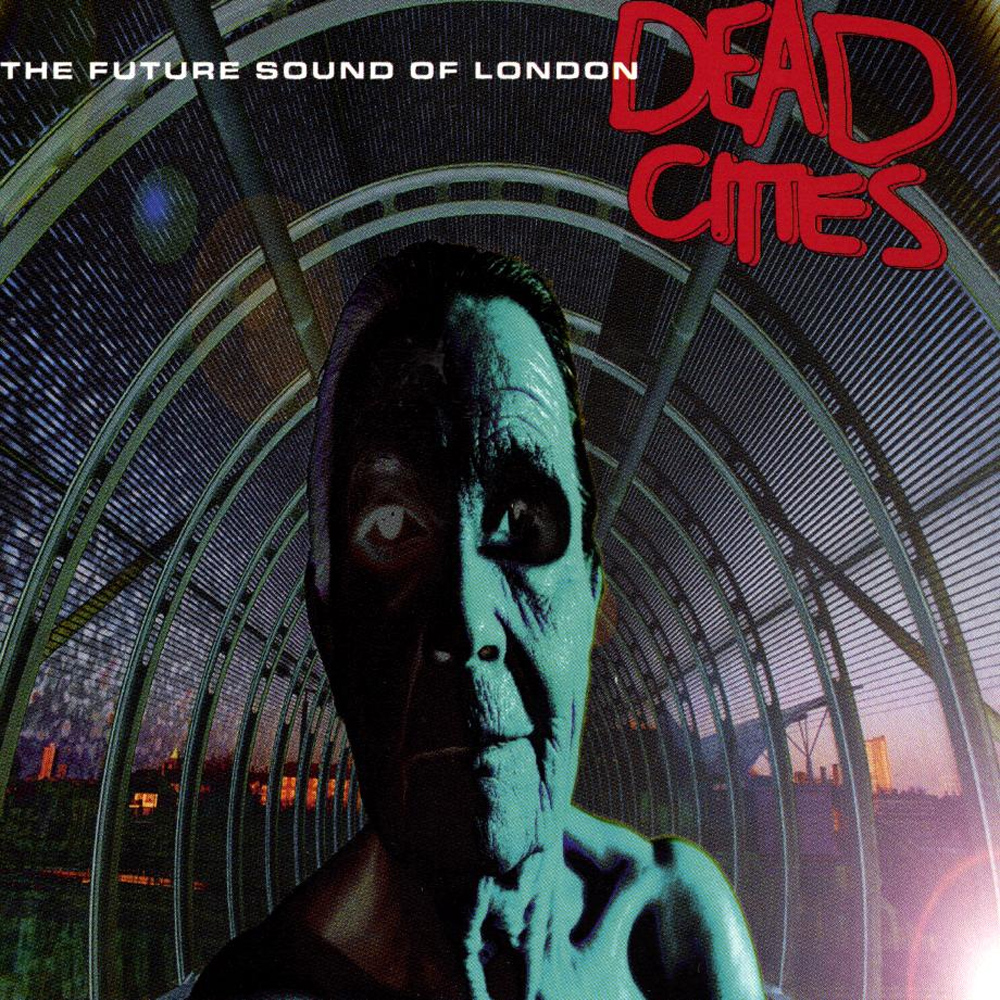 “Everyone in the World Is Doing Something Without Me” and “My Kingdom”, from the 1996 release on Astralwerks, Dead Cities. The quintessential sound of nineties dystopia.
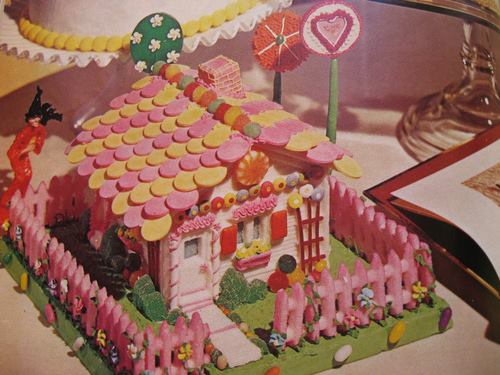

Cake Hotel – by Tate & Lyle
The world’s first “hotel” made entirely from cake is to welcome guests for one night only with room service in the form of vanilla sponge cushions and a hand-stitched meringue rug. The hotel within a hotel in Soho, central London, is the creation of more than 14 artists who spent 2,000 hours baking and 900 hours decorating with more than 600 kilos of sugar.
Guests will be encouraged to eat their way through windows and walls clad with 2,000 macaroons, a rug made from 1,081 meringues hand-stitched together, 20 kilos of marshmallow garlands, windowsills built entirely from fudge and a bath filled with caramel-coated popcorn.
The bedside table even features edible books.
Read more HERE!
Hello, reader :)
It’s Fleurmach’s first birthday! To celebrate, here is a ground-shifting text, a manifesto of sorts, from Hélène Cixous back in 1976 (the year punk broke). If you haven’t ever read Cixous (and even if you have, once upon a time), do yourself a favour and plough through this, SERIOUSLY. I tried to excerpt chunks from it (and may still), but decided that it’s really important and enriching to read the piece in its entirety.
Thank you all for your ongoing support and contributions to the Fleurmach community.
Much love,
Cherry Bomb
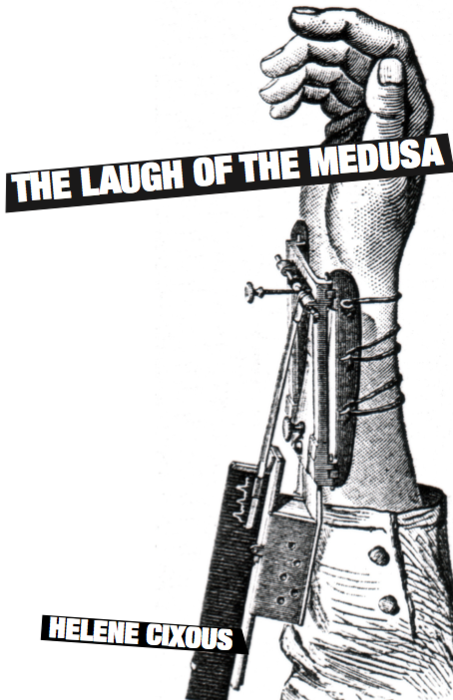
I shall speak about women’s writing: about what it will do. Woman must write her self: must write about women and bring women to writing, from which they have been driven away as violently as from their bodies – for the same reasons, by the same law, with the same fatal goal.
Woman must put herself into the text – as into the world and into history – by her own movement.
The future must no longer be determined by the past. I do not deny that the effects of the past are still with us. But I refuse to strengthen them by repeating them, to confer upon them an irremovability the equivalent of destiny, to confuse the biological and the cultural. Anticipation is imperative.
Since these reflections are taking shape in an area just on the point of being discovered, they necessarily bear the mark of our time-a time during which the new breaks away from the old, and, more precisely, the (feminine) new from the old (la nouvelle de l’ancien). Thus, as there are no grounds for establishing a discourse, but rather an arid millennial ground to break, what I say has at least two sides and two aims: to break up, to destroy; and to foresee the unforeseeable, to project.
I write this as a woman, toward women. When I say “woman”, I’m speaking of woman in her inevitable struggle against conventional man; and of a universal woman subject who must bring women to their senses and to their meaning in history. But first it must be said that in spite of the enormity of the repression that has kept them in the “dark” – that dark which people have been trying to make them accept as their attribute – there is, at this time, no general woman, no one typical woman. What they have in common I will say. But what strikes me is the infinite richness of their individual constitutions: you can’t talk about a female sexuality, uniform, homogeneous, classifiable into codes – any more than you can talk about one unconscious resembling another.
Women’s imaginary is inexhaustible, like music, painting, writing: their stream of phantasms is incredible.
I have been amazed more than once by a description a woman gave me of a world all her own which she had been secretly haunting since early childhood. A world of searching, the elaboration of a knowledge, on the basis of a systematic experimentation with the bodily functions, a passionate and precise interrogation of her erotogeneity. This practice, extraordinarily rich and inventive, in particular as concerns masturbation, is prolonged or accompanied by a production of forms, a veritable aesthetic activity, each stage of rapture inscribing a resonant vision, a composition, something beautiful. Beauty will no longer be forbidden.
I wished that that woman would write and proclaim this unique empire so that other women, other unacknowledged sovereigns, might exclaim: I, too, overflow; my desires have invented new desires, my body knows unheard-of songs. Time and again I, too, have felt so full of luminous torrents that I could burst – burst with forms much more beautiful than those which are put up in frames and sold for a stinking fortune. And I, too, said nothing, showed nothing; I didn’t open my mouth, I didn’t repaint my half of the world. I was ashamed. I was afraid, and I swallowed my shame and my fear. I said to myself: You are mad! What’s the meaning of these waves, these floods, these outbursts?
Where is the ebullient, infinite woman who, immersed as she was in her naïveté, kept in the dark about herself, led into self-disdain by the great arm of parental-conjugal phallocentrism, hasn’t been ashamed of her strength? Who, surprised and horrified by the fantastic tumult of her drives (for she was made to believe that a well-adjusted normal woman has a … divine composure), hasn’t accused herself of being a monster?
Who, feeling a funny desire stirring inside her (to sing, to write, to dare to speak, in short, to bring out something new), hasn’t thought she was sick? Well, her shameful sickness is that she resists death, that she makes trouble.
And why don’t you write? Write! Writing is for you, you are for you; your body is yours, take it. I know why you haven’t written. (And why I didn’t write before the age of twenty-seven.) Because writing is at once too high, too great for you, it’s reserved for the great – that is, for “great men”; and it’s “silly.” Besides, you’ve written a little, but in secret. And it wasn’t good, because it was in secret, and because you punished yourself for writing, because you didn’t go all the way; or because you wrote, irresistibly, as when we would masturbate in secret, not to go further, but to attenuate the tension a bit, just enough to take the edge off. And then as soon as we come, we go and make ourselves feel guilty – so as to be forgiven; or to forget, to bury it until the next time.
Write, let no one hold you back, let nothing stop you: not man; not the imbecilic capitalist machinery, in which publishing houses are the crafty, obsequious relayers of imperatives handed down by an economy that works against us and off our backs; and not yourself.
Live performance, 28 July 2012, Madrid.

Toby stares at them, fascinated: she’s never seen a liobam in the flesh, only pictures. Am I imagining things? she wonders. No, the liobams are actual. They must be zoo animals freed by one of the more fanatical sects in those last desperate days.
They don’t look dangerous, although they are. The lion-sheep splice was commissioned by the Lion Isaiahists in order to force the advent of the Peaceable Kingdom. They’d reasoned that the only way to fulfil the lion/lamb friendship prophecy without the first eating the second would be to meld the two of them together. But the result hadn’t been strictly vegetarian.
Still, the liobams seem gentle enough, with their curly golden hair and twirling tails. They’re nibbling flower heads, they don’t look up; yet she has the sense that they’re perfectly aware of her. Then the male opens its mouth, displaying its long, sharp canines, and calls. It’s an odd combination of baa and roar: a bloar, thinks Toby.
— from Margaret Atwood’s The Year of the Flood (Doubleday, 2009)
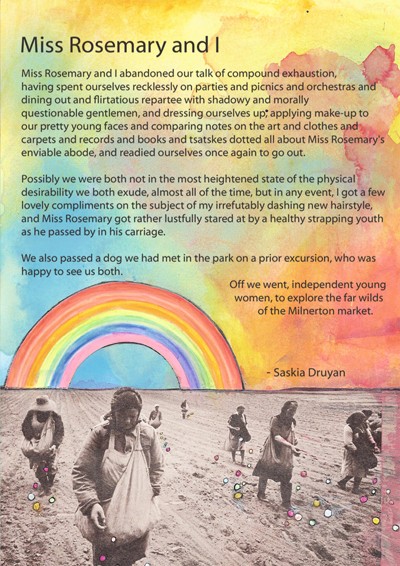 This is a page taken from FLEURZINE, a zine curated and illustrated by Julia Mary Grey. You can go and download this beautiful work of art for free on her site, HERE.
The name was inspired by Fleurmach, and six pieces of writing from this blog appear in the publication!
In my first dream, the world appeared
the salt, the bitter, the forbidden, the sweet
In my second I descended
I was human, I couldn’t just see a thing
beast that I am
I had to touch, to contain it
I hid in the groves,
I worked in the fields until the fields were bare —
time
that will never come again —
the dry wheat bound, caskets
of figs and olives
I even loved a few times in my disgusting human way
and like every one I called that accomplishment
erotic freedom,
absurd as it seems
The wheat gathered and stored, the last
fruit dried: time
that is hoarded, that is never used,
does it also end?
In my first dream the world appeared
the sweet, the forbidden
but there was no garden, only
raw elements
I was human:
I had to beg to descend
the salt, the bitter, the demanding, the preemptive
And like everyone, I took, I was taken
I dreamed
I was betrayed:
Earth was given to me in a dream
In a dream I possessed it
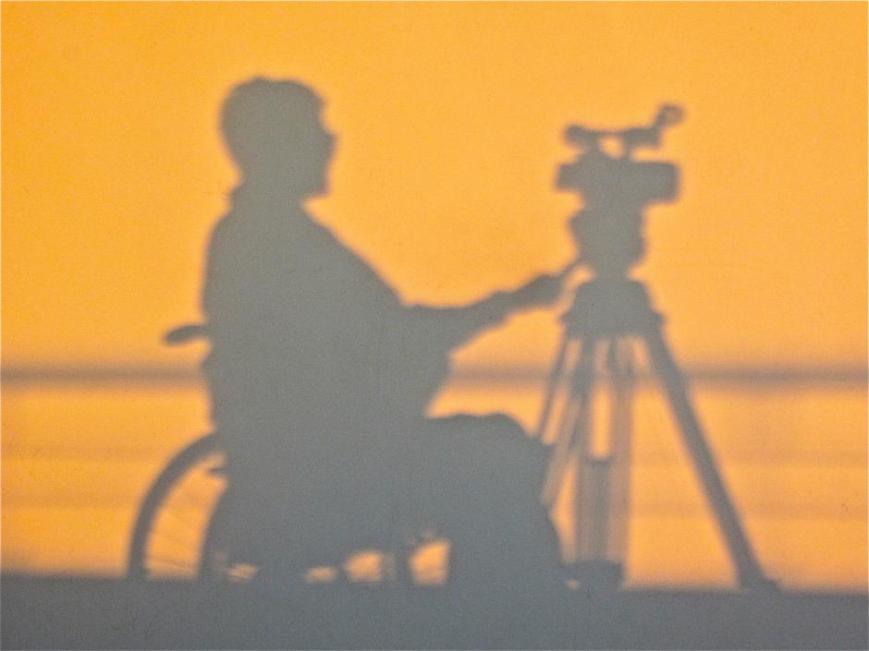
I have been working for the last while as researcher and production manager on a weekly SABC-commissioned TV documentary series, I Am Woman – Leap of Faith. Here’s one of the episodes, directed by Jane Kennedy:
In January 1996 Shelley Barry was 23 and on her way to a job interview in Cape Town when she was caught in the crossfire of taxi violence caused by rival taxi groups battling for ownership of the same routes.
She was sitting next to the taxi driver in the front of his minibus when an assassin pulled up alongside the moving vehicle and opened fire. The driver was shot seven times and was killed instantly. The taxi crashed, injuring many of its passengers.
Shelley was hit by one of the assassin’s bullets and was instantly paralysed. Her life hung in the balance and it was assumed she would not survive. The friend she was travelling with was seriously injured but has recovered, despite the bullet still lodged in her chest. Shelley has been in a wheelchair ever since. Today she is 42.
How does one create a life for oneself after something like this? How does one find work and meaning once again? Importantly, what happened to Shelley Barry’s dream, held close since childhood, of becoming a filmmaker?
Join this remarkable woman, teacher, activist and filmmaker as she describes her life before and after the shooting: The life of a young girl who told her childhood friends that one day her films would be on the big screen and has achieved that, despite a bullet getting in her way and forcing her into a wheelchair for over twenty years… The life of an activist who worked in the Presidency and has made a significant difference to the lives of the disabled in South Africa… The deeply spiritual journey of a sensitive, funny and bolshy woman who, despite her circumstances, is determined to continue making her mark on the world.
Shelley Barry graciously lets us into her world, describing the many Leaps of Faith she has taken so far and continues to take each and every day.
Catch the broadcast of this programme on SABC 3, Sundays at 09h30, or watch archived episodes on the I AM WOMAN – LEAP OF FAITH WEBSITE.
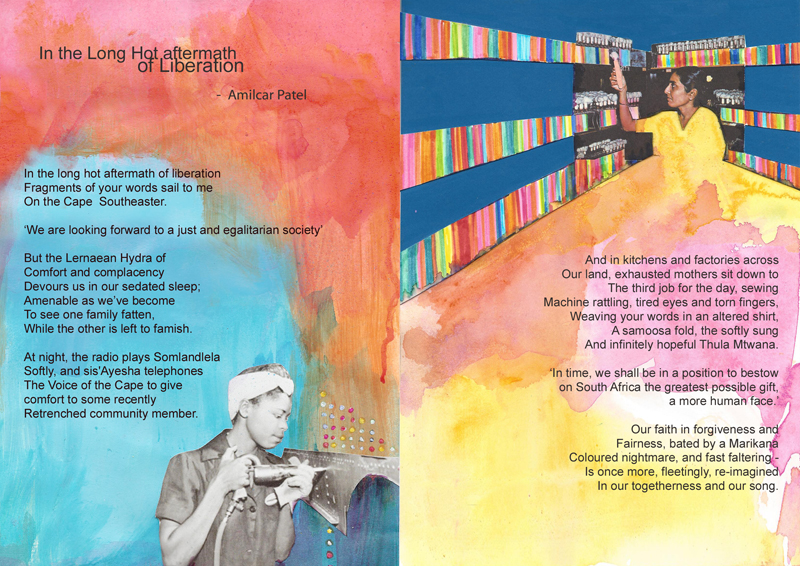 This is a page taken from FLEURZINE, a zine curated and illustrated by Julia Mary Grey. You can go and download this beautiful work of art for free on her site, HERE.
The name was inspired by Fleurmach, and six pieces of writing from this blog appear in the publication!
Directors: Djuna Wahlrab and Matthew Houck
Producers: Casey McGrath and Joshua Levine
Production Company: Phear Creative
“See, honey, I am not some broken thing
I do not lay here in the dark waiting for thee.
My heart is wild, and my bones are steel
and I could kill you with my bare hands if I was free.”
TRIGGER WARNINGS: rape; lethal violence; murder.
I have just dreamed again of being Anene Booysen at the moment of her rape and immediately after it, my pooled blood congealing as my insides lie unseamed in the dust outside me, hacked apart from me, the jagged outside slammed inside me, in my last flickers of awareness the spasms of their hate ripping through me, thudding waves of blows, my head a heavy, dull explosion… the swirling, pulsing aftershocks of pain… going cold, knowing I can never be back together again, that I am smeared asunder into the ground like a fly or a cockroach or an ant, irreversibly crushed. It’s that final. I am no longer me, just a slowly drying patch of gore, beyond being gathered up and revived, soothed, cradled, stitched, kissed better, healed. No one can fix this, not my ma, not the hospital, not God. There is no “if” or “but”. I am aware that this is how I have ended.
I have no words strong enough to express the horror of this experience every time it happens to me, this dream. Yet I need to try to write it out of me in the hope that I never dream it again. Shhh, I tell myself, shivering uncontrollably, curled rigid and foetal, it was only a dream.
But it isn’t. This really happened. Really happens. Continues to happen. And that is what is most horrifying of all.
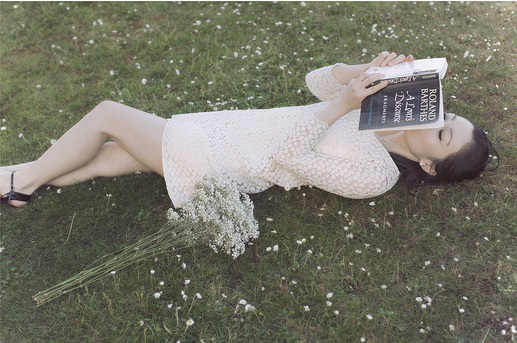 You should date an illiterate girl.
Date a girl who doesn’t read. Find her in the weary squalor of a Midwestern bar. Find her in the smoke, drunken sweat, and varicolored light of an upscale nightclub. Wherever you find her, find her smiling. Make sure that it lingers when the people that are talking to her look away. Engage her with unsentimental trivialities. Use pick-up lines and laugh inwardly. Take her outside when the night overstays its welcome. Ignore the palpable weight of fatigue. Kiss her in the rain under the weak glow of a streetlamp because you’ve seen it in a film. Remark at its lack of significance. Take her to your apartment. Dispatch with making love. Fuck her.
Let the anxious contract you’ve unwittingly written evolve slowly and uncomfortably into a relationship. Find shared interests and common ground like sushi and folk music. Build an impenetrable bastion upon that ground. Make it sacred. Retreat into it every time the air gets stale or the evenings too long. Talk about nothing of significance. Do little thinking. Let the months pass unnoticed. Ask her to move in. Let her decorate. Get into fights about inconsequential things like how the fucking shower curtain needs to be closed so that it doesn’t fucking collect mold. Let a year pass unnoticed. Begin to notice.
Figure that you should probably get married because you will have wasted a lot of time otherwise. Take her to dinner on the forty-fifth floor at a restaurant far beyond your means. Make sure there is a beautiful view of the city. Sheepishly ask a waiter to bring her a glass of champagne with a modest ring in it. When she notices, propose to her with all of the enthusiasm and sincerity you can muster. Do not be overly concerned if you feel your heart leap through a pane of sheet glass. For that matter, do not be overly concerned if you cannot feel it at all. If there is applause, let it stagnate. If she cries, smile as if you’ve never been happier. If she doesn’t, smile all the same.
Let the years pass unnoticed. Get a career, not a job. Buy a house. Have two striking children. Try to raise them well. Fail frequently. Lapse into a bored indifference. Lapse into an indifferent sadness. Have a mid-life crisis. Grow old. Wonder at your lack of achievement. Feel sometimes contented, but mostly vacant and ethereal. Feel, during walks, as if you might never return or as if you might blow away on the wind. Contract a terminal illness. Die, but only after you observe that the girl who didn’t read never made your heart oscillate with any significant passion, that no one will write the story of your lives, and that she will die, too, with only a mild and tempered regret that nothing ever came of her capacity to love.
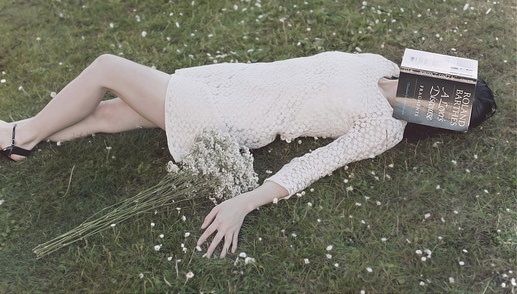
Do those things, damnit, because nothing sucks worse than a girl who reads. Do it, I say, because a life in purgatory is better than a life in hell. Do it, because a girl who reads possesses a vocabulary that can describe that amorphous discontent of a life unfulfilled—a vocabulary that parses the innate beauty of the world and makes it an accessible necessity instead of an alien wonder. A girl who reads lays claim to a vocabulary that distinguishes between the specious and soulless rhetoric of someone who cannot love her, and the inarticulate desperation of someone who loves her too much. A vocabulary, goddamnit, that makes my vacuous sophistry a cheap trick.
Do it, because a girl who reads understands syntax. Literature has taught her that moments of tenderness come in sporadic but knowable intervals. A girl who reads knows that life is not planar; she knows, and rightly demands, that the ebb comes along with the flow of disappointment. A girl who has read up on her syntax senses the irregular pauses—the hesitation of breath—endemic to a lie. A girl who reads perceives the difference between a parenthetical moment of anger and the entrenched habits of someone whose bitter cynicism will run on, run on well past any point of reason, or purpose, run on far after she has packed a suitcase and said a reluctant goodbye and she has decided that I am an ellipsis and not a period and run on and run on. Syntax that knows the rhythm and cadence of a life well lived.
Date a girl who doesn’t read because the girl who reads knows the importance of plot. She can trace out the demarcations of a prologue and the sharp ridges of a climax. She feels them in her skin. The girl who reads will be patient with an intermission and expedite a denouement. But of all things, the girl who reads knows most the ineluctable significance of an end. She is comfortable with them. She has bid farewell to a thousand heroes with only a twinge of sadness.
Don’t date a girl who reads because girls who read are storytellers. You with the Joyce, you with the Nabokov, you with the Woolf. You there in the library, on the platform of the metro, you in the corner of the café, you in the window of your room. You, who make my life so goddamned difficult. The girl who reads has spun out the account of her life and it is bursting with meaning. She insists that her narratives are rich, her supporting cast colorful, and her typeface bold. You, the girl who reads, make me want to be everything that I am not. But I am weak and I will fail you, because you have dreamed, properly, of someone who is better than I am. You will not accept the life of which I spoke at the beginning of this piece. You will accept nothing less than passion, and perfection, and a life worthy of being told. So out with you, girl who reads. Take the next southbound train and take your Hemingway with you. Or, perhaps, stay and save my life.*
*NOTE: Instead of the brave note on which the last sentence of the above version shared with me by Mavis Vermaak ends, the original text I googled when looking to credit the author correctly has as its ending the following two sentences:
“I hate you. I really, really, really hate you.”
Beautiful cover of Gene Clark’s 1969 song, off Krauss and Plant’s 2007 collaboration, Raising Sand .
Broadcast’s Black Session – recorded live at La Maison de la Radio in Paris on May 4th, 2000 – features the original lineup that toured in support of their album, The Noise Made By People. It includes all the electronic segues and dissonance between tunes, along with stellar renditions of early singles, album cuts and B-sides. You can download the whole recording HERE.
Newly released official video directed by Paul Thomas Anderson, featuring Fiona and her sister, Maude Maggart.
From Electric Ladyland (Reprise Records, 1968).
What do you get if you mix equal parts cutting edge continental philosophy, voodoo, psychedelics, underground dance music, cybernetics and multimedia experimentation? The notorious Orphan Drift!
Happening this Thursday, 25 July, from 20h00, Bolo’bolo Anarchist Info Shop and Vegan Cafe are delighted to announce an evening of Orphan Drift, featuring several short films from founding member Mer Roberts as well as a talk by UWC cyberculture theorist Delphi Carstens, followed by an almost certainly lively open discussion.
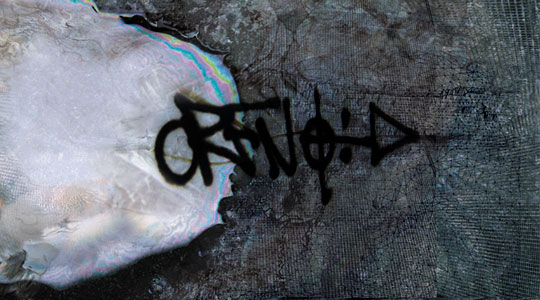 Here’s a taste of what you can expect on Thursday evening:
BACKGROUND
In the mid-90s, the legendary Cyber Culture Research Unit at the prestigious Warwick University was formed: their university-funded activities included producing collaged texts of Deleuze and Guattari, William Burroughs and binary code, theorising the occult underpinnings of markets, composing abrasive electronic music and, ostensibly, consuming inhuman doses of psychedelics as often as possible, much of this via the ORPHAN DRIFT collaborative artist project. A few years later, the CCRU was no more; founding member Nick Land – a genius philosopher and agent provocateur – had achieved full meltdown / deterritorialization and Sadie Plant, author of the well-known Writing On Drugs, had disappeared from sight.
The legacy of the CCRU is very much alive today though, a subterranean influence for the very latest movements in philosophy.
ABOUT ORPHAN DRIFT
Mer co-created the collaborative artist and hive mind 0rphan Drift in London in 1994. Although it was predominantly made up of visual artists, it also involved sound designers, concept engineers and media activists.
As an artistic entity, 0rphan Drift is known for immersive and visually complex works which use the sample and the remix extensively, treating information as matter and the image as a unit of contagion. The art produced is science fictional and immersive. It complicates the distinctions between material and immaterial phenomena and dimensions, both in content and media. Much of its work explored mimetic patterns of desire, production and consumption- particularly in relation to the rapid technological changes happening at the time- drawing heavily on cyberpunk fiction, polyrhythmic electronica and the underpinnings of African religious systems. This was the social context in which its shifting layers of frightening, disturbing, abject, schizophrenic, beautiful, deconstructive, poetic and fragmented frequencies were able to take affect.
0rphan Drift is cross-contextual and made extensive contributions from 1994 – 2004 in the social arenas around contemporary art, underground music and cyber-feminism/post-structural philosophy. 0D has participated internationally in over a decade of exhibitions, screenings and performance, exhibiting extensively in the UK, Europe, Canada and the States, including at the Cabinet Gallery and Tate Modern in London; writing the Scifi-theory text ‘Cyberpositive’, and featuring in DJ Spooky’s ‘Sound Unbound’ in the ‘Renegade Academics’ chapter. It contributed cybervisuals to the set of Stephen Speilberg’s ‘AI’ and ‘Minority Report’ features and Leftfield and NIN world tours, worked frequently with Kode 9 and participated in 10 years of international Video art and AV Electronica art events in Norway, Germany, Canada, UK, South Africa and USA.
We now collaborate between Cape Town and San Francisco and continue to make science fictional work which is guided by a neo-futurist sensibility and clearly a progression from our earlier work. Our new video work ‘Wilderness of Elsewheres, Colony 1’, which maps contemporary global concerns with survival, insecurity and the unknown, has been shown in Santiago and San Francisco and we subsequently produced a series of Post Apocalyptic postcards for Shadowshop; Stephanie Syjuco’s parasitic shop at SFMOMA. Recently we made video for Delphi Carsten’s Capetown Tedx Talk, ‘Hyperstition’, and were commissioned make ‘You Its Eyes 94-13’ for screening at CTM13, Berlin.
WHAT WE’LL BE SCREENING / HOSTING THIS THURSDAY EVENING
1: You Its Eyes. 1994-2013, 30 minute video remixing 0D’s earlier work
0D employs different frequencies and overlapping rhythmic patterns to activate submerged regions of the brain and create intimacy and proximity through video-sonic signal. The goal of 0D, writes Simon Reynolds (1996), is “the liberation of texture from its environment, of energy-flux from contoured form with the goal to recreate the intensity of being lost”. 0D describes the individual ‘self’ haunted by a sensory cross-talk of signals from realms beyond the physical. Voices from imagined futures haunt the contemporary technological landscape. Feedback from the machines evolves into an unfamiliarity of speed and complexity, coding the textual body and imagination as tools for change. The invisible, fantastical, and anarchic called upon here are what Deleuze and Guattari define as the essence of virtuality. These intensities carry the sorcerous forces that technology and science unleash as they delve further into the quantum, the chaotic and the abstract.
“Surrounding the human self and its island of experience lies a raging sea of intensities” (D&G). All journeys into this space involve a succession of becomings autistic, mimetic, contagious and machinic.
2: Hyperstition – A talk by Delphi Carstens
Delphi is a lecturer at UWC, as well as half of the duo which makes up Groovy Troopers Productions – creators of temporary autonomous zones in the form of art & trance festivals. Delphi is currently completing a doctorate thesis, and will present on: “hyperstition” — a neologism coined by Nick Land that combines the words ‘superstition’ and ‘hype’ to describe how fictions become fact and how our narratives (stories) shape our world. It also describes, particularly, the narrative of capitalism, which is driven by hype and speculation and, which more importantly, turns fictions into facts. One very important fiction that Delphi will be discussing is the fiction of the apocalypse. Focusing on the current secular meaning of apocalypse as well as how popular culture views our current global crisis and the importance of imagining ourselves differently. Hyperstition also describes the nexus where myth or magic and science meet. Delphi explores the world of hyperstition to describe the manner by which hype and speculation become facts in contemporary society. The future is looking uncertain and how we imagine this future may be more important than we realise. This talk will be both an intellectual and a felt experience.
3: A Wilderness Of Elsewheres. 2009, 10 minutes
A two-screen installation in which dark abstract video spaces flow into bright photographic landscapes (the raw desolate tundras of southern Africa), populated and de-populated by animated collages of architecture and fashion, cut and scanned from contemporary print publications. A deliberate rhythmic awkwardness creates an alien time frame. The screens share a soundscape, made from a wide variety of samples including glaciers melting and rocket launches, composed into a sonic ‘event’. The work is imbued with post-apocalyptic sensibility, urges to the neo-romantic and the science fictional blending of first and third world materiality. At once immersive and deconstructive, the work is collision, co-habitation, evolutionary fever-dream.
Join us in mapping the outer edges — and do come earlyish if you want to sit down while doing so ;) !
Cover of The Kinks’ song, from Pain Teens’ 1990 album, Born in Blood (on the Trance Syndicate label).
Nick Drake cover, performed by The Books and Jose Gonzalez (2009).
“Dark Was the Night, Cold Was the Ground” is a gospel-blues song written and performed by Blind Willie Johnson, probably recorded in 1927. The song is primarily an instrumental, featuring Johnson’s self-taught bottleneck slide guitar and picking style accompanied by humming and moaning.
For more about this haunting record, check out the fascinating Wikipedia page.
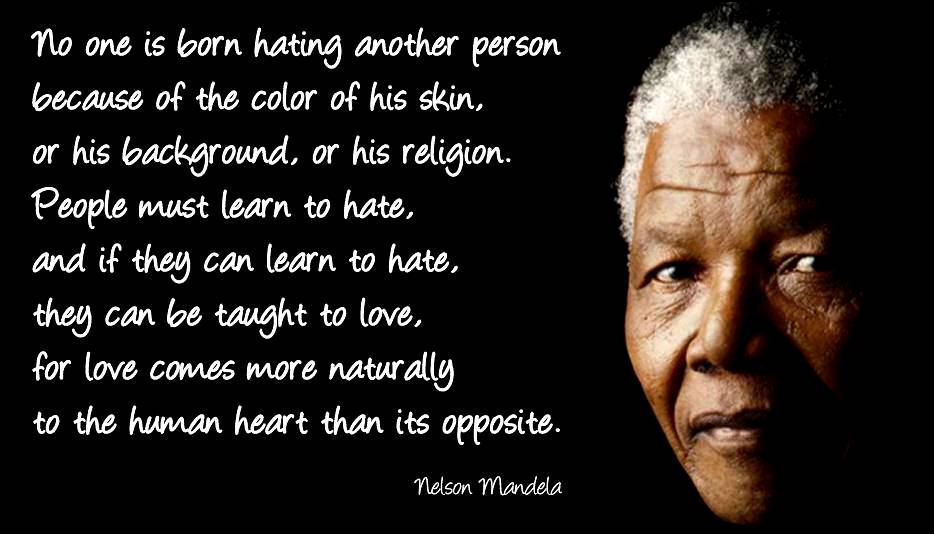
If only a change of heart could magically repair the concrete effects of centuries of evil and dispossession overnight… It can’t, but thank you, Nelson Rolihlahla Mandela, for holding on to hope; for leading by example. If we all started living from an unselfish basis of love and respect, things WOULD shift.
I watched two incredible films tonight, Schizophonia and The Third Man, courtesy of Anette Hoffmann and the Archive & Public Culture Platform at UCT, with the kind permission of musician, composer and performance artist, Erik Bünger, who made the films.
In each film, Bünger both analyses and plays with the uncanny, magical potency of sound as recorded medium. Everything he does is underpinned by formidable quantities of research, a fondness for outrageously rhizomatic linkages and a wicked sense of humour. Definitely my new art crush of the month! ;)
Here’s a video of Bünger giving a lecture/performance which utilises much of the material presented in the standalone film, Schizophonia. This was recorded at MEDEA, Malmo University, in March 2011, as part of the K3 courses “Music in the Digital Media Landscape” and “Illustrating with Music”.
I really WISH I could find more of The Third Man to share here – it was tremendously entertaining, and, even off on its most questionable, occult-paranoid tangents, bizarrely pertinent to so much of the stuff about performance, recording and playback of music that I’ve been posting and thinking about in the past few years; even down to an hilarious discussion of the “entraining” (his word) power of The Sound Of Music (my post this afternoon prefigured this too, eerily!).
Anyway, you can watch the lecture:
And here’s a bio:
The Swedish artist, composer, musician and writer Erik Bünger (1976) works with re-contextualising existing media in performances, installations and web projects. In ‘Gospels’, sections of Hollywood interviews are removed from their original contexts, interacting to form a new, seemingly coherent whole. Yet these pre-existing works frequently conflict; Bünger explores the disjunction between replaying and experiencing in his ‘Lecture on Schizophonia’. This simultaneously analytical and performative work highlights the relationship between sound and perceived reality, using popular references and familiar footage including Barak Obama and Woody Allen. Similar tensions are exposed in ‘God Moves on the Water’, in which two songs about the sinking of the Titanic are combined to form a third narrative. In ‘The Third Man’, the negative power of music is explored. Displacing and recombining familiar material, Bünger challenges the separation between authentic and simulated experiences.
Bünger may have followed a traditional education in composition at the Stockholm Royal College of Music, but he is hardly a run-of-the-mill composer. His works have increasingly come to approach contemporary conceptual art, but his combination of sound and visual is also linked to literary storytelling. In his performances, installations and web projects, different timelines are superposed, past worlds and present understandings. The most important thing about Bünger’s work is not the art or literature context but the transformation that takes place in the specific works. What may seem trivial and inconsequential suddenly becomes the stuff of dreams. He is attracted to moments when recorded sound and image bridge a space between absolutes, between death and life and between gods and humankind. –
This info comes from http://expo.argosarts.org/

Francis Barraud – “Dog Looking At and Listening to a Phonograph”(1898)
He’s off and joined them ghost riders in the sky at last… Happy hunting, Slim, you legend! Author of the awesomest song ever written with my name in it, hands down:
AND one of the very few foreigners ever to try and sing in Afrikaans!
Read the Guardian’s obituary (thanks, Erica).
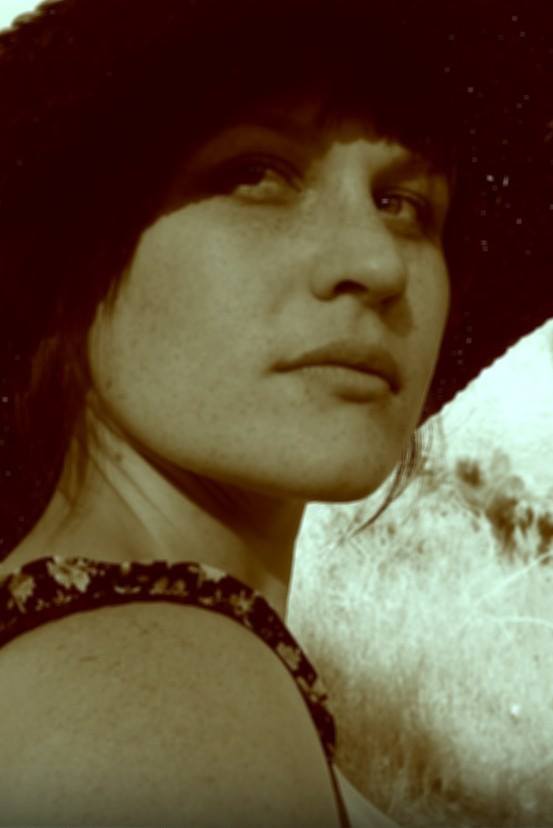
Self portrait in the Cederberg, 2012
“My heart wants to beat like the wings of the birds that rise from the lake to the trees
My heart wants to sigh like a chime that flies from a church on a breeze
To laugh like a brook when it trips and falls over stones on its way
To sing through the night like a lark who is learning to pray
I go to the hills when my heart is lonely
I know I will hear what I’ve heard before
My heart will be blessed with the sound of music
And I’ll sing once more…”
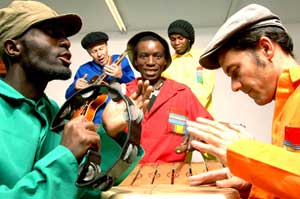
In the year 2000 I stopped my beat-up old car to help two guys who were carrying marimbas and gave them a lift up to Melville. On the way we got to chatting, discovered we were all musos, and I decided to come and jam with them while they busked, which I did, a few nights later.
This pair used to come all the way in from Orange Farm township in the Vaal, almost 40km out of Joburg, to busk until midnight outside Melville’s clubs and restaurants, then take a taxi or train home again. So whatever they earned, which was often a pittance, had to cover considerable transport costs – one of apartheid’s architectural legacies, which will take generations to change.
I kept playing with these two guys on the streets, for a couple of years, through winter and summer, on my djembe, cos it was quite something to experience. We were all from Zim, so we had something in common. It wasn’t the first time I had played with so-called black musicians, having played djembe with a maskande outfit called Abafana Bakwa Zulu a couple of years previous to this, but busking was new to me.
Busking is quite a cool way to get really fit on your instrument, and tight as a band. It’s kind of halfway between practicing and performing … sometimes you have an audience, and you have to step it up, and sometimes you don’t, and you can experiment with new songs and licks. If a crowd gathers you can hit on a song for like, 10 or 15 minutes, as long as they are getting into it, which can create some pretty deep calluses if you happen to be a drummer.
In winter, it got so cold that I used to play with a T-shirt, long-sleeve shirt, jersey and leather biker jacket on, plus a hat, even though I was drumming full-tilt. The crap thing about playing a djembe drum outside in the cold is that your hands are moving, creating wind, so even though they are hitting the goatskin hard, on the way up and down they are cooling off, and never really warm up.
Time passed and our little group, which we called Chapungu – meaning ‘whirlwind’ in Shona – apparently it has other, mystical connotations – became fairly good. The dudes found a place to store their instruments, or they would store them at my place, making getting to and from our favourite busking place on the corner of 7th and 4th in Melville much easier. We started getting better tips – we even got a R200 note from a tourist once – and we made a free one-day recording dubbed Sons of the Sun with a guy called Adrian Ziller, bless his heart. My friends helped to design the album cover and print it.
I started visiting the dudes in Orange Farm, which was a full-on jol. Many so-called whites think townships are miserable places, full of suffering and hardship. I’m sure they can be, especially at night in winter, or when the wind howls through Orange Farm, whipping up the dust.
But on my visits, I found a tangible sense of community; neighbours would wander in while we played and get into the vibe. Gangs of kids and dogs would pass by; fences were few and far between. I was uplifted by the music, which was, I guess, our common language, and started playing at events with the dudes, at schools, cultural gatherings, sports meetings, weddings.
There were quite a few kids who used to come and play with the adults; generally the girls would dance and the boys would drum or play on the marimbas, which were all handmade. We started making uniforms for them, with cloth supplied by my friends, or gathered from here and there in the township. The singer’s partner was carving out dance routines for the girls. Things were gathering momentum.
There was a couple in Joburg who were also keen to help our band; they had access to a trust fund, and donated some money which was used to buy tools, which were to be used for making marimbas. We also tried making drums, but it’s not an easy thing to make a good drum.
This couple took us on a trip to visit the Khomani San, who had been granted land by the SA government – but not the means to make a living from it. This couple, they were trying to set things up for some of the Bushmen, a camp which tourists could sleep at, a place to grow indigenous plants, that kind of thing. We met Dawid Kruiper, who was quite famous for his role in getting the land, and a couple of San sangomas. We slept in the camp, which was full of large, black scorpions, and read Tarot cards on the roof of the Landrover, while high on Sceletium, which gives you loads of energy, a natural speed. We dropped our pants and gave brown-eye to the bottle store. It was quite a trip.
Then the couple organised a group of musicians and performers to go on a country-wide tour to advertise a new MTN product. It was called the Multi-Talented Nomad tour, but I didn’t go on it, cos I was working full-time and couldn’t get two weeks’ leave. The guys went on the tour, made a couple of thousand bucks, and decided to go and visit the same Bushmen again, but this return trip didn’t go too well. They apparently shagged some of the Bushmen prostitutes and at least one of them caught AIDS. The singer, a short, fiery character with only one eye – died a few years later. He didn’t make it to the era of ARVs, when having AIDS is no longer a death sentence.
Things had started falling apart even before he died. As soon as we got funding, he and the bassist started arguing about who owned what, and the tools bought with the funding were kept at the singer’s place, and the whole positive vibe started crumbling.
Sometimes they would bitch at me about each other and I just hated being the middle. Fuck that. I really didn’t want to take sides. I was trying to help, not because I thought I should, but because I had just ended up getting involved in the music with these guys and I often had the means to help – the access to transport, to money, to the media. It was unavoidable, but sometimes it had unforeseen consequences.
Eventually, Chapungu broke up, and shortly afterward I was invited to take part in a musical play at the Aardklop festival in Potchefstroom, with the bassist and a group of performers from Orange Farm. We had a teacher who had toured Germany and he knocked our performance into shape, around the idea of a Magic Marimba Tree, from which music came, and provided nourishment to a parched land. I was the white priest, and wore a dog-collar for the role.
When we drove down to Potch I was the only so-called white in the cast of about 14 people. We played on the fringe of the festival and did workshops in the townships. I ate and slept in a room full of blacks, who seldom spoke English … my fault for not knowing Zulu, I guess. The best part was between gigs, as we jammed all day at the backpackers we were staying in, often with outsiders from the festival, who heard us and joined in.
Our mentor came to watch our final performance, hated it, and crapped all over us. We were totally dispirited. Then he wanted to ride back to Joburg in my car, not the overloaded minibus the rest of the crew were to travel in. I split before he could get in, pissed off with his attitude. We had tried our hardest to do a good show. Then we couldn’t get our money out of him. We only got paid after I threatened to put a debt collector on his ass.
The most vivid memory from the whole show, which went on for about a week, was when a beautiful young woman in the cast, who I had been eyeing from the start, stood behind me on the stage and softly put her hands on my shoulders, during the encore. Nothing more happened, but it was an intimate acknowledgment. I see you.
After Aardklop, some of the performers started congregating round the bassist’s place, practicing on the marimbas, and continuing with coaching kids, who would come in after school to play. They were also playing at a nearby school, the kids were winning prizes for their performances, it was all very organic and grassroots. I set up a website for the group. We started playing gigs at cultural events like the Green Africa Party, and then got onto the books of booking agencies, and began playing at corporate events like year-end parties. We made business cards, bought bright uniforms, and started playing quite regularly. This was before the recession, which killed the golden goose of regular corporate gigs, for us and loads of other musicians, including my drum teacher.
I was still doing a day-job, and was asked to write a piece on jazz experimental maestro Zim Ngqawana by the Daily Sun. I met his agent at the Zimology Institute, which he had set up for his jazz students, ironically right next to Orange Farm township. I got to know his agent better, and she helped us to set up an NGO for the musical training of the township kids. After some applications – again, with the help of a friend – we obtained funding, enough to provide the adults with salaries for a couple of years, and to buy some better musical instruments.
This era was our peak. Both the kids and the adults were getting lots of gigs. The kids took part in the FNB Dance Festival a couple of times and won prizes at the National Marimba Competition. They appeared on TV shows and in newspapers; soon we had an entire album of photos and clippings.
The adult group was traveling all over Gauteng and beyond, playing at weddings and parties and openings. A really good (so-called white) guitarist joined the crew, adding an extra car and skilled licks. I evolved a new style of playing the drums, with the djembe where the snare usually stands, and the snare off to the left. I could switch fast between snare and djembe, and play hi-hat and bass foot with both.
We had a huge repertoire of songs, way over 50 songs; some were covers, but many were originals, which had evolved over years of playing. We were playing gospel songs, African jazz, traditional African songs, including some Chimurenga stuff (Zim protest music) and some more bluesy and reggae stuff.
We got a trailer to put the marimbas in; slept over in posh places and demanded, and got, proper meals and treatment from clients, via the contracts with our agencies. Achimota also brought out a CD, recorded free of charge by Brendan Jury, called Ukuxolelana (Forgiveness).
But, after a time, cracks began to show. A key member of the group left to pursue his own musical career. His replacement had less energy and the group, already low on vibrancy, started losing impetus. The recession provided less jobs … the funding for the NGO dried up. The problem of getting to practices, when the guys were 40km out of town, was a thorn in our flesh from the start, but it didn’t matter when we were all into the whole thing – we basically practiced when we played at gigs. Now it was just this massive divide. We weren’t learning new songs, and things were getting stale.
I started standing back, trying to get the other members of the band involved in setting up gigs, obtaining funding, running things themselves. But no-one seemed willing, or able, to keep the ball rolling. I became tired of putting in time and effort, to make things happen: organising gigs, drawing money, sorting paperwork, dealing with clients, auditors and agents.
There were two final straws which made me pull out after twelve years of playing with my marimba mates. On both occasions, we were booked to play for corporate clients, and the guys didn’t pitch on time. I was left carrying the can, got crapped out by the agent and client both times, and, on the last gig, we lost our one remaining agent in the process. That was it.
I had so many experiences with these guys. We travelled thousands of kilometres together, listening to reggae and world music, dreaming of the day when Mugabe would finally die and we could visit Zim to dance on his grave. We often slept in the same room en route to gigs, and I even shared the same bed with them a couple of times.
We played to ecstatic, wildly dancing audiences, and totally bored executives, who would have likely preferred wallflowers to our presence… the catering staff at events was usually our best audience! We fixed broken trailers, cars, instruments, egos and homes together. We busked in Newtown for the whole of the Fifa World Cup. I even did sweat lodges and took psychedelics with some of the dudes.
But there was always that line, that divide, between black and white, between middle-class and poor, between living in town and living in township. It was crossed at times, but it always returned. I count myself lucky that I caught a glimpse of a totally different type of lifestyle and culture to that of white urban Johannesburg.
The door to Orange Farm is still slightly open. I still see the bassist now and then; he is teaching marimbas at a school in Joburg, and is now playing with his uncle, from Zim, who taught him how to play. That sounds innarestin. Me and the guitarist are going to go check it out one of these days. Because there is something utterly organic and magical about playing marimba music. No getting round that.
There were times when I grew frustrated, because things didn’t pan out the way I hoped they would, but overall I don’t regret the experience. Things are born and then they die. I read, in an article on South African NGOs, that you never know what effect you are going to have when you set up structures in poor communities. You have an idea of things going one way; they end up going in another. There might be one or two kids who become brilliant performers after having played with Achimota or Chapungu, or perhaps it changed their lives in some other way, a way which I couldn’t possibly have predicted. That would be enough. For me, my life and music were sure as hell enriched.
Having reread what I just wrote, I realise how much my friends and partners helped me, every step along the way with this crazy adventure, and if they ever read this, thanks a ton guys. We couldn’t have done it without you. At base, at heart, people want to help each other; often, they just don’t know how, but there channels, if you look, or if they find you. This whole dog-eat-dog system that’s been forced down our throats, it’s a load of balls. A lot of us are learning to see past that now. I hope it keeps spreading.
The truth is that I can’t put down my pen: I think I’m going to have the Nausea and I feel as though I’m delaying it while writing. So I write whatever comes into my mind. Madeleine, who wants to please me, calls to me from the distance, holding up a record:
“Your record, Monsieur Antoine, the one you like, do you want to hear it for the last time?”
“Please.”
I said that out of politeness, but I don’t feel too well disposed to listen to jazz. Still, I’m going to pay attention because, as Madeleine says, I’m hearing it for the last time: it is very old, even too old for the provinces; I will look for it in vain in Paris. Madeleine goes and sets it on the gramophone, it is going to spin; in the grooves, the steel needle is going to start jumping and grinding and when the grooves will have spiralled it into the centre of the disc it will be finished and the hoarse voice singing “Some of these days” will be silent forever.
It begins. To think that there are idiots who get consolation from the fine arts. Like my Aunt Bigeois:
“Chopin’s Preludes were such a help to me when your poor uncle died.” And the concert halls overflow with humiliated, outraged people who close their eyes and try to turn their pale faces into receiving antennas. They imagine that the sounds flow into them, sweet, nourishing, and that their sufferings become music, like Werther; they think that beauty is compassionate to them. Mugs. I’d like them to tell me whether they find this music compassionate. A while ago I was certainly far from swimming in beatitudes. On the surface I was counting my money, mechanically. Underneath stagnated all those unpleasant thoughts which took the form of unformulated questions, mute astonishments and which leave me neither day nor night. Thoughts of Anny, of my wasted life. And then, still further down, Nausea, timid as dawn. But there was no music then, I was morose and calm.
All the things around me were made of the same material as I, a sort of messy suffering. The world was so ugly, outside of me, these dirty glasses on the table were so ugly, and the brown stains on the mirror and Madeleine’s apron and the friendly look of the gross lover of the patronne, the very existence of the world so ugly that I felt comfortable, at home.
Now there is this song on the saxophone. And I am ashamed. A glorious little suffering has just been born, an exemplary suffering. Four notes on the saxophone. They come and go, they seem to say: You must be like us, suffer in rhythm. All right! Naturally, I’d like to suffer that way, in rhythm, without complacence, without self-pity, with an arid purity. But is it my fault if the beer at the bottom of my glass is warm, if there are brown stains on the mirror, if I am not wanted, if the sincerest of my sufferings drags and weighs, with too much flesh and the skin too wide at the same time, like a sea elephant, with bulging eyes, damp and touching and yet so ugly? No, they certainly can’t tell me it’s compassionate—this little jewelled pain which spins around above the record and dazzles me. Not even ironic: it spins gaily, completely self-absorbed; like a scythe it has cut through the drab intimacy of the world and now it spins and all of us, Madeleine, the thick-set man, the patronne, myself, the tables, benches, the stained mirror, the glasses, all of us abandon ourselves to existence, because we were among ourselves, only among ourselves, it has taken us unawares, in the disorder, the day to day drift: I am ashamed for myself and for what exists in front of it.
It does not exist. It is even an annoyance; if I were to get up and rip this record from the table which holds it, if I were to break it in two, I wouldn’t reach it. It is beyond—always beyond something, a voice, a violin note. Through layers and layers of existence, it veils itself, thin and firm, and when you want to seize it, you find only existants, you butt against existants devoid of sense. It is behind them: I don’t even hear it, I hear sounds, vibrations in the air which unveil it. It does not exist because it has nothing superfluous: it is all the rest which in relation to it is superfluous. It is.
And I, too, wanted to be. That is all I wanted; this is the last word. At the bottom of all these attempts which seemed without bonds, I find the same desire again: to drive existence out of me, to rid the passing moments of their fat, to twist them, dry them, purify myself, harden myself, to give back at last the sharp, precise sound of a saxophone note. That could even make an apologue: there was a poor man who got in the wrong world. He existed, like other people, in a world of public parks, bistros, commercial cities and he wanted to persuade himself that he was living somewhere else, behind the canvas of paintings, with the doges of Tintoretto, with Gozzoli’s Florentines, behind the pages of books, with Fabrizio del Dongo and Julien Sorel, behind the phonograph records, with the long dry laments of jazz. And then, after making a complete fool of himself, he understood, he opened his eyes, he saw that it was a misdeal: he was in a bistro, just in front of a glass of warm beer. He stayed overwhelmed on the bench; he thought: I am a fool. And at that very moment, on the other side of existence, in this other world which you can see in the distance, but without ever approaching it, a little melody began to sing and dance: “You must be like me; you must suffer in rhythm.”
The voice sings:
Some of these days
You’ll miss me, honey
Someone must have scratched the record at that spot because it makes an odd noise. And there is something that clutches the heart: the melody is absolutely untouched by this tiny coughing of the needle on the record. It is so far—so far behind. I understand that too: the disc is scratched and is wearing out, perhaps the singer is dead; I’m going to leave, I’m going to take my train. But behind the existence which falls from one present to the other, without a past, without a future, behind these sounds which decompose from day to day, peel off and slip towards death, the melody stays the same, young and firm, like a pitiless witness.
The voice is silent. The disc scrapes a little, then stops. Delivered from a troublesome dream, the cafe ruminates, chews the cud over the pleasure of existing. The patronne’s face is flushed, she slaps the fat white cheeks of her new friend, but without succeeding in colouring them. Cheeks of a corpse. I stagnate, fall half-asleep. In fifteen minutes I will be on the train, but I don’t think about it. I think about a clean-shaven American with thick black eyebrows, suffocating with the heat, on the twenty-first floor of a New York skyscraper. The sky burns above New York, the blue of the sky is inflamed, enormous yellow flames come and lick the roofs; the Brooklyn children are going to put on bathing drawers and play under the water of a fire-hose. The dark room on the twenty-first floor cooks under a high pressure. The American with the black eyebrows sighs, gasps and the sweat rolls down his cheeks. He is sitting, in shirtsleeves, in front of his piano; he has a taste of smoke in his mouth and, vaguely, a ghost of a tune in his head. “Some of these days.” Continue reading
NB: not for the strait-laced! An experimental Freudian drama by Niki de Saint Phalle and Peter Whitehead. Grotesque, garish, ghastly… with an incredible piano-driven soundtrack that riffs on Cole Porter’s “My Heart Belongs To Daddy”. If you’re needing an antidote to all the commercial, anodyne Father’s Day bull, this should do the trick. 
 fleurmach