Newly released official video directed by Paul Thomas Anderson, featuring Fiona and her sister, Maude Maggart.
Newly released official video directed by Paul Thomas Anderson, featuring Fiona and her sister, Maude Maggart.
What do you get if you mix equal parts cutting edge continental philosophy, voodoo, psychedelics, underground dance music, cybernetics and multimedia experimentation? The notorious Orphan Drift!
Happening this Thursday, 25 July, from 20h00, Bolo’bolo Anarchist Info Shop and Vegan Cafe are delighted to announce an evening of Orphan Drift, featuring several short films from founding member Mer Roberts as well as a talk by UWC cyberculture theorist Delphi Carstens, followed by an almost certainly lively open discussion.
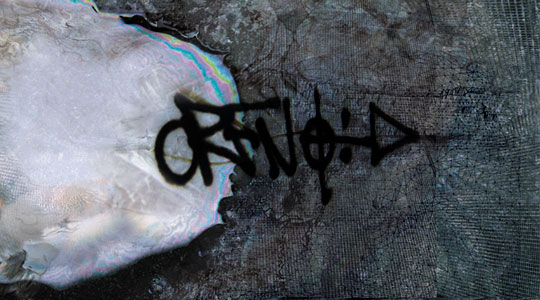 Here’s a taste of what you can expect on Thursday evening:
BACKGROUND
In the mid-90s, the legendary Cyber Culture Research Unit at the prestigious Warwick University was formed: their university-funded activities included producing collaged texts of Deleuze and Guattari, William Burroughs and binary code, theorising the occult underpinnings of markets, composing abrasive electronic music and, ostensibly, consuming inhuman doses of psychedelics as often as possible, much of this via the ORPHAN DRIFT collaborative artist project. A few years later, the CCRU was no more; founding member Nick Land – a genius philosopher and agent provocateur – had achieved full meltdown / deterritorialization and Sadie Plant, author of the well-known Writing On Drugs, had disappeared from sight.
The legacy of the CCRU is very much alive today though, a subterranean influence for the very latest movements in philosophy.
ABOUT ORPHAN DRIFT
Mer co-created the collaborative artist and hive mind 0rphan Drift in London in 1994. Although it was predominantly made up of visual artists, it also involved sound designers, concept engineers and media activists.
As an artistic entity, 0rphan Drift is known for immersive and visually complex works which use the sample and the remix extensively, treating information as matter and the image as a unit of contagion. The art produced is science fictional and immersive. It complicates the distinctions between material and immaterial phenomena and dimensions, both in content and media. Much of its work explored mimetic patterns of desire, production and consumption- particularly in relation to the rapid technological changes happening at the time- drawing heavily on cyberpunk fiction, polyrhythmic electronica and the underpinnings of African religious systems. This was the social context in which its shifting layers of frightening, disturbing, abject, schizophrenic, beautiful, deconstructive, poetic and fragmented frequencies were able to take affect.
0rphan Drift is cross-contextual and made extensive contributions from 1994 – 2004 in the social arenas around contemporary art, underground music and cyber-feminism/post-structural philosophy. 0D has participated internationally in over a decade of exhibitions, screenings and performance, exhibiting extensively in the UK, Europe, Canada and the States, including at the Cabinet Gallery and Tate Modern in London; writing the Scifi-theory text ‘Cyberpositive’, and featuring in DJ Spooky’s ‘Sound Unbound’ in the ‘Renegade Academics’ chapter. It contributed cybervisuals to the set of Stephen Speilberg’s ‘AI’ and ‘Minority Report’ features and Leftfield and NIN world tours, worked frequently with Kode 9 and participated in 10 years of international Video art and AV Electronica art events in Norway, Germany, Canada, UK, South Africa and USA.
We now collaborate between Cape Town and San Francisco and continue to make science fictional work which is guided by a neo-futurist sensibility and clearly a progression from our earlier work. Our new video work ‘Wilderness of Elsewheres, Colony 1’, which maps contemporary global concerns with survival, insecurity and the unknown, has been shown in Santiago and San Francisco and we subsequently produced a series of Post Apocalyptic postcards for Shadowshop; Stephanie Syjuco’s parasitic shop at SFMOMA. Recently we made video for Delphi Carsten’s Capetown Tedx Talk, ‘Hyperstition’, and were commissioned make ‘You Its Eyes 94-13’ for screening at CTM13, Berlin.
WHAT WE’LL BE SCREENING / HOSTING THIS THURSDAY EVENING
1: You Its Eyes. 1994-2013, 30 minute video remixing 0D’s earlier work
0D employs different frequencies and overlapping rhythmic patterns to activate submerged regions of the brain and create intimacy and proximity through video-sonic signal. The goal of 0D, writes Simon Reynolds (1996), is “the liberation of texture from its environment, of energy-flux from contoured form with the goal to recreate the intensity of being lost”. 0D describes the individual ‘self’ haunted by a sensory cross-talk of signals from realms beyond the physical. Voices from imagined futures haunt the contemporary technological landscape. Feedback from the machines evolves into an unfamiliarity of speed and complexity, coding the textual body and imagination as tools for change. The invisible, fantastical, and anarchic called upon here are what Deleuze and Guattari define as the essence of virtuality. These intensities carry the sorcerous forces that technology and science unleash as they delve further into the quantum, the chaotic and the abstract.
“Surrounding the human self and its island of experience lies a raging sea of intensities” (D&G). All journeys into this space involve a succession of becomings autistic, mimetic, contagious and machinic.
2: Hyperstition – A talk by Delphi Carstens
Delphi is a lecturer at UWC, as well as half of the duo which makes up Groovy Troopers Productions – creators of temporary autonomous zones in the form of art & trance festivals. Delphi is currently completing a doctorate thesis, and will present on: “hyperstition” — a neologism coined by Nick Land that combines the words ‘superstition’ and ‘hype’ to describe how fictions become fact and how our narratives (stories) shape our world. It also describes, particularly, the narrative of capitalism, which is driven by hype and speculation and, which more importantly, turns fictions into facts. One very important fiction that Delphi will be discussing is the fiction of the apocalypse. Focusing on the current secular meaning of apocalypse as well as how popular culture views our current global crisis and the importance of imagining ourselves differently. Hyperstition also describes the nexus where myth or magic and science meet. Delphi explores the world of hyperstition to describe the manner by which hype and speculation become facts in contemporary society. The future is looking uncertain and how we imagine this future may be more important than we realise. This talk will be both an intellectual and a felt experience.
3: A Wilderness Of Elsewheres. 2009, 10 minutes
A two-screen installation in which dark abstract video spaces flow into bright photographic landscapes (the raw desolate tundras of southern Africa), populated and de-populated by animated collages of architecture and fashion, cut and scanned from contemporary print publications. A deliberate rhythmic awkwardness creates an alien time frame. The screens share a soundscape, made from a wide variety of samples including glaciers melting and rocket launches, composed into a sonic ‘event’. The work is imbued with post-apocalyptic sensibility, urges to the neo-romantic and the science fictional blending of first and third world materiality. At once immersive and deconstructive, the work is collision, co-habitation, evolutionary fever-dream.
Join us in mapping the outer edges — and do come earlyish if you want to sit down while doing so ;) !
 Written by Sarah Dawson
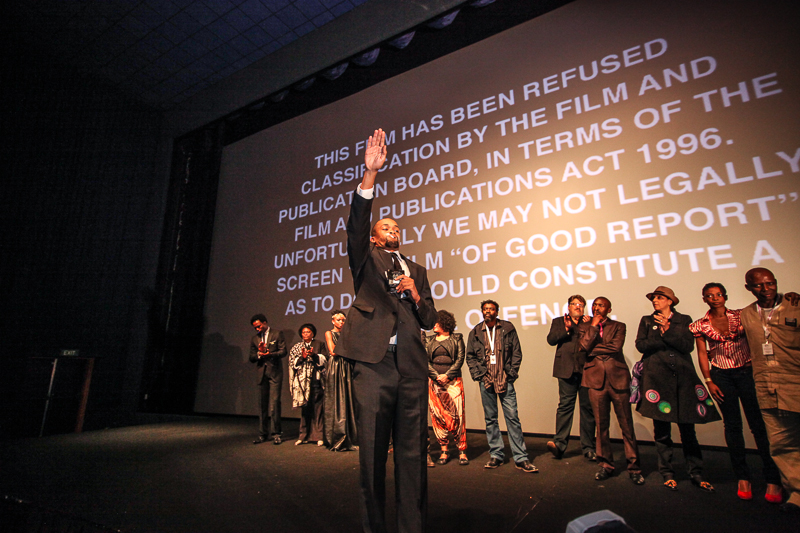
On July 18, the Film and Publication Board’s refusal to classify the would-be opening film of the Durban International Film Festival, Jahmil XT Qubeka’s Of Good Report, became the flint that sparked the latest South African aesthetic controversy.
Unclassified films are illegal to screen, which means that this is a functional ban on the production. The ruling was imposed on the basis of having interpreted the representation of a sexual encounter of a Grade 9 pupil, Nolitha, (played by the 23-year old actress Petronella Tshuma) as being child pornography.
Tongues have been wagging in creative circles and the media, and given that the film is divorced from any overt perspective on political matters (as in the case ofThe Spear), it is clear that this matter relates to some quite primal conflict over the interpretation of a particular image.
In this case, the battle over meaning is taking place in the awkward, sexually liminal space of the moment of the young female character’s transition from archetypal “virgin” to archetypal “whore”, and what she, the figure of the girl, means.
It probably wouldn’t be completely unfair to assume that the film is objectionable to the classification board because of this very liminality, and the way in which the morality embedded in the process clearly regards anything that isn’t exclusively either “virgin” or “whore” as a kind of abomination.
This act of censorship is fundamentally based on a conflict of representation – meaning it’s as much an aesthetic one as it is an ideological one. This means that we need to be asking not the obvious and common question of whether we should or shouldn’t be allowed to depict female children in an erotic light, but rather what actually is a female child, and what is an erotic light?
South African film and South African audiences remain equally conservative. The idea that representations of people, places, things and events can have a lot of different meanings and aren’t consistently, singularly defined is, surprisingly, not taken for granted by the typical South African viewer, practitioner or institution of film.
We aren’t yet comfortable with the multifarious nature of representation, and expend a lot of hot air trying to settle on the one, all-encompassing, so-called “South African voice”, which it turns out, we’re really struggling to locate.
It’s a self-evidently flawed project, because its ridiculous to think that such a thing could ever actually exist in a finite sense.
Read the rest of this article HERE.
Lykke Li is a worthy successor to Julee Cruise. The Big Dream, the new album from David Lynch, will be released on 15 July 2013.
Concept by Lykke Li and Daniel Desure
Edited by Jesse Fleming and Sadie Strangio
DP – Nicholas Trikonis
Designer – Michelle Park
This celebration of 80s South African pulp photo comic culture was made by Lloyd Ross and Robbie Thorpe in the late 1990s.
And here’s a piece on the subject written by DR Walker:
In 1980, like so many other white males, I was dragged kicking and screaming into that institution we would come to know as the SADF. The culture shock was enormous, legions of brown clad eenvormigge troepies all marching to the tune of the National party. After almost a year of rondfok and “training” I eventually ended up in the “Operational Area” or “The Border” as it was so commonly known.
Diversions were few and far between; drinking, talking kak, getting messed around, an occasional incursion by Swapo, and reading whatever came to hand. Newspapers were great but they reminded us of home too much so we avoided them. Paperbacks we never saw or they were invariably bad cowboy novels. Our all time favourite though were those beloved and much maligned “Photo Picture Libraries” or, as we so fondly knew them: “P*** Boekies”. These trashy produced pieces of literature fascinated us because you did not need an imagination, and if you did not understand the text you could always look at the pictures. They were better than a comic and were made in South Africa too.
Of course we all had our favourites, there was “Tessa”, a platinum blonde who strutted around in a bikini all day, running through the jungles of urban South Africa while clad in her cossie and high heels. Clashing with sinister suit and shade wearing individuals who were clearly “the bad guys” Naturally she always came out on top, the hair on that blonde head not even disturbed. As far as we were concerned she was akin to a Goddess and she would have been mobbed had she ever come to the border. With hindsight, those same bad guys looked very much like the guys who appeared before the Truth Commission and spilt so much dirty laundry. Maybe Tessa knew something we did not?
Remember “Swart Luiperd, Wit Tier, Kaptein Duiwel, Grensvegter” and all that ilk? They were out in the bushes clutching their wooden machine guns, (this is a rifle, this is a gun, this is for shooting, this is for fun), killing off naughty cigar smoking Cuban clones who held the proverbial dishevelled damsel in distress captive after her convoy/aircraft/helicopter/hospital was invaded/crashed/broke down (delete whichever is not applicable). By our reckoning we were not needed on the border, those three guys would solve all the problems and we could go home to start our long delayed civvy existence. Now that I think of it, just maybe they were really out there doing dirty deeds while we were being fed propaganda about how good the SADF and SAP were. Go on reading HERE.
For a critical history of South African pulp comics, read Sean O’Toole’s 2012 Mail & Guardian piece.
Bizarre clip from semi-psychedelic girl group The Cake performing “You Can Have Him”. The catatonic chick in green is Jeanette Jacobs (1950-1980). The other two members are Chelsea Lee & Barbara Morillo. The Cake wrote their own songs, and recorded two albums: The Cake (Decca, 1967), and A Slice Of Cake (Decca, 1968), which were re-released as a collection on CD in 2007 by RevOla. Read about the group’s crazy history in the liner notes for the remastered collection, More of The Cake, Please, published over at Dangerous Minds.

I watched two incredible films tonight, Schizophonia and The Third Man, courtesy of Anette Hoffmann and the Archive & Public Culture Platform at UCT, with the kind permission of musician, composer and performance artist, Erik Bünger, who made the films.
In each film, Bünger both analyses and plays with the uncanny, magical potency of sound as recorded medium. Everything he does is underpinned by formidable quantities of research, a fondness for outrageously rhizomatic linkages and a wicked sense of humour. Definitely my new art crush of the month! ;)
Here’s a video of Bünger giving a lecture/performance which utilises much of the material presented in the standalone film, Schizophonia. This was recorded at MEDEA, Malmo University, in March 2011, as part of the K3 courses “Music in the Digital Media Landscape” and “Illustrating with Music”.
I really WISH I could find more of The Third Man to share here – it was tremendously entertaining, and, even off on its most questionable, occult-paranoid tangents, bizarrely pertinent to so much of the stuff about performance, recording and playback of music that I’ve been posting and thinking about in the past few years; even down to an hilarious discussion of the “entraining” (his word) power of The Sound Of Music (my post this afternoon prefigured this too, eerily!).
Anyway, you can watch the lecture:
And here’s a bio:
The Swedish artist, composer, musician and writer Erik Bünger (1976) works with re-contextualising existing media in performances, installations and web projects. In ‘Gospels’, sections of Hollywood interviews are removed from their original contexts, interacting to form a new, seemingly coherent whole. Yet these pre-existing works frequently conflict; Bünger explores the disjunction between replaying and experiencing in his ‘Lecture on Schizophonia’. This simultaneously analytical and performative work highlights the relationship between sound and perceived reality, using popular references and familiar footage including Barak Obama and Woody Allen. Similar tensions are exposed in ‘God Moves on the Water’, in which two songs about the sinking of the Titanic are combined to form a third narrative. In ‘The Third Man’, the negative power of music is explored. Displacing and recombining familiar material, Bünger challenges the separation between authentic and simulated experiences.
Bünger may have followed a traditional education in composition at the Stockholm Royal College of Music, but he is hardly a run-of-the-mill composer. His works have increasingly come to approach contemporary conceptual art, but his combination of sound and visual is also linked to literary storytelling. In his performances, installations and web projects, different timelines are superposed, past worlds and present understandings. The most important thing about Bünger’s work is not the art or literature context but the transformation that takes place in the specific works. What may seem trivial and inconsequential suddenly becomes the stuff of dreams. He is attracted to moments when recorded sound and image bridge a space between absolutes, between death and life and between gods and humankind. –
This info comes from http://expo.argosarts.org/

Francis Barraud – “Dog Looking At and Listening to a Phonograph”(1898)
“Civil disobedience is not our problem. Our problem is civil obedience. Our problem is that people all over the world have obeyed the dictates of leaders…and millions have been killed because of this obedience… Our problem is that people are obedient all over the world in the face of poverty and starvation and stupidity, and war, and cruelty. Our problem is that people are obedient while the jails are full of petty thieves, and all the while the grand thieves are running the country. That’s our problem.”
Watch this documentary:
NB: not for the strait-laced! An experimental Freudian drama by Niki de Saint Phalle and Peter Whitehead. Grotesque, garish, ghastly… with an incredible piano-driven soundtrack that riffs on Cole Porter’s “My Heart Belongs To Daddy”. If you’re needing an antidote to all the commercial, anodyne Father’s Day bull, this should do the trick. 
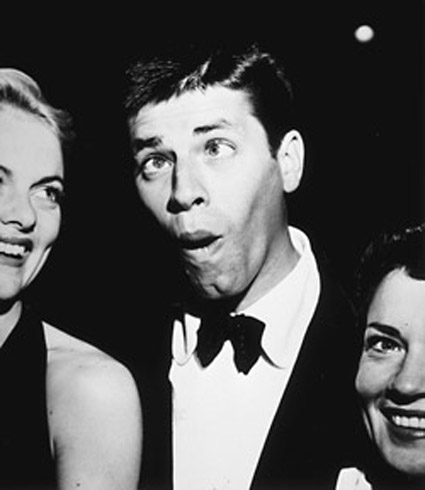
“If you think childlike, you’ll stay young. If you keep your energy going, and do everything with a little flair, you’re gonna stay young. But most people do things without energy, and they atrophy their mind as well as their body. You have to think young, you have to laugh a lot, and you have to have good feelings for everyone in the world, because if you don’t, it’s going to come inside, your own poison, and it’s over.”
— Jerry Lewis
Relâche, ballet instantanéiste en deux actes: un entr’acte cinématographique, et “la queque de chien” is a 1924 ballet by Francis Picabia with music composed by Erik Satie. The title was thought to be a Dadaist practical joke, as relâche is the French word used on posters to indicate that a show is cancelled, or the theatre is closed (and the first performance was indeed cancelled, due to the illness of Jean Börlin, the principal dancer, choreographer, and artistic director of the Ballets Suédois).
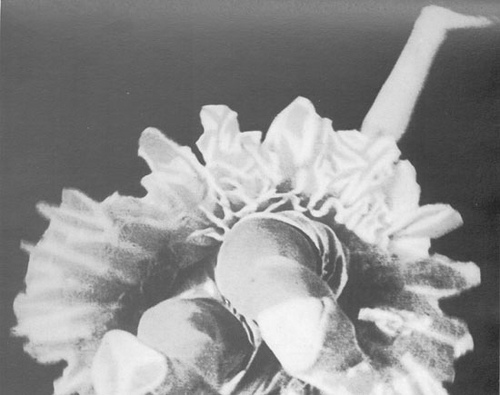
Still from “Entr’acte”
Picabia commissioned filmmaker René Clair to create a cinematic entr’acte to be shown during the ballet’s intermission. The film, simply titled Entr’acte, consists of a scene shown before the ballet and a longer piece between the acts. The score was also composed by Satie.
Entr’acte premiered as an entr’acte for the Ballets Suédois production Relâche at the Théâtre des Champs-Élysées in Paris in 1924. The Dadaists collaborating on the project invented a new mode of production: instantanéisme. Watching the 20 minute film involves seeing people running in slow motion, things happening in reverse, looking at a ballet dancer from underneath, watching an egg over a fountain of water get shot and instantly become a bird, and watching people disappear. The cast included cameo appearances by Francis Picabia, Erik Satie, Man Ray, and Marcel Duchamp. The conductor of the orchestra at the premiere was Roger Désormière. The edition of the soundtrack featured here was conducted in 1967 by Henri Sauguet.
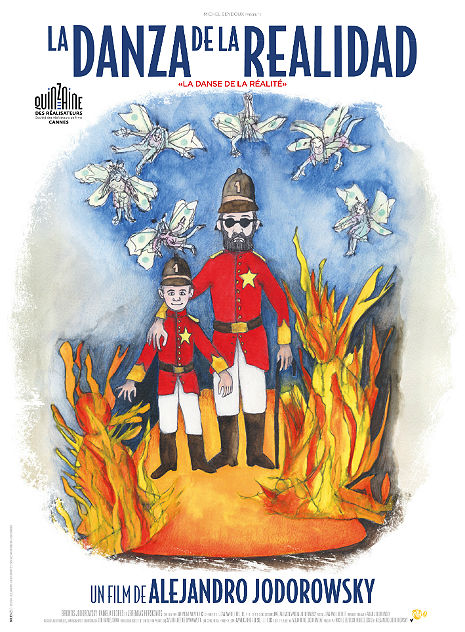 Watch the trailer:
The Guardian review from Cannes 2013 has this to say:
The extinct volcano of underground cinema has burst into life once again — with a bizarre, chaotic and startling film; there are some longueurs and gimmicks, but The Dance of Reality is an unexpectedly touching and personal work. At the age of 84, and over 20 years since his last movie, Alejandro Jodorowsky has returned to his hometown of Tocopilla in the Chilean desert to create a kind of magic-realist memoir of his father, Jaime Jodorowsky, a fierce Communist whose anger at the world — at his son — was redoubled by the anti-Semitism the family faced.
Of course, the entire story is swathed in surreal mythology, dream logic and instant day-glo legend, resembling Fellini, Tod Browning, Emir Kusturica, and many more. You can’t be sure how to extract conventional autobiography from this. Despite the title, there is more “dance” than “reality” — and that is the point. Or part of the point. For the first time, Jodorowsky is coming close to telling us how personal evasiveness has governed his film-making style; his flights of fancy are flights of pain, flights from childhood and flights from reality. And now he is using his transformative style to come to terms with and change the past and to confer on his father some of the heroism that he never attained in real life.
Read more of this review HERE.
Sadly, this is a far more profound symbolic critique of Roman Catholic oppression than anything FEMEN is ever likely to pull off (notwithstanding their tops)!
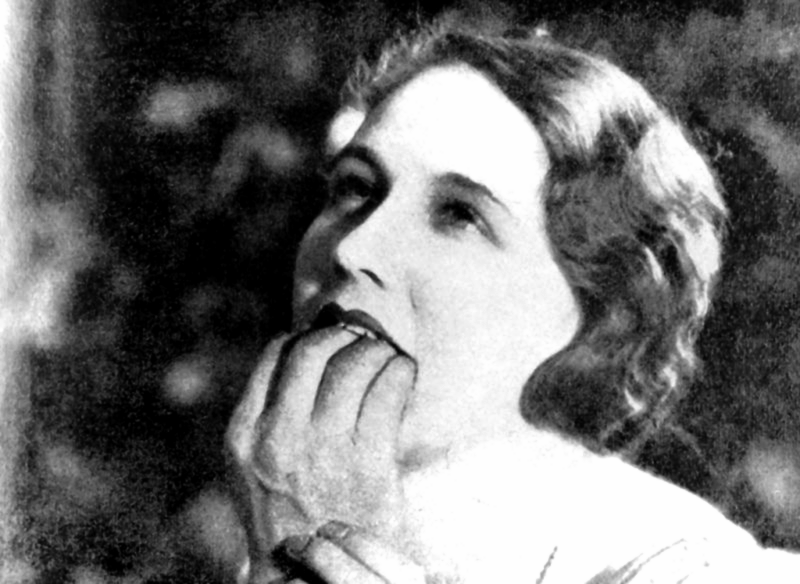 L’Age d’or or The Golden Age (1930), directed by Luis Buñuel, a French surrealist comedy, and one of the first films with synchronous sound ever made in France, was about the insanities of modern life, the hypocrisy of the sexual mores of bourgeois society and the value system of the Roman Catholic Church. Salvador Dalí and Buñuel wrote the screenplay together.
The BBC called it “an exhilarating, irrational masterpiece of censor-baiting chutzpah.”
Read more about the political project of surrealism HERE. Watch the film (in the original French) HERE – turn on the Youtube captions for English subtitles.
Regarding the response of the establishment to the film, from Wikipedia:
Upon receiving a cinematic exhibition permit from the Board of Censors, L’Âge d’or had its premiere presentation at Studio 28, Paris, on 29 November 1930. Later, on 3 December 1930, the great popular success of the film provoked attacks by the right-wing Ligue des Patriotes (League of Patriots), whose angry viewers took umbrage at the story told by Buñuel and Dalí. The reactionary French Patriots interrupted the screening by throwing ink at the cinema screen and assaulting viewers who opposed them; they then went to the lobby and destroyed art works by Dalí, Joan Miró, Man Ray, Yves Tanguy, and others. On 10 December 1930, the Prefect of Police of Paris, Jean Chiappe, arranged to have the film banned from further public exhibition after the Board of Censors re-reviewed the film.
A contemporary right-wing Spanish newspaper published a condemnation of the film and of Buñuel and Dalí, which described the content of the film as “…the most repulsive corruption of our age … the new poison which Judaism, Masonry, and rabid, revolutionary sectarianism want to use in order to corrupt the people”. In response, the de Noailles family withdrew L’Âge d’or from commercial distribution and public exhibition for more than forty years; nonetheless, three years later, in 1933, the film was privately exhibited at the Museum of Modern Art, in New York City. Forty-nine years later, from 1-15 November 1979, the film had its legal U.S. premiere at the Roxie Cinema in San Francisco.
The film critic Robert Short said that the scalp-decorated crucifix and the scenes of socially repressive violence, wherein the love-struck protagonist is manhandled by two men, indicate that the social and psychological repression of the libido and of romantic passion and emotion, by the sexual mores of bourgeois society and by the value system of the Roman Catholic Church, breed violence in the relations among people, and violence by men against women. The opening sequence of the film alludes to that interpretation, by Dalí and Buñuel, with an excerpt from a natural science film about the scorpion, which is a predatory arthropod whose tail is composed of five prismatic articulations that culminate in a stinger with which it injects venom to the prey. Film critic Ado Kyrou said that the five vignettes in the tale of L’Âge d’Or correspond to the five sections of the tail of the scorpion.
Richie Havens’ famous improvised performance of “Freedom”, riffing on “Sometimes I Feel Like a Motherless Child”, during his opening set at the Woodstock Festival in 1969.
There is a collection of other great performances recorded over the course of his almost five-decade-long career that you can watch HERE. May his soul rest in peace.
From Sounds of Silence, Simon and Garfunkel’s second album, released on January 17, 1966. It had also appeared prior to this on a UK-only release, The Paul Simon Songbook, in August 1965.
The song bears a structural resemblance to a traditional English rhyme, “Cuckoo, cuckoo, what do you do?”, a phenology of the Common Cuckoo from April to September:
Cuckoo, Cuckoo, what do you do?
“In April I open my bill;
In May I sing night and day;
In June I change my tune
In July far far I fly;
In August away I must.”
Cuckoo, Cuckoo!
This choral version of the rhyme was featured on the soundtrack to Wes Anderson’s 2012 film, Moonrise Kingdom:
Lauren Bacall interviewed in 1994. Honest and smart… And how!
Norwegian improv duo Vertex (Petter Vågan and Tor Andreas Haugerud) collaborate with Capetonian Josh Ginsburg at The Edge Of Wrong festival in Cape Town, February 2013. The venue was The Mahogany Room. This is an edited portion of a longer performance.
Vanessa Paradis’ opening monologue (with English subtitles)
Review by Michael Dequina at filmthreat.com, 11/21/00:
“Very few actors, let alone young ones, can pull off what 20-something chanteuse-turned-actress Vanessa Paradis does in the opening minutes of Patrice Leconte’s romantic drama. In a single take broken only by an occasional white-on-black credit card, Paradis’ Adele confides to an unseen interrogator the reasons for her depression. It is never explained exactly to whom she is speaking and in what type of situation, but that is of little consequence—in these scant minutes, the audience instantly is given a vivid portrait of what the character is all about: her youthful recklessness and naïveté, her sexual abandon and her romantic soul. While kudos go to writer Serge Frydman, it is Paradis who brings the scene and Adele to robust life.
“However, in Adele’s eyes, her life isn’t quite so healthy, and as such she becomes the titular girl on the bridge, ready to jump when she meets Gabor (Daniel Auteuil), a knife thrower in need of a new target. Since she clearly has no fear of danger, Adele is a perfect match—though it comes as a surprise to both of them just how well they complement each other, for these two historically down-on-their-luck characters find themselves on an incredible streak of good fortune as they wow crowds throughout Europe. But as with all things, what goes up must come down.
“La Fille sur le Pont is a magical film in all senses. On a literal level, the surreal psychic bond that develops between Adele and Gabor pushes the film into the realm of magical realism, and their knife throwing scenes bear a not-so-subtle, otherworldly erotic charge. But the real magic comes in watching the warm sparks between Paradis and Auteuil and following their eccentric characters’ beautiful, unconventional relationship. Jean-Marie Dreujou’s stunning black-and-white cinematography and Leconte’s smart choices in music (there is no original composed score) add to the film’s whimsical, timeless spell.”
Judi Dench and Brendan O’Hea perform “Sixteen Going On Seventeen” from The Sound of Music at the London gala event, “Some Enchanted Evening: Richard Rogers”, held on May 12, 2002.
Thanks to Erica Lombard for putting me in stitches with this.
End fight scene from Jackie Chan’s 1978 breakthrough. Craziest foley and 70s soundtrack: As well as original music by Chou Fu-liang, the original version of the film features Jean Michel Jarre’s “Oxygène (Part 2)” and Space’s “Magic Fly”. Like many Hong Kong movies of the era, it also includes samples from western movie scores, including A Fistful Of Dollars, You Only Live Twice, The Spy Who Loved Me, and even the Death Star explosion moment from Star Wars. The English subtitles over (different) English dubbing are great, too.
The full movie is on Youtube, HERE, but if you’re in South Africa, like me, you won’t be able to watch it due to copyright nonsense.
James Dean and Lois Smith: screen test for East of Eden.
Nancy Sinatra – “Bang Bang (My Baby Shot Me Down)” – piano remix.
(Trigger warning for domestic violence)
Serbian campaign against domestic abuse.
… And, while we’re on the lugubrious, seamy baritone tip, it would be remiss not to make a turn past l’original, Monsieur Serge Gainsbourg:
Watch Melody Nelson, a short film directed Jean-Christophe Avery, starring Serge Gainsbourg and Jane Birkin, based on Gainsbourg’s seminal (ahem, heheh) 1971 album. More information HERE.
“But there were moments when she played songs that made you wonder where she learned them, where indeed she came from. Harsh-tender, wandering tunes with words that smacked of pinewoods or prairie. One went: Don’t wanna sleep, Don’t wanna die, Just wanna go a-travelin’ through the pastures of the sky; and this one seemed to gratify her the most, for often she continued it long after her hair had dried, after the sun had gone and there were lighted windows in the dusk.”
__
Truman Capote, Breakfast at Tiffany’s

“Maybe the older you grow and the less easy it is to put thought into action, maybe that’s why it gets all locked up in your head and becomes a burden.”
__
Truman Capote, from Breakfast at Tiffany’s
“There’s gotta be something more to love than commitment”…
… “Why are you telling me all this?”

 fleurmach