ken jacobs on the archive

“I wish more stuff was available in its raw state, as primary source material for anyone to consider, and to leave for others in just that way, the evidence uncontaminated by compulsive proprietary misapplied artistry, “editing”, the purposeful “pointing things out” that cuts a road straight and narrow through the cine-jungle; we barrel through thinking we’re going somewhere and miss it all. Better to just be pointed to the territory, to put in time exploring, roughing it, on our own. For the straight scoop we need the whole scoop, or no less than the clues entire and without rearrangement. O, for a Museum of Found Footage, or cable channel, library, a shit-museum of telling discards accessible to all talented viewers/auditors. A wilderness haven salvaged from Entertainment.”

— The impossible idealism of Ken Jacobs (check out his films on UBUWEB). This is a quote from the hand-illustrated programme of his 1989 retrospective, Films that Tell Time – see a PDF HERE.

brigitte fontaine – dévaste-moi

Dévaste-moi, essouffle-moi, envahis-moi et pille-moi, dépense-moi, gaspille-moi
Saccage-moi, dilapide-moi, lapide-moi et râpe-moi, liquide-moi, émiette-moi
Ravage-moi et presse-moi et puis broie-moi et puis noie-moi et puis
bois-moi et cueille-moi
Colonise-moi, piétine-moi, déglutis-moi, extermine-moi, ravage-moi, délabre-moi
Ratisse-moi, corrode-moi, démantèle-moi, désintègre-moi, massacre-moi,
écrabouille-moi
Mais c’est qu’il le ferait la brute !

this heat – deceit (full album)

Released on Rough Trade in 1981, Deceit is a dark, intense post-punk classic. Band member Charles Hayward said of the zeitgeist that shaped the album:

“The whole speak, ‘Little Boy’, ‘Big Boy’, calling missiles cute little names. The whole period was mad! We had a firm belief that we were going to die and the record was made on those terms.… The whole thing was designed to express this sort of fear, angst, which the group was all about, really… Some of the album was really plush sounding, some dim and pokey. Sometimes it would sound like the machinery was breaking up. We deliberately would make it sound as though the record player was exploding.”

Read more about this brilliant album at DROWNED IN SOUND.

Track List

Sleep 0:00
Paper Hats 2:14
Triumph 8:17
S.P.Q.R. 11:12
Cenotaph 14:41
Shrink Wrap 19:20
Radio Prague 21:01
Makeshift Swahili 23:23
Independence 27:27
A New Kind Of Water 31:09
Hi Baku Shyo 36:06
__________________________________
Charles Hayward — Vocals, Bass Guitar, Keyboards, Drums, Tape Music
Gareth Williams — Vocals, Bass Guitar, Keyboards, Tape Music
Charles Bullen — Vocals, Clarinet, Guitar, Drums, Tape Music

David Cunningham — Production
Martin Frederick — Mixing
Laurie-Rae Chamberlain — Colour Xerography
Nicholas Goodall — Sleeve Photography Direction
Studio 54 — Sleeve Design

stepan razin’s dream (Казачья Притча)

Oy, to ne vecher” (Ой, то не вечер) is the incipit of a Russian folk song, also known as “The Cossack’s Parable” (Казачья Притча) or as “Stepan Razin’s Dream” (Сон Степана Разина). It was first published by composer Alexandra Zheleznova-Armfelt (1870–1933) in her collection Songs of the Ural Cossacks after her fieldwork in the Ural District during 1896–1897.

The original lyrics were in seven verses, with verse six making explicit that the dreamer is 17th century cossack rebel Stepan Razin. Razin has a dream, and his captain (esaul) interprets it as an omen of their defeat.

The song has been performed in several variants, sometimes expanded to up to eleven verses, but in the most common variant as sung by modern interpreters, it is reduced to four verses, removing the mention of Razin, and reducing the three omens in the dream to a single one.These lyrics may be translated thus:

Ah, it is not yet evening but I have taken a little nap, and a dream came to me. In the dream that came to me, it was as if my raven-black horse was playing about, dancing about, frisky beneath me.  Ah, and evil winds came flying out of the east, and they ripped the black cap from that wild head of mine.

And the esaul* was a clever one, he was able to interpret my dream: “Ah, it will surely come off”, he said, “that wild head of yours”.

Source of information: Wikipedia.

*Esaul: a post and rank in prerevolutionary Russia in the cossack hosts after 1576.

chris marker - staring back

Photo: Chris Marker, “Staring Back”

alain resnais/chris marker – statues also die (1953)

“We want to see their suffering, serenity, humour, even though we don’t know anything about them.”

Directors: Alain Resnais & Chris Marker
Narrator – Jean Négroni
Music – Guy Bernard

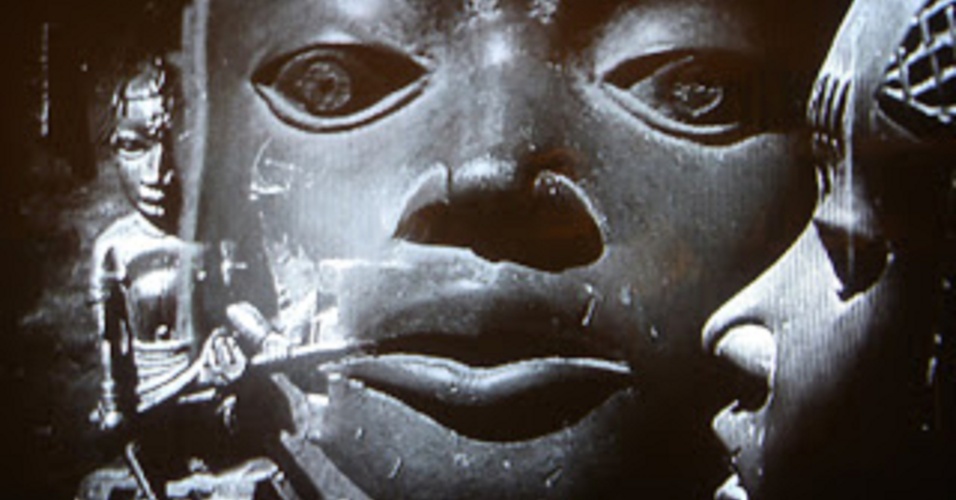
A collaborative work by Resnais and Marker, this is a deeply felt study of African art and the decline it underwent as a result of its contact with Western civilization. The film was banned for more than a decade by French censors as an attack on French colonialism, and is now only available to watch in the shortened version I’ve posted here (turn on the subtitles on Youtube if you want English subtitling).

Statues Also Die traces the devastating impact of French colonialism on African art. As Resnais’ co-director, Chris Marker, stated, “We want to see their suffering, serenity, humor, even though we don’t know anything about them.” Their film shows what happens when art loses its connection to its cultural context of production. Witty, thoughtful commentary is combined with images of stark formal beauty in this outcry against the fate of an art once integral to communal life that became debased as it fell victim to the demands of a different system of knowledge and values.

statues also die
From Wikipedia:

Statues Also Die (French: Les Statues meurent aussi) is a 1953 French essay film directed by Chris Marker and Alain Resnais, about historical African art and the effects colonialism has had on how it is perceived. The film won the 1954 Prix Jean Vigo. Because of its criticism of colonialism, the second half of the film was censored in France until the 1960s.

Synopsis

The film exhibits a series of sculptures, masks and other traditional art from Sub-Saharan Africa. The images are frequently set to music and cut to the music’s pace. The narrator focuses on the emotional qualities of the objects, and discusses the perception of African sculptures from a historical and contemporary European perspective. Only occasionally does the film provide the geographical origin, time period or other contextual information about the objects. The idea of a dead statue is explained as a statue which has lost its original significance and become reduced to a museum object, similarly to a dead person who can be found in history books. Interweaved with the objects are a few scenes of Africans performing traditional music and dances, as well as the death of a disemboweled gorilla.

During the last third of the film, the modern commercialisation of African culture is problematised. The film argues that colonial presence has compelled African art to lose much of its idiosyncratic expression, in order to appeal to Western consumers. A mention is made of how African currencies previously had been replaced by European. In the final segment, the film comments on the position of black Africans themselves in contemporary Europe and North America. Footage is seen from a Harlem Globetrotters basketball show, of the boxer Sugar Ray Robinson, and a jazz drummer intercut with scenes from a confrontation between police and labour demonstrators. Lastly the narrator argues that we should regard African and European art history as one inseparable human culture.

in recovery – #AgainstStigma the face of addiction/”mental illness”*: one month in

One month into my ‪#‎AgainstStigma‬ project and I have had 10 participants, with three more in the wings – more than I could have dreamt of! To my participants: I am beyond grateful for your incredible courage to stand up and be the face of addiction and/or mental illness, especially in the face of the very real stigma. Thank you, thank you, thank you. You guys are the modern day heroes. You guys are the ones fighting the battle, day by day, and living to tell the tale.

And please, if anyone has any queries, reservations or debates to offer up about this project, please contact me. This is a project under constant revision and re-creation. Let’s discuss and create what we live with together, instead of having the medical and psychiatric industry define it for us.*/**

And let’s keep speaking out against stigma, for the sake of those still struggling with addiction, mental illness and the stigma that prevents them from realising they’re not alone and from getting the support they so desperately need. Please share. Please participate.

Click for: The participants thus far.

* A note on what I mean by mental illness. The word ‘illness’ is something I use for the sake of clarity, to make sure that everyone knows what I am speaking about. So I use the psychiatric term. So whatever your definition and whether you see it as a burden or a gift, what I mean here by ‘mental illness’ is the same thing you mean. I have huge issues with the psychiatric institution and see it as very fraught, and I am not a big fan of the DSM whatever version we’re on now. I don’t believe in ‘diagnosis’ and hate how it labels and limits one. I see my ‘mental illness’ as part of my personality, not a pathology, something that makes me more sensitive and creative than most, which is both beautiful and difficult. Whether you align yourself to addiction as an illness or something that is not pathological, this project is for you, because I would like to put a face on those living outside the boundaries of what most people consider ‘normal’, and making a success of the daily struggles.

** recovery / active recovery / clean time / active recovery from mental illness / clean time from mental illness‘Recovery’ is not easily definable. I use the terms ‘recovery’ and ‘mental illness’ in the way that they are defined by the very, very fraught psychiatric institution. What I mean by ‘in recovery’ as opposed to ‘active addiction’ is that the former has taken the steps needed to live with their mental illness/addiction. They are aware that it is a day-to-day struggle and not something that is ever cured. An active addict or someone who is a victim to their mental illness is someone who is waiting to be saved; someone who does not take responsibility for what they are dealing with. And certainly, reaching out for help is taking responsibility. It’s the difference between between active, an agent in one’s own recovery, and being passive and waiting for a pill/professional/sobriety to save one. What it means for me is the last time my life was completely unmanageable, when I was not functioning, when the depression controlled me instead of the other way around; when I was a victim to it instead of a survivor living with and dealing with it daily. But having said that, it is not all smooth sailing. And not just because I’m an addict and living with mental illness, but because I’m alive ;) There are ups and downs and I have bad days and even relapse in some of my addictions. Or if I don’t relapse in my addictions, then I relapse in my addictive thinking and do impulsive, self-destructive and general ‘addict’ things. This clarification is under constant revision and has not been expressed very well here. Comments, queries and suggestions are very, very welcome. Let’s keep redefining what we live with, by ourselves, for ourselves, instead of having a psychiatric institution tell us what we live with. 

why monsanto is evil (it’s not science-fiction)

agent orange

HERE is an article discussing some of the non-“woo” (pseudo-scientific hippie freak-out) reasons why companies like Monsanto pushing genetically modified products are doing evil: the corporate imperatives and corruption surrounding the development of GMOs, how their use disempowers farmers (especially small farmers in non-first world contexts, although this article only talks about the USA) and what we can do about this deception being perpetrated against the world.

Apart from being economically unsustainable, there are also other compelling health-related reasons why GMOs are a bad idea, which don’t involve a non-specific, irrational fear of genetic mutations being dangerous to consume per se. For example, the seeds are engineered to be resistant to pesticides so that crops can be sprayed and only the weeds growing among the GM plants die. Studies have shown that GM food (or the meat of animals that ate GM food) can be contaminated by traces of the pesticides used during the plants’ growth, pesticides that are teratogenic (causing birth defects) and carcinogenic (causing cancer)  to humans. These modifications also lead to resistance in plants and insect pests – “superweeds” and “superbugs” that make sustainable farming more difficult.

If you are South African, please GO HERE to sign a petition as part of the formal public participation process against an application by multinational agricultural company Dow AgroSciences, a wholly owned subsidiary of the Dow Chemical Company, to import GM cottonseed products to South Africa, for use as food, animal feed and in processing. 

chhoun vanna – toa thea youm chlong (birds are singing but my lover won’t return)

“The birds are chirping, to and fro
My love, have you forgotten me?
As water can’t cut through the sand
I can’t cut you from my memories
The bridge (between you and I) has broken
The pathway is gone, and the water is so very deep
How am I to find you on the other side, so far away?”

Chhoun Vanna was a Cambodian singer between the 1950s and ’70s. She and her sister Chhoun Malai survived the Khmer Rouge genocide.

ros sereysothea – who’ll stop the rain?

Cambodian cover by Ros Sereysothea and Sinn Sisamouth of Creedence Clearwater Revival’s “Who’ll Stop The Rain?”. They died under unknown circumstances during the Khmer Rouge reign of terror,  as did countless other artists and intellectuals murdered in Pol Pot’s Killing Fields, and this recording only survived on tapes smuggled out of the country.

“Long as I remember the rain been comin’ down.
Clouds of mystery pourin’ confusion on the ground.
Good men through the ages, tryin’ to find the sun;
And I wonder, still I wonder, who’ll stop the rain.”

Read more of their story HERE.

ros sereysothea – i will starve myself to death/ shave your beard

I hardly ever put on a cd or listen to an LP these days (last is prolly due to the fact,that I killed my speakers/amplifier). In fact i am totally addicted to the net when it comes to music. I also am an avid KCRW listener. I often tune in to Henry Rollins’s radio show on KCRW. Henry does all the searching, comes up with all the cool tunes from every genre all over the place and all I have to do is listen. It was due to his radio show that i started listening to Sinn Sisamouth. This led me to Ros Sereysothea. I am 100% fascinated with her singing and music.

For the last days, I keep playing over and over this on Spotify:’ ‘Dengue Fever Presents Electric Cambodia”. Sounds amazing,and wished that i could understand the language. All performers on this compilation are dead,or ”vanished”. Killed/died during the communist Khmer Rouge regime.

”Electric Cambodia may be one of the saddest and most enraging compilations released this year—not for the music, but for the history. The performers are dead, all dead, or “vanished” into the Killing Fields—murdered, presumably, although the how is a mystery. Did they die quickly or slowly? ” – read more of this review HERE.

Ros Sereysothea – Shave your Beard

hannah arendt on the relationship between violence and power (1969)

To switch for a moment to conceptual language: Power is indeed of the essence of all government, but violence is not. Violence is by nature instrumental; like all means, it always stands in need of guidance and justification through the end it pursues. And what needs justification by something else cannot be the essence of anything. The end of war – end taken in its twofold meaning – is peace or victory; but to the question “And what is the end of peace?” there is no answer. Peace is an absolute, even though in recorded history periods of warfare have nearly always outlasted periods of peace. Power is in the same category; it is, as they say, “an end in itself.” (This, of course, is not to deny that governments pursue policies and employ their power to achieve prescribed goals. But the power structure itself precedes and outlasts all aims, so that power, far from being the means to an end, is actually the very condition enabling a group of people to think and act in terms of the means-end category.)

And since government is essentially organized and institutionalized power, the current question “What is the end of government?” does not make much sense either. The answer will be either question-begging – to enable men to live together – or dangerously utopian – to promote happiness or to realize a classless society or some other nonpolitical ideal, which if tried out in earnest cannot but end in some kind of tyranny.

Power needs no justification, being inherent in the very existence of political communities; what it does need is legitimacy. The common treatment of these two words as synonyms is no less misleading and confusing than the current equation of obedience and support. Power springs up whenever people get together and act in concert, but it derives its legitimacy from the initial getting together rather than from any action that then may follow. Legitimacy, when challenged, bases itself on an appeal to the past, while justification relates to an end that lies in the future.
assholesViolence can be justifiable, but it never will be legitimate. Its justification loses in plausibility the farther its intended end recedes into the future. No one questions the use of violence in self-defense, because the danger is not only clear but also present, and the end justifying the means is immediate.

Power and violence, though they are distinct phenomena, usually appear together. Wherever they are combined, power, we have found, is the primary and predominant factor. The situation, however, is entirely different when we deal with them in their pure states – as, for instance, with foreign invasion and occupation. We saw that the current equation of violence with power rests on government’s being understood as domination of man over man by means of violence. If a foreign conqueror is confronted by an impotent government and by a nation unused to the exercise of political power, it is easy for him to achieve such domination. In all other cases the difficulties are great indeed, and the occupying invader will try immediately to establish Quisling governments, that is, to find a native power base to support his dominion. The head-on clash between Russian tanks and the entirely nonviolent resistance of the Czechoslovak people is a textbook case of a confrontation between violence and power in their pure states. But while domination in such an instance is difficult to achieve, it is not impossible.

Violence, we must remember, does not depend on numbers or opinions, but on implements, and the implements of violence, as I mentioned before, like all other tools, increase and multiply human strength. Those who oppose violence with mere power will soon find that they are confronted not by men but by men’s artifacts, whose inhumanity and destructive effectiveness increase in proportion to the distance separating the opponents. Violence can always destroy power; out of the barrel of a gun grows the most effective command, resulting in the most instant and perfect obedience. What never can grow out of it is power.

desmond tutu condemns uganda’s proposed new anti-gay law

“We must be entirely clear about this: the history of people is littered with attempts to legislate against love or marriage across class, caste, and race. But there is no scientific basis or genetic rationale for love. There is only the grace of God. There is no scientific justification for prejudice and discrimination, ever. And nor is there any moral justification. Nazi Germany and apartheid South Africa, among others, attest to these facts.”

— Desmond Tutu reacting against the proposed enactment of homophobic legislation in Uganda. Read more about it HERE.

tutu

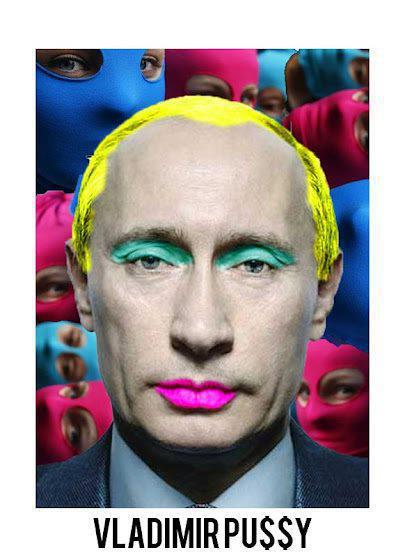
pussy riot – putin will teach you how to love

Released on 19 February 2014 – Translation of lyrics into English by Julia Ioffe*:

$50 billion and a rainbow ray
Rodnina and Kabayeva will pass you the torch
They’ll teach you to submit and cry in the camps
Fireworks for the bosses. Hail, Duce!

Sochi is blocked, Olympus is under surveillance
Special forces, weapons, crowds of cops
FSB — argument, Interior Ministry — Argument
On [state-owned] Channel 1 — applause

Putin will teach you to love the Motherland

In Russia, the spring can come suddenly
Greetings to the Messiah in the form of a volley from
Aurora, the prosecutor is determined to be rude
He needs resistance, not pretty eyes

A bird cage for protest, vodka, nesting doll
Jail for the Bolotnaya [activists], drinks, caviar
The Constitution is in a noose, [environmental activist] Vitishko is in jail
Stability, food packets, fence, watch tower

Putin will teach you to love the Motherland

They will turn off [opposition TV] Dozhd’s broadcast
The gay parade has been sent to the outhouse
A two-point bathroom is the priority
The verdict for Russia is jail for six years

Putin will teach you to love the Motherland

Motherland
Motherland
Motherland

* Read the original article with explanatory links on selected words for better understanding of the context HERE.

Free Pussy Riot

call to participate: #AgainstStigma the face of addiction/’mental illness’*

Please join me in providing a face to the anonymous diseases, in standing against stigma. (For more information about this project, the ideas behind it, and the inspiration for it, please visit my WordPress site: http://germainedelarch.wordpress.com/)

We all have addictions, and a lot of us live with mental illness. If you’re in active recovery, whether it be from mental illness* or from the addictions of smoking, sugar, over-working or heroin, etc., please take part and please share. So this is a call to take the anonymous out of addiction and mental illness. I’d like to begin a movement, centring around a photographic project, where we ‘come out’ as addicts and those living with mental illness. Because those in active addiction and active mental illness need to have a blueprint of what it looks like to be ‘allowed’ back into society, of what it looks like to live day by day with these diseases. Because being in recovery is one of the bravest things anyone can ever do, and this needs to be celebrated rather than stigmatised. And perhaps this will prevent the completely unnecessary deaths of those whom we know and love who feel that they are alone in their addiction and depression.

What are the requirements?
– That you’re a recovering addict** and/or living with mental illness, and not in active addiction** or in any way a victim** of your mental illness*. This project is for people who have overcome or are in the process of overcoming the dysfunction and are stronger for it, who have learned or are learning not only to live with their addictive personalities and mental illness, but who are stronger and more whole than when they first used or became mentally ill.
– The willingness to have your photograph, your full name and your information about your addiction and/or mental illness published on the internet in various social media forms, to be tagged on Facebook, as well as to have your image and details publicised in the form of a physical exhibition.
– That you use your full name.

Submission details:
– Photo: This project is about the message, not the photograph, so it will only work if all the portraits are in the same format. Sorry to limit your creativity, but if you could keep the photograph setup as close to the ones already online that would be great. I’ll edit if needed. Thanks!
– Text: Please fill your details into this format –
My name is ____________. I am a recovering addict (_________ [__ months/years], etc.). I live with mental illness (_________ [_____ months/years*]).
[…] indicates clean time.

* A note on what I mean by mental illness. The word ‘illness’ is something I use for the sake of clarity, to make sure that everyone knows what I am speaking about. So I use the psychiatric term. So whatever your definition and whether you see it as a burden or a gift, what I mean here by ‘mental illness’ is the same thing you mean. I have huge issues with the psychiatric institution and see it as very fraught, and I am not a big fan of the DSM whatever version we’re on now. I don’t believe in ‘diagnosis’ and hate how it labels and limits one. I see my ‘mental illness’ as part of my personality, not a pathology, something that makes me more sensitive and creative than most, which is both beautiful and difficult. Whether you align yourself to addiction as an illness or something that is not pathological, this project is for you, because I would like to put a face on those living outside the boundaries of what most people consider ‘normal’, and making a success of the daily struggles.

** recovery / active recovery / clean time / active recovery from mental illness / clean time from mental illness: ‘Recovery’ is not easily definable. I use the terms ‘recovery’ and ‘mental illness’ in the way that they are defined by the very, very fraught psychiatric institution. What I mean by ‘in recovery’ as opposed to ‘active addiction’ is that the former has taken the steps needed to live with their mental illness/addiction. They are aware that it is a day-to-day struggle and not something that is ever cured. An active addict or someone who is a victim to their mental illness is someone who is waiting to be saved; someone who does not take responsibility for what they are dealing with. And certainly, reaching out for help is taking responsibility. It’s the difference between between active, an agent in one’s own recovery, and being passive and waiting for a pill/professional/sobriety to save one. What it means for me is the last time my life was completely unmanageable, when I was not functioning, when the depression controlled me instead of the other way around; when I was a victim to it instead of a survivor living with and dealing with it daily. But having said that, it is not all smooth sailing. And not just because I’m an addict and living with mental illness, but because I’m alive ;) There are ups and downs and I have bad days and even relapse in some of my addictions. Or if I don’t relapse in my addictions, then I relapse in my addictive thinking and do impulsive, self-destructive and general ‘addict’ things. This clarification is under constant revision and has not been expressed very well here. Comments, queries and suggestions are very, very welcome. Let’s keep redefining what we live with, by ourselves, for ourselves, instead of having a psychiatric institution tell us what we live with.

Stigma Too Much for #AgainstStigma? Please Participate Anonymously in Writing.
Now a month into the project, I must say that I had absolutely no idea how great the stigma is re addiction and mental illness until I started my In Recovery: The Face of Addiction/Mental Illness. ‪#‎AgainstStigma project. I’m getting quite a bit of feedback that people would love to participate, but that they too did not realise how insidious the stigma was. I’d like to ask that those of you who feel that they cannot participate in this project due to the stigma please inbox or email me (germainedelarch@gmail.com). I’d like to include your anonymous comments in this project in a piece I’ll be writing along with it.

And remember: this stigma says more about society than it does about you and your ability to participate.

For any queries, debates, additions to my definitions or submissions, please email germainedelarch@gmail.com

#AgainstStigma the face of addiction/’mental illness’*  1.
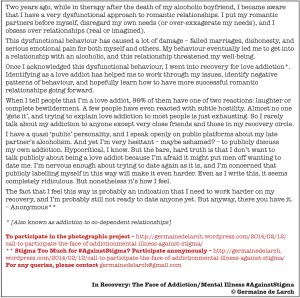
My name is Germaine de Larch. I am a recovering addict (self-mutilation [7 years], bulimia [13 years], overeating [3 years], co-dependent relationships [3 years], cigarettes [2 months, 10 days]). I live with mental illness (chronic depression, social phobia, Generalised Anxiety Disorder and Borderline Personality Disorder [3 years]). […] indicates clean time.
Photo: Self-portrait by Germaine
Johannesburg, South Africa
Image

#AgainstStigma the face of addiction/’mental illness’*  2.
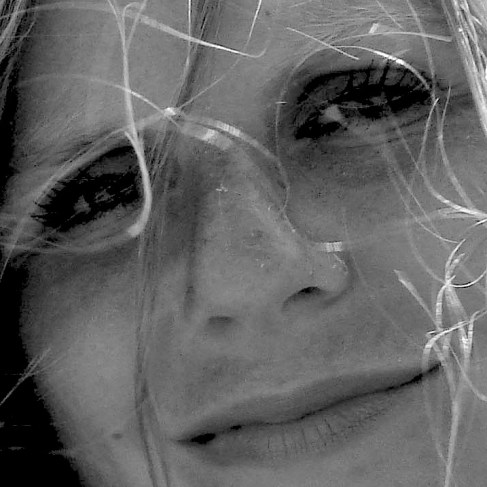
My name is Marelise van der Merwe. I am a recovering addict: bulimia [3 years], cigarettes [9 years], compulsive overeating [6 months]. I live with mental illness: Complex PTSD [ongoing] and a number of anxiety disorders [3 years].
[…] indicates clean time.
Photo: Self-portrait by Marelise
Western Cape, South Africa
Image

#AgainstStigma the face of addiction/’mental illness’*  3.
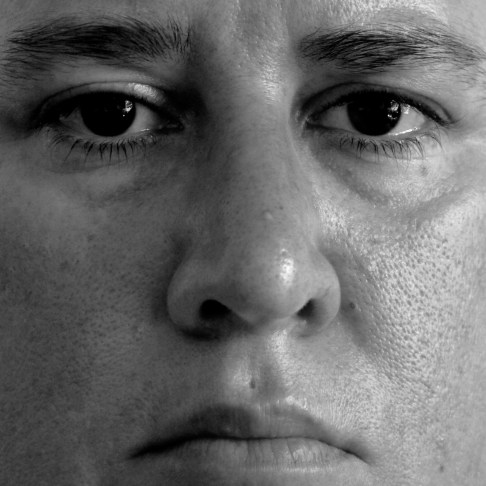
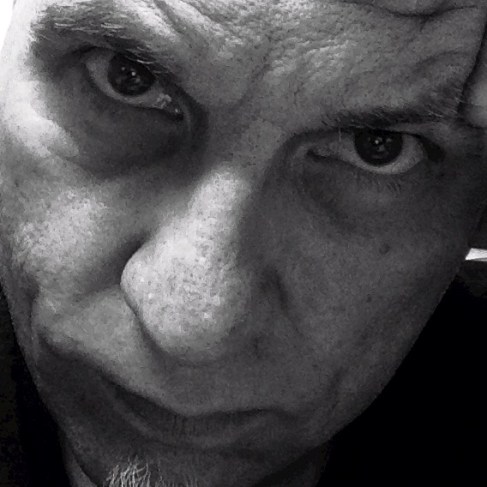
My name is Paul Strappini. I am a recovering addict: alcohol [11 years], methamphetamine [3 years]. I live with mental illness: Generalised Anxiety Disorder [15 years].
[…] indicates clean time.
Photo: Self-portrait by Paul
Johannesburg, South Africa
Image

#AgainstStigma the face of addiction/’mental illness’*  4.
My name is Zunia Boucher-Myers. I am a recovering addict (cigarettes) [13 years], (compulsive overeating) [3 years]. I live with mental illness* (depression) [2 years].
[…] indicates clean time**.
Self-portrait by Zunia.
Western Cape, South Africa.

Zunia

#AgainstStigma the face of addiction/’mental illness’*  5. 
My name is Airen McClure. I live with mental illness* (chronic depression, anxiety [9 months] and gender dysphoria [one day at a time]).
[…] indicates clean time**.
Self-portrait by Airen.
Pennsylvania, USA

Airen

Anonymous #1. #AgainstStigma

#AgainstStigma_Anonymous 1 copy

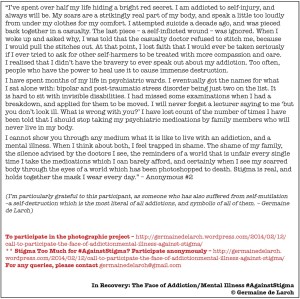
Anonymous #2. #AgainstStigma

#AgainstStigma_Anonymous 2

For more information about this project, the ideas behind it, and the inspiration for it, please visit my WordPress site: http://germainedelarch.wordpress.com/

éléonore pourriat – oppressed majority (majorité opprimée)

What does a day in the life of a woman look like? Maybe it’s easier to see if the woman is a man. Oppressed Majority (2010) is a French short by Éléonore Pourriat which uses role reversals to shine a new light on the micro-aggressions and macro-aggressions that are an all-too-common part of the female experience. Via wifey.tv.

manic street preachers – spectators of suicide (heavenly version)

“Democracy is an empty lie
Dead like our yesterdays tonight…”

Different, more jangly than the album version on Generation Terrorists (one of my “desert island” CDs in the ’90s, and ironically not available on Youtube due to label restrictions), this track appears on the NME compilation A Taste Of Heavenly, released in 2002. You can hear the album version HERE, or listen to the whole album from start to finish HERE.

rest in peace, pete seeger

Legendary American folk artist Pete Seeger has died at the age of 94. Here’s the New York Times’ eulogy, and one from the Huffington Post.

“Turn, Turn, Turn” is based on verses paraphrased from Ecclesiastes 3 in the Bible, widely believed to have been written by King Solomon around 1000 BCE. Pete Seeger put music to the words in 1959, recording his own version in 1962.

Miss Zingel, our sweet, slightly hippy music teacher at primary school during the last throes of 1980s apartheid, introduced us to this much-covered song, as well as to another of my favourites by Seeger/Malvina Reynolds, “Little Boxes”, which was released on CBS in 1963:

umlilo – out of my face

Watch the brand new music video for Umlilo’s “Out of My Face”, the third single off the Shades of Kwaai EP. The song is produced by Umlilo (Siya Ngcobo) and mixed by Ross Dorkin.

Download the single HERE.
Download ‘Shades of Kwaai‘ for FREE.

— CREDITS —
Directed by: Tlhonepho Thobejane
Director of Photography: Christian Denslow
Styling: Art Mataruse
Lighting and Photography: Mads Norgaard
Edited by: Lukas Kuhne
Assistant Editor: Sisanda Msimang
Production Assistant: Zandile Mjekula
Umlilo costume design: Maxinne Friesnieg
Makeup: Charli JVR and Liandi Ahlers
Special thanks to the fierce all stars: Phoenix Norgaad, Soneda, Angelo Valerio, Devan Hendricks, Amogelang Lebethe, Zani Moleya and The Ragdollz (Alex Alfaro, Keelin Simmons, Wentzel Ryan, Darion Adams, Sheldon Michaels)

happy birthday, simone de beauvoir

When she does not find love, she may find poetry. Because she does not act, she observes, she feels, she records; a colour, a smile awakens profound echoes within her; her destiny is outside her, scattered in cities already built, on the faces of men already marked by life, she makes contact, she relishes with passion and yet in a manner more detached, more free, than that of a young man.

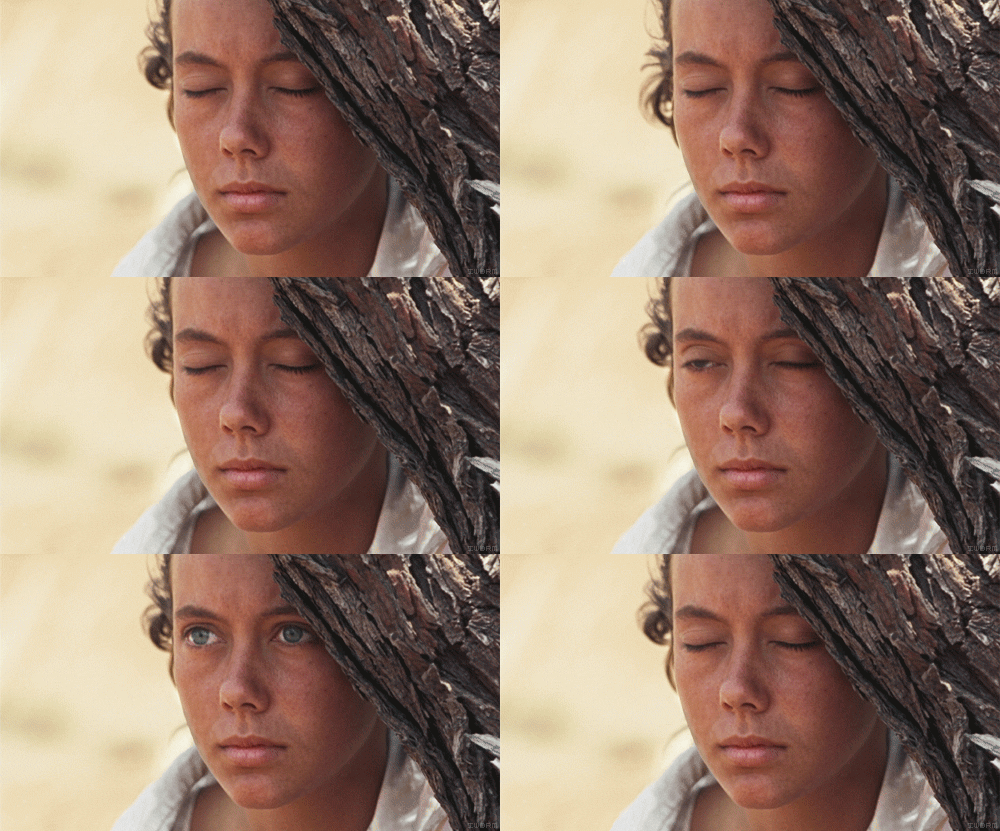
WALKABOUT tumblr_mb7ukzuYA71qe0eclo1_r4_500

Jenny Agutter in “Walkabout” (Nicolas Roeg, 1971)

Being poorly integrated in the universe of humanity and hardly able to adapt herself therein, she, like the child, is able to see it objectively; instead of being interested solely in her grasp on things, she looks for their significance; she catches their special outlines, their unexpected metamorphoses. She rarely feels a bold creativeness, and usually she lacks the technique of self-expression; but in her conversation, her letters, her literary essays, her sketches, she manifests an original sensitivity.

The young girl throws herself into things with ardour, because she is not yet deprived of her transcendence; and the fact that she accomplishes nothing, that she is nothing, will make her impulses only the more passionate. Empty and unlimited, she seeks from within her nothingness to attain All.

― Simone de Beauvoir,  from The Second Sex (first published in French as Le Deuxième Sexe in 1949)
If you’re interested in reading this hugely influential text, you can find it online HERE.

words, words, words: on toxicity and abuse in online activism

“At its best, activism is not merely opposition to what is, it is also constructive of what will be. Ours is not a utopia of negatives– a world without this, without that, and so forth– but also a world of affirmatives and possibilities. This swirling gyre of rage and ressentiment is a terrible artefact of oppression, and one we ought not consign ourselves to. It is not a wormhole to liberation, however much we may wish it to be.”

Katherine Alejandra Cross's avatarCross With You

To all new readers: I’ve written a follow up to this article.

Not long ago my partner and I were seated in her car discussing the arbitrary nature of certain holidays and I opined, perhaps halfheartedly, that New Year’s was a worthwhile holiday simply for it being a useful vantage point for reflection, however arbitrary. It provides an overlook whence one can see a year of one’s life and world. A recent tranche of writing by severalprominentmembersof the trans and queer feminist gaming community has renewed my faith in that idea– with the overleaf of the year we suddenly find a great deal of penetrating insight into activist discourse and the risks incurred by our silence about certain excesses that have come to define us too often.

The wages of rage in our communities, and the often aimless, unchecked anger striking both within and without have…

View original post 3,749 more words

out of order

“A minute of silence in images for all the absent images, censored images, prostituted images, machinated images, delinquent images, buggered images, images beaten up by all the governments, televisions and westernized cinemas that rhyme information and repression with trash and culture.”

— Jean-Luc Godard – Le Gai Savoir (The Joy of Learning), 1969

“We can’t really understand. Of course. They’re speaking out of order.”

Continue reading

mort garson – i’ve been over the rainbow

The perfect song for South Africa today. From the album The Wozard Of Iz, released on A&M in 1968.

“Shit on your whole mortifying, imaginary, and symbolic theatre!”
― Gilles Deleuze/Felix Guattari – Anti-Oedipus: Capitalism and Schizophrenia

reflections on mandela’s legacy

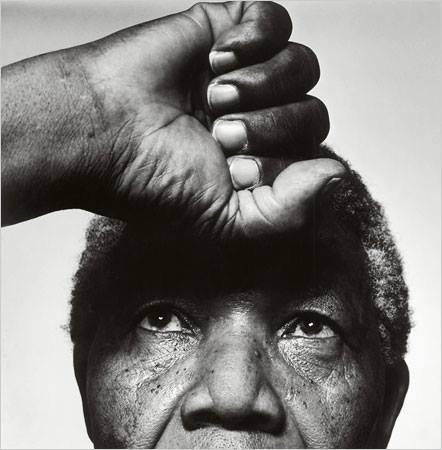
mandela in the mirror

Photo: Adrian Steirn, 2011

Some links and excerpts from commentary that I have found to be worth reading today (I’ll add to this whenever I come across anything interesting – if anyone reading this has suggestions, please pass them on too):

From “The Contradictions of Mandela” –  Zakes Mda in the New York Times opinion pages:

The claim is that the settlement reached between the A.N.C. and the white apartheid government was a fraud perpetrated on the black people, who have yet to get back the land stolen by whites during colonialism. Mandela’s government, critics say, focused on the cosmetics of reconciliation, while nothing materially changed in the lives of a majority of South Africans.

This movement, though not representative of the majority of black South Africans who still adore Mandela and his A.N.C., is gaining momentum, especially on university campuses.

I understand the frustrations of those young South Africans and I share their disillusionment. I, however, do not share their perspective on Mandela. I saw in him a skillful politician whose policy of reconciliation saved the country from a blood bath and ushered it into a period of democracy, human rights and tolerance. I admired him for his compassion and generosity, values that are not usually associated with politicians. I also admired him for his integrity and loyalty.

But I fear that, for Mandela, loyalty went too far. The corruption that we see today did not just suddenly erupt after his term in office; it took root during his time. He was loyal to his comrades to a fault, and was therefore blind to some of their misdeeds.

Read the rest of what Mda has to say HERE.

From “Mandela’s Socialist Failure” – Slavoj Zizek in the New York Times opinion pages

In South Africa, the miserable life of the poor majority broadly remains the same as under apartheid, and the rise of political and civil rights is counterbalanced by the growing insecurity, violence, and crime. The main change is that the old white ruling class is joined by the new black elite. Secondly, people remember the old African National Congress which promised not only the end of apartheid, but also more social justice, even a kind of socialism. This much more radical ANC past is gradually obliterated from our memory. No wonder that anger is growing among poor, black South Africans.

South Africa in this respect is just one version of the recurrent story of the contemporary left. A leader or party is elected with universal enthusiasm, promising a “new world” — but, then, sooner or later, they stumble upon the key dilemma: does one dare to touch the capitalist mechanisms, or does one decide to “play the game”? If one disturbs these mechanisms, one is very swiftly “punished” by market perturbations, economic chaos, and the rest. This is why it is all too simple to criticize Mandela for abandoning the socialist perspective after the end of apartheid: did he really have a choice? Was the move towards socialism a real option?

It is easy to ridicule Ayn Rand, but there is a grain of truth in the famous “hymn to money” from her novel Atlas Shrugged: “Until and unless you discover that money is the root of all good, you ask for your own destruction. When money ceases to become the means by which men deal with one another, then men become the tools of other men. Blood, whips and guns or dollars. Take your choice – there is no other.” Did Marx not say something similar in his well-known formula of how, in the universe of commodities, “relations between people assume the guise of relations among things”?

In the market economy, relations between people can appear as relations of mutually recognized freedom and equality: domination is no longer directly enacted and visible as such. What is problematic is Rand’s underlying premise: that the only choice is between direct and indirect relations of domination and exploitation, with any alternative dismissed as utopian. However, one should nonetheless bear in mind the moment of truth in Rand’s otherwise ridiculously ideological claim: the great lesson of state socialism was effectively that a direct abolishment of private property and market-regulated exchange, lacking concrete forms of social regulation of the process of production, necessarily resuscitates direct relations of servitude and domination. If we merely abolish market (inclusive of market exploitation) without replacing it with a proper form of the Communist organization of production and exchange, domination returns with a vengeance, and with it direct exploitation.

The general rule is that, when a revolt begins against an oppressive half-democratic regime, as was the case in the Middle East in 2011, it is easy to mobilize large crowds with slogans which one cannot but characterize as crowd pleasers – for democracy, against corruption, for instance. But then we gradually approach more difficult choices: when our revolt succeeds in its direct goal, we come to realize that what really bothered us (our un-freedom, humiliation, social corruption, lack of prospect of a decent life) goes on in a new guise. The ruling ideology mobilizes here its entire arsenal to prevent us from reaching this radical conclusion. They start to tell us that democratic freedom brings its own responsibility, that it comes at a price, that we are not yet mature if we expect too much from democracy. In this way, they blame us for our failure: in a free society, so we are told, we are all capitalist investing in our lives, deciding to put more into our education than into having fun if we want to succeed…

… If we want to remain faithful to Mandela’s legacy, we should forget about celebratory crocodile tears and focus on the unfulfilled promises his leadership gave rise to. We can safely surmise that, on account of his doubtless moral and political greatness, he was at the end of his life also a bitter, old man, well aware how his very political triumph and his elevation into a universal hero was the mask of a bitter defeat. His universal glory is also a sign that he really didn’t disturb the global order of power.

Read Zizek’s full post HERE.

From “Nelson Mandela: The Crossing” –  Richard Pithouse at SACSIS

[W]e need to be very clear that we did not undo many of the injustices that honed Mandela’s anger in the 1950s…

…But as Mandela returns from myth and into history we should not, amidst the humanizing details of his life as it was actually lived, or the morass into which the ANC has sunk, forget the principles for which he stood. We should not forget the bright strength of the Idea of Nelson Mandela.

Mandela was a revolutionary who was prepared to fight and to risk prison or death for his ideals – rational and humane ideals. In this age where empty posturing on Facebook or reciting banal clichés at NGO workshops is counted as militancy, where rhetoric often floats free of any serious attempts to organise or risk real confrontation, where the human is seldom the measure of the political, we would do well to recall Mandela as a man who brought principle and action together with resolute commitment.

Mandela was also a man whose ethical choices transcended rather than mirrored those of his oppressors. Amidst the on-going debasement of our political discourse into ever more crude posturing we would do well to remember that no radicalism can be counted as adequate to its situation if it allows that situation to constrain its vision and distort its conception of the ethical.

Read the full article by Pithouse HERE.

mandela will never, ever be your minstrel

“… [P]erhaps the greatest tragedy of Mandela’s life isn’t that he spent almost thirty years jailed by well-heeled racists who tried to shatter millions of spirits through breaking his soul, but that there weren’t or aren’t nearly enough people like him.
Because that’s South Africa now, a country long ago plunged headfirst so deep into the sewage of racial hatred that, for all Mandela’s efforts, it is still retching by the side of the swamp. Just imagine if Cape Town were London.  Imagine seeing two million white people living in shacks and mud huts along the M25 as you make your way into the city, where most of the biggest houses and biggest jobs are occupied by a small, affluent to wealthy group of black people. There are no words for the resentment that would still simmer there.
Nelson Mandela was not a god, floating elegantly above us and saving us. He was utterly, thoroughly human, and he did all he did in spite of people like you. There is no need to name you because you know who you are, we know who you are, and you know we know that too. You didn’t break him in life, and you won’t shape him in death. You will try, wherever you are, and you will fail.”

Read the rest of the words at OKWONGA.COM.

still so far to go, south africa

mandela fist

Yesterday, on the day those in control would later turn Nelson Rolihlahla Mandela’s life support system off, allowing him his final, politically expedient release after months held captive in a purportedly vegetative state, I was driving with my niece Juliette in KwaZulu-Natal, behind a white woman in a bakkie. The passenger seat of the vehicle was empty. In the open back, bumping around in the drizzling rain, sat a black woman in a blue maid’s uniform trimmed, profound irony, with ribbon in the rainbow hued design of the “new” South African flag.

Utterly disgusted, Juliette and I wanted to yell out something as we drove past, something to say that we saw, we recognised, we hated the thoughtless inhumanity of the woman in the driver’s seat, and that we saw, we recognised, we hated that this was a microcosm of the sickness persisting in the world all around us every day… but something in the grim, faraway expression on the face of the woman in the back made us realise that anything we said, however well-intentioned, would only compound her humiliation. Even the clouds were spitting on her.

South Africa still has so far to go before there can be any exaltation about transformation here. Sadly, far too little in the material circumstances of the majority of South Africans has changed since 1994, and for this reason the triumphant official narrative we are bombarded with today, as the media orchestrate the nation’s performance of grief for Mandela’s passing, rings hollow. Despite the man’s humility and admission of his own fallibility, South Africans have fashioned of him a myth, a brand, a magical fetish that distracts from the truth that we are ALL responsible for changing the way we live in this country, this world… and that we will need to do more, much more, before we can talk about freedom from oppression.

My friend Andre Goodrich posted a similar anecdote on Facebook this morning, and I would like to share what he wrote and echo his exhortation:

“From my office window, I can see a young white foreman, a child really, sit watching black men at work. I see this when I look up from marking first year exam essays on the political economy of race and class in South Africa. Alongside the stack of exam papers is a sheet of paper a garden worker used to explain to me how he sees the word ‘location’ as related to the Tswana word for cattle kraal. Between these, the excitement I felt in the 90s for the massive change promised by Mandela’s release from prison feels false and jaded.

I am saddened by Mandela’s death, but I am angered by his leaving such a sense of transformation amid such an absence of it. I encourage you to be angry too, and to hold us all to a better standard than what we have settled for.”

Lala ngoxolo, Madiba. A luta continua.