noise and capitalism

“This book, Noise and Capitalism, is a tool for understanding the situation we are living through, the way our practices and our subjectivities are determined by capitalism. It explores contemporary alienation in order to discover whether the practices of improvisation and noise contain or can produce emancipatory moments and how these practices point towards social relations which can extend these moments.

If the conditions in which we produce our music affects our playing then let’s try to feel through them, understand them as much as possible and, then, change these conditions.

If our senses are appropriated by capitalism and put to work in an ‘attention economy’, let’s, then, reappropriate our senses, our capacity to feel, our receptive powers; let’s start the war at the membrane! Alienated language is noise, but noise contains possibilities that may, who knows, be more affective than discursive, more enigmatic than dogmatic.

Noise and improvisation are practices of risk, a ‘going fragile’. Yet these risks imply a social responsibility that could take us beyond ‘phoney freedom’ and into unities of differing.

We find ourselves poised between vicariously florid academic criticism, overspecialised niche markets and basements full of anti-intellectual escapists. There is, after all, ‘a Franco, Churchill, Roosevelt, inside all of us…’ yet this book is written neither by chiefs nor generals.

Here non-appointed practitioners, who are not yet disinterested, autotheorise ways of thinking through the contemporary conditions for making difficult music and opening up to the wilfully perverse satisfactions of the auricular drives.”

Sound interesting? HERE, DOWNLOAD NOISE AND CAPITALISM FREE.
Edited by Mattin Iles and Anthony Iles
Contributions from Ray Brassier, Emma Hedditch, Matthew Hyland, Anthony Iles, Sara Kaaman, Mattin, Nina Power, Edwin Prévost, Bruce Russell, Matthieu Saladin, Howard Slater, Csaba Toth, Ben Watson.
More details from the publishers, Arteleku Audiolab (Kritika series), Donostia-San Sebastián (Gipuzkoa)
Publication date: September 2009

thoughts on meaningful work, 14 november 2012, 5:38 a.m.

What follows is something I wanted to blog from Turkey in November but was unable to due to lack of an internet connection at the time. I woke up very early one morning, typed it into my phone’s notes app, half asleep, and promptly forgot about it. The incredibly tedious work I am currently doing (editing an MSc thesis on anthropometric measurements for office chairs) reminded me of its existence. So, two months later, here it is.

Turkey 2012 492a

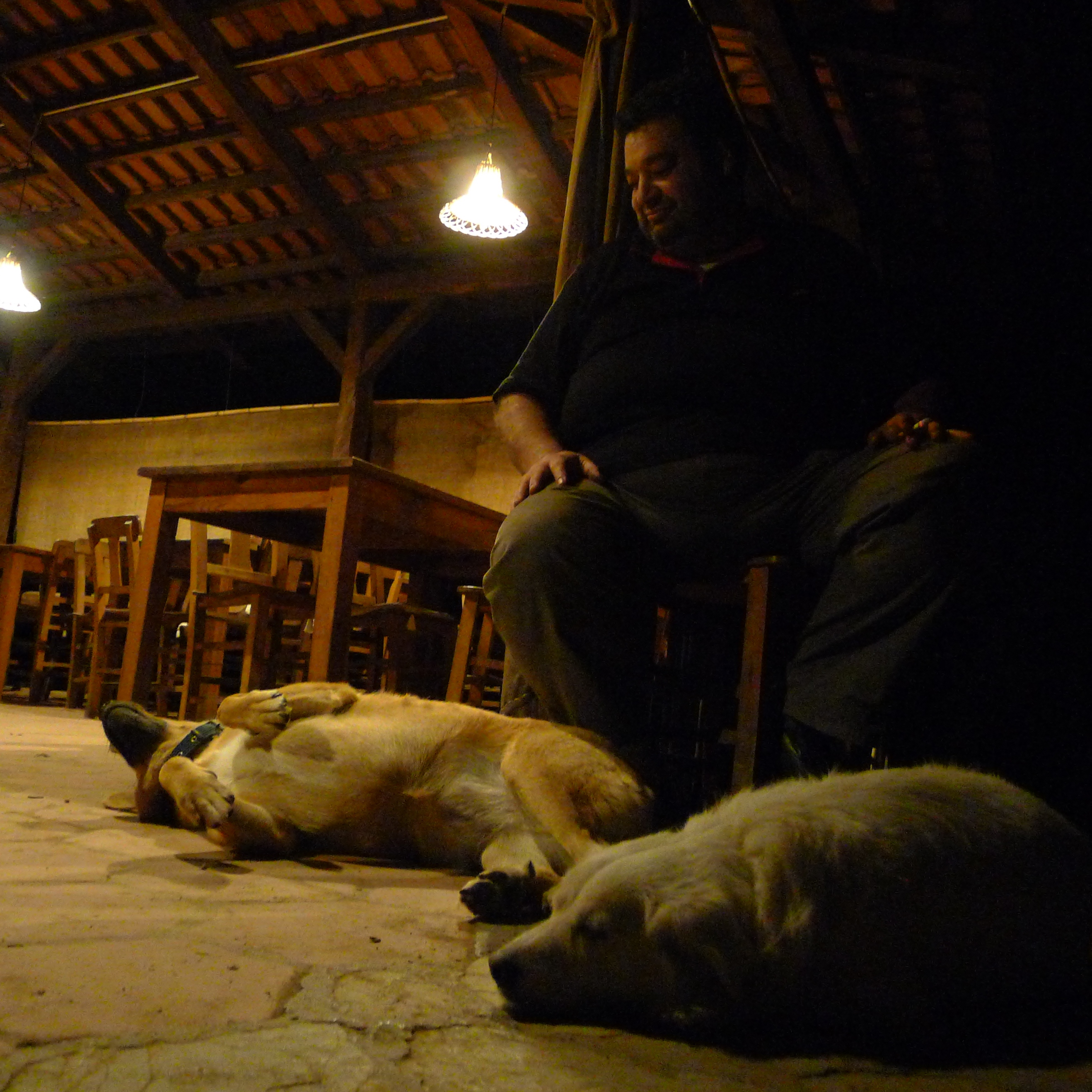
Arif Cerit with the farm dogs, Shanslar (Lucky) and Beyaz (White), at Pastoral Vadi. Photo: Rosemary Lombard.

Last night I had a profound conversation, in my bad Turkish and his bad English, with Arif Cerit, a guy who lives at Pastoral Vadi, the organic/permaculture farm near Fethiye in South-Western Turkey which I am visiting – working in exchange for food and a bed. It’s a very comfortable bed, in a neat, well-appointed cottage designed and built of cob (straw and mud) five years ago by Ahmet Kizen, an architect passionate about sustainable living and ecotourism who bought this farm 14 years ago and opened it to visitors about 7 years back. No maintenance has been necessary since the cottage was built, I’m told. The thick walls keep it cool during the day and surprisingly warm at night.

So, back to what I wanted to blog about, which has resonated for me with my friend P‘s latest gier on Facebook, which involves a sort of Dada/absurdist attempt to animalise interactions. Having been away and in limited contact with everyone, I haven’t had a chance to ask him more about it, but, basically, instead of clicking “like”, he types animal noises. “Baaa, baaa”, mostly. For me it draws attention to the essentially animal nature of human interaction, which we have become unconscious of and detached from, as we live large swathes of our lives online, “denatured”, unquestioning.  “Like” has become a capricious yet ubiquitous form of social capital. Facebook’s shady manipulation of this currency of late has triggered consternation and outrage. They’ve put in place algorithms that restrict the “organic” (terms such as “organic” and “viral” in the world of virtual memes are interesting in their ironic detachment!) reach of posts on the network, requiring one to pay (“real” money) to secure an audience greater than an arbitrary sliver of the profiles to whom one is connected… Just when I thought it was because I only had a sliver of die-hards who actually enjoyed what I post anymore, I realised that most of my Facebook friends no longer see my updates in their news feeds. What a relief (?). The virtual landscape increasingly resembles a targeted marketing environment more than it does a communal hangout, a place for exchanging ideas and thoughts, as it used to. Now it’s mostly about Profit. By monetising the prominence of posts, equal access is effectively being stifled. Concomitantly, freedom of association and meaningful interaction are withering.

That’s another aside, or, rather, more context. ANYWAY. So, what I gleaned from my conversation with big, friendly Arif was that he had been a taxi driver with a fleet of cars in the west coast city of Izmir for 21 years, before dropping everything and moving here to the farm. He sold his business, gave the money to his brothers and left it all behind.

He says that the city is a big jungle, very dark, very dense, very dangerous, full of artifice and chemical poisons. People are a species of animal, he says, like all animals… In cities you have to be a predator to do well. If you are not a predator, you have to live your life very small, like a rat, to survive. Your mind is very important, he says. The chasing after money and things that you need to do to live in the city takes up all your time and your thoughts. Money is a cancer. TV is the morphine you need to kill the pain at the end of the day: the pain of your mind being eaten away.

Out here on the farm, life is real, he says. There is space, there is ground, and air, and the smell of greenness. Animals who are not predators can live happily, widely, openly, productively.

Turkey 2012 467a

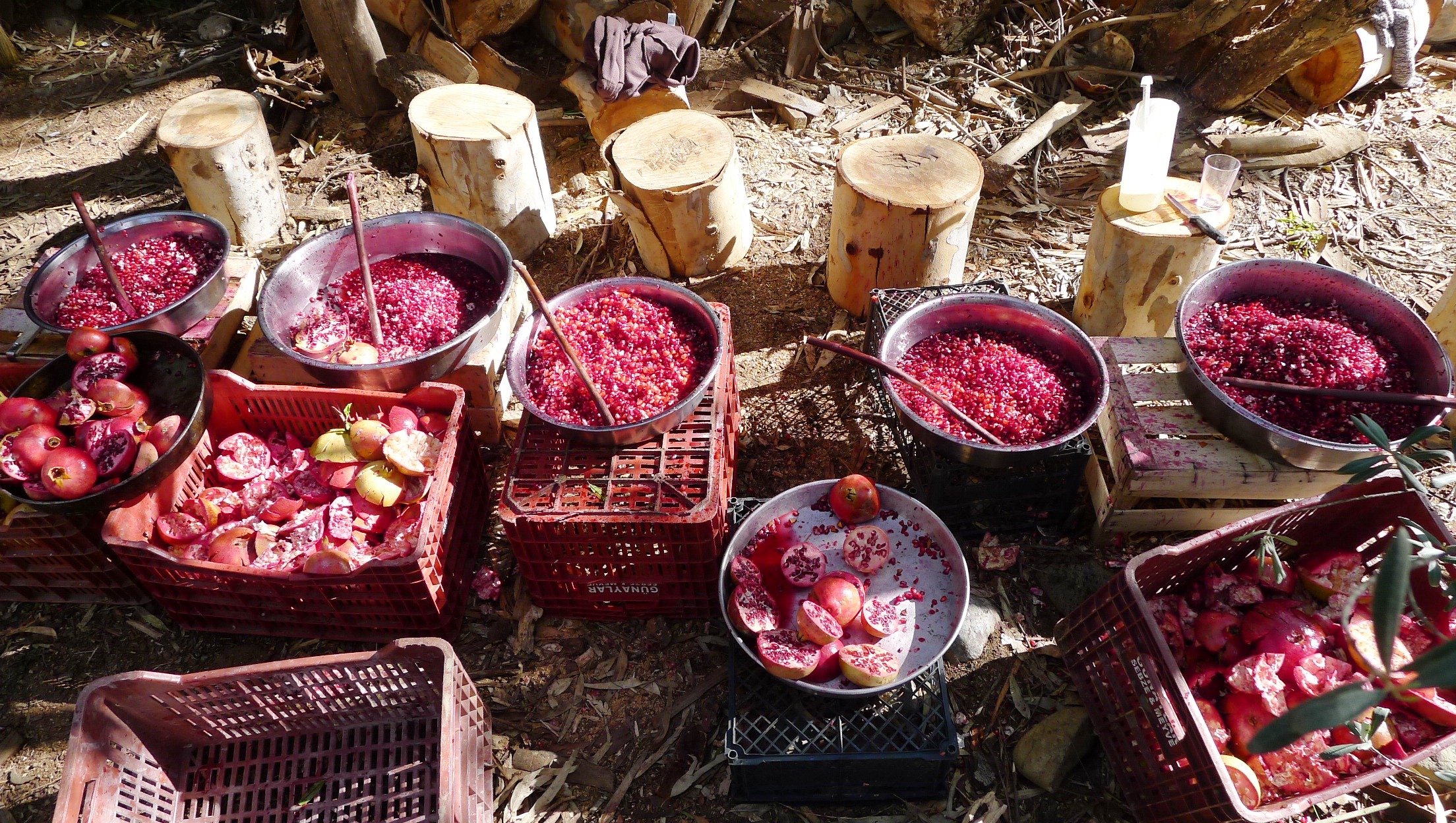
Processing pomegranates by hand to make nar ekshili sos (pomegranate reduction). Photo: Rosemary Lombard

Sticky, crimson pomegranate juice is running down my arms and dripping off my elbows. I’m stained with the joy of manual labour. It’s so satisfying, this repetitive bashing of crates and crates of halved fruit to knock out the arils, then the squeezing in a bag to extract the juice, which is then boiled over a fire for ten hours to reduce it to a dark, tart syrup, then strained through muslin into bottles.  It’s slow-going, messy, tiring work. I have blisters, purple palms. But, at the end of each day, I can see the results of my time spent. It’s nothing like the virtual world of work I mostly inhabit, where I shut down my computer and a sense of the hours and hours I have spent shunting pixels around evaporates.

For so long now, my life has felt paper-thin, no, thinner, as if I barely cast even a shadow of influence in the world, and I realise now that it is largely because of the intangible nature of the work I have been doing, which mostly involves cleaning, tidying and correcting other people’s writing, or recording their work, or facilitating their conversations… It’s all work towards actualising goals that I have deemed worthwhile; nonetheless, these are goals which are not my own. I have tried to frame them as my own, tried to see my part in the whole as indispensable, my purpose as contiguous with that of the projects’, my place as “a tiny cog in the great wheel of evolution” – that was how Billy Wilder put it, writing the words of Ninotchka played by Greta Garbo in Ernst Lubitsch’s wonderful 1939 satire of the same name.

Alas, my heart just hasn’t been convinced. I haven’t been able to shake this unbearable sense of lightness, of the unnecessary breaths I’m taking, of the lack of any other humans who truly require or desire my existence, irreplaceably, here on Earth. All this needs to change if I am to remain sane when I get back. Living with a heavenly purpose is too far beyond me. I’d be satisfied to have done with consumption, thanks. I started this blog in an attempt to make something indelible of the ephemeral. I need to do more. I’m starving.

“If I had an orchard, I’d work till I was sore.” ~ Fleet Foxes – “Helplessness Blues“.

Fethiye-20121113-01327

Sweet! A break to drink some freshly-squeezed pomegranate juice. Photo: Rosemary Lombard

Ş

audre lorde on the erotic

The erotic is a resource within each of us that lies in a deeply female and spiritual plane, firmly rooted in the power of our unexpressed or unrecognised feeling…

Of course, women so empowered are dangerous. So we are taught to separate the erotic from most vital areas of our lives other than sex…

The principal horror of any system which defines the good in terms of profit rather than in terms of human need, or which defines human need to exclusion of the psychic and emotional components of that need — the principal horror of such a system is that it robs our work of its erotic value, its erotic power and life appeal and fulfilment. Such a system reduces work to a travesty of necessities, a duty by which we earn bread or oblivion for ourselves and those we love. But this is tantamount to blinding a painter and then telling her to improve her work, and to enjoy the act of painting. It is not only next to impossible, it is also profoundly cruel.

. . . [O]nce we begin to feel deeply all the aspects of our lives, we begin to demand from ourselves and from our life-pursuits that they feel in accordance with that joy which we know ourselves to be capable of. Our erotic knowledge empowers us, becomes a lens through which we scrutinize all aspects of our existence, forcing us to evaluate those aspects honestly in terms of their relative meaning within our lives…

During World War II, we bought sealed plastic packets of white, uncolored margarine, with a tiny, intense pellet of yellow coloring perched like a topaz just inside the clear skin of the bag. We would leave the margarine out for a while to soften, and then we would pinch the little pellet to break it inside the bag, releasing the rich yellowness into the soft pale mass of margarine. Then, taking it carefully between our fingers, we would knead it gently back and forth, over and over, until the color had spread throughout the whole pound bag of margarine, thoroughly coloring it.

I find the erotic such a kernel within myself. When released from its intense and constrained pellet, it flows through and colors my life with a kind of energy that heightens and sensitizes and strengthens all my experience.

Lorde, Audre. “Uses of the Erotic: The Erotic as Power.” Sister Outsider: Essays and Speeches. Freedom, CA: Crossing Press, 1984. 53-59.

seaside towns they forgot to bomb

14 September 2005 – 01:59

Aah, Sea Point. Maybe it’s just the pheromones, or the exhaust fumes, or the soupy mist of oil from cheap takeaways, or the blinking lights, relentless through the fishy smog… Maybe it’s the conglomeration of them all… The whole place reeks of overtiredness.

Main Road, Sea Point. Photo: Rosemary Lombard

Main Road, Sea Point. Photo: Rosemary Lombard

Know how the Durban beach front feels at night? All sodium glare and humid candyfloss and hooting and “Rayban” pushers, stumbling over sprawling elephantiasis limbs; cabbagey piss and rotting elephantiasis limbs underfoot at every turn, elephantiasis limbs EVERYWHERE?

Or the water slides in Muizenberg? Ice-cream sticks and rusty fish guts and cocoa butter thick in your nostrils? Shrivelled, orange bikini grans and stubbed toes and burnt children scrambling back up, over and over, getting their money’s worth, with fresh snot to add to the circulated stream? Kinda like that.

Like a casino, or a circus, or the school parking lot half an hour before the last night of the end-of-year play. Just like that. The cement, the tar etched with residues of action, the erratic paths of people hopscotching between the pavement’s wet patches of unknown origin, beat-up cabs snaking through the gutters, cruising for someone going somewhere, doing something… you never can be certain what.

There’s an interminable vacancy in all the hyperactivity, a loneliness. A sense that most of what’s done is probably being done to keep up appearances, because it’s in the script. In bar toilets, in sighing lifts and entrance lobbies of peeling flats, people wait, unexpectantly, for something undisclosed… The sour gaggles of Jewish crones… The sweet fags in the coin-op laundrette… The salty dog walkers on the promenade… The makwerekwere… The goosefleshed trannie under the stop sign… LCD Jesus loves you, 01:31, 8°C.

It’s a frustrating place, a titillating place for anyone with even a pinch of the voyeur in them. You never know if today will be your chance to be privy to that something, to overhear the deal… Well, it’s hardly likely to be above board, is it? You daren’t blink in case you miss it, yet you virtually never get to see the loops close, experience the denouement. And your imagination goes crazy.

Oy vey, it’s a schande. Happeningness rubs your nose in it, but, from a distance, it’s too pungent, too slippery to pry open cleanly… You know your conjecture’s amusing but empty.

Romanticism breeds covetousness, even of the sordid. So, you’ve read Burroughs, Bukowski, Genet, Sade. Ballard, Palahniuk, Sartre… Your own illicit missions never feel as archetypal.

It’s like being hopelessly in love, but not being in ’40s Casablanca, you know? Like rainbow soap bubbles popping on your tongue… The bath gets cold before you stop being too distracted by the froth to immerse yourself fully.

no compromise, no order

“What he would say, he cannot say to this woman whose openness is like a wound, whose youth is not mortal yet. He cannot alter what he loves most in her, her lack of compromise, where the romance of the poems she loves still sits with ease in the real world. Outside these qualities he knows there is no order in the world.”

― Michael Ondaatje, The English Patient

love – long distance

pam's brotherMy brother started running in my mother’s womb. This is the first lie. There will be more as the story progresses, I will only own up to this one. My brother never stopped running, he was born too early, a month, a week and 3 days before the doctor’s original prophesied dates – he came tumbling out and disturbed my grandfathers’ prayer.

This would be my brother, the rest of his life. He started crawling at nine and a half months and by 13 months was being chased down the street. My parents had to hire young nannies – the one who had nursed and cared for my two sisters and I, was old and suffered from arthritis – she could never catch up with him. My brother climbed, he curled his feet on curtains and grabbed and groped his way to the top of the rail, then slinked back down again, belly first, taunting gravity. My mother screamed and cried a lot between ages 9 months and 12 – she wore a crazed nervous expression and drank sugared water every other hour.

At age two, my brother packed a plastic bag – a white one with a red ‘OK’ on it and bid us farewell. We’d just sat down for dinner, he would have closed the door behind him and maybe even pulled open the gate but he was too short to reach either handle. I watched him climb up concrete wall, scratch his knee and elbow as he fought his way up. My mother screamed at him from inside the house, my father poured himself a stiff one – my sisters and i laughed ourselves hoarse. We loved our brother, his little antics brought us much mirth.

At age 12 after many attempts to ‘run away from home’ my brother woke up screaming from a nightmare and asked ‘If I went to Lesotho, would that be such a bad thing?’

We’d never seen Lesotho, we started crying that we’d miss him – our father called a friend and my mother checked the calendar. The following year, my brother left the family for good – he moved to a place we’d only ever seen in dramas – my father was relieved, my mother made new friends and every holiday my brother had some other family to visit for the two weeks or the month.

I think he’s in Havana now, met a girl when he was in Martinique, fell in love and followed her there. He claims he makes a living climbing things – I don’t know what to believe – I’ve only ever known my brother’s back and the bottom of his foot – I’ve never met the man he is.

what i rail against, impotently, and wish i could embrace

The following excerpt from John  Berger’s Booker Prize-winning 1972 novel, G, contains devastating insight into the social/cultural meaning of being a woman in the world, and how utterly inescapable and deeply formative it is of one’s sense of self. Reading this made me nod and shake my head so hard I felt like I had whiplash afterwards.

Although this passage ostensibly deals with late nineteenth-century constructions of love and gendered identity, such tropes persist as fundamental to our conceptions now, albeit less formally and thus less obviously. So much of the pain and loneliness in my life has stemmed from an unconscious/inarticulate sense of exactly what Berger describes here and my horror and refusal of it all, played out in the choices I have made since childhood.

* * * * *

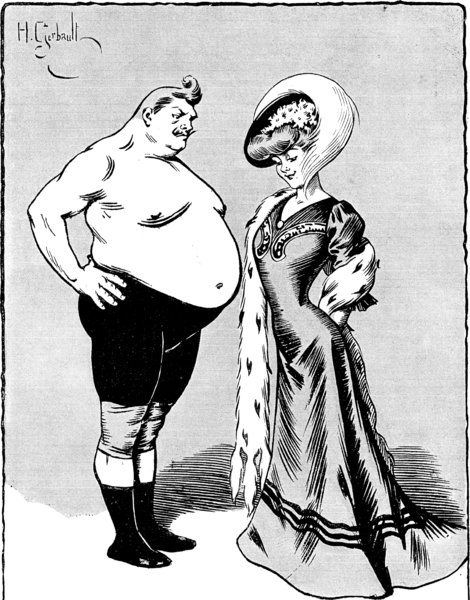
“Une Idée” – Henri Gerbault, 1907

The Situation of Women

… [T]he social presence of a woman was different in kind to that of a man. A man’s presence was dependent upon the promise of power which he embodied. If the promise was large and credible, his presence was striking. if it was small or incredible, he was found to have little presence. there were men, even many men, who were devoid of presence altogether. The promised power may have been moral, physical, temperamental, economic, social, sexual – but its object was always exterior to the man. A man’s presence suggested what he was capable of doing to you or for you.

By contrast, a woman’s presence expressed her own attitude to herself, and defined what could and could not be done to her. No woman lacked presence altogether. Her presence was manifest in her gestures, voice, opinions, expressions, clothes, chosen surroundings, taste – indeed there was nothing she could do which did not contribute to her presence.

To be born woman was to be born within an allotted and confined space, into the keeping of man. A woman’s presence developed as the precipitate of her ingenuity in living under such tutelage within such a limited cell. She furnished her cell, as it were, with her presence; not primarily in order to make it more agreeable to herself, but in the hope of persuading others to enter it.

A woman’s presence was the result of herself being split in two, and of her energy being inturned. A woman was always accompanied – except when quite alone – by her own image of herself. Whilst she was walking across a room or whilst she was weeping at the death of her father, she could not avoid envisaging herself walking or weeping. From earliest childhood she had been taught and persuaded to survey herself continually. And so she came to consider the surveyor and surveyed within her as two constituent yet always distinct elements of her identity as a woman.

A woman had to survey everything she was and everything she did because how she appeared to others, and ultimately how she appeared to men, was of crucial importance for her self-realisation. Her own sense of being in herself was supplanted by a sense of being appreciated as herself by another. Only when she was the content of another’s experience did her own life and experience seem meaningful to her. In order to live she had to install herself in another’s life.

gerbault 462px-Hensunken_i_stum_beundring

Drawing by Henri Gerbault (1863 – 1930)

Men surveyed women before treating them. Consequently how a woman appeared to a man might determine  how she would be treated. To acquire some control over this process, women had to contain it, and so they interiorised it. That part of a woman’s self which was the surveyor treated the part which was the surveyed, so as to demonstrate to others how her whole self should be treated. And this exemplary treatment of herself by herself constituted her presence. Every one of her actions, whatever its direct purpose, was also simultaneously an indication of how she should be treated.

If a woman threw a glass on the floor, this was an example of how she treated her own emotion of anger and so of how she would wish it to be treated by others. If a man had done the same, his action would only have been an expression of his anger. If a woman made good bread, this was an example of how she treated the cook in herself and accordingly of how she as a cook-woman should be treated by others. Only a man could make good bread for its own sake.

This subjunctive world of the woman, this realm of her presence, guaranteed that no action undertaken in it could ever possess full integrity; in each action there was an ambiguity which corresponded to an ambiguity in the self, divided between surveyor and surveyed. The so-called duplicity of woman was the result of the monolithic dominance of man.

A woman’s presence offered an example to others of how she would like to be treated – of how she would wish others to follow her in the way, or along the way, she treated herself. She could never cease offering this example, for it was the function of her presence. When, however, social convention or the logic of events demanded that she behave in a manner which contradicted the example she wished to give, she was said to be coquettish. Social convention insists that she should appear to reject something just said to her by a man. She turns away in apparent anger, but at the same time fingers her necklace and repeatedly lets it drop as tenderly as her own glance upon her breast.

When she is alone in her room and sure of being alone, a woman may look at herself in a mirror and put out her tongue. This makes her laugh and, on other occasions, cry.

It was with a woman’s presence that men fell in love. That part of a man which was submissive was mesmerised by the attention which she bestowed upon herself, and he dreamt of her bestowing the same attention upon himself. He imagined his own body, within her realm, being substituted for hers. This was a theme which occurred constantly in romantic poems about unrequited love. That part of a man which was masterful dreamt of possessing, not her body — this he called lust — but the variable mystery of her presence.

The presence of a woman in love could be very eloquent. the way she glanced or ran or spoke or turned to greet her lover might contain the quintessential quality of poetry. this would be obvious not only to the man she loved, but to any disinterested spectator. Why? Because the surveyor and the surveyed within herself were momentarily unified, and this unusual unity produced in her an absolute single-mindedness. The surveyor no longer surveyed. Her attitude to herself became as abandoned as she hoped her lover’s attitude to her would be. Her example was at last one of abandoning example. Only at such moments might a woman feel whole.

The state of being in love was usually short-lived — except in unhappy cases of unrequited love. Far shorter lived than the nineteenth-century romantic emphasis on the condition would lead us to believe. Sexual passion may have varied little throughout recorded history. But the account one renders to oneself about being in love is always informed and modified by the specific culture and social relations of the time.

„Würden Sie mir böse sein, wenn ich einen Kuss auf diese schöne Schulter drückte?“ „Das werden Sie ja nachher schon sehen“ (Henri Gerbault, 1901)

„Würden Sie mir böse sein, wenn ich einen Kuss auf diese schöne Schulter drückte?“ „Das werden Sie ja nachher schon sehen“ (Henri Gerbault, 1901)

For the nineteenth-century European middle classes the state of being in love was characterised by a sense of excessive uncertainty in an otherwise certain world. It was a state exempt from the promise of Progress. Its characteristic uncertainty was the result of considering the beloved as though he or she were free. Nothing that was an expression of the beloved’s wishes could be taken for granted. No single decision of the beloved could guarantee the next. Each gesture had to be read for its fresh meaning. Every arrangement became questionable until it had taken place. Doubt produced its own form of erotic stimulation: the lover became the object of the beloved’s choice of full liberty. Or so it seemed to the couple in love. In reality, the bestowing of such liberty upon the other, the assumption that the other was so free, was part of the general process of idealising and making the beloved seem unique.

Each lover believed that he or she was the willing object of the other’s unlimited freedom and, simultaneously, that his or her own freedom, so circumscribed until now, was at last and finally assured within the terms of the other’s adoration. Thus each became convinced that to marry was to free oneself. Yet as soon as a woman became convinced of this (which might be long before her formal engagement) she was no longer single-minded, no longer whole. She had to survey herself now as the future betrothed, the future wife, the future mother of X’s children.

For a woman the state of being in love was a hallucinatory interregnum between two owners, her bridegroom taking the place of her father or later, perhaps, a lover taking the place of her husband.

The surveyor-in-herself quickly became identified with the new owner. She would begin to watch herself as if she were him. What would Maurice say, she would ask, if his wife (that is me) did this? Look at me, she would address the mirror, see what Maurice’s wife is like. The surveyor-in-herself became the new owner’s agent. (A relationship which might well include as much deceit or chicanery as can be found between any proprietor and agent.)

The surveyed-within-herself became the creature of proprietor and agent, of whom both must be proud, She, the surveyed, became their social puppet and their sexual object. The surveyor made the puppet talk at dinner like a good wife. And when it seemsed to her fit, she layed the surveyed down on a bed for her proprietor to enjoy. One might suppose that when a woman conceived and gave birth, surveyor and surveyed were temporarily reunited. Perhaps sometimes this happened. But childbirth was so surrounded with superstition and horror that most women submitted to it, screaming, confused, or unconscious, as to a punishment for their intrinsic duplicity. When they emerged from their ordeal and held the child in their arms they found they were the agents of the loving mother of their husband’s child.

anaïs nin on unbearable lightness

“I am the most tired woman in the world. I am tired when I get up. Life requires an effort I cannot make. Please give me that heavy book. I need to put something heavy like that on top of my head. I have to place my feet under the pillows always, so as to be able to stay on earth. Otherwise I feel myself going away, going away at a tremendous speed, on account of my lightness… As soon as I utter a phrase my sincerity dies, becomes a lie whose coldness chills me. Don’t say anything, because I see that you understand me, and I am afraid of your understanding. I have such a fear of finding another like myself, and such a desire to find one! I am so utterly lonely, but I also have such a fear that my isolation be broken through, and I no longer be the head and ruler of my universe. I am in great terror of your understanding by which you penetrate into my world; and then I stand revealed and I have to share my kingdom with you.”

~ Anaïs Nin

john berger – “les petites chaises”

Do you think that flying round repeatedly in a circle, as happens on a certain kind of roundabout, do you think this might have a temporary effect – for purely physiological reasons – on the brain?

It can induce a sense of giddiness…

I mean more. Could character temporarily be changed by it?

Please explain, said Monsieur Hennequin, what you have in mind.
swing

At these fairs there is a special kind of roundabout, a combination of a roundabout and a series of swings. The seats are suspended and when they turn –

A centrifugal force comes into play, said Monsieur Hennequin, and they are thrown outwards. I have seen the kind of which you are speaking. We call them les petites chaises.

Good. Now you can control – up to a point – how you swing outwards and in what direction. It’s all a question of how far you lean back, how high you push your feet up, how you swing with your shoulders and how you pull with your arms on the chains either side. It’s not very different from what every girl learns on an ordinary swing.

I know, said Madame Hennequin.

The game which most of the riders play as soon as the roundabout starts to turn, is to try to swing themselves near enough to whoever is behind or in front of them so as to join hands with them and then to swing together, as a pair, holding on to each other’s chains. It’s quite difficult to do this, often only their fingertips touch –

The seats are spaced in such a way, interrupted Monsieur Hennequin, to ensure that they never come into contact. Otherwise it could be dangerous.

Exactly. But everyone who rides on this kind of roundabout is transformed. As soon as it begins to turn and they begin to gain height as they swing out, their faces and expressions are changed. They leave the earth behind them, they throw back their heads and their feet go up towards the sky. I doubt whether they even hear the music which is playing. Each tries to take hold of the arm trailing in front of him, they cry out in delight as they gather speed, and the faster they go, the freer they play, as they rise and fall, separate and converge. The pairs who succeed in holding on to one another fly straighter and higher than the rest. I have watched this many times and nobody escapes the transformation. The shy become bold. The awkward become graceful. Then when it stops most of them revert to their old selves. As soon as their feet touch the ground, their expressions again become suspicious or closed or resigned. And when they walk away from the roundabout, it is almost impossible to believe that they are the same beings, men and women, who a moment ago were so free and abandoned in the air.

~ from G by John Berger (1972)

‘look, it’s a [ ]!!’

‘look, it’s a [ ]!!’

[ ] are to be eaten, to be chewed with molars as if one does not have incisors. [ ] should be popped into the mouth, to bounce off the palate and land between ready mincers. [ ] ought to be chewed like cashews, until all there is, is a messy mushy pulp that’s easy to swallow. [ ] are not a fruit. there are no [ ] trees or shrubs. [ ] do not grow like creepers, scaling walls and throttling other species in a race for the sun.

one can cook [ ] although it has not been established whether or not [ ] are raw or ready. [ ] might not even be plant life for this too has not been established. [ ] might after-all be a hibernating species of some animal too timid to uncurl in our hands. wait, do [ ] fit into ones palm? are [ ] not bigger in size?

[ ] might be better for building things like cars and homes and scooters. [ ] might even be better suited to pulling boogers from hairy nostrils. [ ] are to be examined by a highly skilled childless task force made up, in equal parts, of scientists, soldiers, sunday school teachers and salmon farmers. [ ] might after all be bombs and it would make better sense to have them detonate in the hands of these lunatics. no?

but [ ] are to be eaten i am sure.

——- ———- ———-

what [ ] are you talking about?

[ ] are orange/blue, this is the first clue. in a quite suburb, north of carmarthenshire, [ ] have been reported to be quite the nuisance. residents are in disagreement as to how it is that [ ] are causing the reported nuisance. some home owners claim to hear [ ] wailing clear and true into the night, others claim [ ] run amok in the streets, up turning bins and smashing in store fronts, some seniors have even reported [ ] claims of sexual harassment from [ ], especially when they try to cross the road close to busy intersections.

the mayoral spokesperson for the district of bin has issued a statement that all allegations made against [ ] will be treated with the highest priority. The municipality remains confused however by how it is that [ ] could execute half the crimes laid against [ ].

‘it is known that [ ] have not the legs, mouths or arms to throw things, scream or grope the elderly. that littler still is understood of [ ] makes these cases harder to prosecute. are [ ] not a single body? are [ ] more like us the more we know them or less so?’

[ ] are to be left in the bogs, of this i am sure.

mowgli and raksha

are the stories told by grandma on a moonless night less true than those told in the moonlight?
are stories spun with hunger-sour spit less sweet than those spat by a fat belly grandma?
how much does spittle matter in the natter of friends?
and like that we were sent to bed, to cuddle our empty tums to suck on our thinning thumbs.

“imagination has turned into hallucination”

The following are excerpts from Vilém Flusser’s Towards a Philosophy of Photography (London: Reaktion Books, 2000).

The Image
Images are mediations between the world and human beings. Human beings ‘ex-ist’, i.e. the world is not immediately accessible to them and therefore images are needed to make it comprehensible. However, as soon as this happens, images come between the world and human beings. They are supposed to be maps but they turn into screens: Instead of representing the world, they obscure it until human beings’ lives finally become a function of the images they create. Human beings cease to decode the images and instead project them, still encoded, into the world ‘out there’, which meanwhile itself becomes like an image – a context of scenes, of state of things. This reversal of function of the image can be called ‘idolatry’; we can observe the process at work in the present day: The technical images currently all around us are in the process of magically reconstructing our ‘reality’ and turning it into a ‘global image scenario’. Essentially this is a question of ‘amnesia’. Human beings forget they created the images in order to orient themselves in the world. Since they are no longer able to decode them, their lives become a function of their own images: Imagination has turned into hallucination. (pp 9-10)

22hr38min [photo: Niklas Zimmer]C-type print 120x99,4cm (Ed.3) and 60x49,7cm (Ed.7)

22hr38min [photo: Niklas Zimmer]
C-type print 120×99,4cm (Ed.3) and 60×49,7cm (Ed.7)

The struggle of writing against the image – historical consciousness against magic – runs throughout history. With writing, a new ability was born called ‘conceptual thinking’ which consisted of abstracting lines from surfaces, i.e. producing and decoding them. Conceptual thought is more abstract than imaginative thought as all dimensions are abstract from phenomena – with the exception of straight lines. Thus with the invention of writing, human beings took one step further back from the world. Texts do not signify the world; they signify the images they tear up. Hence, to decode texts means to discover the images signified by them. The intention of texts is to explain images, while that of concepts is to make ideas comprehensible. In this way, texts are a metacode of images.

This raises the question of the relationship between texts and images – a crucial question for history. In the medieval period, there appears to have been a struggle on the part of Christianity, faithful to the text, against idolaters or pagans; in modern times, a struggle on the part of textual science against image-bound ideologies. The struggle is a dialectical one. To the extent that Christianity struggled against paganism, it absorbed images and itself became pagan; to the extent that science struggled against ideologies, it absorbed ideas and itself became ideological. The explanation for this is as follows: Texts admittedly explain images in order to explain them away, but images also illuminate texts in order to make them comprehensible. Conceptual thinking admittedly analyze magical thought in order to clear it out of the way, but magical thought creeps into conceptual thought so as to bestow significance on it. In the course of this dialectical process, conceptual and imaginative thought mutually reinforce one another. In other words, images become more and more conceptual, texts more and more imaginative. Nowadays, the greatest conceptual abstraction is to be found in conceptual images (in computer images, for example); the greatest imagination is to be found in scientific texts. Thus, behind one’s back, the hierarchy of codes is overturned. Texts, originally a metacode of images, can themselves have images as a metacode.

That is not all, however. Writing itself is a mediation – just like images – and is subject to the same internal dialectic. In this way, it is not only externally in conflict with images but is also torn apart by an internal conflict. If it is the intention of writing to mediate between human beings and their images, it can also obscure images instead of representing them and insinuate itself between human beings and their images. If this happens, human beings become unable to decode their texts and reconstruct the images signified in them. If the texts, however, become incomprehensible as images, human beings’ lives become a function of their texts. There arises a state of ‘textolatry’ that is no less hallucinatory than idolatry. Examples of textolatry, of ‘faithfulness to the text’, are Christianity and Marxism. Texts are then projected into the world out there, and the world is experienced, known and evaluated as a function of these texts. A particularly impressive example of the incomprehensible nature of texts it provided nowadays by scientific discourse. Any ideas we may have of the scientific universe (signified by these texts) are unsound: If we do form ideas about scientific discourse, we have decoded it ‘wrongly’: anyone who tries to imagine anything, for example, using the equation of the theory of relativity, has not understood it. But as, in the end, all concepts signify ideas, the scientific, incomprehensible universe is an ’empty’ universe.

Textolatry reached a critical level in the nineteenth century. To be exact, with it history came to an end. History, in the precise meaning of the world, is a progressive transcoding of images into concepts, a progressive elucidation of ideas, a progressive disenchantment (taking the magic out of things), a progressive process of comprehension. If texts become incomprehensible, however, there is nothing left to explain, and history has come to an end. During this crisis of texts, technical images were invented: in order to make texts comprehensible again, to put them under a magic spell – to overcome the crisis of history. (pp 11 – 13)

++++++++++

To summarize: Photographs are received as objects without value that everyone can produce and that everyone can do what they like with. In fact, however, we are manipulated by photographs and programmed to act in a ritual fashion in the service of a feedback mechanism for the benefit of cameras. Photographs suppress our critical awareness in order to make us forget the mindless absurdity of the process of functionality, and it is only thanks to this suppression that functionality is possible at all. Thus photographs form a magic circle around us in the shape of the photographic universe. What we need is to break this circle. (pg 64)

++++++++++

Why a Philosophy of Photography is Necessary
With one exception: so-called experimental photographers – those photographers in the sense of the word intended here. They are conscious that image, apparatus, program and information are the basic problems that they have to come to terms with. They are in fact consciously attempting to create unpredictable information, i.e. to release themselves from the camera, and to place within the image something that is not in its program. They know they are playing against the camera. Yet even they are not conscious of the consequence of their practice: They are not aware that they are attempting to address the question of freedom in the context of apparatus in general.  (pg 81)

A philosophy of photography is necessary for raising photographic practice to the level of consciousness, and this is again because this practice gives rise to a model of freedom in the post-industrial context in general. A philosophy of photography must reveal the fact that there is no place for human freedom within the area of automated, programmed and programming apparatuses, in order finally to show a way in which it is nevertheless possible to open up a space for freedom. The task of a philosophy of photography is to reflect upon this possibility of freedom  – and thus its significance – in a world dominated by apparatuses; to reflect upon the ways in which, despite everything, it is possible for human beings to give significance to their lives in face of the chance necessity of death. Such a philosophy is necessary because it is the only form of revolution left open to us. (pp 81-82)

Read more excerpts from Flusser’s text HERE.

on being human

Being human is a raw experience. I have bouts of not feeling fully human. It’s always connected to a horrible sensation of being very distant from my body, like I’m disintegrating. I feel like this today. I think it is the result of too much time alone in thought and on the internet this weekend. I look on my body’s workings numbly, from a great distance, as though through the wrong end of a telescope. My hand resting on the mouse is a heavy foreign instrument. When I walk around town, I feel very far from everything and everyone. People’s voices, including my own when I speak, come at me down a funnel. It’s hard to get work done in such a state. It takes great effort to appear coordinated.

I slipped and fell and gashed my shin open the other day. It felt so good, the sting and the blood oozing out, like proof of real contact with something outside myself. I noticed that I felt more alive than in weeks, as if I had been pulled back into my body at the moment of impact.

14 April, 2009

joan didion on life and death

joan didion“I’m not telling you to make the world better, because I don’t think that progress is necessarily part of the package. I’m just telling you to live in it. Not just to endure it, not just to suffer it, not just to pass through it, but to live in it. To look at it. To try to get the picture. To live recklessly. To take chances. To make your own work and take pride in it. To seize the moment. And if you ask me why you should bother to do that, I could tell you that the grave’s a fine and private place, but none I think do there embrace. Nor do they sing there, or write, or argue, or see the tidal bore on the Amazon, or touch their children. And that’s what there is to do and get it while you can and good luck at it.”

~ Joan Didion,  from a commencement speech she gave at the University of California in 1975.

alice (jan svankmajer, 1988)

In Alice, a little girl follows a white rabbit into a world where nothing is quite what it seems. Where Czech surrealist Švankmajer’s Alice differs from other adaptations of Lewis Carroll’s Alice in Wonderland is that it explores the book’s darker side as well, thereby remaining faithful to the tone of uneasy confusion that pervades the original story. A live-action Alice (Kristyna Kohoutova) inhabits a Wonderland that teems with threatening stop-motion characters. Švankmajer’s visual canniness and piercing psychological insight permeate the film with a menacing dream-logic. Curiouser and curiouser.

Watch the rest of the film here!

to go on

“To go on means going from here, means finding me, losing me, vanishing and beginning again, a stranger first, then little by little the same as always, in another place, where I shall say I have always been, of which I shall know nothing, being incapable of seeing, moving, thinking, speaking, but of which little by little, in spite of these handicaps, I shall begin to know something, just enough for it to turn out to be the same place as always, the same which seems made for me and does not want me, which I seem to want and do not want, take your choice, which spews me out or swallows me up, I’ll never know, which is perhaps merely the inside of my distant skull where once I wandered, now am fixed, lost for tininess, or straining against the walls, with my head, my hands, my feet, my back, and ever murmuring my old stories, my old story, as if it were the first time.”

~ Samuel Beckett,  from The Unnamable

flats, fredie, fascists and franswa

It’s reassuring to know that there are areas of South Africa, only half an hour from Pretoria, which are not only out of cellphone range but are also, incredibly, not on Google maps either.
My tiny adventure happened on the Lord’s day of the week, which meant I was beyond help, because nothing is open on Sundays in rural areas; obviously, nothing untoward is supposed to happen then.
All that actually happened was that the back tyre on my motorbike went flat.

I was in Tweedespruit, north of Cullinan, visiting a beautiful valley where an elderly German couple reside. Rolf was busy sharpening his fishhooks in anticipation of catching bass when I arrived late in the morning.
He told me how he was trying to get some sort of communication going with the outside world, as there are no landlines and cellphone reception is practically non-existent. Without contact with the outside world, he cannot book clients to come and camp or hike on his pristine property, Frogs. But to establish an internet and phone connection he has to pay R15 000, quite a lot of cash … a bit of a Catch-22 situation.
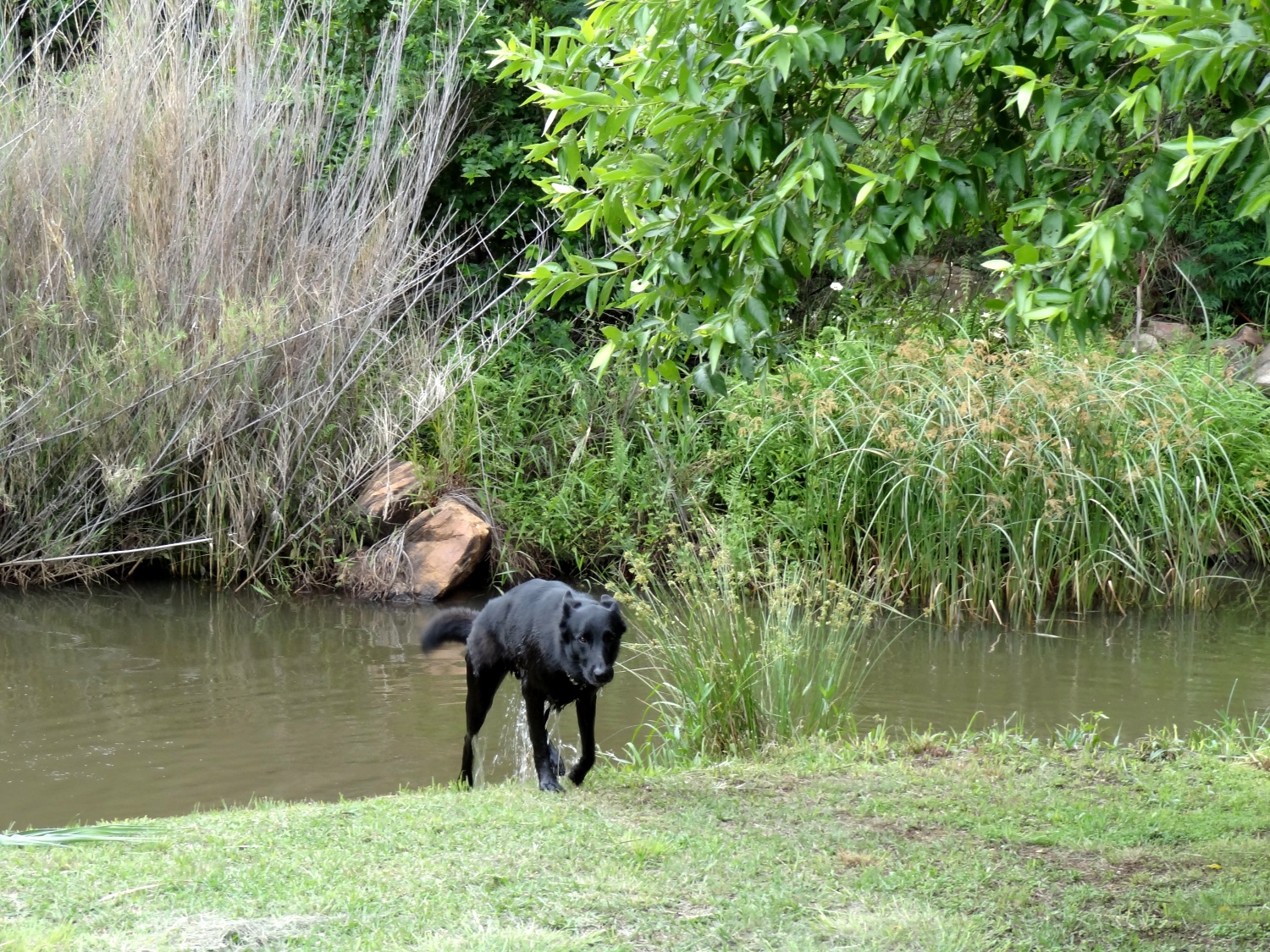
I went down to the river after drinking some home-made, delicious ginger beer made by his wife, sat by the stream, smoked a small joint, played with a stunning dog that came to join me, swam, and then meditated a tad.

I realised that the city of Joburg had once again filled my being with fear and tension, and prayed the valley would help to release it. A kingfisher came and went; I was drawn to the world of insects; once I noticed one, a large black and yellow bug, I saw many more.
Returning to my trusty steed, I noticed the back wheel was completely flat. This would normally not be a problem, but being in this remote valley, it quickly turned into a challenge of note – how to get back over 100km to Joburg, or how could I get the wheel temporarily repaired?
I returned to Rolf’s home on the bike, and was told that across the road from their tiny farmhouse lived the musician Fredie Nest, who owned a compressor which could fill my flat.
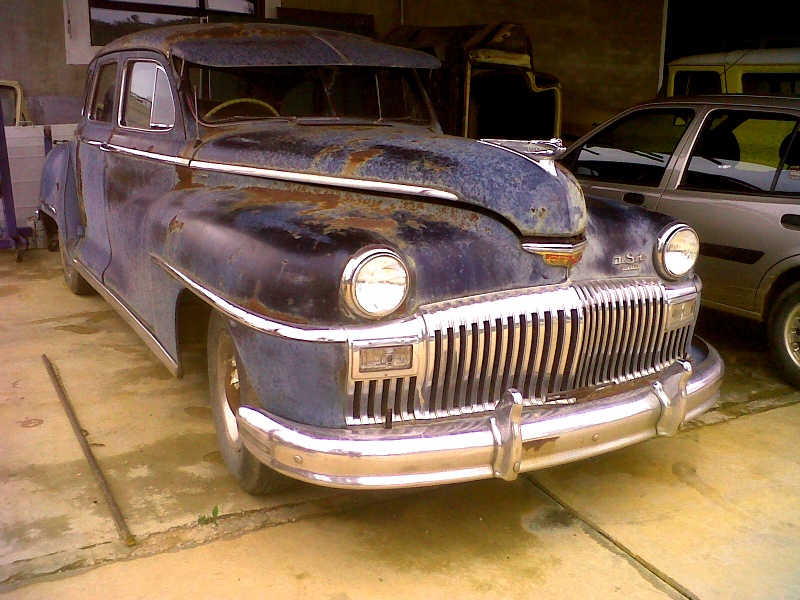
Alas, upon finding his home, the compressor was unable to fill the tyre, as the valve appeared to be truly fucked. But what a place! Ancient, incredible cars and boats stood in rows by a man-made lake, replete with a slowly revolving water wheel.

Fredie’s wife and his servant tried their best to help me, but to no avail. I was told to stand, first in the peach orchard, then next to the lake, to try and obtain cellphone reception, but my phone indicated there was not the slightest sign of contact with the outside world …
They also told me that, even if I did manage to phone someone, there was no way to give them GPS co-ordinates, as there were none for where they lived. I checked this when I got back to the online world, and true as Bob, that area of the map is just a blank: no roads, streams etc.
So I drove to Cullinan, to see if anyone there could help fix the tyre. The bike handled the flat tyre quite well, and though I braced myself for a fall at any moment, I was able to get up to about 60km/h once I hit the tar roads.
In Cullinan I was directed to a disheveled smallholding, but the tyre repair business there had closed, and there was not so much as a puncture repair kit left – just one patch, but no glue to hold it in place.
One of the guys who had gathered around my bike suggested I ride to Rayton, about 10km from Cullinan, and buy a puncture repair spray, which fills your tyre with a foam which is supposed to get you to get to your destination. This I dutifully did, along with a miniature crew of helpful petrol attendants, but the spray just blossomed out of the bottom of the valve onto the garage concrete and did no good at all. All the repair places were closed of course, it being Sunday.
So I rode to Pretoria, where a friend of ours stays, and from there I phoned my insurance company, who sent a roadside assistance crew to get me to Joburg. Retha, who had just got back from India, told me how she and her partner got stuck in Mumbai. Apparently the guy in charge died, and the whole city came to a standstill – even the ATMs closed.
Bal Thackeray had over two million people at his funeral, many of them weeping openly, yet he was a man who publicly proclaimed his admiration of Hitler and who had made statements like “Muslims are spreading like a cancer and should be operated on like a cancer”. I have never understood how fascists arouse such love from the general public. It’s like Zuma, he just can’t do any wrong, no matter how long the list of mistakes he makes gets.


Franswa – a man with a pronounced Malmsbury “brrrray” arrived with his wife and a trailer, and we set off for my home, with her sitting in the back of the tiny, stuttering bakkie, next to the tools and cans of petrol; Retha gave her a cushion to ease the trip.
Along the way Frrrranswa told me of his job – he gets R50 per job, while his boss, who owns the car, makes R300 minus costs – and has to be on standby 24 hours a day. He gets called out to Mamelodi township in the middle of the night. Big guys phone me because they are too lazy to fix a flat, he told me. Anyway, he said, this job is better than sitting at home just drinking beerrrr.
And he often gets tips. But, after sitting for half an hour on the freeway waiting for an accident to be cleared from the road, I was so tired and hungry after five hours of nursing my bike home, and so distracted by the paperwork I had to fill in for being towed, that I forgot to tip him.
I did however find a video by Fredie Nest, called Krummelpap. Check it out on http://www.youtube.com/watch?v=1Qwt4c4FnNQ!

Some things just never change in SA!

he is on a journey, during the night…

‘He is on a journey, during the night, the end of which keeps receding. He has a sense of the danger, of the loss that the pseudo-object attracting him represents for him, but he cannot help taking the risk at the very moment he sets himself apart. And the more he strays, the more he is saved.’

– Julia Kristeva, 1982

literary cats

There are cats and cats. – Denis Diderot
Patricia Highsmith with “Ripley”
 W.H. Auden with “Pangur”
“Pangur, white Pangur, How happy we are
Alone together, scholar and cat.” 
 Aldous Huxley with “Limbo”
“No man ever dared to manifest his boredom so insolently as does a Siamese tomcat when he yawns in the face of his amorously importunate wife.” – Aldous Huxley
Sylvia Plath with “Daddy”
“And I a smiling woman. 
I am only thirty. 
And like the cat I have nine times to die.”
Doris Lessing with “Black Madonna”
 Samuel Beckett with “Murphy” and “Watt”
 Mark Twain with “Huckleberry”
George Bernard Shaw with “Pygmalion”
 William Carlos Williams with “Adam and Eve”
As the cat
by William Carlos Williams
As the cat
climbed over
the top ofthe jamcloset
first the right
forefootcarefully
then the hind
stepped down
into the pit of
the empty
flowerpot
 Gore Vidal with “Caligula”
 Randall Jarrell with “Little Friend”
Edward Gorey with “Harp, Brown and Company”
 Ezra Pound with his three cats (also tried for high treason after the war)
Tame Cat
by Ezra Pound
It rests me to be among beautiful women
Why should one always lie about such matters?
I repeat:
It rests me to converse with beautiful women
Even though we talk nothing but nonsense,The purring of the invisible antennae
Is both stimulating and delightful.  
 Ernest Hemingway with “Nick”
 
Ernest Hemingway had an affinity for many things, his feline companions being one of them. The “Hemingway Cat,” or polydactyl, is a feline that, instead of the normal 18 toes, has six or more toes on the front feet and sometimes an extra toe on the rear. Hemingway had many talents and interests. He was an extreme cat-lover because he admired the spirit and independence of the species. He acquired his first feline from a ship’s captain in Key West, Florida, where he made his home for many years. Today, around 60 felines live at the Ernest Hemingway Museum and Home in Key West. They are protected by the terms left in his will.  
 
 Raymond Chandler with “Big Sleep”
 Truman Capote with “Tiffany”
“She was still hugging the cat. “Poor slob,” she said, tickling his head, “poor slob without a name. It’s a little inconvenient, his not having a name. But I haven’t any right to give him one: he’ll have to wait until he belongs to somebody. We just sort of took up by the river one day, we don’t belong to each other: he’s an independent, and so am I. I don’t want to own anything until I know I’ve found the place where me and things belong together. I’m not quite sure where that is just yet. But I know what it’s like.” She smiled, and let the cat drop to the floor. “It’s like Tiffany’s,” she said.” 
Elizabeth Bishop with “Minnow”
Lullaby for the Cat
by Elizabeth BishopMinnow go to sleep and dream,
Close your great big eyes:
Round your bed Events prepare
The pleasentest surprise.Darling Minnow, drop that frown,
Just cooperate.
Not a kitten shall be drowned
In the Marxist State.Joy and Love will both be yours,
Minnow, don’t be glum.
Happy days are coming soon –
Sleep, and let them come . . .

Churchill with “Marmelade”

While many bits of trivia might be known about Winston Churchill, his love of felines isn’t necessarily one of them. Nevertheless, he owned several cats and, during his later years, was particularly fond of Jock, who was a “ginger tom” (a “marmalade cat”). During his time as PM, his best-known cat was a grey called Nelson. During a dinner at the PM’s country residence, Chequers, American war correspondent Quentin Reynolds noted Churchill as saying: “Nelson is the bravest cat I ever knew. I once saw him chase a huge dog out of the Admiralty. I decided to adopt him and name him after our great Admiral.” During dinner, Reynolds noted, “When Mrs. Churchill was not looking, the Prime Minister sneaked pieces of salmon to Nelson.” There were even rumors that Nelson sat in with his master during Cabinet meetings, and Churchill once told a colleague that Nelson was doing more than he was for the war effort.
Allen Ginsberg with “Howl”
“I saw the best cats of my generation destroyed by madness.”
 Jack Kerouac with “Tyke”
 ”Holding up my 
purring cat to the moon 
I sighed.”
 William S. Burroughs with “Junkie”
Charles Bukowski with “Factotum”
The History Of One Tough Motherfucker
by Charles Bukowski (last verse)
I shake the cat, hold him up in 
the smoky and drunken light, he’s relaxed he knows… 
it’s then that the interviews end 
although I am proud sometimes when I see the pictures 
later and there I am and there is the cat and we are photo- 
graphed together. 
he too knows it’s bullshit but that somehow it all helps.
 Don Delillo with “Mao II”
Hermann Hesse with “Narciss”
Jorge Luis Borges with “Aleph”
Julio Cortázar with “Bestiario”
 Alberto Moravia with “Agostino”
 Jospeh Brodsky with “Urania”
Haruki Murakami with Kafka
 André Bazin with “Chaplin”
 Louis-Ferdinand Céline with “Mea Culpa”
Françoise Sagan with “Brahms”
Jean-Paul Sartre with “Nothing”
Albert Camus with “Stranger”
Jaques Derrida with “Logos”
“Logos, a living, animate creature, is thus also an organism that has been engendered. An organism: a differentiated body proper, with a center and extremities, joints, a head, and feet.”   (Jaques Derrida, Plato’s Pharmacy)
 Michel Foucault with “Insanity”
Robert Frost
The cat comes into the room.
I put the cat out.
The cat comes in again.
(Robert Frost)
The Ad-dressing of Cats
by T.S. Eliot 

You've read of several kinds of Cat,
And my opinion now is that 
You should need no interpreter 
To understand their character.
You now have learned enough to see
That Cats are much like you and me
And other people whom we find
Possessed of various types of mind.
For some are same and some are mad
And some are good and some are bad
And some are better, some are worse--
But all may be described in verse.
You've seen them both at work and games,
And learnt about their proper names,
Their habits and their habitat:
But how would you ad-dress a Cat?

So first, your memory I'll jog,
And say:  A CAT IS NOT A DOG.

And you might now and then supply
Some caviare, or Strassburg Pie,
Some potted grouse, or salmon paste--
He's sure to have his personal taste.
(I know a Cat, who makes a habit
Of eating nothing else but rabbit,
And when he's finished, licks his paws
So's not to waste the onion sauce.)
A Cat's entitled to expect
These evidences of respect.
And so in time you reach your aim,
And finally call him by his NAME.

So this is this, and that is that:
And there's how you AD-DRESS A CAT.

Jean Gaumy

Beautiful pictures from writersandkitties, entry shared from Weimarart

I feel terribly ashamed. I should rename my poor cat, who was ruined to a life of cuteness with a name like Tempura! I should rename her, or add a sassy surname, like Tempura Trenchett, to regain her literary dignity.

How will she feel if she ever had to come across Jean Paul Sartre’s ghost of a cat, “Nothing”!

I only wish I thought of the idea first.

reblogged from pennysparkle
the transformations of anne sexton, poststructuralist witch

Jeremy DeVito, 2011

“The world of the fairy tale has been traditionally read as one in which anything may happen, in which all things work toward and will eventually culminate in, the ‘perfect’ fairy tale ending of ‘happily ever after.’ However, the last half-century (with the rise of literary theory in general and feminist theory in particular) has produced a degree of cynicism towards this traditional reading. Fairy tale ideology has been challenged on the grounds that it is classist, racist, and, most blatantly, sexist. Hence, such tales have found new storytellers and have been adapted in such a way as to subvert the problematic ideals of tradition and, in most cases, replace them with what is seen as a fresher, more inclusive set of values. In 1972 Anne Sexton published Transformations, a collection of poetic retellings of seventeen widely recognizable fairy tales from the Brothers Grimm, which, in the eyes of such critics as Carol Leventen, “belongs to [this] significant body of revisionist / feminist work” (137). Although these retellings doreflect a new (and distinctly female) voice, however, Sexton’s critique contains complexities that go beyond a feminist objection to patriarchal concepts of perfection and happiness. Rather, Sexton’s tales suggest that the real problem with the fairy tale is to be found in its very striving towards the non-problematic; in short, Sexton’s poems are not so much feminist re-writings as they are poststructuralist re-readings. Their aim is not to adapt the traditional in providing or implying a new (feminist) central philosophy, but rather, to strip the tales of any centre whatsoever… ”

Read the rest of DeVito´s text here

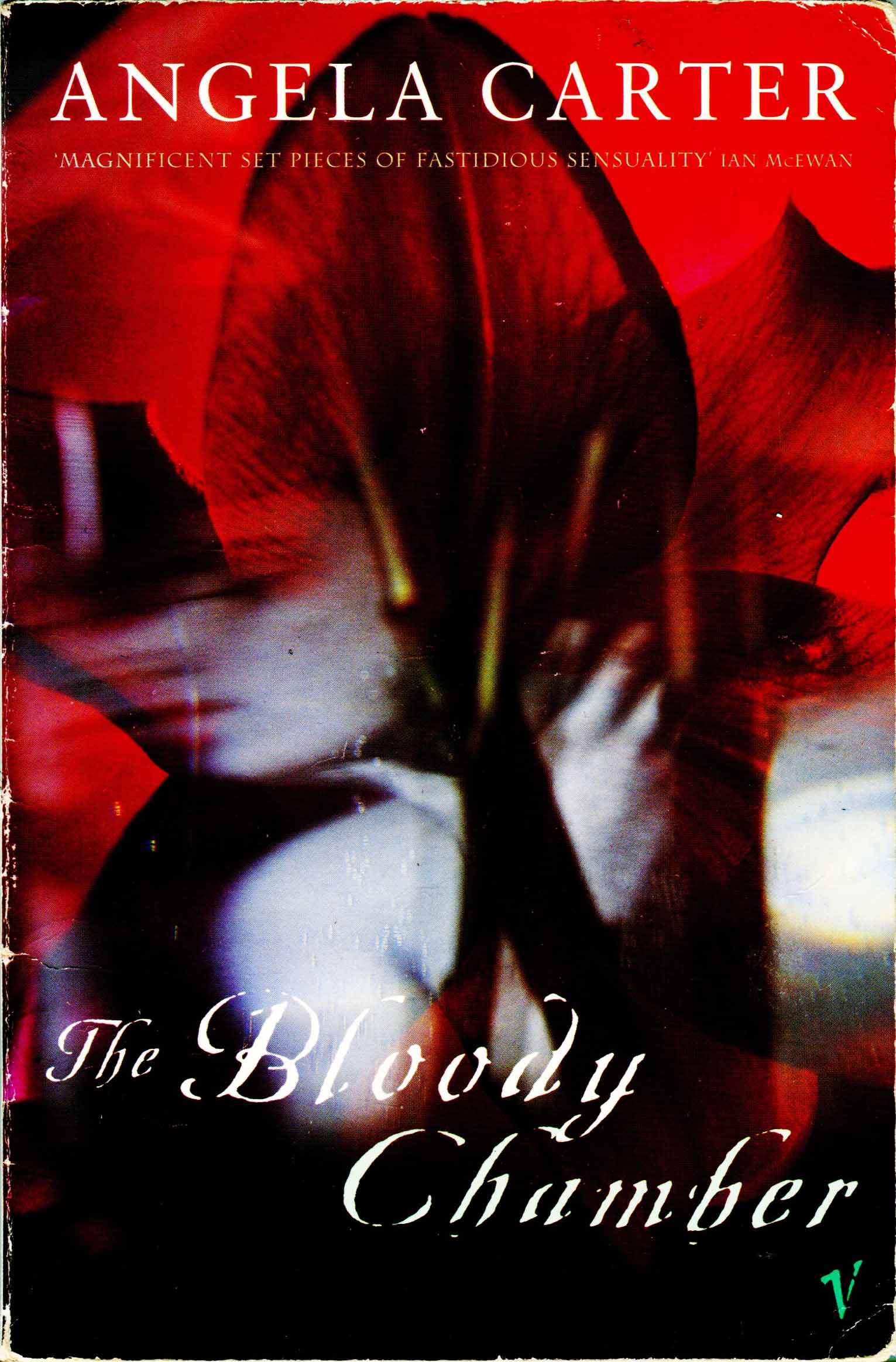
marina warner on the sorcery of angela carter


“Carter’s fairy-tale heroines reclaim the night. She rewrites the conventional script formed over centuries of acclimatizing girls—and their lovers—to a status quo of captivity and repression, and issues a manifesto for alternative ways of loving, thinking and feeling.”
 
  
“Storytelling for Angela Carter was an island full of noises and sweet airs, and like Caliban, who heard a thousand twangling instruments hum about his ears, she was tuned to an ethereal universe packed with sensations, to which she was alive with every organ. Acoustics are not the only means, however, that she draws on to convey the lucid dreams she creates in her fiction. Her imagination is spatial, an architect’s axonometric vision, as she moves us through palaces and castles, forests and tundras, dungeons and attics, tracking with us down pathways towards her various sealed depositories of secrets, those bloody chambers.”
 
  
Read Marina Warner’s article at the Paris Review Daily.

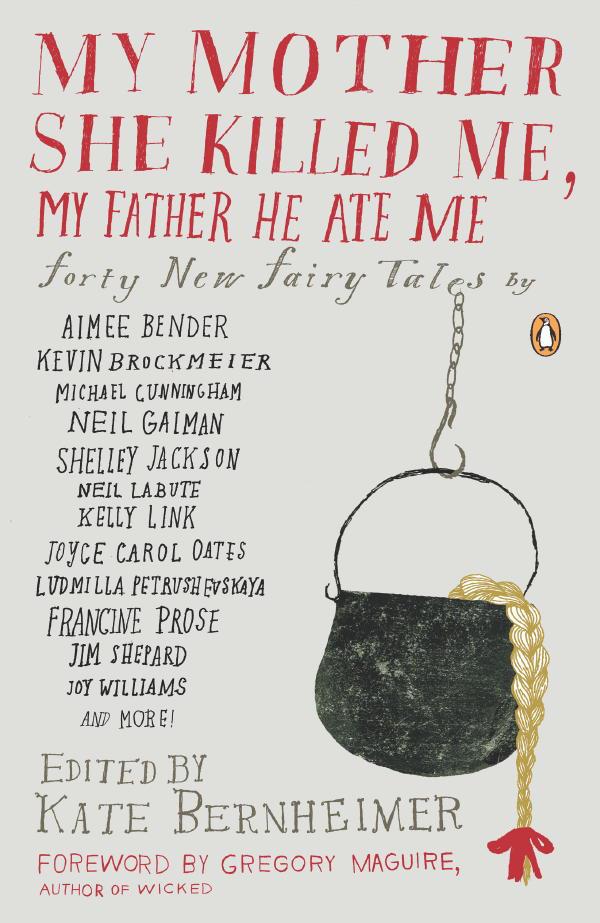
on the proliferation of magical stories


“I have a sense that a proliferation of magical stories, especially fairy tales, is correlated to a growing awareness of human separation from the wild and natural world. In fairy tales, the human and animal worlds are equal and mutually dependent. The violence, suffering and beauty are shared. Those drawn to fairy tales, perhaps, wish for a world that might live “forever after”. My work as a preservationist of fairy tales is entwined with all kinds of extinction.”

– Kate Bernheimer in the Introduction to My Mother She Killed Me, My Father He Ate Me: Forty New Fairy Tales (Penguin, 2010)

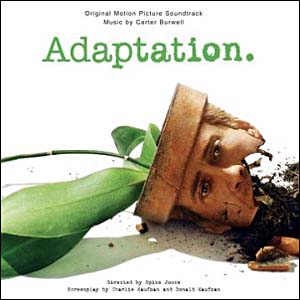
remixed from “adaptation” (2002)

JOHN LAROCHE:
You know why I like plants?

SUSAN ORLEAN:
Nuh uh.

JOHN LAROCHE:
Because they’re so mutable. Adaptation is a profound process. Means you figure out how to thrive in the world.

SUSAN ORLEAN:
[pause] Yeah but it’s easier for plants. I mean they have no memory. They just move on to whatever’s next. With a person though, adapting’s almost shameful. It’s like running away.
___

CHARLIE KAUFMAN: [voice-over]
I am pathetic, I am a loser…

ROBERT MCKEE:
So what is the substance of writing?

CHARLIE KAUFMAN: [voice-over]
I have failed, I am panicked. I’ve sold out, I am worthless, I… What the fuck am I doing here? What the fuck am I doing here? Fuck. It is my weakness, my ultimate lack of conviction that brings me here… And here I am because my jump into the abysmal well – isn’t that just a risk one takes when attempting something new? I should leave here right now. I’ll start over. I need to face this project head on and…

ROBERT MCKEE:
…and God help you if you use voice-over in your work, my friends. God help you. That’s flaccid, sloppy writing. Any idiot can write a voice-over narration to explain the thoughts of a character.
___

SUSAN ORLEAN:
There are too many ideas and things and people. Too many directions to go. I was starting to believe the reason it matters to care passionately about something, is that it whittles the world down to a more manageable size.
___

SUSAN ORLEAN:
Do you ever get lonely sometimes, Johnny?

JOHN LAROCHE:
Well, I was a weird kid. Nobody liked me. But I had this idea. If I waited long enough, someone would come around and just, you know… understand me. Like my mom, except someone else. She’d look at me and quietly say: “Yes.” Just like that. And I wouldn’t be alone anymore.
___

CHARLIE KAUFMAN:
There are no rules, Donald. And anyone who says there are is just, you know…

DONALD KAUFMAN:
Not rules, principles. McKee writes that a rule says you *must* do it this way. A principle says, this *works* and has through all remembered time.
___

JOHN LAROCHE:
Point is, what’s so wonderful is that every one of these flowers has a specific relationship with the insect that pollinates it. There’s a certain orchid looks exactly like a certain insect so the insect is drawn to this flower, its double, its soul mate, and wants nothing more than to make love to it. And after the insect flies off, spots another soul-mate flower and makes love to it, thus pollinating it. And neither the flower nor the insect will ever understand the significance of their lovemaking. I mean, how could they know that because of their little dance the world lives? But it does. By simply doing what they’re designed to do, something large and magnificent happens. In this sense they show us how to live – how the only barometer you have is your heart. How, when you spot your flower, you can’t let anything get in your way.
___

SUSAN ORLEAN:
What I came to understand is that change is not a choice. Not for a species of plant, and not for me.
___

CHARLIE KAUFMAN:
I have to go right home. I know how to finish the script now. It ends with Kaufman driving home after his lunch with Amelia, thinking he knows how to finish the script. Shit, that’s voice-over. McKee would not approve. How else can I show his thoughts? I don’t know. Oh, who cares what McKee says? It feels right. Conclusive. I wonder who’s gonna play me. Someone not too fat. I liked that Gerard Depardieu, but can he not do the accent? Anyway, it’s done. And that’s something. So: “Kaufman drives off from his encounter with Amelia, filled for the first time with hope.” I like this. This is good.

Read more about the background to the screenplay

on worshipping little pieces of blazing hell

“Still, American television is full of smiles and more and more perfect-looking teeth. Do these people want us to trust them? No. Do they want us to think they’re good people? No again. The truth is they don’t want anything from us. They just want to show us their teeth, their smiles, and admiration is all they want in return. Admiration. They want us to look at them, that’s all. Their perfect teeth, their perfect bodies, their perfect manners, as if they were constantly breaking away from the sun and they were little pieces of fire, little pieces of blazing hell, here on this planet simply to be worshipped.”
― Roberto Bolaño, 2666