unholy ghosts

cranesModernity was built upon ‘technologies that made us all ghosts’, and postmodernity could be defined as the succumbing of historical time to the spectral time of recording devices. Postmodernity screens out the spectrality, naturalising the uncanniness of the recording apparatuses. Anyone hearing a recording of their own voice or seeing a photograph of themselves is presented with a double. The uncanny thought, often repressed or forgotten, is that the recordings and the photographs will survive us; that as we contemplate them, we are put in the position of a ghost.

— From “Phonograph Blues” by k-punk, from a decade-old blog I love, HERE.


simone weil – renunciation of time

simone weil gravity and graceTime is an image of eternity, but it is also a substitute for eternity.

The miser whose treasure has been taken from him. It is some of the frozen past which he has lost. Past and future, man’s only riches.

The future is a filler of void places. Sometimes the past also plays this part (‘I used to be,’ ‘I once did this or that…’). But there are other cases when affliction makes the thought of happiness intolerable; then it robs the sufferer of his past (nessun maggior dolore…).

The past and the future hinder the wholesome effect of affliction by providing an unlimited field for imaginary elevation. That is why the renunciation of past and future is the first of all renunciations.

The present does not attain finality. Nor does the future, for it is only what will be present. We do not know this, however. If we apply to the present the point of that desire within us which corresponds to finality, it pierces right through to the eternal.

That is the use of despair which turns the attention away from the future.

When we are disappointed by a pleasure which we have been expecting and which comes, the disappointment is because we were expecting the future, and as soon as it is there it is present. We want the future to be there without ceasing to be future. This is an absurdity of which eternity alone is the cure.

Time and the cave. To come out of the cave, to be detached, means to cease to make the future our objective.

A method of purification: to pray to God, not only in secret as far as men are concerned, but with the thought that God does not exist.*

Piety with regard to the dead: to do everything for what does not exist.

The suffering caused by the death of others is due to this pain of a void and of lost equilibrium. Efforts henceforward follow without an object and therefore without a reward. If the imagination makes good this void—debasement. ‘Let the dead  bury their dead.’ And as to our own death, is it not the same? The object and the reward are in the future. Deprivation of the future—void, loss of equilibrium. That is why ‘to philosophise is to learn to die’. That is why ‘to pray is like a death’.

When pain and weariness reach the point of causing a sense of perpetuity to be born in the soul, through contemplating this perpetuity with acceptance and love, we are snatched away into eternity.

__
*God does not in fact exist in the same way as created things which form the only object of experience for our natural faculties. Therefore, contact with supernatural reality is at first felt as an experience of nothingness. [Editor’s note.]

__
Excerpted from Simone Weil‘s Gravity and Grace. First French edition 1947. Translated by Emma Crawford. English language edition 1963. Routledge and Kegan Paul, London.

fyodor tyutchev – silentium

Fedor_Tutchev

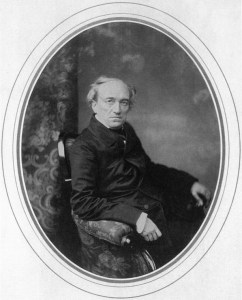
Fyodor Tyutchev, 1856.

Silentium! is an archetypal poem by Tyutchev. Written in 1830, it is remarkable for its rhythm crafted so as to make reading in silence easier than aloud. Like so many of his poems, its images are anthropomorphic and pulsing with pantheism. As one Russian critic put it, “the temporal epochs of human life, its past and its present fluctuate and vacillate in equal measure: the unstoppable current of time erodes the outline of the present.” *

Speak not, lie hidden, and conceal
the way you dream, the things you feel.
Deep in your spirit let them rise
akin to stars in crystal skies
that set before the night is blurred:
delight in them and speak no word.
How can a heart expression find?
How should another know your mind?
Will he discern what quickens you?
A thought, once uttered, is untrue.
Dimmed is the fountainhead when stirred:
drink at the source and speak no word.
Live in your inner self alone
within your soul a world has grown,
the magic of veiled thoughts that might
be blinded by the outer light,
drowned in the noise of day, unheard…
take in their song and speak no word.

(translated by Vladimir Nabokov)

molly drake – how wild the wind blows

Molly Drake (1915 – 1993) was Nick Drake‘s mother – clearly his talent was hereditary.

The acorn carries an oak tree
Sleeping but for a little while
Winter lies in the arms of spring
As a mother carries her child
And never knows
How wild the wind blows
A thought carries a universe
A seed carries a field of grain
Love lies in the arms of change
As a joy carries a pain
And no one knows
How wild the wind blows.

molly drake1

And here’s an article in The Guardian.

ppirf & one – no pussyfooting backwards (1973)

Funny story:

This is John Peel playing Fripp and Eno’s album backwards on BBC Radio One on 18th December 1973, without anyone in the studio knowing any difference. The story goes that Brian Eno was driving in his car, listening to Peel’s show, and he had the shock of his life when he heard Peel was playing his album backwards. He tried to phone the BBC to let Peel know that, but the BBC engineers thought it was an imposter playing a prank, therefore putting the phone down on him. Peel told his listeners at the end that it was an album worth buying, without realising he was playing it backwards!

P.S. Try playing this and the adjacent Japanese court music post simultaneously!

laurie anderson – the dream before (for walter benjamin)

http://youtu.be/fWuNEw0EHMc

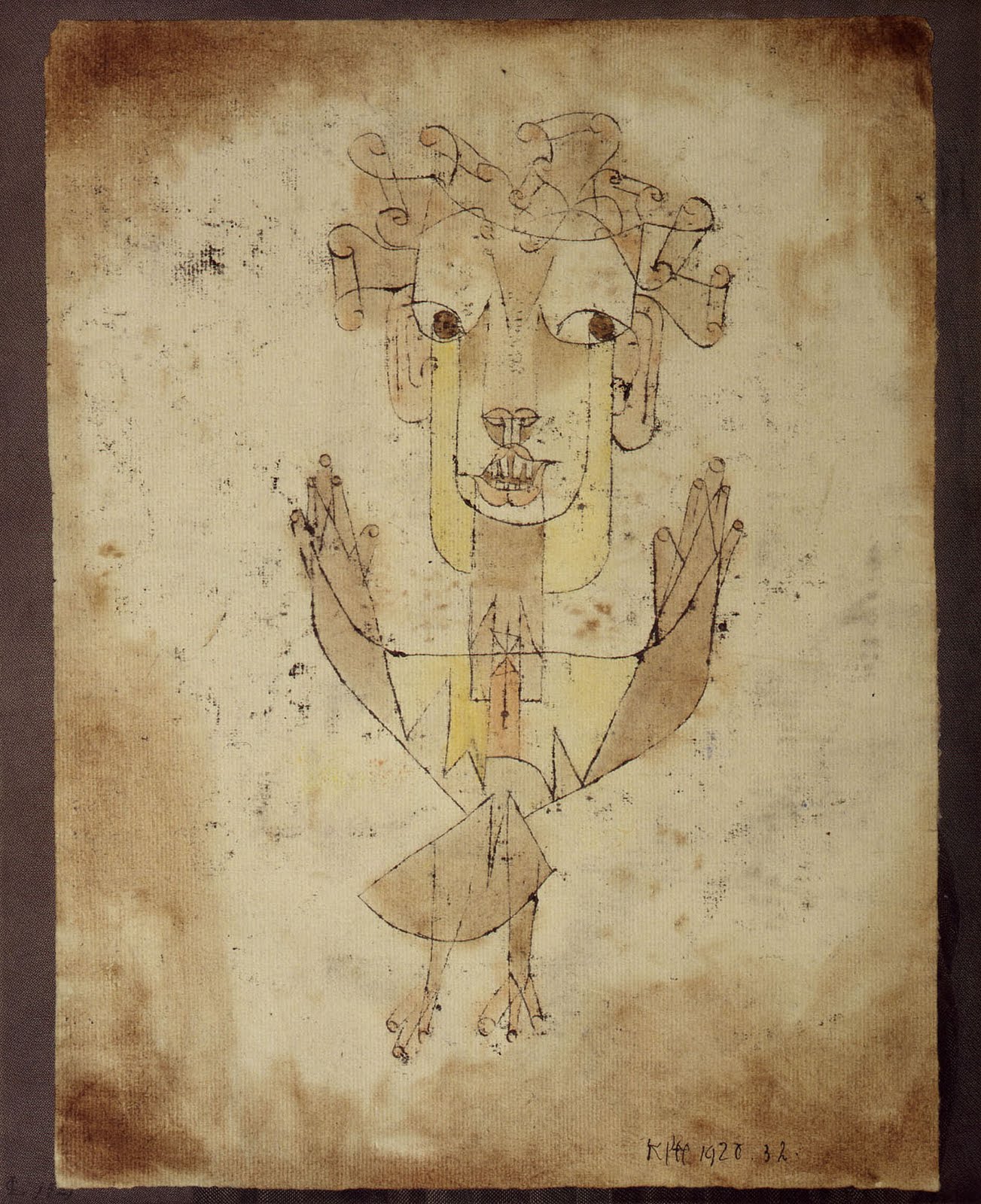
” A Paul Klee painting named Angelus Novus shows an angel looking as though he is about to move away from something he is fixedly contemplating. His eyes are staring, his mouth is open, his wings are spread. This is how one pictures the angel of history. His face is turned toward the past. Where we perceive a chain of events, he sees one single catastrophe which keeps piling wreckage upon wreckage and hurls it in front of his feet. The angel would like to stay, awaken the dead, and make whole what has been smashed. But a storm is blowing from Paradise; his wings are caught in it with such violence that the angel can no longer close them. The storm irresistibly propels him into the future to which his back is turned, while the pile of debris before him grows skyward. This storm is what we call progress.” 

— Walter Benjamin, 1940

paul-klee-angelus-novus

Paul Klee – Angelus Novus (1920)

on buried treasure (5 june 2012)

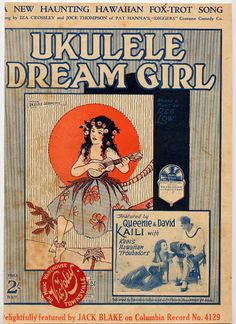
ukulele dream girlTo research (English definition): “To search for something.”

Rechercher (French definition): “To search for, to look for” and also “to search again, to look for again”.

Both “search” and “research” are the same word in French, it seems.  This makes sense: even if something was once common knowledge, after it is hidden it is no longer “there”; it has fallen from awareness. So you have to seek for it again, that which is not there. In “research”, you never know what is actually there until you find it, or there would be no need to look. You dis-cover it again, un-cover it anew.

Archives are fascinating places of preservation-with-intent to look in, and they are always tantalisingly incomplete, however exhaustive… But nothing beats the thrill of finding a treasure hoard saved by happenstance.

To “ondersoek” , in Afrikaans, is to look under other things… The term implies a palimpsestic patina, an accretion, a build-up of layers that must be lifted, peeled off to see underneath… the mother lode, the genealogy. Sometimes you know exactly what you are looking for; sometimes you don’t. You may only have a misty hope that there is anything there at all. It can be useful to lose focus, too, because you become open to other routes, other offshoots, that may take you further than your original hunch.

On Saturday, in a poky little shop in Kalk Bay, I found a trove of old sheet music: popular tunes from the 1920s and 1930s, the top few layers of it in torn, grubby disarray. A thrill ran through my fingertips as I started re-moving each sheet from the pile, putting it aside systematically. There was nothing of great interest until I got quite a way below the dusty surface layers, where most people’s patience obviously runs out (this is the trick with digging – to delve deeper, to expend more energy, more time than everyone else – om onder te soek, for there lies the gold). There was no way I could stop.

Buried in the pile, under piano exercise books, I found something that really astounded me… it almost made me shout for joy: many, many of the scores had ukulele chord diagrams on them! In all the popular sheet music I had ever been acquainted with before this, these diagrams were provided for guitar – with five lines for the five strings. These all had only four lines. It became clear to me on seeing this that, along with piano, ukulele was most likely the popular amateur instrument of choice back in the 1920s to 1940s, and not guitar. It makes sense when you listen to the jazziness of the pop arrangements of the time, and how well the chord progressions work technically with a ukulele’s tuning – GCEA. I would suppose that the guitar ousted the uke in popularity with the ascent of blues and rock and folk, in which different chords and tunings predominate, and for which the guitar’s EADGBE tuning is a more natural fit… How lovely to realise that this instrument I play very amateurishly, considered a funny curiosity by most these days, was accorded far more value in the past!oh how she could
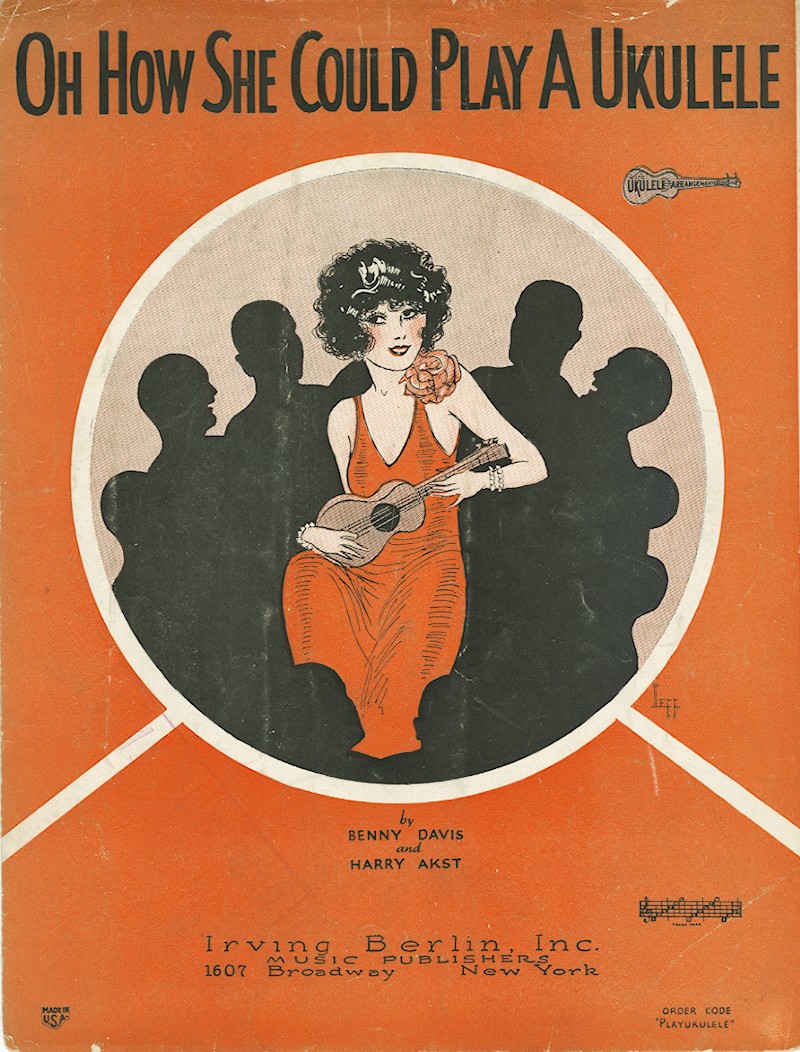
What this little discovery means for me, practically, is that I can now play all these very old jazzy tunes with no in-depth knowledge of musical theory. Even the songs I have never heard before can be found with a bit of effort on the internet, listened to, and re-played, provided someone else along the way has seen their value. As long as they were ever recorded, be it on wax cylinder or 78rpm, they may have been digitised. And, as they spin up on my hard drive, a vortex is created, opening a wormhole back to the instant that band played for the first time as the cylinder turned. And the song comes back from the dead as my fingers form the chord shapes, stutters back to life as I sing my breath into the words. Technology is powerful magic, all the more so when it takes account of its historicity.

Information technology is not only about making the future more slick and manageable; it is also about keeping the past accessible… Essentially it is about conquering linear time and space. The prolific recording of moments allows us to live unconstrained by the present moment and space we’re in, almost continuously if we so wish… (For example, people sit on Facebook as they are out for coffee with a friend. Once they have “checked in” at the cafe, they check out what other people are doing elsewhere on their phones, then frame themselves carefully for a photo in that space and capture the moment, uploading it to join the feed for others who are moving through spaces connected via radio waves to know about. Very little other than eating, drinking and self-referential preening is going on in most coffee spots.)

The sheer volume of recording that goes on now is unprecedented. Imagine reading Twitter logs in a century – every ordinary so-and-so with a Twitter account, with their own account of an event… The hyper(in)significance of every moment of our lives being documented is overwhelming to think about. How will historians of the future ever manage to filter out the noise from the signal and deduce anything?

Or, will the noise be the signal – the fragments the whole? How does this affect our memories, our critical faculties, our creativity, our relationships? New technologies confer on us immense power that should be used wisely and with sober discernment, not trivially… as that dumb what’s-her-face model Leandra found out last week when tweeting 140 racially offensive characters cost her her modelling career and dignity, with satisfying, devastating swiftness!

So, anyway, I pulled out a large wad of music sheets; slowly, carefully replaced what I didn’t take for someone else to find. Tried to conceal my excitement as I got to the till; thwacked the pile down and asked nonchalantly, “How much for this old stuff?”

“Two rand a sheet.” After counting to fifteen the old guy stopped and said “I can’t be bothered to count higher than fifteen – it’s yours for thirty bucks.”

I paid thirty rand for all of it. That’s less than a cocktail or a sandwich in the seaside cafes lining that road. So few people seem to see value in this stuff. Not even antique dealers. To them it’s just quaint ephemera.

Research involves following the intuition, the hunch that something lies hidden out of time, out of sight, out of mind: perhaps recorded imperfectly, decaying, deliberately saved. Or, like these priceless music sheets, just debris left in a place where it makes no sense to anyone who has stumbled across it yet… In danger of being lost forever if someone doesn’t come along with enough focused curiosity to re-cognise it as valuable, to think it back into meaningful connection with right now.

To me, the serendipity of finds like Saturday’s feels more than coincidental. If the person looking didn’t happen to be me there at that precise moment, it would probably have been a non-event. Even if it were the me of last year leafing through, I wouldn’t have known what I was looking for. Would have seen the music but not had a ukulele and maybe not noticed that the chord diagrams had only four strings, not five. The me of just a few months back would have seen the music with interest but not known the extent of the 78rpm archive online (having become aware of the degree of coverage of obscure songs through something I have been working on in the past month) and so left it because I didn’t know the songs and didn’t know there was a way to hear them. I don’t often look through second hand stores these days, broke as I am. On Saturday, something compelled me to step inside as I was passing. It felt as if me and the music were drawn together. It felt magical.

brian eno: imaginary landscapes (1989)

“I thought: I want to make a kind of music that had the long Now and the big Here in it, and for me that meant this idea of expanding the music out to the horizons. In terms of space, you were not aware of the edges of the music. I wanted to make a music where you just wouldn’t know what was music and what wasn’t… a music that included rather than excluded; a music that didn’t have a beginning and an end… This is the sense of making the Now longer.”

A 1989 documentary on Brian Eno’s work in ambient sound.


the known universe

MINDBLOWING.

The Known Universe takes viewers from the Himalayas through our atmosphere and the inky black of space to the afterglow of the Big Bang. Every star, planet, and quasar seen in the film is possible because of the world’s most complete four-dimensional map of the universe, the Digital Universe Atlas that is maintained and updated by astrophysicists at the American Museum of Natural History. The film, created by the Museum, was part of an exhibition, Visions of the Cosmos: From the Milky Ocean to an Evolving Universe, at the Rubin Museum of Art in Manhattan through May 2010.

Data: Digital Universe, American Museum of Natural History
Visualization Software: Uniview by SCISS
Director: Carter Emmart
Curator: Ben R. Oppenheimer
Producer: Michael Hoffman
Executive Producer: Ro Kinzler
Co-Executive Producer: Martin Brauen
Manager, Digital Universe Atlas: Brian Abbott
Music: Suke Cerulo

sounds of silence

sos
LABEL: ALGA MARGHEN (ITALY)
CATALOG #: ALGA 046LP
RELEASE DATE: 21 JANUARY 2014

Sounds of Silence is an anthology of some of the most intriguing silent tracks in recording history and includes rare works, among others, by Andy Warhol, John Lennon, Maurice Lemaitre, Sly & The Family Stone, Robert Wyatt, John Denver, Whitehouse, Orbital, Crass, Ciccone Youth, Afrika Bambaataa and of course, Yves Klein.

In their own quiet way, these silences speak volumes: they are performative, political, critical, abstract, poetic, cynical, technical, absurd. They can be intended as a memorial or a joke, a special offer, or something entirely undefined. The carefully-chosen silences of this anthology are intrinsically linked to the medium of reproduction itself and reveal its nude materiality. They expose their medium in all its facets and imperfections, including the effect of time and wear. At the most basic level, these silences are surfaces. And it is in their materiality that they distinguish themselves from the conceptual experiments of John Cage with “4’33”.

Since the 1950s, silence has found a place in the economic structure of the record industry and since then it would increasingly be appropriated by a vast array of artists in a vast array of contexts. Indeed, the silent tracks seem to know no boundaries. The LP presents the silences as they were originally recorded, preserving any imperfection that the hardware conferred upon the enterprise, without banning the possibility of being satisfying to the ear. The liner notes provide historical background for each track, revealing the stated (or presumed) motivations for these silences, while providing novel sound correspondences or interferences.

This album is meant to be played loud (or not), at any time, in any place: a true aural experience. Only 250 copies available for distribution, in a gatefold iconic sleeve. ORDER THE LP HERE.

lydia lunch – cesspool called history

Montage from film footage: Fingered and The Right Side of my Brain, attributed to Richard Kern, starring Lydia Lunch.
Music: “Cesspool Called History” (Lydia’s reciting over a version of the jazz standard, “Harlem Nocturne”), from the Lydia Lunch album, Hangover Hotel (self-released in 2001).

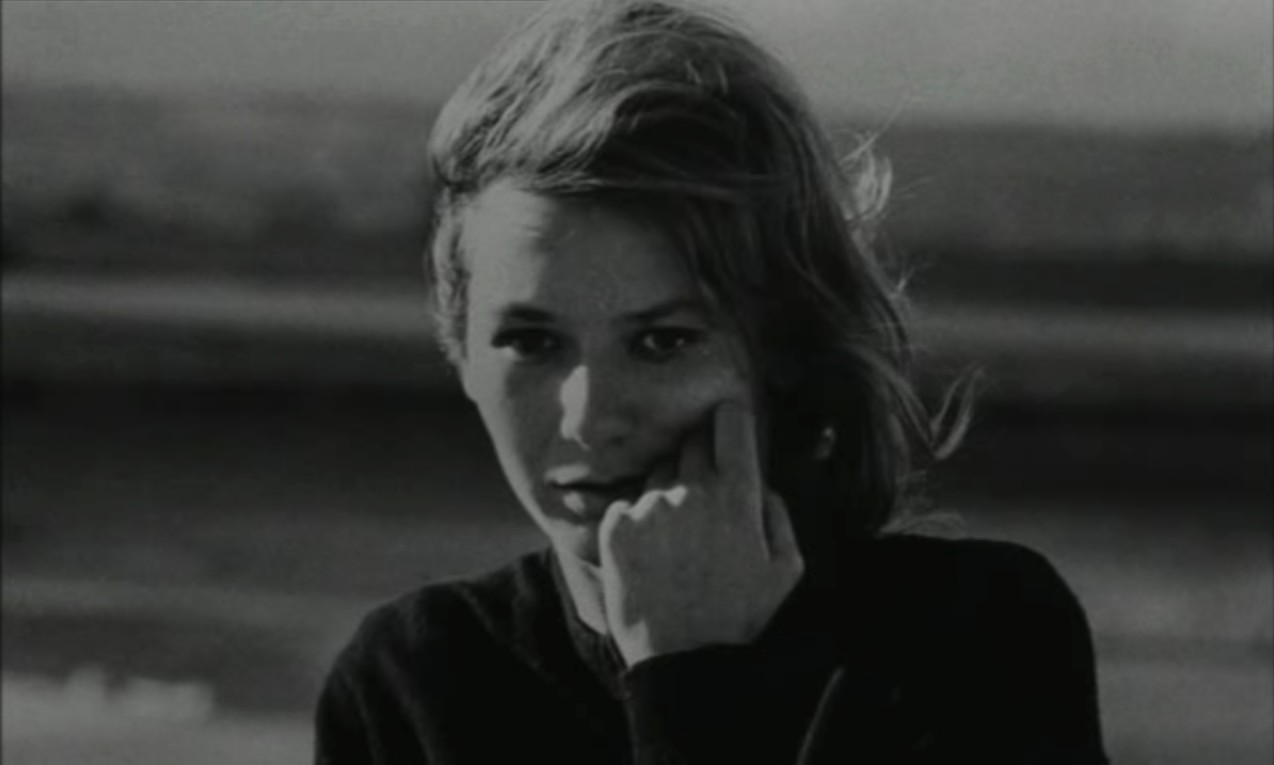
jeanne moreau – le blues indolent (1963)

Album: Jeanne Moreau chante 12 chansons de Cyrus Bassiak (1963). With footage from Tony Richardson’s Mademoiselle (1966).

Je suis indolente, mes yeux sont vagues, vagues, vagues
Et je balance mes hanches vaguement
Mes lèvres remuent, fardées de mots si vagues, vagues
Les passants hésitent en me croisant
Le temps maudit toujours les presse
Le vent si lent pour celle qui attend
Le temps me berce de paresse
Alors je chante sans fin ce vague chant

{Refrain:}
Les jeux de l’amour sont comme les jeux du hasard
Qui rêve de cœur souvent est servi de pique noir
Qui cherche un regard reçoit des rires moqueurs

Les hommes nonchalants me font des signes vagues, vagues
Et me frôlent de l’épaule vaguement
Une étreinte vague entre deux êtres vagues, vagues
C’est un peu renier le néant
Le temps maudit toujours nous presse
Le temps pourtant qui va si lentement
Le temps efface mes caresses
Alors je chante sans fin ce vague chant

{au Refrain}

Et je suis si triste quand les hommes vagues, vagues, vagues
Se reposent dans mes bras vaguement
Vaguement divaguent dans leur sommeil si vague, vague
Quand ils dorment, ils ressemblent aux enfants
Le temps maudit toujours m’oppresse
Le temps qui va son lent balancement
Le temps emporte ma tendresse
Alors je chante sans fin ce vague chant

After the jump, here’s a vaguely crappy semi-automatic translation of the lyrics. It’s a hard song to translate because of the pun on the French word “vague” – wave (the motion), wave (the gesture), vague (indeterminate)…
Continue reading

louise gluck – time

There was too much, always, then too little.
Childhood: sickness.
By the side of the bed I had a little bell —
at the other end of the bell, my mother.

Sickness, gray rain. the dogs slept through it. They slept on the bed,
at the end of it, and it seemed to me they understood
about childhood: best to remain unconscious.

The rain made gray slats on the windows.
I sat with my book, the little bell beside me.
Without hearing a voice, I apprenticed myself to a voice.
Without seeing any sign of the spirit, I determined
to live in the spirit.

The rain faded in and out.
Month after month, in the space of a day.
Things became dreams; dreams became things.

Then I was well; the bell went back to the cupboard.
The rain ended. The dogs stood at the door,
panting to go outside.

I was well, then I was an adult.
And time went on — it was like the rain,
so much, so much, as though it was a weight that couldn’t be moved.

I was a child, half sleeping.
I was sick; I was protected.
And I lived in the world of the spirit,
the world of gray rain,
the lost, the remembered.

Then suddenly the sun was shining.
And time went on, even when there was almost none left.
And the perceived became the remembered,
the remembered, the perceived.

__
From The Seven Ages (Ecco/Harper Collins, 2001)

“danielle”

This is so trippy.

©2013 Anthony Cerniello

“I attempted to create a person in order to emulate the aging process. The idea was that something is happening but you can’t see it but you can feel it, like aging itself.”

Still Photographer: Keith Sirchio
Animator: Nathan Meier
Animator: Edmund Earle
Nuke Artist: George Cuddy
Music: Mark Reveley

Find out more about the creative process HERE.

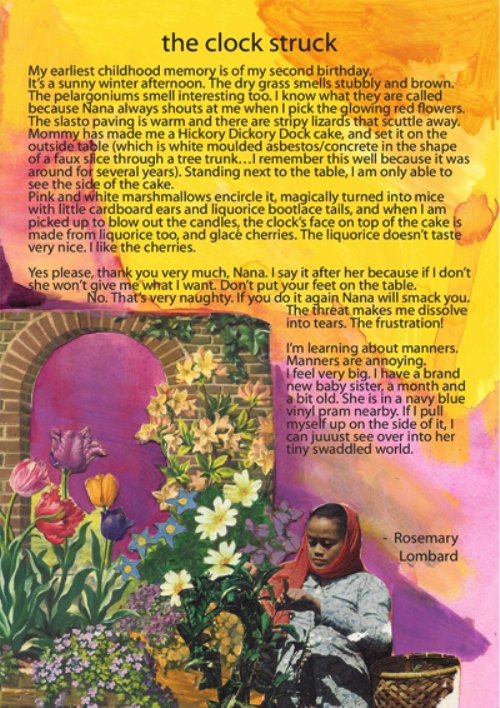
cherry bomb – the clock struck

fleurmach7rose

This is a page taken from FLEURZINE, a zine curated and illustrated by Julia Mary Grey. You can go and download this beautiful work of art for free on her site, HERE.

The name was inspired by Fleurmach, and six pieces of writing from this blog appear in the publication. This piece is by Fleurmach curator Cherry Bomb and was first posted HERE.

on being here, now

The approach of a man’s life out of the past is history, and the approach of time out of the future is mystery. Their meeting is the present, and it is consciousness, the only time life is alive. The endless wonder of this meeting is what causes the mind, in its inward liberty of a frozen morning, to turn back and question and remember. The world is full of places. Why is it that I am here?

— Wendell Berry, from The Long-Legged House

pablo neruda – too many names

32-Eruption

Albane Simon – ‘Eruption’

Mondays are meshed with Tuesdays
and the week with the whole year.
Time cannot be cut
with your weary scissors,
and all the names of the day
are washed out by the waters of night.

No one can claim the name of Pedro,
nobody is Rosa or Maria,
all of us are dust or sand,
all of us are rain under rain.
They have spoken to me of Venezuelas,
of Chiles and of Paraguays;
I have no idea what they are saying.
I know only the skin of the earth
and I know it is without a name.

When I lived amongst the roots
they pleased me more than flowers did,
and when I spoke to a stone
it rang like a bell.

It is so long, the spring
which goes on all winter.
Time lost its shoes.
A year lasts four centuries.

When I sleep every night,
what am I called or not called?
And when I wake, who am I
if I was not I while I slept?

This means to say that scarcely
have we landed into life
than we come as if new-born;
let us not fill our mouths
with so many faltering names,
with so many sad formalities,
with so many pompous letters,
with so much of yours and mine,
with so much signing of papers.

I have a mind to confuse things,
unite them, bring them to birth,
mix them up, undress them,
until the light of the world
has the oneness of the ocean,
a generous, vast wholeness,
a crackling, living fragrance.

waving goodbye for hello

today we buy time
we find a pin
for the sun
to hold it up longer
in the sky
we fool an entire population
that it is still midday
when she has long departed
we purchase that hour past
and do nothing in it
but sleep
and dream of more days to sleep and sleep and sleep and sleep and sleep and sleep and sleep
nuzzling her forever
in that sleep
forever in that sleep.