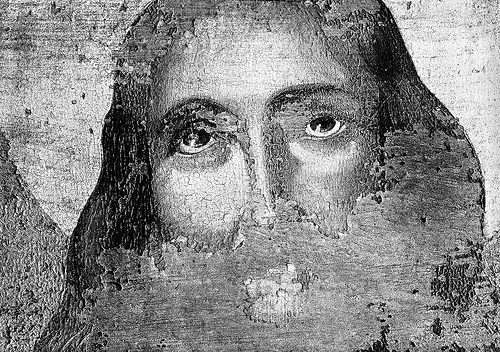
mind the static

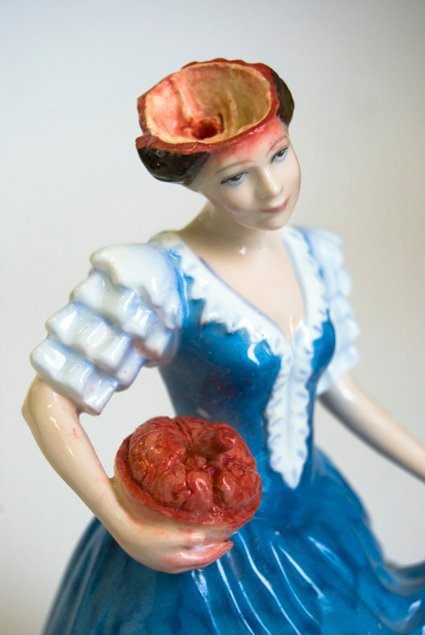
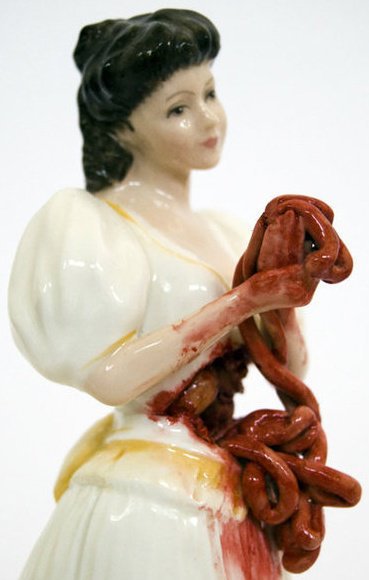
static glitterShintaro Kago 駕籠 真太郎) born 1969 in Tokyo, is a Japanese guro manga artist. He made his debut in  in the magazine COMIC BOX, in 1988.

Shintaro Kago’s style has been called “fashionable paranoia”. He has been published in several adult manga magazines, gaining him considerable popularity. Many of his manga have strongly satirical overtones, and deal with grotesque subjects. He has also written Sci-Fi non-guro manga, most notably Super-Conductive Brains Parataxis (超伝脳パラタクシス Choutennou Paratakushisu) for Weekly Young Jump. Many of his shorts are experimental and bizarre. He frequently breaks the fourth wall, and he likes to play with page layout in extreme ways, mostly for comedic effect.

(Info from wikipedia.com)

marina abramović and ulay – moma 2010

Marina Abramovic and Ulay shared an intense love in the 1970s, performing art out of the van they lived in. When they felt the relationship had run its course (after almost 12 years), they decided to walk the Great Wall of China, each from one end, meeting for one last big hug in the middle and never seeing each other again.

ulay

At her 2010 MoMa retrospective, Marina performed ‘The Artist Is Present’ as part of the show, where she shared a minute of silence with each stranger who sat in front of her. Ulay arrived without her knowing and this is what happened:

(Background information from HERE.)

dirty girls

Shot in 1996 and edited in 2000, this is a short documentary about a group of 13-year-old riot grrrls who were socially ostracized at school by their peers and upperclassmen. Everyone in the schoolyard held strong opinions about these so-called “dirty girls,” and meanwhile the “dirty girls” themselves aimed to get their message across by distributing their zine across campus. Directed by Michael Lucid. Music: “Batmobile” by Liz Phair.

videodrome (david cronenberg, 1983)

The full movie is here:

(or was…)

Archival interview with David Cronenberg from Bombsite (1986)

Bette Gordon (BG) Are your nightmares like your movies? Do you actually see your movie images in your dreams?

David Cronenberg (DC) Rarely. My images come out of the process of making film. I do really think that movies work on the level of dream logic. However realistic or narrative they might like to think they are, they are dreamlike.

BG You, as a director, have an incredible ability to tap into the unconscious.

DC I was once on a talk show with a psychiatrist who worked at the Clark Institute with criminals. He had seen my film, Videodrome and said to me, “I’m almost afraid to be sitting here next to you.” He was totally mystified as to how I could empathize with those states of mind and he obviously, could not. It is mostly intuitive with me. One of the reasons I make a movie is that I’m then in a position where I have to analyze and I enjoy that process.

BG In They Came from Within there was a line of dialogue—”Man thinks too much, he’s lost touch with the body, with instincts. Too much brain and not enough guts.” Do you think the mind is stronger than the body?

DC No. I think the quote is particular to that film. What interests me is the mind/body schism.

BG What do you mean by mind/body schism?

DC I think the mind grows out of the body. I don’t believe in an afterlife. I don’t see the mind or the spirit or the soul continuing after our body dies. The mind and body are completely dependent and interrelated. The mind is somehow organic and physical. It’s only our perception and our culture that keeps them separate.

BG What about the mind creating its own monsters in a sense, that the monster comes from within the mind. Like in Dead Ringers for example, or in Videodrome where it’s the mind that is completely in charge of the body.

DC In as much as the mind is ever in charge of anything. I don’t think it is always in control.

BG Or in Scanners where through mind control, you can . . .

DC Affect the body. But you see, I think everybody does that. I don’t think it’s just Western culture, other cultures even accentuate it more by saying the body’s nothing; it’s only temporary and the mind and the spirit are eternal. I think that’s very destructive. It’s not true. All philosophical, metaphysical and religious forces should be concentrating on trying to form a perception and reality for ourselves that integrates the two. And that would include coming to terms with death as a physical event rather than trying to evade it.

BG So how would you come to terms with death?

DC There’s a Japanese religion that thinks of all of life as a preparation for death, which to the Western mind seems like a very morbid approach to life. But if you think of death as a true end of something, of a process, it makes perfect sense. There we get into the old idea of Western culture being death denying, but I actually think Eastern culture is too. Because they try to trivialize death as being not important.

BG So it falls somewhere between the two as being very important and not important at all.

DC One of the main subjects of all of my films is exactly that. In Dead Ringers you get a body split into two (the twins) with basically, one mind. Just doing that is like an experiment in a lab—which all my movies really are. I set out to see how they work, to illuminate something for myself by doing these experiments.

Videodrome – with James Woods and Debbie Harry

BG There is something about the medical profession in all of your films.

DC Scientists and doctors to me, are at the leading edge of what all human beings do all of the time; which is to change, everything. We’ve never been satisfied with what we’re given. We don’t accept the earth as a given. We change our body chemistry, our physiology, our biology, our biochemistry. We clear the forest, we build our own environment, we climate control it . . . And, the interface between that impulse and the human body often is doctors, biologists, and biochemists.

BG Were you a biochemist?

DC I did go into biochemistry at the University of Toronto. But when I came face to face with what science required, I realized that my temperament was much more suited to some form of art; writing or whatever. I didn’t think of film at the time. I found I would prefer to invent my own science rather than spend two years with rats in a lab getting results.

BG There’s an ambivalence for the medical/science profession in all of your films. You don’t really have villains in the film, nobody’s quite evil . . .

DC That’s right. It is ambivalence. Because I think that they’re heroic even when they’re crazed. I think that being crazed and obsessed is part of being heroic. You don’t get one without the other. Ambition is something else. It’s not ambition in the material sense. My characters are obsessed with discovery and that does excite me and I do identify with that. A good creative scientist is as good as a good creative artist. No question in my mind.

BG What is your notion of the hero? You said your characters are heroic even when they are crazed.

DC Yes, maybe even especially because they’re crazed. I’m obviously drawn to people as main characters who are not embedded so completely in their culture that they can’t see any . . . a visionary’s process . . . people who are jarred into being outside. Continue reading

pablo neruda – too many names

32-Eruption

Albane Simon – ‘Eruption’

Mondays are meshed with Tuesdays
and the week with the whole year.
Time cannot be cut
with your weary scissors,
and all the names of the day
are washed out by the waters of night.

No one can claim the name of Pedro,
nobody is Rosa or Maria,
all of us are dust or sand,
all of us are rain under rain.
They have spoken to me of Venezuelas,
of Chiles and of Paraguays;
I have no idea what they are saying.
I know only the skin of the earth
and I know it is without a name.

When I lived amongst the roots
they pleased me more than flowers did,
and when I spoke to a stone
it rang like a bell.

It is so long, the spring
which goes on all winter.
Time lost its shoes.
A year lasts four centuries.

When I sleep every night,
what am I called or not called?
And when I wake, who am I
if I was not I while I slept?

This means to say that scarcely
have we landed into life
than we come as if new-born;
let us not fill our mouths
with so many faltering names,
with so many sad formalities,
with so many pompous letters,
with so much of yours and mine,
with so much signing of papers.

I have a mind to confuse things,
unite them, bring them to birth,
mix them up, undress them,
until the light of the world
has the oneness of the ocean,
a generous, vast wholeness,
a crackling, living fragrance.

heavens to betsy – my red self/my secret (demo tape, 1992)

Heavens to Betsy was an American indie-punk band formed in Olympia, Washington in 1991. They were part of the DIY riot grrrl movement in the punk rock underground in the early 1990s, and were the first band of Sleater-Kinney vocalist/guitarist Corine Tucker. These two demos are intimate and powerful.

silent vigil this wednesday in cape town

Via Malika Ndlovu:

Stand Up! Be still. Join the Tower of Silence in reflection and protest against the silencing, a pillar of honouring and mourning. Wear white  (a symbol of spirit, light, cleansing, unity beyond gender, language, political or religious agenda) and join this 1 hour vigil against the violence epitomized by the death and brutalisation of Anene Booysen… and too many of our daughters and sisters like her. This Wednesday, 13th February 2013, on the steps of St George’s Cathedral, from 12 pm to 1 pm.

Bring a photograph on a placard of anyone you think we need to remember in this way too. We will not be sloganeering or shouting retaliations against our lost sons, brothers who have perpetuated this crime against their own and her humanity. Our collective presence and solidarity speaks volumes and calls for multiple responses to this complex situation, affecting an entire nation. We make this physical visual statement on the eve of onebillionrising.org global campaign and the president’s “State of the Nation” address. For us, these faces, these stories, these discarded bodies and all the reasons why this continues to happen in the world and all over South Africa – THIS is OUR ‘State of our Nation’ call to address!

taking back our city #takingbackourcity #dicktatorfreejozi #genderfreesa

Participate in the creation of the city you want to live in. #takingbackourcity #dicktatorfreejozi #genderfreesa
Image
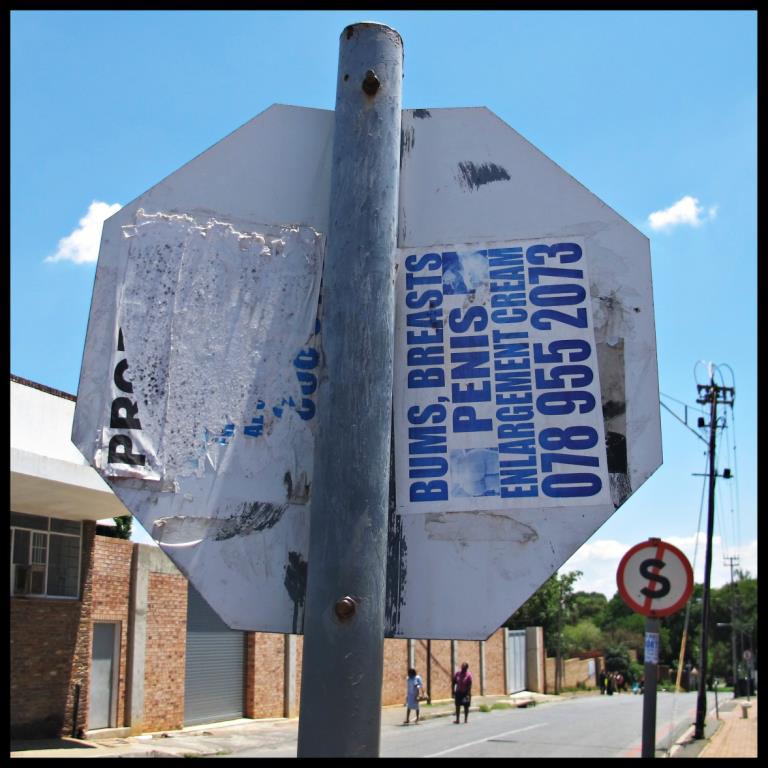
I don’t just live my life, I create my life. And after almost a year of creating images reflecting my vision of the city and its inhabitants, I no longer just want to reflect the city, but create it. Just as I need to be an activist in my own life and my own identity to fully be alive, as an artist, I need to be an artivist, actively participating in the creation of the city I want to live in. Joburg is not just a city, it is my city; it is my home. And as an artivist it is not just a place I want to live in, but a place I actively want to participate in creating.The idea for #takingbackourcity was born out of my return to Joburg from my first real visit to Cape Town. My return to Jozi from CT shocked me with the everyday messages and symbols we Joburgers take for granted; the messages and symbols that shape the collective unconscious of our city and our people. The ‘Penis Enlargement’ posters that adorn every robot, electrical box and street pole were the most glaring example. I asked myself: what does this say about Joburg? what does this say about Joburgers?

We are a city obsessed with the power of the phallus; a presidency obsessed with the symbol and virility and representation of the phallus; a people whose penis size reflects its masculinity, whose masculinity reflects its identity. The effect of this overtly embodied and gendered mantra on our collective unconscious plays itself out in our lives daily.

More so than with other cultures, Joburg constantly genders us. It equates our identity with our gender, places our gendered attributes – our penises, our breasts – under the microscope, and finds us wanting. Those who are found wanting and those who pass the grade play out the script of the power struggle that has been written for us. And as with the Battle of the Sexes in decades before us, the Battle of the Genders brings with it a long, long casualty list. Being part of the female-bodied and -gendered community, as well as the LGBTIQ community, from where so many of the casualties come, I cannot be part of an existence or an art that hides behind the privilege of aesthetic.

Those of you who follow my work know that I believe that gender is nothing more than a social construction and that I perform my gender through my identity and my art daily. But playing with gender and bearing witness to the daily reality of my and others’ lives as queers in my writing and images is not enough. How do I as a queer artist respond to the overt gendering of our city; the grossly embodied sexing of the spirit of Joburg?

I need to take responsibility for the city I want to live in and actively participate in creating it. I need to undermine the gendering of the city and its inhabitants with more than just my existence and my documentation of my play with gender and identity, more than just through my collaborations with others who do the same.

‘Taking Back our City’ is thus this journey of active and creative participation in my city. I hope that you will follow my journey and join me in taking our city back.

as long as we exist, we will be raped – sisonke msimang

(First published HERE.)

anene

I read an article on Thursday morning. It said: “The victim had been sliced open from her stomach to her genitals and dumped.” The radio is full of this story. Full of politicians and posers, trying to outdo one another. Like funeral criers. But it will end, the show. And there will be marches and petitions. There will be statements and rage. But it will happen again. Until we are inured to shock. It will happen again. Until our bones are worn into dust and our teeth crushed into the sand. It will happen and happen. Until we invent a way to stop being women. Until we find a way for our blood to no longer bleed between our legs. As long as we exist, we will be raped.

So, no, I will not march. I don’t believe my marching will stop this war. I will cry, as I have been already this morning. And maybe, I will begin to feel my way out of the lurching, heavy knowing after I have spoken with others. With the mothers and the sisters, the brothers and fathers – those like me, who have girls.

There is only this: a dead, hollow knowing that has always been knocking at my heart. From the minute she was born, it fell in step with the rhythm of my breath: to raise a girl in this world, to raise her strong and healthy and proud, to ensure that she survives and then to insist ferociously that she laugh and dance and think and dream, is to choose the most heartbreaking and joyous path. It is to tempt fate every single day, it is to fear that her breath will be strangled by a stranger. It is to live with the horrible possibility that this could be your child.

Anene was raped and mutilated because she was a girl. It was her vagina and her breasts that they wanted to destroy. It was her walk and her talk. It was her girl-ness. These parts of her were broken and sliced and pulled apart, not by monsters, but by friends. Each of her 10 fingers were broken.

Ten fingers and 10 toes. I kiss my baby girl goodnight. Ten fingers and 10 toes, I counted them when she was born just to be sure that she was real. I found love in the spaces between each. I cried at the weight of her. Tiny and strong.

Tonight, I will kiss her neck in the bath and she will wiggle away from me. ‘Stop it Mama’, and I will pinch her wet bum and she will sparkle. Tonight, she will be safe. But they will not stop killing girls.

And I will die defending her. Let them wear my bones into dust. Let them crush my teeth into the sand. Only this will stop the war. That we be prepared to die – our bodies barricades against the fingers that should not be there. The knives that slit. The guns that lodge. Let them lodge in me. In us.

Anene’s mother said that if she hadn’t seen her shoes, she wouldn’t have known that it was her own child. Her intestines? Her intestines.

God help us. And if God will not, Let the women be the barricades. The men, surely will follow.

Sisonke Msimang writes and comments on gender, race and politics. She works with Sonke Gender Justice Network, and is a Yale World Fellow.

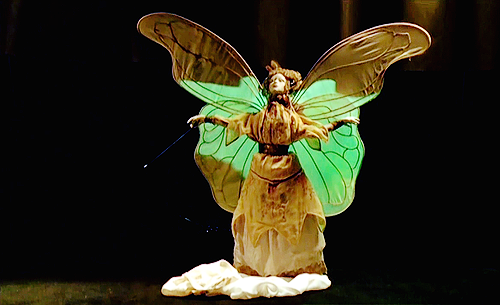
la double vie de veronique

The marionette scene from Krzysztof Kieslowski’s The Double Life of Veronique (1991). Watch the full film HERE.

“The director’s international breakthrough remains one of his most beloved films, a ravishing, mysterious rumination on identity, love, and human intuition. Irène Jacob is incandescent as both Weronika, a Polish choir soprano, and her double, Véronique, a French music teacher. Though unknown to each other, the two women share a mysterious and emotional bond that transcends language and geography, which Kieslowski details in gorgeous reflections, colours, and movements. Aided by Slawomir Idziak’s shimmering cinematography and Zbigniew Preisner’s haunting, operatic score, Kieslowski creates one of cinema’s most purely metaphysical works. The Double Life of Veronique is an unforgettable symphony of feeling.

veronique butterfly

“Krzysztof Kieslowski focuses on identity using actress Irene Jacobs in the dual role of French music teacher Veronique and Polish soprano Weronika – both born on the same day. Metaphysically they are aware of each other’s counterpart – this harkens back to the director’s penchant for fate, chance and circumstance,and we envision a possible meeting of the intertwined souls… Our unspoken desire for a mirrored being – who can non-verbally share our most intimate loves and joys – is the ultimate expression of personal support… Overall, an ambiguous and enigmatic offering, this is a film that clings to you for years after viewing. A true masterpiece of cinema.”
~ Gary W. Tooze

swans – mind/body/light/sound (1995)

Throw your mind away
Fall into the sea
There’s nothing solid here
Dissolve your body today
There’s a sun in the sky
We’re in the atmosphere
Throw yourself in the sea
There’s nothing solid down here
Mind/body/light/sound
Mindless, bodyless, soundless light
This ordinary night
This ordinary day
They’re twisted out of shape
Then they disintegrate
Cool water runs through the ground
The ocean blends with the air
Throw yourself in the fire
There’s nothing solid around here
Mind/body/light/sound
Mindless, bodyless, soundless light
The world was over today
The time is already gone
Throw your mind in the sea
Eternity doesn’t last very long
There’s some people on earth
They live in separate minds
Dissolve your body today,
There is no more outside
Mind/body/light/sound
Mindless, bodyless, soundless light

jiddu krishnamurti on observing ourselves in space and time

“When the observer is the observed, and the observer has always acted as though the observed is something different from himself, then he could act. But, when he realises that the observer IS the observed, all action ceases on his part… and, therefore, all effort.  And therefore there is no fear at all. This requires a great deal of inward inquiry, inward observation, step by step without coming to any conclusion.

“Why do you choose; what is the necessity of choice? If you see something very clearly (as we just now saw what freedom implied, and that the mind is only free when it can see the total) … when you see that clearly, there is no choice. It’s only the confused mind that chooses. Awareness takes place only when there is no choice, or when you are aware of all the conflicting choices, all the conflicting desires, the strains… Just to observe all this movement of contradiction… and, knowing that the observer is the observed, that therefore in that process there is no choice at all, but only watching what IS.

“And that’s entirely different from concentration. Awareness brings a quality of attention in which there is neither the observer nor the observed. When you really attend, completely attend, like now, if you are really listening, there is neither the listener nor the speaker. And that state of attention brings about an extraordinary  sense of freshness, a quality of newness to the mind…”

thoughts on meaningful work, 14 november 2012, 5:38 a.m.

What follows is something I wanted to blog from Turkey in November but was unable to due to lack of an internet connection at the time. I woke up very early one morning, typed it into my phone’s notes app, half asleep, and promptly forgot about it. The incredibly tedious work I am currently doing (editing an MSc thesis on anthropometric measurements for office chairs) reminded me of its existence. So, two months later, here it is.

Turkey 2012 492a

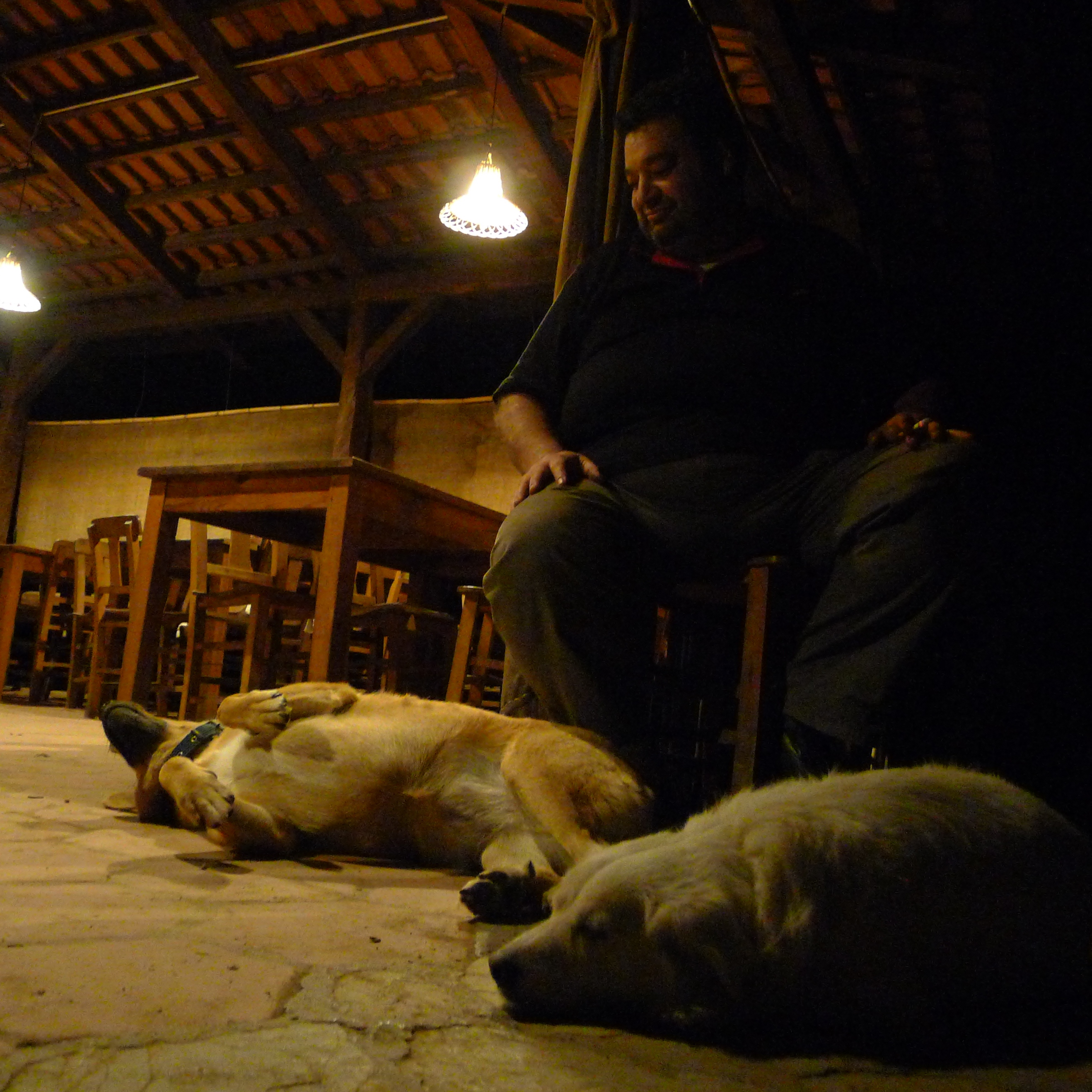
Arif Cerit with the farm dogs, Shanslar (Lucky) and Beyaz (White), at Pastoral Vadi. Photo: Rosemary Lombard.

Last night I had a profound conversation, in my bad Turkish and his bad English, with Arif Cerit, a guy who lives at Pastoral Vadi, the organic/permaculture farm near Fethiye in South-Western Turkey which I am visiting – working in exchange for food and a bed. It’s a very comfortable bed, in a neat, well-appointed cottage designed and built of cob (straw and mud) five years ago by Ahmet Kizen, an architect passionate about sustainable living and ecotourism who bought this farm 14 years ago and opened it to visitors about 7 years back. No maintenance has been necessary since the cottage was built, I’m told. The thick walls keep it cool during the day and surprisingly warm at night.

So, back to what I wanted to blog about, which has resonated for me with my friend P‘s latest gier on Facebook, which involves a sort of Dada/absurdist attempt to animalise interactions. Having been away and in limited contact with everyone, I haven’t had a chance to ask him more about it, but, basically, instead of clicking “like”, he types animal noises. “Baaa, baaa”, mostly. For me it draws attention to the essentially animal nature of human interaction, which we have become unconscious of and detached from, as we live large swathes of our lives online, “denatured”, unquestioning.  “Like” has become a capricious yet ubiquitous form of social capital. Facebook’s shady manipulation of this currency of late has triggered consternation and outrage. They’ve put in place algorithms that restrict the “organic” (terms such as “organic” and “viral” in the world of virtual memes are interesting in their ironic detachment!) reach of posts on the network, requiring one to pay (“real” money) to secure an audience greater than an arbitrary sliver of the profiles to whom one is connected… Just when I thought it was because I only had a sliver of die-hards who actually enjoyed what I post anymore, I realised that most of my Facebook friends no longer see my updates in their news feeds. What a relief (?). The virtual landscape increasingly resembles a targeted marketing environment more than it does a communal hangout, a place for exchanging ideas and thoughts, as it used to. Now it’s mostly about Profit. By monetising the prominence of posts, equal access is effectively being stifled. Concomitantly, freedom of association and meaningful interaction are withering.

That’s another aside, or, rather, more context. ANYWAY. So, what I gleaned from my conversation with big, friendly Arif was that he had been a taxi driver with a fleet of cars in the west coast city of Izmir for 21 years, before dropping everything and moving here to the farm. He sold his business, gave the money to his brothers and left it all behind.

He says that the city is a big jungle, very dark, very dense, very dangerous, full of artifice and chemical poisons. People are a species of animal, he says, like all animals… In cities you have to be a predator to do well. If you are not a predator, you have to live your life very small, like a rat, to survive. Your mind is very important, he says. The chasing after money and things that you need to do to live in the city takes up all your time and your thoughts. Money is a cancer. TV is the morphine you need to kill the pain at the end of the day: the pain of your mind being eaten away.

Out here on the farm, life is real, he says. There is space, there is ground, and air, and the smell of greenness. Animals who are not predators can live happily, widely, openly, productively.

Turkey 2012 467a

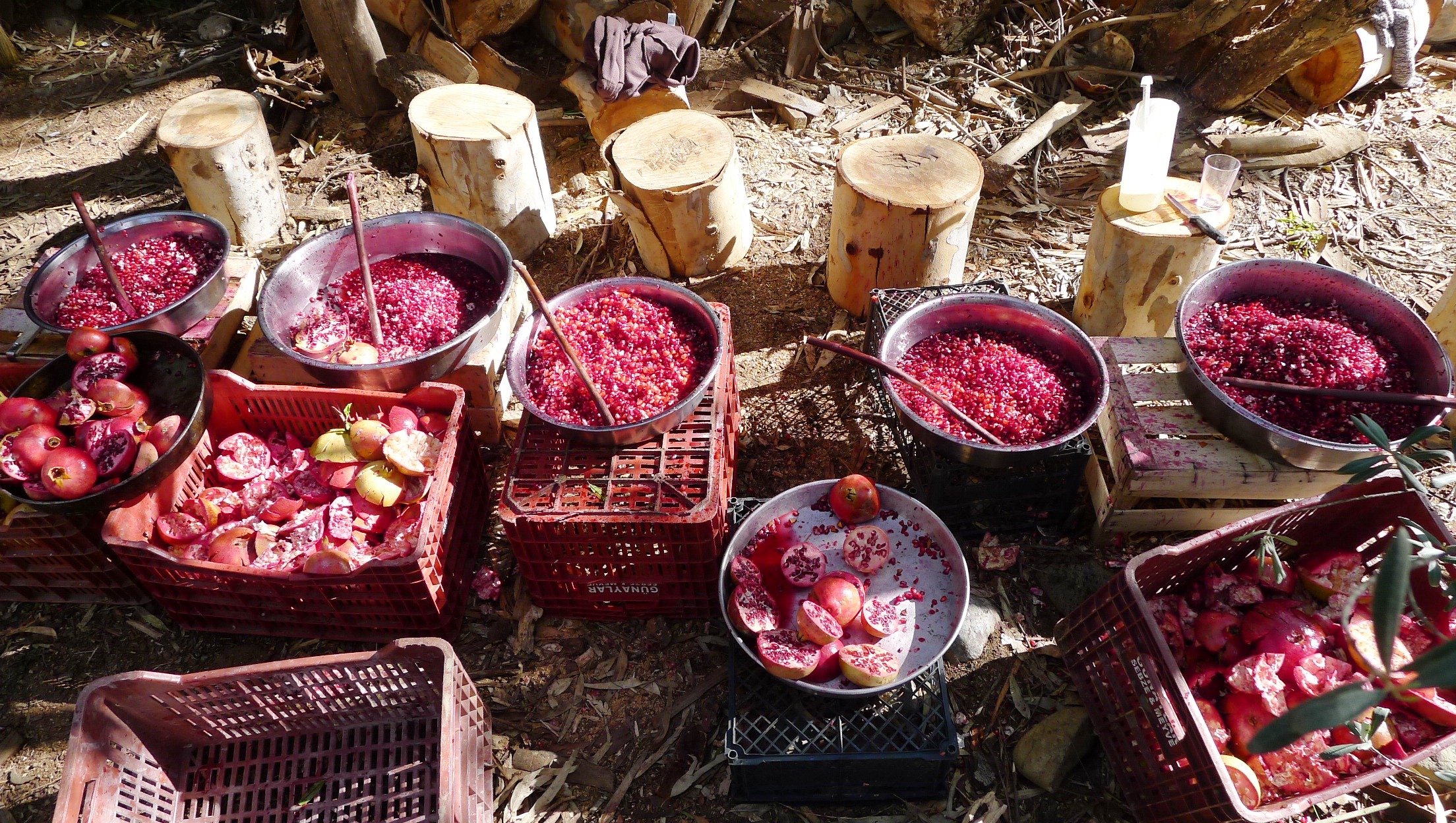
Processing pomegranates by hand to make nar ekshili sos (pomegranate reduction). Photo: Rosemary Lombard

Sticky, crimson pomegranate juice is running down my arms and dripping off my elbows. I’m stained with the joy of manual labour. It’s so satisfying, this repetitive bashing of crates and crates of halved fruit to knock out the arils, then the squeezing in a bag to extract the juice, which is then boiled over a fire for ten hours to reduce it to a dark, tart syrup, then strained through muslin into bottles.  It’s slow-going, messy, tiring work. I have blisters, purple palms. But, at the end of each day, I can see the results of my time spent. It’s nothing like the virtual world of work I mostly inhabit, where I shut down my computer and a sense of the hours and hours I have spent shunting pixels around evaporates.

For so long now, my life has felt paper-thin, no, thinner, as if I barely cast even a shadow of influence in the world, and I realise now that it is largely because of the intangible nature of the work I have been doing, which mostly involves cleaning, tidying and correcting other people’s writing, or recording their work, or facilitating their conversations… It’s all work towards actualising goals that I have deemed worthwhile; nonetheless, these are goals which are not my own. I have tried to frame them as my own, tried to see my part in the whole as indispensable, my purpose as contiguous with that of the projects’, my place as “a tiny cog in the great wheel of evolution” – that was how Billy Wilder put it, writing the words of Ninotchka played by Greta Garbo in Ernst Lubitsch’s wonderful 1939 satire of the same name.

Alas, my heart just hasn’t been convinced. I haven’t been able to shake this unbearable sense of lightness, of the unnecessary breaths I’m taking, of the lack of any other humans who truly require or desire my existence, irreplaceably, here on Earth. All this needs to change if I am to remain sane when I get back. Living with a heavenly purpose is too far beyond me. I’d be satisfied to have done with consumption, thanks. I started this blog in an attempt to make something indelible of the ephemeral. I need to do more. I’m starving.

“If I had an orchard, I’d work till I was sore.” ~ Fleet Foxes – “Helplessness Blues“.

Fethiye-20121113-01327

Sweet! A break to drink some freshly-squeezed pomegranate juice. Photo: Rosemary Lombard

Ş

audre lorde on the erotic

The erotic is a resource within each of us that lies in a deeply female and spiritual plane, firmly rooted in the power of our unexpressed or unrecognised feeling…

Of course, women so empowered are dangerous. So we are taught to separate the erotic from most vital areas of our lives other than sex…

The principal horror of any system which defines the good in terms of profit rather than in terms of human need, or which defines human need to exclusion of the psychic and emotional components of that need — the principal horror of such a system is that it robs our work of its erotic value, its erotic power and life appeal and fulfilment. Such a system reduces work to a travesty of necessities, a duty by which we earn bread or oblivion for ourselves and those we love. But this is tantamount to blinding a painter and then telling her to improve her work, and to enjoy the act of painting. It is not only next to impossible, it is also profoundly cruel.

. . . [O]nce we begin to feel deeply all the aspects of our lives, we begin to demand from ourselves and from our life-pursuits that they feel in accordance with that joy which we know ourselves to be capable of. Our erotic knowledge empowers us, becomes a lens through which we scrutinize all aspects of our existence, forcing us to evaluate those aspects honestly in terms of their relative meaning within our lives…

During World War II, we bought sealed plastic packets of white, uncolored margarine, with a tiny, intense pellet of yellow coloring perched like a topaz just inside the clear skin of the bag. We would leave the margarine out for a while to soften, and then we would pinch the little pellet to break it inside the bag, releasing the rich yellowness into the soft pale mass of margarine. Then, taking it carefully between our fingers, we would knead it gently back and forth, over and over, until the color had spread throughout the whole pound bag of margarine, thoroughly coloring it.

I find the erotic such a kernel within myself. When released from its intense and constrained pellet, it flows through and colors my life with a kind of energy that heightens and sensitizes and strengthens all my experience.

Lorde, Audre. “Uses of the Erotic: The Erotic as Power.” Sister Outsider: Essays and Speeches. Freedom, CA: Crossing Press, 1984. 53-59.

jarvis cocker – sheffield sex city (lyrics)

Cape Town-20130107-01799a w

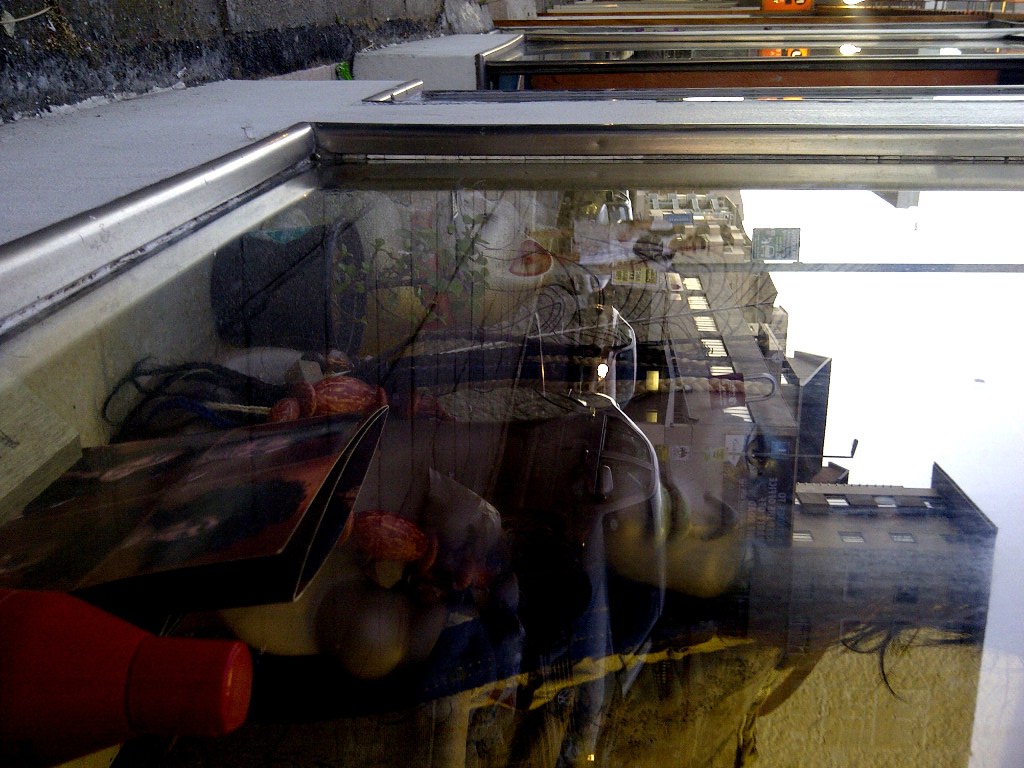
Sea Point Main Road, 7 January 2013. Photograph: Rosemary Lombard

the city is a woman, bigger than any other…

…the sun rose from behind the gasometers at six-thirty a.m.
crept through the gap in your curtains
and caressed your bare feet poking from beneath the floral sheets.
i watched it flaking bits of varnish from your nails
trying to work its way up under the sheets.
even the sun’s on heat today;
the whole city getting stiff in the building heat.

now i’m trying hard to meet her but the fares went up at seven
she is somewhere in the city, somewhere watching television
watching people being stupid, doing things she can’t believe in
love won’t last ’til next installment
ten o’ clock on tuesday evening
the world is going on outside, the night is gaping open wide
the wardrobe and the chest of drawers are telling her to go outdoors
he should have been here by this time, he said that he’d be here by nine
that guy is such a prick sometimes, i don’t know why you bother, really.

oh babe oh i’m sorry
but i had to make love to every crack in the pavement and the shop doorways
and the puddles of rain that reflected your face in my eyes.
the day didn’t go too well.
too many chocolates and cigarettes.
i kept thinking of you and almost walking into lamp-posts.
why’s it so hot?
the air coming up to boil; rubbing up against walls and lamp-posts trying to get rid of it.
old women clack their tongues in the shade of crumbling concrete bus shelters.
dogs doing it in central reservations and causing multiple pile-ups in the centre of town.
i didn’t want to come here in the first place
but i’ve been sentenced to three years in the housing benefit waiting room.
i must have lost your number in the all-night garage
and now i’m wandering up and down your street, calling your name, in the rain
whilst my shoes turn to sodden cardboard.
where are you? (where are you?)

i’m still trying hard to meet you, but it doesn’t look like happening
‘cos the city’s out to get me if i won’t sleep with her this evening
though her buildings are impressive and her cul-de-sacs amazing
she’s had too many lovers and i know you’re out there waiting
and now she’s getting into bed; he’s had his chance now it’s too late
the carpet’s screaming for her soul, the darkness wants to eat her whole
tonight must be the night it ends
tomorrow she will call her friends and go out on her own somewhere
who needs this shit anyway?
and listen, i wandered the streets the whole night crying, trying to pick up your scent
writing messages on walls and the puddles of rain reflected your face in my eyes.
we finally made it on a hill-top at four a.m.
the whole city is your jewellery-box; a million twinkling yellow street lights.
reach out and take what you want; you can have it all.
gee it’s so hot tonight!
i didn’t think we were gonna make it.
it was so bad during the day, but now i’m snug
and warm under an eiderdown sky.
all the things we saw:
everyone on park hill came in unison at four-thirteen a.m.
and the whole block fell down.
the tobacconist caught fire, and everyone in the street died of lung cancer.

danni diana on bogus muthi (and ad agencies)

A year or so ago, some colleagues of mine did a campaign for a film called Night Drive, which was a slashy, schlocky horror that centred on the body-parts-for-muthi trade. The campaign handed out a couple hundred pamphlets, in the style of those ridiculous pamphlets that offer penis enlargement, bad luck cure, womb cleaning etc that we see littered around town every day. The pamphlets offered money for body parts, and linked to a website that detailed the “doctor’s” cash-for-organs trade in more detail. The people who received the pamphlets went ape-shit, calls were made to the national media, everyone was pranked and much outrage ensued. The campaign was slammed by the Department of Health for trivialising a “Serious Problem”, and was pulled, effective immediately, complete with apology from the ad agency in question, and a promise to conduct an “internal disciplinary procedure”.

0141

Pamphlet collected in Durban by Rosemary Lombard, 2009

My question is, what exactly is being done about this serious problem? Why do people get up in arms about a cash-for-body-parts hoax, but think its OK (and hilarious) for there to be pamphlets offering safe abortions, womb cleaning, AIDS cures and a whole manner of sexual health treatment that is not only bogus, but seriously harmful to those who pursue it. What effort is being made by the Department of Health to shut down these “doctors”? Most disturbing is the discriminatory gender ideas at the root of these so called treatments. Muthi to “make lover have sex with you”, and treatment for women for, among other things “cleaner vaginas, more willingness to have sex.”

These charlatan muthi men make a mockery of traditional healing, and the pamphlets and posters not only mislead the poor, vulnerable and uneducated, but reinforce negative stereotypes about traditional healing and the communities that take advantage of them. Is any work being done to address this “Serious Problem”, or do people only care so long as the content of said media panders to savage stereotypes of murderous muthi men lurking in the shadows to chop your heart out?

Pamphlet collected in Durban by Rosemary Lombard, 2009

Pamphlet collected in Durban by Rosemary Lombard, 2009

anne michaels – phantom limbs (excerpt)

So much of the city
is our bodies. Places in us
old light still slants through to.
Places that no longer exist but are full of feeling,
like phantom limbs.

Even the city carries ruins in its heart.
Longs to be touched in places
only it remembers…

(from The Weight of Oranges / Miner’s Pond. McClelland & Stewart, 1997. p.86)

the gulabi gang

APTOPIX India Pink Women

The Gulabi Gang (from Hindi “gulabi” = “pink” – “pink gang”) is a group of women vigilantes and activists originally from Banda in Bundelkhand district, Uttar Pradesh, India, but reported to be active across North India as of 2010. It is named after the pink saris worn by its members.

The gang was founded in 2006 by Sampat Pal Devi, a mother of five and former government health worker (also a former child bride), as a response to widespread domestic abuse and other violence against women. Gulabis visit abusive husbands and beat them up with laathis (bamboo sticks) unless they stop abusing their wives. In 2008, they stormed an electricity office in Banda district and forced officials to turn back the power they had cut in order to extract bribes. They have also stopped child marriages and protested dowry and female illiteracy.

gulabi

gulabi 4More information HERE and HERE, and more pictures by Arindam Mukherjee HERE.

what i rail against, impotently, and wish i could embrace

The following excerpt from John  Berger’s Booker Prize-winning 1972 novel, G, contains devastating insight into the social/cultural meaning of being a woman in the world, and how utterly inescapable and deeply formative it is of one’s sense of self. Reading this made me nod and shake my head so hard I felt like I had whiplash afterwards.

Although this passage ostensibly deals with late nineteenth-century constructions of love and gendered identity, such tropes persist as fundamental to our conceptions now, albeit less formally and thus less obviously. So much of the pain and loneliness in my life has stemmed from an unconscious/inarticulate sense of exactly what Berger describes here and my horror and refusal of it all, played out in the choices I have made since childhood.

* * * * *
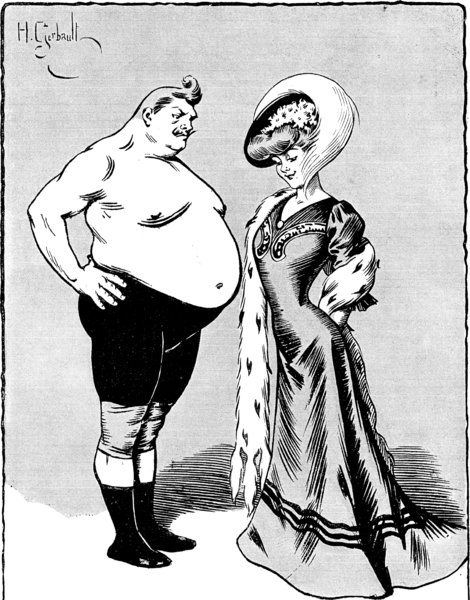
“Une Idée” – Henri Gerbault, 1907

The Situation of Women

… [T]he social presence of a woman was different in kind to that of a man. A man’s presence was dependent upon the promise of power which he embodied. If the promise was large and credible, his presence was striking. if it was small or incredible, he was found to have little presence. there were men, even many men, who were devoid of presence altogether. The promised power may have been moral, physical, temperamental, economic, social, sexual – but its object was always exterior to the man. A man’s presence suggested what he was capable of doing to you or for you.

By contrast, a woman’s presence expressed her own attitude to herself, and defined what could and could not be done to her. No woman lacked presence altogether. Her presence was manifest in her gestures, voice, opinions, expressions, clothes, chosen surroundings, taste – indeed there was nothing she could do which did not contribute to her presence.

To be born woman was to be born within an allotted and confined space, into the keeping of man. A woman’s presence developed as the precipitate of her ingenuity in living under such tutelage within such a limited cell. She furnished her cell, as it were, with her presence; not primarily in order to make it more agreeable to herself, but in the hope of persuading others to enter it.

A woman’s presence was the result of herself being split in two, and of her energy being inturned. A woman was always accompanied – except when quite alone – by her own image of herself. Whilst she was walking across a room or whilst she was weeping at the death of her father, she could not avoid envisaging herself walking or weeping. From earliest childhood she had been taught and persuaded to survey herself continually. And so she came to consider the surveyor and surveyed within her as two constituent yet always distinct elements of her identity as a woman.

A woman had to survey everything she was and everything she did because how she appeared to others, and ultimately how she appeared to men, was of crucial importance for her self-realisation. Her own sense of being in herself was supplanted by a sense of being appreciated as herself by another. Only when she was the content of another’s experience did her own life and experience seem meaningful to her. In order to live she had to install herself in another’s life.

gerbault 462px-Hensunken_i_stum_beundring

Drawing by Henri Gerbault (1863 – 1930)

Men surveyed women before treating them. Consequently how a woman appeared to a man might determine  how she would be treated. To acquire some control over this process, women had to contain it, and so they interiorised it. That part of a woman’s self which was the surveyor treated the part which was the surveyed, so as to demonstrate to others how her whole self should be treated. And this exemplary treatment of herself by herself constituted her presence. Every one of her actions, whatever its direct purpose, was also simultaneously an indication of how she should be treated.

If a woman threw a glass on the floor, this was an example of how she treated her own emotion of anger and so of how she would wish it to be treated by others. If a man had done the same, his action would only have been an expression of his anger. If a woman made good bread, this was an example of how she treated the cook in herself and accordingly of how she as a cook-woman should be treated by others. Only a man could make good bread for its own sake.

This subjunctive world of the woman, this realm of her presence, guaranteed that no action undertaken in it could ever possess full integrity; in each action there was an ambiguity which corresponded to an ambiguity in the self, divided between surveyor and surveyed. The so-called duplicity of woman was the result of the monolithic dominance of man.

A woman’s presence offered an example to others of how she would like to be treated – of how she would wish others to follow her in the way, or along the way, she treated herself. She could never cease offering this example, for it was the function of her presence. When, however, social convention or the logic of events demanded that she behave in a manner which contradicted the example she wished to give, she was said to be coquettish. Social convention insists that she should appear to reject something just said to her by a man. She turns away in apparent anger, but at the same time fingers her necklace and repeatedly lets it drop as tenderly as her own glance upon her breast.

When she is alone in her room and sure of being alone, a woman may look at herself in a mirror and put out her tongue. This makes her laugh and, on other occasions, cry.

It was with a woman’s presence that men fell in love. That part of a man which was submissive was mesmerised by the attention which she bestowed upon herself, and he dreamt of her bestowing the same attention upon himself. He imagined his own body, within her realm, being substituted for hers. This was a theme which occurred constantly in romantic poems about unrequited love. That part of a man which was masterful dreamt of possessing, not her body — this he called lust — but the variable mystery of her presence.

The presence of a woman in love could be very eloquent. the way she glanced or ran or spoke or turned to greet her lover might contain the quintessential quality of poetry. this would be obvious not only to the man she loved, but to any disinterested spectator. Why? Because the surveyor and the surveyed within herself were momentarily unified, and this unusual unity produced in her an absolute single-mindedness. The surveyor no longer surveyed. Her attitude to herself became as abandoned as she hoped her lover’s attitude to her would be. Her example was at last one of abandoning example. Only at such moments might a woman feel whole.

The state of being in love was usually short-lived — except in unhappy cases of unrequited love. Far shorter lived than the nineteenth-century romantic emphasis on the condition would lead us to believe. Sexual passion may have varied little throughout recorded history. But the account one renders to oneself about being in love is always informed and modified by the specific culture and social relations of the time.

„Würden Sie mir böse sein, wenn ich einen Kuss auf diese schöne Schulter drückte?“ „Das werden Sie ja nachher schon sehen“ (Henri Gerbault, 1901)

„Würden Sie mir böse sein, wenn ich einen Kuss auf diese schöne Schulter drückte?“ „Das werden Sie ja nachher schon sehen“ (Henri Gerbault, 1901)

For the nineteenth-century European middle classes the state of being in love was characterised by a sense of excessive uncertainty in an otherwise certain world. It was a state exempt from the promise of Progress. Its characteristic uncertainty was the result of considering the beloved as though he or she were free. Nothing that was an expression of the beloved’s wishes could be taken for granted. No single decision of the beloved could guarantee the next. Each gesture had to be read for its fresh meaning. Every arrangement became questionable until it had taken place. Doubt produced its own form of erotic stimulation: the lover became the object of the beloved’s choice of full liberty. Or so it seemed to the couple in love. In reality, the bestowing of such liberty upon the other, the assumption that the other was so free, was part of the general process of idealising and making the beloved seem unique.

Each lover believed that he or she was the willing object of the other’s unlimited freedom and, simultaneously, that his or her own freedom, so circumscribed until now, was at last and finally assured within the terms of the other’s adoration. Thus each became convinced that to marry was to free oneself. Yet as soon as a woman became convinced of this (which might be long before her formal engagement) she was no longer single-minded, no longer whole. She had to survey herself now as the future betrothed, the future wife, the future mother of X’s children.

For a woman the state of being in love was a hallucinatory interregnum between two owners, her bridegroom taking the place of her father or later, perhaps, a lover taking the place of her husband.

The surveyor-in-herself quickly became identified with the new owner. She would begin to watch herself as if she were him. What would Maurice say, she would ask, if his wife (that is me) did this? Look at me, she would address the mirror, see what Maurice’s wife is like. The surveyor-in-herself became the new owner’s agent. (A relationship which might well include as much deceit or chicanery as can be found between any proprietor and agent.)

The surveyed-within-herself became the creature of proprietor and agent, of whom both must be proud, She, the surveyed, became their social puppet and their sexual object. The surveyor made the puppet talk at dinner like a good wife. And when it seemsed to her fit, she layed the surveyed down on a bed for her proprietor to enjoy. One might suppose that when a woman conceived and gave birth, surveyor and surveyed were temporarily reunited. Perhaps sometimes this happened. But childbirth was so surrounded with superstition and horror that most women submitted to it, screaming, confused, or unconscious, as to a punishment for their intrinsic duplicity. When they emerged from their ordeal and held the child in their arms they found they were the agents of the loving mother of their husband’s child.

on incarnation and sacrifice

christ

But supposing God became a man – suppose our human nature which can suffer and die was amalgamated with God’s nature in one person – then that person could help us. He could surrender His will, and suffer and die, because He was man; and He could do it perfectly because He was God. You and I can go through this process only if God does it in us; but God can only do it if He becomes man. Our attempts at this dying will succeed only if we men share in God’s dying, just as our thinking can succeed only because it is a drop out of the ocean of God’s intelligence: but we cannot share God’s dying unless God dies; and God cannot die except by being a man. That is the sense in which He pays our debt, and suffers for us what He Himself need not suffer at all.

~ C.S. Lewis, Mere Christianity

sylvia plath – cut

For Susan O’Neill Roe

What a thrill —
My thumb instead of an onion.
The top quite gone
Except for a sort of a hinge

Of skin,
A flap like a hat,
Dead white.
Then that red plush.

Little pilgrim,
The Indian’s axed your scalp.
Your turkey wattle
Carpet rolls

Straight from the heart.
I step on it,
Clutching my bottle
Of pink fizz.

A celebration, this is.
Out of a gap
A million soldiers run,
Redcoats, every one.

Whose side are they on?
O my
Homunculus, I am ill.
I have taken a pill to kill

The thin
Papery feeling.
Saboteur,
Kamikaze man —

The stain on your
Gauze Ku Klux Klan
Babushka
Darkens and tarnishes and when

The balled
Pulp of your heart
Confronts its small
Mill of silence

How you jump —
Trepanned veteran,
Dirty girl,
Thumb stump.

on being human

Being human is a raw experience. I have bouts of not feeling fully human. It’s always connected to a horrible sensation of being very distant from my body, like I’m disintegrating. I feel like this today. I think it is the result of too much time alone in thought and on the internet this weekend. I look on my body’s workings numbly, from a great distance, as though through the wrong end of a telescope. My hand resting on the mouse is a heavy foreign instrument. When I walk around town, I feel very far from everything and everyone. People’s voices, including my own when I speak, come at me down a funnel. It’s hard to get work done in such a state. It takes great effort to appear coordinated.

I slipped and fell and gashed my shin open the other day. It felt so good, the sting and the blood oozing out, like proof of real contact with something outside myself. I noticed that I felt more alive than in weeks, as if I had been pulled back into my body at the moment of impact.

14 April, 2009