pablo neruda – too many names

32-Eruption

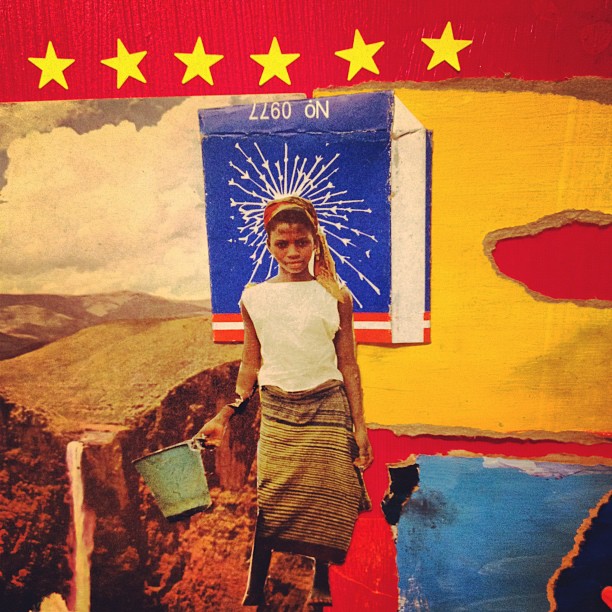
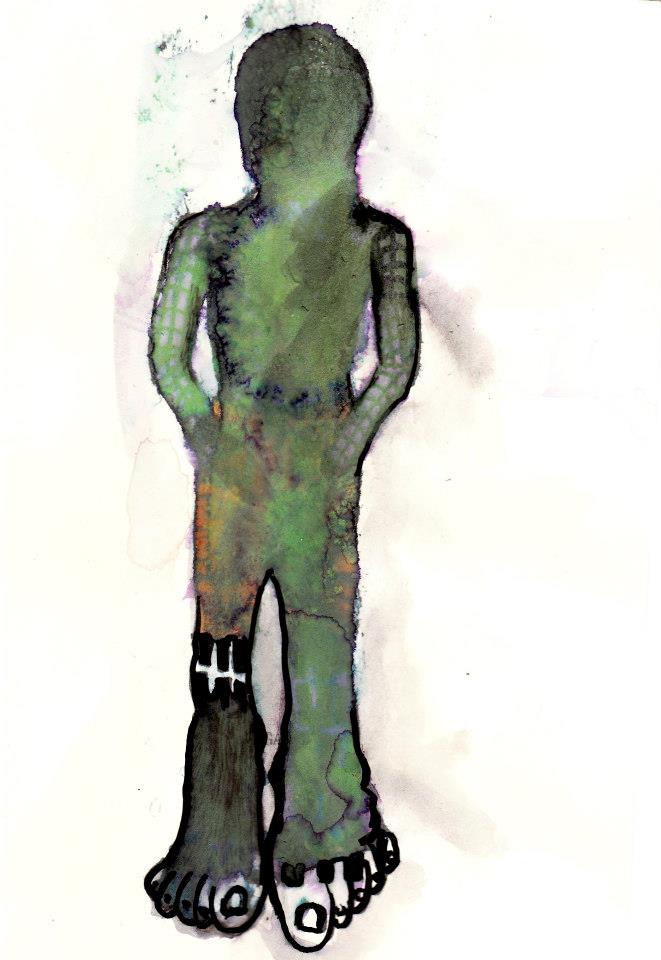
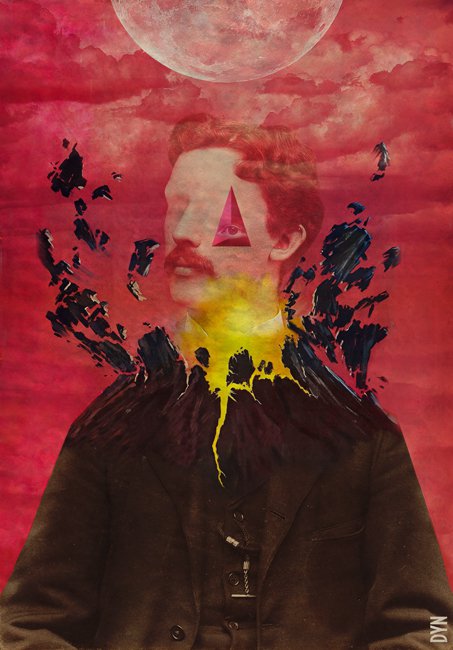
Albane Simon – ‘Eruption’

Mondays are meshed with Tuesdays
and the week with the whole year.
Time cannot be cut
with your weary scissors,
and all the names of the day
are washed out by the waters of night.

No one can claim the name of Pedro,
nobody is Rosa or Maria,
all of us are dust or sand,
all of us are rain under rain.
They have spoken to me of Venezuelas,
of Chiles and of Paraguays;
I have no idea what they are saying.
I know only the skin of the earth
and I know it is without a name.

When I lived amongst the roots
they pleased me more than flowers did,
and when I spoke to a stone
it rang like a bell.

It is so long, the spring
which goes on all winter.
Time lost its shoes.
A year lasts four centuries.

When I sleep every night,
what am I called or not called?
And when I wake, who am I
if I was not I while I slept?

This means to say that scarcely
have we landed into life
than we come as if new-born;
let us not fill our mouths
with so many faltering names,
with so many sad formalities,
with so many pompous letters,
with so much of yours and mine,
with so much signing of papers.

I have a mind to confuse things,
unite them, bring them to birth,
mix them up, undress them,
until the light of the world
has the oneness of the ocean,
a generous, vast wholeness,
a crackling, living fragrance.

anaïs nin on lou andreas-salomé and other remarkably rebellious women

Nin talks fondly about some of her favourite rebellious women, including psychoanalyst Lou Andreas-Salomé (who could hold her own with Rilke, Freud and Nietzsche) and Caresse Crosby, the infamous libertine, anti-war crusader and publisher, about being an artist and exploring psychological worlds, beyond judgement.

nick cave on love songs

Though the love song comes in many guises – songs of exultation and praise, songs of rage and of despair, erotic songs, songs of abandonment and loss – they all address God, for it is the haunted premises of longing that the true love song inhabits. It is a howl in the void, for Love and for comfort and it lives on the lips of the child crying for his mother. It is the song of the lover in need of her loved one, the raving of the lunatic supplicant petitioning his God. It is the cry of one chained to the earth, to the ordinary and to the mundane, craving flight; a flight into inspiration and imagination and divinity. The love song is the sound of our endeavours to become God-like, to rise up and above the earthbound and the mediocre.

~ Nick Cave

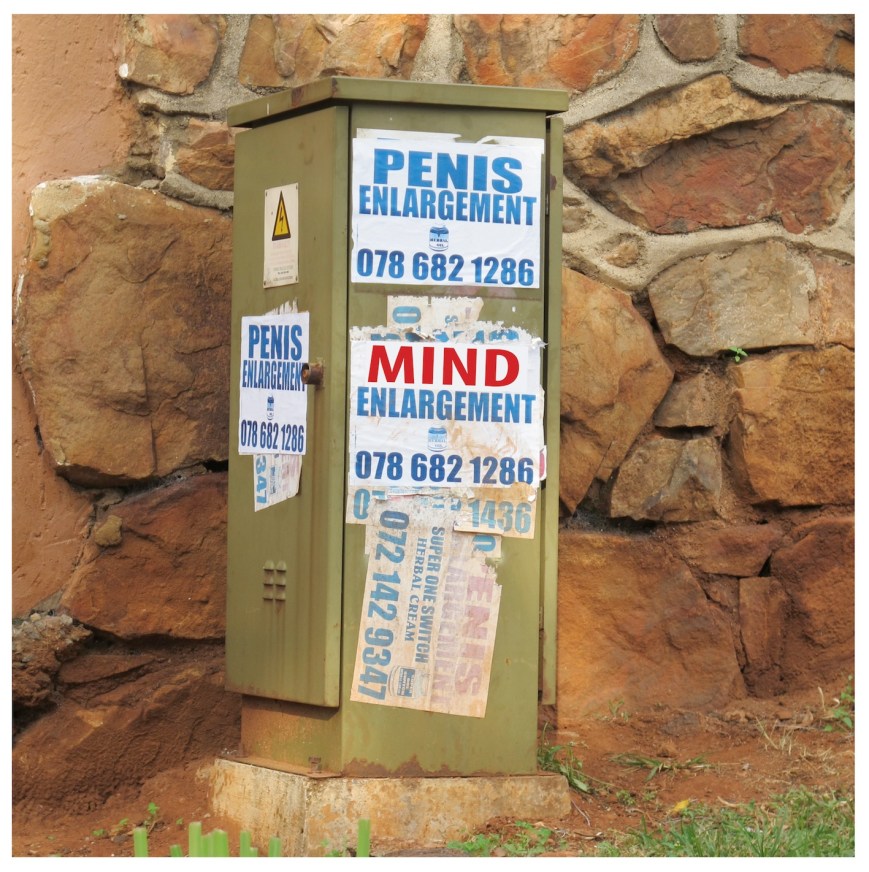
what about mind enlargement? #genderfreesa #dicktatorfreejozi #takingbackourcity

what about mind enlargement? #genderfreesa #dicktatorfreejozi #takingbackourcity

I don’t just live my life, I create my life. And after almost a year of creating images reflecting my vision of the city and its inhabitants, I no longer just want to reflect the city, but create it. Just as I need to be an activist in my own life and my own identity to fully be alive, as an artist, I need to be an artivist, actively participating in the creation of the city I want to live in. Joburg is not just a city, it is my city; it is my home. And as an artivist it is not just a place I want to live in, but a place I actively want to participate in creating.The idea for #takingbackourcity was born out of my return to Joburg from my first real visit to Cape Town. My return to Jozi from CT shocked me with the everyday messages and symbols we Joburgers take for granted; the messages and symbols that shape the collective unconscious of our city and our people. The ‘Penis Enlargement’ posters that adorn every robot, electrical box and street pole were the most glaring example. I asked myself: what does this say about Joburg? what does this say about Joburgers?
We are a city obsessed with the power of the phallus; a presidency obsessed with the symbol and virility and representation of the phallus; a people whose penis size reflects its masculinity, whose masculinity reflects its identity. The effect of this overtly embodied and gendered mantra on our collective unconscious plays itself out in our lives daily.

Continue reading

thundersqueak on the edge of wrong (2009)

Thundersqueak —  the noise trio of Gareth Dawson, Righard Kapp and Mark van Niekerk — performing live at Cape Town’s 4th annual festival of improvised music, ‘On The Edge of Wrong’  2009. Filmed by Jaco Minnaar.

Righard and Gareth will be playing together tonight at this year’s EDGE OF WRONG.

the edge of wrong festival starts this friday

It’s a festival kindred in spirit to Fleurmach! Don’t miss EDGE OF WRONG. From this Friday, 22 February until 2 March 2013 in Cape Town, explore the thresholds of what music can be…

edge of wrong 2013
EDGE OF WRONG is premised on the productive opportunities vested in chance, in uncertainty, in the pursuit of the unknown. It welcomes mistakes and challenge, diversity and collaboration.

As such, the festival brings together a community of like-minded musicians and artists from South Africa and Europe to share skills and visions with each other and the SA audience. Artists are invited based on their commitment to experimentation; to find, test and exceed the limits of their creative potential.

Find out more about the performers and line-up of events at the official EDGE OF WRONG site.

the rape of persephone (homeric hymn)

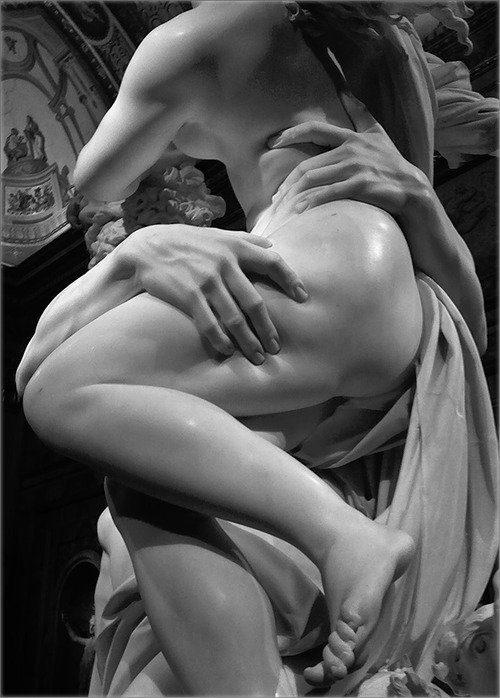
The Rape of Proserpina – Gian Lorenzo Bernini (1622)

I) HAIDES ABDUCTS PERSEPHONE
Homeric Hymn ii to Demeter (abridged) (trans. Evelyn White) (Greek epic circa 7th or 6th B.C.)

“[Demeter’s] trim-ankled daughter whom Aidoneus [Haides] rapt away, given to him by all-seeing Zeus the loud-thunderer. Apart from Demeter, lady of the golden sword and glorious fruits, she was playing with the deep-bosomed daughters of Okeanos and gathering flowers over a soft meadow, roses and crocuses and beautiful violets, irises also and hyacinths and the narcissus, which Gaia made to grow at the will of Zeus and to please Polydektor (the Host of Many), to be a snare for the bloom-like girl – a marvellous, radiant flower. It was a thing of awe whether for deathless gods or mortal men to see: from its root grew a hundred blooms and it smelled most sweetly, so that all wide heaven (Ouranos) above and the whole earth (Gaia) and the sea’s (Thalassa’s) salt swell laughed for joy.

And the girl was amazed and reached out with both hands to take the lovely toy: but the wide-pathed earth yawned there in the plain of Nysa, and the lord, Polydegmon (Host of Many), with his immortal horses sprang out upon her — the Son of Kronos, Polynomos (He who has many names). He caught her up reluctant on his golden car and bare her away lamenting.

Then she cried out shrilly with her voice, calling upon her father, [Zeus] the Son of Kronos, who is most high and excellent. But no one, either of the deathless gods or mortal men, heard her voice, nor yet the olive-trees bearing rich fruit: only tender-hearted Hekate, bright-coiffed, the daughter of Persaios, heard the girl from her cave, and the lord Helios (the Sun), Hyperion’s bright son, as she cried to her father, the Son of Kronos. But he was sitting aloof, apart from the gods, in his temple where many pray, and receiving sweet offerings from mortal men. So he [Haides], that Son of Kronos, Polynomos (of Many Names), Polysemantor (Ruler of Many) and Polydegmon (Host of Many), was bearing her away by leave of Zeus on his immortal chariot – his brother’s child and all unwilling.

And so long as she, the goddess, yet beheld earth and starry heaven and the strong-flowing sea where fishes shoal, and the rays of the sun, and still hoped to see her dear mother and the tribes of the eternal gods, so long hope claimed her great heart for all her trouble… and the heights of the mountains and the depths of the sea ran with her immortal voice: and her queenly mother heard her.

Continue reading

the boswell sisters – shout sister, shout (1931)

Recorded in New York, April 23, 1931

House Orchestra: Mannie Klein or Jack Purvis (tpt) Tommy Dorsey (tbn) Jimmy Dorsey (cl, as) Joe Venuti (vln) Arthur Schutt (p) Eddie Lang (g) Joe Tarto (sb) Chauncey Morehouse (d, vib) Victor Young (cond)

Boswell_sisters_01

E-36655-A Shout, Sister, Shout (Williams-Hill-Brynan) 3:13 Brunswick 6109, Brunswick 6847, Brunswick 6783, [BSC1], [NWST], [IY], [ELMB], [ITG], [TOOMA]

Composed by J. Tim Brymn, Alexander Hill and Clarence Williams

The Boswell Sisters were a close harmony singing group, consisting of sisters Martha Boswell (June 9, 1905 – July 2, 1958), Connee Boswell (original name Connie) (December 3, 1907 – October 11, 1976), and Helvetia “Vet” Boswell (May 20, 1911 – November 12, 1988), noted for intricate harmonies and rhythmic experimentation.

heavens to betsy – my red self/my secret (demo tape, 1992)

Heavens to Betsy was an American indie-punk band formed in Olympia, Washington in 1991. They were part of the DIY riot grrrl movement in the punk rock underground in the early 1990s, and were the first band of Sleater-Kinney vocalist/guitarist Corine Tucker. These two demos are intimate and powerful.

silent vigil this wednesday in cape town

Via Malika Ndlovu:

Stand Up! Be still. Join the Tower of Silence in reflection and protest against the silencing, a pillar of honouring and mourning. Wear white  (a symbol of spirit, light, cleansing, unity beyond gender, language, political or religious agenda) and join this 1 hour vigil against the violence epitomized by the death and brutalisation of Anene Booysen… and too many of our daughters and sisters like her. This Wednesday, 13th February 2013, on the steps of St George’s Cathedral, from 12 pm to 1 pm.

Bring a photograph on a placard of anyone you think we need to remember in this way too. We will not be sloganeering or shouting retaliations against our lost sons, brothers who have perpetuated this crime against their own and her humanity. Our collective presence and solidarity speaks volumes and calls for multiple responses to this complex situation, affecting an entire nation. We make this physical visual statement on the eve of onebillionrising.org global campaign and the president’s “State of the Nation” address. For us, these faces, these stories, these discarded bodies and all the reasons why this continues to happen in the world and all over South Africa – THIS is OUR ‘State of our Nation’ call to address!

mouchette

Final scene from Robert Bresson’s 1967 film.

“The small town is plagued with alcoholism, marital infidelity, unbridled masculinity, violence, and moral ambivalence. Mouchette’s father and brother, we have already seen, operate by selling liquor on the black market, with complicit police that turn an indifferent eye to a crate left behind. They, like other townsfolk, are paid in shots of alcohol, consumed without speech. Following Sunday mass, the village parishioners leave church and hastily head to the bar before the bells cease to toll. Mouchette’s dying mother has to hide gin from her abusive spouse. Even the town’s interdependent poacher/warden pair, Arsène and Mathieu, bring an end to their cat-and-mouse charade in the woods by sharing a drink from Arsène’s canteen full of gin. The motif of alcohol and its abuse stands as a distinctive mark of the moral decay of Mouchette’s society; however, the corruption of this town is not limited to alcoholism… Indeed, Mouchette’s society is one of extreme decadence and lawlessness, one that is ripe for a scapegoat upon whose back it can collectively discharge the burden of its vice and one from which the victim will gladly depart.”

Read more about the film HERE.

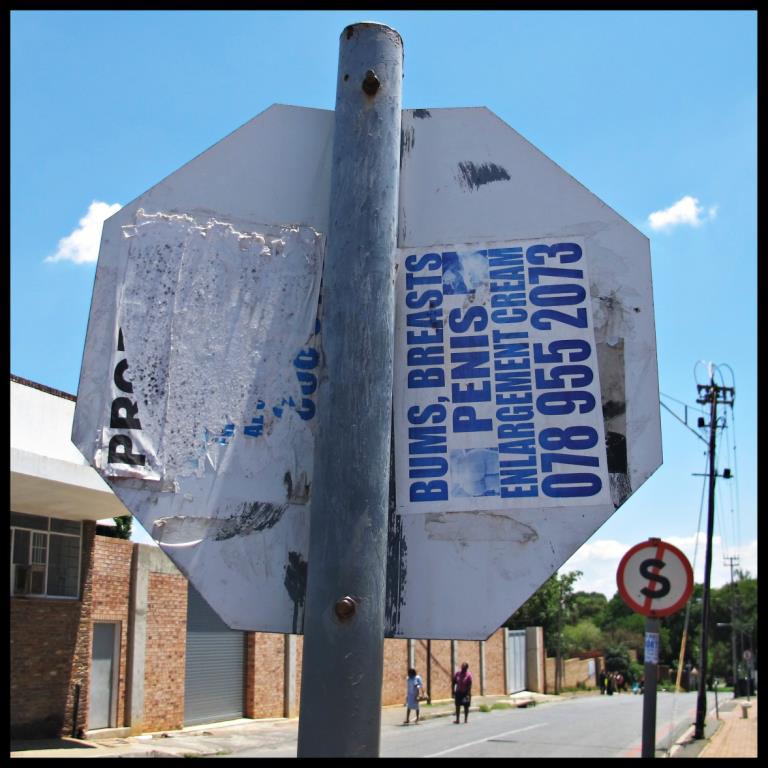
taking back our city #takingbackourcity #dicktatorfreejozi #genderfreesa

Participate in the creation of the city you want to live in. #takingbackourcity #dicktatorfreejozi #genderfreesa
Image
I don’t just live my life, I create my life. And after almost a year of creating images reflecting my vision of the city and its inhabitants, I no longer just want to reflect the city, but create it. Just as I need to be an activist in my own life and my own identity to fully be alive, as an artist, I need to be an artivist, actively participating in the creation of the city I want to live in. Joburg is not just a city, it is my city; it is my home. And as an artivist it is not just a place I want to live in, but a place I actively want to participate in creating.The idea for #takingbackourcity was born out of my return to Joburg from my first real visit to Cape Town. My return to Jozi from CT shocked me with the everyday messages and symbols we Joburgers take for granted; the messages and symbols that shape the collective unconscious of our city and our people. The ‘Penis Enlargement’ posters that adorn every robot, electrical box and street pole were the most glaring example. I asked myself: what does this say about Joburg? what does this say about Joburgers?

We are a city obsessed with the power of the phallus; a presidency obsessed with the symbol and virility and representation of the phallus; a people whose penis size reflects its masculinity, whose masculinity reflects its identity. The effect of this overtly embodied and gendered mantra on our collective unconscious plays itself out in our lives daily.

More so than with other cultures, Joburg constantly genders us. It equates our identity with our gender, places our gendered attributes – our penises, our breasts – under the microscope, and finds us wanting. Those who are found wanting and those who pass the grade play out the script of the power struggle that has been written for us. And as with the Battle of the Sexes in decades before us, the Battle of the Genders brings with it a long, long casualty list. Being part of the female-bodied and -gendered community, as well as the LGBTIQ community, from where so many of the casualties come, I cannot be part of an existence or an art that hides behind the privilege of aesthetic.

Those of you who follow my work know that I believe that gender is nothing more than a social construction and that I perform my gender through my identity and my art daily. But playing with gender and bearing witness to the daily reality of my and others’ lives as queers in my writing and images is not enough. How do I as a queer artist respond to the overt gendering of our city; the grossly embodied sexing of the spirit of Joburg?

I need to take responsibility for the city I want to live in and actively participate in creating it. I need to undermine the gendering of the city and its inhabitants with more than just my existence and my documentation of my play with gender and identity, more than just through my collaborations with others who do the same.

‘Taking Back our City’ is thus this journey of active and creative participation in my city. I hope that you will follow my journey and join me in taking our city back.

as long as we exist, we will be raped – sisonke msimang

(First published HERE.)

anene

I read an article on Thursday morning. It said: “The victim had been sliced open from her stomach to her genitals and dumped.” The radio is full of this story. Full of politicians and posers, trying to outdo one another. Like funeral criers. But it will end, the show. And there will be marches and petitions. There will be statements and rage. But it will happen again. Until we are inured to shock. It will happen again. Until our bones are worn into dust and our teeth crushed into the sand. It will happen and happen. Until we invent a way to stop being women. Until we find a way for our blood to no longer bleed between our legs. As long as we exist, we will be raped.

So, no, I will not march. I don’t believe my marching will stop this war. I will cry, as I have been already this morning. And maybe, I will begin to feel my way out of the lurching, heavy knowing after I have spoken with others. With the mothers and the sisters, the brothers and fathers – those like me, who have girls.

There is only this: a dead, hollow knowing that has always been knocking at my heart. From the minute she was born, it fell in step with the rhythm of my breath: to raise a girl in this world, to raise her strong and healthy and proud, to ensure that she survives and then to insist ferociously that she laugh and dance and think and dream, is to choose the most heartbreaking and joyous path. It is to tempt fate every single day, it is to fear that her breath will be strangled by a stranger. It is to live with the horrible possibility that this could be your child.

Anene was raped and mutilated because she was a girl. It was her vagina and her breasts that they wanted to destroy. It was her walk and her talk. It was her girl-ness. These parts of her were broken and sliced and pulled apart, not by monsters, but by friends. Each of her 10 fingers were broken.

Ten fingers and 10 toes. I kiss my baby girl goodnight. Ten fingers and 10 toes, I counted them when she was born just to be sure that she was real. I found love in the spaces between each. I cried at the weight of her. Tiny and strong.

Tonight, I will kiss her neck in the bath and she will wiggle away from me. ‘Stop it Mama’, and I will pinch her wet bum and she will sparkle. Tonight, she will be safe. But they will not stop killing girls.

And I will die defending her. Let them wear my bones into dust. Let them crush my teeth into the sand. Only this will stop the war. That we be prepared to die – our bodies barricades against the fingers that should not be there. The knives that slit. The guns that lodge. Let them lodge in me. In us.

Anene’s mother said that if she hadn’t seen her shoes, she wouldn’t have known that it was her own child. Her intestines? Her intestines.

God help us. And if God will not, Let the women be the barricades. The men, surely will follow.

Sisonke Msimang writes and comments on gender, race and politics. She works with Sonke Gender Justice Network, and is a Yale World Fellow.

wat die reën bring – neil sandilands

radio lavaDownload “Wat Die Reën Bring” by Neil Sandilands, with music by Riku Lätti, recorded by Riku Lätti at Koptoe, Magaliesberg. It is one of the tracks I found most beautiful from the collection of recordings Lätti has been gradually accumulating, which he has entitled “Die Wasgoedlyn” (The Washing Line). The whole album can be downloaded from HERE.

Some background from Riku Lätti:

“It started off a long time ago when I began my own recording studio “Radio Lava” and every now and then I recorded my friends (who happened to be good musicians) in all kinds of odd locations and precarious states of sobriety. Most of these artists have pristine studio albums which I kind of think of as “the front of the house” (facade). Nice and fancy, polished spotless. Die Wasgoedlyn are those other recordings of all of these artists as they really are at home. Unpolished, stubbled, raw with their underwear on “die wasgoedlyn” blowing in the wind now for all to hear.

“Anywhere I find somebody is keen to play music of quality, I will be interested in capturing it, bottling it and setting it free so that music doesn’t have to be stuck in an inhumane, sorry, un-humanly state of untouchable perfection. I want to hear the breath before the beat starts, the bird in the background, the train leaving the station, the clanging of the friends’ glasses as they celebrate being there when they spot their favourite artist playing a tune he really meant and felt like playing. We are not putting our best foot forward, we are just “human beings being”, if I may quote Loit Sôls, Goema poet who is also featured on “Die Wasgoedlyn”.

Check out the beautiful (Afrikaans) lyrics to Neil Sandiland’s track after the jump. Oh, and thanks to Toast Coetzer of Bush Radio’s Unhappy Hour Show for stelling my in kennis.

Continue reading

a special message from jimmy rage

jimmy rage01each and every one one of us has a book of narratives, that we read write and become part of. each chapter verse and paragraph tells our stories and as time passes, we become familiar with our own characters and our own cast of characters become familiar with us.

there is the longing, the dreaming, the ambition, the beauty and the ugliness and above all, there is the love.. the love of others, the love of others like self and the love of self..

the hardest part though, is to be and become part of the narrative..beauty.. to not negate from its positivity its validity as a document to the light rays streaming through our windows of hope and courage to go forward.
the sun rises and sets in a distant sky, as trees bend, bow, blow leaves, jingling. we are hushed into our own simplicities, the grace of intelligence..

man woman or child is the subtotal of a life lived and hoped for.. the narrative of distant and close dreams are but moments, in our own being, where we are awake and know and overstand that it is in the power of our being that we learn that our own empowerment is the storehouse.. that we are capable of more than the small parts that make up the whole.

love, romance, career, children are all part of the course of our own destined future, but the inner self, the inner voice is the calling to follow your own path, all love, and in doing so .. this becomes a mantra, a calling even..

jimmy rage02

noise and capitalism

“This book, Noise and Capitalism, is a tool for understanding the situation we are living through, the way our practices and our subjectivities are determined by capitalism. It explores contemporary alienation in order to discover whether the practices of improvisation and noise contain or can produce emancipatory moments and how these practices point towards social relations which can extend these moments.

If the conditions in which we produce our music affects our playing then let’s try to feel through them, understand them as much as possible and, then, change these conditions.

If our senses are appropriated by capitalism and put to work in an ‘attention economy’, let’s, then, reappropriate our senses, our capacity to feel, our receptive powers; let’s start the war at the membrane! Alienated language is noise, but noise contains possibilities that may, who knows, be more affective than discursive, more enigmatic than dogmatic.

Noise and improvisation are practices of risk, a ‘going fragile’. Yet these risks imply a social responsibility that could take us beyond ‘phoney freedom’ and into unities of differing.

We find ourselves poised between vicariously florid academic criticism, overspecialised niche markets and basements full of anti-intellectual escapists. There is, after all, ‘a Franco, Churchill, Roosevelt, inside all of us…’ yet this book is written neither by chiefs nor generals.

Here non-appointed practitioners, who are not yet disinterested, autotheorise ways of thinking through the contemporary conditions for making difficult music and opening up to the wilfully perverse satisfactions of the auricular drives.”

Sound interesting? HERE, DOWNLOAD NOISE AND CAPITALISM FREE.
Edited by Mattin Iles and Anthony Iles
Contributions from Ray Brassier, Emma Hedditch, Matthew Hyland, Anthony Iles, Sara Kaaman, Mattin, Nina Power, Edwin Prévost, Bruce Russell, Matthieu Saladin, Howard Slater, Csaba Toth, Ben Watson.
More details from the publishers, Arteleku Audiolab (Kritika series), Donostia-San Sebastián (Gipuzkoa)
Publication date: September 2009

this mortal coil – waves become wings/ barramundi

“Wave Become Wings” and “Barramundi” from It’ll End in Tears, an album released in 1984 by the label 4AD, using the name “This Mortal Coil” as an umbrella title for a loose grouping of guest musicians and vocalists brought together by label boss Ivo Watts-Russell.

Images taken from Baraka (directed by Ron Fricke).

swans – mind/body/light/sound (1995)

Throw your mind away
Fall into the sea
There’s nothing solid here
Dissolve your body today
There’s a sun in the sky
We’re in the atmosphere
Throw yourself in the sea
There’s nothing solid down here
Mind/body/light/sound
Mindless, bodyless, soundless light
This ordinary night
This ordinary day
They’re twisted out of shape
Then they disintegrate
Cool water runs through the ground
The ocean blends with the air
Throw yourself in the fire
There’s nothing solid around here
Mind/body/light/sound
Mindless, bodyless, soundless light
The world was over today
The time is already gone
Throw your mind in the sea
Eternity doesn’t last very long
There’s some people on earth
They live in separate minds
Dissolve your body today,
There is no more outside
Mind/body/light/sound
Mindless, bodyless, soundless light

jiddu krishnamurti on observing ourselves in space and time

“When the observer is the observed, and the observer has always acted as though the observed is something different from himself, then he could act. But, when he realises that the observer IS the observed, all action ceases on his part… and, therefore, all effort.  And therefore there is no fear at all. This requires a great deal of inward inquiry, inward observation, step by step without coming to any conclusion.

“Why do you choose; what is the necessity of choice? If you see something very clearly (as we just now saw what freedom implied, and that the mind is only free when it can see the total) … when you see that clearly, there is no choice. It’s only the confused mind that chooses. Awareness takes place only when there is no choice, or when you are aware of all the conflicting choices, all the conflicting desires, the strains… Just to observe all this movement of contradiction… and, knowing that the observer is the observed, that therefore in that process there is no choice at all, but only watching what IS.

“And that’s entirely different from concentration. Awareness brings a quality of attention in which there is neither the observer nor the observed. When you really attend, completely attend, like now, if you are really listening, there is neither the listener nor the speaker. And that state of attention brings about an extraordinary  sense of freshness, a quality of newness to the mind…”

scientist – dematerialise

Off Scientist Meets the Space Invaders (Greensleeves Records, 1981), produced by Mikey “Roots” Scott & Linval Thompson. The recording was done at Channel One Studios backed by the Roots Radics, and mixed at King Tubby’s. The recording was by Stanley “Barnabas” Bryan, Anthony “Crucial Bunny” Graham and Maxwell “Maxie” Livington Smith. The cover artwork is by Tony McDermott.

thoughts on meaningful work, 14 november 2012, 5:38 a.m.

What follows is something I wanted to blog from Turkey in November but was unable to due to lack of an internet connection at the time. I woke up very early one morning, typed it into my phone’s notes app, half asleep, and promptly forgot about it. The incredibly tedious work I am currently doing (editing an MSc thesis on anthropometric measurements for office chairs) reminded me of its existence. So, two months later, here it is.
Turkey 2012 492a

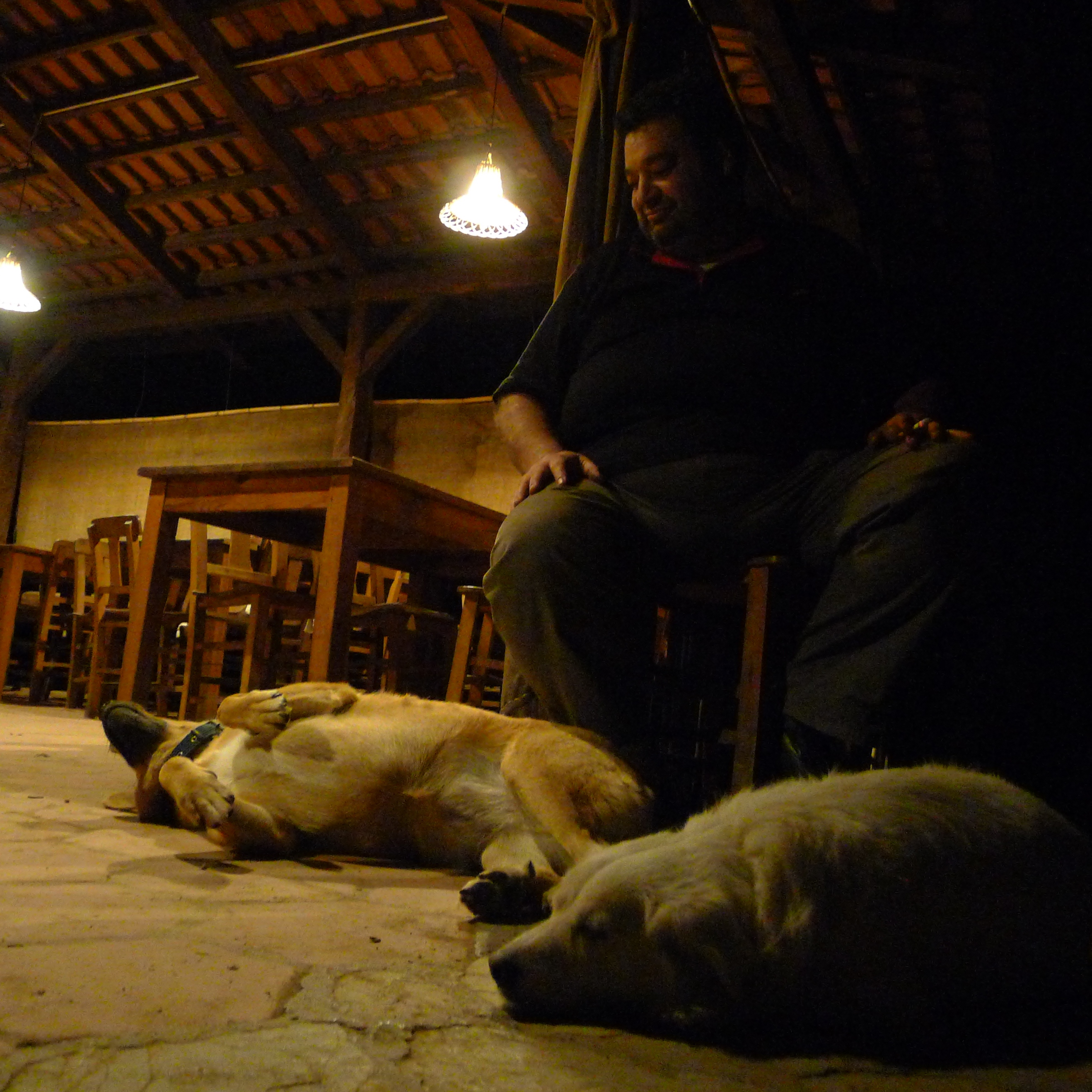
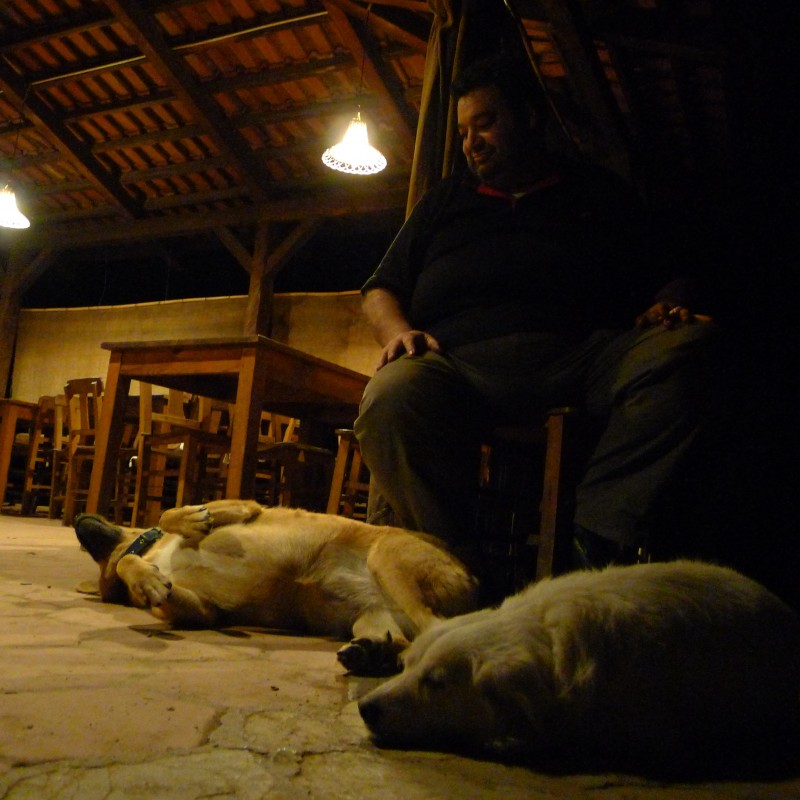
Arif Cerit with the farm dogs, Shanslar (Lucky) and Beyaz (White), at Pastoral Vadi. Photo: Rosemary Lombard.

Last night I had a profound conversation, in my bad Turkish and his bad English, with Arif Cerit, a guy who lives at Pastoral Vadi, the organic/permaculture farm near Fethiye in South-Western Turkey which I am visiting – working in exchange for food and a bed. It’s a very comfortable bed, in a neat, well-appointed cottage designed and built of cob (straw and mud) five years ago by Ahmet Kizen, an architect passionate about sustainable living and ecotourism who bought this farm 14 years ago and opened it to visitors about 7 years back. No maintenance has been necessary since the cottage was built, I’m told. The thick walls keep it cool during the day and surprisingly warm at night.

So, back to what I wanted to blog about, which has resonated for me with my friend P‘s latest gier on Facebook, which involves a sort of Dada/absurdist attempt to animalise interactions. Having been away and in limited contact with everyone, I haven’t had a chance to ask him more about it, but, basically, instead of clicking “like”, he types animal noises. “Baaa, baaa”, mostly. For me it draws attention to the essentially animal nature of human interaction, which we have become unconscious of and detached from, as we live large swathes of our lives online, “denatured”, unquestioning.  “Like” has become a capricious yet ubiquitous form of social capital. Facebook’s shady manipulation of this currency of late has triggered consternation and outrage. They’ve put in place algorithms that restrict the “organic” (terms such as “organic” and “viral” in the world of virtual memes are interesting in their ironic detachment!) reach of posts on the network, requiring one to pay (“real” money) to secure an audience greater than an arbitrary sliver of the profiles to whom one is connected… Just when I thought it was because I only had a sliver of die-hards who actually enjoyed what I post anymore, I realised that most of my Facebook friends no longer see my updates in their news feeds. What a relief (?). The virtual landscape increasingly resembles a targeted marketing environment more than it does a communal hangout, a place for exchanging ideas and thoughts, as it used to. Now it’s mostly about Profit. By monetising the prominence of posts, equal access is effectively being stifled. Concomitantly, freedom of association and meaningful interaction are withering.

That’s another aside, or, rather, more context. ANYWAY. So, what I gleaned from my conversation with big, friendly Arif was that he had been a taxi driver with a fleet of cars in the west coast city of Izmir for 21 years, before dropping everything and moving here to the farm. He sold his business, gave the money to his brothers and left it all behind.

He says that the city is a big jungle, very dark, very dense, very dangerous, full of artifice and chemical poisons. People are a species of animal, he says, like all animals… In cities you have to be a predator to do well. If you are not a predator, you have to live your life very small, like a rat, to survive. Your mind is very important, he says. The chasing after money and things that you need to do to live in the city takes up all your time and your thoughts. Money is a cancer. TV is the morphine you need to kill the pain at the end of the day: the pain of your mind being eaten away.

Out here on the farm, life is real, he says. There is space, there is ground, and air, and the smell of greenness. Animals who are not predators can live happily, widely, openly, productively.
Turkey 2012 467a

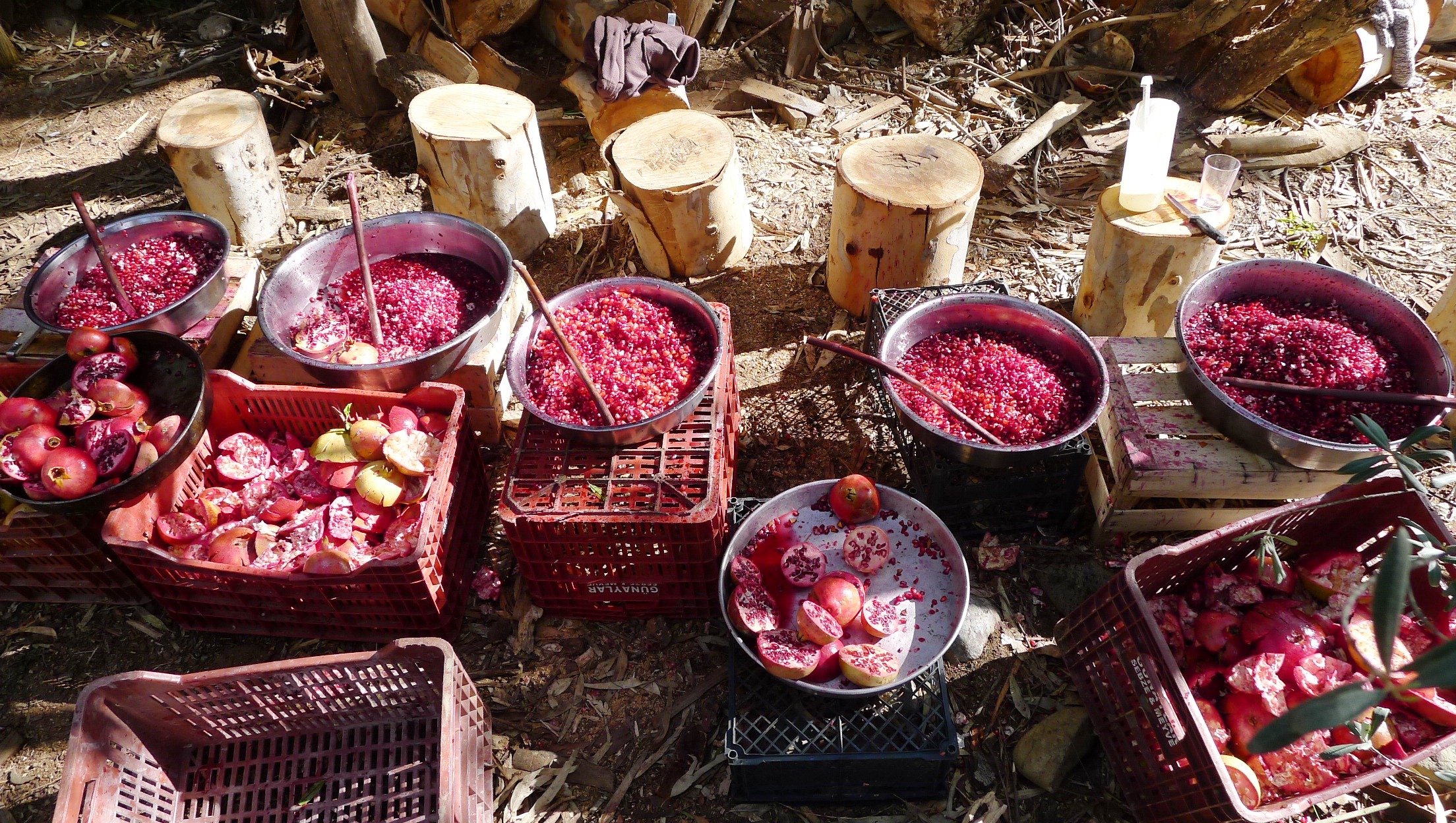
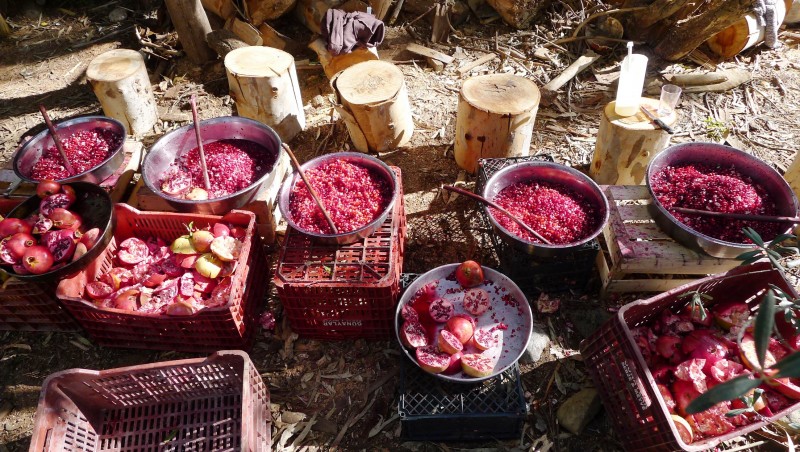
Processing pomegranates by hand to make nar ekshili sos (pomegranate reduction). Photo: Rosemary Lombard

Sticky, crimson pomegranate juice is running down my arms and dripping off my elbows. I’m stained with the joy of manual labour. It’s so satisfying, this repetitive bashing of crates and crates of halved fruit to knock out the arils, then the squeezing in a bag to extract the juice, which is then boiled over a fire for ten hours to reduce it to a dark, tart syrup, then strained through muslin into bottles.  It’s slow-going, messy, tiring work. I have blisters, purple palms. But, at the end of each day, I can see the results of my time spent. It’s nothing like the virtual world of work I mostly inhabit, where I shut down my computer and a sense of the hours and hours I have spent shunting pixels around evaporates.

For so long now, my life has felt paper-thin, no, thinner, as if I barely cast even a shadow of influence in the world, and I realise now that it is largely because of the intangible nature of the work I have been doing, which mostly involves cleaning, tidying and correcting other people’s writing, or recording their work, or facilitating their conversations… It’s all work towards actualising goals that I have deemed worthwhile; nonetheless, these are goals which are not my own. I have tried to frame them as my own, tried to see my part in the whole as indispensable, my purpose as contiguous with that of the projects’, my place as “a tiny cog in the great wheel of evolution” – that was how Billy Wilder put it, writing the words of Ninotchka played by Greta Garbo in Ernst Lubitsch’s wonderful 1939 satire of the same name.

Alas, my heart just hasn’t been convinced. I haven’t been able to shake this unbearable sense of lightness, of the unnecessary breaths I’m taking, of the lack of any other humans who truly require or desire my existence, irreplaceably, here on Earth. All this needs to change if I am to remain sane when I get back. Living with a heavenly purpose is too far beyond me. I’d be satisfied to have done with consumption, thanks. I started this blog in an attempt to make something indelible of the ephemeral. I need to do more. I’m starving.

“If I had an orchard, I’d work till I was sore.” ~ Fleet Foxes – “Helplessness Blues“.
Fethiye-20121113-01327

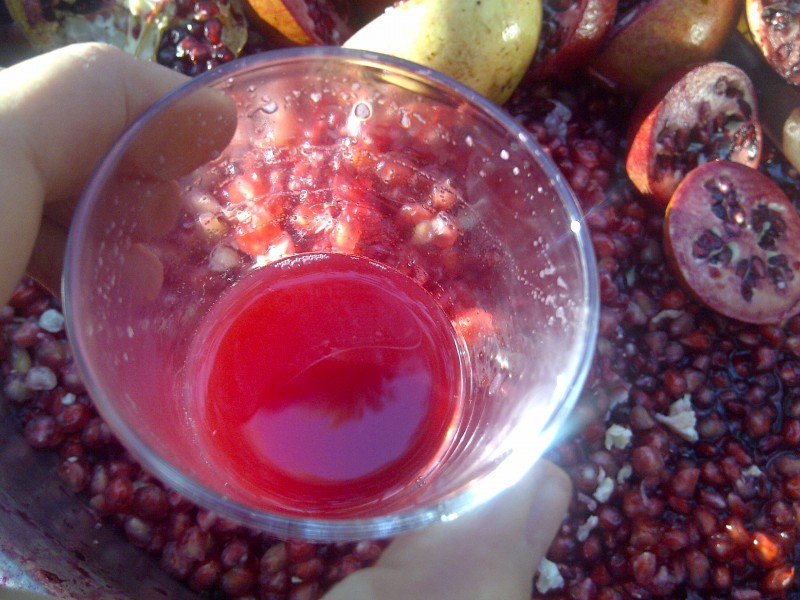
Sweet! A break to drink some freshly-squeezed pomegranate juice. Photo: Rosemary Lombard

Ş
audre lorde on the erotic

The erotic is a resource within each of us that lies in a deeply female and spiritual plane, firmly rooted in the power of our unexpressed or unrecognised feeling…

Of course, women so empowered are dangerous. So we are taught to separate the erotic from most vital areas of our lives other than sex…

The principal horror of any system which defines the good in terms of profit rather than in terms of human need, or which defines human need to exclusion of the psychic and emotional components of that need — the principal horror of such a system is that it robs our work of its erotic value, its erotic power and life appeal and fulfilment. Such a system reduces work to a travesty of necessities, a duty by which we earn bread or oblivion for ourselves and those we love. But this is tantamount to blinding a painter and then telling her to improve her work, and to enjoy the act of painting. It is not only next to impossible, it is also profoundly cruel.

. . . [O]nce we begin to feel deeply all the aspects of our lives, we begin to demand from ourselves and from our life-pursuits that they feel in accordance with that joy which we know ourselves to be capable of. Our erotic knowledge empowers us, becomes a lens through which we scrutinize all aspects of our existence, forcing us to evaluate those aspects honestly in terms of their relative meaning within our lives…

During World War II, we bought sealed plastic packets of white, uncolored margarine, with a tiny, intense pellet of yellow coloring perched like a topaz just inside the clear skin of the bag. We would leave the margarine out for a while to soften, and then we would pinch the little pellet to break it inside the bag, releasing the rich yellowness into the soft pale mass of margarine. Then, taking it carefully between our fingers, we would knead it gently back and forth, over and over, until the color had spread throughout the whole pound bag of margarine, thoroughly coloring it.

I find the erotic such a kernel within myself. When released from its intense and constrained pellet, it flows through and colors my life with a kind of energy that heightens and sensitizes and strengthens all my experience.

Lorde, Audre. “Uses of the Erotic: The Erotic as Power.” Sister Outsider: Essays and Speeches. Freedom, CA: Crossing Press, 1984. 53-59.