From The Greatest (Matador, 2006).
From The Greatest (Matador, 2006).

Rest in peace, Robin Williams.


Kurt in 1993, very lucidly, on a bunch of stuff including misanthropy, sexism, advocacy, collecting, and his fascination with anatomy. Living in South Africa, I never saw any interviews with him back then and, watching this today, it struck me that I hadn’t expected him to be this honestly unaffected and humble. This interview happened only a little over half a year before his suicide in April 1994.

Water, ash, flowers… Karrie’s memorial, Pietermaritzburg, 29 June 2014. Photo: Rosemary Lombard

Photo: Thokozani Mthiyane
the hollowness of the head
the hollowness of the heart
floating hieroglyphics
in search of yet another
… … … poetics
with age comes reason
yet with age comes frailty
and the absence of … …
sunshine bloom promise
and the dying cloud
the most crazy thing is how total and how final the change of state from alive to dead is, when it happens. however you think you are expecting it, it is always a surprise.
Go and see this at the Encounters Documentary Festival, on right now in Cape Town and Jo’burg: the brilliant Sarah Polley‘s genre-defying examination of the workings of memory and narrative related to her own family’s secrets. It’s a gentle yet unflinching interrogation of how truth is shaped by the stories we tell ourselves when making sense of the things that happen in our lives. Humorous, poignant, profound… highly recommended.
Cowabunga!
Oh how I want you to remember,
this song was yours,
it was your favourite, I think
Written by Prévert and Kosma.
And each time “Fallen Leaves”
brings back my memories of you,
day after day
the fallen loves
are never done dying.
I abandon myself to other’s arms, of course
but their song is dull
and I grow ever more indifferent,
there is no helping it.
Because each time “Fallen Leaves”
brings back my memories of you,
day after day
the fallen loves
are never done dying.
Is it ever possible to know
the beginning or the end of indifference?
May fall pass, may winter come,
and may Prévert’s song,
this song,
“Fallen Leaves“,
vanish from my memories,
and on that day
my fallen loves
will be done dying.
And on that day,
my fallen loves
will be done dying.
“While they’re still alive, people can become ghosts.”
— Haruki Murakami, from Kafka on the Shore.
” A Paul Klee painting named Angelus Novus shows an angel looking as though he is about to move away from something he is fixedly contemplating. His eyes are staring, his mouth is open, his wings are spread. This is how one pictures the angel of history. His face is turned toward the past. Where we perceive a chain of events, he sees one single catastrophe which keeps piling wreckage upon wreckage and hurls it in front of his feet. The angel would like to stay, awaken the dead, and make whole what has been smashed. But a storm is blowing from Paradise; his wings are caught in it with such violence that the angel can no longer close them. The storm irresistibly propels him into the future to which his back is turned, while the pile of debris before him grows skyward. This storm is what we call progress.”
— Walter Benjamin, 1940
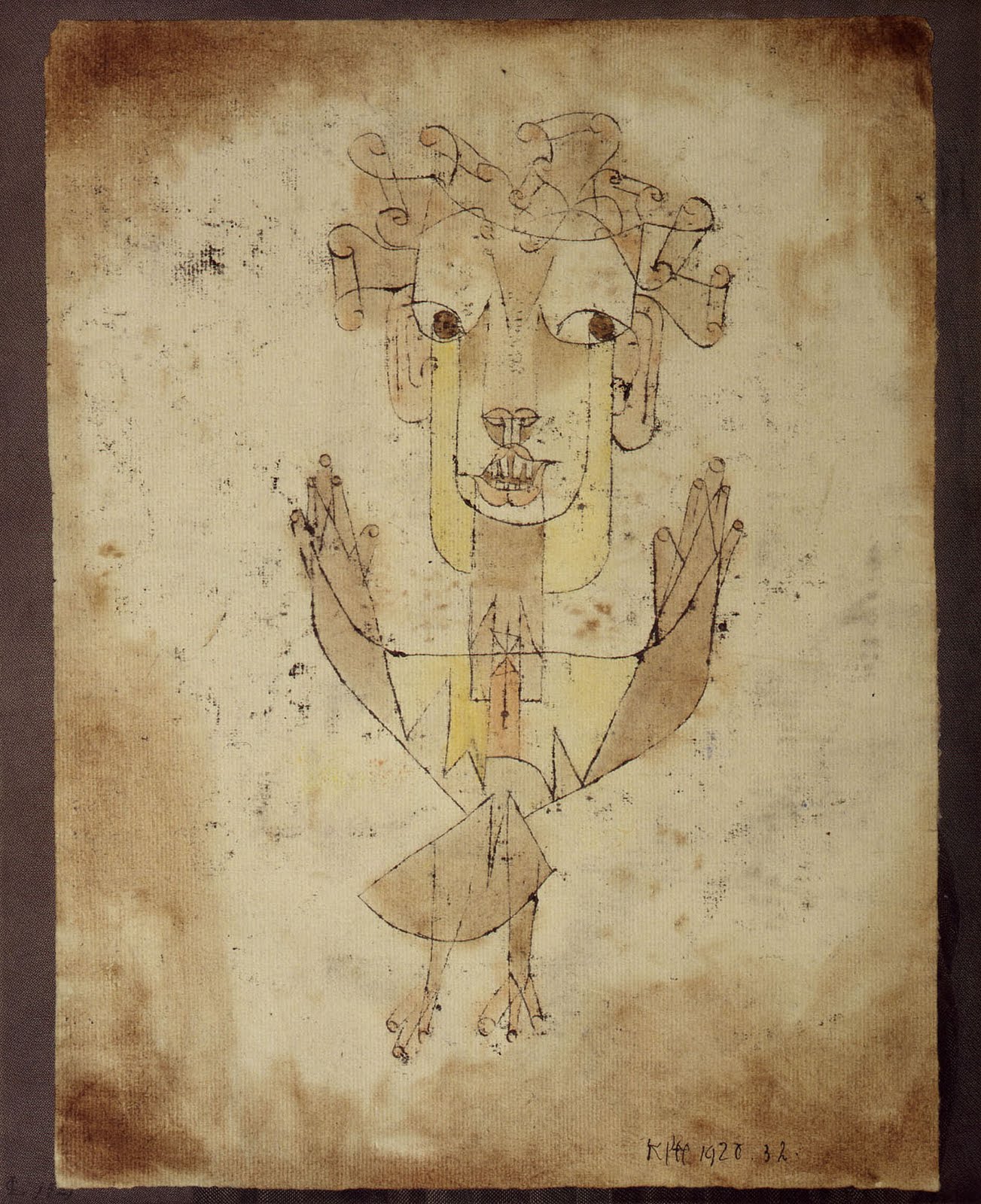
Paul Klee – Angelus Novus (1920)
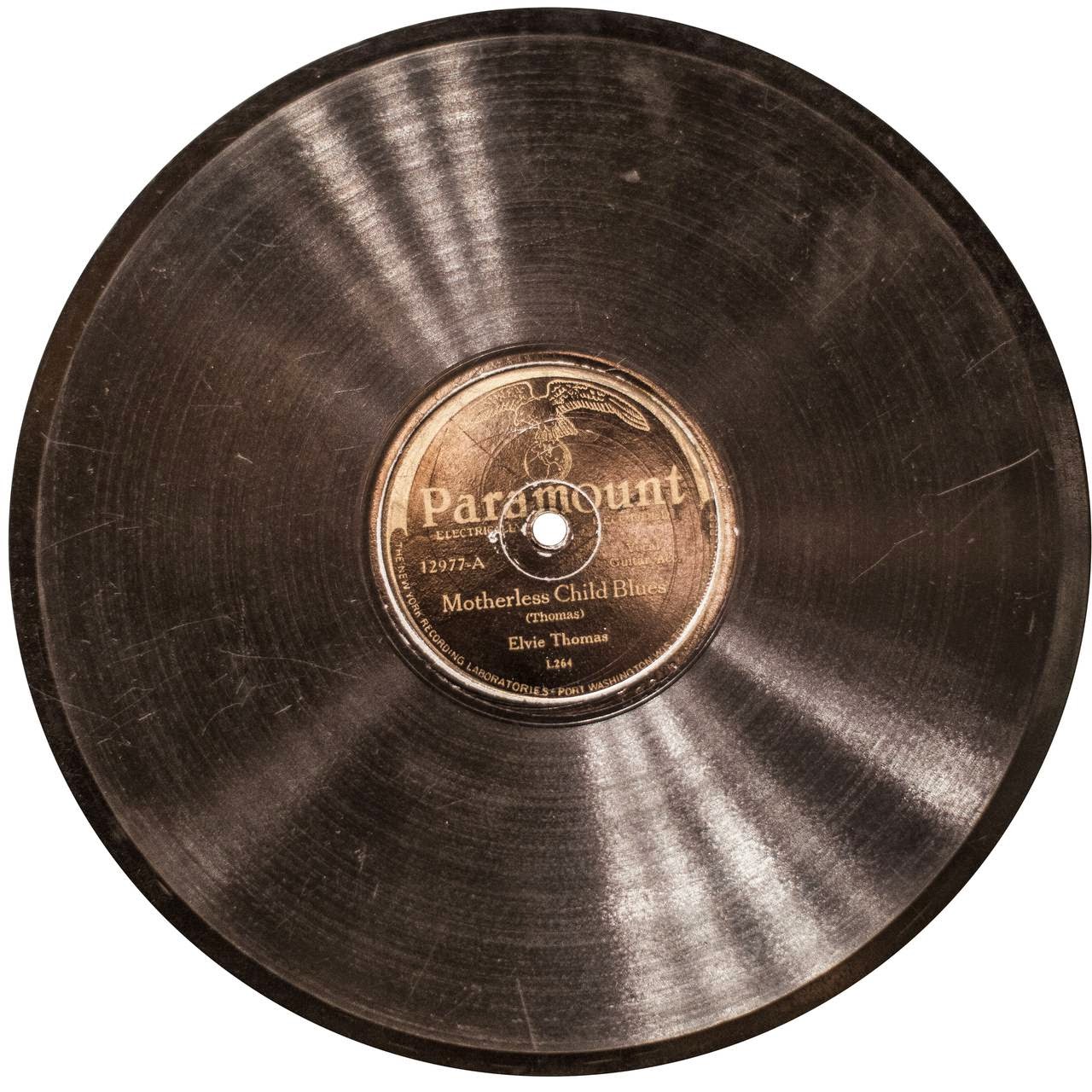
The New York Times recently published an evocative long-form article penned by John Jeremiah Sullivan about the enigmatic Geeshie Wiley and Elvie Thomas, woman blues musicians who haunt the archive with just six songs ever recorded, pressed on cheap, poor quality 78s by Paramount in 1930, as was the custom with “race” records not intended for mainstream markets.
I have been gripped on every listening by “Last Kind Words Blues” since I first heard it on the soundtrack to Crumb in the late ’90s (the same place Sullivan did), so I understood what Caitlyn Love, who did much of the the on-the-ground research for Sullivan, meant about its haunting her. From her blog:
When I first started doing research for John Jeremiah Sullivan for his article about Geeshie Wiley and Elvie Thomas, two women who changed American music and then vanished without a trace, I kept Wiley’s song “Last Kind Words Blues” on repeat for days. I hadn’t listened closely to her songs before this project, but I was aware of the mythology around them. Now, I found myself hearing something new: a haunting, a mystery.
I began my research splitting time between the Clayton Library Center for Genealogical Research, hunting among death, birth and marriage records, and the Houston Metropolitan Research Center, looking through old maps, photographs and city-directory records. All of these materials provided context for the era that Lillie Mae (Geetchie) Wiley and L.V. Thomas lived through.
Eventually we learned a great deal about Thomas’s personal history. But leads to Wiley went nowhere. I made myself dizzy scrolling through rolls of microfilm to find any meaningful clue. She had disappeared. The trail only picked up once, but it picked up sharply.
“We may have found Geeshie’s grave yesterday. Not 100 percent but optimistic,” John wrote in an email to editors at the magazine.
Continue reading about Caitlyn Love’s quest HERE.
Read John Jeremiah Sullivan’s piece HERE – it’s beautifully written, and reflects in deep ways on the romance and violence of the archive.
And this is the short version of the story, from a Youtube comment posted last week:
It is now believed that Elvie (L.V. Thomas nee Grant) and Geechie (Lillie Mae Wiley) recorded all of their songs in Grafton, WI for Paramount in 1930. According to L.V., she would play and Geechie would “bass” behind her or she’d play (guitar) and Geechie would “bass” behind her. Thus, it might very well be Geechie we hear doing this fine guitar work. L.V. turned her back on the blues (life) and dedicated herself to her local church in Texas. Geeshie disappeared into the unknown. Recent records indicate she killed her husband with a knife in 1931. She may have changed her name/I.D. to avoid being found.
An undubbed outtake from the June 1970 recording sessions for Elvis Country (I’m 10,000 Years Old), released as part of a rerelease of the album (Follow That Dream, 2008).
I’m not a fan of Elvis in general – I mostly find his delivery way too glib. But in this session I can hear his fragility… I can hear he feels what he is singing deeply, and he would give anything to get the glibness back.
I was just thinking that it’s a common trajectory that an artist starts out passionate and edgy, becoming increasingly jaded, cynical and safe post-40 (anyone been keeping half an eye on Bob Dylan lately?). I think it was the other way round for Elvis, which is why he eventually imploded. I think something similar happened to Michael Jackson. They stopped believing in their own illusions, and it killed them.
“I’ve caught so many falling stars
There’s holes in my hands…”
Title track off their 1986 album on New Rose Records.
when you release a weather balloon
off the back of the ship
with the small box of the radiosonde
dangling precariously below its
oversized white grape of a shape
on a simple string
which unfurls as you let it go
to become ten metres, or longer
so the radiosonde can feel
the atmosphere around it
in its full, naked glory
it is eleven o’clock, or midnight
somewhere in the world
it might as well be here
where we are in our pajamas
and the balloon is about this size
and filled with helium
and seconds after you’ve let it go
it is sucked up into the wild
black sky, and the noisy, battling sea
seems to urge it on with an out of
control applause from below
and it is gone, so suddenly, so for surely,
and you’re left standing there, disappointed
blinking into the inky cold, with your head hanging
back onto your neck and your mouth open
in your sticky gumboots
and the salty diesel smell in your beard
and it only gets exciting again when
you hunch over a computer screen inside
with the meteorologists to look – like
alchemists – at the boiling pot of
leaping numbers as the weather balloon
and its transmitting radiosonde races through
the layers of emptiness, a thousand metres, two thousand metres
and sends lurches and spurts of data back to
where we’re bobbing in the Atlantic
as it shoots upwards
with squiggles and digits and facts
through what seems like nothing
but is in actual fact the invisible sinews that
keep the clouds tied to the mountains, moss to the trunk
the raindrops to the snakes, fish to pebbles
goats’ hooves to cliff faces, tomato green to finger tips
the sea to the murmuring, cracking movement of the continents
and the spongy, lung-like coral fans to the conversation
filtering plankton and pain and matter of fact
in the queue at the ATM about the weather and tax
and death and babies and the future
and five thousand metres, seven thousand, nine thousand
to where commercial airliners fly in straight lines
through clouds and stars and shavings of moon
which cannot be seen because the shutters are down
and the movies are being shown
and by now the weather balloon has grown in size
due to the air pressure to the size of this room
and the radiosonde is reaching the edge of
its usefulness to our understanding and prediction
of weather systems and unfurling cold fronts
winds and even the sprinkling of godsmall protons
and atomic nuclei which have been travelling towards us
from very far away – from the herb gardens of supernovas –
to confirm what we’ve been suspecting
for a while already: we are born fragile, and dogs are
our eternal friends.
—
 For more of Toast’s wonder-filled words, check out the gig happening this Thursday night in Cape Town at Joule City, entitled “Albatross: a journey through spoken and unspoken word”. You can buy tickets on QUICKET or at the door.
According to the blurb for the event on Facebook:
This collaboration combines movement with poetry to create a unique audio – visual performance. For this show, the band will consist of Toast Coetzer, Righard Kapp, Jon Savage and Jane Breetzke (the latter two also collaborators in Toast’s other band, Simply Dead). Darkroom Contemporary will accompany the band with an exploration of the music through movement.
Cape Town artist Katherine Bull will create/ draw during the performance and her artwork will be projected for the audience to see.
The material performed in the Albatross show will take the shape of a 45-minute journey. Toast went on a sea voyage to Tristan da Cunha in 2013 and the show will trace themes he wrote about while on the journey and on the island, which is the most isolated permanently populated island in the world (it’s almost 3 000 km from Cape Town).
Hence the ocean, sea voyages, sea birds (and principally the albatross and its marathon gliding exploits to feeding grounds, and then back to a speck in the ocean where a mate awaits on a nest), oceanography, metereology and geography will become the background for love, long-distance relationships, people’s adversity against the odds and other human frailties to be explored against.
“Yes, I’m in need of something
But it’s something you ain’t got…”
Johnny Cash’s “lost” 1980s album, Out Among The Stars, is out later this month. Here’s the video for its first single, directed by John Hillcoat, who has collaborated regularly with Nick Cave.
This fragment was filmed by Dick Jewell during the rehearsals for the recordings of Madala Kunene’s album Kon’ko Man in Johannesburg, 1995.
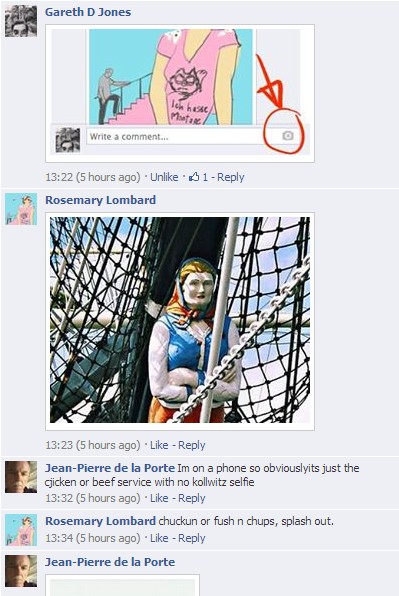
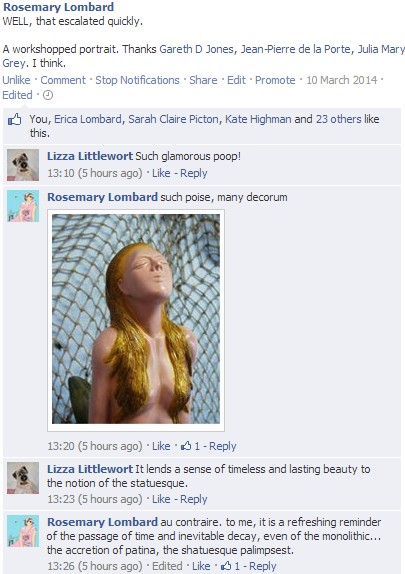
This is what Facebook is really for. Here is a funny conversation that evolved into a collaborative portrait in layers on my wall over a few hours today, a particularly suffocating Monday. I’m keeping this as a snapshot of what creative people used to do when bored silly with social media in 2014.
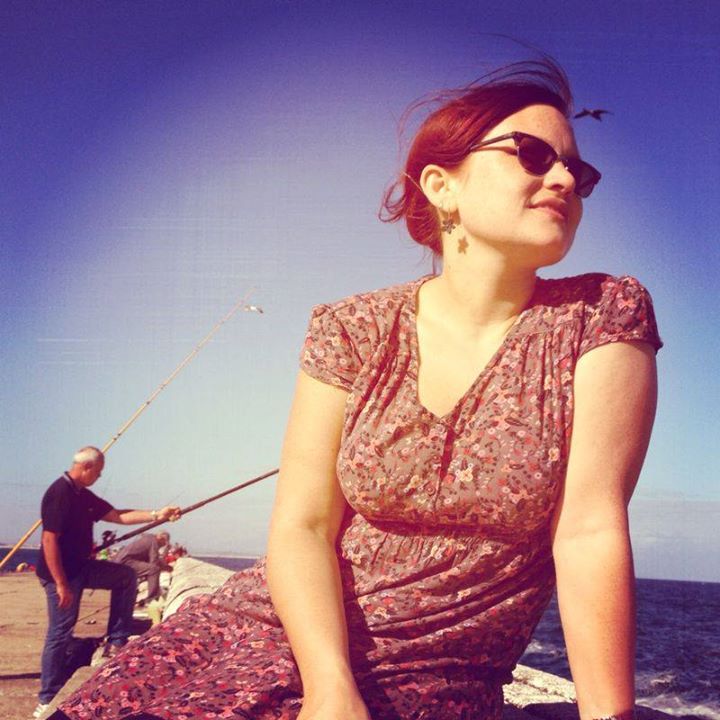
Photo by Julia Mary Grey, Kalk Bay harbour, Saturday 8 March, 2014


By Gareth Jones, in response to comments under the original image
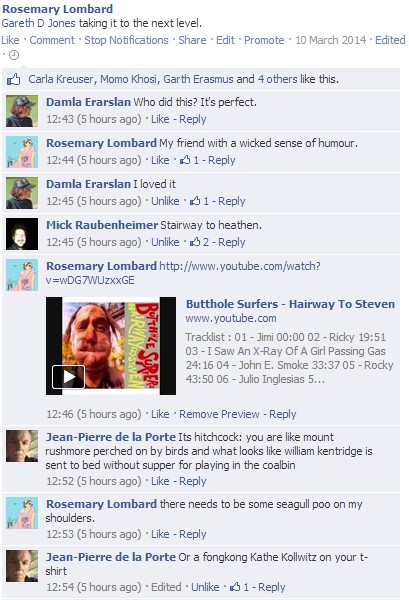
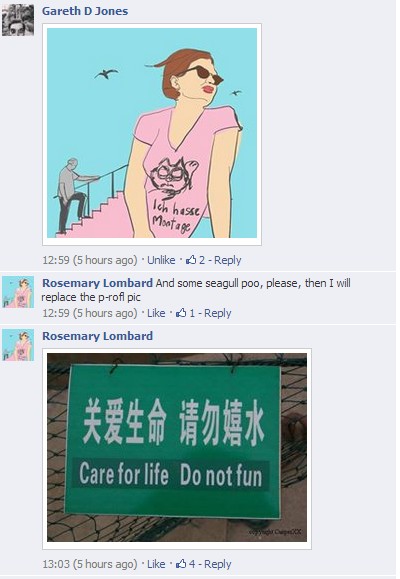
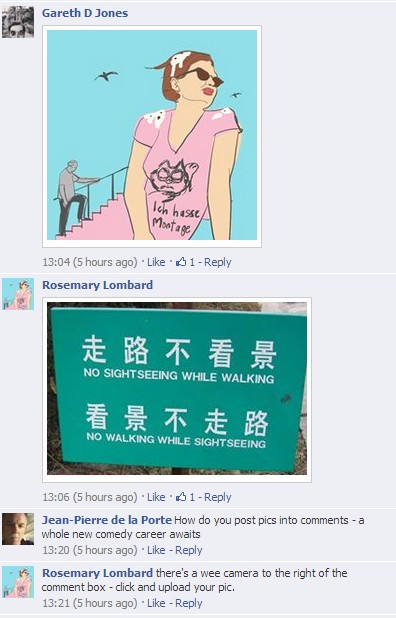
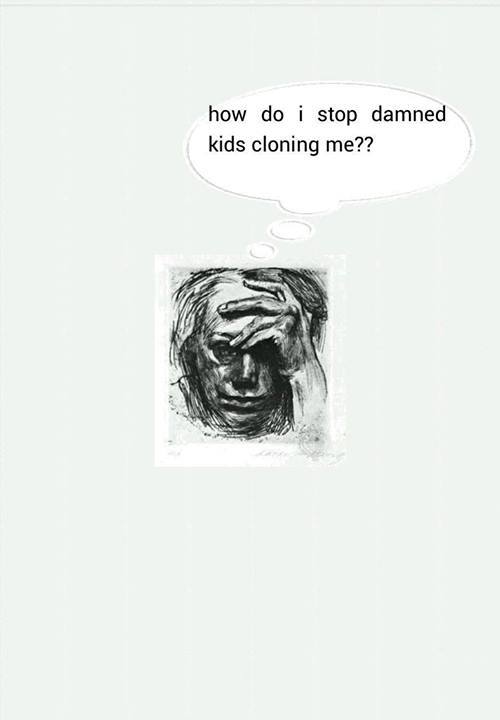
By Jean-Pierre de la Porte
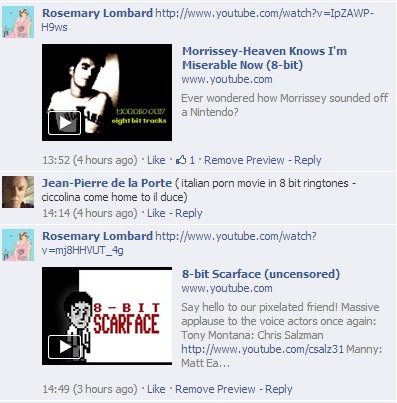
Meanwhile, on another thread…

By Gareth Jones, third iteration, after further comments under his first drawing
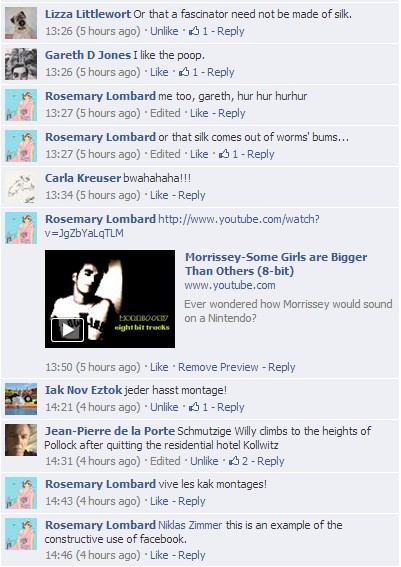


From Real Gone (Anti, 2004).
“She was a middle class girl
She was in over her head
She thought she could stand up in the deep end…”
“All these dead suns, these posthumous rays which take millions of light-years to reach us, asteroids, fragments of dead worlds, shattered and exploded, old moons, flawed and cankered, crusts, sores, blotches, cold lupus, devouring leprosy, sanies, and that last drop of pearl-like light, the purest of all, sweating at the highest point of the firmament and about to fall… is not a tear nor a dewdrop, but a drop of pus. The universe is in the process of decomposing and, like a cemetery, it swarms with becoming and smells good. The stars are unguent-bearing and throb feverishly; each ray carries seeds sown in the brain of man, and they are the seeds of destruction. Grey matter contains sunspots that eat into the whole circumference of the brain. It is an index of disintegration. Thought is a pestilence.”
— Blaise Cendrars, from Sky, the 1992 English translation of Le Lotissement du Ciel (1949).

Illustration: Fernand Léger, 1919
Sky, the last of Cendrar’s four autobiographical volumes, is a collage of prose poetry, travel writing, reportage, detective story, and personal memoir.
“He recounts his adventures in Russia during the revolution of 1905, in the trenches of World War I (where he lost his right arm), in Brazil in the 1920s, and behind the lines during World War II. The two wars run throughout as a unifying thread. As the title announces, this is a memoir of the sky – of Cendrars’s love of birds, levitation, and aviation. The opening of the book finds Cendrars, the great adventurer and traveler, sailing back from Brazil to Paris with 250 multi-colored birds, hoping to bring at least one of them alive to a child he loves.
The second part moves back and forth between the author’s recollections of life as a war correspondent in 1940 and an encyclopedic discourse on levitation he wrote in search of a patron saint of aviation (perhaps as compensation for the death of his young son, Remy, who was a pilot during the war). With unmatched exuberance, Cendrars writes on poetry, myths, existentialism, his life in Paris between the wars with the painter Delaunay and the Dadaists, and his exotic adventuresin Brazil. His anecdotes of Russia, where he was a jeweller’s assistant, are compelling and funny. His fiercely imaginative stories, such as one about a Brazilian coffee plantation owner who, obsessed with his love for Sarah Bernhardt, retreats into the wilderness, are magical.”
(I found this review HERE.)

Illustration: Fernand Léger
Released on Rough Trade in 1981, Deceit is a dark, intense post-punk classic. Band member Charles Hayward said of the zeitgeist that shaped the album:
“The whole speak, ‘Little Boy’, ‘Big Boy’, calling missiles cute little names. The whole period was mad! We had a firm belief that we were going to die and the record was made on those terms.… The whole thing was designed to express this sort of fear, angst, which the group was all about, really… Some of the album was really plush sounding, some dim and pokey. Sometimes it would sound like the machinery was breaking up. We deliberately would make it sound as though the record player was exploding.”
Read more about this brilliant album at DROWNED IN SOUND.
Track List
Sleep 0:00
Paper Hats 2:14
Triumph 8:17
S.P.Q.R. 11:12
Cenotaph 14:41
Shrink Wrap 19:20
Radio Prague 21:01
Makeshift Swahili 23:23
Independence 27:27
A New Kind Of Water 31:09
Hi Baku Shyo 36:06
__________________________________
Charles Hayward — Vocals, Bass Guitar, Keyboards, Drums, Tape Music
Gareth Williams — Vocals, Bass Guitar, Keyboards, Tape Music
Charles Bullen — Vocals, Clarinet, Guitar, Drums, Tape Music
David Cunningham — Production
Martin Frederick — Mixing
Laurie-Rae Chamberlain — Colour Xerography
Nicholas Goodall — Sleeve Photography Direction
Studio 54 — Sleeve Design
“Oy, to ne vecher” (Ой, то не вечер) is the incipit of a Russian folk song, also known as “The Cossack’s Parable” (Казачья Притча) or as “Stepan Razin’s Dream” (Сон Степана Разина). It was first published by composer Alexandra Zheleznova-Armfelt (1870–1933) in her collection Songs of the Ural Cossacks after her fieldwork in the Ural District during 1896–1897.
The original lyrics were in seven verses, with verse six making explicit that the dreamer is 17th century cossack rebel Stepan Razin. Razin has a dream, and his captain (esaul) interprets it as an omen of their defeat.
The song has been performed in several variants, sometimes expanded to up to eleven verses, but in the most common variant as sung by modern interpreters, it is reduced to four verses, removing the mention of Razin, and reducing the three omens in the dream to a single one.These lyrics may be translated thus:
Ah, it is not yet evening but I have taken a little nap, and a dream came to me. In the dream that came to me, it was as if my raven-black horse was playing about, dancing about, frisky beneath me. Ah, and evil winds came flying out of the east, and they ripped the black cap from that wild head of mine.
And the esaul* was a clever one, he was able to interpret my dream: “Ah, it will surely come off”, he said, “that wild head of yours”.
Source of information: Wikipedia.
*Esaul: a post and rank in prerevolutionary Russia in the cossack hosts after 1576.

Photo: Chris Marker, “Staring Back”
“Out of this labyrinth that makes our world
How do we ever know the light inside ourselves?
To know that the skin we wear is raw
That we can be anything if we know anything at all”
Live at Bush Hall, London, in August 2013.
From The Noise Made By People (Warp Records, 2000).
“The birds are chirping, to and fro
My love, have you forgotten me?
As water can’t cut through the sand
I can’t cut you from my memories
The bridge (between you and I) has broken
The pathway is gone, and the water is so very deep
How am I to find you on the other side, so far away?”
Chhoun Vanna was a Cambodian singer between the 1950s and ’70s. She and her sister Chhoun Malai survived the Khmer Rouge genocide.
Cambodian cover by Ros Sereysothea and Sinn Sisamouth of Creedence Clearwater Revival’s “Who’ll Stop The Rain?”. They died under unknown circumstances during the Khmer Rouge reign of terror, as did countless other artists and intellectuals murdered in Pol Pot’s Killing Fields, and this recording only survived on tapes smuggled out of the country.
“Long as I remember the rain been comin’ down.
Clouds of mystery pourin’ confusion on the ground.
Good men through the ages, tryin’ to find the sun;
And I wonder, still I wonder, who’ll stop the rain.”
Read more of their story HERE.
 To research (English definition): “To search for something.”
Rechercher (French definition): “To search for, to look for” and also “to search again, to look for again”.
Both “search” and “research” are the same word in French, it seems. This makes sense: even if something was once common knowledge, after it is hidden it is no longer “there”; it has fallen from awareness. So you have to seek for it again, that which is not there. In “research”, you never know what is actually there until you find it, or there would be no need to look. You dis-cover it again, un-cover it anew.
Archives are fascinating places of preservation-with-intent to look in, and they are always tantalisingly incomplete, however exhaustive… But nothing beats the thrill of finding a treasure hoard saved by happenstance.
To “ondersoek” , in Afrikaans, is to look under other things… The term implies a palimpsestic patina, an accretion, a build-up of layers that must be lifted, peeled off to see underneath… the mother lode, the genealogy. Sometimes you know exactly what you are looking for; sometimes you don’t. You may only have a misty hope that there is anything there at all. It can be useful to lose focus, too, because you become open to other routes, other offshoots, that may take you further than your original hunch.
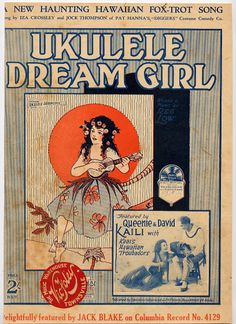
On Saturday, in a poky little shop in Kalk Bay, I found a trove of old sheet music: popular tunes from the 1920s and 1930s, the top few layers of it in torn, grubby disarray. A thrill ran through my fingertips as I started re-moving each sheet from the pile, putting it aside systematically. There was nothing of great interest until I got quite a way below the dusty surface layers, where most people’s patience obviously runs out (this is the trick with digging – to delve deeper, to expend more energy, more time than everyone else – om onder te soek, for there lies the gold). There was no way I could stop.
Buried in the pile, under piano exercise books, I found something that really astounded me… it almost made me shout for joy: many, many of the scores had ukulele chord diagrams on them! In all the popular sheet music I had ever been acquainted with before this, these diagrams were provided for guitar – with five lines for the five strings. These all had only four lines. It became clear to me on seeing this that, along with piano, ukulele was most likely the popular amateur instrument of choice back in the 1920s to 1940s, and not guitar. It makes sense when you listen to the jazziness of the pop arrangements of the time, and how well the chord progressions work technically with a ukulele’s tuning – GCEA. I would suppose that the guitar ousted the uke in popularity with the ascent of blues and rock and folk, in which different chords and tunings predominate, and for which the guitar’s EADGBE tuning is a more natural fit… How lovely to realise that this instrument I play very amateurishly, considered a funny curiosity by most these days, was accorded far more value in the past!
What this little discovery means for me, practically, is that I can now play all these very old jazzy tunes with no in-depth knowledge of musical theory. Even the songs I have never heard before can be found with a bit of effort on the internet, listened to, and re-played, provided someone else along the way has seen their value. As long as they were ever recorded, be it on wax cylinder or 78rpm, they may have been digitised. And, as they spin up on my hard drive, a vortex is created, opening a wormhole back to the instant that band played for the first time as the cylinder turned. And the song comes back from the dead as my fingers form the chord shapes, stutters back to life as I sing my breath into the words. Technology is powerful magic, all the more so when it takes account of its historicity.
Information technology is not only about making the future more slick and manageable; it is also about keeping the past accessible… Essentially it is about conquering linear time and space. The prolific recording of moments allows us to live unconstrained by the present moment and space we’re in, almost continuously if we so wish… (For example, people sit on Facebook as they are out for coffee with a friend. Once they have “checked in” at the cafe, they check out what other people are doing elsewhere on their phones, then frame themselves carefully for a photo in that space and capture the moment, uploading it to join the feed for others who are moving through spaces connected via radio waves to know about. Very little other than eating, drinking and self-referential preening is going on in most coffee spots.)
The sheer volume of recording that goes on now is unprecedented. Imagine reading Twitter logs in a century – every ordinary so-and-so with a Twitter account, with their own account of an event… The hyper(in)significance of every moment of our lives being documented is overwhelming to think about. How will historians of the future ever manage to filter out the noise from the signal and deduce anything?
Or, will the noise be the signal – the fragments the whole? How does this affect our memories, our critical faculties, our creativity, our relationships? New technologies confer on us immense power that should be used wisely and with sober discernment, not trivially… as that dumb what’s-her-face model Leandra found out last week when tweeting 140 racially offensive characters cost her her modelling career and dignity, with satisfying, devastating swiftness!
So, anyway, I pulled out a large wad of music sheets; slowly, carefully replaced what I didn’t take for someone else to find. Tried to conceal my excitement as I got to the till; thwacked the pile down and asked nonchalantly, “How much for this old stuff?”
“Two rand a sheet.” After counting to fifteen the old guy stopped and said “I can’t be bothered to count higher than fifteen – it’s yours for thirty bucks.”
I paid thirty rand for all of it. That’s less than a cocktail or a sandwich in the seaside cafes lining that road. So few people seem to see value in this stuff. Not even antique dealers. To them it’s just quaint ephemera.
Research involves following the intuition, the hunch that something lies hidden out of time, out of sight, out of mind: perhaps recorded imperfectly, decaying, deliberately saved. Or, like these priceless music sheets, just debris left in a place where it makes no sense to anyone who has stumbled across it yet… In danger of being lost forever if someone doesn’t come along with enough focused curiosity to re-cognise it as valuable, to think it back into meaningful connection with right now.
To me, the serendipity of finds like Saturday’s feels more than coincidental. If the person looking didn’t happen to be me there at that precise moment, it would probably have been a non-event. Even if it were the me of last year leafing through, I wouldn’t have known what I was looking for. Would have seen the music but not had a ukulele and maybe not noticed that the chord diagrams had only four strings, not five. The me of just a few months back would have seen the music with interest but not known the extent of the 78rpm archive online (having become aware of the degree of coverage of obscure songs through something I have been working on in the past month) and so left it because I didn’t know the songs and didn’t know there was a way to hear them. I don’t often look through second hand stores these days, broke as I am. On Saturday, something compelled me to step inside as I was passing. It felt as if me and the music were drawn together. It felt magical.
 fleurmach