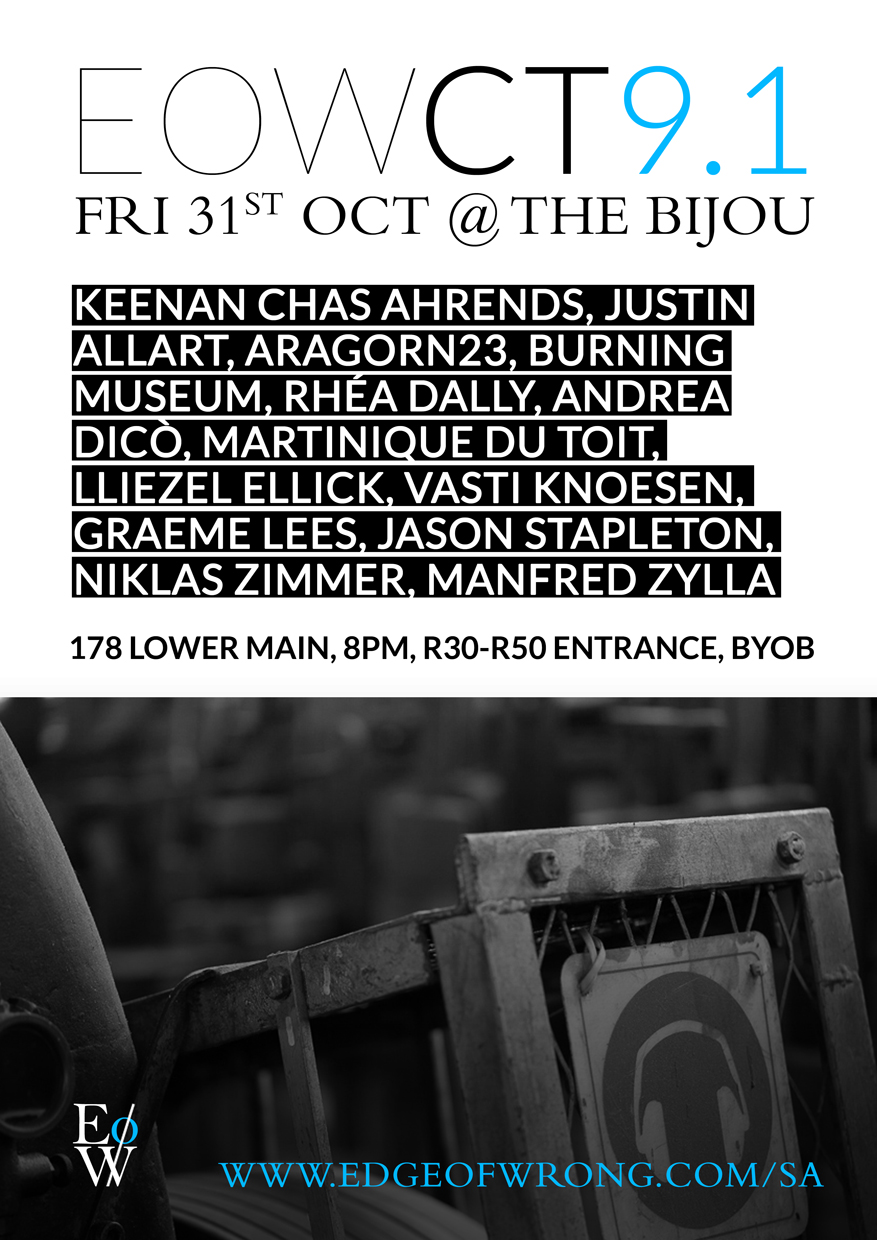
come with us to the edge of wrong tomorrow

I’m part of the South African curatorial/organising team for this series of collaborative multi-medium performances. If you’re in Cape Town, check EOW 9.1 out tomorrow night.

It will involve an insane mash-up of guitarists, violinists, opera singers, noise musicians, circuitbenders, chiptunists, avant-percussionists, pianists, body modification, visuals generated from cellular automata, experimental improv dance, provocative video art and the livecoded sound of the Ebola genome…

More information HERE.

poster2b


sviatoslav richter plays liszt’s transcendental études

A selection of my favourites from Liszt’s Transcendental  series, recorded in Prague on June 10, 1956 and broadcast on Czech Radio.

Tracklisting with times:
00:00 – Étude No. 1 (Preludio)
00:58 – Étude No. 2 (untitled – Molto vivace)
02:52 – Étude No. 3 (Paysage)
08:29 – Étude No. 5 (Feux Follets)
12:03 – Étude No. 11 (Harmonies du Soir)

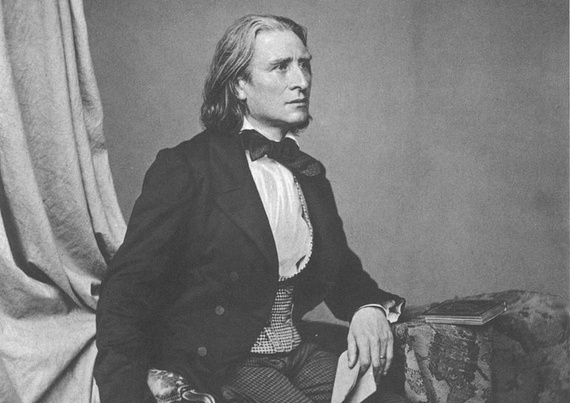
Heartbreaker Franz Liszt circa 1860 (Franz Hanfstaengl/Wikimedia)

Heartbreaker Franz Liszt circa 1860 (Franz Hanfstaengl/Wikimedia)

“On a snowy day in Berlin, two days after Christmas 1841, Franz Liszt strode out onto the stage at the Berliner Singakademie concert hall. He sat at his grand piano in profile, beads of sweat forming on his forehead. He was 30 years old, at the height of his ability, and he was about to unleash a mania—a mania not in the sense of “Beatlemania”, or any of the other relatively mild musical obsessions, but a mania viewed as a truly contagious, dangerous medical condition that would affect women in Germany, Italy, France, Austria, and elsewhere.

“Using his whole body—his undulating eyebrows, his wild arms, even his swaying hips—Liszt dove into Händel’s “Fugue in E minor” with vigor and unfettered confidence, keeping perfect tempo and playing entirely from memory. It was the start of the phenomenon later called “Lisztomania,” and the women in the audience went mad.”

Read THIS ARTICLE on the romantic power of music like Liszt’s…

writing wrongs

my wrists ache
wrest them
look out
a deck of shards
sick notes
cutting in
cutting up
cutting down
cutting out
cutting off
the pulse
wound up wound
wind up wind
wound up wind
wound down wind
wind down wound
wind up wounded
binds unbound

an unstruck sound
this name means nothing to me
rolling off my glossed tongue
the missing ink
the beads of spittle in the pink
the drown flying in my drink
sink for yourself
sink or blink

outside carries on
the whorl of a banshee
howling at the pane

open your eyes
close your mouth
close your eyes
open your mouth
open your close
eye your mouth
mouth your silence
silence your eyes
make the whirl go away

stories we tell

http://youtu.be/ytq4VZ2Nyxg

Go and see this at the Encounters Documentary Festival, on right now in Cape Town and Jo’burg: the brilliant Sarah Polley‘s genre-defying examination of the workings of memory and narrative related to her own family’s secrets. It’s a gentle yet unflinching interrogation of how truth is shaped by the stories we tell ourselves when making sense of the things that happen in our lives. Humorous, poignant, profound… highly recommended.

laurie anderson – the dream before (for walter benjamin)

http://youtu.be/fWuNEw0EHMc

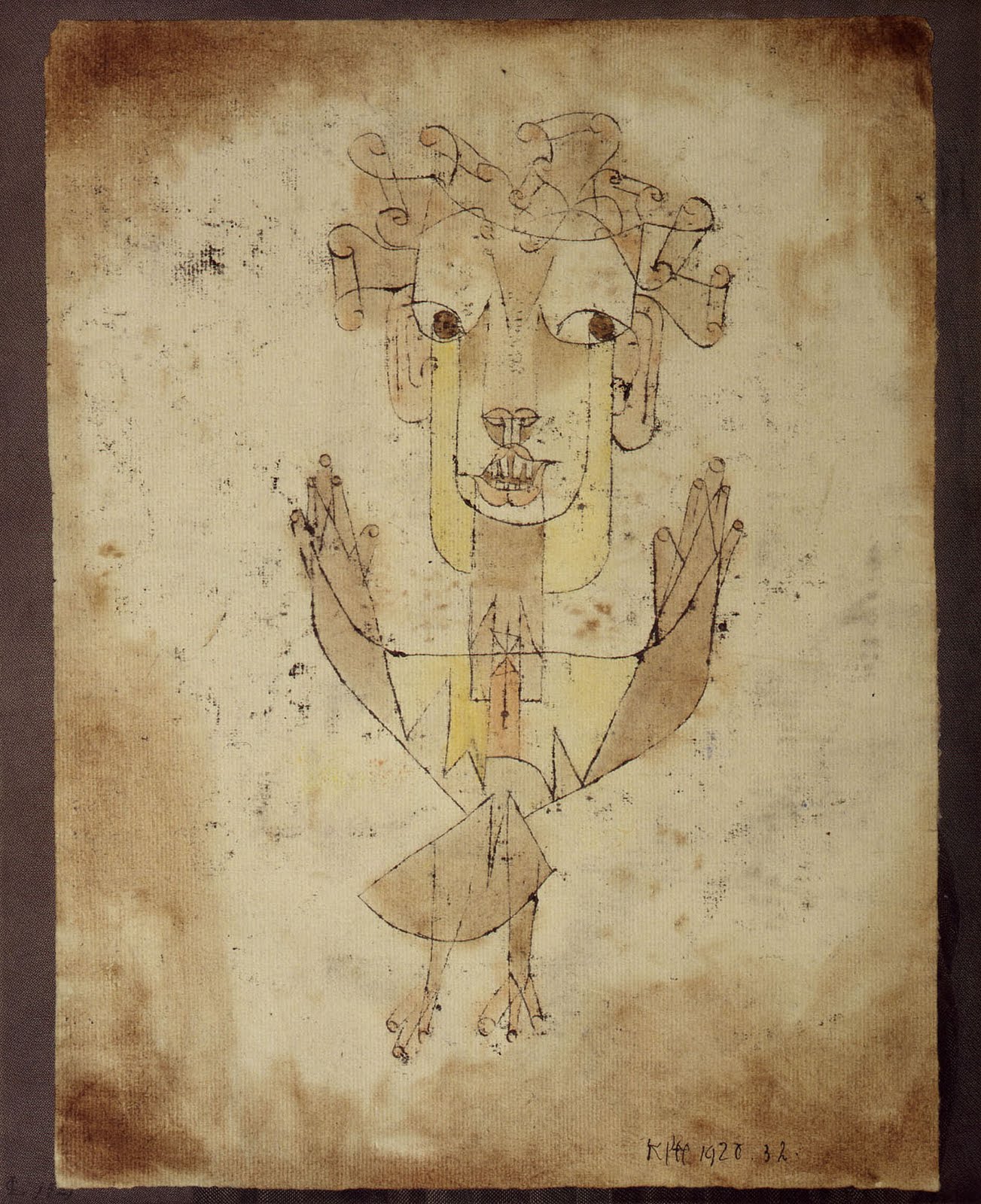
” A Paul Klee painting named Angelus Novus shows an angel looking as though he is about to move away from something he is fixedly contemplating. His eyes are staring, his mouth is open, his wings are spread. This is how one pictures the angel of history. His face is turned toward the past. Where we perceive a chain of events, he sees one single catastrophe which keeps piling wreckage upon wreckage and hurls it in front of his feet. The angel would like to stay, awaken the dead, and make whole what has been smashed. But a storm is blowing from Paradise; his wings are caught in it with such violence that the angel can no longer close them. The storm irresistibly propels him into the future to which his back is turned, while the pile of debris before him grows skyward. This storm is what we call progress.” 

— Walter Benjamin, 1940

paul-klee-angelus-novus

Paul Klee – Angelus Novus (1920)

“if i get killed, please don’t bury my soul”

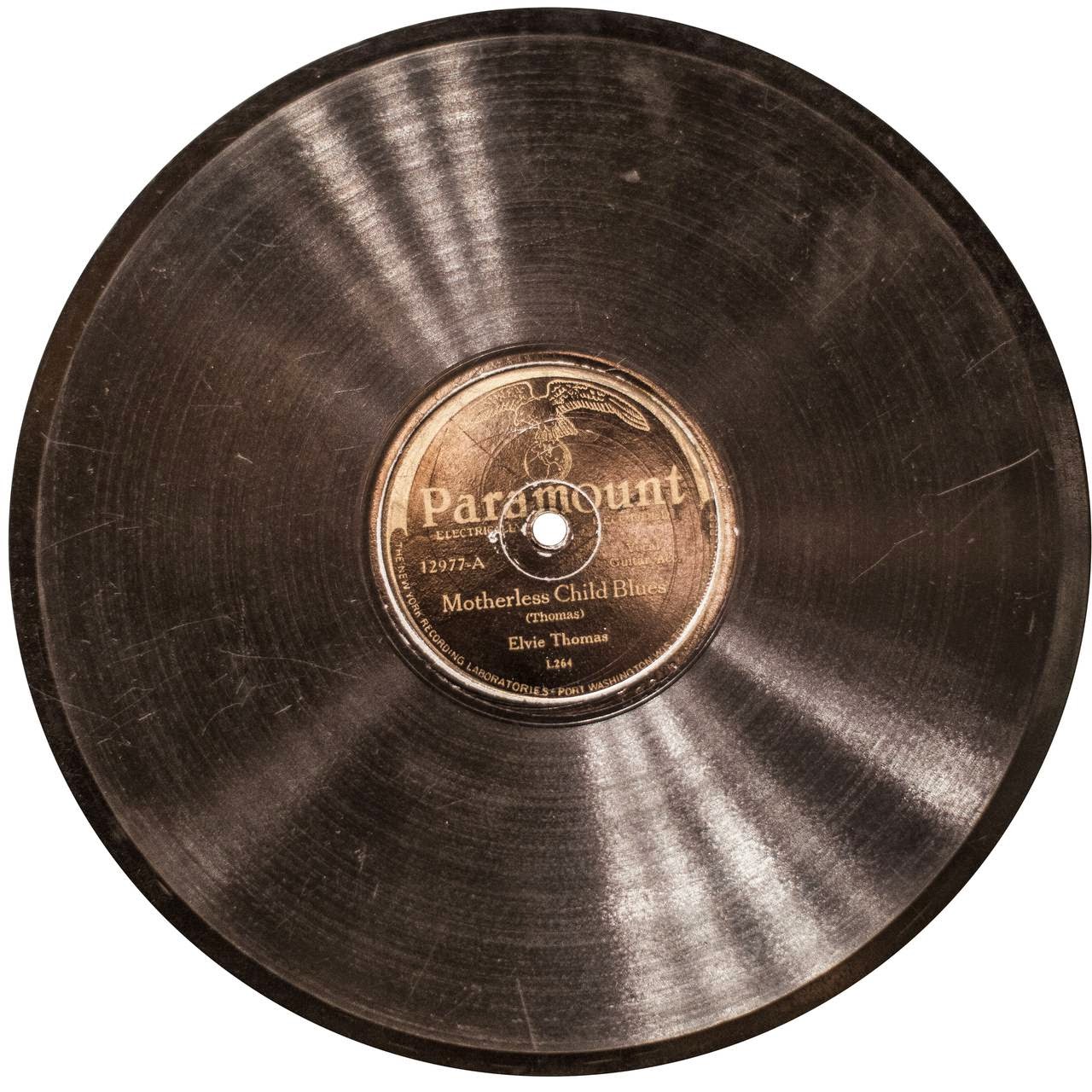
The New York Times recently published an evocative long-form article penned by John Jeremiah Sullivan about the enigmatic Geeshie Wiley and Elvie Thomas, woman blues musicians who haunt the archive with just six songs ever recorded, pressed on cheap, poor quality 78s by Paramount in 1930, as was the custom with “race” records not intended for mainstream markets.

I have been gripped on every listening by “Last Kind Words Blues” since I first heard it on the soundtrack to Crumb in the late ’90s (the same place Sullivan did), so I understood what Caitlyn Love, who did much of the the on-the-ground research for Sullivan, meant about its haunting her. From her blog:

When I first started doing research for John Jeremiah Sullivan for his article about Geeshie Wiley and Elvie Thomas, two women who changed American music and then vanished without a trace, I kept Wiley’s song “Last Kind Words Blues” on repeat for days. I hadn’t listened closely to her songs before this project, but I was aware of the mythology around them. Now, I found myself hearing something new: a haunting, a mystery.

I began my research splitting time between the Clayton Library Center for Genealogical Research, hunting among death, birth and marriage records, and the Houston Metropolitan Research Center, looking through old maps, photographs and city-directory records. All of these materials provided context for the era that Lillie Mae (Geetchie) Wiley and L.V. Thomas lived through.

Eventually we learned a great deal about Thomas’s personal history. But leads to Wiley went nowhere. I made myself dizzy scrolling through rolls of microfilm to find any meaningful clue. She had disappeared. The trail only picked up once, but it picked up sharply.

 “We may have found Geeshie’s grave yesterday. Not 100 percent but optimistic,” John wrote in an email to editors at the magazine.

Continue reading about Caitlyn Love’s quest HERE.

Read John Jeremiah Sullivan’s piece HERE – it’s beautifully written, and reflects in deep ways on the romance and violence of the archive.

And this is the short version of the story, from a Youtube comment posted last week:

It is now believed that Elvie (L.V. Thomas nee Grant) and Geechie (Lillie Mae Wiley) recorded all of their songs in Grafton, WI for Paramount in 1930. According to L.V., she would play and Geechie would “bass” behind her or she’d play (guitar) and Geechie would “bass” behind her. Thus, it might very well be Geechie we hear doing this fine guitar work. L.V. turned her back on the blues (life) and dedicated herself to her local church in Texas. Geeshie disappeared into the unknown. Recent records indicate she killed her husband with a knife in 1931. She may have changed her name/I.D. to avoid being found.

motherless child blues

“ghosts” – opening at muti gallery in one hour!

Ralph Ziman‘s much-anticipated exhibition, “GHOSTS”,  opens in Cape Town at the MUTI GALLERY tonight (24 April 2014). For more information contact Guto Bussab on +27(0)21 465 3351.

ghosts

GHOSTS examines the consequences of international gun trade in Africa while questioning our uncomfortable fetishism and worship for deadly weapons.

____________________________________


“Do you love your guns? YEAH! God? YEAH! Government? F*** YEAH!!” So sings Marilyn Manson of America’s rabid obsession with ballistic, religious and political weapons of mass destruction.

While America has its God and its government – and certainly no shortage of guns – it is from a handful of Africa’s most volatile nations whence any form of “god” has fled and whose anarcho-fascist kleptocracies reduce just about any notion of “government” to a brutal, bloody farce.

Ziman may have made America his home but it is the continent of his birth upon which his dark, disturbing vision continues to fall. 

“GHOSTS” confronts the complex socioeconomic and political circumstances of the African arms trade – a multinational, multibillion-dollar industry that moves in one direction only – into Africa.

Ziman spent six months collaborating with African artisans to produce wool garments and beaded replicas of the iconic AK-47 used in the series. 

“They have lived around crime and violence both in their adoptive South Africa and their native Zimbabwe,” Ziman says. “There is a sadness about the pictures—a loneliness and distance.”

Ziman’s work challenges the tragic cliché of our times: a war torn, violent Africa of militant and corrupt dictators, child soldiers, and unceasing civil wars fed by a growing international arms-trade. 

For him, the series is a platform to discuss the corruption, greed and influence of foreign world superpowers who, eager for a stake in Africa’s abundant natural resources, provide weapons to dictatorial governments in trade, and often to opposing factions as well, ensuring a perpetual cycle of war for generations.

Ziman is a South African artist currently living and working in Los Angeles. He is the director of hundreds of music videos for superstars ranging from Ozzy Osbourne to Michael Jackson, and held the reigns as writer/director/producer for Hearts and Minds that premiered at the Berlin and Montreal Film Festivals, as well as Jerusalema, South Africa’s official entry to the 2008 Academy Award Foreign Language section.

Ziman is also well-known in the U.S. for his public art in Venice and is currently working on a private commission in Santa Monica.

____________________________________

belly – low red moon (slow dust version)

I don’t have a desert island list of records, but if I did, Belly’s Star (4AD, 1993) would almost certainly be on it… and this song is one of my favourites. I’m pretty sure I have posted it before on Fleurmach, so here’s a different, non-album version of this song, featured on the Slow Dust EP (4AD, 1992). It is missing the swells of organ that I love in the Star version. But, as a bonus, there’s a hidden track afterwards, a slowed, elliptical sliver of “Dusted”.

belinda carlisle – la luna

Lunar eclipse with a blood moon tonight…

I remember this song and video came out at the end of my Standard 4 year – the first year I had ever been to a proper teenage “disco” (how scary and thrilling). I remember thinking her thrashing around for the whole song in that bunched-up sheet was silly… And that she was in love with that poncy Amadeus guy was silly too. Lunatics. And yet the chorus would be going round and round in my head for months, entwined with an interminable summer holiday yearning for I-didn’t-quite-know-what. This and the Bangles’ Eternal Flame.

wislawa szymborska – consolation

Darwin.
They say he read novels to relax,
But only certain kinds:
nothing that ended unhappily.
If anything like that turned up,
enraged, he flung the book into the fire.

True or not,
I’m ready to believe it.

Scanning in his mind so many times and places,
he’d had enough of dying species,
the triumphs of the strong over the weak,
the endless struggles to survive,
all doomed sooner or later.
He’d earned the right to happy endings,
at least in fiction
with its diminutions.

Hence the indispensable
silver lining,
the lovers reunited, the families reconciled,
the doubts dispelled, fidelity rewarded,
fortunes regained, treasures uncovered,
stiff-necked neighbours mending their ways,
good names restored, greed daunted,
old maids married off to worthy parsons,
troublemakers banished to other hemispheres,
forgers of documents tossed down the stairs,
seducers scurrying to the altar,
orphans sheltered, widows comforted,
pride humbled, wounds healed over,
prodigal sons summoned home,
cups of sorrow thrown into the ocean,
hankies drenched with tears of reconciliation,
general merriment and celebration,
and the dog Fido,
gone astray in the first chapter,
turns up barking gladly
in the last.

chelsea wolfe – halfsleeper (live)

All the things we yell don’t mean a thing
When we’re spinning out of darkened meadow wind
When we’re flying like we’re Mary’s angels through the shattered glass
When we find that tall dark shadow waiting there with outstretched hands
He has given me a dress of red and you a skin of gray
We’ll be twisting here for hours ’til the light will bring us day

And we’re spread across the open road
And we’re spread across the asphalt on the open road
And we’re streaming in the wind like cassette tape or jellyfish
Long dark veins and records playing memories

(Hear the album version HERE.)

light from a dead star

“All these dead suns, these posthumous rays which take millions of light-years to reach us, asteroids, fragments of dead worlds, shattered and exploded, old moons, flawed and cankered, crusts, sores, blotches, cold lupus, devouring leprosy, sanies, and that last drop of pearl-like light, the purest of all, sweating at the highest point of the firmament and about to fall… is not a tear nor a dewdrop, but a drop of pus. The universe is in the process of decomposing and, like a cemetery, it swarms with becoming and smells good. The stars are unguent-bearing and throb feverishly; each ray carries seeds sown in the brain of man, and they are the seeds of destruction. Grey matter contains sunspots that eat into the whole circumference of the brain. It is an index of disintegration. Thought is a pestilence.”

— Blaise Cendrars, from Sky, the 1992 English translation of Le Lotissement du Ciel (1949).
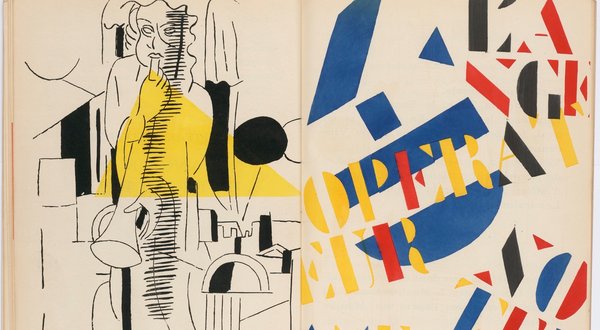
Illustration: Fernand Léger, 1919

Illustration: Fernand Léger, 1919

Sky, the last of Cendrar’s four autobiographical volumes, is a collage of prose poetry, travel writing, reportage, detective story, and personal memoir.

“He recounts his adventures in Russia during the revolution of 1905, in the trenches of World War I (where he lost his right arm), in Brazil in the 1920s, and behind the lines during World War II. The two wars run throughout as a unifying thread. As the title announces, this is a memoir of the sky – of Cendrars’s love of birds, levitation, and aviation. The opening of the book finds Cendrars, the great adventurer and traveler, sailing back from Brazil to Paris with 250 multi-colored birds, hoping to bring at least one of them alive to a child he loves.

The second part moves back and forth between the author’s recollections of life as a war correspondent in 1940 and an encyclopedic discourse on levitation he wrote in search of a patron saint of aviation (perhaps as compensation for the death of his young son, Remy, who was a pilot during the war). With unmatched exuberance, Cendrars writes on poetry, myths, existentialism, his life in Paris between the wars with the painter Delaunay and the Dadaists, and his exotic adventuresin Brazil. His anecdotes of Russia, where he was a jeweller’s assistant, are compelling and funny. His fiercely imaginative stories, such as one about a Brazilian coffee plantation owner who, obsessed with his love for Sarah Bernhardt, retreats into the wilderness, are magical.”

(I found this review HERE.)
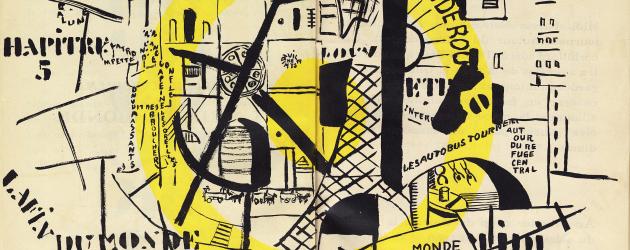
la fin du monde

Illustration: Fernand Léger

stepan razin’s dream (Казачья Притча)

Oy, to ne vecher” (Ой, то не вечер) is the incipit of a Russian folk song, also known as “The Cossack’s Parable” (Казачья Притча) or as “Stepan Razin’s Dream” (Сон Степана Разина). It was first published by composer Alexandra Zheleznova-Armfelt (1870–1933) in her collection Songs of the Ural Cossacks after her fieldwork in the Ural District during 1896–1897.

The original lyrics were in seven verses, with verse six making explicit that the dreamer is 17th century cossack rebel Stepan Razin. Razin has a dream, and his captain (esaul) interprets it as an omen of their defeat.

The song has been performed in several variants, sometimes expanded to up to eleven verses, but in the most common variant as sung by modern interpreters, it is reduced to four verses, removing the mention of Razin, and reducing the three omens in the dream to a single one.These lyrics may be translated thus:

Ah, it is not yet evening but I have taken a little nap, and a dream came to me. In the dream that came to me, it was as if my raven-black horse was playing about, dancing about, frisky beneath me.  Ah, and evil winds came flying out of the east, and they ripped the black cap from that wild head of mine.

And the esaul* was a clever one, he was able to interpret my dream: “Ah, it will surely come off”, he said, “that wild head of yours”.

Source of information: Wikipedia.

*Esaul: a post and rank in prerevolutionary Russia in the cossack hosts after 1576.

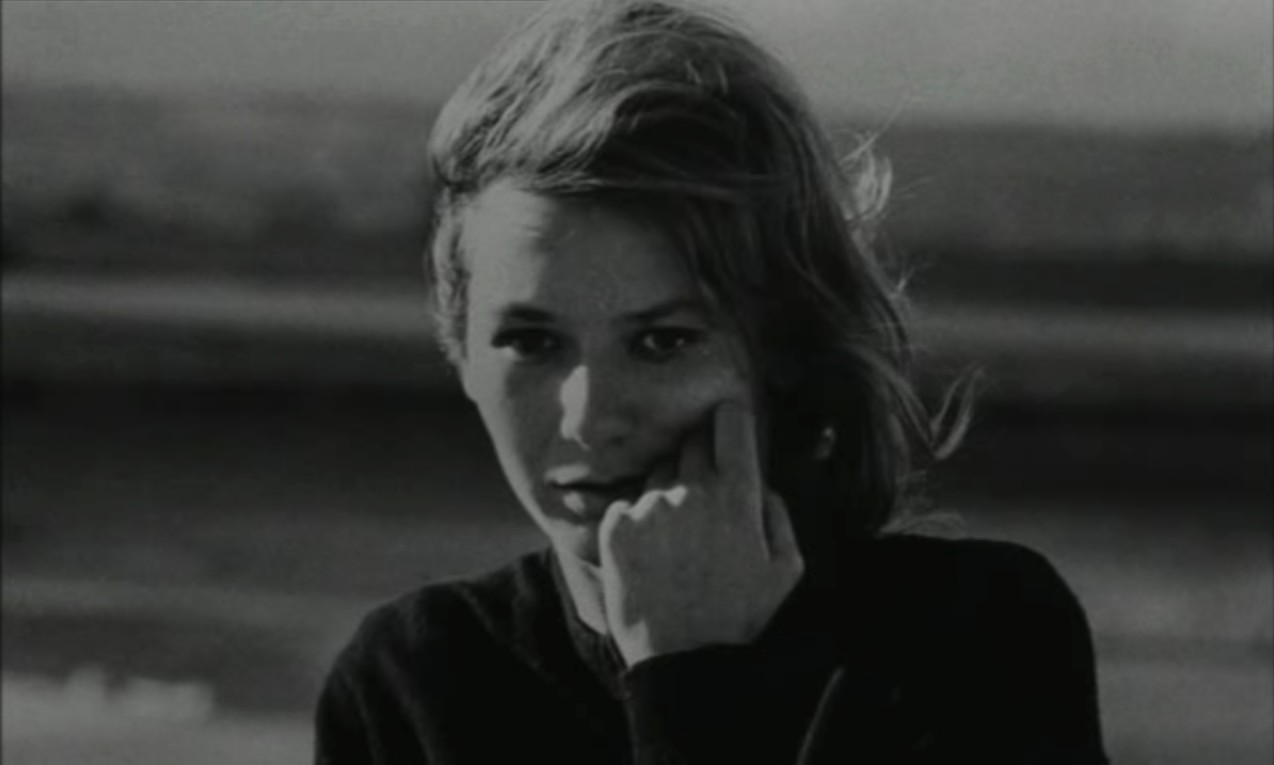
chris marker - staring back

Photo: Chris Marker, “Staring Back”

inflamed

ExitDeer015

Exit-deer: “He left himself with frightening pace”

“Almost every day I can feel myself suffering mainly in the head, I can explain the pain to myself but knowing it comes from an inflammation of my imagination doesn’t prevent it being reality itself. What’s more I’d be crazy not to go crazy. We don’t know what an illness is. On awful hurts we plaster little old words, as if we could think hell with a paper bandage.”

― Hélène Cixous, Hyperdream

alain resnais/chris marker – statues also die (1953)

“We want to see their suffering, serenity, humour, even though we don’t know anything about them.”

http://youtu.be/hzFeuiZKHcg

Directors: Alain Resnais & Chris Marker
Narrator – Jean Négroni
Music – Guy Bernard

A collaborative work by Resnais and Marker, this is a deeply felt study of African art and the decline it underwent as a result of its contact with Western civilization. The film was banned for more than a decade by French censors as an attack on French colonialism, and is now only available to watch in the shortened version I’ve posted here (turn on the subtitles on Youtube if you want English subtitling).

Statues Also Die traces the devastating impact of French colonialism on African art. As Resnais’ co-director, Chris Marker, stated, “We want to see their suffering, serenity, humor, even though we don’t know anything about them.” Their film shows what happens when art loses its connection to its cultural context of production. Witty, thoughtful commentary is combined with images of stark formal beauty in this outcry against the fate of an art once integral to communal life that became debased as it fell victim to the demands of a different system of knowledge and values.

statues also die
From Wikipedia:

Statues Also Die (French: Les Statues meurent aussi) is a 1953 French essay film directed by Chris Marker and Alain Resnais, about historical African art and the effects colonialism has had on how it is perceived. The film won the 1954 Prix Jean Vigo. Because of its criticism of colonialism, the second half of the film was censored in France until the 1960s.

Synopsis

The film exhibits a series of sculptures, masks and other traditional art from Sub-Saharan Africa. The images are frequently set to music and cut to the music’s pace. The narrator focuses on the emotional qualities of the objects, and discusses the perception of African sculptures from a historical and contemporary European perspective. Only occasionally does the film provide the geographical origin, time period or other contextual information about the objects. The idea of a dead statue is explained as a statue which has lost its original significance and become reduced to a museum object, similarly to a dead person who can be found in history books. Interweaved with the objects are a few scenes of Africans performing traditional music and dances, as well as the death of a disemboweled gorilla.

During the last third of the film, the modern commercialisation of African culture is problematised. The film argues that colonial presence has compelled African art to lose much of its idiosyncratic expression, in order to appeal to Western consumers. A mention is made of how African currencies previously had been replaced by European. In the final segment, the film comments on the position of black Africans themselves in contemporary Europe and North America. Footage is seen from a Harlem Globetrotters basketball show, of the boxer Sugar Ray Robinson, and a jazz drummer intercut with scenes from a confrontation between police and labour demonstrators. Lastly the narrator argues that we should regard African and European art history as one inseparable human culture.