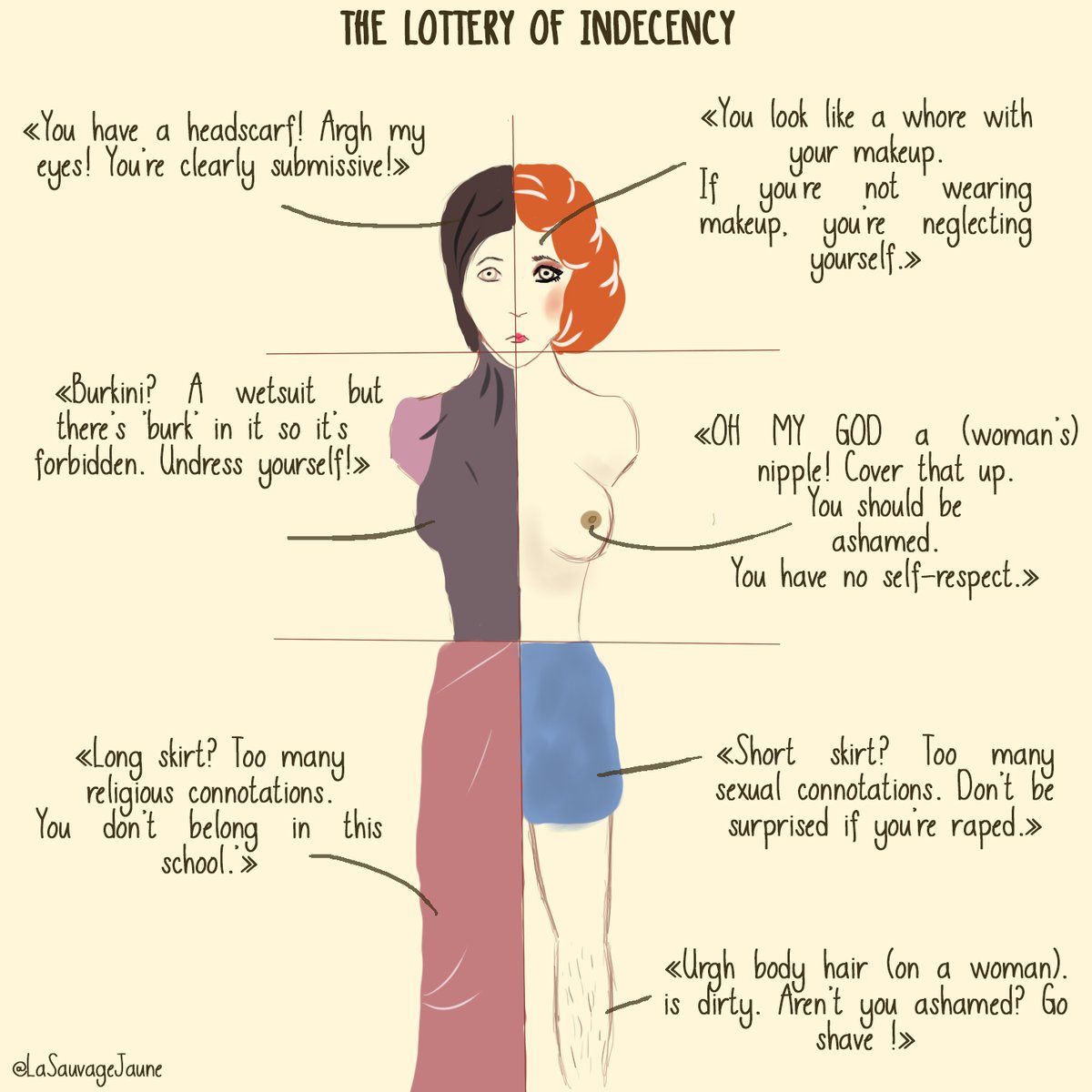
“Coercing a woman out of a burka is as bad as coercing her into one. It’s not about the burka. It’s about the coercion.” -Arundhati Roy
eduardo galeano – the nobodies (1991)
 From THE BOOK OF EMBRACES by Eduardo Galeano. Translated by Cedric Belfrage with Mark Schafer. Illustrated. 281 pp. New York: W. W. Norton. 1991.
julia mary grey – mining but not eating (2016)
pharmakon interview (2015)
Great Interview with Margaret Chardiet AKA “Pharmakon” in Santiago, Chile, September 02, 2015, for her South American Tour “Sacred Bones”.
pharmakon – bestial burden (short film, 2014)
Directed by: Nina Hartmann and Margaret Chardiet.
Four days before New York noise musician Margaret Chardiet was supposed to leave for her first European tour as Pharmakon, she had a medical emergency which resulted in a major surgery. Suddenly, instead of getting on a plane, she was bedridden for three weeks, missing an organ.
“After seeing internal photographs taken during the surgery, I became hyperaware of the complex network of systems just beneath the skin, any of which were liable to fail or falter at any time,” Chardiet said. “It all happened so fast and unexpectedly that my mind took a while to catch up to the reality of my recovery. I felt a widening divide between my physical and mental self. It was as though my body had betrayed me, acting as a separate entity from my consciousness. I thought of my corporeal body anthropomorphically, with a will or intent of its own, outside of my will’s control, and seeking to sabotage. I began to explore the idea of the conscious mind as a stranger inside an autonomous vessel, and the tension that exists between these two versions of the self.”
Consumed by these ideas, and unable to leave her bed, Chardiet occupied herself by writing the lyrics and music that would become Bestial Burden, the second Pharmakon LP for Sacred Bones Records. The record is a harrowing collection of deeply personal industrial noise tracks, each one brimming with struggle and weighted with the intensity of Chardiet’s internal conflict.
Release date: 10/14/2014
Listen to the full album HERE.
pharmakon – abandon (2013/2016)
Margaret Chardiet describes her drive to make noise music as something akin to an exorcism where she is able to express her “deep-seated need/drive/urge/possession to reach other people and make them FEEL something [specifically] in uncomfortable/confrontational ways.” Engineered by Sean Ragon of Cult of Youth at his self-built recording studio Heaven Street, Abandon is Pharmakon’s first proper studio album and also her first widely distributed release.
Release date: 5/14/2016
Unlike other experimental projects, Pharmakon does not improvise when performing or recording. She is concise and exact; each song/movement is linear with a clear trajectory. Perhaps more than any other style of music, noise is a genre almost exclusively dominated by male performers. Spin Magazine is apt to point out that her,“perfectionism might explain why her recordings are few and far between—a rarity in a scene where noise bros are wont to puke out hour after endless hour of stoned basement jams into a limitless stream of limited-edition tapes. Her music may be as cuddly as a trepanning drill, but it’s also just as precise: She glowers in measured silence as often as she shrieks, and every serrated tone cuts straight to the bone, a carefully calibrated interplay between frequency and resistance.” The songs on this album were all written and recorded during a turbulent three month time period during which several fundamental life changes forced her to begin living in a completely new way and in a new space. She describes the lyrical themes of this album as being about, “Loss. Losing everything. Relinquishing control. Complete psychic abandon. Blind leaps of faith into the fire, walking out unscathed. Crawling out of the pit.”
if we burn there is ash (7 september 2016)
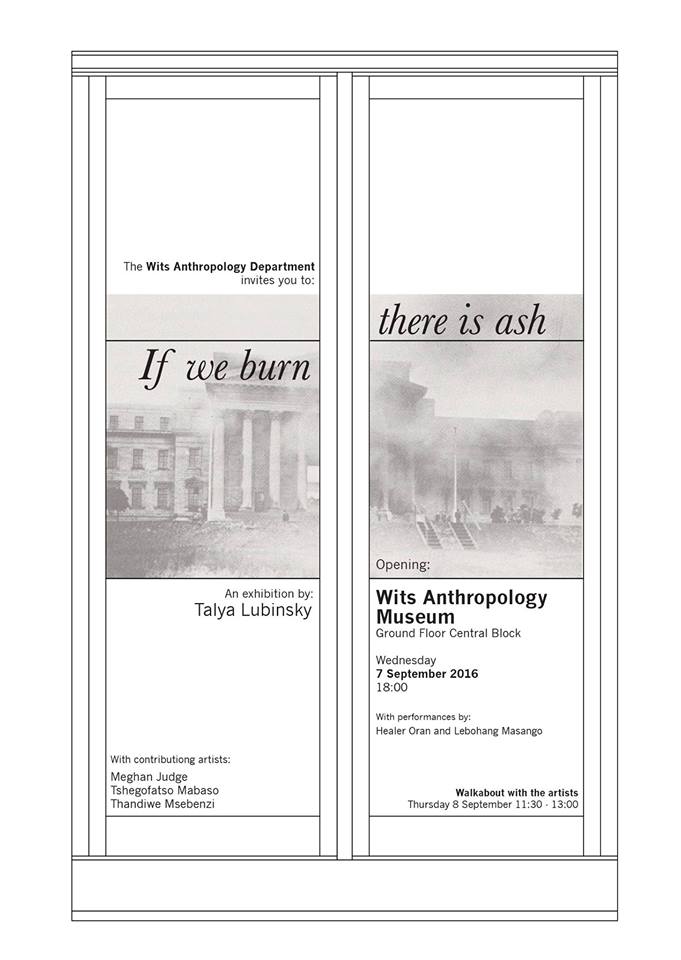
The Wits Anthropology Department is pleased to reopen its Museum collection with
If we burn there is ash
An exhibition by Talya Lubinsky
with contributing artists Meghan Judge, Tshegofatso Mabaso and Thandiwe Msebenzi
and performances by Lebohang Masango and Healer Oran
Wits Anthropology Museum
Wednesday 7 September 2016
18:00
Walkabout with the artists Thursday 8 September 11:30-13:00
All welcome
__
On Christmas Eve of 1931 a fire broke out at Wits University’s Great Hall. At the time, the façade of the Great Hall had been built, its stone pillars and steps creating a striking image of the university in the young colonial city. But the University had run out of funds, and the building that would become Central Block, had not yet been built. Erected behind the grand façade of the Great Hall were wooden shack-like structures, which burned in the fire. These wooden structures housed the collections of what is now called the Cullen Library, as well as the Ethnographic Museum’s collection. Initiated by Winifred Hoernle, head of the Ethnography Museum at the time, the collection was largely comprised of pieces of material culture sent to her from the British missionary, William Burton, while stationed in the ‘Congo’ region.
The fire burned hundreds of books, paintings and artefacts. Some of the only objects that survived the fire are clay burial bowls from the Burton collection. Able to withstand the heat precisely because of their prior exposure to fire, these bowls remain, but are blackened and broken by the 1931 fire.
The exhibition, If we burn, there is ash centres around this story as a place from which to think about the value of colonial collections of material culture. While the origins of the 1931 fire remain unknown, it nonetheless provides a space in which to think about the potentially generative qualities of fire.
Ash, the material remains of fire, however elusive, does not disappear. Even when things burn, they are never fully physically or ephemerally eliminated. Ash is not just the physical remains of that which has been burnt. It is also used as an ingredient in cement mixtures. It is literally transformed into a building material.
Using ash and cement as a poetic relation, this exhibition asks about the potentiality of burning in the project of building and growth. Ash and cement serve as a provocation on the question of what is to be done with the material remains of a violent colonial past.
__
For further information, please contact Talya Lubinsky (talya.lubinsky@gmail.com) or Kelly Gillespie (Kelly.Gillespie@wits.ac.za)
nostalghia (1983)
Russian director Andrei Tarkovsky’s film from 1983. I’m not going to link to any analysis here because to do so would narrow the interpretive possibilities of this opaque, allegorical masterpiece. Very superficially, though, the storyline is about a writer who, trapped by his fame and an unhappy marriage, seeks out his cultural past in Italy. Here he meets a local pariah who declares that the world is coming to an end. The writer finds this prophecy curiously more alluring than the possibility of a dead-end future. Nostalghia won the Grand Prix de Creation and the International Critics Prize at the 1984 Cannes Film Festival.
You can pick (slightly crappy) subtitles in several languages.
кумушки
“Among all the remarkable Usvyaty singers it is necessary, first and foremost, to single out the name of Olga Fedoseevna Sergeeva [I can’t find any English website for her]. We communicated with Olga Sergeeva for ten years and recorded over 300 songs in the most various genres performed by her. I brought the singer to Leningrad three times and she performed in ethnographic concerts in the House of Composers, on Leningrad radio and made some records with “Melodia” company.
“Sergeeva is an outstanding folk singer. Ritual songs and old lyric prevail in her richest repertoire which indicates the high artistic taste of Olga Sergeeva, as most of her contemporaries prefer singing new lyrical songs of the romance type. In the lyrical songs especially loved by the singer, her voice sounds plummy, deep–however, reserved at the same time and even subdued a bit, and from the very first sounds it spellbinds the listener with its beauty and cordiality.
“There is nothing outward, emotionally open in her performance, this is singing for herself with no relation to the listener. At the same time plainness, naturalness, strictness, is combined here with improvised freedom and excellence of micro variation. “Each song has one hundred changes”, the singer remarked once. It is not by chance that Andrei Tarkovsky chose the recording of Olga Sergeevas’s 1971/2 recording of the old song ‘Kumushki’ for his film Nostalghia.” (From HERE.)
The second version that follows here is also very beautiful, but a more contemporary interpretation, by singer Pelageya off her album Girls’ Songs in 2007.
Here is a translation of the words that I found:
Oh, my girlfriends, be sweet;
be sweet and love one another,
be sweet and love one another,
Love me too.
You will go to the green garden,
take me with you.
You will pick flowers,
Pick some for me too.
You will weave garlands,
take me with you.
You will go to the Donau,
take me with you.
You will offer your wreaths to the river,
offer mine too.
Your wreaths will float on the water,
but mine will sink to the bottom.
Your boyfriends came back from the war!
Mine didn’t return.
coil – things we never had (2004)
big star – kangaroo (1978)
first sounds – humanity’s first recordings of its own voice (1857- )
Edouard-Leon Scott de Martinville was the first person to record his voice and send it into the future. David Giovannoni recounts how First Sounds discovered and played back these recordings 150 years later. This is a fascinating documentary! Goosebump-inducing.
clara rockmore – the swan (camille saint-saëns, 1886)
Please play this directly after the Albert Ayler track posted below.
Cf. Ayler’s negation of fixed pitches. A theremin has no fixed pitches at all… just… space.
albert ayler – spirits (1964)
Please play this over the last few bars of the Bargeld below. (That’s how I would play it for you if I were playing it for you.)
The third track from Ayler’s Spiritual Unity (1964).
The critic Ekkehard Jost wrote that “Ayler’s negation of fixed pitches finds a counterpart in Peacock’s and Murray’s negation of the beat. In no group of this time is so little heard of a steady beat […] The absolute rhythmic freedom frequently leads to action on three independent rhythmic planes.” Maintaining these qualities required deep group interaction, Ayler himself said of the record, “We weren’t playing, we were listening to each other”*.
__
*from: Wilmer, Valerie (1977). As Serious As Your Life: The Story of the New Jazz. London: Quartet. p. 105.
blixa bargeld – somewhere over the rainbow (1995)
This is so perfectly dystopian. From Commissioned Music (1995).
“This was Blixa Bargeld’s first solo album, where he positioned himself as an independent artist beyond the context of Einstürzende Neubauten – as a musician with an extraordinary feeling for sounds and their effects, with a bold sense of design and a strong intuition for the complex relationship between visual and musical inventions.”
poppy
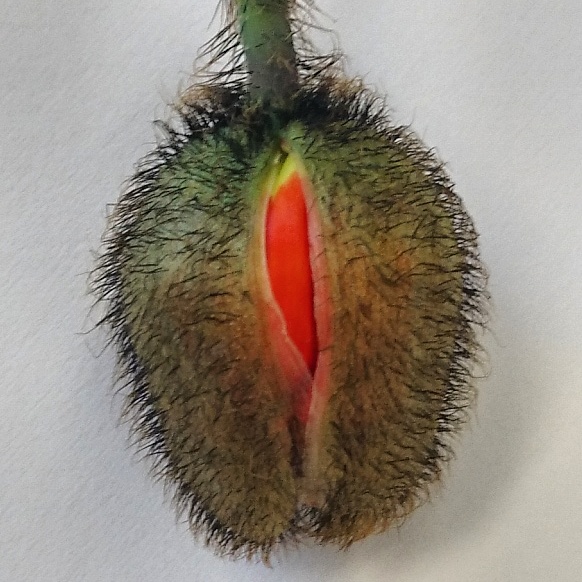
edge of wrong presents “variations on the body” – 27 august 2016
 Please join us for an evening of experimental live music hosted by the Edge of Wrong and featuring performances from pianist Coila-Leah Enderstein, electronic musician Daniel Gray, noise maestro Justin Allart and movement-based composition artists Aragorn23, Chantelle Gray and Amantha.
Entrance is pay-what-you-can (recommended donation R50) and you can bring your own refreshments. Please make sure you arrive by 7:30 to minimise disruptions during performances.
___ ABOUT THE ARTISTS ___
Coila-Leah Enderstein is a classically trained pianist based in Cape Town. She’s into in experimental new music and interdisciplinary performance.
daniel gray is an artist from johannesburg and now lives in cape town. he is currently working as a high school maths teacher. he is interested in sound as image, dreams, collective improvisation and chance processes. in 2014-2016 he released an audiovisual album called “fantasmagoria”, a noise/peace album called “mssapessm”, took part in GIPCA live arts festival, performed around cape town, formed the now defunct subdwellers dj collective, started primitive ancestor records – a net label, to name a few of the many noisy endeavours. this will be the third edge of wrong event that he has participated in.
Justin Allart is a highly prolific experimental/noise musician who performs using a motley array of non-musical instruments. Expect sandpaper on turntables and effects pedals talking to themselves.
Aragorn23 is an experimental musician based in South Africa. His current work focuses on algorithmic and gestural composition and the use of the body as an instrument. He will be performing alongside collaborators Chantelle Gray and Amantha on the evening.
cat power – the moon (2006)
leigh-ann naidoo – hallucinations (17 august 2016)

Photo: Paul Botes, M&G
“Quite simply – and this is what I wish to discuss tonight in relation to the question of rage and violence – we are living in different times. Or at least, our time is disjointed, out of sync, plagued by a generational fault line that scrambles historicity.
“The spectre of revolution, of radical change, is in young peoples’ minds and politics, and it is almost nowhere in the politics of the anti-apartheid generation. In fact, even as they criticised young people just five years earlier for being apathetic and depoliticized, they have now thought student activists misguided, uninformed, and mad.
“You would think that it might be possible to resolve this difference in time by means of a careful reading of what is called the ‘objective conditions for revolution’: are we in fact in a time in which revolution is immanent? No matter the subjective experience of time – there must be a way of determining who has the better bearing on history, who can tell the time. What time is it? Yet to tell the time is a complex matter in this society.
“We are, to some degree, post-apartheid, but in many ways not at all. We are living in a democracy that is at the same time violently, pathologically unequal. Protest action against the government – huge amounts of it, what in most other places would signal the beginning of radical change – often flips into a clamour for favour from that very government. Our vacillations, contradictions and anachronisms are indication that what time it is, is open to interpretation.
“I want to argue that the comrades I have worked with in the student movement are not so much mad as they are time-travellers. Or rather, that their particular, beautiful madness is to have recognised and exploited the ambivalence of our historical moment to push into the future. They have been working on the project of historical dissonance, of clarifying the untenable status quo of the present by forcing an awareness of a time when things are not this way. They have seen things many have yet to see. They have been experimenting with hallucinating a new time…”
__
Read the rest of this paper, delivered at the 13th annual Ruth First Memorial Lecture at Wits University in Johannesburg last night.
harp twins – one (2015)
Totally surreal Metallica cover. Camille and Kennerly Kitt are American identical twin actresses and electric/acoustic harpists, who compose, arrange, and perform as The Harp Twins.
siri karlsson – när mörkret faller (2015)
Off The Lost Colony, my favourite Swedish record picked up while living there last year.
jarŋŋa – dållårátte (2014)
Sami joik music from the arctic far north of Sweden.
simone weil – the ring of gyges
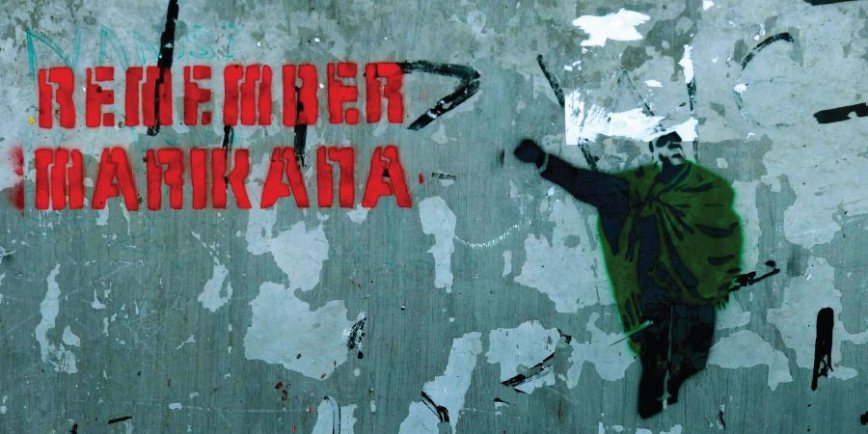
REMEMBER MARIKANA
 … We set things aside without knowing we are doing so; that is precisely where the danger lies. Or, which is still worse, we set them aside by an act of the will, but by an act of the will that is furtive in relation to ourselves. Afterwards we do not any longer know that we have set anything aside. We do not want to know it, and, by dint of not wanting to know it, we reach the point of not being able to know it.
This faculty of setting things aside opens the door to every sort of crime. Outside those departments where education and training have forged solid links, it provides a key to absolute licence. That is what makes it possible for men to behave in such an incoherent fashion, particularly wherever the social, collective emotions play a part (war, national or class hatreds, patriotism for a party or a church). Whatever is surrounded with the prestige of the social element is set in a different place from other things and is exempt from certain connexions.
We also make use of this key when we give way to the allurements of pleasure.
I use it when, day after day, I put off the fulfillment of some obligation. I separate the obligation and the passage of time.
There is nothing more desirable than to get rid of this key. It should be thrown to the bottom of a well whence it can never again be recovered.
The ring of Gyges who has become invisible—this is precisely the act of setting aside: setting oneself aside from the crime one commits; not establishing the connexion between the two.
The act of throwing away the key, of throwing away the ring of Gyges—this is the effort proper to the will. It is the act by which, in pain and blindness, we make our way out of the cave. Gyges: ‘I have become king, and the other king has been assassinated.’ No connexion whatever between these two things. There we have the ring!
The owner of a factory: ‘I enjoy this and that expensive luxury and my workmen are miserably poor.’ He may be very sincerely sorry for his workmen and yet not form the connexion.
For no connexion is formed if thought does not bring it about. Two and two remain indefinitely as two and two unless thought adds them together to make them into four.
We hate the people who try to make us form the connexions we do not want to form.
Justice consists of establishing between analogous things connexions identical with those between similar terms, even when some of these things concern us personally and are an object of attachment for us.
This virtue is situated at the point of contact of the natural and the supernatural. It belongs to the realm of the will and of clear understanding, hence it is part of the cave (for our clarity is a twilight), but we cannot hold on to it unless we pass into the light.
__
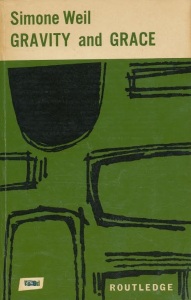
Excerpted from Simone Weil‘s Gravity and Grace. First French edition 1947. Translated by Emma Crawford. English language edition 1963. Routledge and Kegan Paul, London.
sesame street – i love trash (1969)
the sound of murder
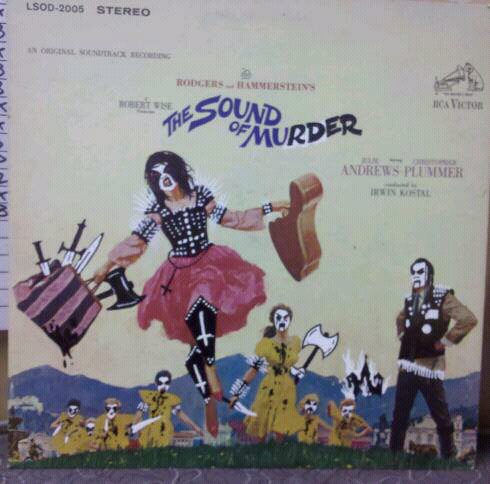
More ridiculous amazingness at bargainbinblasphemy.tumblr.com.
9 august


listening to artie shaw

8 August 2016.
This, to be precise.
all i want
https://www.instagram.com/p/BI4CesNjKHV/
Debbie Pryor, 8 August 2016.
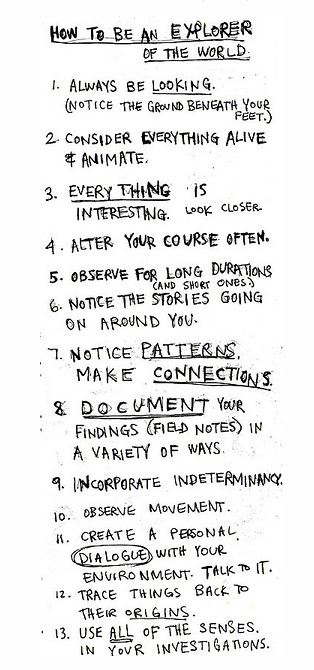
keri smith – how to be an explorer of the world
m. ward – i’m listening (2016)
Off More Rain (Merge Records, 2016).
 fleurmach