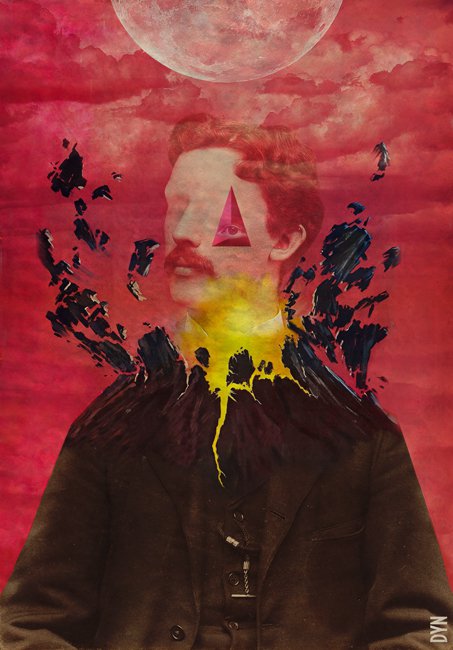
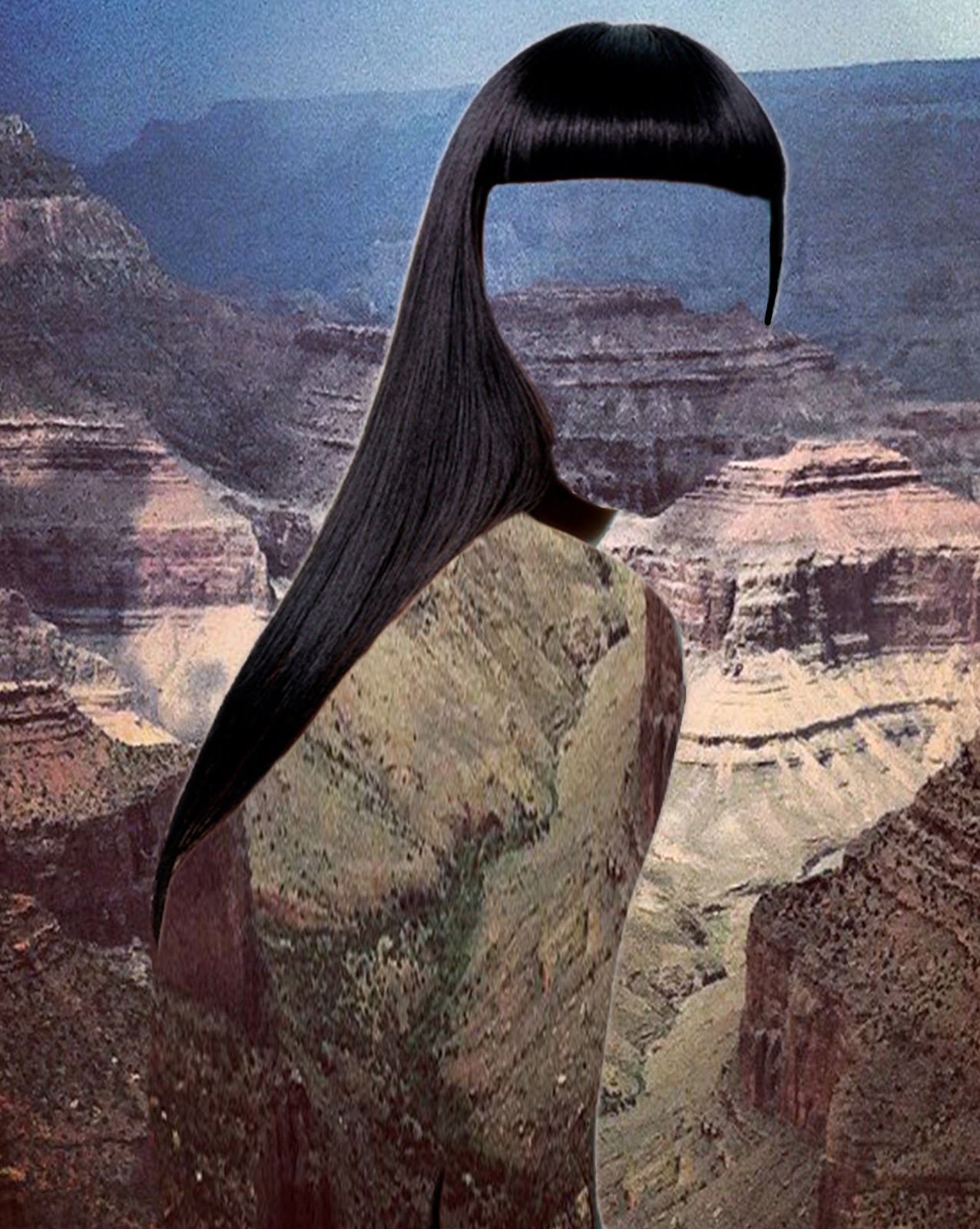
Erin Case is an award winning visual artist based in Midland, Michigan, with a focus in collage. Working in both analog and digital methods, she is regarded for the marriage of surrealism, sincerity, and evocativeness that is present throughout her body of work. Check out more of her work HERE.
Category Archives: art
flash mob flamenco
Flamenco flash mob staged by anti-capitalist group flo6x8 inside a bank in Sevilla, Spain, to express anger and frustration at the economic crisis. Flamenco began as an art form centred around protest and social awareness. In the late 18th and early 19th centuries, flamenco songs were largely about poverty, suffering and the hardships of everyday life.
Read more HERE about how flash mobs are reconnecting flamenco to its roots, or watch a 25 minute BBC documentary on the phenomenon.
(Thanks to Lizza Littlewort for posting the featured link on Facebook this morning.)
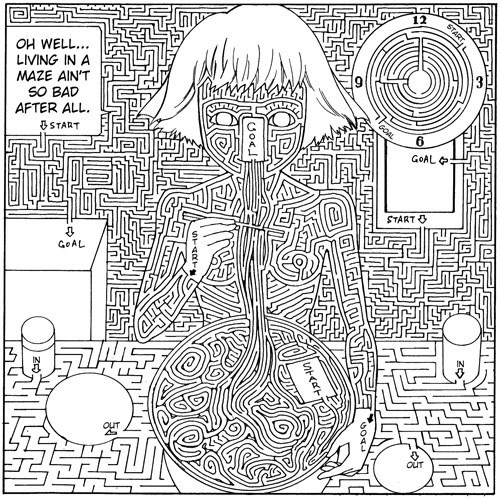
shintaro kago – the memories of others
nick cave on his love for wikipedia
Ag, BLESS!
Watch more of this Australian Broadcasting Corporation insert from February 2013 – Nick talks about creativity, inspiration, his characters and his penchant for observation – HERE.
weird shit
Find more of Helen Green’s illustration work HERE.
justine musk – redefining what it means to be bad
This piece by Justine Musk was first published HERE. Thanks to Emma Arogundade for sharing it on Facebook.
Justine Musk – “Well-behaved women seldom make history”: Redefining what it means to be bad
I posed topless for a female photographer who specializes in boudoir. I’m lying on the bed in a man’s velvet smoking jacket, hair blown across my face. I look at the camera. It’s a beautiful portrait (the photographer is very talented) and I’m proud of it. It reminds me slightly of Manet’s Olympia. That painting caused a scandal at the time (1863) — not because the subject was nude — but because of how she stares at the viewer instead of looking away demurely.
It’s that act of shameless eye contact that makes her – according to the moral dictates of the era — truly “bad”.
I once said to someone, “I don’t know if I’m a good girl with a bad streak, or a bad girl with a good streak.” But I was being ironic. My real point was that, like any other woman (or man), I am both and neither.
In fact, it’s kind of amazing to me that the good girl/bad girl dichotomy still exists. It came up again when movie star Reese Witherspoon accepted an award on television and took her speech as an opportunity to slam other, younger women for being “bad”.
“I understand that it’s cool to be bad, I get it,” she said, in that tone of false camaraderie women sometimes use before they slip in the knife. “But it’s possible to make it in Hollywood without being on a reality show….And when I was coming up, a sex tape was something you hid under your bed…And when you take naked pictures of yourself, you hide your face! Hide your face!” She finished off by declaring that she was going to try to make it “cool” to be a “good girl”.
But imagine this:
Instead of criticizing the same young women for the same things that everybody else is already criticizing them for, she could have slammed reality shows for their misogynist (and monotonous) depiction of women.
She could have criticized the kind of media that turns a girl like Paris Hilton into a celebrity in the first place.
She could have pointed out how advertising – which is so very everywhere that we no longer notice it as we’re breathing it in – co-opts rebellion and sells it back to girls in the “you’ve come a long way, baby” pseudo-liberation supposedly found in a package of cigarettes.
She could have criticized a culture that trains girls to define themselves by their sexual appeal only to punish them for it.
She could have echoed Laurel Ulrich’s famous comment that “well-behaved women seldom make history” and pointed out that ‘bad’ doesn’t have to mean shallow and self-destructive. It can mean cutting against the traditional good-girl dictates of passive and pretty and pleasing and quiet. It can mean speaking up against the status quo, the double standard, the beauty myth. It can mean rejecting the idea that your moral nature depends not on what you do, but on what you don’t do (have sex).
It can mean revolution not rebellion.
She could have said: If you’re going to be ‘bad’, make it MEAN SOMETHING…other than self-sabotage.
Recently I was struck by two different dialogues on Facebook. One was about Charlie Sheen. The other was about Britney Spears. A man posted a status update about going to Sheen’s show, and the thread discussed how smart and funny and talented Sheen is and that despite the controversy and general hubbub, “he’s fine, he’s okay” and “a brilliant marketer” and “totally knows what he’s doing”.
Meanwhile, I’d posted a link to a Britney Spears video on my own Facebook page, partly because I’m fascinated by the way people react to her.
Britney immediately came under fire for being “a poor role model” to young girls everywhere.
No “brilliant marketer” comments for her.
Both Sheen and Spears have a noted history of drug use. Both are sexy and openly sexual. Both are, or have been, at the top of their professions. Both have undergone episodes of bizarre, even tragic behavior that is suggestive of addiction and mental illness.
Yet in the buzz around Charlie Sheen at the height of his notoriety, what I didn’t hear was anything about how he serves as a poor role model for boys.
This is interesting to me, because – unlike Britney, at least to my knowledge – Sheen has a documented history of domestic abuse.
As in: he hits women.
As in: he once shot a woman in the arm.
Let me repeat that: he freaking shot the woman.
But this is no big deal. It gets glossed over. Whenever I brought it up – in person or online – people would lift their virtual shoulders in a virtual shrug and move on.
(Possibly because the women involved were so easily characterized as ‘bad’ girls.
Which in the end comes down to this: slut.
Which means: vile and disposable.)
In comparison to Sheen, Britney did reveal her belly button at a young age. And that, of course, is a threat to civilization as we know it.
Spears is held up as a “poor role model” because we can perceive her as trashy and slutty and “asking for it”. Once you reduce a girl to her sexuality – and god knows that never ever happens in this culture – she becomes less than human, so you no longer have to treat her as a human. Which means the Charlie Sheens of the world – rich, powerful, white – can do with them as they please. If the girls get, you know, a little bit shot — well, it’s their own damn fault. That’s the message that some boys are absorbing from Sheen’s treatment of women and our celebration of him. That attitude, I suspect, will prove more dangerous to girls than any of Britney’s outfits or dance moves or little-girl singing voice.
There’s some irony in the fact that, like Britney, Reese Witherspoon got pregnant at a young age – but unlike Britney, who was married, Reese conceived out of wedlock and had a shotgun wedding.
Also, she said “motherfucker” on stage.
Also, she is still young — and divorced.
Also, she’s an actress (which used to be synonymous with prostitute).
Not so long ago, these things would have pegged her as morally defective. She wouldn’t technically qualify as a “good girl” (which means she’s probably “cooler” than she gives herself credit for).
But what Witherspoon seemed to be getting at in her declaration of herself as a “good girl” has to do with the idea of exposure. Whether it’s a reality TV show or an unfortunate cell phone picture, a good girl does not show herself to the world in this way — or if she does, she “hides her face”.
She guards her shame.
She never makes eye contact.
A “good” girl is not only virginal – and thus qualifies as morally sound, even if, like Jessica Wakefield in the Sweet Valley High novels, she’s kind of a sociopath – but modest and quiet. She covers up. She is seen – without being seen. She talks in a nice voice and smiles a lot. She’s the angel of the house, and stays in the house, which was the historical point of this exercise in the first place.
She’s not loud or opinionated, she doesn’t rock the boat, and she doesn’t draw attention to herself.
All of this is convenient for others. The funny thing about silence is how it tends to favor the dominating person or group. The dominating narrative, the ruling point of view, becomes a sort of truth by default: what we as a culture assume when we’re given no reason to assume otherwise.
It’s the winners who get to write history, after all. The others are silent or silenced.
Which is not my way of saying that appearing on reality TV isn’t a form of evil in its own right, or that a girl should take provocative pictures of herself and post them on the ‘Net. Neither is power so much as a mistaken idea about power (and perhaps too many shots of tequila): when the culture seems to be urging you in one direction (“it’s cool to be ‘bad’”) and you haven’t had time or experience to learn otherwise.
But there does seem to be a link between sexual expression and self-expression, in that a ‘good’ girl is not in full possession of either. Her body doesn’t belong to her: it ‘belongs’ to her father, to her future husband, to the government that decides if she can have an abortion or the religion that decides if she can use birth control.
Her voice doesn’t fully belong to her either: she has to be careful what she says, and how she says it, and who she might offend.
‘Goodness’, then, seems to involve an amputation of the self. You make yourself ‘good’ to be loved and accepted, and in the process sacrifice your authenticity. You give yourself away until you no longer know who you are – assuming you ever did.
I’m not sure what you actually get for this, in the end.
Fitting in, as the wonderful Brene Brown so astutely points out, is not the same as being accepted for who you are – in fact, the one renders the other impossible. Being trained to please and serve leaves you ripe for exploitation; the inability to assert your boundaries makes you easy to abuse in large and small ways.
“Raising a girl to be ‘nice’,” a therapist – a woman in her sixties, married and with daughters — once remarked to me, “is like sending her out into the world with one hand tied behind her back.” She should know. Many of these women turn up in her Beverly Hills office twenty years later: divorced, discarded, aging, with no ability to support themselves and no sense of who they are at core.
So honestly, in the year 2011, these are a girl’s options? She can be ‘bad’ (and disposable) or ‘good’ (and turned in on herself)?
I would like to think that there’s another option.
Not ‘bad’, maybe, but badass.
As in: you get to declare yourself. You get to express your sexuality any way you choose, whether it’s indulging or abstaining, and you’re responsible about it and willing to risk the emotional consequences. When you want or need to speak up — you speak up. You write or blog or paint or dance or study or put on puppet shows or raise your kids or start up your own company or nonprofit or do some combination thereof. You stand for what you believe in. You know what you believe in – and what you don’t. You own your life. You find your tribe. You look out for yourself (ie: you are ‘selfish’). And when you offend people, as anyone with an opinion is bound to do at some point — when people step into your space just to tell you that you suck — you shrug it off and move on, because you know disapproval won’t kill you.
You nurture the fire at your core.
I’m reading the book GAME FRAME, about the rise of social gaming, and came across the idea of “the magic circle”. The circle is the arena in which the game takes place. You step over some kind of threshold and into another world. You participate in a conflict that you recognize as artificial but, for a space of time, accept as reality. You willingly suspend your disbelief.
It struck me that we move in and out of different kinds of magic circles. There are games, yes, but also movies and theater and television and books. There are relationships that become their own world of intimacy. They form a private reality between you and your partner, in which you might ignore your actual experience to buy into an entrancement (“we are soulmates”) or belief system (“he is better and always right, and I am lesser and always wrong”).
And then there’s a magic circle that has to do with language and perception, with how we create our shared reality. The good girl/bad girl labeling strikes me as one of those. Instead of recognizing a woman as a complex and multi-dimensional being, instead of allowing her the flaws, mistakes and happy accidents that come with the trial-and-error process known as the human condition, we stomp her into a cartoon. We accept an artificial conflict (good girl vs bad girl) and make it important. We place her on a pedestal or in the dirt (or on the pedestal so we can knock her off later). We accept this as real instead of a game we can choose not to play.
You could say, instead: We’re all doing the best we can. We all do stupid things from time to time. But we won’t be distracted by this game of blaming and shaming each other. We’ll look to larger forces.
I like this video by Jeffrey Wright, in which he transfers the “willing suspension of disbelief” from the theater to the developing world, from acting to entrepreneurialism and social change.
With the power of your convictions, he says, with the ability to suspend your disbelief and act in the face of uncertainty, you have the chance to reshape reality.
Like Olympia staring out at the viewer — like Manet breaking the rules to paint her — you can reject the game and make a new one.
You can invent a new truth.
Olympia has come down to us through the ages. She refuses to “hide her face”. She is shamelessly comfortable in her own skin. She exudes a badass presence.
Her critics, now, are dust.
on being fully alive
We are motivated more by aversion to the unpleasant than by a will toward truth, freedom, or healing. We are constantly attempting to escape our life, to avoid rather than enter our pain, and we wonder why it is so difficult to be fully alive.
― Stephen Levine, from A Year to Live: How to Live This Year as If It Were Your Last
melody nelson (full film)
… And, while we’re on the lugubrious, seamy baritone tip, it would be remiss not to make a turn past l’original, Monsieur Serge Gainsbourg:
Watch Melody Nelson, a short film directed Jean-Christophe Avery, starring Serge Gainsbourg and Jane Birkin, based on Gainsbourg’s seminal (ahem, heheh) 1971 album. More information HERE.
the magic flute
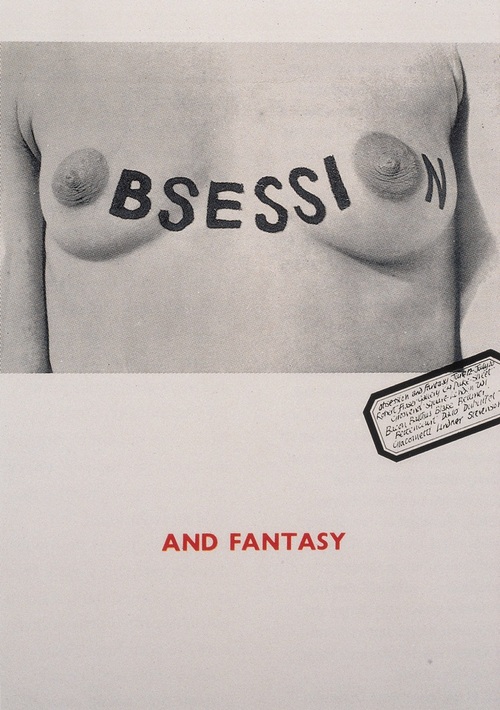
obsession and fantasy
shintaro kago – mermaid
danielle leduc – the anti-preneur manifesto
I don’t want to be a designer, a marketer, an illustrator, a brander, a social media consultant, a multi-platform guru, an interface wizard, a writer of copy, a technological assistant, an applicator, an aesthetic king, a notable user, a profit-maximizer, a bottom-line analyzer, a meme generator, a hit tracker, a re-poster, a sponsored blogger, a starred commentator, an online retailer, a viral relayer, a handle, a font or a page. I don’t want to be linked in, tuned in, ‘liked’, incorporated, listed or programmed. I don’t want to be a brand, a representative, an ambassador, a bestseller or a chart-topper. I don’t want to be a human resource or part of your human capital.
I don’t want to be an entrepreneur of myself.
Don’t listen to the founders, the employers, the newspapers, the pundits, the editors, the forecasters, the researchers, the branders, the career counsellors, the prime minister, the job market, Michel Foucault or your haughty brother in finance – there’s something else!
I want to be a lover, a teacher, a wanderer, an assembler of words, a sculptor of immaterial, a maker of instruments, a Socratic philosopher and an erratic muse. I want to be a community centre a piece of art, a wonky cursive script and an old-growth tree! I want to be a disrupter, a creator, an apocalyptic visionary, a master of reconfiguration, a hypocritical parent, an illegal download and a choose-your-own-adventure! I want to be a renegade agitator! A licker of ice cream! An organiser of mischief! A released charge! A double jump on the trampoline! A wayward youth! A volunteer! A partner.
I want to be a curator of myself, an anti-preneur, a person.
Unlimited availabilities. No followers required. Only friends.
~ Danielle Leduc
First published HERE (thanks to Emma Arogundade for sharing it on Facebook).
Note from the author:
I actually didn’t write this as an ‘anti-preneurial manifesto’ – it was more of a poetic rant written in frustration from combing through the online job market. I meant it as less of a takedown of capitalism and more of a critique of how we are told to sell ourselves as brands, to self-promote, in order to make it in this world, and as such we allow our job titles to define us to a certain extent. I think all of us are many of the things I listed towards the end, but these things don’t appear as marketable skills in a neoliberal economy with a tight and precarious job market. We are not our resumes, is all.
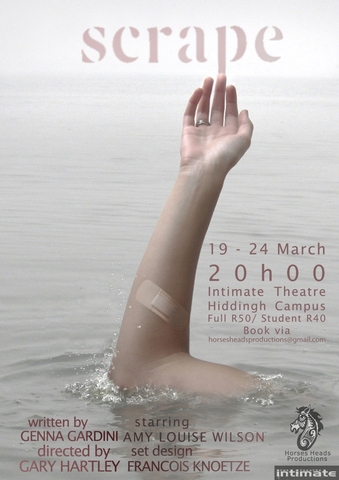
“scrape”: it’s brilliant – go and see it!
This play is on for two more nights at the Intimate Theatre on UCT’s Hiddingh Campus. I went last night. It is an absolute tour de force – insightful, brutal, awkward, compassionate, hilarious. If you are in Cape Town, GO, GO, GO!
Scrape is the story of an everyday woman suffering from an unusual condition.
After falling and scraping herself, Beth discovers that not only does skin heal, it can sometimes do so with a vengeance.
This one-person show, performed by Amy Louise Wilson, is presented by writer Genna Gardini and director Gary Hartley. It features sound design by musician and performance artist SIYA IS YOUR ANARCHIST and set design by 2011 ABSA L’Atelier and Sasol New Signatures finalist Francois Knoetze.
Scrape is presented by the new theatre company Horses’ Heads Productions. The production will preview at the Intimate Theatre from 19 – 24 March 2013 and go on to feature as part of The Cape Town Edge programme at this year’s National Arts Festival. Scrape will then return to the Mother City for a run at The Alexander Bar in August 2013.
Scrape, 19 – 24 March 2013, 20:00
The Intimate Theatre on UCT’s Hiddingh Campus
R50 general/ R40 students
To book tickets, contact 0827765490 or horsesheadsproductions@gmail.com
Director:
Gary Hartley is a theatre-maker, performer and television producer based in Cape Town. In 2007 he graduated from Rhodes University with a distinction in Drama. His production, WinterSweet, made in collaboration with The Runaway Buni Collective and writer Genna Gardini, won a Standard Bank Ovation Encore prize at the 2012 National Arts Festival. He currently works as a writer and producer at Greenwall Productions and has produced for shows such as The Showbiz Report, The Close Up and Screentime with Nicky Greenwall.
Playwright:
Genna Gardini is a writer based in Cape Town. Her play WinterSweet was produced in collaboration with Gary Hartley and The Runaway Buni Collective for the 2012 National Arts Festival and won a Standard Bank Encore Ovation Award. She has curated The Readings Upstairs, a monthly series of play readings held upstairs at the Alexander Bar, since 2012. Her work as a poet has been published widely both locally and internationally. Gardini has presented papers at the 2012 AFTA Annual International Conference and GIPCA Directors and Directing: Playwrights Symposium. She also works as a freelance arts writer for various publications, including the Cape Times and Art South Africa magazine. She is currently completing her MA Theatre-making (Playwriting) at UCT.
Performer:
Amy Louise Wilson is an actress living in Cape Town. She has studied Acting and Contemporary Performance at Rhodes University; Processes of Performance and Shakespeare Studies at the University of Leeds and Theatre and Performance at the University of Cape Town. Recent performances include The Petticoat Chronicle (dir. Lynne Maree), Voiced (under Clare Stopford) and 2012’s Standard Bank Encore Ovation Award winning Wintersweet (dir. Robert Haxton). She will be presenting her paper ‘Performance, Persona and Identity in the work of Die Antwoord’ at the New Directions in South African Theatre Today: Circulation, Evolutions, Adaptations symposium in France later this year.
Set Designer:
Francois Knoetze is an artist based in Cape Town. Having recently completed his Honours in Fine Art at Rhodes University, he is currently pursuing his MFA at Michaelis. His work is multidisciplinary, incorporating performance, assemblage sculpture and film. In 2011 he was a finalist in both the Absa L’Atelier and Sasol New Signatures competitions. Last year he was named one of Art South Africa magazine’s Bright Young Things. He has been involved in numerous theatre productions as set designer and puppet-maker, including works by the UBOM! Eastern Cape Theatre Company.
Sound designer:
Writer, journalist, musician and filmmaker SIYA IS YOUR ANARCHIST has written for publications like the Sunday World, The Event and The Callsheet. He has performed at the National Arts Festival and written several plays. He has also worked for TV shows such as Rhythm City (E-TV), Font (SABC 3), Breaking New Ground (SABC 2). He directed an SABC2 documentary on Aids activist Zackie Achmat called His Husband in 2011 and has exhibited multi-media installations for Goodman Gallery Cape Town and GIPCA Live Art Festival. He now works for Entertainment Africa as a features writer and is combining writing, music, art and media for the release of his upcoming musical EP.
For more information, see:
Scrape Facebook event
Horses’ Heads Productions Facebook page:
Horses’ Heads Twitter
erica jong – becoming a nun
On cold days
it is easy to be reasonable,
to button the mouth against kisses,
dust the breasts
with talcum powder
& forget
the red pulp meat
of the heart.
On those days
it beats
like a digital clock–
not a beat at all
but a steady whirring
chilly as green neon,
luminous as numerals in the dark,
cool as electricity.
& I think:
I can live without it all–
love with its blood pump,
sex with its messy hungers,
men with their peacock strutting,
their silly sexual baggage,
their wet tongues in my ear
& their words like little sugar suckers
with sour centers.
On such days
I am zipped in my body suit,
I am wearing seven league red suede boots,
I am marching over the cobblestones
as if they were the heads of men,
& I am happy
as a seven-year-old virgin
holding Daddy’s hand.
Don’t touch.
Don’t try to tempt me with your ripe persimmons.
Don’t threaten me with your volcano.
The sky is clearer when I’m not in heat,
& the poems
are colder.
Poem © Erica Mann Jong
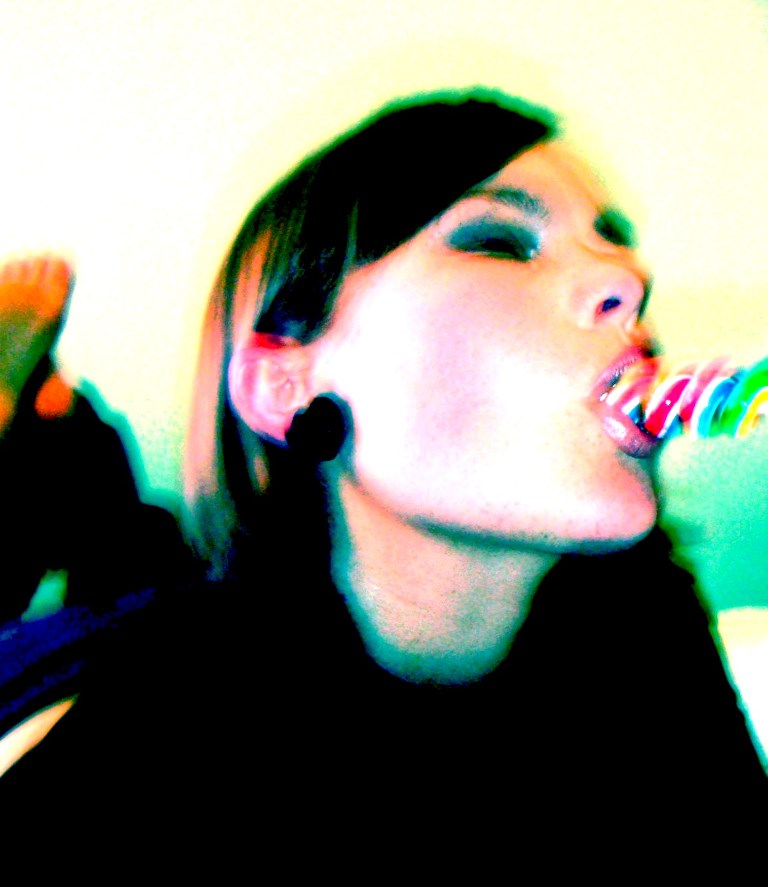
“La Sucette” by Rosemary Lombard is licensed under a Creative Commons Attribution-NonCommercial-NoDerivs 3.0 Unported License.
dave coba – “broken” (2008)
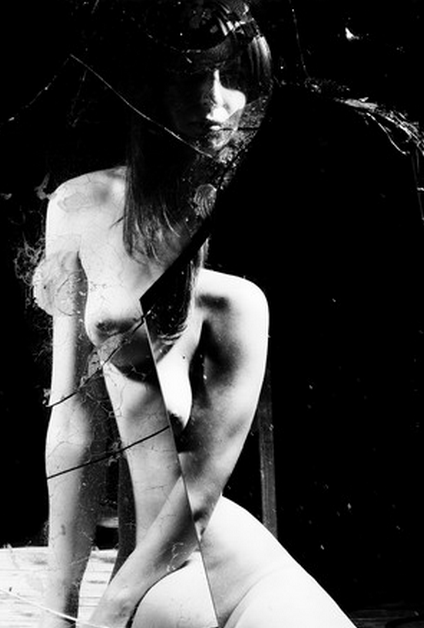
Broken is a project by photographer Dave Coba which features black and white studies of nude models. Coba says the images “were created by photographing the models in front of broken, partly “blind” mirrors. Thematically they’re about dreamlike rapture — self awareness in a reality that’s altered, twisted, broken and reflected in an enigmatic way. It means a lot to me that the models wanted to see themselves as they were portrayed: They played their decisive part by ‘putting themselves into the mirror’ and letting the photographer document them.”
See more of these intriguing photographs HERE.
marina abramović and ulay – moma 2010
Marina Abramovic and Ulay shared an intense love in the 1970s, performing art out of the van they lived in. When they felt the relationship had run its course (after almost 12 years), they decided to walk the Great Wall of China, each from one end, meeting for one last big hug in the middle and never seeing each other again.
At her 2010 MoMa retrospective, Marina performed ‘The Artist Is Present’ as part of the show, where she shared a minute of silence with each stranger who sat in front of her. Ulay arrived without her knowing and this is what happened:
(Background information from HERE.)
hieronymous bosch – the garden of earthly delights (detail)
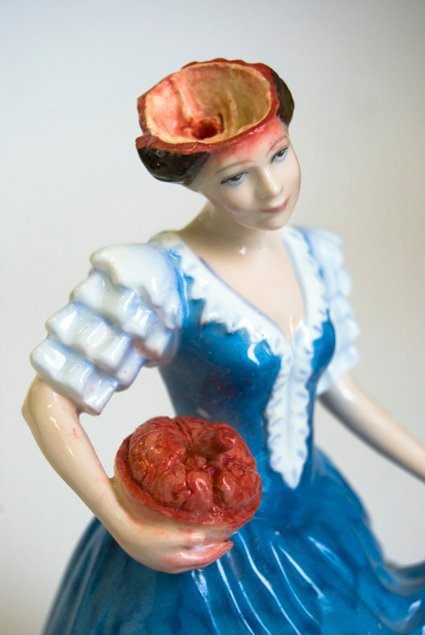
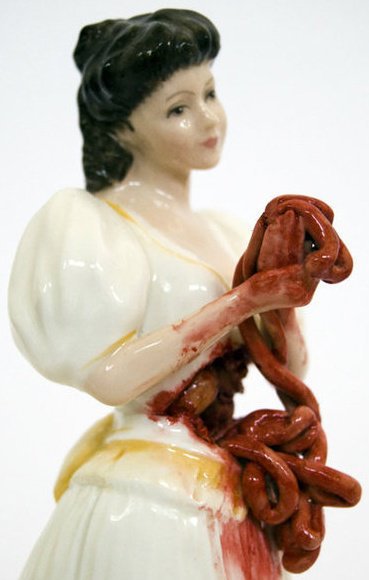
evisceral
This is just how I am feeling today.
More HERE.
julia holter – goddess eyes 1
“The first thing that came to mind was an image that gradually deteriorates with visual noise, echoing the sonic noise present in the song. We go from lightness to darkness, away from a structured, fabricated place and into raw territory.”
~ Jose Wolff – August, 2012
Music by Julia Holter
Directed by Jose Wolff
Photography by Robson Muzel and Jose Wolff
“Broken figure” portrayed by Bryan Dodds
Shot on site at The Wulf, Elysian Park, and the Angeles Angeles Natural Forest. Special thanks to Emily Jane Kuntz and Eric KM Clark and Michael Winter at The Wulf
©2012 RVNG Intl.
missing, forever
I made this poster in reference to this one, but the events it describes are entirely true. My cat’s head was never found. That night, I think I lost a part of me too, though I didn’t realise it at the time: the part that trusted and expected people who said they loved me not to hurt me intentionally.
What made me realise how this all fitted together was a chain status update game that went around on Facebook a few weeks ago. My answers to the questions went like this:
Age I was given: 17 (I balked because it was a very heavy year for me, but here goes…)
Where I lived: Waterfall, a village in KZN a little north of the Comrades Marathon route, through the sugarcane fields (which are now Tuscan townships).
What I did: Wrote matric with the help of regular immunoglobulin injections and reflexology to stave off the Chronic Fatigue Syndrome/M.E.that I’d been severely ill with since 14 when I’d contracted Glandular Fever. Spent a lot of my study time taping songs off the radio. Went to Turkey on short term Rotary Exchange after finishing school.
Who had my heart: My cat, Jorgy, who had been my constant companion throughout my illness. He was killed while I was in Turkey. I’d broken up with my first boyfriend during matric trials – I couldn’t handle his obsessive, controlling demands for attention. He turned stalker on me, hanging around outside my house, phoning all the time, sending letters threatening suicide, warning me that I would be sorry if “I left him” and went to Turkey. A day or two before I got back, my family found the headless body of our beloved Jorgensen Fassbinder Kittyman Von Streichen Hashimoto Lighoré at the bottom of the garden, tossed over the fence. I wish I was making this up.
Age I am now: 34
Where I live: Oranjezicht, Cape Town
What I do: I excel at giving too much of a shit.
Who has my heart: My heart is a hot potato.
__
The shadow of this manifested down the years in relationships with a string of men who were deliberately unkind and dismissive to me too often; with me always holding on too long because I mistakenly identified their cruelty or disloyalty as evidence of their love for me in spite of what they judged to be my shortcomings. At the darkest junctures over those years, I actually believed that I might deserve the humiliation, the punishment; that I should be grateful anyone humoured me. If they weren’t critical or manipulative enough, if I didn’t have cause to be outraged by their mistreatment, to defend myself against their accusations, to demand consideration, recognition… then it didn’t feel like they could really care (how twisted is that?).
The men I fell most deeply for were never truly available or fully present, would leave me because they cared more about someone else, or were running for their own damaged reasons. I guess I only felt safe from being smothered when they had one foot outside the door, though I yearned with all my heart to be held unconditionally, the way I held them.
This delusion is broken and I am free of its bonds.
pablo neruda – too many names
Mondays are meshed with Tuesdays
and the week with the whole year.
Time cannot be cut
with your weary scissors,
and all the names of the day
are washed out by the waters of night.
No one can claim the name of Pedro,
nobody is Rosa or Maria,
all of us are dust or sand,
all of us are rain under rain.
They have spoken to me of Venezuelas,
of Chiles and of Paraguays;
I have no idea what they are saying.
I know only the skin of the earth
and I know it is without a name.
When I lived amongst the roots
they pleased me more than flowers did,
and when I spoke to a stone
it rang like a bell.
It is so long, the spring
which goes on all winter.
Time lost its shoes.
A year lasts four centuries.
When I sleep every night,
what am I called or not called?
And when I wake, who am I
if I was not I while I slept?
This means to say that scarcely
have we landed into life
than we come as if new-born;
let us not fill our mouths
with so many faltering names,
with so many sad formalities,
with so many pompous letters,
with so much of yours and mine,
with so much signing of papers.
I have a mind to confuse things,
unite them, bring them to birth,
mix them up, undress them,
until the light of the world
has the oneness of the ocean,
a generous, vast wholeness,
a crackling, living fragrance.
streetshrineproject
the edge of wrong festival starts this friday
It’s a festival kindred in spirit to Fleurmach! Don’t miss EDGE OF WRONG. From this Friday, 22 February until 2 March 2013 in Cape Town, explore the thresholds of what music can be…

EDGE OF WRONG is premised on the productive opportunities vested in chance, in uncertainty, in the pursuit of the unknown. It welcomes mistakes and challenge, diversity and collaboration.
As such, the festival brings together a community of like-minded musicians and artists from South Africa and Europe to share skills and visions with each other and the SA audience. Artists are invited based on their commitment to experimentation; to find, test and exceed the limits of their creative potential.
Find out more about the performers and line-up of events at the official EDGE OF WRONG site.
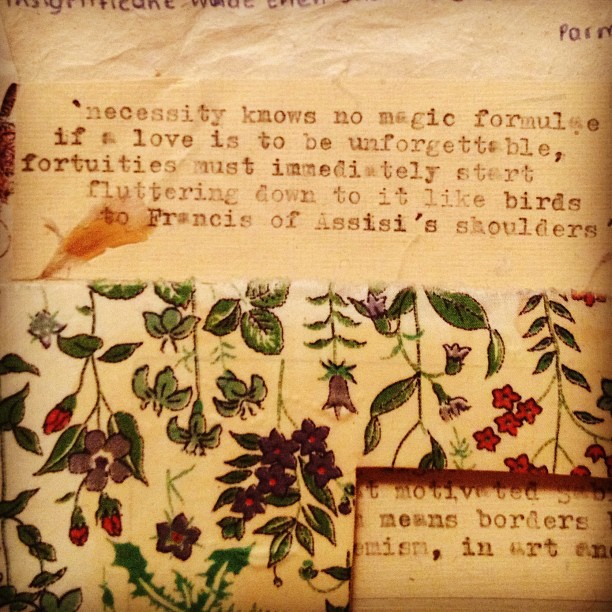
milan kundera on unforgettable love
be my valentine
More of Joshua Hoffine’s horror photography can be found HERE.
The Garden of Proserpine by Algernon Charles Swinburne, written in 1866
Here, where the world is quiet,
Here, where all trouble seems
Dead winds’ and spent waves’ riot
In doubtful dreams of dreams;
I watch the green field growing
For reaping folk and sowing,
For harvest-time and mowing,
A sleepy world of streams.
I am tired of tears and laughter,
And men that laugh and weep
Of what may come hereafter
For men that sow to reap:
I am weary of days and hours,
Blown buds of barren flowers,
Desires and dreams and powers
And everything but sleep.
Here life has death for neighbour,
And far from eye or ear
Wan waves and wet winds labour,
Weak ships and spirits steer;
They drive adrift, and whither
They wot not who make thither;
But no such winds blow hither,
And no such things grow here.
No growth of moor or coppice,
No heather-flower or vine,
But bloomless buds of poppies,
Green grapes of Proserpine,
Pale beds of blowing rushes
Where no leaf blooms or blushes,
Save this whereout she crushes
For dead men deadly wine.
Pale, without name or number,
In fruitless fields of corn,
They bow themselves and slumber
All night till light is born;
And like a soul belated,
In hell and heaven unmated,
By cloud and mist abated
Comes out of darkness morn.
Though one were strong as seven,
He too with death shall dwell,
Nor wake with wings in heaven,
Nor weep for pains in hell;
Though one were fair as roses,
His beauty clouds and closes;
And well though love reposes,
In the end it is not well.
Pale, beyond porch and portal,
Crowned with calm leaves she stands
Who gathers all things mortal
With cold immortal hands;
Her languid lips are sweeter
Than love’s who fears to greet her
To men that mix and meet her
From many times and lands.
She waits for each and other,
She waits for all men born;
Forgets the earth her mother,
The life of fruits and corn;
And spring and seed and swallow
Take wing for her and follow
Where summer song rings hollow
And flowers are put to scorn.
There go the loves that wither,
The old loves with wearier wings;
And all dead years draw thither,
And all disastrous things;
Dead dreams of days forsaken,
Blind buds that snows have shaken,
Wild leaves that winds have taken,
Red strays of ruined springs.
We are not sure of sorrow,
And joy was never sure;
To-day will die to-morrow;
Time stoops to no man’s lure;
And love, grown faint and fretful,
With lips but half regretful
Sighs, and with eyes forgetful
Weeps that no loves endure.
From too much love of living,
From hope and fear set free,
We thank with brief thanksgiving
Whatever gods may be
That no life lives for ever;
That dead men rise up never;
That even the weariest river
Winds somewhere safe to sea.
Then star nor sun shall waken,
Nor any change of light:
Nor sound of waters shaken,
Nor any sound or sight:
Nor wintry leaves nor vernal,
Nor days nor things diurnal;
Only the sleep eternal
In an eternal night.
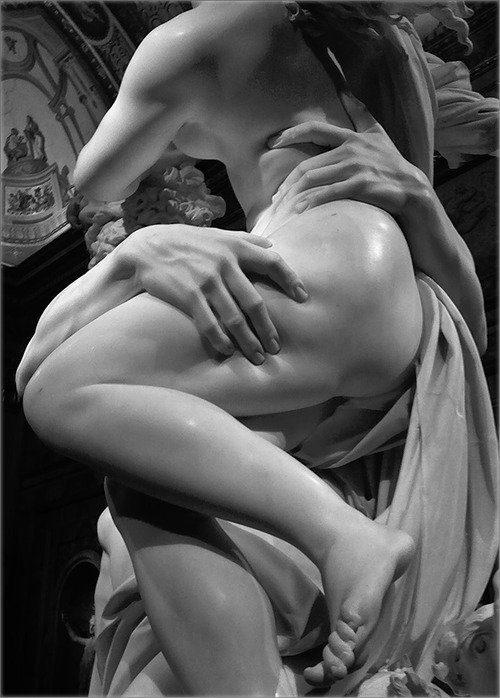
the rape of persephone (homeric hymn)
I) HAIDES ABDUCTS PERSEPHONE
Homeric Hymn ii to Demeter (abridged) (trans. Evelyn White) (Greek epic circa 7th or 6th B.C.)
“[Demeter’s] trim-ankled daughter whom Aidoneus [Haides] rapt away, given to him by all-seeing Zeus the loud-thunderer. Apart from Demeter, lady of the golden sword and glorious fruits, she was playing with the deep-bosomed daughters of Okeanos and gathering flowers over a soft meadow, roses and crocuses and beautiful violets, irises also and hyacinths and the narcissus, which Gaia made to grow at the will of Zeus and to please Polydektor (the Host of Many), to be a snare for the bloom-like girl – a marvellous, radiant flower. It was a thing of awe whether for deathless gods or mortal men to see: from its root grew a hundred blooms and it smelled most sweetly, so that all wide heaven (Ouranos) above and the whole earth (Gaia) and the sea’s (Thalassa’s) salt swell laughed for joy.
And the girl was amazed and reached out with both hands to take the lovely toy: but the wide-pathed earth yawned there in the plain of Nysa, and the lord, Polydegmon (Host of Many), with his immortal horses sprang out upon her — the Son of Kronos, Polynomos (He who has many names). He caught her up reluctant on his golden car and bare her away lamenting.
Then she cried out shrilly with her voice, calling upon her father, [Zeus] the Son of Kronos, who is most high and excellent. But no one, either of the deathless gods or mortal men, heard her voice, nor yet the olive-trees bearing rich fruit: only tender-hearted Hekate, bright-coiffed, the daughter of Persaios, heard the girl from her cave, and the lord Helios (the Sun), Hyperion’s bright son, as she cried to her father, the Son of Kronos. But he was sitting aloof, apart from the gods, in his temple where many pray, and receiving sweet offerings from mortal men. So he [Haides], that Son of Kronos, Polynomos (of Many Names), Polysemantor (Ruler of Many) and Polydegmon (Host of Many), was bearing her away by leave of Zeus on his immortal chariot – his brother’s child and all unwilling.
And so long as she, the goddess, yet beheld earth and starry heaven and the strong-flowing sea where fishes shoal, and the rays of the sun, and still hoped to see her dear mother and the tribes of the eternal gods, so long hope claimed her great heart for all her trouble… and the heights of the mountains and the depths of the sea ran with her immortal voice: and her queenly mother heard her.
after magritte
crows in highgate cemetery
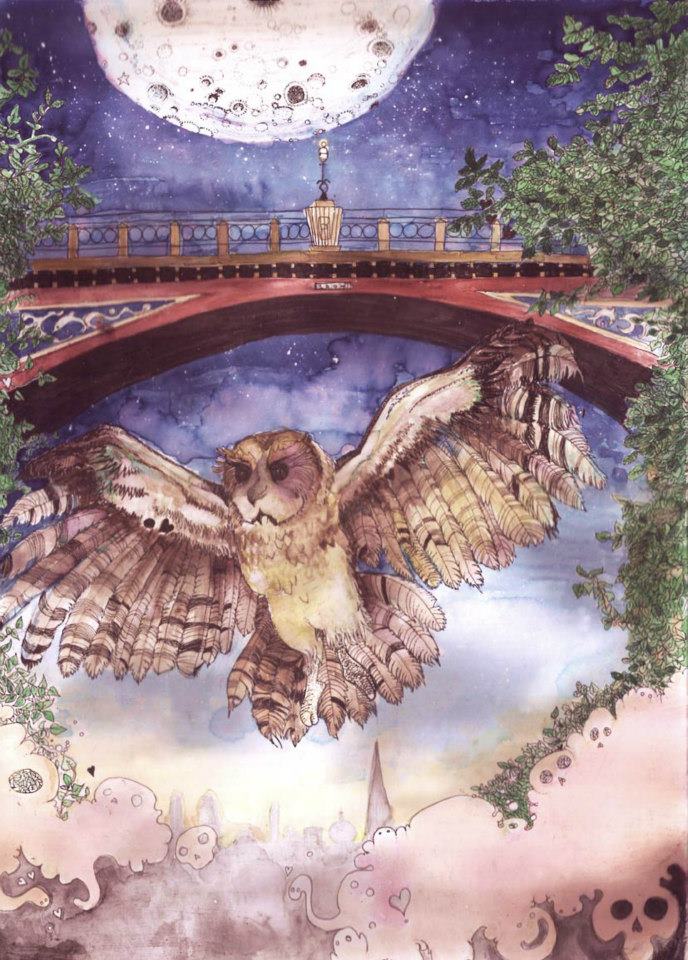
owl flying under ‘suicide bridge’, highgate
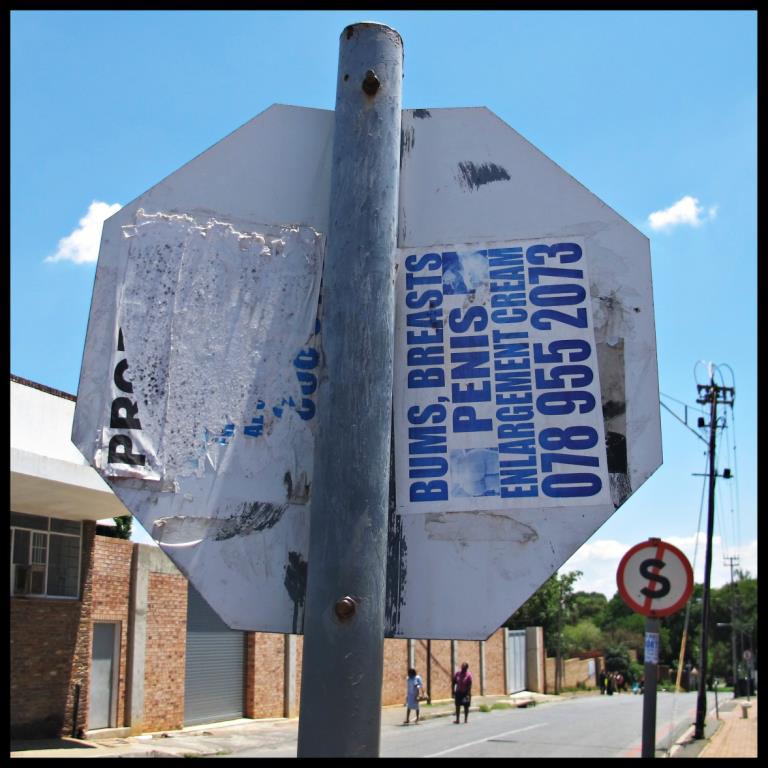
taking back our city #takingbackourcity #dicktatorfreejozi #genderfreesa
We are a city obsessed with the power of the phallus; a presidency obsessed with the symbol and virility and representation of the phallus; a people whose penis size reflects its masculinity, whose masculinity reflects its identity. The effect of this overtly embodied and gendered mantra on our collective unconscious plays itself out in our lives daily.
More so than with other cultures, Joburg constantly genders us. It equates our identity with our gender, places our gendered attributes – our penises, our breasts – under the microscope, and finds us wanting. Those who are found wanting and those who pass the grade play out the script of the power struggle that has been written for us. And as with the Battle of the Sexes in decades before us, the Battle of the Genders brings with it a long, long casualty list. Being part of the female-bodied and -gendered community, as well as the LGBTIQ community, from where so many of the casualties come, I cannot be part of an existence or an art that hides behind the privilege of aesthetic.
Those of you who follow my work know that I believe that gender is nothing more than a social construction and that I perform my gender through my identity and my art daily. But playing with gender and bearing witness to the daily reality of my and others’ lives as queers in my writing and images is not enough. How do I as a queer artist respond to the overt gendering of our city; the grossly embodied sexing of the spirit of Joburg?
I need to take responsibility for the city I want to live in and actively participate in creating it. I need to undermine the gendering of the city and its inhabitants with more than just my existence and my documentation of my play with gender and identity, more than just through my collaborations with others who do the same.
‘Taking Back our City’ is thus this journey of active and creative participation in my city. I hope that you will follow my journey and join me in taking our city back.


![The Garden of Earthly Delights [detail].Date 1480-1510](https://fleurmach.com/wp-content/uploads/2013/03/hieronymus_bosch_garden_of_earthly_delights_tryptich_centre_panel_-_detail_9.jpg?w=869&h=639)