
Ner-Tamin – “Bells”
More of this Russian artist’s work can be found HERE.
Ner-Tamin – “Bells”
More of this Russian artist’s work can be found HERE.
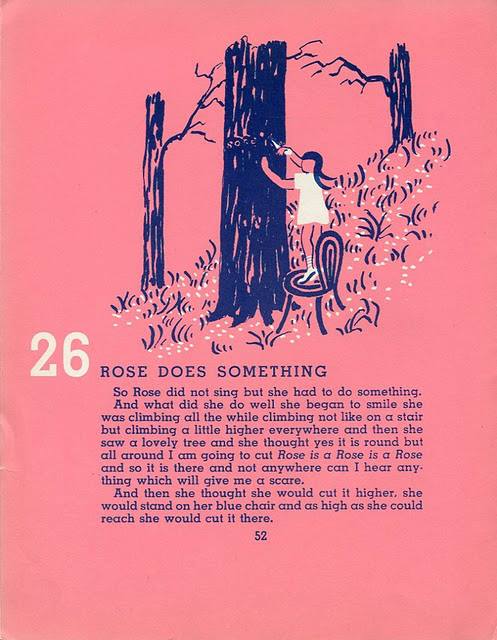 Read more about this book HERE.
Live at Teatro Fondamenta Nuove. Suggestion: play this over the Frida Boccara I just posted.

Zeena Parkins and Ikue Mori
My dad was a fan of Frida Boccara and I grew up hearing this wonderful interpretation of Michel Legrand’s most popular composition, “Les Moulins de Mon Coeur”/”The Windmills of Your Mind”.
Bizarrely, there just happens to be a news report about South African security and miners on in the background of this British instructional video, which I came across looking for footage of Sufi mevlevi (dervishes) directly after I posted the piece below (cf. connection of spinning, drilling, finding gold and freedom). I really find it so bizarre how often the messy layers of random stuff I find while looking for other things fit what I want to find more appositely than what I was looking for. What I am talking about goes way beyond confirmation bias… It’s uncanny… and partly what this blog is about is documenting these “curiouser and curiouser” moments that blossom outside of the frame.
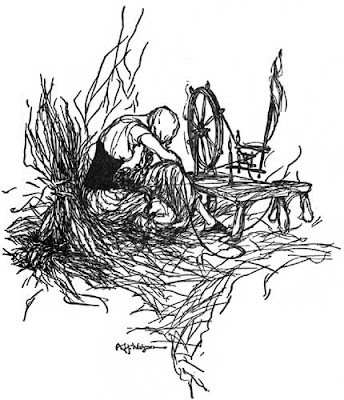
Rumpelstiltskin
Illustration: A H Watson
I’ll bet what I am writing is not making much Sense and I should probably try to sleep. It’s 3 a.m. and the aftermath of this waking dream is only going to add up to fog at work tomorrow.

Rumpelstiltskin
Illustration: John Gruelle
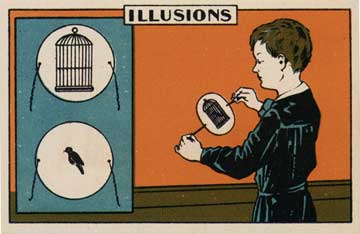
birdcage thaumatrope
[7 may 2012]
i am a dervish
a thaumaturge
i spin very fast
bore downwards
pour stuff out of the top of me churned rich like butter as i whirl
why do i spin so?
see
the thing about spinning
is that it is an oscillation between opposites that generates the movement
it’s how motors work
it’s how hard drives work
it’s how atoms work
the spin is ambi-valence made physical
attracted/repulsed/attracted/repulsed
so i am always moving fast yet can seem to be going nowhere
in my indecision, in the swinging tension between irreconcilable polar opposites
i can actually drill down deeper
because i am always spinning, seeing both sides almost, but not quite,
simultaneously
it’s impossible to see both sides simultaneously
but the quicker you are at seeing multiple perspectives
eddying off on fractal tangents
the faster you spin
(and the dizzier it can make you and others)
how do you solve a problem like maria?
i am not moving linearly
not climbing a ladder
it does not mean i am unproductive
it does not mean i am trapped
the hum is just my motor running at a higher frequency than the
general populace
a powerful magnet
drawing stuff in constantly
flipping it over and over
360 degrees of perspective, 365 days a year
a thaumatrope
it’s a funny thing
i can actually spin, physically, round and round for ages and not get dizzy
i think this is how i manage to get through life, mentally
i am mostly able to tune out the vertigo
i have learned
others can’t
they can’t take how fast i am going all the time
the spinning keeps me upright
in perpetual motion but never able to choose only one definite course
drawing straws
in perfect tension
twirling thread
spinning gold
activates
sigils
semiotics
polarity
magnetism
solenoids
speakers
the speed of sound
affects aerodynamics
flow
determinism and chaos
it’s all connected
all ways
in the dance of particles
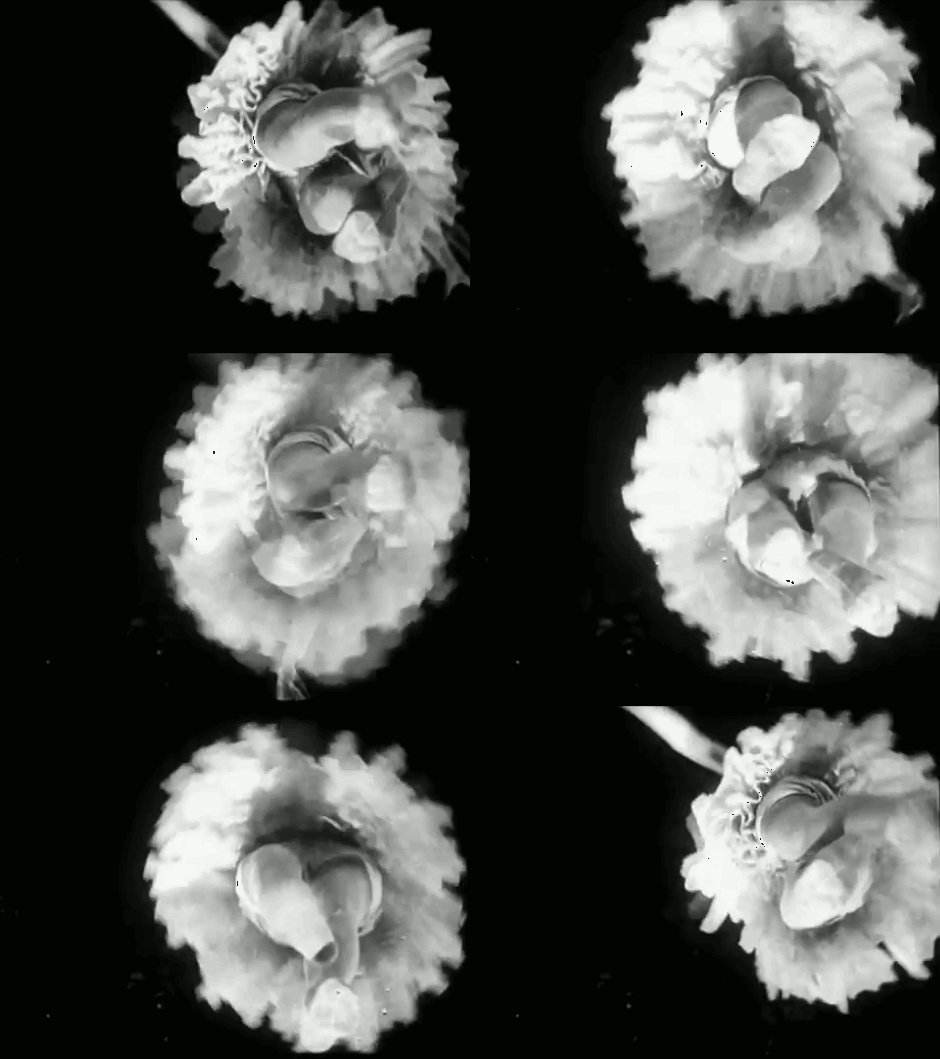
Relâche, ballet instantanéiste en deux actes: un entr’acte cinématographique, et “la queque de chien” is a 1924 ballet by Francis Picabia with music composed by Erik Satie. The title was thought to be a Dadaist practical joke, as relâche is the French word used on posters to indicate that a show is cancelled, or the theatre is closed (and the first performance was indeed cancelled, due to the illness of Jean Börlin, the principal dancer, choreographer, and artistic director of the Ballets Suédois).

Still from “Entr’acte”
Picabia commissioned filmmaker René Clair to create a cinematic entr’acte to be shown during the ballet’s intermission. The film, simply titled Entr’acte, consists of a scene shown before the ballet and a longer piece between the acts. The score was also composed by Satie.
Entr’acte premiered as an entr’acte for the Ballets Suédois production Relâche at the Théâtre des Champs-Élysées in Paris in 1924. The Dadaists collaborating on the project invented a new mode of production: instantanéisme. Watching the 20 minute film involves seeing people running in slow motion, things happening in reverse, looking at a ballet dancer from underneath, watching an egg over a fountain of water get shot and instantly become a bird, and watching people disappear. The cast included cameo appearances by Francis Picabia, Erik Satie, Man Ray, and Marcel Duchamp. The conductor of the orchestra at the premiere was Roger Désormière. The edition of the soundtrack featured here was conducted in 1967 by Henri Sauguet.
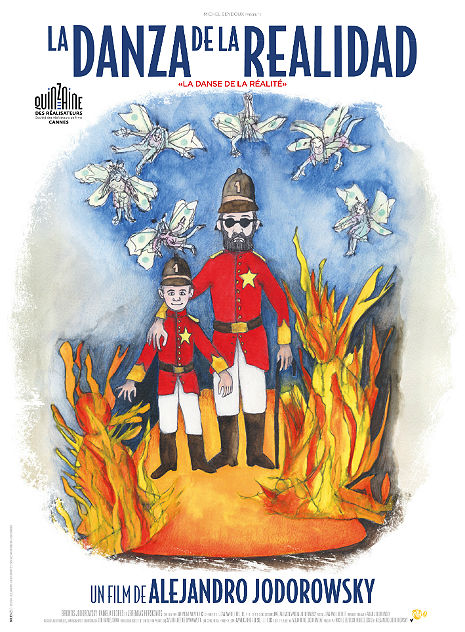 Watch the trailer:
The Guardian review from Cannes 2013 has this to say:
The extinct volcano of underground cinema has burst into life once again — with a bizarre, chaotic and startling film; there are some longueurs and gimmicks, but The Dance of Reality is an unexpectedly touching and personal work. At the age of 84, and over 20 years since his last movie, Alejandro Jodorowsky has returned to his hometown of Tocopilla in the Chilean desert to create a kind of magic-realist memoir of his father, Jaime Jodorowsky, a fierce Communist whose anger at the world — at his son — was redoubled by the anti-Semitism the family faced.
Of course, the entire story is swathed in surreal mythology, dream logic and instant day-glo legend, resembling Fellini, Tod Browning, Emir Kusturica, and many more. You can’t be sure how to extract conventional autobiography from this. Despite the title, there is more “dance” than “reality” — and that is the point. Or part of the point. For the first time, Jodorowsky is coming close to telling us how personal evasiveness has governed his film-making style; his flights of fancy are flights of pain, flights from childhood and flights from reality. And now he is using his transformative style to come to terms with and change the past and to confer on his father some of the heroism that he never attained in real life.
Read more of this review HERE.
The Doors, live in Copenhagen,1968. Ray, I was always even more in love with you than I was with Jim… That organ of yours is what really hypnotised me (that’s what she said).
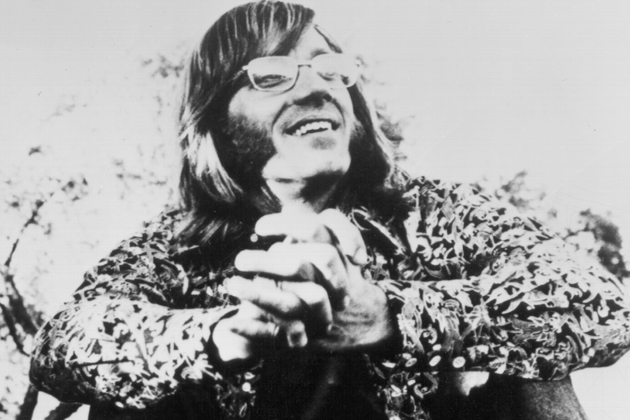
From Michael Ochs’ archive
As my friend Carlo Germeshuys just put it, “Goodbye, Ray Manzarek – without your swirly lounge keyboard old Jimbo wouldn’t have gotten far with his whole bozo Dionysus act.” Oh wait, Carlo says he was referencing a diss by Lester Bangs. Well, whatever. “Bozo Dionysus” = best description of Jim Morrison ever.
HERE‘s an obituary from Rolling Stone.
The opening track of Highs, Lows and Heavenly Blows, released in 1994 on Silvertone Records.
Spectrum was the most high-profile and straightforward of the projects undertaken by Pete “Sonic Boom” Kember after the demise of the trance-rock avatars Spacemen 3. As his work as a member of the Experimental Audio Research coterie allowed Kember the opportunity to explore ambient textures and tonal constructs, Spectrum satisfied the singer/guitarist’s more conventional pop leanings, while never losing sight of the hypnotic otherworldliness which became his music’s trademark and legacy.
(Info from Allmusic.com)
Julie Loen – Title Unknown
Erwin Raphael McManus – Where the Echoes Stop
I want to stand where the echoes stop.
Far past where sound has abandoned thought.
Where silence reigns over redundancy.
Where once well said is more than enough.I want to stand where the echoes stop.
Where words must be born to be heard.
Where speech is a gift and not a curse.
Where there is more of the unique and less of the mundane.I want to stand where the echoes stop.
Where meaning is rescued from noise…
Where conviction replaces thoughtless repetition…
Where what everyone is saying surrenders to what needs to be said.I want to stand where the echoes stop.
Where the shouting of the masses falls silent to the whisper of the one…
Where the voice of the majority submits to the voice of reason…
Where “they” do not exist; but “we” do.I want to stand where the echoes stop.
Where substance overthrows the superficial…
Where courage conquers compliance and conformity…
Where words do not travel farther than the person who speaks them.I want to stand where the echoes stop.
Where I only say what I believe.
Where I only repeat what changes me.
Where empty words finally rest in peace.“Be still and know that I am God…” — Psalm 46:10a
Idleness, then, is so far from being the root of all evil that it is rather the true good. Boredom is the root of evil; it is that which must be held off.
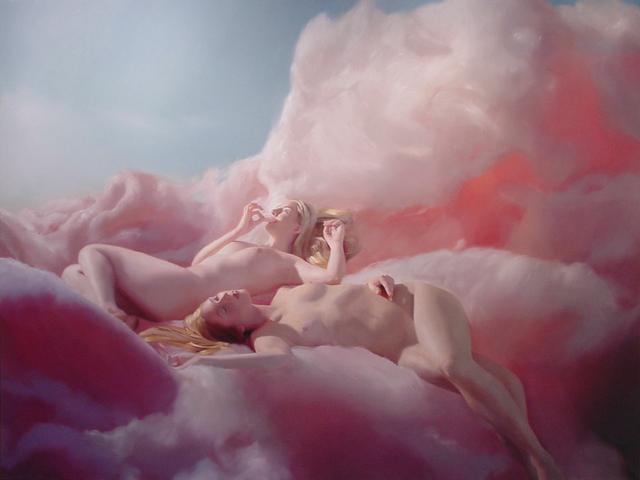
Will Cotton: “Cotton Candy Clouds”.
Oil on Linen, 2004
Since boredom advances and boredom is the root of all evil, no wonder, then, that the world goes backwards, that evil spreads. This can be traced back to the very beginning of the world. The gods were bored; therefore they created human beings. Adam was bored because he was alone; therefore Eve was created. Since that moment, boredom entered the world and grew in quantity in exact proportion to the growth of population. Adam was bored alone; then Adam and Eve were bored en famille. After that, the population of the world increased and the nations were bored en masse. To amuse themselves, they hit upon the notion of building a tower so high that it would reach the sky. This notion is just as boring as the tower was high and is a terrible demonstration of how boredom had gained the upper hand. Then they were dispersed around the world, just as people now travel abroad, but they continued to be bored. And what consequences this boredom had: humankind stood tall and fell far, first through Eve, then from the Babylonian tower.
— From Either/Or (1843).
Released on Columbia in 1962 as the B-side of “Qui peut dire ou vont les fleurs?”, “Cherche la Rose” was arranged and conducted by Burt Bacharach and recorded in Paris. This animated video was made by someone who calls him/herself Maldoror, in Budapest, in 2011.

Sadly, this is a far more profound symbolic critique of Roman Catholic oppression than anything FEMEN is ever likely to pull off (notwithstanding their tops)!
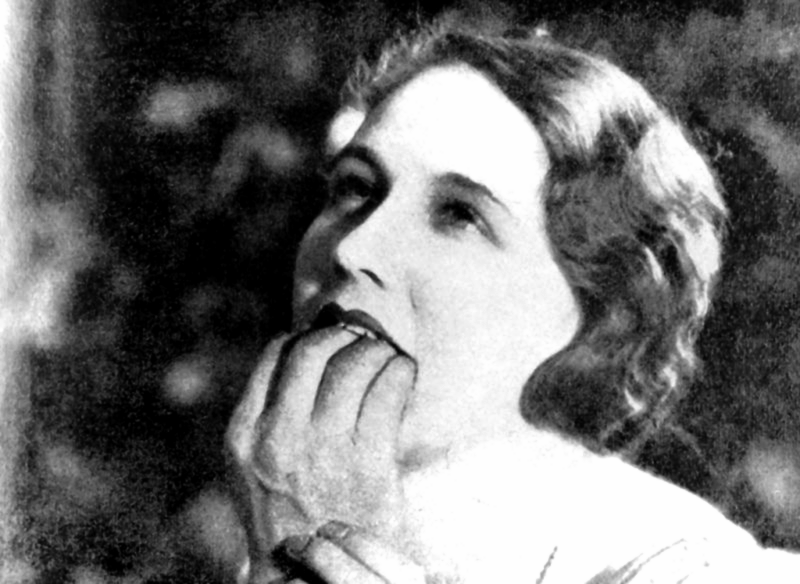 L’Age d’or or The Golden Age (1930), directed by Luis Buñuel, a French surrealist comedy, and one of the first films with synchronous sound ever made in France, was about the insanities of modern life, the hypocrisy of the sexual mores of bourgeois society and the value system of the Roman Catholic Church. Salvador Dalí and Buñuel wrote the screenplay together.
The BBC called it “an exhilarating, irrational masterpiece of censor-baiting chutzpah.”
Read more about the political project of surrealism HERE. Watch the film (in the original French) HERE – turn on the Youtube captions for English subtitles.
Regarding the response of the establishment to the film, from Wikipedia:
Upon receiving a cinematic exhibition permit from the Board of Censors, L’Âge d’or had its premiere presentation at Studio 28, Paris, on 29 November 1930. Later, on 3 December 1930, the great popular success of the film provoked attacks by the right-wing Ligue des Patriotes (League of Patriots), whose angry viewers took umbrage at the story told by Buñuel and Dalí. The reactionary French Patriots interrupted the screening by throwing ink at the cinema screen and assaulting viewers who opposed them; they then went to the lobby and destroyed art works by Dalí, Joan Miró, Man Ray, Yves Tanguy, and others. On 10 December 1930, the Prefect of Police of Paris, Jean Chiappe, arranged to have the film banned from further public exhibition after the Board of Censors re-reviewed the film.
A contemporary right-wing Spanish newspaper published a condemnation of the film and of Buñuel and Dalí, which described the content of the film as “…the most repulsive corruption of our age … the new poison which Judaism, Masonry, and rabid, revolutionary sectarianism want to use in order to corrupt the people”. In response, the de Noailles family withdrew L’Âge d’or from commercial distribution and public exhibition for more than forty years; nonetheless, three years later, in 1933, the film was privately exhibited at the Museum of Modern Art, in New York City. Forty-nine years later, from 1-15 November 1979, the film had its legal U.S. premiere at the Roxie Cinema in San Francisco.
The film critic Robert Short said that the scalp-decorated crucifix and the scenes of socially repressive violence, wherein the love-struck protagonist is manhandled by two men, indicate that the social and psychological repression of the libido and of romantic passion and emotion, by the sexual mores of bourgeois society and by the value system of the Roman Catholic Church, breed violence in the relations among people, and violence by men against women. The opening sequence of the film alludes to that interpretation, by Dalí and Buñuel, with an excerpt from a natural science film about the scorpion, which is a predatory arthropod whose tail is composed of five prismatic articulations that culminate in a stinger with which it injects venom to the prey. Film critic Ado Kyrou said that the five vignettes in the tale of L’Âge d’Or correspond to the five sections of the tail of the scorpion.
From cLOUDDEAD (2001).

Helen Green – “Dorothy and Alice”
Find more of Helen Green’s illustration work HERE.
… And, while we’re on the lugubrious, seamy baritone tip, it would be remiss not to make a turn past l’original, Monsieur Serge Gainsbourg:
Watch Melody Nelson, a short film directed Jean-Christophe Avery, starring Serge Gainsbourg and Jane Birkin, based on Gainsbourg’s seminal (ahem, heheh) 1971 album. More information HERE.
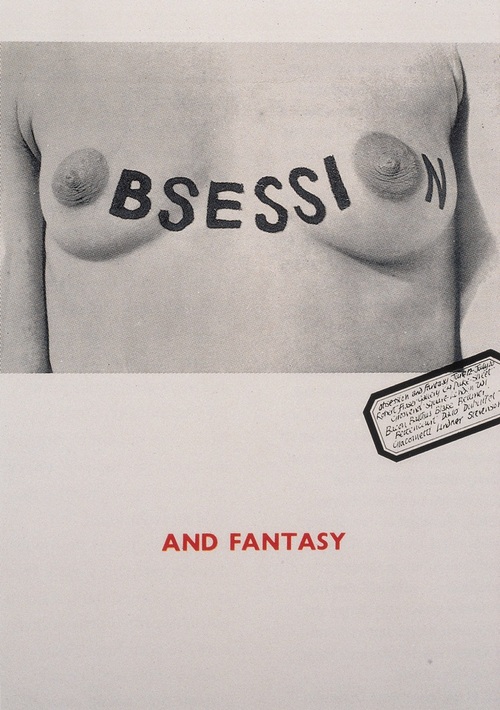
Robert Brownjohn – “Obsession and Fantasy”
1963 poster for a pop art exhibition at the Robert Fraser Gallery, London
Like being in church without the creeps:
“I am an artist because I am uncertain. My art-objects are, first and foremost, results of a philosophical inquiry – critical thinking about what it means to be human. The moments of obsession involved in this process of art-making aspire to achieve a mood of catharsis. I have a desire for innovative and dislocating descriptions of life through a willingness to confront it in all its contradiction and complexity.”
Check out more of this Gauteng-based artist’s “Trash-Worship Party-Pooper Snore-Core Buzz-Kill Uneasy-Listening Shoe-Gaze Dream-Brown Drop-Out Dead-Beat Geek-Grind Mind-Melt Kewl-Vybz” on Soundcloud.
“But there were moments when she played songs that made you wonder where she learned them, where indeed she came from. Harsh-tender, wandering tunes with words that smacked of pinewoods or prairie. One went: Don’t wanna sleep, Don’t wanna die, Just wanna go a-travelin’ through the pastures of the sky; and this one seemed to gratify her the most, for often she continued it long after her hair had dried, after the sun had gone and there were lighted windows in the dusk.”
__
Truman Capote, Breakfast at Tiffany’s

“Maybe the older you grow and the less easy it is to put thought into action, maybe that’s why it gets all locked up in your head and becomes a burden.”
__
Truman Capote, from Breakfast at Tiffany’s
“There’s gotta be something more to love than commitment”…
… “Why are you telling me all this?”
 I don’t want to be a designer, a marketer, an illustrator, a brander, a social media consultant, a multi-platform guru, an interface wizard, a writer of copy, a technological assistant, an applicator, an aesthetic king, a notable user, a profit-maximizer, a bottom-line analyzer, a meme generator, a hit tracker, a re-poster, a sponsored blogger, a starred commentator, an online retailer, a viral relayer, a handle, a font or a page. I don’t want to be linked in, tuned in, ‘liked’, incorporated, listed or programmed. I don’t want to be a brand, a representative, an ambassador, a bestseller or a chart-topper. I don’t want to be a human resource or part of your human capital.
I don’t want to be an entrepreneur of myself.
Don’t listen to the founders, the employers, the newspapers, the pundits, the editors, the forecasters, the researchers, the branders, the career counsellors, the prime minister, the job market, Michel Foucault or your haughty brother in finance – there’s something else!
I want to be a lover, a teacher, a wanderer, an assembler of words, a sculptor of immaterial, a maker of instruments, a Socratic philosopher and an erratic muse. I want to be a community centre a piece of art, a wonky cursive script and an old-growth tree! I want to be a disrupter, a creator, an apocalyptic visionary, a master of reconfiguration, a hypocritical parent, an illegal download and a choose-your-own-adventure! I want to be a renegade agitator! A licker of ice cream! An organiser of mischief! A released charge! A double jump on the trampoline! A wayward youth! A volunteer! A partner.
I want to be a curator of myself, an anti-preneur, a person.
Unlimited availabilities. No followers required. Only friends.
~ Danielle Leduc
First published HERE (thanks to Emma Arogundade for sharing it on Facebook).
Note from the author:
I actually didn’t write this as an ‘anti-preneurial manifesto’ – it was more of a poetic rant written in frustration from combing through the online job market. I meant it as less of a takedown of capitalism and more of a critique of how we are told to sell ourselves as brands, to self-promote, in order to make it in this world, and as such we allow our job titles to define us to a certain extent. I think all of us are many of the things I listed towards the end, but these things don’t appear as marketable skills in a neoliberal economy with a tight and precarious job market. We are not our resumes, is all.
A review by Maria Popova, from brainpickings.org.
“Our stories give shape to our inchoate, disparate, fleeting impressions of everyday life.”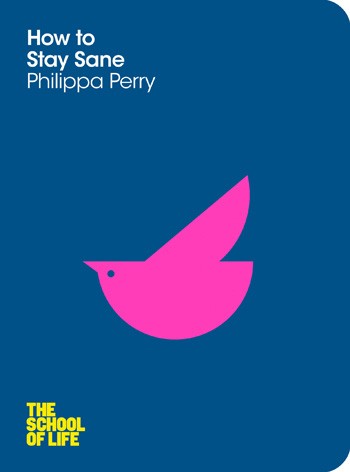
“[I] pray to Jesus to preserve my sanity,” Jack Kerouac professed in discussing his writing routine. But those of us who fall on the more secular end of the spectrum might need a slightly more potent sanity-preservation tool than prayer. That’s precisely what writer and psychotherapist Philippa Perry offers in How To Stay Sane (public library; UK), part of The School of Life’s wonderful series reclaiming the traditional self-help genre as intelligent, non-self-helpy, yet immensely helpful guides to modern living.
At the heart of Perry’s argument — in line with neurologist Oliver Sacks’s recent meditation on memory and how “narrative truth,” rather than “historical truth,” shapes our impression of the world — is the recognition that stories make us human and learning to reframe our interpretations of reality is key to our experience of life:
Our stories give shape to our inchoate, disparate, fleeting impressions of everyday life. They bring together the past and the future into the present to provide us with structures for working towards our goals. They give us a sense of identity and, most importantly, serve to integrate the feelings of our right brain with the language of our left.
[…]
We are primed to use stories. Part of our survival as a species depended upon listening to the stories of our tribal elders as they shared parables and passed down their experience and the wisdom of those who went before. As we get older it is our short-term memory that fades rather than our long-term memory. Perhaps we have evolved like this so that we are able to tell the younger generation about the stories and experiences that have formed us which may be important to subsequent generations if they are to thrive.
I worry, though, about what might happen to our minds if most of the stories we hear are about greed, war and atrocity.
Perry goes on to cite research indicating that people who watch television for more than four hours a day see themselves as far more likely to fall victim in a violent incident in the forthcoming week than their peers who watch less than two hours a day. Just like E. B. White advocated for the responsibility of the writer to “to lift people up, not lower them down,” so too is our responsibility as the writers of our own life-stories to avoid the well-documented negativity bias of modern media — because, as artist Austin Kleon wisely put it, “you are a mashup of what you let into your life.” Perry writes:
Be careful which stories you expose yourself to.
[…]
The meanings you find, and the stories you hear, will have an impact on how optimistic you are: it’s how we evolved. … If you do not know how to draw positive meaning from what happens in life, the neural pathways you need to appreciate good news will never fire up.
[…]
The trouble is, if we do not have a mind that is used to hearing good news, we do not have the neural pathways to process such news.
Yet despite the adaptive optimism bias of the human brain, Perry argues a positive outlook is a practice — and one that requires mastering the art of vulnerability and increasing our essential tolerance for uncertainty:
You may find that you have been telling yourself that practicing optimism is a risk, as though, somehow, a positive attitude will invite disaster and so if you practice optimism it may increase your feelings of vulnerability. The trick is to increase your tolerance for vulnerable feelings, rather than avoid them altogether.
[…]
Optimism does not mean continual happiness, glazed eyes and a fixed grin. When I talk about the desirability of optimism I do not mean that we should delude ourselves about reality. But practicing optimism does mean focusing more on the positive fall-out of an event than on the negative. … I am not advocating the kind of optimism that means you blow all your savings on a horse running at a hundred to one; I am talking about being optimistic enough to sow some seeds in the hope that some of them will germinate and grow into flowers.
Another key obstruction to our sanity is our chronic aversion to being wrong, entwined with our damaging fear of the unfamiliar. Perry cautions:
We all like to think we keep an open mind and can change our opinions in the light of new evidence, but most of us seem to be geared to making up our minds very quickly. Then we process further evidence not with an open mind but with a filter, only acknowledging the evidence that backs up our original impression. It is too easy for us to fall into the trap of believing that being right is more important than being open to what might be.
If we practice detachment from our thoughts we learn to observe them as though we are taking a bird’s eye view of our own thinking. When we do this, we might find that our thinking belongs to an older, and different, story to the one we are now living.
Perry concludes:
We need to look at the repetitions in the stories we tell ourselves [and] at the process of the stories rather than merely their surface content. Then we can begin to experiment with changing the filter through which we look at the world, start to edit the story and thus regain flexibility where we have been getting stuck.
Complement How To Stay Sane with radical psychoanalyst Wilhelm Reich’s 1948 list of the six rules for creative sanity.
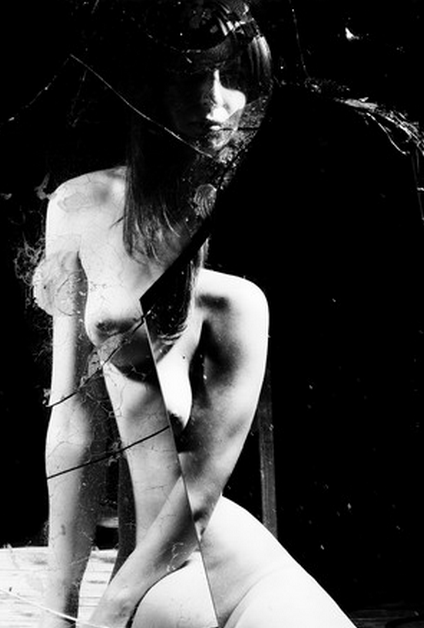
Dave Coba – From “Broken” Series, 2008
Broken is a project by photographer Dave Coba which features black and white studies of nude models. Coba says the images “were created by photographing the models in front of broken, partly “blind” mirrors. Thematically they’re about dreamlike rapture — self awareness in a reality that’s altered, twisted, broken and reflected in an enigmatic way. It means a lot to me that the models wanted to see themselves as they were portrayed: They played their decisive part by ‘putting themselves into the mirror’ and letting the photographer document them.”

Dave Coba – From “Broken” Series, 2008
See more of these intriguing photographs HERE.
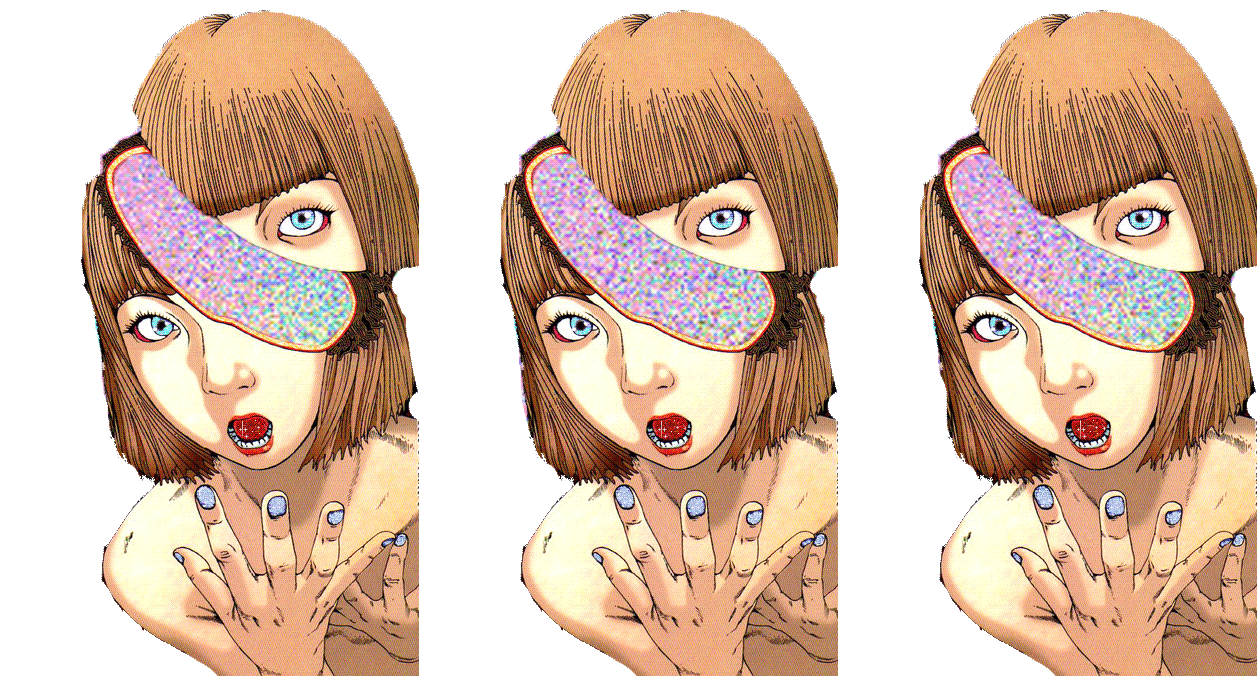 Shintaro Kago 駕籠 真太郎) born 1969 in Tokyo, is a Japanese guro manga artist. He made his debut in in the magazine COMIC BOX, in 1988.
Shintaro Kago’s style has been called “fashionable paranoia”. He has been published in several adult manga magazines, gaining him considerable popularity. Many of his manga have strongly satirical overtones, and deal with grotesque subjects. He has also written Sci-Fi non-guro manga, most notably Super-Conductive Brains Parataxis (超伝脳パラタクシス Choutennou Paratakushisu) for Weekly Young Jump. Many of his shorts are experimental and bizarre. He frequently breaks the fourth wall, and he likes to play with page layout in extreme ways, mostly for comedic effect.
(Info from wikipedia.com)

 fleurmach