eliane radigue – transamorem-transmortem (1973)

ARP Synthesizer. Composed in 1973. Released on Important Records in 2011.

“Before the greatest achievement.
Before the greatest detachment.
At the limit of the frontier space of the unconscious – tuned waves – “consonant things vibrate together”.
Where does the change happen? In the inner field of perception or the exterior reality of moving things in the course of becoming.
And time is no longer an obstacle, but the means by which the possible is achieved.”

– Eliane Radigue – June 20, 1973

Continue reading

eliane radigue – l’île re-sonante

Listen to this with speakers that have proper bass (not in crappy earphones) for a full body experience.

In 2006 the Paris recording label shiiin released a CD recording of L’île re-sonante, a 55-minute composition by French electronic music pioneer Eliane Radigue, a student of electroacoustic composers Pierre Henry and Pierre Schaeffer in the 1950s.

L’île resonante features the instrument Radigue has worked with since the early 1970’s, the ARP 2500 modular synthesizer and her medium of choice, analog multitrack tape. The piece is characteristic of her work in that it is a tapestry of long, gradually evolving drones created with oscillators on the ARP synthesizer and with tape loops.

According to Daniel Caux’s liner notes, “For L’ile re-sonante, Eliane Radigue drew her inspiration from an image: an island in the waters of a lake that reflect her face. It is both a ‘real’ image and an optical illusion”.

Read Chuck Johnson’s essay on this piece, entitled “Empty Music”.

orchestra baobab – utru horas

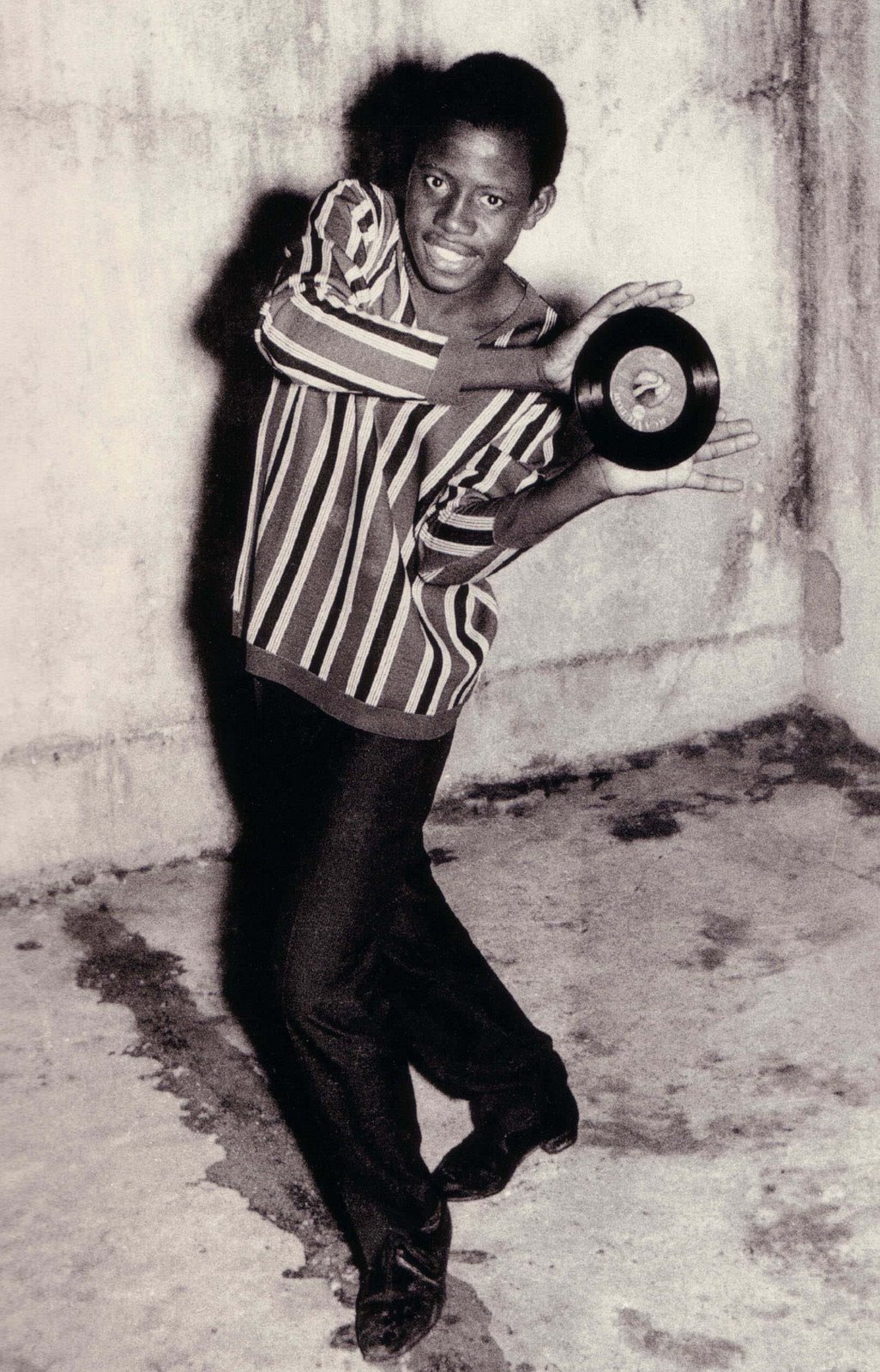
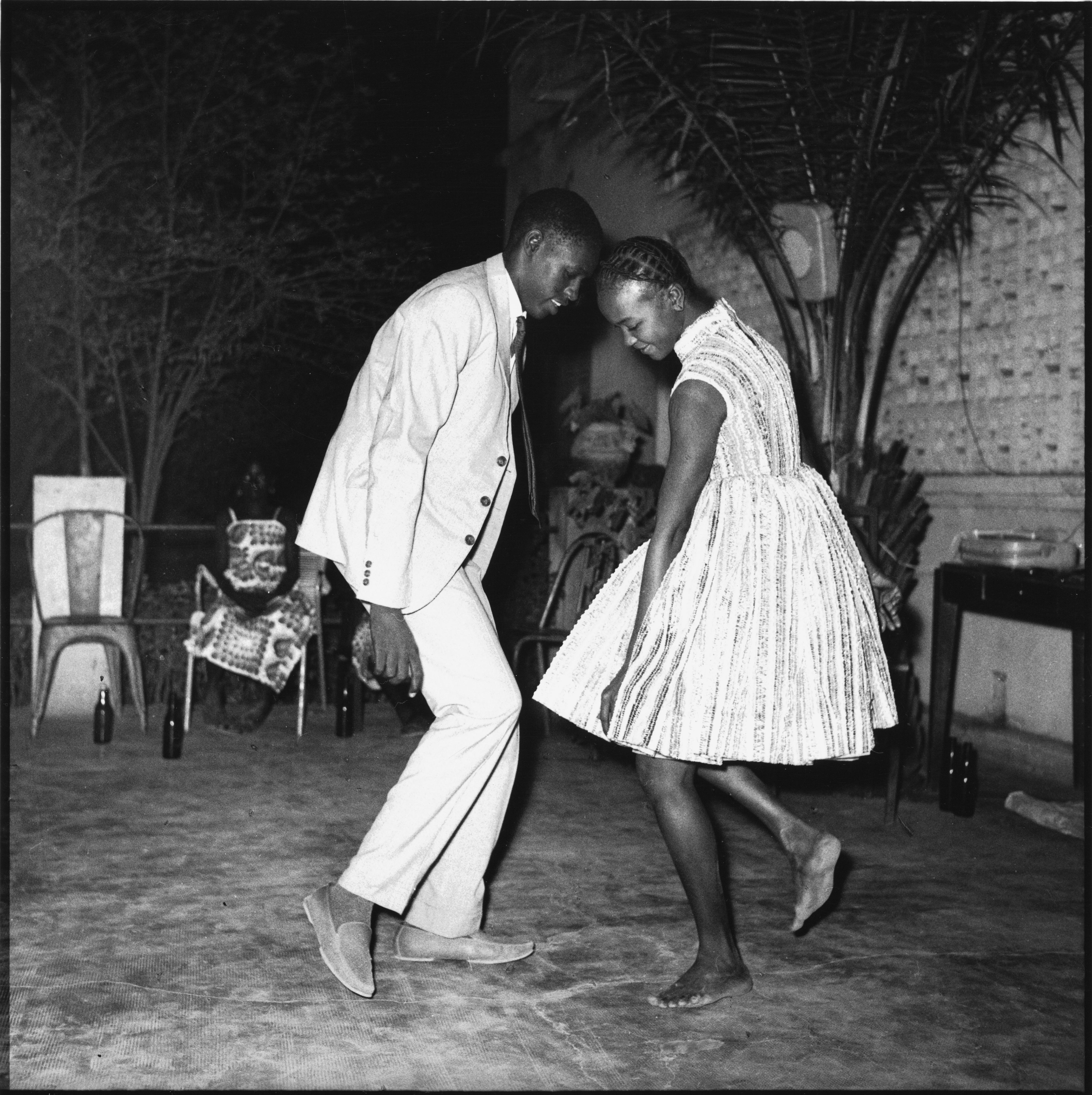
The first track of the classic album, Pirate’s Choice, recorded in Senegal in 1982. Malick Sidibé’s iconic photography graces the album artwork.

The band was Senegalese Afro-Cuban, Son, Wolof and Pachanga. Organized in 1970, as a multi-ethnic, multi-national club band, Orchestra Baobab adapted the then current craze for Cuban Music (growing out of the Congolese Soukous style) in West Africa to Wolof Griot culture and the Mandinga musical traditions of the Casamance.

edge of wrong festival – 10th anniversary this month

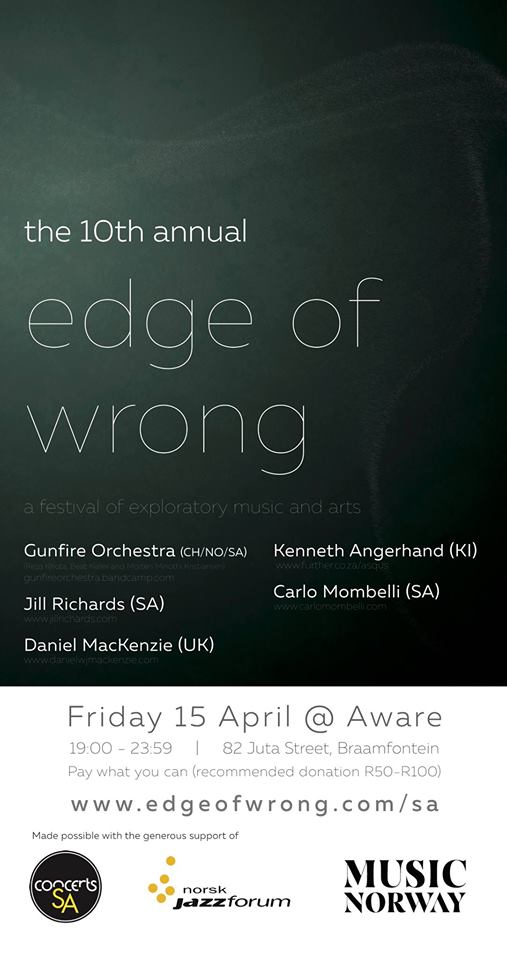
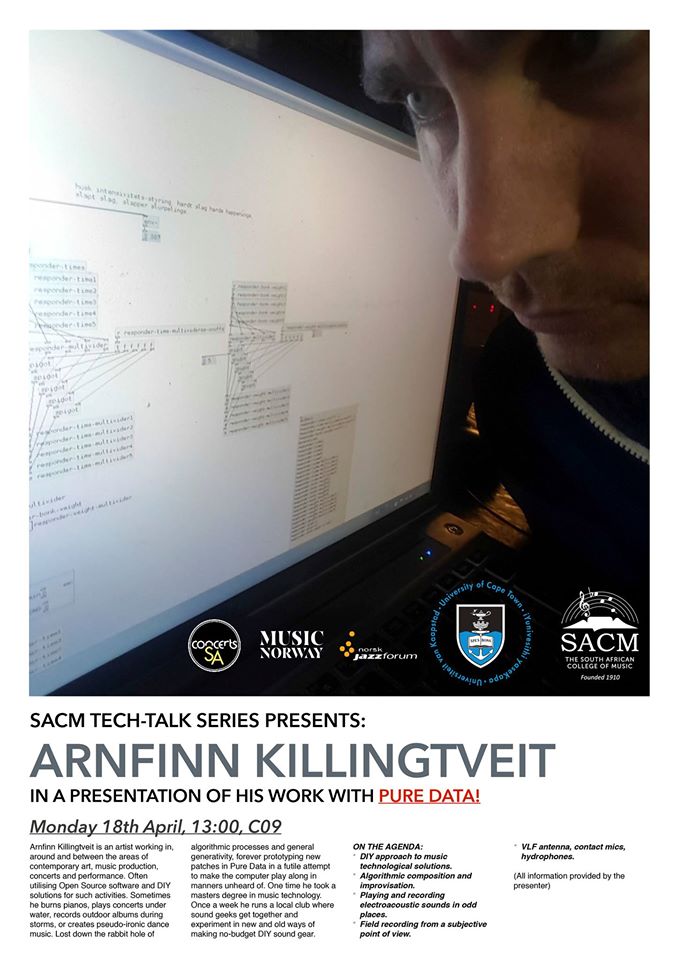
As part of the Edge of Wrong organising team, I’d like to invite you to join us for our tenth annual music festival, happening in Cape Town on the 22nd and 23rd of April (with a mini edition in Johannesburg on 15th April) and featuring an array of international and local artists presenting a wide range of experimental, uncompromising and dangerous music.edge of wrong 2016

In celebration of our first ten years of existence, during which time we have hosted more than 30 cutting-edge events, we’ve compiled an extra-eclectic line-up of South African and Norwegian musicians, including Daniel MacKenzie, Gunfire Orchestra (Reza Khota, Beat Keller and Morten Minothi Kristiansen), Arnfinn Killingtveit, Kenneth Angerhand and Amantha, Ad undas, Mark Fransman, Darren English, Brendon Bussy, Justin Allart and Hezron Chetty.

Expect everything from feedback guitar and malfunctioning drum machines to improv violin, dance-controlled piano and walls of screeching noise from hand-built instruments.

▀▀▀▀▀▀▀▀▀▀▀▀▀▀▀▀▀▀▀▀▀▀▀▀▀▀

__VENUES, LINE-UPS, COST, ETC.:

*** FRIDAY 22nd ***
Atlantic House
1 Perth Rd, Maitland, CT
http://www.atlantichouse.co/
Doors open at 7pm, music starts at 8pm
Pay what you can – recommended contribution R50-R100

PERFORMING:
∞ Brendon Bussy (SA)
∞ Daniel W J Mackenzie (UK)
∞ Ad undas (NO)
∞ Kenneth Angerhand with Amantha23 (KI)
∞ Arnfinn Killingtveit (NO)

*** SATURDAY 23rd ***
Moholo Live House
42 Ncumo Rd, Harare Square, Harare, Khayelitsha, CT
Doors open at 7pm, music starts at 8pm
Pay what you can – recommended contribution R50-R100
https://www.facebook.com/MoholoLiveHouse

PERFORMING:
∞ Gunfire Orchestra (NO/SA)
∞ HORNS NOISE (NO/SA)
∞ Swamps up Nostrils (NO/SA)
∞ Hezron Chetty (SA)

*** SUNDAY 24th ***
Music Hacker Lab – details to be confirmed!

GENERAL INFO: Right of admission reserved. Drinks will be available for purchase at the venues. Cellphones to be switched off during performances.

Performing in Johannesburg on the 15th are:

* Gunfire Orchestra (Reza Khota, Beat Keller and Morten Minothi Kristiansen) (https://gunfireorchestra.bandcamp.com/) (NO/SA)
* Kenneth Angerhand (www.further.co.za/asqus) (KI)
* Jill Richards (www.jillrichards.com) (SA)
* Carlo Mombelli (www.carlomombelli.com) (SA)
* Daniel MacKenzie (www.danielwjmackenzie.com) (UK)
les rallizes dénudés


Album: Cable Hogue Soundtrack (1992)

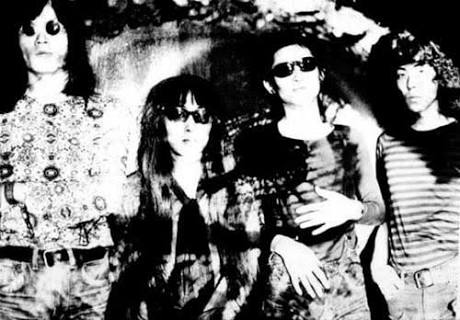
Been listening to this band a lot lately. They originally began in 1962 as a musical theatre troupe, however the formation of the band was not until 1967 at Kyoto University. The band’s style is typified by simple, repetitious instrumental passages, shrieking, cacophonous guitar feedback, extensive improvisation reminiscent of free jazz, and folk arrangement. Their discography is made up mostly of live bootlegs, soundboard archives and even a few rare aborted studio recording attempts as they have never officially released any of their own material. [SOURCE]


Album: Caress & Violence (1987)

About their faux-French name:

“Les rallizes dénudés” is their international name, in Japan they’re known as “Hadaka no rariizu”… Hadaka no translates to nu or dénudé; rariizu is a foreign word (or combination of sounds?) that was transliterated to the French-sounding “rallizes” when they got their international, French-sounding name.
So… From a mysterious foreign word to a Japanese approximation, then to a French approximation of the Japanese. May well have been Larrys… Might have been another word… Could be something else entirely, that has meaning only for them… In any case, better not look for a French meaning in it!
“The Naked/Stripped/Bare Larries/Rallies” would be the English approximation.
 images (2)

the national – morning dew

A brand new version of this song, made famous by Lee Hazlewood and the Grateful Dead. It was written by folk singer Bonnie Dobson.

From Wikipedia:

Morning Dew“, also known as “(Walk Me Out in the) Morning Dew“, is a post-apocalyptic folk rock song written by Canadian folk singer Bonnie Dobson and made famous by the Grateful Dead.

The song is a dialogue between the last man and woman left alive following an apocalyptic catastrophe: Dobson has stated that the initial inspiration for “Morning Dew” was the film On the Beach which is focused on the survivors of virtual global annihilation by nuclear holocaust. The actual writing of the song occurred in 1961 while Dobson was staying with a friend in Los Angeles: Dobson would recall how the guests at her friend’s apartment were speculating about a nuclear war’s aftermath and “after everyone went to bed, I sat up and suddenly I just started writing this song [although] I had never written [a song] in my life”.[1] Dobson premiered “Morning Dew” in her set at the inaugural Mariposa Folk Festival that year with the song’s first recorded version being on Dobson’s At Folk City live album in 1962. Dobson would not record a studio version of the song until 1969, that being for her Bonnie Dobson album.

“Morning Dew” was not published until 1964 when Jac Holzman of Elektra Records contacted Dobson with an offer to sign her as a songwriter as Elektra artist Fred Neil had heard “Morning Dew” and wished to record it. The first studio recording of “Morning Dew” appeared on the 1964 album Tear Down The Walls by Fred Neil and Vince Martin. It was this version which introduced the song to Tim Rose who in 1966 recorded “Morning Dew” for his self-titled debut album after soliciting permission to revise the song with a resultant co-writing credit. Dobson agreed without having any intended revision specified and was subsequently much discomforted to learn that the changes were minimal. As of the February 1967 release of the Tim Rose single version of “Morning Dew” the standard songwriting credit for the song has been Bonnie Dobson and Tim Rose: Dobson, who in 1998 averred she’d never met Rose (d. 2002), has consistently questioned Rose’s right to a credit.

“Morning Dew” became a signature song of the Grateful Dead whose frontman Jerry Garcia was introduced to the Fred Neil recording by roadie Laird Grant in 1966.